


Community hub
Recent from talks
Contribute something
Nothing was collected or created yet.
William Gull
View on Wikipedia
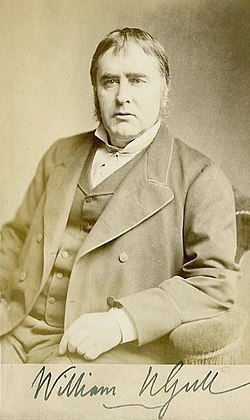
Sir William Withey Gull, 1st Baronet (31 December 1816 – 29 January 1890) was an English physician. Of modest family origins, he established a lucrative private practice and served as Governor of Guy's Hospital, Fullerian Professor of Physiology and President of the Clinical Society. In 1871, having successfully treated the Prince of Wales during a life-threatening attack of typhoid fever, he was created a Baronet and appointed to be one of the Physicians-in-Ordinary to Queen Victoria.
Key Information


Gull made some significant contributions to medical science, including advancing the understanding of myxoedema, Bright's disease, paraplegia and anorexia nervosa (for which he first established the name).
A masonic/royal conspiracy theory created in the 1970s alleged that Gull knew the identity of Jack the Ripper, or even that he was the murderer. Scholars have dismissed the idea,[2][3][4] since Gull was 71 years old and in ill health when the murders were committed. The theory has been used by creators of fictional works. Examples for his portrayal as Jack the Ripper include the films Jack the Ripper (1988) and From Hell (2001), the latter based on the graphic novel.
Childhood and early life
[edit] | This section needs additional citations for verification. (January 2023) |
William Withey Gull was born on 31 December 1816 in Colchester, Essex. His father, John Gull, was a barge owner and wharfinger and was thirty-eight years old at the time of his son's birth. William was born aboard his barge The Dove, then moored at St Osyth Mill in the parish of Saint Leonards, Shoreditch. His mother's maiden name was Elizabeth Chilver and she was forty years old when William was born. William's middle name, Withey, came from his godfather, Captain Withey, a friend and employer of his father and also a local barge owner.[5] He was the youngest of eight children, two of whom died in infancy. Of William's surviving five siblings, two were brothers (John and Joseph) and three were sisters (Elizabeth, Mary and Maria).
When William was about four years old the family moved to Thorpe-le-Soken, Essex. His father died of cholera in London in 1827, when William was ten years old, and was buried at Thorpe-le-Soken. After her husband's death, Elizabeth Gull devoted herself to her children's upbringing on very slender means. She was a woman of character, instilling in her children the proverb "whatever is worth doing is worth doing well." William Gull often said that his real education had been given him by his mother. Elizabeth Gull was devoutly religious—on Fridays the children had fish and rice pudding for dinner; during Lent she wore black, and the Saints' days were carefully observed.
As a young boy, William Gull attended a local day school with his elder sisters. Later, he attended another school in the same parish, kept by the local clergyman. William was a day-boy at this school until he was fifteen, at which age he became a boarder for two years. It was at this time that he first began to study Latin. The clergyman's teaching, however, seems to have been very limited; and at seventeen William announced that he would not go any longer.
William now became a pupil-teacher in a school kept by a Mr. Abbott at Lewes, Sussex. He lived with the schoolmaster and his family, studying and teaching Latin and Greek. It was at this time that he became acquainted with Joseph Woods, the botanist, and formed an interest in looking for unusual plant life that would remain a lifelong pastime. His mother, meanwhile, had in 1832 moved to the parish of Beaumont, adjacent to Thorpe-le-Soken. After two years at Lewes, at the age of nineteen, William became restless and started to consider other careers, including working at sea.
The local rector took an interest in William and proposed that he should resume his classical and other studies on alternate days at the rectory. William agreed, and would continue this routine for a year. On his days at home, he and his sisters would row down the estuary to the sea, watching the fishermen, and collecting wildlife specimens from the nets of the coastal dredgers. William would study and catalogue the specimens thus obtained, which he would study using whatever books as he could then procure. This seems to have awoken in him an interest in biological research that would serve him well in his later career in medicine. The wish to study medicine became the fixed desire of his life.[6][7]
Early career in medicine
[edit]
At about this time the local rector's uncle, Benjamin Harrison, the Treasurer of Guy's Hospital, was introduced to Gull and was impressed by his ability. He invited him to go to Guy's Hospital under his patronage and, in September 1837, the autumn before he was twenty-one, Gull left home and entered on his life's work.
It was usual for students of medicine to conduct their studies at the hospital as "apprentices." The Treasurer's patronage provided Gull with two rooms in the hospital with an annual allowance of £50 a year.
Gull, encouraged by Harrison, determined to make the most of his opportunity, and resolved to try for every prize for which he could compete in the hospital in the course of that year. He succeeded in gaining every one. During the first year of his residence at Guy's, together with his other studies he carried on his own education in Greek, Latin, and Mathematics, and in 1838 he matriculated at the recently founded University of London. In 1841 he took his M.B. degree, and gained honours in physiology, comparative anatomy, medicine, and surgery.[6][7]
Professional career
[edit]In 1842, Gull was appointed to teach materia medica at Guy's Hospital, and the Treasurer gave him a small house in King Street, with an annual salary of £100 (£14,500 in 2023). In 1843, he was appointed Lecturer on Natural Philosophy. He also held at this time the post of Medical Tutor at Guy's and, in the absence of the staff, shared with Mr. Stocker the care of the patients in the hospital. In the same year, he was appointed Medical Superintendent of the wards for lunatics, and it was largely due to his influence that these cases shortly ceased to be treated at the hospital, and the wards were converted from this use.
Throughout this period, Gull's duties gave him extensive opportunities to develop his medical experience. He spent much of his life within the wards of the hospital, at all hours of the day and often at night.
In 1846, he earned his M.D. degree at the University of London, and gained the gold medal. At that time, this was the highest honour in medicine which the University was able to confer. During his M.D. examination, he suffered an attack of nerves and was about to leave the room, saying that he knew nothing of the case proposed for comment; a friend persuaded him to return, with the result that the thesis he then wrote gained for him his Doctor's degree and the gold medal.
From 1846 to 1856, Gull held the post of Lecturer on Physiology and Comparative Anatomy at Guy's.
In 1847, Gull was elected Fullerian Professor of Physiology at the Royal Institution of Great Britain, a post which he held for two years, during which time he formed a close friendship with Michael Faraday, at that time Fullerian Professor of Chemistry. In 1848, he was elected a Fellow of the Royal College of Physicians. He was also appointed Resident Physician at Guy's. Dr Gull became a DCL of Oxford in 1868, a Fellow of the Royal Society in 1869, LL.D. of the University of Cambridge in 1880 and of the University of Edinburgh in 1884. He was a Crown member of the General Medical Council from 1871 to 1883, and representative of the University of London in the Council from 1886.[6][7] In 1871 he was elected President of the Clinical Society of London.[8]
Marriage and family
[edit]On 18 May 1848, Gull married Susan Ann Lacy, daughter of Colonel J. Dacre Lacy, of Carlisle. Shortly afterwards he left his rooms at Guy's and moved to 8 Finsbury Square.
They had three children: Caroline Cameron Gull was born in 1851 at Guy's Hospital and died in 1929; she married Theodore Dyke Acland MD (Oxon.) FRCP, the son of Sir Henry Acland, 1st Baronet MD FRS. They had two children, a daughter (Aimee Sarah Agnes Dyke Acland) who died in infancy in 1889, and a son, Theodore Acland (1890–1960), who became headmaster of Norwich School.
Cameron Gull was born about 1858 in Buckhold, Pangbourne, Berkshire and died in infancy.
William Cameron Gull was born on 6 January 1860 in Finsbury, Middlesex and died in 1922. He was educated at Eton College, inherited his father's title as 2nd Baronet of Brook Street, and later served as the Liberal Unionist Member of Parliament (MP) for Barnstaple from July 1895 to September 1900.
Baronet and Physician-in-Ordinary to Queen Victoria
[edit]
In 1871, as Physician in Ordinary to the Prince of Wales, Gull took the chief direction of the treatment of the Prince during an attack of typhoid fever.
The Prince of Wales showed the first signs of illness on 13 November 1871, while at the Royal residence at Sandringham House, Norfolk. Initially, he was attended by Dr. Lowe of Kings Lynn and by Oscar Clayton, who thought the fever was caused by a sore on a finger. After a week, with no sign of the fever abating, they diagnosed typhoid fever and sent for Gull on 21 November, and Sir William Jenner on the 23rd. It transpired that the typhoid attack was complicated by bronchitis and the Prince was in danger of his life for many days. For the next month, daily bulletins were issued by Sandringham and posted at police stations around the country. Sir William Hale-White, author of Great Doctors of the Nineteenth Century (1935), wrote: "I was a lad then and my father sent me every evening to the police station to get the latest news. It was not until just before Christmas that bulletins were issued only once a day."[9]
The following passage appeared in The Times on 18 December 1871:
'In Dr. Gull were combined energy that never tired, watchfulness that never flagged; nursing so tender, ministry so minute, that in his functions he seemed to combine the duties of physician, dresser, dispenser, valet, nurse,-now arguing with the sick man in his delirium so softly and pleasantly that the parched lips opened to take the scanty nourishment on which depended the reserves of strength for the deadly fight when all else failed, now lifting the wasted body from bed to bed, now washing the worn frame with vinegar, with ever ready eye and ear and finger to mark any change and phase, to watch face and heart and pulse, and passing at times twelve or fourteen hours at that bedside. And when these hours were over, or while they were going on-what a task for the physician !-to soothe with kindest and yet not too hopeful words her whose trial was indeed great to bear, to give counsel against despair, and yet not to justify confidence.' After the recovery of the Prince, Sir William remarked, 'He was as well treated and nursed as if he had been a patient in Guy's Hospital.'[10]

After the Prince's recovery, a service of thanksgiving was held at St Paul's Cathedral in the City of London, attended by Queen Victoria.[9] In recognition of his service, on 8 February 1872 William Gull was created the 1st Baronet of the Baronetcy of Brook Street.[11]
The coat of arms is shown left. The Blazon of Arms is:
Azure, a serpent nowed or between three sea-gulls proper, and for honourable augmentation a canton ermine, thereon an ostrich feather argent, quilled or, enfiled by the coronet which encircles the plume of the Prince of Wales, gold. Crests, 1st (for honourable augmentation), a lion passant guardant or, supporting with his dexter fore paw an escutcheon azure, thereon an ostrich feather argent, quilled or, enfiled with a coronet as in the canton; 2nd, two arms embowed, vested azure cuffs argent, the hands proper holding a torch or fired proper.
The Motto is:
Sine Deo Frustra (Without God, Labour Is In Vain).
Sir William Gull was appointed Physician-in-Ordinary to Queen Victoria. (At this time, there were four Physicians-in-Ordinary to the Queen, each receiving an annual salary of £200. However, these were largely honorary appointments; in reality, the Queen never saw any of them except the senior physician, then Sir William Jenner, and her resident medical attendant.)[6][7][12]
Support for women in medicine
[edit]In late Victorian Britain, women were not encouraged to enter the medical profession. Sir William Gull was initially against women becoming medics but later stated that he had changed his mind and spoke out against this bias and led efforts to improve the prospects of women who wished to pursue careers in medicine.[13] In February 1886, he chaired a meeting at the Medical Society in Cavendish Square to establish a medical scholarship to be awarded to women. This was the Helen Prideaux Memorial Fund, named after Frances Helen Prideaux M.B. and B.S. Lond, a gifted University of London medical student who had died from diphtheria the previous year, having previously won the exhibition and gold medal in anatomy and gained a first class degree.[14]
Gull was reported as saying that her academic achievements answered any objections to the involvement of women in medicine; and expressed the hope that the scholarship would lead to a liberalisation of attitudes and greater recognition of women across the profession.[15]
The fund was launched with initial donations of £252 9s; Gull's personal contribution was 10 guineas (£10 10s).[16] By the mid-1890s, the scholarship was able to support a biannual prize of £50, awarded to a graduate of the London School of Medicine for Women, to assist in completing a further stage of studies.[17][18]


Illness and death
[edit]In 1887, Sir William Gull suffered the first of several strokes at his Scottish home at Urrard House, Killiecrankie. The attack of hemiplegia and aphasia was caused by a cerebral haemorrhage, of which the only warning had been unexplained haemoptysis a few days earlier. He recovered after a few weeks and returned to London, but was under no illusions about the danger to his health, remarking "One arrow had missed its mark, but there are more in the quiver".
Over the next two years, Gull lived at 74 Brook Street, Grosvenor Square, London[19] and also had homes at both Reigate and Brighton. During this period, he suffered several further strokes. The fatal attack came at his home in 74, Brook Street, London on 27 January 1890. He died two days later.
The Times newspaper carried the following report on 30 January 1890:
We regret to announce that Sir William Gull died at half-past 12 yesterday at his residence, 74, Brook-street, London, from paralysis. Sir William was seized with a severe attack of paralysis just over two years ago while staying at Urrard, Killiecrankie, and never sufficiently recovered to resume his practice. On Monday morning, after breakfast, he pointed to his mouth as if unable to speak. His valet, who was in the room, did not quite understand what was amiss, but helped him into the sitting-room. Sir William then sat down on a chair and wrote on a piece of paper, "I have no speech." The family were at once summoned, and Sir William was soon after removed to bed, where he received every attendance from Dr. Hermann Weber, an old friend, Dr. Charles D. Hood, his regular medical attendant, and Dr. Acland, his son-in-law. The patient, however, soon lost consciousness, and lingered in this state until yesterday morning, when he quietly passed away in the presence of his family. The inquiries as to his state of health during the last two days have been unusually numerous, a constant stream of carriages drawing up at the door. The Prince of Wales was kept informed of Sir William's condition through Sir Francis Knollys.[20]
The news of Gull's death was reported around the world.[21][22] American author Mark Twain observed in his diary on 1 February 1890:
Sir Wm. Gull is just dead. He nursed the Prince of Wales back to life in '71 and apparently it was for this that Mr. Gull was granted Knighthood, that doormat at the threshold of nobility. When the Prince seemed dead Mr. Gull dealt blow after blow between the shoulders, breathed into his nostrils, and literally cheated Death.[23]
Sir William Gull was buried on Monday 3 February 1890 next to the grave of his father and mother in the churchyard of his childhood home at Thorpe-le-Soken, near Colchester, Essex. A special train was commissioned to carry mourners from London. The inscription on his headstone was his favourite biblical quote:
"What doth the Lord require of thee, but to do justly, and to love mercy and to walk humbly with thy God?"
The obituary notice in the Proceedings of the Royal Society reads:
"Few men have practised a lucrative profession with less eagerness to grasp at its pecuniary rewards. He kept up the honourable standard of generosity to poor patients."
A memorial bronze plaque was placed at the entrance to Guy's Hospital Chapel. The inscription reads:
To the Glory of God and in memory of William Withey Gull, Bart M.D., F.R.S.D., C.L., Oxon., Cantab., and Edin
Physician to Her Majesty Queen Victoria and to Albert Edward, Prince of Wales
Physician and Lecturer and finally A Governor of this Hospital
Born 1816, Died 1890.
As a Teacher, Few have exceeded him In the depth and accuracy of his knowledge, In the lucidity and terseness of his language, In the effect produced upon his hearers
As a Physician, His almost instinctive insight, His unwearied patience, His exact method and ready resources,
And above all that hearty sympathy Which seemed concentrated for the time On each Patient
Placed him in the highest rank In the noble band of British Physicians
Erected by the Governors and Medical Staff of Guy's Hospital
The vacant position of Physician-in-Ordinary to Queen Victoria was filled by Dr. Richard Douglas Powell, the senior of the three Physicians Extraordinary.[24]
Will, executors and bequests
[edit]Sir William Gull's will, with a codicil, was dated 27 November 1888. The value of the estate was £344,022 19s. 7d – an enormous sum at that time.
The following persons were appointed as executors: his wife, Dame Susan Anne Gull, his son, Sir William Cameron Gull, of Gloucester Street, Portman Square (the new baronet), Mr. Edmund Hobhouse, and Mr. Walter Barry Lindley.[25]
Under the terms of the will, £500 was bequeathed to each of the acting executors; £100 to Miss Mary Jackson; £100 to each of two nieces; £200 to Lady Gull's maid; £50 to Sir William's amanuensis, Miss Susan Spratt; and an annual sum of £32 10s to his butler, William Brown, for the rest of his life. A jewelled snuffbox presented to Sir William Gull by the Empress Eugénie, widow of Emperor Napoleon III of France became an entailed heirloom, along with his presentation plate.
Lady Gull was bequeathed the remainder of his plate, his pictures, furniture, and household effects and the sum of £3,000, along with the use for the remainder of her life of the house at 74 Brook Street. She also received a life annuity of £3,000, commencing 12 months after Sir William's death. Sir William's daughter Caroline received £26,000 in trust, while his son Sir William Cameron Gull received the sum of £40,000 and all the real estate.
The residue of Sir William's personal estate was to be held in trust for the purchase of real estate in England or Scotland (but not in Ireland) which was to be added to the entailed estate.[26]
Unusually, the will is recorded twice in the probate registry, in 1890 and in 1897. The text of the second entry reads:
Sir William Withey Gull of 74 Brook Street, Baronet M.D. died 29 January 1890. Probate LONDON 8 January to Edmund Hobhouse Esquire. Effects £344,022 19s 7d. Former Grant 1890.
The words "Double Probate Jan 1897" are written in the margin of the entry.[27]
Contributions to medical science
[edit]Anorexia nervosa
[edit]
The term "anorexia nervosa" was first established by Sir William Gull in 1873.
In 1868, he had delivered an address to the British Medical Association at Oxford[28] in which he referred to a "peculiar form of disease occurring mostly in young women, and characterised by extreme emaciation". Gull observed that the cause of the condition could not be determined, but that cases seemed mainly to occur in young women between the ages of sixteen and twenty-three. In this address, Gull referred to the condition as Apepsia hysterica, but subsequently amended this to Anorexia hysterica and then to Anorexia nervosa.[29]
Five years later, in 1873, Gull published his work Anorexia Nervosa (Apepsia Hysterica, Anorexia Hysterica), in which he describes the three cases of Miss A, Miss B, and a third unnamed case.[30] In 1887, he also recorded the case of Miss K, in what was to be the last of his medical papers to be published.[31]
Miss A was referred to Sir William Gull by her doctor, a Mr Kelson Wright, of Clapham, London on 17 January 1866. She was aged 17 and was greatly emaciated, having lost 33 pounds. Her weight at this time was 5 stones 12 pounds (82 pounds); her height was 5 ft 5 inches. Gull records that she had suffered from amenorrhoea for nearly a year, but that otherwise her physical condition was mostly normal, with healthy respiration and heart sounds and pulse; no vomiting nor diarrhoea; clean tongue and normal urine. The pulse was slightly low at between 56 and 60. The condition was that of simple starvation, with total refusal of animal food and almost total refusal of everything else.
Gull prescribed remedies including preparations of cinchona, biochloride of mercury, syrup of iodide of iron, syrup of phosphate of iron, citrate of quinine and variations in diet without noticeable success. He observed occasional voracious appetite for very brief periods, but states that these were very rare and exceptional. He also records that she was frequently restless and active and notes that this was a "striking expression of the nervous state, for it seemed hardly possible that a body so wasted could undergo the exercise which seemed agreeable".
In Gull's published medical papers, images of Miss A are shown that depict her appearance before and after treatment (right). Gull notes her aged appearance at age 17:
It will be noticeable that as she recovered she had a much younger look, corresponding indeed to her age, twenty-one; whilst the photographs, taken when she was seventeen, give her the appearance of being nearer thirty.[32]
Miss A remained under Gull's observation from January 1866 to March 1868, by which time she seemed to have made a full recovery, having gained in weight from 82 to 128 pounds.

Miss B was the second case described in detail by Gull in his Anorexia nervosa paper. She was referred to Gull on 8 October 1868, aged 18, by her family who suspected tuberculosis and wished to take her to the south of Europe for the coming winter.
Gull noted that her emaciated appearance was more extreme than normally occurs in tubercular cases. His physical examination of her chest and abdomen discovered nothing abnormal, other than a low pulse of 50, but he recorded a "peculiar restlessness" that was difficult to control. The mother advised that "She is never tired". Gull was struck by the similarity of the case to that of Miss A, even to the detail of the pulse and respiration observations.
Miss B was treated by Gull until 1872, by which time a noticeable recovery was underway and eventually complete. Gull admits in his medical papers that the medical treatment probably did not contribute much to the recovery, consisting, as in the former case, of various tonics and a nourishing diet.[33]
Miss K was brought to Gull's attention by a Dr. Leachman, of Petersfield, in 1887. He records the details in the last of his medical papers to be published.[31] Miss K was aged 14 years in 1887. She was the third child in a family of six, one of whom died in infancy. Her father had died, aged 68, of pneumonic phthisis. Her mother was living and in good health; she had a sister who displayed multiple nervous symptoms and an epileptic nephew. With these exceptions, no other neurotic cases were recorded in the family. Miss K, who was described as a plump, healthy girl until the beginning of 1887, began to refuse all food except half cups of tea or coffee in February that year. She was referred to Gull and began to visit him of 20 April 1887; in his notes, he remarks that she persisted in walking through the streets to his house despite being an object of attention to passers-by. He records that she displayed no sign of organic disease; her respiration was 12 to 14; her pulse was 46; and her temperature was 97 °F (36 °C). Her urine was normal. Her weight was 4 stone 7 pounds (63 pounds) and her height was 5 feet 4 inches. Miss K expressed herself to Gull as "quite well". Gull arranged for a nurse from Guy's to supervise her diet, ordering light food every few hours. After six weeks, Dr. Leachman reported good progress and by 27 July her mother reported that her recovery was almost complete, with the nurse by this time no longer being needed.
Photographs of Miss K appear in Gull's published papers. The first is dated 21 April 1887 and shows the subject in a state of extreme emaciation. The unclothed torso and head is displayed with the ribcage and clavicle clearly visible. The second photograph is dated 14 June 1887 in a similar attitude and shows a clear recovery.
Although the cases of Miss A, Miss B and Miss K resulted in recovery, Gull states that he observed at least one fatality as a result of anorexia nervosa. He states that the post mortem revealed no physical abnormalities other than thrombosis of the femoral veins. Death appeared to have resulted from starvation alone.[34]
Gull observed that slow pulse and respiration seemed to be common factors in all the cases he had observed. He also observed that this resulted in below-normal body temperature and proposed the application of external heat as a possible treatment. This proposal is still debated by scientists today.[35]
Gull also recommended that food should be administered at intervals varying inversely with the periods of exhaustion and emaciation. He believed that the inclination of the patient should in no way be consulted; and that the tendency of the medical attendant to indulge the patient ("Let her do as she likes. Don't force food."), particularly in the early stages of the condition, was dangerous and should be discouraged. Gull states that he formed this opinion after experience of dealing with cases of anoerexia nervosa, having previously himself been inclined to indulge patients' wishes.[29]
Gull–Sutton Syndrome (chronic Bright's disease)
[edit]In 1872, Sir William Gull and Henry G. Sutton, M.B., F.R.C.P. presented a paper[36] that challenged the earlier understanding of the causes of chronic Bright's Disease.
The symptoms of Bright's Disease had been described in 1827 by the English physician Richard Bright who, like Gull, was based at Guy's Hospital. Dr. Bright's work characterised the symptoms as caused by a disease centred on the kidney. Chronic Bright's disease was a more severe variant, where other organs are also affected.
In their introduction, Gull and Sutton point out that Dr. Bright and others "have fully recognised that the granular contracted kidney is usually associated with morbid changes in other organs of the body" and that these co-existent changes were commonly grouped together and termed "chronic Bright's disease." The prevailing opinion at the time was that the kidney was the organ primarily affected, inducing a condition that would spread to other parts of the body and thereby cause other organs to suffer.
Gull and Sutton argued that this assumption was incorrect. They presented evidence to show that the diseased state could also originate in other organs, and that the deterioration of the kidney is part of the general morbid change, rather than the primary cause. In some cases examined by Gull and Sutton, the kidney was only marginally affected while the condition was far more advanced in other organs.
Gull and Sutton's main conclusion was that the morbid change in the arteries and capillaries was the primary and essential condition of the morbid state known as chronic Bright's disease with contracted kidney. They stated that the clinical history may vary according to the organs primarily and chiefly affected; the condition could not be expected to follow a simple and predictable pattern.
Myxoedema
[edit]In 1873, Sir William Gull delivered a paper[37] alongside his Anorexia nervosa work in which he demonstrated that the cause of myxoedema is atrophy of the thyroid gland. This paper, titled "On a cretinoid state supervening in adult life in women" was to be the better known of the two for many years.
The background to Gull's work was research performed by Claude Bernard in 1855 around the concept of the Milieu intérieur and subsequently by Moritz Schiff in Bern in 1859, and who showed that thyroidectomy in dogs invariably proved fatal; Schiff later showed that grafts or injections of thyroid reversed the symptoms in both thyroidectomised animals and humans. He thought the thyroid liberated some important substance into the blood. Three years earlier, Charles Hilton Fagge, also of Guy's Hospital, had produced a paper on 'sporadic cretinism'.
Gull's paper related the symptoms and changed appearance of a Miss B:
After the cessation of the catamenial period, became insensibly more and more languid, with general increase of bulk ... Her face altering from oval to round ... the tongue broad and thick, voice guttural, and the pronunciation as if the tongue were too large for the mouth (cretinoid) ... In the cretinoid condition in adults which I have seen, the thyroid was not enlarged ... There had been a distinct change in the mental state. The mind, which had previously been active and inquisitive, assumed a gentle, placid indifference, corresponding to the muscular languor, but the intellect was unimpaired ... The change in the skin is remarkable. The texture being peculiarly smooth and fine, and the complexion fair, at a first hasty glance there might be supposed to be a general slight oedema of it ... The beautiful delicate rose-purple tint on the cheek is entirely different from what one sees in the bloated face of renal anasarca.
A few years later, in 1888, this condition would be named myxoedema[38] by W. M. Ord.
Spinal cord and paraplegia
[edit]Paraplegia is a condition usually resulting from injury to the spinal cord. This was a long-term interest of Gull's dating back at least to his three Goulstonian lectures of 1848, titled On the nervous system, Paraplegia and Cervical paraplegia – hemiplegia.[39]
Gull divided paraplegia into three groups: spinal, peripheral, and encephalic, where the spinal group related to paralyses caused by damage to the spinal cord; the peripheral group comprised disorders that occur when multiple parts of the nervous system fail simultaneously; and the encephalic group comprised partial paralyses caused by a failure of the central nervous system, possibly related to failure of the blood supply or a syphilitic condition.
Gull's main work on paraplegia was published between 1856 and 1858. Along with the French neurologist Charles-Édouard Brown-Séquard, his work enabled paraplegic symptoms to be understood in context with the prevailing, limited understanding of spinal cord pathology, for the first time. He presented a series of 32 cases, including autopsies in 29 instances, to correlate the clinical and pathological features.[40]
He acknowledged, however, that nothing was more difficult than "the determination at the bedside, of the causes". Pathologically softening and inflammation were sometimes evident, but in many instances no obvious aetiology was found. One might have to seek for 'atomical' as distinguished from 'anatomical' causes, he speculated. He described two types of partial lesions, one confined to a segment of the spinal cord, the other extending longitudinally in one of its columns. He noticed and was puzzled by degenerations of the posterior columns that could cause an 'inability to regulate motor power'.
Gull recognised girdle pain as seldom absent from extrinsic compression, often signifying meningeal involvement. Paralysis of the lower extremities could, he thought, be consequent upon diseases of the bladder and kidneys ('urinary paraplegia'). The bladder infection was the source of inflammatory phlebitis extending from pelvic to spinal veins.
Meningitis with myelitis was found and attributed to exposure to cold or fatigue.
In five traumatic cases, the vertebral column was often but not invariably fractured and could compress the cord. He recorded one instance in a 33-year-old woman of a thoracic disk prolapse compressing the cord, without evident trauma. Tumours also figured in seven of his 32 patients; two were metastatic from kidney and lung. Two had intramedullary cervical tumours, and one, a Guy's Hospital nurse, probably had a cystic astrocytoma.[41]
Earlier work by the Irish physician Robert Bentley Todd (1847), Ernest Horn, and Moritz Heinrich Romberg(1851) had described Tabes dorsalis and noted atrophy of the spinal cord, but in an important paper, Gull also stressed the involvement of the posterior column in paraplegia with sensory ataxia [12].[41]
Quotes
[edit]"Fools and savages explain; wise men investigate." William Withey Gull – A Biographical Sketch (T. D. Acland), Memoir II.
"That the course of nature may be varied we have assumed by our meeting here today. The whole object of the science of medicine is based on this assumption" British Medical Journal, 1874, 2: 425.
"I do not know what a brain is, and I do not know what sleep is, but I do know that a well-fed brain sleeps well" Quoted in St. Bartholomew's Hospital Reports, 1916, 52: 45.
"The foundation of the study of Medicine, as of all scientific inquiry, lies in the belief that every natural phenomenon, trifling as it may seem, has a fixed and invariable meaning" Published Writings, "Study of Medicine"
"If facts be nature's words, our words should be true sign of nature's facts. A word rightly imposed is a landmark indicating so much recovered from the region of ignorance" Published Writings, Volume 156, "Study of Medicine"
"Never forget that it is not a pneumonia, but a pneumonic man who is your patient. Not a typhoid fever, but a typhoid man" Published Writings (edited by T. D. Acland), Memoir II.
"Realize, if you can, what a paralyzing influence on all scientific inquiry the ancient belief must have had which attributed the operations of nature to the caprice not of one divinity, but of many. There still remains vestiges of this in most of our minds, and the more distinct in proportion to our weakness and ignorance." British Medical Journal, 1874, 2: 425.
Links to the 1888 Whitechapel murders
[edit]Sir William Gull features in theories and fictional works in connection with the Whitechapel "Jack the Ripper" murders of 1888. These are sometimes associated with variants of conspiracy theories involving the Royal Family and the Freemasons.
1895–1897 – U.S. newspaper reports
[edit]The earliest known allegation that links the Whitechapel murders with a prominent London physician (not necessarily Gull) was in two articles published by a number of US newspapers between 1895 and 1897.
The first article appeared in the Fort Wayne Weekly Sentinel (24 April 1895),[42] the Fort Wayne Weekly Gazette (25 April 1895)[43] and the Ogden Standard, Utah.[44] It reported an alleged conversation between William Greer Harrison, a prominent San Francisco citizen, and a Dr Howard of London. According to Howard, the murderer was a "medical man of high standing" whose wife had become alarmed by his erratic behaviour during the period of the Whitechapel murders. She conveyed her suspicions to some of her husband's medical colleagues who, after interviewing him and searching the house, "found ample proofs of murder" and committed him to an asylum.
Variations of the second article appeared in the Williamsport Sunday Grit (12 May 1895);[45] the Hayward Review, California (17 May 1895);[46] and the Brooklyn Daily Eagle (28 December 1897).[47] This article comments: "the identity of that incarnate fiend was settled some time ago" and that the murderer was "a demented physician afflicted with wildly uncontrollable erotic mania." It repeats some of the details in the earlier report, adding that Dr Howard "was one of a dozen London physicians who sat as a commission in lunacy upon their brother physician, for at last it was definitely proved that the dread Jack the Ripper was a physician in high standing and enjoying the patronage of the best society in the West End of London." The article goes on to allege that the preacher and spiritualist Robert James Lees played a leading role in the physician's arrest by using his clairvoyant powers to divine that the Whitechapel murderer lived in a house in Mayfair. He persuaded police to enter the house, the home of a distinguished physician, who was allegedly removed to a private insane asylum in Islington under the name of Thomas Mason. Meanwhile the disappearance of the physician was explained by announcing his death and faking a funeral – "an empty coffin, which now reposes in the family vaults in Kensal Green, is supposed to contain the mortal remains of a great West End physician, whose untimely death all London mourned." (This detail does not correspond with Sir William Gull, who was buried in the churchyard at Thorpe-le-Soken in Essex.)
The identity of the Dr Howard who is alleged to have provided the information for the first article was never established. On 2 May 1895, the Fort Wayne Weekly Gazette published a follow-up quoting William Greer [sic] as reaffirming the accuracy of the story, and describing Dr. Howard as a "well-known London physician who passed through San Francisco on a tour of the world several months ago".[48] A further follow-up article in the London People on 19 May 1895, written by Joseph Hatton, identified him as Dr. Benjamin Howard, an American doctor who had practised in London during the late 1880s. The article was shown to Dr. Benjamin Howard on a return visit to London in January 1896, prompting a strong letter of denial published in The People on 26 January 1896:
In this publication my name is dishonourably associated with Jack the Ripper – and in such a way – as if true – renders me liable to shew cause to the British Medical Council why my name with three degrees attached should not be expunged from the Official Register. Unfortunately for the Parties of the other part – there is not a single item of this startling statement concerning me which has the slightest foundation in fact. Beyond what I may have read in the newspapers, I have never known anything about Jack the Ripper. I have never made any public statement about Jack the Ripper – and at the time of the alleged public statement by me I was thousands of miles distant from San Francisco where it was alleged that I made it.[49]
1970 – Criminologist article (Thomas Stowell)
[edit]Dr. Thomas Eldon Alexander Stowell, C.B.E., M.D., F.R.C.S. published an article in The Criminologist entitled "'Jack the Ripper' – A Solution?"[50]
Stowell was a junior colleague to Dr Theodore Dyke Acland, Gull's son-in-law. He alleges that one of Gull's patients was the Whitechapel murderer. He refers to the killer as "S" throughout the article without ever identifying him, but the identity of "S" is widely presumed to be Prince Albert Victor, Duke of Clarence and Avondale, Queen Victoria's grandson and heir presumptive to the throne. Stowell writes,
"S" was the heir to power and wealth. His grandmother, who outlived him, was very much the stern Victorian matriarch... His father, to whose title he was the heir, was a gay cosmopolitan and did much to improve the status of England internationally. [At 21, he was] gazetted to a commission in the army... He resigned his commission shortly after the raiding of some premises in Cleveland Street, which were frequented by aristocrats and well-to-do homosexuals.
Stowell apparently devised his theory using Sir William Gull's private papers as his primary source material. However, this cannot be confirmed as Stowell died a few days after publishing his article and his family burned his papers. Gull (who was named in the article) supposedly left papers showing that "S" had not died of pneumonia, as had been reported, but of tertiary syphilis. Stowell states that "S" caught syphilis in the West Indies while touring the world in his late teens and it was this illness that brought on a state of insanity which led to the murders.
He goes on to allege that "S" was certified insane by Gull and placed in a private mental home, from which he escaped and committed the last, and most brutal, murder of Mary Jane Kelly in November 1888. He then recovered sufficiently to take a five-month cruise before his relapse and death "in his father's country house" of "bronchopneumonia".
1973 – Jack the Ripper (BBC mini-series)
[edit]In 1973, the BBC broadcast Jack the Ripper, a six-part mini-series in the docudrama format. The series, scripted by Elwyn Jones and John Lloyd, used fictional detectives Detective Chief Inspector Charles Barlow and Detective Inspector John Watt from the police drama Softly, Softly to portray an investigation into the Whitechapel murders.
The series did not reach a single conclusion, but is significant for its inclusion of the first public airing of a story propounded by Joseph "Hobo" Sickert, alleged illegitimate son of artist Walter Sickert. This theory alleges that the Prime Minister, Lord Salisbury, conspired with Queen Victoria and senior Freemasons, including senior police officers, to murder a number of women with knowledge of an illegitimate Catholic heir to the throne sired by Prince Albert Victor. According to this theory, the murders were carried out by Sir William Gull with the assistance of a coachman, John Netley. Sickert himself later retracted the story, in an interview with the Sunday Times on 18 June 1978. He is quoted as saying, "It was a hoax; I made it all up" and, it was "a whopping fib."[51][52]
1976 – Jack the Ripper: The Final Solution (Stephen Knight)
[edit]Stephen Knight was a reporter for the East London Advertiser who interviewed Joseph Sickert following the BBC series. He was sufficiently convinced by the story to write a book – Jack the Ripper: The Final Solution – which proposes the Sickert story as its central conclusion. The book provides the inspiration for a number of fictional works related to the Whitechapel murderers.
Knight undertook his own research, which established that there really was a coachman named John Netley; that an unnamed child was knocked down in the Strand in October 1888 and that a man named "Nickley" attempted suicide by drowning from Westminster Bridge in 1892. He was also provided with access to Home Office files, from which a number of contemporary police reports were made public for the first time.
Knight's claim that Sir William Gull, along with various others, was a high-ranking Freemason, is disputed. Knight writes:
It is impossible to find out if some of the lesser known people in Sickert's story were Masons. The chief characters certainly were. Warren, Gull, and Salisbury were all well advanced on the Masonic ladder. Salisbury, whose father had been Vice Grand Master of All England, was so advanced that in 1873 a new Lodge was consecrated in his name. The Salisbury Lodge met at the premier Masonic venue in England, the Freemasons' Hall in Great Queen Street, London.
This claim is refuted by John Hamill, former Librarian for the Freemasons' United Grand Lodge of England (subsequently the Director of Communications). Hamill writes:
The Stephen Knight thesis is based upon the claim that the main protagonists, the Prime Minister Lord Salisbury, Sir Charles Warren, Sir James Anderson and Sir William Gull were all high-ranking Freemasons. Knight knew his claim to be false for, in 1973, I received a phone call from him in the Library, in which he asked for confirmation of their membership. After a lengthy search I informed him that only Sir Charles Warren had been a Freemason. Regrettably, he chose to ignore this answer as it ruined his story.[53]
Popular culture since 1976
[edit]In 1979, the fictional character Sir Thomas Spivey, portrayed by actor Roy Lansford, appears in Murder by Decree, starring Christopher Plummer as Sherlock Holmes and James Mason as Doctor Watson. Sir Thomas Spivey, a Royal physician whose character is based on Sir William Gull, is revealed as the murderer in a plotline based on Stephen Knight's Jack the Ripper: The Final Solution.[54] Spivey is depicted as assisted by a character named William Slade, himself based on John Netley.
A fictionalised Sir William Gull appears in Iain Sinclair's 1987 novel White Chappell, Scarlet Tracings in a plotline based on Stephen Knight's Jack the Ripper: The Final Solution.
Sir William Gull is portrayed by Ray McAnally in 1988[55] in a TV dramatisation of the murders, starring Michael Caine and Jane Seymour. The plotline reveals Sir William Gull as the murderer, assisted by coachman John Netley, but otherwise excludes the main elements of the Royal conspiracy theory.
From 1991 to 1996, a fictionalised Sir William Gull is featured in the graphic novel From Hell by writer Alan Moore and artist Eddie Campbell. The plotline depicts Sir William Gull as the murderer and takes Stephen Knight's Jack the Ripper: The Final Solution as its premise. Eddie Campbell records in his blog,[56] that
I've always liked to imagine that our William Gull is a fiction who just happens to share a name with a real one who existed once.
The story "Royal Blood" told in John Constantine, Hellblazer (1992, DC Comics) mentions Jack the Ripper being Sir William Gull possessed by a demon called Calibraxis.[57]
The fictional character "Sir Nigel Gull" appears in the 1993 novel The List of Seven by Mark Frost. "Sir Nigel Gull" is depicted as a Royal physician and appears to be based on Sir William Gull. The plotline has an occult theme that features Prince Edward, Duke of Clarence but does not reference the Whitechapel murders.
The 1997 TV series Timecop reveals Gull as the Ripper in its pilot, "A Rip in Time".
In a 2001 film adaptation of the graphic novel From Hell, Sir William Gull is portrayed by Sir Ian Holm.
Actor Peter Penry-Jones portrays Sir William Gull in 2004's Julian Fellowes Investigates: A Most Mysterious Murder – The Case of Charles Bravo – a dramatised documentary investigating the unsolved murder of barrister Charles Bravo in 1876.
Gull appears as a character in Brian Catling's 2012 novel, The Vorrh, where accounts of his relationship with Eadweard Muybridge and work on anorexia are blended into the fantasy narrative.
References
[edit]- ^ The Times, 30 January 1890
- ^ Paul Begg, Jack the Ripper – The Facts pp. 395–396 ISBN 1-86105-687-7
- ^ Stewart P Evans & Donald Rumbelow, Jack the Ripper – Scotland Yard Investigates p. 261 ISBN 0-7509-4228-2
- ^ Martin Fido, The Crimes, Detection & Death of Jack the Ripper pp. 185–196 ISBN 0-297-79136-2
- ^ Kevin O'Donnell (1997). The Jack the Ripper Whitechapel Murders. Ten Bells. p. 170. ISBN 0-9531269-1-9.
- ^ a b c d "Jack the Ripper – The Life and Possible Deaths of Sir William Gull". Casebook. Retrieved 3 April 2010.
- ^ a b c d Sir William Hale-White (1935). Great Doctors of the 19th Century. pp. 208–226.
- ^ "Transactions of the Clinical Society of London Volume 18 1886". Clinical Society. 1885. Retrieved 23 October 2012. archive.org
- ^ a b Great Doctors of the 19th Century (1935); ISBN 0-8369-1575-5, Sir William Hale-White, p. 217
- ^ The Times on 18 December 1871
- ^ "No. 23821". The London Gazette. 23 January 1872. p. 231.
- ^ The New York Times, 2 March 1890.
- ^ Jex-Blake, Sophia (1886). Medical Women: A Thesis and a History. Oliphant, Anderson, & Ferrier. pp. 222–224.
- ^ Hussey, Kristin (5 October 2018). "Life and death on the ward: the case of Helen Prideaux". RCP Museum. Retrieved 13 March 2023.
- ^ British Medical Journal, 27 February 1886
- ^ British Medical Journal, 16 January 1886
- ^ British Medical Journal, 7 September 1895
- ^ British Medical Journal, 27 August 1898
- ^ "Corresponding members in the United Kingdom" (PDF). Trans Med Chir Soc Edinb. 3: viii. 1884. PMC 5499423.
- ^ The Times, 30 January 1890
- ^ The New York Times, 2 March 1890
- ^ The Brisbane Courier, 12 March 1890, page 3
- ^ Mark Twain's Notebook, Albert Paine ISBN 978-1-4067-3689-2
- ^ The New York Times, 2 March 1890 (reprinted from the London World)
- ^ Finlayson, J. (1890). "Account of a Ms. Volume, by William Clift, Relating to John Hunter's Household and Estate; and to Sir Everard Home's Publications". The BMJ. 1 (1526): 738–44. doi:10.1136/bmj.1.1526.738. PMC 2207643. PMID 20752999.
- ^ The Times, London, 21 March 1890
- ^ Kevin O'Donnell The Jack the Ripper Whitechapel Murders (1997) ISBN 0-9531269-1-9, p. 179
- ^ Gull WW: Address in medicine delivered before the Annual Meeting of the British Medical Association at Oxford" Lancet 1868;ii:171–176
- ^ a b Medical Papers, p. 310
- ^ Anorexia Nervosa (Apepsia Hysterica, Anorexia Hysterica) (1873) William Withey Gull, published in the 'Clinical Society's Transactions, vol vii, 1874, p. 22
- ^ a b Medical Papers, pp. 311–314
- ^ Medical Papers, pp. 305–307
- ^ Medical Papers, pp. 307–309
- ^ Medical Papers, 309
- ^ Emilio Gutierrez; Reyes Vazquez; Peter J. V. Beumont (2002). "Do people with anorexia nervosa use sauna baths? A reconsideration of heat-treatment in anorexia nervosa" (PDF). Eating Behaviors. 3 (2): 133–142. doi:10.1016/S1471-0153(01)00051-4. PMID 15001010.
- ^ "On the Pathology of the Morbid State commonly called Chronic Bright's Disease with Contracted Kidney ("Arterio-Capillary Fibrosis")" (1872), Sir William Withey Gull, Bart, M.D., D.C.L., F.R.S., and Henry G. Sutton, M.B., F.R.C.P., Medico-Chirurgical Transaction, vol lv 1872, p. 273.
- ^ Gull WW: On a cretinoid state supervening in adult life in women. Trans Clin Soc Lond 1873/1874; 7:180–185.
- ^ Ord WM: Report of a committee of the Clinical Society of London nominated 14 December 1883, to investigate the subject of myxoedema. Trans Clin Soc Lond 1888; 21(suppl).
- ^ Medical Papers, pp. 109–162
- ^ Medical Papers, pp. 163–243
- ^ a b J.M.S. Pearce (2006). "Sir William Withey Gull (1816–1890)". European Neurology. 55 (1): 53–56. doi:10.1159/000091430. PMID 16479123.
- ^ "Jack the Ripper – Fort Wayne Weekly Sentinel – 24 April 1895". Casebook. Retrieved 3 April 2010.
- ^ "Jack the Ripper – Fort Wayne Gazette – 25 April 1895". Casebook. Retrieved 3 April 2010.
- ^ "Jack the Ripper – Ogden Standard – 24 April 1895". Casebook. Retrieved 3 April 2010.
- ^ "Jack the Ripper – Williamsport Sunday Grit – 12 May 1895". Casebook. Retrieved 3 April 2010.
- ^ "Jack the Ripper – Hayward Review – 17 May 1895". Casebook. Retrieved 3 April 2010.
- ^ "Jack the Ripper – Brooklyn Daily Eagle – 28 December 1897". Casebook. Retrieved 3 April 2010.
- ^ ""Jack the Ripper", Fort Wayne Gazette, 2 May 1895". Casebook. Retrieved 3 April 2010.
- ^ The Crimes, Detection and Death of Jack the Ripper (1987), ISBN 0-297-79136-2, Martin Fido, pp. 190–191
- ^ Stowell, Thomas (November 1970). "'Jack the Ripper' – A Solution?". The Criminologist. 5 (18).
- ^ The Sunday Times, 18 June 1978
- ^ Jack the Ripper: The Complete Casebook, Donald Rumbelow, pp. 212, 213
- ^ MQ MAGAZINE Issue 2 – Jack the Ripper: Exploring the Masonic link. Mqmagazine.co.uk. Retrieved on 2012-04-20.
- ^ "Freemasonry and the Ripper". Casebook.org. Retrieved 3 April 2010.
- ^ Jack the Ripper (1988). IMDb.com
- ^ "The Fate of the Artist: July 2009". Eddiecampbell.blogspot.com. Retrieved 3 April 2010.
- ^ Hellblazer: Bloodlines | Vertigo. Dccomics.com (14 November 2007). Retrieved on 2012-04-20.
Bibliography
[edit]- Medical Papers, Sir William Withey Gull, edited by T D Acland (1894).
External links
[edit]
- William Withey Gull – A Biographical Sketch (1896)
- . Dictionary of National Biography. 1885–1900.
- . Encyclopædia Britannica. Vol. 12 (11th ed.). 1911. p. 714.
| International | |
|---|---|
| National | |
| People | |
| Other | |

William Gull
View on GrokipediaEarly Life and Education
Childhood and Family Origins
William Withey Gull was born on 31 December 1816 in Colchester, Essex, England, in the parish of St. Leonard's.[10][5] His father, John Gull (c. 1778–1827), worked as a barge owner and wharfinger on local waterways, while his mother was Elizabeth Chilver (c. 1778–1850).[10][11] Gull was the youngest of eight children in a modest working-class family.[5] When Gull was approximately four years old, the family relocated to Thorpe-le-Soken, Essex, where his father continued his trade.[10][12] John Gull died of cholera in London in 1827, at age ten for William, leaving Elizabeth to support and raise the large family amid straightened circumstances.[13][12] These early years in rural Essex shaped Gull's upbringing before his pursuit of education.[3]Initial Education and Entry into Medicine
Gull received his initial formal education at Christ's Hospital, facilitated by a presentation from Benjamin Harrison, the treasurer of Guy's Hospital, whose family had ties to Gull's father.[14] Following this, he briefly worked as an usher in a school at Lewes and contributed to cataloguing the Guy's Hospital Museum.[14] In September 1837, Harrison appointed Gull as an apprentice medical student at Guy's Hospital in London, providing him with two rooms and an annual stipend of £50.[8] This position marked his formal entry into medical training, where he pursued studies in medical science alongside practical hospital duties.[1] Gull distinguished himself as a diligent learner, supplementing his curriculum with self-study in Greek, Latin, and mathematics, and securing all available academic prizes.[8] Gull matriculated at the University of London in 1838.[8] He earned his Bachelor of Medicine degree in 1841, achieving honours in physiology, comparative anatomy, medicine, and surgery.[8][1] By 1846, he obtained his Doctor of Medicine degree from the same university, receiving the gold medal for the highest distinction in medicine.[1] These qualifications solidified his foundation for a clinical career at Guy's Hospital.[8]Professional Career
Positions at Guy's Hospital and Early Research
William Gull entered Guy's Hospital in London in 1837 as a medical student and assistant, receiving accommodations and a stipend of £50 annually from treasurer Benjamin Harrison.[8] He graduated with a Bachelor of Medicine from the University of London in 1841 and remained in subordinate roles at the hospital.[3] In 1842, Gull was appointed to teach medicine, provided with a small house and £100 yearly.[8] From 1843 to 1847, he served as lecturer on natural philosophy at Guy's Hospital.[3] Gull then held the position of lecturer on physiology and comparative anatomy from 1846 to 1856, during which he earned his MD from the University of London in 1846 with a gold medal.[3] [8] In 1848, he became a resident physician.[8] Gull advanced to assistant physician on the honorary staff in 1851 and joint lecturer on medicine from 1856 to 1865.[3] He was appointed full physician in 1858.[3] Gull's early research at Guy's focused on physiological and neurological topics, with contributions published in Guy's Hospital Reports. His first publication, co-authored with Thomas Addison in 1850, addressed a specific clinical affection.[15] In 1849, he delivered Goulstonian Lectures on paraplegia.[8] Gull's 1856 paper "Cases of Paraplegia," based on 32 cases, emphasized the role of posterior spinal columns in paralysis and advanced understanding of spinal cord pathology, including syringomyelia.[8] [1] These works built on his lectures in physiology and comparative anatomy, contributing to early insights in neurology.[1]Clinical Practice and Teaching Roles
Gull commenced his clinical duties at Guy's Hospital in London shortly after graduating with his medical qualifications in 1841, initially holding subordinate positions that involved direct patient care.[16] He advanced to assistant physician in 1851 and full physician in 1856, roles in which he managed ward patients, conducted consultations, and applied his expertise in internal medicine, including renal and neurological disorders.[17] By 1871, he transitioned to consulting physician, providing advisory services while maintaining influence over hospital practices.[15] His clinical approach emphasized meticulous observation and pathological correlation, earning him recognition for diagnostic precision amid the era's limited diagnostic tools.[18] In parallel, Gull's teaching roles at Guy's spanned over four decades, beginning with lectures on materia medica in 1842, for which he received a modest salary and residence.[8] He delivered systematic instruction on natural philosophy from 1843 to 1847 and on physiology and comparative anatomy from 1846 to 1856, fostering foundational scientific understanding among students.[16] As joint lecturer on medicine and through clinical lectures—such as those on Bright's disease delivered in the 1860s—he integrated bedside teaching with theoretical principles, training pupils in empirical diagnosis and case analysis.[19] These efforts contributed to Guy's reputation as a leading teaching institution, with Gull's methods prioritizing evidence-based reasoning over speculative theories.[1]Medical Contributions
Identification of Anorexia Nervosa
Sir William Gull first alluded to anorexia nervosa in an 1868 address to the British Medical Association, describing it as "hysteric apepsia," a form of hysterical refusal to eat leading to emaciation in young women without organic cause.[20] In 1873, he presented a seminal paper titled "Anorexia Nervosa (Apepsia Hysterica, Anorexia Hysterica)" at the Clinical Society of London, which was published in 1874 in the Transactions of the Clinical Society of London.[20] This work formalized the condition as a distinct nervous disease characterized by profound emaciation, amenorrhea, restlessness, and a morbid mental state impairing appetite, distinct from tuberculosis or pure hysteria due to the absence of pulmonary lesions or mere emotional volatility.[20] [21] Gull detailed four cases, emphasizing empirical observation over speculative etiology. Miss A, referred on January 17, 1866, at approximately age 17, exhibited severe weight loss to 82 pounds (BMI ~13.7), amenorrhea, and hyperactivity despite weakness, with no gastrointestinal or organic abnormalities; she recovered by March 1868 after two years of supervised refeeding.[20] [22] Miss B, aged 18 and seen on October 8, 1868, initially suspected of latent tuberculosis, showed similar emaciation, low pulse (50), amenorrhea since 1866, and refusal of food, recovering by 1872 through persistent nutritional intervention.[20] [23] An addendum included Miss C, aged 15 years and 8 months in 1873, with emaciation, edema, and amenorrhea, who improved by April 1874; and Miss K. R., around age 14, weighing 28.6 kg (BMI ~10.75), who recovered by July 1887.[20] Gull attributed the disorder to a central nervous failure in regulating nutrition, manifesting as willful but pathological aversion to food, rather than secondary to physical illness.[20] He advocated coercive treatment, including forced administration of nutrient-dense foods like milk, eggs, and brandy every 2-3 hours, combined with warmth and isolation from indulgent family influence, asserting that yielding to the patient's refusal perpetuated the condition.[20] While he noted at least one fatal case, the documented recoveries underscored the reversibility with rigorous intervention, establishing anorexia nervosa as a treatable entity requiring override of the patient's volition.[8] This identification shifted medical understanding from viewing such emaciation as hysterical fancy or consumptive prelude to recognizing it as a primary cerebral disorder.[20]Description of Myxoedema and Thyroid Disorders
In 1873, William Gull presented a seminal description of a condition he termed a "cretinoid state supervening in adult life," primarily observed in women, characterized by symptoms akin to cretinism but manifesting after maturity.[6] [24] This disorder, later recognized as myxoedema—a severe form of hypothyroidism—involved progressive physical and mental deterioration, including languor, a general increase in bodily bulk without true obesity, and facial changes from an oval to a rounded contour.[6] Patients exhibited a broad and thick tongue leading to guttural speech and labored pronunciation, as if the tongue were disproportionately large, alongside a shift to placid mental indifference with preserved intellect but diminished vitality.[6] Gull documented these features through clinical observations of multiple cases, including a detailed account of an adult female patient (referred to as Miss B.), noting smooth, fine-textured skin with a fair complexion, slight oedema-like swelling, and a rose-purple tint on the cheeks.[6] He differentiated the condition from renal disease, emphasizing that the swelling lacked the bloated quality of anasarca and was not associated with albuminuria or cardiac involvement.[6] Pathological examination in affected individuals revealed no enlargement of the thyroid gland, contrasting with expectations from other aetiologies; Gull inferred atrophy of the thyroid as the underlying cause, linking glandular insufficiency to the systemic cretinoid features observed.[6] [24] This insight, delivered on October 24, 1873, to the Clinical Society of London and published in 1874 in the Transactions of the Clinical Society of London (volume 7, pages 180–185), represented an early empirical recognition of thyroid dysfunction's role in adult-onset metabolic disorders.[24] Gull's reasoning stemmed from direct postmortem findings and clinical correlations, predating experimental thyroidectomy studies that later confirmed glandular removal induced similar states in animals and humans.[6] His work highlighted the thyroid's secretory function essential for maintaining metabolic and neurological integrity, though the precise hormonal mechanism remained elucidated only decades later.[6] The condition's predominance in women aligned with observed demographic patterns in thyroid atrophy, underscoring Gull's focus on causal glandular pathology over symptomatic palliation.[24]Advances in Renal Disease and Neurology
Gull advanced the understanding of chronic kidney disease through his 1872 collaboration with Henry Sutton, in which they described the contracted granular kidney of advanced Bright's disease as a consequence of systemic arterio-capillary fibrosis, a microvascular sclerosis affecting multiple organs including the kidneys, rather than a primary glomerular disorder.[25] This histopathological insight, based on postmortem examinations, shifted emphasis from isolated renal pathology to vascular degeneration as the causal driver, influencing later concepts of hypertensive nephropathy.[18] Their findings, published in the Medico-Chirurgical Transactions, built on Richard Bright's earlier clinical observations at Guy's Hospital by incorporating detailed arterial histology, highlighting endothelial hyalinization and capillary obliteration in renal interstitium.[26] In neurology, Gull explored paraplegia through clinical-pathological correlations, proposing in 1873 that certain cases of lower limb paralysis—termed "urinary paraplegia"—stemmed from chronic urinary tract or renal disorders disrupting neural function via toxemia or pressure effects, rather than direct spinal cord lesions.[1] This hypothesis, drawn from patient observations at Guy's Hospital, underscored causal links between visceral disease and neurological deficits, predating modern understandings of uremic neuropathy.[9] Gull's broader neurological contributions included early 1850s reports on spinal cord pathologies in conditions like tabes dorsalis, where he documented posterior column degeneration and associated locomotor ataxia, aiding differentiation from other paralytic syndromes.[27] His emphasis on postmortem verification and systemic causation integrated renal and neurological perspectives, reflecting a holistic approach to disease mechanisms.[1]Personal Life and Views
Marriage, Family, and Domestic Affairs
Gull married Susan Anne Dacre Lacy, daughter of Colonel John Dacre Lacy of Carlisle, on 18 May 1848.[12] [3] The couple initially resided in rooms at Guy's Hospital before relocating to a townhouse at Finsbury Square, London, where their children were born.[28] Of their several children, only two survived to adulthood: a son, William Cameron Gull (born 1860), who succeeded his father as the second baronet, and a daughter, Caroline Cameron Gull.[12] [8] [3] One child died in infancy.[28] The family later moved to more affluent residences in London, reflecting Gull's rising professional status, including a home in Brook Street upon his baronetcy.[29] Little is documented of Gull's domestic routine beyond his professional demands, which often kept him at Guy's Hospital or attending royal patients; his wife managed household affairs amid his extensive practice.[3] Susan Anne Gull outlived her husband, dying in 1894.[30]Stance on Women in Medical Professions
Sir William Gull initially opposed the admission of women to the medical profession, aligning with the predominant conservative views within the Victorian medical establishment that deemed the field unsuitable for women due to its physical and intellectual demands. This stance was evident in early debates, such as those in the General Medical Council during the 1870s, where resistance to women's entry was widespread among senior physicians, including Gull, who prioritized maintaining professional standards amid concerns over diluted training and public propriety.[31] By the 1880s, Gull's position evolved toward advocacy, as he recognized the potential benefits of women's contributions and the inevitability of their integration following legal and institutional breakthroughs, such as the Enabling Act of 1876 allowing qualified women to practice. He led the committee establishing a memorial fund for Sophia Jex-Blake, a pioneering advocate for female medical education who had faced violent opposition in Edinburgh, personally donating to launch the effort with initial contributions totaling £252 9s. Gull publicly stated that Jex-Blake's perseverance had advanced women's access to medicine, marking his shift from skeptic to supporter and influencing subsequent scholarships for female students.[32][31]Honors and Royal Appointments
Elevation to Baronetcy
In November 1871, the Prince of Wales, Albert Edward, fell ill with typhoid fever while residing at Sandringham House, prompting a national outpouring of concern for his life. William Gull served as one of the principal consulting physicians alongside figures such as Sir William Jenner and Dr. James Reid, applying vigilant monitoring and supportive care that contributed to the Prince's recovery by 9 December 1871.[4][3] The event's resolution was marked by public thanksgiving services and widespread relief, highlighting the physicians' roles in averting a dynastic crisis. Queen Victoria, grateful for the successful treatment, rewarded Gull's expertise by creating him a baronet on 8 February 1872 in the Baronetage of the United Kingdom, with the title Sir William Withey Gull, 1st Baronet, of Brook Street in the Parish of St George, Hanover Square, in the County of Middlesex.[33][12] This honor elevated his status from a self-made physician of modest origins to the hereditary gentry, reflecting the era's recognition of medical prowess in royal service. The baronetcy included a grant of arms, symbolizing his new rank.[34] The elevation not only affirmed Gull's professional eminence but also boosted his private practice, drawing elite clientele seeking the counsel of the royal physician. It preceded his appointment as Physician-Extraordinary to the Queen later that year, further cementing his position within the medical establishment.[3]Service as Physician to Queen Victoria
In 1871, Gull attended to the Prince of Wales, Albert Edward, during a severe episode of typhoid fever at Sandringham House, where the prince's condition had deteriorated critically by December of that year.[1] Under Gull's care, which emphasized rest, nutrition, and vigilant monitoring rather than aggressive interventions common at the time, the prince's fever broke on 14 December, leading to his recovery and averting a potential constitutional crisis.[18] This outcome earned Gull widespread recognition, including a baronetcy on 11 February 1872 and appointment as Physician Extraordinary to Queen Victoria's household, an honorary yet prestigious role reflecting royal favor.[35] Gull's royal duties expanded in 1887 when he was elevated to one of the four Physicians-in-Ordinary to Queen Victoria, entailing direct attendance on the monarch and an annual stipend.[5] He served in this capacity until his death on 29 January 1890, providing consultations amid Victoria's advancing age and health concerns, including rheumatism and digestive issues, though specific case details remain limited in contemporary records.[2] This service solidified his status among London's elite practitioners, with royal patronage enhancing his lucrative private consultations.[18]Final Years and Death
Stroke and Incapacity
In October 1887, while vacationing at Urrard House in Killiecrankie, Scotland, Gull experienced his first stroke, which marked the onset of his progressive incapacity.[5] Following this event, he astutely self-diagnosed the condition, remarking, "one arrow has missed its mark but there are more in the quiver," reflecting his awareness of potential recurrence.[28] The stroke impaired his mobility and professional activities, compelling him to relinquish active medical practice and royal duties, though he retained his positions nominally.[1] Subsequent strokes compounded his decline over the following years, leading to periods of residence in London, Reigate, and Brighton for recovery and care.[36] By 1888, at age 71, Gull's health had deteriorated significantly, rendering him largely bedridden and dependent on attendants, a state that persisted until his final attack.[37] These paralytic episodes progressively eroded his speech, cognition, and physical function, as documented in contemporary medical observations of his condition. Despite his incapacity, Gull maintained lucidity intermittently, engaging in limited correspondence and reflections on his career.[1]Death, Estate, and Bequests
![Sir William Gull's grave at Thorpe-le-Soken]float-right Sir William Withey Gull died on 29 January 1890 at his residence, 74 Brook Street, London, at the age of 73, from paralysis resulting from a cerebral haemorrhage.[1] This event followed a series of strokes that had progressively incapacitated him since 1887.[5] He was buried in the churchyard of St. Michael and All Angels at Thorpe-le-Soken, Essex.[12] Gull's will, dated 27 November 1888 with a codicil, was probated following his death. The estate was valued at £344,022, an exceptionally large sum for the era, reflecting his successful private practice and professional eminence.[18] Specific bequests included provisions for his family, with the residue of the personal estate held in trust, underscoring his focus on securing his heirs' financial stability amid his baronetcy's entailments.Legacy in Medicine
Influence on Subsequent Research
Gull's 1874 description of anorexia nervosa (termed "anorexia hysterica" or "apepsia hysterica") as a distinct clinical entity characterized by extreme emaciation, amenorrhea, restlessness, and hypothermia in adolescent females provided the foundational framework for subsequent research into eating disorders.[20] This work, based on detailed case studies of patients like Miss A and Miss B, shifted perceptions from viewing self-starvation as a hysterical symptom to recognizing it as a primary pathological process involving cerebral and nervous system dysfunction, influencing later clinicians such as Charles Lasègue and paving the way for modern diagnostic criteria in psychiatry.12033-5/fulltext) Contemporary analyses affirm that Gull's emphasis on nutritional repletion as the core treatment—advocating isolation from family influences and forced feeding—anticipated elements of behavioral therapies still employed today, though his cases' demographic focus on affluent young women has prompted research into broader socioeconomic and male presentations overlooked in early studies.[38] In nephrology, Gull's collaboration with Henry Sutton in 1872 elucidated the pathology of chronic Bright's disease, identifying "arterio-capillary fibrosis" as a primary vascular sclerosis leading to granular kidney contraction, independent of glomerular inflammation.[18] This histopathological insight, derived from postmortem examinations showing hyaline thickening of arterioles and capillaries, challenged prevailing albuminuric models and influenced subsequent investigations into hypertensive nephropathy, prefiguring concepts of benign nephrosclerosis later formalized by researchers like George Johnson.[39] Gull's observations on uremic coma vigil—linking renal failure to neurological symptoms via toxin accumulation—further advanced understanding of azotemia, informing early dialysis concepts and glomerulonephritis classifications in the 20th century.[1] Gull's delineation of myxoedema in 1873–1874, attributing cretinoid states to thyroid atrophy rather than mere nutritional deficits, spurred endocrine research by establishing hypothyroidism as a systemic disorder with reversible features upon glandular identification, though causal mechanisms awaited thyroid hormone discovery in 1914.[6] These contributions collectively emphasized clinico-pathological correlation over symptomatic treatment, a methodological shift that permeated Victorian and Edwardian medicine, reducing reliance on polypharmacy and promoting evidence-based diagnostics.[11]Recognition and Historical Assessment
Sir William Gull's medical legacy is primarily anchored in his clinical observations and pathological correlations, which advanced diagnostic precision in several domains during the Victorian era. His 1873 paper, "Apepsia Hysterica (Anorexia Hysterica)," later refined as "Anorexia Nervosa," provided the first systematic English-language description of the disorder, characterizing it as a nervous condition involving cessation of eating, emaciation, and amenorrhea in adolescent females, independent of hysteria or organic gut pathology.[1] This work differentiated the entity from prior continental reports, such as Charles Lasègue's 1873 French account, and emphasized empirical observation over speculative etiology, establishing Gull as a foundational figure in recognizing what is now classified as anorexia nervosa under DSM-5 criteria.[40] Historical assessments affirm the enduring validity of Gull's anorexia nervosa framework, with modern reviews noting that his case vignettes—detailing progressive wasting, bradycardia, and resistance to feeding—align closely with contemporary diagnostic features, including psychological denial of illness.[20] Scholars evaluate his approach as prescient for advocating supportive care, rest, and forced nutrition over purgatives or moral suasion, though critiqued for underemphasizing psychosocial drivers later illuminated by psychoanalytic and epidemiological studies.[41] Beyond eating disorders, Gull's delineation of myxoedema as a distinct syndrome—linking cretinous features, lethargy, and hypothermia to thyroid atrophy—pioneered endocrine pathology, influencing subsequent hormone isolation and replacement therapies by confirming internal secretions' systemic impact.[9] His renal studies, including arteriosclerotic kidney changes in "chronic Bright's disease," contributed to nephrology's histopathological foundations, with post-mortem validations underscoring his clinician-pathologist method.[1] In broader evaluation, Gull ranks among Victorian medicine's elite observer-practitioners, lauded for eschewing therapeutic excess in favor of "watchful expectancy" and autopsy correlation, which curbed iatrogenic harm amid era-specific polypharmacy.[18] Neurological contributions, such as paraplegia mappings via spinal cord dissections, expanded localization doctrines pre-Broca, though less transformative than his visceral disease insights.[1] Assessments highlight his influence on evidence-based diagnostics, yet note limitations like era-bound gender assumptions in patient selection and scant experimental rigor, reflecting transitional empiricism toward modern science. Overall, Gull's recognition endures through eponyms (e.g., Gull-Sutton syndrome for renal arteriosclerosis) and pedagogical case studies, underscoring a legacy of descriptive acuity over theoretical abstraction.[9]Fringe Associations and Conspiracy Theories
Claims Linking to Whitechapel Murders
In 1976, author Stephen Knight proposed in Jack the Ripper: The Final Solution that Sir William Gull was centrally involved in the Whitechapel murders as part of a conspiracy orchestrated by high-ranking Freemasons to protect the British monarchy.[42] Knight alleged that Gull, leveraging his position as Physician-in-Ordinary to Queen Victoria, collaborated with coachman John Netley and American quack doctor Francis Tumblety to murder the canonical five victims—Mary Ann Nichols on August 31, 1888; Annie Chapman on September 8, 1888; Elizabeth Stride and Catherine Eddowes on September 30, 1888; and Mary Jane Kelly on November 9, 1888—in order to silence prostitutes aware of Prince Albert Victor's purported secret marriage to shop assistant Annie Elizabeth Crook and their illegitimate daughter, Alice.[37][43] Knight's narrative claimed the murders were conducted via horse-drawn carriage, with Netley driving victims from Whitechapel to remote locations where Gull, drawing on his surgical expertise, performed the characteristic abdominal mutilations and organ removals observed in the autopsies, purportedly as Masonic rituals symbolizing the "Juwes" (Jubela, Jubelo, and Jubelum) from Freemasonic lore.[37] The theory further asserted that Gull had earlier lobotomized Crook in 1885 at the behest of the royal family to prevent her from revealing the scandal, rendering her permanently incapacitated and confined.[43] These claims originated from Knight's interviews with Joseph Sickert, who presented himself as the son of the painter Walter Sickert and alleged insider knowledge of the plot; Knight supplemented this with interpretations of contemporary police correspondence and Gull's masonic affiliations.[44] The theory suggested Gull's medical knowledge explained the anatomical precision of the killings, such as the extraction of Catherine Eddowes' uterus and kidney, and linked it to a broader cover-up involving Prime Minister William Gladstone and Commissioner Charles Warren.[5]Examination of Proposed Evidence
The primary proposed evidence linking Sir William Gull to the Whitechapel murders originates from Stephen Knight's 1976 book Jack the Ripper: The Final Solution, which posits a royal-Masonic conspiracy wherein Gull, as physician to Queen Victoria, orchestrated the killings to silence prostitutes aware of an alleged illegitimate child fathered by Prince Albert Victor. According to Knight's narrative, derived from interviews including those with Joseph Sickert (claiming descent from painter Walter Sickert, an accomplice), Gull drove through Whitechapel in a carriage with coachman John Netley, abducting and mutilating victims in Masonic rituals symbolizing the removal of the "Juwes" (Jubela, Jubelo, and Jubelum from Masonic lore), with organ extractions representing ritual punishment.[45] Proponents cite Gull's advanced medical knowledge as enabling the precise abdominal mutilations and organ removals observed in victims like Annie Chapman and Catherine Eddowes, suggesting surgical expertise beyond a layperson.[37] Additional circumstantial claims include Gull's supposed Freemasonry, inferred from his social connections, and a post-stroke mental deterioration allegedly inducing violent mania, as speculated in some accounts.[46] This evidentiary foundation collapses under scrutiny, beginning with its origin in fabricated testimony. Joseph Sickert, the key informant for Knight's royal conspiracy details, publicly admitted in 1988 that his account was a hoax invented for amusement, which Knight unwittingly amplified without independent verification; Sickert's recantation undermines the theory's core narrative, rendering subsequent elaborations—like those in Alan Moore's From Hell (1989)—fictional derivatives of discredited anecdote rather than historical fact.[45] Knight's reliance on uncorroborated secondhand claims from elderly interviewees, lacking contemporaneous documentation, exemplifies low-credibility sourcing prone to embellishment, as critiqued by Ripper scholars for ignoring primary police records that contain no mention of Gull or royal involvement.[45] Gull's physical condition further precludes involvement. At age 71, he suffered a debilitating stroke in October 1887 while in Scotland, resulting in hemiplegia (paralysis of one side) and aphasia (impaired speech), confining him to limited mobility and retirement from active practice; medical biographies confirm he required assistance for basic functions thereafter, with subsequent strokes culminating in his death on January 29, 1890.[5] [1] The murders, spanning August to November 1888, demanded nocturnal agility for strangulation, rapid evisceration in unlit alleys, and evasion—feats incompatible with Gull's documented frailty, as he resided in upscale Brook Street, far from Whitechapel, with no records of his presence in the murder locales.[37] Claims of Masonic affiliation lack substantiation. While some theories assert Gull's membership based on vague elite ties, archival reviews by Freemason historians find no lodge records or initiation evidence for him, unlike verified contemporaries; assertions otherwise stem from unsubstantiated speculation in popular works, not primary documents.[47] [48] Forensic analysis of the mutilations reveals no requirement for Gull's caliber of expertise. Pathologist reports, including those by George Bagster Phillips and Frederick Gordon Brown, describe cuts as crude and haphazard—e.g., jagged throat incisions and irregular abdominal flaps—consistent with a butcher's familiarity with knives rather than a surgeon's precision; organs like the uterus and kidney were removed clumsily, without anatomical landmarks, contradicting the skilled dissection implied in conspiracy narratives.[49] [50] Contemporary medical consensus, echoed in modern criminological reviews, attributes the wounds to basic tool use (likely a sharp pocket knife) by an individual with possible slaughterhouse experience, not hospital training.[51] Absent any empirical links—such as eyewitness accounts, Gull's possessions matching crime scene artifacts, or investigative notations—the theory persists solely in fringe literature, dismissed by historians for conflating Gull's prominence with unsubstantiated sensationalism; police files from the era, including those of Inspector Frederick Abberline, prioritize local suspects like Aaron Kosminski, with no elite conspiracy traces.[45] This examination highlights how proposed evidence, rooted in post-hoc invention and contradicted by verifiable medical and historical records, fails causal tests of plausibility.Rebuttals Based on Historical and Medical Records
Historical and medical records establish that Sir William Gull suffered a severe cerebral haemorrhage in October 1887 while vacationing in Scotland, resulting in hemiplegia and aphasia that profoundly impaired his physical capabilities and speech.[5] This initial stroke marked the onset of progressive deterioration, with subsequent apoplectic attacks documented in 1888 and beyond, confining him largely to his residence at 74 Brook Street in Mayfair and necessitating constant nursing care from his wife and attendants.[1] By the time of the Whitechapel murders from August to November 1888, Gull's condition precluded the strenuous physical exertion required for the crimes, including nighttime travel to the East End, manual violence, and precise anatomical dismemberments, as his hemiplegia rendered one-sided paralysis that limited ambulation and fine motor control.[15] Contemporary medical correspondence and family accounts confirm Gull's incapacity; for instance, letters from late 1887 describe him as recovering minimally before relapsing, with no resumption of active practice or public engagements.[52] Post-mortem examination in 1890 revealed extensive brain haemorrhage and atheromatous cerebral vessels, corroborating a chronic vascular pathology incompatible with undetected nocturnal activities over months.[53] Archival records from Guy's Hospital and personal physician notes show no involvement in surgical procedures post-1887, undermining claims of Gull wielding a knife with Ripper-like proficiency, as his expertise lay in internal medicine rather than operative surgery.[8] No verifiable historical documents—such as diaries, police inquiries, or witness statements—link Gull to Whitechapel during the murder spree; instead, his documented routine involved sedentary consultations at home, if conducted at all, far from the impoverished district where victims were found.[5] The absence of any medical or travel records supporting travel to the East End, combined with his advanced age of 71 and documented frailty, refutes scenarios of him orchestrating or participating in the killings, as proposed in later unsubstantiated narratives.[1] These records collectively demonstrate that Gull's health rendered the conspiracy allegations physically implausible.References
- https://commons.wikimedia.org/wiki/File:Gull_arms_1872.jpg