Hubbry Logo
Garash cakeGarash cakeMain
Open search
Garash cake
Community hub
Garash cake
logo
8 pages, 0 posts
0 subscribers
Be the first to start a discussion here.
Garash cake
Garash cake
from Wikipedia
Garash cake
TypeCake
Place of originRuse, Bulgaria
Main ingredientsWalnuts, egg whites, crystal or powdered sugar

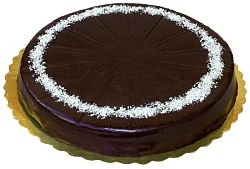
Garash (Bulgarian: гараш) is a chocolate cake from the Bulgarian cuisine. It was created by the Austro-Hungarian Kosta Garash in 1885, in Ruse, Bulgaria,[1] during the time he managed the grand hotel “Islah Hane”, which was located next to the residence of the Bulgarian knyaz Alexander of Battenberg. Royal personas such as Carol I of Romania, Milan I of Serbia and Oscar II were guests at the hotel. Kosta Garash created his famous "Garash" cake for such high-ranking receptions.

"Garash" cake has recently become a favorite of people with Gluten-related disorders since no wheat flour is used in the recipe.

Preparation

[edit]

Five 2 mm-thin round cake plates are made from a batter consisting of 200 g ground walnut kernels, 8 egg whites and 220 g crystal or powdered sugar. After baking and cooling, they are arranged one on top of the other and frosted in between, on top, and on the sides with a frosting (Ganache) made of sweet cream and chocolate. Afterwards, the cake is covered with chocolate icing.

See also

[edit]

References

[edit]
Revisions and contributorsEdit on WikipediaRead on Wikipedia
from Grokipedia
The Garash cake, also known as Garash, is a traditional Bulgarian consisting of multiple thin layers of nutty or , assembled with rich or , and typically topped with a glossy glaze. Often garnished with nuts, flakes, or sprinkles, it is renowned for its decadent, sweet flavor profile that balances the crunch of s with the smoothness of , and it is customarily served in small slices due to its intensity. Originating in the city of Ruse on the Danube River, the cake was invented in 1885 by Kosta Garash, an Austro-Hungarian confectioner working at a lavish hotel in the city during Bulgaria's post-Ottoman era. According to historical accounts, Garash created the dessert to honor guests at a welcome ball for Prince Alexander of Battenberg, using local ingredients like walnuts from nearby trees, eggs, sugar, dark chocolate, and butter to craft its distinctive layered structure. The cake quickly gained popularity, spreading from Ruse to Sofia and becoming a staple in Bulgarian patisseries and restaurants, symbolizing the region's European-influenced culinary sophistication and local pride. In contemporary , the Garash cake remains a beloved treat, often featuring five or more layers for an elegant presentation, and has been recognized internationally for its quality—for instance, it was ranked as the world's best by in 2022. Variations may include adjustments to the nut base or cream filling, but the core elements of and persist, making it a versatile yet iconic component of Bulgarian traditions.

History

Origins

The Garash cake emerged in Ruse, Bulgaria, in the years following the country's independence from the in 1878, a time when the city—known as "Little "—developed a vibrant scene shaped by Austro-Hungarian immigrants and traders along the Danube River. As a key port and cosmopolitan hub, Ruse attracted European influences, particularly from the , fostering the introduction of sophisticated techniques amid local culinary traditions. The cake was initially created in 1885 at the luxurious Islyah-hane hotel in , where it served as an elegant for elite guests frequenting the establishment's high-society events. Developed by Austro-Hungarian confectioner Kosta Garash, who managed the hotel's pastry operations, the treat reflected the era's blend of imported luxuries and regional resources in a post-independence eager to embrace European refinements. Its first notable public serving occurred in 1885 during a reception for Prince Alexander I of Battenberg, the newly established ruler of autonomous , which propelled the cake into royal and upper-class circles as a symbol of national sophistication. This event marked the cake's transition from a private innovation to a celebrated item in Bulgarian elite cuisine. This fusion highlighted the exchanges between the and the region, transforming imported techniques into a distinctly Bulgarian .

Creator and Creation

Kosta Garash was an Austro-Hungarian trained in who immigrated to following the Russo-Turkish War of 1877–1878, settling in the city of to pursue opportunities in the burgeoning trade. There, he and his wife Teresa leased and managed the prestigious Islyah Hane hotel, leveraging his expertise to cater to the city's affluent European-influenced . Born around 1859, Garash later married Serbian Elena in 1894, relocated to , and passed away in 1917 after his wife's death in 1912. Inspired by Central European walnut tortes from his Viennese background, Garash sought to adapt these traditions using locally sourced Bulgarian ingredients, aiming to craft a flourless yet elegant that would appeal to Ruse's sophisticated amid the post-liberation economic boom. This motivation stemmed from the need for refined confections suitable for high-society events, blending his professional skills with the availability of regional s from trees along the . In 1885, while at the Islyah Hane hotel, Garash experimented with meringues combined with ground walnuts for the layers and ganache for the filling, resulting in a multi-layered cake that he named after himself to signify his personal creation. The process involved whipping into a light base without , incorporating and nuts for structure, and assembling with and to achieve a rich yet airy texture. The cake quickly gained favor among Ruse's wealthy residents and visitors, debuting at elite gatherings such as a welcome ball for Prince and later served at a 1890 banquet for the founding of Bulgaria's first , where it was presented to prominent figures including Stefan . Its reputation spread through word-of-mouth along the trade routes, establishing it as a symbol of Ruse's cosmopolitan confectionery heritage among the local .

Description

Key Ingredients

The traditional Garash cake relies on a minimal set of core ingredients that contribute to its distinctive gluten-free layers and rich profile. Egg whites, typically 8 to 10 separated from yolks (with yolks often used in the ), form the base of the meringue sponge, providing a light, airy structure when whipped to soft peaks and baked into thin layers. Ground walnuts, around 250 to 350 grams per batch, are finely processed and folded into the meringue, imparting a nutty flavor, subtle crunch, and density while serving as the primary flour substitute to maintain the cake's traditionally gluten-free nature. Sugar, approximately 200 to 300 grams divided between the meringue and fillings, acts as a and stabilizer, helping to bind the whites and walnuts during whipping and adding notes when baked. , with 50-70% cocoa content for bitterness and depth, totals about 500 to 650 grams for both the filling and outer glaze, melting smoothly to coat and enrich the layers. , roughly 200 to 250 grams in traditional preparations, contributes creaminess and a velvety texture to the filling, enhancing overall richness without overpowering the nutty elements. Traditionally flourless, the cake is gluten-free, though some modern recipes include a small amount of flour. However, it contains common allergens including tree nuts (walnuts) and eggs, rendering it unsuitable for those with related dietary restrictions.

Composition and Texture

The Garash cake is structured with typically five thin, round layers of flourless walnut meringue, each baked to a delicate crispness and stacked alternately with layers of rich dark chocolate cream or ganache. The entire assembly forms a cylindrical shape, approximately 20-25 cm in diameter and 8-10 cm tall, enveloped in a glossy dark chocolate glaze or ganache for a smooth, uniform exterior. Decorations often include walnut halves pressed along the sides, chopped pistachios, or green-tinted coconut flakes scattered on top, enhancing its elegant, festive appearance. In terms of texture, the layers provide a light, crunchy bite with subtle moisture from the walnuts, creating a striking contrast to the dense, fudgy consistency of the filling that binds them. The walnuts embedded in the contribute an ongoing nutty crunch, while the exterior delivers a velvety melt-in-the-mouth sensation upon serving. The flavor profile balances intense, bittersweet notes from the dark varieties used (typically 50-70% cocoa) against the earthy, mildly sweet nuttiness of the walnuts, resulting in a decadent yet not overly cloying taste that emphasizes harmony between the components. This sensory combination makes the cake particularly suited for slicing into wedges, where the layers reveal their distinct yet cohesive qualities.

Preparation

Layer Preparation

The preparation of the meringue-based layers for Garash cake starts with whipping the egg whites to incorporate air and create a light batter. In a traditional , 10 room-temperature egg whites are beaten until soft and fluffy, with 200 g of added gradually until fully dissolved, resulting in soft peaks that maintain volume without becoming overly stiff. Finely ground walnuts, typically 400 g, are then gently folded into the using a to preserve the foam's structure, forming a nutty batter that serves as the base for the layers. To shape the layers, circles of about 24-26 cm in are traced on the reverse side of sheets, and the batter is spread evenly into thin rounds within these outlines, ensuring uniform thickness of around 2-3 mm for even . The is preheated to 160°C (320°F), and each layer is baked individually on a lined baking sheet for 5-7 minutes, until lightly golden and set but still pliable. Upon removal from the oven, the warm layers are immediately flipped and the is carefully peeled away to prevent sticking, after which they cool completely on a wire rack to achieve a crisp texture and avoid sogginess during assembly. If edges are uneven after cooling, they may be gently trimmed with a serrated knife for precise stacking. A standard batch yields 5 layers, sufficient for a cake serving 10-12 people, though proportions can be adjusted for larger versions.

Assembly and Finishing

Once the walnut meringue layers have cooled completely, assembly begins with the preparation of the ganache filling. This involves melting high-quality (typically 50-70% cocoa) over a double or in a , then incorporating warmed and, in some variations, softened to achieve a smooth, spreadable consistency that binds the layers while adding moisture and richness. The cooled layers are then stacked carefully on a serving plate or turntable to ensure stability and even distribution. Beginning with the first layer placed flat, about one-quarter of the warm is spread evenly across the surface using an offset , followed by the placement of the next layer; this process is repeated for four to five layers total, resulting in a height of approximately 10-15 cm. The is applied generously to prevent dryness and to create a cohesive structure, with any excess smoothed along the sides for a appearance. After stacking, the assembled cake is refrigerated for at least one hour to allow the to firm up and set the structure. For the finishing glaze, additional is melted with a small amount of neutral oil (such as or grapeseed oil) to create a fluid, shiny coating; this mixture is poured over the chilled cake, starting from the top and allowing it to cascade down the sides for an even, glossy finish without manual spreading to preserve smoothness. The cake is then returned to the refrigerator for another hour or until the glaze fully sets. Decoration is typically minimal to highlight the cake's elegant simplicity, with optional elements such as a border of piped tempered around the base or top edge, or a scattering of whole walnuts, chopped pistachios, or green-tinted shredded across the surface for visual contrast and texture. These additions are applied while the glaze is still slightly soft to ensure , enhancing the presentation without overpowering the cake's flavors.

Cultural Significance

Role in Bulgarian Cuisine

The Garash cake occupies a prominent place in Bulgarian desserts, serving as a staple in patisseries across the country and a favored choice for home baking. Widely available in confectioneries like Laguna in and featured on menus at establishments such as Happy Bar & Grill, it exemplifies a fusion of Balkan culinary traditions with Central European techniques, stemming from its Austro-Hungarian creation in the late . Symbolically, the cake embodies the cultural heritage of , often dubbed "Little Vienna" for its Neo-Baroque and historical ties to Austro-Hungarian influences, where the originated in 1885. It holds particular significance in celebratory contexts, commonly prepared for special occasions that highlight Bulgarian hospitality and festive traditions. Its recognition as the world's highest-rated cake by in 2022—though as of 2025 it ranks lower, with from at #1—affirms its authentic standards within Bulgarian , boosting local pride in traditional confections.

Festivals and Legacy

The Annual Garash Cake Festival in , has become a key event celebrating the dessert's heritage since its inception in the early 2020s. The festival, organized by Ruse Municipality, features baking contests, culinary demonstrations, tastings, live concerts, and innovative elements such as shows, drawing both locals and tourists to Svoboda Square. The fourth edition, held on September 13, 2025, highlighted the cake's classic recipes alongside creative interpretations, underscoring its role in community gatherings. Preservation efforts for the Garash cake's legacy involve collaborations between local authorities, such as the Ruse Chamber of Commerce and Industry, and confectioners to honor its historical significance. In 2025, celebrations marked the cake's 140th anniversary, tying back to its creation in 1885 by Kosta Garash, with events including special banquets and presentations that emphasize its ties to Ruse's confectionery past. These initiatives aim to maintain traditional recipes and promote the cake as a symbol of Bulgarian culinary identity. The cake's presence in media and boosts Ruse's appeal, appearing in national broadcasts and resources that showcase it as a must-try . Local patisseries and shops in Ruse, known for authentic preparations, attract visitors seeking the original flavors, often as part of cultural tours. Looking ahead, increasing global awareness through online recipes and international platforms signals potential for wider exports and innovative uses in diverse culinary scenes.

Variations

Traditional Forms

The traditional form of the Garash cake adheres closely to its original 1885 conception, featuring five thin, flourless layers of sponge stacked with a rich cream filling and coated in a glossy glaze, without any added flavors or variations. The is prepared by whipping whites to soft peaks with , then gently folding in finely ground walnuts to create delicate, 2-3 mm thick disks baked briefly to maintain a crisp yet tender texture. The cream, made by and , tempering with yolks, and incorporating and melted , provides a rich, smooth contrast that binds the layers, while the outer glaze—typically melted with a touch of oil—ensures a sleek finish. It is often topped with ground pistachios or green-dyed shredded coconut. This classic version is typically baked in a 25-26 cm diameter form, yielding a cake that serves 8-12 people when cut into wedge slices, allowing for generous portions that highlight its decadent profile. For optimal flavor integration and texture, the assembled cake rests in the refrigerator for at least 1 hour, though many traditional preparations recommend a full 24-hour chill to let the components meld without softening the excessively; it is best served at to enhance the chocolate's silkiness and the nuts' crunch. These methods preserve the cake's elegant simplicity, distinguishing it from flour-inclusive or flavored adaptations elsewhere. Traditionally, Garash cake is paired with strong black coffee to cut through its richness or a small glass of , the Bulgarian fruit brandy, in social settings like family gatherings or post-meal indulgences.

Modern Adaptations

In contemporary baking, Garash cake has seen adaptations in layer structure to accommodate various serving sizes and occasions. Modern recipes frequently employ varying numbers of layers from the traditional five for practicality, such as four or six alternating layers of and cream for a more manageable height suitable for home preparation or smaller gatherings. Taller iterations with up to nine layers appear in event-specific versions, enhancing visual impact for celebrations. Flavor innovations in urban Bulgarian bakeries and beyond introduce complementary elements while preserving the cake's nutty and profile. Additions like fresh fruits integrated into the cream layers provide a contrast to the richness, appearing in contemporary interpretations that blend with seasonal . Some variations incorporate rum-soaked elements or coffee-infused for depth, evolving from core recipes to appeal to diverse palates in city patisseries. Dietary adaptations have expanded accessibility without altering the cake's gluten-free foundation, which relies solely on walnut and avoids . Vegan versions substitute egg whites with plant-based alternatives, utilizing ingredients like , coconut flour, , and to replicate the meringue texture and creaminess, making it suitable for plant-based diets. These adaptations are marketed prominently in health-focused outlets, emphasizing the cake's inherent gluten-free status alongside vegan modifications. Global influences have led to fusion desserts incorporating local ingredients abroad. In regions like , peanut-based crusts replace walnuts in Garash-style cakes, adapting the nut component to regional availability and tastes. Such variations highlight the cake's versatility as it spreads internationally, often showcased in contests like the annual Garash Cake Festival in , where innovative takes are celebrated.

References

Add your contribution
Related Hubs
User Avatar
No comments yet.