Hubbry Logo
LekachLekachMain
Open search
Lekach
Community hub
Lekach
logo
8 pages, 0 posts
0 subscribers
Be the first to start a discussion here.
Lekach
Lekach
from Wikipedia
Lekach
Alternative namesUgat Dvash, Honey Cake
TypeCake
CourseDessert
Place of originIsrael, Jewish Diaspora
Region or stateAshkenazi Communities of Eastern Europe
Created byAshkenazi People
Serving temperatureRoom temperature
Main ingredientsRye flour, honey, spices, baking powder
  •   Media: Lekach

Lekach is a honey-sweetened cake made by Jews,[1] especially for the Jewish holiday of Rosh Hashanah.[2] Known in Hebrew as ugat dvash (עוּגַת דְּבַשׁ, lit.'honey cake'), it is mainly eaten in Israel by Israeli Jews and Jewish people all over the world who know it by its Yiddish name, lekach (לעקעך), phono-semantically matched in Hebrew as [ugat] lekakh ([עוּגַת] לֶקַח, lit.'lesson cake') influenced by the Biblical association of teaching with honey. It is traditionally eaten at Rosh Hashanah in hopes of ensuring a sweet New Year.[3] It is also customary to ask for and receive a honey cake on Erev Yom Kippur.[4]

History

[edit]

Various sorts of cakes sweetened with honey have been known since ancient times, in Egypt, Rome, and the Middle East. Arabs brought these traditions to Sicily and Moorish Spain. In the 11th century, a type of strongly spiced thick cake made from breadcrumbs and honey, resembling panforte, became popular in Italy. Italian Jews brought some of these styles to Western and Central Europe. The earliest known record in a Jewish source of a cake called lekach, from the Middle High German lecke, 'to lick',[5] was in the Medieval ages in Sefer ha-Rokeach by Eleazar ben Judah of Worms, Germany.[1]

Many Ashkenazi versions by the 13th century were influenced by or based on Lebkuchen or Honigkuchen (honey cake) recipes found in Germany.[3] Such heavily spiced cakes, analogous to the English gingerbread, became popular all over medieval Europe in communities of all religions, especially during important feasts and holidays. Lekach has changed drastically over the centuries, such that its current forms bear little resemblance to its ancestors. There are now many variations, ranging from dark and heavy to lighter more delicate versions, though in general it is never frosted. Lekach was brought to the Land of Israel by Ashkenazi immigrants.[1]

Overview

[edit]

A very traditional honey cake from the Jewish community of Austria contains an equal weight of white rye flour and dark honey, strong Austrian coffee instead of water, cloves, cinnamon, allspice, and golden raisins in the loaf, with slivered almonds on top of the loaf. It also has a fair number of eggs, vegetable oil (usually corn oil), salt, and baking powder.[citation needed]

Variations

[edit]
Lekach prior to baking

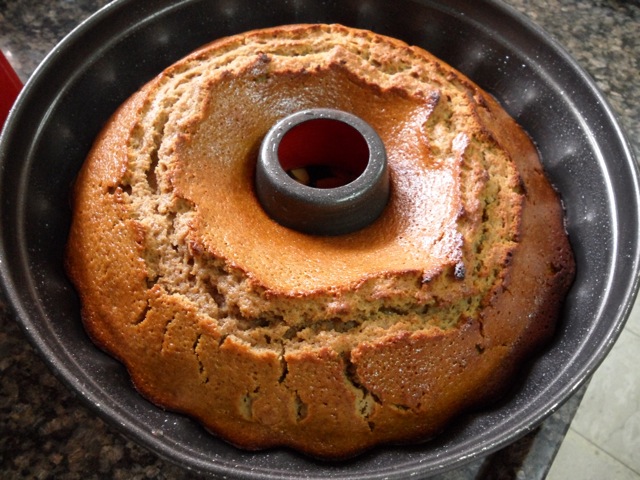
Recipes vary widely. Lekach is usually a dense, loaf-shaped cake, but some versions are similar to sponge cake or pound cake, with the addition of honey and spices, sometimes with coffee or tea for coloring. Other versions are more like gingerbread, pain d'épices, or lebkuchen.[3]

See also

[edit]

References

[edit]
[edit]
Revisions and contributorsEdit on WikipediaRead on Wikipedia
from Grokipedia
Lekach is a traditional Ashkenazi Jewish cake, characterized by its dense texture, rich sweetness, and warm spices, primarily prepared and consumed during the of and to symbolize hopes for a sweet and prosperous . The cake typically features key ingredients such as , flour, oil or eggs, granulated and , and liquids like , , , or whiskey, along with spices including , cloves, and ginger, which contribute to its moist, flavorful profile that improves with age. Originating in medieval Germany and France around the 1300s, lekach evolved from earlier honey-based confections popular among both Jewish and non-Jewish bakers, drawing on ancient traditions of honey cakes from regions like , , and the , where 's preservative qualities made it a staple for long-lasting sweets. The name "lekach," derived from the German word for "lick," reflects its sticky, lickable sweetness, and it shares roots with similar spiced honey cakes like , which spread through trade routes to , , and by the 11th century before becoming a distinctly Jewish treat in . In Jewish tradition, lekach holds deep symbolic and ritual importance beyond , where it is often served with apples dipped in or round to evoke completeness and sweetness in the coming year. It is also customarily requested—and received as a gift—from a , , or mentor on the eve of , fulfilling a Talmudic notion of preemptively satisfying potential future needs for charity with this humble "handout," while the invokes mercy, as the Hebrew word for (dvash) numerically equals that for "Father of Mercy" (Av HaRahamim). Additionally, lekach marks life-cycle events such as circumcisions, bar mitzvahs, weddings, and a child's initiation into , where it rewards learning by representing the "sweetness" of Jewish wisdom. Variations of lekach reflect regional adaptations, with Ashkenazi versions emphasizing dense, loaf-like cakes baked in tube pans, while Sephardic counterparts like tishpishti incorporate , nuts, and syrup for a lighter texture soaked post-baking. Modern recipes, such as those from Jewish baking expert Marcy Goldman, enhance traditional formulas with additions like strong for depth or whiskey for subtle warmth, ensuring the cake remains moist without relying solely on , which was once the primary before cane sugar's 17th-century introduction diminished its exclusivity in . Despite its sometimes polarizing reputation for heaviness, lekach endures as a cherished emblem of Jewish resilience and optimism, connecting ancient biblical references to "like honey wafers" with contemporary holiday tables.

History and Origins

Etymology

The term lekach derives from , where it denotes a honey-sweetened cake, and traces its roots to the verb lecken, meaning "to lick," evoking the irresistible sweetness of the treat that invites licking one's fingers. This etymology highlights the cake's appeal as a sticky, honey-laden baked good, a characteristic shared with medieval European confections. The lekach also evokes notions of a "portion" or "," drawing from the Hebrew lekach (לֶקַח), which stems from the laqach meaning "to take" or "receive," and appears in biblical contexts such as Proverbs 24:13-14, where the sweetness of symbolizes the rewarding nature of as a vital "portion" for the soul. In Jewish tradition, this linguistic layer underscores the custom of requesting and receiving lekach as a symbolic for a sweet , often from a parent or mentor before . The name further reflects influences from German baking nomenclature, such as Lebkuchen or Honigkuchen ( cakes or loaf cakes), which medieval adapted into their customs. In Hebrew, the cake is known as ugat dvash (עֻגַת דְּבַשׁ), translating directly to "honey cake," a straightforward term prevalent in contemporary Israeli usage among diverse Jewish populations. While lekach remains central to Ashkenazi naming practices, Sephardic communities employ distinct terms for analogous honey-infused desserts, such as tishpishti—a syrup-drenched cake originating in Ottoman Jewish traditions from and the —reflecting regional linguistic and culinary divergences.

Historical Development

Lekach originated in medieval Ashkenazi Jewish communities in during the 12th to 13th centuries, where it emerged as a honey-sweetened cake integrated into educational customs surrounding . New students were often given pieces of the cake to symbolize the "sweetness" of learning, drawing on traditions like coating Hebrew letters with honey for children to lick during . This Jewish adaptation was influenced by broader non-Jewish European baking practices, particularly the spiced, gingerbread-like cakes such as German Honigkuchen and , which were widespread in medieval . Ashkenazi Jews modified these confections to align with kosher dietary laws and symbolic uses of , transforming them into a distinctly communal . By the 16th to 19th centuries, lekach had spread eastward with migrating Ashkenazi populations, becoming a staple in Eastern European Jewish life for holidays and simkhot, or joyous occasions like weddings and betrothals. Its association with customs, emphasizing hopes for a sweet , was well-documented by the in Jewish culinary traditions. In the , lekach underwent further evolution following waves of Jewish to America and , where it adapted to new ingredients and baking techniques while retaining its holiday role. In the United States, it became an iconic dessert in Ashkenazi communities, with commercial bakeries and published recipes promoting denser loaves or lighter variations to suit American palates. Similarly, in , Ashkenazi settlers introduced lekach alongside local date-based sweets, fostering preservation efforts amid cultural blending and leading to its availability in modern supermarkets and kosher markets.

Characteristics

Ingredients

Lekach, a traditional Jewish honey cake, relies on a core set of ingredients that provide its characteristic sweetness, moisture, and dense texture. The primary sweetener is , typically used in quantities of 1 to 1½ cups per loaf, which not only imparts a rich, floral flavor but also ensures the cake remains moist even after several days; this ingredient holds deep symbolic significance, representing hopes for a sweet new year during . Sugar, both granulated and brown, is also essential, commonly added in 1 to 1½ cups total to balance the honey's intensity and contribute to tenderness. The base structure comes from flour, usually all-purpose in amounts of 3 to 4 cups for a standard yielding one large , which absorbs the liquids and creates the cake's tender crumb. Eggs, about 3 large ones, serve as binders to hold the mixture together and contribute to the cake's structure and richness. or softened , around ¾ to 1 cup, adds tenderness and helps maintain the cake's softness without making it overly dense. Salt, typically ½ , enhances flavors. Spices are essential for lekach's warm, aromatic profile, drawing from medieval European influences via the Jewish , with common additions including 1 to 4 teaspoons of ground for earthy sweetness, ½ teaspoon each of ground cloves and for pungent depth, and ¼ teaspoon of or for subtle warmth. These spices, used sparingly to avoid overpowering the , enhance the overall flavor complexity reminiscent of . , about 1 teaspoon, is often included for additional aroma. Flavor enhancers like strong black coffee or , about ½ to 1 cup, provide a bittersweet depth and contribute to the cake's dark color through their . Additional liquids such as (½ cup) may be used for moisture and acidity. Optional additions such as 1 to 4 tablespoons of whiskey or infuse a subtle boozy aroma that complements the spices. Leavening agents, including 1 of baking soda and 1 tablespoon of , help the cake rise gently despite the heavy content. Richer versions incorporate add-ins for texture, such as ½ to 1 cup of chopped walnuts, almonds, or raisins, which add crunch and chewiness without dominating the batter. A representative standard might use 3½ cups , 1 cup , 1 to 1½ cups , 3 eggs, 1 cup , 1 cup or , and the spices noted above to produce one 9x5-inch .

Preparation Methods

The preparation of lekach traditionally begins by preheating the oven to between 325°F and 350°F (165°C to 175°C), depending on the variation, to ensure even baking of the dense batter. Greased and floured pans, typically 8x4-inch or 9x5-inch sizes, or a 9x13-inch , are prepared to prevent sticking, as the batter's high content makes it particularly sticky. Wet ingredients, such as eggs, , , , and brewed or , are mixed separately until smooth, often by beating vigorously to incorporate air and emulsify the liquids. Dry ingredients—including , leaveners like and baking soda, and spices—are whisked together in a large to distribute evenly, with a well formed in the center. The wet mixture is then gradually added to the dry, combining gently with a , wooden spoon, or low-speed electric mixer to form a thick, smooth batter without overmixing, which could toughen the crumb. Using room-temperature ingredients promotes even blending and a tender texture, while the 's natural acidity necessitates precise leavening adjustments to achieve proper rise. The batter is poured into the prepared pans, filling them about two-thirds full to allow for expansion. typically takes 50 to , with doneness tested by inserting a or into the center; it should emerge clean or with a few moist crumbs. The cake is allowed to cool in the pan for 10 to 15 minutes before being turned out onto a wire rack to cool completely, preventing sogginess from trapped steam. No specialized equipment beyond standard mixing bowls, a or electric mixer, and loaf pans is required for traditional preparation. For storage, lekach is wrapped tightly in plastic or foil and kept in an airtight container at , where it can last up to two weeks; the flavor and moistness improve with age due to the honey's properties. It also freezes well for longer storage, ideally sliced first and thawed at .

Cultural and Religious Significance

Role in Jewish Holidays

Lekach holds a prominent place in observances among Ashkenazi Jewish communities, where it is traditionally served as a dessert during the festive meal to invoke hopes for a sweet new year. It is often enjoyed alongside apples dipped in honey, another customary sweet, enhancing the meal's thematic focus on prosperity and blessing. This practice draws briefly from biblical imagery of the land flowing with milk and honey, as described in the . On Erev , the eve of the Day of , a longstanding custom involves children and others requesting pieces of lekach from parents, teachers, or community leaders as a symbolic gesture for a "sweet" blessing to sustain them through the impending fast. This request is typically phrased in as "Ich bet lekach" (I beg for honey cake) or similar variants like "Gib mir lekach" (give me cake), performed playfully to foster goodwill and ensure no further begging is needed in the coming year. In many settings, rabbis or officials distribute the cake to congregants, reinforcing communal bonds before the solemn fast begins. Beyond the , lekach appears in other Jewish observances, such as during meals, particularly on Hoshana Rabba, the festival's final day, when it may be shared in settings to mark the holiday's joyful themes in some Ashkenazi communities, particularly Chabad-Lubavitch. It also serves as a simkha (joyous occasion) treat at various community events, including gatherings, where it is distributed to celebrate milestones or foster festivity. In modern practices, lekach is frequently baked in large batches for community sharing during holiday preparations, as seen in Chabad centers where leaders like the Lubavitcher historically distributed thousands of pieces to visitors worldwide. This continues in 21st-century observances across the and , where it is incorporated into interfaith dialogues, secular Jewish cultural events, and family celebrations, often adapted with contemporary flavors while retaining its ritual essence.

Symbolic Meanings

Lekach embodies profound symbolic meanings in Jewish tradition, primarily through its core ingredient of , which metaphorically represents the hope for a shana tova, or sweet year, during the High Holidays. This symbolism draws from biblical imagery of the as "a land flowing with milk and honey," evoking divine abundance and fulfillment as described in Exodus 3:8. The cake's sweetness thus serves as a tangible prayer for prosperity, joy, and goodness in the year ahead, aligning with the themes of renewal central to . Beyond seasonal wishes, lekach symbolizes the sweetness of , a connection rooted in medieval Ashkenazi customs where honey cakes were presented to young students beginning their . This practice illustrated the delight of acquiring wisdom to convey that divine knowledge brings inherent pleasure and nourishment to the soul. The act of sharing lekach in this context underscored education as a pathway to spiritual enrichment and communal continuity. Overall, lekach signifies broader themes of amid , particularly as a pre-fast before that counters the day's repentance (teshuva) with optimistic sweetness, reinforcing trust in divine mercy and a renewed life post-reflection. The tradition of requesting lekach on Erev Yom Kippur, often from a mentor or parent, acts as a humble to avert future need and affirm goodwill within family and community bonds.

Variations and Regional Differences

Traditional Variations

Traditional variations of lekach reflect the regional influences on Ashkenazi Jewish communities, adapting the cake's core ingredients of , , and spices to local availability and tastes while preserving its dense, moist texture. In Eastern European traditions, particularly among Polish and Lithuanian Jews, lekach tends to be dense and spice-heavy, often incorporating rye for a heartier crumb. German-origin Ashkenazi versions, tracing back to medieval Honigkuchen influences, are generally lighter in texture compared to their Eastern counterparts, with greater emphasis on for moisture and depth, alongside whiskey or brandy for a subtle alcoholic warmth. In Israeli adaptations, developed by European Jewish immigrants, lekach simplifies to highlight local ingredients, such as zest for brightness. Sephardic influences on lekach remain rare, as the cake is predominantly Ashkenazi, but Balkan Jewish communities—blending Sephardic and local traditions—occasionally incorporate elements like orange blossom water for floral notes in honey-based sweets akin to tishpishti, a cake soaked in honey syrup. Pre-20th century tweaks, especially in medieval recipes from and , emphasized parve preparations suitable for holidays, omitting eggs and using oil instead of dairy; yeast provided natural leavening, resulting in a denser, bread-like cake without modern chemical agents.

Modern Adaptations

In the , lekach has seen adaptations to accommodate vegan diets, often substituting eggs with or flaxseed mixtures for binding and with date syrup or to maintain plant-based compatibility while preserving moisture and sweetness. Health-focused versions emphasize reduced sugar through natural alternatives, gluten-free flours like or a blend of and flours, and lower content by cutting quantities in half or using fruit purees for tenderness. Fusion recipes incorporate contemporary flavors such as for a richer profile, pumpkin puree for seasonal moisture in American-style treats, and forms like cupcakes or bundt pans for modern presentation and portioning. Commercial products include pre-packaged mixes from brands like , which simplify home baking with pre-measured spices and , alongside ready-to-eat loaves from kosher bakeries experiencing sales increases during the High Holidays. Globally, lekach-inspired honey cakes appear in non-Jewish contexts, such as Norway's honningkaker, a spiced, dense treat akin to that echoes lekach's base but suits Nordic holiday traditions.

References

Add your contribution
Related Hubs
User Avatar
No comments yet.