Hubbry Logo
International StyleInternational StyleMain
Open search
International Style
Community hub
International Style
logo
8 pages, 0 posts
0 subscribers
Be the first to start a discussion here.
International Style
International Style
from Wikipedia
International Style architecture
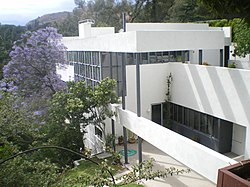
Lovell House in Los Angeles (1927–29), by Richard Neutra
Villa Savoye in Paris (1928–31), by Le Corbusier
Loews Philadelphia Hotel in Philadelphia (completed 1932), by George Howe and William Lescaze
Seagram Building in New York City (1955–58), by Mies van der Rohe
Paimio Sanatorium in Finland, (1929–1930) by Alvar Aalto
Istiqlal Mosque in Jakarta (1961-1978), by Friedrich Silaban
Additional media
Years active1920s–1970s
LocationWorldwide
Major figuresLudwig Mies van der Rohe, Jacobus Oud, Le Corbusier, Richard Neutra and Philip Johnson.[1]

The International Style is a major architectural style and movement that began in western Europe in the 1920s and dominated modern architecture until the 1970s.[2][3] It is defined by strict adherence to functional and utilitarian designs and construction methods, typically expressed through minimalism.[3][4] The style is characterized by modular and rectilinear forms, flat surfaces devoid of ornamentation and decoration, open and airy interiors that blend with the exterior, and the use of glass, steel, and concrete.[5][6]

The International Style is sometimes called rationalist architecture and the modern movement,[2][7][8][9] although the former is mostly used in English to refer specifically to either Italian rationalism or the style that developed in 1920s Europe more broadly.[10][11] In continental Europe, this and related styles are variably called Functionalism, Neue Sachlichkeit ("New Objectivity"), De Stijl ("The Style"), and Rationalism, all of which are contemporaneous movements and styles that share similar principles, origins, and proponents.[12]

Rooted in the modernism movement,[6] the International Style is closely related to modern architecture and likewise reflects several intersecting developments in culture, politics, and technology in the early 20th century.[6] After being brought to the United States by European architects in the 1930s, it quickly became an "unofficial" North American style, particularly after World War II.[6] The International Style reached its height in the 1950s and 1960s, when it was widely adopted worldwide for its practicality and as a symbol of industry, progress, and modernity. The style remained the prevailing design philosophy for urban development and reconstruction into the 1970s, especially in the Western world.[5]

The International Style was one of the first architectural movements to receive critical renown and global popularity.[6] Regarded as the high point of modernist architecture, it is sometimes described as the "architecture of the modern movement" and credited with "single-handedly transforming the skylines of every major city in the world with its simple cubic forms".[6][13] The International Style's emphasis on transcending historical and cultural influences, while favoring utility and mass-production methods, made it uniquely versatile in its application; the style was ubiquitous in a wide range of purposes, ranging from social housing and governmental buildings to corporate parks and skyscrapers.

Nevertheless, these same qualities provoked negative reactions against the style as monotonous, austere, and incongruent with existing landscapes; these critiques are conveyed through various movements such as postmodernism, new classical architecture, and deconstructivism.[12]

Postmodern architecture was developed in the 1960s in reaction to the International Style, becoming dominant in the 1980s and 1990s.

Concept and definition

[edit]

The term "International Style" was first used in 1932 by the historian Henry-Russell Hitchcock and architect Philip Johnson to describe a movement among European architects in the 1920s that was distinguished by three key design principles: (1) "Architecture as volume – thin planes or surfaces create the building's form, as opposed to a solid mass"; (2) "Regularity in the facade, as opposed to building symmetry"; and (3) "No applied ornament".[14]

Kiefhoek Worker's Housing project, now a Museum, Rotterdam, by Jacobus Oud (1930)

International style is an ambiguous term; the unity and integrity of this direction is deceptive. Its formal features were revealed differently in different countries. Despite the unconditional commonality, the International Style has never been a single phenomenon.[15] However, International Style architecture demonstrates a unity of approach and general principles: lightweight structures, skeletal frames, new materials, a modular system, an open plan, and the use of simple geometric shapes.

The problem of the International Style is that it is not obvious what type of material the term should be applied to: at the same time, there are key monuments of the 20th century (Le Corbusier's Villa Savoye; Wright's Fallingwater House) and mass-produced architectural products of their time.[16] Here it is appropriate to talk about the use of recognizable formal techniques and the creation of a standard architectural product, rather than iconic objects.

Hitchcock and Johnson's 1932 MoMA exhibition catalog identified three principles of the style: volume of internal space (as opposed to mass and solidity), flexibility and regularity (liberation from classical symmetry). and the expulsion of applied ornamentation ('artificial accents').[17]

Cover of The International Style (1932, reprinted 1996) by Henry-Russell Hitchcock and Philip Johnson

Common characteristics of the International Style include: a radical simplification of form, a rejection of superfluous ornamentation, bold repetition and embracement of sleek glass, steel and efficient concrete as preferred materials. Accents were found to be suitably derived from natural design irregularities, such as the position of doors and fire escapes, stair towers, ventilators and even electric signs.[17]

Further, the transparency of buildings, construction (called the honest expression of structure), and acceptance of industrialized mass-production techniques contributed to the International Style's design philosophy. Finally, the machine aesthetic, and logical design decisions leading to support building function were used by the International Style architect to create buildings reaching beyond historicism. The ideals of the style are commonly summed up in three slogans: ornament is a crime, truth to materials, form follows function; and Le Corbusier's description: "A house is a machine to live in".[18][19]

International Style is sometimes understood as a general term associated with such architectural phenomena as Brutalist architecture, constructivism, functionalism, and rationalism.

Phenomena similar in nature also existed in other artistic fields, for example in graphics, such as the International Typographic Style and Swiss Style.[20][21]

The Getty Research Institute defines it as "the style of architecture that emerged in The Netherlands, France, and Germany after World War I and spread throughout the world, becoming the dominant architectural style until the 1970s. The style is characterized by an emphasis on volume over mass, the use of lightweight, mass-produced, industrial materials, rejection of all ornament and colour, repetitive modular forms, and the use of flat surfaces, typically alternating with areas of glass."[22] Some researchers consider the International Style as one of the attempts to create an ideal and utilitarian form.[16]

Background

[edit]

Around the start of the 20th century, a number of architects around the world began developing new architectural solutions to integrate traditional precedents with new social demands and technological possibilities. The work of Victor Horta and Henry van de Velde in Brussels, Antoni Gaudí in Barcelona, Otto Wagner in Vienna and Charles Rennie Mackintosh in Glasgow, among many others, can be seen as a common struggle between old and new. These architects were not considered part of the International Style because they practiced in an "individualistic manner" and seen as the last representatives of Romanticism.

The International Style can be traced to buildings designed by a small group of modernists, the major figures of which include Ludwig Mies van der Rohe, Jacobus Oud, Le Corbusier, Richard Neutra and Philip Johnson.[1]

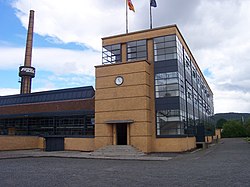
The founder of the Bauhaus school, Walter Gropius, along with prominent Bauhaus instructor, Ludwig Mies van der Rohe, became known for steel frame structures employing glass curtain walls.  One of the world's earliest modern buildings where this can be seen is a shoe factory designed by Gropius in 1911 in Alfeld, Germany, called the Fagus Works building. The first building built entirely on Bauhaus design principles was the concrete and steel Haus am Horn, built in 1923 in Weimar, Germany, designed by Georg Muche.[23] The Gropius-designed Bauhaus school building in Dessau, built 1925–26 and the Harvard Graduate Center (Cambridge, Massachusetts; 1949–50) also known as the Gropius Complex, exhibit clean lines[24] and a "concern for uncluttered interior spaces".[1]

Marcel Breuer, a recognized leader in Béton Brut (Brutalist) architecture and notable alumnus of the Bauhaus,[25] who also pioneered the use of plywood and tubular steel in furniture design,[26] and who after leaving the Bauhaus would later teach alongside Gropius at Harvard, is as well an important contributor to Modernism and the International Style.[27]

Prior to use of the term 'International Style', some American architects—such as Louis Sullivan, Frank Lloyd Wright, and Irving Gill—exemplified qualities of simplification, honesty and clarity.[28] Frank Lloyd Wright's Wasmuth Portfolio had been exhibited in Europe and influenced the work of European modernists, and his travels there probably influenced his own work, although he refused to be categorized with them. His buildings of the 1920s and 1930s clearly showed a change in the style of the architect, but in a different direction than the International Style.[28]

In Europe the modern movement in architecture had been called Functionalism or Neue Sachlichkeit (New Objectivity), L'Esprit Nouveau, or simply Modernism and was very much concerned with the coming together of a new architectural form and social reform, creating a more open and transparent society.[29]

The Weissenhof Estate, Stuttgart, Germany (1927)

The "International Style", as defined by Hitchcock and Johnson, had developed in 1920s Western Europe, shaped by the activities of the Dutch De Stijl movement, Le Corbusier, and the Deutscher Werkbund and the Bauhaus. Le Corbusier had embraced Taylorist and Fordist strategies adopted from American industrial models in order to reorganize society. He contributed to a new journal called L'Esprit Nouveau that advocated the use of modern industrial techniques and strategies to create a higher standard of living on all socio-economic levels. In 1927, one of the first and most defining manifestations of the International Style was the Weissenhof Estate in Stuttgart, overseen by Ludwig Mies van der Rohe. It was enormously popular, with thousands of daily visitors.[30][31]

1932 MoMA exhibition

[edit]
Philip Johnson co-defined the International Style with Henry-Russell Hitchcock as a young college graduate, and later became one of its practitioners.

The exhibition Modern Architecture: International Exhibition ran from February 9 to March 23, 1932, at the Museum of Modern Art (MoMA), in the Heckscher Building at Fifth Avenue and 56th Street in New York.[32] Beyond a foyer and office, the exhibition was divided into six rooms: the "Modern Architects" section began in the entrance room, featuring a model of William Lescaze's Chrystie-Forsyth Street Housing Development in New York. From there visitors moved to the centrally placed Room A, featuring a model of a mid-rise housing development for Evanston, Illinois, by Chicago architect brothers Monroe Bengt Bowman and Irving Bowman,[33] as well as a model and photos of Walter Gropius's Bauhaus building in Dessau. In the largest exhibition space, Room C, were works by Le Corbusier, Ludwig Mies van der Rohe, J. J. P. Oud and Frank Lloyd Wright (including a project for a house on the Mesa in Denver, 1932). Room B was a section titled "Housing", presenting "the need for a new domestic environment" as it had been identified by historian and critic Lewis Mumford. In Room D were works by Raymond Hood (including "Apartment Tower in the Country" and the McGraw-Hill Building) and Richard Neutra. In Room E was a section titled "The extent of modern architecture", added at the last minute,[34] which included the works of thirty-seven modern architects from fifteen countries who were said to be influenced by the works of Europeans of the 1920s. Among these works was shown Alvar Aalto's Turun Sanomat newspaper offices building in Turku, Finland.

After a six-week run in New York City, the exhibition then toured the US – the first such "traveling-exhibition" of architecture in the US – for six years.[35]

Curators

[edit]

MoMA director Alfred H. Barr hired architectural historian and critic Henry-Russell Hitchcock and Philip Johnson[34] to curate the museum's first architectural exhibition. The three of them toured Europe together in 1929 and had also discussed Hitchcock's book about modern art. By December 1930, the first written proposal for an exhibition of the "new architecture" was set down, yet the first draft of the book was not complete until some months later.

Publications

[edit]

The 1932 exhibition led to two publications by Hitchcock and Johnson:

  • The exhibition catalog, "Modern Architecture: International Exhibition"[17]
  • The book, The International Style: Architecture Since 1922, published by W. W. Norton & Co. in 1932.
    • reprinted in 1997 by W. W. Norton & Company[36]

Previous to the 1932 exhibition and book, Hitchcock had concerned himself with the themes of modern architecture in his 1929 book Modern Architecture: Romanticism and Reintegration.

According to Terence Riley: "Ironically the (exhibition) catalogue, and to some extent, the book The International Style, published at the same time of the exhibition, have supplanted the actual historical event."[37]

Exemplary Uses of the International Style

[edit]

The following architects and buildings were selected by Hitchcock and Johnson for display at the exhibition Modern Architecture: International Exhibition:

Architect Building Location Date
Jacobus Oud Workers Houses (house blocks Kiefhoek) Netherlands Rotterdam, The Netherlands 1924–1927
Otto Eisler Semi-detached Villa Czech Republic Brno, Czech Republic 1926–1927
Walter Gropius Fagus Factory Germany Alfeld, Germany 1911
Bauhaus School Germany Dessau, Germany 1926
City Employment Office Germany Dessau, Germany 1928
Ludwig Mies van der Rohe Apartment House, Weissenhof Estate Germany Stuttgart, Germany 1927
German pavilion at the Barcelona Expo Spain Barcelona, Spain 1929
Villa Tugendhat Czech Republic Brno, Czech Republic 1930
Le Corbusier Villa Stein France Garches, France 1927
Villa Savoye France Poissy, France 1930
Carlos de Beistegui Champs-Élysées Penthouse France Paris, France 1931
Erich Mendelsohn Schocken Department Store Germany Chemnitz, Germany 1928–1930
Frederick John Kiesler Film Guild Cinema United States New York City, US 1929
Raymond Hood McGraw-Hill Building United States New York City, US 1931
George Howe & William Lescaze Loews Philadelphia Hotel United States Philadelphia, US 1932
Monroe Bengt Bowman & Irving Bowman Lux apartment block United States Evanston, US 1931
Richard Neutra Lovell House United States Los Angeles, US 1929
Otto Haesler Rothenberg Siedlung Germany Kassel, Germany 1930
Karl Schneider Kunstverein Germany Hamburg, Germany 1930
Alvar Aalto Turun Sanomat building Finland Turku, Finland 1930

Notable omissions

[edit]

The exhibition excluded other contemporary styles that were exploring the boundaries of architecture at the time, including: Art Deco; German Expressionism, for instance the works of Hermann Finsterlin; and the organicist movement, popularized in the work of Antoni Gaudí. As a result of the 1932 exhibition, the principles of the International Style were endorsed, while other styles were classed less significant.

In 1922, the competition for the Tribune Tower and its famous second-place entry by Eliel Saarinen gave some indication of what was to come, though these works would not have been accepted by Hitchcock and Johnson as representing the "International Style". Similarly, Johnson, writing about Joseph Urban's recently completed New School for Social Research in New York, stated: "In the New School we have an anomaly of a building supposed to be in a style of architecture based on the development of the plan from function and facade from plan but which is a formally and pretentiously conceived as a Renaissance palace. Urban's admiration for the New Style is more complete than his understanding."[34]

California architect Rudolph Schindler's work was not a part of the exhibit, though Schindler had pleaded with Hitchcock and Johnson to be included.[38] Then, "[f]or more than 20 years, Schindler had intermittently launched a series of spirited, cantankerous exchanges with the museum."[39]

Before 1932

[edit]

1932–1944

[edit]
The Glass Palace, Heerlen, Netherlands, Frits Peutz (1935).

The gradual rise of the Nazi regime in Weimar Germany in the 1930s, and the Nazis' rejection of modern architecture, meant that an entire generation of avant-gardist architects, many of them Jews, were forced out of continental Europe. Some, such as Mendelsohn, found shelter in England, while a considerable number of the Jewish architects made their way to Palestine, and others to the US. However, American anti-Communist politics after the war and Philip Johnson's influential rejection of functionalism have tended to mask the fact that many of the important architects, including contributors to the original Weissenhof project, fled to the Soviet Union. This group also tended to be far more concerned with functionalism and its social agenda. Bruno Taut, Mart Stam, the second Bauhaus director Hannes Meyer, Ernst May and other important figures of the International Style went to the Soviet Union in 1930 to undertake huge, ambitious, idealistic urban planning projects, building entire cities from scratch. In 1936, when Stalin ordered them out of the country, many of these architects became stateless and sought refuge elsewhere; for example, Ernst May moved to Kenya.[40]

Dizengoff Circle, White City, Tel Aviv, by Genia Averbuch, 1934

The White City of Tel Aviv is a collection of over 4,000 buildings built in the International Style in the 1930s. Many Jewish architects who had studied at the German Bauhaus school designed significant buildings here.[41] A large proportion of the buildings built in the International Style can be found in the area planned by Patrick Geddes, north of Tel Aviv's main historical commercial center.[42] In 1994, UNESCO proclaimed the White City a World Heritage Site, describing the city as "a synthesis of outstanding significance of the various trends of the Modern Movement in architecture and town planning in the early part of the 20th century".[43] In 1996, Tel Aviv's White City was listed as a World Monuments Fund endangered site.[44]

The Kavanagh Building in Buenos Aires, by Sánchez, Lagos & de la Torre (1936).

The residential area of Södra Ängby in western Stockholm, Sweden, blended an international or functionalist style with garden city ideals. Encompassing more than 500 buildings, most of them designed by Edvin Engström, it remains the largest coherent functionalist or "International Style" villa area in Sweden and possibly the world, still well-preserved more than a half-century after its construction in 1933–40 and protected as a national cultural heritage.

Zlín is a city in the Czech Republic which was in the 1930s completely reconstructed on principles of functionalism. In that time the city was a headquarters of Bata Shoes company and Tomáš Baťa initiated a complex reconstruction of the city which was inspired by functionalism and the Garden city movement. Tomas Bata Memorial is the most valuable monument of the Zlín functionalism. It is a modern paraphrase of the constructions of high gothic style period: the supporting system and colourful stained glass and the reinforced concrete skeleton and glass.

With the rise of Nazism, a number of key European modern architects fled to the US. When Walter Gropius and Marcel Breuer fled Germany they both arrived at the Harvard Graduate School of Design, in an excellent position to extend their influence and promote the Bauhaus as the primary source of architectural modernism. When Mies fled in 1938, he first fled to England, but on emigrating to the US he went to Chicago, founded the Second School of Chicago at IIT and solidified his reputation as a prototypical modern architect.

Architect Building Location Date
Ove Arup Labworth Café United Kingdom Essex, England 1932–1933
Jorge Kálnay Luna Park Argentina Buenos Aires, Argentina 1932
Leendert van der Vlugt Sonneveld House Netherlands Rotterdam, Netherlands 1932–1933
Carlos Ramos Radio Pavilion of the Oncology Institute Portugal Lisbon, Portugal 1933
Hans Scharoun Schminke House Germany Löbau, Germany 1933
Frits Peutz Glaspaleis Netherlands Heerlen, Netherlands 1933
František Lydie Gahura Tomas Bata Memorial Czech Republic Zlín, Czech Republic 1933
Oscar Stonorov and Alfred Kastner Carl Mackley Houses United States Philadelphia, US 1933–1934
Edvin Engström Södra Ängby Sweden Stockholm, Sweden 1933–1939
Genia Averbuch Dizengoff Square Israel Tel Aviv, Israel 1934–1938
Dov Karmi Max-Liebling House Israel Tel Aviv, Israel 1936
Yehuda Lulka Thermometer House Israel Tel Aviv, Israel 1935
Erich Mendelsohn Weizmann House Israel Rehovot, Israel 1936
Wells Coates Isokon building United Kingdom London, England 1934
Berthold Lubetkin Highpoint I United Kingdom London, England 1935
Maxwell Fry Sun House United Kingdom London, England 1935
Neil & Hurd Ravelston Garden United Kingdom Edinburgh, Scotland 1936
Sánchez, Lagos & de la Torre Kavanagh Building Argentina Buenos Aires, Argentina 1936
Paul Thiry Thiry House[45] United States Seattle, Washington, US 1936
Walter Gropius Gropius House United States Lincoln, Massachusetts, US 1937–1938
Hamilton Beatty and Allen Strang Willard and Fern Tompkins House United States Monona, Wisconsin, US 1937
William Ganster and William Pereira Lake County Tuberculosis Sanatorium United States Waukegan, Illinois, US 1938–1939

1945–present

[edit]
Seagram Building, New York, Ludwig Mies van der Rohe (1958)
Tower C of Place de Ville

After World War II, the International Style matured; Hellmuth, Obata & Kassabaum (later renamed HOK) and Skidmore, Owings & Merrill (SOM) perfected the corporate practice, and it became the dominant approach for decades in the US and Canada. Beginning with the initial technical and formal inventions of 860-880 Lake Shore Drive Apartments in Chicago, its most famous examples include the United Nations headquarters, the Lever House, the Seagram Building in New York City, and the campus of the United States Air Force Academy in Colorado Springs, Colorado, as well as the Toronto-Dominion Centre in Toronto. Further examples can be found in mid-century institutional buildings throughout North America and the "corporate architecture" spread from there, especially to Europe.

In Canada, this period coincided with a major building boom and few restrictions on massive building projects. International Style skyscrapers came to dominate many of Canada's major cities, especially Ottawa, Montreal, Vancouver, Calgary, Edmonton, Hamilton, and Toronto. While these glass boxes were at first unique and interesting, the idea was soon repeated to the point of ubiquity. A typical example is the development of so-called Place de Ville, a conglomeration of three glass skyscrapers in downtown Ottawa, where the plans of the property developer Robert Campeau in the mid-1960s and early 1970s—in the words of historian Robert W. Collier, were "forceful and abrasive[;] he was not well-loved at City Hall"—had no regard for existing city plans, and "built with contempt for the existing city and for city responsibilities in the key areas of transportation and land use".[46] Architects attempted to put new twists into such towers, such as the Toronto City Hall by Finnish architect Viljo Revell. By the late 1970s a backlash was under way against modernism—prominent anti-modernists such as Jane Jacobs and George Baird were partly based in Toronto.

The typical International Style or "corporate architecture" high-rise usually consists of the following:

  1. Square or rectangular footprint
  2. Simple cubic "extruded rectangle" form
  3. Windows running in broken horizontal rows forming a grid
  4. All facade angles are 90 degrees.[citation needed]

In 2000 UNESCO proclaimed University City of Caracas in Caracas, Venezuela, as a World Heritage Site, describing it as "a masterpiece of modern city planning, architecture and art, created by the Venezuelan architect Carlos Raúl Villanueva and a group of distinguished avant-garde artists".[citation needed]

In June 2007 UNESCO proclaimed Ciudad Universitaria of the Universidad Nacional Autónoma de México (UNAM), in Mexico City, a World Heritage Site due to its relevance and contribution in terms of international style movement. It was designed in the late 1940s and built in the mid-1950s based upon a masterplan created by architect Enrique del Moral. His original idea was enriched by other students, teachers, and diverse professionals of several disciplines. The university houses murals by Diego Rivera, Juan O'Gorman and others. The university also features Olympic Stadium (1968). In his first years of practice, Pritzker Prize winner and Mexican architect Luis Barragán designed buildings in the International Style. But later he evolved to a more traditional local architecture. Other notable Mexican architects of the International Style or modern period are Carlos Obregón Santacilia, Augusto H. Alvarez, Mario Pani, Federico Mariscal [es], Vladimir Kaspé, Enrique del Moral, Juan Sordo Madaleno, Max Cetto, among many others.

In Brazil Oscar Niemeyer proposed a more organic and sensual[47] International Style. He designed the political landmarks (headquarters of the three state powers) of the new, planned capital Brasília. The masterplan for the city was proposed by Lúcio Costa.

Architect Building Location Date
Ludwig Mies van der Rohe Illinois Institute of Technology campus (including S. R. Crown Hall) United States Chicago, US 1945–1960
860–880 Lake Shore Drive Apartments United States Chicago, US 1949
Pietro Belluschi Commonwealth Building United States Portland, Oregon, US 1948
Oscar Niemeyer, Le Corbusier, Harrison & Abramovitz Headquarters of the United Nations United States New York City, US 1950s
Michael Scott Busaras Republic of Ireland Dublin, Ireland 1945–1953
Kemp, Bunch & Jackson Eight Forty One United States Jacksonville, US 1955
Ron Phillips and Alan Fitch City Hall, Hong Kong Hong Kong Central, Hong Kong, China 1956
Alberto Belgrano Blanco, José A. Hortal and Marcelo Martínez de Hoz Alas Building Argentina Buenos Aires, Argentina 1957
John Bland Old City Hall Canada Ottawa, Canada 1958
Emery Roth & Sons 10 Lafayette Square United States Buffalo, New York, US 1958–1959
Kelly & Gruzen High School of Graphic Communication Arts United States Manhattan, New York City, US 1959
Arne Jacobsen SAS Royal Hotel Denmark Copenhagen, Denmark 1958–60
Stanley Roscoe Hamilton City Hall Canada Hamilton, Canada 1960
John Lautner Chemosphere United States Los Angeles, US 1960
Carlos Arguelles Philamlife Building Philippines Manila, Philippines 1961
I. M. Pei Place Ville-Marie Canada Montreal, Canada 1962
Charles Luckman Prudential Tower United States Boston, US 1964
Carlos Arguelles Philippine National Bank Head Office (Escolta) Philippines Manila, Philippines 1965-2015 [48]
George Dahl First National Bank Tower United States Dallas, US 1965
Abugov & Sunderland CN Tower Canada Edmonton, Canada 1966
Various architects Montreal Metro, initial network Canada Montreal, Canada 1966
Ludwig Mies van der Rohe Toronto-Dominion Centre Canada Toronto, Canada 1967
Westmount Square Canada Montreal, Canada 1967
Skidmore, Owings & Merrill Equitable Building United States Atlanta, US 1968
Hermann Henselmann et al. Berlin TV Tower Germany Berlin, Germany 1969
Michael Manser Capel Manor House United Kingdom Horsmonden, UK 1971
Campeau Corporation Place de Ville Canada Ottawa, Canada 1967–1972
Arthur C.F. Lau Stelco Tower Canada Hamilton, Canada 1973
Crang & Boake Hudson's Bay Centre Canada Toronto, Canada 1974
Jerzy Skrzypczak Chałubińskiego 8 Poland Warsaw, Poland 1975–1978
Friedrich Silaban Borobudur Hotel

Indonesia Jakarta, Indonesia

1974
Istiqlal Mosque Indonesia Jakarta, Indonesia 1978
Pedro Moctezuma Díaz Infante Torre Ejecutiva Pemex Mexico Mexico City, Mexico 1982

Criticism

[edit]

In 1930, Frank Lloyd Wright wrote: "Human houses should not be like boxes, blazing in the sun, nor should we outrage the Machine by trying to make dwelling-places too complementary to Machinery."[49]

In Elizabeth Gordon's well-known 1953 essay, "The Threat to the Next America", she criticized the style as non-practical, citing many instances where "glass houses" are too hot in summer and too cold in winter, empty, take away private space, lack beauty and generally are not livable. Moreover, she accused this style's proponents of taking away a sense of beauty from people and thus covertly pushing for a totalitarian society.[50]

In 1966, architect Robert Venturi published Complexity and Contradiction in Architecture,[51] essentially a book-length critique of the International Style. Architectural historian Vincent Scully regarded Venturi's book as 'probably the most important writing on the making of architecture since Le Corbusier's Vers une Architecture.[52] It helped to define postmodernism.

Best-selling American author Tom Wolfe wrote a book-length critique, From Bauhaus to Our House, portraying the style as elitist.

One of the supposed strengths of the International Style has been said to be that the design solutions were indifferent to location, site, and climate; the solutions were supposed to be universally applicable; the style made no reference to local history or national vernacular. This was soon identified as one of the style's primary weaknesses.[53]

In 2006, Hugh Pearman, the British architectural critic of The Times, observed that those using the style today are simply "another species of revivalist", noting the irony.[54] The negative reaction to internationalist modernism has been linked to public antipathy to overall development.[55][56]

In the preface to the fourth edition of his book Modern Architecture: A Critical History (2007), Kenneth Frampton argued that there had been a "disturbing Eurocentric bias" in histories of modern architecture. This "Eurocentrism" included the US.[57]

Architects

[edit]

See also

[edit]

References

[edit]

Further reading

[edit]
[edit]
Revisions and contributorsEdit on WikipediaRead on Wikipedia
from Grokipedia
The International Style is an influential architectural movement that originated in Europe during the 1920s and 1930s, defined by its emphasis on functionalism, the use of modern industrial materials like steel, glass, and reinforced concrete, and the rejection of historical ornamentation in favor of clean, rectilinear forms and planar surfaces. The style prioritizes the expression of volume rather than mass, regularity in facade design without symmetry, and technical precision, often featuring flat roofs, ribbon windows, and open interior spaces that integrate with their surroundings through large glazing. Coined in 1932 by historians Henry-Russell Hitchcock and Philip Johnson in their book accompanying a Museum of Modern Art exhibition, the term encapsulated the work of European pioneers such as Le Corbusier, Ludwig Mies van der Rohe, and Walter Gropius, whose innovations responded to post-World War I industrial advancements and a desire for rational, machine-age aesthetics. Emerging from contexts like the Bauhaus school in Germany and the functionalist ethos in France and the Netherlands, the International Style promoted universality, aiming to transcend national traditions through standardized forms suited to mass production and urbanization. Its key achievements include enabling the construction of efficient high-rise buildings and public structures that maximized light and ventilation, as seen in landmarks like Le Corbusier's Villa Savoye and Mies van der Rohe's Seagram Building, which exemplified "less is more" minimalism and structural honesty. Post-World War II, the style gained prominence in the United States, influencing corporate skyscrapers and urban planning, where architects like Johnson adapted it for American contexts, though often prioritizing aesthetic formalism over strict functional needs. Despite its triumphs in democratizing modern design and advancing engineering feats, the International Style faced significant criticisms for producing homogeneous, context-insensitive structures that disregarded local climates, cultures, and human-scale proportions, contributing to sterile urban environments. Detractors argued it imposed a corporate uniformity, alienating users and sparking backlash movements like Postmodernism in the late 20th century, which reintroduced ornament and historical references to counter its perceived rigidity and ideological associations with modernist utopianism. While its principles of simplicity and efficiency remain foundational in contemporary architecture, the style's legacy underscores the tension between universal ideals and contextual realities.

Origins and Precursors

European Modernist Foundations

The foundations of the International Style in Europe emerged in the aftermath of World War I, driven by movements seeking to reject historical ornamentation in favor of functional, machine-age forms derived from industrial production methods. De Stijl, initiated in the Netherlands in 1917 by Theo van Doesburg and others, emphasized geometric abstraction through horizontal and vertical lines, primary colors, and asymmetrical compositions, influencing architectural designs that prioritized clarity and universality. Architects associated with De Stijl, such as J.J.P. Oud, applied these principles to housing projects like the Kiefhoek district in Rotterdam (1922–1925), which featured stark, cubic volumes and flat roofs to promote efficient, mass-producible urban living. In Germany, the Bauhaus school, founded by Walter Gropius in Weimar on April 1, 1919, integrated art, craft, and technology to produce designs unadorned by superfluous decoration, focusing instead on the inherent logic of materials and function. Relocated to Dessau in 1925, the Bauhaus buildings themselves—designed by Gropius with glass curtain walls and asymmetrical layouts—exemplified these ideals, influencing subsequent architectural pedagogy and practice across Europe. The school's emphasis on standardized, prefabricated elements anticipated the rationalist approach central to later International Style developments. Le Corbusier, a Swiss-born architect active in France, articulated modernist tenets in his 1923 manifesto Vers une architecture (Towards a New Architecture), advocating for buildings as "machines for living" governed by principles like pilotis (elevated supports), roof gardens, and free plans. His Villa Savoye (1928–1931) near Paris embodied the "Five Points of Architecture" outlined in 1926, utilizing reinforced concrete for open, flowing interiors and horizontal windows to maximize light and views, thereby demonstrating a causal link between structural innovation and spatial efficiency. The 1927 Weissenhof Estate exhibition in Stuttgart, organized by Ludwig Mies van der Rohe under the auspices of the Deutscher Werkbund, served as a pivotal synthesis of these European efforts, presenting affordable housing prototypes by Gropius, Le Corbusier, and others using steel, glass, and concrete to achieve simplicity and hygiene. This event highlighted a convergence toward volume over mass, regularity over symmetry, and technical precision, laying empirical groundwork for the style's transatlantic codification despite political opposition from conservative critics who viewed it as overly austere.

Technological and Philosophical Influences

The International Style emerged amid rapid technological advancements in materials and methods during the , including the of , skeletons, and , which supplanted traditional and enabled non-load-bearing facades, expansive glazing, and flexible interior spaces. These innovations, stemming from industrial feats like those in automotive and aeronautical , allowed for the realization of flat roofs, cantilevered elements, and windows, hallmarks that prioritized structural and over decorative excess. Philosophically, the style was rooted in functionalism, a doctrine asserting that a building's form must derive directly from its intended purpose, eschewing superfluous ornamentation in favor of utility and rational proportion. Le Corbusier encapsulated this in his 1923 publication Vers une architecture, proclaiming "a house is a machine for living in," where domestic structures emulate the precision and hygiene of machines, incorporating standardized components for baths, ventilation, and spatial flow to serve human needs without historical revivalism. This machine-age ethos, influenced by broader modernist rationalism and the Bauhaus emphasis on integrating art, craft, and technology, viewed architecture as a means to foster social progress through universal, adaptable designs responsive to industrialized societies. The convergence of these influences promoted a causal view of design wherein technological capabilities directly dictated aesthetic and spatial outcomes, prioritizing empirical functionality over subjective ornament, as evidenced in early exemplars like the 1929 Villa Savoye, which utilized pilotis and free plans to optimize light, air circulation, and vehicular access. This framework rejected eclectic historicism, instead embracing a purist geometry that reflected Enlightenment-derived principles of reason and universality, though critics later noted its potential oversight of cultural context in favor of abstract efficiency.

Defining Characteristics

Core Architectural Principles

The core architectural principles of the International Style, as articulated by Henry-Russell Hitchcock and in their 1932 publication The International Style: Architecture Since 1922, emphasize three fundamental tenets: the conception of architecture as volume rather than mass, the preference for regularity over or other balancing devices, and the strict avoidance of applied ornamentation. These principles prioritize the expression of structural volume through thin walls and open interior spaces, rejecting the solidity and heaviness associated with traditional masonry construction in favor of lightweight, skeletal frameworks enabled by steel and . Regularity manifests in the consistent repetition of modular elements, such as horizontal ribbon windows and planar surfaces, creating rhythmic facades without reliance on symmetrical compositions that dominate classical architecture. This approach underscores a functional logic derived from the building's programmatic needs, where form emerges from the rational organization of interior volumes rather than imposed geometric harmony. The rejection of ornament further reinforces purity of expression, eliminating decorative motifs to highlight the intrinsic qualities of materials like glass, steel, and stucco, which are left unadorned and finished smoothly. These principles collectively embody a commitment to functionalism, where the building's purpose dictates its aesthetic, influenced by industrial production methods and the machine age ethos. Flat roofs, cantilevered elements, and asymmetrical compositions often result, promoting adaptability and the integration of indoor and outdoor spaces through expansive glazing. While these tenets aimed for universality, their application sometimes led to standardized forms critiqued for lacking contextual sensitivity, though proponents argued they represented an objective response to modern societal demands.

Materials, Forms, and Functionalism

The International Style embodies functionalism as a core principle, where architectural form derives directly from the building's purpose, encapsulated in the axiom "form follows function." This doctrine, advanced by modernist architects, demands that designs prioritize utility and structural efficiency over decorative embellishment, ensuring that every element serves a practical role in accommodating human activity. Planning in this style liberates spatial organization from conventional symmetries, flexibly adapting to convenience and the specific demands of occupancy, such as open interiors for circulation or light-filled volumes for habitation. Materials central to the style include reinforced concrete for skeletal frameworks, steel for slender posts and beams, and extensive glass for transparency and illumination, enabling lightweight constructions that express technical prowess without reliance on heavy masonry. These industrial materials, often mass-produced, facilitate honest expression of construction methods, with surfaces like stucco, aluminum, or thin stone slabs applied flush to reveal underlying structure rather than conceal it. Such choices underscore a commitment to material authenticity, where the inherent properties of steel's tensile strength or glass's permeability dictate aesthetic restraint and proportional harmony. Forms emphasize geometric regularity and prismatic volumes over solid mass, featuring rectilinear plans, flat roofs, and continuous planar facades punctuated by horizontal ribbon windows. Asymmetrical compositions and modular repetitions promote fluidity and expansiveness, aligning with functional needs by integrating interior and exterior spaces seamlessly, as seen in pilotis elevating structures above ground or free facades independent of load-bearing walls. This subordination of detail to overall volume rejects moldings or projections, achieving a machine-like precision that prioritizes the building's role as a habitable environment.

The 1932 MoMA Exhibition

Curators and Organizational Context

The 1932 exhibition "Modern Architecture: International Exhibition" at the Museum of Modern Art (MoMA) in New York was curated by architectural historian Henry-Russell Hitchcock and Philip Johnson, who served as the founding chairman of MoMA's newly established Department of Architecture. Hitchcock, born in 1903 and educated at Harvard University where he earned a master's degree in architecture in 1927, had already published works on modern European architecture, providing scholarly depth to the curation. Johnson, at age 25, brought organizational energy and a focus on contemporary design, having been appointed by MoMA director Alfred H. Barr Jr. to lead the effort, which marked the museum's first major architectural show. Organizationally, the emerged from MoMA's broader mission, founded , to promote amid skepticism toward European ; Barr initiated programming to extend this scope. Held from February 10 to March 20, 1932, in MoMA's Heckscher Building, it featured models, plans, and photographs of works by architects like , , and Mies van der , selected to highlight a unified "international style" characterized by functionalism and minimal ornamentation. The curators' collaboration produced the seminal publication The International Style: Architecture Since 1922, which formalized the term and theoretical framework, influencing global perceptions of . This context reflected MoMA's role as a platform for transatlantic exchange, particularly amid rising European political tensions that displaced modernist architects; Johnson and Hitchcock's selections emphasized stylistic consistency over national or ideological variances, prioritizing empirical analysis of form and function. While the exhibition drew criticism for overlooking American precedents like Frank Lloyd Wright's inclusion despite his divergence from the style's tenets, it established MoMA as a key institutional curator of architectural discourse.

Publications and Theoretical Framework

The 1932 MoMA exhibition was accompanied by the seminal publication The International Style: Architecture Since 1922, authored by curators Henry-Russell Hitchcock and Philip Johnson and issued by W. W. Norton & Company in early 1932. This 240-page volume, featuring 82 full-page photographs of buildings constructed primarily between 1922 and 1932, served as both a catalog and a theoretical treatise, surveying key works by European architects such as Walter Gropius, Ludwig Mies van der Rohe, and Le Corbusier. In the book, Hitchcock and Johnson delineated the theoretical framework of the International Style through three defining principles derived from their analysis of the featured architecture. The first principle emphasized volume—conceiving buildings as inhabitable space enclosed by thin planes rather than solid masses—prioritizing the purity of cubic forms and the expression of interior spatial continuity over traditional solidity. The second principle favored regularity in plan and elevation as the primary shaper of form, rejecting axial symmetry in favor of flexible, repetitive grids that accommodated functional needs without imposed monumentality. The third strictly proscribed applied ornamentation, insisting that architectural interest arise solely from the precise articulation of structure, materials, and spatial organization. These principles, while rooted in the functionalist and rationalist tendencies of contemporaneous European modernism, represented Hitchcock and Johnson's interpretive synthesis rather than a direct manifesto from the architects themselves, framing the style as a unified, timeless aesthetic applicable beyond regional contexts. The publication's influence extended the exhibition's reach, establishing a doctrinal basis for the style's dissemination in the United States and globally, though later critics noted its selective emphasis on formal attributes over social or contextual factors.

Selected Exemplars and Omissions

The 1932 MoMA exhibition showcased select buildings and projects exemplifying the International Style's principles of volumetric composition, regularity, and ornament avoidance, primarily through photographs, drawings, and models of works by European pioneers and emerging American adherents. Key European exemplars included Le Corbusier's Villa Savoye in Poissy-sur-Seine, France (1929–1931), praised for its pilotis, ribbon windows, and free plan demonstrating purity of form and functional efficiency; Ludwig Mies van der Rohe's Tugendhat House in Brno, Czechoslovakia (1928–1930), noted for its open interior spaces, extensive glass walls, and seamless integration of structure and skin; and Walter Gropius's Bauhaus building in Dessau, Germany (1925–1926), highlighted for its asymmetrical regularity, flat roof, and glass curtain wall embodying industrial precision. J.J.P. Oud's Kiefhoek Housing Development in Rotterdam, Netherlands (1922–1925), was featured as a model of economical, standardized low-rise housing with white stucco facades and horizontal emphasis. American exemplars were fewer but significant, signaling potential adoption of the style stateside, such as Richard Neutra's Lovell House in Los Angeles, California (1927–1929), a steel-framed residence elevated on stilts with expansive glazing, illustrating adaptation of European modernism to local climate and terrain. Howe and Lescaze's Philadelphia Saving Fund Society (PSFS) Building project, completed in 1932, was included for its sleek tower form, setbacks, and functional signage, marking an early commercial skyscraper in the style despite lingering Art Deco influences. Raymond Hood's skyscraper projects, like the Daily News Building in New York (1930), were presented as transitional works approaching International purity through simplified massing, though critiqued for residual ornament. Omissions were deliberate, reflecting the curators' strict criteria emphasizing stylistic consistency over broader modernism; architects incorporating regional symbolism, historical allusions, or expressive elements were largely excluded to define a "universal" style detached from context. Frank Lloyd Wright, despite his foundational influence on modern architecture, was marginally included via projects like the House on the Mesa (1932 model), but his organic, site-specific designs were sidelined as deviating from the style's rationalism and universality. Soviet constructivists, such as Vladimir Tatlin or the Vesnin brothers, whose works prioritized ideological agitation and asymmetry over regularity, were absent, possibly due to political tensions or incompatibility with the exhibition's apolitical formalism amid rising fascism in Europe. Figures like Auguste Perret, whose reinforced concrete innovations retained classical proportions, and Scandinavians such as Gunnar Asplund, blending functionalism with traditional motifs, were overlooked to prioritize the "pure" manifestations by the curators' favored triumvirate of Le Corbusier, Mies, and Gropius. This selectivity codified the International Style as an elite, exportable aesthetic, omitting vernacular adaptations or socially driven variants that might dilute its formal tenets.

Historical Development

Pre-Exhibition Applications (Before 1932)

The architectural principles later codified as the International Style found early expression in Europe during the 1920s, driven by modernist movements emphasizing functionalism, geometric forms, and industrial materials such as reinforced concrete, steel framing, and large glass expanses. These pre-1932 applications rejected historical ornamentation in favor of rational, machine-inspired designs suited to post-World War I urbanization and social housing needs. Key exemplars emerged from institutions like the Bauhaus in Germany and De Stijl in the Netherlands, alongside individual works by pioneers such as Le Corbusier in France. In Germany, Walter Gropius's Bauhaus building in Dessau, constructed between 1925 and 1926, exemplified early modernist tenets with its asymmetrical massing, flat roof, and ribbon windows integrated into a steel-and-glass curtain wall system. This structure, housing the Bauhaus school's workshops and classrooms, prioritized open interior spaces and industrial efficiency, influencing subsequent functionalist designs across Europe. The building's completion marked a shift toward viewing architecture as a collaborative, technology-driven endeavor. The 1927 Weissenhof Siedlung in Stuttgart, organized by Ludwig Mies van der Rohe under the Deutscher Werkbund, served as a pivotal demonstration of these emerging ideas, featuring 33 experimental housing units by 17 architects including Gropius, Le Corbusier, and Hans Scharoun. Spanning a hillside site, the estate showcased standardized, prefabrication-friendly prototypes with white stucco facades, horizontal emphasis, and minimal detailing to promote affordable, hygienic urban living. Despite mixed public reception and partial destruction in World War II, it highlighted the style's potential for mass application and international collaboration. In France, Le Corbusier advanced the style through residential projects embodying his "Five Points of Architecture"—pilotis for elevated ground floors, free ground plans, roof terraces, horizontal windows, and freely composed facades. The Villa Stein-de-Monzie in Garches (1926–1927) applied these in a elongated composition of interlocking volumes, using concrete to achieve spatial fluidity and light-filled interiors. Similarly, the Villa Savoye near Paris (1928–1931) suspended a cubic form on slender columns amid open grounds, prioritizing vehicular access and panoramic views while minimizing site disturbance. Dutch architect J.J.P. Oud contributed through municipal social housing in Rotterdam, where as city housing director from 1918, he designed the Kiefhoek estate (1922–1925) with terraced blocks of cubic forms, flat roofs, and asymmetrical window placements influenced by De Stijl's rectilinear austerity. These low-rise units, constructed in brick with sparse color accents, addressed worker overcrowding via efficient layouts and communal greenspaces, blending functional zoning with subtle geometric expression. Oud's approach underscored the style's adaptability to public welfare architecture amid rapid industrialization.

Interwar Expansion (1932–1945)

Following the 1932 Museum of Modern Art exhibition, the International Style gained traction in the United States, with the Philadelphia Saving Fund Society (PSFS) Building, completed in 1932 by George Howe and William Lescaze, recognized as the first skyscraper in the style. This 28-story structure featured a glass curtain wall, flat roof, and minimal ornamentation, embodying the style's principles of volume, regularity, and avoidance of applied decoration. In Europe, the style continued to develop in countries less affected by political upheavals, such as Finland, where Alvar Aalto completed the Paimio Sanatorium in 1933, integrating functionalist design with site-specific adaptations. The closure of the Bauhaus school by the Nazi regime in 1933 prompted a significant emigration of modernist architects, accelerating the style's transatlantic transfer. Key figures including Walter Gropius, who arrived in the US in 1937 and joined Harvard's architecture faculty, and Ludwig Mies van der Rohe, who relocated in 1938 to head the Illinois Institute of Technology, disseminated International Style principles through education and practice. Marcel Breuer also emigrated in 1937, contributing to projects that adapted European modernism to American contexts. This influx influenced architectural pedagogy and commissions, though adoption remained limited amid the Great Depression. Outside Europe and the US, the style appeared in Scandinavia and South America during the 1930s, with projects emphasizing rationalism and new materials. World War II curtailed construction in Europe from 1939 to 1945, shifting focus to planning and prefabrication studies, while in neutral or Allied nations, isolated buildings reinforced the style's growing international footprint. By 1945, the emigration and prewar examples had positioned the International Style for broader postwar application, particularly in reconstruction efforts.

Postwar Dominance and Global Spread (1945–1970s)

Following World War II, the International Style achieved widespread dominance in Western architecture, particularly in the United States, where postwar economic expansion and urban redevelopment favored its emphasis on functional efficiency and modern materials like steel, glass, and concrete. Firms such as Skidmore, Owings & Merrill (SOM) led this surge, with Lever House in New York City (completed 1952) pioneering the use of full-height glass curtain walls in commercial skyscrapers, setting a template for corporate headquarters that prioritized transparency and minimalism. This building's design, executed by Gordon Bunshaft and Natalie de Blois, exemplified the style's adaptation to high-rise forms, influencing dozens of similar structures in American cities during the 1950s and 1960s. Ludwig Mies van der Rohe's Seagram Building (1958) further solidified the style's preeminence, embodying his maxim "less is more" through its bronze-and-glass facade, setback towers, and open interior planning, which became benchmarks for structural clarity and proportional restraint. SOM's Equitable Building in Atlanta (1968) extended this dominance southward, utilizing expressed steel framing and large glazing to achieve a sleek, unornamented profile amid suburban growth. These projects, numbering over 100 major commissions by SOM alone in the postwar decades, underscored the style's alignment with capitalist efficiency and technological optimism, dominating urban skylines from Chicago to Houston. The style's global spread accelerated through international collaborations and reconstruction efforts, reaching Europe, Latin America, and Asia as symbols of modernity and progress. The United Nations Headquarters in New York (1947–1952), designed by an international team including Le Corbusier and Oscar Niemeyer under a modernist framework, exemplified this diffusion, with its glass-slab tower promoting universalist ideals. In Europe, postwar rebuilding in Britain and Scandinavia adopted rectilinear forms and flat roofs for housing and offices, while in Japan, architects like Kenzo Tange integrated the style into rapid urbanization, as seen in Tokyo's early skyscrapers. Latin American capitals, including Brasília (inaugurated 1960), incorporated International Style elements in public buildings to signify national development, though often hybridized with regional motifs. By the 1970s, the style underpinned over 70% of new corporate and institutional architecture worldwide, facilitated by standardized construction techniques and the export of American engineering expertise.

Decline and Postmodern Reactions (1970s–1990s)

By the 1970s, the International Style faced mounting criticism for its perceived sterility, uniformity, and detachment from cultural context, leading to a marked decline in architectural dominance. Critics argued that its emphasis on abstract forms and functional minimalism resulted in buildings that felt inhuman and unresponsive to local traditions or user needs, exacerbating urban alienation in projects like high-rise public housing. The 1972 demolition of the Pruitt-Igoe housing complex in St. Louis, designed by Minoru Yamasaki in a modernist idiom with skip-stop elevators and open galleries intended for community interaction, became an iconic symbol of these failures; although socioeconomic factors such as underfunding and racial segregation contributed heavily to its decay, architectural historian Charles Jencks cited the televised implosion as marking "the death of modern architecture." This backlash spurred as a reaction, prioritizing , historical , and ornamentation over the International Style's universalist . Venturi's Learning from Las Vegas (revised with and Steven Izenour) critiqued modernism's "less is more" as "less is a bore," advocating instead for the communicative "" and vernacular of commercial strips, influencing a shift toward context-sensitive designs that incorporated irony, asymmetry, and classical motifs. Postmodern architects rejected the style's glass-and-steel homogeneity, favoring playful facades and regional references to restore architecture's narrative and humanistic qualities. In the 1980s, postmodern buildings proliferated, exemplifying this turn: Michael Graves's Portland Building (completed 1982) featured colorful, geometric pastiches of Egyptian and classical elements, challenging modernist purity with overt decoration. Philip Johnson's AT&T Building (now 550 Madison Avenue, 1984) in New York introduced a distinctive broken pediment atop a skyscraper, blending corporate scale with historical whimsy and signaling postmodernism's commercial viability. By the 1990s, while postmodernism itself waned amid further critiques of superficiality, it had decisively eroded the International Style's postwar hegemony, paving the way for diverse stylistic explorations.

Key Architects and Buildings

European Pioneers

The International Style emerged in Europe during the 1920s, driven by architects who emphasized functionalism, structural honesty, and the use of modern materials like reinforced concrete, steel, and glass, rejecting historical ornamentation in favor of simplicity and universality. Pioneers in the Netherlands included J.J.P. Oud, a key figure in the De Stijl movement, who applied geometric abstraction and primary colors to social housing projects such as the Kiefhoek neighborhood in Rotterdam, completed between 1922 and 1925, prioritizing efficient mass production and hygiene for working-class residents. Oud's Café de Unie in Rotterdam, built in 1925, featured bold cubic forms and flat roofs, exemplifying early modernist integration of architecture with urban signage. In Germany, Walter Gropius founded the Bauhaus school in Weimar in 1919, promoting a synthesis of art, craft, and technology that influenced International Style principles of standardization and machine-age aesthetics. Gropius's design for the Bauhaus building in Dessau, constructed from 1925 to 1926, utilized a steel frame with glass curtain walls and asymmetrical massing, embodying the school's ethos of form following function. Ludwig Mies van der Rohe, who later directed the Bauhaus, advanced open-plan interiors and "skin and bones" construction in early works like the Weissenhof Siedlung housing exhibition in Stuttgart in 1927, where he coordinated contributions featuring flat roofs, ribbon windows, and minimal detailing. Le Corbusier, working primarily in France, codified modernist tenets in his "Five Points of Architecture," including pilotis (elevated supports), free plans, and roof gardens, as realized in the Villa Savoye near Paris, designed in 1929 and completed in 1931, which demonstrated the style's emphasis on volume over mass and the machine-like precision of reinforced concrete. These European innovators laid the groundwork for the style's global dissemination, with their pre-1932 projects showcasing a shift toward rational, industrially produced forms responsive to post-World War I social and technological changes.

American and Global Adopters

Ludwig Mies van der Rohe, a primary proponent of the International Style, emigrated to the United States in 1938 and became director of the architecture department at the Armour Institute of Technology in Chicago, later the Illinois Institute of Technology (IIT), where he shaped a generation of American architects through his emphasis on structural clarity and minimalist design. His U.S. projects included the twin apartment towers at 860–880 Lake Shore Drive, completed in 1949, which exemplified the style's use of steel-frame construction with glass curtain walls and open floor plans. Mies collaborated with Philip Johnson on the Seagram Building in New York City, finished in 1958, featuring bronze I-beams and a setback plaza that set standards for corporate modernism. The firm Skidmore, Owings & Merrill (SOM), established in 1936, advanced International Style principles in American commercial , with designing in 1952, New York City's first fully air-conditioned tower using a glass-and-steel that promoted transparency and . Earlier, the Fund (PSFS) Building, completed in 1932 by George Howe and Lescaze, marked the first International Style in the U.S., incorporating horizontal windows and a utilitarian facade devoid of ornament. These structures reflected the style's adaptation to American urban demands for functional, cost-effective high-rises, influencing widespread corporate adoption in cities like Chicago and New York during the postwar period. Beyond the U.S., the International Style gained traction in Latin America during the mid-20th century, where architects integrated its principles with local materials and climates; in Brazil, Oscar Niemeyer contributed to the United Nations Headquarters in New York (1952) before applying modernist tenets to Brasília's government buildings from 1956 onward, though with sculptural variations diverging from strict International orthodoxy. In Mexico, the style supplanted earlier classicism in institutional projects, as seen in works by Mario Pani and others emphasizing reinforced concrete and geometric forms. Adoption extended to Asia and Africa through colonial and postcolonial developments, often evolving into tropical modernism to address heat and ventilation, but retaining core elements like flat roofs and minimalism in urban centers. This global dissemination was facilitated by the style's perceived universality and alignment with modernization efforts, though local adaptations frequently prioritized functionality over aesthetic purity.

Iconic Structures and Their Innovations

The Villa Savoye, designed by Le Corbusier and Pierre Jeanneret and constructed between 1928 and 1931 in Poissy, France, exemplifies the International Style through its implementation of the architect's "five points of architecture." These include slender pilotis elevating the structure off the ground to free the site for circulation, a flat roof functioning as a garden terrace, a free plan enabled by reinforced concrete columns that allow interior partitions without load-bearing walls, a free facade independent of internal structure, and long horizontal ribbon windows providing even interior light and panoramic views. This design responded to the machine age by integrating the automobile ramp into the architecture, treating the house as a "machine for living" with smooth stucco surfaces and minimal ornamentation. The Bauhaus Building in Dessau, Germany, completed in 1926 under Walter Gropius, served as the school's headquarters and demonstrated early International Style principles through its functionalist layout and material innovations. Constructed with a and skeleton, it featured extensive glazing for , asymmetrical to separate workshop, classroom, and dormitory functions, and prefabricated elements like standardized door handles to promote industrial production. These choices embodied the Bauhaus ethos of unifying , , and , rejecting historical styles in favor of rational, efficient spaces that influenced educational and institutional architecture globally. Ludwig Mies van der Rohe's Barcelona Pavilion, built in 1929 for the International Exposition in Barcelona, Spain, pioneered open spatial flow and material abstraction central to the International Style. Supported by eight cruciform steel columns clad in chrome, the structure used planar walls of Roman travertine, green Tinian marble, and glass to create fluid, non-load-bearing enclosures under a flat roof, dissolving traditional boundaries between interior and exterior. Innovations included the pavilion's plinth elevating the floor plane for controlled material transitions and the use of polished surfaces to reflect light, emphasizing "less is more" through precise craftsmanship and the rejection of ornament. The Seagram Building, completed in 1958 at 375 Park Avenue in New York City by Mies van der Rohe with Philip Johnson, advanced skyscraper design with its bronze-and-glass curtain wall system and urban setback. Rising 38 stories with exposed I-beams visible through full-height plate glass—the first such application in a New York tower—it created a taut, rectilinear bronze skin over a steel frame, spaced 90 feet from the street to form a public plaza that enhanced light and openness. Internally, a column-free universal office space spanned 60 by 280 feet per floor, promoting flexible partitioning and exemplifying structural honesty and minimalism. This configuration influenced corporate architecture by prioritizing setback plazas under zoning laws and non-structural cladding for aesthetic uniformity.

Criticisms and Controversies

Aesthetic and Cultural Critiques

Critics have long argued that the International Style's aesthetic principles—rectilinear forms, flat unornamented surfaces, and expansive glass facades—produce buildings that appear cold, monotonous, and dehumanizing, prioritizing abstract purity over sensory appeal or contextual harmony. Tom Wolfe, in his 1981 polemic From Bauhaus to Our House, lambasted the style's European proponents for imposing an ascetic minimalism on American architecture, resulting in structures with flimsy construction, cramped and uncomfortable interiors, and a rejection of decorative elements that historically provided visual interest and human scale. Wolfe attributed this to ideological zeal rather than functional necessity, noting how the style's "less is more" mantra often translated to economically expedient but visually barren "glass boxes" that alienated users and observers alike. Robert Venturi's 1966 book Complexity and Contradiction in Architecture further dissected these aesthetic shortcomings, contending that the International Style's dogmatic simplification ignored architecture's capacity for layered meanings, historical allusions, and ornamental vitality, yielding designs that were reductively "pure" yet symbolically empty. Venturi criticized the style's uniformity as a failure to engage with urban contexts or public preferences, advocating instead for "richness of meaning" through contradiction and convention, which he saw as antidotes to modernism's sterile rationalism. This perspective gained traction amid growing dissatisfaction, exemplified by public figures like Prince Charles, who in a 1984 speech denounced a proposed modernist extension to London's National Gallery as a "monstrous carbuncle," arguing it clashed irreconcilably with surrounding heritage structures and embodied an arrogant disregard for aesthetic continuity. On cultural grounds, the International Style has faced charges of promoting a rootless that erodes regional identities and traditions, replacing diverse expressions with interchangeable corporate forms suited to global capital rather than lifeways. Wolfe extended his critique to this homogenizing effect, portraying the style's dominance in postwar America as a cultural that supplanted vibrant urban fabrics with abstract, ideology-driven sameness, diminishing civic and attachment to place. Venturi similarly highlighted how the style's aversion to symbolism and convention severed architecture from communal narratives, fostering environments that prioritized efficiency over cultural resonance or communal memory. Such criticisms underscore a perceived elitism, where architects imposed top-down aesthetics against broader societal tastes, often defended in academic circles as progressive but resulting in widespread alienation from built environments.

Political and Ideological Associations

The International Style emerged from European modernist movements, including the Bauhaus school founded by Walter Gropius in 1919, which espoused functionalism and mass production as means to achieve social equity, aligning with socialist ideals of accessible design for the working class. Bauhaus pedagogy emphasized collective utility over individualism, reflecting Marxist influences prevalent among its faculty and students, many of whom viewed architecture as a tool for societal reform amid post-World War I economic upheaval. This ideological bent contributed to its designation as "international," evoking socialist internationals and a borderless, egalitarian vision that prioritized universal human needs over national traditions. Right-wing authoritarian regimes rejected the style as culturally subversive. In 1933, the Nazi government closed the Bauhaus in Dessau, labeling its output "degenerate" and associating it with Jewish intellectuals, communists, and anti-German internationalism; Gropius and director Ludwig Mies van der Rohe fled Germany as a result. Italian Fascism under Mussolini favored neoclassical monumentality over modernism's austerity, though some rationalist architects adapted modernist elements selectively; Le Corbusier, a proponent of the style, sought commissions from Mussolini in the 1930s, praising authoritarian efficiency in urban planning. Philip Johnson, who co-curated the 1932 Museum of Modern Art exhibition defining the International Style, openly sympathized with Nazism, publishing pro-fascist articles and aiding isolationist groups before renouncing his views post-World War II. In the United States, the style shed much of its European ideological baggage, becoming synonymous with corporate capitalism after emigré architects like Mies arrived in the 1930s. Skyscrapers such as the Seagram Building (1958) embodied efficiency and rationalism suited to industrial production and free-market expansion, with minimalism facilitating cost-effective construction using steel and glass. Critics like Frank Lloyd Wright decried it as "totalitarian" for imposing uniformity and rejecting organic, site-specific design in favor of abstract grids, arguing it mirrored bureaucratic control rather than democratic pluralism. Conservative assessments often portray the style as eroding and promoting a deracinated , while some leftist critiques highlight its postwar co-optation by elites, transforming egalitarian origins into sterile corporate monuments disconnected from needs. These associations persist in debates, with far-right groups in decrying as antithetical to and traditionalism.

Urban Planning Failures and Social Consequences

The adoption of International Style principles in urban planning, particularly through the influence of Congrès Internationaux d'Architecture Moderne (CIAM) doctrines, prioritized functional zoning, elevated pedestrian decks, and high-density towers isolated in green expanses to accommodate growing populations after World War II. These designs, drawing from Le Corbusier's "Radiant City" model, aimed to rationalize urban life by segregating uses and traffic but often disregarded established patterns of human-scale interaction and surveillance. A stark illustration of these shortcomings is the Pruitt-Igoe public housing project in St. Louis, Missouri, constructed between 1954 and 1955 with federal funding under the Housing Act of 1949. Architect Minoru Yamasaki's scheme comprised 33 eleven-story slabs serving over 2,800 families, featuring "skip-stop" elevators and skybridges meant to foster vertical communities, yet these elements instead created blind spots for crime, with elevated walkways enabling undetected movement and anonymous lobbies inviting vandalism. By 1965, occupancy had plummeted below 50%, coinciding with rising incidents of gang violence, drug abuse, and structural decay, culminating in the complex's implosion starting in 1972 and full demolition by 1976. Critics like , in her 1961 analysis of Great American Cities, attributed such outcomes to the erasure of fine-grained street networks and mixed land uses, which modernist superblocks supplanted with monotonous, inward-focused structures lacking "eyes on the street"—the informal oversight from diverse, active ground-level fronts that historically deterred disorder. Jacobs observed that these interventions concentrated poverty without economic integration, stifling small-scale and social oversight, thereby amplifying isolation over organic neighborhood resilience. Social repercussions manifested in heightened alienation and behavioral pathologies, as high-rise configurations disrupted traditional kinship and oversight mechanisms. Empirical reviews indicate residents in such vertical estates experienced elevated social withdrawal, with correlations to increased depression, distrust, and impeded child socialization due to reduced casual encounters and dependence on mechanical circulation over communal paths. In Pruitt-Igoe, for instance, the shift from family-based units to transient, low-income occupancy—exacerbated by desegregation-era migrations—fostered a breakdown in mutual accountability, with documented surges in juvenile delinquency and domestic instability. While maintenance neglect and policy decisions, such as unchecked poverty concentration, compounded these issues, the designs' causal flaws—prioritizing abstract efficiency over behavioral realism—systematically undermined social fabric, as evidenced by parallel failures in European estates like London's post-1950s towers, where similar anonymity correlated with 20-30% higher anti-social incidents per capita. This pattern prompted a reevaluation of top-down modernism by the 1970s, highlighting how ideologically driven planning overlooked empirical precedents for dense, adaptive urbanism.

Legacy and Impact

Influence on Subsequent Architectural Movements

The International Style's emphasis on functionalism, the expression of structure, and the rejection of ornamental decoration provided foundational principles for Brutalism, which emerged in the 1950s as a raw, material-focused extension of modernist ideals. Architects like Le Corbusier, a pioneer of the International Style, transitioned toward béton brut techniques in projects such as the Unité d'Habitation (1952), influencing Brutalist designers including Alison and Peter Smithson, who adopted exposed concrete and monolithic forms to prioritize utility over aesthetic refinement. High-Tech architecture in the 1970s and 1980s built directly on the International Style's celebration of industrial materials and skeletal frameworks, evident in the exposed steel and glass systems of early modernist buildings like Ludwig Mies van der Rohe's Seagram Building (1958). Pioneers such as Norman Foster and Richard Rogers amplified these elements in structures like the Pompidou Center (1977), where services and supports are externalized for transparency and adaptability, echoing the Style's "truth to materials" doctrine while incorporating advanced engineering. Minimalism in architecture, gaining prominence from the 1960s onward, inherited the International Style's commitment to geometric purity and spatial clarity, stripping forms to essential volumes without superfluous detail. This is seen in works by architects like Richard Meier, whose Douglas House (1973) employs white planar surfaces and open plans reminiscent of the Style's austerity, prioritizing light, proportion, and unadorned surfaces to achieve serene, abstract environments. Late Modernism, spanning the 1960s to 1980s, extended the International Style's scalable glass-and-steel typology into megastructures and corporate high-rises, as in Skidmore, Owings & Merrill's John Hancock Center (1969), which retained ribbon windows and rectilinear massing but introduced braced frames for greater height and efficiency. These developments perpetuated the Style's global standardization, influencing urban skylines worldwide through repetitive, efficient typologies that prioritized technological rationality over contextual variation.

Economic and Technological Contributions

The International Style advanced architectural technology through the widespread adoption of steel framing, reinforced concrete, and large expanses of plate glass, which permitted the creation of high-rise structures with expansive, column-free interiors and maximized natural light via curtain wall systems. These innovations built on early 20th-century engineering developments, enabling flat roofs, ribbon windows, and cantilevered elements that optimized structural efficiency and reduced reliance on load-bearing masonry. By emphasizing prefabrication and modular construction, the style facilitated quicker assembly and minimized on-site labor, as demonstrated in projects like Ludwig Mies van der Rohe's metal-and-glass skyscrapers, which pushed boundaries in skeletal framing beyond contemporaries such as Walter Gropius. Economically, these technological shifts lowered construction costs by utilizing inexpensive, industrially produced materials like steel and glass, allowing for rapid erection of uniform buildings that aligned with the demands of expanding urban economies. The style's focus on functionality and minimal ornamentation streamlined design processes, reducing material waste and enabling scalability for commercial applications, particularly in the post-World War II United States where economic growth spurred demand for efficient office and institutional spaces. This efficiency symbolized industrial progress, supporting corporate expansion and real estate development by providing adaptable, cost-effective environments that prioritized volume and spatial flow over decorative excess. In practice, such as the (1958) exemplified how International Style principles integrated bronze-tinted and to achieve durable, low-maintenance facades while accommodating high-density urban use, contributing to the economic viability of skyscraper . Overall, the style's contributions fostered a of economical that influenced global standards, though its uniformity later drew critiques for overlooking site-specific costs and long-term .

Contemporary Assessments and Revivals

In the late 20th and early 21st centuries, assessments of the International Style have shifted from outright postmodern rejection—critiquing its perceived uniformity, placelessness, and rejection of —to a more nuanced appreciation of its functional and structural , particularly in light of technological advancements precise fabrication. Scholars have questioned the style's "international" , arguing it primarily reflected Western European exported globally rather than a universal , often imposing abstract forms insensitive to local climates or cultures. Empirical studies, such as virtual reality evaluations, indicate that modern-style buildings like those in the International tradition are often rated higher in aesthetic appeal compared to traditional forms, though perceived as more complex and less organized. This reevaluation has fueled revivals under neomodernism, which emerged around the late 20th century as a refinement of modernist principles, incorporating sustainability, parametric design, and advanced materials while retaining core tenets like geometric purity, open plans, and minimal ornamentation. Neomodern projects dominate contemporary corporate and high-rise architecture, exemplified by Norman Foster's Hearst Tower in New York (completed 2006), which employs diagrid steel framing and glass curtain walls for energy efficiency, echoing Mies van der Rohe's "less is more" ethos amid vertical density demands. Similarly, Renzo Piano's contributions, such as the Shard in London (2012), revive ribbon glazing and cantilevered forms, adapting International Style rationalism to urban skyscrapers with integrated green technologies. Residential revivals have appeared sporadically since the 1970s, often in minimalist homes featuring flat roofs, asymmetrical volumes, and unadorned surfaces, with a surge in white stucco-clad variants post-2000 responding to demands for clean, low-maintenance modernism. These efforts counterbalance earlier dismissals by demonstrating the style's enduring viability in standardized construction, though critics note persistent challenges in achieving contextual integration without devolving into generic "glass box" repetition. Overall, neomodernism positions the International Style not as obsolete but as a foundational framework, evolved for 21st-century imperatives like scalability and environmental performance.

References

Add your contribution
Related Hubs
User Avatar
No comments yet.