Hubbry Logo
Neolithic architectureNeolithic architectureMain
Open search
Neolithic architecture
Community hub
Neolithic architecture
logo
8 pages, 0 posts
0 subscribers
Be the first to start a discussion here.
Neolithic architecture
from Wikipedia

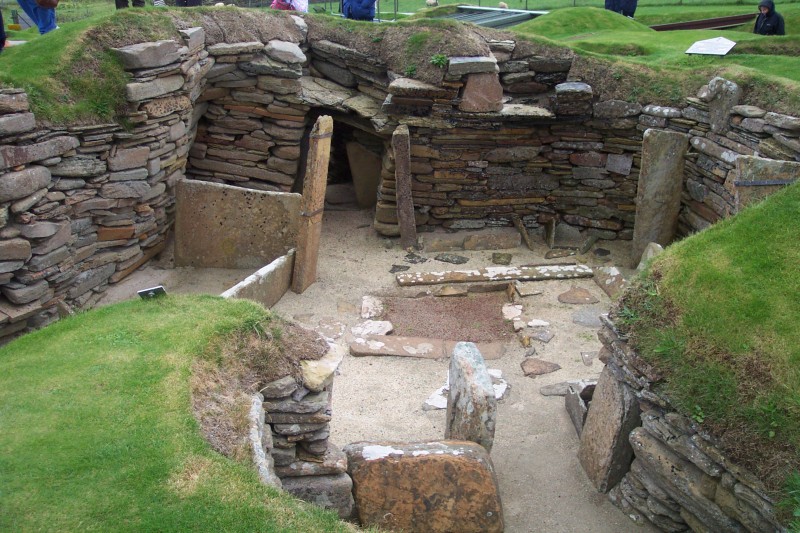
Excavated dwellings at Skara Brae

Neolithic architecture refers to structures encompassing housing and shelter from approximately 10,000 to 2,000 BC, the Neolithic period. In southwest Asia, Neolithic cultures appear soon after 10,000 BC, initially in the Levant (Pre-Pottery Neolithic A and Pre-Pottery Neolithic B) and from there into the east and west. Early Neolithic structures and buildings can be found in southeast Anatolia, Syria, and Iraq by 8,000 BC with agriculture societies first appearing in southeast Europe by 6,500 BC, and central Europe by ca. 5,500 BC (of which the earliest cultural complexes include the Starčevo-Koros (Cris), Linearbandkeramic, and Vinča.[citation needed]

Architectural advances are an important part of the Neolithic period (10,000-2000 BC), during which some of the major innovations of human history occurred. The domestication of plants and animals, for example, led to both new economics and a new relationship between people and the world, an increase in community size and permanence, a massive development of material culture, and new social and ritual solutions to enable people to live together in these communities. New styles of individual structures and their combination into settlements provided the buildings required for the new lifestyle and economy, and were also an essential element of change.[1]

Housing

[edit]

The Neolithic people in the Levant, Anatolia, Syria, northern Mesopotamia and central Asia were great builders, utilising mud-brick to construct houses and villages. At Çatalhöyük, houses were plastered and painted with elaborate scenes of humans and animals.

In Europe, the Neolithic long house with a timber frame, pitched, thatched roof, and walls finished in wattle and daub could be very large, presumably housing a whole extended family. Villages might comprise only a few such houses.

Neolithic pile dwellings have been excavated in Sweden (Alvastra pile dwelling) and in the circum-Alpine area, with remains being found at the Mondsee and Attersee lakes in Upper Austria. Early archaeologists like Ferdinand Keller thought they formed artificial islands, much like the Scottish crannogs, but today it is clear that the majority of settlements was located on the shores of lakes and were only inundated later on. Reconstructed pile dwellings are shown in open-air museums in Unteruhldingen and Zürich (Pfahlbauland).[citation needed]

In Romania, Moldova, and Ukraine, Neolithic settlements included wattle-and-daub structures with thatched roofs and floors made of logs covered in clay.[2] This is also when the burdei pit-house (below-ground) style of house construction was developed, which was still used by Romanians and Ukrainians until the 20th century.[citation needed]

Neolithic settlements and "cities" include:

Tombs and ritual monuments

[edit]

Tombs range from simple to elaborate. These tombs are particularly numerous in Ireland, where there are many thousand still in existence. Neolithic people in the British Isles built long barrows and chamber tombs for their dead and earthworks such as causewayed camps, henges and cursus monuments.

Megalithic architecture

[edit]

Megaliths found in Europe and the Mediterranean were also erected in the Neolithic period. These monuments include megalithic tombs, temples and several structures of unknown function. Tomb architecture is normally easily distinguished by the presence of human remains that had originally been buried, often with recognizable intent. Other structures may have had a mixed use, now often characterised as religious, ritual, astronomical or political. The modern distinction between various architectural functions with which we are familiar today, now makes it difficult for us to think of some megalithic structures as multi-purpose socio-cultural centre points. Such structures would have served a mixture of socio-economic, ideological, political functions and indeed aesthetic ideals.

The megalithic structures of Ġgantija, Tarxien, Ħaġar Qim, Mnajdra, Ta' Ħaġrat, Skorba and smaller satellite buildings on Malta and Gozo, first appearing in their current form around 3600 BC, represent one of the earliest examples of a fully developed architectural statement in which aesthetics, location, design and engineering fused into free-standing monuments. Stonehenge, the other well-known building from the Neolithic would later, 2600 and 2400 BC for the sarsen stones, and perhaps 3000 BC for the blue stones, be transformed into the form that we know so well. At its height Neolithic architecture marked geographic space; their durable monumentality embodied a past, perhaps made up of memories and remembrance.

In the Central Mediterranean, Malta also became home of a subterranean skeuomorphised form of architecture around 3600 BC. At the Ħal-Saflieni Hypogeum, the inhabitants of Malta carved out an underground burial complex in which surface architectural elements were used to embellish a series of chambers and entrances. It is at the Neolithic Ħal-Saflieni Hypogeum that the earliest known skeuomorphism first occurred in the world. This architectural device served to define the aesthetics of the underworld in terms that well known in the larger megaliths. On Malta and Gozo, surface and subterranean architecture defined two worlds, which later, in the Greek world, would manifest themselves in the myth of Hades and the world of the living. In Malta, therefore, we encounter Neolithic architecture which is demonstrably not purely functional, but which was conceptual in design and purpose.

Other structures

[edit]

Early Neolithic water wells from the Linear Pottery culture have been found in central Germany near Leipzig. These structures are built in timber with complicated woodworking joints at the edges and are dated between 5,200 and 5,100 BC.[3]

The world's oldest known engineered roadway, the Sweet Track in England, also dates from this time.[4]

See also

[edit]

References

[edit]
[edit]
Revisions and contributorsEdit on WikipediaRead on Wikipedia
from Grokipedia
Neolithic architecture encompasses the diverse building traditions of the period, approximately 10,000 to 2,000 BCE (with significant regional variations in timing), which coincided with the adoption of and the emergence of sedentary communities worldwide. This era marked a profound shift from nomadic lifestyles to permanent settlements, enabling the construction of the first villages, houses, and monumental structures using locally available materials such as mud-brick, stone, and . Key innovations included clustered layouts, early forms of , and megalithic engineering, reflecting social organization, ritual practices, and technological advancements in regions from the to and beyond. In the , where the originated around 9600 BCE, architecture emphasized durable, communal dwellings suited to agrarian life. Sites like featured early stone foundations and a monumental tower over 8 meters tall, built with undressed stones and mud mortar, demonstrating defensive and symbolic purposes around 8000 BCE. Çatalhöyük in modern-day , occupied from 7400 to 6200 BCE, exemplifies aceramic settlements with densely packed, mud-brick houses accessed via rooftops, lacking streets and forming an egalitarian urban mosaic across 18 occupational levels. These structures, often rectangular and single-roomed with plastered interiors, incorporated wall paintings, reliefs, and sculptures, highlighting the integration of art and domestic architecture in early farming communities. Further west in , Neolithic architecture evolved toward monumental megalithic forms, showcasing advanced engineering for ceremonial and funerary purposes. The Menga dolmen in , , constructed between 3800 and 3600 BCE, stands as one of the largest such monuments, featuring massive capstones up to 150 tons supported by tilted orthostats in deep sockets, quarried and transported using sledges and counterweights. In Britain, (c. 3000–2000 BCE) represents a complex of megalithic circles made from stones and bluestones sourced from distant , aligned with solar events and linked to nearby timber structures like . These constructions, often involving communal labor, underscore the period's growing social complexity and the use of architecture to mark territory, commemorate the dead, and facilitate rituals. Globally, Neolithic architecture varied by environment but consistently reflected adaptations to settled life, with mud-brick dominating in fertile river valleys and stone in upland or coastal areas. In , early villages employed sun-dried mud bricks for homes and worship sites, supporting population growth from agricultural surpluses. Techniques like for floors and hearths, produced by heating to temperatures exceeding 900°C, appeared in settlements such as Ain Ghazal, enhancing hygiene and durability. Overall, these architectural achievements laid foundational principles for later civilizations, transitioning humanity from temporary shelters to enduring built environments.

Overview and Context

Definition and Chronology

Neolithic architecture refers to the built structures and settlements constructed during the period, approximately from 10,000 BCE to 2,000 BCE, which coincided with the and the shift from nomadic societies to sedentary communities reliant on and animal . This era's is defined by the emergence of permanent dwellings and communal buildings, reflecting increased and resource stability. The chronology of Neolithic architecture begins in the of the around 10,000 BCE, with the (PPNA, ca. 10,000–8,500 BCE) featuring initial experiments in mud-brick construction at sites in the and . This phase transitioned into the (PPNB, ca. 8,500–7,000 BCE), marked by expanded settlement patterns and more complex building layouts. The subsequent Pottery Neolithic (ca. 7,000–5,000 BCE) introduced pottery production alongside refined architectural standardization, while the (ca. 4,500–2,000 BCE) emphasized monumental forms like megaliths. Neolithic architectural traditions spread from the Fertile Crescent to by around 7,000 BCE, influencing regional developments such as megalithic constructions in the phase. In , the period manifested later, as seen in the around 5,000 BCE, with variations extending into the up to approximately 2,000 BCE. These temporal boundaries highlight the period's adaptability across diverse ecological and cultural contexts.

Significance in Neolithic Society

Neolithic architecture played a pivotal role in fostering and social cohesion during the transition from mobile bands to sedentary villages. The dense clustering of mud-brick houses, often built without streets and accessed via rooftops, facilitated close-knit interactions and maintenance, evidencing emerging division of labor in and resource sharing. In settlements like Çatalhöyük, this layout supported egalitarian social structures with minimal evidence of hierarchies, as indicated by uniform house sizes and shared access to resources, though patterns suggest kin-based networks influenced community dynamics. Such architectural forms reflect the organizational demands of early farming communities, where cooperative efforts in building and upkeep reinforced social bonds and identity. Symbolically, Neolithic structures embodied notions of permanence, ancestry, and cosmological connections, integrating daily life with practices. Houses often served as both living spaces and sites, with bodies interred beneath floors to maintain ancestral ties, symbolizing continuity between the living and the dead. Plastered skulls and wall paintings depicting animals and further evoked rituals tied to , renewal, and the , transforming buildings into loci for communal ceremonies that reinforced shared beliefs in cyclical time and cosmic order. These elements underscore 's role in materializing cultural narratives, where enduring structures like longhouses or enclosures represented stability amid environmental and social changes. Economically, Neolithic architecture underpinned the shift to agriculture by enabling secure storage, processing, and trade of surpluses, which in turn drove population expansion. Features such as integrated storage rooms and ovens in domestic units supported farming activities, allowing communities to stockpile grains and tools, fostering trade networks evident in imported materials like obsidian. At Çatalhöyük, population estimates have ranged from 600 to 8,000 inhabitants, with recent 2024 research indicating 600–800 during peak phases, transitioning from small bands to dense settlements through enhanced food security and labor specialization. In terms of gender and daily life, architectural layouts promoted communal living with multifunctional spaces that blurred private and shared domains, accommodating activities like cooking, weaving, and social gatherings. At , similar diets and tool use across sexes indicate comparable roles for men and women in household tasks, with central platforms serving for sleeping, working, and rituals, suggesting inclusive daily routines. This design facilitated egalitarian interactions, though evidence of female hints at gendered mobility within broader social networks.

Materials and Construction Techniques

Primary Materials

Neolithic architecture primarily utilized locally sourced, organic, and earthen materials that were abundant and adaptable to regional climates and landscapes, reflecting early communities' resourcefulness in transitioning from mobile to sedentary lifestyles. These materials, such as mud-brick, timber, stone, and woven organics, were selected for their workability and availability, often requiring minimal processing to form durable structures. The choice of materials varied significantly by geography, with arid regions favoring sun-dried earth composites and temperate zones employing wood and plant fibers, underscoring the period's emphasis on environmental integration. Mud-brick and emerged as foundational materials in the during the (PPNA) period, around 9500–8500 BCE, consisting of sun-dried bricks molded from a mixture of clay, , , and organic binders like or dung to enhance tensile strength and prevent cracking. These bricks were rectangular and often impressed with thumb patterns for grip during construction, enabling the erection of robust walls and multi-roomed buildings. A prominent example is the mud-brick houses at , dating to circa 8300 BCE, where mud-bricks up to 70 cm long formed walls. variants, similarly sun-dried but sometimes incorporating more for stability in dry climates, dominated settlements like 'Ain Ghazal in , where they supported clustered rectangular houses. In temperate and wetland environments, timber and thatch provided lightweight, flexible alternatives suited to forested and lacustrine settings, with wood serving as structural frames and reeds or grasses forming impermeable roofs. , , and were commonly harvested for posts and beams due to their straight grain and resistance to decay in moist conditions. Neolithic pile dwellings around the , such as those at in and (circa 5000–3000 BCE), exemplify this approach, where timber platforms elevated on driven piles protected against flooding and vermin. Thatch roofing, layered with reeds or straw bundles tied to wooden rafters, offered insulation and waterproofing, as evidenced by preserved organic remains at sites like Charavines in . These materials' renewability allowed for rapid reconstruction after seasonal inundations, fostering resilient community layouts. Stone, particularly unhewn boulders and slabs, was employed in rocky terrains for load-bearing foundations and orthostatic walls, leveraging its permanence in areas lacking timber or arable soil. In the Mediterranean, was quarried for its softness when fresh, allowing easy shaping before hardening, as seen in early Maltese temples like (circa 3600 BCE), where massive blocks formed corbelled roofs and enclosures. In Britain, harder igneous stones such as featured in monumental contexts, with examples from Neolithic Arran in using locally sourced red and grey granites for chambered tombs, selected partly for their symbolic colors and durability against weathering. Unworked stones provided stability in drystone walls at sites like in (circa 3100 BCE), where flagstones and boulders created low, insulated interiors. Other organic materials complemented these primaries, including wattle-and-daub for infilling timber frames, where woven branches or reeds (wattle) were plastered with clay-based daub to create airtight walls. This technique, prevalent across from circa 6000 BCE, utilized flexible hazel or willow for the lattice, combined with dung-tempered clay for adhesion, as recovered from burned structures at sites like in . In transitional Mesolithic-Neolithic phases, rarer elements like animal for structural reinforcements or hide coverings for temporary shelters appeared in northern regions, though evidence remains fragmentary due to poor preservation. Sourcing these materials involved targeted local extraction, with archaeological traces indicating organized quarrying and early management practices to mitigate depletion. Neolithic communities in practiced selective timber felling and stone pitting, as at the Langdale axe quarries in England's (circa 4000 BCE), where systematic removal of volcanic minimized landscape scarring and sustained supply over generations. Such activities, while small-scale, left visible impacts like quarry hollows and wood-clearing scars, revealing a growing awareness of resource limits in expanding populations.

Building Methods and Innovations

Neolithic builders employed post-hole digging techniques to establish for timber-framed structures, involving the excavation of deep pits into the ground to secure upright wooden posts that formed the primary load-bearing skeleton of walls and roofs. These posts, often spaced at regular intervals, supported wattle-and-daub infill or plank walls, allowing for stable, rectangular enclosures that could withstand environmental stresses. For more permanent constructions, multi-layered stacking of sun-dried mud-bricks—formed from local clay soils mixed with organic stabilizers like —created thick, load-bearing walls, typically rising 1-2 meters in height and bonded with mud mortar. These walls were frequently finished with coatings, derived from calcined , to provide and enhance durability against . The process required careful layering to ensure even drying and structural integrity, marking an advancement in controlled material assembly. Roofing in Neolithic architecture typically involved thatched coverings of reeds, grasses, or layered over a framework of wooden beams and rafters extending from the wall posts, creating pitched slopes for water runoff. In regions favoring flat roofs, compacted layers supported by cross-beams provided a usable surface for storage or drying crops. consisted of beaten surfaces, compacted layers of sometimes mixed with or for stability, often topped with lime or plaster and centrally featuring hearths for heating and cooking. Key innovations included the adoption of right angles in wall alignments and the refinement of load-bearing walls by around 8000 BCE, enabling more efficient space utilization and multi-room layouts without internal supports. Construction relied on polished stone adzes for felling and shaping timber, alongside flint blades for cutting and trimming materials, tools hafted to wooden handles for precision work. These implements, produced through grinding and techniques, supported the labor-intensive processes evident in large-scale projects, where organized communal efforts—coordinated through shared rituals or seasonal gatherings—mobilized groups of dozens to hundreds for digging, hauling, and assembly. In flood-prone regions, adaptations such as elevated platforms on wooden —driven into lake or river beds—raised living spaces above water levels, as seen in settlements dating to circa 5000 BCE. This technique, using long poles lashed together to form buoyant bases, protected against seasonal inundation while integrating with resources.

Domestic Architecture

Early Settlements and House Forms

The earliest domestic emerged in semi-subterranean pit-houses, which featured earthen walls dug into slopes and supported by thatched roofs, providing insulation and stability in early villages across and . At in , dating to around 6200 BCE, these trapezoidal buildings averaged 14 m² in size, with lime-plastered limestone floors and zoned interiors for activities like cooking near hearths and occasional intramural burials. Such structures marked a shift from mobile camps to more permanent settlements, integrating basic shelter with daily functions in compact forms. In the (PPNA) period, round houses with circular or oval plans and central hearths appeared in proto-domestic contexts, facilitating communal gathering and early . At in , circa 9500 BCE, these enclosures reached up to 20 m in diameter, often with stone pillars and evidence of domestic debris like tools and faunal remains, though their connotations suggest multifunctional use beyond pure housing. These designs emphasized open interiors for social interaction, contrasting with later compartmentalized layouts. By the Pottery Neolithic, rectangular and apsidal house forms evolved, incorporating multiple rooms constructed from timber posts or mud-brick, supporting larger roofs and divided spaces. In the Linearbandkeramik (LBK) culture of , around 5500 BCE, long rectangular houses (10–40 m in length) featured three parallel rows of posts for structural support, often divided into front, middle, and rear sections for varied uses. These emerged in clustered village layouts, where 20–50 houses grouped without formal streets, accommodating 100–500 inhabitants in nucleated communities near water sources. Early Neolithic houses typically integrated storage, cooking, and sleeping in single-room or simply partitioned designs, reflecting multifunctional domestic life. Pit-houses at included dedicated zones for hearths and storage pits adjacent to living areas, while LBK longhouses allocated rear sections for grain bins and front spaces for cooking over open fires, with sleeping platforms along walls. This layout supported nuclear or units, blending practical needs with emerging in initial farming villages.

Regional Variations in Housing

Neolithic domestic architecture exhibited significant regional variations shaped by local environments, available resources, and climatic conditions, leading to diverse adaptations in house forms across continents. In arid or semi-arid zones, such as the , structures emphasized and compactness for heat retention, while temperate forested areas in favored elongated timber frames for communal living. In East Asia's loess plateaus, semi-subterranean designs provided insulation against temperature extremes, and tropical saw elevated constructions to mitigate flooding and pests. These adaptations highlight how Neolithic communities tailored housing to ecological niches, with stone or mud bases common in rocky Mediterranean terrains versus wood-dominant forest regions. In the and , settlements like Çatalhöyük in central featured densely clustered, multi-story mud-brick houses dating to approximately 7100–5700 BCE, accessed via rooftops to maximize space and enhance defense in a crowded urban-like environment. These rectangular dwellings, often 20–30 square meters in area, were constructed from unfired mud-bricks molded with and clay, bonded without mortar, and built atop one another in a pattern that formed a contiguous village without streets. This suited the region's dry climate by providing thermal regulation through thick walls and flat roofs used for daily activities, reflecting a shift toward sedentary life amid fertile plains. Across , the Linearbandkeramik (LBK) culture (ca. 5500–4500 BCE) developed longhouses, typically 30–40 meters in length, as timber-framed halls accommodating extended families of 20–30 people in a linear layout divided into living, storage, and livestock areas. Constructed with post-and-beam frameworks infilled with wattle-and-daub, these elongated structures aligned often southeast for solar exposure, adapting to the temperate continental climate with cold winters that necessitated robust, insulated enclosures in forested lowlands. In the Alpine region, contemporaneous lake villages in and surrounding areas (ca. 5200–3400 BCE) employed pile dwellings raised on wooden stilts over water, using and piles driven into lake beds to protect against flooding and humidity, with rectangular houses built on platforms of split logs and thatch. In , the along China's (ca. 5000–3000 BCE) utilized semi-subterranean pit dwellings, excavated 0.5–1 meter into the ground with walls reinforced by wooden posts and thatched roofs, providing natural insulation in the variable climate prone to dust storms and seasonal floods. These round or square houses, averaging 4–6 meters in diameter, clustered in villages like , where central hearths and storage pits supported millet-based economies. Further south in , Neolithic sites such as Khok Phanom Di in (ca. 2000–1500 BCE) reveal elevated houses inferred from daub impressions of circular frameworks, raised on to combat tropical monsoons, humidity, and wildlife, with walls of woven mats and thatched roofs promoting ventilation. Evidence for Neolithic housing in the is sparser but includes early structures in (ca. 2000–1000 BCE), adapting to semi-arid highlands with sun-dried mud bricks for durability against erosion. In , archaeological records show limited domestic adaptations, primarily rock shelters modified into habitations, as at Saharan sites (ca. 6000–4000 BCE) where stone wall enclosures were built against shelter walls to create semi-permanent homes, suited to in fluctuating s with episodic rainfall. These variations underscore as a primary driver, with elevated or insulated forms prevailing in wet or variable zones versus grounded, massive constructions in dry interiors.

Monumental and Ritual Structures

Tombs and Burial Sites

Neolithic tombs and burial sites represent a significant evolution in funerary , shifting from simple pit to more elaborate structures that accommodated collective interments and ritual practices. These sites, including non-megalithic and early megalithic forms, emphasized enclosed chambers and passages, reflecting emerging social complexities and beliefs in the during the period from approximately 9000 BCE to 3000 BCE. Early examples in the and later developments in and the Mediterranean highlight the use of earth, stone, and mud-brick to create durable enclosures for the dead, often incorporating features for repeated access and offerings. Simple mound tombs, consisting of earth or stone cairns covering pits, emerged as one of the earliest formalized practices. In the , these structures date back to around 8000 BCE, with sites in and the featuring stone coverings over pits for secondary burials, preserving bones and indicating beliefs in post-mortem continuity. At , early intramural pit burials under house floors included placed in niches, suggesting a focus on ancestor veneration rather than full-body interment in mounds. These practices protected skeletal remains and associated , providing evidence of early communal mourning rituals. Chamber tombs marked a more advanced architectural response to collective burial needs, utilizing corbelled stone roofs or mud-brick walls to form enclosed spaces for multiple individuals. In the , intramural chambers under house floors accommodated secondary burials. In , passage graves like those at in , constructed around 4800 BCE, featured long corridors leading to rectangular or trapezoidal chambers, built with dry-stone that supported corbelled vaults up to several meters high. These tombs accommodated dozens of burials over generations, with bones often disarticulated and rearranged, pointing to practices of secondary burial where flesh was removed elsewhere before final deposition. Hypogea, or rock-cut underground tombs, exemplify Neolithic ingenuity in subterranean architecture, particularly in limestone-rich regions like . The Ħal-Saflieni Hypogeum, dating to about 3600 BCE, consists of multi-level chambers hewn directly from bedrock, with curved passages and niches designed for that may have enhanced ritual chants during ceremonies. This site, capable of holding up to 7,000 individuals over centuries, featured red ochre paintings and oracle rooms for oracle-like communications with the dead, integrating with ongoing spiritual practices. Such hypogea provided stable, secure environments for collective remains, protected from surface erosion. In other regions, such as at sites like (ca. 7000 BCE), simple pit burials evolved into mud-brick lined graves, reflecting similar adaptations to settled life. Common layouts in these tombs included sinuous or straight passages—often 10 to 30 meters long—flanking central chambers with side niches for offerings like , flint tools, and jewelry, which served as symbolizing status or provisions for the . Evidence of secondary burials, where skeletons were fragmented and piled, suggests repeated visits for rituals, fostering ties to ancestors. Some chamber tombs incorporated megalithic elements, such as large capstones, but these were integrated into enclosed structures rather than exposed. The social role of these burial sites extended beyond mere interment, indicating a Neolithic worldview centered on ancestor veneration and communal identity. , including decorated ceramics and personal adornments, imply beliefs in an where the deceased required sustenance and status symbols, as seen in the diverse assemblages from and . These architectures facilitated group rituals, reinforcing social hierarchies and territorial claims, with the labor-intensive construction—requiring organized labor—highlighting emerging cooperative societies.

Megalithic and Ceremonial Monuments

Megalithic and ceremonial monuments represent some of the most ambitious architectural achievements of the period, characterized by the erection of massive stone structures for ritual and communal purposes across and the Mediterranean. Dolmens, consisting of large capstone slabs supported by upright stones forming simple tomb-like enclosures, and menhirs, solitary standing stones often exceeding several meters in height, emerged as widespread features, particularly in . Approximately 35,000 such megaliths survive today, with hosting the highest concentration due to its dense Neolithic activity between circa 4500 and 2500 BCE. These structures, built by early farming communities, served as focal points for rituals, potentially marking sacred landscapes or ancestral sites, though their precise functions remain debated among archaeologists. Stone circles, another prominent form, featured concentric or linear arrangements of upright stones, often aligned with celestial events to facilitate astronomical observations or seasonal ceremonies. At in , the initial phase around 3100 BCE involved a circular ditch and bank with embedded stones oriented toward the summer solstice sunrise, suggesting a role in tracking solar cycles for ritual timing. Similarly, the in , dating to approximately 3000 BCE, include rows and circles with alignments to solstices and possibly lunar standstills, indicating a shared cultural emphasis on cosmic rhythms across regions. These open-air enclosures likely hosted communal gatherings, as evidenced by feasting remains like animal bones and pottery at nearby sites, pointing to seasonal assemblies of hundreds or thousands from dispersed settlements. In the Mediterranean, temple complexes like on exemplify more elaborate megalithic architecture, constructed around 3600 BCE with multi-room layouts using precisely cut blocks up to 5.5 meters tall and weighing over 50 tons. These structures included specialized features such as oracle rooms—small niches or holes interpreted as spaces for prophetic consultations—and altars for offerings, reflecting a sophisticated ritual hierarchy. The transportation of such massive stones over distances of several kilometers relied on communal labor employing wooden rollers, ropes, and earthen ramps, as demonstrated by experimental reconstructions and quarry evidence. Symbolically, these monuments functioned as territorial markers, delineating community boundaries amid expanding farming territories, while also modeling cosmic order through their alignments and geometries. Recent archaeoacoustic studies since 2020 have revealed resonant frequencies around 90-130 Hz in sites like Maltese temples and British stone circles, suggesting intentional design to enhance auditory experiences during ceremonies, potentially influencing participant states of mind. Some megaliths integrated with practices, as seen in dolmens overlaying earlier tombs, but their primary role emphasized open communal rituals over funerary enclosure.

Utility and Communal Structures

Storage and Economic Facilities

In Neolithic societies, storage facilities were essential for managing surplus resources from early , enabling the transition to by preserving grains, seeds, and other foodstuffs against spoilage and pests. These structures varied from individual household bins to communal buildings, reflecting the growing complexity of economic systems in early farming communities across and the . Granaries and silos were commonly constructed as elevated structures to protect contents from ground moisture and rodents, often using mud-brick, timber, or stone. In the , at the site of Dhra' in (ca. 11,300–11,175 cal B.P.), purpose-built circular granaries measuring approximately 3 m in diameter featured suspended floors supported by wooden beams and mud, elevated to deter pests and facilitate air circulation. Similarly, at in (ca. 3100–2500 BCE), stone-built shelves and recesses within houses served as elevated storage bins for food and tools, integrated into the domestic layout to safeguard harvests. Storage pits, typically underground excavations lined for impermeability, were prevalent in early farming villages for long-term and preservation. At Tell Aswad in (ca. 8000 BCE), such pits and associated storage structures yielded high densities of plant remains, including cereals, indicating their role in supporting initial agricultural surpluses. These pits were often plastered with lime or clay to maintain dryness and prevent germination. Communal warehouses emerged as larger adobe or mud-brick buildings for collective surplus storage, signaling social cooperation and the beginnings of trade networks. At Beidha in southern Jordan (Middle Pre-Pottery Neolithic B, ca. 8000 cal BCE), oval communal structures like Building 37, constructed from stone, clay, and mud plaster, accommodated shared economic activities and resource pooling among community members. Key features across these facilities included ventilation holes or raised designs for airflow and plaster linings to ensure aridity, allowing capacities sufficient for seasonal harvests. These storage innovations had profound economic impacts, providing that buffered against environmental variability and supported by enabling year-round sustenance and surplus exchange. By facilitating and resource accumulation, they underpinned the expansion of communities and the intensification of . In , sites like (ca. 7000 BCE) featured mud-brick granaries with multiple chambers for grain storage, supporting early pastoral and farming economies.

Infrastructure and Enclosures

Neolithic infrastructure encompassed practical features designed to manage resources and facilitate movement, including systems and pathways that supported growing sedentary communities. Wells, often deep shafts lined with timber to prevent collapse, represent early advancements in water management and communal resource control. at Erkelenz-Kückhoven in , dating to circa 5090 BCE, exemplifies this with its oak-plank construction forming a 3-by-3-meter square pit reaching levels, requiring coordinated labor for excavation and maintenance. Such structures allowed communities to secure clean supplies independent of rivers, fostering around shared access and protection from . Trackways and rudimentary roads enabled navigation across wetlands and uneven terrain, enhancing mobility for daily activities, herding, and exchange. In the of , the Sweet Track, built around 3,800 BCE, consisted of a raised wooden walkway of crossed poles and planks spanning nearly 2 kilometers, likely aiding seasonal travel during wet periods. These linear features, constructed from locally sourced timber, reflect adaptive engineering to connect settlements and resources while promoting territorial awareness through defined routes. Enclosures and palisades provided protective boundaries for economic activities, such as enclosing livestock or safeguarding cereal fields from predators and disputes. At Hambledon Hill in , circa 3,700 BCE, ditched causewayed enclosures served as early fortifications, with segmented ditches and possible wooden barriers delineating controlled spaces up to several hundred meters in diameter. The purpose of these structures extended to territorial demarcation, as evidenced by their scale—linear ditches sometimes exceeding 2 kilometers—indicating organized efforts to manage land use and mobility within emerging agricultural landscapes. In , enclosures around sites like (ca. 7000–5700 BCE) in the Valley included moats and walls for resource protection and community organization.

References

Add your contribution
Related Hubs
User Avatar
No comments yet.