Hubbry Logo
Long-range reconnaissance patrolLong-range reconnaissance patrolMain
Open search
Long-range reconnaissance patrol
Community hub
Long-range reconnaissance patrol
logo
8 pages, 0 posts
0 subscribers
Be the first to start a discussion here.
Long-range reconnaissance patrol
from Wikipedia

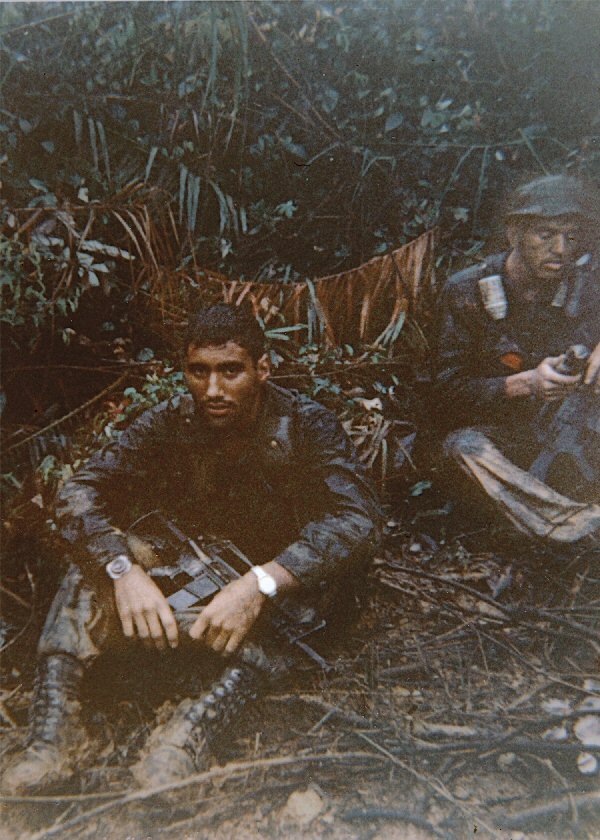
U.S. Army Rangers LRRP team leader and radiotelephone operator, Vietnam War, 1968

A long-range reconnaissance patrol, or LRRP, is a small, well-armed reconnaissance team that patrols deep into enemy-held territory.[1]

The concept of scouts dates back to the origins of warfare itself. However, in modern times these specialized units evolved from examples such as Rogers' Rangers in colonial British America,[1] the Lovat Scouts in World War One, the Long Range Desert Group and the Special Air Service in the Western Desert Campaign and North West Europe, similar units such as Force 136 in East Asia, and the special Finnish light infantry units during the Second World War.

Postwar, the role was carried in various North Atlantic Treaty Organization (NATO) and British Commonwealth countries by units that could trace their origins to these wartime creations such as the British SAS, Australia's Special Air Service Regiment and the New Zealand Special Air Service, 1er RPIMa, 13e RDP, GCP, Groupement de Commandos Mixtes Aéroportés in France and the United States Army Rangers, Long Range Surveillance teams, and the dismounted reconnaissance troops of RSTA squadrons.

History

[edit]

As indicated, the use of scouts is ancient, however, during the French and Indian War (1754–1763), the techniques of long-range reconnaissance and raiding were significantly implemented by the British in colonial North America. The British employed Major Robert Rogers to make long-range attacks against the French and their Indian allies along the frontiers of the British colonies and New France. The achievements of Major Roberts's dozen companies of approximately 1,200 men during the French and Indian War were so extraordinary that his doctrine, "Standing Orders, Rogers' Rangers," 1759, became the cornerstone of future U.S. Army long-range reconnaissance patrol units.

Long-range reconnaissance patrol by nation

[edit]

Australia

[edit]
An Australian Army Long Range Patrol Vehicle used by the Special Air Service Regiment.

During the Second World War, the 2/1st North Australia Observer Unit was tasked with patrolling the remote areas of northern Australia on horseback. Many from the Unit were recruited to join M Special Unit and Z Special Unit for long-range specialist reconnaissance and sabotage behind Japanese lines.

From 1966 until 1971 troopers from the Australian Special Air Service Regiment (SASR) served in Vietnam as part of the 1st Australian Task Force at Nui Dat, Phuoc Tuy Province. Missions included medium range reconnaissance patrols, observation of enemy troop movements, and long range offensive operations and ambushing in enemy dominated territory in support of 1ATF operations throughout Phuoc Tuy Province as well as Bien Hoa, Long Khanh and Binh Tuy provinces.[2][3][4][5]

In the 1980s the Regional Force Surveillance Units (NORFORCE, The Pilbara Regiment and 51st Battalion, Far North Queensland Regiment) were formed to conduct long-range reconnaissance and surveillance patrols in the sparsely populated and remote regions of northern Australia.

Canada

[edit]

The Canadian Rangers conduct long-range surveillance or sovereignty patrols in the sparsely settled areas of Northern Canada. Although part of the Canadian Army, they are an irregular military force. Patrol Pathfinders units form part of the Reconnaissance Platoon of the 3rd (Light Infantry) Battalion of each Regular Force infantry Regiment. Patrol Pathfinders are trained in airborne and amphibious insertion, including by submarine, and conduct deep reconnaissance missions

Denmark

[edit]

The Danish Defence Forces had three Long-Range Surveillance companies (LRSC) known as "Patrol-Companies" (PTLCOY): two assigned to the two Land Commands: LANDJUT and LANDZEALAND (Corps-level) (abbreviated "SEP/ELK" and "SEP/VLK" for: "Specielle Efterretningspatruljer/Østre resp. Vestre Landskommando" i.e. Special Intelligence Patrols) – two all-volunteer units within the Danish Home Guard - that was changed into the Special Support and Reconnaissance Company (SSR) in 2007 as a Special Reconnaissance (SR) Company dedicated to supporting the Danish Special Operations. The third and last company (PTLCOY/DDIV) was assigned to the Jutland Division (later Danish Division/DDIV) and was trained by instructors from the Danish Army Special Operations Forces: Jægerkorpset (i.e. Hunter Force) in Aalborg. PTLCOY/DDIV was disbanded in 2002 due to budget-cuts and the intent to implement UAV in the Danish Army as the primary means of ISR. The first UAV project later failed and was disbanded too.

In addition to these units, the 3rd Reconnaissance Battalion, Guard Hussar Regiment, also has Long range reconnaissance capabilities, particularly in 1st and 2nd Light Reconnaissance Squadrons (1.LOPESK & 2.LOPESK), whose primary role is long range reconnaissance and sabotage in light vehicles and with minimal support and resupply.

Likely to be the world's smallest LRS unit is the Sirius Dog Sled Patrol (Danish: Slædepatruljen Sirius), known informally as Siriuspatruljen (the Sirius Patrol). It is a small squad-sized elite unit in the Danish Navy, that enforces Danish sovereignty in the Arctic wilderness of northern and eastern Greenland, and conducts long-range reconnaissance patrolling. Patrolling is usually done in pairs, sometimes for four months and often without additional human contact.

Finland

[edit]
A Finnish long-range ski patrol pulling an ahkio.

In Finland, long-range patrols (kaukopartio) were especially notable during World War II. For example, Erillinen Pataljoona 4 (4th Detached Battalion), a command of four different long-range patrol detachments; Detachment Paatsalo, Detachment Kuismanen, Detachment Vehniäinen and Detachment Marttina, operated in the Finnish-Soviet theater of WWII, also known as the Continuation War, from 1941 through 1944. These units penetrated Soviet lines and conducted reconnaissance and destroy missions. During the trench warfare period of the war, long-range patrols were often conducted by special Finnish Sissi troops. After the war, NATO hired former members of the 4th Detached Battalion to spy on Soviet Union's military bases in the Kola Peninsula and Karelian Isthmus. NATO ended the spy operation in 1957. From then on, espionage data was obtained from forward satellites.[6]

Former President of Finland, Mauno Koivisto, served in Lauri Törni's specially designed Jäger Company (called Detachment Törni) in the Finnish 1st Infantry Division. Lauri Törni became a US citizen and entered the US Army Special Forces. He gave important knowledge in long-range patrolling techniques and was declared MIA during the Vietnam War in 1965. His remains were later found, brought to the US, and buried in Arlington on 26 June 2003.

France

[edit]

The French Army has 2 units specialized in reconnaissance: the 13th Parachute Dragoon Regiment and 2nd Hussar Regiment.

Other French units can perform long-range reconnaissance but are not specialized in it are the 1er RPIMa, Commandos Marine, GCP and GCM, and dedicated companies in cavalry regiments.

Germany

[edit]

In the German Bundeswehr, LRRP is called Fernspäher (long-range scouts). Historically, the German Fernspäher units were modelled after the Finnish long-range patrols and derived from the existing elite units of Gebirgsjäger (mountain troops) and Fallschirmjäger (airborne troops). Originally, there were three companies of Fernspäher in the Bundeswehr, one being assigned to each corps. Since the reformation of German Special Forces in 1996, the Fernspählehrkompanie 200 (FSLK200) is the single remaining Fernspäher unit. The Fernspähers are part of the Special Operations Division. FSLK200 is the only German special force-type unit which has also recruited women.[7] Details about operations of the FSLK200 are secret but it is known that Fernspäher carried out missions in Bosnia and Herzegovina, during the Kosovo War and later during Operation Enduring Freedom in Afghanistan.

India

[edit]

Special Frontier Force is considered a long-range reconnaissance patrol or pathfinder. They were trained against the Chinese but used to great success in Pakistan administered Kashmir and in the northern state of Punjab.

Indonesia

[edit]

Kopassus and Tontaipur of the Indonesian Army are units able to conduct long-range reconnaissance patrolling including pathfinder and Special reconnaissance operations.[8]

Italy

[edit]

Historically, airborne units are normally tasked with carrying, apart from the ordinary airborne assaults, deep infiltration small unit reconnaissance. After World War 2, during the Cold War, the main LRRP unit was the "Col Moschin" Parachute Assault Company (later battalion and then regiment). Another LRRP unit specialising as artillery observers were the 13th Target Acquisition Group "Aquileia", where "Group" is a definition of the Italian artillery indicating three batteries of guns, roughly a battalion sized unit) of the 3rd Missile Brigade "Aquileia", and especially the Batteria Acquisizione Obiettivi "Pipistrelli" (Target Acquisition Battery "Bats"), a company-sized fully airborne LRRP unit composed of artillery soldiers that trained at the I-LRRP school of Weingarten. This group later was incorporated in the Paratroopers Brigade "Folgore", becoming the 185th Paratroopers Reconnaissance Target Acquisition Regiment "Folgore".

Kenya

[edit]

The Kenya Defence Forces has one LRS unit based in Nairobi. This unit shares LRP missions with the Special Forces Group.

Netherlands

[edit]

The Korps Commandotroepen and NLMARSOF are LRRP capable. During the Cold War, the Korps Commandotroepen were known as Waarneming en Verkenning Compagnie (observation and reconnaissance company) and specialized in staying behind enemy lines. NLMARSOF's C-Squadron consists of two special recon units: Mountain Leaders and Special Forces Underwater Operators.[9] From 1995 until 2010 the 11th Airmobile Brigade Air Assault had 3 platoons of long range scouts (RECCE). Main objective battlefield intelligence and direct actions. Trained in stay behind operations working in small units. These highly flexible units operated completely on its own in cross FLOT operations.

New Zealand

[edit]

The New Zealand Special Air Service (NZSAS) is New Zealand's Special forces branch. NZSAS served with the Australian SAS Squadron during the Vietnam War and carried out Long-range reconnaissance patrols and ambushing of enemy supply routes, mounting 155 patrols over three tours.[10]

Norway

[edit]
Etterretningsbataljonen ski patrol

The Norwegian Army has LRRP operations dating back to the 1960s, Fjernoppklaring (remote reconnaissance). It was split in two, creating a new group of airborne special forces, Hærens Jegerkommando, and the current LRRP unit Fjernoppklaringseskadronen. Fjernoppklaringseskadronen is part of the Norwegian army under Etterretningsbataljonen (Military Intelligence Battalion).

Portugal

[edit]

Presently, in the Portuguese Army, LRRP operations are carried out by the Special Operations Forces.

The Special Actions Detachment of the Portuguese Navy also carries out LRRP missions, mainly in the scope of amphibious operations.

From 1983 to 1993, the Portuguese Army Comando Regiment included the REDES Company, a specialist LRRP unit.

Serbia

[edit]

LRRP units within the Serbian Army Special Brigade and 72nd Reconnaissance Commando Battalion have been operating since 1992.

Spain

[edit]

LRRP is carried out in Spain by the Advanced Reconnaissance Parachute Company of the Paratroopers Brigade "Almogávares" VI and the Target Acquisition and Reconnaissance (TAR) Company of the HQ Battalion within the Spanish Marine Infantry. In the past long-range reconnaissance patrols of Spanish forces have played a notable role in the Bosnian War, specially the deep reconnaissance patrols carried out by the Special Operations Unit (UOE) of the Spanish marines within the multinational battalion.

Sri Lanka

[edit]

Long-range reconnaissance patrols of the Armed forces of Sri Lanka have played a notable role in Sri Lanka's multi-phase military campaign against the Liberation Tigers of Tamil Eelam (LTTE). LRRP members attached to Special forces of the Sri Lankan Army have been most successful in carrying out assassinations on high-ranking members of the LTTE.[11] The LRRP concept was developed by Major Sreepathi Gunasekara who formed a special recon unit named 'Delta Patrols' in 1986 which later evolved into a highly secretive SF LRRP battalion. The Army's 3rd Special forces regiment and 3rd Commando regiment have specialized LRRP battalions .

Until the end of the war, the government kept their very existence under wraps.

United Kingdom

[edit]
SAS returning from a 1943 patrol in North Africa

The Honourable Artillery Company (HAC)[12] and its regular sister unit, 4/73 (Sphinx) Special Observation Post Battery Royal Artillery, currently operate in the surveillance and target acquisition role.[13][14]

During the Second World War, the Long Range Desert Group performed long-range reconnaissance and raiding during the North African Campaign and during the Cold War, the Corps Patrol Unit (CPU) consisted of 21 and 23 SAS and the HAC.[15][16][17]

Cold War

[edit]

The 21 SAS was stood up in 1947 specifically for the task of letting themselves be bypassed and staying-behind in the event of a Soviet Invasion of Western Europe, they were later joined by 23 SAS and in 1973, the Honourable Artillery Company (HAC) which became a Surveillance and Target Acquisition (STA) Patrol Regiment providing Stay-Behind Observation Posts (SBOP) with their three squadrons each with a number of four to six man patrols. HAC provided SBOP capabilities to the HQs of 1st Artillery Brigade (HQ Sqn HAC), 1 Armoured Division (I Sqn HAC), 4 Armoured Division (II Sqn HAC), and 1 BR Corps (III Sqn HAC) with one ‘sabre’ squadron each[15][16][17][18]

United States

[edit]

World War II

[edit]

The predecessor of the U.S. Army's LRRP teams was the U.S. Sixth Army Special Reconnaissance Unit, better known as the Alamo Scouts. In the South West Pacific Theater of Operations, the Alamo Scouts conducted over 110 intelligence gathering missions behind enemy lines throughout New Guinea and the Philippines during 1944–45.[19] General Walter Krueger established the Alamo Scouts Training Center to train candidates in long-range reconnaissance patrol techniques, including rubber boat handling, intelligence gathering, report writing, scouting and patrolling, jungle navigation, communications, weapons training, and camouflage. Of those that successfully completed the rigorous course, 138 became full-time Alamo Scouts, while the others returned to their units to serve as reconnaissance troops. After Japan's surrender, the Alamo Scouts Training Center was closed down and the unit was disbanded. In 1988, the U.S. Army retroactively awarded members of the Alamo Scouts the Special Forces tab due to their wartime record and the techniques they pioneered.[20]

In Germany

[edit]

The modern US Army long-range reconnaissance patrol concept was created in 1956 by the 11th Airborne Division in Augsburg, Germany. They patrolled near the Czechoslovakian and East German borders, then members of the Communist Warsaw Pact states, and in event of war in Europe would be inserted behind enemy lines to provide surveillance and to select targets of opportunity. The LRRP concept was well known throughout the Army though concentrated in 7th Army in Germany. Provisional LRRP Companies made up of both trained LRRPs and regular soldiers were put together for a series of exercises called Wintershield and proved themselves in the field. After the 11th Airborne Division was inactivated on 1 July 1958, the Department of the Army authorized two Airborne LRRP companies in 1961: Company D, 17th Infantry and Company C, 58th Infantry in the Wildflecken and Nellingen Barracks (near Stuttgart), and were respectively assigned to V Corps and VII Corps. In 1963, V Corps LRRPs (Company D) transferred to the Gibbs Kaserne in Frankfurt near Corps HQ.[1][21] In 1965, these companies developed the first LRRP Table of Organization and Equipment and in doing so increased their strength to 208 men, team size from 4 to 5 men, as well as adding an organic transport component. All LRRPs from team leader and above were to be Ranger qualified. The experiences of these two companies formed the basis of the first US Army LRRP manual. Both companies used carrier wave (Morse Code) radios including the AN/TRC-77 for long-range communications to their respective Corps G2 (Intelligence) center. In 1968, both companies were transferred to the United States, but neither were sent to Vietnam because they retained their status as LRRP units for V and VII Corps in the event of war in Europe.[1][22]

All LRRPs were redesignated as "Ranger" on 1 February 1969, and these two units (companies C and D) respectively became Companies B and A, 75th Infantry (Ranger). They were the only Ranger units to remain on active duty at the end of the Vietnam War and they continued in service until November 1974 when they were inactivated, with most of their personnel forming the core of the new 1st and 2nd Battalions (Ranger), 75th Infantry.[1]

In Italy

[edit]

In the 1960s, the U. S. Army Southern European Task Force (SETAF) utilized the Airborne Recon Platoon of the 1st Combat Aviation Company (Provisional) located in Verona, Italy. They provided reconnaissance missions as well as target acquisition and battle damage assessment for SETAF which was a missile command.[23]

The Airborne Recon Platoon was a LRRP unit that served as the “eyes and ears” for SETAF. During the period of 1961-62 Lieutenant James D. James commanded the platoon. Three years later in 1965 when Captain James served in Vietnam with the 1st Cavalry Division he utilized much of the tactics, structure, and doctrine of the Airborne Recon Platoon when creating Company E, 52nd Infantry (LRP). Captain James retired from the army as a colonel.[23][24]

In Vietnam

[edit]
April 1968. LRPs at LZ Stud near Khe Sanh combat base, Vietnam.

In December 1965, the 1st Brigade, 101st Airborne Division, formed a LRRP platoon, and by April 1966, the 1st Infantry Division, 25th Infantry Division and each of the four Battalions of the 173rd Airborne Brigade formed LRRP units as well.[22][25] On 8 July 1966, General William Westmoreland authorized the formation of a (LRRP) unit in each infantry brigade or division in Vietnam. By 1967 formal LRRP companies were organized, most having three platoons, each with five six-man teams equipped with VHF/FM AN/PRC-25 radios. LRRP training was notoriously rigorous and team leaders were often graduates of the U.S. Army's 5th Special Forces Group Recondo School in Nha Trang, Vietnam.[1][26]

Tiger Force was the nickname of an infamous long-range reconnaissance patrol unit[27] of the 1st Battalion (Airborne), 327th Infantry Regiment, 1st Brigade (Separate), 101st Airborne Division, which fought in the Vietnam War, and was responsible for counterinsurgency operations against the North Vietnamese People's Army of Vietnam (PAVN) and Viet Cong.[28]

The platoon-sized unit, approximately 45 paratroopers, was founded by Colonel David Hackworth in November 1965 to "outguerrilla the guerrillas".[29] Tiger Force (Recon) 1-327th was a highly decorated small unit in Vietnam, and paid for its reputation with heavy casualties.[30] In October 1968, Tiger Force's parent battalion was awarded the Presidential Unit Citation by President Lyndon B. Johnson, which included a mention of Tiger Force's service at Đắk Tô in June 1966.[31]

Since satellite communications were a thing of the future, one of the most daring long-range penetration operations of the war was launched by members of Company E, 52nd Infantry (LRP) of the 1st Air Cavalry Division, against the PAVN when they seized "Signal Hill" the name attributed to the peak of Dong Re Lao Mountain, a densely forested 4,879 feet (1,487 m) mountain, midway in A Shau Valley, so its 1st and 3rd Brigades, who would be fighting behind a wall of mountains, could communicate with Camp Evans near the coast or with approaching aircraft.[32]

July 1968. Two 1st Cavalry Division LRP teams, Quang Tri, Vietnam.

The US Marine Corps also performed long-range reconnaissance missions typically assigned to Marine Recon, especially Force Recon at the corps-level (i.e., Marine Expeditionary Force (MEF)) level, as opposed to the Battalion Recon units answering to battalion commanders. Marine Recon teams typically were twice as large as Army LRRPs and were more heavily armed, however, sacrificing a degree of stealth. In addition, the Marines did not employ indigenous Montagnards as front and rear scouts as Army LRRPs and Special Forces teams did which proved invaluable in confusing the enemy if contact was made.[1][33] The tactical employment of LRRPs was later evaluated to be generally used far too dangerously by commanders, who were pleased by the kill ratios of LRRPs teams (reported as high as 400 enemy troops for every LRRP killed). Writes one commentator: "During the course of the war Lurps conducted around 23,000 long-range patrols, of this amount two-thirds resulted in enemy sightings." LRRPs also accounted for approximately 10,000 enemy KIA through ambushes, air strikes, and artillery.

In February 1969, all US Army LRRP units were folded into the newly formed 75th Infantry Regiment (Ranger), a predecessor of the 75th Ranger Regiment, bringing back operational Ranger units for the first time since the Korean War. The Army had inactivated Ranger units after Korea, but kept Ranger School, on the premise that spreading Ranger School graduates throughout the Army would improve overall performance. The initial Ranger companies formed in 1969 were: "A" V Corps, Fort Hood, Texas; "B" VII Corps, Fort Lewis, Washington; "C" I Field Force, Vietnam; "D" II Field Force, Vietnam; "E" 9th Infantry Division, Vietnam; F 25th Infantry Division, Vietnam; "G" 23d Infantry Division, Vietnam; "H" 1st Cavalry Division, Vietnam; "I" 1st Infantry Division, Vietnam; "K" 4th Infantry Division, Vietnam; "L" 101st Airborne Division, Vietnam; "M" 199th Light Infantry Brigade, Vietnam; "N" 173d Airborne Brigade, Vietnam; "O" 3d Brigade, 82d Airborne Division, Vietnam; and "P" 1st Brigade, 5th Infantry Division (Mechanized), Vietnam.[34][1] Following its mobilization for Vietnam service, Company D (LRP), 151st Infantry of the Indiana Army National Guard completed its tour in Vietnam and, as it departed, Company D (Ranger), 75th Infantry was raised to replace it. Company F (LRP), 425th Infantry of the Michigan Army National Guard and Company E (Ranger) 65th Infantry of the Puerto Rico Army National Guard were not mobilized or sent to Vietnam. As National Guard units, D-151st, E-65th, and F-425th retained their regimental designations[35] and were not reflagged as companies of the 75th Infantry.

As the Vietnam War matured, I Field Force LRRPs widened their area of operation to include I Corps and II Corps, and II Field Force LRRPs respectively included III Corps and IV Corps.[36]

The legacy of LRRP units later continued with the U.S. Army's Long Range Surveillance (both detachments and companies), which have been dropped from the force structure and inactivated, and exists today in the dismounted reconnaissance troops of Reconnaissance, Surveillance, and Target Acquisition squadrons.

NATO International Long Range Reconnaissance Patrol School

[edit]

In 1977, Belgium, the Netherlands, and the United Kingdom sent instructors to Germany to work on the planning of an international long-range reconnaissance patrol (LRRP) school. From 1979 onward, joint training for LRRP and military stay-behind units was conducted at NATO's International Long Range Reconnaissance Patrol School (ILRRPS) in Weingarten, Germany, under the lead of UK SF. British SAS, German Fernspäher, Dutch Marines, Belgian Para-Commandos, US SF, and others worked and trained together on a daily basis. ILRRPS provided specialist training to allow soldiers to operate effectively in gathering intelligence behind enemy lines.[37] Courses included Long Range Reconnaissance, Combat Survival (E&E and resistance to interrogation), Advanced WP Specialist Recognition, Close Quarter Battle and so on. TRISTAR, a NATO LRRP exercise originally sponsored by the SAS, was conducted annually.[18] In May 2001, the ILRRPS was renamed the International Special Training Center (ISTC).[38]

See also

[edit]

References

[edit]

Further reading

[edit]
[edit]
Revisions and contributorsEdit on WikipediaRead on Wikipedia
from Grokipedia
A long-range reconnaissance patrol (LRRP) is a specialized unit organized, equipped, and trained to conduct deep-penetration missions into enemy-held or contested territory for the primary purpose of gathering on enemy dispositions, activities, , and other relevant factors without direct engagement unless required for self-preservation or mission accomplishment. These patrols emphasize stealth, mobility, and extended self-sufficiency, often operating for days or weeks at distances far beyond forward lines to provide commanders with timely, accurate information that supports and decision-making. The origins of LRRPs trace back to the early 1960s in the US Army , where they were developed to address the need for independent, long-duration intelligence collection in potential high-intensity conflicts against Soviet forces. Their role expanded significantly during the , where LRRP companies were attached to divisions and corps, conducting thousands of missions to track North Vietnamese Army movements, locate supply routes, and identify targets for or air strikes. These operations highlighted the patrols' value as "eyes behind the lines," though they came at high risk due to isolation and vulnerability to . LRRPs evolved into long-range surveillance units (LRSUs) within the Army's structure during the late , integrating advanced sensors and communications to enhance while maintaining the core principles of covert observation and minimal footprint. LRSUs operated at division and levels, supporting large-scale operations by providing persistent in deep areas. However, all active-duty and LRSUs were deactivated by 2018 due to changing operational demands. As of 2025, the Army has shifted toward unmanned aerial systems (UAS) for long-range capabilities, with recent contracts awarded for long-range UAS to support similar missions in contested environments. Similar capabilities continue in other militaries, such as Marine Corps battalions and forces, underscoring the enduring tactical importance of long-range across joint and multinational contexts.

Overview

Definition

A long-range reconnaissance patrol (LRRP) is a specialized unit consisting of small, self-contained teams, typically comprising 4 to 6 personnel, that operate independently deep behind enemy lines for extended durations ranging from several days to weeks. These teams are designed to conduct covert operations with minimal logistical support, relying on their members' expertise in , , and to maintain operational secrecy and endurance in hostile environments..pdf) The primary mission of an LRRP focuses on gathering, , and environmental assessment, emphasizing observation and reporting without initiating direct engagement unless absolutely necessary for or mission success. This non-engagement underscores the patrols' role as an information-gathering agency, providing commanders with critical insights into enemy dispositions, movements, and terrain conditions to inform broader tactical and strategic decisions. Key characteristics include a high degree of stealth to avoid detection, physical and psychological to sustain prolonged isolation, and the use of , versatile tailored for mobility and concealment..pdf) The term "LRRP" originated within U.S. in the mid-20th century, particularly during the , as an evolution of earlier scout and ranger patrol concepts dating back to and influenced by developments in the late . It was formalized in U.S. field manuals to describe these specialized elements, distinguishing them from shorter-range or combat-focused patrols by their emphasis on depth, duration, and information-centric objectives.

Purpose and Objectives

Long-range reconnaissance patrols (LRRPs) serve as a critical component of operations, primarily aimed at penetrating deep into enemy territory to collect real-time data on adversary positions, movements, supply lines, and terrain features. This enables commanders to make informed decisions for larger , such as maneuvering forces, allocating resources, and anticipating enemy actions. By providing detailed , LRRPs reduce uncertainties in the and contribute to the overall effectiveness of joint and operations. The core objectives of LRRPs emphasize non-combat activities to ensure stealth and survival, including sustained , photographic , and signals intelligence interception. These patrols prioritize observation over engagement, gathering visual, auditory, and electronic data without alerting the enemy, thereby minimizing the risk of detection and compromise. For instance, teams may monitor enemy activities for extended periods to map routes, identify vulnerabilities in , or document unit compositions, all while adhering to strict that limit direct confrontation. Strategically, LRRPs hold significant value by pinpointing high-value targets, evaluating enemy through behavioral indicators, and designating coordinates for precise or air strikes, which can decisively shape the outcome of engagements. Their outputs often inform targeting cycles and measures, amplifying the impact of conventional forces without exposing larger units to risk. However, LRRPs operate under inherent limitations, explicitly avoiding decisive combat and focusing on evasion and exfiltration protocols if detection occurs, as their primary role is acquisition rather than kinetic action. This constraint underscores the patrols' reliance on small, highly trained teams—typically 4 to 6 members—for mobility and discretion.

Historical Development

World War II Origins

The origins of long-range reconnaissance patrols trace back to , where Allied forces developed specialized units for deep penetration into enemy territory to gather intelligence and conduct limited raids. One of the earliest precedents was the British (LRDG), formed in July 1940 and active until 1943 in the . Operating behind Axis lines, the LRDG conducted , road-watching, and raiding missions, often penetrating up to 500 miles or more into hostile desert terrain using modified trucks and later jeeps for mobility. These patrols typically lasted one to two weeks, rotating between observation duties and transit, and relied on wireless radios like the No. 11 set for communication over distances up to 20 miles (32 km). In the United States, similar concepts emerged with units like , officially the , which conducted deep reconnaissance patrols in from 1943 to 1944. Under William O. Darby, the Rangers infiltrated enemy positions, such as during operations near Cisterna di Latina, to scout defenses and seize key terrain ahead of larger Allied advances. Another prominent example was , or the 5307th Composite Unit (Provisional), which executed long-range penetration missions in in 1944. Led by Brigadier General , the unit advanced over 700 miles behind Japanese lines, using surprise and mobility to disrupt supply routes and gather intelligence on enemy dispositions. Allied innovations during these operations included the integration of jeeps for rapid traversal of rough terrain, portable wireless radios for real-time reporting, and native guides to navigate unfamiliar environments. In , the LRDG adopted jeeps from 1942 onward to enhance speed and range, while employed them alongside radio sets to coordinate movements during Italian campaigns. specifically utilized Kachin tribesmen as guides and auxiliaries, leveraging their local knowledge to traverse dense Burmese jungles and avoid Japanese ambushes. These tactics were first formalized in U.S. Army doctrines, such as Field Manual 7-10 (Infantry Field Manual: Rifle Company, Infantry Regiment, March 1944), which outlined procedures for special patrols emphasizing stealth, extended duration, and intelligence collection deep in enemy areas. Despite these advancements, WWII long-range patrols faced significant challenges, including high attrition rates due to limited technology, harsh environments, and enemy contact. , for instance, anticipated an 85% casualty rate from combat, disease, and exhaustion, ultimately suffering around 75-95% losses over their five-month campaign, with non-battle injuries like claiming more lives than combat. Patrol durations averaged 5-10 days for many missions but extended longer for specialized units like the LRDG and Rangers, often spanning weeks amid supply shortages and navigation difficulties. These early efforts laid the groundwork for postwar developments in doctrine.

Cold War Expansion

During the , long-range reconnaissance patrols (LRRPs) underwent significant doctrinal formalization within structures, evolving from ad-hoc practices to standardized units designed for deep penetration in potential European theaters. In the late 1950s, developed the LRRP concept to enhance intelligence collection amid escalating East-West tensions, leading to the establishment of provisional units in U.S. Europe (USAREUR) to support corps-level operations against Soviet forces. By , the U.S. formalized LRRP companies with dedicated tables of organization and equipment, enabling patrols to operate up to 50 miles behind enemy lines for extended durations, emphasizing stealthy observation over direct engagement. The Vietnam War marked a pivotal expansion of LRRP operations, where U.S. forces institutionalized these units to counter guerrilla threats in dense terrain. Units such as those attached to the 4th Infantry Division conducted thousands of missions from the mid-1960s onward, focusing on locating enemy supply routes, troop concentrations, and base camps to support anti-guerrilla intelligence efforts. Similarly, Soviet units performed deep in during the 1979–1989 invasion, deploying small three-man teams for nighttime operations in the enemy rear to disrupt mujahideen logistics and gather tactical intelligence, often via helicopter insertions. These patrols highlighted the shift toward specialized roles in ideological proxy conflicts, with Spetsnaz emphasizing alongside reconnaissance. Technological innovations further propelled LRRP proliferation, integrating air mobility and early optics to extend operational reach. The UH-1 Huey became central for stealthy insertions and extractions of LRRP teams in , allowing rapid deployment into remote areas while minimizing detection risks. Prototypes of night vision devices, such as the AN/PVS-2 Starlight Scope, were evaluated and deployed for reconnaissance patrols, enabling observation in low-light conditions despite limitations from foliage and weather, thus enhancing the emphasis on anti-guerrilla surveillance. The global spread of LRRP tactics was influenced by European colonial experiences, particularly British SAS patrols during the (1948–1960), which conducted deep jungle reconnaissance to isolate communist insurgents and shaped subsequent and U.S. doctrines for intelligence. These operations demonstrated the value of small-team, long-duration patrols in asymmetric environments, informing the standardization of similar units across Western alliances by the 1960s.

Post-Cold War Applications

Following the end of the , long-range reconnaissance patrols (LRRPs) adapted to asymmetric conflicts, emphasizing insurgent tracking and border surveillance in operations such as those conducted by U.S. forces in from 2003 to 2011. In , units like the 51st Infantry, attached to the 101st Airborne Division's 311th Battalion, performed long-range surveillance missions to monitor insurgent movements and secure key areas along supply routes, contributing to efforts by providing real-time intelligence on enemy activities. Similarly, Australian Special Air Service Regiment (SASR) teams executed long-range patrols in from 2001 to 2021, focusing on border regions to gather intelligence on and networks, often operating in harsh mountainous terrain to disrupt cross-border insurgent operations. The shift to urban and hybrid warfare environments post-Cold War necessitated LRRP evolution, integrating unmanned systems like the RQ-11 drone to enhance hybrid capabilities. These small unmanned aerial vehicles supported ground patrols by providing overhead , extending patrol reach without increasing human exposure in dense urban settings or contested areas, as seen in U.S. operations where Raven systems complemented traditional foot patrols for and route clearance. In hybrid conflicts, such as Russia's operations in since 2014, elements have employed similar fused tactics to monitor movements amid irregular forces, though specific patrol details remain limited due to operational secrecy. U.S. Army doctrine in the 2010s emphasized "persistent surveillance" to address these evolving threats, integrating LRRPs with multi-domain intelligence, surveillance, and reconnaissance (ISR) for continuous monitoring in denied areas. This approach, outlined in TRADOC publications, supported extended operations across echelons, enabling corps-level commanders to maintain situational awareness through layered assets. Russian forces have similarly applied reconnaissance in Ukraine for border intel gathering since 2014, adapting Cold War-era tactics to hybrid scenarios involving electronic warfare and irregular units. Modern LRRPs face heightened challenges in urban detection and cyber integration, where dense environments amplify risks of compromise from networks and electronic jamming. Patrol durations have extended to 7-14 days in some cases, supported by communications for secure, relay, though contested electromagnetic spectra complicate these links. Urban operations demand stealthier infiltration to evade civilian-integrated threats, while cyber elements require patrols to incorporate signal discipline to avoid detection.

Tactics and Methods

Mission Planning

Mission planning for long-range reconnaissance patrols (LRRPs) commences with intelligence preparation of the battlefield (IPB), a systematic process that analyzes the operational environment to identify key terrain, enemy dispositions, and potential patrol zones. This involves integrating data from topographic maps, aerial and satellite imagery for terrain evaluation, and human intelligence (HUMINT) sources to pinpoint specific objectives such as enemy supply routes or assembly areas. The controlling headquarters derives LRRP missions directly from the overall intelligence collection plan and operations order, ensuring alignment with broader tactical requirements. Team selection follows IPB, prioritizing personnel with demonstrated skills in , , and to form cohesive units of four to six members. Roles are assigned based on individual expertise, including a for , a for health management, and a (RTO) for communications; contingency plans for evasion, recovery, and potential capture are developed during this phase to mitigate risks in denied areas. The team structure emphasizes to ensure redundancy in critical functions. Planning also delineates the patrol's duration and scope, typically spanning several days with movement rates varying by and levels to balance coverage and stealth. (ROE) are established to prioritize observation and reporting over , mandating avoidance of detection and unless essential for mission success or survival. These parameters are tailored to and levels, derived from IPB analysis. In modern operations, dismounted missions may extend up to 7 days. Coordination with higher command is integral throughout planning, with the LRRP operations section serving as an extension of the staff (/S2) to refine objectives and timelines. Liaison efforts establish precise extraction windows, often involving aviation assets, and pre-arrange options for emergencies, ensuring seamless integration with division-level operations. Patrol leaders, leaders, and support commanders convene for final synchronization of instructions.

Infiltration and Surveillance Techniques

Long-range reconnaissance patrols (LRRPs) prioritize stealth during insertion to penetrate deep into enemy territory undetected. Common methods include foot infiltration, where teams advance overland using natural for cover, adhering to rigorous protocols such as ghillie suits and vegetation integration, alongside strict noise discipline to limit sounds from movement or equipment. Boat approaches facilitate insertion in aquatic or riverine environments, often under to exploit low visibility and reduce acoustic signatures. Airborne techniques, including high-altitude low-opening (HALO) jumps, allow rapid deployment over long distances, with teams employing parachutes designed for quiet landings and immediate concealment. Once inserted, LRRPs establish surveillance positions using passive observation tools to gather intelligence without alerting the enemy. and night-vision devices enable detailed visual monitoring of enemy movements, while (GPS) units provide precise location data for mapping. Passive sensors, such as unattended ground sensors, detect activity remotely, and in contemporary operations, unmanned aerial systems (UAS) extend surveillance range with minimal risk to teams. Teams manually sketch enemy positions, fortifications, and routes on maps or overlays to capture real-time details for analysis. These techniques emphasize minimal disturbance, with patrols maintaining low profiles in hides constructed from local materials for extended observation periods. If detection occurs, evasion tactics focus on rapid disengagement and survival. Break contact drills involve suppressive fire from one element while the remainder withdraws, often using bounding overwatch to maintain momentum. Teams create false trails by scattering misleading signs or doubling back to confuse pursuers, and rely on pre-established rally points—designated geographic features—for regrouping if dispersed. These procedures ensure the patrol's integrity and continuation of the mission. Intelligence transmission from the field employs low-signature methods to preserve operational security. Burst radio signals deliver compressed data in short, encrypted transmissions to evade direction-finding, using man-portable VHF/UHF radios such as the AN/PRC-148. In high-threat areas, dead drops—prearranged caches for physical documents or media—allow secure relay without electronic emissions, with teams employing codes or one-time pads for authentication. Historical operations in utilized systems like the AN/PRC-77.

Organization and Equipment

Team Structure

Long-range reconnaissance patrol (LRRP) teams are generally small, consisting of 4 to 6 members, designed for stealth, mobility, and self-sufficiency during extended operations deep in contested areas. This size allows for minimal detectability while maintaining the capacity for essential functions like and reporting. In larger operations, teams can scale to level, with a typical comprising 3 to 4 teams supported by command elements, enabling coordinated company-level reconnaissance efforts. Core roles within an LRRP team emphasize specialized yet overlapping responsibilities to maximize operational resilience. The patrol leader, often a , handles , , and overall mission execution. The point man, positioned at the front, scouts the route, detects threats, and ensures secure movement. Rear security, or "slack," guards against trailing dangers and maintains team cohesion. Additional key positions include the (RTO), who manages communications with higher headquarters, and the , who provides medical support and often doubles as an assistant RTO; these roles may be combined in smaller teams. Optional specialists, such as a for precision or a linguist for gathering in foreign environments, are incorporated based on mission needs. Team hierarchy operates on a decentralized command structure, granting the patrol leader significant autonomy to adapt to dynamic threats without constant oversight, which is critical for missions lasting days or weeks. is integral, ensuring every member is proficient in , communications, basic medical care, and procedures, allowing the team to function effectively even if personnel are lost or incapacitated. This approach fosters versatility and reduces vulnerability during isolation. LRRP teams are typically drawn from and attached to larger reconnaissance battalions or companies, providing specialized support to conventional units at ratios that align with operational scale, such as one team per or higher echelon. This integration ensures LRRP elements enhance broader force intelligence without diluting their focused capabilities. National variations in team composition may occur, reflecting doctrinal differences.

Gear and Technology Evolution

During , early reconnaissance patrols relied on lightweight, portable equipment to enable extended operations in diverse environments, such as desert or jungle terrains. Primary weapons included the , a weighing approximately 5.2 pounds, favored for its compact design and suitability for paratroopers and scout units conducting deep reconnaissance. Navigation depended on basic tools like the lensatic , which provided reliable magnetic orientation without electronic dependencies, while sustenance was provided by K-rations, compact meal kits designed for three days' worth of calories per box, allowing teams to carry provisions for up to seven days by packing multiples in lightweight haversacks. In the era, particularly during the , equipment evolved to incorporate emerging communication and defensive technologies, enhancing patrol survivability and reporting capabilities. The AN/PRC-25 backpack radio, introduced in 1965, became a staple for long-range patrols, offering VHF voice transmission up to 5 miles in hilly terrain and enabling real-time intelligence relay from teams inserted deep behind enemy lines. Defensive items like the M18 Claymore directional mine were integrated for perimeter security during halts, while early night vision goggles (NVGs), such as the AN/PVS-2 Starlight scope, provided limited low-light observation starting in the late 1960s. Rucksacks, often the M1956 individual load-carrying equipment or jungle variants, supported loads up to 50 pounds, including ammunition, water, and medical supplies for missions lasting 5-7 days. Modern long-range reconnaissance patrols benefit from advanced, miniaturized technologies that prioritize stealth, precision, and reduced logistical burden. Unmanned aerial vehicles (UAVs) like the nano-drone, deployed by U.S. forces since the late , weigh under 2 ounces and offer real-time video reconnaissance up to 2 kilometers, allowing operators to scout without exposing the team. Encrypted satellite communications systems, such as the Blue Force Tracker (now part of Joint Battle Command-Platform), provide GPS-enabled position reporting and , integrating with secure networks for beyond-line-of-sight data transmission during operations in denied areas. Modular load-carrying vests, utilizing lightweight composites like and carbon fiber in systems such as (Modular Lightweight Load-carrying Equipment), have reduced overall patrol weights to 30-40 pounds, improving mobility over extended durations. As of 2023, the U.S. has integrated upgraded Black Hornet 3 systems under a multi-year contract, enhancing night operations and autonomy for reconnaissance teams. Contemporary trends in LRRP gear emphasize low-signature technologies to evade detection and AI-driven tools for post-mission efficiency. Developments in thermal cloaking, such as adaptive materials that mimic environmental signatures, have emerged since the 2010s to reduce visibility to and thermal sensors. Since 2000, integration of for analyzing reconnaissance data—processing drone imagery, feeds, and sensor inputs—has accelerated, enabling rapid threat identification and to support decision-making without overburdening field teams.

Implementations by Nation

United States

The has employed long-range reconnaissance patrols (LRRP) as a core element of its military reconnaissance doctrine since , with significant development during the . U.S. Army LRRP operations emphasize small-team infiltration deep into enemy territory for intelligence gathering, surveillance, and target acquisition, typically lasting 3 to 5 days to balance operational reach with team sustainment limits. This approach is outlined in Vietnam-era doctrine such as FM 31-18, Long-Range Patrols (1968), which details mission planning, team organization, and execution for provisional and dedicated units, focusing on stealthy movement and minimal engagement unless necessary. Modern iterations align with broader tactics in FM 3-21.8, The Infantry Rifle Platoon and Squad (2007), where reconnaissance missions integrate with platoon-level operations for durations of 48 to 72 hours, emphasizing adaptability in contested environments. During the Vietnam War, the U.S. Army established dedicated LRRP units within infantry divisions to support combat operations in dense jungle terrain. The 9th Infantry Division's LRRP platoon, formed in fall 1966 under Major General George S. Eckhardt, operated primarily in the Mekong Delta south of Saigon, conducting reconnaissance in civilian-populated lowlands that posed unique challenges like high illness rates from environmental factors. From 1967 to 1970, the unit executed hundreds of patrols, often involving six-man teams inserted by helicopter to observe enemy movements and report real-time intelligence, contributing to division-level targeting despite the demanding conditions. By 1969, many LRRP units, including those from the 9th Division, were redesignated as Ranger companies under the 75th Infantry Regiment, formalizing their role in long-range missions. LRRP teams played a vital role in key Vietnam operations by providing ground-based intelligence that complemented aerial and sensor efforts. In Operation Niagara (1967–1968), reconnaissance patrols, including Marine recon and special forces supporting forces at Khe Sanh, gathered critical data on North Vietnamese Army buildups along infiltration routes, enabling precise airstrikes under the operation's "find, fix, and finish" framework. This intelligence helped disrupt enemy logistics ahead of the Tet Offensive, with teams navigating rugged terrain to report troop concentrations and supply lines near the Demilitarized Zone. Post-Vietnam, U.S. LRRP capabilities evolved through the 1970s and 1980s, transitioning from ad hoc division-level platoons to more structured forces (SOF) elements. In the Army, surviving LRRP units were reorganized into (LRS) detachments within squadrons by the mid-1980s, emphasizing integration with emerging technologies like and secure communications. The U.S. Marine Corps similarly advanced its reconnaissance units, with Force Reconnaissance companies evolving into specialized detachments within Marine Expeditionary Units by the mid-1980s, focusing on amphibious and deep-reconnaissance missions akin to LRRP roles. This period marked a shift toward SOF , as outlined in emerging doctrines. In the contemporary era, the 75th Ranger Regiment's (RRC), established in as the Regimental Reconnaissance Detachment and expanded in the 2000s, serves as the premier U.S. LRRP asset, conducting worldwide in support of the Regiment and . The RRC integrates advanced surveillance tools, such as drones and , for missions lasting up to 72 hours in denied areas. Post-9/11, RRC teams have been central to the Global War on Terror, including a 2001 combat parachute insertion in to secure objectives during , providing real-time intelligence for Ranger assaults on positions. This SOF focus underscores the U.S. emphasis on scalable, technology-enhanced reconnaissance to shape larger operations.

United Kingdom

The British tradition of long-range reconnaissance patrols (LRRP) is deeply rooted in the operations of the (SAS), formed in July 1941 during as a unit specializing in deep penetration raids and behind enemy lines. The SAS's Sabre Squadrons—A, B, D, and G—form the core of its operational structure, each comprising specialized troops capable of conducting extended missions with minimal support, emphasizing stealth, endurance, and intelligence collection. This elite, selective approach distinguishes British LRRP from broader integrations, focusing on small-team autonomy in hostile environments. During the from 1948 to 1960, the SAS, re-established as the Malayan Scouts in 1950 and later formalized as 22 SAS in 1952, executed pioneering long-range patrols deep into jungle terrain to track communist insurgents. These operations involved small teams lasting weeks or longer, to gather on enemy movements and camps while disrupting supply lines. British doctrine at the time integrated "hearts and minds" principles, where efforts combined with local to build alliances among indigenous populations, fostering networks and reducing guerrilla support. This approach not only yielded critical tactical insights but also contributed to the overall strategy by emphasizing population-centric operations over purely kinetic actions. In the 1982 Falklands War, SAS Sabre Squadrons played a pivotal role in pre-invasion intelligence gathering, inserting teams via to conduct on Argentine defenses, airfields, and radar sites, which informed subsequent amphibious assaults and air operations. These missions, often involving covert observation over extended periods, provided real-time data that shaped the British task force's strategy, despite challenging weather and terrain. The emphasis on precise, low-profile underscored the SAS's evolution from colonial-era patrols to high-stakes conventional conflict support. In contemporary operations, British LRRP capabilities have expanded beyond the SAS to include the Pathfinder Platoon of 16 Air Assault Brigade, which conducts advance scouting and medium-range to guide brigade maneuvers. During deployments in from 2003 and through the 2010s, Pathfinders performed deep to identify enemy positions, mark landing zones, and support insertions, adapting WWII-era tactics to urban and mountainous environments. This modern role maintains the tradition of , integrated while aligning with operations in settings.

Australia

The Australian Special Air Service Regiment (SASR), established in 1957 and modeled on the British Special Air Service, has been the primary unit conducting long-range patrols (LRRPs) for the Australian Defence Force, emphasizing deep penetration into hostile terrain for intelligence gathering and . Influenced by British traditions, the SASR adapted these capabilities to Australia's regional needs in the Asia-Pacific, focusing on versatile operations in diverse environments. The 1st Regiment, a reserve unit within the Australian Army's Special Operations Command, also incorporates elements through dedicated platoons in its commando companies, providing scalable support for LRRPs and specialist tasks such as raids alongside regular forces. During the Vietnam War from 1966 to 1971, SASR squadrons rotated through two tours each, basing at and executing over 1,175 long-range patrols that served as the "eyes and ears" of the , identifying enemy movements and positions in dense jungle terrain. These operations, often involving small teams of four to six personnel, honed the regiment's expertise in stealthy infiltration and extended , resulting in significant intelligence yields with minimal casualties—only one and one from wounds across the patrols. In East Timor during the 1999 crisis, SASR elements were among the first deployed under Operation Warden, securing key sites like Dili Airport and conducting patrols, ambushes, and static posts to monitor activities amid the post-referendum violence. In from 2001 onward, SASR patrols focused on border in rugged mountain regions, surveilling and positions to support coalition targeting and counter-insurgency efforts, often employing long-range patrol vehicles for mobility in remote areas. Australian doctrine for these LRRPs prioritizes to challenging terrains like jungles and mountains, drawing from historical experiences in and to emphasize small-team autonomy, minimal resupply, and integration of local for patrols lasting up to several weeks. A unique aspect of Australian LRRPs is the integration with forces under ANZAC traditions, exemplified by joint troops during operations where NZ elements augmented Australian squadrons for shared missions.

Other Nations

In various European nations, long-range reconnaissance patrols have been integral to , particularly during the era. The German established Fernspäher units in 1962, modeled after Finnish tactics, to conduct deep reconnaissance behind enemy lines in potential European conflicts; these elite troops, organized into companies like , focused on intelligence gathering over distances exceeding 100 kilometers in forested and urban terrains. Similarly, French have employed reconnaissance patrols in African operations since the post-colonial period, adapting to arid and Sahelian environments; for instance, during Operations Serval and Barkhane in and surrounding regions from 2013, which ended in 2022, small teams infiltrated jihadist-held areas to monitor movements and support larger forces, emphasizing stealth and rapid exfiltration. In Asia and Africa, LRRP implementations reflect adaptations to extreme terrains and insurgent threats. India's Parachute Special Forces (Para SF) have conducted long-range patrols along the since in 1984, navigating altitudes over 20,000 feet to secure border positions against Pakistani incursions; these missions involve multi-week insertions for surveillance in glacial conditions, often using specialized gear to establish observation posts. In Indonesia, special forces execute operations in Papua's dense jungles as part of counter-separatist efforts, with units like the Combat Platoon deploying small teams for on militant networks; these patrols prioritize low-profile infiltration to map insurgent routes and camps, scaling from -level to integrated task forces depending on operational tempo. Other nations demonstrate LRRP versatility in niche environments. Finland's Sissi units, specialized in , perform long-range patrols in Arctic-like northern forests, leveraging cold-weather for sabotage and intelligence deep in hostile territory; these operations, conducted by detachments within the , adapt to sub-zero conditions with ski-equipped teams covering up to 50 kilometers daily. During the 1990s Balkans conflicts, Serbian forces utilized elements of predecessor units to the modern 72nd Special Operations Brigade for patrols in mountainous regions, supporting maneuvers in and by gathering on enemy dispositions; these elite teams operated on a smaller scale within conventional units, focusing on avoidance and exploitation amid ethnic warfare. Across these implementations, a common theme is tailoring LRRP to local geography—whether glacial heights, tropical rainforests, or frozen tundras—while varying from highly specialized elite detachments to broader force integrations, often influenced by standards for interoperability.

Training Programs

National Training Approaches

National training approaches for long-range patrols (LRRP) emphasize rigorous physical and mental conditioning tailored to each country's operational environments, focusing on building skills in stealthy infiltration, extended field endurance, and gathering. In the United States, foundational patrolling and skills for potential LRRP roles are developed in the Army's , lasting approximately 62 days and divided into three phases: Benning Phase for basic skills and , Mountain Phase for and in rugged terrain, and Phase for swamp operations and waterborne tactics. Specialized training for long-range surveillance units (LRSUs) occurs through the Reconnaissance and Surveillance Leaders Course (RSLC), a 26-day program at Fort Moore, Georgia, that teaches dismounted , surveillance, , and mission planning for officers and non-commissioned officers assigned to LRS roles. The curriculum prioritizes small-unit , under stress, and survival techniques, often integrated with separate () training to prepare soldiers for capture scenarios during deep missions. Attrition rates in typically exceed 50%, reflecting the intense focus on navigation, marksmanship, and tactical decision-making in austere conditions. In the , the (SAS) selection process for roles spans about five to six months, beginning with a four-week aptitude phase that tests endurance through long-distance marches and navigation in the , followed by a six-month continuation training period honing specialized skills. A key component is the (RTI) phase, lasting up to 36 hours, where candidates endure , isolation, and psychological pressure to simulate enemy capture during patrols, ensuring they can protect sensitive data. The core curriculum includes advanced marksmanship for silent engagements, small-unit tactics for covert observation, and survival in varied terrains, with overall attrition rates around 70-90% to select only the most resilient operators. Australia's (SASR) employs a similarly demanding , structured over several weeks with an initial Entry Test (SFET) assessing , followed by a three-week emphasizing rucking, , and simulations in arid and environments. incorporates resistance-to-interrogation elements akin to the UK's, focusing on maintaining operational security during extended patrols, alongside marksmanship drills for precision targeting and small-unit tactics for ambushes or extractions. Attrition often reaches 80% or higher, underscoring the emphasis on mental fortitude and technical proficiency in . Other nations adapt LRRP training to unique geographical challenges; for instance, Finland's conducts winter survival courses in Lapland, where temperatures drop below -20°C, teaching layered clothing use, prevention, and techniques in snow-covered to sustain operations. These programs include by in , cold-weather marksmanship, and small-unit movement to evade detection, with high attrition due to environmental harshness. In , the Army's high-altitude training in the , such as at elevations up to 17,000 feet, prepares units for through exercises like Yudh Abhyas, focusing on , aerial and ground , and tactical insertions for border . The stresses endurance rucks, precision shooting in thin air, and evasion tactics against altitude-induced , achieving attrition rates of 50-70% to ensure readiness for prolonged Himalayan patrols. Across these programs, common elements like , marksmanship under duress, and small-unit tactics form the backbone, fostering the stealth and self-reliance essential for LRRP success.

International and Specialized Schools

The International Long Range Patrol School (ILRRPS), established on 12 July 1979 in Weingarten, , represented a key initiative to standardize training for long-range patrols among allied forces. Founded by , , the , and the , the school aimed to enhance by sharing tactics, techniques, and procedures for deep operations behind enemy lines. Initially focused on core LRRP skills such as , , and survival, it conducted annual courses that drew participants from multiple nations, promoting the exchange of operational experiences and equipment standardization. In 1997, the ILRRPS relocated to Pfullendorf, . In 2001, it was renamed the International Special Training Centre (ISTC), broadening its curriculum while retaining a strong emphasis on reconnaissance . The ISTC now accredits courses under standards, serving over 20 member and partner nations with multinational instruction in advanced reconnaissance methods, including urban and rural environments. Its programs feature realistic cross-border simulations that replicate joint operations, integrating language and cultural awareness modules to ensure effective collaboration in diverse theaters. Complementing the ISTC, the Norwegian Army's Long Range Reconnaissance Patrol course provides specialized Arctic-focused training, open to allies and emphasizing cold-weather mobility on skis, techniques, and live-fire exercises over 21 days in harsh conditions. U.S.-led efforts through the facilitate international exchanges, where personnel from allied forces participate in joint programs to refine tactics and build operational synergy. Similarly, Australia's Defence Special Operations Training and Education Centre (DSOTEC), established in 2019, offers training to partner nations, focusing on in Indo-Pacific scenarios through shared simulations and skill development. These facilities have significantly advanced global standardization in LRRP operations by fostering shared doctrines and enhancing multinational readiness, as evidenced by their role in preparing forces for joint missions since the era. Post-2000 adaptations in curricula, such as at the ISTC, have incorporated evolving threats like elements to maintain relevance in contemporary operations.

References

Add your contribution
Related Hubs
User Avatar
No comments yet.