Recent from talks
Nothing was collected or created yet.
Longan
View on Wikipedia
| Longan | |
|---|---|
| Scientific classification | |
| Kingdom: | Plantae |
| Clade: | Tracheophytes |
| Clade: | Angiosperms |
| Clade: | Eudicots |
| Clade: | Rosids |
| Order: | Sapindales |
| Family: | Sapindaceae |
| Genus: | Dimocarpus |
| Species: | D. longan
|
| Binomial name | |
| Dimocarpus longan | |
| Synonyms[2] | |
| |
| Longan | |||||||||||||||||||||||||||||||
|---|---|---|---|---|---|---|---|---|---|---|---|---|---|---|---|---|---|---|---|---|---|---|---|---|---|---|---|---|---|---|---|
"Longan" in Traditional (top) and Simplified (bottom) Chinese characters | |||||||||||||||||||||||||||||||
| Traditional Chinese | 龍眼 | ||||||||||||||||||||||||||||||
| Simplified Chinese | 龙眼 | ||||||||||||||||||||||||||||||
| Literal meaning | 'dragon eye' | ||||||||||||||||||||||||||||||
| |||||||||||||||||||||||||||||||
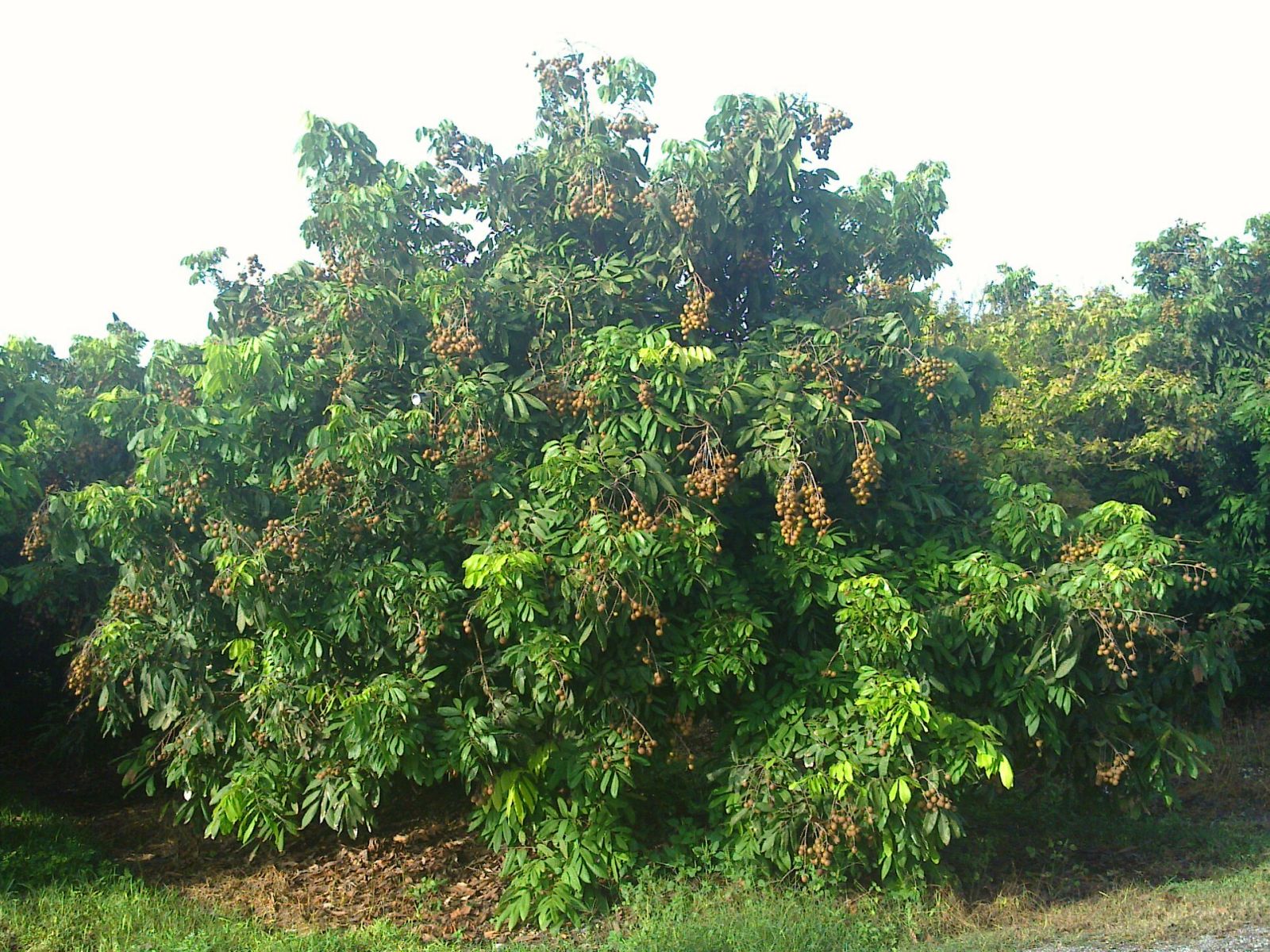
Dimocarpus longan, commonly known as the longan (/ˈlɒŋɑːn/) and dragon's eye, is a tropical tree species that produces edible fruit.[3] It is one of the better-known tropical members of the soapberry family Sapindaceae, to which the lychee and rambutan also belong.[3] The fruit of the longan is similar to that of the lychee, but is less aromatic in taste.[4]
The longan (from Vietnamese long nhãn[5] or Cantonese lùhng ngáahn 龍眼, literally 'dragon eye'), is so named because the black seed within the shelled fruit creates the appearance of an eyeball. The plant is native to tropical Asia and China.[6]
Description
[edit]Depending upon climate and soil type the tree may grow to over 30 metres (100 ft)[7] in height, but it typically stands 9–12 m (30–40 ft) in height and the crown is round.[3][8] The trunk is 80 cm (2+1⁄2 ft) thick[3] with corky bark.[8] The branches are long and thick, typically drooping.[3]
The leaves are oblong and blunt-tipped, usually 10–20 centimetres (4–8 in) long and 5 cm (2 in) wide.[3] The leaves are pinnately compounded and alternate.[8] There are 6 to 9 pairs of leaflets per leaf[8] and the upper surface is wavy and a dark, glossy-green.[3]
The longan tree produces light-yellow inflorescences at the end of branches.[3] The inflorescence is commonly called a panicle; they can be 10–46 cm (4–18 in) long, and widely branched.[8] The small flowers have 5 to 6 sepals and brownish-yellow petals.[8] The flower has a two-lobed pistil and 8 stamen. There are three flower types, distributed throughout the panicle;[3] staminate (functionally male), pistillate (functionally female), and hermaphroditic flowers.[8] Flowering occurs as a progression.[8]
The fruit are spherical and about 2.5 cm (1 in) wide; they hang in drooping clusters. The shell is tan, thin, and leathery with tiny hairs;[8] when firm, it can be squeezed (as in the cracking of a sunflower seed) to shell the fruit.[citation needed] The flesh is translucent, and the seed is large and black with a circular white spot at the base.[3][8] This gives the illusion of an eye.[3] The flesh has a musky, sweet taste, which can be compared to the flavor of lychee fruit.[3] The seed is round, hard, and has a lacquered appearance.[citation needed]
The longan tree is somewhat sensitive to frost. While the species prefers temperatures that do not typically fall below 4.5 °C (40 °F), it can withstand brief temperature drops to about −2 °C (28 °F).[9] Longan trees prefer sandy soil with mild levels of acidity and organic matter.[3] Longans usually bear fruit slightly later than lychees.[10]
Taxonomy
[edit]
The longan is believed to originate from the mountain range between Myanmar and southern China. Other reported origins include Indonesia, India, Sri Lanka, upper Myanmar, north Thailand, Kampuchea (more commonly known as Cambodia), north Vietnam and New Guinea.[11]
Its earliest record of existence draws back to the Han dynasty in 200 BCE. The emperor had demanded lychee and longan trees to be planted in his palace gardens in Shaanxi, but the plants failed. Four hundred years later, longan trees flourished in other parts of China like Fujian and Guangdong, where longan production soon became an industry.[12]
Later on, due to immigration and the growing demand for nostalgic foods, the longan tree was officially introduced to Australia in the mid-1800s, Thailand in the late-1800s, and Hawaii and Florida in the 1900s. The warm, sandy-soiled conditions allowed for the easy growth of longan trees. This jump-started the longan industry in these locations.[12]
Despite its long success in China, the longan is considered to be a relatively new fruit to the world. It has only been acknowledged outside of China in the last 250 years.[12] The first European acknowledgment of the fruit was recorded by João de Loureiro, a Portuguese Jesuit botanist, in 1790. The first entry resides in his collection of works, Flora Cochinchinensis.[5][4]
Subspecies
[edit]Plants of the World Online lists:[2]
- D. longan var. echinatus Leenhouts (Borneo, Philippines)
- D. longan var. longetiolatus Leenhouts (Viet Nam)
- D. longan subsp. malesianus Leenh. (widespread SE Asia)
- D. longan var. obtusus (Pierre) Leenh. (Indo-China)
Conservation
[edit]The wild longan population have been decimated considerably by large-scale logging in the past, and the species used to be listed as Vulnerable on the IUCN Red List. If left alone, longan tree stumps will resprout and the listing was upgraded to Near Threatened in 1998. Recent field data are inadequate for a contemporary IUCN assessment.[1]
Diseases
[edit]Plant based diseases can affect both longan fruits and their trees, and the severity of these diseases can range from harmless cosmetic damage to rendering to the fruit inedible.
The most prevalent disease among longan plants is witch's broom, which can be found in all major longan-producing Asian territories, including China, Thailand, and Vietnam.[13] Witch's broom deforms longan skin, and at times causes the plant to prematurely drop its fruit, similar to the Phytophthora palmivora.[14]
Another common disease that longan trees can carry is the aptly named longan decline, which is largely prevalent in Thailand, with reports finding that it could affect up to 40% of longan trees alone.[15] Affected trees are more vulnerable to common tree pests and algae, and often bear low-quality fruit unworthy of yield.[15]
Algal spot is another plant disease that can affect longan plants and trees. Common among tropical fruits, the disease mainly takes form as red-orange algae that can appear on a fruit-bearing tree's leaves or branches.[16]Algal spot on longan plants, like many other tropical fruits, is caused by Cephaleuros virescens.[17]
An oomycete disease that causes blight on leaves and foliage of a plant and affects the related lychee, Phytophthora palmivora, can also appear on both longan plants and fruit,[18] particularly in the Thailand region. When affecting longan, it can create brown spots on the fruit in an erratic fashion, and can also cause longan to drop prematurely from the plant. Early symptoms can also include a dark necrosis on the plant itself.[19]
Stem-end rot is a disease common amongst litchi and longan, and causes browning and rot on the stem of the fruit. Longan also suffer from various decay-accelerating fungi.[15]
An oomycete disease that affects the related lychee, Phytophthora litchii, also afflicts D. longan.[18]
Cultivation
[edit]Currently, longan crops are grown in southern China, Taiwan, northern Thailand, Malaysia, Indonesia, Cambodia, Laos, Vietnam, India, Sri Lanka, the Philippines,[11] Bangladesh,[20] Mauritius, the United States, and Australia.[11]
Growth
[edit]Longan, like its sister fruit lychee, thrives in humid areas or places with high rainfall, and can grow on most types of soil that does not induce issues with water drainage.[21] Ample temperatures are also instrumental in longan growth: while longan can resist small stretches of cool temperatures, they can be damaged or killed in longer stretches of temperatures as high as −2 degrees Celsius. Younger plants tend to be more vulnerable to the cold than those more mature.[21][22]
A peeled longan fruit | |||||||||||||||||||||||||||||||||||||
| Nutritional value per 100 g (3.5 oz) | |||||||||||||||||||||||||||||||||||||
|---|---|---|---|---|---|---|---|---|---|---|---|---|---|---|---|---|---|---|---|---|---|---|---|---|---|---|---|---|---|---|---|---|---|---|---|---|---|
| Energy | 251 kJ (60 kcal) | ||||||||||||||||||||||||||||||||||||
15.14 g | |||||||||||||||||||||||||||||||||||||
| Sugars | n/a | ||||||||||||||||||||||||||||||||||||
| Dietary fiber | 1.1 g | ||||||||||||||||||||||||||||||||||||
0.1 g | |||||||||||||||||||||||||||||||||||||
1.31 g | |||||||||||||||||||||||||||||||||||||
| |||||||||||||||||||||||||||||||||||||
| |||||||||||||||||||||||||||||||||||||
| Other constituents | Quantity | ||||||||||||||||||||||||||||||||||||
| Water | 83 g | ||||||||||||||||||||||||||||||||||||
| †Percentages estimated using US recommendations for adults,[23] except for potassium, which is estimated based on expert recommendation from the National Academies.[24] | |||||||||||||||||||||||||||||||||||||
Harvest
[edit]During harvest, pickers must climb ladders to carefully remove branches of fruit from longan trees. Longan fruit remain fresher if still attached to the branch, so efforts are made to prevent the fruit from detaching too early. Mechanical picking would damage the delicate skin of the fruit, so the preferred method is to harvest by hand. Knives and scissors are the most commonly used tools.[25]
Fruit is picked early in the day to minimize water loss and to prevent high heat exposure, which would be damaging. The fruit is then placed into either plastic crates or bamboo baskets and taken to packaging houses, where the fruit undergo a series of checks for quality. The packaging houses are well-ventilated and shaded to prevent further decay. The process of checking and sorting are performed by workers instead of machinery. Any fruit that is split, under-ripe, or decaying is disposed of. The remaining healthy fruit is then prepared and shipped to markets.[26]
Many companies add preservatives to canned longan. Regulations control the preserving process. The only known preservative added to canned longan is sulfur dioxide, to prevent discoloration.[26] Fresh longan that is shipped worldwide is exposed to sulfur fumigation. Tests have shown that sulfur residues remain on the fruit skin, branches, and leaves for a few weeks. This violates many countries' limits on fumigation residue, and efforts have been made to reduce this amount.[26]
Distribution
[edit]Longan is found commonly in most of Asia, primarily in mainland China, Taiwan, Vietnam and Thailand. China, the main longan-producing country in the world, produced about 1.9 million metric tons (2.1 million short tons) of longan in 2015–2017, accounting for 70% of the world's longan production and more than 50% of the world's longan plots.[27] Vietnam and Thailand produced around 500 and 980 thousand metric tons (550 and 1,080 thousand short tons), respectively.[28] Like Vietnam, Thailand's economy relies heavily on the cultivation and shipments of longan as well as lychee. This increase in the production of longan reflects recent interest in exotic fruits in other parts of the world. However, the majority of the demand comes from Asian communities in North America, Europe and Australia.[26]
Yield
[edit]While longan yields average out to 2 to 5 tonnes per hectare, there have been observed yields of up to 19.5 tonnes per ha in Israel.[29]
Advancements in selective breeding have allowed scientists to find a strain of longan containing a "high proportion of aborted seeds" at the end of a thirty-year breeding program in 2001.[30] Studies in 2015 that aimed to aid longan breeding efforts discovered that −20 degrees Celsius is the optimal temperature for long-term storage of longan pollen, a key ingredient in enabling longan breeding programs.[31]
Uses
[edit]Nutrition
[edit]Raw longan fruit is 83% water, 15% carbohydrates, 1% protein, and contains negligible fat (table). In a 100 g (3.5 oz) reference amount, raw longan supplies 60 calories of food energy, 93% of the Daily Value (DV) of vitamin C, 11% DV of riboflavin, and no other micronutrients in appreciable quantities (table).
Culinary
[edit]The fruit is sweet, juicy, and succulent in superior agricultural varieties. The seed and the peel are not consumed. Apart from being eaten raw like other fruits, longan fruit is also often used in Asian soups, snacks, desserts, and sweet-and-sour foods, either fresh or dried, and sometimes preserved and canned in syrup. The taste is different from lychees; while longan has a drier sweetness similar to dates, lychees are often messily juicy with a more tropical, grape-like sour sweetness.
Dried longan are often used in Chinese cuisine and Chinese sweet dessert soups. In Chinese food therapy and herbal medicine, it is believed to have an effect on relaxation.[32] In contrast with the fresh fruit, which is juicy and white, the flesh of dried longans is dark brown to almost black.
Once fermented, it can be made into longan wine.
See also
[edit]- Lansium parasiticum, the langsat or lanzones
- Talisia esculenta, a visually similar fruit from South America
References
[edit]- ^ a b Barstow, M. (2022). "Dimocarpus longan". IUCN Red List of Threatened Species. 2022 e.T32399A67808402. Retrieved 29 January 2023.
- ^ a b c "Dimocarpus longan Lour. | Plants of the World Online | Kew Science". Plants of the World Online.
- ^ a b c d e f g h i j k l m Morton, Julia F. (1987). Longan; In: Fruits of Warm Climates. W. Lafayette, IN, US: NewCrop, Center for New Crops and Plant Products, Department of Horticulture and Landscape Architecture, Purdue University. pp. 259–262.
- ^ a b Pham, V.T.; Herrero, M. (2016). "Fruiting pattern in longan, Dimocarpus longan: from pollination to aril development" (PDF). Annals of Applied Biology. 169 (3): 357–368. doi:10.1111/aab.12306. hdl:10261/135703.
- ^ a b Loureiro, J. de (1790). Flora Cochinchinensis (in Latin). Vol. I. Lisbon: Ulyssipone.
- ^ "Dimocarpus longan". Germplasm Resources Information Network. Agricultural Research Service, United States Department of Agriculture. Retrieved 11 December 2017.
- ^ Crane, Jonathan H.; Balerdi, Carlos F.; Sargent, Steven A.; Maguire, Ian (November 1978). "Longan Growing in the Florida Home Landscape". University of Florida (2016 ed.). Retrieved 4 April 2017.
- ^ a b c d e f g h i j Crane, Jonathan; Balerdi, Carlos; Sarge, Steven; Maguire, Ian (2015). "Longan Growing in the Florida Home Landscape". IFAS University of Florida. Retrieved 5 April 2017.
- ^ Herbst, S. & R. (2009). The Deluxe Food Lover's Companion. Barron's Educational Series – via Credo Reference.
- ^ Jiang, Yueming; Zhang, Zhaoqi (November 2002). "Postharvest biology and handling of longan fruit (Dimocarpus longan Lour.)". Postharvest Biology and Technology. 26 (3): 241–252. doi:10.1016/s0925-5214(02)00047-9.
- ^ a b c Lim, T.K. (2013). "Dimocarpus longan subsp. longan var. longan". Edible Medicinal And Non-Medicinal Plants: Volume 6, Fruits. Springer Science & Business Media. pp. 18–29. ISBN 978-94-007-5628-1.
- ^ a b c Menzel, C.; Waite, G.K.; Mitra, S.K. (2005). Litchi and Longan: Botany, Production and Uses. CAB International. ISBN 978-1-84593-022-6.
- ^ Olesen, T.; Menzel, C.M.; Wiltshire, N.; McConchie, C.A. (2002). "Flowering and shoot elongation of lychee in eastern Australia". Australian Journal of Agricultural Research. 53 (8): 977. doi:10.1071/ar01179. ISSN 0004-9409.
- ^ So, Vera; Zee, S.-Y. (September 1972). "A New Virus of Longan (Euphoria longana Lam.) in Hong Kong". PANS Pest Articles & News Summaries. 18 (3): 283–285. doi:10.1080/09670877209411804. ISSN 0030-7793.
- ^ a b c Menzel, C.M.; Waite, G.K., eds. (2005). Litchi and longan: botany, production and uses. doi:10.1079/9780851996967.0000. ISBN 978-0-85199-696-7.
- ^ Visarathanonth, N. (December 1990). "A Survey of Some Temperate Fruit Diseases in Thailand". Acta Horticulturae (279): 609–618. doi:10.17660/actahortic.1990.279.67. ISSN 0567-7572.
- ^ Bache, Bryon (December 1994). "Compendium of Tropical Fruit Diseases, by R.C. Ploetz G.A. Zentmyer, W.T. Nishijima, K G. Rohrbach & H.D. Ohr. viii + 88 pp. St Paul, Minnesota: American Phytopathological Society (1994). £30.00 (US) $37.00 (elsewhere) (paper back) ISBN 0 582 89054 162 0". The Journal of Agricultural Science. 123 (3): 419–420. doi:10.1017/s0021859600070520. ISSN 0021-8596.
- ^ a b Wang, Yan; Tyler, Brett M.; Wang, Yuanchao (8 September 2019). "Defense and Counterdefense During Plant-Pathogenic Oomycete Infection". Annual Review of Microbiology. 73 (1). Annual Reviews: 667–696. doi:10.1146/annurev-micro-020518-120022. ISSN 0066-4227. PMID 31226025. S2CID 195259901.
- ^ Sittigul, C.; Pota, S.; Visitpanich, J.; Nualbunruang, P.; Sookchaoy, K. (January 2005). "The Brown Spot Disease of Longan in Thailand". Acta Horticulturae (665): 389–394. doi:10.17660/actahortic.2005.665.48. ISSN 0567-7572.
- ^ Khatun, MM; Karim, MR; Molla, MM; Khatun, MM; Rahman, MJ (2012). "Study on the physico-chemical characteristics of longan (Euphoria longana) germplasm". Bangladesh Journal of Agricultural Research. 37 (3): 441–447. doi:10.3329/bjar.v37i3.12087. ISSN 0258-7122.
- ^ a b Paull, R.E.; Duarte, O., eds. (2011). Tropical fruits, Volume 1. doi:10.1079/9781845936723.0000. ISBN 978-1-84593-672-3.
- ^ Blancke, Rolf (2017). Tropical Fruits and Other Edible Plants of the World. doi:10.7591/9781501704284. ISBN 978-1-5017-0428-4.
- ^ United States Food and Drug Administration (2024). "Daily Value on the Nutrition and Supplement Facts Labels". FDA. Archived from the original on 27 March 2024. Retrieved 28 March 2024.
- ^ "TABLE 4-7 Comparison of Potassium Adequate Intakes Established in This Report to Potassium Adequate Intakes Established in the 2005 DRI Report". p. 120. In: Stallings, Virginia A.; Harrison, Meghan; Oria, Maria, eds. (2019). "Potassium: Dietary Reference Intakes for Adequacy". Dietary Reference Intakes for Sodium and Potassium. pp. 101–124. doi:10.17226/25353. ISBN 978-0-309-48834-1. PMID 30844154. NCBI NBK545428.
- ^ Siddiq, Muhammad (2012). Tropical and Subtropical Fruits: Postharvest Physiology, Processing and Packaging. John Wiley & Sons – via Google Books.
- ^ a b c d Menzel, C.; Waite, G.K.; Mitra, S.K. (2005). Litchi and Longan: Botany, Production and Uses. CAB International. ISBN 978-1-84593-022-6.
- ^ Luo, Jun, Can-fang Zhou, and Zhong Wan. "Analysis on the development status of lychee industry in Guangdong province in 2010." Guangdong Agric Sci 4 (2011): 16-8.
- ^ Altendorf, Sabine (July 2018). "Minor Tropical Fruits Mainstreaming a niche market" (PDF). FAO. Retrieved 9 September 2020.
- ^ Lora, Jorge; Pham, Van The; Hormaza, José I. (2018), Al-Khayri, Jameel M.; Jain, Shri Mohan; Johnson, Dennis V. (eds.), "Genetics and Breeding of Fruit Crops in the Sapindaceae Family: Lychee (Litchi chinensis Sonn.) and Longan (Dimocarpus longan Lour.)", Advances in Plant Breeding Strategies: Fruits, Cham: Springer International Publishing, pp. 953–973, doi:10.1007/978-3-319-91944-7_23, ISBN 978-3-319-91943-0, retrieved 5 October 2022
- ^ Huang, J.S.; Xu, X.D.; Zheng, S.Q.; Xu, J.H. (August 2001). "Selection for Aborted-Seeded Longan Cultivars". Acta Horticulturae (558): 115–118. doi:10.17660/actahortic.2001.558.14. ISSN 0567-7572.
- ^ Pham, V.T.; Herrero, M.; Hormaza, J.I. (December 2015). "Effect of temperature on pollen germination and pollen tube growth in longan (Dimocarpus longan Lour.)". Scientia Horticulturae. 197: 470–475. Bibcode:2015ScHor.197..470P. doi:10.1016/j.scienta.2015.10.007. hdl:10261/127752. ISSN 0304-4238.
- ^ Teeguarden, Ron. "Tonic Herbs That Every Qigong Practioner [sic] Should Know, Part 2". Qi Journal. Archived from the original on 4 July 2019. Retrieved 4 August 2016.
External links
[edit]- Longan Production in Asia from the Food and Agriculture Organization of the United Nations
Longan
View on GrokipediaDescription
Tree Morphology
The longan tree (Dimocarpus longan) is an erect, evergreen species that typically grows to 9–14 meters in height, although it can reach up to 25–40 meters in native or optimal conditions, with a trunk diameter occasionally exceeding 1 meter. It develops a dense, rounded or oblong crown supported by a straight bole that may feature buttresses in mature specimens. The bark is rough and gray-brown, contributing to the tree's sturdy appearance in its natural habitat.[7][8][9] The leaves are alternate and pinnately compound, measuring 15–30 cm in length, with 4–9 pairs of opposite leaflets that are glossy green, leathery, and oblong-lanceolate in shape, each leaflet 5–12 cm long and 2–5 cm wide, often with wavy margins and blunt tips. New growth emerges with a distinctive wine-red coloration before maturing to dark green. The tree exhibits fast initial growth, reaching maturity and fruit-bearing age in 5–7 years from seed, though air-layered propagules can fruit sooner in 2–3 years. It is sensitive to frost, with young trees suffering damage at temperatures of -0.5°C to -4°C and mature trees able to tolerate brief exposure to -2°C or lower, necessitating tropical or subtropical climates with minimal winter lows above 4.5°C for reliable performance.[1][10][11] Flowering occurs in spring in the northern hemisphere, typically from February to May, with small, inconspicuous creamy-white or pale yellow flowers borne in terminal panicles up to 30 cm long and widely branched, containing a mix of staminate, pistillate, and hermaphroditic types. Native to humid, mountainous regions of Southeast Asia, including southern China, Vietnam, and Thailand, where it thrives as an understory tree in primary or secondary forests, the longan prefers well-drained, acidic soils but tolerates a range of conditions. Its wood is hard, dense, and reddish-brown, valued locally for crafting tools, furniture, and posts due to its durability.[10][1][7]Fruit Characteristics
The longan fruit is a globose drupe, typically 2–3.6 cm in diameter, borne in drooping clusters on terminal panicles. It features a thin, brittle, tan-brown to light reddish-brown rind that is leathery and slightly roughened.[12][1] The fruit's name, "dragon's eye," derives from the appearance of the peeled fruit, where the translucent white aril encircles the dark seed, resembling an eye.[1][12] The edible aril, or flesh, is whitish and translucent, juicy, and sweet with a musky flavor, often containing 12–21% soluble solids depending on the cultivar. It surrounds a single large, round, glossy black seed that is bitter and does not adhere to the aril.[1][12] Seedless varieties of longan exist but are rare, typically resulting from specific breeding or hybrid selections.[13] Fruit development occurs in panicles that may bear a few to over 350 fruits, though clusters commonly range from 20 to 40 per panicle after natural thinning. Fruits mature 140–190 days (approximately 4.5–6 months) after flowering, with ripening in native Southeast Asian and southern Chinese regions typically spanning June to August.[1] The shelf life of fresh longan fruit is short without postharvest treatments, lasting only 3–5 days at ambient temperatures around 20°C due to rapid pericarp browning and weight loss.[14]Taxonomy
Classification
The longan, scientifically known as Dimocarpus longan, belongs to the kingdom Plantae, phylum Tracheophyta, class Magnoliopsida, order Sapindales, family Sapindaceae, genus Dimocarpus, and species D. longan.[15] This classification places it within the diverse Sapindaceae family, which encompasses over 1,900 species of mostly tropical and subtropical trees and shrubs. The species was first formally described by the Portuguese Jesuit missionary and botanist João de Loureiro in his 1790 work Flora Cochinchinensis, based on specimens from southern Vietnam.[15] Earlier binomial names include synonyms such as Euphoria longan (Steudel) and Nephelium longana (Cambess.), reflecting historical taxonomic shifts within the Sapindaceae as classifications evolved with improved botanical understanding.[15] These synonyms highlight the longan's placement in related genera before its current assignment to Dimocarpus, which now includes about seven species native to tropical southern and southeastern Asia.[16] Phylogenetically, D. longan is closely related to other economically important Sapindaceae fruits, including lychee (Litchi chinensis) and rambutan (Nephelium lappaceum), sharing a common ancestry within the family that originated in subtropical Asia. The species is diploid with a chromosome number of 2n=30, a characteristic consistent across cultivars and supporting its basal position in the Sapindaceae phylogeny.[17] Studies on divergence times, using fossil-calibrated molecular clocks and whole-genome comparisons, estimate that D. longan split from L. chinensis approximately 39 million years ago during the Eocene, coinciding with climatic shifts that promoted diversification in subtropical Asian flora. This separation underscores the longan's evolutionary adaptation to similar ecological niches as its close relatives, while maintaining distinct morphological traits like its translucent aril and woody pericarp.[18]Varieties and Cultivars
The longan tree, Dimocarpus longan, is divided into two subspecies: D. longan subsp. longan, the typical cultivated form with larger fruits suitable for commercial production, and D. longan subsp. malesianus, a Malaysian variant primarily found in wild or semi-wild conditions and characterized by smaller fruit size.[13][9] Numerous cultivars have been developed across Asia, selected for traits such as fruit size, yield, and flavor. In Hawaii, the 'Kohala' cultivar is prominent, valued for its large, sweet fruits that reach up to 3 cm in diameter and contribute to the majority of local production.[19] In Thailand, key varieties include 'Biew Kiew', noted for early ripening and superior fruit quality with high aril content, and 'Chompoo', prized for its sweet taste and reddish rind.[9][20] Vietnam's dominant cultivar is 'Edau' (also known as 'Daw'), which offers high yields and is widely exported due to its thick flesh and small seeds.[21] Breeding efforts focus on enhancing desirable traits through hybridization and selection, with modern programs developing triploid hybrids to achieve seedlessness and improve pest resistance.[22][23] China hosts over 400 cultivars, though fewer than 10 dominate commercial orchards, with selection emphasizing aril sweetness levels of 15-20% total sugars to meet consumer preferences for juicy, flavorful fruit.[24][25] Cultivated longan stocks exhibit low genetic diversity compared to wild populations, increasing vulnerability to diseases and environmental stresses, which underscores the need for broader germplasm conservation.[17][26]History and Origins
Etymology and Early Cultivation
The name "longan" derives from the Cantonese term "lung ngan" (龍眼), literally meaning "dragon's eye," a reference to the fruit's round shape, translucent white flesh, and dark seed that collectively resemble an eye. This linguistic origin reflects the fruit's cultural significance in southern Chinese regions, where it has long been prized for its visual resemblance to mythical imagery. The scientific name Dimocarpus longan was first published by the Portuguese Jesuit botanist João de Loureiro in his 1790 work Flora Cochinchinensis, marking the first European scientific description of the species.[3] Longan (Dimocarpus longan) has been cultivated in China since the Han Dynasty (206 BCE–220 CE), with historical records indicating its domestication in southern provinces such as Guangdong and Guangxi, where it grew in subtropical forests alongside wild populations.[24] Native to the mountainous regions spanning southern China, Myanmar, and Vietnam, the species likely originated from wild ancestors in these humid, lowland tropical and subtropical ecosystems, where it thrived as an understory tree.[27] Early cultivation focused on selecting superior fruit-bearing varieties, and by the Western Han period, longan from areas like Shatian in present-day Maoming was harvested as a tribute to the emperor, underscoring its status as a valued imperial delicacy.[28] Emperors, including those of the Han court, reportedly commissioned the planting of longan trees in palace gardens alongside lychees, highlighting its integration into elite horticulture and transport networks that preserved freshness over long distances.[29] By the Tang Dynasty (618–907 CE), longan appeared in classical texts as a medicinal fruit, valued for its tonifying properties in traditional Chinese medicine, though detailed pharmacological accounts were later elaborated in the Ming Dynasty's Compendium of Materia Medica (Bencao Gangmu) by Li Shizhen, who described it as a blood-nourishing tonic.[30] In Chinese folklore, longan is associated with longevity, attributed to the remarkable lifespan of its trees—some exceeding 400 years—and beliefs that consuming the fruit or cultivating the tree bestows good fortune and extended life on households, a notion rooted in southern regional legends from Guangdong and beyond.[31] This symbolic connection reinforced its role in rituals and daily life, while its spread beyond China began in the late 18th century, with introduction to India around 1798 via trade routes, marking the onset of broader Asian dissemination.[32]Global Introduction
The spread of the longan (Dimocarpus longan) beyond its native southern China and Southeast Asia began in the 18th century through colonial botanical exchanges and trade networks. In the 1760s, French botanist Jean-François Charpentier de Cossigny introduced longan seeds to Mauritius and Réunion during his explorations in China and Bengal, establishing early plantings on agricultural estates like Domaine de Palma.[33] These efforts marked one of the first documented introductions to European colonial territories outside Asia. By the 1780s, seeds from Mauritius were sent to metropolitan France for acclimatization trials, but the tree's tropical requirements led to failures in cooler continental climates, limiting it to greenhouse cultivation in Europe during the early 19th century.[13] The longan's dissemination to the Americas accelerated in the late 19th and early 20th centuries, often facilitated by Chinese immigrant communities seeking familiar crops. It was introduced to Hawaii in the early 1900s via the U.S. Department of Agriculture, which formally imported specimens in 1903, leading to the establishment of the first commercial orchards there by the 1920s.[1] In Florida, introductions occurred in the early 1900s, thriving in subtropical conditions and spurring local production, while trials in California proved unsuccessful due to frost sensitivity.[34] Puerto Rico saw plantings by the 1920s through similar USDA efforts, adapting well to the island's humid tropics.[13] In Australia, Chinese diaspora communities planted longan in Queensland during the 1870s, capitalizing on the region's subtropical climate; today, commercial cultivation is concentrated in these areas, with production expanding since the mid-20th century.[35] The fruit's global reach has continued into the 21st century, with notable post-2000 expansions in Brazil—where research on fruit development began in regions like Jaboticabal—and South Africa, driven by demand for exotic subtropical fruits and suitable agroclimatic zones.[36] These introductions highlight adaptation challenges, including sensitivity to cold and the need for humid, frost-free environments, often resolved through immigrant knowledge and selective breeding.[37]Cultivation
Environmental Requirements
Longan trees (Dimocarpus longan) thrive in tropical to subtropical climates characterized by warm temperatures, high humidity, and adequate rainfall. Optimal growth occurs with average temperatures ranging from 20°C to 30°C, particularly during spring and summer periods that support vegetative flushing and fruit development. The trees require a frost-free environment, as temperatures below 0°C can damage young trees and even mature specimens, with severe injury possible at -3°C to -4°C. High humidity levels, combined with annual rainfall of 1,200 to 2,000 mm, with 1,200–1,400 mm distributed over 100 to 150 days during the flowering and fruiting periods, promote vigorous growth, though excessive rain during flowering can lead to flower drop.[1][38][39] Soil conditions for longan cultivation emphasize well-drained profiles to prevent root rot, with acidic sandy loams rich in organic matter being ideal. A soil pH of 5.5 to 6.5 supports nutrient uptake, particularly iron and micronutrients, while the tree tolerates a range of soil types including calcareous or rocky substrates if drainage is adequate. Longan shows adaptability to poorer soils but cannot endure waterlogging or flooding, which can kill young trees after just 5 to 10 days of saturation. Low salinity levels are also preferred to avoid growth inhibition.[1][38][20] Site selection plays a critical role in longan establishment, requiring full sun exposure for maximum fruit production and canopy development. Trees are spaced 6 to 10 meters apart to accommodate their mature height of 10 to 15 meters and facilitate pollination and harvesting. In native southern Chinese habitats, longan grows at elevations from 150 to 450 meters, though it adapts to sea level up to 460 meters in cultivation. Wind protection is necessary, as strong gusts can disrupt pollination and cause branch damage, especially in exposed areas.[1][3][39] Once established, longan trees demonstrate moderate drought tolerance, surviving dry periods better than related species like lychee, but consistent irrigation is essential during flowering and fruit set to prevent yield losses. Withholding water in late fall or winter can induce beneficial stress for flowering initiation, while supplemental irrigation during dry spells maintains productivity in regions with uneven rainfall distribution.[1][20][39]Propagation and Management
Longan trees are primarily propagated by seed for rootstock production, though this method results in variable traits and inferior fruit quality compared to the parent, with germination typically occurring in 2–4 weeks under moist, warm conditions.[1] For true-to-type propagation to preserve desirable cultivars, vegetative techniques such as air-layering and grafting are preferred; air-layering, the most common method in subtropical regions like Florida, involves wounding a branch and wrapping it with moist rooting medium from April to August, yielding roots in 10–12 weeks and fruiting trees in 2–3 years after planting.[1] Grafting, including cleft or side-veneer methods on pencil-sized seedling rootstocks, ensures clonal reproduction and allows grafted trees to begin fruiting in 3–5 years, depending on scion vigor and environmental conditions.[1][40] Orchard management focuses on establishing a balanced canopy and optimal nutrition to support growth and yield. Pruning is essential post-harvest in July–August to control tree size (typically 10–15 feet high and 15–30 feet wide), improve light penetration and air circulation, and enhance wind resistance, while avoiding winter pruning to protect flower buds; young trees require initial structural pruning to eliminate narrow crotches and promote branching through tip removal.[1] Fertilization programs apply balanced NPK formulations, such as 6-6-6, at rates of 200–300 grams of nitrogen per mature tree annually, divided into 2–3 applications from late spring through summer, supplemented by foliar micronutrients like manganese and zinc 4–6 times per year to address deficiencies common in sandy soils.[1] Irrigation is critical during establishment and dry periods, with regular watering from flowering (February–May) to harvest to boost yields, though mild drought stress in fall can promote subsequent flowering; bearing trees require consistent moisture to prevent fruit drop.[1][19] Modern practices emphasize sustainability and efficiency, including high-density planting at approximately 200 trees per hectare to maximize land use and early yields while facilitating mechanical management.[19] Integrated pest management (IPM) integrates cultural controls like fruit bagging 15 days after set and pheromone traps with biological agents such as Beauveria bassiana for insect control, reducing reliance on chemicals through monitoring and need-based applications.[41] Cover crops and organic amendments, including 5–10 cm mulch layers of straw or Trichoderma-inoculated compost, enhance soil health, suppress weeds, and improve yields by increasing organic matter and microbial activity.[41]Harvesting and Postharvest
Longan fruit is typically harvested by hand in clusters to preserve quality and minimize damage, using clippers or scissors to cut the branches when the rind turns yellow-brown and the soluble solids content reaches approximately 18° Brix, indicating optimal ripeness.[42][43] In major Asian production regions like Thailand, harvesting occurs from late June to late August, often in multiple picks at 7-10 day intervals to capture peak maturity across the tree.[42] To prevent fruit cracking due to sudden moisture changes, picking is ideally scheduled to avoid rainy periods, as uneven water exposure during development can lead to splits in the pericarp.[44] Mature trees, typically 5-10 years old, yield 50-100 kg of fruit per tree under good management, though this varies by cultivar and conditions.[1] Postharvest handling begins immediately with pre-cooling to 5-10°C to slow respiration and reduce physiological deterioration, achieving optimal storage at 4-7°C with 90-95% relative humidity for 2-3 weeks.[14] Treatments such as sulfur dioxide (SO₂) fumigation effectively control pericarp browning and decay, extending shelf life to 14-28 days, while chitosan-based edible coatings minimize water loss, delay enzymatic browning, and maintain firmness by modulating energy metabolism and proline levels.[14][45] Packaging in ventilated fiberboard crates (2-4.5 kg capacity) with plastic liners or modified atmosphere bags (1-3% O₂) further preserves quality by limiting oxygen exposure and humidity fluctuations, supporting up to 4 weeks of marketability under controlled conditions.[14] Recent advancements include refined edible coatings, such as chitosan formulations enriched with bioactive compounds, which have reduced disease incidence by up to 30% in trials by enhancing barrier properties against pathogens and oxidative stress.[45] In Thailand, mechanical harvesting aids using deep learning-based detection for precise cluster identification are being trialed to improve efficiency on large orchards, though hand-picking remains predominant to avoid bruising.[46]Production and Economics
Global Production Statistics
Longan production is predominantly concentrated in Asia, which accounts for over 95% of the world's total output. Based on data from 2015 to 2017, global production in Asia averaged 3.445 million metric tons annually, with the majority coming from a few key countries.[47] More recent country-specific figures for 2023 indicate an approximate Asian total of 3.6 million metric tons, with China at 1.91 million tons, Thailand at 1.03 million tons, and Vietnam at about 0.6 million tons; exact global aggregates remain approximate due to varying reporting. Production has shown variable growth influenced by weather and expansion, rather than consistent 2-3% yearly increases.[48][49][50] China is the world's leading producer, contributing approximately 1.919 million metric tons (55.7% of Asian output) during 2015-2017 and 1.91 million tons in 2023, primarily from provinces such as Guangdong, Guangxi, Fujian, Sichuan, Yunnan, and Hainan.[47][51][48] Thailand ranks second, with production at 1.03 million tons in 2023.[49] Vietnam follows with an average annual output of about 600,000 tons, supported by over 80,000 hectares of cultivation area.[50]| Country | Production (metric tons, approximate) | Share of Asian Production (2015-2017) | Key Notes |
|---|---|---|---|
| China | 1,919,000 (2015-2017 avg.); 1,910,000 (2023) | 55.7% | Dominant producer; 2023 output up 55.6% from 2022.[47][48] |
| Thailand | 1,030,000 (2023) | 30.4% (2015-2017 avg.) | Northern focus; lower than earlier estimates.[49][47] |
| Vietnam | 600,000 (annual avg.) | 8.7% (2015-2017 avg.) | Steady output from 80,000+ ha.[50][47] |
Economic Importance
Longan production holds significant economic value as a key tropical fruit commodity, with fresh fruit typically commanding wholesale prices of $2 to $5 per kilogram globally, depending on quality and market conditions.[56] Dried longan, often processed for extended shelf life and export, fetches higher prices ranging from $10 to $15 per kilogram for premium varieties, reflecting added processing costs and demand in health-focused markets.[57] The trade is driven primarily by exports from major producers like Thailand and Vietnam, with key markets including Asia (particularly China, which imports over 95% of its supply), the United States, and Europe.[52] Socioeconomically, longan cultivation supports the livelihoods of millions of smallholder farmers across Asia, particularly in China, where it contributes to rural employment and income diversification in subtropical regions. In the United States, longan serves as a profitable alternative crop in Florida, yielding an estimated net profit of $17,000 per acre after accounting for production, harvest, and marketing costs, based on mature orchard yields of around 18,000 pounds per acre at $1.50 per pound F.O.B. pricing.[19] This economic viability underscores longan's role in promoting sustainable agriculture in non-traditional growing areas. However, the sector faces challenges such as price volatility influenced by weather events, which can disrupt yields and lead to fluctuating farm-gate prices for minor tropical fruits like longan.[58] Value-added products, including juices and processed dried forms, help mitigate these issues by providing higher margins and market expansion.[59] Organic longan enhances profitability amid growing consumer demand for sustainable options.[60] Additionally, Thailand's longan trade saw increased volumes following the resolution of earlier export restrictions related to pest concerns, further stimulating regional economic activity.[61]Pests and Diseases
Insect Pests
Longan trees (Dimocarpus longan) are vulnerable to several key insect pests that target flowers, shoots, and fruits, leading to distorted growth and reduced yields. Among the most significant are gall midges, fruit borers, scale insects, and fruit-piercing moths, each with distinct feeding habits and life cycles that exacerbate damage in tropical and subtropical orchards.[62] The longan gall midge, represented by species such as Dimocarpomyia folicola (Diptera: Cecidomyiidae), induces obovoid galls on the lower leaf surfaces. Larvae develop within these galls, feeding on plant tissue and causing malformation; adults are small flies that lay eggs on tender tissues. The life cycle typically includes 3-4 generations per year, with larvae feeding on buds during active periods. This pest contributes to overall canopy damage, though specific yield losses vary by infestation level and region.[63][64] Scale insects, such as Morganella longispina (Hemiptera: Coccidae), infest branches, leaves, and fruits, sucking sap and weakening trees while promoting sooty mold. They are prevalent in regions like Florida and Asia, reducing fruit quality and yield through direct feeding and secondary infections.[65] Fruit-piercing moths, such as Eudocima phalonia (Lepidoptera: Erebidae), puncture ripening fruits, causing sap leakage and rot that leads to premature drop. This pest is particularly damaging in Southeast Asia, with yield losses of 20–30% in untreated orchards and up to 80–90% in heavy infestations.[62] Fruit borers, primarily Conopomorpha sinensis (Lepidoptera: Gracillariidae), pose a severe threat by tunneling into developing fruits and arils, feeding on seeds and causing premature drop. Symptoms include entry holes with frass and secondary microbial infections that render fruits unmarketable. The life cycle consists of eggs hatching in 3-5 days, larval development lasting 10-12 days (with tunneling into the aril), pupation in 5-7 days, and adults living 5-8 days; borers overwinter as pupae in the soil, emerging in spring. In untreated orchards, infestations can damage 41.5-96.7% of fruits on trees and up to 100% of fallen fruits, resulting in substantial losses estimated at up to 50% of potential yield without intervention. Populations are monitored using pheromone traps, and biological controls such as parasitoids (Tetrastichus sp., Apanteles sp.) have proven effective in reducing larval survival. This pest is particularly problematic in Asia but has been noted in quarantine concerns for regions like Hawaii.[66][67][68]Pathogens and Disorders
Longan trees are susceptible to several pathogens, including fungi and algae, which can significantly impact growth and yield. One major issue is witches' broom, caused by the eriophyid mite Eriophyes dimocarpi, that stunts tree growth and leads to the proliferation of abnormal shoots.[69] This condition is widespread in major producing regions, including Thailand and Vietnam, where it can cause crop losses of up to 86% in severely affected orchards.[62] Another significant issue is longan decline, a syndrome prevalent in northern Thailand caused by brown root rot from the fungus Phellinus noxius.[70] This condition weakens the root system, leading to overall tree deterioration. Symptoms of witches' broom include clusters of witches'-broom-like shoots with small, upward-rolling leaves and shortened internodes, while longan decline manifests as leaf yellowing, branch dieback, and sparse foliage.[71][72] Algal spot, caused by the parasitic alga Cephaleuros virescens, produces distinctive leaf spots that appear as raised, orange-brown lesions, primarily on the upper leaf surface, potentially leading to reduced photosynthesis if widespread.[73] Anthracnose, induced by Colletotrichum species such as C. siamense and C. fructicola, affects fruits by causing sunken brown or black rot lesions and small round spots, resulting in postharvest fruit decay.[74] In addition to biotic pathogens, abiotic disorders affect longan trees. Nutrient deficiencies, particularly zinc, can cause rosetting, characterized by clustered, small leaves with interveinal chlorosis and stunted shoots, similar to patterns observed in related fruit trees.[75] Fruit cracking often results from environmental factors like heavy rain or high humidity during fruit development, which promotes rapid water uptake and expansion that exceeds the pericarp's capacity, leading to splits in the skin.[76] Recent advancements include the use of chitosan coatings in postharvest management, which have been shown to reduce decay incidence, including blight, by approximately 30% in treated longan fruits by enhancing pericarp integrity and inhibiting fungal growth.[77]Uses
Culinary Applications
Longan fruit is primarily consumed fresh by peeling away the thin, leathery outer skin to reveal the translucent white aril surrounding a single dark seed, which is typically discarded before eating the juicy, grape-like flesh raw.[78] This form is popular in fruit salads, desserts, and as a simple snack across Southeast Asia, where its sweet, floral flavor with subtle musky notes provides a refreshing contrast to other tropical fruits.[79] In processed preparations, longan is often dried into "longyanrou," a chewy, raisin-like snack valued for its concentrated sweetness and used extensively in Chinese cuisine.[79] Dried longan frequently appears in sweet soups and tong sui desserts, such as a traditional Chinese recipe simmering the fruit with red dates, white fungus, and rock sugar to create a silky, warming pudding served hot or chilled.[80] In Vietnamese cuisine, it features in chè desserts like chè hạt sen long nhãn, where dried longan pairs with lotus seeds and pandan leaves for a cooling sweet soup enjoyed year-round.[81] Thai dishes highlight longan in khao niao piak lumyai, a sticky rice pudding made by steaming glutinous rice and topping it with fresh or canned longan, coconut milk, and palm sugar for a creamy, indulgent treat.[82] Canned longan in syrup offers convenience for fruit cocktails and beverages, maintaining the fruit's texture and flavor for export and domestic use in Asian markets.[78] Fermented applications include longan wine, produced by incorporating the fruit's aril and sometimes seeds during juice fermentation in Thailand, yielding a mildly sweet, antioxidant-rich drink.[83] The seeds, while not the primary focus, can be boiled for a nutty, edible kernel occasionally incorporated into snacks or desserts in traditional preparations.[79] Overall, longan's versatility in fresh, dried, and preserved forms underscores its role in over a dozen staple recipes across Chinese, Vietnamese, and Thai cuisines, emphasizing its integration into both everyday and celebratory meals.[79]Nutritional Profile
The fresh aril of longan fruit (Dimocarpus longan) is low in calories, providing approximately 60 kcal per 100 g serving, with a high water content of about 82.8 g, making it a hydrating fruit option.[84] It contains modest amounts of macronutrients, including 1.31 g of protein, 0.1 g of fat, and 15.14 g of carbohydrates, of which the majority are simple sugars contributing to its sweet flavor.[84] The fruit is notably rich in vitamin C, offering 84 mg per 100 g, which meets 93% of the daily value (DV), supporting immune function and collagen synthesis.[85] Trace amounts of B-complex vitamins, such as thiamine and niacin, are also present, though in quantities less than 10% DV per serving.[6]| Nutrient | Amount per 100 g (fresh aril) | % Daily Value |
|---|---|---|
| Calories | 60 kcal | 3% |
| Water | 82.8 g | - |
| Protein | 1.31 g | 3% |
| Fat | 0.1 g | 0% |
| Carbohydrates | 15.14 g | 6% |
| Vitamin C | 84 mg | 93% |
| Calcium | 1 mg | 0% |
| Magnesium | 10 mg | 2% |
| Potassium | 266 mg | 6% |
| Copper | 0.169 mg | 19% |
| Iron | 0.13 mg | 1% |
Medicinal and Other Uses
In traditional Chinese medicine (TCM), the aril of longan (Dimocarpus longan) is valued as a warming tonic that nourishes the blood, calms the spirit (shen), and addresses conditions such as insomnia, anxiety, forgetfulness, and fatigue.[89][6] The seeds are employed for their astringent properties to treat stomach pain, bleeding, and urinary disorders, while the flowers serve as a febrifuge to reduce fever and alleviate pain.[90] In Vietnam, decoctions of the dried aril are traditionally used as a tonic for neurasthenia, insomnia, and nervous exhaustion.[91] Modern pharmacological research has identified bioactive compounds in longan parts that support these traditional applications. Polysaccharides from the pulp exhibit antioxidant effects by scavenging free radicals and anti-diabetic activity through inhibition of α-glucosidase, with in vitro studies showing enhanced glucose uptake in cells.[92][93] Extracts from the pericarp demonstrate strong antioxidant and anti-inflammatory properties, reducing oxidative stress markers like malondialdehyde while boosting enzymes such as superoxide dismutase.[94] Peel extracts display antibacterial efficacy against pathogens including Staphylococcus aureus and Acinetobacter baumannii, with minimum inhibitory concentrations (MIC) ranging from 0.256 to 1 mg/mL.[95] Seed extracts, rich in ellagitannins such as corilagin and ellagic acid, have shown promising anti-cancer potential; a 2022 study demonstrated that polyphenol-rich seed extract inhibited oral tumor growth in rats by suppressing vascular endothelial growth factor (VEGF) and transforming growth factor-beta (TGF-β) signaling, improving antioxidant status and reducing pro-inflammatory cytokines like interleukin-6.[96][93] Flower and seed extracts further exhibit anti-proliferative effects on colorectal, lung, and breast cancer cells via cell cycle arrest and apoptosis induction.[90] Beyond medicinal applications, longan trees are cultivated as ornamentals in tropical landscapes for their dense, evergreen foliage and attractive fruit clusters.[1] The wood, though not commercially dominant, is utilized for furniture, flooring, and agricultural tools due to its durability and insect resistance.[97] Bark, containing condensed tannins, serves in tanning processes and as a source for natural dyes.Conservation
Current Status
The wild populations of Dimocarpus longan, commonly known as longan, are currently assessed as Data Deficient by the International Union for Conservation of Nature (IUCN). This classification stems from a 2017 assessment, updated in the 2022 IUCN Red List version, which highlights the challenges in distinguishing wild individuals from extensively cultivated ones across much of the species' range.[99] The native range of longan remains uncertain but is generally considered to span southern China (including Hainan, Guangdong, Guangxi, and Yunnan) to Southeast Asia, encompassing countries such as Myanmar, Thailand, Vietnam, and Malaysia, with disputed origins in other areas like India and the Philippines. Wild trees occur sporadically in tropical and subtropical forests, often as scattered individuals rather than dense stands, though precise population sizes are unknown due to inadequate surveys and the pervasive influence of cultivation.[99][99] Population trends for wild longan are unknown overall, but evidence indicates a decline attributable to ongoing habitat loss from logging, agricultural expansion, and urbanization throughout the native range. In contrast, cultivated longan orchards continue to expand globally, particularly in Asia, further complicating monitoring of wild stocks.[99][99] Longan is not listed under the Convention on International Trade in Endangered Species of Wild Fauna and Flora (CITES). A prior 1998 assessment had upgraded the species from Vulnerable to Near Threatened, but this is now outdated given the lack of updated data on wild populations; the IUCN emphasizes the need for further research to confirm the native range, population size, and true conservation status.[99][99][99]Threats and Conservation Efforts
Wild populations of Dimocarpus longan are primarily threatened by habitat destruction resulting from extensive logging, agricultural expansion, and human settlement growth across its native range in Southeast Asia and southern China. These activities have led to significant forest loss, particularly documented in areas like Hainan Island, where large-scale deforestation has reduced suitable lowland tropical and subtropical forest habitats essential for the species' survival. Overharvesting of wild fruits and timber further exacerbates population declines, as the slow-growing nature of the tree makes it vulnerable to exploitation in unprotected areas.[100] Climate change adds another layer of risk to wild longan, with projections indicating shifts in suitable growing areas due to rising temperatures and altered precipitation patterns that could limit regeneration and distribution.[101] In regions such as Sumatra, where wild subpopulations occur, the expansion of agricultural lands has been identified as a major driver of habitat fragmentation, compounded by declining traditional knowledge of sustainable harvesting practices.[102] Conservation efforts for wild longan emphasize both in situ and ex situ strategies to preserve genetic diversity and support population recovery. In situ protection occurs within natural habitats in southern China, including provinces like Guangxi, where ongoing monitoring and reserve management aim to safeguard remnant wild populations amid cultivation-dominated landscapes.[103] Ex situ initiatives include germplasm collections maintained by Bioversity International (formerly IPGRI), which have facilitated the conservation of tropical fruit species diversity, including longan accessions for breeding purposes.[104] As of 2017, 49 ex situ collections worldwide hold D. longan material, providing a backup against local extinctions. Research on genetic diversity plays a crucial role in developing resilient varieties, with studies in Thailand using genotyping-by-sequencing on 50 accessions to reveal population structure and inform conservation priorities.[105] In vitro propagation protocols have also been advanced to support near-threatened status recovery, ensuring genetic fidelity during mass multiplication for reintroduction.[106] Despite these measures, gaps persist, including the absence of a 2025 IUCN Red List update— the latest assessment dates to 2022 and classifies the species as Data Deficient—and the urgent need for comprehensive population surveys to assess current threats accurately.References
- https://www.[researchgate](/page/ResearchGate).net/publication/322350736_Condensed_Tannins_from_Longan_Bark_as_Inhibitor_of_Tyrosinase_Structure_Activity_and_Mechanism
