


Community hub
Recent from talks
Contribute something
Nothing was collected or created yet.
Mango
View on Wikipedia

A mango is an edible stone fruit produced by the tropical tree Mangifera indica. It originated from the region between northwestern Myanmar, Bangladesh, and northeastern India.[1][2] M. indica has been cultivated in South and Southeast Asia since ancient times resulting in two types of modern mango cultivars: the "Indian type" and the "Southeast Asian type".[1][2] Other species in the genus Mangifera also produce edible fruits that are also called "mangoes", the majority of which are found in the Malesian ecoregion.[3]
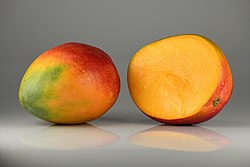
Worldwide, there are several hundred cultivars of mango. Depending on the cultivar, mango fruit varies in size, shape, sweetness, skin color, and flesh color, which may be pale yellow, gold, green, or orange.[4] Mango is the national fruit of India, Pakistan and the Philippines,[5][6] while the mango tree is the national tree of Bangladesh.[7]
Etymology
[edit]The English word mango (plural mangoes or mangos) originated in the 16th century from the Portuguese word manga, from the Malay mangga, and ultimately from the Tamil mā (மா, 'mango tree') + kāy (ங்காய், 'unripe fruit/vegetable')[8][9][10] or the Malayalam māṅṅa (മാവ്, 'mango tree') + kāya (കായ, 'unripe fruit').[11] The scientific name, Mangifera indica, refers to a plant bearing mangoes in India.[10]
Description
[edit]Mango trees grow to 30–40 metres (98–131 feet) tall, with a crown radius of 10–15 m (33–49 ft). The trees are long-lived, as some specimens still fruit after 300 years.[12]
In deep soil, the taproot descends to a depth of 6 m (20 ft), with profuse, wide-spreading feeder roots and anchor roots penetrating deeply into the soil. The leaves are evergreen, alternate, simple, 15–35 centimetres (6–14 inches) long, and 6–16 cm (2+1⁄2–6+1⁄2 in) broad; when the leaves are young they are orange-pink, rapidly changing to a dark, glossy red, then dark green as they mature. The flowers are produced in terminal panicles 10–40 cm (4–15+1⁄2 in) long; each flower is small and white with five petals 5–10 millimetres (3⁄16–3⁄8 in) long, with a mild, sweet fragrance. Over 500 varieties of mangoes are known,[4] many of which ripen in summer, while some give a double crop.[13] The fruit takes four to five months from flowering to ripening.[4]
The ripe fruit varies according to cultivar in size, shape, color, sweetness, and eating quality. Depending on the cultivar, fruits are variously yellow, orange, red, or green. The fruit has a single flat, oblong pit that can be fibrous or hairy on the surface and does not separate easily from the pulp. The fruits may be somewhat round, oval, or kidney-shaped, ranging from 5–25 centimetres (2–10 in) in length and from 140 grams (5 oz) to 2 kilograms (5 lb) in weight per individual fruit. The skin is leather-like, waxy, smooth, and fragrant, with colors ranging from green to yellow, yellow-orange, yellow-red, or blushed with various shades of red, purple, pink, or yellow when fully ripe.[4]
Ripe intact mangoes give off a distinctive resinous, sweet smell.[4] Inside the pit 1–2 mm (0.039–0.079 in) thick is a thin lining covering a single seed, 4–7 cm (1.6–2.8 in) long. Mangoes have recalcitrant seeds which do not survive freezing and drying.[14] Mango trees grow readily from seeds, with germination success highest when seeds are obtained from mature fruits.[4]
-
 Flowers and immature fruits on an 'Alphonso' tree
 -
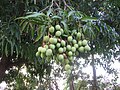 Unripe mangos in Rincón, Puerto Rico
 -
 The seed inside of a mango pit
 -
 A mango stone


.jpg)
Taxonomy
[edit]

Mangoes originated from the region between northwestern Myanmar, Bangladesh, and northeastern India.[1][2] The mango is considered an evolutionary anachronism, whereby seed dispersal was once accomplished by a now-extinct evolutionary forager, such as a megafauna mammal.[15]
From their center of origin, mangoes diverged into two genetically distinct populations: the subtropical Indian group and the tropical Southeast Asian group. The Indian group is characterized by having monoembryonic fruits, while polyembryonic fruits characterize the Southeast Asian group.[1][2]
It was previously believed that mangoes originated from a single domestication event in South Asia before being spread to Southeast Asia, but a 2019 study found no evidence of a center of diversity in India. Instead, it identified a higher unique genetic diversity in Southeast Asian cultivars than in Indian cultivars, indicating that mangoes may have originally been domesticated first in Southeast Asia before being introduced to South Asia. However, the authors also cautioned that the diversity in Southeast Asian mangoes might be the result of other reasons (like interspecific hybridization with other Mangifera species native to the Malesian ecoregion). Nevertheless, the existence of two distinct genetic populations also identified by the study indicates that the domestication of the mango is more complex than previously assumed and would at least indicate multiple domestication events in Southeast Asia and South Asia.[1][2]
Cultivars
[edit]There are hundreds of named mango cultivars. In mango orchards, several cultivars are often grown to improve pollination. Many desired cultivars are monoembryonic and must be propagated by grafting, or they do not breed true. A common monoembryonic cultivar is 'Alphonso', an important export product, considered "the king of mangoes".[16]
Cultivars that excel in one climate may fail elsewhere. For example, Indian cultivars such as 'Julie,' a prolific cultivar in Jamaica, require annual fungicide treatments to escape the lethal fungal disease anthracnose in Florida. Asian mangoes are resistant to anthracnose.[17]
The current western market is dominated by the cultivar 'Tommy Atkins', a seedling of 'Haden' that first fruited in 1940 in southern Florida and was initially rejected commercially by Florida researchers.[18] Growers and importers worldwide have embraced the cultivar for its excellent productivity and disease resistance, shelf life, transportability, size, and appealing color.[19] Although the Tommy Atkins cultivar is commercially successful, other cultivars may be preferred by consumers for eating pleasure, such as Alphonso.[16][19]
Generally, ripe mangoes have an orange-yellow or reddish peel and are juicy for eating, while exported fruit are often picked while underripe with green peels. Although producing ethylene while ripening, unripened exported mangoes do not have the same juiciness or flavor as fresh fruit.
Distribution and habitat
[edit]
From tropical Asia, mangoes were introduced to East Africa by Arab and Persian traders in the ninth to tenth centuries. The 14th-century Moroccan traveler Ibn Battuta reported it at Mogadishu.[20] It was spread further into other areas around the world during the Colonial Era. The Portuguese Empire spread the mango from their colony in Goa to East and West Africa. From West Africa, they introduced it to Brazil from the 16th to the 17th centuries. From Brazil, it spread northwards to the Caribbean and eastern Mexico by the mid to late 18th century. The Spanish Empire also introduced mangoes directly from the Philippines to western Mexico via the Manila galleons from at least the 16th century. Mangoes were only introduced to Florida by 1833.[2][21]
Cultivation
[edit]The mango is now cultivated in most frost-free tropical and warmer subtropical climates. It is cultivated extensively in South Asia, Southeast Asia, East and West Africa, the tropical and subtropical Americas, and the Caribbean.[22] Mangoes are also grown in Andalusia, Spain (mainly in Málaga province), as its coastal subtropical climate is one of the few places in mainland Europe that permits the growth of tropical plants and fruit trees. The Canary Islands are another notable Spanish producer of the fruit. Other minor cultivators include North America (in South Florida and the California Coachella Valley), Hawai'i, and Australia.[23]
Many commercial cultivars grown in Europe are grafted onto the cold-hardy rootstock of the Gomera-1 mango cultivar, originally from Cuba. Its root system is well adapted to a coastal Mediterranean climate.[24] Many of the 1,000+ mango cultivars are easily cultivated using grafted saplings, ranging from the "turpentine mango" (named for its strong taste of turpentine[25]) to the Bullock's Heart. Dwarf or semidwarf varieties serve as ornamental plants and can be grown in containers. A wide variety of diseases can afflict mangoes.[citation needed]
 India India |
26.2 |
 Indonesia Indonesia |
4.1 |
 China China |
3.9 |
 Mexico Mexico |
2.7 |
 Pakistan Pakistan |
2.6 |
 Brazil Brazil |
2.3 |
 Malawi Malawi |
2.1 |
| World | 61.1 |
| *includes mangosteens and guavas; Source: FAOSTAT of the United Nations[26] | |
A breakthrough in mango cultivation was the use of potassium nitrate and ethrel to induce flowering in mangoes. The discovery was made by Filipino horticulturist Ramon Barba in 1974 and was developed from the unique traditional method of inducing mango flowering using smoke in the Philippines. It allowed mango plantations to induce regular flowering and fruiting year-round. Previously, mangoes were seasonal because they only flowered every 16 to 18 months. The method is now used in most mango-producing countries.[27][28]
Production
[edit]In 2023, world production of mangoes (report includes mangosteens and guavas) was 61 million tonnes, led by India with 43% of the total, and Indonesia and China as secondary producers (table).
Uses
[edit]Culinary
[edit] | This section needs additional citations for verification. (January 2021) |
Mangoes are generally sweet, although the taste and texture of the flesh vary across cultivars; some, such as Alphonso, have a soft, pulpy, juicy texture similar to an overripe plum, while others, such as Tommy Atkins, are firmer with a fibrous texture.[29]
The skin of unripe, pickled, or cooked mango can be eaten, but it has the potential to cause contact dermatitis of the lips, gingiva, or tongue in susceptible people.[30]
-
 The "hedgehog" style of preparation on Carabao mangoes
 -
 Alphonso mango chunks
 -
 Sliced Ataulfo mangoes
 -
 A glass of mango juice
 -
 Mango chutney
 -

-
 Many varieties of mango from India
.jpg)

.jpg)


_01.jpg)

Mangoes are used in many cuisines. Sour, unripe mangoes are used in chutneys (i.e., mango chutney), pickles, daals and other side dishes in Indian cuisine. A summer drink called aam panna is made with mangoes. Mango pulp made into jelly or cooked with red gram dhal and green chilies may be served with cooked rice. Mango lassi is consumed throughout South Asia, prepared by mixing ripe mangoes or mango pulp with buttermilk and sugar. Ripe mangoes are also used to make curries. Aamras is a thick juice made of mangoes with sugar or milk and is consumed with chapatis or pooris. The pulp from ripe mangoes is also used to make jam called mangada. Andhra aavakaaya is a pickle made from raw, unripe, pulpy, and sour mango mixed with chili powder, fenugreek seeds, mustard powder, salt, and groundnut oil. Mango is also used to make dahl and chunda (a sweet and spicy, grated mango delicacy). In Indonesian cuisine, unripe mango is processed into asinan, rujak and sambal pencit/mangga muda,[31] or eaten with edible salt.[32]
Mangoes are used to make murabba (fruit preserves), muramba (a sweet, grated mango delicacy), amchur (dried and powdered unripe mango), and pickles, including a spicy mustard-oil pickle and alcohol. Ripe mangoes are cut into thin layers, desiccated, folded, and then cut. The fruit is also added to cereal products such as muesli and oat granola.
Mango is used to make juices, smoothies, ice cream, fruit bars, raspados, aguas frescas, pies, and sweet chili sauce, or mixed with chamoy, a sweet and spicy chili paste. In Central America, mango is either eaten green, mixed with salt, vinegar, black pepper, and hot sauce, or ripe in various forms.
Pieces of mango can be mashed and used as a topping on ice cream or blended with milk and ice as milkshakes. Sweet glutinous rice is flavored with coconut, then served with sliced mango as mango sticky rice. In other parts of Southeast Asia, mangoes are pickled with fish sauce and rice vinegar. Green mangoes can be used in mango salad with fish sauce and dried shrimp. Mango with condensed milk may be used as a topping for shaved ice.
Raw green mangoes can be sliced and eaten like a salad.[33] In most parts of Southeast Asia, they are commonly eaten with fish sauce, vinegar, soy sauce, or with a dash of salt (plain or spicy) – a combination usually known as "mango salad" in English.[34]

In the Philippines, green mangoes are also commonly eaten with bagoong (salty fish or shrimp paste), salt, soy sauce, vinegar, or chilis.[35][36] Mango float and mango cake, which use slices of ripe mangoes, are eaten in the Philippines.[37][38] Dried strips of sweet, ripe mango (sometimes combined with seedless tamarind to form mangorind) are also consumed. Mangoes may be used to make juices, mango nectar, and as a flavoring and major ingredient in mango ice cream and sorbetes.
Phytochemistry
[edit]Numerous phytochemicals are present in mango peel and pulp, such as the triterpene lupeol.[39] Mango peel pigments under study include carotenoids, such as the provitamin A compound, beta-carotene, lutein and alpha-carotene,[40][41] and polyphenols, such as quercetin, kaempferol, gallic acid, caffeic acid, catechins and tannins.[42][43] Mango contains a unique xanthonoid called mangiferin.[44]
Phytochemical and nutrient content appears to vary across mango cultivars.[45] Up to 25 different carotenoids have been isolated from mango pulp, the densest of which was beta-carotene, which accounts for the yellow-orange pigmentation of most mango cultivars.[46] Mango leaves also have significant polyphenol content, including xanthonoids, mangiferin and gallic acid.[47]
Flavor
[edit]The flavor of mango fruits is conferred by several volatile organic chemicals mainly belonging to terpene, furanone, lactone, and ester classes. Different varieties or cultivars of mangoes can have flavors made up of different volatile chemicals or the same volatile chemicals in different quantities.[48] In general, New World mango cultivars are characterized by the dominance of δ-3-carene, a monoterpene flavorant; whereas, high concentration of other monoterpenes such as (Z)-ocimene and myrcene, as well as the presence of lactones and furanones, is the unique feature of Old World cultivars.[49][50][51] In India, 'Alphonso' is one of the most popular cultivars. In 'Alphonso' mango, the lactones, and furanones are synthesized during ripening, whereas terpenes and the other flavorants are present in both the developing (immature) and ripening fruits.[52][53][54] Ethylene, a ripening-related hormone well known to be involved in ripening of mango fruits, causes changes in the flavor composition of mango fruits upon exogenous application, as well.[55][56] In contrast to the huge amount of information available on the chemical composition of mango flavor, the biosynthesis of these chemicals has not been studied in depth; only a handful of genes encoding the enzymes of flavor biosynthetic pathways have been characterized to date.[57][58][59][60]
| Nutritional value per 100 g (3.5 oz) | |||||||||||||||||||||||||||||||||||||||||||||||||||||||
|---|---|---|---|---|---|---|---|---|---|---|---|---|---|---|---|---|---|---|---|---|---|---|---|---|---|---|---|---|---|---|---|---|---|---|---|---|---|---|---|---|---|---|---|---|---|---|---|---|---|---|---|---|---|---|---|
| Energy | 250 kJ (60 kcal) | ||||||||||||||||||||||||||||||||||||||||||||||||||||||
15 g | |||||||||||||||||||||||||||||||||||||||||||||||||||||||
| Sugars | 13.7 | ||||||||||||||||||||||||||||||||||||||||||||||||||||||
| Dietary fiber | 1.6 g | ||||||||||||||||||||||||||||||||||||||||||||||||||||||
0.38 g | |||||||||||||||||||||||||||||||||||||||||||||||||||||||
| Saturated | 0.092 g | ||||||||||||||||||||||||||||||||||||||||||||||||||||||
| Monounsaturated | 0.14 g | ||||||||||||||||||||||||||||||||||||||||||||||||||||||
| Polyunsaturated | 0.071 g 0.051 g 0.019 g | ||||||||||||||||||||||||||||||||||||||||||||||||||||||
0.82 g | |||||||||||||||||||||||||||||||||||||||||||||||||||||||
| |||||||||||||||||||||||||||||||||||||||||||||||||||||||
| Other constituents | Quantity | ||||||||||||||||||||||||||||||||||||||||||||||||||||||
| Water | 83.5 g | ||||||||||||||||||||||||||||||||||||||||||||||||||||||
| †Percentages estimated using US recommendations for adults,[61] except for potassium, which is estimated based on expert recommendation from the National Academies.[62] | |||||||||||||||||||||||||||||||||||||||||||||||||||||||
Toxicity
[edit]Contact with oils in mango leaves, stems, sap, and skin can cause dermatitis and anaphylaxis in susceptible individuals.[4][30][63] Those with a history of contact dermatitis induced by urushiol (an allergen found in poison ivy, poison oak, or poison sumac) may be most at risk for mango contact dermatitis.[64] Other mango compounds potentially responsible for dermatitis or allergic reactions include mangiferin.[4] Cross-reactions may occur between mango allergens and urushiol.[65] Sensitized individuals may not be able to eat peeled mangos or drink mango juice safely.[4]
When mango trees are flowering in spring, local people with allergies may experience breathing difficulty, itching of the eyes, or facial swelling, even before flower pollen becomes airborne. In this case, the irritant is likely to be the vaporized essential oil from flowers. During the primary ripening season of mangoes, contact with mango plant parts – primarily sap, leaves, and fruit skin[4] – is the most common cause of plant dermatitis in Hawaii.[66]
Nutrition
[edit]A raw mango is 84% water, 15% carbohydrates, 1% protein, and has negligible fat (table). In a reference amount of 100 g (3.5 oz), raw mango supplies 60 calories and is a rich source of vitamin C (40% of the Daily Value, DV) with moderate amounts of folate (11% DV) and copper (12% DV), while other micronutrients are low in content (table).
Culture
[edit]
The mango is the national fruit of India.[67][68] It is also the national tree of Bangladesh.[69][70] In India, harvest and sale of mangoes is during March–May and this is annually covered by news agencies.[16]
The mango has a traditional context in the culture of South Asia. In his edicts, the Mauryan emperor Ashoka references the planting of fruit- and shade-bearing trees along imperial roads:
"On the roads banyan-trees were caused to be planted by me, (in order that) they might afford shade to cattle and men, (and) mango-groves were caused to be planted."
In medieval India, the Indo-Persian poet Amir Khusrau termed the mango "Naghza Tarin Mewa Hindustan" – "the fairest fruit of Hindustan". Mangoes were enjoyed at the court of the Delhi Sultan Alauddin Khijli. The Mughal Empire was especially fond of the fruits: Babur praises the mango in his Babarnameh. At the same time, Sher Shah Suri inaugurated the creation of the Chaunsa variety after his victory over the Mughal emperor Humayun. Mughal patronage of horticulture led to the grafting of thousands of mangoes varieties, including the famous Totapuri, which was the first variety to be exported to Iran and Central Asia.[citation needed] Akbar (1556–1605) is said to have planted a mango orchard of 100,000 trees near Darbhanga, Bihar,[71] while Jahangir and Shah Jahan ordered the planting of mango orchards in Lahore and Delhi and the creation of mango-based desserts.[72]
The Jain goddess Ambika is traditionally represented as sitting under a mango tree.[73] Mango blossoms are also used in the worship of the goddess Saraswati. Mango leaves decorate archways and doors in Indian houses during weddings and celebrations such as Ganesh Chaturthi. Mango motifs and paisleys are widely used in different Indian embroidery styles, and are found in Kashmiri shawls, Kanchipuram and silk sarees. In Tamil Nadu, the mango is referred to as one of the three royal fruits, along with banana and jackfruit, for their sweetness and flavor.[74] This triad of fruits is referred to as ma-pala-vazhai. The classical Sanskrit poet Kalidasa sang the praises of mangoes.[75]
Mangoes were the subject of the mango cult in China during the Cultural Revolution as symbols of chairman Mao Zedong's love for the people.[76]
See also
[edit]
- Achaar, South Asian pickles, commonly containing mango and lime
- Amchoor, mango powder
- Mangifera caesia, a related species also widely cultivated for its fruit in Southeast Asia
- Mango mealybug
- Mango pickle – Mangai-oorkai (manga-achar), South Indian hot mango pickle
- Aam papad - an Indian fruit leather made out of mango pulp mixed with concentrated sugar solution and sun dried.
References
[edit]- ^ a b c d e Kuhn, David N.; Bally, Ian S. E.; Dillon, Natalie L.; Innes, David; Groh, Amy M.; Rahaman, Jordon; Ophir, Ron; Cohen, Yuval; Sherman, Amir (20 April 2017). "Genetic Map of Mango: A Tool for Mango Breeding". Frontiers in Plant Science. 8 577. Bibcode:2017FrPS....8..577K. doi:10.3389/fpls.2017.00577. PMC 5397511. PMID 28473837.
- ^ a b c d e f Warschefsky, Emily J.; Wettberg, Eric J. B. (June 2019). "Population genomic analysis of mango (Mangifera indica) suggests a complex history of domestication". New Phytologist. 222 (4): 2023–2037. Bibcode:2019NewPh.222.2023W. doi:10.1111/nph.15731. PMID 30730057.
- ^ Sherman, Amir; Rubinstein, Mor; Eshed, Ravit; Benita, Miri; Ish-Shalom, Mazal; Sharabi-Schwager, Michal; Rozen, Ada; Saada, David; Cohen, Yuval; Ophir, Ron (December 2015). "Mango (Mangifera indica L.) germplasm diversity based on single nucleotide polymorphisms derived from the transcriptome". BMC Plant Biology. 15 (1): 277. Bibcode:2015BMCPB..15..277S. doi:10.1186/s12870-015-0663-6. ISSN 1471-2229. PMC 4647706. PMID 26573148.
- ^ a b c d e f g h i j Morton, Julia Frances (1987). Mango. In: Fruits of Warm Climates. NewCROP, New Crop Resource Online Program, Center for New Crops & Plant Products, Purdue University. pp. 221–239. ISBN 978-0-9610184-1-2.
- ^ "Pakistani mango: The king of fruits". ArabNews. 13 August 2019.
- ^ "Mangoes In The Philippines". CropLife.
- ^ Com, Bdnews24 (15 November 2010). "Mango tree, national tree". Retrieved 16 November 2013.
{{cite web}}: CS1 maint: numeric names: authors list (link) - ^ "Mango". Online Etymology Dictionary. 2024. Retrieved 14 April 2024.
- ^ Fabricius, J. P. (1972). "J. P. Fabricius's Tamil and English dictionary. 4th ed., rev.and enl". dsal.uchicago.edu. Retrieved 15 December 2023.
- ^ a b Prakash, Om (2005). A Tryst with Mango: Retrospect, Aspects, Prospects. APH Publishing. pp. xiv. ISBN 978-81-7648-912-6.
- ^ "mango n. (1)". OED Online. Oxford University Press. June 2021.
- ^ "Mango". California Rare Fruit Growers. Archived from the original on 19 October 2020. Retrieved 4 November 2015.
- ^ "Mango (Mangifera indica) varieties". toptropicals.com. Retrieved 2 January 2014.
- ^ Marcos-Filho, Julio. "Physiology of Recalcitrant Seeds" (PDF). Ohio State University. Archived from the original (PDF) on 24 January 2014. Retrieved 3 December 2014.
- ^ Spengler, Robert N. (April 2020). "Anthropogenic Seed Dispersal: Rethinking the Origins of Plant Domestication". Trends in Plant Science. 25 (4): 340–348. Bibcode:2020TPS....25..340S. doi:10.1016/j.tplants.2020.01.005. hdl:21.11116/0000-0005-C7E0-D. PMID 32191870.
- ^ a b c Jonathan Allen (10 May 2006). "Mango Mania in India". The New York Times. Retrieved 4 September 2013.
- ^ Hunsberger, Adrian; Balerdi, Carlos (February 2012). "DOORYARD DISEASE CONTROL FOR MANGOS IN FLORIDA" (PDF). University of Florida/IFAS Miami-Dade County Extension. Retrieved 10 March 2023.
Mango varieties that are susceptible to anthracnose are: 'Cogshall', 'Graham', 'Haden', 'Irwin', 'Julie', 'Kent', 'Mallika', 'Valencia Pride', 'Zill', and others. Those that are susceptible to powdery mildew are: 'Alphonso', 'Carrie', 'Glenn', 'Haden', 'Keitt', 'Kent', 'Nam Doc Mai', 'Zill' and a few others. These will most likely need to be sprayed with fungicides each year.
- ^ Susser, Allen (2001). The Great Mango Book. New York: Ten Speed Press. ISBN 978-1-58008-204-4.
- ^ a b Mintz C (24 May 2008). "Sweet news: Ataulfos are in season". Toronto Star. Retrieved 1 August 2015.
- ^ Watson, Andrew J. (1983). Agricultural innovation in the early Islamic world: the diffusion of crops and farming techniques, 700–1100. Cambridge, UK: Cambridge University Press. pp. 72–3. ISBN 978-0-521-24711-5.
- ^ Gepts, P. (n.d.). "PLB143: Crop of the Day: Mango, Mangifera indica". The evolution of crop plants. Dept. of Plant Sciences, Sect. of Crop & Ecosystem Sciences, University of California, Davis. Archived from the original on 6 December 2013. Retrieved 8 October 2009.
- ^ Altendorf, S. (2019). Major Tropical Fruits: Market Review 2018 (PDF). Rome: Food and Agriculture Organization of the United Nations.
- ^ Litz, Richard E. (2009). The Mango: Botany, Production and Uses. Wallingford, UK: Cambridge University Press. pp. 606–627. ISBN 978-1-84593-489-7.
- ^ "actahort.org". actahort.org. Archived from the original on 28 February 2021. Retrieved 31 January 2013.
- ^ According to the Oxford Companion to Food
- ^ "Production of mangoes, mangosteens, and guavas in 2023, Crops/Regions/World list/Production Quantity/Year (pick lists)". UN Food and Agriculture Organization, Corporate Statistical Database (FAOSTAT). 2025. Retrieved 14 July 2025.
- ^ "The Scientist, the Patent and the Mangoes – Tripling the Mango Yield in the Philippines". World Intellectual Property Organization. Retrieved 9 May 2021.
- ^ Nagao, Mike A.; Nishina, Melvin S. (1993). "Use of Potassium Nitrate on Mango Flowering". In Chia, C.L.; Evans, D.O. (eds.). Proceedings, Conference on Mango in Hawaii; March 9-11, 1993. University of Hawaii. pp. 61–66. hdl:10125/16493.
- ^ Melissa Clark (1 April 2011). "For everything there is a season, even mangoes". The New York Times. Retrieved 24 November 2019.
- ^ a b Sareen, Richa; Shah, Ashok (2011). "Hypersensitivity manifestations to the fruit mango". Asia Pacific Allergy. 1 (1): 43–9. doi:10.5415/apallergy.2011.1.1.43. ISSN 2233-8276. PMC 3206236. PMID 22053296.
- ^ Sendari, Anugerah Ayu (8 June 2023). "8 Resep Olahan Mangga Muda Menyegarkan, dari Manisan Sampai Sambal". liputan6.com (in Indonesian). Retrieved 22 August 2024.
- ^ "7 Khasiat Tidak Terduga Rutin Mengonsumsi Mangga Muda Campur Garam". jpnn.com (in Indonesian). Retrieved 22 August 2024.
- ^ The Complete Guide to Edible Wild Plants. New York: Skyhorse Publishing. 2009. p. 66. ISBN 978-1-60239-692-0. OCLC 277203364.
- ^ Valente, Anabela (2 April 2020). "Oh, the Fruits in Southeast Asia!". Diaries of Travel Inspirations. Archived from the original on 20 September 2024. Retrieved 9 May 2021.
- ^ Pedrosa, Kannalyn Joy (25 February 2020). "Green Mangoes and Shrimp Paste (The mouth-watering food tandem)". The VA Collections. Archived from the original on 9 May 2021. Retrieved 9 May 2021.
- ^ "Green Mango & Bagoong". Market Manila. 5 October 2008. Retrieved 9 May 2021.
- ^ Tan, Joanne Catherine (5 June 2015). "Top 12 Cakes To Try In The Philippines". When in Manila. Retrieved 15 May 2019.
- ^ Maryanne (15 June 2017). "Mango Royale (Mango Icebox Cake)". The Little Epicurean. Retrieved 2 December 2018.
- ^ Chaturvedi PK, Bhui K, Shukla Y (2008). "Lupeol: connotations for chemoprevention". Cancer Lett. 263 (1): 1–13. doi:10.1016/j.canlet.2008.01.047. PMID 18359153.
- ^ Berardini N, Fezer R, Conrad J, Beifuss U, Carle R, Schieber A (2005). "Screening of mango (Mangifera indica L.) cultivars for their contents of flavonol O – and xanthone C-glycosides, anthocyanins, and pectin". J Agric Food Chem. 53 (5): 1563–70. Bibcode:2005JAFC...53.1563B. doi:10.1021/jf0484069. PMID 15740041.
- ^ Gouado I, Schweigert FJ, Ejoh RA, Tchouanguep MF, Camp JV (2007). "Systemic levels of carotenoids from mangoes and papaya consumed in three forms (juice, fresh and dry slice)". Eur J Clin Nutr. 61 (10): 1180–8. doi:10.1038/sj.ejcn.1602841. PMID 17637601.
- ^ Mahattanatawee K, Manthey JA, Luzio G, Talcott ST, Goodner K, Baldwin EA (2006). "Total antioxidant activity and fiber content of select Florida-grown tropical fruits". J Agric Food Chem. 54 (19): 7355–63. Bibcode:2006JAFC...54.7355M. doi:10.1021/jf060566s. PMID 16968105.
- ^ Singh UP, Singh DP, Singh M, et al. (2004). "Characterization of phenolic compounds in some Indian mango cultivars". Int J Food Sci Nutr. 55 (2): 163–9. doi:10.1080/09637480410001666441. PMID 14985189. S2CID 22576447.
- ^ Andreu GL, Delgado R, Velho JA, Curti C, Vercesi AE (2005). "Mangiferin, a natural occurring glucosyl xanthone, increases susceptibility of rat liver mitochondria to calcium-induced permeability transition". Arch Biochem Biophys. 439 (2): 184–93. doi:10.1016/j.abb.2005.05.015. PMID 15979560.
- ^ Rocha Ribeiro SM, Queiroz JH, Lopes Ribeiro de Queiroz ME, Campos FM, Pinheiro Sant'ana HM (2007). "Antioxidant in mango (Mangifera indica L.) pulp". Plant Foods Hum Nutr. 62 (1): 13–7. Bibcode:2007PFHN...62...13R. doi:10.1007/s11130-006-0035-3. PMID 17243011. S2CID 27051096.
- ^ Chen JP, Tai CY, Chen BH (2004). "Improved liquid chromatographic method for determination of carotenoids in Taiwanese mango (Mangifera indica L.)". J Chromatogr A. 1054 (1–2): 261–8. doi:10.1016/S0021-9673(04)01406-2. PMID 15553152.
- ^ Barreto JC, Trevisan MT, Hull WE, et al. (2008). "Characterization and quantitation of polyphenolic compounds in bark, kernel, leaves, and peel of mango (Mangifera indica L.)". J Agric Food Chem. 56 (14): 5599–610. Bibcode:2008JAFC...56.5599B. doi:10.1021/jf800738r. PMID 18558692.
- ^ Pandit, Sagar S.; Chidley, Hemangi G.; Kulkarni, Ram S.; Pujari, Keshav H.; Giri, Ashok P.; Gupta, Vidya S. (2009). "Cultivar relationships in mango based on fruit volatile profiles". Food Chemistry. 114: 363–372. doi:10.1016/j.foodchem.2008.09.107.
- ^ Pandit SS, Chidley HG, Kulkarni RS, Pujari KH, Giri AP, Gupta VS, 2009, Cultivar relationships in mango based on fruit volatile profiles, Food Chemistry, 144, 363–372.
- ^ Narain N, Bora PS, Narain R and Shaw PE (1998). Mango, In: Tropical and Subtropical Fruits, Edt. by Shaw PE, Chan HT and Nagy S. Agscience, Auburndale, FL, USA, pp. 1–77.
- ^ Kulkarni RS, Chidley HG, Pujari KH, Giri AP and Gupta VS, 2012, Flavor of mango: A pleasant but complex blend of compounds, In Mango Vol. 1: Production and Processing Technology Archived 3 December 2013 at the Wayback Machine (Eds. Sudha G Valavi, K Rajmohan, JN Govil, KV Peter and George Thottappilly) Studium Press LLC.
- ^ Pandit, Sagar S.; Kulkarni, Ram S.; Chidley, Hemangi G.; Giri, Ashok P.; Pujari, Keshav H.; Köllner, Tobias G.; Degenhardt, Jörg; Gershenzon, Jonathan; Gupta, Vidya S. (2009). "Changes in volatile composition during fruit development and ripening of 'Alphonso' mango". Journal of the Science of Food and Agriculture. 89 (12): 2071–2081. Bibcode:2009JSFA...89.2071P. doi:10.1002/jsfa.3692.
- ^ Gholap, A. S., Bandyopadhyay, C., 1977. Characterization of green aroma of raw mango (Mangifera indica L.). Journal of the Science of Food and Agriculture 28, 885–888
- ^ Kulkarni, Ram S.; Chidley, Hemangi G.; Pujari, Keshav H.; Giri, Ashok P.; Gupta, Vidya S. (2012). "Geographic variation in the flavour volatiles of Alphonso mango". Food Chemistry. 130: 58–66. doi:10.1016/j.foodchem.2011.06.053.
- ^ Lalel HJD, Singh Z, Tan S, 2003, The role of ethylene in mango fruit aroma volatiles biosynthesis, Journal of Horticultural Science and Biotechnology, 78, 485–496.
- ^ Chidley, Hemangi G.; Kulkarni, Ram S.; Pujari, Keshav H.; Giri, Ashok P.; Gupta, Vidya S. (2013). "Spatial and temporal changes in the volatile profile of Alphonso mango upon exogenous ethylene treatment". Food Chemistry. 136 (2): 585–594. doi:10.1016/j.foodchem.2012.08.029. PMID 23122101. S2CID 42523345.
- ^ Pandit, S. S.; Kulkarni, R. S.; Giri, A. P.; Köllner, T. G.; Degenhardt, J.; Gershenzon, J.; Gupta, V. S. (June 2010). "Expression profiling of various genes during the development and ripening of Alphonso mango". Plant Physiology and Biochemistry. 48 (6): 426–433. doi:10.1016/j.plaphy.2010.02.012. PMID 20363641. S2CID 22915293.
- ^ Singh, Rajesh K.; Sane, Vidhu A.; Misra, Aparna; Ali, Sharique A.; Nath, Pravendra (2010). "Differential expression of the mango alcohol dehydrogenase gene family during ripening". Phytochemistry. 71 (13): 1485–1494. Bibcode:2010PChem..71.1485S. doi:10.1016/j.phytochem.2010.05.024. PMID 20598721.
- ^ Kulkarni, Ram; Pandit, Sagar; Chidley, Hemangi; Nagel, Raimund; Schmidt, Axel; Gershenzon, Jonathan; Pujari, Keshav; Giri, Ashok; Gupta, Vidya (2013). "Characterization of three novel isoprenyl diphosphate synthases from the terpenoid rich mango fruit". Plant Physiology and Biochemistry. 71: 121–131. Bibcode:2013PlPB...71..121K. doi:10.1016/j.plaphy.2013.07.006. PMID 23911730. S2CID 46320747.
- ^ Kulkarni RS, Chidley HG, Deshpande A, Schmidt A, Pujari KH, Giri AP and Gershenzon J, Gupta VS, 2013, An oxidoreductase from 'Alphonso' mango catalyzing biosynthesis of furaneol and reduction of reactive carbonyls, SpringerPlus, 2, 494.
- ^ United States Food and Drug Administration (2024). "Daily Value on the Nutrition and Supplement Facts Labels". FDA. Archived from the original on 27 March 2024. Retrieved 28 March 2024.
- ^ "TABLE 4-7 Comparison of Potassium Adequate Intakes Established in This Report to Potassium Adequate Intakes Established in the 2005 DRI Report". p. 120. In: Stallings, Virginia A.; Harrison, Meghan; Oria, Maria, eds. (2019). "Potassium: Dietary Reference Intakes for Adequacy". Dietary Reference Intakes for Sodium and Potassium. pp. 101–124. doi:10.17226/25353. ISBN 978-0-309-48834-1. PMID 30844154. NCBI NBK545428.
- ^ Miell J, Papouchado M, Marshall A (1988). "Anaphylactic reaction after eating a mango". British Medical Journal. 297 (6664): 1639–40. doi:10.1136/bmj.297.6664.1639. PMC 1838873. PMID 3147776.
- ^ Hershko K, Weinberg I, Ingber A (2005). "Exploring the mango – poison ivy connection: the riddle of discriminative plant dermatitis". Contact Dermatitis. 52 (1): 3–5. doi:10.1111/j.0105-1873.2005.00454.x. PMID 15701120. S2CID 31162401.
- ^ Oka K, Saito F, Yasuhara T, Sugimoto A (2004). "A study of cross-reactions between mango contact allergens and urushiol". Contact Dermatitis. 51 (5–6): 292–6. doi:10.1111/j.0105-1873.2004.00451.x. PMID 15606656. S2CID 6115016.
- ^ McGovern TW, LaWarre S (2001). "Botanical briefs: the mango tree—Mangifera indica L.". Cutis. 67 (5): 365–6. PMID 11381849.
- ^ "National Fruit". Know India. Government of India. Archived from the original on 20 August 2010. Retrieved 17 August 2010.
- ^ "National Fruit". Archived from the original on 20 April 2020. Retrieved 4 November 2015.
- ^ "Mango tree, national tree". BDnews24.com. Archived from the original on 23 December 2010. Retrieved 16 November 2010.
- ^ Com, Bdnews24. "Mango tree, national tree". bdnews24.com.
{{cite web}}: CS1 maint: numeric names: authors list (link) - ^ Curtis Morgan (22 June 1995). "The Nation Is Discovering What South Floridans Have Long Known: Mango Is the Sexiest Fruit on Earth". Food. The Miami Herald. p. 1E.
Mango culture owes much to Akbar, emperor of India's Mogul conquerors from 1556 to 1605, who planted an orchard of 100,000 trees near Darbhanga in Eastern India.
- ^ Sen, Upala (June 2017). "Peeling the Emperor of Fruits". The Telegraph (India).
- ^ "Ambika In Jaina Art And Literature" – via exoticindiaart.com.
- ^ Subrahmanian N, Hikosaka S, Samuel GJ (1997). Tamil social history. p. 88. Retrieved 23 March 2010.
- ^ "His highness, Mango maharaja: An endless obsession – Yahoo! Lifestyle India". Yahoo!. 29 May 2012. Archived from the original on 16 March 2013. Retrieved 14 June 2013.
- ^ Moore, Malcolm (7 March 2013). "How China came to worship the mango during the Cultural Revolution". The Daily Telegraph. Additional reporting by Valentina Luo. Archived from the original on 11 January 2022. Retrieved 28 September 2015.
Further reading
[edit]- Ensminger, Audrey H.; et al. (1995). The Concise Encyclopedia of Foods & Nutrition. CRC Press. p. 651. ISBN 978-0-8493-4455-8.
- Litz, Richard E. (editor, 2009). The Mango: Botany, Production and Uses. 2nd edition. CABI. ISBN 978-1-84593-489-7.
- Susser, Allen (2001). The Great Mango Book: A Guide with Recipes. Ten Speed Press. ISBN 978-1-58008-204-4.
External links
[edit]

| International | |
|---|---|
| National | |
| Other | |


| Main symbols |
|   |
|---|---|---|
| Monuments and Memorials |
| |
| People |
| |
| Flora and fauna |
| |
| Other symbols |
| |
.svg)
| Constitutional |
|  |
|---|---|---|
| Flora and fauna |
| |
| Days | ||
| Others |
| |
| Official |  | ||||||
|---|---|---|---|---|---|---|---|
| Unofficial | |||||||
| National heroes |
| ||||||

Mango
View on GrokipediaEtymology and History
Etymology
The English word mango first appeared in the late 16th century, specifically recorded in the 1580s, and derives from the Portuguese term manga.[6] This Portuguese borrowing traces to the Malay mangga, an Austronesian term adopted through regional trade.[6] Ultimately, the root lies in the Dravidian Tamil word māṅkāy (or variants like man-kay or maangai), a compound of mā (referring to the mango tree or its species) and kāy (denoting unripe fruit), reflecting the fruit's common consumption in immature stages in South India.[6] [7] Portuguese traders, active in Indian ports from the early 16th century onward, encountered the fruit in markets along the Malabar Coast and adopted the local Tamil-Malay nomenclature, facilitating its transmission to European languages via maritime routes to Africa, the Americas, and beyond.[8] [7] In parallel linguistic paths, the name influenced variants in other tongues, such as the Keralan mangga, and in Chinese-speaking regions, both "芒果" (mángguǒ) and "杧果" (mángguǒ) have coexisted for a long time without any recorded official change in mainland China or Taiwan; "芒果" holds absolute dominance in daily life across both regions, serving as the everyday, commercial, and media term, as seen in products like mango juice and Hunan TV's Mango TV, while "杧果" is limited to formal botanical contexts in mainland China, such as the Flora of China.[8][9] The binomial Mangifera indica, coined later by Linnaeus in 1753, incorporates mangi- from the Indian vernacular for mango and Latin fero (to bear), aligning with the etymological emphasis on the tree's fruit-bearing nature.[10]Domestication and Spread
The mango (Mangifera indica) originated in the tropical regions of the Indian subcontinent and Southeast Asia, with wild progenitors concentrated in northeastern India, southern Bangladesh, and northwestern Myanmar, where genetic diversity indicates early evolutionary development dating back 25 to 30 million years based on fossil pollen records.[11] Domestication occurred primarily in India over 4,000 years ago through selective propagation of seedlings from wild variants, yielding the fibrous "Indian type" cultivars favored for their flavor and resilience, as evidenced by ancient textual references in Sanskrit literature like the Rigveda (c. 1500 BCE) describing mango groves and genetic analyses revealing reduced wild-type traits in modern Indian accessions.[12] [13] Population genomics further suggest a complex domestication history, potentially involving multiple independent events or admixtures, including a distinct non-fibrous "Southeast Asian type" arising from local selection in regions like Myanmar and Thailand, challenging earlier models of singular Indian origin followed by unidirectional spread.[14] [15] Early cultivation expanded across the Indian subcontinent and into Southeast Asia by the 5th to 4th centuries BCE via overland trade routes, with archaeological and textual evidence from Buddhist sites in Myanmar confirming grafted orchards by the 1st century CE.[11] Persian and Arab traders disseminated mangoes westward to the Middle East and East Africa between the 10th and 15th centuries CE, introducing grafting techniques that stabilized varieties for arid climates.[16] European colonial expansion accelerated global spread: Portuguese explorers planted mangoes in Brazil and Portuguese India outposts by the early 16th century, while Spanish settlers introduced them to the Philippines and Mexico around 1520–1550, leading to naturalized populations.[17] By the 18th century, British and French colonists had established commercial groves in the Caribbean (e.g., Barbados in 1742) and Hawaii (introduced 1825), with subsequent dissemination to Florida (1833) and Australia (1870s) via seeds from India and Southeast Asia.[18] Today, mango cultivation spans over 100 countries, producing approximately 50 million metric tons annually, predominantly in Asia (India alone accounts for 40%), reflecting adaptations to subtropical and tropical zones through vegetative propagation and breeding.[19]Botanical Description and Taxonomy
Physical Characteristics
Mangifera indica is a large evergreen tree that typically attains heights of 10 to 30 meters, though mature specimens can exceed 40 meters, with a stout trunk reaching diameters of up to 90 cm to 1.2 meters and rough, greyish-brown bark. The canopy forms a dense, rounded or umbrella-shaped structure, often spanning 10 to 15 meters in width, supported by deep-rooted systems that enable growth in tropical environments.[20][21][22] The leaves are simple, alternate, lanceolate to oblong-lanceolate, leathery, and glossy dark green, measuring 15-30 cm in length and 3-7 cm in width on mature branches, with longer leaves up to 50 cm possible on sterile shoots; young flushes emerge in brilliant coppery-red or reddish-purple hues before maturing to green.[23][24][22] Flowers are small, 3-5 mm in diameter, fragrant, and range from white to pinkish, arranged in large, many-branched terminal panicles 6-40 cm long that bear 500 to over 3,000 individual blooms per inflorescence, with a high proportion typically staminate.[2] The fruit is an indehiscent drupe, varying from ovoid-oblong to kidney-shaped, 8-20 cm long and 5-10 cm wide, weighing 150 g to over 1 kg depending on cultivar, with a thick, leathery exocarp ripening from dark green to yellow, orange, or red, often with a glaucous bloom. The mesocarp consists of pale yellow to deep orange, juicy, fibrous or fiberless flesh surrounding a single, large, flattened, ovoid-reniform endocarp enclosing the seed, which measures 5-8 cm long.[25][26][22]Taxonomy and Related Species
Mangifera indica L. is classified in the genus Mangifera, family Anacardiaceae (the sumac or cashew family), order Sapindales. The genus comprises approximately 30 species of tropical, mostly evergreen trees bearing drupaceous fruits, with the majority native to Southeast Asia and the Indo-Malayan region.[1] Anacardiaceae encompasses other economically important genera such as Anacardium (cashew) and Rhus (sumac), characterized by resinous sap and often urticating hairs or irritant compounds in leaves or fruits.[27] Within Mangifera, M. indica is the sole species widely cultivated for commercial fruit production, though at least 26 species yield edible fruits harvested locally or in small-scale cultivation.[27] Notable related species include Mangifera foetida (horse mango or bacang), native to Malaysia and Indonesia, which produces large, fibrous fruits with a strong odor used in local cuisines and medicines; Mangifera caesia (binjai or wani), found in Borneo and Sumatra, valued for its sour, juicy aril eaten fresh or processed; and Mangifera odorata (kuweni or kuini), indigenous to Peninsular Malaysia, featuring aromatic, reddish fruits consumed ripe or unripe.[28] These species share M. indica's basic floral and fruit morphology—panicles of small, fragrant flowers yielding single-seeded drupes—but differ in flavor profiles, fiber content, and pest susceptibility, limiting their global adoption.[1] Hybrids between M. indica and congeners like M. foetida have been explored for traits such as disease resistance or dwarfing, though commercial propagation remains centered on M. indica pure lines.[27] Taxonomic revisions within Mangifera continue, with some species like M. altissima (paho) occasionally considered for breeding due to adaptable growth habits in similar tropical habitats.[29]Varieties and Breeding
Major Cultivars
Numerous mango cultivars exist worldwide, exceeding 1,000 varieties, with over 500 documented in India alone.[30] Commercial production favors selections suited for yield, disease resistance, shelf life, and transport, often prioritizing these traits over superior flavor.[31] Prominent global cultivars include Alphonso from India, Tommy Atkins, Kent, and Keitt originating from Florida selections, and Ataulfo from Mexico. The Alphonso cultivar, primarily grown in India's Gujarat, Konkan, and Goa regions, features orange-yellow skin, firm yet melting fiberless pulp, and a sweet taste.[32] Its cultivation traces to the mid-16th century under Portuguese influence, yielding fruits prized for quality despite lower volumes compared to bulk varieties.[33] Tommy Atkins, a seedling of the Haden variety developed in Florida during the 1920s, dominates U.S. imports due to its vibrant red blush over green-orange skin, firm flesh, tart-sweet flavor, and extended shelf life.[34][35] This cultivar's disease resistance and consistent production facilitated its widespread adoption for export markets.[36] Kent mangoes, selected in south Florida in the 1940s from a Brooks parent, exhibit green skin with red blush, oval-oblong shape, and juicy, low-fiber flesh with moderate sweetness.[37][38] Now largely produced in Mexico, Ecuador, and Peru, they average 15-23 cm in length and support significant pulp processing.[39] Keitt, another Florida-derived late-season cultivar, produces large ovoid fruits up to 15-17 cm, with firm, juicy, nearly fiberless flesh offering sweet, fruity notes and citrus aroma.[40][41] Its protracted bloom enables harvests from July through October, enhancing market availability.[42] Ataulfo mangoes from Mexico are small to medium, golden-yellow when ripe, with smooth thin skin, creamy fiberless pulp, and intense honey-like sweetness.[43] Weighing 170-280 g, they maintain uniform shape and appeal for fresh consumption.[44]Hybrids, GMOs, and Genetic Improvements
Mango breeding has primarily relied on conventional hybridization to develop improved varieties with enhanced traits such as disease resistance, regular bearing, dwarf stature, and superior fruit quality including flavor, size, and shelf life.[45] Major programs include the Australian National Mango Breeding Program, established in 1994 as a collaboration among scientific organizations, which focuses on controlled crosses using 'Kensington Pride' as the dominant parent with varieties from India, Florida, and elsewhere to produce genotypes suited to export markets.[46] [47] In Israel, breeding efforts since the mid-20th century have yielded 15 hybrid selections emphasizing peel color, fruit quality, and adaptability.[48] Similar initiatives in India, Brazil, and the Philippines target export-quality traits like uniform ripening and anthracnose resistance, with Philippine research identifying promising selections from hybrid evaluations as of 2022.[49] [50] A key challenge in mango hybridization stems from the distinction between polyembryonic and monoembryonic seed types. Polyembryonic cultivars, common in Southeast Asian varieties, produce multiple seedlings per seed, most of which are nucellar clones genetically identical to the parent, complicating hybrid identification; monoembryonic types, prevalent in Indian and Florida cultivars, yield primarily zygotic embryos suitable for true hybrids but require emasculation and controlled pollination to avoid selfing.[51] [52] Breeding programs address this by using monoembryonic parents as females and employing markers or flow cytometry to distinguish zygotic hybrids from nucellar ones, enabling selection for traits like profuse flowering and reduced alternate bearing.[53] Genetic mapping, including high-density SNP-based consensus maps developed since 2017, facilitates marker-assisted selection for quantitative traits such as fruit weight and anthracnose resistance, accelerating breeding cycles despite the crop's lengthy juvenile phase of 5–10 years.[49] [54] Genetic improvements have advanced through genomic tools, with whole-genome sequencing of cultivars like 'Alphonso' and resequencing of diverse accessions revealing two major varietal groups—tropical and subtropical—with admixture in commercial lines and candidate genes for flowering, fruit size, and polyphenol content.[19] [55] Genome-wide association studies (GWAS) as of 2024 have identified loci for population differentiation and traits like yield stability, informing conservation and breeding strategies across global germplasm collections.[54] These tools complement conventional methods by enabling precise introgression of resistance genes, such as those for anthracnose from wild relatives, though adoption remains limited by mango's recalcitrant propagation and heterozygosity.[56] Population genetics analyses of 284 accessions underscore low diversity in elite cultivars, urging broader use of underutilized germplasm to mitigate vulnerabilities like biennial bearing.[57] Genetically modified (GM) mangoes remain in research phases without commercial release, due to technical hurdles like inefficient transformation and regulatory barriers. Efforts focus on Agrobacterium-mediated gene transfer via somatic embryogenesis or apical meristem inoculation, achieving transient expression of reporter genes like GFP at rates up to 65% in 2022 studies, targeting traits such as delayed ripening, fungal resistance (e.g., to Colletotrichum spp.), and enhanced flavor via ethylene regulation.[58] [59] In Australia and Israel, genetic engineering explores rootstock modifications for drought tolerance and dwarfing, alongside insect resistance through Bt genes, but polyembryony and long generation times hinder stable transgenic line development.[60] [61] Biotechnological reviews emphasize that while mutation induction and CRISPR-like editing hold potential for precise improvements, field trials are scarce, and no GM varieties have entered cultivation as of 2025, prioritizing instead non-transgenic molecular breeding to address biases in favor of established clonal propagation.[62][63]Natural Distribution and Habitat
Native Origins
The mango (Mangifera indica) is indigenous to the Indo-Burma region, encompassing northeastern India, northwestern Myanmar, and adjacent areas such as the Assam-Chittagong hills and the foothills of the eastern Himalayas bordering the Bay of Bengal.[13][21] Wild populations persist in these forested lowlands and hills, where the species grows naturally in tropical evergreen and semi-evergreen habitats up to elevations of about 600 meters.[21][64] Fossil evidence, including mango leaves from the Miocene epoch, supports an ancient presence in northeastern India, aligning with the region's role as a center of origin for the species.[10] Genetic analyses reveal two primary lineages—"Indian" and "Southeast Asian" types—originating from this core area, with subsequent divergence as the species spread eastward into Malesia, though the highest diversity of wild Mangifera relatives occurs in western Malesia (encompassing parts of Indonesia, Malaysia, and the Philippines).[15] Unlike related Mangifera species extending to the Solomon Islands, M. indica wild forms remain concentrated in its Indo-Burmese homeland, where they exhibit traits like smaller, fibrous fruits compared to modern cultivars.[65][66] Archaeological and textual records indicate human interaction with wild mangos in India dating back over 4,000 years, though true domestication likely occurred later in the Indian subcontinent, transforming the astringent wild fruit into the larger, sweeter varieties known today.[1] The natural distribution's confinement to this biogeographic hotspot underscores M. indica's evolutionary adaptation to monsoon-influenced tropical climates, with limited feral escapes elsewhere due to ecological mismatches.[22][21]Adapted Habitats and Climate Requirements
Mangifera indica thrives in tropical and subtropical climates characterized by warm temperatures and minimal frost risk, allowing adaptation to regions beyond its native South and Southeast Asian range. Optimal growth occurs at temperatures between 24°C and 30°C, with trees tolerating highs up to 48°C but suffering damage below 0°C, particularly during flowering and fruit set.[67][68][2] Mature trees exhibit limited frost tolerance, enduring brief exposures to -3.9°C with minor injury, though young plants and reproductive stages demand protection from temperatures under 4°C.[2] Annual rainfall requirements range from 750 to 2,500 mm, ideally distributed with a pronounced dry season to promote flowering, as excessive humidity during this phase heightens disease susceptibility.[69][70] Trees prefer well-drained loamy soils with good aeration, adapting to pH levels from slightly acidic to neutral, but poor drainage leads to root rot in waterlogged conditions.[71] High humidity above 50% supports vegetative growth, yet cultivation succeeds in semi-arid tropics with supplemental irrigation once established.[72] Adaptation extends to altitudes from sea level to 1,200 m, though commercial viability peaks below 600 m where temperature stability minimizes chilling stress.[69] Successful non-native habitats include subtropical Florida, where frost-free lowlands enable home and orchard production, and Mediterranean-adjacent zones with microclimate management.[2] In higher-latitude projections under warming trends, expansion into areas like southern China or elevated subtropical plateaus shows potential, contingent on irrigation and soil amendments.[73]Cultivation Practices
Propagation and Agronomic Techniques
Mango trees are primarily propagated vegetatively to maintain desirable cultivar traits, as monoembryonic seeds produce genetically variable offspring, while polyembryonic seeds yield mostly true-to-type nucellar seedlings alongside one zygotic embryo.[2][74] Seed propagation involves extracting the kernel from the fibrous husk, planting it concave side down 1 inch deep in well-drained potting soil, with germination occurring in 2-3 weeks and seedlings reaching graftable size (0.25-inch stem diameter) in about 6 months.[74] Polyembryonic rootstocks, such as 'Turpentine', are preferred for their vigor, high-pH soil tolerance, and taproot development, which enhances anchorage in tropical conditions prone to wind damage.[2][75] Grafting is the dominant commercial method, with veneer (side veneer), cleft, and whip-and-tongue techniques achieving high success when performed on young, vigorous rootstock seedlings using scionwood from terminal shoots with swelling buds.[2][74] Chip budding serves as an alternative for smaller rootstocks, while inarching or approach grafting is traditional but labor-intensive.[2] Propagation timing favors winter for grafting onto prior summer-grown rootstocks or warm periods for optimal cambial alignment and healing.[74] Air layering, involving girdling branches and applying auxin like 2% NAA wrapped in moist sphagnum moss, induces roots in 10-12 weeks but yields weak fibrous root systems unsuitable for typhoon-vulnerable areas.[2][75] Agronomic establishment begins with planting grafted saplings in pits prepared before the rainy season, washing roots free of soilless media, staking for the first year, and forming a water-retaining berm around the planting hole.[74] Spacing recommendations vary by vigor: 12-15 feet (3.7-4.6 m) for dwarf or pruned home trees, extending to 25-30 feet (7.6-9.1 m) for vigorous commercial cultivars to accommodate canopy spread and prevent shading.[2][74] Initial irrigation for new plantings entails watering every other day for the first week, then 1-2 times weekly for two months, transitioning to weekly during dry spells for trees under 3 years old.[2] Pruning shapes formative structure post-planting by heading back leaders to promote lateral branching, followed by annual post-harvest removal of dead, crossing, or overcrowded limbs to manage size, enhance light penetration, and stimulate fruiting wood. Fruit thinning involves pruning small, underdeveloped (peanut-sized) fruits to redirect the tree's nutrition and resources to larger, well-developed fruits, thereby improving fruit size, quality, and commercial yield.[76] Mature trees (>25-30 feet) require professional intervention for severe canopy reduction, which may suppress yields for 1-3 seasons due to disrupted flowering cycles.[2] Drip irrigation optimizes water delivery for established orchards, with mature trees needing only supplemental soaking during prolonged droughts to avoid root rot in heavy soils.[2] Top-working via veneer grafting on cut-back trunks enables variety conversion in existing orchards, typically succeeding when performed on vigorously flushing shoots.[2]Soil, Water, and Nutrient Management
Mango trees thrive in well-drained soils such as sandy loams, loams, or light clays, with poor performance in heavy, waterlogged conditions that promote root rot.[2][74] Deep, fertile soils yield higher production and fruit quality compared to shallow or nutrient-poor profiles.[77] Optimal soil pH ranges from 5.5 to 7.5, accommodating slightly acidic to neutral conditions while tolerating minor flooding but exhibiting low salinity tolerance.[64][78] In calcareous soils, micronutrient deficiencies necessitate foliar applications of copper, zinc, and manganese during the first four to five years of establishment.[79] Irrigation is essential for young mango trees, with newly planted specimens requiring watering at planting followed by every other day for the first week, then one to two times weekly until established.[2] Mature trees demand supplemental water during dry periods, typically every 10 to 14 days adjusted for rainfall, to support flowering and fruit development without excessive leaching.[80] Irrigation should commence around 50% flowering and continue through late fruit maturity, prioritizing deep, infrequent applications via drip systems to foster root depth and minimize evaporation losses.[81][82] Nutrient management emphasizes balanced NPK formulations, with fertilizers containing 2% to 6% nitrogen, 6% to 10% phosphoric acid, 6% to 12% potash, and 4% to 6% magnesium applied annually for mature trees.[2] Potassium is critical during flowering and early fruit set, while nitrogen splits into two applications, such as in March and October, alongside phosphorus and potash in autumn; farmyard manure or organic amendments enhance soil fertility.[83] For efficiency, fertilizers are placed in 25 cm wide by 25-30 cm deep trenches 2 meters from the trunk base, with micronutrients like zinc and boron addressed via soil or foliar means to counter deficiencies in high-pH soils.[84] Mature trees may receive up to 100 kg farmyard manure, 250 g nitrogen, 160 g phosphorus, and 600 g potassium per tree annually, scaled by age and yield goals.[85]Pests, Diseases, and Integrated Management
Mango trees are susceptible to various insect pests that can reduce yield through direct feeding, sap extraction, and transmission of diseases. Major pests include the mango hopper (Idioscopus clypealis), which infests inflorescences and causes flower drop, leading to up to 40-50% yield losses in severe infestations; tephritid fruit flies (Bactrocera spp.), whose larvae bore into fruits causing premature ripening and rot; mealybugs (Drosicha mangiferae), which excrete honeydew fostering sooty mold; and stem borers (Batocera rufomaculata), which tunnel into trunks weakening trees.[86][87][88] Other notable pests encompass leafhoppers, weevils, thrips, scales, and mites, often proliferating in humid tropical conditions.[89][88] Fungal diseases predominate among mango pathologies, with anthracnose (Colletotrichum gloeosporioides) being the most destructive, manifesting as dark lesions on leaves, blossoms, and fruits, potentially causing 100% losses in unmanaged plantations during wet seasons through flower blight and post-harvest rot.[90][91] Powdery mildew (Oidium mangiferae) produces white powdery growth on new shoots and panicles, distorting tissues and reducing fruit set, particularly in humid environments.[2] Additional threats include sooty mold from pest honeydew, stem end rot, malformation, and pink disease (Erythricium salmonicolor), which girdles branches in wet tropics.[92][89] Bacterial and viral issues occur less frequently but contribute to overall stress.[93] Integrated pest management (IPM) for mango combines cultural, biological, and chemical tactics to minimize disruptions while targeting thresholds, developed in response to pesticide resistance and environmental concerns since the 1960s.[89] Cultural practices include deep summer ploughing to expose soil-dwelling stages of mealybugs and fruit fly pupae, sanitation via removal of fallen fruits and prunings, and canopy management for airflow to deter fungal spread; ecological engineering deploys border crops like marigold to attract beneficial insects.[94][95] Monitoring employs pheromone traps, such as methyl eugenol lures for fruit flies at 1-2 per hectare, to gauge populations and time interventions.[96] Biological controls leverage natural enemies, including predatory ants for mealybugs and parasitoids for hoppers, alongside biopesticides like azadirachtin sprays pre-harvest.[97][87] Targeted chemical applications, such as copper-based fungicides for anthracnose during flowering or protein hydrolysate baits with malathion for fruit flies, are used sparingly to preserve pollinators and predators, with post-harvest options like hot water dips (46-52°C for 5-15 minutes) or irradiation (400 Gy cobalt-60) for export compliance.[98][96][99] IPM adoption has shown yield stability and reduced input costs in trials, though efficacy depends on region-specific adaptations like resistant cultivars.[100][101]Production and Global Trade
Production Statistics and Trends
India leads global mango production, accounting for approximately 26.3 million tonnes in 2022, representing nearly half of the world's total output.[102] Other major producers include Indonesia with 4.1 million tonnes, China with 3.9 million tonnes, Mexico with 2.7 million tonnes, and Pakistan with about 2.8 million tonnes in recent years.[103][104] Global production of mangoes, often reported alongside guavas and mangosteens, totaled around 62 million tonnes in 2024, with mangoes comprising roughly 75% of that figure.[105][106]| Country | Production (million tonnes) | Year | Source |
|---|---|---|---|
| India | 26.3 | 2022 | [102] |
| Indonesia | 4.1 | 2022 | [103] |
| China | 3.9 | 2023 | [104] |
| Mexico | 2.7 | 2023 | [104] |
| Pakistan | 2.8 | 2022 | [103] |
Economic Impacts and Trade Barriers
Mango production significantly contributes to the economies of major producing nations, particularly in Asia and Latin America, by generating employment and foreign exchange earnings. In India, the world's largest producer with approximately 25 million metric tons annually, the sector supports millions of rural livelihoods through cultivation, harvesting, and processing activities, while exports bolster agricultural GDP and contribute to national revenue.[112][113] Similarly, in Pakistan, mango farming drives economic growth by creating jobs in value chains from orchards to export markets, with production emphasizing high-value varieties for international trade.[114] Globally, mango exports reached about 2.3 million tonnes in 2023, valued at roughly $2.34 billion, facilitating income for smallholder farmers in developing countries but concentrated among a few exporters like Mexico, Brazil, and India.[115][116] Trade barriers, primarily non-tariff measures, impose substantial costs on mango exporters from tropical regions, limiting market access to high-value destinations like the United States and European Union. Phytosanitary regulations require treatments such as irradiation (minimum 400 Gy dose) for Indian mangoes entering the US to mitigate pests like fruit flies, increasing processing expenses and reducing competitiveness for small-scale producers.[117] In the EU, mandatory phytosanitary certificates under Regulation (EU) ensure compliance with maximum residue levels (MRLs) for pesticides, often necessitating costly pre-export testing and adaptation of farming practices that disadvantage exporters from countries with less stringent domestic standards.[118] Sanitary and phytosanitary (SPS) standards, alongside technical barriers to trade (TBTs), elevate export costs by 10-20% in some cases for Sri Lankan and Indian mangoes, as evidenced by empirical analyses of compliance burdens.[119][120] Tariffs remain relatively low—often under 5% in developed markets—but combined with these NTBs, they perpetuate barriers that favor established exporters with infrastructure for compliance, such as Mexico's proximity and treatment facilities for North American shipments.[121] These restrictions not only curb potential revenue gains for producing nations but also incentivize informal trade or diversion to lower-value regional markets, undermining overall economic benefits from global mango trade.[122]Nutritional Composition
Macronutrients, Vitamins, and Minerals
Mango fruit, particularly when raw and edible, consists mainly of water (approximately 83 g per 100 g), with carbohydrates as the predominant macronutrient at 15 g per 100 g, of which 1.6 g is dietary fiber and 13.7 g comprises sugars primarily as fructose, glucose, and sucrose. Protein levels are modest at 0.82 g per 100 g, while total fat is low at 0.38 g per 100 g, including trace saturated (0.092 g), monounsaturated (0.066 g), and polyunsaturated (0.092 g) fatty acids. These values contribute to an energy content of about 60 kcal per 100 g, reflecting mango's role as a carbohydrate-rich, low-protein, and low-fat fruit.[123][5] Key vitamins in raw mango include vitamin C at 36.4 mg per 100 g (providing roughly 40-60% of the recommended daily value depending on age and sex), vitamin A equivalents from provitamin A carotenoids (such as β-carotene) at 54 µg retinol activity equivalents per 100 g, vitamin E at 0.9 mg, and folate (vitamin B9) at 43 µg. For 100 g of ripe mango, these provide approximately 40% of the adult male US RDA for vitamin C, ~40-60% for vitamin A (from high beta-carotene content), 6% for vitamin E, and 11% for folate, with 0% for vitamin B12 and vitamin D, selenium, less than 5% for choline, and most other nutrients below 5%.[124][125] Other B vitamins present in smaller quantities are thiamin (B1) at 0.028 mg, riboflavin (B2) at 0.038 mg, niacin (B3) at 0.669 mg, pantothenic acid (B5) at 0.160 mg, pyridoxine (B6) at 0.119 mg, and biotin in trace amounts. Vitamin content varies by cultivar and maturity, with riper fruits often showing higher provitamin A levels due to carotenoid accumulation.[123][5][126]| Mineral | Amount per 100 g | Notes |
|---|---|---|
| Potassium | 168 mg | Primary mineral, supporting electrolyte balance |
| Magnesium | 10 mg | Involved in enzymatic reactions |
| Phosphorus | 14 mg | Contributes to bone health |
| Calcium | 11 mg | Trace levels |
| Iron | 0.16 mg | Non-heme form |
| Copper | 0.111 mg | Aids in iron absorption |
| Zinc | 0.09 mg | Supports immune function |
| Manganese | 0.063 mg | Antioxidant cofactor |
| Selenium | 0.6 µg | Trace antioxidant mineral |
Phytochemicals and Bioactive Compounds
Mango (Mangifera indica) fruit is rich in phytochemicals, including polyphenols, carotenoids, and terpenoids, which exhibit bioactive properties such as antioxidant and anti-inflammatory effects.[5] [128] Polyphenols predominate, with concentrations higher in the peel than in the pulp, contributing to the fruit's overall bioactivity.[129] These compounds vary by cultivar, maturity stage, and environmental factors, influencing their extraction and potential applications.[130] Mangiferin, a key xanthone glycoside, is a prominent bioactive compound in mango, particularly in the peel and kernel, where it demonstrates antioxidant, antiviral, and anti-cancer activities in vitro.[131] In Chinese cultivars like Lvpimang, mangiferin reaches up to 7.49 mg/g dry weight (DW) in peel tissue, while pulp levels are lower, ranging from 29.66 to 49.58 µg/g fresh weight in Indian varieties such as Arunika and Dashehari.[132] [133] Gallotannins and gallic acid, hydrolyzable tannins, are also abundant, especially in unripe fruit, supporting antimicrobial and metabolic regulatory functions.[129] Flavonoids including quercetin, kaempferol, and catechins further enhance the polyphenolic profile, with total phenolic content in pulp varying from 79.47 to 183.29 mg/g in leaf cultivars but analogous in fruit extracts.[5] [134] Carotenoids, primarily β-carotene, serve as provitamin A precursors and antioxidants, with levels influenced by harvest date and location; for instance, five varieties across four countries showed β-carotene contents fluctuating significantly over a year, often peaking at maturity.[135] Terpenoids like lupeol, a triterpene, occur in the peel and exhibit anti-inflammatory and anti-proliferative effects, though quantitative data in fruit is less extensive than for polyphenols.[133] Other bioactives, such as benzophenones and fatty acids in the peel, contribute to the fruit's immunomodulatory potential, underscoring mango's role as a source of diverse, empirically validated compounds.[128] [130]| Compound Class | Key Examples | Typical Concentration (varies by part/variety) | Bioactive Properties |
|---|---|---|---|
| Polyphenols | Mangiferin, gallotannins, quercetin | Peel: up to 7.49 mg/g DW; Pulp: 30-50 µg/g FW | Antioxidant, anti-inflammatory[132] [133] |
| Carotenoids | β-Carotene | Varies by harvest; peaks at maturity | Provitamin A, antioxidant[135] |
| Terpenoids | Lupeol | Higher in peel; specific pulp data limited | Anti-proliferative[133] |