
.jpg/250px-Mica_(6911818878).jpg)


.jpg/2000px-Mica_(6911818878).jpg)
Community hub
Recent from talks
Contribute something
Nothing was collected or created yet.
| Mica | |
|---|---|
.jpg) | |
| General | |
| Category | Phyllosilicate minerals |
| Formula | AB2–3(X, Si)4O10(O, F, OH)2 |
| IMA symbol | Mca[1] |
| Identification | |
| Color | purple, rosy, silver, gray (lepidolite); dark green, brown, black (biotite); yellowish-brown, green-white (phlogopite); colorless, transparent (muscovite) |
| Cleavage | Almost perfect |
| Fracture | flaky |
| Mohs scale hardness | 2.5–4 (lepidolite); 2.5–3 (biotite); 2.5–3 (phlogopite); 2–2.5 (muscovite) |
| Luster | pearly, vitreous |
| Streak | White, colorless |
| Specific gravity | 2.8–3.0 |
| Diagnostic features | cleavage |
| References | [2][3][4][5] |


Micas (/ˈmaɪkəz/ MY-kəz) are a group of silicate minerals whose outstanding physical characteristic is that individual mica crystals can easily be split into fragile elastic plates. This characteristic is described as perfect basal cleavage. Mica is common in igneous and metamorphic rock and is occasionally found as small flakes in sedimentary rock.[6] It is particularly prominent in many granites, pegmatites, and schists,[7] and "books" (large individual crystals) of mica several feet across have been found in some pegmatites.[8]
Micas are used in products such as drywalls, paints, and fillers, especially in parts for automobiles, roofing, and in electronics. The mineral is used in cosmetics and food[9] to add "shimmer" or "frost".
Properties and structure
[edit]The mica group comprises 37 phyllosilicate minerals. All crystallize in the monoclinic system, with a tendency towards pseudohexagonal crystals, and are similar in structure but vary in chemical composition. Micas are translucent to opaque with a distinct vitreous or pearly luster, and different mica minerals display colors ranging from white to green or red to black. Deposits of mica tend to have a flaky or platy appearance.[10]
The crystal structure of mica is described as TOT-c, meaning that it is composed of parallel TOT layers weakly bonded to each other by cations (c). The TOT layers in turn consist of two tetrahedral sheets (T) strongly bonded to the two faces of a single octahedral sheet (O). The relatively weak ionic bonding between TOT layers gives mica its perfect basal cleavage.[11]
The tetrahedral sheets consist of silica tetrahedra, each silicon ion surrounded by four oxygen ions. In most micas, one in four silicon ions is replaced by an aluminium ion, while aluminium ions replace half the silicon ions in brittle micas. The tetrahedra share three of their four oxygen ions with neighbouring tetrahedra to produce a hexagonal sheet. The remaining oxygen ion (the apical oxygen ion) is available to bond with the octahedral sheet.[12]
The octahedral sheet can be dioctahedral or trioctahedral. A trioctahedral sheet has the structure of a sheet of the mineral brucite, with magnesium or ferrous iron being the most common cation. A dioctahedral sheet has the structure and (typically) the composition of a gibbsite sheet, with aluminium being the cation. Apical oxygens take the place of some of the hydroxyl ions that would be present in a brucite or gibbsite sheet, bonding the tetrahedral sheets tightly to the octahedral sheet.[13]
Tetrahedral sheets have a strong negative charge since their bulk composition is AlSi3O5−10. The octahedral sheet has a positive charge, since its bulk composition is Al(OH)2+ (for a dioctahedral sheet with the apical sites vacant) or M3(OH)4+2 (for a trioctahedral site with the apical sites vacant; M represents a divalent ion such as ferrous iron or magnesium) The combined TOT layer has a residual negative charge, since its bulk composition is Al2(AlSi3O10)(OH)−2 or M3(AlSi3O10)(OH)−2. The remaining negative charge of the TOT layer is neutralized by the interlayer cations (typically sodium, potassium, or calcium ions).[11]
Because the hexagons in the T and O sheets are slightly different in size, the sheets are slightly distorted when they bond into a TOT layer. This breaks the hexagonal symmetry and reduces it to monoclinic symmetry. However, the original hexahedral symmetry is discernible in the pseudohexagonal character of mica crystals. The short-range order of K+ ions on cleaved muscovite mica has been resolved.[14]
-
 View of tetrahedral sheet structure of mica. The apical oxygen ions are tinted pink.
 -
 View of trioctahedral sheet structure of mica. The binding sites for apical oxygen are shown as white spheres.
 -
 View of trioctahedral sheet structure of mica emphasizing octahedral sites
 -
 View of dioctahedral sheet structure of mica. The binding sites for apical oxygen are shown as white spheres.
 -
 View of dioctahedral sheet structure of mica emphasizing octahedral sites
 -
 View of trioctahedral mica structure looking at surface of a single layer
 -
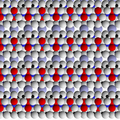 View of trioctahedral mica structure looking along sheets


Classification
[edit]Chemically, micas can be given the general formula[15]
in which
- X is K, Na, or Ca or less commonly Ba, Rb, or Cs;
- Y is Al, Mg, or Fe or less commonly Mn, Cr, Ti, Li, etc.;
- Z is chiefly Si or Al, but also may include Fe3+ or Ti.
Structurally, micas can be classed as dioctahedral (Y = 4) and trioctahedral (Y = 6). If the X ion is K or Na, the mica is a common mica, whereas if the X ion is Ca, the mica is classed as a brittle mica.
Dioctahedral micas
[edit]Brittle micas:
Trioctahedral micas
[edit]Common micas:
Brittle micas:
Interlayer-deficient micas
[edit]Very fine-grained micas, which typically show more variation in ion and water content, are informally termed "clay micas". They include:
- Hydro-muscovite with H3O+ along with K in the X site;
- Illite with a K deficiency in the X site and correspondingly more Si in the Z site;
- Phengite with Mg or Fe2+ substituting for Al in the Y site and a corresponding increase in Si in the Z site.
Sericite is the name given to very fine, ragged grains and aggregates of white (colorless) micas.
Occurrence and production
[edit]Mica is widely distributed and occurs in igneous, metamorphic and sedimentary regimes. Large crystals of mica used for various applications are typically mined from granitic pegmatites.[6]
The largest documented single crystal of mica (phlogopite) was found in Lacey Mine, Ontario, Canada; it measured 10 m × 4.3 m × 4.3 m (33 ft × 14 ft × 14 ft) and weighed about 330 tonnes (320 long tons; 360 short tons).[18] Similar-sized crystals were also found in Karelia, Russia.[19]
Scrap and flake mica is produced all over the world. In 2010, the major producers were Russia (100,000 tonnes), Finland (68,000 t), the United States (53,000 t), South Korea (50,000 t), France (20,000 t) and Canada (15,000 t). The total global production was 350,000 t, although no reliable data were available for China. Most sheet mica was produced in India (3,500 t) and Russia (1,500 t).[20] Flake mica comes from several sources: the metamorphic rock called schist as a byproduct of processing feldspar and kaolin resources, from placer deposits, and pegmatites. Sheet mica is considerably less abundant than flake and scrap mica, and is occasionally recovered from mining scrap and flake mica. The most important sources of sheet mica are pegmatite deposits. Sheet mica prices vary with grade and can range from less than $1 per kilogram for low-quality mica to more than $2,000 per kilogram for the highest quality.[21]
In Madagascar[22] and India,[23] it is also mined artisanally, in poor working conditions and with the help of child labour.
Uses
[edit]The commercially important micas are muscovite and phlogopite, which are used in a variety of applications.
Useful properties
[edit]Mica's value is based on its unique physical properties: the crystalline structure of mica forms layers that can be split or delaminated into thin sheets usually causing foliation in rocks. These sheets are chemically inert, dielectric, elastic, flexible, hydrophilic, insulating, lightweight, platy, reflective, refractive, resilient, and range in opacity from transparent to opaque. Mica is stable when exposed to electricity, light, moisture, and extreme temperatures. It has superior electrical properties as an insulator and as a dielectric, and can support an electrostatic field while dissipating minimal energy in the form of heat; it can be split very thin (0.025 to 0.125 millimeters or thinner) while maintaining its electrical properties, has a high dielectric breakdown, is thermally stable to 500 °C (932 °F), and is resistant to corona discharge. Muscovite, the principal mica used by the electrical industry, is used in capacitors that are ideal for high frequency and radio frequency. Phlogopite mica remains stable at higher temperatures (to 900 °C (1,650 °F)) and is used in applications in which a combination of high-heat stability and electrical properties is required. Muscovite and phlogopite are used in sheet and ground forms.[21]
Ground mica
[edit]The leading use of dry-ground mica in the US is in the joint compound for filling and finishing seams and blemishes in gypsum wallboard (drywall). The mica acts as a filler and extender, provides a smooth consistency, improves the workability of the compound, and provides resistance to cracking. In 2008, joint compounds accounted for 54% of dry-ground mica consumption. In the paint industry, ground mica is used as a pigment extender that also facilitates suspension, reduces chalking, prevents shrinking and shearing of the paint film, increases the resistance of the paint film to water penetration and weathering and brightens the tone of colored pigments. Mica also promotes paint adhesion in aqueous and oleoresinous formulations. Consumption of dry-ground mica in paint, the second-ranked use, accounted for 22% of the dry-ground mica used in 2008.[21]
Ground mica is used in the well-drilling industry as an additive to drilling fluids. The coarsely ground mica flakes help prevent the loss of circulation by sealing porous sections of the drill hole. Well-drilling muds accounted for 15% of dry-ground mica use in 2008. The plastics industry used dry-ground mica as an extender and filler, especially in parts for automobiles as lightweight insulation to suppress sound and vibration. Mica is used in plastic automobiles fascia and fenders as a reinforcing material, providing improved mechanical properties and increased dimensional stability, stiffness, and strength. Mica-reinforced plastics also have high-heat dimensional stability, reduced warpage, and the best surface properties of any filled plastic composite. In 2008, consumption of dry-ground mica in plastic applications accounted for 2% of the market. The rubber industry used ground mica as an inert filler and mold release compound in the manufacture of molded rubber products such as tires and roofing. The platy texture acts as an anti-blocking, anti-sticking agent. Rubber mold lubricant accounted for 1.5% of the dry-ground mica used in 2008. As a rubber additive, mica reduces gas permeation and improves resiliency.[21]
Dry-ground mica is used in the production of rolled roofing and asphalt shingles, where it serves as a surface coating to prevent sticking of adjacent surfaces. The coating is not absorbed by freshly manufactured roofing because mica's platy structure is unaffected by the acid in asphalt or by weather conditions. Mica is used in decorative coatings on wallpaper, concrete, stucco, and tile surfaces. It also is used as an ingredient in flux coatings on welding rods, in some special greases, and as coatings for core and mold release compounds, facing agents, and mold washes in foundry applications. Dry-ground phlogopite mica is used in automotive brake linings and clutch plates to reduce noise and vibration (asbestos substitute); as sound-absorbing insulation for coatings and polymer systems; in reinforcing additives for polymers to increase strength and stiffness and to improve stability to heat, chemicals, and ultraviolet (UV) radiation; in heat shields and temperature insulation; in industrial coating additive to decrease the permeability of moisture and hydrocarbons; and in polar polymer formulations to increase the strength of epoxies, nylons, and polyesters.[21]

Paints and cosmetics
[edit]Wet-ground mica, which retains the brilliance of its cleavage faces, is used primarily in pearlescent paints by the automotive industry. Many metallic-looking pigments are composed of a substrate of mica coated with another mineral, usually titanium dioxide (TiO2). The resultant pigment produces a reflective color depending on the thickness of the coating. These products are used to produce automobile paint, shimmery plastic containers, and high-quality inks used in advertising and security applications. In the cosmetics industry, its reflective and refractive properties make mica an important ingredient in blushes, eye liner, eye shadow, foundation, hair and body glitter, lipstick, lip gloss, mascara, moisturizing lotions, and nail polish. Some brands of toothpaste include powdered white mica. This acts as a mild abrasive to aid the polishing of the tooth surface and also adds a cosmetically pleasing, glittery shimmer to the paste. Mica is added to latex balloons to provide a colored shiny surface.[21]

Built-up mica
[edit]

Muscovite and phlogopite splittings can be fabricated into various built-up mica products, also known as micanite. Produced by mechanized or hand setting of overlapping splittings and alternate layers of binders and splittings, built-up mica is used primarily as an electrical insulation material. Mica insulation is used in high-temperature and fire-resistant power cables in aluminium plants, blast furnaces, critical wiring circuits (for example, defence systems, fire and security alarm systems, and surveillance systems), heaters and boilers, lumber kilns, metal smelters, and tanks and furnace wiring. Specific high-temperature mica-insulated wire and cable are rated to work for up to 15 minutes in molten aluminium, glass, and steel. Major products are bonding materials; flexible, heater, molding, and segment plates; mica paper; and tape.[21] Flexible plate is used in electric motor and generator armatures, field coil insulation, and magnet and commutator core insulation. Mica consumption in flexible plates was about 21 tonnes in 2008 in the US. A heater plate is used where high-temperature insulation is required. The molding plate is sheet mica from which V-rings are cut and stamped for use in insulating the copper segments from the steel shaft ends of a commutator. The molding plate is also fabricated into tubes and rings for insulation in armatures, motor starters, and transformers. Segment plate acts as insulation between the copper commutator segments of direct-current universal motors and generators. Phlogopite built-up mica is preferred because it wears at the same rate as the copper segments. Although muscovite has a greater resistance to wear, it causes uneven ridges that may interfere with the operation of a motor or generator. Consumption of segment plates was about 149 t in 2008 in the US. Some types of built-up mica have bonded splittings reinforced with cloth, glass, linen, muslin, plastic, silk, or special paper. These products are very flexible and are produced in wide, continuous sheets that are either shipped, rolled, or cut into ribbons or tapes, or trimmed to specified dimensions. Built-up mica products may also be corrugated or reinforced by multiple layering. In 2008, about 351 t of built-up mica was consumed in the US, mostly for molding plates (19%) and segment plates (42%).[21]
Sheet mica
[edit]
Sheet mica is a versatile and durable material widely used in electrical and thermal insulation applications. It exhibits excellent electrical properties, heat resistance, and chemical stability.
Technical grade sheet mica is used in electrical components, electronics, atomic force microscopy and as window sheets. Other uses include diaphragms for oxygen-breathing equipment, marker dials for navigation compasses, optical filters, pyrometers, thermal regulators, stove and kerosene heater windows, radiation aperture covers for microwave ovens, and micathermic heater elements. Mica is birefringent and is therefore commonly used to make quarter and half wave plates. Specialized applications for sheet mica are found in aerospace components in air-, ground-, and sea-launched missile systems, laser devices, medical electronics and radar systems. Mica is mechanically stable in micrometer-thin sheets which are relatively transparent to radiation (such as alpha particles) while being impervious to most gases. It is therefore used as a window on radiation detectors such as Geiger–Müller tubes.
In 2008, mica splittings represented the largest part of the sheet mica industry in the United States. Consumption of muscovite and phlogopite splittings was about 308 t in 2008. Muscovite splittings from India accounted for essentially all US consumption. The remainder was primarily imported from Madagascar.[21]
Small squared pieces of sheet mica are also used in the traditional Japanese Kōdō ceremony to burn incense: A burning piece of coal is placed inside a cone made of white ash. The sheet of mica is placed on top, acting as a separator between the heat source and the incense, to spread the fragrance without burning it.
Electrical and electronic
[edit]
Sheet mica is used principally in the electronic and electrical industries. Its usefulness in these applications is derived from its unique electrical and thermal properties and its mechanical properties, which allow it to be cut, punched, stamped, and machined to close tolerances. Specifically, mica is unusual in that it is a good electrical insulator at the same time as being a good thermal conductor. The leading use of block mica is as an electrical insulator in electronic equipment. High-quality block mica is processed to line the gauge glasses of high-pressure steam boilers because of its flexibility, transparency, and resistance to heat and chemical attack. Only high-quality muscovite film mica, which is variously called India ruby mica or ruby muscovite mica, is used as a dielectric in capacitors. The highest quality mica film is used to manufacture capacitors for calibration standards. The next lower grade is used in transmitting capacitors. Receiving capacitors use a slightly lower grade of high-quality muscovite.[21]
Mica sheets are used to provide structure for heating wire (such as in Kanthal or Nichrome) in heating elements and can withstand up to 900 °C (1,650 °F).
Single-ended self-starting lamps are insulated with a mica disc and contained in a borosilicate glass gas discharge tube (arc tube) and a metal cap.[24] They include the sodium-vapor lamp that is the gas-discharge lamp in street lighting.[24][25][26]
Atomic force microscopy
[edit]Another use of mica is as a substrate in the production of ultra-flat, thin-film surfaces, e.g. gold surfaces. Although the deposited film surface is still rough due to deposition kinetics, the back side of the film at the mica-film interface is ultra-flat once the film is removed from the substrate. Freshly-cleaved mica surfaces have been used as clean imaging substrates in atomic force microscopy,[27] enabling for example the imaging of bismuth films,[28] plasma glycoproteins,[29] membrane bilayers,[30] and DNA molecules.[31]
Peepholes
[edit]Thin transparent sheets of mica were used for peepholes in boilers, lanterns, stoves, and kerosene heaters because they were less likely to shatter than glass when exposed to extreme temperature gradients. Such peepholes were also fitted in horse-drawn carriages and early 20th-century cars, where they were called isinglass curtains.[32][33][34]
Etymology
[edit]The word mica is derived from the Latin word mica, meaning a crumb, and probably influenced by micare, to glitter.[35]
Early history
[edit]
Human use of mica dates back to prehistoric times. Mica was known to ancient Indian, Egyptian, Greek, Roman, and Chinese civilizations, as well as the Aztec civilization of the New World.[36]
The earliest use of mica has been found in cave paintings created during the Upper Paleolithic period (40,000 BC to 10,000 BC). The first hues were red (iron oxide, hematite, or red ochre) and black (manganese dioxide, pyrolusite), though black from juniper or pine carbons has also been discovered. White from kaolin or mica was used occasionally.
A few kilometers northeast of Mexico City stands the ancient site of Teotihuacan. Mica was found in the noble palace complex "Viking Group" during an excavation led by Pedro Armillas between 1942 and 1944.[37][38] Later, a second deposit was located in the Xalla Complex,[38] another palatial structure east of Street of the Dead. There is a claim mica was found within the Pyramid of the Sun, which originates from Peter Tompkins in his book Mysteries of the Mexican Pyramids[39], but this is not yet proven.
Natural mica was and still is used by the Taos and Picuris Pueblos Indians in north-central New Mexico to make pottery. The pottery is made from weathered Precambrian mica schist and has flecks of mica throughout the vessels. Tewa Pueblo Pottery is made by coating the clay with mica to provide a dense, glittery micaceous finish over the entire object.[21]
Mica flakes (called abrak in Urdu and written as ابرک) are also used in Pakistan to embellish women's summer clothes, especially dupattas (long light-weight scarves, often colorful and matching the dress).[40][41] Thin mica flakes are added to a hot starch water solution, and the dupatta is dipped in this water mixture for 3–5 minutes. Then it is hung to air dry.
Mica powder
[edit]_Naniwaya_O-Kita.jpg)
Throughout the ages, fine powders of mica have been used for various purposes, including decorations. Powdered mica glitter is used to decorate traditional water clay pots in India, Pakistan and Bangladesh; it is also used on traditional Pueblo pottery, though not restricted to use on water pots in this case. The gulal and abir (colored powders) used by North Indian Hindus during the festive season of Holi contain fine crystals of mica to create a sparkling effect. The majestic Padmanabhapuram Palace, 65 km (40 mi) from Trivandrum in India, has colored mica windows.
Mica powder is also used as a decoration in traditional Japanese woodblock printmaking,[43] as when applied to wet ink with gelatin as thickener using kirazuri technique and allowed to dry, it sparkles and reflects light. Earlier examples are found among paper decorations, with the height as the Nishi Honganji 36 Poets Collection, codices of illuminated manuscripts in and after ACE 1112. For metallic glitter, Ukiyo-e prints employed very thick solution either with or without color pigments stencilled on hairpins, sword blades or fish scales on carp streamers (鯉のぼり, Koinobori).
The soil around Nishio in central Japan is rich in mica deposits, which were already mined in the Nara period. Yatsuomote ware is a type of local Japanese pottery from there. After an incident at Mount Yatsuomote a small bell was offered to soothe the kami. Katō Kumazō started a local tradition where small ceramic zodiac bells (きらら鈴) were made out of local mica kneaded into the clay, and after burning in the kiln the bell would make a pleasing sound when rung.[44][45][46]
Medicine
[edit]Ayurveda, the Hindu system of ancient medicine prevalent in India, includes the purification and processing of mica in preparing Abhraka bhasma, which is claimed as a treatment for diseases of the respiratory and digestive tracts.[47][48]
Health impact
[edit]Mica dust in the workplace is regarded as a hazardous substance for respiratory exposure above certain concentrations.
United States
[edit]The Occupational Safety and Health Administration (OSHA) has set the legal limit (permissible exposure limit) for mica exposure in the workplace as 20 million parts per cubic foot (706,720,000 parts per cubic meter) over an 8-hour workday. The National Institute for Occupational Safety and Health (NIOSH) has set a recommended exposure limit (REL) of 3 mg/m3 respiratory exposure over an 8-hour workday. At levels of 1,500 mg/m3, mica is immediately dangerous to life and health.[49]
Ireland
[edit]The Irish defective block crisis relates to mica in construction blocks.
Substitutes
[edit]Some lightweight aggregates, such as diatomite, perlite, and vermiculite, may be substituted for ground mica when used as filler. Ground synthetic fluorophlogopite,[50] a fluorine-rich mica, may replace natural ground mica for uses that require thermal and electrical properties of mica. Many materials can be substituted for mica in numerous electrical, electronic, and insulation uses. Substitutes include acrylate polymers, cellulose acetate, fiberglass, fishpaper, nylon, phenolics, polycarbonate, polyester, styrene, vinyl-PVC, and vulcanized fiber. Mica paper made from scrap mica can be substituted for sheet mica in electrical and insulation applications.[20]
See also
[edit]
References
[edit]- ^ Warr, L. N. (2021). "IMA–CNMNC approved mineral symbols". Mineralogical Magazine. 85 (3): 291–320. Bibcode:2021MinM...85..291W. doi:10.1180/mgm.2021.43. S2CID 235729616.
- ^ "Mica". Minerals Education Coalition. Archived from the original on 2015-01-16.
- ^ "The Mica Group". Rocks And Minerals 4 U. Archived from the original on 2015-03-02.
- ^ "Mica". mineralszone.com. Archived from the original on 2015-03-17.
- ^ "Amethyst Galleries – THE MICA GROUP". galleries.com. Archived from the original on 2014-12-30.
- ^ a b Nesse, William D. (2000). Introduction to mineralogy. New York: Oxford University Press. pp. 244–249. ISBN 9780195106916.
- ^ Nesse 2000, pp. 245–246, 248.
- ^ Jahns, R.H. (1946). "Mica deposits of the Petaca district, Rio Arriba County, New Mexico" (PDF). New Mexico Bureau of Mines and Mineral Resources Bulletin. 25: 60. Retrieved 29 June 2021.
- ^ "CFR – Code of Federal Regulations, Title 21: Food and Drugs, §73.350". U.S. National Archives and Records Administration. 3 February 2025. Retrieved 9 February 2025.
- ^ Nesse 2000, pp. 244–250.
- ^ a b Nesse 2000, p. 238.
- ^ Nesse 2000, p. 235.
- ^ Nesse 2000, pp. 235–237.
- ^ Franceschi, Giada; Kocán, Pavel; Conti, Andrea; Brandstetter, Sebastian; Balajka, Jan; Sokolović, Igor; Valtiner, Markus; Mittendorfer, Florian; Schmid, Michael; Setvín, Martin; Diebold, Ulrike (2023-01-13). "Resolving the intrinsic short-range ordering of K+ ions on cleaved muscovite mica". Nature Communications. 14 (1): 208. arXiv:2308.14055. Bibcode:2023NatCo..14..208F. doi:10.1038/s41467-023-35872-y. ISSN 2041-1723. PMC 9839703. PMID 36639388.
- ^ W. A. Deer, R. A. Howie and J. Zussman (1966) An Introduction to the Rock Forming Minerals, Longman, ISBN 0-582-44210-9.
- ^ a b "Mineralogy: Phyllosilicates". Colgate University. 1997. Archived from the original on 19 September 2015. Retrieved 18 April 2016.
- ^ Nesse 2000, pp. 249–250.
- ^ Rickwood, P. C. (1981). "The largest crystals" (PDF). American Mineralogist. 66: 885–907. Archived (PDF) from the original on 2013-08-25.
- ^ "The giant crystal project site". Archived from the original on 2009-06-04. Retrieved 2009-06-06.
- ^ a b "Mica" (PDF). USGS Mineral Commodity Summaries 2011. Archived from the original (PDF) on 2011-10-30.
- ^ a b c d e f g h i j k Dolley, Thomas P. (2008). "Mica" (PDF). Archived from the original (PDF) on 2011-10-30 – via USGS 2008 Minerals Yearbook.
- ^ "Latest". Terre des Hommes. Archived from the original on January 21, 2020.
- ^ O'Driscoll, Dylan (4 October 2017). "Overview of child labour in the artisanal and small-scale mining sector in Asia and Africa". K4D Helpdesk Report. Institute of Development Studies. Retrieved 10 December 2020.
- ^ a b "The Low Pressure Sodium Lamp".
- ^ "Lighting Comparison: LED vs High Pressure Sodium/Low Pressure Sodium". www.stouchlighting.com.
- ^ "The Sodium Lamp – How it works and history". edisontechcenter.org.
- ^ Eaton, P. and West, W. (2010) "Substrates for AFM", pp. 87–89 in Atomic Force Microscopy. Oxford University Press. ISBN 978-0-19-957045-4.
- ^ Weisenhorn, A. L. (1991). "Atomically resolved images of bismuth films on mica with an atomic force microscope". Journal of Vacuum Science & Technology B: Microelectronics and Nanometer Structures. 9 (2): 1333–1335. Bibcode:1991JVSTB...9.1333W. doi:10.1116/1.585190.
- ^ Marchant, R. E.; Lea, A. S.; Andrade, J. D.; Bockenstedt, P. (1992). "Interactions of von Willebrand factor on mica studied by atomic force microscopy" (PDF). Journal of Colloid and Interface Science. 148 (1): 261–272. Bibcode:1992JCIS..148..261M. doi:10.1016/0021-9797(92)90135-9. hdl:2027.42/30333.
- ^ Singh, S; Keller, D. J. (1991). "Atomic force microscopy of supported planar membrane bilayers". Biophysical Journal. 60 (6): 1401–10. Bibcode:1991BpJ....60.1401S. doi:10.1016/S0006-3495(91)82177-4. PMC 1260200. PMID 1777565.
- ^ Thundat, T; Allison, D. P.; Warmack, R. J.; Brown, G. M.; Jacobson, K. B.; Schrick, J. J.; Ferrell, T. L. (1992). "Atomic force microscopy of DNA on mica and chemically modified mica". Scanning Microscopy. 6 (4): 911–8. PMID 1295085.
- ^ "Isinglass curtains" are referenced in the 1943 musical Oklahoma's song "The Surrey with the Fringe on Top"
- ^ "isinglass, n". Oxford English Dictionary (Online ed.). Oxford University Press. (Subscription or participating institution membership required.)
- ^ Wilke, Joanne (2007). Eight Women, Two Model Ts and the American West. University of Nebraska Press. p. 28. ISBN 978-0803260191.
- ^ Kirkpatrick, E. M., ed. (1983). Chambers 20th Century Dictionary. Schwarz, Davidson, Seaton, Simpson, Sherrard (New ed.). Edinburgh: W & R Chambers Ltd. p. 793. ISBN 0550102345.
- ^ Haze, Xaviant (2016-11-21). Ancient Giants of the Americas: Suppressed Evidence and the Hidden History of a Lost Race. Red Wheel/Weiser. ISBN 9781632659323.
- ^ Acosta, Jorge R. (1970). "Archaeological Explorations in Teotihuacan". Artes de México (134): 12. ISSN 0300-4953. JSTOR 24316098.
- ^ a b Cowgill, George L. (2015). Ancient Teotihuacan: early urbanism in Central Mexico. New York, NY: Cambridge University Press. p. 180. ISBN 978-0-521-87033-7. OCLC 898206006.
- ^ Tompkins, Peter (1987). Mysteries of the Mexican pyramids. Harper & Row. p. 202. OCLC 1150839351.
- ^ Dehlvi, Sadia (October 14, 2007). "Tradition and modernity". Dawn.com. Archived from the original on October 20, 2013.
- ^ Ramzi, Shanaz (March 31, 2005). "Fashion through the ages". Dawn.com. Archived from the original on October 20, 2013.
- ^ 喜多川歌麿筆, Kitagawa Utamaro (1790s), "茶托を持つ難波屋おきた" [Okita of Naniwaya with a tea cup], Colbase – Tokyo National Museum 国立博物館所蔵品統合検索システム (in Japanese), retrieved 2019-11-28
- ^ ビクセン(Vixen) | 総合光学機器メーカー. "浮世絵 > 雲母摺と空摺 (Ukiyoe > Kirazuri and karazuri)". 単眼鏡が広げる美術鑑賞の世界 | Mono-scope enhances appreciation of art world (in Japanese). Retrieved 2019-11-28.
- ^ "きらら鈴 | 愛知県".
- ^ "きらら鈴とは". コトバンク.
- ^ "「きらら鈴」を受け継ごうとする"お母さん"たちがいます | 旬な地元ネタ!!| まいぷれ[西尾・碧南・高浜]".
- ^ "Abhraka Bhasma Preparation, Indications and Properties". Ayurmedinfo.com. 12 October 2014. Archived from the original on 2015-10-05.
- ^ "Abhraka Bhasma Properties and uses". ayurtimes.com. 22 November 2014. Archived from the original on 2015-10-04.
- ^ "CDC – NIOSH Pocket Guide to Chemical Hazards – Mica (containing less than 1% quartz)". www.cdc.gov. Archived from the original on 2015-12-08. Retrieved 2015-11-27.
- ^ "Fluorphlogopite – synthetic mica – Borosilicate and quartz glass, mica, sealing, level gauges, armature – Continental Trade". www.continentaltrade.com.pl. Archived from the original on 2018-02-12.
Sources
[edit] This article incorporates public domain material from Mica. United States Geological Survey.
External links
[edit] Media related to Mica at Wikimedia Commons
- Mineral Galleries data
- Mindat
- CDC – NIOSH Pocket Guide to Chemical Hazards
- . Encyclopædia Britannica (11th ed.). 1911.
- Scientific American, "Mica", 22-Oct-1881, pp. 257

| Overview |  | |
|---|---|---|
| Common minerals | ||
| Related | ||
| International | |
|---|---|
| National | |
| Other | |

Chemical and Physical Properties
Crystal Structure and Bonding
Mica minerals possess a layered phyllosilicate structure composed of tetrahedral-octahedral-tetrahedral (TOT) layers, where two tetrahedral sheets of corner-sharing SiO₄ tetrahedra flank a central octahedral sheet coordinated by oxygen and hydroxyl anions.[4] The tetrahedral sheets feature apical oxygens that bond to the octahedral cations, forming a continuous 2:1 silicate layer approximately 1 nm thick.[5] Interlayer monovalent cations, predominantly K⁺, occupy sites between adjacent TOT layers, providing charge balance and structural cohesion through electrostatic interactions.[6] These interlayer bonds are significantly weaker than the covalent and ionic bonds within the TOT layers, enabling perfect basal cleavage along the (001) plane and the formation of thin, flexible sheets.[7] Isomorphic substitutions, such as Al³⁺ for Si⁴⁺ in tetrahedral positions or divalent cations for trivalent ones in octahedral sites, generate a net negative charge on the TOT layers (typically -0.8 to -1.0 per formula unit), which is neutralized by the interlayer cations.[8] This charge imbalance arises from differences in ionic valence without altering the overall lattice geometry due to similar ionic radii, influencing interlayer bonding strength and layer properties./07:_Soil_Chemistry/7.01:_Introduction)Key Physical Characteristics
Mica exhibits a Mohs hardness of 2 to 2.5, rendering it relatively soft compared to many minerals, which facilitates its cleavage into thin sheets without fracturing.[9] Its mechanical properties include high tensile strength ranging from 37,000 to 43,000 pounds per square inch and notable elasticity, allowing thin sheets to flex repeatedly without permanent deformation.[10] These traits stem from the mineral's layered structure, enabling elastic recovery under stress. Thermally, mica demonstrates stability up to approximately 600°C for muscovite varieties, with phlogopite types enduring higher temperatures around 1000°C before significant degradation.[11] The melting or decomposition point occurs near 1200–1300°C, depending on the specific mica type.[11] It features low thermal expansion, with coefficients of 9 × 10⁻⁶ to 36 × 10⁻⁶ per °C perpendicular to the cleavage plane and even lower values parallel to it (8 × 10⁻⁶ to 12 × 10⁻⁶ per °C).[12][10] Electrically, mica possesses high dielectric strength, reaching up to 2000 volts per mil in high-quality thin sheets (1-3 mil thickness).[10] Optically, thin mica sheets are transparent, particularly in muscovite, allowing visibility through them, while thicker specimens display a pearly luster arising from light interference between layered sheets.[13] This iridescence results from thin-film interference effects at the boundaries of the cleaved layers.[14] Golden shiny flakes in sand or concentrates are commonly muscovite or weathered biotite mica, not gold. Muscovite appears silvery to golden and flaky, while biotite typically blackens but weathers to dark golden or coppery colors, leading to frequent misidentification during panning or in sediments. Mica flakes are soft (Mohs hardness 2–2.5, scratchable with a fingernail), platy, flexible, and low-density (specific gravity 2.7–3.3), unlike gold's higher specific gravity (19.3), malleability, and scratch resistance.[15]Chemical Composition Variations
The chemical composition of micas centers on a layered silicate structure with variable cation substitutions in tetrahedral, octahedral, and interlayer sites. The baseline formula for muscovite is KAl₂(AlSi₃O₁₀)(OH)₂, where potassium occupies the interlayer position, aluminum fills the octahedral sites, and tetrahedral sites host three silicon and one aluminum atoms, balanced by hydroxyl groups.[4] Variations arise from isomorphic substitutions, such as partial replacement of interlayer K⁺ by Na⁺ or Ba²⁺, tetrahedral Si⁴⁺ by Al³⁺ (requiring charge balance via octahedral adjustments), and octahedral Al³⁺ by divalent Mg²⁺ or Fe²⁺/Fe³⁺, yielding formulas like KMg₃(AlSi₃O₁₀)(OH)₂ or K(Mg,Fe)₃(AlSi₃O₁₀)(OH)₂.[16] Fluorine can substitute for OH⁻, enhancing thermal stability in F-rich compositions up to several atomic percent..pdf) These elemental variations directly affect optical properties, with iron impurities in octahedral sites causing color shifts from colorless or pale in Al-dominated micas to brown, green, or black due to intervalence charge transfer and d-d transitions involving Fe²⁺-Fe³⁺ or Fe²⁺-Ti⁴⁺ pairs.[17] Magnesium-rich compositions remain lighter, while higher Fe content correlates with darker tones and potential pleochroism.[18] Stability is modulated similarly; Fe-bearing micas exhibit reduced thermal endurance compared to Mg- or Li-rich variants, as Fe-O bonds weaken at elevated temperatures, promoting earlier dehydroxylation.[19] Chemically, micas demonstrate high inertness, with negligible solubility in water (less than 0.01 g/L at 25°C) or dilute acids like HCl, owing to the strong Si-O and Al-O frameworks resistant to proton attack except by HF, which cleaves Si-F bonds.[20] Reactivity increases under extreme conditions: at temperatures above 800–1000°C, dehydroxylation occurs via 2(OH)⁻ → O²⁻ + H₂O, with water diffusion through interlayer spaces, compositionally dependent on OH/F ratio and octahedral occupancy.[19] Elevated pressures up to several GPa preserve integrity without phase changes at ambient temperatures, though coupled P-T conditions can induce proton migration or partial melting in hydrous systems.[19]Mineral Classification
Dioctahedral Micas
Dioctahedral micas constitute a subgroup within the mica mineral class characterized by an octahedral sheet occupancy of fewer than 2.5 cations per formula unit, typically approximating two cations, which corresponds to one occupied octahedral site out of three possible positions in the 2:1 layer structure.[21] This configuration arises from the structural arrangement where two tetrahedral silicate sheets flank a single gibbsite-like octahedral sheet, with the latter predominantly filled by trivalent cations such as Al³⁺ to maintain charge balance.[22] The general formula for dioctahedral micas is often expressed as A D₂ T₄ O₁₀ (OH,F)₂, where A represents interlayer cations like K⁺ or Na⁺, D denotes divalent or trivalent octahedral cations, and T indicates tetrahedral cations primarily Si⁴⁺ with substitutions by Al³⁺.[23] Prominent examples include muscovite, with the end-member composition KAl₂(AlSi₃O₁₀)(OH,F)₂, where the octahedral sites are occupied solely by Al³⁺, exemplifying ideal dioctahedral character.[24] Illite, a series of fine-grained, dioctahedral, mica-like clay minerals, features variable interlayer potassium content and the approximate formula (K,H₃O)(Al,Mg,Fe)₂(Si,Al)₄O₁₀[(OH)₂,(H₂O)], distinguished by its non-expanding lattice and structural similarity to muscovite but with greater Al substitution in the tetrahedral sheet.[25] These minerals are commonly associated in low-grade metamorphic and sedimentary environments, though specific geological contexts are detailed elsewhere. Identification of dioctahedral micas relies on techniques such as X-ray diffraction (XRD), which reveals distinct basal spacings and peak intensities reflective of the octahedral vacancy distribution; for instance, the 060 reflection near 1.50 Å in XRD patterns indicates dioctahedral occupancy, contrasting with the ~1.53 Å shift observed in trioctahedral counterparts.[26] Chemical analysis confirming octahedral cation sums below 2.5 per formula unit, often via electron microprobe or wet chemistry, further corroborates the classification, ensuring differentiation from trioctahedral micas that exhibit fuller octahedral filling.[21]Trioctahedral Micas
Trioctahedral micas feature a phyllosilicate structure in which all three octahedral sites within the octahedral sheet are occupied by divalent cations, primarily Mg²⁺ and Fe²⁺, contrasting with the partial occupancy in dioctahedral micas where typically two trivalent cations like Al³⁺ fill the sites.[27][5] This fuller occupancy results in a neutral octahedral layer balanced by the tetrahedral sheets' negative charge, with the general formula approximating (K)(Mg,Fe)₃(AlSi₃O₁₀)(OH,F)₂.[16] Representative minerals include phlogopite, the Mg-endmember with formula KMg₃AlSi₃O₁₀(F,OH)₂, and biotite, which incorporates significant Fe²⁺ substitution, often denoted as KMg₁.₅Fe₁.₅AlSi₃O₁₀(OH)₂.[28][29] The structural distinction imparts trioctahedral micas with a higher specific gravity compared to dioctahedral counterparts, attributable to the greater atomic mass from three divalent cations versus two trivalent ones; phlogopite, for instance, exhibits a specific gravity of 2.78 to 2.85.[28] Enhanced thermal stability arises from the robust bonding and composition, enabling phlogopite to withstand temperatures up to approximately 900°C before decomposition, exceeding the limits of many dioctahedral micas like muscovite.[5] This heat resistance stems from the stronger interlayer potassium retention and octahedral framework integrity under elevated temperatures. In weathering environments, trioctahedral micas such as phlogopite and biotite undergo potassium leaching from interlayer sites, leading to transformation into vermiculite through hydration and expansion of interlayer cations like Mg²⁺ or Ca²⁺.[30] This process is facilitated by the mineral's reactivity in acidic soils, where the divalent octahedral occupancy promotes easier interlayer exchange compared to the more stable Al-dominated dioctahedral structures, resulting in mixed-layer mica-vermiculite phases as intermediate products.[31] Such alterations highlight the compositional vulnerability of trioctahedral micas to supergene processes, influencing soil mineralogy in regions with prolonged exposure to meteoric water.[32]Interlayer-Deficient and Other Variants
Interlayer-deficient micas constitute a subgroup within the mica classification, defined by interlayer cation occupancies below 85% of ideal sites and a net layer charge of 0.6 to less than 0.85 per O₁₀(OH)₂ formula unit.[33] This partial deficiency arises from incomplete neutralization of the 2:1 layer charge, often involving potassium or other monovalent cations, leading to structural instability compared to true micas with full occupancy.[34] The resulting weaker interlayer bonding permits limited expandability and water intercalation, distinguishing these variants from non-expanding true micas while falling short of the full swelling in smectite clays.[35] Illite exemplifies dioctahedral interlayer-deficient micas, with a general formula approximating K_{0.6-0.85}Al_2(Al_{0.5-0.9}Si_{3.1-3.5}O_{10})(OH)_2 and variable stacking disorder evident in broadened 001 reflections at approximately 10 Å in X-ray diffraction.[36] Glauconite, a trioctahedral to dioctahedral Fe-rich counterpart, features similar deficiencies alongside octahedral Fe^{2+}/Fe^{3+} substitutions, forming authigenic green pellets in marine sediments with interlayer K contents around 0.6-0.8 per formula unit.[35] These minerals' charge imbalance enhances reactivity, enabling partial cation exchange without full layer separation. Other variants include brittle micas, characterized by greater than 50% divalent interlayer cations such as Ca^{2+} or Ba^{2+}, which overcompensate the layer charge and induce layer corrugation due to mismatched z-coordinates between tetrahedral and octahedral sheets.[37] Margarite, a dioctahedral brittle mica with composition CaAl_2(Al_2Si_2O_{10})(OH)2, exhibits this through its Ca-dominated interlayer, yielding a c-parameter of about 9.40 Å and brittle rather than elastic cleavage.[38] Paragonite, while a true dioctahedral mica with full Na^{+} occupancy (NaAl_2Si_3AlO{10}(OH)_2), represents a monovalent substitution variant akin to muscovite but with Na replacing K, resulting in marginally lower thermal stability and distinct formation in Na-rich metamorphic assemblages.[39] These deviations collectively influence lattice parameters and vibrational spectra, with interlayer-deficient types showing broader OH-stretching bands around 3620 cm^{-1} indicative of heterogeneous cation environments.[34] In clay mineralogy and soil science, interlayer-deficient micas like illite serve as precursors to expandable phases via progressive K depletion, contributing to variable shrink-swell behavior in fine-grained sediments and soils.[40] Their niche properties, including intermediate fixed-charge sites, underpin applications in assessing soil potassium dynamics, though structural variability complicates precise quantification without advanced techniques like FTIR or Mössbauer spectroscopy.[35]Geological Occurrence and Formation
Natural Formation Processes
Mica minerals crystallize in igneous rocks, particularly within felsic magmas of granites and their associated pegmatites, through processes of fractional crystallization during magma differentiation. As magma cools, early-formed minerals such as plagioclase and quartz remove compatible elements from the melt, enriching the residual liquid in volatiles like water, potassium, and aluminum. This late-stage melt, saturated in these components, facilitates the nucleation and growth of platy mica crystals, often achieving sizes up to several centimeters in pegmatitic environments due to the low viscosity and high water content reducing diffusion distances.[41][42] In metamorphic settings, mica forms via recrystallization during regional metamorphism of pelitic protoliths, such as shales rich in clay minerals, under elevated temperatures of 400–600 °C and pressures of 2–10 kbar typical of greenschist to lower amphibolite facies. Directed stress and fluid infiltration promote dehydration reactions, like the breakdown of clays into muscovite or biotite, with mica flakes aligning parallel to form the characteristic foliation in schists; for instance, the reaction muscovite + quartz → K-feldspar + sillimanite + H₂O marks prograde conditions around 500–600 °C. These conditions recrystallize and enlarge pre-existing grains or generate new ones from dissolved components, enhancing the rock's schistosity.[43][44] Hydrothermal alteration contributes to mica concentration, particularly through sericitization where potassium-bearing fluids interact with feldspars at temperatures of 150–300 °C, converting K-feldspar to fine-grained muscovite via reactions like KAlSi₃O₈ + H⁺ → KAl₂(AlSi₃O₁₀)(OH)₂ + H⁺ + SiO₂. This process, common in vein systems or aureoles around intrusions, mobilizes and redeposits aluminum and potassium, yielding secondary mica enrichments or larger crystals in fluid-dominated pathways. Experimental studies confirm mica precipitation from such alterations under controlled aqueous conditions.[45][46] Sedimentary occurrences of mica arise mainly as detrital grains eroded from igneous or metamorphic sources, incorporated into clastic deposits through weathering that partially exfoliates sheets without full decomposition. In finer-grained sediments, mica contributes to clay fractions via progressive weathering sequences, transforming into expandable minerals like vermiculite under acidic, potassium-depleting conditions at surface temperatures, before eventual deposition in low-energy environments such as mudstones. Authigenic mica can form rarely in diagenetic settings through illitization of smectite clays under burial with potassium influx.[47][48]Major Global Deposits
Mica deposits are predominantly hosted in granitic pegmatites, which yield high-quality sheet varieties, and in metamorphic assemblages such as gneisses, schists, and granites that supply scrap and flake material.[2] These formations arise from late-stage magmatic differentiation or regional metamorphism, concentrating mica in layered or veined structures amenable to extraction.[2] India maintains the foremost reserves of sheet mica, estimated at 110,000 metric tons, primarily in Jharkhand's Koderma and Giridih districts, where pegmatite intrusions within Precambrian mica schists form extensive book-like crystals suitable for splitting into thin sheets.[2][49] These deposits, dating to Archean migmatitic events, underpin India's output of about 1,000 metric tons of sheet mica annually as of 2022.[2] Significant sheet mica occurrences extend to Brazil's Minas Gerais region, featuring pegmatite belts in the Brazilian Shield, and Madagascar's metamorphic terrains, both contributing to global supply alongside China's flake-dominant granitic sources.[2] Secondary deposits include phlogopite-rich bodies in the United States' New Hampshire pegmatites and Russia's Kola Peninsula, such as the Kovdor ultramafic complex, which yields trioctahedral mica from carbonatite-related intrusions.[50][51] Worldwide, scrap and flake mica production approximated 330,000 metric tons in 2023, reflecting the scale of these disseminated resources.[2]Extraction and Production
Mining Methods
Mica extraction employs distinct techniques tailored to the desired product form—sheet mica for large, intact crystals versus flake or scrap for processed volumes—and deposit characteristics, prioritizing crystal preservation for sheet grades to maximize yield of high-value blocks. Sheet mica is primarily obtained through open-pit surface mining for near-surface pegmatite deposits or underground deep-shaft mining for deeper veins, where manual tools like picks and chisels are used post-excavation to split books along cleavage planes without damage, achieving higher quality but lower throughput than bulk methods.[52][53] Open-pit operations utilize bulldozers, scrapers, and front-end loaders to remove overburden, exposing mica-bearing zones for selective hand recovery, with efficiencies reaching several tons per day in favorable soft residual deposits.[54] Flake and ground mica production favors large-scale open-pit mining followed by mechanical crushing to liberate particles, then beneficiation via froth flotation to separate mica from quartz and feldspar gangue, yielding higher volumes suitable for grinding into powder. Acidic cationic flotation, using reagents like amines, recovers mica at pH 2-3, while alkaline anionic methods employ collectors such as fatty acids at higher pH for coarser flakes, with recovery rates up to 90% in optimized circuits but requiring fine grinding that reduces sheet-grade potential.[55][56] These processes emphasize throughput, processing thousands of tons annually in mechanized facilities, contrasting with sheet-focused yields limited to hundreds of kilograms per operation. Artisanal hand-mining dominates in India and Madagascar, involving manual excavation of narrow shafts into weathered pegmatites using hammers, pry bars, and wedges to extract block mica, which produces premium sheet quality through careful selection but constrains output to low volumes—often under 1 ton per miner annually—due to labor-intensive, non-mechanized workflows.[57][58] This method's efficiency stems from direct crystal handling in fragmented deposits, outperforming mechanized bulk extraction for purity but yielding far less aggregate material than industrial open pits. In regulated sectors, semi-mechanization with pneumatic tools and ventilation has increased since 2020 to boost safety and recovery rates, though full automation remains limited by mica's friability.[59]Primary Producing Regions and Output Data
China leads global production of scrap and flake mica, outputting 80,000 metric tons in both 2023 and 2024 (estimated), supported by abundant deposits in metamorphic terrains and granitic pegmatites across multiple provinces.[60] Madagascar follows as a rapidly growing producer, with output rising from 63,000 metric tons in 2023 to 85,000 metric tons in 2024 (estimated), driven by large phlogopite-bearing carbonatite and pegmatite deposits amenable to open-pit extraction.[60] Finland contributes steadily at around 50,000 metric tons annually, primarily from trioctahedral mica in Precambrian bedrock, where favorable geology and advanced mechanized mining sustain output despite smaller reserve bases.[60] India holds significant reserves, estimated at over 110,000 metric tons for recoverable sheet mica, concentrated in pegmatite veins of the Bihar and Jharkhand regions, but official scrap production is reported at 13,000–14,000 metric tons due to regulatory constraints including a 2016 ban on exporting unprocessed crude mica and mining restrictions aimed at value addition and curbing illegal operations.[60][61] Sheet mica output is officially around 1,000 metric tons annually, though export volumes suggest higher unregulated production influenced by these policies and artisanal methods exploiting fractured pegmatites.[60][62] The United States produces 23,000–38,000 metric tons of scrap and flake mica yearly from deposits in the Appalachian and Black Hills regions, with geology favoring muscovite in metamorphic schists, but output declined in 2024 due to facility closures and weather disruptions.[60] Other notable regions include South Korea (20,000 metric tons, from large reserves in gneissic terrains) and Canada (12,000–13,000 metric tons, linked to Grenville Province pegmatites).[60] Global natural mica output, dominated by scrap and flake forms, has remained stable at 330,000–380,000 metric tons per year from 2022 to 2024, reflecting consistent demand offsets against variable reporting reliability in developing producers.[2][60] Sheet mica production is far lower and steadier but lacks comprehensive data, with geological favorability in pegmatite-rich cratons and policy-induced supply opacity in India constraining verifiable trends.[60]| Country | Scrap/Flake Production (metric tons, 2023) | Sheet Production (metric tons, est.) |
|---|---|---|
| China | 80,000 | Significant (data unreliable) |
| Madagascar | 63,000 | Minor |
| Finland | 49,900 | Negligible |
| United States | 37,000 | Very small |
| India | 14,000 | 1,000 |
| World Total | 379,000 | Steady but unquantified |