


Community hub
Recent from talks
Contribute something
Nothing was collected or created yet.
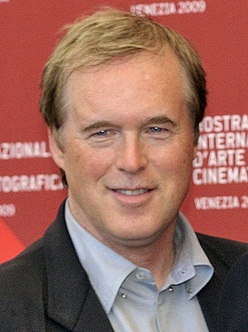
Brad Bird
View on Wikipedia
Philip Bradley Bird (born September 24, 1957) is an American filmmaker, animator, and voice actor. He developed an interest in the art of animation early on, and completed his first short subject by age 14. Bird sent the film to Walt Disney Productions, leading to an apprenticeship from the studio's Nine Old Men. He attended the California Institute of the Arts in the late 1970s, and worked for Disney shortly thereafter.
Key Information


In the 1980s, Bird worked in film development with various studios. He co-wrote Batteries Not Included (1987), and developed two episodes of Amazing Stories for Steven Spielberg, including its spin-off (based on a segment written by Bird for the show), the widely panned animated sitcom Family Dog. Afterwards, Bird joined the animated sitcom The Simpsons as creative consultant for eight seasons. He directed the animated film The Iron Giant (1999); though acclaimed, it was a box-office bomb.
Bird moved to Pixar where he wrote and directed two successful animated films, The Incredibles (2004) and Ratatouille (2007). They earned Bird two Academy Awards for Best Animated Feature wins and Best Original Screenplay nominations. He transitioned to live-action filmmaking with similarly successful Mission: Impossible – Ghost Protocol (2011), he then directed Disney's Tomorrowland (2015). He returned to Pixar to develop Incredibles 2 (2018), which became the second-highest-grossing animated film of all time during its theatrical run, and earned him another nomination for the Academy Award.
Bird has a reputation for supervising his projects to a high degree of detail. He advocates for creative freedom and the possibilities of animation, and has criticized its stereotype as children's entertainment, or classification as a genre, rather than an art.
Early life and education
[edit]
Philip Bradley Bird[2] was born on September 24, 1957, in Kalispell, Montana, the youngest of four children to Marjorie A. (née Cross) and Philip Cullen Bird. His father worked in the propane business, and his grandfather, Francis Wesley "Frank" Bird, who was born in County Sligo, Ireland, was a president and chief executive of the Montana Power Company.[3][4][5] Bird's fascination with filmmaking began at an early age. He started drawing at age three, with his first cartoons clear attempts at sequential storytelling. He was particularly enamored with animation after a screening of The Jungle Book (1967), and a family friend who had taken animation classes explained how the medium worked. Bird's father found a used camera that could shoot one frame at a time, and helped him setup the device for making films.[6] He began animating his first short subject at age 11; that same year, his family connection introduced him to composer George Bruns, who set him up a tour of Walt Disney Productions in Burbank, California.[7][8] Bird met the Nine Old Men—the animators responsible for the studio's earliest and most celebrated features—and proclaimed he would join them one day.[9]
Bird has characterized his parents as generous and supportive of his interests. His mother once made a rainy drive two hours each way to the only theater playing a reissue of Snow White and the Seven Dwarfs for Bird's education.[10] After two years, Bird had completed his first short, a fifteen-minute adaption of The Tortoise and the Hare.[7] On his parents' advice, to "start at the top and work your way down", he sent the film to his idols at Disney. The studio responded with an open invitation for Bird to stop by whenever in town, which led him to make several visits to the studio's California headquarters in the ensuing years.[11] This opportunity—an "unofficial apprenticeship" of sorts—was "never offered" to anyone previously. He worked closely with Milt Kahl, whom he considered a hero. He began another film, which was more ambitious and in color, but the workload was intense. Instead, Bird focused on other interests in his high school years, including dating, athletics, and photography. "Animation is the illusion of life, and you can't create that illusion convincingly if you haven't lived it," he later remarked.[12] The family relocated to Corvallis, Oregon in his youth, and he graduated from Corvallis High School in 1975.
That year, he was awarded a scholarship by Disney to attend the newly formed California Institute of the Arts (CalArts) in Valencia, California; Bird has joked he was a "retired" animator by the time he received this offer. Instead, he considered attending the acting program at Ashland University.[13] After a three-year break, Bird chose CalArts and moved down south.[9] Bird's classmates included prominent future animators such as John Lasseter, Tim Burton, and Henry Selick.[14] Like many students, they were dazzled by the special effects in Star Wars (1977); both Lasseter and Bird agreed these feats were possible in animation.[15] First-year students met in the room labeled A113—a small, sterile classroom with no windows.[16] Bird later used A113 as an Easter egg in his films; it has since become a fixture of media made by the school's alumni. The first use of A113 was in the pilot episode for the short-lived television series Family Dog (1993). The pilot episode was a part of the series Amazing Stories (1985–1987), which aired February 16, 1987, and was titled "Family Dog". He used it for the license plate number on a van.[17]
Career
[edit]Development deals and collaborate with Spielberg (1978–1989)
[edit]Within two years, Bird accepted a job as an animator at Walt Disney Productions. Bird arrived at the studio in the midst of a transition: much of the studio's original creative staff were retiring, leaving the studio to a new generation of artists. What was left of the original staff got along with the newcomers, but Bird clashed with the middlemen in charge. While animating at Disney, he became a part of a small group of animators who worked in a suite of offices inside the original studio called the "Rat's Nest".[18][19] There, Bird openly criticized the state of the studio, and characterized senior leadership as unwilling to take risk. He felt as though he was standing behind the studio's original principles. This volatile attitude prompted his firing by animation administrator Edward Hansen.[12][20] He left Disney after only two years; he received credits on The Small One (1978) and The Fox and the Hound (1981), and went uncredited on Mickey's Christmas Carol (1983) and The Black Cauldron (1985).
Bird was dispirited with the state of the American animation industry, and he considered his departure from Disney as the end of his long-held love of the form.[21] Still, he pulled together funds to make A Portfolio of Projects, a demo reel of potential animated projects, ones he felt the medium was capable of. Bird was hopeful of receiving financial backing from other studios, but ended up frustrated by Hollywood's development system: "for every good project I've made, I've got equally good projects that are sitting [un-produced by] various studios," he said in 2018.[22] He relocated to the Bay Area, eager to become a part of its burgeoning film scene, which birthed films like Apocalypse Now and The Black Stallion.[23] He tried for several years to adapt Will Eisner's comic book The Spirit to feature animation,[21] but studios declined, unwilling to take a risk given Disney's dominance. He briefly attempted a computer-animated film at Lucasfilm with Edwin Catmull, presaging his later work with Pixar. "He had all these ideas for making animated movies, but he didn't have a technical bone in his body and he didn't have any tolerance that you would need to have at the time to put up with some of the awfulness of the early technology," said Alvy Ray Smith.[24] Bird's next credit was as an animator on the dark animated drama The Plague Dogs (1982); he was also fired by the film's director, Martin Rosen, during its production.[25]

One piece from his test reel, Family Dog, attracted the attention of director Steven Spielberg. Family Dog centered on a pet's perspective of his dysfunctional suburban family, and its original pencil test featured designs by Bird's classmate Tim Burton. Bird had hoped to develop the concept into theatrical shorts, like those from the golden age of American animation, but the market simply no longer existed.[22] Instead, Bird moved back to Los Angeles and joined Spielberg's Amblin Entertainment,[15] and became involved with his television program Amazing Stories, an anthology series which debuted in 1985. He co-wrote the screenplay for "The Main Attraction", the show's second episode, with Mick Garris. Spielberg enjoyed the script, and invited Bird to pitch other ideas. Bird storyboarded another Family Dog segment, which was decided to be adapted into an episode of Amazing Stories. The episode, which aired in 1987, was a ratings success. The experience was exciting for Bird; "Not only was Steven one of my favorite filmmakers, but he was powerful enough to clear space that allowed us creative freedom," he later remarked.[26] Family Dog was later spun-off into its own half-hour sitcom, against Bird's urging and without his involvement, as he felt the idea would not work. He was also perturbed to see Burton's role in designing the characters overshadow his deeper contributions to the concept.[27]
He was later brought on to co-write the screenplay for Batteries Not Included (1987), a comic sci-fi film that stemmed from an Amazing Stories outline. The film opened in fourth place domestically,[28] and was overall a box office hit, generating $65.1 million on its $25 million budget. Bird also helped with Captain EO, a 3-D short film starring Michael Jackson viewed at Walt Disney theme parks.[29] These successes brought Bird more opportunity, but he continued to spend many years in development hell with studios. He grew irritated with notes from middle management: executives he felt "would analyze your work and dictate everything you'd need to do to make it 'more pleasing to an audience'—and in the process would only make stories smaller and more like everything else," he complained.[15] In his personal life, he wed Elizabeth Canney, an editor on Batteries Not Included. In 1989, Bird's sister Susan, with whom he was very close, was killed by her estranged husband in a murder-suicide.[30] The event was traumatic for Bird; he felt emotionally "kind of gone in that period. I don't really have a lot of memories from it."[21] He had enough funds to support himself for a time, so he simply rested: "I just kind of didn't do anything," he confessed.[6]
The Simpsons and The Iron Giant (1989–1999)
[edit]Bird's cinematic sense of visual storytelling with Family Dog was uncommon in television animation to that point, mainly due to budgetary restrictions. Most television productions retained rudimentary cinematography, with frequent abuse of standard close-ups, medium angles, and establishing shots to move the story along. In contrast, Bird favored using more filmic techniques, using extreme angles, long panning shots, quick camera cuts, pushed perspective, and so on. Bird's work on Family Dog caught the eye of producers James L. Brooks and Sam Simon, who with Matt Groening were developing The Simpsons, the first prime time animated sitcom in decades for Fox. In 1989, Bird was invited to join Klasky Csupo (and later Film Roman), where he served as "executive consultant" for the show. The role required Bird oversee the script-to-animation pipeline 2–3 days per week;[8] the first episode produced on which Bird received credit (save for the reworked cut of the pilot episode "Some Enchanted Evening") was "There's No Disgrace Like Home".
Bird worked on The Simpsons for its first eight seasons (with his final credited episode being "Treehouse of Horror VIII" (1997), the second episode of season nine to be produced), and directed the episodes "Krusty Gets Busted" (1990) and "Like Father, Like Clown" (1991). He also designed the character Sideshow Bob, who made his speaking debut in the former episode. In his role, Bird pushed the show's artists to visualize episodes as miniature films, taking inspiration from the work of Stanley Kubrick and Orson Welles. In the 1990s, he also contributed to other episodic animated sitcoms like The Critic and the first season of King of the Hill, both of which took cues from this established template. Bird called his work at The Simpsons a "golden opportunity", and said the material was more to his sensibility than the work he had done for Disney. He found the work fulfilling; he attended weekly read-throughs which he found delightful,[31] and he considered the gig the only bright spot in the years following his sister's death. The show staff hoped to have Bird direct The Simpsons Movie (2007), but he was busy on Ratatouille, which came out the same year.[32]

Animation had a commercial and creative renaissance in the U.S. during the 1990s, with Hollywood studios eager to capitalize on the success of Disney's The Lion King (1994). Bird continued to shop around film ideas to studios throughout the decade,[33] but grew frustrated with his lack of progress in his dream of directing a feature. He was momentarily signed to direct a live-action comedy, Brothers in Crime, at New Line Cinema, but it did not pan out.[24] In addition, his growing family gave rise to other concerns. "I had anxiety about devoting my energy to work that was meaningful and spending time with my family, which was also meaningful to me. If I did one, would I fail at the other?" he worried.[34] He poured these themes into a screenplay for The Incredibles, which he pitched to studios beginning in 1992.[35][36] He also developed an original sci-fi feature titled Ray Gunn, with a script co-written by Matthew Robbins. Its futuristic story centered on a private detective in an Art Deco world of humans and aliens. Bird signed a production deal with Turner Feature Animation in January 1995,[29][37] but the studio felt Ray Gunn would be too intense for its target demographic of young children.[38] The following year, Turner merged with Time Warner, which contained the last three months of Bird's contract.[21]
Warner executives set up a meeting, and made it clear they had no interest in Ray Gunn. Instead, they offered Bird several in-development projects, including a musical version of Ted Hughes' novel The Iron Man, first envisioned by the musician Pete Townshend. Bird read the novel and was "enchanted" by it; he was drawn to Hughes' rationale for writing the story, which was to comfort his children after the death of his wife, Sylvia Plath. Bird connected with its themes, relating it to his sister's death from gun violence.[21] He revised the entire story to center on a central question: "What if a gun had a soul?" Warner leadership was sold and Bird signed the contract to direct The Iron Giant in December 1996.[21] Bird penned the screenplay with Tim McCanlies, which centers on a young boy named Hogarth Hughes, who discovers and befriends a giant alien robot during the Cold War in 1957.
He was quickly faced with assembling a team with little time to spare; most big-budget animated films of the era were workshopped for years, whereas Bird only had two. Adding to the pressure was Bird's frequent disagreements with the film's co-producer, Allison Abbate.[21] In a trade-off, the crew received significant creative freedom to make the film they wanted to make, though Bird occasionally fielded suggestions from executives to make the film more merchandisable or kid-friendly. The film scored highly on test screenings, but Warner neglected to secure prominent promotion for the movie as they were promoting Wild Wild West instead. The Iron Giant opened in August 1999 to rave reviews from critics, but very low ticket sales; theater owners discarded the picture after only a few weeks. Altogether, the movie grossed $31.3 million worldwide against its $50 million budget, which was considered a significant loss for Warner. Upon its arrival on home video, the film took on a cult following.[10] Bird was disappointed by the failure of Giant; he visited multiple cineplexes only to view the film in empty auditoriums.[36] Afterwards, he was briefly attached to direct a Curious George adaptation for Universal,[35] but he instead set his sights toward another animation studio: Pixar.
The Incredibles and Ratatouille (2000–2008)
[edit]_2.jpg)
In the late 1990s, Bird collaborated again with his old friend John Lasseter, who went on to work for Pixar, the computer hardware maker that had recently moved into animation. The company released the first fully computer-animated feature film, Toy Story, in 1995. Bird was stunned by the film, and in 1997, the two began to negotiate Bird joining Pixar.[33][26] In March 2000, Bird went to Pixar's Emeryville, California, campus and pitched his ideas, including The Incredibles, to Lasseter.[39] The studio announced a multi-film contract with Bird in May of that year,[40] making Bird the first outside voice for the studio, which previously required talent to rise through the ranks. He was excited to return to the Bay Area, where he had lived intermittently two decades prior.[33] He purchased a home in Tiburon, across the bay from Pixar's Emeryville headquarters.[34] He grew comforted by the "creative and supportive" atmosphere at Pixar, unlike many of the L.A. Studios he had worked for; he convinced a core team to join him up north, including artists Tony Fucile, Teddy Newton, and Lou Romano, all of whom had contributed development artwork for The Incredibles for much of the past decade.[15]
.jpg)
Bird's first film, The Incredibles, follows Bob (Craig T. Nelson) and Helen Parr (Holly Hunter), a couple of superheroes, also known as Mr. Incredible and Elastigirl, who hide their powers in accordance with a government mandate, and attempt to live a quiet suburban life with their three children. Bob's desire to help people draws the entire family into a confrontation with a vengeful fan-turned-foe, Syndrome. Bird also provides the voice of costume designer Edna Mode, which he intended for Lily Tomlin before she convinced him to voice the character.[41] As an inside joke, the character Syndrome was based on Bird's likeness (as was Mr. Incredible) and according to him, he did not realize the joke until the movie was too far into production to have it changed.[42] The animation team was tasked with creating computer animation's first all-human cast, which required creating new technology to animate detailed human anatomy, clothing, and realistic skin and hair. Michael Giacchino composed the film's orchestral score, marking the first in a series of collaborations between the two men. The Incredibles was Bird's first global critical and box-office smash, grossing $631.4 million, making it the fourth-highest-grossing film of 2004. Bird won his first Academy Award for Best Animated Feature, and his screenplay was nominated for Best Original Screenplay.[43] It was the first animated film to win the prestigious Hugo Award for Best Dramatic Presentation.
Bird's next project was Ratatouille (2007), which follows a rat named Remy, who dreams of becoming a chef and tries to achieve his goal by forming an alliance with a Parisian restaurant's garbage boy. The film was developed by Jan Pinkava, who worked on the concept for many years. By the time the project was slated to enter the animation process, Pixar leadership became concerned it was not ready. Bird was hired on in July 2005 to assess the mistakes and turn the project around in a short time.[44] He disliked having to take over Pinkva's passion project: "It was a rough position to be in because I always come down on the side of the creator," he later said.[22] However, he was also in position with Pixar as a member of their "brain trust"—a group of individuals who critique and help each other—so he felt the role came naturally. When Bird took over, much of the design work had been completed, but Bird wrote an entirely new script that eschewed much of its original dialogue.[45] Giacchino returned to compose the Paris-inspired music for the film. Upon release, Ratatouille was another huge hit for Pixar; the film grossed $623.7 million and earned critical acclaim. It won the Best Animated Feature award at the 2008 Golden Globes; it was also nominated for five Academy Awards, including Best Original Screenplay and Best Animated Feature, which it won.[43]
Ghost Protocol and Tomorrowland (2008–2015)
[edit]Midway through the aughts, Bird was attached to direct an adaption of James Dalessandro's novel, 1906,[46] which chronicles the tumultuous earthquake that struck San Francisco a century prior. Due to the size and scale of such a project, three studios were to finance its making—Pixar, Disney, and Warner Bros.—but the project stalled. He paused when Pixar management asked he take over Ratatouille, and returned afterward. He attempted to rewrite "1906" to fit within the confines of a feature's length, but struggled. Instead, Bird helmed Mission: Impossible – Ghost Protocol, an installment of the action spy series Mission: Impossible, starring Tom Cruise.[7]
Bird's foray into live-action filmmaking after a major career in animation had little precedent, according to critics.[47] Cruise had been impressed by the style and storytelling of Incredibles, and urged Bird to contact him should he venture into the live-action sphere. The idea of combining the commercial aspects of a franchise—this was the third Mission sequel—and more artistic tones challenged Bird, who signed on to direct in May 2010.[48] In the picture, Cruise reprises his role of Impossible Missions Force agent Ethan Hunt, who with his team race against time to find a nuclear extremist who gains access to Russian nuclear launch codes. Ghost Protocol was shot on location partially in Dubai, and includes a memorable scene when Cruise scales the newly erected Burj Khalifa. Upon release in December 2011, it became the highest-grossing film in the series up to that point, with $694 million worldwide.[49] It was the fifth-highest-grossing film of 2011 as well as the second-highest-grossing film starring Cruise.[50][51][52]
Though he was asked to direct Star Wars: The Force Awakens, Bird turned down the opportunity to focus on his new project: the sci-fi film Tomorrowland,[53] named for the futuristic themed land found at Disney theme parks.[54] Bird co-wrote the screenplay with Damon Lindelof. In the film, a disillusioned genius inventor (George Clooney) and a teenage science enthusiast (Britt Robertson) embark to an intriguing alternate dimension known as "Tomorrowland," where their actions directly affect their own world. The film ended up being a box-office bomb, losing Disney $120–150 million, and attracting a mixed critical response.[55][56][57]
Return to Pixar (2015–present)
[edit]Over the years, Bird mentioned the possibility of an Incredibles sequel in interviews. An official sequel was announced in 2014. Bird began writing its screenplay in earnest the next year; he attempted to distinguish the script from the breadth of superhero-related content released since the first film, focusing on the family dynamic rather than the superhero genre. The story follows the Incredibles as they try to restore the public's trust in superheroes while balancing their family life, only to combat a new foe who seeks to turn the populace against all superheroes. Though scheduled for release on June 21, 2019, the film was completed on an accelerated production schedule, as it was farther ahead in production than Toy Story 4, which required more development and was later released on that day; the two simply swapped years, with Incredibles 2 debuting in theaters on June 15, 2018.[58] Giacchino returned to compose the score.
Incredibles 2 made $182.7 million in its opening weekend, setting the record for best debut for an animated film, and grossed over $1.2 billion worldwide, making it the second-highest-grossing animated film at the time, the highest-grossing Pixar film, and the fourth-highest-grossing film of the year. Incredibles 2 was named by the National Board of Review as the Best Animated Film of 2018. The film was nominated for Best Animated Feature at the 76th Golden Globe Awards and 91st Academy Awards, but lost both awards to Spider-Man: Into the Spider-Verse.
Bird has expressed interest in developing an animated Western or horror film.[7] However, Bird returned to revive his long-dormant project Ray Gunn at Warner Bros. Feature Animation before he was approached by John Lasseter to produce it for Skydance. In 2022, it was announced that Bird had signed a deal with Skydance the previous year and reassembled frequent collaborators Michael Giacchino, Teddy Newton, Tony Fucile, Darren T. Holmes, and Jeffrey Lynch for the film.[59][60] According to The Hollywood Reporter, the presumptive production costs were estimated to be $150 million. This resulted in Skydance leaving its distributor deal with Apple TV+, in which they later partnered with Netflix.[61]
In August 2024, at the D23 Expo, Pixar chief creative officer Pete Docter announced Incredibles 3 was in development, with Bird returning.[62] Bird will return to write and executive produce Incredibles 3 but would not direct due to commitments to Ray Gunn. Peter Sohn was chosen by Bird and Docter to direct the film in Bird's place.[63][64]
Style and themes
[edit]I love all the arts, but I love movies most because they combine so many of them.[65]
Bird says he was influenced by dozens of filmmakers, singling out early moviemakers Buster Keaton, Charlie Chaplin, and Harold Lloyd, to mid-twentieth century auteurs like David Lean, Alfred Hitchcock, Walt Disney, and Akira Kurosawa. More contemporary directors like Steven Spielberg, Francis Ford Coppola, George Lucas, Hayao Miyazaki,[53] and the Coen brothers have inspired Bird as well.[31] His passion for the medium was evident even in his college years; friend John Lasseter remembered, "Brad would hang out all night talking about Scorsese and Coppola and how he could do what they did in animation."[36] Bird himself has observed that his career was "very long, very delayed and full of disappointment," mainly because he aspired to "lofty" self-set expectations.[22]
He has been characterized as controlling with an exquisite attention to detail.[47][36] His "demanding, often punishing"[66] direction has prompted some to consider him difficult to work with.[67] Bird is outspoken about the potential of the art of animation, and has asked the public not refer to his films as cartoons.[47] In the audio commentary for the home release of The Incredibles, Bird joked he would fight the next person to refer to animated movies as a "genre", as opposed to an art form. He has also taken exception to the classification of modern animated fare as solely for children or families;[68][69] suggesting it discriminatory and belittling.[70][71] He has expressed a love for hand-drawn animation and lamented its current absence from the industry.[53]
Some critics have suggested that Bird's films reflect novelist Ayn Rand's Objectivism philosophy, which Bird has vehemently denied, saying that, "Me being the Ayn Rand guy is a lazy piece of criticism."[72] Critic A.O. Scott originally advanced the idea that the Incredibles suggested a "feverish immersion" in "the philosophy of Ayn Rand," as the film's hero, Bob Parr, complains of society's "celebration of mediocrity," though Scott also noted the film's climax, in which Bob and his family learn to better serve society with their talents, would repudiate this idea.[73] Some critics later pointed to Tomorrowland, in which a group of geniuses form a society sequestered from the rest of the world, as reminiscent of Atlas Shrugged and its Galt Gulch enclave.[66] David Sims at the Atlantic has suggested Bird's films are instead "stories about the frustrations of unbridled creativity [...] In each film, there's an indelible recurring image: the frustrated genius, locked away in a dusty closet, obsessing over the talents he has to hide."[66]
Personal life
[edit]Bird and his wife Elizabeth (m. 1988) have three sons: Nicholas, who voiced Squirt in the Pixar film Finding Nemo[74][75] and Rusty the bike boy in The Incredibles; Michael, who voiced Tony Rydinger in The Incredibles and its sequel;[76] and Jack. Bird maintains properties in Tiburon, California, and Los Feliz, California.[77]
Filmography
[edit]| Year | Title | Distribution |
|---|---|---|
| 1999 | The Iron Giant | Warner Bros. Pictures |
| 2004 | The Incredibles | Buena Vista Pictures Distribution |
| 2007 | Ratatouille | |
| 2011 | Mission: Impossible – Ghost Protocol | Paramount Pictures |
| 2015 | Tomorrowland | Walt Disney Studios Motion Pictures |
| 2018 | Incredibles 2 | |
| 2026 | Ray Gunn | Netflix |
Awards and nominations
[edit]In addition to his Academy Award, BAFTA Award and Saturn Award wins, Bird holds the record of the most animation Annie Award wins with eight, winning both Best Directing and Best Writing for each of The Iron Giant, The Incredibles and Ratatouille, as well as Best Voice Acting for The Incredibles. His eighth Annie was the 2011 Winsor McCay Award for lifetime contribution to animation.[78][79][80][81]
Critical reception
[edit]Critical response to films Bird has directed:
| Film | Rotten Tomatoes | Metacritic | Cinemascore |
|---|---|---|---|
| The Iron Giant | 96%[82] | 85[83] | A |
| The Incredibles | 97%[84] | 90[85] | A+ |
| Ratatouille | 96%[86] | 96[87] | A |
| Mission: Impossible – Ghost Protocol | 93%[88] | 73[89] | A- |
| Tomorrowland | 50%[90] | 60[91] | B |
| Incredibles 2 | 93%[92] | 80[93] | A+ |
| Average | 88% | 81 | A |
Frequent collaborators
[edit]Brad Bird has cast certain actors and crew members in more than one of the films he has directed.
| The Iron Giant | The Incredibles | Ratatouille | Mission: Impossible – Ghost Protocol | Tomorrowland | Incredibles 2 | |
|---|---|---|---|---|---|---|
| Frank Thomas |  |
|
||||
| Ollie Johnston | |
|
||||
| Craig T. Nelson | |
| ||||
| Holly Hunter | |
| ||||
| Samuel L. Jackson | |
| ||||
| Teddy Newton[94] | |
|
|
|
| |
| Eli Fucile | |
| ||||
| Maeve Andrews | |
| ||||
| Lou Romano | |
|
||||
| Sarah Vowell | |
| ||||
| Michael Bird | |
|
| |||
| Himself | |
|
|
| ||
| Kimberly Adair Clark | |
| ||||
| John Ratzenberger | |
|
| |||
| Nicholas Bird | |
| ||||
| Peter Sohn | |
|
See also
[edit]Notes
[edit]- ^ Shared with Jan Pinkava and Jim Capobianco
- ^ Shared with Tim McCanlies
- ^ Shared with Allison Abbate, Des McAnuff and Tim McCanlies
- ^ Shared with Tim McCanlies and Ted Hughes (Based upon the book)
- ^ Shared with Jan Pinkava
References
[edit]- ^ "Director Brad Bird (R) and spouse Elizabeth Canney pose for a photo at the premiere of Disney's Tomorrowland in Anaheim, California on May 9, 2015". Getty Images. May 10, 2015. Retrieved April 2, 2017.
- ^ "Patents by Inventor Philip Bradley Bird". Justia. Retrieved August 23, 2024.
- ^ Berens, Jessica (September 29, 2007). "Ratatouille: Year of the rat". The Daily Telegraph. London.
- ^ "Brad Bird ancestry". Ancestry.com. Archived from the original on October 25, 2012. Retrieved August 15, 2012.
- ^ Gaiser, Heidi (November 12, 2004). "Kalispell Native is the Superhero Behind "The Incredibles"". Daily Inter Lake. Archived from the original on May 25, 2012. Retrieved August 7, 2011.
- ^ a b Bird, Brad. Bailey, Cameron (June 12, 2018). In Conversation With... Brad Bird. Toronto: TIFF Talks.
- ^ a b c d Eng, Matthew (April 25, 2015). "Brad Bird Talks Tomorrowland, Tom Cruise, and the Future of Animation". TribecaFilm.com. Retrieved January 6, 2022.
- ^ a b Ciprioni, Casey (April 28, 2015). "Tribeca: Brad Bird on Learning From 'The Simpsons' and What Inspired 'Tomorrowland'". IndieWire. Retrieved January 6, 2022.
- ^ a b Ghez, Didier, ed. (2011). Walt's People: Volume 11—Talking Disney with the Artists who Knew Him. Xlibris. ISBN 978-1-465-36840-9.
- ^ a b Bird, Brad (2004). "20/20" (Interview). ABC. Retrieved January 6, 2022 – via YouTube.
- ^ Paik 2007, pp. 32–35.
- ^ a b Petrakis, John (September 3, 1999). "'Iron Giant' Director Bird Got Animated Start With Disney". Chicago Tribune. Retrieved November 26, 2018.
- ^ Paik 2007, p. 233.
- ^ Kashner, Sam (August 2011). "The Class That Roared". Vanity Fair. Archived from the original on April 4, 2014. Retrieved January 6, 2022.
- ^ a b c d Vaz, Mark Cotta (2004). The Art of The Incredibles.
- ^ Price 2008, p. 48.
- ^ Shaffer, Joshua C (July 17, 2017). Discovering the Magic Kingdom: An Unofficial Disneyland Vacation Guide - Second Edition. Synergy Book Publishing. p. 164. ISBN 978-0-9991664-0-6.
- ^ Canemaker, John (August 8, 1999). "A Disney Dissenter Shuns Song and Dance". The New York Times. Retrieved November 26, 2018.
- ^ Korkis, Jim (February 7, 2014). "Animation Anecdotes #148". Cartoon Research. Retrieved November 26, 2018.
- ^ Huddleston, Tom Jr. (June 15, 2018). "How 'Incredibles 2' director Brad Bird got his start at Disney". CNBC.
- ^ a b c d e f g Bird, Brad (2016). The Giant's Dream: The Making of The Iron Giant (Documentary). Warner Bros. Home Entertainment.
- ^ a b c d Barbagallo, Ron (September 29, 2018). "BRAD BIRD's Amazing Story, from leaving Disney onto fixing The Iron Giant, and the Road Less Traveled". Animation Art Conservation. Retrieved January 6, 2022.
- ^ Paik 2007, pp. 249–251.
- ^ a b Price 2008, p. NA.
- ^ Rosen, Martin (2019). Interview (documentary). Shout Factory.
- ^ a b Cartwright, Nancy (June 30, 2009). "Nancy Cartwright Chats with Brad Bird". Animation World Network. Retrieved January 6, 2022.
- ^ "Letter from Brad Bird". Time. July 12, 1993. p. 5.
- ^ "Eddie Murphy's 'Raw' Is No. 1 at Box Office". The New York Times. December 24, 1987. Archived from the original on May 17, 2011. Retrieved January 6, 2022.
- ^ a b "Company Town". Los Angeles Times. January 17, 1995. Retrieved January 6, 2022.
- ^ "Obituaries: Susan Bird Wagner". Corvallis Gazette-Times. Corvallis, Oregon. March 7, 1989. p. 10 – via Newspapers.com.

- ^ a b Bird, Brad. "On Directing: Incredibles 2 Director Brad Bird on Working on The Simpsons & The Iron Giantdate=July 13, 2018" (Interview). BAFTA Guru. Retrieved January 6, 2022.
- ^ Olly Richards (May 24, 2007). "Homer's Odyssey". Empire. pp. 72–78.
- ^ a b c Paik 2007, pp. 229–251.
- ^ a b Hart, Hugh (October 31, 2004). "Family Heroes". San Francisco Chronicle. Retrieved January 6, 2022.
- ^ a b Petrikin, Chris (October 31, 1999). "U, Imagine in 'Curious' monkey biz with Bird". Variety. Retrieved January 6, 2022.
- ^ a b c d Gardetta, Dave (February 1, 2005). "Mr. Indelible". Los Angeles. p. 82.
- ^ Cox, Dan (May 8, 1995). "Beyond 'Gettysburg'". Variety. Retrieved January 6, 2022.
- ^ Rosson, Jake (July 5, 2016). "The Animated Movie Brad Bird Couldn't Get Off the Ground". Mental Floss. Retrieved January 6, 2022.
- ^ Patrizio, Andy (March 9, 2005). "An Interview with Brad Bird". IGN. Archived from the original on January 20, 2013. Retrieved February 4, 2022.
- ^ Graser, Marc (May 5, 2000). "Pixar Plucks Bird, Roth". Variety. p. 1.
- ^ "Who is the Incredibles fashion maven based on?". Entertainment Weekly.
- ^ Brad Bird (January 19, 2008). "Not My Job: NPR". Wait Wait...Don't Tell Me!. Retrieved January 27, 2009.
- ^ a b "Brad Bird". Montana Kids. Montana Office of Tourism. Retrieved September 3, 2011.
- ^ Price 2008, p. 217.
- ^ Barbagallo, Ron. "The Art of Making Pixar's Ratatouille". Animation Art Conservation. Retrieved January 6, 2022.
- ^ Utichi, Joe (October 26, 2007). "Brad Bird Takes RT Through Ratatouille". Rotten Tomatoes. Retrieved January 3, 2009.
- ^ a b c Barnes, Brooks (December 9, 2011). "His Mission: Telling Stories to Grown-Ups". The New York Times. Retrieved January 6, 2022.
- ^ Stransky, Tanner (May 7, 2010). "'Mission: Impossible IV': Tom Cruise says Brad Bird is directing. Thoughts?". Entertainment Weekly. Retrieved January 6, 2022.
- ^ "Box office collections of "Mission: Impossible" films". Archived from the original on December 1, 2005. Retrieved January 6, 2022.
- ^ "'Mission: Impossible 4' Becomes Tom Cruise's Top-Grossing Film". The Hollywood Reporter. February 3, 2012. Retrieved March 3, 2013.
- ^ "Tom Cruise's Top 10 Highest Grossing Films Of All Time". Business Insider. Retrieved January 6, 2022.
- ^ "Around-the-World Roundup: 'M:I-4' Passes $600 Million Worldwide". Retrieved January 6, 2022.
- ^ a b c Jacques, Adam (May 22, 2015). "Brad Bird interview: The director on his love for hand-drawn dogs, misunderstanding the B52s, and turning down Star Wars". The Independent. Retrieved July 1, 2019.
- ^ Breznican, Anthony (January 28, 2013). "Disney's mysterious '1952' movie has a new name ... 'Tomorrowland' – Exclusive". Entertainment Weekly. Archived from the original on January 30, 2013. Retrieved January 29, 2013.
- ^ Barnes, Brooks (May 24, 2015). "'Tomorrowland' Is a Box-Office Disappointment". The New York Times. Archived from the original on May 25, 2015. Retrieved May 24, 2015.
- ^ Verhoeven, Beatrice (October 1, 2015). "Brad Bird Still Bummed About 'Tomorrowland' Flop, Hollywood's Sequel Mania". TheWrap. Archived from the original on October 6, 2015. Retrieved October 14, 2015.
- ^ Pamela McClintock (September 4, 2015). "Summer Box-Office Flops: 'Tomorrowland,' 'Fantastic Four' Top List". The Hollywood Reporter. Archived from the original on September 5, 2015. Retrieved September 5, 2015.
- ^ McClintock, Pamela (October 26, 2016). "'The Incredibles 2' Moves Up to Summer 2018; 'Toy Story 4' Pushed to 2019". The Hollywood Reporter. Retrieved October 26, 2016.
- ^ Keegan, Rebecca; Giardnia, Carolyn (July 27, 2022). "John Lasseter's Second Act". The Hollywood Reporter. Archived from the original on July 27, 2022. Retrieved February 4, 2023.
- ^ Fleming, Mike Jr. (February 17, 2022). "Skydance Animation Brings 'The Incredibles' Brad Bird Into Fold To Direct His Animated Film Creation 'Ray Gunn'". Deadline Hollywood. Archived from the original on February 17, 2022.
- ^ Masters, Kim; Weprin, Alex (June 9, 2024). "Why Is Shari Redstone so Upset?". The Hollywood Reporter. Archived from the original on June 9, 2024. Retrieved August 11, 2024.
- ^ Vary, Adam B. (August 9, 2024). "'Incredibles 3' in Development With Brad Bird at Pixar". Variety. Archived from the original on August 10, 2024. Retrieved August 11, 2024.
- ^ Verhoven, Beatrice (June 10, 2025). "'Incredibles 3' Finds Its Director (Exclusive)". The Hollywood Reporter. Retrieved June 10, 2025.
- ^ Coman, Monica (June 13, 2025). "Pixar Hypes Upcoming Original Projects & Exciting Sequels: '1 of the Strongest Slates We've Ever Had'". CBR. Valnet Publishing Group. Retrieved June 13, 2025.
- ^ Brew, Simon (October 21, 2019). "Can we stop calling films 'content' now?". Film Stories. Retrieved February 4, 2022.
- ^ a b c Sims, David (June 1, 2015). "The Passion of Brad Bird". The Atlantic. Retrieved January 6, 2022.
- ^ VanDerWerff, Emily (June 27, 2018). "Why Incredibles director Brad Bird gets compared to Ayn Rand — and why he shouldn't be". Vox. Retrieved February 4, 2022.
- ^ Chapman, Tom (July 4, 2018). "Brad Bird Insists Incredibles 2 Is NOT a 'Kids Movie'". Comic Book Resources.
- ^ Amidi, Amid (July 3, 2018). "Brad Bird: 'Incredibles 2' Is NOT A Kids Movie". Cartoon Brew.
- ^ Nolan, L.D. (November 17, 2018). "Incredibles 2: Brad Bird Disagrees With iTunes Classification". Comic Book Resources.
- ^ El-Mahmoud, Sarah (November 17, 2018). "Brad Bird Says Incredibles 2 Is Not A 'Kids Movie' And Should Be Reclassified". CinemaBlend.
- ^ Lamble, Ryan (July 9, 2018). "Brad Bird responds to critics of Incredibles and Tomorrowland". denofgeek.com. Dennis Publishing. Retrieved July 1, 2019.
- ^ Scott, A.O. (November 5, 2004). "Being Super in Suburbia Is No Picnic". The New York Times. Archived from the original on May 28, 2015. Retrieved November 24, 2024.
- ^ "Nicholas Bird". behindthevoiceactors.com. Retrieved April 2, 2017.
- ^ "See The Voices Behind Your Favorite 'Finding Nemo' Characters". Entertainment Weekly. May 31, 2016. Archived from the original on November 7, 2017. Retrieved April 2, 2017.
- ^ Meszoros, Mark (June 15, 2018). "'Incredibles 2' a dazzling sequel". Journal Advocate. Retrieved June 23, 2018.
- ^ Leitereg, Neil J. (December 3, 2014). "'Tomorrowland' director Brad Bird buys in Los Feliz". Los Angeles Times. Retrieved January 6, 2022.
- ^ "Brad Bird's Hilarious ASIFA Award Acceptance Speech Video". Animation World Network. Retrieved June 6, 2024.
- ^ Beck, Jerry (February 7, 2011). "Brad Bird's Annie Acceptance Speech". Cartoon Brew. Retrieved June 6, 2024.
- ^ "Watch: Brad Bird's McCay Award Acceptance Video". Animation Magazine. February 7, 2011. Retrieved June 6, 2024.
- ^ "Brad Bird (I) Awards". IMDb. Retrieved January 14, 2013.
- ^ "T-Meter Rating of 'The Iron Giant'". Rotten Tomatoes. Retrieved April 22, 2012.
- ^ "The Iron Giant Reviews, Ratings, Credits". Metacritic. Retrieved April 22, 2012.
- ^ "T-Meter Rating of 'The Incredibles'". Rotten Tomatoes. Retrieved April 22, 2012.
- ^ "The Incredibles Reviews, Ratings, Credits". Metacritic. Retrieved April 22, 2012.
- ^ "T-Meter Rating of 'Ratatouille'". Rotten Tomatoes. Retrieved April 22, 2012.
- ^ "Ratatouille Reviews, Ratings, Credits". Metacritic. Retrieved April 22, 2012.
- ^ "T-Meter Rating of 'Mission: Impossible – Ghost Protocol'". Rotten Tomatoes. Retrieved April 22, 2012.
- ^ "Mission: Impossible – Ghost Protocol Reviews, Ratings, Credits". Metacritic. Retrieved April 22, 2012.
- ^ "Tomorrowland (2015)". Rotten Tomatoes. Fandango Media. Retrieved June 14, 2018.
- ^ "Tomorrowland Reviews". Metacritic. CBS Interactive. Retrieved May 22, 2015.
- ^ "Incredibles 2 (2018)". Rotten Tomatoes. Fandango Media. Retrieved June 14, 2018.
- ^ "Incredibles 2 Reviews". Metacritic. CBS Interactive. Retrieved June 14, 2018.
- ^ "181. Teddy Newton Interview (Mission Briefing Voice in 'Mission: Impossible - Ghost Protocol' and 'Rogue Nation')". YouTube. December 3, 2021. Retrieved July 27, 2024.

Bibliography
[edit]- Paik, Karen (2007). To Infinity and Beyond!. Chronicle Books. ISBN 9780811850124.
- Price, David (2008). The Pixar Touch. New York: Alfred A. Knopf. ISBN 9780307265753.
External links
[edit]


Brad Bird
View on GrokipediaEarly life and education
Early life
Phillip Bradley Bird was born on September 24, 1957, in Kalispell, Montana, the youngest of four children to Philip Cullen Bird and Marjorie A. (née Cross) Bird.[8] His father worked in the propane business.[8] The family relocated to Oregon during Bird's early childhood, where he spent much of his youth.[9] Bird developed an interest in animation at a young age, inspired by classic Disney films.[10] At age 11, his parents took him on a tour of The Walt Disney Studios, where he met legendary animators Frank Thomas and Ollie Johnston, solidifying his aspiration to enter the field.[10][4] That same year, he began his first animation project, creating flipbooks and simple drawings that marked his initial foray into the medium. In his teenage years, Bird continued exploring filmmaking with friends, producing amateur shorts that included both animated and live-action elements. At age 14, he completed his first animated short film, a 15-minute adaptation of Aesop's fable The Tortoise and the Hare, which he sent to Disney and received positive feedback from the studio's Nine Old Men.[9][4][11] These early experiences in Montana and Oregon laid the foundation for his lifelong passion for animation, leading him to pursue formal training later in his youth.Education
Bird graduated from Corvallis High School in Oregon in 1975, where his passion for animation had already begun to take shape through self-directed projects.[12] During his high school years, Bird completed his first animated short film, a 15-minute adaptation of The Tortoise and the Hare, at age 14 and submitted it to Walt Disney Productions.[13][11] The studio responded positively, inviting the young animator to Burbank for an apprenticeship under the legendary Nine Old Men, including mentor Milt Kahl, during school vacations.[2] These early experiences provided hands-on training in character animation and story development, solidifying his commitment to the field.[11] In 1975, Bird enrolled at the California Institute of the Arts (CalArts) on a scholarship from Disney, pursuing a BFA in character animation as part of one of the program's inaugural classes.[14] There, he shared classes with future animation luminaries such as John Lasseter and Tim Burton.[3] Bird departed CalArts after two years to join Disney as a professional animator but credited the institution's rigorous curriculum with shaping his technical and artistic foundation.[3]Career
Early career and development deals (1970s–1980s)
After graduating from the California Institute of the Arts in 1979, where he had honed his animation skills under influential mentors, Brad Bird relocated to Los Angeles and secured his first professional role at Walt Disney Productions as an animator.[9] His early responsibilities included contributing to the effects animation on the studio's feature film The Fox and the Hound (1981), marking his entry into major studio production during a transitional period for Disney animation.[9] However, Bird's tenure at Disney was short-lived; he was reportedly fired during the production of The Fox and the Hound amid internal studio tensions, reflecting the challenges of navigating a corporation undergoing creative and leadership shifts in the late 1970s and early 1980s.[10] Bird's dissatisfaction with Disney's evolving focus on cost-cutting and formulaic projects prompted him to leave the studio by the mid-1980s, leading him to freelance work and development opportunities elsewhere.[9] In 1985, he began a notable collaboration with Steven Spielberg, co-writing the teleplay for the Amazing Stories episode "The Main Attraction" alongside Mick Garris, based on a story by Spielberg himself.[15] This partnership culminated in 1987 when Bird directed and animated the standalone episode "Family Dog" for the anthology series, a fully animated segment that showcased his distinctive storytelling and humor but highlighted the era's hurdles, as the episode's innovative style struggled against network expectations for live-action dominance.[16] The project faced production delays and creative compromises due to shifting studio priorities at Amblin Entertainment, underscoring Bird's early experiences with cancellations and revisions in Hollywood's competitive landscape.[9] Throughout the late 1980s, Bird continued developing original ideas amid frequent setbacks, including unproduced feature concepts that were shelved owing to corporate mergers and budget reallocations at various studios.[9] He also contributed to pilots at Klasky Csupo, joining the studio in 1989 as an executive consultant to refine short animated segments for The Tracey Ullman Show, which evolved into the foundational pilots for The Simpsons.[9] These efforts involved overseeing script-to-animation transitions and injecting character-driven narratives, though many experimental pilots were abandoned or reworked as studios grappled with the rising costs of television animation during economic fluctuations.[9] Bird's persistence through these obstacles, including repeated project pivots triggered by executive changes, laid the groundwork for his reputation as a resilient creative force in animation development.Television animation and The Iron Giant (1980s–1990s)
In 1989, Brad Bird joined Klasky Csupo as a director for the early seasons of The Simpsons, where he helmed several acclaimed episodes that showcased his knack for blending humor with visual storytelling. Notable among these was "Krusty Gets Busted" (season 1, episode 12, 1990), which introduced the beloved character Sideshow Bob and highlighted Bird's ability to choreograph dynamic animation sequences.[17] His contributions extended beyond directing, as he served as an executive consultant, influencing the show's creative direction during its formative years.[18] Bird's tenure on The Simpsons ended in 1993 amid creative differences with the production team, prompting him to depart after contributing to dozens of episodes across the first three seasons. This shift led him to develop his own animated series, Family Dog, based on his 1987 short from Amazing Stories that he co-created with Tim Burton. Premiering on CBS in June 1993, the show followed the misadventures of a hapless family pet but struggled with inconsistent writing and humor that deviated from Bird's original quirky vision; he had already stepped away from direct involvement, believing the premise ill-suited for a weekly format. The series was canceled after just five episodes due to poor ratings and critical panning, which lamented its lack of originality and failure to capture prime-time animation's potential beyond outliers like The Simpsons.[19][20] During this period, Bird also lent his voice to minor roles in other animated projects, including The Critic (1994–1995), where he provided character voices alongside his role as executive consultant, drawing on his television expertise to refine the satirical series about a film critic.[21] Transitioning to features, Bird developed The Iron Giant at Warner Bros. Feature Animation, adapting Ted Hughes' 1968 children's novel The Iron Man into a Cold War-era tale of friendship and anti-violence. He wrote the screenplay, directed the film, and supervised its hybrid animation—combining traditional hand-drawn techniques with CGI for the titular robot—marking his debut as a feature filmmaker after pitching the project in 1995 and overhauling an earlier musical concept by Pete Townshend. Released on August 6, 1999, the film earned praise for its emotional depth and animation quality but underperformed at the box office, grossing $23.2 million domestically against a $50–70 million budget amid misguided marketing that positioned it as a children's movie rather than a thoughtful allegory. Over time, The Iron Giant achieved cult status through home video releases, frequent Cartoon Network airings, and reappraisals that lauded its themes of choice and humanity, with Hughes himself commending Bird's script before his 1998 death.[22]Pixar breakthroughs: The Incredibles and Ratatouille (2000–2008)
In 2000, following the critical acclaim for his film The Iron Giant (1999), Brad Bird was recruited to Pixar Animation Studios by executives Steve Jobs, Ed Catmull, and John Lasseter, who sought to inject fresh perspectives into the studio after the successes of Toy Story, A Bug's Life, and Toy Story 2.[23][24] Lasseter, in particular, was impressed by Bird's storytelling in The Iron Giant and invited him to pitch ideas, leading to Bird's hiring in May 2000 to write and direct an original animated feature about a family of superheroes forced into suburban anonymity.[23] Titled The Incredibles and released in 2004, the film drew from Bird's vision of blending mid-20th-century superhero aesthetics with family dynamics, marking his debut in computer-generated imagery (CGI) after years in traditional 2D animation.[24] Production on The Incredibles presented significant technical hurdles, as the story demanded complex elements like human characters with dynamic hair, clothing, water effects, fire, and over 200 varied sets—features that strained Pixar's CGI capabilities at the time.[23] Bird, rooted in classical animation techniques from his Disney and Klasky Csupo background, insisted on infusing the CGI with 2D-inspired qualities such as squash-and-stretch exaggeration and stylized poses to avoid a "plastic" look, requiring innovations in character rigging with internal skeletons, muscles, and layered textures for more expressive movement.[25] He assembled a team of underutilized "black sheep" animators to rethink workflows, enabling the film to be completed within budget and ahead of schedule compared to contemporaries like Finding Nemo, while prioritizing story-driven camera work over hyper-realistic rendering.[23] The result was a visually dynamic film that grossed $631 million worldwide, becoming one of Pixar's top earners and earning Bird the Academy Award for Best Animated Feature in 2005.[26] Bird's success with The Incredibles positioned him to take on Ratatouille (2007), an original story he wrote and directed about Remy, a rat aspiring to become a chef in Paris, after the project stalled under its initial director.[27] The concept originated with Jan Pinkava, a Pixar short filmmaker who developed the core idea of a rodent's culinary dreams and early story elements like Remy's family dynamics and Parisian setting, pitching it successfully to the studio's brain trust including Lasseter around 2000 before restarting development multiple times due to narrative challenges.[28] In 2005, with Pinkava's version facing production issues after years in development, Pixar leadership—including Lasseter, Catmull, Jobs, and Andrew Stanton—approached Bird to overhaul and direct the film, crediting Pinkava as co-director for his foundational contributions while allowing Bird to restructure the plot around themes of ambition and critique.[28][27] Bird described the handover as rescuing a "beautiful car that was somehow not driveable," transforming it into a cohesive narrative that celebrated French cuisine and artistry.[27] Ratatouille achieved commercial success with $623 million in worldwide box office earnings and won the Academy Award for Best Animated Feature in 2008, further solidifying Bird's reputation at Pixar.[29][30]Live-action transition: Mission: Impossible – Ghost Protocol and Tomorrowland (2008–2015)
Following his successes at Pixar, Brad Bird was approached by producer J.J. Abrams to direct the fourth installment in the Mission: Impossible franchise, marking his debut in live-action feature filmmaking.[31] Abrams, who had helmed the third film and was a fan of Bird's animated work, pitched the project during a casual lunch conversation at his Bad Robot production company, convincing Bird to transition from animation despite his initial reservations about the medium.[32] The film, Mission: Impossible – Ghost Protocol (2011), was produced by Paramount Pictures with Tom Cruise starring and co-producing; Bird rewrote the script on the fly during production to heighten the stakes, drawing on his animation experience to choreograph intricate action set pieces.[33] Production on Ghost Protocol emphasized high-stakes stunt coordination, with Cruise performing many of his own daring feats, including scaling the Burj Khalifa in Dubai without a stunt double for key shots.[34] Bird opted for IMAX filming to capture the film's expansive sequences in unprecedented detail, integrating practical effects with visual effects in a way that leveraged his Pixar-honed expertise in VFX-heavy storytelling.[35] The result was a commercial triumph, grossing $694 million worldwide against a $145 million budget, revitalizing the franchise and establishing Bird as a capable action director.[36] Critics lauded the film's kinetic action sequences, particularly the Burj Khalifa climb and a Mumbai car chase, praising Bird's precise pacing and visual flair that injected humor and tension into the espionage thriller.[37] Bird's next live-action project, Tomorrowland (2015), was an original science-fiction adventure he developed and directed for Disney, co-starring George Clooney as a jaded inventor alongside newcomer Britt Robertson.[38] Inspired by the optimistic ethos of Disneyland's Tomorrowland pavilion, the film followed a teenage girl discovering a parallel futuristic world threatened by dystopian forces, blending live-action with elaborate VFX to depict sprawling utopian cityscapes.[39] However, transitioning from animation's controlled environments to live-action proved challenging for Bird, particularly in integrating VFX seamlessly into real-world settings without the full creative latitude of CGI-dominated frames, leading to production delays and a ballooning budget estimated at $180–190 million.[40] Despite its ambitious scope, Tomorrowland earned mixed reviews, with praise for its visual spectacle and inspirational message but criticism for a convoluted narrative that prioritized thematic preaching over coherent plotting.[41] The film grossed $209 million worldwide, falling short of recouping its costs and marking a commercial disappointment for Disney.[42] Bird later reflected that the project's didactic tone and uneven pacing stemmed from balancing high-concept ideas with accessible storytelling, underscoring the steeper learning curve of live-action's collaborative demands compared to animation.[43]Recent animation projects (2015–present)
Following his live-action endeavors, Brad Bird returned to animation as writer and director of Incredibles 2 (2018), a Pixar sequel that continued the Parr family's superhero saga while delving deeper into familial roles and responsibilities.[44] The film emphasized family dynamics over pure action, with Bird noting that "it was never about the super powers as much as the family dynamic," portraying role reversals where "the kids save the parents, the parents save the kids."[44] This approach highlighted themes of adaptation and mutual support amid superhero constraints, grossing over $1.24 billion worldwide and marking Pixar's highest-earning release at the time.[45][46] In 2022, Bird announced Ray Gunn, a long-developed sci-fi noir animated feature originating from a 1990s script he wrote, now in production with Skydance Animation and set for Netflix release in 2026.[47] The project follows a human private detective navigating a futuristic world of humans and aliens, blending detective tropes with speculative elements in computer-generated animation.[48] By 2025, voice recording had commenced, signaling active progress on this $150 million endeavor that revives Bird's earlier unproduced vision post-Tomorrowland.[49][50] Bird remains involved in the Incredibles franchise through Incredibles 3, announced at Disney's D23 Expo in 2024, where he is writing the screenplay and serving as executive producer but stepping back from directing due to scheduling conflicts.[51] Pixar selected Elemental director Peter Sohn to helm the film, the first in the series without Bird at the directorial helm, allowing him to focus on other commitments while ensuring continuity in the family's narrative arc.[52][53] Beyond these projects, Bird has pursued speaking engagements and explored unproduced concepts, including persistent efforts to realize Ray Gunn after Tomorrowland's 2015 release left several ideas in development limbo.[54] In September 2025, he delivered a keynote at SPARK ANIMATION in Vancouver, discussing animation's creative potential and industry evolution.[55][56] Bird has reflected on the animation industry's shifts since 2015, including technological advancements at Pixar that enhanced storytelling and expression in sequels like Incredibles 2, as well as the rise of streaming platforms enabling diverse distribution for projects like Ray Gunn.[46] He has noted how digital streaming has expanded access to animated content, though it coincides with broader challenges in maintaining theatrical innovation amid franchise dominance.[57]Artistic approach
Directorial style
Brad Bird's directorial style is fundamentally story-driven, prioritizing narrative depth and character emotion over technical spectacle in both animation and live-action projects. He approaches filmmaking as a means to explore human experiences, drawing from classic cinema influences like David Lean and Vincente Minnelli to emphasize visual storytelling through composition and photography. In his Pixar films, Bird insists that animation serves the story, not vice versa. He has emphasized that the key elements of success in animation are the same as in live-action, focusing on whether audiences understand and empathize with the characters and follow a surprising yet logical plot.[58] This philosophy guided his work on The Incredibles (2004), where he pushed for sequences that evoke emotional connection rather than mere visual flair.[59] In animation, Bird infuses CGI with hand-drawn sensibilities to achieve fluid, expressive movement, evolving from his 2D roots at Disney to 3D while retaining organic dynamism. For The Incredibles, he advocated for ambitious camera techniques, such as sweeping, immersive shots that mimic live-action cinematography to heighten tension and place audiences within the action, challenging the notion that CGI simplifies production—in fact, he noted it demanded more rigorous planning than traditional animation. Similarly, in Ratatouille (2007), Bird's collaborative process involved directing animators to infuse emotional depth into visuals, particularly the tactile depictions of food preparation, which blend sensory appeal with character vulnerability to evoke genuine pathos. His humor often merges slapstick physicality with sharp wit, as seen in the Parr family's chaotic domestic antics, creating layered comedy that appeals across ages without relying on broad caricature.[60][59][25] Transitioning to live-action with Mission: Impossible – Ghost Protocol (2011), Bird integrated VFX seamlessly into practical action choreography, exemplified by the Burj Khalifa sequence, where he balanced high-stakes suspense with humorous beats—like a malfunctioning glove—to humanize the spectacle. This evolution from 2D animation through Pixar's 3D to VFX-heavy live-action reflects his adaptability, viewing each medium as a tool for authentic storytelling, though he has expressed a desire to return to hand-drawn projects for their direct, performative intimacy.[61][57][59]Themes and influences
Brad Bird's films recurrently emphasize underdogs who overcome adversity through ingenuity and personal choice, reflecting his belief in individual potential against systemic barriers. In The Iron Giant (1999), the giant robot protagonist rejects its programmed destiny as a weapon, embracing pacifism and self-sacrifice to protect humanity, serving as a satire of Cold War paranoia and the redemptive power of choice.[62][63] This theme extends to Ratatouille (2007), where the rodent Remy, an improbable outsider in haute cuisine, harnesses his innate talent and resourcefulness to succeed in a rigid professional world, underscoring Bird's view of artistic pursuit as a triumph of the unlikely.[64][65] A core motif in Bird's work is the tension between family dynamics and heroism, often critiquing societal pressures that stifle exceptionalism and glamorize superficial fame. In The Incredibles (2004) and its sequel, the Parr family—former superheroes forced into suburban anonymity—grapples with balancing domestic responsibilities and innate heroic drives, portraying family as a supportive unit that fosters authenticity over celebrity adulation.[66] Bird has noted that the characters' powers mirror family roles, highlighting how heroism thrives through relational bonds rather than isolation, while subtly lampooning a culture that bans difference in favor of enforced normalcy.[67][68] Bird's storytelling draws from a rich tapestry of influences, including classic animators like Chuck Jones, whose character-driven humor and emotional depth shaped Bird's approach to animation, and filmmakers such as Alfred Hitchcock, whose mastery of suspense and spatial awareness informed Bird's narrative tension and visual composition.[69][70] These inspirations infuse Bird's oeuvre with anti-conformist messages, urging characters—and viewers—to defy expectations and embrace uniqueness, as seen in the rejection of governmental overreach in The Iron Giant and the celebration of nonconformity in The Incredibles.[71][72] Amid dystopian backdrops, Bird consistently champions optimism about human potential, positing that imagination and innovation can reshape grim futures. Tomorrowland (2015) exemplifies this through its retro-futurist vision, where young protagonists revive a utopian dream against apocalyptic decline, embodying Bird's conviction that hope and creativity counter despair.[73][74] He has articulated this philosophy as a deliberate choice: "I’m always going to end with some message of hope," drawing from influences like Steven Spielberg to promote wonder and proactive change.[75] Post-Pixar, Bird's themes have evolved to integrate contemporary real-world concerns, such as the double-edged impact of technology on society. His upcoming Ray Gunn (set for a 2026 Netflix release), a neo-noir sci-fi project, explores a retro-futuristic world where advanced tech intersects with detective intrigue, extending his underdog narratives into examinations of innovation's societal role.[76][77]Personal life
Family and residences
Brad Bird has been married to film editor Elizabeth Canney since 1988. The couple met while collaborating on the 1987 science fiction film *batteries not included, for which Canney served as an assistant editor and Bird contributed to the screenplay.[78] Bird and Canney have three sons: Michael, Nicholas, and Jack. In 1989, Bird's sister Susan was killed by her estranged husband in a murder-suicide.[79] The family has been involved in Bird's animated projects, with Michael providing the voice for Tony Rydinger, the teenage neighbor in The Incredibles (2004), and Nicholas voicing Rusty McAllister, the bicycle-riding boy in the same film, as well as Squirt, the young sea turtle in Pixar's Finding Nemo (2003).[80][81] The Birds primarily reside in Tiburon, California, where they purchased a historic home in 2000 for $1.99 million; the property, a circa-1914 residence, was later listed for rent at $10,500 per month in 2017. For work-related needs in the entertainment industry, they maintain a secondary home in the Los Feliz neighborhood of Los Angeles, acquired in 2014 for $4.05 million and listed for sale in 2025 at $6 million.[82][83][84] Bird's films often explore family dynamics and parental responsibilities, themes that echo aspects of his own life as a husband and father.[85]Public persona and advocacy
Brad Bird maintains a low-profile public persona, emphasizing his work as a filmmaker over celebrity status and largely avoiding active participation on social media platforms. In a 2018 tweet, he expressed his intention to step away from social media, citing the preciousness of time and frustration with constant outrage-checking as reasons for limiting his online presence.[86] This approach aligns with his preference for privacy in personal matters, allowing him to focus on creative projects rather than public self-promotion.[87] Bird is a sought-after keynote speaker on topics including creativity, innovation, and animation, often drawing from his experiences at Pixar and beyond. He is represented by the AAE Speakers Bureau for engagements on art and design, television and film, and fostering creative teams.[88] In September 2025, he delivered a presentation titled "The Power of Story" at SPARK ANIMATION in Vancouver, moderated by Marina Antunes, where he discussed storytelling techniques relevant to contemporary animation.[89] Other notable appearances include a 2018 conversation at the Toronto International Film Festival on his creative process and early mentorships, and a 2019 BAFTA Guru session on the power of animation alongside producer Nicole Grindle.[90][91] In interviews, Bird has advocated for traditional storytelling principles amid the digital age's challenges, critiquing Hollywood's heavy reliance on sequels and remakes at the expense of original content. Following the 2015 underperformance of his original film Tomorrowland, he expressed concern that studios' fear of risk stifles innovation, stating, "I'm not against sequels... But I do worry when it becomes the only way to make movies."[92] He has highlighted examples like the 2014 flop of Edge of Tomorrow as evidence of industry reluctance toward bold, non-franchise projects.[93] Regarding animation's future, Bird supports the medium's evolution toward more original narratives, even in the streaming era, as seen in his development of Ray Gunn, an original animated sci-fi detective story acquired by Skydance Animation in 2022, now in CGI production for a 2026 Netflix release.[94][6] In a 2008 McKinsey interview, he emphasized authentic storytelling over pandering to audiences, noting, "My goal is to make a movie I want to see. If I do it sincerely enough... other people will also get engaged."[23] Bird also engages in mentorship, sharing insights from his career through guest lectures and industry roles. As a CalArts alumnus, he has been listed among visiting artists for the school's Film/Video program, contributing to student education on animation and directing.[95] At Pixar, he championed unconventional teams for projects like The Incredibles, deliberately seeking "black sheep" artists frustrated with conventional approaches to spark innovation, as detailed in his reflections on building high-morale creative environments.[23] His early mentorship under Disney's Nine Old Men further informs these efforts, where he credits their guidance for shaping his emphasis on believable character animation in features.[4]Works and legacy
Directed Feature Films
Brad Bird made his feature film directorial debut with the animated science fiction film The Iron Giant in 1999, which he also wrote.[96] He directed and wrote the superhero animated film The Incredibles in 2004.[97] Bird directed and wrote the animated comedy Ratatouille in 2007.[98] His first live-action directorial effort was the action film Mission: Impossible – Ghost Protocol in 2011. Bird directed the science fiction adventure Tomorrowland in 2015. He returned to animation to direct and write Incredibles 2 in 2018.[99] Bird is slated to direct the upcoming animated neo-noir science fiction film Ray Gunn, set for release in 2026.[100]Television Directing
Bird directed the animated episode "Family Dog" of the anthology series Amazing Stories in 1987, which he also wrote.[16] He directed two episodes of the animated sitcom The Simpsons: "Krusty Gets Busted" in 1990 and "Like Father, Like Clown" (co-directed with Jeffrey Lynch) in 1991.[101]Other Credits
Bird created the animated sitcom Family Dog, which aired 10 episodes in 1993.[102] As of November 2025, he is writing the screenplay and producing the upcoming animated film Incredibles 3, directed by Peter Sohn.[7]Voice Acting Appearances
Bird voiced the character Edna Mode in the animated films The Incredibles (2004), Jack-Jack Attack (2005), and Incredibles 2 (2018).[1] He also voiced Ambrister Minion in Jack-Jack Attack (2005).[103]Awards and nominations
Brad Bird has received numerous accolades throughout his career, particularly in the fields of animation and direction, with a focus on his work at Pixar and beyond. His films have earned him two Academy Awards for Best Animated Feature, for The Incredibles (2004) in 2005 and Ratatouille (2007) in 2008. He was also nominated for the Academy Award for Best Original Screenplay for The Incredibles in 2005 and for Ratatouille in 2008.[26][30] Bird holds the record for the most individual Annie Award wins in animation history, with a total of eight. These include wins for Directing in a Feature Production for The Incredibles (2005) and Ratatouille (2008), as well as Writing in an Animated Feature Production for The Incredibles (2005), Ratatouille (2008), The Iron Giant (2000), and Incredibles 2 (2019). Additional Annie wins encompass Voice Acting in a Feature Production for his role as Edna Mode in The Incredibles (2005) and the Winsor McCay Award for career achievement in 2011.[104][78][105] Among other honors, Bird won the BAFTA Children's Award for Best Feature Film for The Incredibles in 2005. He received Saturn Awards for Best Direction for The Incredibles in 2005 and Mission: Impossible – Ghost Protocol (2011) in 2012. Ratatouille earned him the Hugo Award for Best Dramatic Presentation in 2008, marking the first animated film to win in that category.[104] Bird's works have also garnered nominations without wins, including a Golden Globe nomination for Best Motion Picture – Musical or Comedy for The Incredibles in 2005 and a Critics' Choice Award nomination for Best Animated Feature for Ratatouille in 2008. In recognition of his overall contributions, he received a star on the Hollywood Walk of Fame in 2013.[106]| Year | Award | Category | Work | Result |
|---|---|---|---|---|
| 2000 | Annie Awards | Writing in an Animated Feature Production | The Iron Giant | Won |
| 2005 | Academy Awards | Best Animated Feature | The Incredibles | Won |
| 2005 | Academy Awards | Best Original Screenplay | The Incredibles | Nominated |
| 2005 | Annie Awards | Directing in a Feature Production | The Incredibles | Won |
| 2005 | Annie Awards | Writing in an Animated Feature Production | The Incredibles | Won |
| 2005 | Annie Awards | Voice Acting in a Feature Production | The Incredibles (Edna Mode) | Won |
| 2005 | BAFTA Children's Awards | Best Feature Film | The Incredibles | Won |
| 2005 | Golden Globe Awards | Best Motion Picture – Musical or Comedy | The Incredibles | Nominated |
| 2005 | Saturn Awards | Best Direction | The Incredibles | Won |
| 2008 | Academy Awards | Best Animated Feature | Ratatouille | Won |
| 2008 | Academy Awards | Best Original Screenplay | Ratatouille | Nominated |
| 2008 | Annie Awards | Directing in a Feature Production | Ratatouille | Won |
| 2008 | Annie Awards | Writing in an Animated Feature Production | Ratatouille | Won |
| 2008 | Critics' Choice Awards | Best Animated Feature | Ratatouille | Nominated |
| 2008 | Hugo Awards | Best Dramatic Presentation | Ratatouille | Won |
| 2011 | Annie Awards | Winsor McCay Award | Career Achievement | Won |
| 2012 | Saturn Awards | Best Direction | Mission: Impossible – Ghost Protocol | Won |
| 2013 | Hollywood Walk of Fame | Motion Pictures | Lifetime Achievement | Honored |
| 2019 | Annie Awards | Writing in an Animated Feature Production | Incredibles 2 | Won |