Hubbry Logo
Omaha ReservationOmaha ReservationMain
Open search
Omaha Reservation
Community hub
Omaha Reservation
logo
8 pages, 0 posts
0 subscribers
Be the first to start a discussion here.
Omaha Reservation
Omaha Reservation
from Wikipedia

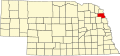
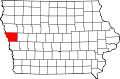
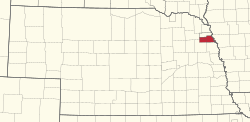
The Omaha Reservation (Omaha–Ponca: Umoⁿhoⁿ tóⁿde ukʰéthiⁿ) of the federally recognized Omaha tribe is located mostly in Thurston County, Nebraska, with sections in neighboring Cuming and Burt counties, in addition to Monona County in Iowa. As of the 2020 federal census, the reservation population was 4,526.[2] The tribal seat of government is in Macy.[3] The villages of Rosalie, Pender and Walthill are located within reservation boundaries, as is the northernmost part of Bancroft. Due to land sales in the area since the reservation was established, Pender has disputed tribal jurisdiction over it, to which the Supreme Court ruled unanimously in 2016 that "the disputed land is within the reservation’s boundaries."[4][5]

Key Information

History

[edit]

The reservation was established by a treaty at Washington, D.C., dated March 16, 1854. By this treaty, the Omaha Nation sold the majority of its land west of the Missouri River to the United States, but was authorized to select an area of 300,000 acres (470 sq mi; 1,200 km2) to keep as a permanent reservation.[6] The Omaha Nation chose an area around the Blackbird Hills and obtained the President's approval on May 11, 1855.[7]

In a treaty on March 6, 1865, the Omaha Nation agreed to sell the northern part of the reservation to the United States for the use of Ho-Chunk refugees from Crow Creek, South Dakota who became the Winnebago Tribe of Nebraska, establishing the Winnebago Reservation just north of the Omaha Reservation.[8][9] The Omahas later conveyed an additional 12,348 acres of timber land to the Winnebago Reservation through an act of Congress on June 22, 1874, and a deed dated July 31, 1874.[10] This reduced the Omaha Reservation to its present size.

Federal legislation in the late nineteenth century caused the reservation to be allotted, ultimately enabling white settlers to buy most of the land on the reservation. An act on June 10, 1872, authorized the survey and sale of land on the western end of the reservation, but the property initially failed to attract buyers, resulting in the sale of only 300.72 acres (1.2170 km2) the first year.[11]

Through the lobbying efforts of anthropologist Alice Cunningham Fletcher, Congress passed another act on August 7, 1882, that divided the eastern portion of the reservation into individual allotments for Omaha tribal members, while authorizing the sale of land west of the Sioux City and Nebraska Railroad to settlers and speculators. Fletcher personally oversaw the allotments, allocating 76,810 acres (310.8 km2) to 954 tribal members and leaving about 55,000 acres (220 km2) in tribal ownership.[12] The 1882 act on the Omaha Reservation served as a model for the Dawes Act of 1887, which authorized the similar allotment of land on reservations nationwide.[13] An additional act on March 3, 1893, allotted most of the remaining Omaha tribal land to individual women and children who had been left out of the 1882 legislation.[14]

The sale of land on the reservation has led to numerous jurisdictional disputes between the Omaha Nation and the white-led government of Thurston County, which is entirely within the Omaha and Winnebago reservations. Special legislation in 1916 empowered the county to assess property tax on Omaha allotments, forcing a large number of tribal members to sell or mortgage their allotment land to outsiders in order to pay back taxes.[15] The county continued to tax tribal trust land until the 1970s, when federal courts ruled that the tribe could not be taxed without its consent.[16]

On July 15, 2025 the Omaha Tribal Council unanimously adopted a code allowing for the sale of marijuana to adults over 21 on tribal land, including to non-tribal visitors. The reservation was the first in Nebraska to pass regulations for cannabis use.[17][18]

Geography

[edit]
Blackbird scenic overlook on the Omaha Reservation

According to the United States Census Bureau, the reservation has a total area of 309.99 square miles (802.9 km2), of which 307.03 square miles (196,500 acres; 795.2 km2) is land and 2.96 square miles (7.7 km2) is water.[1]

Due to allotments in the late nineteenth century, much of the reservation is no longer tribally-owned. According to the Bureau of Indian Affairs, the Omaha Nation's trust land amounts to 27,828 acres (43.481 sq mi; 112.62 km2), or about 14.2% of the total reservation land area.[19]

Demographics

[edit]

As of the census of 2020,[2] the population of the Omaha Reservation was 4,526. The population density was 14.7 inhabitants per square mile (5.7/km2). There were 1,563 housing units at an average density of 5.1 per square mile (2.0/km2). The racial makeup of the reservation was 47.6% Native American, 47.5% White, 0.3% Asian, 0.2% Black or African American, 0.1% Pacific Islander, 1.6% from other races, and 2.7% from two or more races. Ethnically, the population was 4.1% Hispanic or Latino of any race.

Boundary disputes

[edit]

Boundary claims and areas of jurisdiction have continued to be issues for the Omaha Indian Reservation. In the late nineteenth century, Congress authorized sales of land to non-Omaha in the western portion of the reservation, where European-American farmers had settled. Due to the sales and federal legislation subsequent to the treaty establishing the reservation, a Nebraska state court in 2000 ruled that the western boundary of the reservation ended at railroad tracks east of Pender, Nebraska.[20]

The Omaha Tribe contends that Pender is within tribal jurisdiction, as Congress did not change the boundaries of reservation, which includes most of Thurston County.[20][21] The tribe says that the state does not have the power to redefine the boundary set by the Omaha treaty with the US government in 1865. It holds that although Congress authorized land sales in this area, it did not diminish the jurisdiction of the tribe within the reservation boundaries. "Under Supreme Court precedent, only Congress can diminish a reservation."[21]

Asked for its opinion on a related matter related to the Omaha Tribe's law that liquor merchants on the reservation had to pay tribal license fees and sales taxes (see section below), the Nebraska state attorney general noted its opinion, based on Congressional laws and a field ruling during the Ronald Reagan administration, that Pender was outside the reservation boundaries. It also noted that ultimately this was a matter of federal jurisdiction.[22]

There have been continuing issues related to tribal jurisdiction in Pender and other areas along its western boundary. For instance, in 2003 the tribal police tried to stop non-Omaha people from entering the reservation from Pender. The tribe negotiated with the state in 2003–2004 related to its policing functions in this area, but the parties signed no agreement. Prior to this period, the state generally had policing functions on the roads and in Pender.[20]

On March 22, 2016, the United States Supreme Court held, in a unanimous decision, that Pender is within the reservation's boundaries.[23]

Current issues

[edit]

In December 2006, the Omaha Tribe issued notices to the seven liquor stores in Pender (which has a population of 1,000), as well as those in Rosalie and Walthill, Nebraska, informing them that as of January 1, 2007, the merchants would have to pay the Omaha Tribe liquor licensing fees and a 10 percent sales tax to continue to operate within the reservation. The executive director of the Nebraska State Liquor Commission said that he would be consulting with the state attorney general on the issue. Ben Thompson, an Omaha attorney who represents the tribe, notes that it has the legal right to establish such laws within the reservation.[24] The Nebraska Attorney General offered the opinion that the Omaha Tribe had the authority to regulate liquor sales on its reservation and it did not interfere with the Nebraska Liquor Commission. While offering an opinion, he said the tribal boundary was a federal jurisdictional issue.

In April 2007, liquor merchants in Pender (later joined by the village) filed a federal lawsuit challenging the tribe's authority to demand the liquor taxes, based on their contention that Pender was outside the reservation boundaries. In October 2007 the US District Court ordered the parties first to take their challenge to the Omaha Tribal Courts, as part of the tribal exhaustion doctrine, and denied the plaintiffs' request for dismissal. Judge Richard Kopf said he may not be bound by the tribal court, but wanted to hear their opinion.[25] He required the parties to report back to him regularly until a ruling was made by the Omaha Tribal Courts. While the case was pending, the judge ordered a temporary stay on the merchants' paying the liquor sales tax.[25]

In January 2012, the plaintiffs in Pender v. Omaha Tribe filed a request with the Omaha Tribal Courts for a summary judgment due to the length of time the case had taken. The defendants had requested that no hearing be held before June 2012. The plaintiffs had submitted a report to them by an expert witness on transactions related to Pender and the western boundary. In 2008 the village had voted for a five-year, 1% sales tax to finance its lawsuit on the boundary and liquor tax, as well as to promote economic development in the town. Residents voted in May 2012 on whether to renew the sales tax, as the boundary issue continued.[26]

See also

[edit]

Notes

[edit]

References

[edit]
[edit]
Revisions and contributorsEdit on WikipediaRead on Wikipedia
from Grokipedia
The Omaha Reservation is the federally recognized land base of the Omaha Tribe of Nebraska, a Siouan-speaking Native American tribe, encompassing approximately 307 square miles (795 km²) primarily in Thurston County, Nebraska, with extensions into Cuming and Burt counties in Nebraska and Monona County in Iowa. Established by the Treaty of 1854 between the Omaha Tribe and the United States, under which the tribe ceded vast territories in present-day Nebraska in exchange for this reserved area, the reservation serves as the tribe's sovereign homeland with administrative headquarters in the community of Macy, Nebraska. As of the 2020 United States decennial census, the reservation's population stood at 4,526, though the enrolled tribal membership exceeds 5,000, reflecting the tribe's historical resilience as skilled hunters, farmers, and adapters to reservation life following forced relocation from ancestral lands near the Ohio and Wabash rivers. The tribe exercises self-governance over reservation affairs, including wildlife management, parks, and cultural preservation, while navigating economic activities rooted in agriculture and natural resources amid ongoing challenges of rural isolation and federal oversight.

Historical Background

Origins and Pre-Colonial Era

The Omaha Tribe emerged from a within the broader Siouan linguistic and cultural confederation during the early 1500s, when a group separated from ancestral territories near the confluence of the and Wabash rivers in the present-day Midwest. This division, part of the Dhegiha Siouan branch—which included proto-groups that later differentiated into the Omaha, , , Osage, and Kansa—prompted a protracted westward migration driven by resource competition, environmental shifts, and conflicts with neighboring peoples. Oral traditions and linguistic evidence indicate sequential separations during this movement: first from the near the around the 16th century, then from the Osage and Kansa branches further west, with the Omaha-Ponca subgroup coalescing before their final split in the vicinity of present-day by the late 17th century. By the early 1700s, the Omaha had reached the along the in what is now northeastern , establishing semi-permanent villages adapted to the region's riverine . Omaha society prior to sustained European contact was organized around patrilineal clans divided into two moieties—the Nsaku-be or "Sky People" (five northern-oriented clans emphasizing warfare and ) and the Wazhazhe or "Earth People" (five southern-oriented clans focused on and earth-based ceremonies)—which structured social roles, marriages, and . Descent and inheritance followed the male line, with children affiliated to their father's clan, reinforcing hierarchical distinctions among chiefs, , warriors, and commoners within villages led by hereditary leaders. Economically, the tribe relied on a mixed subsistence system of village-based —cultivating , beans, squash, and in fertile floodplains—and seasonal communal hunts for , deer, and smaller game, supplemented by gathering wild plants; this adaptation supported population stability until external pressures mounted. Population estimates place the Omaha at approximately 2,800 individuals in 1780, reflecting a pre-contact peak sustained by the Missouri Valley's productivity, though this number declined precipitously to around 300 by the early 1800s due to recurrent outbreaks transmitted indirectly through intertribal trade networks, intensified warfare with nomadic groups over hunting territories, and sporadic environmental stressors like droughts that disrupted horticultural yields. These epidemics, originating from Eurasian pathogens via eastern Native intermediaries, exerted a demographic toll through high mortality rates among unexposed populations, while conflicts—often over scarce herds amid broader Plains migrations—further eroded numbers via direct casualties and village disruptions, independent of direct European settlement at this stage.

Migration and Early European Contact

The Omaha people, a Dhegiha-branch Siouan tribe closely related to the Ponca, trace their origins to eastern woodlands, with archaeological and oral traditions indicating separation from other Dhegiha groups like the Quapaw around the 15th century amid intertribal displacements and resource scarcities that prompted westward expansion. By the late 17th century, the Omaha had migrated from the Ohio River Valley to the Great Plains, crossing the Mississippi and settling along the Missouri River's eastern banks in present-day Nebraska and Iowa by the early 1700s, where they established semi-permanent earth-lodge villages focused on maize agriculture, hunting, and seasonal movements. This gradual relocation, spanning the 14th to 17th centuries, reflected adaptive responses to eastern population pressures from Algonquian expansions and climatic shifts favoring Plains bison herds, enabling a transition from woodland foraging to equestrian buffalo hunting after acquiring horses through indirect trade networks. Initial European contact began indirectly through French colonial networks in the Mississippi Valley, with the first written reference to the Omaha appearing in 1700 from explorer Pierre-Charles Le Sueur's accounts of a village near the , though direct trader encounters likely occurred later in the century. By the mid-1700s, French fur traders had reached Omaha territories along the lower , exchanging firearms, metal tools, cloth, and horses for beaver pelts and corn, which shifted Omaha economies toward intensified fur trapping and buffalo hunts while escalating intertribal warfare due to gun access and mounted mobility. These interactions, centered around posts near present-day , fostered kinship ties via intermarriages but also introduced devastating pathogens; a outbreak in 1800–1801 halved the estimated pre-epidemic population of over 2,000, compounding losses from prior exposures and heightening vulnerabilities amid rivalries with Siouan kin like the and incoming Dakota groups contesting prime riverine hunting grounds.

Treaties and Reservation Establishment

The Omaha Tribe signed a treaty with the United States on March 16, 1854, in Washington, D.C., ceding all lands west of the Missouri River and south of a line extending westward from the mouth of the Platte River, encompassing vast territories in present-day Nebraska and Iowa previously claimed by the tribe. In exchange, the U.S. government agreed to provide annuity payments totaling $367,000 over 15 years, along with provisions for schools, blacksmiths, and agricultural implements to support the tribe's transition to farming. The treaty explicitly reserved for the Omaha a permanent homeland of up to 300,000 acres contiguous to their existing settlements along the east bank of the Missouri River in northeastern Nebraska, selected at the tribe's discretion with presidential approval. The tribe, under leaders including Logan Fontenelle, selected the reservation boundaries in 1855, which President approved on May 11, thereby establishing the Omaha Reservation without requiring mass relocation to in present-day , a fate imposed on many resistant or displaced eastern and Plains tribes during the era. This retention stemmed from the Omaha's strategic diplomacy and historically non-confrontational posture toward American settlers, facilitated by early adoption of through Presbyterian missionaries and avoidance of hostilities like those in the , which positioned the tribe favorably in negotiations amid accelerating westward migration. Federal agents enforced treaty stipulations, including prohibitions on intertribal warfare except in self-defense and requirements for peaceful settlement of disputes, underscoring the government's aim to integrate the Omaha into a sedentary, agrarian framework under oversight. Upon establishment, reservation inhabitants received initial allotments for cultivation, shifting from traditional to growing corn, , and potatoes, which were traded with non-Indians, while federal superintendents provided tools and instruction without provoking widespread , as the prioritized over resistance. This early compliance contrasted with uprisings elsewhere, enabling the Omaha to maintain territorial integrity in rather than face coerced exodus.

Allotment Era and 20th-Century Changes

In 1882, Congress enacted legislation authorizing the appraisal and sale of surplus lands on the Omaha Reservation while allotting portions in severalty to tribal members, dividing communal holdings into individual tracts typically of 40 acres each, as appraised by commissioners including one selected by the tribe. This predated the broader of 1887 and aimed to promote individual ownership and assimilation, but it initiated through , as parcels passed to multiple heirs, complicating management and leading to sales or leases to non-Indians. By the early 1900s, these dynamics resulted in substantial loss, with government restrictions, bureaucratic delays in approvals, and pressure from land speculators and enabling widespread alienation of allotted lands through leasing and outright , reducing tribal control over much of the reservation's acreage. exacerbated inefficiencies, as undivided interests proliferated, hindering productive use and fostering dependency on wage labor off-reservation, contrary to the policy's intent of economic self-sufficiency. Early 20th-century federal actions included granting U.S. citizenship to Native American veterans in 1919, extended to all Indians via the of 1924, allowing Omaha members to serve in the U.S. military during both world wars—over 12,000 Natives volunteered for alone—while preserving tribal sovereignty. This integration occurred amid ongoing land diminishment disputes, as seen in later court interpretations of the 1882 act, which did not fully disestablish reservation boundaries but permitted non-Indian encroachments. The of 1934 halted further allotments and sought to consolidate fractionated lands, enabling some stabilization on the Omaha Reservation, though poverty persisted due to prior dispossession and limited resources, with mid-century relocation programs in the encouraging off-reservation migration that depleted but failed to resolve underlying policy-induced economic vulnerabilities. Tribal population began recovering post-1930s, yet challenges from inherited land fragmentation and federal dependency lingered, underscoring causal links between allotment-era policies and protracted socioeconomic strains.

Geography and Physical Setting

Location and Topography

The Omaha Reservation lies primarily within Thurston County, Nebraska, with additional sections in Burt, Cuming, and Wayne counties, positioned along the western bank of the Missouri River near the Iowa border. This placement spans approximately 30,000 acres of trust and allotted lands, with the tribal headquarters situated in the community of Macy in Thurston County. The reservation's irregular boundaries stem from 19th-century treaties and subsequent surveys, which have resulted in persistent ambiguities and legal disputes over jurisdictional lines. The topography features flat to gently rolling prairies interspersed with riverine floodplains along the , which defines the eastern edge and creates fertile bottomlands bordered by steeper bluffs to the west. These bluffs, often wooded, rise from the alluvial plains, contributing to a varied profile that transitions from low-lying river terraces to higher upland areas. The proximity to the state line across the Missouri facilitates regional connectivity, though the river's meandering course influences local geomorphic features. Environmental vulnerabilities include recurrent flooding risks from the , with major events such as the 2019 flood causing extensive inundation across reservation lands due to the floodplain's low elevation and historical channel instability. Such exposes low-lying areas to seasonal overflows and , shaping land management considerations.

Climate and Natural Resources

The Omaha Reservation lies within a zone, featuring distinct seasonal variations with hot, humid summers averaging highs near 86°F (30°C) and cold winters with lows around 10°F (-12°C). Annual average temperatures hover between 40°F and 62°F, supporting a of approximately 170-180 frost-free days. totals about 30 inches (762 mm) yearly, with roughly half falling as rain during the warmer months and the rest including snowfall in winter, contributing to periodic heavy runoff. The reservation's proximity to the exposes it to recurrent flooding risks, as evidenced by the 2011 event that submerged significant portions of tribal lands, including agricultural fields and infrastructure like fuel facilities. Such floods, driven by spring and intense rainfall, have historically altered landscapes and necessitated federal recovery funding exceeding $14 million for the Omaha Tribe alone. These events underscore the river's dual role in providing while posing hazards to and . Fertile soils predominate across the reservation, classified largely as mollisols with high organic content and good drainage, enabling robust agricultural output in corn, soybeans, and hay that bolsters economic viability. Riparian zones along the yield timber from species like cottonwood and , while wildlife resources encompass , turkeys, and migratory waterfowl, actively managed through tribal conservation efforts to sustain habitats. remains a persistent challenge from and river undercutting, mitigated via federal programs promoting cover crops and contour farming to preserve productivity.

Demographics and Society

Population Composition

The Omaha Tribe of Nebraska maintains an enrolled tribal membership of approximately 6,000 individuals, based on federal records and tribal reports from the early , though exact figures fluctuate due to births, deaths, and enrollment adjustments. Membership eligibility is determined by descent from individuals listed on the tribe's 1963-1964 base rolls and a minimum blood quantum of one-quarter degree of aboriginal Omaha blood, with blood from other tribes explicitly excluded in calculations to preserve tribal-specific lineage. This criterion, adopted under federal frameworks, has sparked internal debates over its racializing effects, as downward adjustments to recorded quanta—such as those implemented in 2018 based on historical rolls—have reduced eligibility for hundreds of descendants, potentially threatening long-term enrollment sustainability amid intermarriage and out-migration. The reservation itself supports a resident population of about 2,500 enrolled tribal members, out of the total 4,526 inhabitants recorded in the U.S. Decennial , which includes non-tribal residents such as spouses and employees. This on-reservation figure represents roughly 40% of the enrolled total, with the remainder dispersed off-reservation, often in urban centers like , where historical migration patterns since the mid-20th century have drawn members seeking employment beyond reservation-based economies. These residency trends underscore a broader pattern among Native American tribes, where over half of members may live in metropolitan areas, complicating tribal governance and service provision while reflecting adaptations to post-allotment land loss and federal policies encouraging assimilation.

Socioeconomic Conditions

Poverty rates on the Omaha Reservation, approximated through data from Thurston County where much of the reservation lies, stood at 18% in 2023, significantly higher than Nebraska's statewide rate of approximately 10%. Unemployment remains a persistent challenge, with tribal officials reporting rates around 60% as of 2025, far exceeding the state's 3% average and reflecting structural barriers to labor market participation. These indicators underscore living standards below broader regional norms, with factors such as geographic isolation in rural northeast Nebraska limiting access to off-reservation jobs and contributing to skill mismatches from inadequate local training opportunities. Median household income in Thurston County reached $64,838 in 2023, about 86% of Nebraska's $74,985 median, highlighting disparities in earning potential despite some gains to $41,621. Tribal gaming revenues have driven positive trends, with studies on similar operations showing average increases of over 70% post-casino development, though benefits on the Omaha Reservation appear unevenly distributed, exacerbating intra-community inequalities. Heavy reliance on federal aid, including (TANF) programs administered by the tribe, sustains basic needs but fosters dependency under the federal trust system, which constrains individual property rights and entrepreneurial incentives, as evidenced by broader analyses of . Self-determination efforts, such as pursuing diversified revenue streams, have yielded modest successes in reducing from earlier highs, yet causal factors like restricted and limited perpetuate cycles of absent reforms prioritizing private ownership and market integration.

Health and Education Metrics

Health outcomes on the Omaha Reservation reflect elevated chronic disease burdens, with prevalence among tribal members reported at 5 to 10 times the national average, attributed in part to shifts from traditional diets high in and plants to processed foods higher in refined sugars and fats. A 1993 study found the Omaha Tribe's age-adjusted prevalence at 8.8 times the U.S. rate, alongside high incidence of complications like mortality rates exceeding 180 per 100,000 in some periods. , particularly alcohol, persists as a modeled mechanism for stressors including depression and , contributing to disruptions and intergenerational patterns, though personal agency in avoidance remains a factor amid limited local treatment access. for American Indians in averages 75.7 years, lagging the state white population's 80 years, with national AIAN figures at 70.6 years in 2021, gaps linked to preventable causes like , use during (highest among Nebraska AI at over 20% in some reports), and delayed care rather than solely historical factors. The (IHS) provides primary care through facilities like the Carl T. Curtis Health Center in Macy, , but faces critiques for chronic underfunding and inefficiencies, resulting in wait times and incomplete service coverage despite federal obligations. Tribal testimony highlights IHS shortfalls exacerbating disparities, with Omaha ranking near the bottom among AIAN groups in health metrics, prompting self-funded expansions like a $3.5 million award in 2025 for facility upgrades. These issues underscore causal roles of policy implementation gaps and lifestyle choices, such as dietary patterns, over external blame alone. Educational attainment lags national norms, with high school graduation rates at Omaha Nation Public School improving from 46% to 80% by 2020 through targeted interventions, yet still below 's 90% average, influenced by attendance challenges and socioeconomic pressures. Indian Community College (NICC), serving Omaha students across campuses on the reservation, reports low completion: 9% within normal time for degrees in 2022 and overall rates around 16.7%, reflecting barriers like part-time enrollment and family obligations but also opportunities in tribal-focused programs. Federal support aids K-12 efforts, yet persistent gaps tie to individual motivation and resource allocation realism, with tribal initiatives emphasizing cultural integration to boost retention without over-relying on external aid.

Tribal Governance and Sovereignty

Political Organization

The Omaha Tribe of maintains an internal structured around a seven-member Tribal Council, which serves as the tribe's primary legislative and executive body. Council members are elected by qualified tribal voters residing on or near the reservation, with elections held every three years on the first Monday in . Each member must be at least 21 years old, enrolled in the , and have resided on the reservation for one year prior to candidacy; they serve staggered three-year terms and are eligible for reelection. Following each election, the newly seated council selects its officers—a chairperson, vice chairperson, secretary, and treasurer—from among its members at its first meeting, with the chairperson acting as the administrative head. This governing framework was formalized through the tribe's constitution and bylaws, ratified on March 30, 1936, under the Indian Reorganization Act of 1934, which aimed to restore tribal self-governance by organizing elected councils while preserving elements of traditional authority. The council exercises enumerated powers over internal affairs, including enacting ordinances for reservation law enforcement, managing tribal budgeting and property, appointing subordinate committees, and regulating membership and enterprises, though major decisions such as charters or leases often require federal approval from the Bureau of Indian Affairs. Vacancies are filled via special elections if more than eight months remain in a term or by council appointment otherwise, ensuring continuity in leadership. While the elected provides democratic representation, incorporates Omaha cultural norms, such as consensus-oriented rooted in the tribe's historical clan-based systems, though formal rests with the elected body. Internal mechanisms include provisions for officer removal by a two-thirds vote for neglect or malfeasance, reflecting ongoing tribal efforts to balance modern electoral processes with traditional expectations of . meetings occur regularly, typically Tuesdays and Thursdays, to address legislative matters open to public input from enrolled members.

Federal-Tribal Relations

The federal-tribal relationship between the and the Omaha Tribe of was formalized through the , in which the tribe ceded approximately 2.5 million acres of ancestral lands in what is now northeastern and western , receiving in return a 308,000-acre reservation along the and commitments for annuity payments of $40,000 annually for 30 years, agricultural support including 200 acres plowed yearly, blacksmith services, and military protection from hostile tribes. This treaty established the foundational trust responsibility, under which the federal government holds reservation lands in title for the tribe's benefit, imposing a fiduciary duty to preserve and manage these assets while prohibiting alienation without congressional approval. In response to the land fragmentation caused by prior allotment policies, the of June 18, 1934 (48 Stat. 984), sought to halt further diminishment of tribal estates and promote self-governance by authorizing tribes to adopt constitutions and corporate charters. The Omaha Tribe ratified its constitution and bylaws on September 15, 1936, under the act's provisions, which reorganized tribal governance with a business council and preserved federal recognition while granting authority to negotiate with the Department of the Interior on matters affecting tribal welfare. This framework ended the era of through individual allotments and facilitated the restoration of communal land holdings, though federal trusteeship persisted via the . The enduring trust obligation encompasses federal delivery of essential services, including health care through the and infrastructure support, funded by appropriations tied to and statutory commitments. However, the relationship has involved persistent federal oversight of trust assets, such as timber, minerals, and funds, with the government retaining approval rights over leases and dispositions to prevent exploitation. Contemporary interactions include tribal consultations with federal agencies on resource allocation and jurisdictional coordination, reflecting the tribe's constitutional mandate to engage the on behalf of its members. This dynamic underscores the tension between and dependency, where federal protection has historically buffered external encroachments but also constrained independent . The Omaha Tribe exercises inherent sovereign authority over its enrolled members and trust lands within the reservation, enabling the enactment and enforcement of tribal codes governing internal affairs, including civil disputes and regulatory measures. This jurisdiction stems from the tribe's federally recognized status under the of 1934 and is codified in its constitution, which empowers the Omaha Tribal Court to adjudicate violations of tribal laws and the . However, federal law imposes limits, particularly excluding criminal jurisdiction over non-Indians absent congressional authorization, as established in precedents like (1978), leaving such cases to federal prosecution under the or state authorities where jurisdiction applies. A key assertion of autonomy occurred in Nebraska v. Parker (2016), where the U.S. unanimously held that an 1882 congressional act authorizing surplus land sales did not diminish the reservation's boundaries, preserving the tribe's full territorial extent across approximately 307,000 acres in and . This ruling enabled the tribe to enforce civil regulatory powers, such as liquor taxation on non-Indian businesses like those in Pender, Nebraska, despite the area's demographic shift toward non-Indian majority ownership, thereby countering state claims of exclusive authority. The decision emphasized that non-Indian population growth and land alienation alone do not imply diminishment without explicit congressional intent, reinforcing practical exercises of over reservation-wide activities. Challenges persist due to the reservation's checkerboard ownership pattern, where allotted lands transferred to non-Indian owners fragment jurisdiction, allowing state intervention on those parcels and complicating uniform tribal enforcement of health, safety, and cultural regulations. doctrines further constrain state encroachments but require ongoing litigation to clarify overlaps, as seen in tribal efforts to regulate substances like sales against state laws. Despite these constraints, the tribe has sustained cultural legal frameworks, such as protections for traditional practices embedded in tribal , adapting to modernization while avoiding termination-era threats to its status.

Economy and Development

Traditional Subsistence Practices

The Omaha people's traditional economy relied on , , and , adapted to the resources of the valley and adjacent plains. Women managed agricultural production, cultivating staple crops including corn, beans, squash, and melons in fertile gardens near semi-permanent villages composed of earth lodges. These crops formed the dietary foundation, with planting occurring in spring and harvesting in autumn to align with seasonal flooding and soil renewal. Men focused on hunting large game such as and deer, organizing communal expeditions that departed villages for summer and winter hunts on the western . provided essential protein, hides for clothing and shelter, and materials for tools, underscoring their economic and ceremonial centrality. Fishing in the supplemented these activities, yielding fish caught via traps, nets, and hooks to diversify food sources year-round. Post-contact with Europeans, the Omaha incorporated obtained through intertribal networks by the mid-18th century, which increased efficiency and facilitated extended seasonal forays for resources without fully relocating villages. This adaptation supported semi-nomadic patterns, with villages serving as horticultural bases while hunt camps enabled exploitation of migratory herds.

Gaming and Modern Enterprises

The Omaha Tribe of Nebraska conducts gaming activities under the (IGRA) of , which permits Class III gaming through negotiated tribal-state compacts to promote tribal economic development while ensuring regulatory oversight. The tribe operates facilities including Casino Omaha, located near the Nebraska-Iowa border, and has entered compacts with both states to authorize such operations, focusing on slot machines, table games, and related amenities. These enterprises generate revenue directed toward tribal functions, infrastructure improvements, and services, serving as a mechanism for exercising and reducing reliance on federal funding. In recent years, the tribe has expanded gaming scope, opening enhanced facilities in 2023 to attract regional visitors and boost operational scale, though Class III expansions remain contingent on compact negotiations for activities like . Revenue from these operations funds distributions indirectly through broader economic initiatives, though tribal ordinance prohibits direct payouts from gaming proceeds to prioritize collective investments. Empirical data from National Indian Gaming Commission audits highlight compliance efforts and revenue accountability, with past enforcement actions underscoring risks of mismanagement in smaller-scale tribal gaming relative to larger operations. Beyond gaming, the tribe has diversified into modern enterprises leveraging sovereign authority, notably adopting comprehensive cannabis regulations on July 21, 2025, to legalize both medical and adult-use markets—the first such full framework in . This initiative, building on prior production plans, aims to create regulated cultivation, distribution, and retail opportunities on reservation lands, potentially mitigating gaming's volatility and fostering ancillary . Such ventures demonstrate causal links between sovereignty tools and self-sufficiency, funding , , and programs amid median household incomes around $56,000, though challenges persist from revenue dependency and uneven intra-tribal benefits. Gaming's benefits include substantial capital for assertion, yet risks encompass prevalence—tied empirically to proximity of operations—and litigation over compact exclusivity and state competition, as evidenced by ongoing regulatory disputes. Diversification efforts like seek to balance these by broadening revenue bases, though success hinges on market adaptation without federal interference.

Economic Challenges and Self-Sufficiency Efforts

The Omaha Reservation faces persistently high rates, reported at 69% as of 2015 by tribal , attributable in significant part to the remote rural location limiting access to off-reservation job markets and a mismatch between available low-skill labor and demands for technical or specialized training in surrounding economies. Geographic isolation exacerbates these issues, as the reservation's position in northeastern and western restricts commuting feasibility and economic integration with urban centers like Omaha, approximately 70 miles away, while limited local industry perpetuates dependence on federal transfers rather than diversified private-sector . Financial mismanagement has compounded these barriers, as evidenced by a 2017 U.S. Department of Office of audit, which found the Omaha Tribe unable to account for $14 million in FEMA disaster relief grants awarded post-2011 floods, citing "serious and pervasive" weaknesses in grant administration, procurement, and internal controls that led to unallowable expenditures and lost funds. This episode resulted in FEMA withholding further awards until corrective actions were implemented, highlighting how over-reliance on federal funding without robust accountability mechanisms can undermine resource allocation for or job creation. Tribal self-sufficiency initiatives have sought to address these challenges through diversification beyond government aid, including agricultural programs like the Whispering Roots horticulture training for Omaha members, emphasizing sustainable farming practices to foster production and skill-building, and the Three Sisters Farm established in 2021 as Nebraska's first reservation-based farm-to-school program leasing tribal land for educational crop cultivation. Vocational efforts, such as those under broader Indigenous economic development workshops, aim to bridge skill gaps via targeted training, though progress remains incremental amid sovereignty's dual nature: enabling independent decision-making that shields from state oversight but permitting internal governance failures without market or external corrective pressures, as seen in the audit's revelations of unchecked fiscal lapses.

Culture and Contributions

Language, Traditions, and Preservation

The Omaha Tribe's traditional language, known as Umónhon, belongs to the Dhegiha branch of the Siouan language family and is classified as endangered, with fewer than a dozen fluent elderly speakers as of recent assessments. Assimilation policies and English dominance have accelerated its decline since the reservation era, but tribal-led revitalization initiatives have gained momentum, including immersion programs in Macy Public Schools funded by grants such as a 2023 W.K. Kellogg Foundation award aimed at integrating language instruction into curricula for youth. Additional efforts encompass summer workshops, like the 2018 Umónhon-Pónka Language Immersion event, and household-based transmission strategies emphasizing parental use to foster generational continuity, though empirical data indicate persistent challenges with low daily proficiency rates among younger members. Social organization remains rooted in a patrilineal system comprising ten gentes (clans), each functioning as a semi-autonomous unit responsible for specific ceremonial roles, rules, and resource , a structure that predates European contact and persists despite historical disruptions from relocation and boarding schools. Key traditions include the Helushka (or ) Dance, a vigorous performance historically invoked for supernatural protection in battle and communal thanksgiving, featuring rhythmic drumming, feathered , and chants that encode oral histories; performances continue in controlled settings to transmit these elements amid external cultural pressures. Preservation endeavors center on institutional mechanisms like the Omaha Tribe's Language and Culture Preservation Department, established to strategize increased daily Umónhon usage through community planning and capacity-building, complemented by the Tribal Historic Preservation Office, which safeguards archaeological sites and intangible heritage under federal partnerships. Annual events such as the summer in Macy reinforce these practices by gathering participants for dances, , and artifact displays, countering assimilation's erosion with documented upticks in youth engagement since the 1990s Red Power-influenced resurgence, though metrics show uneven success tied to funding and enrollment.

Notable Figures and Anthropological Impact

Francis La Flesche (1857–1932), an Omaha tribal member and the first professionally trained Native American ethnologist, conducted extensive fieldwork documenting Omaha social structures, rituals, and music, preserving elements of tribal culture amid rapid assimilation pressures in the late 19th and early 20th centuries. Working for the from 1890 onward, La Flesche recorded over 200 Omaha songs on wax cylinders and authored works such as The Middle Five: Indian Boys at School (1900), which drew from his experiences in mission schools to illustrate indigenous perspectives on education and adaptation. His insider knowledge as the son of Omaha La Flesche enabled rigorous, emic analyses that challenged outsider assumptions in early , emphasizing Omaha agency in cultural transmission rather than passive decline. La Flesche's long-term collaboration with anthropologist Alice Cunningham Fletcher, beginning in the 1880s, produced seminal publications including A Study of Omaha Music (1893) and The Omaha Tribe (1911, two volumes), which detailed systems, , and ceremonial practices based on joint fieldwork among Omaha communities. This partnership extended to practical advocacy, as their documentation supported Omaha efforts to allot lands under the of 1887, helping the tribe retain approximately 160,000 acres of reservation territory by verifying traditional land use patterns against federal claims of underutilization. Fletcher credited La Flesche's linguistic and cultural expertise as indispensable, noting his role in translating oral histories and correcting ethnocentric interpretations, thereby influencing anthropology toward greater inclusion of indigenous voices and establishing a model for collaborative . Omaha tribal members demonstrated civic integration through consistent military service for the , beginning with Union enlistments during the Civil War—such as in Nebraska volunteer units—and continuing in every major conflict thereafter, including World Wars I and II, without recorded tribal resistance to federal authority. This participation, involving dozens of individuals per war from a population under 2,000, reflected strategic adaptation to U.S. sovereignty, securing benefits like citizenship under the 1924 while countering stereotypes of ; for instance, Omaha veterans received commendations for and combat roles, underscoring tribal contributions to national defense amid reservation constraints. Such engagements highlight Omaha agency in navigating federal relations, paralleling La Flesche's scholarly efforts to assert cultural and political relevance on their own terms.

Boundary and Taxation Conflicts

The boundary disputes involving the Omaha Reservation originated from the Omaha Allotment Act of August 7, 1882, which divided tribal lands into individual allotments for Omaha Tribe members while permitting the sale of surplus parcels to non-Indians, leading to gradual non-Indian settlement within the reservation's exterior boundaries. This process raised long-standing questions about whether such allotments and sales diminished the reservation's overall boundaries or constituted "" under , where tribal applies over activities like taxation. A specific flashpoint emerged in Pender, Nebraska—a village located within the reservation's original boundaries but with a population that became approximately 98% non-Indian by the early 21st century—when the Omaha Tribal Council enacted a 10% sales tax on liquor and required licensing for sales in 2006, asserting authority over the area as Indian country. Local retailers and the state of Nebraska challenged the tribe's jurisdiction, arguing that the 1882 Act had disestablished the reservation boundaries around Pender, thereby exempting non-Indian businesses from tribal taxes and regulations. In v. Parker (577 U.S. 481), the U.S. unanimously ruled on March 22, 2016, that the 1882 Act did not diminish the Omaha Reservation's boundaries, as it lacked explicit congressional language of or clear intent to alter the reservation's exterior limits established by the and treaties. The Court applied a three-part test for diminishment—statutory language, contemporaneous understanding, and subsequent understanding (including demographic changes and jurisdictional exercises)—and found insufficient evidence of diminishment, affirming Pender's status as subject to tribal regulatory authority. This decision enabled the tribe to enforce liquor taxes and licenses, potentially generating significant revenue from Pender's sales while addressing non-Indian encroachments that had diluted tribal control without formal boundary adjustment.

Financial Management Issues

In a November 30, 2017, audit by the Department of Homeland Security Office of Inspector General, the Omaha Tribe of and was found to have mismanaged approximately $13.9 million of $16.9 million in grants allocated for recovery from 2011 flooding (Disaster Declarations DR-1998-IA and DR-4013-NE). The report highlighted the tribe's inadequate system, which failed to produce reliable accounting records or sufficient documentation to verify eligible expenditures, resulting in unsupported costs and non-compliance with federal regulations under 44 CFR 13.20(b). Key deficiencies included charging unrelated expenses, such as $37,296 in general operating costs, a $312,282 staff bonus, and $168,764 for repairs to an aging structure, alongside awarding over $11 million in non-competitive contracts to tribal-affiliated entities that generated artificial profits through inflated pricing. These issues arose from internal lapses, including insufficient trained personnel, poor record-keeping practices, and a lack of oversight mechanisms, rather than external factors. Compounding these modern fiscal vulnerabilities, historical sales of individually allotted lands—initiated under the tribe's early of allotment policies from to —led to significant land loss, diminishing the communal economic base and shifting many households toward unstable wage labor, which perpetuated cycles of . Addressing such entrenched problems requires internal reforms to enhance transparency and , including the of robust financial tracking systems, mandatory competitive for contracts, and staff in federal grant compliance, as recommended by the to prevent future disallowances and high-risk designations.

Sovereignty and Gaming Disputes

The Omaha Tribe of Nebraska operates Class III gaming facilities, including Casino Omaha in Onawa, Iowa, pursuant to a Tribal-State Compact negotiated under the Indian Gaming Regulatory Act (IGRA) of 1988, which mandates such agreements for tribes to conduct casino-style gaming on Indian lands. The compact with Iowa, approved in the early 1990s and amended over time, permits slot machines, table games, and other activities while allocating revenue shares to the state, enabling the tribe to generate economic benefits but requiring ongoing compliance with state regulatory standards. Efforts to secure a similar compact with Nebraska have stalled due to disagreements over permissible games under state law, which restricts offerings to bingo and non-house-banked games, preventing full-scale casino operations within Nebraska's portion of the reservation. Gaming development has precipitated sovereignty disputes, particularly involving waivers of tribal immunity in contracts with private vendors. In StoreVisions, Inc. v. Omaha Tribe of Nebraska (2011), the tribe entered 11 agreements for management and equipment, where tribal chairman and vice-chairman signed waivers consenting to state court jurisdiction; when payments ceased amid performance issues, the vendor sued for breach, and the upheld the waivers as validly implied by council acquiescence, rejecting the tribe's immunity defense despite lack of explicit council vote. The U.S. denied in 2012, leaving the ruling intact and exposing the tribe to a multi-million-dollar judgment, which critics argue illustrates risks of ad hoc waivers eroding sovereign protections in pursuit of gaming infrastructure. Similar litigation arose in Missouri River Services, Inc. v. Omaha Tribe of Nebraska (2000), where a contractor sought enforcement of an arbitration award for unpaid casino construction work under a limited ; the Eighth of Appeals ruled the waiver extended only to judgment entry and execution, not broader remedies, affirming partial tribal protections but underscoring vulnerabilities when contractual language invites off-reservation adjudication. These cases highlight tensions under IGRA's compact framework, where tribes secure gaming rights through state negotiations—fostering revenue for self-sufficiency, as Omaha's operations contribute to tribal services—but at the potential cost of deepened federal-state entanglements and litigation over immunity waivers, prompting debates on whether such dependencies compromise inherent more than they promote economic . Proponents of gaming assert it empowers tribes against historical dispossession, while skeptics, including some tribal scholars, contend reliance on revocable compacts and suits perpetuates external controls akin to colonial oversight, rather than enabling unencumbered .

References

Add your contribution
Related Hubs
User Avatar
No comments yet.