Hubbry Logo
logo
Pulp (tooth)
Community hub

Pulp (tooth)

logo
0 subscribers
Read side by side
from Wikipedia
Pulp
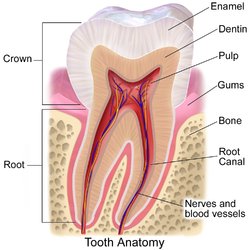
Section of a human molar
Details
Identifiers
Latinpulpa dentis
MeSHD003782
TA98A05.1.03.051
TA2934
FMA55631
Anatomical terminology
Diagram showing pulp histology:
  1. Odontoblast layer;
  2. Cell-free zone of Weil;
  3. Cell-rich zone;
  4. Pulp core

The pulp is the connective tissue, nerves, blood vessels, and odontoblasts that comprise the innermost layer of a tooth.[1] The pulp's activity and signalling processes regulate its behaviour.[2][3][4][5][6][7]

Anatomy

[edit]

The pulp is the neurovascular bundle central to each tooth, permanent or primary. It is composed of a central pulp chamber, pulp horns, and radicular canals. The large mass of the pulp is contained within the pulp chamber, which is contained in and mimics the overall shape of the crown of the tooth.[2] Because of the continuous deposition of the dentine, the pulp chamber becomes smaller with the age. This is not uniform throughout the coronal pulp but progresses faster on the floor than on the roof or sidewalls.

Radicular pulp canals extend down from the cervical region of the crown to the root apex. They are not always straight but vary in shape, size, and number. They are continuous with the periapical tissues through the apical foramen or foramina.

The total volume of all the permanent teeth organs is 0.38cc, and the mean volume of a single adult human pulp is 0.02cc.[citation needed]

Accessory canals are pathways from the radicular pulp. These canals, which extend laterally through the dentin to the periodontal tissue, are seen especially in the apical third of the root. Accessory canals are also called lateral canals because they are usually located on the lateral surface of the roots of the teeth.

Development

[edit]

The pulp has a background similar to that of dentin because both are derived from the dental papilla of the tooth germ. During odontogenesis, when the dentin forms around the dental papilla, the innermost tissue is considered pulp.[8]

SDEO: Dental pulp of a stained and decalcified tooth.[9]

There are 4 main stages of tooth development:

  1. Bud stage
  2. Cap stage
  3. Bell stage
  4. Crown stage

The first sign of tooth development is known to be as early as the 6th week of intrauterine life. The oral epithelium begins to multiply and invaginates into ectomesenchyme cells, which gives rise to dental lamina. The dental lamina is the origin of the tooth bud. The bud stage progresses to the cap stage when the epithelium forms the enamel organ. The ectomesenchyme cells condense further and become dental papilla. Together the epithelial enamel organ and ectomesenchymal dental papilla and follicle form the tooth germ. The dental papilla is the origin of dental pulp. Cells at the periphery of the dental papilla undergo cell division and differentiation to become odontoblasts. Pulpoblasts form in the middle of the pulp. This completes the formation of the pulp. The dental pulp is essentially a mature dental papilla.[10]

The development of dental pulp can also be split into two stages: coronal pulp development (near the crown of the tooth) and root pulp development (apex of the tooth).

The pulp develops in four regions from the periphery to the central pulp:

  1. Odontoblast layer
  2. Cell-free zone – likely to be an artefact
  3. Cell-rich zone
  4. Pulp core[11]

Internal structure

[edit]
Pulpal dentin junction.
  1. outside tooth/enamel
  2. dentin tubule
  3. dentin
  4. odontoblastic process
  5. predentin
  6. odontoblast
  7. capillaries
  8. fibroblasts
  9. nerve
  10. artery/vein
  11. cell-rich zone
  12. cell-poor zone
  13. pulp chamber

The central region of the coronal and radicular pulp contains large nerve trunks and blood vessels.

This area is lined peripherally by a specialized odontogenic area which has four layers (from innermost to outermost):

  1. Pulpal core, which is in the center of the pulp chamber, with many cells and an extensive vascular supply; except for its location, it is very similar to the cell-rich zone.
  2. Cell-rich zone, which contains fibroblasts and undifferentiated mesenchymal cells.
  3. Cell-free zone (zone of Weil, which is rich in both capillaries and nerve networks.
  4. Odontoblastic layer, the outermost layer which contains odontoblasts and lies next to the predentin and mature dentin.

Cells found in the dental pulp include fibroblasts (the principal cell), odontoblasts, defence cells like histiocytes, macrophages, granulocytes, mast cells, and plasma cells. The nerve plexus of Raschkow is located central to the cell-rich zone.[8]

The plexus of Raschkow

[edit]

The plexus of Raschkow monitors painful sensations. By virtue of their peptide content, they also play important functions in inflammatory events and subsequent tissue repair. There are two types of nerve fibers that mediate the sensation of pain: A-Fibres conduct rapid and sharp pain sensations and belong to the myelinated group, whereas C-Fibres are involved in dull aching pain and are thinner and unmyelinated. The A-Fibres, mainly of the A-delta type, are preferentially located in the periphery of the pulp, where they are in close association with the odontoblasts and extend fibers to many but not all dentinal tubules. The C-Fibres typically terminate in the pulp tissue proper, either as free nerve endings or as branches around blood vessels. Sensory nerve fibers that originate from inferior and superior alveolar nerves innervate the odontoblastic layer of the pulp cavity. These nerves enter the tooth through the apical foramen as myelinated nerve bundles. They branch to form the subodontoblastic nerve plexus of Raschkow, which is separated from the odontoblasts by a cell-free zone of Weil. This plexus lies between the cell-free and cell-rich zones of the pulp.

Plexus of Raschkow:
  1. Odontoblast layer;
  2. Cell-free zone of Weil;
  3. Cell-rich zone;
  4. Pulp core

Pulp innervation

[edit]

As the dental pulp is a highly vascularised and innervated region of the tooth, it is the site of origin for most pain-related sensations.[12] The dental pulp nerve is innervated by one of the trigeminal nerves, otherwise known as the fifth cranial nerve. The neurons enter the pulp cavity through the apical foramen and branch off to form the nerve plexus of Raschkow. Nerves from the plexus of Raschkow provide branches to form a marginal plexus around the odontoblasts, with some nerves penetrating the dentinal tubules.

The dental pulp is also innervated by the sympathetic division of the autonomic nervous system.[11] These sympathetic axons project into the radicular pulp, where they form a plexus along the blood vessels. Their function is mainly related to blood vessel constriction within the dental pulp.[11] A sharp fall in pulpal blood flow may be caused by stimulation of these nerves. There is no evidence for a parasympathetic pulpal innervation.

There are two main types of sensory nerve fibres in the pulp, each densely placed at different locations. The differing structural features of the two sensory nerve fibres also result in different types of sensory stimulation.

  • Myelinated A-Fibres:
    • The A-Fibres present in the pulp can be further classified into 2 different types. A-Delta Fibres make up 90% of the A-Fibres, while the rest are A-Beta Fibres.[13]
    • Have a relatively low-threshold sensory apparatus.
    • Mainly located at the pulp-dentine border at the top of the pulp, and more specifically concentrated in the pulp horn.[11]
    • Have a relatively small diameter with a relatively slow conduction velocity. They are is still faster than C-Fibres.[11]
    • A-Fibres transmit signals to the brainstem and then to the contralateral thalamus.
    • Able to respond to stimuli through a shell of calcified tissue due to the stimulus-induced fluid flow in dentinal tubules.[14] This is known as the hydrodynamic theory. Stimuli that displaces the fluid within the dentinal tubules will trigger the intradental myelinated A-Fibres, leading to the sharp pain sensation[14] commonly associated with dentine hypersensitivity
  • Unmyelinated C-Fibres:
    • They are mainly located at the core of the pulp and extend underneath the odontoblastic layer.
    • C-Fibres have higher pain thresholds, responsible for detecting inflammatory threats.[15]
    • They are heavily influenced by modulating interneurons before they reach the thalamus. C-Fibre stimulation often results in a "slow pain", normally characterised as a dull and aching pain.[11]

Functions

[edit]

The primary function of the dental pulp is to form dentin (by the odontoblasts).

Other functions include:

  • Nutritive: the pulp keeps the organic components of the surrounding mineralized tissue supplied with moisture and nutrients;
  • Protective/sensory: extremes in temperature, pressure, or trauma to the dentin or pulp are perceived as pain;
  • Defensive/reparative: the formation of reparative or tertiary dentin (by the odontoblasts);
  • Formative: cells of the pulp produce dentin which surrounds and protects the pulpal tissue.

Pulp testing

[edit]

The health of the dental pulp can be established by a variety of diagnostic aids which test either the blood supply to a tooth (Vitality Test) or the sensory response of the nerves within the root canal to specific stimuli (Sensitivity Test). Although less accurate, sensitivity tests, such as Electric Pulp Tests or Thermal Tests, are more routinely used in clinical practice than vitality testing, which requires specialised equipment.

A healthy tooth is expected to respond to sensitivity testing with a short, sharp burst of pain which subsides when the stimulus is removed. An exaggerated or prolonged response to sensitivity testing indicates that the tooth has some degree of symptomatic pulpitis. A tooth that does not respond at all to sensitivity testing may have become necrotic.

Pulp diagnoses

[edit]

Normal pulp

[edit]

In a healthy tooth, enamel and dentin layers protect the pulp from infection.

Reversible pulpitis

[edit]

Reversible pulpitis is a mild to moderate inflammation caused by any momentary irritation or stimulant whereby no pain is felt upon the stimulants' removal.[16] The pulp swells when the protective layers of enamel and dentine are compromised. Unlike irreversible pulpitis, the pulp gives a regular response to sensibility tests and inflammation resolves with management of the cause. No significant radiographic changes are present in the periapical region. Further examination is required to ensure that the dental pulp has returned to its normal state.[17]

Common causes

[edit]
  • Bacterial infection from caries
  • Thermal shock
  • Trauma
  • Excessive dehydration of a cavity during restoration
  • Irritation of exposed dentine
  • Repetitive trauma caused by bruxism or jaw misalignment
  • Fractured tooth exposing pulp[16]

Symptoms

[edit]
  • Temporary post-restoration sensitivity
  • Non-spontaneous and milder pain compared to irreversible pulpitis
  • Short sharp pain caused by a stimulant[16]

Differential diagnosis

[edit]
  • X-rays to determine extent of decay and inflammation
  • Sensitivity tests to see if pain/discomfort is experienced when tooth is in contact with hot, cold or sweet stimuli
  • Tooth tap test (lightweight, blunt instrument gently tapped onto affected tooth to determine extent of inflammation)
  • Electric pulp test[5]

Treatment

[edit]
  • Treatment should resolve reversible pulpitis; early treating may help prevent irreversible pulpitis
  • Follow-up required to determine whether the reversible pulpitis has returned to a normal status[5]

Prevention

[edit]
  • Regular check-ups
  • When preparing cavities, dehydrate with sufficient alcohol/chloroform and apply sufficient varnish to protect the pulp[16]

Irreversible pulpitis

[edit]

Pulpitis is established when the pulp chamber is compromised by bacterial infection. Irreversible pulpitis is diagnosed when the pulp is inflamed and infected beyond healing. Removal of the aetiological agent does not permit healing, and a root canal is often indicated. Irreversible pulpitis follows reversible pulpitis absent early intervention.[5][7] While the pulp is still vital and vascularised, it is not classified as 'dead pulp'.[3]

Irreversible and reversible pulpitis are distinguished by the pain responses to thermal stimulation. If the condition is reversible, the pulp's pain response lasts a few seconds upon exposure to cold or hot. If the pain lingers from minutes to hours, the condition is classified as irreversible. This is a common presenting complaint that facilitates initial diagnosis.[3][4]

Irreversible puplitis may be symptomatic or asymptomatic. Asymptomatic irreversible pulpitis results from transition of symptomatic irreversible pulpitis into an inactive/quiescent state. This is due to its aetiology; inflammatory exudate can be quickly removed, e.g. through a large carious cavity or previous trauma that caused painless pulp exposure. The build-up of pressure in a confined pulp space initiates pain reflexes. When this pressure is relieved, pain subsides.[18][6]

As the names imply, these diseases are largely characterised by their symptoms: pain duration and location, and exacerbating and relieving factors. Inputs include clinical tests (cold ethyl chloride, EPT, hot-gutta percha, palpation), radiographic analysis (peri-apical and/or cone-beam computed tomography) and others. Thermal tests are subjective, and are therefore performed the compromised tooth and the adjacent and contralateral teeth, allowing the patient to compare them. Normal healthy teeth are used as a baseline for diagnoses.[19][7][5]

Key characteristics of symptomatic irreversible pulpitis include:

  • Spontaneous and unpredictable pain at any time, and specific causal factors cannot be identified
  • Patient may complain of sharp lingering pains that last longer than 30 seconds, even after removal of stimulus
  • Possible referred pain
  • Pain may increase with changes of posture, e.g. from lying down to standing.
  • Analgesics tend to be ineffective.
  • No pain on percussion because the bacteria are not present in the peri-apical region.

Key characteristics of asymptomatic irreversible pulpitis include:

  • No clinical symptoms.
  • Pulp will respond to sensitiviity tests as a healthy pulp would.[5][7]

Treatments include root canal or tooth extraction. In endodontic therapy, removal of the inflamed pulp relieves the pain. The empty root canal system is then obturated with gutta-percha (rubber material that acts as a pressure/pain reliever).[20]

Pulp necrosis

[edit]

Pulp necrosis is when the pulp has died/dying. Causes include untreated caries, trauma or bacterial infection. It is often subsequent to chronic pulpitis. Teeth with pulp necrosis undergo a root canal or extraction to prevent further spread of the infection, which may lead to an abscess.

Symptoms

[edit]

Necrosis may be symptomatic or asymptomatic. Symptomatic necrosis involves lingering pain response to hot and cold stimuli, spontaneous pain that may cause a patient to awaken during sleep, difficulty eating and sensitivity to percussion.[21][22] Asymptomatic necrosis is non-responsive to thermal stimuli or electric pulp tests, leaving the patient unaware of the pathology.[22]

Diagnosis

[edit]

Asymptomatic necrosis may go unnoticed by the patient and so a diagnosis may not be attempted. Diagnosis may involve X-rays and sensitivity testing with. hot or cold stimuli (using warm gutta-percha or ethyl chloride), or an electric pulp tester. Tooth vitality (blood supply) may be assessed using doppler flowmetry.[23] Sequelae of a necrotic pulp include acute apical periodontitis, dental abscess, or radicular cyst and tooth discolouration.[24]

Prognosis and treatment

[edit]

Untreated necrotic pulp may result in further complications, such as infection, fever, swelling, abscesses and bone loss. Two treatment options are available for pulpal necrosis.[25][26]

Pulp response to caries

[edit]

Pulpal response to caries can be divided into two stages – pre- and post-infection. In caries-affected human teeth, odontoblast-like cells appear at the dentine-pulp interface along with specialized pulp immune cells to combat caries. Once they identify specific bacterial components, these cells activate innate and adaptive immunity.

In uninfected pulp, leukocytes can sample and respond to the environment, involving macrophages, dendritic cells (DCs), T cells and B cells.[14] This sampling process is part of the normal immune response, as it triggers leukocytes from the circulatory system to adhere to endothelial cells lining blood vessels and then migrates to the site of infection for defence. Macrophages can phagocytose bacteria and activate T cells, triggering the adaptive immune response that occurs in association with DCs.[15] In the pulp, DCs secrete a range of cytokines that influence immune responses, and are key regulators of the infection defence.[27] A comparatively small number of B cells are present in healthy pulp tissue, and pulpitis and caries progression increase their numbers.[27]

When bacteria get closer to the pulp but are still confined to primary or secondary dentine, acid demineralization of dentine occurs, producing tertiary dentine to help protect the pulp from further injury.

After a pulp exposure, pulp cells are recruited and differentiate into odontoblast-like cells, contributing to the formation of a dentine bridge, increasing dentin thickness.[28] The odontoblast-like cell is a mineralized structure formed by a new population of pulp-derived cells that can be expressed as Toll-like receptors. They are responsible for the upregulation of innate immunity effectors, including antimicrobial agents and chemokines. One important antimicrobial agent produced by odontoblasts is beta-defensins (BDs). BDs kill microorganisms by forming micropores that destroy membrane integrity and cause leakage of the cell content.[29] Another is nitric oxide (NO), a highly diffusible free radical that stimulates chemokine production to attract immune cells to the affected areas and neutralize bacterial by-products in pulp cells in vitro.[29]

Pulp stones

[edit]

Pulp stones are calcified masses that occur in the pulp, either in the apical or coronal portions. They are classified according to their structure or location. According to their location, pulp stones can be classed either as free (completely surrounded by pulp), embedded (surrounded by dentine tissue) or adherent (attached to pulp wall continuous with dentine, but not fully enclosed).[30] Depending on the structure, they are either true (dentine lined by odontoblasts), false (formed from degenerating cells that mineralise) or diffuse (more irregular in shape to false stones).[31] The aetiology of pulp stones is little understood. It has been recorded that pulpal calcifications can occur due to:

  • Pulp degeneration
  • Increasing age
  • Orthodontic treatment
  • Traumatic occlusion
  • Dental caries[32]

Pulp stones usually consist of circular layers of mineralised tissues. These layers are made up of blood clots, dead cells and collagen fibres. Occasionally, pulp stones appear surrounded by odontoblast-like cells that contain tubules.[33]

Pulp stones can reach as high as 50% in surveyed samples. Pulp stones are estimated to typically range from 8–9%.[30] Pulpal calcifications are more common in females and more frequent in maxillary teeth compared to mandibular teeth. The reason is uncertain. They are more common in molar teeth, especially first molars compared to second molars and premolars.[32] A review suggested this was because the first molars are the first teeth to be located in the mandible (lower jaw) and have longer exposure to degenerative changes. They also have a larger blood supply.[32]

In general, pulp stones do not require treatment. Depending on the stones' size and location, they may interfere with endodontic treatment and should be removed.

Complications

[edit]

Pulp acts as a security and alarm system. Slight decay in tooth structure not extending to the dentin may not alarm the pulp, but as the dentin gets exposed, due either to dental caries or trauma, sensitivity starts. The dentinal tubules pass the stimulus to the pulp's odontoblastic layer, triggering the response. This mainly responds to cold. At this stage, simple restoration can be performed. As the decay progresses near the pulp, the response magnifies. Sensation to heat and cold increases. At this stage, indirect pulp capping may be advisable. At this stage it may be impossible to clinically diagnose the extent of decay. Carious dentin by dental decay progressing to the pulp may get fractured during mastication, traumatizing the pulp, resulting in pulpitis.

Pulpitis can be painful and may call for root canal therapy or endodontic therapy.[34] Traumatized pulp starts an inflammatory response. The hard and closed surroundings builds pressure inside the pulp chamber, compressing the nerve fibres and eliciting pain. At this stage, the pulp starts to die, progressing to periapical abscess formation (chronic pulpitis).

Pulp horns recede with age. The pulp undergoes a decrease in intercellular substance, water, and cells as it fills with collagen fibers. This decrease in cells is evident in the reduced number of undifferentiated mesenchymal cells. The pulp becomes more fibrotic, reducing the regenerative capacity of the pulp due to the loss of these cells. The overall pulp cavity may become smaller by the addition of secondary or tertiary dentin and cause pulp recession. The lack of sensitivity associated with older teeth is due to receded pulp horns, pulp fibrosis, the addition of dentin, or all these changes. Restorative treatment can be performed without local anaesthesia on older dentitions.[2]

History

[edit]

The Roman anatomist Galen commented on Hippocrates' work, classifying teeth as bones, noting their distinct characteristics compared to other bones. He was the first to discover nerves in teeth and identified seven cranial nerves in his research.[35]

See also

[edit]

References

[edit]

Further reading

[edit]
Revisions and contributorsEdit on WikipediaRead on Wikipedia
from Grokipedia
The dental pulp, commonly referred to as tooth pulp, is a soft, non-calcified connective tissue located in the central cavity of the tooth, known as the pulp chamber in the crown and extending into the root canals.[1] It serves as the vital core of the tooth, housing nerves for sensory function, blood vessels for nutrient supply and waste removal, and connective tissue that supports its structure.[2] This tissue is highly vascularized and innervated, extending from the crown to the apex of the root through a single apical foramen per root in most cases.[1] Structurally, the dental pulp is organized into distinct zones: a peripheral layer of odontoblasts that produce dentin, a cell-free zone (Weil's zone) rich in capillaries and nerve endings, a cell-rich zone containing fibroblasts and undifferentiated mesenchymal cells, and a central core with larger blood vessels, nerves, and loose connective tissue.[1] Key cellular components include fibroblasts for matrix production, odontoblasts for dentin formation, immune cells such as macrophages, histiocytes, mast cells, and plasma cells for defense, along with endothelial cells lining the vascular network.[1] The vascular supply originates from arterioles entering via the apical foramen, forming an extensive capillary plexus, while innervation involves sensory afferent fibers from the trigeminal nerve forming the plexus of Raschkow and sympathetic fibers from the superior cervical ganglion for vasoregulation.[1] The primary functions of the dental pulp include the formation and maintenance of dentin by odontoblasts, provision of sensory feedback such as pain and temperature perception, and nourishment of the surrounding hard tissues through its vascular network.[1] It also plays a defensive role by responding to injury with inflammation, cellular proliferation, and reparative dentin deposition to protect against further damage.[1] With aging, the pulp undergoes changes including reduced cellularity (approximately halving from age 20 to 70), increased collagen deposition leading to fibrosis, and potential calcification of vascular channels, which can affect its vitality.[1] Clinically, the dental pulp is central to endodontic health; inflammation (pulpitis) can be reversible or irreversible, often triggered by bacterial invasion from deep caries, cracks, or trauma, leading to symptoms like prolonged sensitivity to thermal stimuli.[3][1] If untreated, pulp necrosis may result in abscess formation, bone loss, or tooth loss, necessitating root canal treatment to remove infected pulp and preserve the tooth.[4] Sensibility tests, such as cold or electric pulp testing, assess pulp vitality, with normal responses indicating health and exaggerated or absent responses signaling pathology.[1]

Anatomy

Macroscopic Features

The dental pulp is a soft connective tissue that occupies the central pulp chamber within the crown of the tooth and extends continuously into the narrow root canals of the roots, forming an integral core that mirrors the overall shape of the tooth.[5] In terms of gross morphology, the coronal portion of the pulp is larger, dome-shaped, and highly branched, featuring prominent pulp horns that project toward the incisal edges or cuspal tips to closely approximate the dentinoenamel junction. In contrast, the radicular pulp is more slender and elongated, gradually tapering in a funnel-like manner toward the tooth apex to conform to the root's contour.[6] The total volume of dental pulp across the permanent dentition is approximately 0.38 cc, with an average volume per tooth of about 0.02 cc; these volumes vary by tooth type, with molars possessing the largest pulps—up to four times that of incisors—while the pulp diminishes progressively with age due to dentin deposition.[6] The apical foramen represents the primary portal at the root apex for the ingress and egress of neurovascular structures into the pulp, typically exhibiting a diameter of 0.5 to 1 mm, though it may be oval or irregular in shape and occasionally multiple in number.

Microscopic Composition

The dental pulp exhibits a distinct zonal organization under microscopic examination, reflecting its functional gradient from the periphery to the core. The outermost zone, known as the odontoblastic layer, consists of a single layer of columnar odontoblasts aligned along the pulp-dentin interface, responsible for dentin formation, adjacent to a cell-free zone (Weil's zone) featuring unmyelinated nerve fibers, capillaries, and minimal cellularity.[1] This is followed by the cell-rich zone, densely populated with fibroblasts, undifferentiated mesenchymal cells, and immune cells, providing a reservoir for reparative processes. The innermost region, the cell-poor or central pulp proper, contains larger blood vessels, myelinated nerves, and scattered fibroblasts within a looser matrix, serving as the primary supportive compartment.[7][8] Primary cellular components of the pulp include odontoblasts, which are specialized post-mitotic cells that secrete dentin matrix and extend processes into dentinal tubules; fibroblasts, the predominant cells that synthesize and maintain the extracellular matrix; and undifferentiated mesenchymal cells, particularly abundant in the cell-rich zone, capable of differentiating into odontoblasts or other lineages during repair. Immune cells such as macrophages, histiocytes, lymphocytes, mast cells, and plasma cells are distributed throughout, contributing to defense against pathogens and inflammation.[1][9] The extracellular matrix of the pulp is a loose connective tissue framework primarily composed of type I collagen (approximately 56%) and type III collagen (approximately 41%), forming fibrillar networks that provide tensile strength and elasticity, supplemented by minor amounts of fibronectin, elastin, and laminin for cell adhesion. Ground substance, rich in glycosaminoglycans such as hyaluronan and chondroitin sulfate, maintains hydration, nutrient diffusion, and tissue resilience, with proteoglycans modulating matrix interactions.[10][11][12] With advancing age, the pulp undergoes histological alterations, including a progressive decrease in cellularity—reducing to about half from age 20 to 70—accompanied by increased collagen deposition and fibrosis, which diminishes the matrix's pliability. Odontoblasts become smaller and more flattened, vascular density declines due to arteriosclerotic narrowing, and overall pulp volume shrinks from secondary dentin apposition, potentially impairing regenerative capacity.[1][13]

Development

Embryological Origins

The dental pulp originates from neural crest-derived ectomesenchyme, which migrates to the first pharyngeal arch during early craniofacial development and condenses to form the dental papilla, the precursor to the pulp tissue.[14][15] This process occurs during the successive stages of odontogenesis: the bud stage, where epithelial thickenings induce mesenchymal condensation beneath the oral epithelium; the cap stage, where the enamel organ invaginates over the dental papilla; and the bell stage, where the papilla differentiates further into the formative pulp organ.[16][14] The dental papilla interacts reciprocally with the overlying dental epithelium through epithelial-mesenchymal signaling, which is essential for inducing odontoblast differentiation from pre-odontoblasts within the papilla. Key signaling pathways include bone morphogenetic proteins (BMPs), such as BMP-4, which mediate secondary induction between the epithelium and mesenchyme to promote dentin formation, and fibroblast growth factors (FGFs), such as FGF4 and FGF9, expressed in the inner enamel epithelium to regulate mesenchymal cell proliferation and differentiation.[17][18] These interactions ensure that odontoblasts align along the basement membrane and secrete the dentin matrix that surrounds the developing pulp.[19] Tooth development initiates around 6-7 weeks of gestation for primary teeth, with the dental lamina forming the initial epithelial buds that guide papilla development.[16] By the bell stage, typically reached by 8-10 weeks in utero, the pulp chamber begins to form as the crown delineates, enclosing the central pulp tissue within the forming dentin walls.[14][20] During root development, which follows crown completion, Hertwig's epithelial root sheath (HERS)—a downward extension of the cervical enamel organ—guides the extension of the radicular pulp into the developing root by inducing odontoblast differentiation and dentin deposition along its path.[21][22] This process ensures the pulp's continuity from crown to apex, forming the root canal space.[23]

Postnatal Maturation

Following birth, the dental pulp undergoes significant adaptations during tooth eruption to support the transition to functional occlusion. As permanent teeth erupt, typically between ages 6 and 12, the pulp experiences increased vascularity to enhance nutrient delivery and tissue remodeling necessary for root development and eruption forces. This heightened blood supply, driven by factors such as vascular endothelial growth factor expression, facilitates the pulp's role in sustaining odontoblast activity and dentin formation during this phase. Concurrently, innervation density rises, with sensory nerve fibers proliferating via nerve growth factor signaling to provide proprioceptive feedback and regulate eruptive movements, ensuring coordinated adaptation to occlusal demands.[24][25][26] Throughout adulthood, the pulp exhibits progressive age-related fibrosis, characterized by the gradual replacement of cellular-rich areas with dense collagen bundles, which diminishes the pulp's regenerative potential and cellularity. Fibroblasts produce increased extracellular matrix components, leading to fibrosis that correlates with reduced vascular permeability and odontoblast numbers, with cell density dropping by approximately 50% from age 20 to 70. This fibrotic remodeling, alongside fatty degeneration, contributes to a overall reduction in pulp vitality, though the tissue retains limited reparative capacity. Complementing these changes, secondary dentin deposition occurs continuously along the pulpal walls, a physiological response to aging and mild stimuli, resulting in gradual narrowing of the pulp chamber and root canals over decades. This apposition thickens the dentin layer, further constricting the pulp space and altering its internal architecture without eliciting inflammation.[27][28][29] Pulp maturation also displays variations by gender and tooth type, influencing overall volume and resilience. Males generally exhibit larger pulp volumes and chamber dimensions compared to females, attributed to differences in tooth size and hormonal influences on dentinogenesis rates, with these disparities evident across age groups. Anterior teeth, such as incisors and canines, possess relatively larger pulp volumes proportional to crown size than posterior molars, reflecting their distinct developmental trajectories and functional roles in incising rather than grinding. These variations affect pulp sensitivity and endodontic considerations in clinical practice.[30][31][32]

Internal Structure

Vascular Supply

The arterial supply to the dental pulp originates primarily from branches of the maxillary artery, including the posterior, middle, and anterior superior alveolar arteries for maxillary teeth and the inferior alveolar artery for mandibular teeth. These arteries give rise to dental and interradicular branches that penetrate the tooth through the apical foramen and, in some cases, accessory foramina, forming a central arterial network within the pulp chamber before branching into a peripheral capillary plexus.[33][34] Venous drainage follows a similar path, with pulpal veins accompanying the arteries and exiting via the apical foramen to form a plexus that ultimately drains into the pterygoid venous plexus through the inferior alveolar vein in the mandible or corresponding superior alveolar veins in the maxilla. This system includes both central and peripheral venous networks, facilitating efficient removal of metabolic waste from the confined pulp space.[35] The lymphatic system in the dental pulp is sparse and less developed compared to other connective tissues, with lymphatic vessels primarily located in the central pulp and extending peripherally as fine capillaries that originate near odontoblasts. These vessels drain interstitial fluid, cellular debris, and immune cells toward regional lymph nodes, such as submandibular and deep cervical nodes, supporting immune surveillance and fluid homeostasis, particularly during inflammation when lymphangiogenesis may occur.[36] Physiologically, the dental pulp is a highly vascularized tissue, with blood vessels occupying a substantial portion of its volume to meet the metabolic demands of its cellular components, and it maintains low oxygen tension, typically ranging from 2% to 6% partial pressure of oxygen. Blood flow is autoregulated through intrinsic mechanisms, including responses to pressure changes, to ensure consistent perfusion despite the pulp's low compliance and enclosure within rigid dentin.[37][38]

Neural Supply

The sensory innervation of the dental pulp originates from the trigeminal nerve (cranial nerve V), specifically its mandibular division via the inferior alveolar nerve for mandibular teeth and its maxillary division via the posterior superior alveolar nerve for maxillary molars and premolars.[1][39] These nerves enter the pulp through the apical foramen, branching extensively within the pulp chamber to supply sensory afferents.[1] The nerve fibers in the dental pulp consist primarily of unmyelinated C-fibers, which comprise 70-80% of the total innervation and mediate dull, aching pain in response to noxious stimuli such as inflammation or thermal changes, and myelinated A-delta fibers, accounting for 20-30% and responsible for sharp, localized pain and sensitivity to cold or mechanical irritation.[40][41] Unlike other connective tissues, the pulp lacks proprioceptive fibers, containing only nociceptive endings without mechanoreceptors for position or pressure sensing.[42] These fibers distribute as free nerve endings throughout the pulp proper, providing general nociception, while some form specialized terminals in close association with odontoblasts near the pulp-dentin interface, potentially enhancing dentinal sensitivity.[1][41] The subodontoblastic nerve network, known as the plexus of Raschkow, arises from these fibers and lies beneath the odontoblast layer. Sympathetic innervation arises from postganglionic fibers of the superior cervical ganglion, traveling alongside sensory and vascular elements to regulate pulpal blood flow through vasoconstriction of arterioles, without contributing to direct sensory perception.[1][43] This autonomic input supports homeostasis but does not influence pain signaling pathways.[1]

Plexus of Raschkow

The Plexus of Raschkow, also known as the subodontoblastic nerve plexus, is a dense network of primarily myelinated A-δ fibers (2–5 μm in diameter) and unmyelinated C-fibers (0.3–1.2 μm in diameter) that branch extensively beneath the odontoblast layer in the dental pulp.[44] This intricate arrangement of afferent sensory nerve fibers forms the primary neural interface at the dentin-pulp border. Named after I. Raschkow (1811–1872), a 19th-century German physician who described its structure, the plexus consists of free nerve endings that closely associate with and extend into the odontoblastic region.[1] Positioned within the cell-free zone of Weil—a capillary- and nerve-rich layer immediately subjacent to the odontoblasts—the plexus features looped formations and terminal branches that radiate outward, often penetrating close to or into the predentin and dentinal tubules.[1] This strategic location facilitates direct interaction with the dentin-pulp complex, allowing nerve terminals to monitor environmental changes at the tooth's periphery. The overall configuration supports both thermal and mechanical nociception, with fibers anastomosing to create a diffuse sensory web.[1] Functionally, the Plexus of Raschkow is central to the hydrodynamic theory of dentin sensitivity, first proposed by Brännström, in which external stimuli (such as temperature or osmotic changes) induce rapid fluid displacement within dentinal tubules, deforming or activating the nearby nerve endings and transmitting pain signals.[45] These A-δ and C-fibers detect the hydrodynamic disturbances, converting mechanical fluid shifts into neural impulses that contribute to protective sensory responses.[45] Anatomical variations in the plexus include a higher density of nerve fibers in the coronal pulp, particularly within the pulp horns compared to a sparser distribution in the apical pulp.[46] Inflammation, as seen in pulpitis, modifies the plexus by inducing peripheral sensitization through increased neuronal excitability and axonal sprouting, enhancing pain transmission while also influencing local immune and vascular responses.[47]

Functions

Formative and Nutritive Roles

The dental pulp serves a primary formative role in tooth development and maintenance through dentinogenesis, the process by which odontoblasts secrete dentin matrix. During embryological tooth formation, odontoblasts differentiate from mesenchymal cells in the dental papilla—a precursor to the pulp—and deposit primary dentin, forming the foundational structure of the tooth crown and root.[48] This initial phase establishes the dentin-pulp complex, with odontoblasts aligning along the pulp-dentin interface to create a protective mineralized layer. Post-eruption, the same odontoblasts continue secreting secondary dentin at a reduced rate, gradually reducing the pulp chamber volume and adapting to functional demands over the tooth's lifespan.[49] In response to environmental challenges, the pulp enables tertiary dentin formation to reinforce the dentin layer. For mild injuries, such as early caries or attrition, surviving odontoblasts upregulate their secretory activity to produce reactionary dentin, a thicker and more irregular matrix that seals dentinal tubules. In cases of greater damage where primary odontoblasts are lost, undifferentiated mesenchymal cells within the pulp differentiate into odontoblast-like cells, which then secrete reparative dentin to bridge defects and restore structural integrity.[50] The pulp supplies critical precursors for these processes, including calcium and phosphate ions delivered via its vascular system to support mineralization at the odontoblast secretion sites.[51] The nutritive function of the pulp sustains its cellular components and the avascular dentin by facilitating the diffusion of essential molecules. Blood vessels within the pulp transport oxygen, nutrients, and metabolic waste, which odontoblasts and their processes in the dentinal tubules access through interstitial fluid diffusion, ensuring cellular viability without direct vascular penetration into dentin.[52] This vascular delivery mechanism, detailed in the vascular supply section, underpins the pulp's ability to nourish odontoblasts during ongoing dentin deposition. Fibroblasts, the predominant cells in the pulp, contribute to homeostatic maintenance by regulating extracellular matrix turnover, which preserves tissue resilience and architecture. These cells synthesize key matrix components like collagen and fibronectin while degrading excess material through matrix metalloproteinases, balancing deposition and remodeling to adapt to physiological changes.[53] This dynamic process supports the pulp's overall integrity, preventing fibrosis or degeneration under normal conditions.

Sensory and Defensive Roles

The dental pulp plays a vital sensory role by detecting potentially harmful stimuli through its extensive neural network, primarily composed of myelinated A-delta fibers and unmyelinated C-fibers. A-delta fibers, with their faster conduction velocities, respond to acute thermal (e.g., cold or heat) and mechanical stimuli, such as pressure or injury, transmitting sharp, localized signals to alert the central nervous system of immediate threats. In contrast, C-fibers, being slower-conducting, detect prolonged chemical irritants, including bacterial byproducts from caries progression, evoking diffuse, aching sensations that prompt protective behaviors. These fibers have receptive fields within the pulp and peripheral dentin, enabling early detection of threats like dentinal tubule invasion.[54][55] Complementing this sensory function, the pulp's defensive mechanisms rely on resident immune cells that mount responses to pathogens. Macrophages, constituting approximately 9% of leukocytes in healthy pulp, perform phagocytosis of invading bacteria and polarize into M1 phenotypes for pro-inflammatory actions or M2 for resolution and repair during infection. Lymphocytes, including T cells (about 32% in healthy tissue) and B cells, facilitate adaptive immunity by recognizing antigens and producing antibodies, with their numbers surging in response to bacterial challenges. Cytokines such as interleukin-1β (IL-1β), tumor necrosis factor-α (TNF-α), and IL-6, secreted by these cells and odontoblasts, amplify inflammation by recruiting additional leukocytes and modulating tissue repair.[56][57][58] The pulp's barrier function further bolsters defense, with the odontoblast layer serving as the outermost shield against bacterial ingress. Odontoblasts, aligned along the pulp-dentin interface, extend processes into dentinal tubules filled with odontoblast-secreted fluid, which generates hydrodynamic pressures that displace bacteria and slow their penetration. This fluid also contains antimicrobial peptides, while odontoblasts detect cariogenic bacteria via pattern recognition receptors, initiating early immune signaling without direct pulp exposure.[59][60] Feedback regulation integrates sensory inputs with vascular adjustments to contain threats, where neural signals trigger vasomotor changes. Activation of sensory nerves releases neuropeptides like substance P and calcitonin gene-related peptide (CGRP), inducing vasodilation and plasma extravasation to deliver immune cells to infected sites. Concurrently, sympathetic innervation promotes vasoconstriction via noradrenaline, potentially isolating affected areas by reducing blood flow and limiting pathogen dissemination. The plexus of Raschkow contributes to this neural-vascular interplay by aggregating sensory fibers near the pulp periphery.[61][56]

Pulp Testing

Assessment Methods

Assessment of dental pulp vitality and health relies on several established techniques that evaluate neural responsiveness or vascular perfusion within the pulp chamber. These methods are essential for diagnosing pulpal conditions prior to treatments such as endodontic therapy, helping clinicians differentiate between vital and non-vital pulps without invasive procedures.[62] Electric pulp testing (EPT) is a widely used sensibility test that applies a low-level electrical current, typically starting from 1 µA and increasing incrementally, to the tooth surface via an electrode probe. The current stimulates A-delta nerve fibers in the pulp, which are myelinated sensory nerves responsible for sharp, acute pain perception, by inducing ionic changes across neural membranes that trigger action potentials.[62][63] A normal response in healthy teeth occurs at thresholds typically ranging from 2 to 40 µA, varying by tooth type, patient age, and electrode placement, with the circuit completed through a lip clip or skin contact to ensure accurate conduction through enamel, dentin, and into the pulp.[63][64] EPT is valued for its objectivity and reproducibility in mature teeth but may yield false positives in immature or traumatized teeth due to incomplete root development or altered nerve thresholds.[62] Thermal tests assess pulpal sensibility by applying controlled temperature changes to provoke hydrodynamic responses in the dentinal tubules, where fluid movement stimulates mechanoreceptors connected to A-delta fibers. Cold testing, the more commonly employed variant, uses agents such as ethyl chloride spray or carbon dioxide (CO2) snow applied via a cotton pellet or applicator, with CO2 reaching approximately -78°C to rapidly cool the tooth and induce inward fluid displacement.[62] This method is based on the hydrodynamic theory of dentinal sensitivity, first proposed by Brännström, where thermal stimuli cause rapid fluid shifts in tubules, activating nociceptors.[62] Heat testing, less frequently used due to risks of tissue damage, involves warming gutta-percha sticks to around 78°C or using heated instruments to cause outward fluid expansion, though it is reserved for cases suspecting hyperemic pulps.[62] Both thermal approaches are non-invasive and quick but require patient cooperation for subjective reporting of sensations.[62] For a direct measure of true pulpal vitality through vascular assessment, laser Doppler flowmetry (LDF) employs a non-invasive optical technique that directs a low-power laser beam, typically at a wavelength of 780 nm, onto the tooth surface using a specialized probe. The laser light penetrates the enamel and dentin to interact with moving red blood cells in the pulp microcirculation, where backscattered light undergoes Doppler frequency shifts proportional to blood cell velocity and concentration, yielding a semi-quantitative output in perfusion units (PU) that reflects pulpal blood flow (PBF).[65][66] This method distinguishes vascular health independently of neural function, avoiding false negatives from nerve damage in traumatized teeth, and is particularly useful in pediatric or orthodontic cases where traditional tests falter.[65] LDF probes are positioned stably, often with silicone impressions for accuracy, and measurements are taken over 30 seconds at controlled room temperatures to ensure reliability.[65] Pulse oximetry represents an emerging vascular-based approach to pulp vitality testing, utilizing a transmission probe with red (660 nm) and infrared (940 nm) light-emitting diodes placed on opposing tooth surfaces, such as labial and palatal sides of anterior teeth. The device detects pulsatile changes in light absorption by hemoglobin in pulpal blood, calculating oxygen saturation (SpO2) levels as a percentage, which directly indicates the presence of oxygenated blood flow and thus true vitality.[67] Unlike sensibility tests, it requires no patient response, making it objective and suitable for uncooperative patients, though probe adaptation to tooth morphology can be challenging and readings stabilize after about 30 seconds.[67] Studies have validated its efficacy in differentiating pulpal states, with healthy pulps showing SpO2 values around 94-95%, positioning it as a promising adjunct to traditional methods despite limited clinical adoption.[67]

Result Interpretation

Pulp vitality testing distinguishes between neural sensitivity and true vascular vitality of the dental pulp. Sensibility tests, such as electric pulp testing (EPT) and thermal stimulation, primarily evaluate the nerve response to stimuli, indicating the presence of innervated pulp tissue but not necessarily intact blood flow. In contrast, vitality tests like laser Doppler flowmetry (LDF) or pulse oximetry directly measure pulpal blood perfusion, providing a more accurate assessment of pulp health in cases where neural responses may be misleading, such as partial necrosis with residual innervation.[68][69] Interpretation of test responses relies on established thresholds to differentiate pulp conditions, as outlined in current American Association of Endodontists (AAE) guidelines (as of 2025). A normal pulp typically exhibits a mild, transient response to cold or EPT, lasting 1-2 seconds and resolving immediately upon stimulus removal. Lingering pain exceeding a few seconds (typically >5-10 seconds) after stimulus removal indicates irreversible pulpitis. Absence of any response to multiple sensibility tests suggests pulp necrosis, though confirmation via vitality testing is advised to rule out false negatives.[69][68][70] False-positive or false-negative results can complicate interpretation, particularly in immature permanent teeth or following recent trauma. Immature teeth often yield unreliable EPT responses due to incomplete apical foramen development and sparse innervation, while traumatized pulps may show temporary non-responsiveness during the initial 4-6 weeks of recovery. To mitigate these pitfalls, clinicians recommend employing multiple testing modalities, comparing results with contralateral or adjacent teeth, and corroborating with clinical history.[68][69] According to American Association of Endodontists (AAE) guidelines, definitive pulp status diagnosis integrates test outcomes with patient history—such as reports of spontaneous pain or trauma—and radiographic evidence, like periapical radiolucencies indicating necrosis or abscess. For instance, a non-responsive tooth with radiographic pathology confirms necrotic pulp, whereas lingering sensitivity without radiographic changes supports irreversible pulpitis. This multifaceted approach enhances diagnostic accuracy beyond isolated test results.[69][70]

Pulp Conditions

Normal Pulp

The normal dental pulp is characterized by its asymptomatic nature, lacking spontaneous pain or sensitivity to stimuli such as temperature changes or pressure, which distinguishes it from inflamed states.[1] Clinically, a healthy pulp responds normally to sensibility tests, including electric pulp testing (EPT) and thermal tests, producing a mild, non-lingering sensation that resolves quickly without exaggeration or persistence beyond a few seconds.[62] This vital response indicates intact neural and vascular integrity, confirming the pulp's physiological health without discomfort during mastication or exposure to environmental factors.[71] Histologically, the normal pulp exhibits balanced cellularity, consisting primarily of fibroblasts, odontoblasts, undifferentiated mesenchymal cells, and immune cells such as macrophages and mast cells arranged in a loose connective tissue matrix rich in collagen fibers and ground substance, with no evidence of inflammatory infiltrates or tissue disorganization.[1] The peripheral zone features a distinct odontoblast layer lining the predentin, adjacent to a cell-free zone of unmyelinated nerve fibers and capillaries, while the central core supports larger vessels and nerves.[1] Ongoing secondary dentin formation occurs throughout life as odontoblasts deposit new layers in response to physiological wear, maintaining the dentin-pulp complex's integrity without pathological remodeling.[72] Diagnostic confirmation of a normal pulp relies on radiographic evaluation showing no periapical radiolucencies, widened periodontal ligament spaces, or other osseous changes indicative of pathology, alongside a patient history absent of recent trauma, deep caries, or restorative procedures that could compromise pulpal health.[73] Positive vitality tests further corroborate this, aligning with the absence of clinical symptoms to establish baseline pulpal normality.[62] The normal pulp represents the predominant state in unerupted teeth, where it remains protected within the pulp chamber prior to occlusal exposure, as well as in well-maintained erupted teeth free from decay or injury, underscoring its role as the default healthy condition across dentitions.[1]

Reversible Pulpitis

Reversible pulpitis represents a mild inflammatory condition of the dental pulp that can resolve completely upon removal of the causative irritant, preserving pulp vitality without progression to more severe pathology.[69] This stage is characterized by hyperemia and localized inflammation, often triggered by stimuli that do not lead to permanent tissue damage.[74] Common causes include shallow carious lesions that approach but do not penetrate the pulp, recent dental restorations that irritate the pulp indirectly, or minor traumatic injuries such as cracks from chewing hard foods, leading to transient hyperemia.[75] Exposed dentin from enamel wear or aggressive brushing can also contribute by allowing bacterial ingress or osmotic fluid shifts within dentinal tubules.[74] Symptoms typically manifest as sharp, localized pain elicited by thermal stimuli like cold or heat, or osmotic challenges from sweets, with the discomfort resolving rapidly—usually within 1 to 10 seconds—after stimulus removal.[69] Unlike more advanced conditions, there is no spontaneous pain or prolonged sensitivity, and percussion testing yields no tenderness.[74] Differential diagnosis distinguishes reversible pulpitis from dentin hypersensitivity, which involves non-inflamed pulp and pain limited to hydrodynamic stimuli without inflammatory signs, and from early irreversible pulpitis, where pain lingers beyond 10 seconds.[69] Confirmation relies on pulp vitality tests, such as cold or electric pulp testing, showing exaggerated but reversible responses, alongside normal radiographic findings.[75] Treatment focuses on eliminating the irritant through caries excavation or restoration adjustments, followed by indirect pulp capping using materials like calcium hydroxide or mineral trioxide aggregate (MTA) to promote healing and seal the dentin. As of 2025, emerging vital pulp therapies incorporating platelet-rich fibrin have shown enhanced healing in primary and permanent teeth with reversible pulpitis.[76][77] Preventive measures, including fluoride applications and fissure sealants, help mitigate risk factors like caries progression.[75] Prognosis is excellent when addressed promptly, with pulp inflammation resolving and vitality maintained in over 95% of cases, preventing advancement to irreversible states.[76] Early intervention ensures long-term tooth preservation without the need for more invasive procedures.[74]

Irreversible Pulpitis

Irreversible pulpitis represents an advanced stage of pulpal inflammation in which the dental pulp is vital but incapable of healing without intervention, often progressing to necrosis if untreated. This condition arises when inflammatory processes overwhelm the pulp's reparative capacity, leading to persistent damage. Unlike milder inflammatory states, irreversible pulpitis requires removal of the affected tissue to prevent further complications.[69][76] The primary causes include deep carious lesions that approximate or expose the pulp, traumatic cracks or fractures in the tooth structure, and repeated dental trauma that escalates from earlier reversible inflammation. Bacterial invasion through dentinal tubules in advanced caries is a key initiator, compounded by extensive restorative procedures that irritate the pulp. These factors lead to irreversible changes by promoting widespread inflammation and potential early necrosis within the pulp chamber.[69][76] Clinically, patients experience spontaneous throbbing pain that may awaken them at night, prolonged hypersensitivity to thermal stimuli (lingering for 30 seconds or more after removal), and pain exacerbated by postural changes such as lying down. The pain can be sharp and intense, often radiating to the ear, jaw, or head, and typically unresponsive to over-the-counter analgesics. These symptoms reflect heightened pulpal nerve sensitization, distinguishing it from the shorter-lived discomfort in less severe cases.[69][78] Diagnosis relies on a combination of subjective patient reports and objective tests, including exaggerated or lingering responses to cold thermal testing (e.g., using Endo-Ice), while percussion and palpation remain negative as inflammation has not yet extended periapically. Radiographically, proximity of caries or restorations to the pulp is evident, but no periapical radiolucency appears. Histologically, irreversible pulpitis features severe hyperemia (47.9% of cases), acute inflammation (20.8%), and extensive lymphocytic infiltrates with areas of liquefaction necrosis, correlating with clinical findings in approximately 84.4% of cases.[69][78][79] Treatment involves pulpotomy, which partially removes inflamed coronal pulp tissue, or complete root canal therapy (RCT) to extirpate all vital but irreversibly damaged pulp, followed by obturation and restoration. In select cases with mature permanent teeth, vital pulp therapy using biocompatible materials like mineral trioxide aggregate (MTA) or Biodentine can preserve remaining healthy radicular pulp, particularly when inflammation is confined coronally. As of 2025, advances in regenerative endodontics, including autogenic pulp transplantation and human amniotic membrane scaffolds, have demonstrated success rates up to 90% in preserving vitality for irreversible pulpitis in permanent teeth.[69][76][80] These approaches aim to eliminate bacterial sources and seal the pulp space effectively. Without intervention, the prognosis is poor, with progression to pulp necrosis likely within weeks to months due to unchecked inflammation. Successful outcomes for RCT in irreversible pulpitis range from 85% to 95% clinically and radiographically at 1-3 years, while vital pulp therapies achieve 85-90% success over 3-5 years with hydraulic calcium silicate cements, comparable to traditional RCT in preserving tooth vitality and function.[76][81][82]

Pulp Necrosis

Pulp necrosis refers to the death of the dental pulp tissue, which can be partial or total, resulting from inadequate blood supply often due to bacterial invasion or physical disruption. It typically arises from untreated irreversible pulpitis, where ongoing inflammation leads to tissue breakdown, or from traumatic injuries such as luxation or avulsion that sever vascular connections. Vascular compromise, including ischemia from deep caries or extensive restorative procedures, also contributes by limiting oxygen and nutrient delivery to the pulp.[69][83][84] Initially, pulp necrosis is often asymptomatic, as the loss of vital tissue eliminates sensory nerves responsible for pain signaling. However, if bacterial infection spreads to the periapical region, symptoms may emerge, including localized swelling, formation of a sinus tract or fistula, and tenderness to percussion. Vitality tests, such as electric pulp testing (EPT) and thermal stimulation, elicit no response in necrotic pulp, confirming the absence of neural activity.[69][85][86] Diagnosis involves a combination of clinical tests and imaging to differentiate necrosis from other conditions. Negative responses to EPT and thermal tests indicate non-vitality, though false positives for necrosis can occur in cases of recent trauma or partial vitality, where the pulp appears non-responsive but retains some function. Radiographic evaluation may reveal periapical rarefaction, appearing as a radiolucent area at the root apex, signaling infection extension beyond the pulp.[69][87][88] In partial pulp necrosis, commonly seen in multi-rooted teeth, the coronal portion may necrose while the radicular pulp remains vital due to collateral blood supply from apical foramina, potentially leading to delayed diagnosis if testing overlooks this discrepancy. Total necrosis involves complete tissue death throughout the pulp chamber and canals.[83][88][84] Treatment primarily consists of root canal therapy (RCT) to remove necrotic tissue, disinfect the canal system, and obturate with biocompatible materials, achieving success rates of 94-96% when performed promptly. Extraction is indicated for non-restorable teeth, while antibiotics are prescribed only if an acute abscess or systemic involvement is present. Regenerative endodontic procedures are generally limited post-necrosis due to the absence of viable stem cells, though emerging techniques as of 2025, such as scaffold-based pulp regeneration, show promise in select immature teeth with success rates approaching 85% in clinical trials.[69][84][89][90] Prognosis depends on early intervention, with untreated cases risking periapical abscesses or bone loss.[69]

Pathological Responses

Response to Caries

When dental caries progresses through the enamel and dentin, bacterial toxins and acids diffuse via the dentinal tubules, initiating an inflammatory response in the pulp to protect the tissue from microbial invasion.[91] This process begins with the recognition of pathogen-associated molecular patterns by pulp cells, such as odontoblasts and resident immune cells, triggering cytokine release and immune cell recruitment, including macrophages and dendritic cells.[92] Odontoblasts, the primary sensory and defensive cells lining the pulp-dentin interface, often undergo apoptosis in response to these toxins, particularly in moderate to advanced lesions, leading to their replacement by progenitor cells. The pulp's response unfolds in distinct stages, starting with initial hyperemia characterized by vasodilation and increased blood flow to enhance nutrient delivery and immune surveillance.[91] This progresses to chronic inflammation if the caries remains contained, where low-grade inflammatory infiltrates accumulate in the subodontoblastic zone, promoting the formation of tertiary dentin bridges as a protective barrier.[92] Reactionary dentin, produced by surviving odontoblasts under mild stimuli, and reparative dentin, secreted by secondary odontoblast-like cells following primary odontoblast death, contribute to this adaptation, often forming irregular tubular structures. Histologically, the response varies by caries depth and symptoms: in asymptomatic deep caries, a zonal pattern emerges with localized inflammation confined to the pulp periphery, preserving overall vitality.[91] In contrast, symptomatic shallow caries elicits acute inflammation, marked by diffuse neutrophil infiltration and edema closer to the pulp, reflecting faster bacterial penetration.[92] Outcomes depend on the balance between defense and invasion; successful repair occurs through reactionary dentin deposition, averting progression to pulpitis, as evidenced in histological studies of vital pulps.[91] Failure, however, results in irreversible pulpitis when inflammation overwhelms repair mechanisms, potentially leading to necrosis if untreated.[92] Influencing factors include caries depth, with lesions remaining >0.5 mm from the pulp favoring repair over exposure; patient age, as younger individuals exhibit more robust stem cell recruitment for dentinogenesis; and oral hygiene, which modulates bacterial load and lesion progression rates. These responses align with broader mild inflammatory states like reversible pulpitis but are uniquely driven by carious stimuli.[91]

Pulp Stones

Pulp stones, also known as denticles, are discrete calcified structures that form within the dental pulp chamber or root canals of teeth.[93] They are classified histologically into true and false types based on their composition and structure. True pulp stones are rare and consist of concentric layers of dentinal tissue with dentinal tubules, often lined by odontoblasts, resembling miniature teeth in form.[94] False pulp stones, which are more common, are acellular dystrophic calcifications arising from the mineralization of degenerating epithelial cells, fibrin, or other pulp debris, lacking organized dentinal structure.[94] Additionally, pulp stones can be categorized by location as free-floating (loose within the pulp) or attached (adherent to the pulp chamber walls or embedded in dentin).[93] The formation of pulp stones is multifactorial, often idiopathic or associated with aging processes, though secondary triggers include chronic low-grade irritation from dental caries, restorative procedures, attrition, or periodontal disease.[93] These calcifications primarily comprise carbonate-apatite crystals, resulting from the deposition of calcium salts around cellular thrombi or necrotic foci within the pulp tissue.[95] In some cases, age-related pulp fibrosis may contribute to their development by altering the local microenvironment, though this is not a direct causal mechanism.[93] Prevalence of pulp stones varies by population and detection method but is estimated at 20-30% in adult teeth, with higher rates in molars compared to incisors or premolars.[96] They are typically asymptomatic and do not affect pulp vitality unless they are large enough to cause mechanical obstruction or secondary inflammation.[97] Diagnosis relies on radiographic imaging, where pulp stones appear as well-defined radiopaque foci within the pulp shadows on periapical, bitewing, or panoramic radiographs.[93] Advanced imaging such as cone-beam computed tomography (CBCT) enhances detection of smaller or embedded stones but is reserved for complex cases.[93] Management is generally conservative, as most pulp stones require no intervention unless they complicate root canal therapy (RCT) by obscuring or obstructing canal orifices.[97] During endodontics, symptomatic or obstructive stones are removed using ultrasonic instruments, lubricants, and chelating agents like ethylenediaminetetraacetic acid (EDTA) to facilitate access without risking instrument fracture or perforation.[98] Preoperative radiographic assessment is essential for treatment planning to anticipate challenges.[98]

Associated Complications

Apical periodontitis represents a common complication of pulp diseases, characterized by chronic inflammation of the periapical tissues due to leakage of bacteria from a necrotic pulp through the apical foramen. This condition triggers a host defense response involving polymorphonuclear leukocytes, macrophages, and osteoclasts, leading to progressive bone resorption around the tooth apex and potential damage to the periodontal ligament and alveolar bone. Clinically, it may present as acute tenderness on percussion with pain exacerbated by biting, or chronically as an asymptomatic radiolucent lesion visible on radiographs, often without pulp vitality.[73] Abscess formation occurs as an acute suppurative response when untreated pulp infections extend beyond the tooth, compressing surrounding tissues and tracking pus through the root canal into the periapical region. Symptoms include severe throbbing pain, facial swelling, fever, trismus, and regional lymphadenopathy, with the infection potentially forming a localized acute apical abscess. In immunocompromised individuals, such as those with HIV/AIDS or undergoing chemotherapy, there is an elevated risk of systemic spread, including deep neck space infections or intracranial extension, which can lead to life-threatening complications like mediastinitis with up to 40% mortality if untreated.[99] Post-traumatic ankylosis and root resorption arise when dental trauma damages the periodontal ligament and cementum, exposing the root surface to clastic cells and initiating replacement resorption, where bone directly fuses with the tooth structure. This fusion, known as ankylosis, often follows avulsion or intrusion injuries and progresses to partial or complete root replacement by alveolar bone, ultimately leading to tooth mobility, fracture, or loss, particularly in adolescents where resorption advances more rapidly. The process is mediated by inflammatory cytokines like IL-1α and TNF-α, activating osteoclasts and odontoclasts via the RANKL/RANK/OPG pathway, with over 50% of replanted avulsed teeth affected.[100] Referred pain patterns from pulpal inflammation complicate diagnosis by projecting odontogenic pain to distant sites, with a prevalence of approximately 65% in patients with pulpal-origin pain reporting referral to the head, face, or neck regions. Common patterns include maxillary molar pain referring to ipsilateral facial areas or sinuses, and mandibular molar pain to the ear or contralateral arch, influenced by pain duration, spontaneity, and quality rather than intensity or demographics. These non-localized symptoms, often dull and lingering, mimic non-dental conditions like sinusitis or neuralgias, necessitating thorough clinical and radiographic assessment to identify the pulpal source and avoid misdiagnosis.[101][102] Untreated pulp complications carry long-term risks of tooth loss due to progressive infection, resorption, or structural weakening, often requiring extraction if endodontic intervention fails. Root canal treatment (RCT) success rates range from 82-93%, with failure in 7-18% of cases frequently attributed to missed canals that harbor persistent bacteria, leading to recurrent apical periodontitis or abscess.[103][104]

Historical Perspectives

Early Anatomical Discoveries

The earliest documented recognition of the dental pulp's distinct anatomical features dates back to the ancient world, where the Greek physician Galen (c. 129–c. 216 AD) described the presence of nerves within teeth, setting them apart from other bones due to their sensitivity and exposure in the oral cavity. Galen observed that teeth, unlike typical osseous structures, contained soft neural elements originating from the brain, which endowed them with sensory capabilities essential for their function. This insight, derived from dissections and clinical observations, marked the initial differentiation of the pulp as a vital, innervated tissue rather than mere bony extension. In the 16th century, anatomical studies advanced significantly with Andreas Vesalius's seminal work De Humani Corporis Fabrica (1543), which included the first detailed illustrations of the tooth's internal structure, prominently featuring the pulp chamber. Vesalius depicted the pulp as a central cavity filled with vascular and neural components, correcting prior misconceptions from Galen and emphasizing its role in tooth vitality through precise woodcut engravings based on human dissections. These visualizations not only highlighted the pulp's enclosure within dentin but also its communication with the root apex, laying foundational knowledge for subsequent explorations of tooth histology.[105] By the mid-19th century, histological techniques refined understandings of pulpal innervation, as German anatomist I. Raschkow described the subodontoblastic nerve plexus in his 1835 thesis from the University of Breslau. Raschkow's microscopic analyses of developing teeth identified this dense network of nerve fibers beneath the odontoblast layer, linking central neural inputs to peripheral dentinal sensitivity and highlighting the pulp's integrated neurovascular organization. This discovery, illustrated through early tissue sections, influenced subsequent models of pulpal pain transmission and remains a cornerstone of dental neuroanatomy.[106]

Evolution of Clinical Understanding

The evolution of clinical understanding of dental pulp pathology began in the late 19th century with the work of G.V. Black, who in the 1890s contributed to the understanding of exposed pulps and dental anatomy through his writings on operative dentistry, emphasizing conservative approaches to pulp treatment rather than routine extractions.[107] This laid groundwork for later endodontic interventions focused on pulp preservation. By the 1940s, electric pulp testing (EPT) emerged as a key diagnostic tool, with commercial devices like the Vitalometer enabling clinicians to assess pulp vitality through nerve response to controlled electrical currents, improving accuracy in distinguishing vital from non-vital pulps.[108] In the mid-20th century, classifications of pulp calcifications advanced when Norman and Johnson in 1921 identified pulp stones as dental pulp nodules, leading to structural categorizations that distinguished true (dentin-like with odontoblasts) from false (free calcified masses) forms, aiding in radiographic diagnosis. By the 1950s, understanding of pulpitis subtypes was refined through histological studies, with classifications delineating acute serous, acute suppurative, and chronic forms based on inflammatory responses to caries, as detailed in early endodontic texts that correlated symptoms with pulp tissue changes.[109] The late 20th century saw further standardization, as the American Association of Endodontists (AAE) in the 1980s developed diagnostic criteria for pulp conditions, promoting consistent terminology for reversible and irreversible pulpitis to guide treatment decisions.[110] Concurrently, laser Doppler flowmetry (LDF) was introduced in dentistry in the late 1980s, offering a non-invasive method to measure pulpal blood flow and assess true vitality, surpassing EPT by evaluating vascular supply rather than just innervation.[111] Entering the 21st century, regenerative endodontics gained prominence in the 2000s with the discovery of dental pulp stem cells (DPSCs) by Gronthos et al. in 2000, enabling revascularization procedures in immature teeth with necrotic pulps by leveraging these cells to promote new vascularized tissue formation within root canals.[112] In the 2010s, mineral trioxide aggregate (MTA) was validated as a superior material for vital pulp therapy, with clinical trials demonstrating success rates over 90% in direct pulp capping and partial pulpotomy for irreversible pulpitis, due to its biocompatibility and seal against bacterial ingress.[113] Post-2020 advancements have integrated bioceramics, such as calcium silicate-based sealers, into pulp therapy protocols, enhancing sealing and bioactivity to support tissue regeneration while addressing limitations in vascular ingrowth.[114] Complementing this, 3D imaging via cone-beam computed tomography (CBCT) has improved diagnostic precision and treatment planning, allowing visualization of pulp canal anatomy and periapical changes to optimize outcomes in regenerative procedures.[115] Emerging trends as of 2025 include 3D bioprinting for precise scaffolds and injectable hydrogels for vital pulp capping, further advancing regenerative endodontics through enhanced stem cell integration and biocompatibility.[116][117]

References

User Avatar
No comments yet.