Hubbry Logo
Rear-engine, rear-wheel-drive layoutRear-engine, rear-wheel-drive layoutMain
Open search
Rear-engine, rear-wheel-drive layout
Community hub
Rear-engine, rear-wheel-drive layout
logo
8 pages, 0 posts
0 subscribers
Be the first to start a discussion here.
Rear-engine, rear-wheel-drive layout
from Wikipedia
RR layout

In automotive design, an RR, or rear-engine, rear-wheel-drive layout places both the engine and drive wheels at the rear of the vehicle. In contrast to the RMR layout, the center of mass of the engine is between the rear axle and the rear bumper. Although very common in transit buses and coaches due to the elimination of the drive shaft with low-floor buses, this layout has become increasingly rare[specify] in passenger cars.[1]

Overview

[edit]
Mercedes-Benz O500LE coach chassis showing the engine located far behind the rear axle

Most of the traits of the RR configuration are shared with the mid-engine rear-wheel-drive, or MR. Placing the engine near the driven rear wheels allows for a physically smaller, lighter, less complex, and more efficient drivetrain, since there is no need for a driveshaft, and the differential can be integrated with the transmission, commonly referred to as a transaxle. The front-engine front-wheel-drive layout also has this advantage.

Since the engine is typically the heaviest component of the car, putting it near the rear axle usually results in more weight over the rear axle than the front, commonly referred to as a rear weight bias. The farther back the engine, the greater the bias. Typical weight bias for an FF (front engine, front-wheel-drive) is 65/35 front/rear; for FR, 55/45; for MR, 45/55; for RR, 35/65. A static rear weight requires less forward brake bias, as load is more evenly distributed among all four wheels under braking. Similarly, a rear weight bias means that the driven wheels have increased traction when accelerating, allowing them to put more power on the ground and accelerate faster.

The disadvantage to a rear weight bias is that the car can become unstable and tend to oversteer, especially when decelerating (whether braking or lifting off the throttle; see lift-off oversteer). When this happens, rotational inertia dictates that the added weight away from the axis of rotation (generally the steering wheels) will be more likely to maintain the spin, especially under braking. This is an inherent instability in the design, making it easier to induce and more difficult to recover from a slide than in a less rear-weight-biased vehicle.

Under hard acceleration, the decreased weight over the front wheels means less traction, sometimes producing a tendency for rear-engined cars to understeer out of a corner.

In these respects, an RR can be considered to be an exaggeration of MR - harder braking, faster and earlier acceleration, and increased oversteer.

In off-road and low-traction situations, the RR layout has some advantages compared to other 2WD layouts. The weight is biased towards the driven wheels- as with FF vehicles. This both improves drive-wheel traction and reduces the tendency for the undriven wheels to dig in. In addition, the driving and steering requirements are split between front and rear- as with FR vehicles- making it less likely for either to lose traction. Many dune buggies successfully use a Volkswagen beetle as the donor car for this reason. The relative simplicity and light weight compared to 4WD can therefore sometimes outweigh the disadvantage of only having two driven wheels.[2][3]

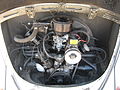
Where RR differs from MR is in that the engine is located outside the wheelbase. The major advantage of MR - low moment of inertia - is negated somewhat (though still lower than FR), and there is more room for passengers and cargo (though usually less than FR). Furthermore, because both axles are on the same side of the engine, it is technically more straightforward to drive all four wheels, than in a mid-engined configuration (though there have been more high-performance cars with the M4 layout than with R4). Finally, a rear-mounted engine has empty air (often at a lower pressure) behind it when moving, allowing more efficient cooling for air-cooled vehicles (more of which have been RR than liquid-cooled, such as the Volkswagen Beetle, and one of the few production air-cooled turbocharged cars, the Porsche 930).

For liquid-cooled vehicles, however, this layout presents a disadvantage, since it requires either increased coolant piping from a front-mounted radiator (meaning more weight and complexity), or relocating the radiator(s) to the sides or rear, and adding air ducting to compensate for the lower airflow at the rear of the car.

Due to the handling difficulty, the need for more space efficiency, and the near ubiquitous use of liquid-cooled engines in modern cars, most manufacturers have abandoned the RR layout. The major exception is Porsche, who has developed the 911 for over 40 years and has taken advantage of the benefits of RR while mitigating its drawbacks to acceptable levels, lately with the help of electronic aids. [4]

History

[edit]

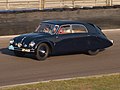
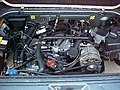
One of first RR cars was Tatra 77 of 1934, the first serial-produced aerodynamic car, designed by Hans Ledwinka. Tatra used this layout until end of production of T700 in 1999. In case of T613 and T700 Tatra used layout with engine above rear axle, which reduced some disadvantages of RR layout. Mercedes-Benz also produced several models of RR cars in this period, starting with the 130H (1934). The radical 1930s Tatra format (air-cooled, rear engine and streamlined, teardrop design) was an influence on Ferdinand Porsche's 'People's Car' (Volkswagen) for Adolf Hitler. As well as being the most produced car ever, it set a trend for RR small cars that lasted well into the 1960s. The final form of the RR Volkswagen was the Type 4 of 1968, which flattened the engine (or 'pancake'), allowing for luggage spaces front and rear.

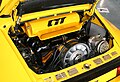
Porsche has continued to develop its 911 model as a rear-engined vehicle, although they have introduced multiple all-wheel-drive models. Most notably, the 911 Turbo has been sold as AWD-only since the release of the 993 model. Race-oriented models such as the GT3 and twin-turbocharged GT2 remain solely RR, however.[5]

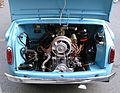
Another manufacturer to implement the RR configuration was the DeLorean Motor Company with its DeLorean sports car. To compensate for the uneven (35/65) weight distribution caused by the rear-mounted engine, DeLorean used rear wheels with a diameter slightly greater than the front wheels. Before that was the rear-engined Škoda's from Škoda 1000MB (produced from 1964) to Škoda 130/135/136 (produced until 1990) or the Polski Fiat 126p (produced until October 2000).

A range of sports road cars and racing cars with the RR layout was produced by the French company Alpine. These had bodies made of composite materials and used mechanical components made by Renault. (Alpine was eventually acquired by Renault; the A610 was a Renault product that used the Alpine name.)

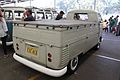
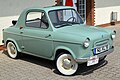
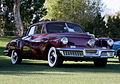
Early cars using the RR layout included the Tucker, Volkswagen Beetle, Porsche 356, Chevrolet Corvair, NSU Prinz, ZAZ Zaporozhets and Hino Contessa.

Present day

[edit]

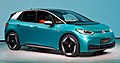
Many modern electric cars use an RR layout for base variants with a single motor due to the low weight and cooling requirements of the electric motor; notably the Tesla Model 3, Tesla Cybertruck and GMC Hummer EV also use this layout for their base variants.

Most modern heavy duty buses use an extreme RR layout. In transit buses this can be used to make a very low floor level in the first two-thirds of the bus, thus making disabled access much easier.

Most tour buses and coaches also employ a similar design, however the free space is usually used for luggage, and sometimes air conditioning equipment.

Examples

[edit]

References

[edit]
Revisions and contributorsEdit on WikipediaRead on Wikipedia
from Grokipedia
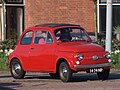
The rear-engine, rear-wheel-drive (RR) layout is an automotive configuration in which the engine is positioned at the rear of the , with power delivered directly to the rear wheels through an integrated transmission and assembly, eliminating the need for a long propeller shaft. This design places over 50% of the vehicle's weight on the rear , resulting in a rear-biased that influences handling, traction, and . Commonly associated with compact and performance-oriented vehicles, the RR layout has been employed since the early for its simplicity and efficiency in certain applications. Historically, the RR layout gained prominence in production vehicles with Ferdinand Porsche's 1938 , which utilized an air-cooled for mass-market affordability and traction. In the mid-20th century, American manufacturers experimented with the layout, including Henry Ford's 1934–1940 prototypes featuring V8 and four-cylinder rear-mounted engines, though these were ultimately abandoned for production due to handling challenges. The (1960–1969) represented a notable U.S. attempt at a rear-engine , producing approximately 1.8 million units before concerns related to swing-axle suspension contributed to its discontinuation. European marques like refined the layout for sports cars, with the 1963 adopting a rear-mounted , a design choice rooted in the Beetle's heritage but optimized for high performance. Key advantages of the RR layout include enhanced traction during acceleration, as the engine's weight loads the driven rear wheels, reducing wheel spin and improving power delivery—particularly beneficial in rear-drive sports cars like the Porsche 911. It also enables a more compact by avoiding a front-to-rear driveshaft, freeing up interior space and allowing for a lower, more aerodynamic front end that reduces drag and improves high-speed stability. Under braking, the rear weight bias shifts load more evenly across axles compared to front-engine designs, potentially increasing rear braking force and overall stopping performance. However, disadvantages are significant: the rear-heavy distribution promotes oversteer, especially at high speeds or during deceleration, leading to reduced stability and requiring advanced suspension engineering or driver skill to manage. Additional challenges include limited rear luggage space, cooling difficulties for the engine, and potential safety issues if fuel tanks are placed forward. Notable RR vehicles beyond the Beetle and 911 include the Fiat 500/850 Coupe for economical urban use and the Renault Alpine A110 for rally performance, demonstrating the layout's versatility despite its rarity in modern production compared to front-engine alternatives. In contemporary , the RR configuration persists in niche high-performance applications, where its traction benefits outweigh handling trade-offs when paired with technologies like .

Fundamentals

Definition and Configuration

The rear-engine, rear-wheel-drive (RR) layout is a powertrain configuration in automotive engineering where the engine is mounted aft of the rear axle, with torque transmitted directly to the rear wheels through an integrated rear transmission and differential. This setup forms a compact rear power unit, eliminating the need for a lengthy propeller shaft that runs along the vehicle's underbody, as required in conventional front-engine, rear-wheel-drive designs. The engine's placement behind the rear axle positions its center of gravity rearward, typically resulting in a weight distribution biased toward the drive wheels. In a typical RR configuration, the engine, clutch, gearbox (transmission), and final drive (differential) are assembled into a single modular unit at the vehicle's rear, connected to the rear wheels via short driveshafts or equipped with constant-velocity (CV) joints to accommodate suspension movement. The engine orientation can be longitudinal, with the aligned parallel to the vehicle's length for straightforward power delivery to the differential, or transverse, with the perpendicular to the vehicle's axis to optimize packaging in narrower rear compartments—though longitudinal mounting predominates due to its compatibility with rear- integration. The rear itself may employ a solid beam design or , housing the differential to split between the wheels while allowing differential rotation during cornering. For illustrative purposes, a conceptual of the RR layout would show the positioned directly behind the rear wheels, the transmission bolted inline or adjacent to it, and the differential bridging the halves, with no intervening driveshaft tunnel in the floor. Prerequisite to understanding the RR layout are core concepts of engine placement in wheeled vehicles, defined relative to the front and rear axles: front-engine positions the power unit ahead of the front axle, mid-engine locates it between the axles, and rear-engine places it behind the rear axle. In RR specifically, the engine's aft-of-axle positioning ensures the heaviest component is over or behind the driven wheels, influencing chassis design by freeing the front for steering and passenger space while requiring reinforced rear mounting points. Transverse versus longitudinal orientations further adapt the layout to vehicle type, with transverse setups suiting compact or economy-oriented RR vehicles by reducing overall length, whereas longitudinal aligns better with high-performance applications needing efficient torque routing. This configuration originated in early 20th-century as a response to the limitations of front-engine layouts, which relied on complex, vibration-prone shafts to convey power from the front to the rear, often compromising simplicity and efficiency. By consolidating the at the rear, the RR approach streamlined mechanical architecture and enhanced direct power application, particularly suited to air-cooled engines that benefited from rear positioning for cooling airflow.

Comparison to Front-Engine Layouts

The rear-engine, rear-wheel-drive (RR) layout positions the engine and transmission behind the rear axle, directly powering the rear wheels via short half-shafts, in contrast to front-engine, front-wheel-drive (FF) and front-engine, rear-wheel-drive (FR) configurations where the powertrain is located ahead of the front axle. This rearward placement in RR designs eliminates the need for a longitudinal driveshaft, allowing for a shorter overall vehicle length compared to FR layouts, which require a driveshaft extending from the front engine to the rear differential, and FF setups, where the engine and transaxle are compactly integrated over the front wheels but still demand hood space. Consequently, the RR configuration enables a minimal or absent traditional hood, reducing front overhang and supporting more efficient packaging, whereas front-engine layouts necessitate a prominent hood to house the powertrain, often extending the vehicle's frontal profile. In terms of interior accommodation, the RR layout offers expansive front cabin space unhindered by engine components, promoting a low and generous legroom for front occupants, but it compromises rear passenger area due to the engine's intrusion into what would otherwise be trunk or seating volume. By comparison, FF designs optimize overall cabin utilization by avoiding rear elements, providing balanced space distribution ideal for multi-passenger vehicles, while FR configurations introduce a central driveshaft that elevates the floorpan and limits rear seating flexibility, such as narrower hip room or elevated thigh support. The RR approach previews benefits through its flat floorpan, free of tunnel protrusions, which enhances rear seating comfort in terms of underfoot space, though at the expense of total rear volume. The RR layout facilitates flat-front styling by relocating the engine rearward, minimizing hood height and enabling smoother, more aerodynamic frontal contours without the bulk of front-mounted powertrains seen in FF and FR designs. This styling freedom contrasts with the elongated, sloped hoods typical of front-engine vehicles, which prioritize engine bay access but can limit design versatility. Diagrammatic representations of these layouts often depict the RR configuration with clustered rear components—engine, transmission, and differential—resulting in higher axle loads over the rear wheels and a compact front end, while FF illustrations show forward-biased weight with integrated front axles, and FR diagrams highlight the extended driveshaft and front-heavy positioning. These visuals emphasize component placement: RR features short rear half-shafts without a central , FF integrates drive elements transversely at the front, and FR requires a longitudinal shaft beneath the cabin floor. The RR layout evolved as a structural alternative to FR designs, specifically to circumvent the interior space constraints imposed by the driveshaft tunnel, thereby enabling a more level floor and improved packaging efficiency in rear-driven vehicles.

Engineering Characteristics

Weight Distribution and Balance

The rear-engine, rear-wheel-drive (RR) layout positions the and transmission behind or over the rear , resulting in a static that typically favors the rear by 40% front to 60% rear. This rear bias arises from the concentration of heavy components at the vehicle's tail, shifting the center of gravity (CG) rearward compared to front-engine designs. For instance, in the 911 (992 generation Carrera S), the distribution measures approximately 36% front to 64% rear, enhancing traction under but requiring careful design to maintain stability. The longitudinal position of the CG in an RR vehicle can be determined from axle weights, with the distance from the rear axle given by xcg=WfLWtx_{cg} = \frac{W_f \cdot L}{W_t}, where WfW_f is the front axle weight, LL is the wheelbase, and WtW_t is the total vehicle weight; this calculation highlights how rear-heavy mass elevates the rear axle load fraction. Vertical CG height, which influences rollover tendencies and suspension geometry, is typically measured using wheel scales by tilting the vehicle and observing axle load transfers. Engineering analyses confirm that RR configurations often yield a lower CG height due to the flat-lying boxer engines, such as in models. Dynamically, the RR layout amplifies load transfer effects during maneuvers. Under , weight shifts rearward, increasing on the driven rear tires and improving traction, but excessive power can induce oversteer if the rear loses grip. During braking, forward load transfer unloads the more pronouncedly due to the initial rear bias, potentially causing the rear to step out and promoting oversteer tendencies, as the rear tires operate closer to their limit. Rear-biased distributions generally promote oversteer, with the rear tires more likely to lose grip first during cornering, potentially limiting the maximum lateral compared to more balanced setups. To mitigate the rear-heavy bias, engineers employ suspension tuning strategies that adjust roll stiffness and geometry for balanced load distribution. Stiffer front anti-roll bars and springs increase front roll resistance, transferring more lateral load to the rear during cornering to equalize grip and reduce understeer entry. The use of independent rear suspension (IRS), as implemented in the since its inception, allows precise camber and control under load, minimizing rear-end squat and improving dynamic balance by isolating wheel movements. Modern vehicle development leverages computational simulations to optimize RR balance, using multibody dynamics software to model load transfers and predict handling responses under various conditions. Tools like or OptimumKinematics enable iterative tuning of suspension parameters, achieving near-neutral by simulating thousands of scenarios and refining CG placement for minimal oversteer propensity. These simulations have been instrumental in evolving RR designs, such as recent iterations, where virtual prototyping reduces physical testing while ensuring stability across speed ranges.

Drivetrain Mechanics

In the rear-engine, rear-wheel-drive (RR) layout, the is characterized by the and transmission mounted longitudinally or transversely at the rear of the , directly above or adjacent to the rear . This configuration eliminates the need for a long driveshaft, as the power unit is positioned close to the driven wheels, resulting in a compact assembly that integrates the , clutch or , gearbox, and differential into a single rear-mounted module. For instance, in vehicles like the , the engine-transmission unit is bolted directly to the rear suspension subframe, with the differential housed within the transmission casing to minimize unsprung weight and driveline losses. Power delivery in an RR drivetrain follows a streamlined torque path from the engine's crankshaft through the clutch or torque converter to the gearbox, where gears are selected to modulate speed and torque before transferring rotational force via short propeller shafts or directly to the rear axle shafts connected to the wheels. The clutch, typically a dry-plate or multi-plate design for manual transmissions, or a fluid coupling in automatics, engages to transmit engine torque without the intermediary propshaft found in front-engine layouts, reducing mechanical complexity and potential energy dissipation. Gear arrangements often employ a rear-axle-mounted transaxle, where the final drive gears mesh with the differential to split torque equally to the rear wheels, enhancing direct propulsion efficiency. Unique to the RR setup are adaptations for rear engine placement, such as cooling systems that route from front-mounted fans or rear radiators to dissipate heat from the bay, often using ducted vents integrated into the bodywork to maintain optimal operating temperatures without compromising . Exhaust routing typically directs gases downward and under the floorpan to the rear, avoiding interference with passenger space and utilizing the vehicle's overhang for placement, which helps in noise isolation but requires robust heat shielding. Additionally, in compact RR drivetrains addresses challenges from the close proximity of and wheels through tuned engine mounts and subframe bushings that dampen torsional vibrations, preventing transfer to the .

Advantages and Disadvantages

Performance and Handling Benefits

The rear-engine, rear-wheel-drive (RR) layout provides notable traction advantages, primarily through its inherent rearward weight bias and the resulting dynamic load transfer during . With the positioned over or behind the rear , static often places 40-60% of the vehicle's on the rear wheels, increasing the normal (F_z) on the driven tires. As occurs, this load shifts further rearward, quantified by the dynamic load transfer equation ΔF_z = (1/2) m g (h/l) (a/g), where m is vehicle , g is , h is the height of the center of gravity, l is the , and a is longitudinal ; this elevates rear axle loading and maximizes available frictional F_x = μ F_z, with μ representing the tire-road coefficient (typically 0.8-1.0 on dry pavement). Consequently, RR vehicles exhibit superior grip on loose or low-traction surfaces, such as or , enabling effective power delivery without excessive wheel spin. In handling, the RR configuration promotes a neutral to slight oversteer balance, which enhances responsiveness and in cornering scenarios, particularly for sports and performance applications. The rear-heavy distribution encourages the rear end to rotate more readily during turns, reducing the tendency toward understeer and allowing drivers to maintain higher entry speeds into corners through throttle modulation. This characteristic stems from the stability factor K = \frac{m}{l^2} (a_2 C_{\alpha f} - a_1 C_{\alpha r}), where C_{\alpha f} and C_{\alpha r} are front and rear cornering stiffnesses, a_1 and a_2 are distances from the center of gravity to the axles; a rearward bias (a_1 > a_2) often yields K < 0, favoring oversteer for predictable control. Vehicles like the exemplify this, offering sharp turn-in and balanced dynamics that reward skilled driving without compromising straight-line stability. Regarding speed potential, the RR layout's rear mass concentration contributes to improved high-speed stability by countering aerodynamic lift forces on the front end, maintaining better road contact and reducing pitch sensitivity. This lowers the center of pressure's influence relative to the center of , minimizing front-end rise at velocities exceeding 200 km/h and enhancing overall composure during sustained high-speed travel, as evidenced in rear-engined racers achieving top speeds over 300 km/h with tuned . The steering and traction benefits of rear-drive systems further position RR layouts as ideal for high-performance vehicles, supporting efficient power utilization across a wide speed range.

Practical Limitations

The rear-engine, rear-wheel-drive (RR) layout presents several visibility and safety challenges primarily due to the engine's placement at the vehicle's rear. This configuration often obstructs the driver's rearward view, as the engine compartment occupies space traditionally used for a rear window or clear sightlines, forcing greater reliance on side and rearview mirrors or supplemental cameras for reversing and lane changes. In terms of crash safety, the forward positioning of the passenger compartment in some designs can limit front crumple zone length, though modern engineering ensures compliance with safety standards through structural reinforcements. Early RR vehicles faced scrutiny for potential intrusion risks, but contemporary models like the achieve high crash ratings comparable to front-engine designs. Maintenance of RR vehicles is notably more challenging owing to limited access to the rear-mounted engine and drivetrain components. Routine tasks such as oil changes, belt replacements, or exhaust repairs require removing panels, lifting the vehicle, or in some cases dropping the engine assembly, which elevates labor time and costs compared to front-engine layouts where components are more readily accessible from the hood. Practical usability is further compromised by reduced cargo capacity and potential heat buildup in the passenger area. The engine's rear position eliminates or minimizes traditional trunk space at the back, redirecting storage to a smaller front "frunk" that is less convenient for loading bulky items and often limited to 4-6 cubic feet in volume. Additionally, the proximity of the engine to the cabin necessitates robust insulation to prevent ; without adequate barriers, exhaust and cooling system temperatures can elevate passenger compartment warmth. Ergonomic considerations include increased driver fatigue from the layout's rear weight bias, which promotes oversteer tendencies and demands heightened steering corrections during dynamic maneuvers. Vehicle handling evaluations indicate that this bias amplifies subjective perceptions of instability, elevating driver workload and potentially accelerating fatigue over long drives, as drivers must maintain greater vigilance to manage transitions from understeer to oversteer. This effect is particularly pronounced in non-assisted steering systems, where muscle effort for corrections correlates with reported discomfort in extended testing scenarios.

Historical Evolution

Early Innovations (Pre-1940s)

The rear-engine, rear-wheel-drive (RR) layout emerged in the late as part of the foundational experiments in automobile design. Karl Benz's Patent-Motorwagen, patented in 1886, featured a single-cylinder, four-stroke mounted horizontally at the rear, driving the rear wheels via a combination of belts, chains, and gears. This configuration, producing about 0.75 horsepower and enabling speeds up to 10 mph, prioritized simplicity in power transmission and avoided the need for a complex front-mounted , marking the earliest practical implementation of the RR layout in a self-propelled road vehicle. Although rudimentary, Benz's design influenced subsequent engineering by demonstrating the feasibility of placing the powerplant and driven wheels at the vehicle's rear for compact packaging. The and 1930s saw more systematic advancements in , led by engineer at Tatra, who integrated the RR layout with air-cooled s and for superior handling and efficiency. Ledwinka, having pioneered the central in the , relocated the to the rear in experimental to optimize and reduce drag, as seen in Tatra's 1931 V570 —a small, streamlined saloon with a rear-mounted . This paved the way for the Tatra T77, introduced in 1934 as the first serially produced RR passenger car, featuring a 3.0-liter air-cooled V8 producing 60 horsepower and a body designed with wind-tunnel testing for a of 0.36. The T77's emphasis on , combined with its spine chassis and all-, allowed it to reach 90 mph while seating six, setting a benchmark for pre-war European innovation in the layout. Ledwinka's work not only advanced streamlined road cars but also inspired racing applications, such as Auto Union's rear-engined Grand Prix machines from 1934, which dominated pre-war with superior traction.

Post-War Proliferation (1940s-1980s)

Following , the rear-engine, rear-wheel-drive (RR) layout gained widespread adoption in , particularly through the , which originated from a 1938 design but entered full-scale production in 1945 after the war's end. The Beetle's simple, air-cooled mounted at the rear, combined with , enabled efficient manufacturing and low-cost ownership, making it an ideal vehicle for a war-ravaged economy. Its design showed notable similarities to earlier Tatra models like the T77 and T97, leading Tatra to file a lawsuit against in 1938; the case was halted during the war but settled post-war in 1961 with Volkswagen paying Tatra 3 million Deutschmarks in compensation. Production restarted in 1947 at the factory under British oversight, initially for Allied use before shifting to civilian markets. By the early 1950s, exports surged, with the Beetle becoming a symbol of Germany's (), as its affordability and reliability supported mass motorization and foreign currency earnings essential for industrial recovery. Ultimately, over 21 million units were produced worldwide, establishing the RR layout as a mass-market standard. In the and , the RR configuration evolved in performance-oriented applications, most notably with the , which debuted in 1963 as a successor to the 356 model. Retaining the air-cooled at the rear for optimal and traction, the 911 refined the layout's handling challenges through advanced suspension tuning, including semi-trailing arms, allowing it to excel in and road use. This era saw the RR design proliferate in amid post-war economic growth, where limited resources favored compact, space-efficient engineering that maximized interior room without a driveshaft tunnel. The layout's adoption was bolstered by Europe's recovering industries, where vehicles like the and 911 contributed to export-driven prosperity and symbolized technological resilience. By the 1980s, the RR layout's popularity waned in mainstream production due to escalating emissions and regulations that complicated its engineering. Stricter emissions standards, particularly in the U.S. and , proved difficult for rear-mounted air-cooled engines to meet without costly modifications, as packaging catalytic converters and other controls was more straightforward in front-engine designs. Safety concerns, amplified by earlier critiques of oversteer in models like the , prompted regulators to favor layouts with better stability, such as , which offered improved crash energy absorption and weight bias for everyday vehicles. Market shifts toward and family-oriented packaging further accelerated the decline, confining RR to niche sports cars like the enduring 911.

Modern Applications

Contemporary Production Vehicles

The rear-engine, rear-wheel-drive (RR) layout persisted into the 1990s primarily through the continued evolution of the , which maintained its signature configuration while incorporating modern engineering refinements for improved handling and performance. Generations such as the 964 (1989–1994) and 993 (1994–1998) refined the air-cooled placement behind the rear axle, emphasizing the layout's benefits in for dynamics. By the 996 (1998–2004) and 997 (2005–2012) eras, Porsche transitioned to water-cooled engines but retained the RR setup, integrating advanced suspension and to mitigate historical oversteer tendencies. In the 2010s, the 991 generation (2012–2019) further advanced the RR layout with turbocharged variants and the introduction of the 918 Spyder (2013–2015), a hybrid hypercar combining a 4.6-liter V8 rear-mounted engine with front-axle electric motors for all-wheel drive, yet preserving the core rear-engine philosophy in its power delivery. The , reintroduced in its second generation (2007–2014) and third (2014–2024), offered a compact RR alternative for urban mobility, with its rear-mounted three-cylinder engine or driving the rear wheels via a single-speed transmission in electric variants like the EQ Fortwo (2017–2024). This model's 80-hp and 17.6-kWh battery provided up to 81 miles of range, demonstrating the layout's adaptability to electric propulsion in niche city cars. Entering the 2020s, the RR layout remained viable in luxury and sports segments despite the broader market shift toward front-wheel-drive (FWD) dominance for cost efficiency and packaging in mass-market vehicles. The Porsche 911's 992 generation (2019–present), including 2025 models like the Carrera GTS T-Hybrid, integrates a 3.6-liter turbo flat-six with a 53-hp rear-axle electric motor for 532 total hp, achieving 0–60 mph in 2.9 seconds while upholding the rear-engine balance. Similarly, the base Porsche Taycan (2019–present) employs a single rear-mounted permanent-magnet synchronous motor producing 402 hp in its RWD configuration, with a two-speed transmission at the rear axle for optimized efficiency and up to 300 miles of range. The Smart Fortwo's production concluded in 2024, with a successor, the Smart #2, planned for late 2026. Market trends reflect a decline in RR adoption, with FWD architectures comprising approximately 60% of global passenger car sales as of 2024 due to superior interior space utilization and lower costs, confining RR to high-end sports cars where handling precision justifies the complexity. Electric vehicle experiments, such as rear-motor setups in the Taycan, signal potential revival in performance EVs, but production remains limited to brands like , underscoring the layout's niche persistence amid .

Racing and Performance Variants

The rear-engine, rear-wheel-drive (RR) layout gained prominence in during the 1950s through 's innovative applications at the . The 356 SL, with its rear-mid-mounted engine positioned ahead of the rear axle, debuted in 1951 as the only such configuration in the field, securing a class victory in the up-to 1,100 cc category and finishing 20th overall. This placement contributed to nimble handling and efficient power delivery, allowing the lightweight car to average 87.61 mph over the 24 hours despite its modest 40 hp output. By the 1970s, expanded the RR layout's racing potential with the 917 prototype, which achieved overall victories at in 1970 and 1971. The 917's rear-mounted 4.5-liter flat-12 engine, producing up to 580 hp in the short-tail (Kurzheck) variant, exploited the layout's rear weight for superior traction during out of corners, while streamlined enabled top speeds exceeding 220 mph on the . This combination revolutionized endurance racing by prioritizing straight-line speed and stability in high-power applications. Complementing the prototypes, the Carrera RSR competed successfully in GT classes, finishing fourth overall at in 1973 with its 2.8-liter tuned to 310 hp, leveraging the inherent rear for rapid exits from slow turns. From the 1980s onward, the RR configuration persisted in diverse disciplines, including rally and GT racing under FIA regulations. The SC RS, a homologation special with a 3.2-liter flat-six producing 330 hp, competed in the . secured an outright win at the 1984 Paris-Dakar Rally with the modified 911-based 953 variant, which emphasized rear traction on loose surfaces. In GT categories, the dominated the in the late 1990s, clinching the 1996 drivers' and manufacturers' titles before evolving into the 911 GT1 '98, which delivered 's 16th overall victory in 1998 with a single 3.2-liter twin-turbocharged flat-six engine producing 544 hp. These successes highlighted the layout's adaptability to high-speed circuits via enhanced rear efficiency. In the 2020s, RR adaptations continue in , exemplified by the , which has secured multiple class wins in the (WEC) and IMSA WeatherTech SportsCar Championship, including the 2022 LMGTE Am title and further class victories in 2023 and 2024. The 4.2-liter naturally aspirated flat-six, detuned to 520 hp for rules, benefits from the rear bias for corner-exit drive, achieving lap times competitive with mid-engine rivals. To counter the layout's tendency toward oversteer, engineers incorporate aerodynamic tweaks such as adjustable rear wings generating up to 1,000 kg of at 160 mph and active suspension systems like Porsche Active Suspension Management (PASM), which dynamically adjust damping to maintain balance under load. Emerging electric racing prototypes have revived RR principles with rear-mounted motors for . E's Gen3 cars, introduced in 2022, feature a single 350 kW (469 hp) rear motor integrated behind the driver, paired with a front motor for bidirectional charging, delivering up to 600 kW and enabling from 0-60 mph in under 2 seconds while preserving the layout's traction advantages in urban circuits. These adaptations underscore the RR configuration's enduring relevance in high-performance contexts, where modifications optimize its inherent rearward for superior .

Notable Examples

Iconic Road Cars

The , originally conceived in the 1930s and entering full production after , stands as a pioneering example of the rear-engine, rear-wheel-drive (RR) layout in an affordable, mass-market road car. Its air-cooled , mounted at the rear, provided a low center of gravity and balanced weight distribution, contributing to its nimble handling and reliability in diverse conditions. Designed by , the Beetle's simple, rounded bodywork and RR configuration made it accessible to everyday drivers, with production spanning from 1945 to 2003 and totaling over 21.5 million units worldwide. This enduring popularity established the RR layout as a viable option for economical transportation, influencing global perceptions of design. The series, launched in 1963, exemplifies the RR layout's potential in high-performance road cars, evolving into a benchmark for engineering. Its signature air-cooled , initially 2.0 liters producing 130 horsepower, was positioned at the rear for optimal traction and a distinctive driving dynamic that emphasized rear-weight bias. Over six decades, the 911 has progressed through multiple generations, incorporating water-cooling in the 996 model (1998) and advanced turbocharged variants like the 930 Turbo introduced in 1975, while retaining the core RR philosophy. More than 1.2 million units have been produced as of 2023, cementing its legacy as a design icon that prioritizes driver engagement and precision. In the luxury segment, the Tatra T87, produced from 1936 to 1950, represented an early sophisticated application of the RR layout in a streamlined sedan. Featuring a rear-mounted air-cooled of 2.0 to 2.5 liters delivering around 75 horsepower, it offered exceptional with a ahead of its time and spacious interior packaging. Approximately 3,023 examples were built, primarily for European markets, showcasing the RR configuration's advantages in ride comfort and handling stability for upscale touring. These vehicles collectively shaped the RR layout's reputation in road cars, driving design trends toward balanced chassis dynamics and efficient space utilization. The Beetle's massive sales democratized the concept for the masses, while the 911's innovations elevated it in performance contexts, and the T87 highlighted its elegance in pre-war luxury. Their legacies persist in modern engineering, influencing layouts that prioritize traction and compactness without sacrificing drivability.

Specialized or Historical Models

The , introduced in 1958, represented a pioneering effort in rear-engine bus design, featuring a transversely mounted at the rear of the to maximize and enable front-door entry for efficient . This , produced until 1986 with over 15,000 units built, addressed the noise and heat issues of front-engine predecessors while complying with new regulations allowing longer vehicles, thereby increasing from 68 to 77 passengers. Earlier prototypes, such as the 1953 Lowloader, tested the rear-engine concept but did not enter full production. In the realm of microcars, the , produced from 1955 to 1964, utilized a rear-engine, rear-wheel-drive layout to achieve compact dimensions and economical operation in post-war Europe. Powered by a 191 cc Fichtel & Sachs two-stroke delivering 9.9 horsepower, this three-wheeled vehicle weighed just 506 pounds and reached a top speed of 65 mph, with nearly 12,000 units sold in its first year at an initial price of around 2,500 Deutsche Marks. The design, featuring tandem seating and a hand-operated four-speed transmission, prioritized simplicity and low consumption for urban mobility. During , military derivatives of the KdF-Wagen prototype adopted the rear-engine, rear-wheel-drive configuration for enhanced off-road capability and simplicity in production. The Type 82 Kübelwagen, introduced in 1940 based on the platform, employed a rear-mounted 1,100 cc air-cooled 25 hp engine with reduction gears on the rear axle shafts to achieve superior ground clearance and low-speed traction, serving as a light across diverse terrains from to . Over 50,000 units were produced, with features like a aiding reliability without requiring . In modern niche applications, electric golf carts frequently incorporate a rear-mounted motor directly integrated with the rear axle for , providing a mechanically simple and efficient power delivery suited to low-speed operations on courses and paths. This configuration, common in models from manufacturers like and Yamaha, optimizes weight distribution over the drive wheels while minimizing complexity in the compact . Similarly, low-speed neighborhood electric , such as the GEM e4, utilize with a rear-positioned to ensure balanced handling and ease of maintenance in urban or community settings limited to 25 mph speeds. Beyond passenger vehicles, the rear-engine, rear-wheel-drive layout has appeared in experimental agricultural equipment, exemplified by John Deere's Model 101 developed in the 1940s. This prototype featured a rear-mounted to provide unobstructed visibility for the operator during fieldwork, with testing continuing until at least 1950, though only two units were ultimately built and none entered production. The design aimed to improve maneuverability and attachment of implements but highlighted challenges in cooling and accessibility for farm use.

References

Add your contribution
Related Hubs
User Avatar
No comments yet.