Hubbry Logo
EuglenozoaEuglenozoaMain
Open search
Euglenozoa
Community hub
Euglenozoa
logo
8 pages, 0 posts
0 subscribers
Be the first to start a discussion here.
Euglenozoa
Euglenozoa
from Wikipedia

Euglenozoa
Temporal range: Stenian (over 1000 MYA) - present [1]
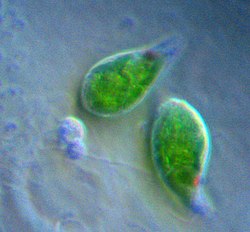
Two Euglena
Scientific classification Edit this classification
Domain: Eukaryota
Clade: Discoba
Clade: Discicristata
Phylum: Euglenozoa
Cavalier-Smith, 1981[2]
Classes

Euglenozoa are a large group of flagellate Discoba. They include a variety of common free-living species, as well as a few important parasites, some of which infect humans. Euglenozoa are represented by four major groups, i.e., Kinetoplastea, Diplonemea, Euglenida, and Symbiontida. Euglenozoa are unicellular, mostly around 15–40 μm (0.00059–0.00157 in) in size, although some euglenids get up to 500 μm (0.020 in) long.[4]

Structure

[edit]

Most euglenozoa have two flagella, which are inserted parallel to one another in an apical or subapical pocket. In some these are associated with a cytostome or mouth, used to ingest bacteria or other small organisms. This is supported by one of three sets of microtubules that arise from the flagellar bases; the other two support the dorsal and ventral surfaces of the cell.[5]

Some other euglenozoa feed through absorption, and many euglenids possess chloroplasts, the only eukaryotes outside Diaphoretickes to do so without performing kleptoplasty,[6][7] and so obtain energy through photosynthesis. These chloroplasts are surrounded by three membranes and contain chlorophylls A and B, along with other pigments, so are probably derived from a green alga, captured long ago in an endosymbiosis by a basal euglenozoan. Reproduction occurs exclusively through cell division. During mitosis, the nuclear membrane remains intact, and the spindle microtubules form inside of it.[5]

The group is characterized by the ultrastructure of the flagella. In addition to the normal supporting microtubules or axoneme, each contains a rod (called paraxonemal), which has a tubular structure in one flagellum and a latticed structure in the other. Based on this, two smaller groups have been included here: the diplonemids and Postgaardi.[8]

Classification

[edit]

Historically, euglenozoans have been treated as either plants or animals, depending on whether they belong to largely photosynthetic groups or not. Hence they have names based on either the International Code of Nomenclature for algae, fungi, and plants (ICNafp) or the International Code of Zoological Nomenclature (ICZN). For example, one family has the name Euglenaceae under the ICNafp and the name Euglenidae under the ICZN. As another example, the genus name Dinema is acceptable under the ICZN, but illegitimate under the ICNafp, as it is a later homonym of an orchid genus, so that the synonym Dinematomonas must be used instead.[9]

The Euglenozoa are generally accepted as monophyletic. They are related to Percolozoa; the two share mitochondria with disk-shaped cristae, which only occurs in a few other groups.[10] Both probably belong to a larger group of eukaryotes called the Excavata.[11] This grouping, though, has been challenged.[12]

Phylogeny

[edit]

The phylogeny based on the work of Cavalier-Smith (2016):[13]

A consensus phylogeny following the review by Kostygov et al. (2021):[9]

Taxonomy

[edit]

Cavalier-Smith (2016/2017)

[edit]

The following classification of Euglenozoa is as described by Cavalier-Smith in 2016,[13] modified to include the new subphylum Plicomonada according to Cavalier-Smith et al (2017).[14]

Phylum Euglenozoa Cavalier-Smith 1981 emend. Simpson 1997 [Euglenobionta]

  • Subphylum Glycomonada Cavalier-Smith 2016
  • Subphylum Plicomonada Cavalier-Smith 2017
    • Infraphylum Postgaardia Cavalier-Smith 2016 stat. nov. Cavalier-Smith 2017
    • Infraphylum Euglenoida Bütschli 1884 emend. Senn 1900 stat. nov. Cavalier-Smith, 2017 [Euglenophyta; Euglenida Buetschli 1884; Euglenoidina Buetschli 1884]
      • Parvphylum Entosiphona Cavalier-Smith 2016 stat. nov. Cavalier-Smith 2017
      • Parvphylum Dipilida Cavalier-Smith 2016 stat. nov. Cavalier-Smith 2017
        • Superclass Rigimonada* Cavalier-Smith 2016
        • Superclass Spirocuta Cavalier-Smith 2016
          • Class Peranemea Cavalier-Smith 1993 emend. Cavalier-Smith 2016
            • Subclass Acroglissia Cavalier-Smith 2016
            • Subclass Peranemia Cavalier-Smith 2016
              • Order Peranemida Bütschli 1884 stat. nov. Cavalier-Smith 1993
                • Family Peranematidae [Peranemataceae Dujardin 1841; Pseudoperanemataceae Christen 1962]
            • Subclass Anisonemia Cavalier-Smith 2016
              • Order Anisonemida Cavalier-Smith 2016 [Heteronematales Leedale 1967]
                • Family Anisonemidae Saville Kent, 1880 em. Cavalier-Smith 2016 [Heteronemidae Calkins 1926; Zygoselmidaceae Kent 188]
              • Order Natomonadida Cavalier-Smith 2016
                • Suborder Metanemina Cavalier-Smith 2016
                • Suborder Rhabdomonadina Leedale 1967 emend. Cavalier-Smith 1993 [Astasida Ehrenberg 1831; Rhabdomonadia Cavalier-Smith 1993; Rhabdomonadophyceae; Rhabdomonadales]
                  • Family Distigmidae Hollande, 1942
                  • Family Astasiidae Saville Kent, 1884 [Astasiaceae Ehrenberg orth. mut. Senn 1900; Rhabdomonadaceae Fott 1971; Menoidiaceae Buetschli 188; Menoidiidae Hollande, 1942]
          • Class Euglenophyceae Schoenichen 1925 emend. Marin & Melkonian 2003 [Euglenea Bütschli 1884 emend. Busse & Preisfeld 2002; Euglenoidea Bütschli 1884; Euglenida Bütschli 1884] (Photosynthetic clade)
            • Subclass Rapazia Cavalier-Smith 2016
            • Subclass Euglenophycidae Busse and Preisfeld, 2003
              • Order Eutreptiida [Eutreptiales Leedale 1967 emend. Marin & Melkonian 2003; Eutreptiina Leedale 1967]
              • Order Euglenida Ritter von Stein, 1878 stat. n. Calkins, 1926 [Euglenales Engler 1898 emend. Marin & Melkonian 2003; Euglenina Buetschli 1884; Euglenomorphales Leedale 1967; Colaciales Smith 1938]
                • Family Euglenamorphidae Hollande, 1952 stat. n. Cavalier-Smith 2016 [Euglenomorphaceae; Hegneriaceae Brumpt & Lavier 1924]
                • Family Phacidae [Phacaceae Kim et al. 2010]
                • Family Euglenidae Bütschli 1884 [Euglenaceae Dujardin 1841 emend. Kim et al. 2010; Colaciaceae Smith 1933] (Mucilaginous clade)

Kostygov et al. (2021)

[edit]

Phylum Euglenozoa Cavalier-Smith 1981 emend. Simpson 1997[9]

References

[edit]
[edit]
Revisions and contributorsEdit on WikipediaRead on Wikipedia
from Grokipedia
Euglenozoa is a of diverse, mostly flagellated protists within the eukaryotic supergroup Discoba, encompassing free-living, symbiotic, and parasitic species that exhibit a wide array of nutritional strategies, including autotrophy, heterotrophy, mixotrophy, osmotrophy, and . These unicellular organisms are typically found in aquatic environments, ranging from freshwater to marine habitats, and are distinguished by their monophyletic origin supported by molecular and ultrastructural evidence. The classification of Euglenozoa recognizes four major clades: Euglenida, Kinetoplastea, Diplonemea, and Symbiontida, as established in recent protist taxonomy revisions. Euglenida primarily includes freshwater flagellates, many of which possess secondary green plastids derived from green algal endosymbionts, enabling in species like . Kinetoplastea comprises both free-living bodonids and highly specialized parasitic trypanosomatids, the latter including human pathogens such as (causative agent of African sleeping sickness) and species (responsible for ). Diplonemea consists mainly of heterotrophic marine flagellates that dominate mesopelagic communities, with environmental surveys estimating over 67,000 species and comprising up to 15% of eukaryotic cells in bathypelagic zones. Symbiontida, a smaller group of mostly anaerobic that are enveloped by epibiotic bacterial symbionts. Key ultrastructural and molecular features define Euglenozoa across these clades, including a paraflagellar rod that stiffens flagella for , a pellicle of overlapping protein strips that allows cell shape changes (euglenoid movement), and a flagellar pocket at the anterior end. They universally employ polycistronic transcription and trans-splicing of mRNAs using a conserved splice leader, alongside unique mitochondrial traits such as extensive in kinetoplastids (via a kinetoplast DNA network) and fragmented mitochondrial genomes in diplonemids. Metabolic diversity is pronounced, with euglenids and diplonemids retaining broad capabilities for and biosynthesis, while kinetoplastids show reductions linked to , including compartmentalized in glycosomes and reliance on trypanothione for redox balance. Ecologically, Euglenozoa contribute significantly to global microbial food webs, with photosynthetic euglenids serving as primary producers in freshwater systems, bacterivorous forms controlling prokaryotic populations, and diplonemids driving carbon flux in marine ecosystems. Parasitic kinetoplastids impact and health, agriculture, and wildlife, underscoring their medical and economic importance. Symbioses are common, such as bacterial endosymbionts in kinetoplastids (e.g., Kinetoplastibacterium providing vitamins) and Perkinsela sp. in amoebae, while viruses like leishmaniaviruses infect trypanosomatids, potentially influencing parasite . Phylogenetically, Euglenozoa represent an early-diverging eukaryotic lineage, offering insights into the evolution of organelles, gene expression, and host-parasite interactions.

Morphology and Ultrastructure

Cellular Organization

Euglenozoa are unicellular eukaryotes characterized by a diverse array of free-living and parasitic lifestyles, with cells typically measuring 10–100 μm in length, though some euglenids can exceed 500 μm. These protists exhibit a fundamentally eukaryotic organization, including membrane-bound organelles and a that supports varied morphologies. The plasma membrane is often reinforced by an underlying pellicle, which contributes to cellular flexibility, while the overall centers around an anterior region for flagellar emergence and feeding. A defining feature is the presence of a single nucleus per cell, which undergoes closed where the remains intact throughout division. This intranuclear process involves the formation of microtubular spindles within the nucleus, ensuring precise segregation without envelope breakdown, a trait shared with related excavates. The also persists during this division, contrasting with open in many other eukaryotes. Flagella, when present, emerge from an apical or subapical or , a specialized that houses the basal bodies and protects the flagellar transition zone. This structure facilitates directed motility and is a key site for environmental sensing in aquatic habitats. Many species also possess a , a mouth-like oral near the flagellar pocket, enabling phagotrophy by engulfing particulate food such as . Body shapes among Euglenozoa are highly diverse, ranging from elongated and forms in streamlined swimmers to more spherical or irregular outlines in sedentary types. A notable adaptation is euglenoid movement, or metaboly, where cells exhibit peristaltic waves that alter shape for locomotion or feeding, driven by contractions of the pellicle and underlying . This flexibility allows navigation through viscous media without relying solely on flagella.

Flagellar Apparatus

The flagellar apparatus in Euglenozoa is characterized by one or two flagella emerging from a ventral pocket or , anchored by two functional basal bodies that give rise to the flagella and are associated with three asymmetrically arranged microtubular roots. These basal bodies ensure coordinated flagellar assembly and orientation, with the overall apparatus exhibiting conservation across the group despite variations in flagellar number and function. Typically, Euglenozoa possess two heterodynamic of unequal length and function: the anterior flagellum is longer and drives forward through asymmetric beating, while the posterior flagellum is shorter, often trailing and aiding in or gliding. This arrangement is evident in euglenids and diplonemids, where the flagella insert subapically into the for efficient emergence and movement. In contrast, many kinetoplastids, such as trypanosomatids, are monoflagellate with a single emergent anterior , reflecting adaptations to parasitic lifestyles. The core structure of each features a 9+2 , consisting of nine peripheral doublet surrounding two central singlet , equipped with arms that generate sliding forces for bending and propulsion. A distinctive extra-axonemal component in most Euglenozoa is the paraflagellar rod (PFR), a lattice-like structure running parallel to the and composed of dozens of phylogenetically restricted proteins, which imparts stiffness and rigidity to the during beating. The PFR is reduced or absent in certain stages, such as the form of or trophic stages of some diplonemids. Mastigonemes, fine hair-like projections adorning the flagellar surface, enhance hydrodynamic interactions by increasing drag and facilitating sensory or altered flow patterns during locomotion. These structures vary in density and presence; for instance, they are prominent on the anterior of euglenids like but absent in some kinetoplastids such as Neobodonida. In locomotion, the flagellar apparatus enables diverse modes including , , and attachment, with the heterodynamic beating patterns of the and stiffened PFR producing thrust and directional control. In euglenids, flagellar activity coordinates with body undulations for euglenoid movement, allowing flexible navigation in viscous environments. Across Euglenozoa, the apparatus supports both forward propulsion and environmental sensing, underscoring its role in the group's ecological versatility.

Pellicle and Cytoskeleton

The pellicle of Euglenozoa is a distinctive proteinaceous structure underlying the plasma membrane, consisting of overlapping longitudinal epiplasmic strips primarily composed of articulins—euglenozoan-specific phosphoproteins that form a uniform layer—and supported by microtubule-interconnecting proteins () that link underlying . These strips, often S-shaped in cross-section with articulating projections, create a flexible yet supportive unique among eukaryotes. In euglenids, the strips are reinforced by four per strip (mt1–mt4), with mt2 and mt3 forming a morphogenetic center that guides strip duplication and shaping during . The number of pellicle strips varies widely but is typically 20–40 in many euglenids, such as with 32–40 strips, allowing for metaboly—the dynamic shape-shifting of the cell body through coordinated sliding or contraction of strips without cytoskeletal disassembly. This flexibility is facilitated by calcium-stimulated contraction of centrin-containing traversing fibers that span between strips, enabling peristaltic movements for locomotion and feeding. Microtubules and associated fibrils, including microfilamentous bridges and dense material at strip junctions, confer rigidity and maintain overall cell integrity, though these elements are reduced or absent in diplonemids, which possess only singlet microtubules without a developed strip system. The pellicle serves essential functions in , countering hypotonic environments by providing mechanical resistance to swelling through its imbricated design and microtubule reinforcement, and in protection against mechanical and osmotic stresses. This structure represents a key evolutionary innovation in the ancestral Euglenozoa, likely derived from simpler microtubule arrays in excavate-like progenitors, enabling diverse adaptations in free-living and parasitic lifestyles. Across groups, pellicle architecture differs markedly: it is highly flexible in euglenids, supporting metaboly in species with helical strips, while kinetoplastids exhibit a rigid form with a subpellicular corset of non-overlapping that fixes cell shape for streamlined motility in hosts.

Physiology and Metabolism

Nutritional Modes

Euglenozoa exhibit a remarkable diversity of nutritional strategies, reflecting their evolutionary adaptability across free-living, mixotrophic, and parasitic lifestyles. Many species, particularly within the euglenids, display mixotrophy, combining autotrophy, phagotrophy, and osmotrophy to optimize acquisition in varying environments. Phagotrophy involves the ingestion of particulate food, such as or , through a specialized oral apparatus called the , which directs prey into food vacuoles for enzymatic digestion. Osmotrophy, the absorption of dissolved organic compounds across the , supplements feeding in nutrient-rich habitats. Additionally, some euglenozoans employ , temporarily sequestering chloroplasts from ingested photosynthetic prey to perform transient autotrophy, as observed in certain marine euglenids. Heterotrophy predominates in kinetoplastids and diplonemids, where species rely on osmotrophy or limited phagotrophy for survival. In parasitic kinetoplastids, such as trypanosomatids, nutrients are absorbed directly from host bloodstream or tissues via specialized transporters, enabling obligate without independent phagotrophy. Diplonemids, often abundant in marine environments, similarly exhibit heterotrophic modes, switching between osmotrophy and bacteriovory depending on nutrient availability. In contrast, autotrophy is prominent among euglenids, facilitated by secondary chloroplasts acquired through endosymbiosis, allowing as the primary energy source. These photosynthetic euglenids possess an eyespot, or stigma, a carotenoid-rich that detects light gradients to mediate phototaxis, optimizing exposure to . Digestion in phagotrophic euglenozoans occurs within food vacuoles that fuse with lysosomes, releasing hydrolytic enzymes to break down ingested material into usable monomers. The primary reserve in many is paramylon, a β-1,3-glucan stored in crystalline granules, which serves as an efficient energy depot during periods of scarcity. analyses indicate that the ancestral euglenozoan was likely phagotrophic, with subsequent shifts toward osmotrophy or in derived lineages, including the loss of phagotrophy in parasites like kinetoplastids. This reductive streamlined nutrient uptake to host-dependent absorption, enhancing survival in specialized niches.

Photosynthetic Machinery

Photosynthetic Euglenozoa, primarily within the class Euglenophyceae, possess chloroplasts acquired through secondary endosymbiosis with a green alga related to the extant genus Pyramimonas. These organelles are bounded by three membranes, a hallmark of secondary plastids resulting from the engulfment and integration of a eukaryotic algal . This endosymbiotic event enabled the evolution of phototrophy in euglenids, distinguishing them from non-photosynthetic relatives in the Euglenozoa phylum. The chloroplasts contain chlorophylls a and b as primary photosynthetic pigments, along with as an accessory that aids in light harvesting and photoprotection. , dense proteinaceous structures within the chloroplasts, facilitate fixation by concentrating CO₂ near the , enhancing in these . membranes, the sites of the , are organized into bands or lamellae, typically stacked in groups of two or three, which optimize electron transport and ATP/NADPH production. An eyespot, composed of carotenoid-rich granules located near the envelope, provides directional light sensing to guide phototactic behavior via the flagellar apparatus. Following endosymbiosis, extensive gene transfer from the algal and nucleus to the host nucleus has occurred, resulting in a reduced chloroplast genome that encodes only a of photosynthetic proteins, with many others imported from the . The primary storage product of in these organisms is paramylon, a linear β-1,3-glucan accumulated in cytoplasmic granules, differing from the (α-1,4-glucan) stored in plant s. This unique serves as an reserve, mobilized during periods of darkness or stress. While photosynthetic machinery is characteristic of Euglenophyceae, it has been lost in some lineages, leading to aplastidic, osmotrophic or phagotrophic forms that rely on heterotrophy. Chloroplasts are entirely absent in other Euglenozoa groups, such as Kinetoplastea and Diplonemea, which lack any trace of photosynthetic capability.

Biochemical Adaptations

Euglenozoa exhibit distinctive biochemical adaptations that facilitate their metabolic versatility, particularly in diverse environmental conditions ranging from aerobic to anaerobic niches. A notable feature is the penta-functional AROM protein, which catalyzes multiple steps in the essential for synthesizing aromatic amino acids such as , , and . This multifunctional enzyme, typically observed in prokaryotes, fungi, and , is rare among eukaryotes but conserved across Euglenozoa, enabling efficient of these compounds without the need for separate enzymes. In kinetoplastids, a subgroup of Euglenozoa, mitochondrial function is uniquely supported by kinetoplast DNA (kDNA), a complex network comprising maxicircles and minicircles. Maxicircles, ranging from 20 to 30 kb in length and present in approximately 20 copies per kDNA, encode genes for oxidative phosphorylation components, while minicircles (0.5 to 10 kb, numbering in the thousands) primarily provide guide RNAs for RNA editing of maxicircle transcripts. This editing process, involving insertion or deletion of uridine residues, is crucial for producing functional mitochondrial mRNAs, allowing adaptation to varying energy demands in parasitic lifestyles. Respiratory adaptations in Euglenozoa include a specialized biogenesis system and the presence of alternative oxidase (AOX). Unlike the well-characterized Systems I-III found in other eukaryotes, Euglenozoa employ a divergent maturation pathway where forms a single thioether bond to , facilitated by unique motifs such as AAQCH in and FAPCH in cytochrome c1. This system supports electron transport in the mitochondrial respiratory . Complementing this, AOX provides a cyanide-resistant alternative pathway, bypassing the bc1 complex to directly reduce oxygen to water, which helps maintain Krebs cycle activity under stress conditions like hypoxia in species such as . Glycolytic metabolism in kinetoplastids and diplonemids is compartmentalized into glycosomes, peroxisome-like organelles that house the first seven enzymes of , along with components of other pathways like nucleotide sugar . This sequestration enhances flux control and metabolic efficiency, particularly in kinetoplastids where it prevents toxic intermediate accumulation. In anaerobic environments, glycosomes enable adaptations such as the production of and pyruvate from glucose, regenerating NAD+ via to sustain energy production without oxygen, as seen in trypanosomatids during bloodstream stages. Translation in Euglenozoa features a unique elongation factor-like (EFL) protein that replaces the canonical EF-1α in certain lineages, such as kinetoplastids and diplonemids. EFL, a that binds to the , arose from an ancient duplication of EF-1α and exhibits functional equivalence despite sequence divergence. This replacement, likely resulting from differential gene loss after ancestral , streamlines machinery and may confer advantages in rapid protein synthesis under fluctuating conditions.

Reproduction and Life Cycles

Asexual Reproduction

Asexual reproduction in Euglenozoa occurs predominantly through longitudinal binary fission, a process that produces genetically identical daughter cells and maintains clonal populations without meiosis. This mode of division is universal across the group's major lineages, including euglenids, kinetoplastids, diplonemids, and symbiontids, enabling rapid proliferation in diverse environments. In typical binary fission, as observed in euglenids like Euglena gracilis, the cell first elongates longitudinally while retaining motility. Preceding nuclear division, the nucleus migrates anteriorly to associate with the basal bodies, and the flagella and basal bodies duplicate, ensuring each daughter receives a complete flagellar apparatus. The nucleus then undergoes closed mitosis, characterized by an intact nuclear envelope throughout the process, with no metaphase plate formation; the spindle microtubules assemble within the envelope, chromosomes align loosely in an equatorial region with trilayered kinetochores, and sister chromatids separate during anaphase to form daughter nuclei via envelope constriction in telophase. Cytokinesis follows by furrowing from the posterior to anterior, cleaving the cytoplasm and reforming the flagellar pocket in each daughter cell, while the pellicle reorganizes to restore structural integrity. In kinetoplastids, such as trypanosomatids (Trypanosoma spp.), the process is analogous but includes coordinated division of the kinetoplast DNA network prior to cytokinesis, with stage-specific variations in promastigotes or amastigotes occurring within host tissues. In diplonemids and symbiontids, asexual reproduction also proceeds via longitudinal binary fission, though ultrastructural details remain less studied. Variations on binary fission include multiple fission in certain parasitic species, where delayed allows sequential nuclear divisions before cytoplasmic cleavage, producing more than two daughters. Encystment serves as a mechanism under adverse conditions, such as scarcity or ; cells form a protective wall, and within it, binary fission may occur repeatedly, yielding 2 to 32 smaller daughter cells that excyst upon favorable conditions. Division timing is regulated by environmental cues, including light intensity for phototrophic euglenids, levels, , and , which synchronize proliferation with optimal growth phases.

Sexual Reproduction

Sexual reproduction in Euglenozoa remains poorly understood and is considered rare compared to the predominant asexual modes, with evidence primarily inferred from genetic and genomic data rather than direct observation of gamete fusion or zygote formation. In euglenids, the presence of conserved meiotic genes, such as those involved in recombination and chromosome segregation, in species like Euglena gracilis suggests the potential for meiosis, though direct cytological evidence is limited to atypical nuclear figures interpreted as meiotic stages in older studies of Euglenineae. Syngamy has been directly observed only in the euglenid Scytomonas civilis, where small amoeboid gametes fuse to form zygotes, but meiosis following fusion has not been confirmed. Genetic diversity patterns in natural populations further imply syngamy as a mechanism generating variation, particularly in kinetoplastids like Trypanosoma species, where recombination events indicate occasional sexual exchange. In diplonemids, sexual reproduction has not been directly observed, but genomic analyses suggest the presence of genes enabling meiosis and syngamy. No evidence of sexual reproduction exists for symbiontids. Euglenozoan genomes exhibit features that support and adaptability, potentially linked to sexual processes. The nuclear genome of E. gracilis is large, estimated at around 2–3 Gbp with approximately 40,000 protein-coding genes, and shows evidence of through expansions and paralog duplications, which may facilitate meiotic pairing and segregation. is common across euglenids, contributing to genomic complexity that could enable cryptic sexual cycles by providing redundant genetic material for recombination without disrupting essential functions. Horizontal gene transfer (HGT) plays a significant role in shaping Euglenozoan genomes, often from endosymbiotic or environmental sources, which intersects with sexual reproduction by introducing novel alleles into populations. In euglenids, HGT has transferred numerous genes related to tetrapyrrole synthesis and other plastid-associated pathways from chromalveolate algae, enriching the genetic pool available for meiotic reassortment. Kinetoplastids, such as Trypanosoma brucei, exhibit extensive mitochondrial RNA editing mediated by uridine insertion/deletion, a process that may stabilize transcripts from horizontally acquired genes, though direct links to sexual cycles are inferred from population genetics. In parasitic kinetoplastids like , cryptic is evidenced by recombination hotspots and mosaic genotypes in natural populations, indicating occasional syngamy and genetic exchange that maintain despite predominantly clonal propagation. Genome-wide analyses reveal high levels of allelic diversity and hybrid strains, supporting as a driver of in these pathogens, with recombination rates elevated in regions flanking surface genes. Aneuploidy and transposable elements further enhance in Euglenozoa, potentially compensating for infrequent by promoting adaptability. Kinetoplastids frequently display mosaic , with copy number variations that arise during and contribute to stress resistance, mimicking some benefits of sexual recombination. In euglenids, genomes are replete with transposons, which comprise a substantial portion of and drive and insertion events, fostering evolvability in lineages with limited observed sexual activity. These elements, often active under environmental pressures, may facilitate indirect genetic exchange akin to parasexual processes.

Ecology and Diversity

Habitats and Distribution

Euglenozoa exhibit a , primarily inhabiting aquatic environments worldwide, including freshwater, marine, and brackish systems, as well as soils and sediments. Free-living members are abundant in planktonic and benthic communities, with significant presence in eutrophic waters and coastal zones. High diversity is observed in tropical and subtropical regions, such as and floodplains, where nutrient-rich conditions support blooms; for instance, 124 euglenozoan have been recorded in a single tropical wetland sanctuary in . Modern abundance underscores their ecological prevalence, particularly in oceanic and pond sediments. Subgroup-specific patterns further define their distribution. Euglenids predominantly occupy freshwater habitats like ponds and reservoirs, though some species extend to shallow marine and brackish environments. Kinetoplastids show broader versatility, with free-living forms in freshwater, hypersaline waters, soils, and marine pelagic zones—including and mesopelagic depths—while parasitic kinetoplastids, such as trypanosomatids, are commonly found in hosts like and mammals, often transmitted via vectors. Diplonemids are largely marine, dominating in coastal and deep-sea zones, with estimated up to 67,000 species in tropical and subtropical oceans. Many euglenozoans demonstrate notable environmental tolerances, enabling persistence in challenging conditions. Euglenids can endure low oxygen levels, high , acidity, pollution, and , with some classified as extremophiles in radioactive or contaminated waters. Kinetoplastids tolerate salinity fluctuations and anoxic sediments, contributing to their widespread occurrence in benthic and hypolimnetic zones. Diplonemids thrive in oxygenated marine depths but are less common in anoxic areas. These adaptations link to nutritional flexibility, such as osmotrophy in low-oxygen settings. The fossil record of Euglenozoa provides indirect evidence through preserved morphological features rather than direct biomarkers, with the oldest confirmed fossils dating back to the Late Ordovician period around 450 million years ago. Species like Moyeria uticana from non-marine deposits in and suggest an early association with freshwater or nearshore habitats, co-occurring with other freshwater . Later records, including from the Lower , indicate persistence in similar aquatic environments over geological time.

Ecological Roles

Euglenozoans, particularly photosynthetic euglenids such as species in the genus Euglena and Eutreptiella, serve as primary producers in aquatic ecosystems, contributing to phytoplankton communities and carbon fixation through photosynthesis. In marine coastal and freshwater environments, these organisms form a significant portion of the phytoplankton biomass, supporting higher trophic levels by converting inorganic carbon into organic matter via their unique chloroplasts derived from green algal endosymbionts. Their role in primary production is especially prominent in nutrient-rich waters, where they enhance overall ecosystem productivity and serve as a foundational food source for grazers like zooplankton. Heterotrophic and mixotrophic euglenozoans act as bacterivores and decomposers within microbial food webs, facilitating nutrient cycling by grazing on and detritus. Phagotrophic euglenids, including free-living kinetoplastids and euglenids, consume and smaller microbial eukaryotes, thereby mineralizing organic nutrients and releasing bioavailable forms of , , and carbon back into the water column. This bacterivory integrates them into the , promoting efficient recycling of dissolved organic matter and supporting sustained in oligotrophic and eutrophic systems alike. Certain euglenozoans, notably kinetoplastids like and , function as parasites with profound impacts on vertebrate hosts, driving disease ecology in tropical and subtropical regions. causes human (sleeping sickness), transmitted by tsetse flies and leading to neurological damage and high mortality in . is the agent of , affecting millions in the Americas through triatomine bug vectors and causing chronic cardiac and gastrointestinal complications. species induce , a spectrum of diseases from cutaneous lesions to visceral organ failure, vectored by phlebotomine sandflies and reservoir-hosted in and canines. Euglenozoans such as can form blooms in eutrophic waters, signaling elevated and serving as bioindicators of degradation. These blooms, often triggered by high and levels from agricultural runoff, result in dense green or red discolorations that reduce oxygen levels and harm fish populations, as seen with toxin-producing E. sanguinea. Their proliferation in wastewater-impacted lakes and reservoirs highlights anthropogenic eutrophication, aiding monitoring efforts for . In disease ecology, euglenozoan parasites rely on animal reservoirs and vectors, amplifying transmission cycles with significant economic repercussions. Tsetse flies, triatomine bugs, and sandflies act as vectors, while mammals like and serve as reservoirs, perpetuating zoonotic cycles that affect human and health. imposes substantial economic costs, estimated at billions annually in lost productivity, healthcare expenses, and livestock mortality across endemic areas.

Symbioses and Interactions

Euglenozoans exhibit a range of symbiotic relationships, including endosymbioses that have shaped their metabolic capabilities. In euglenids, secondary s originated from the endosymbiosis of a green alga closely related to the extant genus Pyramimonas, providing photosynthetic organelles that enable autotrophy in many species. This endosymbiotic event involved the integration of the algal nucleus's genetic material, with subsequent gene transfers from the endosymbiont to the host nucleus facilitating plastid function. Bacterial endosymbionts are also prevalent in certain euglenozoans, particularly in anaerobic lineages like Symbiontida, which harbor epibiotic sulfide-oxidizing bacteria that aid in sulfide detoxification under oxygen-depleted conditions. Parasitism is a prominent interaction mode among kinetoplastids, which infect both invertebrate and vertebrate hosts. Species such as Trypanosoma brucei and Leishmania major cycle between tsetse flies or sandflies as insect vectors and mammals as vertebrate hosts, causing diseases like sleeping sickness and leishmaniasis through bloodstream invasion and immune evasion. These parasites rely on host nutrients for replication, with life cycle stages adapted for transmission and survival in diverse environments. Diplonemids, primarily marine flagellates, include parasitic forms that attach to and exploit hosts like other protists or invertebrates, often displaying osmotrophic or phagotrophic strategies to derive sustenance. Viruses significantly influence euglenozoan diversity through infection and potential endogenization. Giant viruses, such as those in the Nucleocytoviricota phylum, have been integrated as endogenous elements in the of the model Euglena gracilis, comprising large DNA segments related to pathogens like and potentially modulating host defense or replication. In kinetoplastids, the Bodo saltans virus (BsV), a abundant in marine metagenomes, infects free-living species and may drive by lysing cells, while —satellite viruses like those associated with mimiviruses—parasitize these giants, providing a layered interaction that could enhance host survival against primary viral threats. These viral interactions highlight how may mitigate impacts, preserving euglenozoan in aquatic ecosystems. Many euglenozoans engage in predation via phagotrophy, engulfing bacterial prey to sustain . Phagotrophic euglenids, such as those in the Rapaza , use specialized flagella to capture and ingest , , or smaller protists, demonstrating metabolic flexibility that supports their ecological persistence. and predation dynamics also involve interactions with amoebae, where euglenozoans like kinetoplastids serve as prey for bacterivorous amoebae in microbial consortia, influencing community structure through trophic cascades. Recent discoveries underscore the role of symbioses in euglenozoan adaptation, particularly in Symbiontida, which harbor epibiotic bacteria that co-evolve with hosts in anoxic sediments, facilitating sulfide detoxification and potentially extending to analogous gut-like environments. Horizontal gene transfers during these associations, such as from algal endosymbionts to euglenid nuclei, have introduced genes for plastid maintenance and metabolic pathways, enhancing host fitness without full organelle retention. These transfers, often involving bacterial or viral intermediaries, provide nutritional benefits like improved carbon fixation in photosynthetic lineages.

Classification and Phylogeny

Phylogenetic Position

Euglenozoa constitutes a monophyletic within the larger Discoba group of eukaryotes, where it forms a close sister lineage to Percolozoa (Heterolobosea) and together these are sister to Jakobida. This positioning is supported by phylogenomic analyses incorporating dozens to hundreds of genes, which robustly place Discoba as one of the major eukaryotic supergroups. The broader supergroup, which historically encompassed Discoba alongside Metamonada and other flagellates, remains debated in contemporary phylogenies due to inconsistent molecular support and potential artifacts from long-branch attraction. Nonetheless, a ventral feeding groove is widely regarded as a morphological synapomorphy for , including Euglenozoa, facilitating phagotrophy in many members. of Euglenozoa is strongly corroborated by 18S rDNA sequences, which consistently recover the group as a unified across diverse sampling. Multi-gene phylogenomic trees further reinforce this, utilizing concatenated datasets of ribosomal proteins and other conserved markers to resolve internal relationships with high posterior probabilities. As a deep-branching lineage, Euglenozoa likely originated around 1.2–1.5 billion years ago, predating the period and reflecting early eukaryotic diversification during the era. Alternative phylogenetic approaches employing elongation factor-like (EFL) and EF-1α genes also affirm the and position of Euglenozoa, with EF-1α trees aligning closely with standard eukaryotic relationships and EFL distributions indicating ancestral followed by lineage-specific retention. These protein-based analyses provide independent validation, mitigating potential biases in rDNA data and highlighting conserved translational machinery as a phylogenetic anchor.

Taxonomic History

The taxonomic history of Euglenozoa traces back to early classifications of s under the artificial group Flagellata, which encompassed diverse unicellular eukaryotes characterized by flagellar locomotion, including forms now recognized as euglenids and kinetoplastids. This grouping, established in the late , reflected morphological similarities such as the presence of one or two flagella but lacked phylogenetic basis, lumping together unrelated lineages based on motility rather than shared ancestry. In 1884, Bütschli formalized the euglenids as a distinct order, Euglenida (or suborder Euglenina), within the Flagellata, emphasizing their unique combination of animal-like phagotrophy and plant-like chloroplasts in some species, along with a flexible pellicle enabling euglenoid movement. A key development for kinetoplastids occurred with the discovery of the kinetoplast in 1903, a distinctive DNA-containing structure at the base of the in trypanosomes, which provided an ultrastructural marker distinguishing this lineage from other flagellates. This feature, observed through light microscopy as a basophilic granule, laid the groundwork for recognizing kinetoplastids as a cohesive group based on mitochondrial peculiarities. In , David Gruby established the genus under zoological nomenclature (ICZN), naming Trypanosoma sanguinis as the from blood, marking the formal description of these parasitic flagellates long before their ultrastructural traits were fully appreciated. By 1963, Bronislaw M. Honigberg expanded the conceptual framework by defining the class Kinetoplastea, integrating kinetoplastids with euglenids under a broader affinity based on flagellar and cytoskeletal similarities, thus foreshadowing the unified Euglenozoa. Pre-molecular taxonomy of Euglenozoa in the early to mid-20th century relied heavily on and microscopy of morphological traits, such as flagella number (typically two, with one emergent), paraflagellar rods, and the absence or presence of chloroplasts, to delineate subgroups within Flagellata. These criteria highlighted shared euglenozoan features like the pocket-like flagellar insertion but often resulted in polyphyletic arrangements. The 1970s and 1980s saw a pivotal shift toward revising classifications, moving away from the outdated Flagellata toward natural groupings informed by emerging ultrastructural and biochemical data, setting the stage for to refine Euglenozoa as a monophyletic .

Current Classification

Euglenozoa is currently classified as a within the eukaryotic supergroup Discoba, encompassing a diverse array of flagellated protists characterized by unique features such as glycosomes and a pellicle composed of proteinaceous strips in many members. The is divided into four primary clades: Kinetoplastea, Diplonemea, Euglenida, and Symbiontida, based on molecular phylogenies and ultrastructural data. Kinetoplastea includes predominantly parasitic and free-living forms, with approximately 500 described species, many in the order such as Trypanosoma and Leishmania. Diplonemea comprises mainly marine heterotrophs, with only a few described species (fewer than 10) but significant undescribed diversity indicated by metagenomic surveys estimating tens of thousands of lineages, particularly in the Eupelagonemidae. Euglenida features a mix of photosynthetic and heterotrophic species, totaling about 1,000 described, including well-known genera like and . Symbiontida, encompassing symbiotic forms such as Postgaardia and Calkinsia, has only a few described species, reflecting limited sampling of their anaerobic gut habitats. In a comprehensive scheme proposed by Cavalier-Smith in 2016, Euglenozoa is positioned in the subkingdom Eozoa of kingdom and subdivided into three subphyla: Euglenoida (encompassing classes like Euglenophyceae for photosynthetic euglenids and Peranemea for heterotrophs), Postgaardia (class Postgaardea for symbionts), and Glycomonada (classes Kinetoplastea and Diplonemea). This classification emphasizes ultrastructural differences, such as the presence of pellicular strips in Euglenoida versus their absence in Glycomonada. Overall, approximately 2,000 species of Euglenozoa have been formally described, though estimates suggest over 10,000 exist, with major gaps in diplonemid and symbiontid diversity due to challenges in culturing and marine sampling. Recent revisions, such as those in Kostygov et al. (2021), integrate molecular data like 18S rRNA phylogenies to refine internal relationships, positioning Postgaardea as a deep-branching within Euglenozoa and highlighting the role of transcriptomics in resolving symbiontid affiliations. Further updates in 2022 utilized 18S rDNA sequence-structure analyses to refine subgroups, confirming the of genera like Eutreptiella and Lepocinclis while revealing in Euglena and in Phacus and Trachelomonas, thereby improving resolution within Euglenida. These molecular approaches have driven taxonomic adjustments, such as elevating certain lineages to new families in Diplonemea and Kinetoplastea.

References

Add your contribution
Related Hubs
User Avatar
No comments yet.