Hubbry Logo
search
logo
2256995

Sideburns

logo
Community Hub0 Subscribers
Read side by side
from Wikipedia
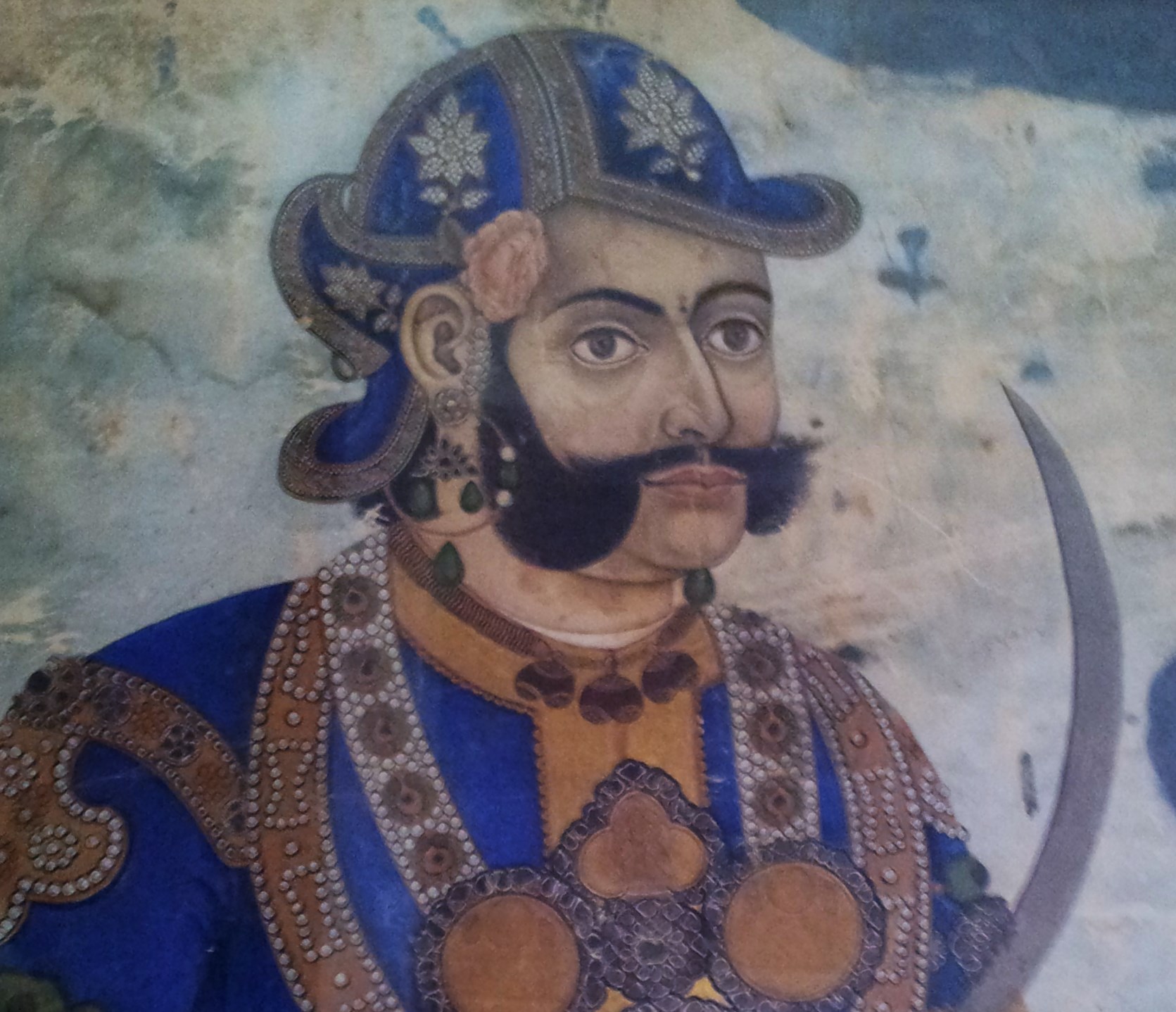
Mathabar Singh Thapa, shown with sideburns of the style worn by Hindu Kshatriya military commanders in the Indian subcontinent.

Sideburns, sideboards,[1] or side whiskers are facial hair grown on the sides of the face, extending from the hairline to run parallel to or beyond the ears. The term sideburns is a 19th-century corruption of the original burnsides, named after American Civil War general Ambrose Burnside,[2] a man known for his unusual facial hairstyle that connected thick sideburns by way of a moustache, but left the chin clean-shaven.

Variations

[edit]
Variations
Kaiser Wilhelm I
Wilhelm I, German Emperor, sported large sideburns; this style was often referred to as "side whiskers"
Ambrose Burnside
U.S. General Ambrose Burnside, after whom sideburns are named.

Sideburns can be worn and grown in combination with other styles of facial hair, such as the moustache or goatee, but once they extend from ear to ear via the chin they cease to be sideburns and become a beard, chinstrap beard, or chin curtain. Sideburns connected to a moustache along with a clean-shaven chin are known as "friendly mutton chops".[3]

Indigenous men of Colombia and Mexico, including Aztecs, shaved their heads and wore their braided sideburns long, said to be wearing "balcarrotas", rarely seen in modern times, but prized in the 16th century as a mark of virile vanity and banned by the colonial authorities in New Spain, resulting in rioting in 1692.[4]

History

[edit]

Sideburns are present on statues and masks of Romans dating back to the 1st Century.[5] Elagabalus is depicted with sideburns and a mustache.

Following the fashion in Europe young South American criollos adopted sideburns. Many of the independence heroes of South America, including José de San Martín, Manuel Belgrano, Antonio José de Sucre, Bernardo O'Higgins, José Miguel Carrera, and Antonio Nariño had sideburns and are as such depicted on numerous paintings, coins and banknotes.

Nineteenth-century sideburns were often far more extravagant than those seen today, similar to what are now called mutton chops, but considerably more extreme. In period literature, "side whiskers" usually refers to this style, in which the whiskers hang well below the jaw line. As with beards, sideburns went quickly out of fashion in the early twentieth century. In World War I, in order to secure a seal on a gas mask, men had to be clean-shaven; this did not affect mustaches.

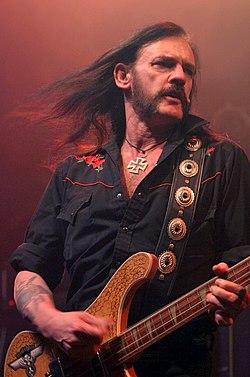
In 1936, President Franklin Roosevelt briefly experimented with sideburns on a yachting cruise, provoking laughter from wife Eleanor.[6] Sideburns made a comeback in the mid-1950s when Marlon Brando sported them as the title character in The Wild One (1953). Further spurred by Elvis Presley, sideburns were sported by "hoods", "greasers", and "rockers" seeking to highlight their rebellious post-pubescent manliness.[7] Sideburns later gained popularity in the counterculture of the 1960s: the struggle of a New Jersey youth to wear sideburns to his public high school graduation made a newspaper article in 1967.[8] Sideburns were associated with young mods and hippies, but in the '70s became prevalent in all walks of life. "Lambchop" sideburns also became a symbol of the gay club scenes of San Francisco and Sydney, as did the handlebar mustache. For the most part, sideburns have never gone out of fashion. They have continued to be popular among rock musicians, and even become a notable feature of such musicians like Stephen Stills, Neil Young, George Jones, and Lemmy.

Notable 21st century examples include Emmanuel Macron (though his are short), Javier Milei, Cem Özdemir, Viktor Yushchenko, David Pountney, Adam Sandler, John Lithgow and David Tennant.

Because of sideburns' multifarious history, they may be seen as stuffily Victorian; an indicator of roughness, vice, or rebelliousness;[9] a characteristic of rock 'n' roll; or merely a retro fashion revival.

See also

[edit]

References

[edit]
[edit]
Revisions and contributorsEdit on WikipediaRead on Wikipedia
from Grokipedia
Sideburns are strips of facial hair that grow in front of the ears, extending downward along the cheeks toward the jawline or mouth corners, often serving to connect the scalp hairline to a beard or mustache while leaving the chin clean-shaven.[1][2] The style can vary in length and thickness, from short trims ending at the top of the ear to longer versions that frame the face more dramatically.[3] The term "sideburns" emerged in American English around 1880 as a phonetic reversal of "burnsides," a descriptor coined for the prominent facial hair of Union Army Major General Ambrose E. Burnside (1824–1881), a Civil War veteran, Rhode Island governor, and U.S. senator known for his thick, mutton-chop-style whiskers that connected to a mustache.[4][5][6] Burnside, a West Point graduate and inventor of the breech-loading Burnside carbine rifle patented in 1856, popularized the look during the 1860s amid widespread facial hair trends in the military, where beards and whiskers symbolized masculinity and authority.[6] Earlier references to "burnsides" appear in print as early as 1866, reflecting the style's association with Burnside's distinctive appearance despite his mixed military record, including heavy losses at the Battle of Fredericksburg in 1862.[4][7] Throughout the 19th century, sideburns evolved as part of broader Victorian-era facial hair fashions, often worn by elites and military figures to convey status and democracy, as seen in portraits of leaders like Abraham Lincoln and during the American Civil War when full beards and whiskers became common among soldiers.[8] Variations such as mutton chops—elongated sideburns curving toward the mouth, often connecting to a mustache—gained popularity in the mid-1800s, inspired by Burnside's style and emphasizing bold, sculpted looks.[1] By the early 20th century, sideburns declined with the rise of clean-shaven norms influenced by World War I hygiene standards, but they resurged in the 1950s and 1960s as symbols of rebellion, notably worn by musicians like Elvis Presley, who sported them as a teen before his rise to fame in 1954.[9][10] In modern grooming, sideburns are styled for facial enhancement, with short versions suiting professional looks and longer ones adding edge, often trimmed using clippers or straight razors to align with the hairline and jaw for balance. As of 2025, sideburns continue to trend in softer, proportional styles complementing modern haircuts and subtle beards.[2][11][12] Culturally, they have signified masculinity across eras, from 19th-century authority to 20th-century counterculture, and continue to influence trends in barbering and fashion.[1][13]

Definition and Etymology

Definition

Sideburns are strips of facial hair that extend from the hairline down the sides of the face, positioned in front of the ears and typically tapering toward or ending below the earlobes, without connecting to a mustache or full beard in their basic form.[14] This style emphasizes a clean separation from other facial hair, allowing for precise shaping along the natural contours of the face.[15] In variants, such as certain connected styles, they may link to adjacent hair growth, but the core definition maintains their isolation as side-specific features.[16] Anatomically, sideburns arise from hair follicles concentrated in the temporalis region—covering the temple area—and the preauricular area, immediately anterior to the ear, where the skin transitions from scalp to facial coverage.[17] These follicles produce terminal hairs, enabling growth that can align with the overall hairline for a seamless extension.[18] Sideburns differ from related facial hair types in scope and coverage: side whiskers involve longer, fuller growth that extends across the cheeks and often beyond the jawline, while mutton chops feature sideburns that flare outward and connect specifically to a mustache, leaving the chin bare.[19][20][21] In contemporary grooming contexts, sideburns function as a standalone element to frame the jawline and enhance facial symmetry or as a complementary accent to broader hairstyles, such as fades or textured cuts, providing balance without overwhelming other features.[2][13]

Etymology

The term "sideburns" originated as an American English alteration of "burnsides," coined in the mid-19th century during the American Civil War to describe the thick, bushy whiskers extending from the temples along the sides of the face, a style popularized by Union General Ambrose Everett Burnside (1824–1881).[5] Burnside, who later served as a U.S. senator and governor of Rhode Island, became synonymous with this facial hair due to his prominent and distinctive grooming choice, which connected the whiskers to a clean-shaven chin while pairing them with a mustache.[4][22] The shift from "burnsides" to "sideburns" occurred around 1880, reflecting a phonetic reversal that emphasized the hair's position on the sides of the face rather than the eponymous general's name; this evolution serves as a classic example of folk etymology, where words adapt through popular usage for phonetic simplicity and intuitive meaning.[5][23] By the early 20th century, "sideburns" had supplanted "burnsides" as the dominant term in English, solidifying its place in standard vocabulary.[22] Before the Civil War era, similar styles of facial hair were commonly referred to as "side whiskers" in 18th- and 19th-century Europe and America, a phrase attested as early as 1815 to denote whiskers grown along the sides of the face without connecting to the chin or mustache. In European contexts, such as Britain, these were also occasionally called simply "whiskers," emphasizing their role as a mark of maturity and masculinity among gentlemen.[23]

Historical Development

Ancient and Early History

The practice of cultivating sideburn-like facial hair dates back to ancient civilizations, where such styles often signified masculinity, social rank, or practical utility in warfare. In ancient Greece during the 4th century BCE, Alexander the Great popularized a clean-shaven or closely trimmed facial hair style among his Macedonian soldiers. This approach stemmed from military necessity: Alexander ordered his troops to shave or closely trim their beards to prevent enemies from seizing them in close combat, thereby establishing short side hair as a marker of disciplined status within the army.[24][25] Archaeological evidence from sculptures and artifacts in ancient Egypt, Greece, and Rome further illustrates sideburns as symbols of manhood and hierarchy. Egyptian pharaohs, while generally clean-shaven in daily life for hygiene in the arid climate, donned stylized false beards in art and ceremonies that emphasized divine authority. In Greece, classical sculptures like the marble head of Herakles from the early 3rd century BCE portray young warriors as beardless but with distinct sideburns, highlighting virility without full facial coverage. Roman art similarly featured elite men with side whiskers in imperial portraits, reflecting Greek influences and denoting social prestige.[26][27] Military and tribal customs in pre-modern Europe reinforced sideburns' role in intimidation and functionality. Viking warriors (circa 8th–11th centuries CE) typically grew full beards connected to thick sideburns, enhancing their fearsome battlefield presence as symbols of strength and maturity, while practical grooming kept hair from interfering with helmets and weapons. Similarly, Celtic warriors used lime washes to stiffen and shape their beards and side hair into spikes, creating an intimidating silhouette during raids and battles for psychological advantage.[28][29]

19th Century and the Civil War

In the early 19th century, sideburns emerged as a prominent feature in European men's grooming, influenced by the Romantic era's emphasis on naturalism and individualism. Men of fashion in Britain and France adopted elongated side whiskers, often paired with cropped hair, as a nod to classical Roman styles and a rejection of the powdered wigs associated with aristocratic conformity.[30][31] This "whiskers movement" gained traction among dandies and military officers during the Napoleonic Wars (1803–1815), where long sideburns became a standard element of uniforms, symbolizing masculinity and anti-establishment sentiment in the wake of the French Revolution.[31][32] The style crossed the Atlantic and surged in popularity during the American Civil War (1861–1865), when facial hair became a widespread trend among soldiers on both sides, reflecting the era's rugged wartime conditions and limited grooming resources. Union General Ambrose Burnside epitomized this look with his thick, bushy whiskers that extended from the temples but left the chin clean-shaven, a distinctive style that inspired the term "burnsides."[33] Photographs and accounts from the period show sideburns—often called mutton chops when fuller—as common among officers and enlisted men, enhancing a sense of authority and resolve amid the conflict.[33] Following the war, sideburns peaked in the United States during the 1860s and 1870s, spreading from military ranks to civilian life as emblems of patriotism, virility, and frontier individualism. Politicians, laborers, and Western icons alike embraced the style, with fuller variants adorning figures in expanding industries and settlements, underscoring a cultural shift toward bold personal expression in post-war America.[34][35] By the late 19th century, however, sideburns began to wane in favor, particularly within the U.S. military, where stricter grooming regulations emphasized clean-shaven faces for uniformity and hygiene as professional armies modernized. Civilian trends followed suit, with shorter, neater side whiskers or full clean-shaven looks gaining ground by the 1880s and 1890s, influenced by evolving fashion and health reforms.[36][37] In the early 20th century, sideburns experienced significant suppression, particularly during World War I and World War II, as military grooming standards emphasized short hair and clean-shaven faces to ensure the proper seal of gas masks and maintain hygiene in combat environments. U.S. Army regulations during World War I outlawed beards and limited hair length to one inch, effectively curtailing longer sideburn styles among servicemen, while World War II standards reinforced a clean-shaven appearance for most officers, with sideburns kept minimal or absent to comply with uniform neatness requirements.[38][39] Sideburns saw a notable revival in the 1950s and 1960s, aligning with the rise of rock 'n' roll and counterculture movements, where medium-length styles symbolized youthful rebellion against post-war conformity. Elvis Presley's prominent sideburns, which he began growing in his teenage years and popularized through his rockabilly performances, influenced a generation of young men to adopt similar looks as a marker of nonconformity.[10][40] By the mid-1960s, The Beatles further propelled this trend, evolving from their initial mop-top haircuts to longer sideburns that reflected the era's growing countercultural ethos and inspired widespread emulation among youth.[41] The 1970s marked a peak for sideburns in disco and punk scenes, with longer, flared variations becoming staples among musicians and subcultures embracing bold self-expression. David Bowie's evolving glam rock personas in the early 1970s, often featuring extended sideburns integrated into asymmetrical or voluminous hairstyles, exemplified this flamboyant style and contributed to its prominence in urban nightlife and alternative music circles.[9] By the late 20th century, sideburns declined sharply in the 1980s and 1990s amid the rise of corporate culture and minimalist fashion, shifting preferences toward clean-shaven or integrated looks that prioritized professionalism over extravagance. The broader waning of facial hair trends, driven by workplace norms and the popularity of short, neat hairstyles, rendered prominent sideburns largely obsolete in mainstream menswear.[9][42]

Contemporary Styles

In the early 2000s, sideburns saw a notable resurgence within hipster and indie subcultures, particularly in urban scenes where tapered, short lengths—often extending to mid-ear—were styled to complement emerging beard trends, evoking a retro aesthetic amid broader vintage revivals.[43] This look emphasized clean lines and subtlety, aligning with the DIY ethos of indie rock and fashion circles. Building briefly on 20th-century patterns, these styles shifted toward more refined, personalized expressions rather than exaggerated forms.[44] The 2010s and 2020s brought global influences, notably from K-pop and East Asian fashion, where subtle, sculpted sideburns gained prominence through short, face-framing cuts resembling baby hairs along the hairline.[45] These "face line" styles, popularized by idols and integrated into international grooming routines, prioritize a youthful, contoured silhouette with minimal length to enhance facial structure without overpowering the overall hairstyle.[45] In professional contexts like tech and creative industries, sideburns have become versatile elements of modern grooming, typically maintained at lengths of 1-2 inches (mid-ear or shorter) to convey confidence and approachability while adhering to neat standards.[46] Tailored to face shapes—longer for square jaws to soften angles, shorter for oblong faces to balance proportions—these adaptations reflect globalization's role in blending casual and polished aesthetics.[46] As of 2025, debates around sideburns in sports highlight varying league policies, with the NBA imposing no restrictions on facial hair including sideburns, allowing players like James Harden to sport integrated styles freely.[47] In contrast, the NFL prohibits teams from enforcing facial hair rules under collective bargaining agreements, ensuring sideburns and beards remain unregulated for on-field and public appearances.[48] These permissive stances underscore a broader acceptance of personal grooming in athletic contexts, differing from stricter historical norms in other sports.[48]

Styles and Variations

Length and Shape Variations

Sideburns exhibit a wide range of length and shape variations that influence their overall appearance and suitability for different facial structures. Length is typically categorized into short, medium, and long based on how far they extend relative to the ear, while shapes determine their contour and integration with the surrounding hairline. These variations allow for customization, from subtle enhancements to more pronounced stylistic elements.[49] Short sideburns, measuring under 0.5 inches and ending above the tragus (the small flap over the ear canal), provide a clean and professional look. They are often kept straight or slightly angled to maintain a neat, unobtrusive profile that complements formal hairstyles without drawing excessive attention. This length is ideal for those seeking minimal facial hair framing.[3][49] Medium sideburns, ranging from 0.5 to 1.5 inches and aligning with the middle or bottom of the ear, offer versatility in styling. They can be squared off for a structured appearance, rounded for softness, or pointed to accentuate the jawline, effectively framing the face while blending seamlessly with various haircuts. This length balances subtlety and presence, making it adaptable for everyday wear.[3][49] Long sideburns, exceeding 1.5 inches and extending beyond the ear lobe toward the jawline, create a dramatic effect suitable for bold statements. Often flared outward or curved to follow the cheekbone, they add volume and elongation to the face, though they require precise maintenance to avoid a unkempt appearance. Long sideburns gained historical popularity during the American Civil War, where extravagant styles were favored by military figures.[3][49][50] In terms of shape, vertical sideburns run parallel to the face in a straight line, providing a slim, elongated silhouette that suits narrow features. Diagonal shapes angle toward the mouth or jaw, adding dynamic movement and often pairing with tapered fades for a modern edge. Disconnected sideburns, which do not blend with the hairline or adjacent facial hair like a mustache, stand alone for emphasis, as seen in styles like mutton chops where they flare independently. These contours allow sideburns to either harmonize with or contrast the overall hairstyle.[49]

Cultural and Regional Styles

In South Asian cultures, particularly among Sikhs in India and Pakistan, sideburns are traditionally kept long and uncut, seamlessly integrated with the full beard and mustache as part of the religious principle of Kesh, one of the five articles of faith that symbolize acceptance of divine creation and cultural heritage.[51][52] This uncut facial hair, including extended sideburns, reflects a commitment to spiritual humility and identity, often tied into a turban for a cohesive traditional appearance.[53] In Bollywood cinema, these long sideburns influence modern grooming trends, where actors like Sushant Singh Rajput pair them with precise trims to evoke heritage while adapting to contemporary styles.[54] Latin American grooming variations often feature extended sideburns drawing from colonial-era European influences, as seen in Mexican subcultures like the Cholombianos of Monterrey, where long, thick sideburns frame elaborate slicked-back hairstyles, emphasizing bold facial framing in urban youth aesthetics.[55] In Brazil, sideburns contribute to versatile facial hair looks that blend indigenous, African, and Portuguese roots, typically grown fuller to complement mustaches in everyday and festive grooming.[56] African and Afro-Caribbean styles prioritize thick, natural sideburns that highlight hair texture and volume, aligning with cultural expressions of pride and resilience. In Rastafarian traditions across Jamaica and the diaspora, sideburns form part of an untrimmed beard mandated by Leviticus 19:27, symbolizing a covenant with the divine and resistance to colonial grooming norms.[57] Similarly, in hip-hop culture among African American communities, sideburns are styled with sharp lineups—cleanly edged edges that connect to the beard—for a polished yet textured urban vibe, as popularized in the genre's emphasis on precise, expressive facial hair.[58][59] Middle Eastern adaptations maintain slim, arched sideburns in line with religious grooming standards, particularly in Arab and Turkish contexts where they are viewed as integral to the beard (lihya). Islamic teachings, based on prophetic traditions, require growing the beard—including sideburns—while shortening the mustache, resulting in neatly shaped, moderate-length side growth that signifies piety and maturity without excess trimming.[60][61][62] Turkish barbering traditions further refine these with precise arching for a streamlined look, often seen in Ottoman-influenced styles that balance tradition and elegance.[63][64]

Grooming and Maintenance

Growth and Care

The growth of sideburns, as a form of facial hair, is primarily driven by androgens such as testosterone, which stimulate hair follicles in the beard area to enter the anagen (growth) phase of the hair cycle.[65][66] This hormonal influence typically begins during puberty and continues into adulthood, with sideburn hair follicles responding to dihydrotestosterone (DHT), a testosterone derivative, to produce coarser, terminal hairs.[67] On average, facial hair including sideburns grows at a rate of approximately 0.5 inches per month, though this can vary based on individual factors.[67] Genetic predispositions play a crucial role in determining the density, texture, and growth pattern of sideburns, with variations in follicle sensitivity to hormones leading to differences in thickness and uniformity across populations.[68][69] Proper skin care in the sideburn region is essential to support healthy growth and prevent complications. Daily washing with a mild, gentle cleanser helps remove excess oil, dirt, and dead skin cells without stripping natural moisture, thereby reducing the risk of irritation or folliculitis.[70] Following cleansing, applying a lightweight moisturizer to the sideburn area maintains skin hydration, preventing dryness and flakiness that can hinder follicle health and lead to brittle hair.[71] Nutrition contributes significantly to promoting even sideburn growth by supporting keratin production and overall follicle vitality. Biotin (vitamin B7) aids in metabolizing amino acids for keratin synthesis, the primary protein in hair, while adequate protein intake provides the building blocks necessary for hair shaft formation; hydration ensures nutrient delivery to follicles via blood flow.[72][73][74] However, certain health conditions like alopecia areata (including alopecia barbae) can disrupt sideburn growth, causing patchy hair loss due to autoimmune attacks on follicles, often resulting in circular bald spots in the beard area.[75] Common challenges in sideburn maintenance include ingrown hairs, where shaved or trimmed hairs curl back into the skin, and patchiness from uneven follicle activation or scarring.[76] These issues can be mitigated through regular gentle exfoliation, which removes dead skin cells and prevents hair entrapment, promoting smoother emergence and reducing inflammation.[77][78]

Trimming Techniques

Trimming sideburns requires appropriate tools to achieve even lengths and precise shapes. Electric clippers equipped with adjustable guards are commonly used for maintaining uniform length across the sideburns, allowing users to select specific guard sizes such as 2 or 3 for gradual shortening.[79] Scissors, particularly high-quality grooming or beard-trimming varieties, provide precision for tapering the edges and creating subtle blends.[80] [81] Razors, including straight-edge or styler types, are essential for defining clean, sharp edges at the bottom or sides of the sideburns.[79] [81] A basic trim begins with preparing the area: ensure the sideburns are clean and free of products, then comb the hair downward to align it naturally.[79] [80] Position yourself in front of a mirror for accurate visibility, and use a fine-toothed comb to section the hair vertically in front of the ear if needed.[80] Set the clippers to the desired guard length—such as 3 for initial bulk removal—and trim from the bottom upward toward the top of the ear, following the natural growth direction to maintain balance.[79] [81] For symmetry, compare both sides frequently, adjusting cuts at ear level to ensure even proportions.[80] Finally, remove the guard and use the clippers or a razor to outline the bottom edge in a straight line, typically at mid-ear, while keeping the sideburns slightly damp for precision.[79] [81] Advanced techniques allow for more stylized maintenance. Fading involves a gradual shortening from the wider hairline area toward the bottom, achieved by switching to a shorter guard (e.g., 2) on the lower half after the initial trim, creating a seamless blend.[79] [81] Outlining produces sharp borders by using a trimmer without a guard or a razor to carve defined lines along the sides and bottom, often angling slightly for a tapered effect.[81] [80] To sustain shape, bi-weekly trims are recommended, though this should be adjusted based on individual hair growth rates, with faster growth potentially requiring weekly attention for shorter styles.[82] [83]

Cultural and Social Significance

In Fashion and Identity

Sideburns have long served as a symbol of masculinity, often embodying power and status in historical contexts, such as during the 19th century when elaborate side whiskers were worn by military figures and dandies to assert authority and challenge rigid social norms.[9] In the Victorian era, these styles represented a deliberate rejection of clean-shaven conformity, aligning with dandies' broader rebellion against traditional gender expectations through exaggerated grooming.[84] By the 20th century, sideburns evolved into markers of youthful defiance, particularly among subcultures like greasers and rockers who adopted them to emphasize post-pubescent manliness and non-conformity against mainstream ideals.[1] In contemporary fashion, sideburns continue this legacy of rebellion, prominently featured in hipster aesthetics as a nod to authenticity and countercultural ethos, where longer, unkempt styles signal resistance to polished corporate uniformity.[42] This non-conformist appeal extends to modern facial hair trends, positioning sideburns as emblems of individuality amid evolving masculinity norms.[85] The 2020s have seen sideburns and facial hair more broadly embraced in expressions of gender fluidity, particularly among non-binary individuals who incorporate them to challenge binary grooming conventions traditionally tied to male identity.[86] Non-binary and transgender people often use facial hair as a tool for gender expression, blending it with other features to affirm fluid identities and subvert expectations of femininity or masculinity.[87][86] In professional settings, sideburns' acceptability varies by context, with conservative corporate environments favoring trimmed, minimal styles to project reliability and adherence to norms, while creative industries like arts and tech permit longer variants as signals of innovation and relaxed professionalism.[88] This dichotomy reflects broader grooming policies, where facial hair like sideburns can enhance perceived creativity in casual fields but risk undermining authority in formal ones.[89] Sideburns also intersect with age and ethnicity in fashion identity, where younger demographics, particularly Black men in urban styles, favor elongated sideburns integrated with fades or beards to convey streetwise confidence and cultural pride.[58] These variations highlight demographic acceptance, as longer sideburns align with hip-hop influences and youthful rebellion, contrasting with more restrained preferences among older or professional groups.[90] Sideburns have long been a distinctive feature in entertainment, often amplifying a character's or performer's persona. In the 1950s, Elvis Presley's prominent sideburns became emblematic of rockabilly rebellion, prominently showcased in his film Jailhouse Rock (1957), where they framed his pompadour hairstyle and contributed to the era's youthful, defiant aesthetic.[10] These sideburns, meticulously styled daily on set, helped define Presley's image as the King of Rock 'n' Roll, influencing generations of musicians and fans to adopt similar looks as symbols of nonconformity.[91] During the 1970s and 1980s glam rock movement, David Bowie's innovative hairstyles and overall aesthetic pushed boundaries of gender expression, incorporating elements like bold, asymmetrical cuts in personas such as Ziggy Stardust and the Thin White Duke.[92] Bowie's peroxide-dyed, flame-like hair and androgynous styling in albums like Aladdin Sane (1973) inspired a wave of fluid, experimental looks in music and fashion, blending masculine and feminine traits to challenge traditional norms.[92] In film and television, sideburns frequently signify rugged masculinity and resilience, as seen in the portrayal of Wolverine by Hugh Jackman across the X-Men franchise starting in 2000. Jackman's elongated, mutton-chop sideburns, often prosthetically enhanced in early films, underscored the character's feral toughness and indomitable spirit in superhero narratives.[93] This styling choice evoked a "very masculine, very powerful" archetype, aligning with Wolverine's mutant ferocity and becoming a visual shorthand for his unyielding persona in both comics adaptations and live-action depictions.[21] As of 2025, sideburns have appeared in digital media through viral grooming trends on platforms like TikTok, featuring tutorials and styling tips for various lengths and shapes.[94][95] These trends blend practical advice with nostalgic references to retro styles, contributing to ongoing discussions in male grooming culture.[96]

References

User Avatar
No comments yet.