Hubbry Logo
Cotton ratCotton ratMain
Open search
Cotton rat
Community hub
Cotton rat
logo
8 pages, 0 posts
0 subscribers
Be the first to start a discussion here.
Cotton rat
Cotton rat
from Wikipedia

Cotton rats
Temporal range: Early Pliocene - Recent
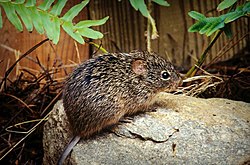
Hispid cotton rat (Sigmodon hispidus)
Scientific classification Edit this classification
Kingdom: Animalia
Phylum: Chordata
Class: Mammalia
Order: Rodentia
Family: Cricetidae
Subfamily: Sigmodontinae
Tribe: Sigmodontini
Wagner, 1843
Genus: Sigmodon
Say & Ord, 1825
Type species
Sigmodon hispidus[1]
Species

Sigmodon alleni
Sigmodon alstoni
Sigmodon arizonae
Sigmodon fulviventer
Sigmodon hirsutus
Sigmodon hispidus
Sigmodon inopinatus
Sigmodon leucotis
Sigmodon mascotensis
Sigmodon ochrognathus
Sigmodon peruanus
Sigmodon planifrons
Sigmodon toltecus
Sigmodon zanjonensis

A cotton rat is any member of the rodent genus Sigmodon. Their name derives from their damaging effects on cotton as well as other plantation crops, such as sugarcane, corn, peanut and rice.[2][3] Cotton rats have small ears and dark coats, and are found in North and South America. Members of this genus are distributed in the Southwestern United States, Mexico, Central America, and South American countries of: Venezuela, Ecuador, Colombia, Peru, Brazil, Guyana, and Suriname. Many of the species are found in Mexico.

They are primarily herbivores. The molars of cotton rats are S-shaped when viewed from above. The genus name literally means S-tooth.

Sigmodon hispidus was the first model organism to be used in polio research.

Classification

[edit]

References

[edit]
[edit]
Revisions and contributorsEdit on WikipediaRead on Wikipedia
from Grokipedia
Cotton rats are a (Sigmodon) of in the family , consisting of 14 species native to the . These medium-sized, stocky herbivores are distinguished by their coarse, grizzled fur, short tails, and sigmoid-shaped enamel loops on their molars, adaptations that reflect their in open, vegetated environments. The genus name Sigmodon derives from Greek roots meaning "S-shaped ," highlighting their unique dental morphology. Species of cotton rats are distributed across a broad range from the (including states like , , and ) southward through , , and into northern as far as , , , and . They inhabit diverse grassy and shrubby ecosystems, such as fields, pastures, marshes, roadsides, and agricultural edges, often favoring dense vegetation for cover and foraging. These are highly adaptable to disturbed habitats, including early-successional areas and croplands, where they construct nests in burrows, mounds, or surface vegetation. Their populations can fluctuate dramatically due to environmental factors like vegetation density and predation pressure. Physically, cotton rats measure 125–200 mm in head-body length, with tails of 75–166 mm, and weigh 80–250 g, varying by species and sex (males typically larger). Their dorsal fur is dark brown to black with yellowish highlights, while ventral fur is paler gray to white, providing camouflage in grassy settings. Primarily herbivorous, they consume grasses, seeds, and green vegetation, though opportunistic omnivory includes insects and small vertebrates. Ecologically, cotton rats serve as key prey for predators like snakes, birds of prey, and mammals, influencing food webs in grassland ecosystems; they also act as reservoirs for pathogens such as hantavirus, with cases reported in the US as of 2025, and are significant agricultural pests due to crop damage. In biomedical research, cotton rats, particularly Sigmodon hispidus and S. fulviventer, are vital models for studying respiratory viruses like (RSV) because their immune responses and lung physiology closely mimic humans. With short lifespans (4–6 months in the wild, up to 23 months in captivity), high reproductive rates (litters of 2–11 young, multiple per year), and social behaviors including territoriality, they exhibit rapid that make them subjects of ecological and evolutionary studies.

Taxonomy

Classification

The cotton rat belongs to the genus Sigmodon within the order Rodentia, Cricetidae, subfamily Sigmodontinae, and tribe Sigmodontini. The full taxonomic classification is as follows: Kingdom Animalia, Chordata, Class Mammalia, Order Rodentia, Cricetidae Fischer, 1817, Subfamily Sigmodontinae Wagner, 1843, Tribe Sigmodontini, Genus Sigmodon Say and Ord, 1825. The genus was established by and George Ord in 1825, based on the type species Sigmodon hispidus. The name Sigmodon derives from the Greek words sigma (referring to the S-shape) and odous (tooth), alluding to the characteristic S-shaped pattern of the molars in these rodents. The genus Sigmodon originated in the Early Pliocene, with the earliest fossils appearing around 4 million years ago during the early Blancan North American land mammal age. The fossil record indicates diversification primarily across the Americas, beginning in North America and later extending southward, with adaptations to open, grassy habitats evolving from grass-eating cricetine ancestors. Phylogenetically, Sigmodon is positioned as the sister genus to the remaining extant members of the subfamily , reflecting its basal placement within this diverse group of New World cricetids. It diverged from other cricetid genera, such as Neotoma in the subfamily , earlier in the evolutionary history of the family , prior to the major radiation of sigmodontines in the Miocene-Pliocene transition.

Species diversity

The genus Sigmodon encompasses 14 extant species of cotton rats, reflecting significant diversity within the subfamily, particularly in terms of across and where multiple species coexist sympatrically. This diversity is highlighted by species adapted to varied and habitats, with genetic studies supporting the current without major revisions since 2021, though ongoing phylogenomic analyses continue to refine relationships. Key species include Sigmodon hispidus, the widespread hispid cotton rat, characterized by coarse, grizzled fur and a robust build, serving as a model for ecological and biomedical research across its range from the to northern . Sigmodon arizonae, the Arizona cotton rat, is notably larger with paler dorsal coloration and is endemic to arid regions of the and northwestern . Sigmodon alleni, cotton rat, exhibits a more slender form and is primarily endemic to central , often overlapping with S. arizonae in coastal grasslands. In southern distributions, Sigmodon peruanus, the Peruvian cotton rat, features yellowish underparts and occupies Andean foothills in and . Further diversity is evident in endemics such as Sigmodon fulviventer, the yellow-bellied cotton rat, distinguished by its ventral and restriction to highland areas of central . Sigmodon mascotensis, the cotton rat, is a smaller with darker pelage, confined to the Pacific coast of western , exemplifying regional . Other include Sigmodon hirsutus (southern cotton rat, with shaggy in ), Sigmodon leucotis (white-eared cotton rat, notable for prominent white ear patches in ), Sigmodon ochrognathus (yellow-nosed cotton rat, featuring a distinctive yellow muzzle in highlands), Sigmodon toltecus ( cotton rat, adapted to dry forests in central ), Sigmodon alstoni (Alston's cotton rat, grooved incisors in ), Sigmodon planifrons (lowland cotton rat, in n lowlands), Sigmodon inopinatus (unexpected cotton rat, in ), and Sigmodon zanjonensis (Zanjon cotton rat, endemic to specific valleys). Subspecies variation is pronounced in widespread taxa; for instance, represents the nominate subspecies, characterized by its original type locality description and found in the . Endemism patterns underscore Mexico's role as a hotspot, hosting at least eight , many restricted to narrow coastal or highland ranges, contributing to the genus's overall biogeographic complexity.

Physical characteristics

Morphology

Cotton rats in the genus Sigmodon are medium-sized rodents characterized by a robust build, with total lengths ranging from 200 to 350 mm, tails comprising 40–50% of body length (85–156 mm), and weights of 100–250 g. Their fur is coarse and grizzled, often with a hispid texture from stiff black-tipped guard hairs, displaying dark brown to gray dorsal coloration and lighter buff or whitish ventral pelage. The head is broad and blunt, ears are small and rounded, and legs are short relative to body size, supporting a stocky form suited to ground-dwelling. Dentition in Sigmodon follows the formula I 1/1, C 0/0, P 0/0, M 3/3 (total 16 teeth), with continuously growing incisors and molars specialized for herbivory. The molars exhibit a distinctive S-shaped (sigmoid) pattern of enamel loops, particularly on the last two lower teeth, which facilitates efficient grinding of fibrous plant material. Like many , cotton rats possess limited but rely on acute senses of smell and hearing for detecting predators and food sources. Long, sensitive (vibrissae) on the and face provide tactile feedback, enabling navigation through dense, low-lying .

Variations across species

Cotton rats in the genus Sigmodon exhibit notable size gradients across species, with northern and southwestern forms generally larger than those in central and southward. For instance, S. arizonae, a southwestern species, reaches total lengths of up to 349 mm and weights of 211 g, reflecting adaptations to arid environments. In contrast, S. fulviventer, endemic to central , is smaller, with head-body lengths of 138–200 mm and weights of 82–136 g. Variations in coloration and fur texture also distinguish species, often correlating with regional environments. S. hispidus, the hispid cotton rat, features coarse, stiff dorsal guard hairs that give a bristly appearance, mixed with softer underfur in shades of brown, black, and gray. S. peruanus displays paler dorsal pelage in arid Andean zones, ranging from grayish clay-brown to yellowish brown with black-tipped hairs, and dense, soft less than 14 mm long; sexual dichromatism is absent across the , though regional clines in hue occur, such as lighter tones in drier habitats. Tail and ear morphology show interspecific differences linked to locomotor and sensory needs. Southern species like S. peruanus tend to have relatively longer (up to 40% of total length) for balance during agile movements in varied terrains, compared to shorter, more robust tails in northern S. hispidus (typically 87–122 mm). Ear size varies with density, with species in thick , such as S. fulviventer, possessing smaller (19–23 mm) that are more concealed in fur for , whereas open-habitat forms like S. arizonae have slightly larger ears (up to 24 mm). Genetic isolation, particularly in Mexican endemics, has driven these morphological variations through and chromosomal divergence. For example, populations of S. fulviventer in isolated pockets show distinct cranial metrics (e.g., longer incisive , narrower least interorbital width) compared to mainland forms, supported by clades with low intraspecific divergence (0.13–0.73%). Similarly, S. arizonae exhibits karyotypic differences (2n=22, FN=38) from congeners due to historical barriers like the , while S. mascotensis shows differences with 2n=28, FN=26.

Distribution and habitat

Geographic range

The genus Sigmodon, comprising cotton rats, is native to the , with a broad distribution extending from the southward through , , and into northern . In the United States, species such as S. hispidus and S. arizonae occur in states including , , , and isolated populations in southeastern and southern . Mexico hosts the highest species diversity within the genus, with multiple endemics like S. alleni, S. mascotensis, and S. ochrognathus distributed across its diverse regions from to . The range continues through , encompassing countries such as , , , and , before reaching northern in , , , , and . For instance, S. hispidus, the most widespread species, spans from as far north as and in the United States to northern and northwestern . The range of S. hispidus has been expanding northward in recent decades, with records into southeastern as of 2018 and ongoing shifts attributed to climate and habitat changes. Historically, the genus originated in and underwent southward migration beginning in the epoch, facilitating its expansion into Neotropical regions as grasslands developed. This distribution spans the Nearctic and Neotropical biogeographic realms, with significant overlap in and , and occupies altitudinal zones from to elevations exceeding 3,000 m, as evidenced by records of S. hispidus at 3,109 m in .

Habitat preferences

Cotton rats, belonging to the Sigmodon, primarily inhabit grasslands, agricultural fields, forest edges such as pine flatwoods and oak savannas, marshes with reeds and cattails, and disturbed areas including overgrown fields and roadside right-of-ways. These ecosystems provide the dense low vegetation essential for cover and foraging runways, with preferences for areas featuring high densities of monocots like big bluestem and broomsedge. They avoid open deserts and dense forests lacking sufficient ground cover, favoring instead early-successional stages with protective overstory and structures that support their surface travel and predator evasion. In terms of microhabitat selection, cotton rats show a strong affinity for sites near sources, such as , , and irrigated or moist fields, which facilitate access to hydration and suitable nesting conditions. They select loamy or well-drained soils conducive to burrowing, often in larger patches around 50 by 100 meters, where dense herbaceous cover exceeds typical thresholds for concealment. Reproductive females particularly favor mixed habitats with open canopies and sparse high vegetation, while avoiding areas with excessive litter or closed canopies that limit mobility. Elevational tolerances extend from to moderate highlands, with climatic preferences spanning tropical to subtropical zones across their broad range. Adaptations to these habitats include the construction of shallow burrows for nesting in woven grass, often utilizing existing depressions or burrows for added protection. Their dark pelage enhances in post-fire grassy environments, and they respond to by concentrating in remaining patches with adequate vegetative density, maintaining population viability through flexible microhabitat use.

Behavior

Activity patterns

Cotton rats, primarily represented by species in the genus Sigmodon such as S. hispidus, display flexible circadian rhythms that are mainly nocturnal or crepuscular, with peaks of activity often occurring at and dawn in a bimodal pattern. In environments with reduced predation risk, individuals may shift to diurnal activity, though this varies by habitat and population. These remain active throughout the year without undergoing true , maintaining metabolic processes even in cooler seasons. During active periods, cotton rats traverse distances typically under 100 meters nightly, utilizing well-defined surface runways through for efficient locomotion and . Home ranges generally span 0.1 to 1 , with males occupying larger areas (averaging 0.35–0.39 ha) compared to females (around 0.22 ha), influenced by and resource availability. Seasonal variations in activity align with reproductive cycles, showing heightened movement and during breeding peaks in spring and fall, when and production are most frequent. Activity levels decrease during events, such as heavy rains or severe cold, prompting individuals to seek shelter and conserve energy without fully ceasing operations. Navigation during these patterns relies heavily on olfactory cues to follow runways and detect resources, complemented by acoustic signals like squeaks for short-range communication among individuals. Social influences, such as proximity to conspecifics, can subtly modulate timing of peak activity in shared habitats.

Social structure

Cotton rats of the Sigmodon exhibit a predominantly solitary , with adults maintaining independent home ranges and interacting minimally outside of brief encounters. This solitary existence is reinforced by high levels of intraspecific , particularly among same-sex individuals, where dominance hierarchies based on body weight determine access to resources and space. Territorial defense is achieved through scent-marking via perineal glands and aggressive physical displays, such as chasing and fighting, which help establish and maintain exclusive areas, though females may occasionally defend nests more actively than males. Group formations are limited but occur in specific contexts, such as maternal family units where females care for their litters in nests until , typically lasting a few weeks post-birth. In areas of high , loose aggregations or colonies may form, with densities reaching up to 20 individuals per in resource-abundant grasslands, allowing for greater overlap in home ranges without constant conflict. These groupings are more tolerant between sexes, as males show reduced toward females, potentially facilitating opportunistic . Communication among cotton rats relies on a combination of olfactory cues, including pheromones from that signal dominance and boundaries, and physical behaviors like postural displays during confrontations. Vocalizations play a lesser but notable role, with ultrasonic calls in the 25-60 kHz range emitted by pups to elicit maternal responses, and adults using squeaks or low-frequency sounds during handling or alarm situations. Intra-sexual is pronounced in males, often escalating to physical altercations that resolve dominance disputes and reduce overlap in core activity areas. Population density influences social tolerance, with higher densities in resource-rich habitats leading to smaller home ranges (as low as 0.1 ha for females) and increased overlap, particularly between males and females, though same-sex exclusivity remains high at around 41%. In such conditions, aggression may decrease slightly due to spatial constraints, promoting temporary coexistence in colonies, but overall intolerance persists to minimize .

Diet and foraging

Food sources

Cotton rats (genus Sigmodon) are primarily herbivorous, relying on a diet dominated by plant materials such as grasses, seeds, green vegetation, roots, and bark. Grasses form a staple component, with species like Bermuda grass () commonly consumed in habitats where cotton rats . Seeds from grasses, dicots, and woody plants also constitute a significant portion, providing essential carbohydrates and fats, while roots and bark—particularly pine bark during winter when herbaceous plants are scarce—offer additional structural carbohydrates and structural support for nutrition. This high-fiber intake is adapted to their fermentation system, where microbial activity in the and colon breaks down to yield volatile fatty acids. Seasonal variations influence dietary composition, with shifts toward more nutritious dicots, including fruits and berries, during wetter periods like summer and autumn when abundance increases. In contrast, winter diets emphasize monocots and bark to compensate for reduced availability of fresh greens. Cotton rats derive much of their hydration from moisture in succulent plants and green , supplemented by occasional drinking, but they do not require a permanent free-water source. Opportunistically, cotton rats incorporate animal matter, including , eggs and young of ground-nesting birds, , and carrion, though this does not indicate true carnivory. In agricultural settings, they readily consume crops such as , corn, , and , which can overlap with their natural herbivorous preferences for similar grains and stems.

Foraging strategies

Cotton rats construct extensive networks of surface runways through dense , typically 5–10 cm wide, which facilitate safe and efficient access to food patches while minimizing exposure to predators. These runways, often marked by clipped and fecal pellets, interconnect burrow entrances and sites, allowing individuals to travel protected paths within grassy habitats. To assess predation risk, cotton rats forage primarily near cover, such as dense grasses or shrubs, where cryptic coloration and runway systems provide concealment from visual predators like hawks and snakes. Their solitary nature precludes group , with individuals relying on vigilance and short, intermittent bouts—typically under 20 minutes each—to harvest resources while remaining alert to threats. This risk-averse approach limits exposure during peak predation periods, particularly in open areas where straying from cover increases encounter rates with mesocarnivores. Activity patterns shift with environmental conditions, featuring multiple nightly bouts concentrated from late afternoon to midnight, though extreme cold or heavy rain suppresses overall effort. In northern ranges, winter emphasizes through shorter excursions, while tropical populations maintain consistent patterns year-round.

Reproduction

Breeding biology

Cotton rats exhibit a polygynous , in which males defend territories and compete aggressively for access to multiple females, often through direct confrontations and displays of dominance. Females are spontaneous ovulators. Breeding seasonality varies with latitude and environmental conditions; in tropical and southern portions of their range, cotton rats breed year-round under a polyestrus pattern, while in temperate regions, reproduction shows bimodal peaks in spring and fall. These patterns are strongly influenced by photoperiod, with shorter day lengths suppressing breeding in winter, and by resource availability, such as food abundance, which can curtail activity during droughts or cold periods. The period typically spans 27 days, during which females undergo significant physiological changes to support fetal development. The lasts 7–9 days, allowing for frequent reproductive opportunities, often including postpartum estrus that enables breeding shortly after parturition. is provided solely by females, who construct nests, nurse the young, and protect them until ; males play no role in post-mating care or rearing. Most reproductive data are based on the hispid cotton rat (S. hispidus), the most studied .

Life cycle stages

Cotton rats (genus Sigmodon) give birth to litters ranging from 1 to 15 young, with an average of 5 to 7 pups per litter. Newborns are semi-precocial, possessing a full or lightly furred coat, closed eyes, and the ability to move shortly after birth, though they remain dependent on the mother for warmth and nourishment. At birth, pups weigh approximately 6 to 7 grams. Development proceeds rapidly in the early weeks. Eyes typically open within 18 to 36 hours after birth, or by 1 to 3 days in some cases. Incisors erupt around 5 days of age, and occurs between 10 to 15 days or up to 2 to 3 weeks, by which time pups weigh 20 to 25 grams. Growth rates are high during this neonatal period, with daily weight gains of 0.59 to 1.35 grams, often more than doubling within the first week. Pups reach at 30 to 50 days for females and around 60 days for males, with full adult size attained by about 41 days to 5 months. Dispersal from the natal area generally occurs 1 to 2 months after birth, coinciding with reproductive maturity and independence. In the wild, cotton rats have a short lifespan, with most individuals surviving less than 6 months and few exceeding 12 months due to high juvenile mortality rates, where only about 13% reach beyond 6 months. In captivity, however, they can live up to 2 to 3 years, with records extending to 5 years.

Ecology

Predators and threats

Species of cotton rats, such as Sigmodon hispidus, face predation from a variety of reptiles, birds, and , which exert significant pressure on their populations. Common reptilian predators include snakes such as the (Pantherophis guttatus), while avian predators encompass hawks like the (Buteo jamaicensis) and (Buteo swainsoni), as well as owls including the (Asio flammeus). Mammalian predators consist of foxes, coyotes (Canis latrans), bobcats (Lynx rufus), and other mesocarnivores. Predation by mesocarnivores affects juvenile body and growth rates due to their smaller size and limited mobility, making them particularly vulnerable. To mitigate predation risks, cotton rats employ several anti-predator strategies, including the use of well-defined runways through vegetation for safe movement and burrows for refuge. They exhibit vigilance by remaining alert to potential threats and rely on cryptic coloration for , often freezing in place or fleeing to cover when danger is detected. Their primarily nocturnal and crepuscular activity patterns further aid in evading diurnal predators like hawks. Abiotic threats also pose challenges to cotton rat survival, including severe weather events such as , which reduces available and food resources, leading to population declines. Flooding in low-lying habitats can inundate burrows and runways, increasing mortality risk, while wildfires cause direct burns or indirect harm by destroying cover and elevating predation exposure during escape attempts—though many individuals survive by retreating to burrows. Natural , such as through intense fires or prolonged , temporarily disrupts suitable grassy environments essential for and . , such as , have emerged as additional threats, contributing to mortality rates of about 11.8% in affected populations.[](https://www.themccleerylab.org/uploads/6/0/8/0/60804587/mccampbell_et_al_ - 2023-compensatory_mortality_explains_rodent_resilience.pdf) Predation plays a key role in regulating cotton rat population densities, with avian predators being particularly influential in maintaining balance during periods of high abundance. At densities exceeding 15 individuals per acre, predator-induced mortality becomes elevated, preventing unchecked and contributing to overall annual mortality rates that rarely allow wild individuals to survive beyond one year.

Ecological role

Cotton rats, particularly the hispid cotton rat (Sigmodon hispidus), serve as a vital prey base for numerous mid-level predators in and old-field ecosystems across North and . They are consumed by carnivores such as bobcats, foxes, coyotes, weasels, and raccoons, as well as raptors like hawks and , providing a consistent food source that buffers predation pressure on larger game species, such as bobwhite quail. This role enhances by stabilizing dynamics, as cotton rat populations fluctuate seasonally and support predator populations during periods of abundance. In addition to predation, cotton rats contribute to plant regeneration through seed consumption and limited dispersal activities. They remove seeds from sources like horse dung, particularly germinating ones, which can influence seed distribution in habitats such as grasslands by relocating them short distances during . While not primary scatter-hoarders, their feeding behavior aids secondary dispersal for viable seeds that pass through their digestive system intact, promoting regeneration in disturbed areas. Burrowing further supports ; cotton rats construct extensive systems (2.5–10 cm deep and wide), which aerate and facilitate water infiltration, benefiting growth and microbial activity. Cotton rats exert trophic influence by grazing on vegetation, which helps control grass and forb growth in old fields and prairies. As folivores, they consume leaves, stems, and , clipping tall to create runways that alter local structure and prevent dominance by aggressive species. Their fecal deposits enrich with nutrients from ingested plant matter, contributing to cycling processes that sustain productivity, particularly in nutrient-limited grasslands. As sensitive responders to environmental changes, cotton rats function as indicator species for habitat quality in grasslands. Population densities and dynamics closely track variations in cover, , and disturbance levels, with declines signaling degradation from factors like or . Studies in old-field habitats demonstrate their utility in monitoring , as shifts in abundance reflect broader climatic and land-use impacts.

Interactions with humans

Agricultural and economic impact

Cotton rats (Sigmodon spp.), particularly the hispid cotton rat (S. hispidus), inflict considerable damage on agricultural crops across their range in the and by feeding on and destroying plant material. They target a variety of crops, including bolls, , corn, , , , grains, grasses, vegetables, fruit crops, sweet potatoes, and sugar beets, with and melons being especially vulnerable. In Florida's Agricultural Area, cotton rats, as the dominant species, cause substantial losses estimated at 7,056 to 32,442 metric tons annually during periods of peak . Severe outbreaks can result in up to 90% loss in affected fields, particularly when populations cycle to high densities or during large-scale movements into agricultural areas. The economic toll includes direct yield reductions and from control efforts, with damage severity linked to population densities ranging from 11 to 149 individuals per acre. In addition to consumption, cotton rats compete with for on native and improved rangelands, further impacting . Their rapid reproduction—females produce multiple litters of 2 to 10 young (averaging 5) per year—drives outbreaks that amplify damage in fields. Migration into farmlands often follows disturbances, such as plowing or flooding, exacerbating infestations during vulnerable growth stages. Management of cotton rat impacts relies on integrated pest strategies to minimize economic losses while balancing control costs against crop value. modification, including mowing, burning, or application to reduce dense cover, serves as the most cost-effective preventive measure by limiting and availability. For active infestations, rodenticides like 2% bait are applied in high-value crops such as , though restricted to specific contexts to avoid non-target effects. with snap or live traps baited with , , carrots, or sweet potatoes provides targeted control in smaller areas, while exclusion barriers (e.g., buried ) protect high-value fields. Periodic population monitoring helps prioritize interventions, reducing overall reliance on chemical controls.

Scientific and medical significance

Cotton rats, particularly Sigmodon hispidus, have been utilized as laboratory animals since the 1930s, with one of the earliest documented uses by the in 1937 for on wild-caught specimens. From the 1940s through the 1970s, they served as a key model in development due to their susceptibility to the virus, contributing to advancements in understanding and methods. This historical role established cotton rats as a valuable model, and their use has persisted into 2025, particularly in virology studies on respiratory viruses like (RSV), where recent genomic assemblies and single-cell transcriptomic atlases have enhanced insights into host-pathogen interactions. In contemporary research, S. hispidus is employed as a model for metabolic disorders, including , where aged individuals develop , visceral adipose , and fatty pancreas infiltration without overt , mirroring certain pathophysiological patterns. Reproductive studies leverage their unique ovarian morphology and non-seasonal breeding in , providing data on development and estrous cycles that inform mammalian . Physiological similarities to s, such as comparable immune aging processes—increased susceptibility to infections after eight months—and transcriptional responses to RSV in tissue, make cotton rats a preferred model for infectious diseases over traditional like mice. These attributes position them as an underutilized yet effective species for studying viral immunity and age-related vulnerabilities. As disease vectors, cotton rats carry hantaviruses, including Black Creek Canal virus in the and the newly identified Ozark hantavirus, which can cause in humans through inhalation of aerosolized urine, droppings, or nesting materials in contaminated habitats. They also transmit via contact with urine-contaminated water or soil, posing risks in agricultural or flooded areas where populations thrive. While not primary reservoirs for , cotton rats can harbor Borrelia burgdorferi-infected ticks, facilitating indirect transmission in endemic regions. Biomedical research has yielded insights into obesity-related metabolic syndromes using cotton rats, as their propensity for adipose and pancreatic lipid accumulation without offers a non-obese model for studying progression and potential interventions. protocols emphasize pairing at (three to four weeks) to minimize , with spontaneous and monthly litters in non-seasonal lab conditions, supporting sustained colonies for longitudinal studies; gestation lasts about 27 days, yielding litters of four to six pups. These protocols, combined with standard housing in cages changed twice weekly, ensure ethical and efficient use in experiments.

Conservation status

Cotton rat populations across the genus Sigmodon are generally stable or increasing in many regions, benefiting from human-induced habitat disturbances such as and , which provide suitable grassy cover and food resources. Most are classified as Least Concern by the (as of 2024), indicating large overall populations and no immediate to their persistence; for instance, the hispid cotton rat (S. hispidus), the most widespread , is described as very abundant throughout its extensive range from southern to northern , with no specific population estimates but evidence of sustained high densities. In optimal habitats like old fields and disturbed grasslands, population densities typically range from 10 to 200 individuals per , though peaks can exceed 300 per during favorable conditions. Regional trends vary, with declines noted in parts of the due to and habitat loss, while expansions occur in agricultural zones further south. In the US Southwest, populations of the Arizona cotton rat (S. arizonae) have shown local reductions, including extirpation of the nominate (S. a. arizonae) in central since the mid-20th century, attributed to riparian habitat degradation. Conversely, species like the Toltec cotton rat (S. toltecus) in central have rapidly increased in agricultural fields, dominating local communities and reaching densities of over 100 individuals per in response to abundant resources. In northern and , S. hispidus populations appear stable to expanding in disturbed landscapes, though specific data are limited. Monitoring efforts through IUCN assessments highlight that while the majority of Sigmodon species (e.g., S. hispidus, S. arizonae, S. toltecus) are Least Concern with presumed large populations, endemics like Allen's cotton rat (S. alleni) in western are Vulnerable (IUCN, 2018) due to ongoing habitat loss and suspected population declines. studies reveal increasing fragmentation in some areas, with reduced in fragmented grasslands leading to isolated subpopulations, as observed in S. hispidus across and the . These patterns underscore the need for ongoing surveys in vulnerable habitats. Population fluctuations follow boom-bust cycles closely tied to environmental factors, particularly rainfall and resource availability, which drive reproductive bursts and subsequent crashes. In semiarid regions, wet periods boost and food, leading to rapid increases (e.g., from low densities to over 50 per within a season), while droughts cause sharp declines of up to 90% through reduced survival and . Such dynamics are evident in long-term studies of S. hispidus, where climatic extremes synchronize multiannual cycles across populations.

Threats and conservation measures

Habitat loss due to and represents a primary threat to cotton rats (genus Sigmodon), particularly in riparian and ecosystems critical to their survival. For instance, in species like Allen's cotton rat (S. alleni), the rate of habitat loss is accelerating, with ongoing declines contributing to its Vulnerable status across its distribution in western . Similarly, rodenticides deployed for agricultural directly endanger cotton rat populations, as these chemicals are highly effective against species such as the hispid cotton rat (S. hispidus), leading to localized mortality. Climate change exacerbates these pressures by altering vegetation cover and water availability, potentially disrupting the dense herbaceous habitats preferred by cotton rats and threatening persistence in vulnerable island and coastal populations. Certain cotton rat taxa face heightened risks from these anthropogenic factors. Subspecies of the cotton rat (S. arizonae), such as the Yavapai cotton rat (S. a. jacksoni), are particularly susceptible to riparian through water diversion, livestock , and development, rendering them of conservation concern in the and despite the ' overall Least Concern status. The insular hispid cotton rat (S. h. insulicola), restricted to small islands in , is similarly imperiled by habitat degradation and competition, contributing to its critically imperiled status (NatureServe, 2022). Conservation efforts focus on mitigating these threats through habitat protection and sustainable practices. In , biosphere reserves such as Los Tuxtlas and Chamela-Cuixmala safeguard key habitats for species like S. toltecus and S. mascotensis, preserving in tropical and coastal regions amid ongoing . (IPM) programs in agricultural landscapes promote reduced applications by emphasizing habitat modification and monitoring, indirectly benefiting non-target rodent populations including cotton rats. These measures align with broader strategies in protected areas to maintain ecological connectivity and reduce fragmentation. Looking ahead, sustainable farming and restoration of riparian zones offer potential for stabilizing cotton rat populations, particularly if integrated with climate-adaptive land use. However, as of 2025, further research is essential to address knowledge gaps in climate-driven shifts and long-term efficacy of IPM in conservation. Recent population declines in fragmented s highlight the need for expanded monitoring and international collaboration to prevent further losses.

References

Add your contribution
Related Hubs
User Avatar
No comments yet.