Hubbry Logo
SubshrubSubshrubMain
Open search
Subshrub
Community hub
Subshrub
logo
8 pages, 0 posts
0 subscribers
Be the first to start a discussion here.
Subshrub
Subshrub
from Wikipedia
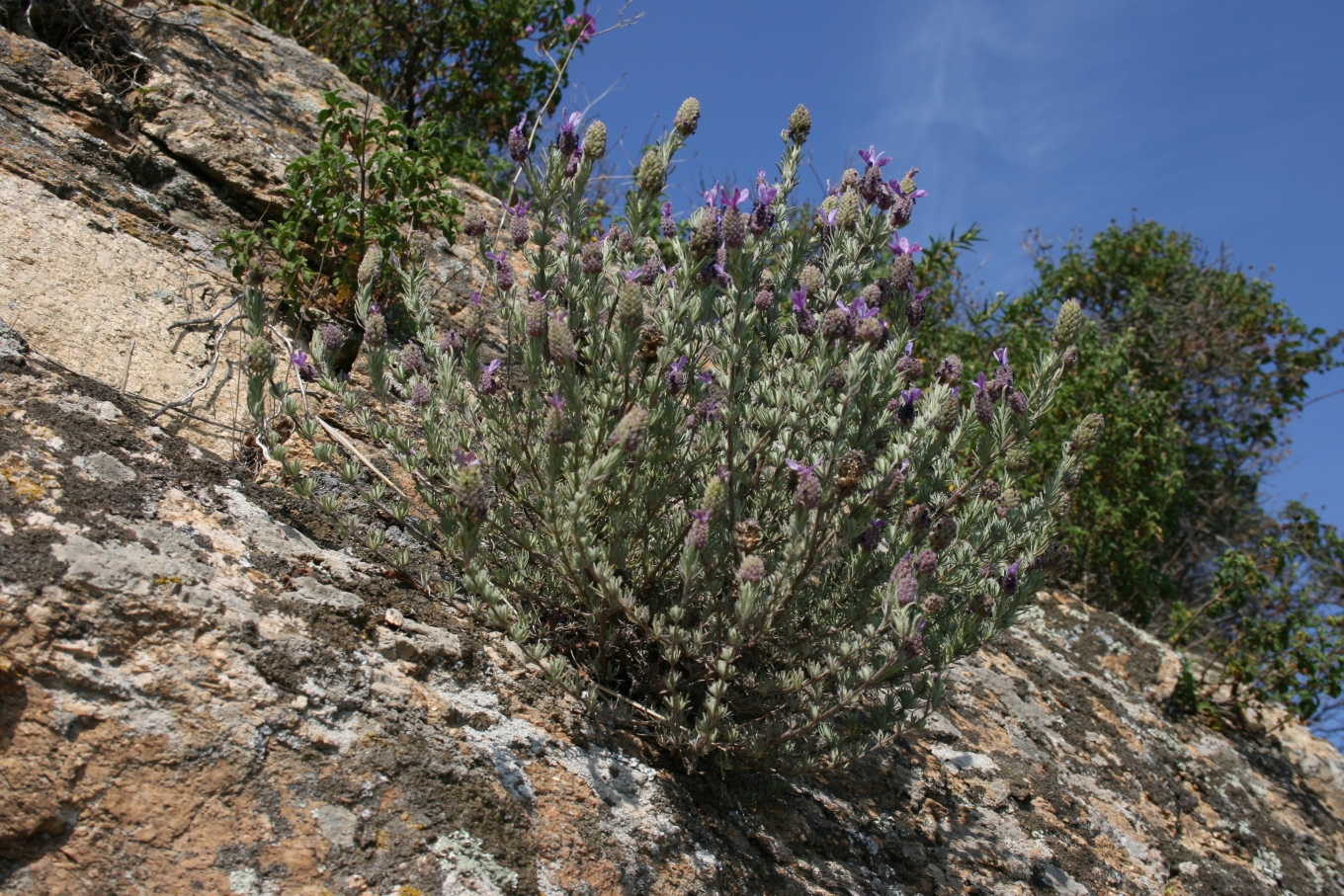
Lavandula stoechas
Linnaea borealis

A subshrub (Latin suffrutex), undershrub, or shrublet[1] is either a small shrub (e.g. prostrate shrubs) or a perennial that is largely herbaceous but slightly woody at the base (e.g. garden pink and florist's chrysanthemum).[2] The term is often interchangeable with "bush".[3]

Because the criteria are matters of degree (typically height) rather than kind, the definition of a subshrub is not sharply distinguishable from that of a shrub; examples of reasons for describing plants as subshrubs include ground-hugging stems or a low growth habit. Subshrubs may be largely herbaceous, although still classified as woody, with overwintering perennial woody growth that is much lower-growing than the deciduous summer growth. Some plants described as subshrubs are only weakly woody, and some persist for only a few years at most. Others, such as Oldenburgia paradoxa, live indefinitely (though they are still vulnerable to external effects), rooted in rocky cracks.

Small, low shrubs such as lavender, periwinkle, and thyme, and many shrub-like members of the family Ericaceae, such as cranberries and small species of Erica, are often classed as subshrubs.

Definition

[edit]

A chamaephyte, subshrub or dwarf-shrub is a plant that bears hibernating buds on persistent shoots near the ground – usually woody plants with perennating buds borne close to the ground, generally less than 25 centimetres (9.8 in) above the soil surface. The significance of the closeness to the ground is that the buds remain within the soil surface layer and are thus somewhat protected from various adverse external influences. Accordingly, the chamaephyte habit is prevalent in stressful environments, for example:

  • ecosystems on nutrient-poor soils or rock[4]
  • exposed alpine or arctic ecosystems where seasonal or perennial wind and freezing conditions are prone to kill vulnerable growing shoots[5]
  • ecosystems subject to frequent fires and burning, where many species of e.g. Banksia or Eucalyptus regrow from a lignotuber or caudex.[6]
  • heavily grazed or overgrazed ecosystems, such as tortoise turf[7]

Examples of chamaephytes

[edit]

The term chamaephyte is most formally used within the context of Raunkiær plant life-forms' classification. Examples of chamaephytes are many of the species living in the maquis shrubland and other plants of submediterranean dry ecosystems (species such as thyme, Thymus vulgaris, and rosemary, Salvia rosmarinus); others include heather species (e.g. Calluna vulgaris and Ericas), African wild olive (Olea europaea subsp. cuspidata) and edelweiss (Leontopodium alpinum). Chamaephytes also include cushion plants.[8]

See also

[edit]

References

[edit]
Revisions and contributorsEdit on WikipediaRead on Wikipedia
from Grokipedia
A subshrub is a with woody stems at the proximal base and herbaceous or semi-woody distal stems and twigs that typically die back seasonally, distinguishing it from fully woody shrubs. These plants are characterized by overwintering buds located near the base, allowing regrowth from the woody foundation each season, and they often exhibit a low, multi-stemmed growth habit from the ground level. Subshrubs generally attain heights of less than 1 meter, though some species can reach a few meters, and their woodiness is partial, grading into herbaceous forms. Subshrubs are widespread across various ecosystems, particularly in Mediterranean, arid, and temperate regions where their semi-woody structure supports adaptation to seasonal stresses like or frost. They are often landscape dominants in these habitats, contributing to through high species diversity and supporting pollinators via wind or insect . In fire-prone habitats such as , subshrubs contribute to post-fire recovery through resprouting from basal structures. Notable examples include lavender (), (Erica spp.), and ( × clandonensis), which are valued in for their compact form, aromatic foliage, and ornamental flowers. These plants often belong to families like , , and , and their distribution spans continents, excluding extreme polar or tropical rainforest zones.

Definition and Characteristics

Definition

A subshrub, also known as a suffrutex or dwarf shrub, is a characterized by a woody base or lower stems that persist year-round, while the upper shoots are herbaceous and die back seasonally. This growth habit positions the subshrub as an intermediate form between fully herbaceous s and true s, with lignified tissue primarily at the base supporting regrowth each season. The term "subshrub" derives from the Latin prefix "sub-" (meaning under or below) combined with "frutex" ( or bush), highlighting its partially woody, subordinate structure compared to full . In botanical , the woody tissue is typically limited to the basal region, often up to 10-30 cm in height, above which the plant produces annual herbaceous growth that perishes in adverse conditions. Subshrubs represent a subtype of chamaephytes, plants with overwintering buds positioned close to the ground on persistent shoots.

Morphological Features

Subshrubs exhibit a distinctive stem structure characterized by a persistent woody or positioned at or near ground level, from which flexible, herbaceous stems emerge and extend upward. These upper stems are capable of senescing or dying back during periods of environmental stress, such as or , allowing the to regrow from the protected woody base in favorable conditions. This architecture provides a balance between perennial persistence and seasonal adaptability, aligning with the general definition of subshrubs as low-growing woody s. The perennating buds of subshrubs are typically located 0-25 cm above the surface, positioned on the persistent woody portions to minimize exposure to harsh conditions. These buds are often shielded by surrounding , cover, or the plant's own basal structure, enhancing in arid, alpine, or seasonal climates. This low bud placement distinguishes subshrubs within chamaephyte life forms and facilitates rapid renewal after dieback. In terms of height, subshrubs typically reach overall heights of less than 1 meter, though some species can exceed 2 meters, with the woody basal portion remaining under 30 cm tall. Leaf and shoot traits further reflect this dimorphic growth: lower leaves on the semi-woody base tend to be persistent and sclerophyllous for durability, while upper leaves on the herbaceous shoots are deciduous, shedding during senescence to conserve resources. Branching patterns often feature basally clustered stems arising from the caudex, promoting a dense, cushion-like habit that aids in protection and resource capture.

Classification

Raunkiaer's Life Form

Christen C. Raunkiaer's life form classification system categorizes based on the position and protection of their perennating buds relative to the soil surface during unfavorable seasons, such as winter or , to assess adaptive strategies to environmental stress. This approach emphasizes the vertical placement of renewal buds as a key indicator of survival mechanisms, with categories including therophytes (annuals surviving as seeds), cryptophytes (buds belowground), hemicryptophytes (buds at soil level), chamaephytes (buds 0–25 cm above soil), and phanerophytes (buds more than 25–30 cm above soil). The system was originally developed for temperate vegetation but has been applied globally to analyze phytoclimatic spectra. Subshrubs are primarily classified as chamaephytes within Raunkiaer's framework, or dwarf shrubs, due to their low stature and placement of perennating buds on persistent shoots just above the ground surface, typically within 25 cm. This positioning allows subshrubs to exploit the insulating effects of and cover for protection, enabling regrowth from protected buds after harsh conditions. The woody of most subshrubs aligns them distinctly with the chamaephyte category. Some taller subshrubs may be classified as nanophanerophytes if their perennating buds are positioned more than 25 cm above the surface. Raunkiaer introduced this classification in a series of works between 1904 and 1907, with the foundational Danish publication in 1904 and further elaboration in 1907, later compiled and translated into English in 1934. In temperate zones, chamaephytes, including subshrubs, typically comprise 5–10% of the , reflecting moderate climatic conditions where taller phanerophytes and hemicryptophytes dominate. However, the proportion of chamaephytes in vegetation serves as an indicator of climatic severity; percentages exceeding 20% are characteristic of harsh environments like , where low-growing forms predominate for protection against extreme cold and wind.

Comparisons to Other Forms

Subshrubs differ from primarily in their partial woodiness and persistence. While are typically non-woody, herbaceous that die back completely at the end of their life cycle—either as annuals or perennials with full aboveground dieback—subshrubs maintain a woody base or lower stems that persist year-round, allowing for partial dieback of upper herbaceous portions only. This woody persistence enables subshrubs to survive unfavorable seasons more effectively than fully herbaceous forms. In contrast to shrubs, subshrubs are generally smaller and exhibit less extensive lignification. Shrubs are defined as multi-stemmed, fully woody perennials typically exceeding 50 cm in height, with persistent woody stems throughout, whereas subshrubs are generally less than 1 m tall, though some can reach a few meters, and feature only basal woodiness, with upper stems often herbaceous and semi-woody at most. This distinction positions subshrubs as intermediate in stature and structure between herbs and taller, more robust shrubs. Within Raunkiaer's life-form classification, subshrubs fall under the chamaephyte category, which encompasses plants with perennating buds positioned 25–30 cm or less above the soil surface; however, subshrubs specifically emphasize a woody basal structure, differing from purely herbaceous chamaephytes that form cushions or rosettes without lignified tissues, such as certain in the . Unlike lianas or vines, which are woody climbers that rely on external support for vertical growth through twining or tendrils, subshrubs adopt an upright, low-growing habit without climbing mechanisms, remaining self-supporting and confined to ground level. Subshrubs often function as evolutionary transitional forms between herbaceous and fully shrubby growth habits, particularly in arid or environments where partial woodiness provides adaptive advantages for resource conservation and protection against environmental stresses.

Examples

Temperate Examples

In temperate regions, subshrubs are well-represented by species adapted to seasonal climates with moderate and cooler winters, often found in herbaceous borders, grasslands, and woodland edges. These plants typically exhibit a partially woody base that persists through seasons, with above-ground growth that may become herbaceous or die back annually. A prominent example is (common sage), a semi-woody subshrub native to the Mediterranean temperate zones. It features a woody base with stems that become more herbaceous toward the tips, reaching heights of 30-60 cm overall. This structure allows it to maintain persistence in mild temperate conditions while renewing foliage each year. Another characteristic temperate subshrub is (thyme), which grows low to the ground at 10-30 cm tall and forms a bushy with persistent basal woodiness. Highly aromatic due to its essential oils, it thrives in European grasslands and dry, open habitats, where the woody lower stems provide durability against periodic mowing or grazing. (English lavender) exemplifies the suffrutescent common among temperate subshrubs, with silver-gray leaves that offer year-round interest and a compact form that can reach 30-60 cm in height. In harsher continental winters, its above-ground parts may die back, relying on the woody base for regrowth in spring, making it suitable for USDA zones 5-9. Subshrubs like these are prevalent in Mediterranean and continental temperate floras, where they contribute significantly to the diversity of vegetation, often dominating layers in forests and scrublands with high .

Arid and Alpine Examples

In arid environments, such as semi-arid steppes of the , Gutierrezia sarothrae (broom snakeweed) exemplifies a subshrub with a persistent woody base supporting herbaceous shoots that can reach up to 1 meter in height. This growth form allows the to maintain basal persistence amid seasonal droughts, with the woody lower stems providing structural longevity while upper portions die back annually. In high-altitude , Saxifraga oppositifolia (purple saxifrage) forms dense, cushion-like subshrubs where woody branches develop over time, and buds positioned close to the ground offer protection from harsh winds and frost. These compact structures, often growing in mossy or rocky substrates at elevations up to 4,000 meters, enable the plant to thrive in exposed, cold-dominated settings across and mountainous regions. Similarly, in North American desert landscapes, Eriogonum umbellatum (sulphur-flower buckwheat) grows as a low subshrub with woody crowns forming broad mats up to 4 feet wide, from which annual flowering stems emerge 3 to 16 inches tall. Adapted to dry, rocky soils in sagebrush scrub and pinyon-juniper woodlands at elevations from 700 to 12,000 feet, this species blooms from June to October, supporting pollinators in nutrient-poor, arid conditions. Subshrubs, often classified as chamaephytes in Raunkiaer's life-form system due to their renewal buds near the surface, occur in higher proportions in arid shrublands and alpine zones compared to temperate regions where they form a smaller fraction. This elevated diversity underscores their role in extreme environments, where low stature and partial woodiness facilitate resilience to and temperature fluctuations.

Ecology and Adaptations

Habitats and Distribution

Subshrubs primarily inhabit slopes, grasslands, shrublands, and edges across temperate, Mediterranean, arid, and alpine zones, where well-drained soils and full prevail. These environments provide the and microclimatic conditions suited to their low-growing, partially woody , often in areas with low from taller . Globally, subshrubs are widespread in the , encompassing and , with notable presence in parts of such as inland . They are scarce in tropical regions, including rainforests, owing to the absence of pronounced seasonal dieback requirements in consistently warm, humid climates. Subshrubs thrive in climates featuring cold or dry winters, correlating with their prevalence in seasonal environments that favor protective bud placement near the surface. In alpine zones, chamaephytes, which include many subshrubs, comprise about 24% in Pyrenean alpine vegetation. Their frequency increases with elevation or aridity.

Survival Mechanisms

Subshrubs, characterized by their low stature and persistent woody bases, protect their perennating buds—typically located less than 30 cm above the ground surface—through structural adaptations that minimize exposure to extreme environmental stresses. The compact growth form reduces vulnerability to high winds and by limiting the height of aerial shoots, thereby conserving in arid and windy habitats such as Mediterranean shrublands and alpine meadows. Additionally, the accumulation of leaf litter around the base creates an insulating layer that moderates temperature fluctuations, delaying freezing and reducing penetration to overwintering buds during cold periods. Resource allocation in subshrubs prioritizes survival over expansive growth, with carbohydrates and nutrients stored in the lignified basal stems or root crowns to support rapid regrowth after seasonal dieback. This storage enables quick recovery in spring, allowing herbaceous tops to emerge from protected meristems while minimizing energy expenditure during . To further conserve water, many subshrubs exhibit reduced rates through morphological traits such as small, sclerophyllous leaves or reduced leaf area, which limit water loss in dry environments without compromising . For instance, species in hot, arid regions allocate resources to thicken leaf cuticles and decrease stomatal density, enhancing . Reproduction in subshrubs often integrates vegetative and sexual strategies to ensure persistence in unpredictable conditions. Vegetative propagation via rhizomes or basal shoots allows clonal expansion and local persistence, particularly in disturbed or nutrient-poor soils where seedling establishment is challenging. Complementing this, produces seeds with mechanisms that prevent during harsh periods, such as prolonged droughts or frost, synchronizing emergence with favorable moist conditions. This dual approach, observed in genera like Artemisia and , buffers against environmental variability by maintaining while enabling rapid colonization. Subshrubs demonstrate resilience to disturbances like , and through the strategic positioning of basal meristems, which facilitate resprouting from protected underground or tissues. These meristems, shielded by or , allow recovery after top-kill events, with many exhibiting vigorous regrowth post-fire due to stored reserves that new shoot production. In grazed systems, such as semi-arid grasslands, this basal resprouting minimizes mortality and maintains cover, as seen in subshrubs like , which tolerate repeated herbivory by reallocating resources to protected buds. During droughts, resprouting from woody bases similarly enables survival, though prolonged stress can deplete reserves and limit vigor.

Uses and Cultivation

Horticultural Applications

Subshrubs are valued in for their compact, woody-based growth that allows them to serve as low-maintenance ornamental plants, particularly as ground covers in rock gardens and borders. Species such as creeping thyme () form dense, fragrant mats that suppress weeds and tolerate foot traffic, making them ideal for pathways or sunny slopes. Lavender ( spp.), another common subshrub, provides aromatic foliage and purple blooms for edging beds or creating informal hedges, enhancing visual appeal while requiring minimal upkeep once established. In medicinal and herbal applications, subshrubs like common sage () are cultivated for their therapeutic properties, including use in teas and essential oils to aid , reduce , and soothe sore throats. These plants have been integral to herbalism since Roman times, when sage was revered as a for ceremonial and healing purposes. is straightforward via semi-hardy cuttings taken from the woody bases in spring or summer, rooting readily in well-aerated medium to produce new plants identical to the parent. Cultivation of subshrubs emphasizes well-drained, sandy or loamy soils in full sun to promote healthy growth and prevent issues like legginess. Regular after flowering encourages bushiness by removing spent stems and stimulating new shoots from the persistent woody framework. Many species, including sage and , are hardy in USDA zones 5-9, tolerating moderate winters but benefiting from mulching in colder areas to protect the semi-woody crowns. A primary challenge in subshrub cultivation is their susceptibility to in overly wet or poorly drained conditions, where fungal pathogens thrive and cause crown decay, particularly in species like sage during prolonged rainy periods. To mitigate this, gardeners should amend heavy soils with grit and avoid overhead watering, ensuring the morphological adaptations like shallow roots and are not compromised by excess moisture.

Ecological Roles

Subshrubs play vital roles in maintaining stability and function, particularly in harsh environments such as arid, alpine, and Mediterranean habitats where their semi-woody structure allows persistence amid disturbances like , , and . As , especially in cushion-forming varieties, they modify local microclimates by reducing temperature extremes and increasing , thereby buffering abiotic stresses that would otherwise limit community assembly. This facilitation extends to higher trophic levels, enhancing overall resilience. In terms of , subshrubs contribute significantly through their extensive root systems, which bind particles and prevent on slopes and in disturbed landscapes. For instance, cushion subshrubs like those in alpine regions create compact structures that trap sediments and , improving soil cohesion and reducing runoff during heavy rains or . Certain species also engage in symbiotic associations, such as with microbes, which enriches nutrient-poor substrates and supports long-term in degraded areas. Subshrubs bolster by providing essential resources and habitats. Their flowers offer and to pollinators, increasing visitation rates and supporting diversity, while their dense forms serve as microhabitats for , fostering higher abundance and compared to surrounding open ground. This nurse-plant effect further aids establishment, promoting overall community diversity in stressful ecosystems. As , subshrubs often colonize disturbed sites post-fire or , dominating early succession stages and facilitating the transition to more complex shrublands by ameliorating conditions for later-arriving . Their presence can indicate recovering ecosystems, such as in post-disturbance regeneration, or signal ongoing stress in fragile habitats like steppes and tundras.

References

Add your contribution
Related Hubs
User Avatar
No comments yet.