Hubbry Logo
SyringeSyringeMain
Open search
Syringe
Community hub
Syringe
logo
8 pages, 0 posts
0 subscribers
Be the first to start a discussion here.
Syringe
Syringe
from Wikipedia
Syringe
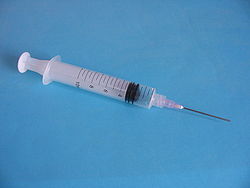
A typical plastic medical syringe fitted with a detachable stainless steel needle; the syringe is fitted with a male Luer lock fitting which the needle, which is equipped with a female Luer-Lock fitting (purple), screws into
ClassificationMedical device
IndustryHealthcare
ApplicationInjection
InventorCharles Pravaz (screw)
Alexander Wood (plunger)
Invented1853 (172 years ago) (1853)
Disposable syringe with needle, with parts labelled: plunger, barrel, needle adaptor, needle hub, needle bevel, needle shaft
According to the World Health Organization, about 90% of the medical syringes are used to administer drugs, 5% for vaccinations and 5% for other uses such as blood transfusions.[1]

A syringe is a simple reciprocating pump consisting of a plunger (though in modern syringes, it is actually a piston) that fits tightly within a cylindrical tube called a barrel. The plunger can be linearly pulled and pushed along the inside of the tube, allowing the syringe to take in and expel liquid or gas through a discharge orifice at the front (open) end of the tube. The open end of the syringe may be fitted with a hypodermic needle, a nozzle or tubing to direct the flow into and out of the barrel. Syringes are frequently used in clinical medicine to administer injections, infuse intravenous therapy into the bloodstream, apply compounds such as glue or lubricant, and draw/measure liquids. There are also prefilled syringes (disposable syringes marketed with liquid inside).

The word "syringe" is derived from the Greek σῦριγξ (syrinx, meaning "Pan flute", "tube").

Medical syringes

[edit]
The threads of the Luer lock tip of this 12mL disposable syringe keep it securely connected to a tube or other apparatus.
Syringe made entirely of glass, with no parts made from plastic nor any other material
An antique glass and metal syringe

Medical syringes include disposable and safety syringes, injection pens, needleless injectors, insulin pumps, and specialty needles.[2] Hypodermic syringes are used with hypodermic needles to inject liquid or gases into body tissues, or to remove from the body. Injecting of air into a blood vessel is hazardous, as it may cause an air embolism; preventing embolisms by removing air from the syringe is one of the reasons for the familiar image of holding a hypodermic syringe pointing upward, tapping it, and expelling a small amount of liquid before an injection into the bloodstream.

The barrel of a syringe is made of plastic or glass, usually has graduated marks indicating the volume of fluid in the syringe, and is nearly always transparent. Glass syringes may be sterilized in an autoclave. Plastic syringes can be constructed as either two-part or three-part designs. A three-part syringe contains a plastic plunger/piston with a rubber tip to create a seal between the piston and the barrel, where a two-part syringe is manufactured to create a perfect fit between the plastic plunger and the barrel to create the seal without the need for a separate synthetic rubber piston. Two-part syringes have been traditionally used in European countries to prevent introduction of additional materials such as silicone oil needed for lubricating three-part plungers.[3] Most modern medical syringes are plastic because they are cheap enough to dispose of after being used only once, reducing the risk of spreading blood-borne diseases. Reuse of needles and syringes has caused spread of diseases, especially HIV and hepatitis, among intravenous drug users. Syringes are also commonly reused by diabetics, as they can go through several in a day with multiple daily insulin injections, which becomes an affordability issue for many. Even though the syringe and needle are only used by a single person, this practice is still unsafe as it can introduce bacteria from the skin into the bloodstream and cause serious and sometimes lethal infections.[4] In medical settings, single-use needles and syringes effectively reduce the risk of cross-contamination.[5]

Medical syringes are sometimes used without a needle for orally administering liquid medicines to young children or animals, or milk to small young animals, because the dose can be measured accurately and it is easier to squirt the medicine into the subject's mouth instead of coaxing the subject to drink out of a measuring spoon.

Tip designs

[edit]

Syringes come with a number of designs for the area in which the blade locks to the syringe body. Perhaps the most well known of these is the Luer lock, which simply twists the two together.

Bodies featuring a small, plain connection are known as slip tips and are useful for when the syringe is being connected to something not featuring a screw lock mechanism.

Similar to this is the catheter tip, which is essentially a slip tip but longer and tapered, making it good for pushing into things where there the plastic taper can form a tight seal. These can also be used for rinsing out wounds or large abscesses in veterinary use.

There is also an eccentric tip, where the nozzle at the end of the syringe is not in the centre of the syringe but at the side. This causes the blade attached to the syringe to lie almost in line with the walls of the syringe itself and they are used when the blade needs to get very close to parallel with the skin (when injecting into a surface vein or artery for example).

Standard U-100 insulin syringes

[edit]
Insulin syringes are marked in insulin "units".

Syringes for insulin users are designed for standard U-100 insulin. The dilution of insulin is such that 1 mL of insulin fluid has 100 standard "units" of insulin.[6] A typical insulin vial may contain 10 mL, for 1000 units.

Insulin syringes are made specifically for a patient to inject themselves, and have features to assist this purpose when compared to a syringe for use by a healthcare professional:

  • shorter needles,[7] as insulin injections are subcutaneous (under the skin) rather than intramuscular,
  • finer gauge needles,[7] for less pain,
  • markings in insulin units to simplify drawing a measured dose of insulin, and[8]
  • low dead space to reduce complications caused by improper drawing order of different insulin strengths.[9]

Multishot needle syringes

[edit]

There are needle syringes designed to reload from a built-in tank (container) after each injection, so they can make several or many injections on a filling. These are not used much in human medicine because of the risk of cross-infection via the needle. An exception is the personal insulin autoinjector used by diabetic patients and in dual-chambered syringe designs intended to deliver a prefilled saline flush solution after the medication.[21]

Venom extraction syringes

[edit]

Venom extraction syringes are different from standard syringes, because they usually do not puncture the wound. The most common types have a plastic nozzle which is placed over the affected area, and then the syringe piston is pulled back, creating a vacuum that allegedly sucks out the venom. Attempts to treat snakebites in this way are specifically advised against, as they are ineffective and can cause additional injury.[22]

Syringes of this type are sometimes used for extracting human botfly larvae from the skin.[23]

Oral

[edit]

An oral syringe is a measuring instrument used to accurately measure doses of liquid medication, expressed in millilitres (mL). They do not have threaded tips, because no needle or other device needs to be screwed onto them. The contents are simply squirted or sucked from the syringe directly into the mouth of the person or animal.

Oral syringes are available in various sizes, from 1–10 mL and larger. An oral syringe is typically purple in colour to distinguish it from a standard injection syringe with a luer tip.[24] The sizes most commonly used are 1 mL, 2.5 mL, 3 mL, 5 mL and 10 mL.[25]

Dental syringes

[edit]

A dental syringe is used by dentists for the injection of an anesthetic.[26] It consists of a breech-loading syringe fitted with a sealed cartridge containing an anesthetic solution.

In 1928, Bayer Dental developed, coined and produced a sealed cartridge system under the registered trademark Carpule®. The current trademark owner is Kulzer Dental GmbH.

The carpules have long been reserved for anesthetic products for dental use. It is practically a bottomless flask. The latter is replaced by an elastomer plug that can slide in the body of the cartridge. This plug will be pushed by the plunger of the syringe. The neck is closed with a rubber cap. The dentist places the cartridge directly into a stainless steel syringe, with a double-pointed (single-use) needle. The tip placed on the cartridge side punctures the capsule and the piston will push the product. There is therefore no contact between the product and the ambient air during use.

The ancillary tool (generally part of a dental engine) used to supply water, compressed air or mist (formed by combination of water and compressed air) to the oral cavity for the purpose of irrigation (cleaning debris away from the area the dentist is working on), is also referred to as a dental syringe or a dental irrigation nozzle.

A 3-way syringe/nozzle has separate internal channels supplying air, water or a mist created by combining the pressurized air with the waterflow. The syringe tip can be separated from the main body and replaced when necessary.

In the UK and Ireland, manually operated hand syringes are used to inject lidocaine into patients' gums.[27][28][26]

Dose-sparing syringes

[edit]
A dose-sparing syringe and needle being used to draw up a COVID-19 vaccine

A dose-sparing syringe is one which minimises the amount of liquid remaining in the barrel after the plunger has been depressed. These syringes feature a combined needle and syringe, and a protrusion on the face of the plunger to expel liquid from the needle hub. Such syringes were particularly popular during the COVID-19 pandemic as vaccines were in short supply.[29]

Regulation

[edit]

In some jurisdictions, the sale or possession of hypodermic syringes may be controlled or prohibited without a prescription,[30] due to its potential use with illegal intravenous drugs.[31]

Non-medical uses

[edit]

The syringe has many non-medical applications.

Laboratory applications

[edit]
Laboratory grease, commonly used to lubricate ground glass joints and stopcocks, is sometimes loaded in syringes for easy application.
Some chemical compounds, such as thermal paste and various glues, e.g. epoxy, are sold in prepackaged syringes.

Medical-grade disposable hypodermic syringes are often used in research laboratories for convenience and low cost. Another application is to use the needle tip to add liquids to very confined spaces, such as washing out some scientific apparatus. They are often used for measuring and transferring solvents and reagents where a high precision is not required. Alternatively, microliter syringes can be used to measure and dose chemicals very precisely by using a small diameter capillary as the syringe barrel.

The polyethylene construction of these disposable syringes usually makes them rather chemically resistant. There is, however, a risk of the contents of the syringes leaching plasticizers from the syringe material. Non-disposable glass syringes may be preferred where this is a problem. Glass syringes may also be preferred where a very high degree of precision is important (i.e. quantitative chemical analysis), because their engineering tolerances are lower and the plungers move more smoothly. In these applications, the transfer of pathogens is usually not an issue.

Used with a long needle or cannula, syringes are also useful for transferring fluids through rubber septa when atmospheric oxygen or moisture are being excluded. Examples include the transfer of air-sensitive or pyrophoric reagents such as phenylmagnesium bromide and n-butyllithium respectively. Glass syringes are also used to inject small samples for gas chromatography (1 μl) and mass spectrometry (10 μl). Syringe drivers may be used with the syringe as well.

Cooking

[edit]

Some culinary uses of syringes are injecting liquids (such as gravy) into other foods, or for the manufacture of some candies.

Syringes may also be used when cooking meat to enhance flavor and texture by injecting juices inside the meat, and in baking to inject filling inside a pastry. It is common for these syringes to be made of stainless steel components, including the barrel. Such facilitates easy disassembly and cleaning.

Others

[edit]

Syringes are used to refill ink in fountain pens and printer ink cartridges.

Common workshop applications include injecting glue into tight spots to repair joints where disassembly is impractical or impossible; and injecting lubricants onto working surfaces without spilling.

Sometimes a large hypodermic syringe is used without a needle for very small baby mammals to suckle from in artificial rearing.

Historically, large pumps that use reciprocating motion to pump water were referred to as syringes. Pumps of this type were used as early firefighting equipment.

There are fountain syringes where the liquid is in a bag or can and goes to the nozzle via a pipe. In earlier times, clyster syringes were used for that purpose.

Loose snus is often applied using modified syringes. The nozzle is removed so the opening is the width of the chamber. The snus can be packed tightly into the chamber and plunged into the upper lip. Syringes, called portioners, are also manufactured for this particular purpose.

Historical timeline

[edit]
De Medicina by the Roman author Aulus Cornelius Celsus, later the first medical textbook to be printed
  • Piston syringes were used in ancient times. During the 1st century AD Aulus Cornelius Celsus mentioned the use of them to treat medical complications in his De Medicina.[32]
  • 9th century: The Iraqi/Egyptian surgeon Ammar ibn 'Ali al-Mawsili' described a syringe in the 9th century using a hollow glass tube, and suction to remove cataracts from patients' eyes, a practice that remained in use until at least the 13th century.[33]
  • Pre-Columbian Native Americans created early hypodermic needles and syringes using "hollow bird bones and small animal bladders".[34][35]
  • 1650: Blaise Pascal invented a syringe (not necessarily hypodermic) as an application of what is now called Pascal's law.
  • 1844: Irish physician Francis Rynd invented the hollow needle and used it to make the first recorded subcutaneous injections, specifically a sedative to treat neuralgia.
  • 1853: Charles Pravaz and Alexander Wood independently developed medical syringes with a needle fine enough to pierce the skin. Pravaz's syringe was made of silver and used a screw mechanism to dispense fluids. Wood's syringe was made of glass, enabling its contents to be seen and measured, and used a plunger to inject them. It is effectively the syringe that is used today.
  • 1865: Charles Hunter coined the term "hypodermic", and developed an improvement to the syringe that locked the needle into place so that it would not be ejected from the end of the syringe when the plunger was depressed, and published research indicating that injections of pain relief could be given anywhere in the body, not just in the area of pain, and still be effective.[36]
  • 1867: The Medical and Chirurgical Society of London investigated whether injected narcotics had a general effect (as argued by Hunter) or whether they only worked locally (as argued by Wood). After conducting animal tests and soliciting opinions from the wider medical community, they firmly sided with Hunter.[36]
  • 1894: Luer taper allows two part syringes where the needle and syringe are easily fitted together or separated.
  • 1899: Letitia Mumford Geer patented a syringe which could be operated with one hand and which could be used for self-administered rectal injections.[37][38]
  • 1946: Chance Brothers in Smethwick, West Midlands, England, produced the first all-glass syringe with interchangeable barrel and plunger, thereby allowing mass-sterilisation of components without the need for matching them.
  • 1949: Australian inventor Charles Rothauser created the world's first plastic, disposable hypodermic syringe at his Adelaide factory.[citation needed]
  • 1951: Rothauser produced the first injection-moulded syringes made of polypropylene, a plastic that can be heat-sterilised. Millions were made for Australian and export markets.
  • 1956: New Zealand pharmacist and inventor Colin Murdoch was granted New Zealand and Australian patents for a disposable plastic syringe.

See also

[edit]
  • Fire syringe has two meanings:
  • Autoinjector, a device to ease injection, e.g. by the patient or other untrained personnel.
  • Hippy Sippy
  • Jet injector, injects without a needle, by squirting the injection fluid so fast that it makes a hole in the skin.
  • Luer taper, a standardized fitting system used for making leak-free connections between syringe tips and needles.
  • Needle exchange programme, is a social policy based on the philosophy of harm reduction where injecting drug users (IDUs) can obtain hypodermic needles and associated injection equipment at little or no cost.
  • Trypanophobia, a fairly common extreme fear of hypodermic syringes
  • Syrette, similar to a syringe except that it has a closed flexible tube (like that used for toothpaste) instead of a rigid tube and piston.
  • Syringing the ear to remove excess ear wax.
  • Syrinx, the nymph from classical mythology after which syringes were supposedly named.
  • Safety syringe, with features to prevent accidental needlesticks and reuse
  • Vaginal syringe

References

[edit]

Further reading

[edit]
[edit]
Revisions and contributorsEdit on WikipediaRead on Wikipedia
from Grokipedia

A syringe is a syringe consisting of a calibrated hollow barrel and a movable intended for medical purposes to draw or expel drugs or biological products through precise and administration. Syringes are essential devices for injecting medication into or withdrawing fluid from the body, facilitating treatments such as vaccinations, insulin delivery, and diagnostic aspirations. The modern hypodermic syringe, enabling subcutaneous injections, was credited to Scottish physician Alexander Wood in 1853 as a means to localize relief through . Subsequent innovations included all-glass designs for sterility and disposable variants patented by Arthur E. Smith in the mid-20th century, reducing risks associated with reuse. Common types encompass Luer lock syringes for secure needle attachment, insulin syringes calibrated for small doses, and safety syringes featuring mechanisms to prevent needlestick injuries. While primarily medical, syringes also serve applications for fluid handling and non-medical uses like , though medical contexts dominate due to their role in precise therapeutic interventions.

Fundamentals

Definition and Components

A syringe is a designed to inject into the body or withdraw from it, functioning as a simple . It typically comprises a cylindrical barrel that holds the , a that creates or to move the , and a tip for attachment to a needle or direct administration. Modern syringes are often disposable and made from or , with the barrel featuring graduated markings for precise volume measurement in units such as milliliters. The barrel forms the primary structure, a hollow calibrated with indicators to ensure accurate dosing, typically ranging from 0.5 mL to 60 mL depending on the application. Inside the barrel, the assembly includes a plunger rod for manual operation and a seal or , often rubber, that maintains an airtight fit to prevent leakage during aspiration or injection. The tip of the syringe, located at the distal end of the barrel, connects to a needle hub in hypodermic variants or serves as a Luer lock or slip fitting for secure attachment. In hypodermic syringes, the needle assembly adds critical components: the hub attaches to the syringe tip, the shaft provides the piercing length, and the forms the sharpened, slanted end for skin penetration with minimal trauma. Needle gauges, standardized by the system, range from 14 (thicker for viscous fluids) to 31 (finer for delicate injections), influencing flow rate and tissue damage. These elements collectively enable controlled fluid displacement via manual plunger movement, adhering to principles of positive displacement pumping.

Principles of Operation

A syringe functions as a positive displacement , where linear movement of the within the cylindrical barrel displaces to achieve or expulsion. Retraction of the increases the internal volume of the barrel, reducing relative to the external environment and creating a partial that draws into the syringe through the distal tip or needle. This aspiration relies on the pressure differential, with atmospheric or source forcing incompressible liquids inward, assuming a tight seal between the and barrel to minimize air leakage or . Advancement of the plunger decreases the barrel's internal volume, applying force to the contained fluid and generating hydrostatic that expels it outward via the same opening. This process adheres to Pascal's principle, whereby exerted on an enclosed, incompressible fluid transmits uniformly throughout the system and to the outlet, enabling precise delivery despite the small cross-sectional area of the needle. The plunger's rubber or elastomeric seal ensures minimal leakage, maintaining integrity during operation, while the barrel's smooth interior facilitates low-friction movement to reduce required force. In hypodermic applications, the needle's lumen provides resistance that the generated must overcome to penetrate tissue and deposit subcutaneously, intramuscularly, or intravenously, with injection forces typically ranging from 5 to 50 Newtons depending on gauge and . The derives from the plunger's larger surface area compared to the needle, amplifying (P = F/A) for effective penetration without excessive hand force. Dead space in the hub or tip, minimized in modern designs, affects dosing accuracy by retaining residual post-expulsion.

Historical Development

Ancient and Pre-Modern Precursors

In , enema procedures for bowel evacuation were documented as early as 1550 BCE in the , employing rudimentary devices such as animal bladders connected to tubes or reeds to introduce fluids rectally, inspired by observations of natural irrigation like the ibis bird drawing water through its beak. These tools functioned on basic pressure principles, using manual squeezing to propel liquids, primarily for purgative or cleansing purposes rather than precise dosing. Greek and Roman civilizations refined such implements into more structured forms. Hollow reeds served as conduits for anointing the body with oils or irrigating orifices and wounds, as noted in classical medical literature. The physician Galen (c. 129–200 CE) described piston syringes—cylindrical barrels with sliding plungers—for applying ointments and creams to treat skin conditions or abscesses, marking an early mechanical advancement in fluid delivery. Similarly, Aulus Cornelius Celsus in his 1st-century CE treatise De Medicina detailed the use of piston syringes for irrigating the ear to extract hardened wax or pus, as well as for other localized applications like wound cleaning, emphasizing their role in surgical adjuncts. Medieval Islamic medicine contributed specialized precursors, such as the glass tubes employed by ophthalmologist Ammar bin Ali al-Mawsili (c. 900 CE) for during cataract extraction, adapting syringe-like aspiration for delicate procedures. In pre-modern , clysters—enema syringes with bulbous reservoirs or mechanisms and nozzles—became commonplace by the for therapeutic evacuation, often incorporating metals or for durability, though limited by imprecise control and risks. These devices, while effective for bulk fluid administration, lacked the fine needles or sterility of later innovations, relying instead on , manual , or for operation.

17th-19th Century Inventions

In 1656, English architect and scientist conducted the first recorded experiments with intravenous injection using a primitive syringe consisting of a tube attached to an animal , which he filled with wine, ale, or solution and injected into dogs at to study circulatory effects. These experiments demonstrated the feasibility of direct vascular but lacked precision and sterility, relying on rudimentary materials prone to leakage and . Wren's work, influenced by contemporary anatomical studies, marked an early conceptual shift toward systemic drug administration beyond oral or topical methods. By the late 17th century, Dutch anatomist developed a more advanced syringe around , featuring a metal barrel directly attached to a needle-like , primarily for injecting fluids into animal bladders and reproductive organs during physiological experiments. This device improved control over fluid expulsion compared to bladder-based systems, enabling finer aspiration and infusion in surgical contexts, though it remained unsuitable for human hypodermic use due to its size and lack of hollow, skin-piercing needles. De Graaf's syringe facilitated early understandings of organ function but saw limited clinical adoption until refinements in materials and design emerged later. The 19th century brought pivotal advancements in hypodermic technology. In 1844, Irish physician Francis Rynd devised the first hollow needle for subcutaneous injection, annealing a folded metal to create a lumen for fluid delivery; he used it to administer solutions without a piston syringe, treating in patients via continuous flow from a reservoir. This innovation addressed needs but was cumbersome, lacking the integrated for precise dosing. By 1853, Scottish physician Alexander Wood independently created the first practical hypodermic syringe, combining a barrel with and a sharpened hollow needle, initially for subcutaneous morphine injection to localize analgesia in conditions like . Concurrently, French surgeon Charles-Gabriel Pravaz developed a similar silver syringe with a piston-driven needle for arterial injections in animals, such as coagulants in sheep to staunch bleeding. Wood's version gained prominence for therapeutic use, enabling that bypassed gastrointestinal absorption, though early devices suffered from opacity in (hindering visibility of contents) and risks from reusable, non-sterile components. These inventions, driven by needs in pain relief and , laid the foundation for modern subcutaneous and intravenous administration, with Wood's syringe facilitating morphine's widespread adoption despite emerging concerns.

20th Century Innovations and Mass Production

In the early , refinements in and precision manufacturing enabled the production of more durable and sterilizable all-glass syringes, replacing earlier metal-and-glass hybrids that were prone to leakage and breakage. These reusable designs, often featuring ground-glass fittings, became standard in medical practice, allowing repeated autoclaving to minimize risks. A key innovation occurred in 1946 when Chance Brothers in Smethwick, , developed the first all-glass syringe with an interchangeable barrel and , which streamlined disassembly for thorough sterilization and supported emerging techniques. This design improved in clinical settings by facilitating complete cleaning without compromising seals. Concurrently, in the late , American inventor Arthur E. Smith secured multiple U.S. patents (between 1949 and 1950) for disposable glass syringes, addressing reuse-related contamination concerns though initial adoption was limited by production costs. The pivotal shift toward mass production arrived in 1954, when Becton, Dickinson and Company (BD) manufactured the first widely distributed disposable glass syringes and needles specifically for Jonas Salk's vaccination campaign, which immunized over one million U.S. children and demonstrated the feasibility of single-use devices at scale to prevent cross-contamination in large-scale efforts. This initiative highlighted the causal link between disposable designs and reduced iatrogenic infections, as reusable syringes had previously contributed to outbreaks in mass inoculations. The transition from glass to accelerated post-World War II, driven by injection molding technologies that enabled cheaper, shatter-resistant production; syringes eliminated breakage risks during transport and use while maintaining sterility via pre-packaged formats. New Zealand pharmacist Colin Murdoch patented the first fully disposable syringe in 1956, featuring a hollow metal needle attached to a barrel and , which prioritized single-use sterility over reusability. By 1961, BD introduced the Plastipak, a mass-produced disposable syringe that further lowered costs and expanded global availability, fundamentally altering syringe economics by reducing sterilization labor and enabling widespread adoption in resource-limited settings. This era's innovations, grounded in empirical needs for infection control during epidemics, marked the dominance of disposables, with production volumes surging to meet demands from drives and routine injections.

21st Century Advancements

In the early 2000s, regulatory pressures such as the U.S. Needlestick Safety and Prevention Act of 2000 spurred the widespread adoption of safety-engineered syringes designed to mitigate needlestick injuries and syringe reuse. These include auto-disable (AD) syringes, which incorporate mechanisms like locks or needle retraction that permanently disable the device after a single use, reducing risks of bloodborne pathogen transmission. By 2019, the market for safety-engineered pre-filled syringes had reached $551 million, projected to exceed $869 million by 2023, reflecting integration into hospital and home administration protocols. Needle-free injection systems emerged as a significant , leveraging high-pressure to deliver drugs through the skin without penetrating , addressing , , and sharps disposal issues. Technological refinements in the , such as MIT's 2012 prototype using Lorentz-force actuators for precise, painless subcutaneous delivery, advanced viability for insulin and . These systems achieve delivery accuracy within ±5% while minimizing tissue trauma, with applications expanding in mass programs by the . Smart syringes, incorporating electronic sensors and connectivity, gained traction post-2010 for enhanced precision and compliance monitoring. Features like dose tracking, automated activation, and data transmission to healthcare systems enable real-time adherence verification, particularly for chronic conditions like . The global smart syringes market, valued at $1.05 billion in 2024, is forecasted to reach $2.22 billion by 2033, driven by integrations such as variable dosing and error-preventing alerts. These advancements prioritize empirical reductions in dosing errors—reportedly up to 50% in manual systems—over unverified patient comfort narratives. Prefilled syringe technologies evolved with stiffer polymers and low-friction coatings by the mid-2010s, improving drug stability and injection force consistency for biologics. During the , scaled production of low-dead-space syringes minimized waste, with designs reducing residual volume to under 5 microliters per dose. Overall, these developments emphasize causal mechanisms like mechanical barriers and pressure dynamics to enhance efficacy, supported by post-market surveillance data showing declines in adverse injection events.

Medical Applications

Hypodermic Syringes

Hypodermic syringes are medical devices intended to inject fluids into or withdraw fluids from parts of the , such as , muscles, or veins. They consist of a barrel for holding the , a with a rubber tip for creating pressure, and a attached via a luer lock or slip tip for penetration. The barrel is calibrated with volume markings for accurate dosing, typically ranging from 0.5 mL to 60 mL depending on the application. In medical practice, hypodermic syringes enable precise delivery of medications including antibiotics, analgesics, , and hormones like insulin via subcutaneous, intramuscular, or intravenous routes. For instance, they are essential for vaccinations, where 1 mL syringes with 25-gauge needles are commonly used to minimize patient discomfort while ensuring effective . In blood collection, larger syringes paired with 21- to 23-gauge needles facilitate for diagnostic sampling. Emergency applications include in using 14- to 16-gauge needles for rapid access when intravenous routes fail. Needle specifications vary by gauge (outer diameter), with finer gauges (e.g., 30-gauge for insulin) reducing tissue trauma and finer 14-gauge for viscous fluids or large-volume aspirations. Materials include for the to ensure sharpness and , with plastic barrels for disposability and sterility. Single-use designs predominate to prevent cross-contamination, adhering to ISO 7886-1 standards for performance, including dead space minimization to reduce medication waste; for example, in every-other-day testosterone replacement therapy (TRT), standard detachable-needle syringes (e.g., Luer-lock or slip-tip) typically retain 0.03-0.05 mL of solution in dead space, equating to 6-10 mg of testosterone at common 200 mg/mL concentrations, while low dead space syringes or fixed-needle insulin syringes reduce this to minimal levels (often <0.01 mL or near zero), minimizing cumulative loss in frequent dosing regimens. Regulatory oversight classifies hypodermic syringes as Class II devices under FDA regulations, requiring premarket notification (510(k)) to demonstrate substantial equivalence to predicates in safety and effectiveness. International standards like ISO 7864 specify requirements for sterile single-use needles, including geometry and lumen dimensions to ensure consistent flow rates. Compliance testing verifies freedom from defects such as burrs or excessive sharpness variation, critical for during procedures.

Specialized Medical Variants

Specialized medical variants of syringes are engineered for precise applications in targeted therapeutic contexts, such as , diagnostic testing, delivery, vascular imaging, and wound care, where standard hypodermic designs fall short in accuracy, volume control, or procedural compatibility. These adaptations prioritize factors like granularity, needle fineness, tolerance, or tip configurations to minimize patient discomfort and optimize efficacy. Insulin syringes facilitate of insulin for treatment, featuring capacities of 0.3 mL, 0.5 mL, or 1 mL calibrated in units for U-100 insulin concentration, with needles typically 28 to 31 gauge and 4 to 12.7 in length to reduce injection . versions emerged in the mid-1960s, replacing earlier models and enabling disposable use for sterility. Standard U-100 insulin syringes are available in 0.3 mL (30-unit), 0.5 mL (50-unit), and 1 mL (100-unit) sizes, with markings directly in insulin units rather than milliliters for precise dosing. There are no standard 3 mL U-100 insulin syringes for human use; 3 mL syringes are general-purpose, marked in milliliter increments (e.g., 0.1 mL), and using them for U-100 insulin is not recommended due to the risk of dosing errors from mismatched markings. If a 3 mL syringe must be used (against best practices), the conversion is 1 mL = 100 units, so 0.1 mL = 10 units and 0.01 mL = 1 unit; however, insulin syringes should always be used for U-100 insulin to ensure accuracy and safety. Tuberculin syringes, with 1 mL capacity and markings in 0.01 mL increments, enable accurate delivery of minute volumes for intradermal tests like the Mantoux method for screening, where 0.1 mL of purified protein derivative is injected to assess . Their finer graduations distinguish them from insulin syringes, supporting applications beyond testing or pediatric dosing requiring sub-milliliter precision. Dental syringes, often aspirating models, deliver local anesthetics from cartridges via a mechanism that retracts to detect intravascular placement, preventing unintended vascular injection during procedures like extractions. Ergonomic designs with rings and barrel grips enhance control and reduce , while needle gauges of 27 to 30 ensure tissue penetration with minimal trauma. Angiographic syringes withstand high pressures up to 1200 psi for injecting contrast media during procedures like coronary or CT scans, featuring rotating locks and translucent barrels for real-time volume monitoring to visualize vascular structures. Capacities typically range from 50 to 200 mL, compatible with power injectors for controlled flow rates tailored to sites. Irrigation syringes, usually 10 to 60 mL with or eccentric tips and no needle, flush wounds or body cavities to remove debris, achieving pressures of 4 to 15 psi via manual action to promote healing without tissue damage. They are employed in surgical settings, for lacerations, or enteral applications, with sterile saline as the irrigant to minimize infection risk.

Advanced and Safety-Engineered Designs

Safety-engineered syringes incorporate built-in mechanisms to minimize needlestick injuries (NSIs) and prevent reuse, addressing risks from hollow-bore needles which account for approximately 56% of percutaneous injuries in healthcare settings. These designs emerged prominently in response to heightened awareness of bloodborne pathogens like and following the epidemic, with regulatory mandates such as the U.S. Administration's 1991 Bloodborne Pathogens Standard requiring evaluation of safer needle devices. The (WHO) has endorsed their use globally, particularly in immunization programs, to curb unsafe injection practices that contribute to disease transmission. Auto-disable (AD) syringes represent a key category, featuring a mechanism—such as a collapsing or bypass lock—that renders the device inoperable after a single full dose, preventing refilling or repeated use. First developed in prototypes like the K-1 syringe in 1984, AD syringes gained traction through WHO and recommendations starting in 1999 for delivery in resource-limited areas, with over 5.4 billion units distributed by BD (a licensee of PATH's SoloShot design) by mid-2009. These syringes reduce reuse risks without altering injection technique, though effectiveness depends on proper disposal and user training; studies indicate no direct link between AD designs and increased adverse events or bloodborne virus transmission when used as intended. Retractable needle syringes employ a spring-loaded or manual retraction system that withdraws the needle into the barrel post-injection, enclosing it to avert accidental sticks. Exemplified by devices like the VanishPoint syringe introduced in the , this passive or semi-passive activation minimizes reliance on user compliance, with mechanisms activating automatically upon depression. Passive safety needles, which shield the needle without additional steps, have demonstrated high among healthcare workers, with one reporting zero NSIs during and superior safety ratings compared to hinged alternatives. Empirical data supports the efficacy of these designs, though reductions vary by implementation. A found safety-engineered devices associated with modest NSI declines, often short-term without sustained education and compliance efforts. Another analysis reported up to 39% fewer injuries over four years post-introduction of safety needles in specific contexts. Overall, WHO guidelines affirm that safety-engineered syringes, including AD and retractable variants, substantially lower NSI incidence when integrated into comprehensive prevention programs, outweighing costs through averted infections and treatments.

Regulatory Standards and Oversight

In the United States, the (FDA) classifies sterile hypodermic syringes as Class II medical devices under 21 CFR 880.5860, subjecting them to premarket notification via the 510(k) process to demonstrate substantial equivalence to legally marketed predicates, along with good manufacturing practices compliance. Hypodermic needles, often used with syringes, fall under 21 CFR 880.5570 as Class II devices, requiring similar clearance and adherence to recognized consensus standards such as ISO 7886-1:2017 for syringe performance testing, including metrics for , plunger movement, and leakage. Internationally, ISO 7886-1:2017 establishes requirements and test methods for empty sterile single-use hypodermic syringes, with or without , verifying attributes like nominal capacity (from 0.5 ml to 100 ml), syringeability, and sterility to minimize risks such as air locks or incomplete evacuation. Complementary standards include ISO 7886-3:2020 for auto-disable syringes, which incorporate mechanisms to prevent reuse, and ISO 7864:2016 for , specifying sterility, sharpness, and lumen dimensions to ensure safe penetration and fluid delivery. These ISO norms are harmonized with regulatory frameworks, including FDA recognition, to facilitate global trade while prioritizing empirical performance data over unsubstantiated design claims. In the European Union, the Medical Device Regulation (EU) 2017/745 (MDR) governs syringes as transient-use devices, typically Class IIa or IIb based on risk factors like invasiveness and duration of body contact, necessitating conformity assessment by notified bodies, technical documentation, and post-market surveillance via the European Database on Medical Devices (EUDAMED). Prefilled syringes, integrating drug-device combinations, undergo additional scrutiny under MDR Article 117 for medicinal substance interactions. The (WHO) maintains a prequalification program for single-use injection devices, particularly auto-disable syringes compliant with ISO 7886-3 for fixed-dose immunization, to mitigate reuse in low-resource settings; as of 2024, products like the KOJAK SELINGE 1ml AD Syringe achieved listing after verifying safety-engineered features such as needle shielding. Regulatory oversight involves ongoing inspections, reporting, and recalls; for instance, the FDA initiated evaluations in 2023 of plastic syringes manufactured in due to reported leaks, breakages, and dosing inaccuracies, prompting recalls exceeding 45 million units from suppliers like Sol-Millennium by September 2024 to address potential patient harm. These actions underscore causal links between manufacturing variances—such as material inconsistencies—and device failures, with FDA warning letters enforcing unauthorized import halts.

Non-Medical Applications

Laboratory and Scientific Uses

Syringes serve essential functions in laboratory environments for the accurate measurement, transfer, and dispensing of liquids and gases, often where pipettes are unsuitable due to viscosity, volume, or contamination risks. In chemistry labs, they are used to inject liquids through rubber septa into reaction vessels, handle air- or moisture-sensitive reagents, and perform gas chromatography sample introductions, with needle gauges of 16 to 20 commonly selected for general activities involving needles up to 2 inches long. Microliter syringes are particularly valued for homogeneous liquid samples that resist precipitation or plunger binding, enabling precise volumes down to microliters without significant loss. Specialized variants like Hamilton gastight syringes, patented in 1960 by Clark Hamilton, provide 1% accuracy scales and Teflon-tipped plungers for and , ensuring minimal evaporation or leakage in applications such as solvent transfer and sample injection. These are distinct from medical syringes, prioritizing chemical inertness over and explicitly designated for , not human use. In and pharmaceutical labs, syringes support liquid sampling, substance injection, and environmental analysis, often integrated into syringe pumps for automated dosing in or compounding. Gas syringes, typically made of with lubricated plungers, collect and quantify gas volumes produced in , such as from acid-carbonate interactions, by direct attachment to apparatus for real-time measurement. This method offers greater precision than displacement techniques, minimizing errors in aqueous systems, and disposable variants enhance for hazardous gas demonstrations like ethyne-chlorine . Advanced techniques, such as lab-in-syringe (LIS) systems, automate microextraction and flow-based by confining reaction steps within the syringe barrel, driven by computer-controlled pumps for reproducible in spectroscopic or chromatographic workflows.

Industrial, Culinary, and Domestic Uses

In industrial applications, syringes facilitate precise fluid dispensing and sampling in processes, such as handling chemicals, adhesives, or lubricants where accuracy is critical to avoid or . cannula and needles, certified to ISO or ASTM standards, are utilized in non-medical contexts like cement injection and bent tubing for materials. Culinary uses of syringes, commonly known as marinade injectors, involve injecting liquids such as brines, broths, or spice mixtures deep into meats like , , or to promote even flavor distribution and moisture retention during cooking. For instance, injecting a 1:2 fat-to-acid marinade ratio at multiple points, followed by , enhances tenderness in barbecued cuts. In and preparation, syringes enable filling pastries, cakes, or donuts with squeezable fillings like creams, purees, or batters post-baking for uniform distribution without structural damage. Domestic applications leverage syringes for household tasks requiring controlled liquid application, including DIY crafts where they dispense small amounts of glue, drops, or sealants for model-making or repairs. They also serve in , such as lubricating door hinges, injecting cleaners into tight spaces, or applying oils to mechanisms, providing precision unattainable with standard droppers.

Other Applications

Syringes find application in for administering treatments against mites, particularly through the dribble method where dissolved in sugar syrup is precisely dispensed onto clusters between frames. This technique, effective during broodless periods, involves using syringes with capacities such as 60 cc to deliver measured doses—typically 5 ml per frame of bees—minimizing bee mortality while targeting mites via direct contact. Larger 1000 ml syringes enable treatment of 20 to 60 hives without frequent refills, ensuring consistent dosing for colony health. In aquarium maintenance, syringes enable accurate dosing of water additives, fertilizers, and medications in both freshwater and systems, where small volumes—often 0.1 ml increments—are critical to avoid overdosing sensitive ecosystems. Tools like 1 ml or 10 ml dosing syringes, marked for precise , facilitate targeted feeding of corals or and of test kits for parameters such as or nutrients. Capacities up to 100 ml support larger adjustments, such as corrections, while removable components allow for cleaning to prevent contamination. In arts and crafts, syringes serve as precision applicators for paints, dyes, glues, and resins, enabling controlled dispensing in projects like abstract painting or embellishment. For instance, needle-tipped craft syringes deliver thin liquids without drips, ideal for fabric dyeing or adhesion, while larger barrels suit activities such as squirting colored paints onto surfaces for splatter effects. Reusable variants, often 3 ml to 10 ml, support DIY constructions like model accessories or custom tools, enhancing detail in hobbyist endeavors. Veterinary practices employ syringes for non-injectable tasks such as irrigation or drainage in animals, using specialized designs like curved-tip or feeding variants to deliver fluids without needles. These applications, distinct from human medical contexts, prioritize durability for or companion animals, with metal or reinforced plastic models handling viscous solutions.

Safety and Risks

Needlestick Injuries and Prevention

Needlestick injuries occur when healthcare workers or others accidentally puncture their with a contaminated or other sharp medical device, potentially exposing them to bloodborne pathogens such as (HBV), (HCV), and human immunodeficiency virus (). These injuries are a significant , with the Centers for Disease Control and Prevention (CDC) estimating approximately 385,000 needlestick and sharps-related injuries annually among U.S. healthcare personnel. Globally, the reports that around 3 million healthcare workers experience percutaneous exposures to bloodborne viruses each year. The primary risk stems from hollow-bore needles used in syringes, which account for a substantial portion of incidents due to their use in injections and blood draws. Transmission risks vary by pathogen: for HBV from a non-immunized host, rates range from 6% to 30%; for HCV, approximately 1.8%; and for HIV, about 0.3% per exposure from a confirmed positive source. HBV poses the highest threat due to its high infectivity, though widespread vaccination has mitigated many cases; HCV and HIV risks are lower but remain serious, with post-exposure prophylaxis recommended for HIV within 72 hours. Factors increasing transmission include deep injury, visible blood on the device, and exposure to high-viral-load sources. Underreporting is common, with studies indicating that only 38-58% of injuries are documented, potentially underestimating true prevalence. Prevention relies on a hierarchy of controls mandated by the (OSHA) Bloodborne Pathogens Standard, which requires employers to implement , administrative measures, and (PPE). Engineering solutions include safety-engineered syringes with features like retractable needles, sliding sheaths, or blunting mechanisms, which have demonstrated reductions in injuries by 62-88% in healthcare settings. The Needlestick Safety and Prevention Act of 2000 amended OSHA rules to mandate evaluation and adoption of these devices, with input from frontline workers. Administrative strategies encompass training on safe handling—such as never recapping needles, using one-handed techniques for disposal, and immediate incident reporting—alongside policies for safer work practices like avoiding unnecessary use of sharps. PPE, including puncture-resistant gloves, supplements these but is less effective alone. The endorses safety-engineered syringes globally to curb both occupational injuries and syringe reuse in low-resource settings. Effectiveness data from exposure surveillance systems like EPINet show declines in injury rates post-implementation of these devices, though challenges persist, including and incomplete adoption. Facilities must maintain sharps injury logs to identify high-risk devices and procedures, enabling targeted interventions. Ongoing evaluation and worker feedback are critical, as studies confirm that proper and device usability further enhance prevention outcomes.

Contamination Risks and Sterilization

Contamination of hypodermic syringes arises mainly from reuse or mishandling, enabling transmission of bloodborne pathogens such as (HBV), (HCV), and human immunodeficiency virus () to patients or healthcare workers. The Centers for Disease Control and Prevention (CDC) reports that reusing needles or syringes introduces pathogens into medications, facilitating spread during subsequent administrations. Unsafe practices, including syringe reuse in clinical settings, have triggered outbreaks of HBV, HCV, and , with historical data from the (WHO) estimating up to 30% of injections worldwide as unsafe prior to disposable syringe dominance. Sterilization eliminates these risks by rendering syringes free of viable microorganisms, targeting a (SAL) of 10^{-6}—the probability of one surviving microorganism per million units processed—as required for devices by FDA-recognized standards. For single-use plastic syringes, predominant since the 1950s, manufacturing employs methods like gamma irradiation, which penetrates packaging without residue and inactivates , viruses, and spores effectively, or (EO) gas per ANSI/AAMI/ISO 11135:2014, achieving broad-spectrum kill via alkylation of microbial DNA. Low-temperature is an emerging alternative for heat-sensitive components, validated under ISO frameworks for cycle development and biological indicator testing. Reusable syringes, less common today, require autoclaving with saturated at 121–134°C for 15–30 minutes to hydrolyze proteins and denature nucleic acids, though validation via spore strips confirms efficacy against resistant organisms like . Peer-reviewed analyses affirm EO and methods' superiority in preventing post-sterilization contamination, with EO processing linked to reduced healthcare-associated infections when residuals are controlled below 4 mg per device. However, reprocessing reusables risks incomplete decontamination if protocols lapse, as evidenced by historical transmission events before disposables; thus, ISO 7886 mandates single-use designs for hypodermic syringes to prioritize over reuse. Aseptic technique post-sterilization remains critical, as breaches in sterile can reintroduce contaminants, underscoring causal links between handling errors and infection rates.

Evaluation of Venom Extraction Devices

Venom extraction devices, including those utilizing syringe-based or pump-generated negative pressure, aim to aspirate injected venom from snakebite sites to mitigate envenomation effects. These tools, such as the Sawyer Extractor pump, apply localized suction to puncture wounds shortly after a bite. However, controlled studies consistently demonstrate minimal venom recovery, with extraction rates often below 2% of the injected dose. In a 2004 prospective clinical trial involving human volunteers, researchers injected 15-20 ml of mock venom (India ink in saline) subcutaneously to simulate bites, then applied the Sawyer device for up to 60 minutes; it recovered only trace amounts (mean 0.04 ml), primarily bloody serous fluid rather than venom, indicating inefficacy against rapidly disseminating toxins via lymphatics and vasculature.00813-8/fulltext) Further evaluations corroborate these findings, attributing poor performance to venom's quick absorption—often within minutes—and the devices' inability to penetrate deep tissue compartments without incision, which itself risks exacerbating . A of mechanical methods found no significant reduction in venom burden, with recovered material consisting mostly of host fluids; one analysis reported average extraction of just 2% in simulated models, insufficient to alter clinical outcomes. Prolonged use can cause dermal , ecchymosis, and lymph node swelling from traumatic , as observed in animal and human trials where treated limbs showed greater localized injury than controls. Oral or manual syringe , sometimes improvised in field settings, fares no better and introduces additional risks like or bacterial for the operator. Major health authorities, including the and Centers for Disease Control and Prevention affiliates, deem these devices ineffective and potentially counterproductive, advising against their use in favor of pressure immobilization to slow spread and prompt evacuation for administration. Evidence-based guidelines emphasize that no prehospital intervention reliably extracts , prioritizing systemic support over unproven local measures to avoid delaying definitive care. Despite marketing claims by manufacturers, peer-reviewed data underscore that such devices confer no survival benefit and may foster false security, diverting attention from evidence-supported protocols.

Controversies and Policy Debates

Syringes in Illicit Drug Use

Syringes enable the intravenous administration of illicit drugs such as , , , amphetamines, and , allowing rapid delivery to the bloodstream for intensified psychoactive effects compared to other routes. This method, practiced by an estimated 3.7 million people in 2018 and 15.6 million globally in 2015, heightens overdose risk due to the swift onset of effects, which can overwhelm respiratory and functions. Sharing syringes and needles among people who inject drugs (PWID) serves as a primary transmission vector for bloodborne pathogens, including , (HCV), and (HBV). Empirical data indicate PWID exhibit HCV prevalence rates of 52.7% versus 3.4% in the general population, and rates of 6.2% versus 1.8%. Receptive , reported by nearly 20% of PWID in some cohorts, directly correlates with these infections, as residual blood in used equipment facilitates viral transfer. Beyond infectious risks, intravenous injection via syringes causes local tissue damage, including abscesses, , and sclerosis from repeated trauma and non-sterile practices. PWID face a 10-fold elevated risk of , often compounded by aspiration or bacterial contamination from injection sites. Systemic complications such as and arise from bacterial introduction, with invasive methicillin-resistant Staphylococcus aureus (MRSA) cases linked to injection drug use more than doubling from 2010 to 2018 in monitored U.S. sites. These outcomes stem causally from the mechanical and hygienic challenges of syringe-based injection, independent of type.

Harm Reduction Programs: Empirical Evidence

Syringe service programs (SSPs), which provide sterile syringes to people who inject drugs (PWID), have been associated with reductions in HIV transmission in multiple systematic reviews and meta-analyses. A 2023 systematic review and meta-analysis of 97 studies found that needle and syringe programs (NSPs) significantly lowered individual-level HIV risk behaviors, such as syringe sharing, with pooled odds ratios indicating protective effects, though community-level HIV incidence reductions were less consistent due to study heterogeneity. Similarly, a 2021 meta-analysis estimated a 58% reduction in HIV incidence among PWID attending SSPs, drawing from North American and European data. Evidence for hepatitis C virus (HCV) prevention is more mixed; while a 2017 meta-analysis of pharmacy-based programs reported a 74% reduction in HCV odds, other reviews, including a 2019 analysis, noted no overall effect or potential increases in some contexts, attributing variability to differences in program coverage and secondary prevention measures like opioid substitution therapy. Regarding broader behavioral outcomes, empirical studies generally do not support claims that SSPs increase injecting drug use or initiation among non-users. Longitudinal evaluations, such as those reviewed by the U.S. , indicate no elevation in overall drug consumption or new user , with some programs correlating to increased entry into treatment services. A 2023 VA systematic affirmed sufficient evidence against SSPs promoting drug use, based on cohort and ecological studies spanning decades. However, causal inference remains challenged by observational designs; a 2019 NBER using U.S. county-level data suggested that lower syringe costs from SSPs could theoretically amplify misuse risks, though direct increases were not conclusively observed. On public safety metrics, research consistently refutes associations between SSPs and heightened or needle . A 2022 review of U.S. implementations found no increases in property or rates post-establishment, with some locales reporting declines due to reduced public injecting. Critiques highlighting potential opioid mortality rises—such as a 2022 study estimating up to 18% reductions alongside increased overdose deaths—underscore trade-offs, possibly from sustained injecting without addressing root causes, though confounding factors like the opioid epidemic's timing complicate attribution. These findings derive largely from and literature, where selection biases toward supportive outcomes in advocacy-linked studies warrant scrutiny against independent econometric models.

Broader Societal and Ethical Implications

The proliferation of disposable syringes since the mid-20th century has curtailed iatrogenic infections, with unsafe injections—often involving reused devices—accounting for approximately 0.9% of global deaths, 5% of cases, 24% of instances, and 28% of liver cancers as of recent estimates. However, this shift has generated substantial environmental burdens, as over 7.5 billion needles and syringes are used annually outside formal healthcare settings in the United States alone, contributing to , landfill accumulation, and resource depletion without commensurate recycling infrastructure in many regions. Ethical considerations here balance infection control gains against the externalities of mass disposability, particularly in low-resource contexts where sterilization lapses persist despite availability, raising questions of equitable distribution versus induced waste generation. In ethics, syringes epitomize tensions between utilitarian harm minimization and deontological concerns over enabling illicit behaviors, as seen in debates over syringe access for people who inject drugs (PWID). While needle exchange programs demonstrably reduce incidence by up to 18.2% in affected communities, rigorous analyses reveal no broad suppression of drug initiation or cessation rates, and some evidence links such programs to elevated opioid-related mortality, suggesting a potential where provision signals tacit endorsement of injection practices. This duality challenges policymakers to weigh averted bloodborne transmissions—historically comprising 50% of new cases among injectors—against amplified societal costs from sustained , including healthcare expenditures and crime correlated with injection sites. Critics, including ethicists invoking principles of double effect and non-cooperation with vice, argue that unrestricted syringe distribution undermines abstinence-oriented interventions, potentially prolonging epidemics like and fueled by sharing. Broader societal ramifications extend to resource allocation and autonomy, where syringe-dependent therapies—such as insulin for affecting millions—intersect with policy restrictions on "" sales, inadvertently heightening risks among legitimate users amid legal ambiguities. In global terms, the ethical imperative for universal access clashes with fiscal realities; reprocessing disposables in constrained settings has sparked debates on acceptability when single-use alternatives exacerbate poverty-driven cycles, as evidenced by persistent surges from communal needles in underfunded regions. Ultimately, these implications demand causal scrutiny of interventions, prioritizing empirical outcomes over ideological priors, such as unsubstantiated claims that syringe provision inherently escalates use without offsetting dividends.

References

Add your contribution
Related Hubs
User Avatar
No comments yet.