Hubbry Logo
Parable of the Budding Fig TreeParable of the Budding Fig TreeMain
Open search
Parable of the Budding Fig Tree
Community hub
Parable of the Budding Fig Tree
logo
8 pages, 0 posts
0 subscribers
Be the first to start a discussion here.
Parable of the Budding Fig Tree
from Wikipedia
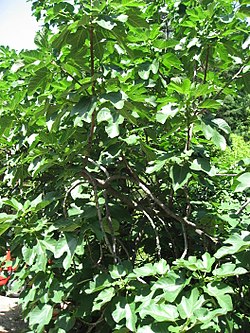
A fig tree

The Parable of the Budding Fig Tree is a parable told by Jesus in the New Testament, found in Matthew 24:32–35, Mark 13:28–31, and Luke 21:29–33. This parable, about the Kingdom of God, involves a fig tree, as does the equally brief parable of the barren fig tree.

Narrative

[edit]

According to the Gospel of Luke:

Then he told them a parable: "Look at the fig tree and all the trees; as soon as they sprout leaves you can see for yourselves and know that summer is already near. So also, when you see these things taking place, you know that the kingdom of God is near. Truly I tell you, this generation will not pass away until all things have taken place. Heaven and earth will pass away, but my words will not pass away."

Interpretations

[edit]

Luke presents this parable as eschatological in nature:[1] like the leaves of the fig tree, the signs spoken of in the Olivet Discourse of Luke 21:5–28 indicate the coming of the Kingdom of God.

As the British scholar and theologian N. T. Wright has written, "Already present in Jesus' ministry, and climactically inaugurated in his death and resurrection, the divine kingdom will be manifest within a generation, when Jesus and his followers are vindicated in and through the destruction of Jerusalem."[2]

See also

[edit]

References

[edit]
Revisions and contributorsEdit on WikipediaRead on Wikipedia
from Grokipedia
The Parable of the Budding Fig Tree is a brief teaching attributed to Jesus Christ in the , serving as an illustration of the recognizable signs heralding the nearness of God's kingdom or his . Recorded in the as part of the —a prophetic address on the temple's destruction and end-time events—it appears in Matthew 24:32–35, Mark 13:28–31, and Luke 21:29–33. In the parable, Jesus directs his disciples to observe the fig tree, a common plant in ancient known for its early budding: "From the fig tree learn its lesson: as soon as its branch becomes tender and puts out its leaves, you know that summer is near." He then applies this natural indicator to eschatological signs, explaining, "So also, when you see these things taking place, you know that he is near, at the very gates," referring to the preceding omens of tribulation, false messiahs, wars, and cosmic disturbances described earlier in the discourse. This analogy underscores the certainty and imminence of fulfillment, much like seasonal changes are inevitable once visible cues appear. The emphasizes assurance amid uncertainty, with declaring, "Truly, I say to you, this will not pass away until all these things take place," linking the signs directly to events within the lifetime of his contemporaries or a broader "" of fulfillment. He reinforces the enduring reliability of his prophecy by adding, "Heaven and earth will pass away, but my words will not pass away," highlighting the permanence of against temporal realities. Interpretations often view the fig tree not as a literal prediction but as a for discernment: just as budding leaves signal summer without specifying the exact day, believers are called to recognize prophetic signs without date-setting, fostering vigilance and . This contrasts with other fig tree motifs in the Gospels, such as the cursing of the barren fig tree (:12–14, 20–25), which symbolizes judgment on fruitless , whereas the budding version evokes hope and renewal. Historically, the parable has influenced , appearing in discussions of the end times from early to modern theology, often tied to the restoration of or global upheavals as "birth pains" preceding Christ's return. Its simplicity and agricultural imagery made it accessible to first-century audiences reliant on such natural cycles, while its placement in the positions it as a capstone to Jesus' warnings about and redemption.

Biblical and Historical Context

Placement in the

The Parable of the Budding Fig Tree is recorded in all three within the , a pivotal eschatological teaching delivered by on the . It appears specifically in Matthew 24:32–35, where it forms part of Jesus' instructions to his disciples regarding the signs of the end of the age; in Mark 13:28–31, as a concluding in the discourse's prophetic section; and in Luke 21:29–33, integrated into the narrative of impending cosmic and redemptive events. In each Gospel, the parable is situated within the broader (Matthew 24:1–36; :1–37; Luke 21:5–36), which addresses the destruction of the temple, the onset of tribulation, and the visible return of amid heavenly signs. The surrounding context emphasizes apocalyptic themes, including wars, famines, earthquakes, false messiahs, and great distress, portraying these as "birth pains" signaling the culmination of history. For instance, in Matthew and Mark, the parable directly follows the description of the tribulation and the Son of Man's appearance (:29–31; :24–27), while in Luke, it succeeds warnings of Jerusalem's and cosmic disturbances (Luke 21:20–28). The sequence of the parable in each underscores its role as a transitional exhortation to discernment amid peril. It consistently follows admonitions against by false christs and prophets (:4–5, 11, 23–26; :5–6, 21–22; Luke 21:8), and precedes affirmations of the enduring validity of ' prophetic words, such as "Heaven and earth will pass away, but my words will not pass away" (:35; :31; Luke 21:33). This positioning highlights the parable's function to encourage vigilance and recognition of divine timing after dire warnings. The parallel placement across the Synoptics arises from shared source material, with the predominant scholarly consensus endorsing the Markan priority hypothesis, positing that Mark's Gospel served as a for Matthew and Luke in constructing this discourse. This interdependence facilitates a unified thematic emphasis on apocalyptic , where the fig tree illustration reinforces the immediacy of end-time signs within a generation.

Symbolism of the Fig Tree in Scripture

In the , the fig tree often symbolizes peace and prosperity, evoking images of security and divine favor. During King Solomon's reign, the people of Judah and lived securely "from Dan even to , every man under his vine and under his fig tree," representing an era of unparalleled stability and abundance under God's blessing. This motif recurs as a sign of covenantal harmony, where the fig tree's fruitfulness mirrors national well-being and rest from enemies. Conversely, the fig tree embodies themes of judgment and spiritual barrenness when unfruitful. In Hosea 9:10, God likens Israel to "the first fruit on the fig tree" in their early faithfulness, but condemns their idolatry, foretelling destruction like a withered vine. Joel 1:7-12 portrays locusts devastating the fig tree and vine as a divine plague, stripping the land bare and signaling covenantal curse for unrepentance. Jeremiah 24 further uses two baskets of figs—one good and ripe, the other bad and rotten—to symbolize the exiles' fates: the good figs represent those God restores to the land for obedience, while the bad signify persistent rebellion leading to ruin. Across these texts, the fig tree reflects Israel's covenantal relationship with God, thriving in fidelity but decaying in disobedience. In the , this dual symbolism persists through ' cursing of the barren fig , an event detailed in Matthew 21:18-22 and Mark 11:12-14, 20-25. Approaching a leafy but fruitless , declares it never to bear fruit again, and it withers, acting as an enacted of judgment on Israel's religious leadership and the unfruitful temple cult. Scholars interpret this as a prophetic of divine condemnation for , echoing precedents where barrenness invites desolation. Fig trees held practical significance in ancient Judea's Mediterranean , where they were among the most common trees, valued for their reliability and nutritional yield. typically occurred in spring, with tender green shoots emerging after winter as a natural herald of seasonal renewal and the impending harvest of early figs. This predictable cycle made the fig tree a vivid emblem of timing and vitality in the region's agrarian life. Within broader Jewish , trees serve as metaphors for nations, empires, and eschatological signs, providing a conceptual framework for prophetic imagery. In , a majestic tree encompassing the earth represents King Nebuchadnezzar and his Babylonian dominion, hewn down to signify humbling judgment before restoration. The employs similar arboreal visions, such as fragrant trees in paradise denoting eternal righteousness and cosmic order amid end-time upheavals. These traditions underscore trees as symbols of transient power, divine sovereignty, and renewal in apocalyptic thought.

Narrative of the Parable

Core Account and Structure

The Parable of the Budding Fig Tree, as presented in the , features drawing an analogy from a common natural phenomenon to teach his disciples about discerning signs of impending divine events. In the core narrative, instructs, "From the fig tree learn its lesson: as soon as its branch becomes tender and puts out its leaves, you know that summer is near. So also, when you see these things taking place, you know that he is near, at the very gates" (:28-29, ESV). This imagery of the fig tree's budding serves as a straightforward , highlighting how observable changes in reliably signal the approach of summer, much like certain "signs" will indicate the nearness of the kingdom of or the fulfillment of prophetic events. The rhetorical structure of the parable unfolds in four key elements, building from observation to assurance. First, it begins with the natural observation of the fig tree's tender branches and emerging leaves, prompting recognition of seasonal change (Mark 13:28). Second, this is directly applied to the eschatological context, urging disciples to interpret accompanying "signs" as indicators that the anticipated events are imminent and "right at the door" (Mark 13:29). Third, Jesus provides a solemn assurance with the declaration, "Truly, I say to you, this generation will not pass away until all these things take place," emphasizing the temporal proximity within the lifetime of his contemporaries (Mark 13:30). Finally, the parable concludes with a statement on the enduring authority of Jesus' words: "Heaven and earth will pass away, but my words will not pass away," underscoring their permanence amid cosmic change (Mark 13:31). This progression creates a logical flow from everyday analogy to profound theological certainty. As a device, the functions as a rather than an extended , relying on vivid, relatable from Palestinian to emphasize vigilant and unshakeable in divine timing. It was delivered to the disciples—specifically Peter, James, John, and Andrew—while seated on the , directly responding to their inquiries about the destruction of the temple and the signs preceding ' return (:3-4). This context positions the parable within the broader , where uses it to foster without revealing exact dates.

Textual Variations Across Gospels

The Parable of the Budding Fig Tree appears in all three Synoptic Gospels within the Olivet Discourse, with Matthew 24:32–35 providing a version that integrates it closely with preceding signs of the end times, including the reference to "all the tribes of the earth will mourn" in verse 30, which adds a layer of universal cosmic mourning to the context of the parable's signs. In this account, Jesus instructs, "Now learn this lesson from the fig tree: As soon as its twigs get tender and its leaves come out, you know that summer is near. Even so, when you see all these things, you know that it is near, right at the door," emphasizing the totality of eschatological indicators ("all these things") leading to the assurance that "this generation will certainly not pass away until all these things have happened." This phrasing ties the parable's natural analogy directly to the full scope of prophetic fulfillments described earlier in the discourse. Mark's rendition in 13:28–31 is the most concise among the Synoptics, retaining the specific focus on the "fig tree" without expansion and stressing a general from budding trees: "Now learn this from the fig tree: As soon as its twigs get tender and its leaves come out, you know that summer is near. Even so, when you see these things happening, you know that it is near, right ." The account mirrors Matthew's structure but omits the emphatic "all" before "these things," presenting a streamlined exhortation to recognize signs without the broader motif, while concluding with the same generational promise and the enduring nature of ' words. Luke's version in 21:29–33 broadens the analogy beyond the fig alone, stating, "Look at the fig tree and all the trees. When they sprout leaves, you can see for yourselves and know that summer is near. Even so, when you see these things happening, you know that the kingdom of God is near," and explicitly links it to the impending desolation of Jerusalem mentioned earlier in the discourse (21:20–24). This expansion to "all the trees" serves as a more inclusive natural indicator, shifting the emphasis from a singular fig to a collective seasonal sign, and replaces the vague "it" with "the kingdom of God," aligning the parable with themes of divine rule amid historical . Scholars attribute these variations to redactional choices by the evangelists, reflecting their theological emphases and intended audiences; for instance, Luke's modifications, including the addition of "all the trees" and the reference to the kingdom, adapt the parable to highlight the near-term destruction of in as a preview of eschatological events, particularly suited to a readership less focused on Jewish temple symbolism. Matthew and Mark, by contrast, maintain a stronger orientation toward future cosmic fulfillment, with minimal alterations from a presumed shared . These differences illustrate synoptic in core messaging—recognizing signs as harbingers of divine action—without introducing major doctrinal conflicts, as the generational assurance and the parable's interpretive function remain consistent across accounts. Manuscript evidence from early codices, such as (4th century), supports the stability of the parable's text, with only minor variants like word order or spelling differences that do not affect meaning; for example, no significant omissions or additions alter the imagery or key assurances in :32–35, Mark 13:28–31, or Luke 21:29–33, ensuring the core message of discerning prophetic nearness remains uniform. Textual critics note that such trivial discrepancies are typical of scribal transmission but pose no challenge to the parable's doctrinal integrity.

Interpretations and Theological Analysis

Eschatological Significance

The Parable of the Budding Fig Tree serves as a key eschatological metaphor in , illustrating the visible signs that precede the Second Coming of Christ. In the traditional interpretation, the budding leaves represent unmistakable indicators—such as wars, rumors of wars, false prophets, famines, and earthquakes—signaling the nearness of the end times, much like the fig tree's foliage heralds summer. This urges believers to maintain vigilance and spiritual readiness, as the parable emphasizes that "when you see all these things, you know that it is near, at the very doors" (Matthew 24:33, ESV). The imagery reinforces the certainty of fulfillment, assuring that and may pass away, but ' words will endure. Within the broader framework of the (Matthew 24–25; Mark 13; Luke 21), the parable parallels other cosmic and earthly signs, including the darkening of the sun and , the falling of , and the gathering of the by angels. These events culminate in the Son of Man's appearance on the clouds with power and glory, marking the establishment of God's kingdom. Early elaborated on this prophetic timeline; for instance, viewed the tender branches as denoting a brief interval after tribulation before Christ's advent, likening it to an inevitable seasonal change that calls for constant watchfulness amid uncertainty about the exact hour. The complements other eschatological teachings, such as the barren fig tree in Luke 13:6–9, which warns of judgment for unfruitfulness, contrasting with the budding tree's promise of fruition and renewal at . It also aligns with the of the watchful servants (Luke 12:35–40), both emphasizing for the master's unexpected return, with belts fastened and lamps burning, to avoid being caught unaware. These interconnections highlight themes of accountability and hope in the face of apocalyptic events. A central surrounds ' statement that "this will not pass away until all these things take place" (Matthew 24:34, ESV), interpreting the fig tree's role in timing. Preterists argue for a first-century fulfillment, linking the signs to the fall of the temple in , viewing the budding as symbolic of imminent judgment on within that . Futurists, conversely, see it as referring to the future end of the age, with the generation witnessing the signs experiencing the full tribulation and Christ's return, often tying the fig tree to 's restoration as a prophetic marker. In particular, some proponents of premillennial dispensationalist futurism link the budding of the fig tree specifically to the reestablishment of Israel as a nation in 1948, interpreting "this generation" as spanning 70 to 80 years according to Psalm 90:10, thereby regarding 1948 as the commencement of the final generation and anticipating the fulfillment of end-time prophecies approximately between 2018 and 2028. This tension underscores ongoing scholarly discussions on whether the points to historical or ultimate eschatological events.

Symbolic and Allegorical Readings

In biblical symbolism, the fig tree frequently represents the nation of , with its budding leaves signifying potential restoration or the onset of , echoing passages where figs symbolize the people's spiritual state, such as the desolation in 7:1 or the hopeful discovery in 9:10. Scholars note that this imagery in the parable underscores Israel's role in eschatological events, where the tree's renewal points to God's redemptive purposes amid cycles of faithfulness and unfruitfulness. On a personal level, the parable invites believers to discern spiritual "seasons" in their lives, much like observing the fig tree's buds to anticipate summer, thereby fostering vigilance, faith, and timely to align with God's kingdom. This application emphasizes individual responsibility to produce spiritual fruit, recognizing divine opportunities for growth and transformation rather than complacency. Comparisons to Qumran texts reveal similar tree imagery in the Dead Sea Scrolls, where budding or branching motifs in documents like 4QFlorilegium evoke messianic restoration and the eschatological age, paralleling the parable's signs of renewal without direct fig references but sharing symbolic themes of divine ingathering.

Cultural and Modern Relevance

Influence on Christian Doctrine

In the early Christian era, the contributed to the formulation of eschatological beliefs articulated in creeds like the , which affirms Christ's in glory to judge the living and the dead, drawing from the broader apocalyptic themes of imminent divine intervention and reliable prophetic signs in the Gospels. This emphasis on recognizable signs preceding the end reinforced the Church's expectation of Christ's return as a core doctrinal element. During the , theologians such as invoked the to underscore the certainty of Christ's words enduring beyond heaven and earth, countering skepticism about scriptural by highlighting the fig tree as an for discernible signs of the kingdom's approach, thereby affirming the Bible's reliability in eschatological matters. In denominational eschatologies, premillennialists, particularly within dispensational , interpret the budding fig tree as symbolizing Israel's restoration—often linked to its reestablishment as a in —as a prophetic sign heralding the end times and Christ's millennial . Conversely, amillennial traditions view the symbolically, representing general signs of the church age or the fulfillment of judgment in , without a literal tie to national , emphasizing ongoing spiritual discernment over specific geopolitical events. The parable holds liturgical significance in , particularly during the Advent season, where portions of the in are appointed in the Roman Catholic Lectionary (e.g., First Sunday of Advent, Year A: Matthew 24:37-44) to foster anticipation of Christ's coming and vigilance against complacency. This usage reinforces doctrinal themes of eschatological hope and readiness across Protestant and Catholic traditions. In the 20th century, eschatological teachings in Vatican II's (Chapter 7) stress the pilgrim Church's journey toward the heavenly amid earthly trials, echoing broader assurances of divine fulfillment in the . Protestant discussions of the similarly articulate a balanced view of , blending present kingdom realities with future consummation.

Depictions in Art, Literature, and Contemporary Thought

The of the Budding Fig Tree has been depicted in , particularly through windows that illustrate biblical teachings on eschatological signs. In and media, the parable appears in modern creative works that explore themes of renewal and end-times awareness. A spoken-word hip-hop track titled "Parable of the Fig Tree" by the group Hiphop, released in 2012 on the album War in Heavens, directly references the budding fig tree from Luke 21:29-33, interpreting its sprouting leaves as a sign that "summer is near" and the kingdom of God approaches, emphasizing generational endurance until fulfillment. Contemporary thought often reinterprets the parable through lenses of environmental theology, linking the "signs in sun and moon and stars" and "roaring of the sea and the waves" to modern crises like climate change. This reading positions the budding fig tree as a call to discern ecological disturbances as prophetic indicators, urging awareness amid unrest, pandemics, and environmental devastation. In film and video media, the parable features in short educational productions, such as the mini-movie The Parable of the Budding Fig by Stewart Redwine, which uses animation and narrative to illustrate the lesson from Matthew 24:32-33 about tender branches signaling summer's approach, applying it to spiritual vigilance.

References

Add your contribution
Related Hubs
User Avatar
No comments yet.