Hubbry Logo
ViciaViciaMain
Open search
Vicia
Community hub
Vicia
logo
8 pages, 0 posts
0 subscribers
Be the first to start a discussion here.
Vicia
Vicia
from Wikipedia

Vicia
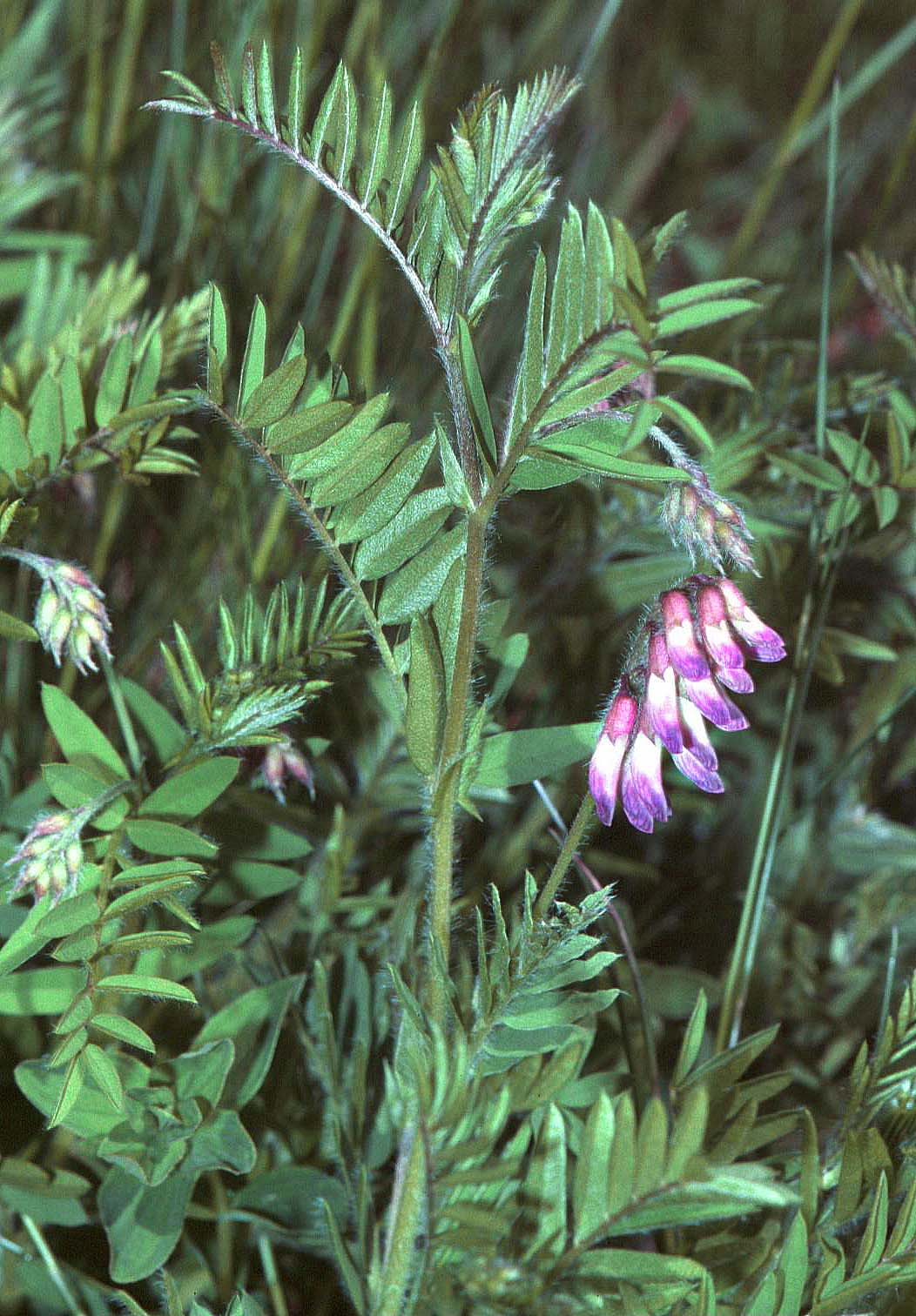
Vicia orobus
Scientific classification Edit this classification
Kingdom: Plantae
Clade: Tracheophytes
Clade: Angiosperms
Clade: Eudicots
Clade: Rosids
Order: Fabales
Family: Fabaceae
Subfamily: Faboideae
Clade: Inverted repeat-lacking clade
Tribe: Fabeae
Genus: Vicia
L. (1753)
Type species
Faba sativa
Species[1]

247; see text

Synonyms[1]
  • Abacosa Alef. (1861)
  • Anatropostylia (Plitmann) Kupicha (1973)
  • Arachus Medik. (1787)
  • Atossa Alef. (1861)
  • Bona Medik (1787)
  • Coppoleria Tod. (1845)
  • Cracca Medik. (1787) nom. illeg.
  • Cujunia Alef. (1861)
  • Endiusa Alef. (1859)
  • Endusia Benth. and Hook f. (1865)[2]
  • Ervilia Link (1822)
  • Ervum Tourn. ex L. (1753)
  • Faba Adans. (1763)[2]
  • Faba Mill. (1754)
  • Hypechusa Alef. (1860)
  • Lens Mill. (1754)
  • Lentilla W.Wight (1909)
  • Orobella C.Presl (1837)
  • Parallosa Alef. (1859)
  • Rhynchium Dulac (1867)
  • Sellunia Alef. (1859)
  • Swantia Alef. (1859)
  • Tuamina Alef. (1861)
  • Vicilla Schur (1866)
  • Viciodes Moench (1794)
  • Wiggersia Gaertn. (1801)

Vicia is a genus of over 240 species of flowering plants that are part of the legume family (Fabaceae), and which are commonly known as vetches. Vicia species are native to Eurasia, Africa, and the Americas.

Taxonomy

[edit]

Some other genera of the Vicia subfamily Faboideae also have names containing "vetch", for example the vetchlings (Lathyrus) or the milk-vetches (Astragalus). The lentils are included in genus Vicia, and were formerly classified in genus Lens.[3] The broad bean (Vicia faba) is sometimes separated in a monotypic genus Faba; although not often used today, it is of historical importance in plant taxonomy as the namesake of the order Fabales, the Fabaceae and the Faboideae. The tribe Vicieae in which the vetches are placed is named after the genus's current name. The true peas (Pisum) are among the closest living relatives of vetches.

Species

[edit]

The many species belonging to Vicia are listed at List of Vicia species. According to Plants of the World Online, 247 species belong to the genus.[4] The taxonomy of the genus, however, remains unresolved, which hinders the development of underutilized crop species.[5]

Etymology

[edit]

Vicia means 'binder' in Latin; this was the name used by Pliny for vetch.[6]

The vetch is also referenced by Horace in his account of "The Town Mouse and the Country Mouse" as ervum.[7] This is said to be a source of comfort for the country mouse after a disturbing insight into urban life. They are mentioned in William Shakespeare's The Tempest: "Ceres, most bounteous lady, thy rich leas / Of wheat, rye, barley, vetches, oats and pease;"

Distribution and habitat

[edit]

The genus is native to Europe, North America, South America, Asia and Africa.

Ecology

[edit]
The branched tendrils of black vetch (V. nigricans) help to distinguish it from other species.

Vetches have cylindrical root nodules of the indeterminate type and are thus nitrogen-fixing plants. Their flowers usually have white to purple or blue hues, but may be red or yellow; they are pollinated by bumblebees, honey bees, solitary bees and other insects.

Vicia species are used as food plants by the caterpillars of some butterflies and moths, such as:

Most other parasites and plant pathogens affecting vetches have been recorded on the broad bean, the most widely cultivated and economically significant species. They include the mite Balaustium vignae whose adults are found on broad bean, the potexviruses Alternanthera mosaic virus, clover yellow mosaic virus and white clover mosaic virus, and several other virus species such as Bidens mosaic virus, tobacco streak virus, Vicia cryptic virus and Vicia faba endornavirus.

Toxicity

[edit]
Molecular structure of leucoagglutinin, a toxic phytohemagglutinin found in raw Vicia faba

The vetches grown as forage are generally toxic to non-ruminants (such as humans), at least if eaten in quantity. Cattle and horses have been poisoned by V. villosa and V. benghalensis, two species that contain canavanine in their seeds. Canavanine, a toxic analogue of the amino acid arginine, has been identified in Hairy Vetch as an appetite suppressant for monogastric animals, while Narbon bean contains the quicker-acting but weaker γ-glutamyl-S-ethenylcysteine.[8] In common vetch, γ-glutamyl-β-cyanoalanine has been found. The active part of this molecule is β-cyanoalanine. It inhibits the conversion of the sulfur amino acid methionine to cysteine.

Cystathionine, an intermediary product of this biochemical pathway, is secreted in urine.[9] This process can effectively lead to the depletion of vital protective reserves of the sulfur amino acid cysteine and thereby making Vicia sativa seed a dangerous component in mixture with other toxin sources. The Spanish pulse mix comuña contains common vetch and bitter vetch in addition to vetchling (Lathyrus cicera) seeds; it can be fed in small quantities to ruminants, but its use as a staple food will cause lathyrism even in these animals. Moreover, common vetch as well as broad bean – and probably other species of Vicia too – contain oxidants like convicine, isouramil, divicine and vicine in quantities sufficient to lower glutathione levels in G6PD-deficient persons to cause favism disease. At least broad beans also contain the lectin phytohemagglutinin and are somewhat poisonous if eaten raw. Split common vetch seeds resemble split red lentils (Vicia lens), and has been occasionally mislabelled as such by exporters or importers to be sold for human consumption. In some countries where lentils are highly popular – e.g., Bangladesh, Egypt, India and Pakistan – import bans on suspect produce have been established to prevent these potentially harmful scams.[8][10]

Uses

[edit]
p
V1
y
r
Z1N33
Z2
"Grains of puyr"
in hieroglyphs

Bitter vetch (V. ervilia) was one of the first domesticated crops. It was grown in the Near East about 9,500 years ago, starting perhaps even one or two millennia earlier during the Pre-Pottery Neolithic A. By the time of the Central European Linear Pottery culture – about 7,000 years ago – broad bean (V. faba) had also been domesticated. Vetch has been found at Neolithic and Eneolithic sites in Bulgaria, Hungary and Slovakia.[11] And at the same time, at the opposite end of Eurasia, the Hoabinhian people also utilized the broad bean in their path towards agriculture, as shown by the seeds found in Spirit Cave, Thailand.[12]

Bernard of Clairvaux shared a bread-of-vetch meal with his monks during the famine of 1124 to 1126, as an emblem of humility.[Note 1] However, the bitter vetch largely was dropped from human use over time. It was only used to save as a crop of last resort in times of starvation: vetches "featured in the frugal diet of the poor until the eighteenth century, and even reappeared on the black market in the South of France during the Second World War", Maguelonne Toussaint-Samat, of Marseillais background, has remarked.[14] However, broad beans remained prominent. In the Near East the seeds are mentioned in Hittite and Ancient Egyptian sources dating from more than 3,000 years ago as well as in the Christian Bible,[Note 2] and in the large Celtic Oppidum of Manching from the La Tène culture in Europe some 2,200 years ago. Dishes resembling ful medames are attested in the Jerusalem Talmud which was compiled before 400 AD.

Worldwide vetch yield
Hungarian vetch (V. pannonica) is often grown for forage.

In our time, the common vetch (V. sativa) has also risen to prominence. Together with broad bean cultivars such as horse bean or field bean, the FAO includes it among the 11 most important pulses in the world. The main usage of the common vetch is as forage for ruminant animals, both as fodder and legume, but there are other uses, as tufted vetch V. cracca is grown as a mid-summer pollen source for honeybees.

In 2017, global production of vetches was 920,537 tonnes.[15] That year, 560,077 acres were devoted to the cultivation of vetches in the world. Over 54% of that output came from Europe alone. Africa (17.8% of world total), Asia (15.6% of world total), Americas (10.6% of world total) and Oceania (1.8% of world total).[14]

The bitter vetch, too, is grown extensively for forage and fodder, as are hairy vetch (V. villosa, also called fodder vetch), bard vetch (V. articulata), French vetch (V. serratifolia) and Narbon bean (V. narbonensis). V. benghalensis and Hungarian vetch (V. pannonica) are cultivated for forage and green manure.

4-Chloroindole-3-acetic acid (4-Cl-IAA), a phytohormone found in several vetches

The vetches also have a broad variety of other purposes. The Hairy Vetch has well-established uses as a green manure and as an allelopathic cover crop. As regards the broad bean, it is known to accumulate aluminum in its tissue; in polluted soils it may be useful in phytoremediation, but with one per mil of aluminum in the dry plant (possibly more in the seeds), it might not be edible anymore. The robust plants are useful as a beetle bank to provide habitat and shelter for carnivorous beetles and other arthropods to keep down pest invertebrates. When the root nodules of broad bean are inoculated with the rhodospirillacean bacterium Azospirillum brasilense and the glomeracean fungus Glomus clarum, the species can also be productively grown in salty soils.[16][17][18] In the 1980s, the auxin 4-Cl-IAA was studied in V. amurensis and the broad bean,[19][20] and since 1990, the antibacterial γ-thionins fabatin-1 and -2 have been isolated from the latter species.

Despite a small chromosome count of n=6, the broad bean has a high DNA content, making it easy for a micronucleus test of its root tips to recognize genotoxic compounds. A lectin from V. graminea is used to test for the medically significant N blood group.

Notes

[edit]

References

[edit]
[edit]
Revisions and contributorsEdit on WikipediaRead on Wikipedia
from Grokipedia
Vicia is a of approximately 240 of and herbaceous in the family , commonly known as vetches. These typically feature sprawling or climbing stems that are ridged or angled, even-pinnate leaves with 4 to many linear to ovate leaflets, and an axis often ending in a ; their flowers are borne in racemes and are generally lavender to , though sometimes or , with a corolla structure including 9 fused filaments and one free. Fruits are dehiscent , usually oblong and flat, containing two or more seeds. Native to temperate and subtropical regions, extending to tropical mountains, the genus has a broad distribution across , , , and , with some species introduced worldwide. Vicia species are unarmed herbs adapted to a variety of habitats, including grasslands, woodlands, and disturbed areas, and play key ecological roles through nitrogen fixation via symbiotic relationships with . Economically, many Vicia species are valued as forage crops, cover crops, and green manures due to their high protein content and soil-enriching properties. For instance, Vicia sativa (common vetch) is widely cultivated for livestock feed and as a rotational crop to improve soil fertility. Vicia faba (fava bean) stands out as a major food crop for human consumption, providing nutritious seeds rich in protein and micronutrients, while also serving as animal fodder. Additionally, species like Vicia villosa (hairy vetch) are used for erosion control and as pollinator attractants, contributing to sustainable agriculture practices. The genus also holds potential in phytochemistry, with various species containing bioactive compounds of interest for medicinal applications.

Taxonomy

Etymology

The genus name Vicia derives from the Latin word vicia, which refers to vetch and is thought to stem from vincio, meaning "to bind" or "to twist," alluding to the plants' twining growth habit. This etymological root reflects the genus's characteristic tendrils that coil around supports for climbing. The term vicia appears in classical Roman texts, notably in Pliny the Elder's Naturalis Historia (ca. 77 CE), where it describes vetch species used as fodder and for their binding qualities in . Common names for Vicia species include "vetch" in English, "tare" (an archaic term often linked to biblical references), and names evoking their relation to fava beans (), such as regional variations like "guisante loco" (meaning "crazy pea") in Spanish for species like Vicia hybrida in .

Phylogenetic classification

The genus Vicia is classified within the family (Leguminosae), subfamily , and tribe Fabeae, a group characterized by its papilionoid flowers and nitrogen-fixing capabilities typical of . This placement reflects the genus's evolutionary position among flowering plants in the order , where represents the largest subfamily with over 14,000 species. Within tribe Fabeae, Vicia shares close phylogenetic relationships with genera such as (approximately 160 species), Pisum (2–3 species), Lens (4–6 species), and the monotypic Vavilovia, forming a core group of temperate herbaceous often united by similar stylar features and seed characteristics. Phylogenetic analyses using of chloroplast genes (e.g., matK and rbcL) and nuclear ribosomal (ITS) regions have demonstrated that Vicia forms a monophyletic distinct from these relatives, though some studies highlight a close sister relationship or potential with Lens based on shared morphological and genetic continuums. These molecular approaches, including multilocus sequence data, have resolved the tribe's internal structure, confirming Fabeae as a well-supported monophyletic assemblage within . Infrageneric subdivisions of Vicia traditionally rely on a combination of morphological traits (e.g., structure, patterns, and pod features) and molecular markers, dividing the genus into two subgenera—Vicia and Vicilla—and further into multiple sections. Representative sections include Section Vicia (encompassing species with articulate pods and often cultivated forms like broad bean) and Section Cracca (characterized by inarticulate pods and climbing habits), which reflect distinct evolutionary lineages supported by both phenetic clustering and DNA-based phylogenies. Such classifications aid in understanding adaptive radiations within the genus, with molecular data from genomes and RAPD markers reinforcing the sectional boundaries while revealing hybridization potential among closely related groups. Historical taxonomic revisions have shaped the current framework, notably Nigel Maxted's 1993 phenetic study of subgenus Vicia, which analyzed morphological data from over 1,500 specimens to propose a revised infrageneric comprising nine sections, nine series, 38 , 14 , and 22 varieties. This work built on earlier systems, such as those by (1967) and Kupicha (1976), by incorporating to address inconsistencies in prior groupings, and it has been partially validated and refined by subsequent molecular phylogenies that integrate sequence data for more robust evolutionary inferences.

Species diversity

The genus Vicia comprises approximately 240 species of primarily herbaceous , including both and forms, distributed mainly in temperate regions of the . These species exhibit diverse growth habits, from climbing vines to erect or prostrate , and are characterized by their pinnate leaves and tendrils. Notable examples include , the broad bean, a or cultivated for its large, seeds up to 2 cm long, which are rich in protein and used in human diets worldwide. , known as common vetch, is an with small, dark seeds and is widely grown as a and due to its nitrogen-fixing abilities. Another key species, or hairy vetch, is a winter distinguished by its densely hairy stems and leaves, valued in for soil improvement and as a . Infrageneric classification, primarily based on morphological traits, divides Vicia into two subgenera—Vicia and Vicilla—and 22 sections, with species unevenly distributed across them; for instance, Section Vicia (subgenus Vicia) contains about 20 species, many of which are annuals like V. sativa adapted to Mediterranean climates. Section Cracca in subgenus Vicilla, by contrast, includes numerous perennial species with broader temperate distributions. Molecular phylogenetic studies since the early 2000s have prompted taxonomic revisions, including splits within complexes and synonymies; for example, Vicia incisa was recognized as distinct from the V. sativa aggregate based on genetic markers, resolving prior ambiguities in Eurasian taxa. Additionally, analyses have confirmed Vicia as monophyletic within tribe Fabeae, supporting the separation of closely related genera like Lens while occasionally reintegrating peripheral species previously excluded. These updates, driven by DNA sequencing, have refined species boundaries without drastically altering the overall count.

Description

Vegetative morphology

Vicia are primarily annual or that exhibit unarmed growth forms, ranging from erect to sprawling or climbing habits. Many , such as those in the Vicia, are climbing vines that use tendrils for support, allowing them to reach heights of up to 2 meters when supported by other vegetation, as seen in . Stems in the genus are typically branched, slender, and wingless, often ridged or angled, with textures varying from glabrous to puberulent or pilose depending on the species. In climbing forms, stems are flexible and hollow or solid, facilitating trailing or ascending growth. Erect species, like Vicia faba, produce stouter, square stems that branch from the base to form a bushy habit, reaching 0.6–2.1 meters in height. Leaves are compound and paripinnate, with even-1-pinnate structure featuring 1–13 pairs of alternate to opposite leaflets that are linear to ovate, entire-margined, and typically 4–12 per leaf in many . The rachis usually terminates in a branched for climbing, though some end in a or mucro; stipules are present at the leaf base, often lobed with an upper larger portion and smaller lower lobe, entire to dentate. The is generally fibrous with extensive lateral branching, though some develop a that can extend 1–1.5 meters deep, aiding in exploration and . Roots form symbiotic nodules with bacteria, enabling biological , a characteristic feature of the as .

Reproductive features

The inflorescences of Vicia species are typically axillary racemes or occasionally umbels, bearing 1 to 10 zygomorphic, papilionaceous flowers that resemble those of peas, with colors ranging from and to or in some taxa. These flowers feature a at the top, two wing petals, and a enclosing the stamens and style, adapted for by . The fruits are linear to oblong, dehiscent legumes (pods) that split along two sutures upon maturity, typically measuring 1.5 to 4 cm in length and containing 2 to 10 seeds per pod. Seeds are generally oval to reniform in shape, with a hard, impermeable coat that contributes to their longevity in soil seed banks. Pollination in Vicia is primarily entomophilous, mediated by bees such as bumblebees (Bombus spp.), honey bees (Apis mellifera), and solitary bees, with many species exhibiting self-compatibility but favoring outcrossing for optimal seed set. For instance, in Vicia villosa, cross-pollination by bumblebees is essential for fruit and seed production, as self-pollination rates are low due to sporophytic self-incompatibility. Many Vicia species exhibit physical seed dormancy (hardseededness) caused by the impermeable seed coat, which prevents water uptake and , leading to levels up to 100% in freshly harvested seeds at the yellow pod stage. This can be alleviated through methods, such as mechanical abrasion, acid treatment (e.g., ), or hot water immersion, which increase rates from approximately 40% to over 95% in species like Vicia sativa subsp. nigra. Environmental cues, including alternating temperatures or after-ripening via air-drying, also promote by weakening the coat's impermeability.

Distribution and habitat

Geographic range

The genus Vicia is primarily native to the temperate regions of the , encompassing , , , and . Some species extend into subtropical and tropical montane areas, with the overall native range spanning from the Mediterranean Basin eastward to and westward across the . The Mediterranean Basin serves as the primary center of diversity for Vicia, hosting the highest concentration of species within the genus (~110 species across and ). Secondary centers include (~17 species), temperate (~18 species), and southern , with high diversity also in the and western . This region exhibits striking , with extensions of the genus's distribution occurring in areas such as through historical spread (~15 species in North and tropical ) and in the via natural southward migration into temperate . Numerous Vicia species have been widely introduced beyond their native ranges, establishing populations in temperate zones worldwide, including , additional parts of , and , often as invasive weeds or forage crops. For instance, V. faba originated in the during the period and has since become globally distributed through cultivation. Endemic taxa, such as V. anatolica restricted to the and adjacent areas, highlight localized diversity within the native range.

Environmental preferences

Vicia species thrive in cool temperate climates, with optimal growth temperatures ranging from 10 to 25°C, as observed in common vetches like and . These plants exhibit strong frost tolerance, with hardier cultivars surviving temperatures as low as -15°C, enabling overwintering in regions with cold winters. However, they are sensitive to extreme heat above 30°C, which can reduce growth and yield in warmer subtropical margins of their range. The genus prefers well-drained soils to avoid waterlogging, which many tolerate poorly due to reduced oxygenation and nodulation failures. suitability spans neutral to slightly alkaline conditions (6.0-8.0), with optimal performance in loamy or clay-rich textures that retain without saturation; , for instance, performs best at pH 6.5-7.5 but adapts to broader ranges. As nitrogen-fixing , Vicia species are well-suited to nitrogen-poor soils, enhancing their utility in low-fertility environments through symbiotic associations with . Vicia occurs across a wide altitudinal gradient, from in coastal habitats to elevations exceeding 3000 m in montane ecosystems, as seen in species like Vicia americana in the western U.S. mountains. Certain Vicia species demonstrate via extensive deep root systems that access subsoil moisture, allowing survival in semi-arid conditions with annual rainfall as low as 500 mm, particularly in Mediterranean-adapted taxa. Conversely, waterlogging sensitivity is prevalent, with prolonged saturation leading to and diminished symbiotic in most species.

Ecology

Symbiotic interactions

Vicia species engage in a prominent mutualistic with nitrogen-fixing of the , particularly Rhizobium leguminosarum biovar viciae, which colonize root nodules to convert atmospheric into usable by the plant. This process occurs within specialized root structures where the reside intracellularly, exchanging fixed for photosynthates from the host plant, thereby enhancing in legume-dominated ecosystems. The symbiosis significantly boosts plant growth and productivity, as demonstrated in where rhizobial inoculation increases biomass and nitrogen content under various stress conditions. Pollination in Vicia represents another key mutualism, primarily with hymenopteran insects such as bumblebees (Bombus spp.), which are attracted to the nectar and pollen rewards offered by the plant's pea-like flowers. Bumblebees facilitate cross-pollination by transferring pollen between flowers during foraging, improving seed set and yield, particularly in species like Vicia faba where insect visitation enhances reproductive success. This interaction underscores the plant's dependence on pollinators for effective gene flow and population maintenance in natural habitats. Vicia plants also form symbiotic associations with arbuscular mycorrhizal fungi (AMF) from the phylum Glomeromycota, which penetrate root cortical cells to form arbuscules that facilitate uptake from in exchange for . These associations improve acquisition and resilience, as seen in where AMF inoculation enhances growth and efficiency under nutrient-limited conditions. The symbiosis is particularly beneficial in -poor , promoting overall vigor without compromising the nitrogen-fixing capabilities of concurrent rhizobial partnerships. In contrast, Vicia experiences antagonistic interactions with root parasites such as broomrapes (Orobanche spp.), including Orobanche crenata and O. foetida, which attach to host roots to extract water and nutrients, often leading to severe yield reductions. These holoparasites form haustoria that attach to Vicia roots, disrupting vascular connections and causing stunted growth, with O. crenata being a primary threat to Vicia faba in Mediterranean regions. Such parasitism represents a significant ecological pressure, favoring resistant Vicia genotypes that limit attachment through biochemical or structural barriers.

Population dynamics

Vicia species display varied life cycles adapted to diverse environmental conditions. Annual species, such as Vicia sativa, complete their entire lifecycle within a single growing season, germinating, flowering, and setting seed before senescence. In contrast, perennial species like Vicia americana and Vicia cracca overwinter through persistent crowns, rhizomes, or taproots, allowing them to regrow vegetatively in subsequent seasons and persist for multiple years. Biennial forms, though less common, exhibit vegetative growth in the first year followed by reproduction in the second. This flexibility enables Vicia populations to colonize both ephemeral and stable habitats effectively. Growth strategies in Vicia emphasize and trailing habits that enhance competitiveness in grasslands and open areas. Many species, including V. americana and V. cracca, produce pinnately compound leaves ending in branched tendrils, allowing them to ascend supporting for access to and reduce shading competition. These plants often invade early stages of succession in disturbed sites, such as post-fire landscapes or roadsides, where their rapid seedling establishment and deep root systems stabilize and facilitate . In grasslands, this climbing growth form promotes vertical stratification, enabling Vicia to coexist with taller grasses while contributing to overall vegetation structure. Seed dispersal in Vicia relies on a combination of autochory and zoochory mechanisms. Ballistic dispersal is prominent, with mature pods dehiscing explosively along sutures to propel seeds up to several meters from the parent plant, as observed in V. americana where seeds scatter up to 5 meters. Animal-mediated dispersal occurs when pods or seeds are ingested by herbivores like deer or bears, with viable seeds excreted in feces, extending dispersal distances beyond ballistic limits. These strategies ensure wide dissemination, particularly in fragmented landscapes. In community ecology, Vicia functions as a pioneer species in nitrogen-poor soils, where its ability to form symbiotic associations enhances soil fertility and promotes biodiversity. By improving nitrogen availability, Vicia facilitates the establishment of subsequent species in early successional stages, increasing overall plant diversity in grasslands and disturbed habitats. For instance, species like Vicia villosa and Vicia sativa thrive in nutrient-deficient environments, altering soil microbial communities and enzyme activities to support more complex assemblages over time. This role underscores Vicia's influence on ecosystem succession and resilience in low-fertility settings.

Human interactions

Cultivation and agricultural uses

Vicia species are cultivated primarily as forage crops, cover crops, and grain legumes, with key species including Vicia faba (faba bean) and Vicia sativa (common vetch). Cultivation typically involves sowing in autumn or spring, depending on climate and region, to align with cool-season growth preferences. In temperate areas, autumn sowing allows establishment before winter dormancy, while spring sowing suits regions with harsh winters to avoid frost damage. Seeds are broadcast or drilled at depths of 5-7 cm, often in rotation with cereals like wheat or barley to enhance soil structure and break pest cycles. For instance, V. sativa subsp. sativa is commonly used for fodder production, sown in mixtures with cereals to support climbing growth and prevent lodging. In agricultural systems, Vicia plays vital roles as a for and as to improve . By providing ground cover, it reduces loss from wind and , particularly on slopes, while its dense systems stabilize aggregates. As a , Vicia fixes atmospheric through with , contributing up to 200 kg N/ha to the when incorporated as , which enhances subsequent yields and reduces needs. V. sativa is frequently rotated with cereals to replenish and suppress weeds, promoting sustainable farming practices. For forage and food uses, V. faba stands out as a major crop, valued for its high-protein seeds (up to 30% protein content) that serve as a nutritious staple in diets and feed. Domesticated around 10,000 years ago in the , it has been a foundational crop in Near Eastern , providing drought-tolerant protein sources in arid regions. Common vetch (V. sativa) is harvested for hay or , offering palatable for ruminants with protein levels of 20-25%. Modern breeding efforts focus on developing disease-resistant varieties and high-yielding hybrids to boost productivity. Programs have produced cultivars resistant to foliar diseases like chocolate spot (Botrytis fabae) and , using to incorporate resistance genes from relatives. Recent studies report yield improvements, with faba grain yields reaching 2-2.5 tons/ha in optimized systems and vetch dry matter yields of 2-4 tons/ha for . These advances, including hybrid vigor in crosses, have increased genetic gain by about 0.8% annually in key producing regions like .

Toxicity and risks

Several species within the genus Vicia contain toxic compounds that pose risks to humans and animals. In Vicia faba (faba bean), the primary harmful substances are the pyrimidine beta-glycosides and convicine, which are present in seeds and can lead to upon ingestion. These compounds are hydrolyzed in the gut to aglycones divicine and isouramil, which generate , particularly in individuals deficient in (G6PD). Other Vicia species, such as V. sativa (common vetch) and V. villosa (hairy vetch), contain cyanogenic glycosides like vicianin, which release (HCN) upon enzymatic , contributing to . Consumption of V. faba by G6PD-deficient humans can trigger favism, a severe form of characterized by rapid destruction, , and potentially fatal complications. This condition is most prevalent in Mediterranean populations, where G6PD deficiency affects up to 24% of individuals in certain regions, such as parts of , and around 10-12% in Kurdish populations. In livestock, ingestion of Vicia forages, particularly from V. villosa and V. sativa, can cause neurologic disorders, respiratory distress, and death due to from cyanogenic glycosides, especially when seeds are consumed. Additionally, high soluble protein and fiber content in Vicia legume forages may contribute to ruminal bloat in ruminants like , leading to frothy accumulation of gases and potential suffocation if not managed. Risks can be mitigated through breeding programs targeting low-toxin varieties and appropriate processing methods. Marker-assisted selection using genetic markers linked to the vc locus has enabled the development of V. faba cultivars with significantly reduced vicine and convicine levels (e.g., below 5 g/kg), rendering them safe for G6PD-deficient consumers without compromising yield. As of 2025, varieties such as CDC 1310, a low vicine/convicine faba bean, have been developed to improve safety for human consumption. Processing techniques, such as soaking seeds in or weak acid solutions for several hours, can leach out up to 90% of these glycosides, while cooking further degrades them. In the 2020s, studies have advanced this through genome-wide association analyses identifying novel SNP markers for low vicine-convicine content, facilitating efficient breeding for safer faba bean crops. For livestock, limiting access to mature or seeds and mixing Vicia forages with grasses reduces both and bloat risks.

References

Add your contribution
Related Hubs
User Avatar
No comments yet.