



Community hub
Recent from talks
Contribute something
Nothing was collected or created yet.
University of North Carolina at Chapel Hill
View on Wikipedia
The University of North Carolina at Chapel Hill (UNC Chapel Hill, UNC, or Carolina)[14] is a public research university in Chapel Hill, North Carolina, United States. Chartered in 1789, the university began enrolling students in 1795, making it the oldest public university in the United States.[15]
Key Information


The university offers degrees in over 70 courses of study, divided among 13 professional schools and a primary unit, the College of Arts & Sciences.[16] It is classified as "R1: Doctoral Universities – very high research activity" and is a member of the Association of American Universities (AAU).[17][18] The National Science Foundation ranked UNC–Chapel Hill ninth among American universities for research and development expenditures in 2023 with $1.5 billion.[19] Its endowment is $5.7 billion, making it the ninth-wealthiest public academic institution in the United States as of 2024.[20]
The campus covers 760 acres (310 ha), encompassing the Morehead Planetarium and the many stores and shops located on Franklin Street. Students can participate in over 550 officially recognized student organizations. UNC-Chapel Hill is a charter member of the Atlantic Coast Conference (ACC), which was founded on June 14, 1953. The university's athletic teams compete in 28 intercollegiate sports and are known as the Tar Heels. They have won 51 NCAA team championships in eight different sports which ranks eighth all time, and 52 individual national championships.
UNC-Chapel Hill is one of three corners of North Carolina's Research Triangle. The other two corners are North Carolina State University in Raleigh and Duke University in Durham.
History
[edit]

The University of North Carolina was chartered by the North Carolina General Assembly on December 11, 1789; its cornerstone was laid on October 12, 1793, at Chapel Hill, chosen because of its central location within the state.[21][22] It is one of three universities that claims to be the oldest public university in the United States, and the only such institution to confer degrees in the eighteenth century as a public institution.[23][24]
During the Civil War, North Carolina Governor David Lowry Swain persuaded Confederate President Jefferson Davis to exempt some students from the draft, so the university was one of the few in the Confederacy that managed to stay open.[25] However, Chapel Hill suffered the loss of more of its population during the war than any village in the South, and when student numbers did not recover, the university was forced to close during Reconstruction from December 1, 1870, until September 6, 1875.[26] Following the reopening, enrollment was slow to increase and university administrators offered free tuition for the sons of teachers and ministers, as well as loans for those who could not afford attendance.[27]
Following the Civil War, the university began to modernize its programs and onboard faculty with prestigious degrees.[28] The creation of a new gymnasium, funding for a new chemistry laboratory, and organization of the Graduate Department were accomplishments touted by UNC president Francis Venable at the 1905 "University Day" celebration.[29]
Despite initial skepticism from university President Frank Porter Graham, on March 27, 1931, legislation was passed to group the University of North Carolina with the State College of Agriculture and Engineering and Woman's College of the University of North Carolina to form the Consolidated University of North Carolina.[30] In 1963, the consolidated university was made fully coeducational, although most women still attended Woman's College for their first two years, transferring to Chapel Hill as juniors, since freshmen were required to live on campus and there was only one women's residence hall. As a result, Woman's College was renamed the "University of North Carolina at Greensboro", and the University of North Carolina became the "University of North Carolina at Chapel Hill".[31][32][33]
During World War II, UNC was one of 131 colleges and universities nationally that took part in the V-12 Navy College Training Program which offered students a path to a Navy commission.[34]
In 1951, a court ordered the university to admit the first Black students to the schools of law and medicine. The first students were Harvey Beech, James Lassiter, J. Kenneth Lee, Floyd McKissick, and James Robert Walker in law and Oscar Diggs in medicine.[35] In 1955 after the U.S. Supreme Court outlawed all forms of segregation in the public schools, federal courts ordered the admission of black undergraduates to the university. The first three Leroy Frasier, John Lewis Brandon and Ralph Frasier were from Hillside High School in Durham, North Carolina. Black enrollment remained low for many years. There were four black freshmen in 1960 and only eighteen in 1963.[36]
During the 1960s, the campus was the location of significant political protests. Prior to the passage of the Civil Rights Act of 1964, protests about local racial segregation which began quietly in Franklin Street restaurants led to mass demonstrations and disturbance.[37] The climate of civil unrest prompted the 1963 Speaker Ban Law prohibiting speeches by communists on state campuses in North Carolina.[38] This stand towards the racial segregation on campus led up to the Sit-in movement. The Sit-in movement started a new era in North Carolina, which challenged colleges across the south against racial segregation of public facilities. The law was immediately criticized by university Chancellor William Brantley Aycock and university President William Friday, but was not reviewed by the North Carolina General Assembly until 1965.[39] Small amendments to allow "infrequent" visits failed to placate the student body, especially when the university's board of trustees overruled new Chancellor Paul Frederick Sharp's decision to allow speaking invitations to Marxist speaker Herbert Aptheker and civil liberties activist Frank Wilkinson; however, the two speakers came to Chapel Hill anyway. Wilkinson spoke off campus, while more than 1,500 students viewed Aptheker's speech across a low campus wall at the edge of campus, christened "Dan Moore's Wall" by The Daily Tar Heel for Governor Dan K. Moore.[40] A group of UNC-Chapel Hill students, led by Student Body President Paul Dickson, filed a lawsuit in U.S. federal court, and on February 20, 1968, the Speaker Ban Law was struck down.[41] In 1969, campus food workers of Lenoir Hall went on strike protesting perceived racial injustices that impacted their employment, garnering the support of student groups and members of the university and Chapel Hill community and leading to state troopers in riot gear being deployed on campus and the state national guard being held on standby in Durham.[42]
From the late 1990s and onward, UNC-Chapel Hill expanded rapidly with a 15% increase in total student population to more than 28,000 by 2007. This was accompanied by the construction of new facilities, funded in part by the "Carolina First" fundraising campaign and an endowment that increased fourfold to more than $2 billion within ten years.[43][44] Professor Oliver Smithies was awarded the Nobel Prize in Medicine in 2007 for his work in genetics.[45] Additionally, Professor Aziz Sancar was awarded the Nobel Prize in Chemistry in 2015 for his work in understanding the molecular repair mechanisms of DNA.[46]
In 2011, the first of several investigations found fraud and academic dishonesty at the university related to its athletic program.[47] Following a lesser scandal that began in 2010 involving academic fraud and improper benefits with the university's football program, two hundred questionable classes offered by the university's African and Afro-American Studies department came to light. As a result, the university was placed on probation by its accrediting agency in 2015.[48][49] It was removed from probation in 2016.[50]
That same year, the public universities in North Carolina had to share a budget cut of $414 million, of which the Chapel Hill campus lost more than $100 million in 2011.[51] This followed state budget cuts that trimmed university spending by $231 million since 2007; Provost Bruce Carney said more than 130 faculty members have left UNC since 2009.,[52] with poor staff retention.[53] The Board of Trustees for UNC-CH recommended a 15.6 percent increase in tuition, a historically large increase.[52] The budget cuts in 2011 greatly affected the university and set this increased tuition plan in motion[51] and UNC students protested.[54] On February 10, 2012, the UNC Board of Governors approved tuition and fee increases of 8.8 percent for in-state undergraduates across all 16 campuses.[55]
In June 2018, the Department of Education found that the University of North Carolina at Chapel Hill had violated Title IX in handling reports of sexual assault, five years after four students and an administrator filed complaints.[56][57] The university was also featured in The Hunting Ground, a 2015 documentary about sexual assault on college campuses.[58] Annie E. Clark and Andrea Pino, two students featured in the film, helped to establish the survivor advocacy organization End Rape on Campus.[59]
In August 2018, the university came to national attention after the toppling of Silent Sam, a Confederate monument which had been erected on campus in 1913 by the United Daughters of the Confederacy.[60] The statue had been dogged by controversy at various points since the 1960s, with critics claiming that the monument invokes memories of racism and slavery. Many critics cited the explicitly racist views espoused in the dedication speech that local industrialist and UNC Trustee Julian Carr gave at the statue's unveiling on June 2, 1913, and the approval with which they had been met by the crowd at the dedication.[61] Shortly before the beginning of the 2018–2019 school year, the Silent Sam was toppled by protestors and damaged, and has been absent from campus ever since.[62] In July 2020, the University's Carr Hall, which was named after Julian Carr, was renamed the "Student Affairs Building".[63] Carr had supported white supremacy and also the Ku Klux Klan.[63]
After reopening its campus in August 2020, UNC-Chapel Hill reported 135 new COVID-19 cases and four infection clusters within a week of having started in-person classes for the Fall 2020 semester. On August 10, faculty and staff from several of UNC's constituent institutions filed a complaint against its board of governors, asking the system to default to online-only instruction for the fall.[64] On August 17, UNC's management announced that the university would be moving all undergraduate classes online from August 19, becoming the first university to send students home after having reopened.[65]
Notable leaders of the university include the 26th Governor of North Carolina, David Lowry Swain (president 1835–1868); and Edwin Anderson Alderman (1896–1900), who was also president of Tulane University and the University of Virginia.[66] On December 13, 2019, the UNC System Board of Governors unanimously voted to name Kevin Guskiewicz the university's 12th chancellor.[67]
In the early afternoon on August 28, 2023, the second week of the fall semester, a PhD student shot and killed associate professor Zijie Yan in Caudill Labs, a laboratory building near the center of campus.[68][69]
In April 2024, UNC students joined other campuses across the United States[70][71] in protests and establishing encampments against the Gaza war and the genocide of Palestinians in Gaza. Students demanded transparency in investments and that UNC divest from Israel.[72] With the administration coming down hard on the protesters,[72] the students called for the protection of their first amendment rights. 36 arrests were made with police clearing out the encampment that was set up in Polk Place.[73] Palestine Legal filed a federal civil rights complaint alleging that there was preferential treatment of Israeli students by UNC, and targeting of pro-Palestine students.[74]
Campus
[edit]


UNC-Chapel Hill's campus covers around 760 acres (310 ha), including about 125 acres (51 ha) of lawns and over 30 acres (12 ha) of shrub beds and other ground cover.[76] In 1999, UNC-Chapel Hill was one of sixteen recipients of the American Society of Landscape Architects Medallion Awards and was identified (in the second tier) as one of 50 college or university "works of art" by T.A. Gaines in his book The Campus as a Work of Art.[77][78]

The oldest buildings on the campus, including the Old East building (built 1793–1795),[79] the South Building (built 1798–1814),[80] and the Old West building (built 1822–1823),[81] stand around a quadrangle that runs north to Chapel Hill.[79] This is named McCorkle Place after Samuel Eusebius McCorkle, who campaigned for the foundation of the university and was the original author of the bill requesting the university's charter.[82][83]
A second quadrangle, Polk Place, was built in the 1920s to the south of the original campus, with the South Building on its north side, and named after North Carolina native and university alumnus President James K. Polk. The Wilson Library is at the south end of Polk Place.[84][85]
McCorkle Place and Polk Place are both in what is the northern part of the campus in the 21st century, along with the Frank Porter Graham Student Union, and the Davis, House, and Wilson libraries. Most university classrooms are located in this area, along with several undergraduate residence halls.[86] The middle part of the campus includes Fetzer Field and Woollen Gymnasium along with the Student Recreation Center, Kenan Memorial Stadium, Irwin Belk outdoor track, Eddie Smith Field House, Boshamer Stadium, Carmichael Auditorium, Sonja Haynes Stone Center for Black Culture and History, School of Government, School of Law, George Watts Hill Alumni Center, Ram's Head complex (with a dining hall, parking garage, grocery store, and gymnasium), and various residence halls.[86] The southern part of the campus houses the Dean Smith Center for men's basketball, Koury Natatorium, School of Medicine, Adams School of Dentistry, Eshelman School of Pharmacy, Gillings School of Global Public Health, UNC Hospitals, Kenan–Flagler Business School, and the newest student residence halls.[86]
Campus features
[edit]

Located in McCorkle Place is the Davie Poplar tree under which a popular legend says the university's founder, William Richardson Davie, selected the location for the university. The legend of the Davie Poplar says that as long as the tree stands, so will the university.[88] However, the name was not associated with the tree until almost a century after the university's foundation.[89] A graft from the tree, named Davie Poplar Jr., was planted nearby in 1918 after the original tree was struck by lightning.[89] A second graft, Davie Poplar III, was planted in conjunction with the university's bicentennial celebration in 1993.[90][91] The student members of the university's Dialectic and Philanthropic Societies are not allowed to walk on the grass of McCorkle Place out of respect for the unknown resting place of Joseph Caldwell, the university's first president.[92]
A symbol of the university is the Old Well, a small neoclassical rotunda at the south end of McCorkle Place based on the Temple of Love in the Gardens of Versailles, in the same location as the original well that provided water for the school.[93] The well stands at the south end of McCorkle Place, the northern quad, between two of the campus's oldest buildings, Old East, and Old West.
The historic Playmakers Theatre is located on Cameron Avenue between McCorkle Place and Polk Place. It was designed by Alexander Jackson Davis, the same architect who renovated the northern façade of Old East in 1844.[94] The east-facing building was completed in 1851 and initially served as a library and as a ballroom. It was originally named Smith Hall after North Carolina Governor General Benjamin Smith, who was a special aide to George Washington during the American Revolutionary War and was an early benefactor to the university.[95] When the library moved to Hill Hall in 1907, the building was transferred between the school of law and the agricultural chemistry department until it was taken over by the university theater group, the Carolina Playmakers, in 1924. It was remodeled as a theater, opening in 1925 as Playmakers Theater.[96] Playmakers Theatre was declared a National Historic Landmark in 1973.[97]
The Morehead–Patterson bell tower, south of the Wilson Library, was commissioned by John Motley Morehead III, the benefactor of the Morehead-Cain Scholarship.[98] The hedge and surrounding landscape was designed by William C. Coker, botany professor and creator of the campus arboretum. Traditionally, seniors have the opportunity to climb the tower a few days prior to May commencement.[87]
Environment and sustainability
[edit]The university has a goal that all new buildings meet the requirements for LEED silver certification,[99] and the Allen Education Center at the university's North Carolina Botanic Garden was the first building in North Carolina to receive LEED Platinum certification.[100]
UNC-Chapel Hill's cogeneration facility produced one-fourth of the electricity and all of the steam used on campus as of 2008.[101] In 2006, the university and the Town of Chapel Hill jointly agreed to reduce greenhouse gas emissions 60% by 2050, becoming the first town-gown partnership in the country to make such an agreement.[102] Through these efforts, the university achieved an "A−" grade on the Sustainable Endowment Institute's College Sustainability Report Card 2010.[103]
The university was criticized in 2019 for abandoning a promise to shutter its coal-fired power plant by 2020.[104] Initially, the university has announced plans to become carbon neutral by 2050, but in 2021, the plan was changed to 2040.[105] In December 2019, the university was sued by the Sierra Club and the Center for Biological Diversity for violations of the Clean Air Act.[106]
Academics
[edit]
Curriculum
[edit]
As of 2007,[update] UNC-Chapel Hill offered 71 bachelor's, 107 master's and 74 doctoral degree programs.[107] The university enrolls students from all 100 North Carolina counties and state law requires that the percentage of students from North Carolina in each freshman class meet or exceed 82%.[108] The student body consists of 17,981 undergraduate students and 10,935 graduate and professional students (as of Fall 2009).[109] Racial and ethnic minorities comprise 30.8% of UNC-Chapel Hill's undergraduate population as of 2010[110] and applications from international students more than doubled in five years from 702 in 2004 to 1,629 in 2009.[111] Eighty-nine percent of enrolling first year students in 2009 reported a GPA of 4.0 or higher on a weighted 4.0 scale.[112] The most popular majors at UNC-Chapel Hill in 2009 were biology, business administration, psychology, media and journalism, and political science.[112] UNC-Chapel Hill also offers 300 study abroad programs in 70 countries.[113]
At the undergraduate level, all students must fulfill a number of general education requirements as part of the Making Connections curriculum, which was introduced in 2006.[114] English, social science, history, foreign language, mathematics, and natural science courses are required of all students, ensuring that they receive a broad liberal arts education.[115] Through the Carolina Center for Public Service’s APPLES Service-Learning, students in any major can take credit-bearing service-learning courses and internships that integrate academic goals with community partnerships.[116][117][118]The university also offers a wide range of first year seminars for incoming freshmen.[119] After their second year, students move on to the College of Arts and Sciences, or choose an undergraduate professional school program within the schools of medicine, nursing, business, education, pharmacy, information and library science, public health, or media and journalism.[120] Undergraduates are held to an eight-semester limit of study.[121]
Undergraduate admissions
[edit]| Undergraduate admissions statistics | |
|---|---|
| Admit rate | 16.8% (  −8.4) −8.4) |
| Yield rate | 45.9% (  +0.9) +0.9) |
| Test scores middle 50%[i] | |
| SAT Total | 1350-1510 (among 15% of FTFs) |
| ACT Composite | 29–33 (among 60% of FTFs) |
| |
UNC-Chapel Hill's admissions process is "most selective" according to U.S. News & World Report.[124] For the Class of 2025 (enrolled fall 2021), UNC-Chapel Hill received 53,776 applications and accepted 10,347 (19.2%). Of those accepted, 4,689 enrolled, a yield rate (the percentage of accepted students who choose to attend the university) of 45.3%. UNC-Chapel Hill's freshman retention rate is 96.5%, with 91.9% going on to graduate within six years.[122][125]
Of the 60% of enrolled freshmen in 2021 who submitted ACT scores; the middle 50 percent Composite score was between 29 and 33. Of the 15% of the incoming freshman class who submitted SAT scores; the middle 50 percent Composite scores were 1330-1500.[122] In the 2020–2021 academic year, 20 freshman students were National Merit Scholars.[126] The university is need-blind for domestic applicants.[127]
Honor code
[edit]The university has a longstanding honor code known as the "Instrument of Student Judicial Governance", supplemented by a mostly student-run honor system to resolve issues with students accused of academic and conduct offenses against the university community.[128]
In 1974, the Judicial Reform Committee created the Instrument of Student Judicial Governance, which outlined the current honor code and its means for enforcement.[129] The creation of the instrument and the judicial reform committee was preceded by a list of "Demands by the Black Student Movement" (BSM) which stated that "[e]ither Black students have full jurisdiction over all offenses committed by Black students or duly elected Black Students from BSM who would represent our interests be on the present Judiciary Courts."[130] Until 2024, most academic and conduct violations were handled by a single, student-run honor system. Prior to the student-run honor system, the Dialectic and Philanthropic Societies, along with other campus organizations such as the men's council, women's council, and student council supported student concerns.[131] In 2024, the university transitioned from the student-run honor system to a staff-run "hearing board".[132]
Libraries
[edit]

UNC-Chapel Hill's library system includes a number of individual libraries housed throughout the campus and holds more than 10 million combined print and electronic volumes.[134] As of 2025, there were 12 library locations in operation.[135] UNC-Chapel Hill's North Carolina Collection (NCC) is the largest and most comprehensive collection of holdings about any single state nationwide.[136] The unparalleled assemblage of literary, visual, and artifactual materials documents four centuries of North Carolina history and culture.[137] The North Carolina Collection is housed in Wilson Library, named after Louis Round Wilson, along with the Southern Historical Collection, the Rare Books Collection, and the Southern Folklife Collection.[138] The university is home to ibiblio, one of the world's largest collections of freely available information including software, music, literature, art, history, science, politics, and cultural studies.[139][140]
The Davis Library, situated near the Pit, is the main library and the largest academic facility and state-owned building in North Carolina.[91] It was named after North Carolina philanthropist Walter Royal Davis and opened on February 6, 1984. The first book checked out of Davis Library was George Orwell's 1984.[141] The R.B. House Undergraduate Library is located between the Pit area and Wilson Library. It is named after Robert B. House, the Chancellor of UNC from 1945 to 1957, and opened in 1968.[142] In 2001, the R.B. House Undergraduate Library underwent a $9.9 million renovation that modernized the furnishings, equipment, and infrastructure of the building.[143] Prior to the construction of Davis, Wilson Library was the university's main library, but now Wilson hosts special events and houses special collections, rare books, and temporary exhibits.[144]
Documenting the American South
[edit]The library oversees Documenting the American South, a free public access website of "digitized primary materials that offer Southern perspectives on American history and culture." The project began in 1996.[145] In 2009 the library launched the North Carolina Digital Heritage Center, a statewide digital library, in partnership with other organizations.[146]
Rankings and reputation
[edit]| Academic rankings | |
|---|---|
| National | |
| Forbes[147] | 31 |
| U.S. News & World Report[148] | 26 (tie) |
| Washington Monthly[149] | 19 |
| WSJ/College Pulse[150] | 59 |
| Global | |
| ARWU[151] | 35 |
| QS[152] | =140 |
| THE[153] | 70 |
| U.S. News & World Report[154] | 51 |
For 2023, U.S. News & World Report ranked UNC-Chapel Hill 4th among the public universities and 22nd among national universities in the United States.[155] The Wall Street Journal ranked UNC-Chapel Hill 3rd best public university behind University of Michigan and UCLA.[156]
The university was named a Public Ivy by Richard Moll in his 1985 book The Public Ivies: A Guide to America's Best Public Undergraduate Colleges and Universities, and in later guides by Howard and Matthew Greene.[157][158]
The university is a large recipient of National Institute of Health grants and funds. For fiscal year 2020, the university received $509.9 million in NIH funds for research. This amount makes Chapel Hill the 10th overall recipient of research funds in the nation by the NIH.[159]
Scholarships
[edit]For decades, UNC-Chapel Hill has offered an undergraduate merit scholarship known as the Morehead-Cain Scholarship. Recipients receive full tuition, room and board, books, and funds for summer study for four years. Since the inception of the Morehead, 29 alumni of the program have been named Rhodes Scholars.[160] Since 2001, North Carolina has also co-hosted the Robertson Scholars Leadership Program, a merit scholarship and leadership development program granting recipients full student privileges at both UNC-Chapel Hill and neighboring Duke University.[161] Additionally, the university provides scholarships based on merit and leadership qualities, including the Carolina, Colonel Robinson, Johnston and Pogue Scholars programs.[162]
In 2003, Chancellor James Moeser announced the Carolina Covenant, wherein UNC offers a debt free education to low-income students who are accepted to the university. The program was the first of its kind at a public university and the second overall in the nation (following Princeton University). About 80 other universities have since followed suit.[163]
Athletics
[edit]
North Carolina's athletic teams are known as the Tar Heels. They compete as a member of the National Collegiate Athletic Association (NCAA) Division I level (Football Bowl Subdivision (FBS) sub-level for football), primarily competing in the Atlantic Coast Conference (ACC) for all sports since the 1953–54 season.[164] Men's sports include baseball, basketball, cross country, fencing, football, golf, lacrosse, soccer, swimming & diving, tennis, track & field and wrestling; while women's sports include basketball, cross country, fencing, field hockey, golf, gymnastics, lacrosse, rowing, soccer, softball, swimming and diving, tennis, track & field and volleyball.[165]
The NCAA refers to UNC-Chapel Hill as the "University of North Carolina" for athletics.[13] As of December 2024, the university had won 51 NCAA team championships in eight different sports, tied for 7th all-time.[166] These include twenty two NCAA championships in women's soccer, eleven in women's field hockey, five in men's lacrosse, six in men's basketball, one in women's basketball, one in women's tennis, three in women's lacrosse, and two in men's soccer.[167] The Men's basketball team won its 6th NCAA basketball championship in 2017, the third for Coach Roy Williams since he took the job as head coach. UNC was also retroactively given the title of National Champion for the 1924 championship, but is typically not included in the official tally. Other recent successes include the 2011 College Cup in men's soccer, and four consecutive College World Series appearances by the baseball team from 2006 to 2009.[168] In 1994, the university's athletic programs won the Sears Directors Cup "all-sports national championship" awarded for cumulative performance in NCAA competition.[169] Consensus collegiate national athletes of the year from North Carolina include Rachel Dawson, Erin Matson, Katelyn Falgowski, Ryleigh Heck, Ashley Hoffman, Leslie Lyness, Cindy Werley in field hockey; Phil Ford, Kenny Smith, Sean May, Lennie Rosenbluth, Tyler Hansbrough, Jerry Stackhouse, Antawn Jamison, James Worthy and Michael Jordan in men's basketball; and Mia Hamm (twice), Yael Averbuch, Amber Brooks, Crystal Dunn, Whitney Engen, Kate Faasse, Lorrie Fair, Meredith Florance, April Henrichs, Debbie Keller, Casey Nogueira, Heather O'Reilly, Cindy Parlow, Catherine Reddick, Lindsay Tarpley, Shannon Higgins, Kristine Lilly, and Tisha Venturini in women's soccer.[170]
Mascot and nickname
[edit]

The university's teams are nicknamed the "Tar Heels", in reference to the state's eighteenth-century prominence as a tar and pitch producer.[171] The nickname's cultural relevance, however, has a complex history that includes anecdotal tales from both the American Civil War and the American Revolution.[171] The mascot is a live Dorset ram named Rameses, a tradition that dates back to 1924, when the team manager brought a ram to the annual game against Virginia Military Institute, inspired by the play of former football player Jack "The Battering Ram" Merrit. The kicker rubbed his head for good luck before a game-winning field goal, and the ram stayed.[172] There is also an anthropomorphic ram mascot who appears at games.[173] The modern Rameses is depicted in a sailor's hat, a reference to a United States Navy flight training program that was attached to the university during World War II.[174]
The Carolina Way
[edit]Basketball coach Dean Smith was widely known for his idea of "The Carolina Way", in which he challenged his players to, "Play hard, play smart, play together."[175] "The Carolina Way" was an idea of excellence in the classroom, as well as on the court. In Coach Smith's book, The Carolina Way, former player Scott Williams said, regarding Dean Smith, "Winning was very important at Carolina, and there was much pressure to win, but Coach cared more about our getting a sound education and turning into good citizens than he did about winning."[176]
The October 22, 2014, release of the Wainstein Report[177] alleged institutionalized academic fraud that involved over 3,100 students and student athletes, over an 18-year period from 1993 to 2011 that began during the final years of the Dean Smith era, challenged "The Carolina Way" image.[178] The report alleged that at least 54 players during the Dean Smith era were enrolled in what came to be known as "paper classes". The report noted that the questionable classes began in the spring of 1993, the year of Smith's final championship, so those grades would not have been entered until after the championship game was played.[179] In response to the allegations of the Wainstein report, the NCAA launched their own investigation and on June 5, 2015[180] the NCAA accused the institution of five major violations including: "two instances of unethical conduct and failure to cooperate" as well as "unethical conduct and extra benefits related to student-athletes' access to and assistance in the paper courses; unethical conduct by the instructor/counselor for providing impermissible academic assistance to student-athletes; and a failure to monitor and lack of institutional control".[181] In October 2017, the NCAA issued its findings and concluded "that the only violations in this case are the department chair's and the secretary's failure to cooperate".[181]
Rivalries
[edit]The South's Oldest Rivalry between North Carolina and its first opponent, the University of Virginia, was prominent throughout the first third of the twentieth century.[182] The 119th meeting in football between two of the top public universities in the east occurred in October 2014.[183]
One of the fiercest rivalries is with Durham's Duke University. Located only eight miles from each other, the schools regularly compete in both athletics and academics.[184] The Carolina-Duke rivalry is most intense, however, in basketball.[185] With a combined eleven national championships in men's basketball, both teams have been frequent contenders for the national championship for the past thirty years. The rivalry has been the focus of several books, including Will Blythe's To Hate Like This Is to Be Happy Forever and was the focus of the HBO documentary Battle for Tobacco Road: Duke vs Carolina.[186]
Carolina holds an in-state rivalry with fellow Tobacco Road school, North Carolina State University. Since the mid-1970s, however, the Tar Heels have shifted their attention to Duke following a severe decline in NC State's basketball program (and the resurgence of Duke's basketball program) that reached rock bottom during Roy Williams' tenure as evidenced by their 4–36 record against the Tar Heels. The Wolfpack faithful still consider the rivalry the most bitter in the state despite the fact that it's been decades since Tar Heel supporters have acknowledged NC State as a rival. Combined, the two schools hold eight NCAA Championships and 27 ACC Championships in basketball. Students from each school often exchange pranks before basketball and football games.[187][188]
Rushing Franklin
[edit]
While students previously held "Beat Duke" parades on Franklin Street before sporting events,[189] today students and sports fans have been known to spill out of bars and residence halls upon the victory of one of Carolina's sports teams.[190] In most cases, a Franklin Street "bonfire" celebration is due to a victory by the men's basketball team,[191][192] although other Franklin Street celebrations have stemmed from wins by the women's basketball team and women's soccer team. The first known student celebration on Franklin Street came after the 1957 men's basketball team capped their perfect season with a national championship victory over the Kansas Jayhawks.[193] From then on, students have flooded the street after important victories.[193] After a Final Four victory in 1981 and the men's basketball team won the 1982 NCAA Championship, Franklin Street was painted blue by the fans who had rushed the street.[193]
School colors
[edit]Since the beginning of intercollegiate athletics at UNC in the late nineteenth century, the school's colors have been blue and white.[194] The colors were chosen years before by the Dialectic (blue) and Philanthropic (white) Societies, the oldest student organization at the university. The school had required participation in one of the clubs, and traditionally the "Di"s were from the western part of North Carolina while the "Phi"s were from the eastern part of the state.[195]

Society members would wear a blue or white ribbon at university functions, and blue or white ribbons were attached to their diplomas at graduation.[195] On public occasions, both groups were equally represented, and eventually both colors were used by processional leaders to signify the unity of both groups as part of the university.[196] When football became a popular collegiate sport in the 1880s, the Carolina football team adopted the light blue and white of the Di-Phi Societies as the school colors.[197]
School songs
[edit]Notable among a number of songs commonly played and sung at various events such as commencement, convocation, and athletic games are the university fight songs "I'm a Tar Heel Born" and "Here Comes Carolina".[198] The fight songs are often played by the bell tower near the center of campus, as well as after major victories.[198] "I'm a Tar Heel Born" originated in the late 1920s as a tag to the school's alma mater, "Hark The Sound".[198]
Student life
[edit]| Race and ethnicity[199] | Total | ||
|---|---|---|---|
| White | 57% | ||
| Asian | 12% | ||
| Hispanic | 9% | ||
| Black | 8% | ||
| Other[a] | 8% | ||
| Foreign national | 4% | ||
| Economic diversity | |||
| Low-income[b] | 22% | ||
| Affluent[c] | 78% | ||


Organizations and activities
[edit]Most student organizations at UNC-Chapel Hill are officially recognized and provided with assistance by the Carolina Union, an administrative unit of the university.[202] Funding is derived from the student government student activity fee, which is allocated at the discretion of the Undergraduate Senate (UGS) or the Graduate and Professional Student Government Senate (GPSG Senate).[203]
The largest student fundraiser, the UNC Dance Marathon, involves thousands of students, faculty, and community members in raising funds for the North Carolina Children's Hospital. The organization conducts fundraising and volunteer activities throughout the year and, as of 2008[update], had donated $1.4 million since its inception in 1999.[204]
The student-run newspaper The Daily Tar Heel received the 2004–5 National Pacemaker Award from the Associated Collegiate Press.[205] Founded in 1977, WXYC 89.3 FM is UNC-Chapel Hill's student radio station that broadcasts 24 hours a day, 365 days a year. Programming is left up to student DJs. WXYC typically plays little heard music from a wide range of genres and eras. On November 7, 1994, WXYC became the first radio station in the world to broadcast its signal over the internet.[206][207] A student-run television station, STV, airs on the campus cable and throughout the Chapel Hill Spectrum system.[208] Founded in 1948 as successor to the Carolina Magazine,[209] the Carolina Quarterly, edited by graduate students, has published the works of numerous authors, including Wendell Berry, Raymond Carver, Don DeLillo, Annie Dillard, Joyce Carol Oates, and John Edgar Wideman. Works appearing in the Quarterly have been anthologized in Best American Short Stories and New Stories from the South[210] and have won the Pushcart and O. Henry Prizes.[211]
The Clef Hangers (also known as the Clefs) are the university's oldest a cappella group, founded by Barry Saunders in 1977.[212][213] The group has since won several Contemporary A Cappella Recording Awards (CARAs), including Best Soloist in the song Easy, featured on the 2003 album Breeze. They have won two more CARAs for Best Male Collegiate Songs for My Love on Time Out (2008),[214] and for Ain't Nothing Wrong on Twist (2009).[215] Members have included Brendan James, who graduated in 2002,[216] and Anoop Desai, who graduated in 2008.[213]
The Residence Hall Association, the school's third-largest student-run organization, is the representative organization for students living in residence halls. Its activities include social, educational, and philanthropic programs for residents; recognizing outstanding residents and members; and helping residents develop into successful leaders.[217] RHA is the affiliated to the National Association of College and University Residence Halls.[218]

UNC also has a biannual naked run. On the day before final exams, students gather on the 8th floor of the Davis Library, strip naked, and streak down through the floors and back up. This is done to deal with exam stress and to increase body positivity.[220]
The athletic teams at the university are supported by The Marching Tar Heels, the university's marching band. The entire 275-member volunteer band is present at every home football game, and smaller pep bands play at all home basketball games. Each member of the band is also required to play in at least one of five pep bands that play at athletic events of the 26 other sports.[221]
UNC-Chapel Hill has a regional theater company in residence, the Playmakers Repertory Company,[222] and hosts regular dance, drama, and music performances on campus.[223] The school has an outdoor stone amphitheatre known as Forest Theatre used for weddings and drama productions.[224] Forest Theatre is dedicated to Professor Frederick Koch, the founder of the Carolina Playmakers and the father American folk drama.[225]
Many fraternities and sororities on campus belong to the National Panhellenic Conference (NPC), Interfraternity Council (IFC), Greek Alliance Council, and National Pan-Hellenic Council (NPHC). As of spring 2023, sixteen percent of undergraduates were in fraternities or sororities (3131 out of 17,160 total).[226] UNC-Chapel Hill also offers professional and service fraternities that do not have houses but are still recognized by the school. Some of the campus honor societies include: the Order of the Golden Fleece, the Order of the Grail-Valkyries, the Order of the Old Well, the Order of the Bell Tower, and the Frank Porter Graham Honor Society.[227]
Student government
[edit]The student government at UNC–Chapel Hill is split into undergraduate student government and graduate and professional student government.[228] The undergraduate student government consists of an executive branch headed by the student body president[229] and a legislative branch, the undergraduate student senate.[230] The graduate and professional student government similarly consists of an executive (with its own president) and a legislative senate.[231] There is also a joint governance council that approves legislation affecting both undergraduate and graduate and professional students and advises the undergraduate and graduate and professional student governments.[232] The honor system is similarly split into two branches covering undergraduate students and graduate and professional students.[233] The Student Supreme Court, the other part of the judicial branch, consists of four associate justices and a chief justice, which are appointed by the student body president and confirmed by a two thirds vote of the senate for their part of the student body.[234]
Dining
[edit]
Lenoir Dining Hall was completed in 1939 using funds from the New Deal era Public Works Administration, and opened for service to students when they returned from Christmas holidays in January 1940. The building was named for General William Lenoir, the first chairman of the Board of Trustees of the university in 1790. Since its inception, Lenoir Dining Hall has remained the flagship of Carolina Dining Services and the center of dining on campus. It has been renovated twice, in 1984 and 2011, to improve seating and ease mealtime rushes.[235]
Chase Hall was originally built in 1965 to offer South Campus dining options and honor former UNC President Harry Woodburn Chase, who served from 1919 to 1930. In 2005, the building was torn down to make way for the Student and Academic Services buildings, and was rebuilt north of the original location as the Rams Head Center (with the inner dining hall officially titled Chase Dining Hall). Due to students nicknaming the dining hall Rams Head, the university officially reinstated Chase Hall as the building name in March 2017. It includes the Chase Dining Hall, the Rams Head Market, and a conference room called the "Blue Zone".[236] Chase Dining Hall seats 1,300 people and has a capacity for serving 10,000 meals per day.[237] It continues to offer more food service options to the students living on south campus, and features extended hours including the 9 pm – 12 am period referred to as "Late Night".[238]
Housing
[edit]
On campus, the Department of Housing and Residential Education manages thirty-two residence halls, grouped into thirteen communities. These communities range from Olde Campus Upper Quad Community which includes Old East Residence Hall, the oldest building of the university, to modern communities such as Manning West, completed in 2002.[239][240] First year students are required to live in one of the eight "First Year Experience" residence halls, most of which are located on South Campus.[241] In addition to residence halls, the university oversees an additional eight apartment complexes organized into three communities, Ram Village, Odum Village, and Baity Hill Student Family Housing. Along with themed housing focusing on foreign languages and substance-free living, there are also "living-learning communities" which have been formed for specific social, gender-related, or academic needs.[242] An example is UNITAS, sponsored by the Department of Anthropology, where residents are assigned roommates on the basis of cultural or racial differences rather than similarities.[243] Three apartment complexes offer housing for families, graduate students, and some upperclassmen.[244] Along with the rest of campus, all residence halls, apartments, and their surrounding grounds are smoke-free.[245] As of 2008[update], 46% of all undergraduates live in university-provided housing.[246]
Alumni
[edit]With over 300,000 living former students,[247] UNC has one of the largest and most active alumni groups in America. Many Tar Heels have attained local, national, and international prominence. In politics, these have included James K. Polk, who served as the 11th President of the United States from 1845 to 1849,[248] and William R. King, the thirteenth Vice President of the United States.[249] Tar Heels have also made a mark on pop culture, with figures including Thomas Wolfe, the author of works such as Look Homeward, Angel and Of Time and the River, and Andy Griffith, star of The Andy Griffith Show.[250] Sports stars have included basketball players Charlie Scott, Billy Cunningham, Michael Jordan, James Worthy, Sam Perkins, Kenny Smith, Vince Carter, Antawn Jamison, Jerry Stackhouse, and Rasheed Wallace who all played under Dean Smith while attending UNC, football players Lawrence Taylor, Julius Peppers, Jeff Saturday and Drake Maye, soccer players Mia Hamm, Cindy Parlow Cone, Heather O'Reilly, Yael Averbuch West, and Crystal Dunn, and Olympians April Heinrichs[251] and Vikas Gowda.[251] In business, alumni include Jason Kilar, former CEO of Hulu,[252] and Howard R. Levine, former CEO and chair of Family Dollar.[253]
- Notable UNC-Chapel Hill Alumni include:
-
 11th President of the United States James K. Polk (A.B. 1818)
 -
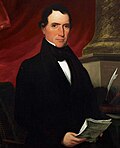 13th Vice President of the United States William R. King (B.A. 1803)
 -
 Author & Novelist Thomas Wolfe (B.A. 1920)
 -
 Actor Andy Griffith (BMus 1949)
 -
 fourteen-time NBA All-star, six-time NBA Champion, 5-time NBA MVP, Naismith Basketball Hall of Fame member Michael Jordan (B.A. 1986)
 -
 Journalist and author Brooke Baldwin (B.A. 2001)
 -
 Pulitzer Prize journalist Nikole Hannah-Jones (M.A. 2003)
 -
 75th Governor of North Carolina Roy Cooper (B.A. 1979, J.D. 1982)
 -
 Former White House Chief of Staff & Director of Office of Management and Budget Mick Mulvaney (J.D. 1992)
 -
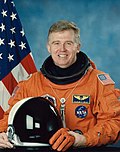 Astronaut Charles E. Brady Jr. (B.S. 1971)
 -
 Golden Globe Award actress Louise Fletcher (B.A. 1957)
_(2).jpg)
.jpg)
.jpg)


_(cropped).jpg)


.jpg)
See also
[edit]Notes
[edit]- ^ Other consists of Multiracial Americans & those who prefer to not say.
- ^ The percentage of students who received an income-based federal Pell grant intended for low-income students.
- ^ The percentage of students who are a part of the American middle class at the bare minimum.
References
[edit]- ^ University of North Carolina; Gales, Joseph (1817). Catalogus Universitatis Carolinae Septentrionalis. Raleigh: B. Typis J. Gales. Retrieved October 1, 2025.
- ^ a b Thelin, John R. (2004). A History of American Higher Education. Baltimore, MD: JHU Press. p. 448. ISBN 0-8018-7855-1. Retrieved October 15, 2020.
- ^ Battle, Kemp P. (1907). History of the University of North Carolina: From its beginning until the death of President Swain, 1789–1868. Raleigh, NC: Edwards & Broughton Printing Company. p. 6. Retrieved October 15, 2020.
- ^ As of February 18, 2022. U.S. and Canadian Institutions Listed by Fiscal Year 2021 Endowment Market Value and Change in Endowment Market Value from FY20 to FY21 (Report). National Association of College and University Business Officers and TIAA. February 18, 2022. Archived from the original on July 12, 2022. Retrieved June 19, 2022.
- ^ "2023-2024 Operating Budget".
- ^ "Office of the Chancellor". Office of the Chancellor – UNC Chapel. January 12, 2024. Archived from the original on January 19, 2024. Retrieved January 19, 2024.
- ^ "Message about Provost and Chief Academic Officer Chris Clemens". UNC University Communications. April 3, 2025. Retrieved June 27, 2025.
- ^ a b "Analytic Reports | OIRA". The University of North Carolina at Chapel Hill Office of Institutional Research and Assessment. 2021. Archived from the original on March 26, 2022. Retrieved July 26, 2022.
- ^ a b c "Carolina by the Numbers". The University of North Carolina at Chapel Hill OIRA. Retrieved April 28, 2023.
- ^ "Quick Facts". UNC News Services. 2007. Archived from the original on September 7, 2004. Retrieved April 5, 2008.
- ^ "College Navigator – University of North Carolina at Chapel Hill". National Center for Education Statistics. Archived from the original on November 7, 2021. Retrieved November 7, 2021.
- ^ "Color Palette". Archived from the original on September 28, 2019. Retrieved May 29, 2020.
- ^ a b "North Carolina". NCAA Schools. NCAA.com: The Official Web Site of the NCAA. 2008. Archived from the original on December 28, 2010. Retrieved May 21, 2008.
- ^ Wootson, Cleve R. Jr (January 8, 2002). "UNC Leaders Want Abbreviation Change". The Daily Tar Heel. Chapel Hill, NC. Archived from the original on November 7, 2012. Retrieved July 9, 2012.
- ^ "220 Years of History – UNC System Office". Northcarolina.edu. Archived from the original on June 11, 2019. Retrieved January 25, 2019.
- ^ "Schools". The University of North Carolina at Chapel Hill. Archived from the original on December 14, 2019. Retrieved January 14, 2020.
- ^ "Carnegie Classifications Institution Lookup". Carnegie Classification of Institutions of Higher Education. Center for Postsecondary Education. Archived from the original on July 26, 2020. Retrieved July 26, 2020.
- ^ "AAU Member Universities" (PDF). www.aau.edu. Archived (PDF) from the original on May 4, 2022. Retrieved June 8, 2022.
- ^ "Higher Education Research and Development: Fiscal Year 2023". National Center for Science and Engineering Statistics. November 25, 2024. Retrieved November 26, 2024.
- ^ Scott, Alice (October 27, 2024). "Executive Branch introduces Investment Advisory Committee". The Daily Tar Heel. Retrieved May 2, 2025.
- ^ Snider, William D. (1992). Light on the Hill: A History of the University of North Carolina at Chapel Hill. Chapel Hill, NC: UNC Press. pp. 13, 16, 20. ISBN 0-8078-2023-7. Retrieved October 15, 2020.
- ^ Assembly, North Carolina General. "Act Establishing the University of North Carolina, 1789: Electronic Edition". docsouth.unc.edu. Retrieved September 13, 2022.
- ^ Snider, William D. (1992), pp. 29, 35.
- ^ "C. Dixon Spangler Jr. named Overseers president for 2003–04". Harvard University Gazette. Cambridge, MA. May 29, 2003. Archived from the original on June 21, 2003. Retrieved April 5, 2008.
- ^ Snider, William D. (1992), p. 67.
- ^ Battle, Kemp P. (1912). History of the University of North Carolina: From 1868–1912. Raleigh, NC: Edwards & Broughton Printing Company. pp. 39, 41, 88. Retrieved October 15, 2020.
- ^ Holden, Charles (February 2018). "Manliness and the Culture of Self-Improvement: The University of North Carolina in the 1890s–1900s". History of Education Quarterly. 58 (1): 122–151. doi:10.1017/heq.2017.51. ISSN 0018-2680. S2CID 149411373. Archived from the original on May 17, 2021. Retrieved November 25, 2020.
- ^ Wilson, L.R. (1957). The University of North Carolina, 1900-1930: The Making of a Modern University. Chapel Hill: University of North Carolina Press.
- ^ "University Day: An Appropriate Celebration—Dr. Venable Reports the University in a Flourishing Condition—a thoughtful address by Col. Bingham". The Daily Tar Heel. October 19, 1905. Retrieved August 28, 2022 – via DigitalNC.
- ^ Snider, William D. (1992), pp. 212–213.
- ^ "UNC Trustees in broad changes of all branches". The Daily Times-News. Burlington, NC. January 25, 1963. p. 1.
- ^ Frost, Susan H.; Hearn, James C.; Marine, Ginger M. (1997). "State Policy and the Public Research University: A Case Study of Manifest and Latent Tensions". The Journal of Higher Education. 68 (4). Columbus, OH: The Ohio State University Press: 363–397. doi:10.2307/2960008. JSTOR 2960008.
- ^ "The History of UNCG". The University of North Carolina at Greensboro. 2005. Archived from the original on August 4, 2007. Retrieved May 20, 2008.
- ^ "The Beginning of NROTC at UNC Chapel Hill". Chapel Hill, North Carolina: University of North Carolina at Chapel Hill. 2011. Archived from the original on October 6, 2011. Retrieved September 28, 2011.
- ^ "Paving the Way". University of North Carolina at Chapel Hill. 2025. Retrieved March 11, 2025.
- ^ "First Black Students at UNC Chapel Hill". University of North Carolina at Chapel Hill. 2025. Retrieved March 11, 2025.
- ^ Snider, William D. (1992), p. 269.
- ^ Snider, William D. (1992), p. 270.
- ^ Snider, William D. (1992), pp. 272–273.
- ^ Snider, William D. (1992), pp. 274–275.
- ^ Snider, William D. (1992), pp. 267–268.
- ^ "UNC Food Workers' Strike of 1969". Food and American Studies. UNC–Chapel Hill. Retrieved November 27, 2023.
- ^ "University Endowment". UNC Office of University Development. 2007. Archived from the original on March 11, 2008. Retrieved April 5, 2008.
- ^ "Historical Trends, 1978–2007". UNC Office of Institutional Research and Assessment. 2007. Archived from the original on December 7, 2008. Retrieved May 20, 2008.
- ^ Sullivan, Kate (October 9, 2007). "UNC professor wins Nobel Prize". The Daily Tar Heel. Chapel Hill, NC. Archived from the original on December 7, 2008. Retrieved May 20, 2008.
- ^ "The Nobel Prize in Chemistry 2015 – Press Release". www.nobelprize.org. Archived from the original on January 2, 2016. Retrieved December 16, 2015.
- ^ "UNC Scandal". www.cbssports.com. June 4, 2014. Archived from the original on May 10, 2016. Retrieved July 14, 2019.
- ^ New, Jake (June 12, 2015). "Accrediting Body Places UNC on Probation". Inside Higher Ed. Archived from the original on July 26, 2020. Retrieved July 26, 2020.
- ^ Jones, Jaleesa (June 11, 2015). "University of North Carolina placed on probation by accreditation agency". USA TODAY. Archived from the original on July 26, 2020. Retrieved July 26, 2020.
- ^ Stancill, Jane (June 17, 2016). "UNC removed from probation by accrediting agency". Charlotte Observer. Archived from the original on December 10, 2018. Retrieved July 26, 2020.
- ^ a b "The Herald-Sun-UNC Taking Biggest Hit of System Cuts". The Herald-Sun-Trusted&Essential. Archived from the original on June 12, 2012. Retrieved November 17, 2011.
- ^ a b "Trustees OK Major Tuition Increase at UNC-CH::WRAL.com". WRAL.com. November 17, 2011. Archived from the original on February 9, 2013. Retrieved November 17, 2011.
- ^ Will, Madeline (September 14, 2011). "UNC system faculty rates suffer due to decrease in funds". The Daily Tar Heel. Archived from the original on October 12, 2011. Retrieved November 17, 2011.
- ^ Hartness, Erin (November 16, 2011). "UNC-CH Students Protest Tuition Increase Plan". WRAL.com. Archived from the original on September 18, 2012. Retrieved November 17, 2011.
- ^ Stancill, Jane (February 10, 2012). "Tuition increases at UNC schools approved amid protests". News Observer. Archived from the original on April 29, 2012. Retrieved July 8, 2013.
- ^ "UNC Violated Title IX in Handling of Sexual-Misconduct Complaints". The Daily Beast. June 26, 2018. Archived from the original on June 27, 2018. Retrieved July 20, 2018.
- ^ "Investigation: UNC violated Title IX in handling of sexual violence cases". ABC11 Raleigh-Durham. June 26, 2018. Archived from the original on July 21, 2018. Retrieved July 20, 2018.
- ^ Rosenberg, Alyssa (March 13, 2015). "'The Hunting Ground' and the Challenge of Campus Rape". Washington Post.
- ^ Johnson, Rebecca (October 9, 2014). "Campus Sexual Assault: Annie E. Clark and Andrea Pino Are Fighting Back—And Shaping the National Debate". Vogue. Archived from the original on October 11, 2014.
- ^ "Silent Sam". Archived from the original on June 10, 2010. Retrieved April 14, 2009.
- ^ Green, Hilary N. "Transcription: Julian Carr's Speech at the Dedication of Silent Sam". people.ua.edu. University of Alabama. Archived from the original on March 14, 2020. Retrieved June 11, 2020.
- ^ "U. of North Carolina under fire for $2.5M to Confederate group in 'Silent Sam' deal". NBC News. December 18, 2019. Archived from the original on August 18, 2021. Retrieved April 10, 2021.
- ^ a b Murphy, Kate (July 29, 2020). "These UNC dorms and academic buildings are no longer named after white supremacists". News & Observer. Archived from the original on October 22, 2020. Retrieved October 21, 2020.
- ^ Allston v. The University of North Carolina System. No. 20 CvS. Superior Court of Wake County. August 20, 2020. [1] Archived August 17, 2020, at the Wayback Machine
- ^ Wong, Wilson. "UNC-Chapel Hill goes to remote learning after 135 COVID-19 cases within week of starting classes". NBC News. Archived from the original on August 19, 2020. Retrieved August 17, 2020.
- ^ "Previous Presidents and Chancellors". UNC Office of the Chancellor. 2008. Archived from the original on October 12, 2007. Retrieved May 20, 2008.
- ^ "Kevin M. Guskiewicz begins term as 12th chancellor with investment in community | UNC-Chapel Hill". December 13, 2019. Archived from the original on December 14, 2019. Retrieved December 22, 2019.
- ^ Hudson, Susan (August 29, 2023). "Latest updates: Campus grieves after shooting at Caudill Labs". Retrieved August 29, 2023.
- ^ Guskiewicz, Kevin (August 29, 2023). "A Message from Chancellor Guskiewicz: The loss of our fellow Tar Heel". The University of North Carolina at Chapel Hill. Retrieved August 29, 2023.
- ^ "UNC, Duke, NCSU students continue campus pro-Palestinian protest in Chapel Hill". ABC11 Raleigh-Durham. April 29, 2024. Retrieved September 16, 2024.
- ^ "From LA to NY, pro-Palestine college campus protests grow strong in US". Al Jazeera. Retrieved September 16, 2024.
- ^ a b Masten, Paige (May 8, 2024). "Compared to past protests, UNC is coming down hard on pro-Palestinian protesters". Charlotte Observer. Retrieved September 16, 2024.
- ^ Leyva, Hannah; Harley, Deana (April 30, 2024). "36 protesters detained at UNC's Polk Place as police clear out encampment". CBS17. Retrieved September 16, 2024.
- ^ Killian, Joe (April 10, 2024). "Students for Justice in Palestine files civil rights complaint against UNC-Chapel Hill". NC Newsline. Retrieved September 16, 2024.
- ^ "Morehead Planetarium and Science Center :: Morehead History: Part 2 – Construction". Moreheadplanetarium.org. May 10, 1949. Archived from the original on September 30, 2003. Retrieved July 10, 2012.
- ^ "Grounds Services". UNC–Chapel Hill. Retrieved November 27, 2023.
- ^ Ellertson, Shari L. (2001). "Expenditures on O&M at America's Most Beautiful Campuses". Facilities Manager Magazine. 17 (5). Alexandria, VA: APPA. Archived from the original on February 19, 2008. Retrieved April 5, 2008.
- ^ Gaines, Thomas A. (1991). The Campus as a Work of Art. Westport, CT: Praeger Publishers. p. 155. ISBN 0-275-93967-7.
- ^ a b "Old East". UNC–Chapel Hill University Library. Retrieved November 27, 2023.
- ^ "South Building". UNC–Chapel Hill University Library. Retrieved November 27, 2023.
- ^ "Old West". UNC–Chapel Hill University Library. Retrieved November 27, 2023.
- ^ "McCorkle Place". UNC-Chapel Hill. Archived from the original on November 30, 2023. Retrieved November 27, 2023.
- ^ Powell, William S. (1991). "Samuel Eusebius McCorkle". Dictionary of North Carolina Biography. Vol. 4. Chapel Hill, NC: UNC Press. ISBN 978-0-8078-1918-0.
- ^ "Biography of James Polk". whitehouse.gov. 2001. Archived from the original on August 3, 2010. Retrieved April 5, 2008 – via National Archives.
- ^ "Polk Place". The Carolina Story: A Virtual Museum of University History. Retrieved November 27, 2023.
- ^ a b c "Campus Map" (PDF). UNC Engineering Information Services. 2007. Archived from the original (PDF) on May 28, 2008. Retrieved May 22, 2008.
- ^ a b "Belltower Tour Stop". Unc.edu. Archived from the original on December 23, 2001. Retrieved July 10, 2012.
- ^ Loewer, H. Peter (2004). Jefferson's Garden. Mechanicsburg, PA: Stackpole Books. p. 228. ISBN 0-8117-0076-3.
- ^ a b "McCorkle Place". UNC-Chapel Hill Graduate School. Retrieved November 27, 2023.
- ^ "Davie Poplar". A Self-Guided Tour of Campus. UNC Visitors' Center. 2001. Archived from the original on December 23, 2001. Retrieved April 5, 2008.
- ^ a b Valle, Kirsten (October 12, 2004). "Reflections of a storied past". The Daily Tar Heel. Archived from the original on December 7, 2008. Retrieved December 11, 2023.
- ^ "The Dialectic and Philanthropic Societies". Unc.edu. Archived from the original on January 5, 2008. Retrieved July 10, 2012.
- ^ "Architectural Highlights of Carolina's Historic Campus". The Carolina Story. Archived from the original on June 10, 2010. Retrieved September 11, 2010.
- ^ "Playmakers Theater Tour Stop". Unc.edu. Archived from the original on January 12, 2002. Retrieved July 10, 2012.
- ^ "The Carolina Story—Carolina's Early Benefactors". Museum.unc.edu. Archived from the original on March 17, 2012. Retrieved July 10, 2012.
- ^ "Names in Brick and Stone: Histories from UNC's Built Landscape". UNC–Chapel Hill. Retrieved November 27, 2023.
- ^ "National Historic Landmarks Survey" (PDF). Archived from the original (PDF) on November 4, 2012. Retrieved November 4, 2012.
- ^ "UNC.edu". Archived from the original on October 3, 1999.
- ^ "UNC Sustainability: High Performance Buildings". UNC-Chapel Hill. Archived from the original on October 18, 2007. Retrieved June 8, 2009.
- ^ "Allen Education Center". North Caroline Botanic Garden. Retrieved November 27, 2023.
- ^ "UNC Sustainability: Energy at UNC". UNC-Chapel Hill. Archived from the original on October 2, 2008. Retrieved June 8, 2009.
- ^ "UNC Sustainability: Institutionalizing Sustainability". UNC-Chapel Hill. Archived from the original on October 18, 2007. Retrieved June 8, 2009.
- ^ "Overall College Sustainability Leaders". The College Sustainability Report Card. Sustainable Endowments Institute. Archived from the original on June 20, 2010. Retrieved November 27, 2023.
- ^ "Community frustrated with UNC's renewal of its coal plant over sustainable alternatives". The Daily Tar Heel. Archived from the original on February 13, 2020. Retrieved February 13, 2020.
- ^ Pequeño, Sara (May 12, 2021). "UNC-Chapel Hill Stalls on Stopping Coal Use as the Climate Crisis Inches Closer to Catastrophe". INDY Week. Archived from the original on December 11, 2023. Retrieved October 1, 2025.
- ^ Pequeño, Sara (December 4, 2019). "UNC-Chapel Hill Just Got Slapped With Another Lawsuit, This Time About Its Coal Plant". INDY Week. Archived from the original on December 5, 2019. Retrieved December 11, 2023.
- ^ "Compendium of Key Facts". UNC News Services. 2007. Archived from the original on March 29, 2008. Retrieved April 5, 2008.
- ^ "Introduction to UNC: Campus and Student Profile". Teaching at Carolina. UNC Center for Teaching and Learning. 2001. Archived from the original on August 27, 2002. Retrieved April 5, 2008.
- ^ "Fall 2011 Headcount Enrollment – Office of Institutional Research and Assessment". Oira.unc.edu. September 15, 2011. Archived from the original on June 11, 2010. Retrieved July 10, 2012.
- ^ "Fall 2011 Undergraduate Enrollment by Race/Ethnicity – Office of Institutional Research and Assessment". Oira.unc.edu. September 15, 2011. Archived from the original on June 11, 2010. Retrieved July 10, 2012.
- ^ "Diversity at Carolina". Admissions.unc.edu. January 27, 2012. Archived from the original on February 10, 2010. Retrieved July 10, 2012.
- ^ a b "Quick Facts" (PDF). Archived from the original (PDF) on June 9, 2010. Retrieved June 9, 2010.
- ^ "Study Abroad at UNC". Studyabroad.unc.edu. Archived from the original on September 5, 2008. Retrieved July 10, 2012.
- ^ "Academic Advising Program". UNC Academic Advising Program. Archived from the original on November 27, 2010. Retrieved December 12, 2010.
- ^ "Academic Policies". University of North Carolina at Chapel Hill. Archived from the original on August 22, 2008. Retrieved April 14, 2009.
- ^ "APPLES Service-Learning". Carolina Center for Public Service. University of North Carolina at Chapel Hill. Retrieved October 3, 2025.
- ^ "Service-Learning Courses". Carolina Center for Public Service. University of North Carolina at Chapel Hill. Retrieved October 3, 2025.
- ^ "Service & Leadership Resources". UNC Catalog. University of North Carolina at Chapel Hill. Retrieved October 3, 2025.
- ^ "FYS @ UNC-CH: About FYS". Archived from the original on February 24, 2004. Retrieved February 24, 2004.
- ^ "When do I choose my major?". Studying FAQs. UNC Office of Undergraduate Admissions. 2005. Archived from the original on June 10, 2008. Retrieved June 20, 2008.
- ^ "Frequently Asked Questions". UNC Academic Advising program. 2010. Archived from the original on October 31, 2010. Retrieved December 12, 2010.
- ^ a b c "UNC-Chapel Hill Common Data Set 2022–2023" (PDF). University of North Carolina at Chapel Hill. Archived (PDF) from the original on March 26, 2023. Retrieved March 31, 2023.
- ^ "Common Data Set 2015–2016" (PDF). University of North Carolina at Chapel Hill. Archived (PDF) from the original on March 18, 2022. Retrieved March 18, 2022.
- ^ "University of North Carolina – Chapel Hill". U.S. News & World Report. Archived from the original on September 7, 2015. Retrieved September 22, 2015.
- ^ "UNC Admissions". UNC Office of Undergraduate Admissions. UNC. Archived from the original on April 15, 2022. Retrieved April 8, 2022.
- ^ "National Merit Scholarship Corporation 2019-20 Annual Report" (PDF). National Merit Scholarship Corporation. Retrieved December 7, 2022.
- ^ "The University of North Carolina at Chapel Hill -". University of North Carolina at Chapel Hill. Archived from the original on July 10, 2012.
- ^ "The Honor Code". Honor Court of The University of North Carolina at Chapel Hill. Archived from the original on May 18, 2009. Retrieved April 14, 2009.
- ^ "A Question of Honor: Honor Code Timeline". The Daily Tar Heel. September 24, 2003. Archived from the original on January 16, 2022. Retrieved January 16, 2022.
- ^ Black Student Movement Demands, December 1968 in the Black Student Movement of the University of North Carolina at Chapel Hill Records #40400, University Archives, The Wilson Library, University of North Carolina at Chapel Hill.
- ^ Coates, Albert; Hall Coates, Gladys (1985). The Story of Student Government in the University of North Carolina at Chapel Hill. Chapel Hill, NC: Professor Emeritus Fund. p. 332.
- ^ Dean, Korie (July 22, 2024). "UNC to end its student-run honor court after more than 100 years. Why the change?". The News & Observer. Retrieved July 23, 2024.
- ^ About UNC Libraries | UNC Chapel Hill Libraries Archived August 27, 2010, at the Wayback Machine. Lib.unc.edu. Retrieved on August 9, 2013.
- ^ "Library Information for Grant Applications". UNC University Libraries. June 30, 2023.
- ^ "Locations and Hours". UNC University Libraries. Retrieved April 14, 2025.
- ^ "The North Carolina Collection Research Library". UNC University Libraries. 2007. Archived from the original on May 10, 2008. Retrieved April 5, 2008.
- ^ "North Carolina Collection". Lib.unc.edu. July 3, 2012. Archived from the original on July 21, 2012. Retrieved July 10, 2012.
- ^ "Louis Round Wilson Library: An Enduring Monument to Learning". Lib.unc.edu. Archived from the original on February 4, 2008. Retrieved July 10, 2012.
- ^ "ibiblio: Ten Years in the Making". ibiblio. 2002. Archived from the original on October 2, 2008. Retrieved May 18, 2008.
- ^ Carrigan, Robert; Milton, Ron; Morrow, Dan (2005). "Education and Academia: ibiblio" (PDF). Computerworld Honors Case Study. Computerworld Honors Program. Archived from the original (PDF) on June 25, 2008. Retrieved June 18, 2008.
- ^ "Happy Anniversary, Davis Library!". Lib.unc.edu. Archived from the original on November 6, 2004. Retrieved August 10, 2012.
- ^ "Robert B. House (1892-1987) and House Library". The Carolina Story: A Virtual Museum of University History. Archived from the original on January 16, 2022. Retrieved January 16, 2022.
- ^ "R.B. House Undergraduate Library-History and Mission". Lib.unc.edu. August 9, 2010. Archived from the original on September 28, 2012. Retrieved August 10, 2012.
- ^ "Overview of the UNC Chapel Hill Library System". UNC University Libraries. 2007. Archived from the original on April 3, 2008. Retrieved April 5, 2008.
- ^ "About Documenting the American South". University of North Carolina at Chapel Hil. Archived from the original on March 21, 2017. Retrieved March 20, 2017.
- ^ "About DigitalNC". Digitalnc.org. Archived from the original on June 12, 2010.
- ^ "America's Top Colleges 2025". Forbes. September 6, 2025. Retrieved October 3, 2025.
- ^ "2025-2026 Best National Universities Rankings". U.S. News & World Report. September 23, 2025. Retrieved October 3, 2025.
- ^ "2024 National University Rankings". Washington Monthly. August 25, 2024. Retrieved August 29, 2024.
- ^ "2025 Best Colleges in the U.S." The Wall Street Journal/College Pulse. September 4, 2025. Retrieved October 3, 2025.
- ^ "2024 Academic Ranking of World Universities". ShanghaiRanking Consultancy. August 15, 2024. Retrieved August 21, 2024.
- ^ "QS World University Rankings 2026". Quacquarelli Symonds. June 19, 2025. Retrieved June 19, 2025.
- ^ "World University Rankings 2025". Times Higher Education. October 9, 2024. Retrieved June 19, 2025.
- ^ "2025-2026 Best Global Universities Rankings". U.S. News & World Report. June 17, 2025. Retrieved June 17, 2025.
- ^ "US News Best Universities 2022". Archived from the original on February 23, 2017. Retrieved October 6, 2020.
- ^ Smith, Fleming (September 4, 2019). "The Top Public Schools in the WSJ/THE College Rankings". The Wall Street Journal. ISSN 0099-9660. Archived from the original on August 11, 2020. Retrieved August 14, 2020.
- ^ Moll, Richard (1985). The Public Ivies: A Guide to America's Best Public Undergraduate Colleges and Universities. New York, NY: Viking. ISBN 0-670-58205-0.
- ^ Greene, Howard; Greene, Matthew W. (2000). The Hidden Ivies: Thirty Colleges of Excellence. New York, NY: Cliff Street Books. ISBN 0-06-095362-4.
- ^ "NIH Awards". October 13, 2020. Archived from the original on August 21, 2021. Retrieved October 13, 2020.
- ^ "Paul Shorkey '11 and Laurence Deschamps-Laporte '11 Named Rhodes Scholars". Morehead–Cain Foundation. 2010. Archived from the original on August 22, 2011. Retrieved November 23, 2010.
- ^ "About Us". The Robertson Scholars Leadership Program. 2013. Archived from the original on August 10, 2014. Retrieved August 13, 2014.
- ^ "Merit-Based Scholarships". UNC Office of Scholarships and Student Aid. 2008. Archived from the original on March 21, 2008. Retrieved May 21, 2008.
- ^ Marklein, Mary Beth (September 26, 2006). "Right to an education bound in a Covenant". USA Today. McLean, VA. Archived from the original on October 7, 2008. Retrieved July 11, 2008.
- ^ "About the ACC". The Atlantic Coast Conference. 2004. Archived from the original on April 23, 2006. Retrieved May 20, 2008.
- ^ "North Carolina Tar Heels Athletics homepage". GoHeels.com. North Carolina Tar Heels. Retrieved May 2, 2025.
- ^ "Championships Administration Forms". NCAA. Archived from the original on March 16, 2007. Retrieved April 14, 2009.
- ^ "Schools with the Most NCAA Championships". National Collegiate Athletic Association. 2007. Archived from the original on April 19, 2008. Retrieved May 20, 2008.
- ^ "Year By Year Standings". NCAA Men's College World Series. CWS Omaha, Inc. 2008. Archived from the original on March 22, 2008. Retrieved June 9, 2008.
- ^ "1993–94 Sears Directors' Cup Final Standings" (PDF). National Association of Collegiate Directors of Athletics. 1994. Archived from the original (PDF) on May 28, 2008. Retrieved May 20, 2008.
- ^ "Carolina's National Athletes of the Year". North Carolina Tar Heels Official Athletic Site. UNC Athletic Department. 2008. Archived from the original on October 28, 2006. Retrieved May 21, 2008.
- ^ a b Powell, William S. (1982). "What's in a Name? Why We're All Called Tar Heels". Carolina Alumni. Archived from the original on June 9, 2010. Retrieved October 1, 2025.
- ^ "The Ram as Mascot". North Carolina Tar Heels Official Athletic Site. UNC Athletic Department. 2006. Archived from the original on April 13, 2008. Retrieved May 18, 2008.
- ^ "UNC Mascot "Rameses" Killed". Raleigh, NC: WRAL. February 25, 1996. Archived from the original on December 7, 2008. Retrieved May 21, 2008.
- ^ "History of NROTC at the University of North Carolina". UNC Naval ROTC Alumni Association. 2008. Archived from the original on February 18, 2005. Retrieved May 18, 2008.
- ^ "The Carolina Way: Leadership Lessons from a Life in Coaching". Barnes & Noble. May 22, 2014. Archived from the original on June 30, 2015. Retrieved June 29, 2015.
- ^ "10 Leadership Lessons from Coach Dean Smith". Archived from the original on June 22, 2015. Retrieved June 28, 2015.
- ^ Saacks, Bradley. "Wainstein report reveals extent of academic scandal at UNC". Archived from the original on October 5, 2016. Retrieved October 3, 2016.
- ^ "North Carolina and the erosion of the Carolina Way". ESPN.com. October 30, 2013. Archived from the original on June 30, 2015. Retrieved June 29, 2015.
- ^ Sara Ganim and Devon Sayers (October 22, 2014). "UNC athletics report finds 18 years of academic fraud - CNN.com". CNN. Archived from the original on July 2, 2015. Retrieved June 29, 2015.
- ^ "University of North Carolina slapped with 5 NCAA violations over academic scandal". Fox News. June 4, 2015. Archived from the original on June 28, 2015. Retrieved June 29, 2015.
- ^ a b "NCAA University of North Carolina at Chapel Hill Infractions Decision" (PDF). NCAA. October 2017. Archived (PDF) from the original on February 15, 2020.
- ^ "Most-Played Rivalries". Archived from the original on February 20, 2009. Retrieved April 14, 2009.
- ^ U.S. News & World Report has ranked UC Berkeley, UVA, UCLA, Michigan, and UNC-Chapel Hill as the top five public universities in America for at least nine consecutive years as of 2014.
- ^ Moon, Emma (January 31, 2024). "The Shakespearean origin story of the UNC-Duke rivalry". The Daily Tar Heel. Retrieved May 2, 2025.
- ^ Deitsch, Richard (June 23, 2008). "HBO probes Carolina-Duke rivalry". Media Circus. SI.com. Archived from the original on June 27, 2008. Retrieved June 24, 2008.
- ^ "HBO.com". Archived from the original on February 11, 2012. Retrieved November 14, 2011.
- ^ Kyle, Blakely (November 16, 2006). "Ram Roast deters Tar Heel blue tunnel". Technicianonline.com. Archived from the original on December 11, 2023. Retrieved December 11, 2023.
- ^ Tovar, Sergio (February 21, 2008). "Campus awakes to a red Old Well". The Daily Tar Heel. Chapel Hill, NC. Archived from the original on May 27, 2008. Retrieved May 18, 2008.
- ^ Greene, Caitlyn (September 24, 2008). "30 years at Sutton's". The Daily Tar Heel. Archived from the original on January 16, 2022. Retrieved January 16, 2022.
- ^ "The scene from Franklin Street (February 12, 2009)". Archived from the original on February 13, 2009.
- ^ "News and Observer: Bonfires mark Tar Heels' win (March 5, 2007)". Archived from the original on December 7, 2008.
- ^ "News and Observer: Radical changes for Chapel Hill celebrations". Archived from the original on September 27, 2007.
- ^ a b c Magill, Samuel (March 17, 2008). "Basketball flavors Franklin Street celebrations". chapelhillnews.com. Archived from the original on May 25, 2013. Retrieved December 30, 2012.
- ^ Sumner, Jim L. (1990). A History of Sports in North Carolina. Raleigh, NC: Division of Archives and History, NC Department of Cultural Resources. p. 35. ISBN 0-86526-241-1.
- ^ a b "Culture Corner: Di-Phi: The Oldest Organization" (PDF). March 2006. p. 13. Archived from the original (PDF) on July 25, 2008. Retrieved April 14, 2009.
- ^ Coates, Alfred; Coates, Gladys Hall (1985). The Story of Student Government in the University of North Carolina at Chapel Hill, Chapel Hill. ASIN B00070WQNC.
- ^ "School Colors". North Carolina Tar Heels Official Athletic Site. UNC Athletic Department. 2008. Archived from the original on May 12, 2006. Retrieved April 5, 2008.
- ^ a b c "UNC School Songs". North Carolina Tar Heels Official Athletic Site. UNC Athletic Department. 2006. Archived from the original on April 24, 2006. Retrieved July 9, 2008.
- ^ "College Scorecard: University of North Carolina at Chapel Hill". United States Department of Education. Archived from the original on June 15, 2022. Retrieved May 8, 2022.
- ^ "The Dialectic and Philanthropic Societies". Unc.edu. Archived from the original on June 9, 2002. Retrieved August 10, 2012.
- ^ "Forest Theater Tour Stop". Unc.edu. Archived from the original on January 12, 2002. Retrieved August 10, 2012.
- ^ "About the Carolina Union". Archived from the original on January 30, 2009. Retrieved April 14, 2009.
- ^ "Finance: At Its Core | UNC's Senate – Legislative Branch – USG". Undergraduate Senate – Student Government. UNC Student Government. 2022. Archived from the original on June 24, 2022. Retrieved August 26, 2022.
- ^ "Dance Marathon is Friday at UNC-Chapel Hill". The News & Observer. Raleigh, NC. Archived from the original on December 7, 2008. Retrieved June 20, 2008.
- ^ "Newspaper Pacemaker Winners". Associated Collegiate Press. 2005. Archived from the original on November 24, 2005. Retrieved April 5, 2008.
- ^ Grossman, Wendy (January 26, 1995). "Communications: Picture the scene". The Guardian. Manchester, United Kingdom. p. 4.
- ^ "WXYC announces the first 24-hour real-time world-wide Internet radio simulcast" (Press release). WXYC 89.3 FM. November 7, 1994. Archived from the original on December 20, 2002. Retrieved April 5, 2008.
- ^ "About STV". UNC Student Television. 2008. Archived from the original on May 14, 2008. Retrieved May 21, 2008.
- ^ "About the Carolina Quarterly". Carolina Quarterly. 2010. Archived from the original on October 19, 2011. Retrieved January 15, 2013.
- ^ New Stories from the South | The Rankings Archived September 8, 2013, at the Wayback Machine. Therankings.wordpress.com (May 1, 2010). Retrieved on August 9, 2013.
- ^ The PEN/O. Henry Prize Stories Archived October 24, 2012, at the Wayback Machine. Randomhouse.com. Retrieved on August 9, 2013.
- ^ "Founding Clef Hangers come home" Archived April 14, 2013, at the Wayback Machine, The Daily Tar Heel, April 11, 2013. Retrieved April 20, 2016.
- ^ a b "Facing Clarence (2005)" Archived January 29, 2016, at the Wayback Machine, The Recorded A Cappella Review Board, September 29, 2005. Retrieved April 20, 2016.
- ^ CARA Winners 2008 Archived May 8, 2016, at the Wayback Machine, The Contemporary A Cappella Society. Retrieved April 20, 2016.
- ^ CARA Winners 2009 Archived May 8, 2016, at the Wayback Machine, The Contemporary A Cappella Society. Retrieved April 20, 2016.
- ^ Haller, Val (November 27, 2012). "If You Like Billy Joel, Try Brendan James". The New York Times. Archived from the original on December 12, 2017. Retrieved February 25, 2017 – via NYTimes.com.
- ^ "Resience Hall Association". Heel Life. Retrieved November 27, 2023.
- ^ "National Affiliation". UNC Residence Hall Association. Retrieved November 27, 2023.
- ^ "Flash Mob Rave: December 9 at the Undergraduate Library". Lib.unc.edu. December 16, 2008. Archived from the original on May 13, 2012. Retrieved August 10, 2012.
- ^ "Students bare their thoughts about student-led tradition of streaking". Students bare their thoughts about student-led tradition of streaking -. Retrieved February 6, 2025.
- ^ "Athletic Bands". UNC Bands. 2008. Archived from the original on April 16, 2013. Retrieved April 5, 2008.
- ^ "About Playmakers". Playmakers Repertory Company. 2008. Archived from the original on March 30, 2008. Retrieved June 5, 2008.
- ^ "About Carolina Performing Arts". Carolina Performing Arts. 2008. Archived from the original on June 21, 2006. Retrieved June 6, 2008.
- ^ "UNC.edu". Ncbg.unc.edu. Archived from the original on December 29, 2011. Retrieved September 29, 2012.
- ^ "The Carolina Story—Names Across the Landscape". Museum.unc.edu. Archived from the original on August 14, 2012. Retrieved August 10, 2012.
- ^ "UNC Chapel Hill Fraternity & Sorority Semester Grade Report - Spring 2023 Public Report" (PDF). fsl.unc.edu. Retrieved July 21, 2014.
- ^ "Student Honorary Societies". UNC. 2007. Archived from the original on April 11, 2008. Retrieved May 5, 2008.
- ^ "Student Government". UNC–Chapel Hill. Retrieved November 27, 2023.
- ^ "Executive Branch". UNC–Chapel Hill. Retrieved November 27, 2023.
- ^ "The Undergraduate Senate". UNC–Chapel Hill. Retrieved November 27, 2023.
- ^ "Graduate and Professional Student Government". UNC–Chapel Hill. Retrieved November 27, 2023.
- ^ "Joint Governance Council". UNC–Chapel Hill. Retrieved November 27, 2023.
- ^ "Honor system branches". UNC–Chapel Hill. Retrieved November 27, 2023.
- ^ "Home". Student Supreme Court of the University of North Carolina at Chapel Hill. Retrieved November 27, 2022.
- ^ "Lenoir Dining Hall". Archived from the original on February 13, 2018. Retrieved September 1, 2018.
- ^ "Chase Dining Hall: A History". Archived from the original on September 30, 2020. Retrieved September 1, 2018.
- ^ "Facility Information". Archived from the original on April 26, 2003.
- ^ Boss, Donna. "Rams Head Dining Center at the University of North Carolina." AllBusiness. December 1, 2005. Foodservice Equipment and Supplies, Web. November 10, 2009. AllBusiness.com[dead link]
- ^ "North Campus Communities". Residence Halls. UNC Department of Housing and Residential Education. 2008. Archived from the original on June 6, 2008. Retrieved June 18, 2008.
- ^ "Middle and South Campus Communities". Residence Halls. UNC Department of Housing and Residential Education. 2008. Archived from the original on June 7, 2008. Retrieved June 18, 2008.
- ^ "First Year Students". Residence Halls. UNC Department of Housing and Residential Education. 2017. Archived from the original on February 2, 2017. Retrieved January 26, 2017.
- ^ "Learning Communities". UNC Department of Housing and Residential Education. 2008. Archived from the original on June 6, 2008. Retrieved June 19, 2008.
- ^ "UNITAS". Living-Learning Communities. UNC Department of Housing and Residential Education. 2008. Archived from the original on December 7, 2008. Retrieved June 18, 2008.
- ^ "Apartment Communities". UNC Department of Housing and Residential Education. 2008. Archived from the original on June 7, 2008. Retrieved June 18, 2008.
- ^ "Smoking ban starts on New Year's Day". The News & Observer. Raleigh, NC. September 23, 2007. Archived from the original on October 29, 2007. Retrieved June 20, 2008.
- ^ "Housing and Campus Life". University of North Carolina at Chapel Hill. College Board. 2008. Archived from the original on February 6, 2008. Retrieved June 20, 2008.
- ^ "UNC General Alumni Association:: About the GAA |". Alumni.unc.edu. Archived from the original on May 18, 2015. Retrieved May 8, 2015.
- ^ "North Carolina History Project: James K. Polk (1795–1849)". Northcarolinahistory.org. Archived from the original on January 6, 2007. Retrieved December 30, 2012.
- ^ "U.S. Senate: Art & History Home > William Rufus King, 13th Vice President (1853)". Senate.gov. May 29, 2012. Archived from the original on December 19, 2012. Retrieved December 30, 2012.
- ^ "Actor Andy Griffith dead at 86". CNN.com. December 11, 2012. Archived from the original on December 29, 2012. Retrieved December 30, 2012.
- ^ a b "April Heinrichs Named Head Coach of the U.S. Women's National Team". U.S. Soccer. Archived from the original on April 25, 2012. Retrieved December 30, 2012.
- ^ "About". Hulu. Archived from the original on December 30, 2012. Retrieved December 30, 2012.
- ^ "Howard Levine – News, Articles, Biography, Photos". The Wall Street Journal. Archived from the original on July 15, 2012. Retrieved December 30, 2012.
Further reading
[edit]- Dulken, Danielle (August 22, 2019). "Places Dedicated to Enslavers and White Supremacists at UNC-Chapel Hill". Medium. Archived from the original on August 29, 2019. Retrieved August 29, 2019.
- Whichard, Willis P (2022). A Consequential Life: David Lowry Swain, Nineteenth-Century North Carolina, and Their University. ISBN 978-1-469-66618-1.
External links
[edit]
- Official website

- North Carolina Athletics website
- Profile on UNC System website
| ||||||||||||||||||||||||||||||


Located in: Chapel Hill, North Carolina | ||
| Schools |  | |
| Centers | ||
| Athletics | ||
| Campus | ||
| Student life | ||
| History | ||
Founded: 1789 | ||
| International | |
|---|---|
| National | |
| Geographic | |
| Other | |
University of North Carolina at Chapel Hill
View on GrokipediaThe University of North Carolina at Chapel Hill is a public research university and the flagship campus of the University of North Carolina System, chartered by the North Carolina General Assembly on December 11, 1789, and opened to students on January 15, 1795, as the first public university in the United States.[1][2][3] It enrolls over 32,000 students across undergraduate and graduate programs on a 729-acre suburban campus in Chapel Hill, North Carolina, offering degrees in more than 100 fields and maintaining a strong emphasis on research as a Carnegie-classified R1 institution.[4][5] UNC Chapel Hill is ranked among the top public universities nationally, holding the No. 1 spot for best value among public institutions for 21 consecutive years as of 2025 and No. 4 in top public schools.[4][6] The university has produced notable alumni in fields such as politics, business, and sports, and its athletic teams, known as the Tar Heels, have achieved multiple national championships, particularly in basketball and field hockey.[7] However, it has encountered controversies, including a prolonged academic scandal from 1993 to 2011 involving thousands of unauthorized "paper classes" primarily benefiting athletes, which exposed lapses in oversight and raised questions about institutional priorities in balancing academics and athletics.[8] More recently, debates over free speech and historical commemorations, such as the removal of the Silent Sam statue in 2018 amid protests, have highlighted tensions between preserving campus heritage and addressing demands for ideological conformity, reflecting broader challenges in academic environments prone to left-leaning pressures.[9]
History
Founding and Early Years
The University of North Carolina at Chapel Hill was chartered by the North Carolina General Assembly on December 11, 1789, through legislation drafted by William Richardson Davie, a Revolutionary War veteran and future governor, fulfilling a directive in the state's 1776 constitution to establish public institutions of higher education.[1] [9] Davie, often called the "Father of the University," advocated for a state-supported university to promote republican virtues and public enlightenment in the post-independence era.[10] The site's selection in 1793 favored New Hope Chapel, in what became Chapel Hill, Orange County, for its central geographic position and contributions from local landowners, including 1,386 acres of land and monetary donations totaling around £798.[9] Construction of the first building, Old East, began with its cornerstone laid on October 12, 1793, by Davie and the board of trustees.[1] The university opened for instruction on January 15, 1795, as the nation's first state university, with Hinton James of New Hanover County arriving on February 12 as the inaugural student after walking approximately 180 miles from Wilmington.[2] [11] Initial enrollment remained modest, reflecting limited state funding and regional economic constraints, with the curriculum emphasizing classical liberal arts, mathematics, and moral philosophy under early faculty like mathematics professor Samuel Holmes.[12] Joseph Caldwell, a Princeton-educated mathematician and Presbyterian minister, joined as professor in 1796 and served as the university's first president from 1804 to 1812 and again from 1813 until his death in 1835, guiding its formative development amid intermittent leadership gaps and financial shortfalls.[13] [14] The institution awarded its first degrees in the 18th century, a distinction unique among public universities, though regular baccalaureate commencements began around 1798 with small graduating classes.[1] Early growth was hampered by chronic underfunding, reliance on tuition and private donations, and low student numbers—often fewer than 100 in the opening decades—leading to periodic operational strains, yet it established a foundation for public higher education in the South.[12][10]Civil War and Reconstruction Era
The University of North Carolina at Chapel Hill remained open during the American Civil War (1861–1865), distinguishing it from many Confederate institutions that suspended operations, though enrollment plummeted as students volunteered or were conscripted into Confederate service. Pre-war enrollment hovered around 450 students, but by late 1861, following North Carolina's secession on May 20, numbers had sharply declined due to enlistments and the prioritization of military needs over education. Faculty and remaining students faced resource shortages, yet classes continued amid national upheaval, with the campus serving occasional military purposes. In the war's final weeks, Union cavalry under General Smith D. Atkins occupied Chapel Hill from April 16 to May 2, 1865, stabling horses in university buildings without major destruction, as local leaders negotiated a peaceful handover. The university suffered profound human losses, with approximately 312 students dying from combat, disease, or related causes, reflecting the broader toll on Southern youth.[15][16][17] The postwar Reconstruction era brought severe challenges, culminating in the university's closure from 1871 to 1875 due to accumulated war debts, depleted state funding, and waning student interest amid economic devastation. Political discord exacerbated the crisis; President David L. Swain's perceived leniency toward Union forces during the occupation fueled resentment among Confederate sympathizers, leading to his demotion and the withdrawal of legislative support under North Carolina's Reconstruction government. Enrollment had already fallen to unsustainable levels by 1870, with the General Assembly redirecting resources away from higher education to address statewide fiscal collapse. Cornelia Phillips Spencer, daughter-in-law of early faculty member James Phillips, played a pivotal role in advocacy for reopening, authoring persuasive essays in newspapers and mobilizing alumni and community support to highlight the institution's cultural and intellectual value. The university resumed operations in September 1875 under Kemp Plummer Battle as acting president, marking a tentative recovery with modest initial enrollment and renewed emphasis on classical curricula.[18][2][19][20]Expansion in the Early 20th Century
During the presidencies of Francis Preston Venable (1900–1914) and Edward Kidder Graham (1914–1918), the University of North Carolina at Chapel Hill transitioned from a modest liberal arts college toward a more comprehensive state institution, driven by increased state funding and administrative reforms. Venable, a chemist who reorganized academic departments, established the College of Liberal Arts in 1909 to consolidate undergraduate instruction in humanities and sciences.[21] Graham emphasized public service and outreach, expanding the university's extension programs to disseminate knowledge across North Carolina and enhancing its role in statewide education.[22] Enrollment grew steadily, surpassing 1,000 students for the first time in 1915 with 1,059 regular enrollees, of whom 982 were North Carolinians.[23] Academic diversification accelerated with the creation of specialized schools to meet professional demands. The School of Education opened in 1915 to train teachers amid North Carolina's push for public schooling.[1] The School of Commerce, precursor to the Kenan-Flagler Business School, was founded in 1919 to provide business training.[1] In 1920, the School of Public Welfare emerged to address social services, reflecting Progressive Era priorities.[1] These additions broadened the curriculum beyond traditional liberal arts, aligning with the university's evolving mission as outlined in historical accounts of its modernization from 1900 to 1930.[24] Infrastructure kept pace with rising student numbers through targeted construction. The Carr Dormitory, funded by a single donor and completed in 1900, marked an early step in dormitory expansion to accommodate growth.[25] Hill Hall opened in 1907 for women's programs, while Carolina Hall (originally Saunders Hall) was built in the early 1920s as part of broader campus development.[26] The Louis Round Wilson Library, dedicated in 1925, provided expanded research facilities with its neoclassical design featuring six Corinthian columns.These projects supported academic ambitions, culminating in the university's admission to the Association of American Universities in 1922, affirming its rising research stature.[1]
Post-World War II Growth and Modernization
Following the end of World War II in 1945, the University of North Carolina at Chapel Hill underwent rapid expansion driven primarily by the influx of veterans utilizing benefits under the Servicemen's Readjustment Act of 1944, known as the GI Bill, which subsidized tuition, living expenses, and supplies for eligible ex-servicemen. This led to a surge in enrollment, particularly among older students and married veterans, transforming the campus demographics from predominantly young undergraduates to a more mature population. To address acute housing shortages, the university developed Victory Village in 1946–1947 as prefabricated accommodations for approximately 1,000 married students and their families, exemplifying the immediate infrastructural adaptations to this postwar boom.[27] [28] [29] In tandem with enrollment growth, UNC Chapel Hill prioritized modernization through the establishment of specialized professional schools in the late 1940s. The Division of Health Affairs was created in 1949 to coordinate medical and related programs, coinciding with the founding of the School of Dentistry that same year; the School of Nursing followed in 1950, enhancing the university's capacity in clinical training and public health education. These initiatives reflected a broader national trend toward expanding higher education in applied sciences and healthcare, supported by state appropriations and federal grants amid rising demand for skilled professionals. Campus physical development accelerated, with southward expansion incorporating modernist architectural elements in new structures to accommodate growing academic departments, such as the 1965 construction of Greenlaw Hall for the English department at a cost of $1.5 million.[1] [30] [31] Research capabilities also advanced during this period, bolstered by postwar federal investments in scientific inquiry for national security and economic purposes, which ramped up university-level funding starting in the 1940s and positioned UNC as an emerging research leader. By the 1970s, the university integrated into the consolidated University of North Carolina System in 1972, facilitating coordinated resource allocation across campuses and further enabling growth in faculty, programs, and facilities like student unions redesigned for contemporary needs, such as the Frank Porter Graham Student Union. This era solidified UNC Chapel Hill's transition from a regional liberal arts institution to a comprehensive public research university, with sustained enrollment and infrastructural investments laying the foundation for later expansions.[32] [1] [33]Recent Developments and Leadership Changes
In December 2023, following Chancellor Kevin M. Guskiewicz's departure to Michigan State University after serving since 2019, the UNC System Board of Governors appointed Lee H. Roberts as interim chancellor effective January 12, 2024.[34][35] Roberts, a finance executive and former state budget director under Governor Pat McCrory, had no prior academic administrative experience, aligning with a broader trend in higher education toward appointing non-academics to prioritize fiscal and operational efficiency.[36] On August 9, 2024, the UNC Board of Governors confirmed Roberts as the permanent 13th chancellor, with a base salary of $650,000—lower than Guskiewicz's $800,000—reflecting system-wide efforts to control administrative costs.[37][38] Under Roberts' leadership, UNC-Chapel Hill restructured administrative functions in March 2025, integrating Human Resources into the Division of Finance and Operations while separating Equal Opportunity and Compliance into a standalone office to streamline operations and enhance accountability.[39] This move occurred amid UNC System policies curtailing diversity, equity, and inclusion mandates, prioritizing merit-based initiatives over compliance-driven programs. Enrollment pressures intensified, with applications surging 76% from 48,000 in 2020 to over 84,000 by 2025, prompting expansions in housing and infrastructure, including renovations to multiple buildings, completion of Bell Hall, and planning for a new residence hall.[40][41] In October 2025, university leadership announced the formation of a new school merging the School of Information and Library Science with the School of Data Science and Society, with Stanley Ahalt as inaugural dean, to advance interdisciplinary research in data and information management.[42] Following the August 28, 2023, campus shooting that killed faculty member Zijie Yan and injured two graduate students, UNC implemented safety enhancements including upgraded alert systems, expanded emergency training, and increased patrols, though critics noted ongoing vulnerabilities in open-campus design.[43] In-state undergraduate tuition remained flat for the ninth consecutive year in 2025, supporting accessibility amid rising national costs.[44]Campus and Infrastructure
Physical Layout and Key Features
The main campus of the University of North Carolina at Chapel Hill spans 760 acres in Chapel Hill, North Carolina, featuring a mix of historic and modern structures organized around a central historic core.[45] The campus is generally open to the public, with university instructional and administrative buildings accessible Monday through Friday from 7:30 a.m. to 7:30 p.m., excluding residence halls and medical buildings.[46] Visitors are welcome to explore campus attractions, supported by the UNC Visitors Center open Monday through Friday from 10 a.m. to 4 p.m., which offers guided tours.[47] This core is defined by two primary quads: McCorkle Place in the north, encompassing early buildings like Old East (constructed 1793) and the Old Well, and Polk Place in the south, adjacent to the South Building (built 1798–1814).[48][49][50] McCorkle Place serves as the traditional entrance and ceremonial heart, with the Old Well—modeled after a local springhouse—functioning as a university symbol since its construction around 1818.[51] Polk Place, named for alumnus James K. Polk, includes open green space flanked by academic buildings and supports daily student activities.[51][52] Extending southward from these quads, the layout transitions to denser academic and research facilities, including the Louis Round Wilson Library and Davis Library, which anchor scholarly resources.[50] Key features include the Morehead-Patterson Bell Tower, a 1931 structure overlooking Polk Place, and the Coker Arboretum, a 5-acre botanical collection established in 1903 for ecological study.[53] The campus incorporates wooded areas, pedestrian paths, and multimodal transportation, with historic landscapes preserved under guidelines emphasizing ecosystem services and open space connectivity.[54] Peripheral developments house specialized facilities like the Dean E. Smith Center for athletics and Kenan-Flagler Business School, reflecting post-1950s expansion while maintaining the quad-centric design.[55] The overall configuration prioritizes walkability, with McCorkle and Polk Places linking to broader networks of greenspaces like the Forest Theatre, an open-air amphitheater built in 1940 for performances.[53] This arrangement supports a blend of academic, recreational, and natural elements, with approximately 10 million square feet of built space across the managed grounds.[56]Student Housing and Facilities
Carolina Housing manages on-campus accommodations for approximately 10,000 undergraduate, graduate, and professional students across 46 residence halls and apartment buildings, with undergraduates occupying the vast majority of beds.[57][58] Residence options include corridor-style rooms (doubles, singles, triples), suite-style living, and apartment complexes such as Ram Village, distributed across North, Mid, and South Campus locations to support varied student preferences for proximity to academic buildings or social environments.[59][60] First-year undergraduates are required to reside on campus, with 37 halls available for selection based on factors like community atmosphere and location.[61] Dining facilities are provided through Carolina Dining Services, featuring all-you-can-eat halls such as the Top of Lenoir, UNC's largest, located near the campus Pit and offering buffet-style options including international cuisine, grill stations, and vegetarian selections.[62][63] Other venues like Chase Dining Hall and market-style eateries in Lenoir's lower level provide diverse choices, including chains such as Chick-fil-A, supplemented by meal plans like Unlimited (most popular among residents) and block plans for flexibility.[64][63] Amenities in residences typically include study lounges, kitchens, laundry facilities, and community spaces designed to foster academic and social development.[60] To address rising enrollment—reaching 21,075 undergraduates in fall 2024—UNC has approved construction of a new 700-bed residence hall on North Campus, slated to open in 2028 as the first addition since 2006, with broader plans to add 2,000 beds and renovate 2,500 existing ones over the next decade.[4][65][66] This expansion responds to capacity constraints amid projected growth of 5,000 additional student beds by 2040.[67]Sustainability and Environmental Efforts
Sustainable Carolina, established in fall 2016, serves as the University of North Carolina at Chapel Hill's centralized initiative to integrate sustainability across academics, operations, and research, with goals of achieving greenhouse gas neutrality, water neutrality, and zero waste to landfills.[68][69] The program is led by Chief Sustainability Officer Mike Piehler, who in 2025 launched the Carolina Sustainability Council, an 11-member advisory body to guide institutional decisions on environmental impacts.[70][71] The university committed to carbon neutrality by 2040 through its 2021 Climate Action Plan, which advanced the target by a decade from prior goals and emphasizes energy efficiency, reduced coal dependency at the cogeneration plant, and expanded renewables.[72][73] As of 2024, UNC-Chapel Hill had reduced greenhouse gas emissions by 37% from the 2007 baseline, despite a 21% increase in campus square footage, aided by initiatives like a 3.7-acre ground-mount solar photovoltaic array installed at Carolina North in March 2025 and plans for additional solar at the former Horace Williams Airport site.[74][75][76] However, the cogeneration facility continues to rely on coal for steam and backup power, with full replacement options still undetermined as of December 2024.[77] The university is a signatory to Second Nature's Carbon Commitment and AASHE's Race to Zero, and earned a Gold rating in AASHE's STARS program in 2025, the first for an R1 institution under the updated framework.[78][79] Waste diversion efforts under the zero-waste goal reached 45% in 2017 through enhanced recycling and composting, with total waste per person dropping 71 pounds from fiscal years 2016 to 2019.[69][80] The Recovery Network diverted 8,357 pounds of food from landfills in recent efforts supporting the Chapel Hill-Carrboro community.[79] For water neutrality, the 2022 Water Plan outlines conservation and stormwater management, including the 2016 Battle Grove Restoration Project that improved runoff and resilience following the 2002 drought.[81][82] Sustainable building practices include multiple LEED-certified facilities, such as the Mary Ellen Jones Building (LEED Gold, completed 2019) with an 8,400-square-foot green roof and the state's first public LEED Platinum building.[83][84] Student-led initiatives, funded by a Renewable Energy Fee via the Renewable Energy Special Projects Committee, further promote on-campus renewables and efficiency rebates.[85] The Sustainable Office program assists faculty and staff in reducing operational waste and energy use.[86] Annual sustainability reports, such as the October 2025 edition, track these metrics transparently.[87]Academic Programs
Undergraduate Curriculum and Requirements
The undergraduate curriculum at the University of North Carolina at Chapel Hill leads to bachelor's degrees requiring a minimum of 120 semester hours of academic credit, with at least 45 hours completed in residence at UNC–Chapel Hill. Students must earn a cumulative grade point average of 2.000 or higher across UNC–Chapel Hill coursework and maintain a minimum 2.000 GPA in the core courses of their major and any declared minor. Degree completion is limited to eight semesters of full-time enrollment, or ten semesters for transfer students admitted with fewer than 60 transferable hours. Bachelor of Arts programs incorporate supplemental general education, such as a minor or three upper-level courses outside the primary department, while Bachelor of Science degrees may reduce certain general education components in favor of additional quantitative reasoning. Bachelor of Fine Arts and Bachelor of Music degrees balance approximately 50% preprofessional training with liberal arts coursework.[88] The IDEAs in Action curriculum serves as the general education framework for first-year and transfer students entering as degree-seeking undergraduates in fall 2022 or later, replacing prior foundations, approaches, and connections models to promote flexible intellectual engagement and leadership preparation. First-Year Foundations mandate a seminar or launch course (3–4 credits), English Composition and Rhetoric (ENGL 105, 3 credits), a College Thriving seminar (1 credit), and global language proficiency through the third level (typically 0–10 credits depending on prior placement). Approaches to knowledge require coursework in nine Focus Capacity areas—such as statistical reasoning, physical and life sciences, social sciences, humanities, fine arts, literature, historical analysis, philosophical and aesthetic perspectives, and quantitative or logical reasoning—totaling 27 credits, plus a 1-credit Empirical Investigation Laboratory.[89][88] Connections emphasize synthesis through one course each in research and discovery (1–3 credits), high-impact experiences (1–3 credits), and communication beyond Carolina (3 credits, fulfilling communication-intensive requirements). Experiential education includes at least one high-impact experience and two campus life events per semester. A special capacity requirement covers lifetime fitness (1 credit). These elements integrate with major-specific coursework, where programs like computer science (B.S.) demand prerequisites such as COMP 210 before advanced admission, and business administration (B.S.B.A.) enforces a 2.000 GPA in core UNC–Chapel Hill courses.[89][90][91] UNC–Chapel Hill offers majors in over 70 fields across arts and sciences, professional schools, and interdisciplinary areas, with corresponding minors available to broaden study. Examples include biology (B.A./B.S.), economics (B.A./B.S.), and political science (B.A.), many of which classify as STEM-designated for international students. Major declaration typically occurs by the sophomore year, with some programs featuring capacity limits or gateway courses to ensure preparation. All majors require a specified number of UNC–Chapel Hill credits in core courses, often half or more of the departmental total.[92][93]Graduate and Professional Education
The Graduate School at the University of North Carolina at Chapel Hill oversees more than 80 graduate programs, awarding over 160 master's and doctoral degrees across disciplines including humanities, social sciences, natural sciences, and professional fields.[94] These programs emphasize research training and advanced scholarship, with doctoral candidates typically completing coursework, comprehensive examinations, and dissertation research under faculty supervision. Master's degrees vary from research-oriented theses to professional tracks focused on practical application.[95] Complementing the Graduate School are specialized professional schools offering terminal degrees tailored to career preparation in high-demand sectors. The Kenan-Flagler Business School confers the Master of Business Administration (MBA) and other graduate business degrees, emphasizing leadership and analytics in a program that integrates case-based learning and experiential projects. The School of Law grants the Juris Doctor (JD), a three-year curriculum covering core legal doctrines, clinical practice, and electives in areas like intellectual property and international law. In health sciences, the School of Medicine awards the Doctor of Medicine (MD) through a four-year program combining preclinical sciences, clinical rotations, and research opportunities affiliated with UNC Health Care. The Eshelman School of Pharmacy offers the Doctor of Pharmacy (PharmD), focusing on patient care, pharmacotherapy, and pharmaceutical sciences. The Adams School of Dentistry provides the Doctor of Dental Surgery (DDS), with training in clinical procedures and oral health research. The Gillings School of Global Public Health delivers master's and doctoral degrees, ranked second nationally among public health programs in 2025 U.S. News evaluations.[96] Enrollment in graduate and professional programs reached 11,553 students in fall 2023, comprising about 36% of the university's total student body.[97] These students benefit from interdisciplinary opportunities, such as joint degrees combining Graduate School programs with professional schools, and access to research funding exceeding $1 billion annually across the institution. Admissions prioritize academic records, standardized test scores where required, and evidence of research potential or professional experience, with acceptance rates varying by program—often below 20% for competitive fields like medicine and law. Graduation outcomes include high placement rates in academia, industry, and public service, supported by career services and alumni networks.[98]Libraries and Research Resources
The University of North Carolina at Chapel Hill maintains a system of libraries ranked among the top university libraries in North America and recognized as one of the premier libraries in the South.[99] These facilities house world-renowned collections, provide innovative services, and employ expert librarians to support discovery and research across disciplines.[100] The system includes multiple locations open to students, with varying hours and specialized resources.[101] Davis Library serves as the primary research library, distinguished by its size and comprehensive collections spanning humanities, social sciences, and other fields.[101] As the largest educational facility in North Carolina and the most extensive on campus, it features eight floors of study spaces, including group rooms, carrels, and extended hours suitable for intensive work.[102][103] Wilson Special Collections Library houses rare books, manuscripts, personal papers, photographs, oral histories, and other unique materials, accessible to the public as well as university affiliates.[104] Its holdings include medieval manuscripts, genealogical records, and extensive Southern Historical Collection documentation on topics such as slavery, with materials in formats ranging from print to digital.[105][106] The library supports specialized research through searchable catalogs for rare books and named collections.[107] Additional libraries, such as the Health Sciences Library and Undergraduate Library, offer targeted resources, including study spaces and subject-specific materials.[108] Research resources extend beyond physical collections to digital platforms like the Carolina Digital Repository, which archives scholarly outputs, datasets, and electronic materials produced by university members at no cost to researchers.[109] The UNC Research Data Management Core further aids data sharing via repositories such as UNC Dataverse, providing curation, training, and compliance support for research outputs.[110] These tools facilitate broad access to articles, e-books, and discipline-specific databases through integrated search systems like Articles+.[111]Honor System and Academic Integrity
The University of North Carolina at Chapel Hill maintains an Honor System rooted in principles of academic integrity, trust, and student responsibility, requiring adherence to standards prohibiting lying, cheating, or stealing in academic and non-academic contexts.[112] This system, integral to campus culture, historically emphasized self-reporting of violations and peer enforcement to foster a community where integrity underpins scholarly pursuits.[113] Academic integrity violations, such as plagiarism, fabrication of data, or unauthorized collaboration, constitute the majority of cases, with faculty referrals accounting for 67% to 92% of reports between 2018 and 2021.[114] Originating with the university's founding in 1789 and early student self-governance through the Dialectic and Philanthropic Societies in 1795, the system evolved from faculty oversight of behaviors like study hours and prohibitions on gambling to formalized student courts under the Student Council established in 1904.[113] By 1946, a student body constitution created five courts handling judicial matters, and academic jurisdiction expanded in 1974 with the adoption of the Instrument of Student Judicial Governance, which codified student commitment to honor ideals and outlined enforcement procedures.[115] Revised in 2003, the Instrument introduced enhanced faculty involvement, expedited processes, and educational sanctions alongside traditional penalties like grade failures or suspensions.[113] Enforcement historically relied on student-led Honor Courts, comprising undergraduate and graduate/professional branches, where the Student Attorney General reviewed referrals, issued charges, and convened panels or resolutions for hearings.[116] Guilty findings, which occurred in 63% to 82% of resolved cases from 2018 to 2021, resulted in sanctions scaled by offense severity: written warnings or educational assignments for minor infractions, failing grades or probation for moderate ones, and suspensions or expulsions for major or repeated violations.[114] Case volume fluctuated, with 205 referrals in 2018-2019 rising to 393 in 2019-2020 before declining to 291 in 2020-2021 amid COVID-19 disruptions, 69% to 92% involving academic issues.[114] In July 2024, university leadership announced a transition from this student-led model—operational for over a century—to a professional staff-led Conduct Board under the Office of Student Conduct, effective August 12, 2024, superseding the Instrument with the Student Code of Conduct.[117] [118] The shift addressed inefficiencies, such as average case resolutions exceeding 100 days, procedural complexities, and deviations from national standards, incorporating an advisory board of students, faculty, and staff for input while prioritizing consistency and reduced student burden.[119] Critics, including student petitions, argued the change eroded self-governance traditions without sufficient consultation, potentially undermining peer accountability central to the system's efficacy.[120] Under the new framework, staff handle investigations and hearings, maintaining core prohibitions but emphasizing educational outcomes and due process aligned with broader institutional policies.[118]Admissions and Student Body
Undergraduate Admissions Process and Selectivity
The undergraduate admissions process at the University of North Carolina at Chapel Hill utilizes a holistic review framework, assessing applicants through multiple dimensions including academic performance, course rigor, extracurricular achievements, personal essays, and life experiences, without reliance on a predetermined formula or cutoff scores.[121][122] First-year applicants apply via the Common Application or Coalition with Scoir platforms, submitting an official high school transcript demonstrating completion of a college-preparatory curriculum, with optional letters of recommendation and self-reported extracurricular activities. The Early Action deadline is October 15, with decisions released in January, while the Regular Decision deadline is January 15, with notifications by late March; both are non-binding, and deferred Early Action applicants are reconsidered in the Regular Decision pool without prejudice.[123][124] Standardized testing follows a modified optional policy aligned with UNC System guidelines effective for Fall 2025 entrants: applicants with a weighted high school GPA of 2.8 or higher (on a 4.0 scale) may choose whether to submit SAT or ACT scores, which, if provided, receive contextual consideration alongside other elements; those below 2.8 must submit qualifying scores (SAT 930+ or ACT 17+) to remain eligible, reflecting an intent to prioritize academic readiness while accommodating varied preparation levels.[122][125] This policy, revised in 2024 by the UNC Board of Governors, aims to balance access and merit but has drawn criticism for potentially underweighting test data that correlates with college success, particularly among lower-GPA applicants who opt out of submission.[126] Selectivity has intensified amid surging applications, with the acceptance rate for the Class of 2028 (entering Fall 2024) at 15.3%, down from 22.6% for the prior cycle, based on 66,535 applications yielding 10,209 offers.[127][128] As a public flagship institution, UNC-Chapel Hill reserves approximately 82% of seats for North Carolina residents, resulting in disparate rates: 43% for in-state versus 8% for out-of-state applicants in recent cycles.[124][129] Admitted students typically exhibit strong academic profiles, with 93% holding a 4.0 unweighted GPA and middle 50% ranges for score-submitters at SAT 1400–1530 and ACT 29–34, underscoring the emphasis on high achievement amid competition from top performers.[130][131]Enrollment Demographics and Trends
As of fall 2024, the University of North Carolina at Chapel Hill had a total enrollment of approximately 32,000 students, including 21,075 undergraduates, 9,000 graduate students, and 2,500 professional students.[97] Undergraduate enrollment consists predominantly of full-time students, with 20,123 enrolled full-time and 952 part-time.[132] Undergraduates are 41.3% male and 58.7% female, reflecting a longstanding gender imbalance favoring women that has persisted across public universities due to higher female application and matriculation rates.[132] Approximately 85% of undergraduates are in-state residents, consistent with North Carolina's public university mandates prioritizing state taxpayers, while 15% are out-of-state and about 5% are international students.[132] Racial and ethnic demographics among degree-seeking undergraduates are as follows:| Category | Number | Percentage |
|---|---|---|
| White, non-Hispanic | 11,066 | 52.5% |
| Asian, non-Hispanic | 3,325 | 15.8% |
| Hispanic/Latino | 2,019 | 9.6% |
| Black or African American, non-Hispanic | 1,529 | 7.3% |
| Two or more races, non-Hispanic | 1,056 | 5.0% |
| Nonresident alien (international) | 1,165 | 5.5% |
| Race/ethnicity unknown | 551 | 2.6% |
| American Indian or Alaska Native, non-Hispanic | 57 | 0.3% |
| Native Hawaiian or Pacific Islander, non-Hispanic | 9 | <0.1% |
Financial Aid and Scholarships
For the 2026-2027 academic year, the estimated cost of attendance for full-time undergraduate students living on campus is approximately $27,820 for North Carolina residents and $69,166 for non-residents, including tuition ($7,020 in-state/$47,472 out-of-state), fees ($2,130), housing ($8,570), food ($6,468), books and supplies ($622), travel, personal expenses, and loan fees if applicable; costs vary by living arrangement and are subject to change. Out-of-state tuition and fees total $49,602 annually (full-time), reflecting an approximately 10% increase in tuition from the 2025-2026 academic year ($43,152 tuition + ~$2,076 fees). Note: These are annual figures; actual per-semester billing may vary slightly, and additional costs (housing, food, etc.) apply.[138] The University of North Carolina at Chapel Hill administers financial aid primarily through need-based grants and scholarships, emphasizing affordability for low- and middle-income students while minimizing reliance on loans. In the 2023-24 academic year, 75% of undergraduates applied for aid, with 46% receiving need-based assistance averaging $21,035 per recipient in grants or scholarships. Total undergraduate aid disbursed reached $216 million, of which 86.9% of need-based packages consisted of grants and scholarships rather than loans (11.2%) or work-study (1.8%). This structure reflects UNC's public university model, where state subsidies enable lower net costs—averaging $11,140 annually after aid for recipients—compared to private peers.[139][140] Merit-based scholarships are available but limited in scope, awarded via holistic review of admissions applications without separate applications or guaranteed thresholds for GPA or test scores. These range from $3,000 annually to full cost of attendance and target demonstrated academic achievement, leadership, and potential; approximately 3-6% of entering students without financial need receive such awards, often averaging $8,400 for freshmen. Some merit scholarships incorporate need assessment, requiring FAFSA and CSS Profile submission by December 1. Non-resident recipients of full scholarships qualify for in-state tuition rates per North Carolina statute. Federal Pell Grants reach about 20% of undergraduates, supplemented by state and institutional aid (34% of students receive the latter).[141][142][143] The Carolina Covenant, launched in 2004, exemplifies UNC's commitment to debt-free graduation for eligible low-income students from families earning below 200% of the federal poverty guideline. It combines grants, work-study, and federal aid to cover unmet need without loans for fall and spring semesters, benefiting over 11,000 participants to date. In July 2025, amid anticipated federal funding reductions and a $70 million budget realignment, UNC announced a shift prioritizing in-state students by reducing out-of-state financial aid allocation from 44% to 18% of the total aid budget, aligning with non-resident enrollment proportions. This adjustment, part of broader cost controls including program consolidations, aims to sustain resident access without impacting core need-based commitments like the Covenant.[144][145]Research and Innovation
Research Funding and Centers
The University of North Carolina at Chapel Hill expended $1.55 billion on research and development in fiscal year 2023, ranking ninth among U.S. institutions for total R&D expenditures according to National Science Foundation data.[146] In fiscal year 2024, research awards reached a record $1.21 billion, reflecting growth driven by federal grants, private foundations, and state allocations, with federal sources comprising 65.68% of awards, followed by education and research institutions at 9.34% and North Carolina state government at 8%.[147] [148] This funding supports over 1,000 principal investigators across disciplines, with nearly $600 million annually from the National Institutes of Health (NIH), underscoring UNC-Chapel Hill's emphasis on biomedical research.[146] The UNC School of Medicine alone secured NIH funding placing it sixth among public universities in fiscal year 2024.[149] UNC-Chapel Hill hosts more than 100 specialized research centers and institutes, many interdisciplinary and tied to major funding streams. The Carolina Population Center (CPC), established in 1976, focuses on population sciences including demography, reproductive health, and infectious diseases, receiving substantial NIH support for longitudinal studies like the Add Health cohort tracking adolescent health transitions.[150] The UNC Lineberger Comprehensive Cancer Center, designated by the NIH since 1975, coordinates cancer research across prevention, genetics, and therapy, with programs in breast cancer, epidemiology, and clinical trials funded primarily through federal grants exceeding $100 million annually.[151] The Renaissance Computing Institute (RENCI), founded in 2004 as a collaboration with UNC-Chapel Hill, North Carolina State University, and Duke University, advances data-intensive computing for fields like climate modeling and genomics, leveraging high-performance computing infrastructure supported by NSF and industry partnerships.[152] Other prominent centers include the Cecil G. Sheps Center for Health Services Research, which analyzes healthcare delivery and policy with funding from agencies like the Centers for Medicare & Medicaid Services, and the Frank Porter Graham Child Development Institute, dedicated to early childhood intervention studies backed by federal education grants.[150] These entities often secure extramural funding through competitive processes, though reliance on federal sources exposes them to policy shifts, as evidenced by a $38.4 million cut in federal awards announced in September 2025 under the Trump administration, primarily affecting health-related projects.[153] Overall, these centers contribute to UNC-Chapel Hill's R1 doctoral research classification, emphasizing applied outcomes in health, environment, and technology.[146]Key Achievements and Contributions
The University of North Carolina at Chapel Hill has secured three Nobel Prizes associated with its faculty, underscoring its contributions to foundational biomedical and physical sciences research. Oliver Smithies, a geneticist at UNC from 1988 until his death in 2017, received the 2007 Nobel Prize in Physiology or Medicine for developing gene targeting techniques using homologous recombination, enabling the creation of knockout mice that revolutionized studies of gene function and disease modeling.[154] Aziz Sancar, a UNC professor since 1982, was awarded the 2015 Nobel Prize in Chemistry for elucidating molecular mechanisms of DNA repair, particularly nucleotide excision repair pathways that protect against UV-induced damage and inform cancer therapies.[155] UNC physicists, including John Wilkerson, Reyco Henning, and Mark Howe, contributed significantly to the Sudbury Neutrino Observatory project, which confirmed neutrino oscillations and earned the 2015 Nobel Prize in Physics by resolving discrepancies in solar neutrino flux measurements.[156] In protein science, UNC researchers advanced computational methods that supported the 2024 Nobel Prize in Chemistry for protein structure prediction and design; specifically, faculty collaborations with awardees David Baker, Demis Hassabis, and John Jumper integrated experimental data to refine AI-driven models like AlphaFold, enhancing drug discovery and enzyme engineering applications.[157] Beyond Nobels, UNC's nutrition epidemiology research, led by Barry Popkin since 1971, has influenced global dietary guidelines through longitudinal studies on obesity trends, including the development of the Thrifty Gene hypothesis and analyses linking processed food consumption to rising BMI rates worldwide, cited in policies by organizations like the World Health Organization.[158] UNC's research enterprise drives substantial economic and health impacts, with annual expenditures exceeding $1.5 billion as of fiscal year 2023, ranking ninth nationally per National Science Foundation data and generating over $1 billion in economic activity for North Carolina through innovations in biotechnology and public health.[159] [160] This funding supports high-impact fields like pharmacology (ranked 14th globally in research output) and psychology (15th globally), yielding advancements such as clinical trials for novel antivirals and behavioral interventions for chronic diseases.[161] These outputs, verified through peer-reviewed publications and federal grants, reflect UNC's emphasis on translational research via centers like the Lineberger Comprehensive Cancer Center, which has advanced immunotherapy protocols since its 1975 designation.[162]Recent Initiatives and Collaborations
In June 2025, UNC Chapel Hill joined the NCShare statewide program, a collaboration providing access to advanced high-performance computing resources to accelerate artificial intelligence research by enabling faster processing of large datasets.[163] This initiative supports faculty and students in computationally intensive fields, building on the university's broader AI strategy launched in early 2025 to integrate artificial intelligence across education, research, and operations.[164] In August 2025, UNC Chapel Hill renewed its multiyear research partnership with Eastman, a specialty materials company, focusing on collaborative projects in materials science and sustainable technologies originating from the university's chemistry and applied physical sciences departments.[165] The agreement extends prior work on polymer innovation and aims to translate academic discoveries into commercial applications, with joint funding and shared intellectual property rights. Earlier, in July 2023, UNC Chapel Hill partnered with Duke University to establish a new research center funded by up to $50 million from the U.S. Food and Drug Administration, targeting advancements in regulatory science for public health challenges such as tobacco control and product safety.[166] This cross-institutional effort leverages complementary expertise in epidemiology, pharmacology, and policy analysis. In 2024, the university launched the Carolina cluster hire program to bolster research on substance use disorders, recruiting interdisciplinary faculty teams to address gaps in treatment and prevention through integrated clinical and behavioral studies.[147] Concurrently, the Kenan Galapagos Fellows Program debuted in fall 2024, supporting early-career researchers in biodiversity conservation and evolutionary biology via fieldwork collaborations in the Galapagos Islands.[147] The NC Collaboratory, a state-funded entity hosted at UNC Chapel Hill, expanded its research portfolio in 2024 with projects on water resources, infectious diseases, and rural health, including student internships that facilitated data-driven partnerships with local governments and industries.[167] A September 2024 legislative report documented over dozens of such applied research efforts, emphasizing empirical outcomes like improved pathogen surveillance models.[167] In July 2024, UNC Chapel Hill received UNC System grants totaling part of $4.5 million for collaborative projects, including joint work with North Carolina State University on quantum computing applications for materials discovery.[168] These initiatives align with the university's September 2024 Research Roadmap, which prioritizes scaling interdisciplinary centers to enhance translational impact and secure external funding exceeding $1.5 billion annually.[169]Rankings and Reputation
National and Global Rankings
In national rankings, the University of North Carolina at Chapel Hill placed 26th among national universities and tied for 4th among public universities in the U.S. News & World Report's 2026 Best Colleges edition, which evaluates factors including graduation rates, faculty resources, and social mobility.[4][170] It also ranked first for best value among public universities in the same assessment, based on educational quality relative to cost and debt levels.[170] Forbes' 2024-2025 America's Top Colleges ranking positioned it 35th overall, emphasizing alumni earnings, student debt, and return on investment.[171] Globally, UNC Chapel Hill ranked 140th in the QS World University Rankings 2026, an improvement from 155th the prior year, with metrics weighted toward academic reputation, employer reputation, and citations per faculty.[172] In the Times Higher Education World University Rankings 2026, it placed 78th worldwide and 31st among U.S. institutions, assessing teaching, research environment, research quality, international outlook, and industry engagement.[173][174] The Academic Ranking of World Universities (ARWU) 2025 listed it 39th globally, prioritizing research output, highly cited researchers, and Nobel/Fields prizes among alumni and staff.[175] U.S. News' Best Global Universities ranking placed it 51st, focusing on bibliometric reputation and research influence.[176]| Ranking Organization | Year | National Rank | Global Rank |
|---|---|---|---|
| U.S. News & World Report (National Universities) | 2026 | 26th overall; tied 4th public | N/A |
| Forbes America's Top Colleges | 2024-2025 | 35th | N/A |
| QS World University Rankings | 2026 | N/A | 140th |
| Times Higher Education World University Rankings | 2026 | 31st (U.S.) | 78th |
| ARWU (Shanghai) | 2025 | N/A | 39th |
| U.S. News Best Global Universities | Latest (2024 data) | N/A | 51st |
Factors Influencing Reputation
The University of North Carolina at Chapel Hill's reputation as a leading public research institution stems from its status as the first public university chartered in the United States in 1789, which opened to students in 1795 and established a tradition of accessible higher education that continues to confer prestige.[1] Its academic strengths in fields such as pharmacy (ranked first nationally), public health, business, journalism, medicine, and law draw high-caliber faculty and students, contributing to peer assessments of excellence in national evaluations.[177] Research productivity bolsters this standing, with the university securing $1.2 billion in research awards for fiscal year 2024—the fifth consecutive year exceeding $1 billion—and nearly $600 million annually from the National Institutes of Health, funding advancements in health sciences and social sciences.[178][146] Athletics play a significant role in enhancing visibility and fostering alumni loyalty, particularly through the storied basketball program's multiple NCAA championships and national prominence, which amplify the university's brand beyond academia.[179] However, this emphasis has occasionally undermined academic credibility, as evidenced by the 2011-2017 academic-athletic scandal involving over 3,100 instances of anomalous independent studies—many in the African and Afro-American Studies department—that provided undemanding credit primarily to athletes, with 36% of questionable enrollments being football players.[180] The scandal, which evaded NCAA academic fraud findings but resulted in institutional control penalties, raised concerns about degree integrity and diminished perceived value among stakeholders, prompting reforms like enhanced oversight but leaving persistent questions about prioritization of sports over scholarship.[181][182] Ideological tensions have also influenced reputation, particularly in faculty hiring and curriculum debates. The 2021 denial of tenure to journalist Nikole Hannah-Jones for a chaired professorship—attributed to insufficient peer-reviewed scholarship despite her Pulitzer-winning journalism tied to the contested 1619 Project—sparked accusations of political interference from conservative donors and trustees, polarizing perceptions: some faculty claimed it compromised academic integrity and recruitment, while others defended it as upholding rigorous standards over advocacy.[183][184] Similar conflicts, including opposition to the proposed School of Civic Life and Leadership over fears of conservative influence, highlight how internal resistance to non-ideological education can signal to external observers a campus environment favoring conformity, potentially deterring diverse scholarly talent amid broader academic biases toward progressive viewpoints.[185] High graduation rates (92%) and consistent recognition as the top-value public university underscore enduring strengths in affordability and outcomes, mitigating some reputational risks.[186][6]Criticisms of Ranking Methodologies
Criticisms of university ranking methodologies, such as those employed by U.S. News & World Report, QS World University Rankings, and Times Higher Education, center on their reliance on subjective and manipulable metrics that fail to capture educational quality comprehensively. For instance, QS assigns 50% of its total score to anonymous surveys of academic and employer opinions, introducing bias toward well-known institutions and perpetuating existing hierarchies without empirical validation of teaching or student outcomes.[187] Similarly, reputation-based components in U.S. News evaluations, which weigh peer assessments heavily, reward prestige over verifiable performance, allowing established schools like UNC Chapel Hill to maintain high standings partly through historical inertia rather than current innovations in undergraduate instruction.[188] Methodological inconsistencies and frequent revisions further undermine reliability, as evidenced by U.S. News' 2024 overhaul, which shifted emphasis toward outcomes like graduation rates and social mobility while de-emphasizing standardized test scores and alumni giving. This led to volatility: UNC Chapel Hill dropped from #22 to #27 in national universities, reflecting not a decline in quality but altered weighting that penalized publics with broader access missions.[189] Critics argue such changes encourage gaming behaviors, including selective data reporting or resource allocation toward rank-boosting metrics like research expenditures, diverting focus from holistic education—issues particularly acute for resource-constrained public flagships like UNC, where state funding fluctuations influence per-student spending scores.[190] Rankings also exacerbate inequalities by overvaluing quantifiable inputs like faculty citations and international diversity, metrics that favor elite privates with global recruitment advantages over domestic publics emphasizing affordability and accessibility. Experts convened by the United Nations University in 2023 deemed global rankings fundamentally flawed, asserting they cannot fairly compare heterogeneous institutions across contexts, as proxies like publication counts overlook causal links to student learning or employability.[191] For UNC, this manifests in discrepancies: while U.S. News lauds its #4 public ranking, global lists undervalue its undergraduate teaching strengths relative to research-heavy peers, reinforcing a narrative that prioritizes output volume over pedagogical impact—a critique echoed in academic analyses highlighting how such systems foster competitive misconduct without advancing truth-seeking inquiry.[192] Potential conflicts of interest, where ranking firms derive revenue from participating institutions, further distort incentives, biasing toward metrics that sustain pay-to-play participation.[193]Athletics
Varsity Sports Programs
The University of North Carolina at Chapel Hill maintains 28 varsity sports programs under the Tar Heels banner, competing in NCAA Division I primarily within the Atlantic Coast Conference (ACC).[194] These programs encompass 12 men's teams and 14 women's teams, supporting approximately 960 student-athletes annually.[195] Football operates at the Football Bowl Subdivision (FBS) level, while other sports adhere to standard Division I standards.[196] Men's varsity programs include:- Baseball
- Basketball
- Cross country
- Fencing
- Football
- Golf
- Lacrosse
- Soccer
- Swimming and diving
- Tennis
- Track and field
- Wrestling[194]
- Basketball
- Cross country
- Fencing
- Field hockey
- Golf
- Gymnastics
- Lacrosse
- Rowing
- Soccer
- Softball
- Swimming and diving
- Tennis
- Track and field
- Volleyball[194]
Achievements and Traditions
The University of North Carolina at Chapel Hill's athletic programs have secured 52 NCAA team championships across eight sports, placing the institution seventh all-time in Division I.[198] Men's basketball stands out with six NCAA titles in 1957, 1982, 1993, 2005, 2009, and 2017, alongside a retroactive 1924 Helms Foundation recognition, contributing to a legacy of 33 Atlantic Coast Conference regular-season victories.[194] Under coach Dean Smith from 1961 to 1997, the Tar Heels amassed 879 wins, two national championships, 13 ACC Tournament titles, and 11 Final Four appearances, establishing a benchmark for sustained excellence.[199] Women's soccer has dominated with 23 NCAA championships as of 2024, including a 1-0 victory over Wake Forest for the latest title.[200] Field hockey has claimed 11 national titles, with the most recent in 2023 under coach Erin Matson.[198] Football lacks NCAA championships but holds seven ACC titles and features three Hall of Fame coaches: Carl Snavely, Jim Tatum, and Mack Brown, with a historical record of 693-552-48 through 2025.[201] Baseball has reached multiple College World Series but no national crowns, while other programs like women's basketball (one title in 1994) and men's lacrosse contribute to the tally.[202] Tar Heel athletic traditions emphasize state pride rooted in the "Tar Heel" moniker, originating from North Carolina's tar production and Civil War-era resilience, symbolizing tenacity.[203] Celebrations often spill onto Franklin Street after major victories, such as national championships or defeats of rival Duke Blue Devils, with bonfires and mass gatherings marking triumphs like the 2017 basketball title.[204] The Ramses ram mascot embodies school spirit, notably in confrontations with Duke's Blue Devil during rivalry games.[205] Pregame rituals include fans donning sweater vests and slippers in homage to coach Roy Williams, alongside chants and the playing of fight songs to build electric atmospheres at venues like the Dean E. Smith Center.[206]"Carolina Way," Rivalries, and School Symbols
The "Carolina Way" refers to a philosophy of leadership, teamwork, and personal development articulated by longtime UNC men's basketball coach Dean Smith in his 2004 book co-authored with John Kilgo and Peter Kaufman.[207] It emphasizes principles such as treating people with respect, maintaining integrity in competition, prioritizing education alongside athletics, and fostering a team-oriented mindset that extends lessons from sports to life skills like conflict resolution and ethical decision-making.[208] Smith, who coached UNC from 1961 to 1997 and amassed 879 wins—the most in NCAA Division I men's basketball history at the time—instilled this approach to produce not just winners but character-driven individuals, influencing subsequent coaches like Roy Williams.[209] The philosophy has been adopted across UNC's athletic department, promoting a "right way" of competing that values long-term development over short-term gains, though critics have questioned its application during academic-athletic scandals in the 2010s.[210] UNC's most prominent athletic rivalries center on the "Tobacco Road" region, particularly in basketball against Duke University, where the teams have met 260 times through the 2024-25 season, with UNC leading the series 143-117.[211] This matchup, known for its intensity due to geographic proximity (8 miles apart) and contrasting styles—UNC's team-first ethos versus Duke's individual talent focus—has produced iconic games, including UNC's 88-77 victory in the 2022 NCAA Final Four.[211] Against NC State, rivalries span football and basketball; in football, UNC holds a historical edge, outscoring NC State 204-0 in six early games from the late 1800s and maintaining overall dominance into the 20th century.[212] The UNC-Virginia football series, dubbed the "South's Oldest Rivalry," dates to 1892 and remains competitive within the ACC conference.[213] UNC's school symbols include the nickname "Tar Heels," derived from North Carolina's historical tar and turpentine industry, with Civil War lore attributing it to soldiers whose heels stuck in tar, symbolizing tenacity as "nothing could make the heel of a Tar Heel soldier loose its hold."[214] The primary mascot is Rameses, a ram selected in 1924 after cheerleader Vic Huggins proposed a live animal to rival other schools, inspired by football player Jack "Battering Ram" Merritt's nickname for his charging style during a 9-1 season.[215] The tradition features live Dorset rams (Rameses I through XXV as of 2024) at games, supplemented since the late 1980s by a costumed student performer in a Tar Heels jersey to engage crowds.[216] Official colors are Carolina blue and white, with the interlocking "NC" logo and script "Carolina" wordmark appearing on uniforms and the Tar Heel water tower on campus.[217]Student Life
Campus Organizations and Activities
The University of North Carolina at Chapel Hill hosts over 900 registered student organizations, encompassing academic, cultural, recreational, service, and performing arts groups, with approximately 70% of undergraduates participating in at least one.[218] [219] These organizations are managed through the Carolina Union’s Student Life and Leadership office, which supports registration, resource access, and event planning via platforms like Heel Life for discovery and involvement.[220] Among academic groups, there are 178 focused on disciplines such as pre-professional societies and honor chapters, while 42 emphasize creative and performing arts, including theater troupes and music ensembles.[219] Fraternities and sororities, governed by the Office of Fraternity & Sorority Life, comprise 56 chapters with membership totaling around 3,800 undergraduates as of spring 2025, representing approximately 19% of the 19,743 undergraduates.[221] [222] These groups include Interfraternity Council fraternities, Panhellenic sororities, and multicultural organizations like the National Pan-Hellenic Council chapters, emphasizing leadership, philanthropy, and social events, though participation rates have fluctuated between 16% and 20% in recent semesters.[223] [224] The Dialectic and Philanthropic Societies, established in 1795, stand as the university's oldest student-led organizations, dedicated to debating, public speaking, and intellectual discourse through weekly sessions in historic chambers.[225] [226] Performing arts activities feature student-run groups such as the Pauper Players, which produces two full-length musicals annually alongside workshops, and at least 11 a cappella ensembles.[227] [228] Additional theater outlets include Company Carolina and Lab! Theatre, fostering original student productions.[229] Recreational activities extend through Campus Recreation, offering over 30 sport clubs for competitive play and extensive intramural programs engaging thousands in sports like flag football and soccer, complementing varsity athletics.[230] Cultural and service organizations, numbering in the hundreds, promote diversity through events like heritage celebrations and community outreach, with categories spanning religious, environmental, and political advocacy groups.[231]Student Government and Governance
The UNC Student Government operates as the primary representative body for students at the University of North Carolina at Chapel Hill, divided into the Undergraduate Student Government (USG) and the Graduate and Professional Student Government (GPSG), each maintaining executive, legislative, and judicial branches.[232] The structure is outlined in the Student Constitution, ratified by students and affirmed by university administration, which establishes procedures for elections, funding allocation, and policy advocacy.[233] A Joint Governance Council coordinates on matters affecting both undergraduate and graduate students, such as shared resources and campus-wide initiatives.[234] Student self-governance traces to 1901, when the first student body president was elected, evolving into a formalized system emphasizing autonomy in areas like budgeting for organizations and representing student interests to faculty and administrators.[235] The judicial branch, including the Student Supreme Court established by the Student Legislature in 1968, historically adjudicated internal disputes, such as election challenges; for instance, in March 2025, the court conducted a public trial over a Graduate and Professional Student Government presidential election outcome.[236][237] The university's Honor System, integral to student governance since the 19th century with roots in enforced behavioral codes prohibiting gambling, drinking, and other infractions, long featured substantial student involvement through peer-led courts requiring "clear and convincing" evidence for guilt.[113] Effective August 16, 2024, the administration replaced the student-run Honor Court—operational for over a century—with a staff-led process under the new Student Code of Conduct and Procedures, reducing student autonomy by lowering the evidentiary standard and centralizing decision-making, though students retain roles as advisers, hearing panel members, and on an advisory committee.[112][238][118] This shift drew student criticism for bypassing consultation, as expressed in statements from honor system participants decrying the loss of peer accountability mechanisms.[119] In response to recent conduct process concerns, students organized teach-ins in October 2025 to highlight implications of diminished transparency and involvement.[239] Student government leaders also engage in external advocacy; in April 2025, UNC-Chapel Hill's student body president helped lead a national coalition of over 120 student representatives from more than 30 institutions defending higher education policies amid political pressures.[240] Funding for student initiatives, exceeding millions annually, is managed through legislative allocations from fees, subject to executive veto and judicial review under the constitutional framework.[232]Housing, Dining, and Daily Life
Carolina Housing guarantees on-campus accommodations for all first-year undergraduates, housing approximately 10,000 students across residence halls, suites, and apartments, with about 50% of undergraduates living on campus. Options span communities such as Upper Quad, Lower Quad, South Campus, and apartment areas like Ram Village, offering traditional doubles, singles, and shared suites with amenities including study lounges and community kitchens. In light of rising enrollment, the university plans to add 2,000 beds overall, including a new 600-700 bed residence hall opening in 2028 on the site of Jackson Hall, marking the first major dorm construction since 2006.[58][241][65][242] Carolina Dining Services manages multiple all-you-care-to-eat venues, including Top of Lenoir, the largest dining hall near the campus pit with buffet-style offerings encompassing international cuisines, vegetarian selections, and nut-free options, and Chase Dining Hall on South Campus providing rotating daily menus, grill stations, salad bars, and comfort foods. Additional retail spots like Mediterranean Deli and Cafe 1789 supplement formal meals. Meal plans include the All Access option for unlimited swipes during meal periods plus flex dollars and guest meals, alongside block plans for limited entries and off-campus alternatives for external dining.[243][244][245][246] Campus daily life centers on a pedestrian-friendly 729-acre layout, where students navigate classes, libraries, and recreation via walking paths and green spaces. Transportation includes the fare-free Chapel Hill Transit network with 21 weekday routes linking campus to Chapel Hill and Carrboro, plus the university-operated Point-to-Point service delivering on-demand and fixed-route rides exclusively for students and staff, operating late evenings until early mornings. Limited on-campus parking promotes reliance on buses, bikes, or carpooling, with ADA-accessible features on all transit vehicles.[247][248][249][250]