Hubbry Logo
search
logo
Washlet
Washlet
current hub
2114251

Washlet

logo
Community Hub0 Subscribers
Read side by side
from Wikipedia
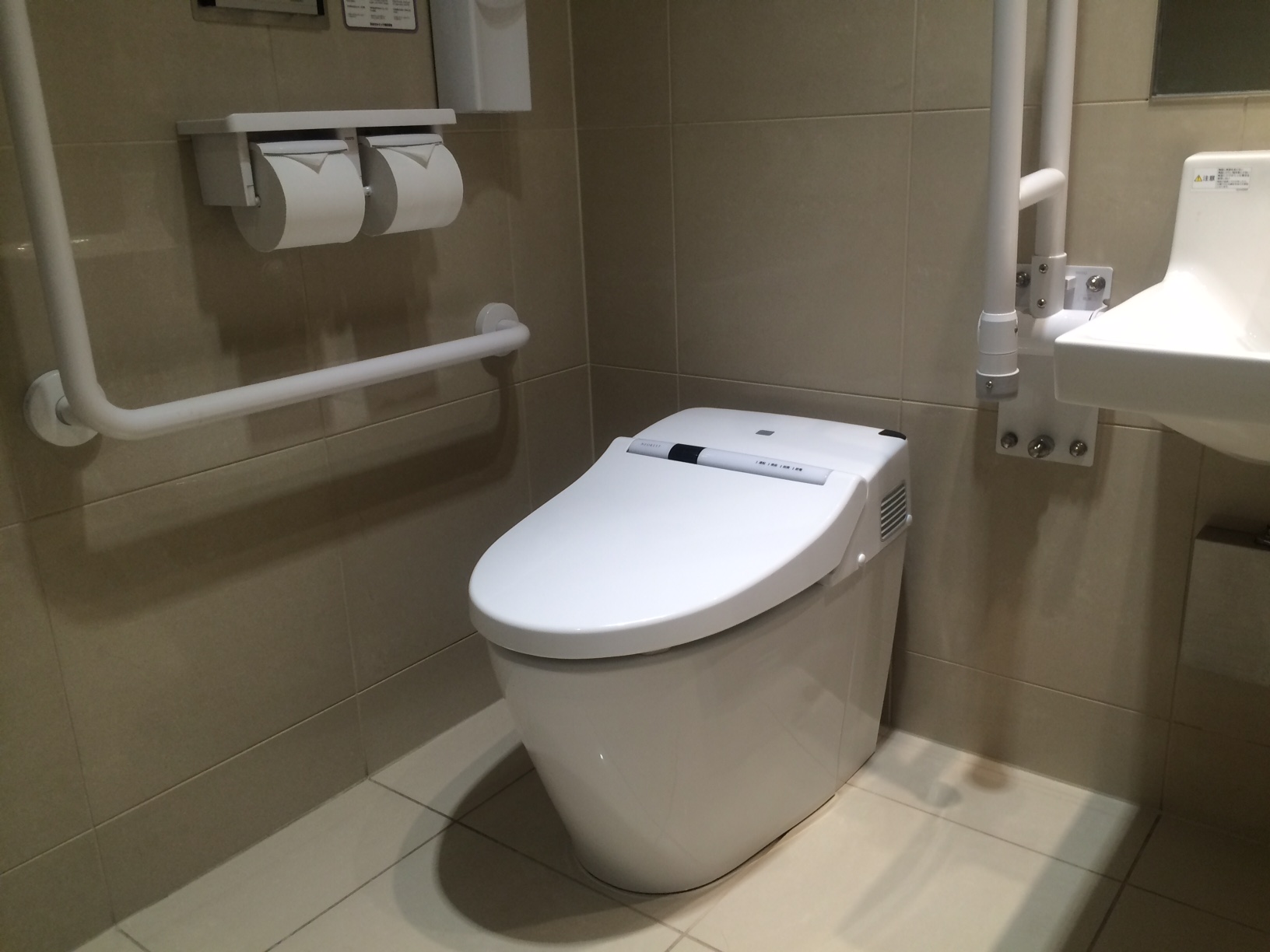
A typical washlet in Japan
Control panel of a modern Japanese washlet with bilingual text
Washlet in action in Tokyo
A yet-to-be-installed Washlet, TCF8WW88 model

Washlet (Japanese: ウォシュレット, Hepburn: Woshuretto) is a Japanese line of cleansing toilet seats manufactured and sold by the company Toto. The electronic bidet features a water spray element for genital and anal cleansing.[1][2][3][4] and commonly appears on toilets all over Japan and is becoming more common in other parts of the world. The device was released in June 1980[5] and as of 2025, Toto has sold more than 70 million units.[5][6]

History

[edit]

In the 1960s, Japanese plumbing company Toto's goal was to import American "wash air seats" for domestic sales, mainly for sale to hospitals and nursing homes. Toto began domestic production in 1969.

In 1980, Toto began to sell its improved Washlets in Japan after surveying employees to determine appropriate spray positions, since there were no biometric statistics available.

In the 1980s, the term "Washlet" originated by the company Toto. Recognized for its pioneering role in 2012, the original Washlet G model was certified as item 55 of Mechanical Engineering Heritage.[7]

Design

[edit]

In 1996, Toto also released Washlets designed for Japanese-style squat toilets, but they proved difficult to use due to accuracy issues. Japanese-style toilets were replaced with their Western-style counterparts, and the model was discontinued around 2003.[citation needed]

In October 2005, Toto released other improvements, incorporating sleep mode for energy conservation, a remote control, and a Washlet that could play MP3 audio files. Upon her visit to Japan in 2005, pop singer Madonna commented that she had "missed Japan’s warm toilet seats."[8]

Functions

[edit]

The cleansing features include buttons labeled Oshiri ("Rear") and Bidet ("Front") with translations in English speaking regions. Most current models have a sensor preventing water from spraying while a person is not sitting on the toilet.[citation needed]

For antibacterial and disinfectant purposes, the nozzle is designed at such an angle that the water does not splash back on the inside of the toilet (43° for anuses, 53° for vulvas), and the nozzle itself is washed with warm water when stowed away and before use. Anal and genital cleansing functions operate on different nozzles. Some models feature deodorizers and dryers for the user's convenience.[citation needed]

The control panels usually feature settings to change the intensity of the water spray, as well as temperature.

See also

[edit]

References

[edit]
[edit]
Revisions and contributorsEdit on WikipediaRead on Wikipedia
from Grokipedia
A Washlet is a trademarked line of electronic bidet toilet seats developed and manufactured by the Japanese company TOTO, designed to provide personal hygiene through warm water cleansing as an alternative to toilet paper.[1] Introduced in 1980 as the "WASHLET G" model, it integrates features such as a self-cleaning spray wand, heated seat, and warm air dryer directly onto standard flush toilets, enhancing comfort and cleanliness.[2] This innovation originated in Japan, where it quickly became a cultural staple, transforming bathroom hygiene practices by promoting water-based cleansing over traditional wiping methods.[1] The development of the Washlet stemmed from TOTO's efforts in the late 1970s to address hygiene needs, particularly for hospital patients and the elderly, building on earlier imported bidet concepts like the Wash Air Seat from the 1960s.[3] Launched amid Japan's post-war modernization of sanitation infrastructure, the product marked the first mass-produced electric bidet seat with integrated warm water functions, debuting in Japanese homes and later expanding internationally—first to the United States in 1986 and China in 1994.[2] By 2022, TOTO had sold 60 million units worldwide, with sales milestones including 1 million in 1987, 10 million in 1998, and 30 million in 2011, reflecting its widespread adoption.[1] Key innovations in Washlet technology have evolved over decades to improve usability and efficiency, including the 1983 introduction of a self-cleaning wand to maintain hygiene, pulsating and oscillating water streams in 1993 for thorough cleansing, and the CEFIONTECT ceramic glaze in 1997 for easier cleaning.[2] Later advancements encompass the EWATER+ electrolyzed water system in 2011 for sanitizing the wand and bowl, auto energy-saving modes since 2001, and air-infused water jets in models like the 2017 NEOREST NX for gentler washing.[1] Recognized as the world's leading electric toilet seat brand by Euromonitor International in 2018, the Washlet promotes environmental benefits by reducing toilet paper consumption—using less than one gallon of water per day for an average family—while supporting health improvements for conditions like hemorrhoids through superior cleansing.[2][4] By the early 2000s, Washlets were installed in Japanese public buildings, trains, and even airplanes, solidifying their role in modern sanitation. As of 2025, TOTO continues to expand globally, including a new manufacturing facility in Georgia, USA, to increase luxury toilet production by 150%, amid rising demand in Western markets.[1][5]

History

Origins and Invention

TOTO was founded in 1917 by Kazuchika Okura in Kitakyushu, Japan, initially as Toyo Toki (Oriental Ceramics) to produce high-quality sanitary ware amid growing demand for modern plumbing fixtures following the introduction of Western-style toilets in the country.[6] The company's early emphasis on hygiene innovations, including durable ceramics and efficient water systems, positioned it as a leader in bathroom products, eventually leading to research into bidet-style cleansing devices in the 1960s to enhance personal sanitation.[3] By the mid-1970s, TOTO engineers initiated a comprehensive development project for an integrated electronic bidet seat, drawing inspiration from post-World War II hygiene priorities in resource-limited Japanese households and adapting traditional Western bidet designs—such as separate fixtures—for compact, seamless installation on standard toilets.[3] This effort involved company-wide collaboration, including the integration of an electronic control board and a retractable nozzle for targeted warm-water cleansing, culminating in the product's completion between 1977 and 1980.[3] The inaugural Washlet model, designated Washlet G, debuted in June 1980 as TOTO's first electrically operated toilet seat with built-in bidet functions: a warm-water spray for cleansing, warm-air drying, and a heated seat for comfort.[2] Priced at around 149,000 yen (approximately $660 USD at 1980 exchange rates), it represented a luxury item that initially encountered sales resistance due to its steep cost relative to average household incomes and cultural unfamiliarity with automated water-based hygiene in Japan.[7] Despite these hurdles, the Washlet G marked a pivotal advancement in sanitary technology, building on TOTO's 1967 acquisition of rights to the earlier Wash Air Seat for foundational bidet mechanics.[3]

Development and Milestones

The development of the Washlet by TOTO began with its launch in 1980 as the WASHLET G, introducing core features like warm water cleansing, air drying, and a heated seat, which initially positioned it as a luxury item in Japan.[1] By 1983, enhancements included a self-cleaning wand to improve hygiene, and in 1987, cumulative sales reached 1 million units alongside the debut of the QUEEN model, the first integrated Washlet toilet.[1] The 1990s marked a shift toward mainstream adoption through iterative upgrades, such as deodorization technology added in 1992, and pulsating and oscillating cleansing functions in 1993 with the NEOREST EX—the first tankless toilet design eliminating the flush tank for a low-profile silhouette.[1][8] These innovations, along with price reductions, helped reduce initial skepticism and drive sales to 10 million units by 1998.[1] In the 2000s, focus turned to efficiency and convenience, with the introduction of the AUTO ENERGY SAVER mode in 2001, which automatically adjusts power usage based on habits to conserve electricity. Instantaneous water heating for the bidet, eliminating the hot water reservoir, was later incorporated in models starting in the 2010s.[2] Automated features expanded in 2003 with auto open/close lids and auto flush, enhancing user-friendliness and contributing to 20 million units sold by 2005, as adoption grew in Japanese public spaces like hotels and transportation.[1] The 2010s brought advanced hygiene innovations, including EWATER+ electrolyzed water for wand sterilization in 2011 and bowl cleaning in 2012, alongside smartphone app integration for remote control starting in 2023.[1][9] Sales milestones accelerated, hitting 40 million in 2015 and 50 million in 2019, with TOTO certified as the world's top electric toilet seat brand in 2018 by Euromonitor; user personalization via memory settings for preferences emerged in models like the 2017 NEOREST NX.[1] The 2020s emphasized sustainability and smart technology, with cumulative shipments exceeding 60 million units by 2022 (no further milestones reported as of late 2025).[10] In 2025, TOTO launched the WASHLET S5 model, featuring advanced on-demand heating in a tankless system that reduces energy consumption by up to 38% compared to prior reservoir-based designs, along with enhanced EWATER+ for broader sterilization and a slimmer profile to minimize material use.[11] Key challenges in global expansion have included overcoming cultural stigma in non-Asian markets, where bidets faced historical biases dating to post-World War II perceptions, and adapting to varying electrical standards and regulations, such as voltage differences (e.g., 100V in Japan vs. 120V in the U.S.) and outlet configurations, requiring model-specific redesigns for international compatibility.[12][13]

Design and Technology

Core Components

The nozzle system of a Washlet consists of a retractable wand that extends from beneath the seat to deliver targeted cleansing water streams. This wand supports adjustable positions for front and rear washing, with self-cleaning mechanisms that rinse it using high-pressure water jets before and after each use to maintain hygiene. The wand is constructed from Clean Resin, a specialized antibacterial plastic material designed to repel dirt and bacteria, enhancing durability and ease of cleaning.[14] Water heating in Washlets employs an instantaneous tankless system that heats incoming cold water on demand using integrated electric elements, ensuring an unlimited supply of warm water without the need for a storage tank. This technology typically delivers flow rates of 0.27 to 0.43 liters per minute for comfort sprays, allowing precise control over temperature and pressure.[15] Electrical integration powers the Washlet's functions through standard household outlets, with U.S. models compatible with 120V/60Hz and international variants supporting 100-240V for broader adaptability. Occupancy sensors detect user presence to activate features like heated seating and automatically retract the wand, while power-saving modes—such as auto energy saver—learn usage patterns to lower energy draw during idle periods, minimizing overall consumption to under 1 watt on standby.[16][17] The seating and lid incorporate a contoured heated seat with adjustable temperature settings ranging from 82°F to 97°F (28°C to 36°C) in most models, up to 104°F (40°C) in advanced ones, maintained via thermal sensors for consistent comfort. Soft-close mechanisms on the lid and seat prevent slamming and reduce noise, while antimicrobial Clean Resin coatings on the seat, lid, and other plastic components inhibit bacterial growth and simplify maintenance.[18][19][14] Filtration systems include a built-in water filter and drain valve that purifies incoming water by trapping debris and sediments, requiring periodic cleaning every six months to prevent clogs and ensure optimal performance. Deodorizing fans employ ionized carbon filter technology to draw in and neutralize odors from the bowl area, effectively absorbing unpleasant smells without chemical additives.[20][21]

Models and Variations

Toto's Washlet lineup in 2025 is divided into entry-level, mid-range, and premium categories, offering options for various budgets and needs while maintaining compatibility with standard North American toilets. In 2025, TOTO introduced the S2 and S5 models, replacing the previous C2 and C5, featuring a slimmer profile that reduces material use by 19%. The C series, an older entry-level line of Washlet models compared to the newer S series, included basic features such as a tank-type water heater; for example, the Costco-exclusive model T1SW2491#01 belongs to the C series.[11][22][14][23][24] Entry-level models, such as the WASHLET S2, focus on essential features like warm water cleansing, a heated seat, and basic remote controls, with prices typically ranging from $400 to $600 USD, making them ideal for basic upgrades or rental properties.[11][25] Mid-range options in the S series, including the S5 and legacy S550e, build on these basics by incorporating warm air drying, deodorization, nightlights, and advanced remote controls for customizable settings. As of February 2026, the TOTO Washlet S5 (elongated model SW3446#01) has been discontinued by the manufacturer with an MSRP of $974 USD, but remains available from retailers at prices ranging from approximately $653 to $682 USD depending on the seller and promotions, while other mid-range models are typically priced between $500 and $800 USD.[22][26][22][25] Premium models like the S7 and S7A represent the 2025 flagship offerings, featuring EWATER+ electrolytic water sanitization, auto-open/close lids, PREMIST bowl misting, and seamless integration options in elongated or round bowl shapes, with prices exceeding $1,000 USD.[27] Variations extend beyond standard seats to include wall-hung designs for contemporary bathrooms, universal-fit adapters like UniFit for non-Toto toilets, and eco-focused integrations such as the Aquia series with 1.28 GPF dual-flush systems for water efficiency.[28][29] Regional adaptations differentiate models; Japanese versions often include more sophisticated bidet arm functions like enhanced oscillation and pulse modes, while U.S. models prioritize ADA-compliant universal heights and streamlined user interfaces for easier adoption in diverse households.[30][14]

Functions and Features

Washlet smart toilets incorporate several key features that enhance hygiene and comfort, including heated seats, automated lids, bidet washing sprays, warm air drying, deodorizers, and digital controls via side panels, wall-mounted remotes, or touchscreens for adjusting settings. These features are common in Japan, where over 80% of homes have bidet toilets, mostly TOTO models, and are increasingly popular worldwide, with over 60 million units sold globally.[21][31][32]

Hygiene Functions

The Washlet provides advanced hygiene through water-based cleansing as an alternative to toilet paper, focusing on thorough cleaning of the posterior and feminine areas to minimize bacterial residue and promote sanitary conditions. The system delivers oscillating and pulsating water streams that effectively remove waste without mechanical wiping, reducing the potential for irritation or incomplete cleaning. These functions are designed to enhance overall personal hygiene by leveraging controlled water flow, temperature, and pressure settings tailored to user comfort and efficacy.[21] Posterior washing targets the rear area with a strong, adjustable stream, while feminine washing employs a gentler, angled spray for intimate cleansing, both utilizing oscillating or pulsating patterns to ensure comprehensive coverage. Water temperature is adjustable from 30°C to 40°C to provide a comfortable, soothing experience that avoids discomfort from cold or scalding water. Pressure settings range from soft to strong, allowing users to customize intensity for optimal cleaning without excessive force.[15][33] Self-cleaning mechanisms maintain the nozzle's hygiene by automatically rinsing it with water before and after each use. In models equipped with eWater+, an electrolyzed water produced via electrolysis of tap water to generate hypochlorous acid is applied. This process achieves a 99.9% reduction in bacteria on the wand and bowl surfaces, preventing buildup and eliminating the need for manual sanitization or harsh chemicals. The eWater+ also mists the toilet bowl and under-seat area periodically, further suppressing dirt and bacterial growth for sustained cleanliness.[34][35] Deodorization is facilitated by a built-in fan that extracts odors from the toilet area, operating at airflow rates of approximately 0.09 m³/min in normal mode (about 5.4 m³/hour) and up to 0.16 m³/min in power mode (about 9.6 m³/hour), effectively ventilating the space. Many models incorporate an ionized carbon filter or plasma ionizer to neutralize airborne particles and purify the air, enhancing the overall sanitary environment without relying on external ventilation.[33][21] The drying function employs a warm air blower adjustable from 35°C to 60°C, circulating air for 1 to 3 minutes to evaporate residual moisture post-washing, thereby eliminating the need for paper towels and reducing skin irritation from rubbing. This process ensures users feel dry and refreshed while maintaining hygiene by minimizing dampness that could foster bacterial proliferation.[36] For elderly or mobility-impaired individuals, Washlet use has been associated with enhanced overall hygiene and approximately 32% reduction in caregiving time required for toileting assistance, supporting independence and infection prevention.[37]

Comfort and Convenience Features

Washlet models enhance user comfort through wireless remote controls that allow for personalized operation without physical contact. Advanced remotes, such as those on the S7A series, feature illuminated touch buttons and support up to four user profiles with preset settings for water temperature, pressure, and spray patterns.[38] These remotes enable seamless customization from a distance, reducing the need to lean forward or adjust settings mid-use. Additionally, select Washlet models in Japan integrate with the TOTO In Town Toilet smartphone app via Bluetooth, compatible with iOS and Android devices, permitting remote monitoring, operation, and further personalization of functions like seat heating and deodorization.[39][40] Automation further improves convenience with sensor-based features that minimize manual intervention. Proximity sensors automatically open and close the seat and lid upon approach or departure, promoting hygiene and ease, particularly in low-light environments.[38][41] Flush assistance is available on compatible installations via an optional auto-flush kit, activating a hands-free flush after use. Night lights activate softly upon detection of movement, providing subdued illumination to guide users without fully waking the household; these lights can be adjusted for intensity through the remote to suit preferences.[38][42] Accessibility options cater to diverse users, including those with mobility challenges. Washlet seats are designed to fit standard and comfort-height toilets, typically ranging from 15 to 19 inches, ensuring compatibility with ADA-compliant installations for easier transfer. One-touch remote or side-panel controls simplify operation for individuals with limited dexterity, allowing activation of all primary functions with a single press. For sensitive skin, soft wash modes deliver a gentle, aerated mist spray that combines warm water with air bubbles, offering a milder cleansing experience compared to standard streams.[14][38][43] Luxury features elevate the daily routine with sensory enhancements. The automatic air deodorizer not only neutralizes odors using an ionized carbon filter but can incorporate subtle aromatherapy options in premium models to freshen the air during use. Sound-masking capabilities, available on certain advanced units, emit white noise or selectable music via a privacy button to obscure ambient sounds, enhancing discretion. Preheat timers for the heated seat can be programmed to align with typical user schedules, warming the surface in advance through learned patterns via the auto energy saver mode.[21][38] Energy efficiency integrates seamlessly into these conveniences, with features like the auto energy saver that monitors usage patterns over about 10 days and automatically reduces seat heating during low-activity periods to conserve power. Units power down non-essential functions after periods of inactivity, typically within set time frames configurable via the remote, minimizing standby consumption. TOTO Washlet bidet seats contribute to sustainable building standards, as their Environmental Product Declarations (EPDs) support LEED v4 certification credits for material transparency and low-impact design in installations.[44][45][46][47]

Adoption and Impact

In Japan and Asia

In Japan, the Washlet has become an essential hygiene tool since the 1990s, reflecting deep cultural values of cleanliness rooted in Shinto traditions, where purity (seiketsu) is a core principle emphasizing ritual cleansing and environmental harmony.[48][49] By 2025, over 80% of Japanese households feature Washlet-style bidet toilets, making them a standard for personal sanitation and a symbol of modern wellness.[50] This widespread integration stems from the device's alignment with Japan's emphasis on meticulous hygiene, transforming toilets from utilitarian spaces into sacred areas of comfort and purity.[51] Toto maintains market dominance in Japan, with Washlet-style bidets installed in over 80% of household toilets and the company accounting for a significant portion of the sector through its innovative designs.[52] These units are now standard in new residential builds, luxury hotels, and public facilities such as Shinkansen bullet trains, where they enhance user experience and hygiene standards.[53] Toto's leadership is evident in its shipment of over 60 million units globally as of 2025, with the majority in Japan driving industry norms.[32][54] The Washlet's expansion across Asia has seen high adoption in South Korea, where over 70% of urban households use similar electronic bidet products under local branding, driven by shared cultural preferences for advanced sanitation.[55] In Taiwan, bidets are increasingly integrated into urban homes and hospitality sectors due to rising hygiene awareness, though adoption rates are lower than in Japan. Post-COVID, heightened hygiene concerns have boosted bidet usage in Asian hotels as travelers prioritize contactless cleaning options. Socially, the Washlet has reduced toilet paper consumption among users by up to 75%, supporting Japan's environmental goals by lowering deforestation and water usage associated with paper production.[56] This shift aids broader sustainability efforts, as bidets require less overall resources despite minor water and electricity use. In urban areas, government subsidies for eco-friendly bathroom upgrades, including energy-efficient models, have encouraged adoption by offsetting costs for qualifying installations.[57] Despite its success, the Washlet faced initial resistance in rural Japan due to high installation costs, ranging from ¥50,000 to ¥200,000 for units and setup, which posed barriers in less affluent or older households.[58] Early models also encountered technical issues like inconsistent water temperature, slowing uptake outside major cities until refinements in the 1990s.[53] Today, these challenges have diminished, but affordability remains a factor in remote areas.[8]

Global Market and Reception

The Washlet's international expansion has seen notable growth in the United States, where adoption rates remain low but have risen significantly since the early 2010s, driven by heightened hygiene concerns following the COVID-19 pandemic and endorsements from celebrities such as Kim Kardashian, Drake, and Jennifer Lopez.[8] This surge prompted Toto to open a $224 million manufacturing facility in Georgia in 2025, increasing U.S. production capacity by 150% to meet demand for luxury models.[59] At the Kitchen & Bath Industry Show (KBIS) 2025, Toto highlighted its advanced S5 Washlet model, which earned "Best in Show" recognition for its features like instantaneous water heating and self-cleaning wand.[60] In Europe and select non-Asian markets, the Washlet has gained traction in luxury hospitality sectors, particularly in Middle Eastern hotels where high-end hygiene solutions are prioritized, and in Australia, where models comply with Water Efficiency Labelling and Standards (WELS) for reduced water consumption, often achieving 4-star ratings.[61][62] Economic contributions are significant, with the global bidets market exceeding $30 billion in 2024 and projected to reach $52 billion by 2034; Toto dominates the premium segment amid competition from brands like Kohler and BioBidet, supported by over 60 million Washlet units sold worldwide since 1980.[63][32] Reception outside Asia has been positive for its sustainability benefits, including up to 75-80% reductions in household toilet paper use, which lowers deforestation and manufacturing-related water demands compared to paper alternatives.[64][65] However, barriers persist, such as upfront costs ranging from $300 to $1,500 per unit and the need for electrical and plumbing retrofits in existing bathrooms, limiting broader adoption in regions with older infrastructure.[66] Looking ahead, Washlet models are increasingly integrating with smart home ecosystems, such as voice controls via compatible systems, while North American bidet seat sales are forecasted to grow at a 12% compound annual rate through 2030, fueled by eco-conscious consumers and technological advancements.[67][68]

References

User Avatar
No comments yet.