Hubbry Logo
Metal latheMetal latheMain
Open search
Metal lathe
Community hub
Metal lathe
logo
8 pages, 0 posts
0 subscribers
Be the first to start a discussion here.
Metal lathe
Metal lathe
from Wikipedia
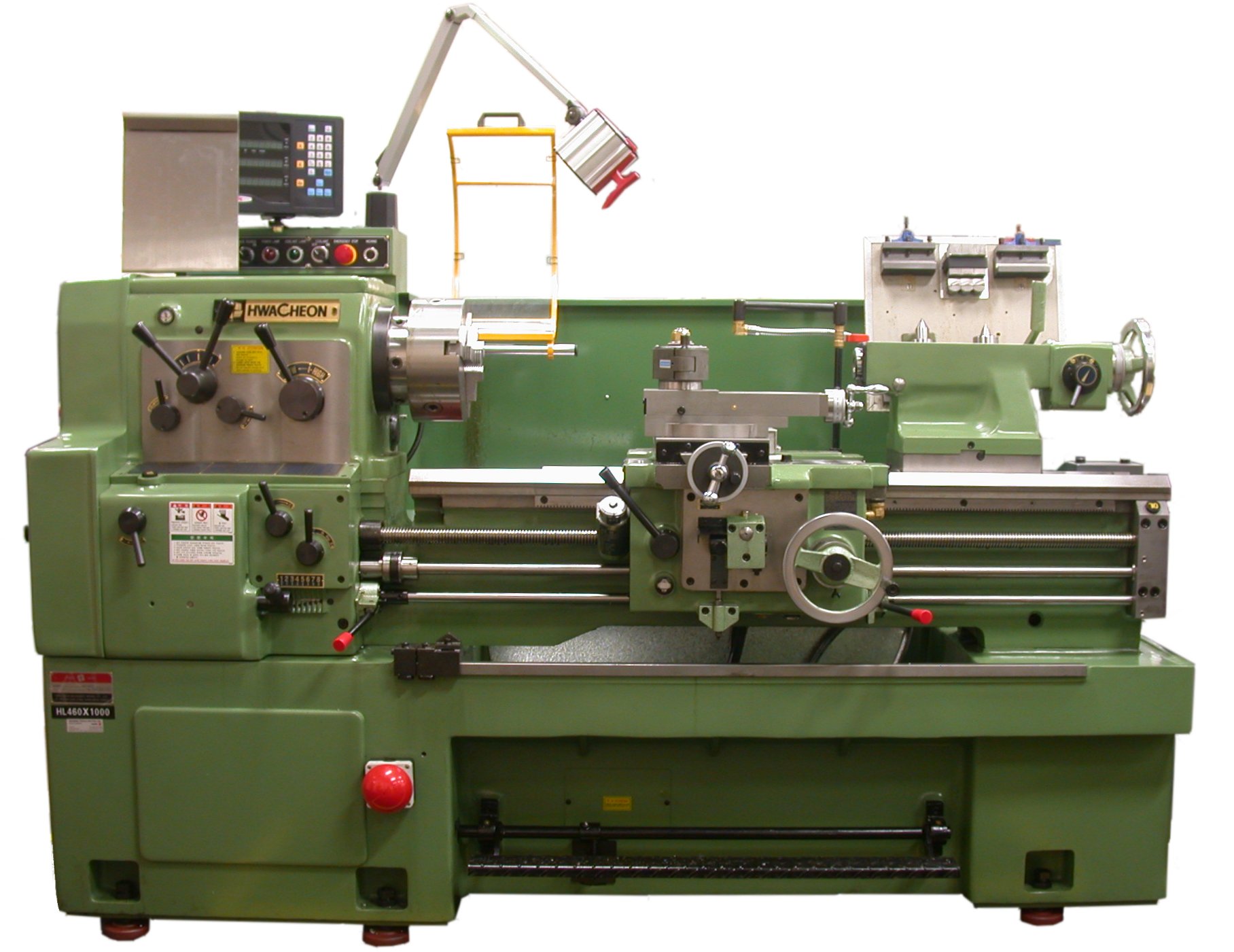
Center lathe with digital read out and chuck guard. Size is 460 mm diameter x 1000 mm between centers

In machining, a metal lathe or metalworking lathe is a large class of lathes designed for precisely machining relatively hard materials. They were originally designed to machine metals; however, with the advent of plastics and other materials, and with their inherent versatility, they are used in a wide range of applications, and a broad range of materials. In machining jargon, where the larger context is already understood, they are usually simply called lathes, or else referred to by more-specific subtype names (toolroom lathe, turret lathe, etc.). These rigid machine tools remove material from a rotating workpiece via the (typically linear) movements of various cutting tools, such as tool bits and drill bits. Metal lathes can vary greatly, but the most common design is known as the universal lathe or parallel lathe.

Construction

[edit]

The design of lathes can vary greatly depending on the intended application; however, basic features are common to most types. These machines consist of (at the least) a headstock, bed, carriage, and tailstock. Better machines are solidly constructed with broad bearing surfaces (slide-ways) for stability, and manufactured with great precision. This helps ensure the components manufactured on the machines can meet the required tolerances and repeatability.

Headstock

[edit]
Headstock assembly with legend, numbers and text within the description refer to those in the image

The headstock (H1) houses the main spindle (H4), speed change mechanism (H2, H3), and change gears (H10). The headstock is required to be made as robust as possible due to the cutting forces involved, which can distort a lightly built housing, and induce harmonic vibrations that will transfer through to the workpiece, reducing the quality of the finished workpiece.

The main spindle is generally hollow to allow long bars to extend through to the work area. This reduces preparation and waste of material. The spindle runs in precision bearings and is fitted with some means of attaching workholding devices such as chucks or faceplates. This end of the spindle usually also has an included taper, frequently a Morse taper, to allow the insertion of hollow tubular (Morse standard) tapers to reduce the size of the tapered hole, and permit use of centers. On older machines ('50s) the spindle was directly driven by a flat belt pulley with lower speeds available by manipulating the bull gear. Later machines use a gear box driven by a dedicated electric motor. A fully 'geared head' allows the operator to select suitable speeds entirely through the gearbox.

Beds

[edit]

The bed is a robust base that connects to the headstock and permits the carriage and tailstock to be moved parallel with the axis of the spindle. This is facilitated by hardened and ground bedways which restrain the carriage and tailstock in a set track. The carriage travels by means of a rack and pinion system. The leadscrew of accurate pitch, drives the carriage holding the cutting tool via a gearbox driven from the headstock.

Types of beds include inverted "V" beds, flat beds, and combination "V" and flat beds. "V" and combination beds are used for precision and light duty work, while flat beds are used for heavy duty work.[citation needed]

When a lathe is installed, the first step is to level it, which refers to making sure the bed is not twisted or bowed. There is no need to make the machine exactly horizontal, but it must be entirely untwisted to achieve accurate cutting geometry. A precision level is a useful tool for identifying and removing any twist. It is advisable also to use such a level along the bed to detect bending, in the case of a lathe with more than four mounting points. In both instances the level is used as a comparator rather than an absolute reference.

Feed and lead screws

[edit]

The feedscrew (H8) is a long driveshaft that allows a series of gears to drive the carriage mechanisms. These gears are located in the apron of the carriage. Both the feedscrew and leadscrew (H7) are driven by either the change gears (on the quadrant) or an intermediate gearbox known as a quick change gearbox (H6) or Norton gearbox. These intermediate gears allow the correct ratio and direction to be set for cutting threads or worm gears. Tumbler gears (operated by H5) are provided between the spindle and gear train along with a quadrant plate that enables a gear train of the correct ratio and direction to be introduced. This provides a constant relationship between the number of turns the spindle makes, to the number of turns the leadscrew makes. This ratio allows screwthreads to be cut on the workpiece without the aid of a die.

Some lathes have only one leadscrew that serves all carriage-moving purposes. For screw cutting, a half nut is engaged to be driven by the leadscrew's thread; and for general power feed, a key engages with a keyway cut into the leadscrew to drive a pinion along a rack that is mounted along the lathe bed.

The leadscrew will be manufactured to either imperial or metric standards and will require a conversion ratio to be introduced to create thread forms from a different family. To accurately convert from one thread form to the other requires a 127-tooth gear, or on lathes not large enough to mount one, an approximation may be used. Multiples of 3 and 7 giving a ratio of 63:1 can be used to cut fairly loose threads. This conversion ratio is often built into the quick change gearboxes.

The precise ratio required to convert a lathe with an Imperial (inch) leadscrew to metric (millimeter) threading is 100 / 127 = 0.7874... . The best approximation with the fewest total teeth is very often 37 / 47 = 0.7872... . This transposition gives a constant -0.020 percent error over all customary and model-maker's metric pitches (0.25, 0.30, 0.35, 0.40, 0.45, 0.50, 0.60, 0.70, 0.75, 0.80, 1.00, 1.25, 1.50, 1.75, 2.00, 2.50, 3.00, 3.50, 4.00, 4.50, 5.00, 5.50 and 6.00 mm).

Carriage

[edit]
The parts of a lathe carriage:
  1. Toolpost
  2. Compound/top-slide
  3. Cross-slide
  4. Saddle
  5. Apron
See text for more details.

In its simplest form the carriage holds the tool bit and moves it longitudinally (turning) or perpendicularly (facing) under the control of the operator. The operator moves the carriage manually via the handwheel (5a) or automatically by engaging the feed shaft with the carriage feed mechanism (5c). This provides some relief for the operator as the movement of the carriage becomes power assisted. The handwheels (2a, 3b, 5a) on the carriage and its related slides are usually calibrated, both for ease of use and to assist in making reproducible cuts. The carriage typically comprises a top casting, known as the saddle (4), and a side casting, known as the apron (5).

Cross-slide

[edit]

The cross-slide (3) rides on the carriage and has a feedscrew which travels at right angles to the main spindle axis. This permits facing operations to be performed, and the depth of cut to be adjusted. This feedscrew can be engaged, through a gear train, to the feed shaft (mentioned previously) to provide automated 'power feed' movement to the cross-slide. On most lathes, only one direction can be engaged at a time as an interlock mechanism will shut out the second gear train.

Cross-slide handwheels are usually marked in terms of the part's diameter, so one graduation representing .001 inches of diameter corresponds to .0005 inches of cross-slide motion.

Compound rest

[edit]

The compound rest (or top slide) (2) is usually where the tool post is mounted. It provides a smaller amount of movement (less than the cross-slide) along its axis via another feedscrew. The compound rest axis can be adjusted independently of the carriage or cross-slide. It is used for turning tapers, to control depth of cut when screwcutting or precision facing, or to obtain finer feeds (under manual control) than the feed shaft permits. Usually, the compound rest has a protractor marked in its base (2b), enabling the operator to adjust its axis to precise angles.

The slide rest (as the earliest forms of carriage were known) can be traced to the fifteenth century. In 1718 the tool-supporting slide rest with a set of gears was introduced by a Russian inventor Andrey Nartov and had limited usage in the Russian industry.[1]

The first fully documented, all-metal slide rest lathe was invented by Jacques de Vaucanson around 1751. It was described in the Encyclopédie a long time before Maudslay invented and perfected his version. It is likely that Maudslay was not aware of Vaucanson's work, since his first versions of the slide rest had many errors that were not present in the Vaucanson lathe.

In the eighteenth century the slide rest was also used on French ornamental turning lathes.

The suite of gun boring mills at the Royal Arsenal, Woolwich, in the 1780s by the Verbruggan family also had slide rests. The story has long circulated that Henry Maudslay invented it, but he did not (and never claimed so). The legend that Maudslay invented the slide rest originated with James Nasmyth, who wrote ambiguously about it in his Remarks on the Introduction of the Slide Principle, 1841;[2] later writers misunderstood, and propagated the error. However, Maudslay did help to disseminate the idea widely. It is highly probable that he saw it when he was working at the Arsenal as a boy. In 1794, whilst he was working for Joseph Bramah, he made one, and when he had his own workshop used it extensively in the lathes he made and sold there. Coupled with the network of engineers he trained, this ensured the slide rest became widely known and copied by other lathe makers, and so diffused throughout British engineering workshops. A practical and versatile screw-cutting lathe incorporating the trio of leadscrew, change gears, and slide rest was Maudslay's most important achievement.

Toolpost

[edit]

The tool bit is mounted in the toolpost (1) which may be of the American lantern style, traditional four-sided square style, or a quick-change style such as the multi-fix arrangement pictured. The advantage of a quick change set-up is to allow an unlimited number of tools to be used (up to the number of holders available) rather than being limited to one tool with the lantern style, or to four tools with the four-sided type. Interchangeable tool holders allow all tools to be preset to a center height that does not change, even if the holder is removed from the machine.

Tailstock

[edit]
Tailstock with legend, numbers and text within the description refer to those in the image

The tailstock is a tool (drill), and center mount, opposite the headstock. The spindle (T5) does not rotate but does travel longitudinally under the action of a leadscrew and handwheel (T1). The spindle includes a taper to hold drill bits, centers and other tooling. The tailstock can be positioned along the bed and clamped (T6) in position as dictated by the work piece. There is also provision to offset the tailstock (T4) from the spindles axis, this is useful for turning small tapers, and when re-aligning the tailstock to the axis of the bed.

The image shows a reduction gear box (T2) between the handwheel and spindle, where large drills may necessitate the extra leverage. The tool bit is normally made of HSS, cobalt steel or carbide.

Steady, follower and other rests

[edit]

Long workpieces often need to be supported in the middle, as cutting tools can push (bend) the work piece away from where the centers can support them, because cutting metal produces tremendous forces that tend to vibrate or even bend the workpiece. This extra support can be provided by a steady rest (also called a steady, a fixed steady, a center rest, or sometimes, confusingly, a center). It stands stationary from a rigid mounting on the bed, and it supports the workpiece at the rest's center, typically with three contact points 120° apart. A follower rest (also called a follower or a travelling steady) is similar, but it is mounted to the carriage rather than the bed, which means that as the tool bit moves, the follower rest "follows along" (because they are both rigidly connected to the same moving carriage).[3][4]

Follower rests can provide support that directly counteracts the springing force of the tool bit, right at the region of the workpiece being cut at any moment. In this respect they are analogous to a box tool. Any rest transfers some workpiece geometry errors from base (bearing surface) to processing surface. It depends on the rest design. For minimum transfer rate correcting rests are used. Rest rollers typically cause some additional geometry errors on the processing surface.

Types of metal lathes

[edit]

There are many variants of lathes within the metalworking field. Some variations are not all that obvious, and others are more a niche area. For example, a centering lathe is a dual head machine where the work remains fixed and the heads move towards the workpiece and machine a center drill hole into each end. The resulting workpiece may then be used "between centers" in another operation. The usage of the term metal lathe may also be considered somewhat outdated these days. Plastics and other composite materials are in wide use and, with appropriate modifications, the same principles and techniques may be applied to their machining as that used for metal.

Center lathe / engine lathe / bench lathe

[edit]
A typical center lathe

The terms center lathe, engine lathe, and bench lathe all refer to a basic type of lathe that may be considered the archetypical class of metalworking lathe most often used by the general machinist or machining hobbyist. The name bench lathe implies a version of this class small enough to be mounted on a workbench (but still full-featured, and larger than mini-lathes or micro-lathes). The construction of a center lathe is detailed above, but depending on the year of manufacture, size, price range or desired features, even these lathes can vary widely between models.

Engine lathe is the name applied to a traditional late-19th-century or 20th-century lathe with automatic feed to the cutting tool, as opposed to early lathes which were used with hand-held tools, or lathes with manual feed only. The usage of "engine" here is in the mechanical-device sense, not the prime-mover sense, as in the steam engines which were the standard industrial power source for many years. The works would have one large steam engine which would provide power to all the machines via a line shaft system of belts. Therefore, early engine lathes were generally 'cone heads', in that the spindle usually had attached to it a multi-step pulley called a cone pulley designed to accept a flat belt. Different spindle speeds could be obtained by moving the flat belt to different steps on the cone pulley. Cone-head lathes usually had a countershaft (layshaft) on the back side of the cone which could be engaged to provide a lower set of speeds than was obtainable by direct belt drive. These gears were called back gears. Larger lathes sometimes had two-speed back gears which could be shifted to provide a still lower set of speeds.

When electric motors started to become common in the early 20th century, many cone-head lathes were converted to electric power. At the same time the state of the art in gear and bearing practice was advancing to the point that manufacturers began to make fully geared headstocks, using gearboxes analogous to automobile transmissions to obtain various spindle speeds and feed rates while transmitting the higher amounts of power needed to take full advantage of high-speed steel tools. Cutting tools evolved once again, with the introduction of man-made carbides, and became widely introduced to general industry in the 1970s. Early carbides were attached to toolholders by brazing them into a machined 'nest' in the tool holders. Later designs allowed tips to be replaceable and multi faceted, allowing them to be reused. Carbides tolerate much higher machining speeds without wearing. This has led to machining times shortening, and therefore production growing. The demand for faster and more powerful lathes controlled the direction of lathe development.

The availability of inexpensive electronics has again changed the way speed control may be applied by allowing continuously variable motor speed from the maximum down to almost zero RPM. This had been tried in the late 19th century but was not found satisfactory at the time. Subsequent improvements in electric circuitry have made it viable again.

Toolroom lathe

[edit]

A toolroom lathe is a lathe optimized for toolroom work. It is essentially just a top-of-the-line center lathe, with all of the best optional features that may be omitted from less expensive models, such as a collet closer, taper attachment, and others. The bed of a toolroom lathe is generally wider than that of a standard center lathe. There has also been an implication over the years of selective assembly and extra fitting, with every care taken in the building of a toolroom model to make it the smoothest-running, most-accurate version of the machine that can be built. However, within one brand, the quality difference between a regular model and its corresponding toolroom model depends on the builder and in some cases has been partly marketing psychology. For name-brand machine tool builders who made only high-quality tools, there wasn't necessarily any lack of quality in the base-model product for the "luxury model" to improve upon. In other cases, especially when comparing different brands, the quality differential between (1) an entry-level center lathe built to compete on price, and (2) a toolroom lathe meant to compete only on quality and not on price, can be objectively demonstrated by measuring TIR, vibration, etc. In any case, because of their fully ticked-off option list and (real or implied) higher quality, toolroom lathes are more expensive than entry-level center lathes.

Turret lathe and capstan lathe

[edit]

Turret lathes and capstan lathes are members of a class of lathes that are used for repetitive production of duplicate parts (which by the nature of their cutting process are usually interchangeable). It evolved from earlier lathes with the addition of the turret, which is an indexable tool holder that allows multiple cutting operations to be performed, each with a different cutting tool, in easy, rapid succession, with no need for the operator to perform setup tasks in between (such as installing or uninstalling tools) nor to control the toolpath. (The latter is due to the toolpath being controlled by the machine, either in jig-like fashion via the mechanical limits placed on it by the turret's slide and stops, or via computer-directed servo mechanisms on CNC lathes.)[5]

There is a tremendous variety of turret lathe and capstan lathe designs, reflecting the variety of work that they do.

Gang-tool lathe

[edit]

A gang-tool lathe is one that has a row of tools set up on its cross-slide, which is long and flat and is similar to a milling machine table. The idea is essentially the same as with turret lathes: to set up multiple tools and then easily index between them for each part-cutting cycle. Instead of being rotary like a turret, the indexable tool group is linear.

Multispindle lathe

[edit]

Multispindle lathes have more than one spindle and automated control (whether via cams or CNC). They are production machines specializing in high-volume production. The smaller types are usually called screw machines, while the larger variants are usually called automatic chucking machines, automatic chuckers, or simply chuckers. Screw machines usually work from bar stock, while chuckers automatically chuck up individual blanks from a magazine. Typical minimum profitable production lot size on a screw machine is in the thousands of parts due to the large setup time. Once set up, a screw machine can rapidly and efficiently produce thousands of parts on a continuous basis with high accuracy, low cycle time, and very little human intervention. (The latter two points drive down the unit cost per interchangeable part much lower than could be achieved without these machines.)

CNC lathe / CNC turning center

[edit]
CNC lathe with milling capabilities
An example turned vase and view of the tool turret

Computer numerical controlled (CNC) lathes are rapidly replacing the older production lathes (multispindle, etc.) due to their ease of set up, operation, repeatability and accuracy. A CNC Turning Lathe is a Computer Controlled piece of machinery. It allows basic machining operations such as turning and drilling to be carried out as on a conventional lathe. They are designed to use modern carbide tooling and fully use modern processes. The part may be designed and the tool paths programmed by the CAD/CAM process or manually by the programmer, and the resulting file uploaded to the machine, and once set and trialled the machine will continue to turn out parts under the occasional supervision of an operator.

The machine is controlled electronically via a computer menu style interface, the program may be modified and displayed at the machine, along with a simulated view of the process. The setter/operator needs a high level of skill to perform the process. However, the knowledge base is broader compared to the older production machines where intimate knowledge of each machine was considered essential. These machines are often set and operated by the same person, where the operator will supervise a small number of machines (cell).

The design of a CNC lathe varies with different manufacturers, but they all have some common elements. The turret holds the tool holders and indexes them as needed, the spindle holds the workpiece and there are slides that let the turret move in multiple axes simultaneously. The machines are often totally enclosed, due in large part to occupational health and safety (OH&S) issues.

With rapid growth in this industry, different CNC lathe manufacturers use different user interfaces which sometimes makes it difficult for operators as they have to be acquainted with them. With the advent of cheap computers, free operating systems such as Linux, and open source CNC software, the entry price of CNC machines has plummeted.[citation needed]

Swiss-style lathe / Swiss turning center

[edit]
A view inside the enclosure of a CNC Swiss-style lathe/screw machine

A Swiss-style lathe is a specific design of lathe providing extreme accuracy (sometimes holding tolerances as small as a few tenths of a thousandth of an inch—a few micrometers). A Swiss-style lathe holds the workpiece with both a collet and a guide bushing. The collet sits behind the guide bushing, and the tools sit in front of the guide bushing, holding stationary on the Z axis. To cut lengthwise along the part, the tools will move in and the material itself will move back and forth along the Z axis. This allows all the work to be done on the material near the guide bushing where it is more rigid, making them ideal for working on slender workpieces as the part is held firmly with little chance of deflection or vibration occurring. This style of lathe is commonly used under CNC control.

Most CNC Swiss-style lathes today use one or two main spindles plus one or two back spindles (secondary spindles). The main spindle is used with the guide bushing for the main machining operations. The secondary spindle is located behind the part, aligned on the Z axis. In simple operation it picks up the part as it is cut off, and accepts it for second operations, then ejects it into a bin, eliminating the need to have an operator manually change each part, as is often the case with standard CNC turning centers. This makes them very efficient, as these machines are capable of fast cycle times, producing simple parts in one cycle (i.e., no need for a second machine to finish the part with second operations), in as little as 10–15 seconds. This makes them ideal for large production runs of small-diameter parts.

Swiss-style Lathes and Live Tooling

[edit]

As many Swiss lathes incorporate a secondary spindle, or 'sub-spindle', they also incorporate 'live tooling'. Live tools are rotary cutting tools that are powered by a small motor independently of the spindle motor. Live tools increase the intricacy of components that can be manufactured by the Swiss lathe. For instance, automatically producing a part with a hole drilled perpendicular to the main axis (the axis of rotation of the spindles) is very economical with live tooling, and similarly uneconomical if done as a secondary operation after machining by the Swiss lathe is complete. A 'secondary operation' is a machining operation requiring a partially completed part to be secured in a second machine to complete the manufacturing process. Generally, advanced CAD/CAM software uses live tools in addition to the main spindles so that most parts that can be drawn by a CAD system can actually be manufactured by the machines that the CAD/CAM software support.

Combination lathe / 3-in-1 machine

[edit]

A combination lathe, often known as a 3-in-1 machine, introduces drilling or milling operations into the design of the lathe. These machines have a milling column rising up above the lathe bed, and they utilize the carriage and topslide as the X and Y axes for the milling column. The 3-in-1 name comes from the idea of having a lathe, milling machine, and drill press all in one affordable machine tool. These are exclusive to the hobbyist and MRO markets, as they inevitably involve compromises in size, features, rigidity, and precision in order to remain affordable. Nevertheless, they meet the demand of their niche quite well, and are capable of high accuracy given enough time and skill. They may be found in smaller, non-machine-oriented businesses where the occasional small part must be machined, especially where the exacting tolerances of expensive toolroom machines, besides being unaffordable, would be overkill for the application from an engineering perspective.

Mini-lathe and micro-lathe

[edit]

Mini-lathes and micro-lathes are miniature versions of a general-purpose center lathe (engine lathe). They typically only handle work of 3 to 7 in (76 to 178 mm) diameter (in other words, 1.5 to 3.5 in (38 to 89 mm) radius). They are small and affordable lathes for the home workshop or MRO shop. The same advantages and disadvantages apply to these machines as explained earlier regarding 3-in-1 machines.

As found elsewhere in English-language orthography, there is variation in the styling of the prefixes in these machines' names. They are alternately styled as mini lathe, minilathe, and mini-lathe and as micro lathe, microlathe, and micro-lathe.

Brake lathe

[edit]

A lathe specialized for the task of resurfacing brake drums and discs in automotive or truck garages.

Wheel lathe

[edit]
Beyer, Peacock & Company Electrically Driven Wheel Lathe, 1906

Wheel lathes are machines used to manufacture and resurface the wheels of railway rolling stock. When wheels become worn or compromised from excessive use, this tool can be used to re-cut and recondition the wheel. There are a number of different wheel lathes available including underfloor variations for resurfacing wheels that are still attached to the rail car, portable types that are easily transported for emergency wheel repairs, and CNC versions which utilize computer-based operating systems to complete the wheel repair.[6]

Pit lathe

[edit]

A lathe for large diameter, though short work, built over a recess in the floor to admit the lower part of the workpiece thus allowing the toolrest to stand at the turner's waist height. An example is on display at the London Science Museum, Kensington.

Vertical lathe

[edit]

For even larger diameter and heavier work, such as pressure vessels or marine engines, the lathe is rotated so it takes the form of a turntable on which parts are placed. This orientation is less convenient for the operator, but makes it easier to support large parts. In the largest, the turntable is installed flush with the floor, with the headstock recessed below, to facilitate loading and unloading workpieces.

Because operator access is less of an issue for them, CNC vertical turning machines are more popular than manual vertical lathes.

Oil country lathe

[edit]

Specialised lathes for machining long workpieces such as segments of drill strings. Oil country lathes are equipped with large-bore hollow spindles, a second chuck on the opposite side of the headstock, and frequently outboard steadies for supporting long workpieces.

Feed mechanisms

[edit]

Various feed mechanisms exist to feed cutting tools into the work at a controlled rate. The aim of these mechanisms is to automate part of the production process with the end goal of improving productivity.

Bar feeder

[edit]

A bar feeder feeds a single piece of bar stock into the cutting machine. As each part is machined, the cutting tool creates a final cut to separate the part from the bar stock, and the feeder continues to feed the bar for the next part, allowing for continual operation of the machine. There are two types of bar feeds used in lathe machining: Hydrodynamic bar feeds, which rest the bar stock in a series of channels whilst clamping down on the top and bottom of the bar, and hydrostatic bar feeds, which hold the bar stock in a feed tube using pressurized oil.[7]

Bar loader

[edit]

A bar loader is a variation on the bar feeder concept in that multiple pieces of bar stock may be fed into a hopper, and the loader feeds each piece as necessary.

References

[edit]

Bibliography

[edit]
[edit]
Revisions and contributorsEdit on WikipediaRead on Wikipedia
from Grokipedia
A metal lathe is a machine tool that rotates a workpiece about an axis of rotation to perform various operations such as cutting, sanding, knurling, drilling, deformation, facing, and turning, with these operations typically using a stationary cutting tool to remove material from the rotating workpiece, enabling the precise shaping of metals and other hard materials into cylindrical forms. The origins of the trace back to circa 300 BCE, where early versions were used primarily for by two operators—one to turn the workpiece and another to shape it—before evolving through Roman and medieval adaptations into more mechanized forms during the . The modern metal lathe was pioneered in the early 19th century by English engineer around 1800, who introduced a slide rest mechanism that fixed the cutting tool to sliding rails, allowing for greater precision in and laying the foundation for . This development marked the lathe as the "mother of machine tools," as it enabled the production of other machinery components with high accuracy, fueling advancements in industries like automotive and . Key components of a metal lathe include the , which serves as the foundational base with guideways for alignment; the , housing the spindle and motor to rotate the workpiece; the tailstock, which provides adjustable support for longer pieces and can hold drills or centers; and the , comprising the , cross-slide, and tool post to position and feed the cutting tool. Common types encompass engine lathes for general-purpose work, turret lathes for repetitive production, and numerically controlled (NC) variants for automated precision. Metal lathes are essential in for creating parts like shafts, bushings, and threads in sectors including , devices, and heavy machinery, processing materials such as , aluminum, and alloys with tolerances down to microns.

History

Origins and early inventions

The origins of the lathe trace back to ancient civilizations, where rudimentary versions were used primarily for woodworking. Evidence of early bow lathes appears in ancient Egypt in the 4th century BCE (c. 300 BCE), consisting of a bow-driven mechanism to rotate wood between two points for shaping, often employing a simple drill-like setup for precision tasks. In ancient Greece, bow lathes evolved for both wood and early metalworking applications, facilitating the production of symmetrical objects. These ancient tools progressed into medieval with the development of pole lathes during the 12th to 13th centuries, which used a flexible pole and foot to provide continuous rotation for . Pole lathes, operated by a single , allowed for the turning of chair legs, tool handles, and other wooden items, marking a step toward more efficient manual in crafts like furniture making. Archaeological evidence from sites in Britain and supports the early adoption of techniques from around the 2nd century BCE, introduced via Greek influences from the . The transition to metal lathes began in the late with innovations enabling precision metal cutting. In 1797, developed a engine lathe, an all-metal screw-turning that incorporated a slide rest for accurate tool guidance, revolutionizing the production of uniform screw threads. By 1800, Maudslay refined this into the first practical screw-cutting , powered initially by foot or early steam engines, which allowed for repeatable precision operations essential for metal components. This foot-powered metal around 1800 represented the earliest widespread adaptation of technology for industrial , bridging manual crafts to mechanized production. Early 19th-century advancements further standardized metal lathe applications. In 1841, Joseph Whitworth proposed the British Standard Whitworth system for screw threads, creating the world's first national thread standard with a 55-degree angle and rounded form, which promoted interchangeable parts across manufacturers. Whitworth's system, enabled by Maudslay's precise lathes, facilitated mass production and uniformity in engineering, laying groundwork for broader Industrial Revolution mechanization.

Evolution during the Industrial Revolution

During the , metal lathes transitioned from manual or foot-powered devices to mechanically driven machines, with steam and water power increasingly adopted in British factories after the 1820s to accelerate processes. This shift enabled consistent speeds and greater precision in turning operations, allowing for the production of more components essential to expanding . Water wheels, already in use for early lathe drives in regions like northwest , powered bobbin-making lathes and similar setups by the early 19th century, while steam engines began supplementing and eventually surpassing them by the 1830s, driving overhead belts connected to multiple lathes in factory settings. A pivotal advancement was the development of the screw-cutting lathe by around 1800, which incorporated a precise and change to produce accurate, repeatable threads on metal parts. This innovation, building briefly on earlier slide rest mechanisms, facilitated the standardization of threads and , reducing variability in machine components and enabling interchangeable across workshops. 's , constructed entirely from iron for stability, was soon powered by , amplifying its productivity and influencing subsequent lathe designs in Britain and beyond. In the United States, the turret lathe emerged in the 1840s and 1870s as a specialized variant for repetitive tasks, particularly in armories like , where it supported of components. Invented by Stephen Fitch in 1845 for cutting screws in pistol parts, the turret lathe featured an indexable tool turret that allowed quick changes between operations without stopping the machine, significantly boosting efficiency in armament . By the 1850s, such lathes were integral to federal armories, enabling the production of standardized parts and contributing to the American System of Manufactures. Metal lathes profoundly impacted key industries, including railroads and armaments, by enabling the precise fabrication of axles, wheels, and structural components for locomotives during the mid-19th century rail expansion. In armament production, lathes refined Eli Whitney's 1798 interchangeable parts system, originally proposed for musket manufacturing, by machining uniform components like barrels and locks with greater accuracy and speed than hand-filing methods. This integration of lathes into Whitney's New Haven factory marked a foundational step toward scalable, assembly-line production, influencing railroad workshops where similar precision was required for boiler fittings and gear systems.

20th-century advancements

The early marked a significant shift in lathe power sources, with the introduction of electric motors replacing traditional belt-driven systems from line shafts or overhead power. In 1914, Monarch Machine Tool Company announced its first electric motor-driven lathes, which used a geared motor connected to the spindle via cloth universal joints, providing more consistent spindle speeds without the slippage or variability inherent in belt drives. This innovation, building on electric motors available around 1910, enabled self-contained, portable lathes that improved reliability and ease of use in workshops. The development of (NC) in the mid-20th century revolutionized lathe automation, originating from efforts to enhance precision in complex . In 1949, John T. Parsons, working under a U.S. at , pioneered NC by using an 602A multiplier to generate punched cards with coordinates for milling blades, addressing the need for accurate, repeatable shapes. This project laid the groundwork for NC systems, leading to a with MIT, where researchers demonstrated the first NC prototype—a modified Cincinnati Hydro-Tel milling machine—in 1952, capable of following instructions via servomechanisms. Although initially applied to milling, these advancements directly influenced NC designs by the mid-1950s, enabling automated control of feeds and speeds for greater accuracy in metal turning. Commercial NC lathes appeared around 1950, with further developments like Kearney & Trecker's Milwaukee-Matic series of NC centers in the influencing automated turning operations. Post-World War II advancements focused on precision and automation in toolroom lathes, which were specialized for high-accuracy work such as producing jigs, fixtures, and prototypes. These lathes achieved finer tolerances, often down to 0.0005 inches, through improved lead screws, bearings, and alignment standards, supporting the demands of and defense industries. In the , hydraulic feed systems gained prominence, offering infinitely variable speeds and smoother operation compared to mechanical gears, as seen in models with hydraulic tracing for contour turning. The transition from NC to full computer numerical control (CNC) accelerated in the 1970s with integration, which replaced bulky minicomputers and tape readers with compact, programmable controllers, drastically reducing costs and enabling widespread adoption in lathe .

Overview and Principles

Definition and basic function

A metal lathe is a designed to rotate a workpiece about an axis while a stationary cutting tool removes material to produce precise cylindrical shapes from metal stock. This rotational process enables the creation of symmetrical parts with high accuracy, distinguishing it from non-rotational methods. The basic function of a metal lathe involves securing the workpiece in a or between centers on the spindle, then feeding a cutting tool into the rotating material to perform operations such as turning (reducing diameter), facing (creating flat surfaces on ends), and threading (forming helical ridges). Unlike milling machines, which rotate the tool against a stationary or linearly moving workpiece for flat or irregular cuts, the lathe prioritizes for cylindrical features. These operations allow for efficient production of components like shafts, bushings, and fittings in . The metal lathe evolved from earlier wood-turning lathes, which were limited by softer materials, through adaptations featuring rigid metal frames and lead screws to handle the greater and cutting forces of metals. This optimization ensured stability and precision under high loads, marking a key advancement in design during the early industrial era. A fundamental aspect of metal lathe operation is calculating surface speed to optimize cutting rates and tool life. The core for surface feet per minute (SFM) is: SFM=π×D×RPM12\text{SFM} = \frac{\pi \times D \times \text{RPM}}{12} Here, DD represents the workpiece in inches, and RPM is the spindle ; the factor of 12 converts inches to feet. This metric guides selection of appropriate speeds for different metals, preventing excessive buildup or poor finish while maximizing .

Key machining operations

A metal lathe primarily performs operations that involve rotating the workpiece against a stationary cutting tool to metal components with high precision. The key operations include turning, facing, threading, and supplementary processes like , boring, and , each leveraging the lathe's rotational axis to achieve specific geometries. These operations are fundamental to cylindrical parts used in industries such as automotive and , where tolerances as tight as 0.001 inches are common. Turning is the core operation on a metal lathe, where the workpiece is rotated while a single-point cutting tool removes material to reduce the along its , producing cylindrical surfaces. Straight turning creates uniform diameters, taper turning generates conical shapes by offsetting the tailstock or using a compound rest, and contour turning follows complex profiles via manual or programmed tool paths. This process typically achieves surface finishes of 32-125 microinches, depending on feed rates and tool geometry, and is essential for shafts and axles. Facing involves moving the cutting tool perpendicular to the workpiece axis to create flat, smooth ends that are square to the rotational centerline, often as an initial step to establish a surface. The tool traverses radially from the center outward or vice versa, removing a small depth of cut (typically 0.010-0.050 inches) to ensure perpendicularity within 0.001 inches, which is critical for mating parts in assemblies. This operation minimizes and prepares the workpiece for subsequent . Threading produces helical ridges or grooves on the workpiece to create screw threads, achieved by synchronizing the tool's linear movement with the spindle rotation via the lathe's lead screw and change gears. Single-point threading uses a precisely ground tool to cut threads incrementally over multiple passes, allowing for custom pitches like 8-32 TPI, while die threading employs a pre-formed die for faster production of standard threads but with less flexibility. Accurate ensures thread engagement without backlash, vital for fasteners and lead screws. Other operations expand the lathe's versatility: drilling centers holes using a chuck in the tailstock, boring enlarges internal diameters with a single-point tool for precise cylindrical bores, and impresses textured patterns via hardened rollers for improved grip on handles or knobs. A typical sequence for a shaft might begin with the raw stock securely, followed by rough turning to remove excess material at a depth of 0.100 inches per pass, facing both ends, any necessary center holes, and finishing with light cuts for dimensional accuracy. Safety in these operations requires coolant application to dissipate heat generated by friction, preventing and thermal distortion in the workpiece; for instance, produces continuous chips that necessitate flood , whereas aluminum forms discontinuous chips that may require less . The provides controlled feeds during these processes to maintain consistent chip load.

Fundamental components overview

The metal consists of several essential components that work together to enable precise operations on rotating workpieces. The , located at the left end of the machine, houses the main spindle and drive mechanism, which rotates the workpiece at variable speeds to facilitate cutting. The serves as the foundational structure, providing a stable base upon which other components are mounted, while the assembly allows for controlled linear and transverse movement of the cutting tool along the workpiece. Complementing these, the tailstock supports the opposite end of longer workpieces, ensuring stability during operations like turning or . These components are interdependent for achieving machining accuracy, with the bed's precision-ground ways—longitudinal guide rails—enabling smooth linear motion of the carriage and tailstock along the Z-axis (parallel to the spindle). Misalignment in the ways can propagate errors in tool positioning, affecting surface finish and dimensional tolerance, so the headstock spindle must align collinearly with the tailstock center to maintain concentricity. This integrated design ensures that rotational forces from the headstock are balanced by supportive reactions from the tailstock and controlled feeds from the carriage. Material selection emphasizes durability and performance, with the bed typically constructed from grey cast iron due to its superior vibration damping properties, which absorb cutting forces and reduce chatter for better finish quality. Lathe sizes vary widely to suit applications, from compact bench models with 7-inch swing over the bed and 14-inch between centers for hobbyist use, to industrial machines exceeding 40-inch swing and lengths over 20 feet for heavy-duty production. Initial setup involves basic alignment procedures to ensure operational precision: the is leveled using precision machinist's levels to eliminate twist, typically aiming for deviations under 0.005 inches over its length. Spindle is then verified with a dial indicator. A more comprehensive check involves inserting a precision test bar into the spindle taper and using a dial indicator to measure runout at two points: near the nose and farther out (e.g., 12 inches away), targeting less than 0.001 inches total indicated runout (TIR) at the spindle nose to confirm concentricity. If runout remains constant along the bar, the spindle is likely straight, with any issues possibly due to offset misalignment or bearings. If runout increases proportionally with distance, it indicates angular error, suggesting the spindle may be bent. Bent spindles are rare and usually result from severe impact. Direct measurement on the spindle taper or rear end can also help confirm.

Construction

Headstock

The headstock serves as the primary power source in a metal lathe, housing the mechanisms that rotate the workpiece at controlled speeds to enable precise machining operations. It is typically mounted at one end of the lathe bed and integrates the drive system to impart rotational motion to the spindle, which in turn holds the workpiece via a chuck or collet. Key components of the include the spindle, a robust shaft that directly rotates the workpiece, and the or holder attached to its front end for secure workpiece clamping. The drive system comprises an and associated or pulleys that provide speed control, with typical ranges spanning 50 to 3000 RPM to accommodate various material diameters and cutting requirements. The gear train within the headstock, often featuring a cone pulley system or a quick-change gearbox, allows for multiple speed selections by altering gear ratios, ensuring the spindle speed matches the desired feed rates for optimal cutting. Spindle speed is calculated using the formula: RPM=CS×12π×D\text{RPM} = \frac{\text{CS} \times 12}{\pi \times D} where CS represents the cutting speed in surface feet per minute, and D is the workpiece diameter in inches; this equation ensures consistent surface speed across different diameters for efficient material removal. Bearings in the , commonly taper roller types, support the spindle while handling both radial and thrust loads generated during operation. systems vary, with methods relying on immersion for passive distribution and forced systems using pumps to circulate oil actively to bearing surfaces and gears, enhancing longevity and reducing wear. Headstock designs differ between fixed-speed models, which rely on discrete gear steps for limited settings, and variable-speed variants that incorporate continuous adjustment mechanisms like cone pulleys or modern inverters. Historically, headstocks transitioned from belt-driven systems powered by overhead lines or steam engines in the to self-contained drives by the early , improving precision and operational independence.

Bed and ways

The bed serves as the foundational structure of a metal lathe, providing rigidity and alignment for all major components, including the , , and tailstock, to ensure precise operations. It typically consists of a rigid base with integrated guide surfaces known as ways, which direct the linear movement of the and tailstock along the machine's axis while minimizing deflection under load. The design of the and ways is critical for maintaining geometric accuracy, as any misalignment can lead to tapered cuts or workpiece errors. Common configurations for lathe bed ways include flat ways, inverted V-ways, and prismatic ways, each offering distinct advantages in stability and ease of manufacturing. Flat ways provide broad contact surfaces for the carriage, facilitating easier scraping and maintenance but requiring precise leveling to prevent rocking. Inverted V-ways, often with a 90-degree included angle, promote self-centering of the carriage for improved alignment and reduced wear on the edges, making them suitable for higher-precision applications. Prismatic ways, featuring inverted prism shapes, combine flat and angled surfaces to enhance rigidity and load distribution, commonly used in engine lathes for their balance of precision and durability. Traditional bed materials are cast iron, valued for its high damping capacity and wear resistance, often alloyed with nickel and chromium to improve hardness and stability. Modern alternatives like epoxy granite composites offer superior vibration resistance—approximately 10 times that of cast iron—due to their lower density (about one-third) and higher internal damping, reducing chatter and extending tool life in high-speed operations. These materials also exhibit lower thermal expansion and corrosion resistance, enabling faster production and reduced maintenance compared to cast iron. The ways are precision-ground or dovetailed to guide the smoothly, with surfaces machined to tolerances ensuring straightness and parallelism essential for accurate cuts. To compensate for wear, low-friction linings such as Turcite—a PTFE-based material—are applied to the carriage mating surfaces, embedding abrasive particles and minimizing while maintaining low stick-slip characteristics. Bed length determines the maximum workpiece capacity, with swing over bed— the largest diameter that can rotate above the bed—typically ranging from 10 to 60 inches for standard engine lathes, accommodating parts from small fittings to large shafts. Alignment tolerances for the ways are stringent, often held to less than 0.0005 inches per foot of bed length to prevent cumulative errors in long-turning operations. Maintenance of the bed and ways focuses on preserving flatness through hand scraping, a technique that removes high spots using a flat scraper and marking to achieve uniform contact points, typically aiming for 4-6 spots per inch for optimal oil retention and stability. Historically, lathe beds evolved from wooden constructions in the early —common in American designs for their ease of customization—to by the mid-1800s, enabling greater rigidity and precision as demands grew during the . This shift, pioneered in European machines, allowed for standardized production and integration of powered mechanisms.

Carriage system

The carriage system in a metal lathe is the assembly responsible for positioning and advancing the cutting tool along the workpiece, enabling precise longitudinal and transverse movements essential for operations like turning, facing, and threading. It typically consists of the , which slides along the ways, supporting the cross-slide, compound rest, and for coordinated tool control. The , mounted on the saddle's underside, houses the , clutches, and controls that transmit power from the feed rod or lead screw to drive the longitudinally or the cross-slide transversely. It includes the half-nut mechanism, a split nut operated by a , which engages the lead screw to lock the carriage for synchronized, power-driven movement during or precise feeds. This engagement ensures the carriage advances at rates matching the lead screw's pitch, typically adjustable via a quick-change gearbox for various thread pitches. The cross-slide, positioned atop the , provides perpendicular motion to the axis for adjusting tool depth in diameter cuts, such as turning or facing. It features a dovetail design for smooth, rigid guidance along ways and is actuated by a lead screw with a micrometer dial offering 0.001-inch resolution for fine control. Powered traverse rates through the typically range from 0.001 to 0.1 inches per revolution, allowing selection between manual handwheel operation and automated feeds for efficiency. Mounted on the cross-slide, the compound enables angular tool positioning via a swiveling base that clamps at any horizontal angle, facilitating taper cutting by advancing the tool at an offset to the axis. For threading, it is commonly set at 29° relative to the cross-slide axis for 60° V-threads (standard in the ), reducing tool load on the leading flank while the trailing flank clears. The toolpost attaches directly to the compound for securing cutters. Lead screw integration with the ensures pitch-accurate threading by gearing the spindle rotation to carriage advance, with the half-nut maintaining constant engagement throughout the cut to match the desired thread pitch without slippage. Direction reversal via the allows for left- or right-hand threads, while disengagement permits free manual carriage movement.

Tailstock

The tailstock, positioned opposite the on the lathe bed, serves to support the free end of long workpieces during turning operations between centers, preventing deflection and ensuring accuracy, or to hold cutting tools for auxiliary tasks such as and reaming. It is mounted on the bed ways and can be positioned along the length of the bed to accommodate varying workpiece sizes, then clamped securely in place. Key components of the tailstock include the , an extendable hollow spindle advanced by a handwheel for precise control; , which may be a live center (rotating with the workpiece to reduce friction) or dead center (stationary, requiring ); and the clamping mechanism, typically a or bolt system that locks the tailstock to the bed ways. The features a tapered socket, commonly a Morse taper, to securely hold arbors, chucks, or tool shanks. For drilling operations, the tailstock quill is extended to position the or against the rotating workpiece, with typical quill travel ranging from 4 to 6 inches to allow sufficient depth without repositioning the tailstock. The setup involves mounting the workpiece in the headstock , aligning the tool in the quill, and advancing slowly via the handwheel to avoid breakage, often using a drill for initial spotting. The tailstock's offset capability enables taper turning by shifting it laterally relative to the lathe axis, creating an angled centerline; adjustment is achieved via side screws after loosening the clamps, with typical ranges allowing offsets up to about 0.5 inches total (e.g., 5/16 inch over a 12-inch length for standard tapers). For a 42-inch workpiece requiring a 0.5-inch-per-foot taper, an offset of 0.875 inches might be set, directed toward the operator if the small end is at the tailstock. Alignment is maintained through gibs—adjustable wedges between the tailstock base and ways—that provide rigidity and smooth sliding while compensating for wear to keep the quill axis parallel to the spindle. Historically, early lathes featured movable tailstocks sliding along the and locked in place, an advancement over fixed designs in primitive pole or bow lathes where both ends were rigidly positioned. This movability, introduced in 18th- and 19th-century designs, facilitated versatile workpiece handling in industrial applications.

Supporting structures and rests

Supporting structures and rests are essential auxiliary devices in metal lathe operations, designed to provide additional stability for irregular, long, or slender workpieces that might otherwise deflect or vibrate during . These fixtures prevent excessive bending and chatter, ensuring precision and surface quality by distributing forces more evenly along the workpiece length. Typically employed when the workpiece length exceeds three times its , such supports are critical for maintaining rigidity in setups where the primary holding devices alone are insufficient. The steady rest, often fixed in position, is clamped directly to the lathe bed ways at a location between the and tailstock centers to counteract deflection in extended workpieces. Constructed from for durability, it features three adjustable jaws that contact the rotating workpiece, allowing it to spin freely while immobilizing it against lateral movement. Setup requires careful alignment to the workpiece axis, with the rest positioned where maximum support is needed, such as midway along a long shaft. Traveling steady rests, by contrast, mount to the and advance with the cutting tool, offering dynamic support for continuous operations on very slender pieces. Both types enhance reduction by increasing the system's overall and introducing frictional at contact points, which lowers the amplitude of oscillations and improves ratios in the setup. The follower rest, attached to the rear of the , moves synchronously with the cutting tool to support slender workpieces prone to whipping or under load. It consists of a C-shaped with one or two adjustable jaws that bear lightly against the workpiece, providing localized stability without interfering with tool access. Bolted securely to the , the follower rest is particularly useful for turning long, thin sections where unsupported overhangs would lead to inaccuracies. Other supporting elements include live centers and mandrels, which address specific needs for rotation and internal holding. A live center, mounted in the tailstock, incorporates ball bearings to allow the center point to rotate with the workpiece, minimizing friction and heat buildup compared to dead centers. Mandrels, typically hardened steel shafts, are used to hold workpieces with internal bores for external machining, expanding or contracting to grip the bore securely. These devices often integrate with tailstock alignment for between-centers work. Steady rests and similar supports commonly handle workpiece diameters from 2 to 20 inches, depending on lathe size and model specifications. By adding support points, these structures reduce vibrational modes, effectively raising the system's damping ratio through increased contact friction and rigidity, which dissipates energy and stabilizes the process.

Types

Engine and bench lathes

The engine lathe represents a classic general-purpose , originating in the steam-powered era of the , where its self-acting slide mechanism earned it the name from the Latin "ingenium," denoting a device of mechanical ingenuity. By the early , these lathes transitioned to electric motors while retaining key features like belt-driven cone pulleys for adjustable spindle speeds—typically ranging from 50 to 2,000 RPM—and a universal quick-change gearbox for threading and feeding operations across multiple pitches. This design enables versatile manual control over turning, facing, , and boring, making it ideal for workshops and light industrial settings where prototypes or small batches are produced. Bench lathes, a scaled-down of the lathe, are compact machines mounted on workbenches for hobbyists and model makers, often with specifications like a 7-inch swing over the bed, 10-inch distance between centers, and a 1/4 to 1/2 horsepower motor. Their portability suits home garages or educational spaces, but inherent limitations in bed rigidity and power restrict them to lighter cuts on smaller workpieces, often under 1-inch , to avoid deflection or chatter. These lathes share the lathe's manual handwheel controls for the and cross-slide, supporting basic operations like and parting off with single-point tools. In terms of capabilities, both engine and bench lathes excel in manual turning of cylindrical parts up to 20 inches in diameter on larger models, with historical prominence in for fabricating intricate steam engines and mechanical replicas. Their core components—a rigid with ways, for spindle rotation, and tailstock for support—provide stability for these tasks without automation. Engine and bench lathes distinguish themselves by using no turret mechanism, instead employing a simple tool post for individual cutters, which contrasts with more automated variants. Compared to wood lathes, they incorporate metal-specific tooling such as or inserts, along with slower speeds and greater rigidity to handle the higher cutting forces required for and non-ferrous metals.

Toolroom and turret lathes

Toolroom lathes represent a high-precision variant of the engine lathe, designed primarily for tool and die production where exceptional accuracy is required. These machines are capable of high precision, supporting measurements and operations that meet standards set by the National Bureau of Standards, such as 0.0002-inch accuracy in thread gauging using the three-wire method. They feature finer feed rates and enhanced rigidity compared to standard engine lathes, enabling operations such as turning, boring, threading, and knurling with minimal vibration or deflection. This precision makes toolroom lathes ideal for fabricating dies, molds, and custom tooling components used in manufacturing processes. Turret lathes, developed in the United States in the mid-19th century, build on the engine lathe design by incorporating a swiveling turret tool post to hold multiple cutting tools, facilitating repetitive production of identical parts. The turret, often hexagonal in shape, allows up to six tools to be mounted and indexed quickly into position with a simple , enabling sequential operations like turning, , and reaming without halting the machine for manual changes. This setup significantly reduces cycle times in by minimizing downtime between tool setups, often achieving efficiencies that cut overall processing duration compared to manual methods. Power feeds are standard, providing consistent and automated advancement of tools along the workpiece for improved productivity and . A key variant of the turret lathe is the capstan lathe, adapted for smaller workpieces typically up to 60 mm in diameter and suited to medium-batch runs. In capstan designs, the hexagonal or square turret is mounted on a sliding ram rather than a fixed , allowing for faster indexing and adjustment during operations. Historically, capstan and emerged in the 1840s–1860s for high-volume screw production, with early models like Stephen Finch's 1845 design automating the cutting of threads and slots for items such as components. These machines excel in job shops and semi-automatic environments, where quick tool changes and overlapping tool functions enhance throughput for duplicate parts.

Specialized production lathes

Specialized production lathes are designed for high-volume , emphasizing through simultaneous operations on multiple tools or workpieces to minimize cycle times and maximize throughput in environments. These machines, often mechanically automated, excel in producing small to medium-sized precision components where repetition and speed are paramount, such as in screw machine operations for fasteners and intricate parts. Unlike general-purpose lathes, they incorporate configurations that allow overlapping processes, reducing idle time and enabling production rates far exceeding single-spindle setups. Gang-tool lathes feature multiple cutting tools mounted in a row on the cross-slide, enabling simultaneous operations like turning, facing, and threading on a single workpiece without the need for tool turret indexing. This setup allows for rapid, repetitive cuts on , making it ideal for short, high-precision parts in screw machine shops where quick setup and minimal tool changes are essential. The rigid alignment of tools on the cross-slide ensures consistent accuracy, often achieving tolerances within 0.001 inches for components like bushings and fittings. Multispindle lathes employ 4 to 8 spindles arranged in a rotating or indexing station, permitting parallel of multiple parts or sequential operations across spindles to drastically shorten production cycles. Each spindle can perform distinct tasks—such as turning on one while on another—overlapping processes to achieve cycle times under 10 seconds per part in high-volume runs. This configuration is particularly effective for symmetric components requiring several features, boosting output by factors of 4 to 6 compared to single-spindle machines. Swiss-style lathes utilize a sliding that advances the workpiece through a guide bushing, positioning the material close to the cutting tools to prevent deflection in long, slender parts like shafts and pins. The guide bushing provides rigid support along the length of the , allowing for extreme precision with diameters as small as 0.5 mm and lengths up to 10 times the diameter, minimizing vibration and enabling complex geometries in a single setup. Originating in the late for watchmaking, these lathes saw significant adoption in the as demand grew for precision instruments in and horology, evolving into key tools for mass-producing intricate components. These specialized lathes find primary applications in producing automotive fasteners, such as bolts and connectors, where high volumes demand consistent quality and low per-part costs. They also support the fabrication of precision instruments, including components for devices and , leveraging their ability to handle small-batch runs with tight tolerances. In screw machine environments, gang-tool and multispindle variants often build on turret-style foundations for enhanced , further optimizing production for repetitive tasks.

CNC and automated lathes

Computer numerical control (CNC) lathes represent a significant advancement over manual lathes, enabling precise, repeatable through programmed instructions that automate tool movements and spindle operations. These machines emerged in the late and as an evolution from (NC) systems, which relied on or cards to direct basic movements, transitioning to fully computer-integrated controls by the that allowed for complex geometries and multi-axis operations. By the , CNC lathes had become standard in high-volume production, and modern iterations incorporate up to five axes for enhanced versatility in turning complex parts. Programming for CNC lathes primarily uses , a standardized language that specifies machine actions such as rapid positioning and controlled feeds. For instance, the G00 command initiates rapid traverse, moving the tool at the machine's maximum speed without cutting to position it efficiently between operations. In contrast, G01 commands , directing straight-line motion at a programmed feed rate to perform actual material removal, ensuring consistent cuts along the X or Z axes. This programming approach minimizes errors and optimizes cycle times compared to manual setups. In standard CNC lathe configurations, motion occurs along two primary linear axes: the Z-axis, which aligns parallel to the spindle centerline to control longitudinal travel along the workpiece length, and the X-axis, which moves to the Z-axis to adjust the tool's radial position relative to the workpiece . These axes form the foundation for turning operations, with additional axes in advanced models expanding capabilities. Turning centers, an evolved form of CNC lathes, integrate milling functions through features like the Y-axis, which enables off-center tool movements for operations such as or perpendicular to the spindle. Live tooling allows rotating tools to be mounted in the turret for secondary without workpiece transfer, while a subspindle facilitates back-side operations, such as facing or threading, on the opposite end of the part to streamline production. These enhancements support one-setup processing for multifaceted components. Automation in CNC lathes enhances efficiency by integrating systems like chip conveyors, which automatically remove metal shavings and to maintain a clean work envelope and prevent tool damage. Robotic loaders, often collaborative arms controlled via machine I/O signals, handle part loading and unloading, reducing manual intervention and enabling lights-out operation for extended runs. Modern CNC lathes equipped with these features can achieve spindle speeds up to 5000 RPM, supporting high-speed of various materials while maintaining precision. Software such as Mastercam plays a crucial role in CNC lathe operations, offering integrated CAD/CAM tools for generating from 3D models, including roughing, grooving, and threading toolpaths. Its simulation capabilities verify programs by visualizing machine movements and detecting collisions, ensuring safe and efficient execution before production. This digital workflow has further propelled the adoption of multi-axis CNC lathes in precision .

Vertical and large-scale lathes

Vertical lathes, also known as vertical turning lathes (VTLs), are designed for large, heavy workpieces that are difficult to handle on horizontal lathes due to their size, weight, or awkward shapes. In a VTL, the workpiece is mounted on a horizontal rotating table or , while the cutting tool is held in a vertical ram or turret head that moves along horizontal and vertical axes. This orientation leverages gravity to aid in clamping and reduces deflection under heavy loads, enabling precise turning, facing, and sometimes milling operations on parts such as casings, flanges, and large rings. Modern VTLs often incorporate CNC controls for enhanced automation and accuracy, allowing for complex geometries and high-volume production. VTLs are particularly suited for oversized components, with capacities reaching up to 100 tons or more in heavy-duty models from manufacturers like Okuma and DMG Mori. For instance, the Okuma VT1000EX series features a maximum table load of over 22 tons and turning diameters exceeding 1 meter, supporting heavy cuts on difficult-to-machine materials like used in applications. These machines typically employ robust hydrostatic or hydrodynamic bearings in the table to handle dynamic loads and ensure stability during high-torque operations. Representative examples include single-column designs for medium loads and double-column configurations for ultra-heavy parts, where the ram-type head provides vertical travel up to several meters. Oil country lathes are specialized heavy-duty horizontal lathes optimized for processing long, tubular workpieces in the oil and gas industry, such as drill pipes, casings, and pump barrels. They feature extended beds measuring 20 to 40 feet (approximately 6 to 12 meters) between centers to accommodate lengthy components, allowing for threading, turning, and boring without multiple setups. A defining characteristic is the large spindle bore, ranging from 4 to 12 inches (100 to 300 ), which permits the passage of long pipes through the for unsupported machining or outboard support. These lathes often include a steady rest system and powerful drives, with swing capacities up to 78 inches, to manage the high forces involved in cutting thick-walled tubes. For example, Summit Machine Tool's hollow spindle models offer 240-inch center distances and 14-inch bores, ensuring rigidity for API-standard threading. Pit lathes, or underfloor wheel lathes, are floor-embedded machines primarily used for reprofiling wheels and s without removing the wheelsets from the , minimizing downtime in operations. Installed in a pit beneath the tracks, these lathes position the cutting tools below the , allowing the or to be jacked up and machined . They typically feature dual spindles for simultaneous turning of both wheels on an , with CNC controls ensuring profile accuracy to international standards like those from the (UIC). Capacities support wheel diameters up to 1,250 mm and loads exceeding 20 tons. Additionally, similar pit-mounted lathes are employed for resurfacing automotive rotors and drums, using precision tooling to restore flatness and parallelism on components. Wheel lathes extend the capabilities of pit designs for specialized rail maintenance, including in-situ reprofiling and light grinding of and freight wheels directly on the track. These portable or semi-stationary units use advanced hydrostatic bearings to support loads up to 50,000 pounds (22,700 kg), providing damping against vibrations and enabling smooth operation under high axial forces. Hydrostatic systems in these lathes maintain a thin oil film for near-zero , enhancing precision in contour turning and restoration while handling wheelsets up to 40 inches in diameter. Manufacturers like Hegenscheidt integrate such bearings for extended in demanding environments, where wheel wear from track irregularities requires frequent, accurate reconditioning.

Accessories and Mechanisms

Feed and lead systems

The feed and lead systems in a metal lathe enable controlled, automatic movement of the and cross-slide, allowing the cutting tool to advance precisely along the workpiece for operations like turning and threading. These systems transmit power from the spindle to the via mechanical linkages, ensuring consistent material removal rates while minimizing operator effort. The serves as the primary component for threading, featuring an Acme thread profile that offers lower friction and superior wear resistance compared to V-threads. It is driven in direct with the spindle through a in the , where the ratio matches the desired thread pitch—for instance, a 6 TPI advances the 1/6 inch per spindle revolution when geared 1:1. This is critical for producing accurate, uniform threads, with the half-nut in the engaging the to lock the in place during operation. The houses the necessary clutches and levers for selective engagement, briefly integrating with the overall structure for . For general turning operations, the feed rod provides longitudinal and cross-feed motion without compromising the lead screw's precision. Positioned parallel to the lead screw along the lathe bed, it rotates to drive the gears via a keyway or spline, enabling smoother traverses at variable rates. Quick-engage levers or clutches on the allow rapid activation of the feed rod, directing power to either the (longitudinal feed) or cross-slide (transverse feed) while disengaging the half-nut to protect the lead screw from unnecessary wear. Power for both the lead screw and feed rod originates from the spindle motor and is modulated through a quick-change gearbox, which offers reduction ratios typically spanning 1:4 for coarse feeds to 1:120 for fine adjustments, accommodating diverse material and tool requirements. For threading, the feed rate in inches per revolution (IPR) equals the thread pitch, or 1 / TPI. For general feeds, the gearbox selects IPR values typically ranging from 0.001 to 0.030 inches per revolution. The linear feed rate in inches per minute (IPM) is then given by IPM = IPR × spindle RPM. For example, for 6 TPI threading at 600 RPM, IPR ≈ 0.167 in/rev and IPM = 100 in/min. Historically, feed mechanisms evolved from hand-cranked drives in early 19th-century lathes, where operators manually advanced the via threaded spindles, to fully powered systems by the early . A significant advancement occurred in with the adoption of hydraulic power feeds, as exemplified by Monarch Machine Tool's 1928 for hydraulic , which enabled variable-speed, hands-free operation on production lathes.

Tooling and holding devices

Tooling and holding devices are essential components in metal lathe operations, enabling precise control over cutting tools and workpieces to achieve accurate results. The toolpost serves as the primary mount for cutting tools, typically positioned on the compound rest and adjusted for various operations such as turning and facing. Standard round toolposts accommodate (HSS) tool holders, while quick-change toolpost (QCTP) systems, featuring dovetail designs, allow for rapid tool swaps in under 5 seconds, supporting both HSS bits and inserts. These systems often include angled holders—set at 0° for longitudinal turning and up to 45° for facing—to optimize tool orientation relative to the workpiece. Holding devices secure the workpiece on the spindle, with chucks being the most common for round or hexagonal . Three-jaw universal chucks provide self-centering within 0.002 to 0.003 inches of for efficient setup on cylindrical parts, whereas four-jaw independent chucks allow individual adjustment for irregular shapes, achieving higher precision when needed. Collets offer superior accuracy for precision work, with spring collets gripping diameters up to 1-1/8 inches within 0.005 inches of the specified size, and high-quality variants attaining below 0.0005 inches for applications requiring minimal eccentricity. Jacobs rubber flex collets enhance grip for heavy-duty operations. For non-cylindrical workpieces, centers and faceplates provide alternative holding methods. Dead centers, stationary in the tailstock, and live centers, which rotate with the workpiece, both feature a 60° taper and are used in pairs to support long shafts, with essential for dead centers to prevent overheating. Faceplates, equipped with T-slots, mount irregular components using clamps, angle plates, or bolts, facilitating turning of off-center features. Rests may supplement these for extended support on slender workpieces. Tool geometry significantly influences cutting performance, with rake angles determining chip flow and tool life. Side and back rake angles, typically ranging from 5° to 15° for metals, promote efficient chip removal—positive angles for ductile materials to reduce cutting forces, and negative for tougher alloys to enhance edge strength—while angles (7° to 15°) prevent rubbing. Nose radius on the tool tip, often 0.01 to 0.03 inches, balances strength and finish quality. Modern tooling materials prioritize durability and speed, with inserts dominating for their resistance in indexable holders; these are available in shapes like square, triangular, or round and discarded after edge dulling. inserts, combining and metal properties, excel in high-speed of steels, offering extended tool life and superior in dry turning conditions due to their thermal stability and low friction. Coolant-through designs in tool holders and inserts direct fluid to the cutting zone, improving heat dissipation and chip evacuation for prolonged operation.

Measurement and control tools

Measurement and control tools are essential for ensuring precision in metal lathe operations, allowing machinists to verify alignment, dimensions, and to achieve tolerances as fine as 0.001 inches or better. Dial indicators, often mounted on magnetic bases, are widely used to measure on spindles, workpieces, and fixtures, detecting deviations as small as 0.0005 inches to confirm rotational accuracy and centering in chucks or between centers. These tools feature a that contacts the surface, with the dial displaying linear displacement, enabling quick checks for parallelism and perpendicularity during setup and . For dimensional verification, micrometers provide high-precision external and internal measurements of diameters and thicknesses, typically with resolutions of 0.00005 inches, making them indispensable for checking turned features against specifications. Outside micrometers, with their anvil and spindle, are applied directly to cylindrical workpieces on the lathe to gauge progress during roughing and finishing passes, while inside micrometers handle bores. Thread plug and go/no-go gauges ensure compliance in threaded components produced on the lathe; the go gauge verifies minimum dimensions by fully engaging the thread, and the no-go checks maximum limits by rejecting overcuts, adhering to standards like ANSI B1.2 for class tolerances. In modern setups, coordinate measuring machines (CMMs) integrate with CNC lathes for automated, three-dimensional inspection of complex parts, capturing geometric data to validate form and position post-machining. Process control relies on tachometers to monitor spindle RPM, ensuring optimal cutting speeds for materials and tools, with non-contact or hall-effect models providing real-time readings up to 99,999 RPM without halting operations. Digital readouts (DROs) enhance positional accuracy by displaying carriage and cross-slide movements with resolutions of 0.0001 inches, reducing errors from manual dials and supporting precise threading or . These systems use linear scales along the axes, interfacing with the lathe's controls for feedback in both manual and automated modes. Calibration maintains lathe integrity through test bars, precision-ground mandrels held between centers to assess taper and alignment; deviations measured via dial indicators on the bar's surface reveal bed wear or misalignment within 0.0001 inches. To specifically evaluate spindle condition, a precision test bar is inserted into the spindle taper, and runout is measured with a dial indicator at two points: near the nose and farther out (e.g., 12 inches away). If runout remains constant along the bar, the spindle is likely straight, with any issues potentially attributable to offset misalignment or bearings. If runout increases proportionally with distance, it indicates angular error, suggesting the spindle is bent. Direct measurement on the spindle taper or rear end can also help confirm. Bent spindles are rare and usually result from severe impact. International standards like ISO 230-2 guide these evaluations by defining protocols for positioning accuracy and in numerically controlled axes, using interferometers or similar for quantifiable mapping across the machine's travel. Regular adherence to such tests ensures consistent performance and traceability in production environments.

Applications and Developments

Industrial and commercial uses

Metal lathes are extensively utilized in the for producing critical components such as crankshafts and axles, where CNC variants enable high-volume to meet global production demands. These machines perform precision turning operations on materials like and aluminum, ensuring the necessary balance, strength, and dimensional accuracy required for performance and reliability. In the aerospace sector, metal lathes are essential for machining turbine shafts from challenging materials like , which demand specialized techniques to manage heat generation and during cutting. These components often require tolerances tighter than 0.0005 inches to withstand extreme operational stresses, including high rotational speeds and temperatures, making precision vital for flight and efficiency. Beyond these core areas, metal lathes find application in the oil and gas industry through specialized oil country variants, which handle the threading and turning of large-diameter pipes for drilling and extraction operations. In the medical field, Swiss-style lathes are employed to fabricate intricate implants, such as spinal and dental devices, leveraging their ability to achieve sub-micron tolerances on biocompatible metals like . The economic significance of metal lathes is underscored by the global market for these machines, projected to exceed $12 billion in 2025, driven by demand across sectors. This industry supports diverse job roles, ranging from machine operators who set up and monitor lathes for basic turning tasks to CNC programmers who develop complex for automated precision work in automotive and environments.

Modern integrations and innovations

In recent years, advancements in CNC metal lathes have increasingly incorporated (AI) for , particularly through vibration monitoring systems that analyze to forecast potential failures. For instance, AI-driven solutions in multi-axis CNC lathes can reduce unplanned downtime by up to 30% by detecting anomalies in spindle vibrations and tool wear, allowing for proactive interventions that extend machine lifespan and optimize production schedules. This integration aligns with Industry 4.0 principles, enabling seamless connectivity via IoT sensors and platforms that facilitate across manufacturing networks, thereby enhancing overall and enabling remote diagnostics. Hybrid manufacturing systems represent a significant , combining traditional turning and milling operations in metal lathes with additive processes like directed energy deposition (DED) for on-the-fly repairs and part enhancement. Machines such as the DMG MORI LASERTEC 3000 integrate a turn-mill setup with laser-based DED, allowing operators to deposit metal layers directly onto workpieces during subtractive , which is particularly useful for repairing high-value components like turbine blades without disassembly. These systems reduce material waste and production time in repair scenarios compared to traditional methods. Key innovations in the 2020s include the adoption of electric spindles, which offer improved energy efficiency over conventional belt-driven designs by eliminating mechanical transmission losses, achieving up to 20% reduction in power consumption during high-speed operations. Additionally, multi-axis Swiss-type lathes, such as the Tsugami BW209Z 9-axis model, incorporate laser measuring technologies for in-process dimension verification, ensuring tolerances below 5 microns while supporting complex geometries in medical and aerospace parts. Sustainability efforts have also advanced through green machining techniques like dry cutting, which eliminates coolant use to minimize environmental impact; post-2020 research demonstrates that dry turning on lathes can reduce energy consumption by 15-25% and hazardous waste by over 90% when paired with advanced tool coatings. Advanced CNC lathes offer opportunities in metallurgy production, including increased production capacity in growing sectors through enhanced throughput, integration with automation systems like loaders for continuous operation, long-term energy cost reductions via optimized parameters, and development of local skills through training programs.

Safety considerations and best practices

Operating a metal lathe involves several inherent hazards that can lead to serious injuries if not properly managed. Primary risks include flying chips and debris generated during cutting operations, which can cause eye, face, or injuries at high velocities. Entanglement with rotating components, such as the spindle or , poses a significant danger, particularly at speeds exceeding 1000 RPM, where loose , hair, or tools can be drawn into the machine. Pinch points in the and feed mechanisms also present crushing risks to fingers or hands during setup or adjustment. To mitigate these hazards, appropriate guards and (PPE) are essential. Chip shields or barriers should be installed to contain flying debris, while fixed or interlocked guards must cover rotating parts like the and lead screw to prevent access during operation. Emergency stop buttons, readily accessible and clearly marked, enable immediate machine shutdown in case of malfunction. Operators must wear ANSI-approved or face shields to protect against chips and coolant splash, along with for noise levels often exceeding 85 dB; however, gloves should be avoided near rotating parts to prevent entanglement, opting instead for cut-resistant alternatives only during non-rotating tasks. Close-toed, non-slip footwear and fitted clothing without loose sleeves or jewelry further reduce risks. Best practices emphasize proactive measures to ensure safe operation and maintenance. Workpieces must be securely clamped in the or , and the chuck key removed immediately after tightening to avoid it becoming a . During maintenance or tool changes, (LOTO) procedures should be followed to isolate energy sources, preventing unexpected startup and applying tags to warn others. For coolant use, operators require training on proper handling, including maintaining recommended concentrations and using barrier creams, to prevent from prolonged skin exposure to fluids. Compliance with established standards is critical for lathe safety. The U.S. (OSHA) standard 29 CFR 1910.212 requires to protect against point-of-operation hazards, including rotating elements and flying objects on lathes. Internationally, ISO 23125:2015 outlines safety requirements for turning machines, specifying risk reduction measures for hazards like entanglement and ejection of workpieces or tools. These standards mandate regular inspections, operator training, and integration of safety devices to align with modern automated systems where applicable.

References

Add your contribution
Related Hubs
User Avatar
No comments yet.