Hubbry Logo
BlousonBlousonMain
Open search
Blouson
Community hub
Blouson
logo
8 pages, 0 posts
0 subscribers
Be the first to start a discussion here.
Blouson
Blouson
from Wikipedia
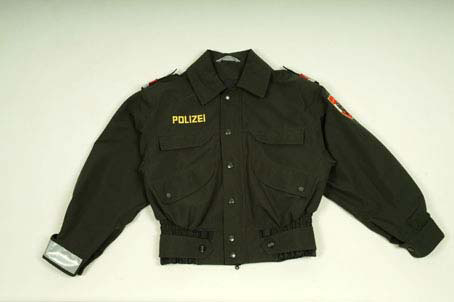
An Austrian Bundespolizei blouson.[1]
A modern nylon MA-1 flight jacket.

A blouson or blouse jacket is a jacket that is drawn tight at the waist, causing it to blouse out and hang over the waistband. Originating in military uniforms of the mid-20th century, versions continue to be used as part of military, paramilitary and law enforcement uniforms in many places. As a piece of civilian clothing, it is considered to be both sportswear and casual clothing.

History

[edit]

During World War II, British soldiers wore battledress uniforms that featured a jacket with an integrated belt to cinch the jacket tightly at the waist. These in turn inspired the creation of the United States Army's M-1944 field jacket, better known after its principal advocate as the Eisenhower jacket.

The MA-1 bomber jacket was originally designed for the US military during the 1950s. The MA-2 bomber jacket has now taken its place.

The Black jacket was popularized by Yves Saint Laurent and was donned by some music groups in the late 1950s and early 1960s. Modern flight jackets have been popular with skinheads and scooterboys from the 1980s onwards.

In 1993, a blouson was worn as the national costume of the United States for the APEC meeting held in Seattle, Washington. In the early 2000s, the jacket was popular casual wear in hip hop fashion.

Raid jacket

[edit]
FBI-NYPD Joint Terrorist Task Force officers wearing raid jackets.

A Raid Jacket is a garment typically worn by law enforcement officers and agents. It is similar to a baseball jacket in appearance but without the elasticated waist/collar and fastened with press studs.[citation needed]

[edit]

References

[edit]
Revisions and contributorsEdit on WikipediaRead on Wikipedia
from Grokipedia
A blouson is a garment, such as a or , characterized by a close-fitting with loose material blousing or gathering above it to create a relaxed, voluminous in the or . The term derives from the French word blouse, denoting a loose-fitting overgarment, and entered English usage in 1952. In the context of outerwear, the blouson style is most prominently associated with the bomber jacket, which originated in 1917 when the U.S. Army Aviation Clothing Board designed early "flight jackets" to protect pilots from cold temperatures in open-air cockpits. These initial designs evolved through military innovations, including the Type A-1 jacket introduced in 1927 with knitted waistband and cuffs for improved fit, and the leather A-2 model during , which added a front and became iconic for its durability and functionality. Post-war, the blouson jacket transitioned from to mainstream fashion, gaining cultural significance in the 1950s through Hollywood films; actors like in Tokyo Joe (1949), in (1951), and in (1955) wore variations that symbolized youthful rebellion and casual masculinity. The 1950s MA-1 model further bridged military and civilian applications, featuring reversible for versatility and functionality in temperatures ranging from 14°F to 50°F. Today, blousons remain a staple in wardrobes worldwide, influencing designer reinterpretations—such as modern takes on 1942 designs—and continuing in active military, , and contexts for their practical blend of comfort and style.

Design Features

Key Characteristics

The blouson is defined as a short, loose-fitting that creates a bloused effect over the through a cinched secured by a , elastic, or belt. This design element distinguishes it from more structured by allowing the fabric to gather and puff slightly above the . Typically waist- to hip-length, the blouson offers a cropped with a relaxed fit through the and shoulders, promoting ease of movement during wear. Standard features include elasticated or ribbed cuffs and hems that provide a snug closure at the wrists and lower edge, often paired with a stand-up or point collar and a zippered or buttoned front closure. Pockets are commonly incorporated in slash or patch styles for practicality. Functionally, the blouson supports layering under or over other garments while maintaining mobility, a trait rooted in its origins but evolved for casual everyday use. Its signature visual emphasizes a gathered, voluminous upper body that contrasts sharply with the fitted waistline, enhancing a boxy yet tailored appearance.

Materials and Construction

Blousons typically feature outer shells made from durable fabrics such as cotton twill, , , or , which provide a balance of flexibility and protection against the elements. Linings often incorporate for lightweight insulation or for added warmth, while the waist cinching is achieved using elastic bands, ribbed knits, or to create the garment's signature bloused effect. Construction emphasizes durability through reinforced seams, particularly at stress points like shoulders and hems, to withstand repeated wear. Closures commonly include zippers for the front or for pockets, with in insulated models to trap heat and enhance loft. Variations in fabric weight allow blousons to adapt to seasonal needs; lightweight versions using thin or suit summer layering, while heavier, water-repellent outer shells made from treated or serve as robust outerwear for cooler, wetter conditions. Contemporary production incorporates synthetic blends, such as with recycled , to improve stretch, , and environmental impact through ethical sourcing practices like using certified recycled materials.

Historical Development

Military Origins

Elements of the blouson style, such as the knitted waistband and cuffs creating a bloused , first appeared in the U.S. Army's Type A-1 introduced in 1927 for use. The style gained prominence in uniforms, introduced in 1937 and extensively deployed during . These combat uniforms consisted of a waist-length crafted from wool serge with a fitted ; this enabled soldiers to tuck shirts inside for a neat appearance and promoted unrestricted movement during mechanized infantry operations. The significantly influenced American military attire, culminating in the M-1944 adopted in 1944. This waist-length field jacket, made of olive drab wool serge with a belted and side vents, was primarily issued to officers for its tailored yet practical form, drawing directly from the compact silhouette of the British model to suit wartime field conditions. Post-World War II innovations in the U.S. advanced the blouson further with the , developed around 1950 for pilots during the era. Featuring a lightweight shell, a reversible orange interior lining for bailout visibility, and field-adaptable elements like ribbed cuffs and waistband originating from needs, the MA-1 emphasized durability in high-altitude environments. These military blousons were engineered for functional protection, shielding wearers from and while preserving a streamlined profile essential for maneuverability and aircraft confinement. Parallel developments emerged globally in mid-20th-century conflicts, including the French Army's Model 1944 battledress —a canvas garment with a short blouson style and belt for tactical utility.

Transition to Civilian Fashion

Following , surplus military blouson jackets, including bomber styles, flooded civilian markets as U.S. GIs brought them home from service, transforming functional wartime gear into affordable casual apparel by the . These jackets, prized for their durability and relaxed fit, gained traction among young Americans, often paired with and t-shirts to embody leisure and rebellion. In the late 1950s, designer Yves Saint Laurent elevated the blouson to high fashion through his work at , notably featuring a black leather jacket lined in in his 1960 Fall/Winter "Beat" collection, which drew from influences. This innovation bridged military utility with couture elegance, inspiring broader adoption among fashion-forward audiences. The term "blouson" itself, derived from the French word for a loose overgarment, entered English usage around 1952. The 1960s and saw the blouson proliferate in European , particularly in the UK's mod scene, where lightweight cotton Harrington blousons became staples for their versatility in everyday urban life. By the , expanded options to variants, making the jacket a ubiquitous for casual, youth-oriented wardrobes across and beyond, reflecting democratic access to the style. The marked a revival of the blouson in , propelled by music subcultures such as the and movements, which favored vibrant, multicolored designs in synthetic fabrics for expressive, dynamic looks. A key milestone occurred in the when blouson jackets served as the U.S. delegation's uniform at the 1993 APEC summit in , promoting a relaxed, diplomatic image that underscored the garment's transition to global, informal symbolism.

Notable Variations

Bomber Jacket

The bomber jacket represents a specialized variant within the blouson family, defined as a hip-length featuring a bloused designed specifically for pilots to provide mobility and warmth during duties. This design shares the cinched waist characteristic of blousons but incorporates modifications for extreme flight conditions, such as high-altitude cold and emergency visibility needs. Key evolutions include the MA-1 model, introduced in 1950 by Dobbs Industries—predecessor to —for the U.S. military, featuring a lightweight shell in alpha green (sage green), zippered hand-warmer pockets, and a knit collar, cuffs, and waistband. The MA-2 emerged in the as an updated iteration, retaining the construction but adding improved insulation, knit cuffs for enhanced durability, and a fold-down collar option while maintaining the core silhouette. Unique features distinguish the bomber jacket, including its reversible construction with a high-visibility orange interior liner for post-crash signaling, a ribbed knit collar engineered for compatibility with flight helmets, and multiple utility pockets for tools and maps. These elements emphasize functionality over aesthetics, with the jacket's hip-length cut and bloused hem allowing unrestricted arm movement essential for operations. Originally produced by under U.S. Department of Defense contracts starting in 1963, the bomber jacket was manufactured in for military issue, with later civilian versions adapting the design in for durability or for lighter everyday wear. In contrast to general blousons, bombers place heavier emphasis on —such as polyester fill in the MA-1—and reversibility to address the rigors of high-altitude and emergency scenarios.

Raid Jacket

The raid jacket represents a tactical adaptation of the blouson for modern , serving as a lightweight, wind-resistant outer layer primarily used by police and teams during high-risk operations. Unlike traditional fashion-oriented blousons, it emphasizes rapid deployment and identification, often resembling a streamlined baseball jacket but featuring a drawcord-adjustable to achieve a bloused without an elastic hem for unrestricted movement over . These jackets are typically constructed from durable, 100% or TPU shells to provide weather protection while remaining packable and unobtrusive. Key operational features include quick-access closures such as metal press studs or flaps, enabling officers to don the jacket swiftly over tactical vests during dynamic entries. Multiple specialized pockets—such as front slash pockets, hidden inner compartments, and side-entry designs—accommodate essential gear like badges, search warrants, and communication devices, with many models incorporating reflective trim for low-light visibility. Predominantly available in dark shades like or black, these jackets minimize visual profile in urban environments while integrating Velcro-compatible panels for customizable agency patches or dropdown ID holders. In terms of construction, raid jackets incorporate breathable mesh linings, often 100% , to enhance ventilation and comfort during prolonged pursuits or stakeouts, alongside reinforced elbows and raglan sleeves for improved durability and . These adaptations support , with features like sealed seams for water resistance and back systems for adding ballistic panels or identifiers. While drawing brief inspiration from blouson roots for its fitted , the raid jacket prioritizes functional versatility, evolving into a standard tool for U.S. agencies since the late to facilitate safe, coordinated urban interventions.

Cultural and Social Significance

In the 1960s, the blouson-style became a hallmark of British mod and subcultures, often paired with slim trousers and button-down shirts to embody a sharp, casual aesthetic that emphasized mobility and style during scooter rides and club scenes. This lightweight, elasticated garment symbolized the mods' pursuit of continental cool, influenced by Italian and American scenes, allowing for a clean, tailored look that contrasted with the rockers' heavier leather attire. By the 1980s, black leather blouson variants, particularly bomber styles, were adopted by and punk groups as potent symbols, reflecting working-class defiance and raw functionality in urban environments. These jackets appeared prominently in the 1979 film , which dramatized mod rivalries but resonated with later punk audiences, reinforcing the blouson's role in narratives of rebellion and identity. In the and , oversized blouson jackets, often in or forms, integrated into hip-hop fashion, blending street utility with emerging luxury elements as seen in rap videos and artist wardrobes. Figures like popularized customized, baggy versions through brands such as , transforming the jacket into a marker of urban success and cultural fusion. The blouson's appearances in media further amplified its cultural reach, such as the G-1 bomber jacket in (1986), which Maverick's character wore to evoke aviator bravado, sparking widespread 1980s civilian adoption and associating the style with effortless masculinity. Across these movements, the blouson evolved symbolically from practical rebellion in youth tribes to a versatile emblem of casual cool, underscoring themes of functionality and non-conformity in .

Contemporary Usage

In the 2010s, the blouson jacket experienced a notable revival in high fashion, with brands like Dior incorporating logo-patch bombers into their collections, often blending classic silhouettes with contemporary details. Gucci similarly featured leather and nylon variants, emphasizing luxurious materials that elevated the garment's casual roots. This resurgence aligned with broader trends toward versatile outerwear, as seen in runway presentations that paired blousons with tailored separates for a refined yet relaxed aesthetic. Sustainability became a key focus, with high-fashion houses adopting eco-friendly fabrics; for instance, Prada introduced Re-Nylon blousons crafted from regenerated nylon derived from recycled ocean plastic waste, reducing environmental impact while maintaining premium quality. Streetwear has further integrated the blouson through high-profile collaborations, such as Supreme's partnerships with , which produced blouson-cut nylon down jackets featuring bold prints and technical fabrics like water-resistant coatings for urban functionality. Off-White has contributed with woven and varsity-inspired blousons, often in oversized fits that incorporate graphic elements and performance materials, appealing to a youth-driven market. These designs draw briefly on subcultural legacies for inspiration but prioritize modern adaptability in everyday wear. Contemporary blousons increasingly emphasize , with styles gaining popularity for their relaxed, inclusive appeal. Celebrities like have popularized this shift, notably wearing oversized bombers layered over sporty separates for off-duty looks. Similarly, has sported New York Yankees bombers in casual settings, blending team branding with slim, versatile silhouettes that transcend traditional menswear norms. Global variations highlight regional adaptations, particularly in Asian markets where slim-fit blousons dominate Korean and , often in or blends for a tailored, urban edge. Environmental concerns have spurred innovations like eco-leather alternatives, with brands producing plant-based or recycled blousons that mimic traditional textures without animal-derived materials. Market trends reflect a surge in vintage reproductions, led by ' heritage MA-1 bombers reissued in updated colors, with sales amplified by social media platforms like , where the brand's 282,000 followers drive demand for nostalgic yet contemporary pieces.

References

Add your contribution
Related Hubs
User Avatar
No comments yet.