Hubbry Logo
search
logo
Dewas
Dewas
current hub
2133454

Dewas

logo
Community Hub0 Subscribers
Read side by side
from Wikipedia

Dewas is a city in the Malwa region of the Indian state of Madhya Pradesh. The municipality was formerly the seat of two 15-Gun Salute state princely states during the British Raj, Dewas Junior state and Dewas Senior state, ruled by the Pawar clan of the Marathas.[3] The city is the administrative capital of Dewas district. Dewas is an industrialised city and houses a government bank note press.[4][5]

Key Information

Etymology

[edit]
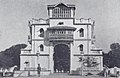
An old photograph of Goddess Chamunda Mata's Temple on Dewas Tekri (Hill).

The name Dewas is derived from the Devi Vashini hill in the city, commonly known as Tekri.[6] The hill has a temple of the deities Devi Tulja Bhawani, Chamunda Mata and Kalika Mata. The word Dewas is believed to be a sandhi of the words Dev (deity) and Vas (abode in Marathi), so Dewas means abode of the gods. Swami Shivom Tirtha wrote the history of the hill (Tekri ) of Dewas in his book, Sadhan Shikhar. Inspired by the area, E.M. Forster wrote The Hill of Devi in 1953.[7]

The district takes its name from its headquarters town, Dewas, which is said to be derived from the legend that Dewas rests at the foot of a 300 ft (91 m) conical hill known as Chamunda hill, on whose summit is the shrine of Goddess Chamunda. The image of the goddess is cut into the wall of a cave, known as Devi Vashini or the goddess's residence. From this, the name Dewas (dev-vas) seems to have been derived.[8]

History

[edit]

Dewas was formerly the capital of two princely states of British India. The original state was founded in the first half of the 18th century by the brothers Tukaji Rao (senior) and Jivaji Rao (junior), from the Pawar clan of the Marathas. They had advanced into Malwa with the Maratha Peshwa, Baji Rao, in 1728. The brothers divided the territory among themselves; their descendants ruled as the senior and junior branches of the family. After 1841, each branch ruled its own portion as a separate state, though the lands belonging to each were intimately entangled; in Dewas, the capital town, the two sides of the main street were under different administrations and had different arrangements water supply and lighting.

In 1901, the senior branch had an area of 446 sq mi (1,160 km2) and a population of 62,312, while the area of the junior branch was 440 sq mi (1,100 km2) and had a population of 54,904.[9] Both Dewas states were in the Malwa Agency of the Central India Agency.

Dewas Junior and Dewas Senior durbars (courts) were composed of Sardars, Mankaris, Istamuradars, Thakurs and Jagirdars.[10][11]

After India's independence in 1947, the Maharajas of Dewas (Jr. & Sr.) acceded to India, and their states were integrated into Madhya Bharat, which became a state of India in 1950. Later, in 1956, Madhya Bharat was merged into the state of Madhya Pradesh.[12]

Geography

[edit]

Dewas lies northeast of Indore, southeast of Ujjain, and southwest of Shajapur. The city is located on the level plains of the Malwa plateau; to the south, the land rises gently to the Vindhya Range, which is the source of the Chambal and Kali Sindh rivers that flow north through the district on their way to the Ganges. The main river in Dewas is Kshipra.

Month Jan Feb Mar Apr May Jun Jul Aug Sep Oct Nov Dec Year
Record high °C (°F) 26.5
(79.7)
29.3
(84.7)
34
(93)
38.1
(100.6)
40.4
(104.7)
36.3
(97.3)
29.7
(85.5)
28.5
(83.3)
29.7
(85.5)
31.7
(89.1)
29.3
(84.7)
27.1
(80.8)
40.4
(104.7)
Daily mean °C (°F) 18.3
(64.9)
20.5
(68.9)
25.1
(77.2)
29.7
(85.5)
33
(91)
30.6
(87.1)
26.3
(79.3)
25.4
(77.7)
25.6
(78.1)
24.7
(76.5)
21
(70)
18.7
(65.7)
24.9
(76.8)
Record low °C (°F) 10.2
(50.4)
11.8
(53.2)
16.2
(61.2)
21.3
(70.3)
25.6
(78.1)
24.9
(76.8)
22.9
(73.2)
22.3
(72.1)
21.5
(70.7)
17.7
(63.9)
12.7
(54.9)
10.4
(50.7)
10.2
(50.4)
Average rainfall mm (inches) 9
(0.4)
2
(0.1)
7
(0.3)
3
(0.1)
7
(0.3)
122
(4.8)
327
(12.9)
274
(10.8)
240
(9.4)
30
(1.2)
13
(0.5)
5
(0.2)
1,039
(41)
Source: climate-data.org [13]

Demographics

[edit]

[needs update] As of the census, Dewas had a total population of 289,550, of which 150,081 were males and 139,469 were females. Population within the age group of 0 to 6 years was 35,437. The total number of literates in Dewas was 215,088, which constituted 74.3% of the population with male literacy of 79.9% and female literacy of 68.3%. The effective literacy rate of 7+ population of Dewas was 84.6%, of which male literacy rate was 91.1% and female literacy rate was 77.7%. The Scheduled Castes population was 56,366, while the Scheduled Tribes population was 9,861. Dewas had 57,397 households in 2011.[1]

Administration

[edit]
Dewas Collectorate (originally known as Lakshmi Niwas Palace of Dewas Junior. This was illegally demolished by the local administration in March 2023, despite an ongoing case and strong opposition by the citizens of Dewas.)

The Member of Parliament from Dewas is Mahendra Singh Solanki of BJP who was elected in the Lok Sabha Election 2019.[14] As of the 2018 Madhya Pradesh Legislative Assembly election, the member of the Legislative Assembly for Dewas is Gayatri Raje Pawar.[15]

Industry

[edit]

Dewas was known for being a production centre of retail opium in the 1800s, as noted in the 1895 first report of the Royal Commission on Opium.[16] Rapid industrialisation took place in the late 1970s and early 1980s, but due to inadequate infrastructure, the pace has slowed since the late 1980s. In recent years, some industries have closed their operations due to a shortage of sufficient infrastructure to support growth; there is a shortage of water due to excessive usage in previous decades.[citation needed]

The city has many industrial units providing employment to thousands of workers. The largest companies include Tata International, Kirloskar, John Deere, Eicher Motors, Gajra Gears,[17] Cummins Turbo Technologies, STI Sanoh Steel Tubes Plant and Coparo Steel Tubes Unit. Dewas is known as the "Soy Capital of India" and is a major part of the soybean processing industry in the country with major soybean product brands like Kriti Nutrients, Prestige Agro-Tech, Mittal Soya Protein and Adani Agri Logistics.[citation needed]

Dewas is also one of the prominent pharmaceutical hubs of Madhya Pradesh and India, with many manufacturing facilities and labs of companies like in its industrial areas. The industrial manufacturing units of Ranbaxy Laboratories and Sun Pharma Industries are also situated here.

Electricity Generating Dewas Wind Hills

Due to its location above sea level at one corner of the Malwa plateau, constant wind flows in the region are suitable for harvesting wind energy. There are more than 100 wind mills on a series of hills 13 km (8.1 mi) from Dewas, generating around 60 megawatts (MW) of power. These were financed by a few private companies (mainly Suzlon Energy) which sought a reliable power supply.[18][19][20]

Main Gate of Bank Note Press
Main Gate of Bank Note Press Dewas

A currency printing unit of the Security Printing and Minting Corporation of India Limited (SPMCIL), also known as the Bank Note Press Dewas (BNP), is located in Dewas. Established in the year 1974, it is wholly owned by the Government of India, Ministry of Finance and Department of Economic Affairs. Bank Note Press Dewas prints Indian currency notes (known as Indian Rupee or INR; Symbol: '₹') of denominations ₹50, ₹100, ₹500 and ₹2000 and is capable of printing bank notes of any denomination. The bank notes are printed with high security features necessary to impede forgery and to meet the essential standards of the Reserve Bank of India. The unit has skilled and trained manpower totaling around 1400 employees in production. The BNP campus is spread over an area of 185 hectares (1,850,000 m2) of land. In addition to the high security printing complex, there is a specialized ink factory unit which produces security inks for BNP Dewas and other units of SPMCIL for the printing of other government documents. The campus also includes also a residential complex with nearly 1400 quarters for employees to reside. The Central Industrial Security Force (CISF) provides security and fire coverage for the printing complex and transportation of bank note consignments.

Awards

[edit]

Dewas placed first nationwide out of 820 cities in the Swachh Survekshan 2024-2025 cleanliness rankings, in the category of Medium Cities (population of 50,000–300,000) and won the Presidential Award for it.[21] The city had placed 25th during previous Swachh Survekshan rankings of 2021, 2022 and 2023.

Media

[edit]

In terms of print media, Satyakaar, a daily evening newspaper, is published from Dewas. Along with this, newspapers like Dainik Bhaskar, Naidunia, and Patrika published from Indore are also circulated here.

Transportation

[edit]

Rail

[edit]

Dewas Junction (station code: DWX) is the main railway junction of Dewas city. It is a 'B' Grade Railway Junction, under the Ratlam division of the Western Railways zone. It is situated on the Indore–Gwalior rail line and connected to nearby junctions such as Indore Junction (INDB) in the north-west and Ujjain Junction (UJN) in the south-west via an electrified rail line.

Road

[edit]

Dewas is connected to major cities across the state and country, via both national and state-level highways. NH-47 and NH-52 connects Dewas to Indore and other cities of Madhya Pradesh. MP SH-18 connects Dewas to Bhopal, Ujjain and Ahmedabad.

Air

[edit]

Dewas does not have an airport or an airstrip of its own. The nearest airport is Devi Ahilya Bai Holkar Airport in Indore, which is about 40 km (25 mi) away by road. In 2022, a greenfield airport in Dewas district was initially proposed as part of the state's plans to expand its aviation infrastructure;[22] this airport is now planned to be built on the Datana-Matana airstrip between Ujjain and Dewas.[23]

Places of interest

[edit]

Dewas is known for the Devi Chamunda temple and the Devi Tulaja Bhavani temple situated on a 300 ft (91 m) hilltop (Tekri). A broad flight of stone steps leads to two shrines to the goddesses, Choti Mata (Chamunda Mata) and Badi Mata (Tulja Bhavani Mata). Numerous other temples spread over the Tekri can be explored on foot.[24][25]

  • Shri Sheelnath Dhuni at the Tekri foothills is a place of worship for followers of Saint Sheelnath Maharaj's of Gorakh Nath Sumpradaya. Sheelnath Maharaj belonged to a royal family of Jaipur and later became a Yogi of Gorakh Nath Sumpradaya, who lived in Dewas in his old age.[26]
  • The Pawar Chatries near the Meetha Talab (lake) of Dewas are examples of Maratha architecture in the area.[27]
  • The Kailadevi temple at Dewas is the largest in the state. It is situated at Mishri Lal Nagar (Agra Bombay Road). It was established in December 1995 by businessman Mannulal Garg. This modern temple was built by South Indian artists; it houses a 51 ft (16 m) statue of Lord Hanuman. The original Kaila Devi Temple is located on the banks of the Kalisil river in the Karauli district of Rajasthan. The temple is devoted to the tutelary deity of the former princely rulers of the Karauli state, Kaila.[28][29]
  • Mahadev Mandir is a temple in Shankar Gadh built by the Dewas ruler Shrimant Sadashive Rao Maharaja (Khase Saheb) in 1942. The temple is located on a small hill south of the city.[30]
  • Mahakaleshwar temple, Bilwali - Bilavali village is situated 3 km (1.9 mi) north of Dewas.[30]

Notable people

[edit]

Education

[edit]

Government Colleges

[edit]
  • Government Polytechnic College, Dewas
  • Government New Science College, Dewas
  • Government Law College, Dewas
  • Maharani Pushpmala Raje Paur Government Girls Degree College, Dewas
  • Saheed Jageshwar Nagar Government Polytechnic College, Dewas

Private Colleges

[edit]
  • Prestige Institute of Management Dewas
  • Amaltas Institute of Medical Sciences
  • Indira Institute of Management Studies, Dewas
  • Sandipani Law College, Ujjain
  • Arena Animation

Government Schools

[edit]
  • Government Boys Higher Secondary School, Dewas
  • Government Girls Higher Secondary School, Dewas
  • Government Higher Secondary Model School, Dewas

Private Schools

[edit]
  • St. Mary's Convent School, Dewas
  • Academic Heights Public School (APHS) Dewas
  • BCM Prominent School
  • Bright Star Higher Secondary School
  • Shishu Vihar Higher Secondary School
  • Central India Academy
  • Vindhyachal Academy
  • Hello Kids - Little Star
  • Little Millennium - Dewas

See also

[edit]

References

[edit]
[edit]
Revisions and contributorsEdit on WikipediaRead on Wikipedia
from Grokipedia
Dewas is a city in western Madhya Pradesh, India, functioning as the headquarters of Dewas district and situated on the Malwa Plateau at the base of the 300-foot conical Chamunda Hill.[1] The name Dewas originates from "Devi Vashini," signifying the residence of the goddess, in reference to the ancient Chamunda shrine atop the hill, though an alternative attribution links it to the city's founder, Dewasa Bania.[1] Historically, it served as the capital of two distinct princely states—Dewas Senior and Dewas Junior—established under British paramountcy in the Malwa region, which merged into Madhya Bharat in 1948 following India's independence and later integrated into Madhya Pradesh in 1956.[1] The district encompasses 7,020 square kilometers with a population of 1,563,715 as recorded in the 2011 census, predominantly Hindi-speaking and featuring a density of 223 persons per square kilometer.[2] Dewas stands out as an industrial hub, hosting the Bank Note Press under the Security Printing and Minting Corporation of India Limited, which produces a significant portion of the nation's currency notes using advanced technology, alongside wind energy installations that position it as Madhya Pradesh's leading center for renewable power generation.[3] Agriculture remains vital, with crops such as wheat, soybean, pulses, and cotton supporting the local economy, complemented by the city's strategic connectivity via National Highway 3 and the Western Railway.[3] Religiously, Dewas is defined by its temples, foremost the Chamunda Mata Temple on Tekri Hill, drawing pilgrims and underscoring the city's enduring spiritual heritage amid its modern developmental trajectory.[3]

History

Etymology

The name Dewas originates from the compound "Dev-Vas," a sandhi form combining the Sanskrit or Marathi terms for "god" (dev) and "abode" (vas), translating to "house of the god" or "abode of the deity," directly referencing the sacred Devi Vaishini Hill (also known as Chamunda Tekri) that dominates the city's landscape.[4][5] This etymology underscores the hill's central role, crowned by ancient temples dedicated to goddesses including Chamunda Mata and Tulja Bhavani, whose worship has defined the site's sanctity since at least the 9th-10th century A.D., as evidenced by a rock-cut image of Devi Chamunda.[6] Local legends further tie the name to the Shakpanthis, devotees of Chamunda Devi, who are said to have settled around the hill, establishing it as a spiritual hub that lent the surrounding settlement its identity.[7] An alternative explanation attributes the name to Dewasa Bania, a historical figure purportedly responsible for founding the early village, though this lacks the corroborative religious or archaeological linkage of the primary derivation.[8] In Maratha records from the 18th century onward, following the establishment of Dewas as the capital of twin princely states under the Puar dynasty, and in subsequent British colonial gazetteers, the name appears consistently as Dewas, reflecting its entrenched usage without significant phonetic or orthographic variation.[9] This continuity aligns with the region's Malwa heritage, where toponymic stability often preserved ties to pre-existing sacred geography amid political shifts.[10]

Ancient and Medieval Periods

Archaeological surveys in Dewas district have uncovered evidence of prehistoric human activity, including upper Paleolithic stone tools in villages such as Ghantya and fossils alongside additional tools in areas like Pastipura, Palasi, and Nemavar.[6] Chalcolithic settlements, characteristic of the Malwa culture spanning roughly 1800–1200 BCE, are documented at sites including Nagda, Bilavali, Bangar, and Ghantykala, reflecting early agrarian communities with painted pottery and copper implements typical of the broader Malwa plateau.[6][11] Later ancient evidence includes Gupta-era (circa 4th–6th centuries CE) remains at Nikalank village, indicating continuity of settlement amid the empire's influence over Malwa, though no major urban centers are attested specifically at Dewas itself.[6] The site's ancient name, Dewas, appears in historical inscriptions, suggesting early recognition as a locale within the region's trade and cultural networks.[6] In the medieval period, Dewas lay within the Paramara dynasty's kingdom of Malwa, which controlled the area from around 948 to 1305 CE with Dhar as capital, fostering temple architecture and regional administration.[12] Excavations have revealed 15 temple ruins dating to the 11th–12th centuries on the Sehore-Dewas border, featuring Nagara-style structures likely patronized under Paramara rulers like Bhoja, who emphasized Shaivite and Vaishnavite endowments amid trade routes linking the Deccan and northern India.[13] Following the dynasty's decline after invasions by Iltutmish in 1235 CE, the region transitioned to Delhi Sultanate oversight, with Malwa establishing a sultanate by 1401 CE that incorporated local chieftains but left scant Dewas-specific records beyond agrarian and pilgrimage continuity.[12]

Princely States and Colonial Era

Dewas Senior and Dewas Junior were established in 1728 when Peshwa Baji Rao I granted the territory to the brothers Tukoji Rao I Puar and Jivaji Rao I Puar, scions of the Maratha Parmar (Puar) clan, as a reward for military services during the Maratha conquest of Malwa.[14][15] The brothers promptly divided the jagir into two independent states: Dewas Senior under Tukoji Rao I, the elder, and Dewas Junior under Jivaji Rao I, with each maintaining semi-autonomous Maratha-style governance characterized by feudal land tenure, jagirdari systems, and reliance on sardars, mankari, thakurs, and jagirdars for administration and revenue collection.[16][17] Following the defeat of the Marathas in the Third Anglo-Maratha War (1817–1818), both states acceded to British paramountcy on 12 December 1818 through subsidiary alliance treaties with the East India Company, whereby the rulers agreed to British protection,駐駐 of political agents, and subsidiary force maintenance in exchange for internal autonomy and exemption from direct British revenue interference.[16][17] This status conferred a 15-gun salute on both rulers, signifying their mid-tier rank among the 562 princely states, and preserved traditional succession by primogeniture or adoption within the Puar lineage.[16] Key rulers included Tukoji Rao I (r. 1728–1736) for Senior, succeeded by adoptees like Ranoji Rao II, and for Junior, Jivaji Rao I (r. 1728–1742), followed by Anand Rao (r. 1817–1840) who navigated early British relations.[14][18] Under British paramountcy, the states pursued administrative consolidation and modest infrastructure development suited to their agrarian economies, focused on cotton, opium, and grain production under ryotwari-like systems adapted from Maratha precedents.[15] Rulers like Narayan Rao Puar of Junior (early 20th century) commissioned civic structures such as the Shree Narayan Tower clock tower, law courts, and palaces including Rajwada and Durga Bagh, while fostering a nobility consultative framework for justice and revenue.[9] Successive Junior maharajas—Malhar Rao (r. 1918–1934), Sadashiv Rao II (r. 1934–1943), and Yeshwant Rao (r. 1943–1947)—patronized cultural institutions like the Lakshmi Narayan Bhawan Club and maintained forts for defense, though economic policies emphasized fiscal prudence and tribute payments over expansive modernization.[17] These efforts sustained stability amid colonial oversight, with British agents ensuring compliance but allowing Puar dynastic continuity until accession in 1947.[16]

Post-Independence Developments

Following India's independence in 1947, the princely states of Dewas Junior and Dewas Senior acceded to the Indian Union and were merged into the newly formed state of Madhya Bharat on 27 June 1948.[19][20] This integration marked the end of princely rule in the region, with administrative control transitioning to the central authority of Madhya Bharat. The Dewas district was formally organized shortly thereafter, divided into five tahsils—Dewas, Khategaon, Sonkatch, Tonk, and Bagli—as notified in the Madhya Bharat Gazette on 5 February 1949.[21] In 1956, Madhya Bharat was reorganized and merged with other territories, including Vindhya Pradesh and Bhopal, to form the enlarged state of Madhya Pradesh under the States Reorganisation Act.[1] Dewas retained its status as a district within this new state, facilitating centralized governance and development planning. Post-1950 administrative reforms emphasized land redistribution and tenancy improvements, aligning with national efforts to abolish intermediaries and enhance agricultural productivity in the Malwa plateau region.[22] Industrial development accelerated in Dewas during the late 1970s and early 1980s, driven by its strategic location near Indore and favorable zoning policies that attracted manufacturing units. Key establishments included the Bank Note Press in 1975 and factories by companies such as Tata, Kirloskar, and Arvind Mills, contributing to employment growth and urban expansion.[23] However, this boom slowed in the late 1980s due to inadequate infrastructure, including power and road connectivity, limiting further expansion until targeted interventions in subsequent decades.[24] Recent district-level initiatives have focused on revitalizing growth through infrastructure and industrial zoning. In September 2025, the Madhya Pradesh Industrial Development Corporation announced plans for a new industrial belt spanning 476 hectares across Dewas and adjacent Shajapur districts, aimed at attracting large-scale industries and MSMEs via government land allocation.[25] These efforts build on earlier renewable energy projects, such as wind farms in the Dewas hills, supporting sustainable development amid ongoing urbanization pressures.

Geography

Location and Topography

Dewas is situated in the Ujjain Division of western Madhya Pradesh, India, at geographical coordinates 22°57′44″N 76°03′03″E.[26] The city lies at an elevation of approximately 544 meters above sea level on the Malwa Plateau.[27] The district encompassing Dewas spans latitudes 22.10°N to 23.05°N and longitudes 75.30°E to 77.10°E.[28] The topography of Dewas features a predominantly flat terrain characteristic of the Malwa Plateau, interspersed with hilly features including the prominent Chamunda Hill (also known as Tekri), a conical elevation rising about 91 meters above the surrounding plains and crowned by the shrine of Goddess Chamunda.[28][29] Maximum elevations in the district reach up to 700 meters north of the city.[29] The area is drained by rivers such as the Kali Sindh, which originates near Bagli in the district, and the Kshipra.[28][29] Predominant soil types in the region consist of fertile black cotton soil, supporting agricultural activities on the plateau's plains.[28]

Climate and Environment

Dewas features a tropical wet and dry climate, with hot summers, a pronounced monsoon season, and mild winters. Average annual temperatures range from lows of around 11°C in January to highs of 40°C or more in May and June.[30][28] Precipitation totals approximately 980 mm annually, concentrated during the southwest monsoon from June to September, when July sees about 247 mm and August up to 284 mm, while non-monsoon months receive minimal rain, often less than 5 mm.[31][32] Seasonal variations include dry, dusty conditions from March to May, heavy monsoon rains influencing humidity and flooding risks, and cooler, drier winters from November to February with occasional fog. Historical precipitation trends show variability, with deviations from norms contributing to drought episodes, as evidenced by annual rainfall departure data indicating fluctuations impacting water availability.[33] Ecologically, the area has fertile black soils derived from basalt, which retain moisture but face erosion risks from intensive farming and runoff. Past environmental pressures included deforestation and land encroachments in tribal forest fringes, culminating in 2001 conflicts where forest officials and police enforced against unauthorized timber felling and cultivation, resulting in clashes, confiscations of over 250 cubic meters of timber worth Rs 49.6 lakh by April, and fatalities among Adivasi protesters asserting traditional rights.[28][34][35] Conservation initiatives have since emphasized sustainable practices, such as soil health projects promoting organic matter use and water management to counter degradation, alongside renewable energy developments like wind farms on local hills to support resource sustainability.[36]

Demographics

The population of Dewas district stood at 1,563,715 according to the 2011 census, reflecting a decadal growth rate of 19.53% from the 1,308,223 recorded in 2001, a slowdown from the 26.50% growth of the prior decade (1991–2001).[37][38] Within the district, the urban population accounted for 451,759 individuals (28.9% of the total), while the rural population comprised 1,111,956, highlighting a pronounced urban-rural divide that has persisted amid gradual urbanization.[37] Dewas city, serving as the district's primary urban center, reported a population of 289,550 in 2011, with a sex ratio of 929 females per 1,000 males.[39] Projections based on post-2011 growth trends estimate the city's population at approximately 363,000 in 2021 and 396,000 by 2025, assuming an annual growth rate of around 2.1–2.3% consistent with the 2001–2011 period.[40] District-level projections similarly indicate expansion to about 1,820,000 by 2021, driven in part by net in-migration to urban areas from surrounding rural regions.[37] Literacy rates in 2011 varied significantly by locale, with the city at 84.64% (91.13% for males and 77.69% for females) exceeding the district average of 69.35% (80.30% male and 57.76% female).[39][41] Age demographics from the 2011 census reveal a youthful profile, with children aged 0–6 numbering 229,339 district-wide (14.67% of the total population), including 119,566 males and 109,773 females, indicative of a dependency ratio shaped by higher birth rates in rural zones.[42] Urban growth patterns suggest sustained in-migration contributing to a rising working-age cohort in the city, though empirical data on precise migrant inflows remain limited post-2011.[37]

Religious, Linguistic, and Social Composition

According to the 2011 census, Hindus form the majority in Dewas city, accounting for 77.98% of the population, while Muslims constitute 19.98%.[39] Other religious groups, including Christians, Sikhs, Jains, and Buddhists, represent negligible shares, typically under 2% combined.[39] The primary language spoken in Dewas is Hindi, with the Malvi dialect predominant in everyday communication as part of the broader Malwa regional variant.[43] Census data classifies over 92% of the district's population under Hindi as the mother tongue, encompassing local dialects like Malvi, though smaller groups speak Urdu, Bhili, or Gondi.[44] Socially, Scheduled Castes (SC) comprise 19.47% of Dewas city's population, reflecting historical caste-based occupational groups, while Scheduled Tribes (ST) account for 3.41%, lower than the district average due to the urban concentration.[45] The overall sex ratio stands at 929 females per 1,000 males, with a child sex ratio (ages 0-6) of 908, indicating a slight male skew consistent with regional patterns.[39]

Government and Administration

Civic Governance

The Dewas Municipal Corporation (DMC) serves as the primary urban local body responsible for civic administration in Dewas city, managing a population of approximately 289,550 across 45 wards.[45] [46] The corporation operates under the Madhya Pradesh Municipal Corporation Act, featuring an elected council comprising a mayor as the head and ward councilors elected every five years, alongside executive oversight by a commissioner.[47] Key functions include urban planning, infrastructure maintenance, and delivery of public utilities. DMC's revenue streams predominantly consist of tax collections such as property tax and water tax, supplemented by rental income from municipal properties, assigned revenues, and grants from state and central governments.[48] [49] In FY2022, owned revenues reached Rs. 78.63 crore, supporting obligatory services like water supply, sanitation under initiatives such as Swachh Bharat Mission, road and bridge upkeep, and solid waste management.[50] [51] Taxation enforcement occurs through online portals for property and water bill payments, with property tax forming a core funding mechanism for urban development.[51] District-level governance integrates with state administration via the Dewas Collectorate, headed by the District Collector, Shri Ritu Raj (as of January 2025), who acts as the chief executive for revenue and magisterial duties.[52] [53] The Collectorate's responsibilities encompass land revenue assessment and collection, irrigation dues recovery, maintenance of law and order, supervision of executive magistracy, disaster response including floods and epidemics, and coordination of agricultural loans and banking committees.[54] This structure ensures fiscal oversight and service delivery extends beyond municipal bounds to rural tehsils within the district.[54]

Political and Electoral Dynamics

Dewas falls under the Dewas Lok Sabha constituency, a Scheduled Caste-reserved seat established in 2008, encompassing assembly segments such as Dewas, Sonkatch, Hatpipliya, and others from Dewas and surrounding districts. In the 2024 Lok Sabha elections, the Bharatiya Janata Party (BJP) candidate secured victory with 928,941 votes, reflecting the party's consistent hold on the seat, having won two of the three elections held since its creation, with the Indian National Congress (INC) claiming the other.[55][56] At the state level, the Dewas Assembly constituency has demonstrated BJP dominance in recent cycles, aligned with broader trends in the Malwa region, where the party captured a majority of seats in the 2023 Madhya Pradesh Assembly elections amid a statewide landslide victory of 163 out of 230 seats. In Dewas specifically, BJP's Gayatri Raje Puar, a descendant of the princely Puar family of Dewas Junior State, won the 2023 election with 117,422 votes (52.6% share), defeating INC's Pradeep Choudhary by a margin of 26,956 votes; this followed BJP victories in 2018 and earlier terms, underscoring voter preference for the party's development-focused platforms over INC alternatives.[57][58][59] The Puar family's historical ties to Dewas's princely governance have translated into modern political influence, with figures like Gayatri Raje Puar leveraging lineage for electoral appeal in a constituency blending urban industrial voters and rural agrarian bases. This continuity highlights how pre-independence elite networks persist in local dynamics, aiding BJP's mobilization in Malwa-Nimar, a region where the party has solidified support through targeted outreach to Other Backward Classes and Scheduled Castes since the 2000s.[60] State government policies under BJP administrations have directly shaped Dewas's political discourse, particularly through industrial incentives that prioritize manufacturing hubs like the city's Bank Note Press and private sectors. The Madhya Pradesh Industrial Promotion Policy 2025 offers capital subsidies up to 50% for eligible investments, stamp duty exemptions, and employment-linked rebates, credited by local representatives for attracting FDI and generating jobs—outcomes emphasized in BJP campaigns as evidence of governance efficacy over opposition promises. These measures, implemented since 2014, correlate with electoral gains in Dewas by framing economic progress as a partisan achievement, though critics note uneven rural benefits amid agricultural distress.[61][62]

Economy

Agriculture and Primary Sector

Agriculture in Dewas district, located in the fertile Malwa plateau of Madhya Pradesh, primarily revolves around rainfed and partially irrigated cultivation of kharif and rabi crops, with soybean emerging as the dominant kharif crop alongside cotton, followed by wheat and gram during rabi. The district's net sown area benefits from black cotton soil conducive to these pulses and oilseeds, though exact recent production figures vary; historical data indicate soybean occupying approximately 295,900 hectares under rainfed conditions. Wheat and gram production supports food security, with gram yields influenced by soil fertility and seasonal inputs.[3] Irrigation coverage stands at about 70.6% of the net sown area, augmented by lift irrigation schemes drawing from the Narmada River basin, including recent projects in Dewas executed by entities like Larsen & Toubro for micro-irrigation in adjacent districts. These efforts, part of broader Narmada Valley Development Authority initiatives such as the Kali Sindh Lift Micro Irrigation Scheme, aim to expand cultivable command areas by over 100,000 hectares across Dewas and neighboring regions, reducing reliance on tube wells and tanks. Farmer producer companies, such as Divasa Agro in Dewas, facilitate collective input procurement, marketing, and technology adoption, enhancing yields through better seed varieties and pest management for crops like soybean.[63][64][65] Despite these advancements, the primary sector's contribution to district output—estimated to align with Madhya Pradesh's statewide primary sector share of around 47% of GSDP—faces limitations from monsoon variability, which affects rainfed soybean and gram yields prone to drought or excess rainfall. Government interventions, including the Pradhan Mantri Krishi Sinchayee Yojana for expanded irrigation and community-built farm ponds (over 5,000 constructed since the early 2010s in Dewas villages), mitigate water scarcity, while climate-smart practices promote resilient cropping. These measures address systemic vulnerabilities like erratic precipitation, though persistent challenges in input costs and market access constrain overall productivity gains.[66][67][68]

Industry and Manufacturing

Dewas maintains a robust manufacturing sector dominated by automobile components, engineering goods, and textiles, with over 1,000 registered industrial units as of 2015, including numerous small and medium enterprises. Key players include Tata International, Kirloskar Pneumatic Company Limited, Arvind Mills, and S. Kumars Nationwide, which produce auto parts, pneumatic tools, fabrics, and related products, respectively.[23] These industries leverage Dewas's strategic location near major highways and ports, facilitating component manufacturing for domestic and export markets in engineering and automotive sectors.[23] Industrial expansion in Dewas began accelerating in the late 1970s and early 1980s, with the influx of large-scale factories that generated thousands of direct jobs in assembly, fabrication, and ancillary operations.[23] This period marked a shift toward secondary sector growth, though progress moderated post-1980s amid infrastructure bottlenecks such as power and logistics limitations.[23] Facilities like Eicher Engineering Components underscore the auto focus, specializing in gear manufacturing and transmission assembly for commercial vehicles.[69] The proximity to Pithampur's special economic zone, approximately 30 km away, bolsters Dewas's manufacturing ecosystem by enabling supply chain integration for auto and textile exports, though Dewas itself hosts no formal SEZ.[70] Local handicraft production, particularly wooden crafts and toys by small artisan units, complements formal industry but remains artisanal-scale without large firms dominating.[71] State-level skill programs target vocational training in these areas to address labor gaps, emphasizing certifications for machine operation and fabrication.[72]

Recent Economic Growth and Challenges

The Dewas district has experienced notable industrial expansion since 2010, driven by manufacturing and MSME sectors, with modern factories providing employment to thousands of skilled and unskilled workers.[73] Key contributors include the Bank Note Press in Dewas, which produced 3,700 million notes by March 2024 toward a target of 4,200 million, supporting national currency demands and local jobs.[74] In 2024, Navin Molecular announced a $35 million investment for a 9,000-square-meter GMP manufacturing plant, enhancing pharmaceutical capabilities and attracting further industry.[75] Infrastructure investments have bolstered this growth, with the Madhya Pradesh Industrial Development Corporation (MPIDC) planning a 476-hectare industrial belt in Dewas announced in September 2025, estimated at ₹500 crore, aimed at drawing large-scale industries and MSMEs through improved connectivity and amenities.[76] Another 486.6-hectare industrial block in Polay Kalan-Pipalrawan is slated for completion by 2028, featuring modern facilities to diversify manufacturing.[77] These developments align with district efforts under schemes like Prime Minister Employment Generation Programme to foster job creation and industrialization.[78] Despite these advances, challenges persist, including the need for stronger linkages between MSMEs and large industries to improve market access and supply chains, as highlighted in district industrial profiles. Economic growth has not uniformly translated to employment, with skill gaps limiting opportunities for local youth and contributing to out-migration toward urban centers like Indore.[73] Rural-urban disparities exacerbate uneven development, while competition from larger industrial hubs strains smaller enterprises, underscoring the requirement for targeted skill development and infrastructure enhancements to sustain momentum.[79]

Infrastructure

Transportation Networks

Dewas relies on an integrated network of rail and road transport for regional and national connectivity, supplemented by proximate air facilities. The city's primary rail access is through Dewas Junction (DWX), a broad-gauge station under the Western Railway's Ratlam Division, which supports both passenger and freight movements along key corridors.[80] This junction links Dewas to southwestern destinations like Indore and northwestern hubs such as Ujjain via the Indore-Dewas-Ujjain line, with onward connections to major Indian cities.[81] At least 77 trains traverse the station daily, including express and local services that integrate Dewas into the broader national rail grid.[82] Road networks center on National Highway 52 (NH-52), which bisects Dewas and extends connectivity from northern routes via Jaipur and Kota through Madhya Pradesh to Maharashtra borders.[83] Recent upgrades include the four-laning of the 41.4 km Ujjain-Dewas segment of NH-752D, completed in June 2024, which bolsters links between Indore and Nagpur while alleviating congestion on approach roads like the Indore-Dewas highway.[84] State highways and district roads further support intra-regional travel, with bus services from Madhya Pradesh State Road Transport Corporation facilitating affordable public mobility.[85] Air travel depends on Devi Ahilyabai Holkar Airport in Indore, situated about 40 km southwest of Dewas, which handles domestic flights to Delhi, Mumbai, and other centers operated by Indian Airlines and private carriers.[85] Ground connections from the airport to Dewas typically involve taxis or buses, covering the distance in under an hour under normal conditions.[86] No dedicated airport exists within Dewas, limiting direct aerial access but leveraging Indore's infrastructure for broader reach.[87]

Rail Connectivity

Dewas Junction (station code: DWX) serves as the principal railway station for Dewas city, located in the Ratlam Division of Western Railway and operating on broad gauge tracks. The station connects Dewas to key regional hubs including Indore Junction to the southwest, Ujjain Junction to the northwest, and Maksi Junction to the north, forming part of the Indore–Dewas–Ujjain rail corridor that links to broader networks toward Bhopal and Nagda.[80][8] This positioning enables passenger and freight movement along routes extending to major cities such as Mumbai, Delhi, and Howrah. The station accommodates approximately 15 trains weekly, comprising both express and passenger services, with daily halts for several long-distance expresses. Prominent trains stopping at Dewas include the IndoreNew Delhi Intercity Superfast Express (12415), which departs around 17:36 and connects to the capital in about 13–14 hours; the Avantika Superfast Express (12962), linking to Mumbai; and the Veer Bhumi Express (19315), serving destinations toward Ratlam and beyond.[88][89] Local passenger trains, such as the RatlamIndore Passenger (59387), provide frequent service to nearby stations like Indore (about 40 km away) and Ujjain (roughly 60 km), with travel times of 1–2 hours.[90] Infrastructure at Dewas Junction includes three platforms for passengers and two dedicated to goods handling, supporting the transport of agricultural produce and industrial goods from Dewas's manufacturing base. The Indore–Dewas–Ujjain section operates as a single-track line, with electrification enhancing efficiency for electric locomotives on these routes. Ongoing regional developments, such as proposed extensions linking to Budni and Itarsi, aim to bolster connectivity, though implementation details remain tied to broader Madhya Pradesh rail projects announced in 2016–17 budgets.[86][91]

Road Infrastructure

Dewas is primarily connected to major cities in Madhya Pradesh and beyond through National Highway 52 (NH-52), which passes through the city and links it to Indore approximately 40 kilometers to the southwest and Bhopal to the northeast.[92] This highway, incorporating sections previously designated as NH-3, facilitates freight and passenger movement, with the Biaora-Dewas stretch spanning about 140 kilometers undergoing four-laning under the National Highways Development Project (NHDP) Phase IV on a build-operate-transfer (BOT) toll basis.[93] Additionally, NH-752D connects Dewas to Ujjain, with the 41.4-kilometer Ujjain-Dewas section fully four-laned by June 2024, enhancing links between Indore and Nagpur.[84] State Highway 18 (SH-18), including the Dewas-Bhopal corridor of 140.79 kilometers, operates as a toll road managed by Dewas Bhopal Corridor Private Limited, supporting regional connectivity amid growing traffic volumes documented in 2023 traffic studies.[94] The Indore-Dewas segment of NH-52 has faced congestion issues due to ongoing expansions, prompting the Madhya Pradesh High Court in August 2025 to mandate accelerated construction of service lanes and underpasses to alleviate jams exacerbated by incomplete infrastructure.[95] Recent initiatives include the development of elevated corridors in Dewas as part of Madhya Pradesh's broader highway expansion, approved in early 2025 to improve urban traffic flow and reduce bottlenecks.[96] Local road enhancements under the Mukhyamantri Gram Sadak Yojana and similar schemes have involved cement concrete (CC) road construction and paver block laying in wards like Tonkhurd, with projects sanctioned in 2025 totaling over 50 lakh rupees for rural-urban links.[97] A 14.52-kilometer Dewas bypass on NH-52, initiated around 2020, aims to divert through-traffic from the city center, though progress has been tied to broader safety upgrades including vehicular underpasses.[98] District-level roads benefit from statewide upgrades, with the Asian Development Bank funding improvements to 1,600 kilometers of major district roads, including strengthening in Dewas for better rural access.[99]

Air Access

Dewas does not possess its own operational airport or airstrip for commercial use.[85] The closest aviation facility is Devi Ahilyabai Holkar Airport (IDR) in Indore, situated approximately 40 kilometers northeast of the city center.[85] [87] This international airport handles domestic flights operated by carriers such as IndiGo and Air India, connecting to destinations including Delhi, Mumbai, Bangalore, and Ahmedabad, with over 50 daily flights as of 2025.[85] [100] Access from Indore Airport to Dewas typically involves a 45-60 minute drive via National Highway 52, supported by taxi services, app-based rides, or buses from the airport vicinity.[101] The next nearest option is Raja Bhoj International Airport in Bhopal, about 136 kilometers away, but it serves fewer direct routes for regional travelers.[101] Proposals for a greenfield airport in Dewas district were announced in 2022, with plans for construction to commence under state initiatives, though no operational timeline has been confirmed as of October 2025.[102] Regional air connectivity enhancements under schemes like UDAN may influence future developments, but current reliance remains on Indore for air travel.[103]

Media and Utilities

Local media in Dewas primarily consists of Hindi-language newspapers, including the daily Dewas Doot, which has been published since 1977 with RNI number 45256/77.[104] Larger regional dailies such as Naidunia, Patrika, and Dainik Bhaskar maintain dedicated Dewas editions covering local news, politics, and events.[105][106] Broadcast media access relies on regional FM radio stations receivable in Dewas, such as 98.3 FM Radio Mirchi, 94.3 MY FM, and 93.5 Red FM, primarily originating from nearby Indore.[107] All India Radio provides national and regional programming via relay, though no dedicated local station operates in the city.[108] Television services are available through cable operators and direct-to-home providers, with content from national networks like Doordarshan and private channels. Digital media penetration includes broadband internet from providers such as JioFiber, Airtel Xstream Fiber, and BSNL Bharat Fiber, offering plans starting at 30-40 Mbps for residential users.[109][110][111] The Telecom Regulatory Authority of India (TRAI) monitors network quality in Dewas, assessing mobile service operators across urban and highway areas for coverage and speed.[112] Electricity distribution in Dewas falls under Madhya Pradesh Paschim Kshetra Vidyut Vitaran Company Limited (MPPKVVCL), with operations managed from the Dewas circle office reachable at 07272-256999 for maintenance and outages.[113] Power generation involves state entities like Madhya Pradesh Power Generating Company Limited (MPPGCL), though local supply focuses on distribution reliability amid Madhya Pradesh's grid infrastructure.[114] Water supply, handled by the Public Health Engineering Department (PHED) and municipal bodies, faces ongoing challenges from low rainfall and reservoir depletion in this drought-prone district, leading to periodic shortages since the 1980s.[115][116] Industrial areas experienced acute scarcity in early 2025, prompting reliance on alternatives until supply improved by April, highlighting vulnerabilities in groundwater-dependent systems.[117] Telecom infrastructure supports mobile coverage from major operators, with tower installations and services enabling 4G and emerging 5G rollout, though rural fringes may encounter signal variability as noted in TRAI assessments.[118][112]

Culture and Heritage

Traditional Festivals and Customs

Dewas residents celebrate major Hindu festivals such as Ganesh Chaturthi with processions and temple rituals, reflecting devotion to Lord Ganesha as the remover of obstacles.[119] Navratri holds particular significance at the Chamunda Mata Temple on Tekri hill, where a nine-day mela draws thousands of pilgrims for darshan, garba dances, and Devi worship from the first to ninth day of the lunar fortnight in Ashwin (September-October).[120][121] Rang Panchami, observed in March, features vibrant color-throwing festivities prominent in central Madhya Pradesh, including Dewas, as a post-Holi extension emphasizing community revelry.[122] Malvi folk songs form a core custom, sung in the Malwa dialect during weddings, harvest celebrations, and village fairs to invoke joy and continuity of agrarian life.[123] These performances, often accompanied by instruments like dhol and mandal, preserve oral traditions tied to seasonal cycles and social bonds, with participation spanning rural and urban communities.[123] Local melas at village levels reinforce these customs, blending religious observance with folk arts during festivals.[123]

Arts, Crafts, and Cuisine

Dewas features a tradition of wooden handicrafts, including toys and photo frames produced by local artisans such as those at Jaytu Wooden Toys And Handicraft, contributing to small-scale economic activity in the region.[124] Bamboo weaving crafts from villages like Jiyagaon provide items for home decor and gifting, supporting rural artisan livelihoods tied to local materials.[125] Leather goods, such as shoes, bags, and garments, represent another specialty, with Dewas noted alongside nearby centers for these products derived from animal hides processed traditionally.[126] Artisan communities in Dewas, including registered craftsmen like Divya Yadav and Hemlata Pawar, engage in these trades, with national initiatives such as the PM Vishwakarma Scheme offering skill training, credit access, and marketing support to enhance viability and preservation of these crafts.[127] [128] Government programs under the Development Commissioner (Handicrafts) further aid through training and market linkages, though local implementation focuses on mobilizing artisans into groups for sustainable income.[129] Malvi folk music forms a core artistic tradition in Dewas, characterized by songs in the local dialect performed with rhythmic instrumentation, reflecting the cultural heritage of the Malwa region.[123] These vocal traditions emphasize melodic modes of four to six notes, often drawing from mystic poets like Kabir and Meera in bhajan mandalis, preserving oral histories and community expression.[130] Cuisine in Dewas draws from Malwa agricultural staples like wheat, maize, and lentils, yielding dishes such as bhutte ki kees—a grated corn preparation cooked with milk—and chakki ki shaak made from ground wheat.[131] Dal bafla, featuring baked wheat balls served with lentil curry, exemplifies hearty, ghee-rich fare suited to the plateau's farming output, while sweets like mawa-bati and malpua incorporate dairy and flour for post-harvest consumption.[131] [132] These foods sustain local economies by utilizing seasonal produce, with preparation methods handed down in households to maintain nutritional and flavorful authenticity.[133]

Religious and Social Practices

Religious practices in Dewas center on Hinduism, with residents engaging in daily home-based puja rituals involving offerings, incantations, and meditation to invoke divine favor from deities such as Devi, the goddess from whom the city's name derives. Community devotion manifests through collective participation in worship cycles tied to lunar calendars, emphasizing purity, fasting, and ceremonial ablutions to maintain spiritual harmony. These routines underscore a temple-oriented ethos, where periodic pilgrimages and votive practices reinforce familial and communal piety, as observed in local traditions blending ancient reverence with routine observance.[10] Social structures in Dewas adhere to the broader Indian caste framework, where jatis—endogamous subgroups within varnas—dictate marriage alliances, occupational roles, and interpersonal hierarchies, with Brahmins handling priestly duties, Kshatriyas (including descendants of the Puar rulers) embodying martial and administrative legacies, Vaishyas in commerce, and Shudras in labor. The princely state's historical divisions into senior and junior branches fostered a layered nobility of sardars, mankars, thakurs, and jagirdars, embedding customs of deference and patronage that persist in community decision-making and dispute resolution. Joint family systems traditionally govern household dynamics, prioritizing elder authority and collective resource sharing, though rigid endogamy limits inter-jati mobility.[134][135] Urbanization spurred by industrial establishments has eroded some caste-enforced occupations, promoting inter-jati economic interactions and a gradual shift toward nuclear families amid migratory labor patterns, yet core customs like arranged marriages within jatis remain prevalent, sustaining social cohesion amid modernization. Princely-era legacies continue to influence elite social networks, where former nobility hosts gatherings evoking hierarchical etiquette, countering broader egalitarian trends. These adaptations reflect causal pressures from economic diversification, diminishing feudal isolation while preserving ritualistic social boundaries.[136]

Tourism and Attractions

Religious Sites

The Chamunda Mata Temple, situated atop Tekri hill in Dewas, Madhya Pradesh, enshrines a rock-cut image of Goddess Chamunda dating to the 9th-10th century A.D., marking it as one of the city's most ancient religious structures.[6] This temple holds historical significance as the kuldevi (family deity) of the Panwar clan, associated with the erstwhile Maratha rulers of Dewas, including Maharaja Tukojirao Panwar III.[137] The site's elevation provides panoramic views of the surrounding landscape, enhancing its appeal as a focal point for Hindu pilgrimage.[138] Adjacent to the Chamunda Mata Temple on the same hill is the Tulja Bhavani Temple, dedicated to Goddess Tulja Bhavani, forming a paired shrine complex that draws devotees seeking blessings from these manifestations of the Divine Mother.[138] Local traditions regard the Tekri temples as a Shakti Peeth, with beliefs attributing the site's sanctity to the fall of Sati's blood during the mythological dismemberment, though archaeological evidence primarily supports the medieval origins of the visible iconography.[139] Pilgrims access the hill via a broad flight of steps or a modern ropeway facility, facilitating year-round visitation, particularly intensified during festivals like Navratri.[138] Other notable shrines in Dewas include the Kaila Devi Temple, which serves local worshippers, but the Tekri complex remains the preeminent religious destination due to its historical depth and regional draw.[140] The temples underscore Dewas's role in Madhya Pradesh's spiritual landscape, emphasizing devotion to fierce protective deities central to Shakta traditions.[3]

Historical and Natural Landmarks

Dewas preserves structures from its era as capital of the Maratha princely states of Dewas Senior (446 square miles, 62,312 population in 1901) and Dewas Junior (440 square miles, 54,904 population in 1901), founded in 1728 by brothers Tukoji Rao Puar and Jivaji Rao Puar with Peshwa Baji Rao's support.[9] The Rajwada (Old Palace) of Dewas Junior functioned as a primary residence for the Puar rulers of the junior branch. The Durga Bagh Palace represents another edifice tied to Dewas Junior's governance. Administrative buildings from the princely period, such as the former Lakshmi Niwas Palace now housing the district collectorate, reflect the divided administration between the two states along the main street, with separate provisions for water supply and lighting.[9] The Shree Narayan Tower, a clock tower, commemorates HH Raja Srimant Narayanrao (Dada Sahib) Puar of Dewas Junior. Natural features in Dewas include the Kavadia Hills, formed by lakhs of stone pillars in diverse shapes such as triangular, rectangular, pentagonal, and hexagonal, offering geological interest on the Malwa Plateau's northern edge.[141] The Kheoni Wildlife Sanctuary, notified in 1955 and encompassing 123 square kilometers of dry deciduous forest dominated by teak, tendu, and bamboo, harbors herbivores like chital, sambar, blue bull, four-horned antelope, wild boar, and barking deer, alongside carnivores including leopards, hyenas, and jackals; tigers were first sighted there in 2019, including a tigress with cubs.[142][143] The sanctuary supports over 125 bird species and connects via corridors to the Ratapani Tiger Reserve, enabling eco-tourism activities like wildlife spotting and picnics with public access.[144] The Jamgodrani and Nagda Hills, known as Dewas Wind Hills, feature over 100 wind turbines financed by private companies, producing around 15 megawatts of electricity and providing elevated viewpoints of the plateau landscape.[5][145]

Education

Higher Education Institutions

Dewas serves as a regional hub for higher education in western Madhya Pradesh, with institutions primarily affiliated to Vikram University, Ujjain, offering undergraduate and postgraduate programs in arts, sciences, commerce, management, and professional fields. The sector emphasizes accessible education for local students, though enrollment remains modest compared to urban centers like Indore, reflecting Dewas's semi-rural demographic and limited industrial draw. Government-run colleges dominate, providing subsidized tuition and focusing on foundational disciplines, while private entities introduce specialized vocational and technical courses.[146][147] The flagship institution, Shree Krishnajirao Pawar Government Post Graduate College (SKP College), established as the district's sole postgraduate facility, enrolls over 1,700 students annually across programs like B.A., B.Com., B.Sc., M.A., and M.Com., with a capacity supporting broad access to higher studies. Accredited with an 'A' grade by the National Assessment and Accreditation Council (NAAC) as of recent cycles, it prioritizes core academic streams amid efforts to enhance research and employability through affiliated university curricula. Complementing this, the Government New Science College focuses on undergraduate science education, addressing regional needs in basic and applied sciences.[147][148][149] Private institutions, such as Amaltas University, expand options into medical sciences, nursing, and engineering, with programs like BAMS and B.Sc. Nursing drawing students from beyond Dewas for their specialized infrastructure. Enrollment in these has grown with state approvals for professional courses, though overall higher education participation in Dewas trails state averages, linked to migration for advanced opportunities elsewhere. Government Law College provides legal education at the undergraduate level, filling a niche for aspiring professionals in the area's administrative framework.[150][151]

Government Colleges

Shree Krishnajirao Pawar Government Post Graduate College, located at Bhopal Chowraha, Laxmi Bai Marg in Dewas, was established in 1958 and offers undergraduate and postgraduate programs in arts, commerce, science, and related fields, affiliated with Vikram University, Ujjain.[147][152] Maharani Pushpmala Raje Puar Government Girls Degree College, founded in 1984 to promote women's education from disadvantaged backgrounds, provides bachelor's degrees in arts, science, commerce, and home science, also affiliated with Vikram University and recognized under UGC sections 2(f) and 12(B).[153] Government Polytechnic College Dewas, established in 2010 under the Sub-Mission on Polytechnics scheme, delivers three-year diploma programs in mechanical engineering, electronics and telecommunication engineering, and computer science engineering, with an annual intake of 75 students per branch and affiliation to Rajiv Gandhi Proudyogiki Vishwavidyalaya, Bhopal; admissions occur via the Pre-Polytechnic Test or lateral entry for ITI holders.[154] Government Law College Dewas, operational since 2014 and situated behind the K.P. College, offers a five-year integrated BA LLB, three-year LLB, and two-year LLM programs, affiliated with Vikram University.[155][156]

Private Colleges

Amaltas University, established in 2013 as a private institution in Bangar on the Dewas-Ujjain highway, serves as the primary hub for private higher education in Dewas, encompassing specialized institutes in medical sciences, ayurveda, homoeopathy, nursing, and pharmacy.[157] [150] It offers undergraduate and postgraduate degrees such as MBBS (via Amaltas Institute of Medical Sciences, started in 2016), BAMS (Ayurveda institute from 2019), BHMS, B.Sc. Nursing, B.Pharma, and D.Pharma, with recognition from bodies including the National Medical Commission for medical programs.[158] [159] [150] The Prestige Institute of Management and Research, Dewas, founded in 2001 under the Prestige Education Society, focuses on professional programs in management and information technology, including MBA, BBA, MCA, and BCA, approved by AICTE and affiliated with Devi Ahilya Vishwavidyalaya, Indore.[160] [161] Other private degree colleges, such as Guru Dron Mahavidyalaya and Gyanodaya Institute of Professional Studies, provide undergraduate courses in arts, commerce, science, and education, though they operate on a smaller scale with limited documented infrastructure or accreditation details beyond basic affiliations to state universities.[162]

Primary and Secondary Education

Primary and secondary education in Dewas district falls under the oversight of the Madhya Pradesh Department of School Education, with curricula aligned to state standards that incorporate elements of the National Curriculum Framework for School Education 2023, emphasizing foundational literacy, numeracy, and holistic development from foundational to secondary stages.[163] Primary education covers classes 1-5, focusing on basic subjects like Hindi, English, mathematics, environmental studies, and moral education, while upper primary (classes 6-8) introduces more advanced topics in science and social studies to build analytical skills.[164] Secondary education (classes 9-10) adheres to the Madhya Pradesh Board of Secondary Education (MPBSE) syllabus, mandating core subjects including two languages, mathematics, general science, and social science, with examinations serving as gateways to higher secondary.[164] The board's standards prioritize rote learning supplemented by practical components, though critiques from independent assessments highlight gaps in critical thinking and application, consistent with broader state trends where learning outcomes lag behind enrollment gains.[165] Enrollment at the primary level in rural Madhya Pradesh, including areas like Dewas, exceeds 96% for ages 6-14 as per household surveys, driven by initiatives like the Right to Education Act and midday meals, though urban-rural disparities persist with higher private enrollment in Dewas city.[165] Dropout rates have declined state-wide, from 5.2% at middle level in 2023-24 to 3.5% in 2024-25 per UDISE+ data, reflecting improved retention through scholarships and infrastructure under Samagra Shiksha; Dewas mirrors this with low primary dropouts under 3% but higher secondary attrition linked to economic pressures and migration.[166] Government schools form the backbone, numbering over 1,400 primary institutions district-wide as of early 2000s baselines updated through state portals, serving predominantly low-income rural populations with free education and uniforms.[167] Private schools, concentrated in urban pockets, number in the dozens and often adopt English-medium instruction under state or CBSE affiliations, attracting middle-class families seeking perceived quality enhancements despite variable regulatory oversight. Quality metrics, including pupil-teacher ratios averaging 30:1 in government setups, face scrutiny for inadequate facilities in remote blocks, prompting ongoing reforms via teacher training and digital tools.[168]

Government Schools

Government schools in Dewas, Madhya Pradesh, are administered by the state Department of School Education and cater to primary through higher secondary levels, offering free education with a focus on basic literacy, mathematics, science, and regional languages such as Hindi. These institutions primarily serve local populations, including urban residents in Dewas city and surrounding rural areas, with enrollment prioritized for economically disadvantaged students. Primary schools typically cover classes 1-5, while middle, secondary, and higher secondary schools extend up to class 12, following the state curriculum aligned with the Madhya Pradesh Board of Secondary Education.[169] Prominent higher secondary government schools in Dewas city include the Government Boys Higher Secondary School and Government Girls Higher Secondary School, which provide separate education for male and female students respectively, emphasizing co-curricular activities alongside academics. The Government Higher Secondary School N.V.M. Number 1, located centrally, serves as a key institution for secondary education. Excellence Higher Secondary Schools, such as the one at N.V.M. Number 2, target meritorious students with enhanced facilities and specialized streams in science, commerce, and arts.[169][169] Jawahar Navodaya Vidyalaya, established in 1987 near Chandrakeshar Dam in Kantaphod (approximately 20 km from Dewas city), is a fully residential, co-educational central government school affiliated with CBSE, admitting students from class 6 via national-level entrance exams to nurture rural talent up to class 12. It features modern infrastructure including hostels, laboratories, and sports facilities, with a focus on holistic development. Kendriya Vidyalaya Dewas, another central government institution, operates from class 1 to 12 under CBSE, primarily for children of central government employees but open to others via lottery, and includes primary sections with emphasis on English-medium instruction.[170][171] Government primary schools, such as Primary School No. 10 in Ward No. 3 under the Dewas municipal area, provide foundational education in basic subjects to young children, often integrated with midday meals and health programs under national schemes like Sarva Shiksha Abhiyan. While exact enrollment figures vary annually, these schools collectively address the educational needs of thousands in Dewas, though infrastructure improvements continue through state initiatives.[172][169]

Private Schools

Private schools in Dewas provide English-medium instruction from nursery to higher secondary levels, often affiliated with the Central Board of Secondary Education (CBSE), emphasizing modern facilities like digital classrooms alongside core academics to address gaps in public education access and quality.[173] Enrollment in these institutions has increased due to parental preferences for structured curricula and extracurriculars, with over 30 private schools operating as of recent directories.[174] [175] Pioneer Public School, a CBSE-affiliated institution, offers integrated digital learning tools and has received parent ratings averaging 4.1 out of 5 for facilities and teaching.[173] Bright Star Higher Secondary School focuses on secondary education with a curriculum covering science, commerce, and arts streams.[174] Central India Academy provides comprehensive primary and secondary programs, including co-curricular activities.[174] Other notable private schools include Academic Heights Public School, which caters to early childhood through secondary levels, and BCM Prominent School, emphasizing holistic development.[174] The Sardana International School operates as a boarding facility with a record of high academic performance in board exams.[176] Narayana e-Techno School, located on Mendki Road, integrates technology-driven teaching for competitive exam preparation.[177] These schools collectively serve urban and semi-urban families, though fees range from moderate to higher, limiting access for lower-income groups.[173]

Notable Individuals

Political and Administrative Figures

Gayatri Raje Puar, a descendant of the Puar rulers of Dewas Senior princely state, has served as the Bharatiya Janata Party MLA from the Dewas assembly constituency since 2018, following her husband Tukoji Rao Puar's tenure.[178] She secured victory in the 2018 election with 103,456 votes and retained the seat in 2023 by a margin of 26,956 votes over her nearest rival.[179][58] Tukoji Rao Puar, also from the princely lineage, represented Dewas as a BJP MLA in multiple terms, including wins in the 2003 election with 78,842 votes, 2008, and 2013 assembly polls, bridging the transition from royal administration to elected governance in the region.[180][181][182] His political career emphasized continuity of local influence post-independence, with the family maintaining involvement in district-level development policies.[183] Mahendra Singh Solanki, a BJP leader associated with Dewas, was elected as the Member of Parliament from the Dewas Lok Sabha constituency in 2024, garnering 925,917 votes and 63.54% of the valid votes cast.[55][184] His representation has focused on broader constituency issues, including infrastructure and economic policies affecting Dewas district.[185]

Cultural and Literary Personalities

Pandit Kumar Gandharva (1920–1994), originally Shivaputra Siddharamayya Komkalimath, was a pioneering Hindustani classical singer whose innovative approach integrated Malwa region's folk traditions with classical ragas, influencing generations of musicians. Though born in Devlali, Maharashtra, he relocated to Dewas in the 1940s seeking a drier climate to recover from tuberculosis, residing there until his death and establishing his home, Bhanalok, as a center for musical experimentation and teaching.[186][187] His compositions, such as those in rare ragas like Basanti Kedar and Sohni, drew from local Malvi folk melodies, earning him recognition as the "Maharaj of Malwa" and fostering Dewas's reputation as a classical music hub.[188] The Kumar Gandharva Sangeet Samaroh, an annual national-level festival held in Dewas since the 1990s, commemorates his legacy through performances blending classical and folk elements, attracting artists nationwide and underscoring the city's cultural vibrancy in Hindustani music.[123] Literary output in Dewas aligns with broader Malvi dialect traditions, emphasizing oral folk poetry and songs reflecting agrarian life and devotion, though few individual writers have achieved national prominence. Local Malvi bards contribute to genres like lokgeet (folk songs) and rasleela narratives, preserving cultural narratives tied to the Malwa plateau's heritage, but documented figures remain regionally focused without widespread acclaim beyond oral traditions.[189]

Business and Other Achievers

Akash Joshi, originating from Dewas in Madhya Pradesh, co-founded IMAST Operations Private Limited in 2016 alongside Ankur Pathak, establishing a technology firm focused on AI-driven solutions and digital transformation services.[190] After earning an engineering degree and an MBA, Joshi transitioned from corporate positions at firms including Hindustan National Glass and Reliance Communications to entrepreneurship, building IMAST into a company valued at ₹100 crore by leveraging small-town work ethic and innovation in tech consulting.[191] His venture exemplifies post-independence self-made success in Madhya Pradesh's emerging startup ecosystem, with IMAST serving clients across industries through customized software and automation tools.[192] In athletics, Dev Meena, hailing from Silphodkheda village in Dewas district, achieved a national pole vault record of 5.35 meters at the 28th National Federation Senior Athletics Championships held in Ranchi on April 23, 2025, surpassing the previous mark and establishing himself as a rising talent in Indian track and field.[193] Meena's progression from local training to national recognition highlights grassroots development in rural sports infrastructure. Rohini Kalam, a Ju-Jitsu practitioner from Dewas, competed for India at the 19th Asian Games in Hangzhou, China, in 2023, contributing to the state's growing presence in combat sports through disciplined training and international exposure.[194] Aditya Dubey from Dewas earned the Vikram Award, Madhya Pradesh's highest sporting honor, in 2022 for excellence in soft tennis, reflecting the district's contributions to niche athletic disciplines.[195]

Societal Challenges

Environmental and Resource Issues

Dewas district has experienced notable tree cover loss, with 16 hectares of forest reduced between 2001 and 2024, representing 2.3% of the 2000 baseline tree cover extent and emitting 7.51 kilotons of CO₂ equivalent.[196] This deforestation, driven primarily by agricultural expansion and infrastructure, has averaged 46.7 tons of CO₂ equivalent annually from dominant loss factors.[196] A 2001 incident in Dewas highlighted tensions over forest resources, where police killed four tribals amid allegations of illegal logging linked to corruption and political influences, underscoring enforcement challenges in protecting remaining stands like the rare anjun species in the district.[34][197] Water scarcity persists as a critical resource issue, exacerbated by groundwater overexploitation since the 1990s, which depleted aquifers despite average annual rainfall of 1,066 mm.[198] The crisis, intensifying from the 1980s, has forced residents, particularly women in rural areas, to travel long distances for water, with drought-prone communities facing chronic shortages that public standposts fail to alleviate during summers.[116][199] Industrial demand compounds this, as seen in 2025 when nearly 400 factories required 7 million liters daily amid supply constraints, revealing vulnerabilities in recharge efforts despite initiatives like farm ponds.[117] Policy responses, often focused on surface storage, have not fully reversed depletion rates, prioritizing short-term relief over sustainable extraction limits. Industrial activities contribute to soil and air pollution, with heavy metals including chromium, manganese, nickel, copper, zinc, iron, cadmium, lead, and cobalt exceeding thresholds across monitored sites, yielding a pollution load index greater than 1.[200] PM10 particulates in the industrial area show elevated nickel and lead levels, indicating contamination from emissions.[201] Ambient air quality indices range from satisfactory (71.60–95.94) to moderate (107.42–198.36) at various locations, driven by vehicular traffic, construction dust, and factory effluents, while noise pollution concentrates in urban zones from similar sources.[202][203] Dewas features in Madhya Pradesh's non-attainment cities for air quality standards, reflecting inadequate mitigation despite regulatory oversight by the state pollution control board.[204] These pressures highlight gaps in enforcement, where industrial growth has outpaced environmental safeguards, leading to persistent contamination risks.

Crime, Social Conflicts, and Urban Pressures

Dewas district has recorded several high-profile murder cases in recent years, highlighting challenges in personal violence amid urban growth. In October 2025, police investigated the death of Lakshita Choudhary, whose body was found with hands and legs tied inside a blue drum; a male friend confessed to drowning her following a dispute.[205] Similarly, in January 2025, authorities discovered the decomposed remains of Pratibha Prajapati, a 35-year-old woman murdered by her live-in partner Sanjay Patidar in March 2024, with the body concealed in a refrigerator for nearly nine months until uncovered due to suspicious electricity bills.[206] These incidents prompted swift arrests, but they underscore gaps in timely detection despite local policing efforts, including the Civil Lines police station's recognition among India's top 10 in 2024 for overall performance.[207] Social conflicts in Dewas have occasionally involved communal and caste-based tensions, often linked to local disputes rather than widespread riots. A 2016 clash in Shurkravariya Haat over longstanding grievances escalated into violence, resulting in one youth's death and a curfew imposition across affected areas.[208] More recently, in February 2024, seven individuals assaulted a Dalit youth in Dewas city over a financial matter, leading to three arrests under relevant caste atrocity provisions, though four suspects remained at large. In rural pockets of the district, such as Shukrawasa, tribal communities faced mob violence in 2025 against a youth collective aiding locals, framed under allegations of forced conversions, reflecting broader frictions between activists and dominant groups.[209] A November 2024 Madhya Pradesh High Court ruling in a Dewas kabristan (graveyard) dispute emphasized risks of communal unrest if burial access issues were mishandled, prioritizing stability over contested claims.[210] Urban pressures in Dewas stem primarily from rural-to-urban migration driven by industrial opportunities, straining infrastructure and housing. As an industrial hub with facilities like the Bank Note Press, the city attracts laborers, contributing to 166 identified slum pockets housing approximately 49,309 residents as of 2015 assessments, though updated figures likely reflect growth.[211] In district tehsils like Kannod and Khategaon, inbound migration has intensified population density, exacerbating deforestation and demands for expanded urban services such as water and sanitation.[212] Police responses to related petty crimes, including chain snatching and illicit liquor seizures, indicate ongoing efforts to manage these strains, with operations yielding arrests and confiscations in 2024-2025.[213] Governance critiques focus on enforcement lags in migrant-heavy areas, where denotified tribes continue facing stigmatization and over-policing despite reduced criminal involvement.[214]

References

User Avatar
No comments yet.