


Community hub
Recent from talks
Contribute something
Nothing was collected or created yet.
Blood alcohol content
View on Wikipedia
| Blood alcohol content | |
|---|---|
 | |
| Synonyms | Blood alcohol concentration, blood ethanol concentration, blood alcohol level, blood alcohol |
| LOINC | 5639-0, 5640-8, 15120-9, 56478-1 |
Blood alcohol content (BAC), also called blood alcohol concentration or blood alcohol level, is a measurement of alcohol intoxication used for legal or medical purposes.[1]
BAC is expressed as mass of alcohol per volume of blood. In US and many international publications, BAC levels are written as a percentage such as 0.08%, i.e. there is 0.8 grams of alcohol per liter of blood.[1][2] In different countries, the maximum permitted BAC when driving ranges from the limit of detection (zero tolerance) to 0.08% (0.8 g/L).[3][2] BAC levels above 0.40% (4 g/L) can be potentially fatal.[1]
Units of measurement
[edit]BAC is generally defined as a fraction of weight of alcohol per volume of blood, with an SI coherent derived unit of kg/m3 or equivalently grams per liter (g/L). Countries differ in how this quantity is normally expressed. Common formats are listed in the table below. For example, the US and many international publications present BAC as a percentage, such as 0.05%. This would be interpreted as 0.05 grams per deciliter of blood. This same concentration could be expressed as 0.5‰ or 50 mg% in other countries.[4]
| Sign | Units | Used in |
|---|---|---|
| 1 percent (%), 1 g%[5] | 1 g/dL = 1 cg/mL = 10 g/L = 1 g/100 mL | US, Australia,[5][6] Canada[7] |
| 1 per mille (‰)[a] | 1 g/L = 1 mg/mL = 100 mg/1 dL | Austria,[5] Belgium,[5] Bulgaria,[citation needed] Czech Republic,[citation needed] Denmark,[citation needed] France,[5] Germany,[5] Latvia,[citation needed] Lithuania,[citation needed] Netherlands,[9][10] Poland,[11] Portugal,[citation needed] Romania,[citation needed] Russia,[citation needed] Slovenia,[citation needed] Spain,[5] Sweden,[citation needed] Switzerland,[citation needed] Turkey,[citation needed] Norway[citation needed] |
| 1 mg%[5] | 1 mg/dL = 0.01 g/L = 1 mg/100 mL | United Kingdom[12] Ireland, Canada, New Zealand[5] |
It is also possible to use other units. For example, in the 1930s Widmark measured alcohol and blood by mass, and thus reported his concentrations in units of g/kg or mg/g, weight alcohol per weight blood. Blood is denser than water and 1 mL of blood has a mass of approximately 1.055 grams, thus a mass-volume BAC of 1 g/L corresponds to a mass-mass BAC of 0.948 mg/g. Sweden, Denmark, Norway, Finland, Germany, and Switzerland use mass-mass concentrations in their laws,[5] but this distinction is often skipped over in public materials,[13] implicitly assuming that 1 L of blood weighs 1 kg.[14]
In pharmacokinetics, it is common to use the amount of substance, in moles, to quantify the dose. As the molar mass of ethanol is 46.07 g/mol, a BAC of 1 g/L is 21.706 mmol/L (21.706 mM).[15]
Effects by alcohol level
[edit]| Alcohol level | Effects | Ref. | ||
|---|---|---|---|---|
| BAC (%) | per mille (‰) | mg (%) | ||
| 0.01–0.05 | 0.1–0.5 | 10–50 | Mild relaxation and reduced social inhibition; impaired judgment and coordination | [16] |
| 0.06–0.2 | 0.6–2 | 60–200 | Emotional swings, impaired vision, hearing, speech, and motor skills | [16] |
| 0.2–0.3 | 2–3 | 200–300 | Urinary incontinence, vomiting, and symptoms of alcohol intoxication | [17][18] |
| 0.3–0.4 | 3–4 | 300–400 | Potential total loss of consciousness; signs of severe alcohol intoxication | [17][18] |
| > 0.4 | > 4 | > 400 | Potentially fatal, may result in a coma or respiratory failure | [17][18] |
The magnitude of sensory impairment may vary in people of differing weights.[19] The NIAAA defines the term "binge drinking" as a pattern of drinking that brings a person's blood alcohol concentration (BAC) to 0.08 grams percent or above.[16]
Estimation
[edit]Direct measurement
[edit]Blood samples for BAC analysis are typically obtained by taking a venous blood sample from the arm. A variety of methods exist for determining blood-alcohol concentration in a blood sample.[20] Forensic laboratories typically use headspace-gas chromatography combined with mass spectrometry or flame ionization detection,[21] as this method is accurate and efficient.[20] Hospitals typically use enzyme multiplied immunoassay, which measures the co-enzyme NADH. This method is more subject to error but may be performed rapidly in parallel with other blood sample measurements.[22]
In Germany, BAC is determined by measuring the serum level and then converting to whole blood by dividing by the factor 1.236. This calculation underestimates BAC by 4% to 10% compared to other methods.[23]
By breathalyzer
[edit]
The amount of alcohol on the breath can be measured, without requiring drawing blood, by blowing into a breathalyzer, resulting in a breath alcohol content (BrAC). The BrAC specifically correlates with the concentration of alcohol in arterial blood, satisfying the equation BACarterial = BrAC × 2251 ± 46. Its correlation with the standard BAC found by drawing venous blood is less strong.[24] Jurisdictions vary in the statutory conversion factor from BrAC to BAC, from 2000 to 2400. Many factors may affect the accuracy of a breathalyzer test,[25] but they are the most common method for measuring alcohol concentrations in most jurisdictions.[26]
By intake
[edit]Blood alcohol content can be quickly estimated by a model developed by Swedish professor Erik Widmark in the 1920s.[27] The model corresponds to a pharmacokinetic single-compartment model with instantaneous absorption and zero-order kinetics for elimination. The model is most accurate when used to estimate BAC a few hours after drinking a single dose of alcohol in a fasted state, and can be within 20% CV of the true value.[28][29] It is not at all realistic for the absorption phase, and is not accurate for BAC levels below 0.2 g/L (alcohol is not eliminated as quickly as predicted) and consumption with food (overestimating the peak BAC and time to return to zero).[30][5] The equation varies depending on the units and approximations used, but in its simplest form is given by:[31]
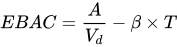
where:
- EBAC is the estimated blood alcohol concentration (in g/L)
- A is the mass of alcohol consumed (g).
- T is the amount of time during which alcohol was present in the blood (usually time since consumption began), in hours.
- β is the rate at which alcohol is eliminated, averaging around 0.15 g/L/hr.[32]
- Vd is the volume of distribution (L); typically body weight (kg) multiplied by 0.71 L/kg for men and 0.58 L/kg for women[33][34] although estimation using TBW is more accurate.[35]
A standard drink, defined by the WHO as 10 grams of pure alcohol,[36] is the most frequently used measure in many countries. Examples:
- An 80 kg man drinks 20 grams ethanol. After one hour:

- A 70 kg woman drinks 10 grams of ethanol. After one hour:

In terms of fluid ounces of alcohol consumed and weight in pounds, Widmark's formula can be simply approximated as[27]

for a man or

for a woman, where EBAC and β factors are given as g/dL (% BAC), such as a β factor of 0.015% BAC per hour.[27]
By standard drinks
[edit]
This assumes a US standard drink, i.e. 0.6 US fl oz (17.7 mL) or 14 g (0.5 oz) of ethanol, whereas other definitions exist, for example 10 grams of ethanol.
| Drinks | Sex | Body weight | ||||||||
|---|---|---|---|---|---|---|---|---|---|---|
| 45 kg 100 lb |
55 kg 120 lb |
64 kg 140 lb |
73 kg 160 lb |
82 kg 180 lb |
91 kg 200 lb |
100 kg 220 lb |
109 kg 240 lb | |||
| 1 | Male | – | 0.04 | 0.03 | 0.03 | 0.02 | 0.02 | 0.02 | 0.02 | 0.02 |
| Female | 0.05 | 0.05 | 0.04 | 0.03 | 0.03 | 0.03 | 0.02 | 0.02 | 0.02 | |
| 2 | Male | – | 0.08 | 0.06 | 0.05 | 0.05 | 0.04 | 0.04 | 0.03 | 0.03 |
| Female | 0.10 | 0.09 | 0.08 | 0.07 | 0.06 | 0.05 | 0.05 | 0.04 | 0.04 | |
| 3 | Male | – | 0.11 | 0.09 | 0.08 | 0.07 | 0.06 | 0.06 | 0.05 | 0.05 |
| Female | 0.15 | 0.14 | 0.11 | 0.10 | 0.09 | 0.08 | 0.07 | 0.06 | 0.06 | |
| 4 | Male | – | 0.15 | 0.12 | 0.11 | 0.09 | 0.08 | 0.08 | 0.07 | 0.06 |
| Female | 0.20 | 0.18 | 0.15 | 0.13 | 0.11 | 0.10 | 0.09 | 0.08 | 0.08 | |
| 5 | Male | – | 0.19 | 0.16 | 0.13 | 0.12 | 0.11 | 0.09 | 0.09 | 0.08 |
| Female | 0.25 | 0.23 | 0.19 | 0.16 | 0.14 | 0.13 | 0.11 | 0.10 | 0.09 | |
| 6 | Male | – | 0.23 | 0.19 | 0.16 | 0.14 | 0.13 | 0.11 | 0.10 | 0.09 |
| Female | 0.30 | 0.27 | 0.23 | 0.19 | 0.17 | 0.15 | 0.14 | 0.12 | 0.11 | |
| 7 | Male | – | 0.26 | 0.22 | 0.19 | 0.16 | 0.15 | 0.13 | 0.12 | 0.11 |
| Female | 0.35 | 0.32 | 0.27 | 0.23 | 0.20 | 0.18 | 0.16 | 0.14 | 0.13 | |
| 8 | Male | – | 0.30 | 0.25 | 0.21 | 0.19 | 0.17 | 0.15 | 0.14 | 0.13 |
| Female | 0.40 | 0.36 | 0.30 | 0.26 | 0.23 | 0.20 | 0.18 | 0.17 | 0.15 | |
| 9 | Male | – | 0.34 | 0.28 | 0.24 | 0.21 | 0.19 | 0.17 | 0.15 | 0.14 |
| Female | 0.45 | 0.41 | 0.34 | 0.29 | 0.26 | 0.23 | 0.20 | 0.19 | 0.17 | |
| 10 | Male | – | 0.38 | 0.31 | 0.27 | 0.23 | 0.21 | 0.19 | 0.17 | 0.16 |
| Female | 0.51 | 0.45 | 0.38 | 0.32 | 0.28 | 0.25 | 0.23 | 0.21 | 0.19 | |
| Subtract approximately 0.01 every 40 minutes after drinking. | ||||||||||
By training
[edit]If individuals are asked to estimate their BAC, then given accurate feedback via a breathalyzer, and this procedure is repeated a number of times during a drinking session, studies show that these individuals can learn to discriminate their BAC, to within a mean error of 9 mg/100 mL (0.009% BAC).[38] The ability is robust to different types of alcohol, different drink quantities, and drinks with unknown levels of alcohol. Trained individuals can even drink alcoholic drinks so as to adjust or maintain their BAC at a desired level.[39] Training the ability does not appear to require any information or procedure besides breathalyzer feedback, although most studies have provided information such as intoxication symptoms at different BAC levels. Subjects continue to retain the ability one month after training.[40]
Post-mortem
[edit]After fatal accidents, it is common to check the blood alcohol levels of involved persons. However, soon after death, the body begins to putrefy, a biological process which produces ethanol. This can make it difficult to conclusively determine the blood alcohol content in autopsies, particularly in bodies recovered from water.[41][42][43][44] For instance, following the 1975 Moorgate tube crash, the driver's kidneys had a blood alcohol concentration of 80 mg/100 mL, but it could not be established how much of this could be attributed to natural decomposition.[45] Newer research has shown that vitreous (eye) fluid provides an accurate estimate of blood alcohol concentration that is less subject to the effects of decomposition or contamination.[46]
Legal limits
[edit]
For purposes of law enforcement, blood alcohol content is used to define intoxication and provides a rough measure of impairment. Although the degree of impairment may vary among individuals with the same blood alcohol content, it can be measured objectively and is therefore legally useful and difficult to contest in court. Most countries forbid operation of motor vehicles and heavy machinery above prescribed levels of blood alcohol content. Operation of boats and aircraft is also regulated. Some jurisdictions also regulate bicycling under the influence. The alcohol level at which a person is considered legally impaired to drive varies by country.
Test assumptions
[edit]Extrapolation
[edit]Retrograde extrapolation is the mathematical process by which someone's blood alcohol concentration at the time of driving is estimated by projecting backwards from a later chemical test. This involves estimating the absorption and elimination of alcohol in the interim between driving and testing. The rate of elimination in the average person is commonly estimated at 0.015 to 0.020 grams per deciliter per hour (g/dL/h),[47] although again this can vary from person to person and in a given person from one moment to another. Metabolism can be affected by numerous factors, including such things as body temperature, the type of alcoholic beverage consumed, and the amount and type of food consumed.
In an increasing number of states, laws have been enacted to facilitate this speculative task: the blood alcohol content at the time of driving is legally presumed to be the same as when later tested. There are usually time limits put on this presumption, commonly two or three hours, and the defendant is permitted to offer evidence to rebut this presumption.[citation needed]
Forward extrapolation can also be attempted. If the amount of alcohol consumed is known, along with such variables as the weight and sex of the subject and period and rate of consumption, the blood alcohol level can be estimated by extrapolating forward. Although subject to the same infirmities as retrograde extrapolation—guessing based upon averages and unknown variables—this can be relevant in estimating BAC when driving and/or corroborating or contradicting the results of a later chemical test.[original research?]
Metabolism
[edit]The pharmacokinetics of ethanol are well characterized by the ADME acronym (absorption, distribution, metabolism, excretion). Besides the dose ingested, factors such as the person's total body water, speed of drinking, the drink's nutritional content, and the contents of the stomach all influence the profile of blood alcohol content (BAC) over time. Breath alcohol content (BrAC) and BAC have similar profile shapes, so most forensic pharmacokinetic calculations can be done with either. Relatively few studies directly compare BrAC and BAC within subjects and characterize the difference in pharmacokinetic parameters. Comparing arterial and venous BAC, arterial BAC is higher during the absorption phase and lower in the postabsorptive declining phase.[48]
Highest levels
[edit]According to Guinness World Records, the 2013 incident where a BAC of 1.374% (13.74 g/L) was recorded is the highest BAC recorded in a human who survived the ordeal.[49]
| Date | BAC (%) | Location | Description | Result (died or survived) | Cause of Death (If Died) |
|---|---|---|---|---|---|
| 1982 | 1.33 BAC, approximated from 1.51 SAC | Los Angeles, California, USA | A 24-year-old woman was admitted to the UCLA emergency room with a serum alcohol content of 1.51%, corresponding to a blood alcohol content of 1.33%. She was alert and oriented to person and place and survived.[50] Serum alcohol concentration is not equal to nor calculated in the same way as blood alcohol content.[51] | Survived | |
| 1984 | 1.50 | A 30-year-old man survived a blood alcohol concentration of 1.5% after vigorous medical intervention that included dialysis and intravenous therapy with fructose.[52] | Survived | ||
| 1995 | 1.48 | Wrocław, Poland | In 1995, a man from Wrocław, Poland, caused a car crash near his hometown. He had a blood alcohol content of 1.48%; he was tested five times, with each test returning the same reading. He died a few days later of injuries from the accident.[53] | Died | Injuries from a car crash |
| 2004 | 1.35 | Taiwan | In 2004, an unidentified Taiwanese woman died of alcohol intoxication after immersion for twelve hours in a bathtub filled with 40% ethanol. Her blood alcohol content was 1.35%. It was believed that she had immersed herself as a response to the early 2000s outbreak of SARS.[54] | Died | Alcohol intoxication |
| 22 Dec 2010 | 1.60 | Queenstown, South Africa | In South Africa, a man driving a Mercedes-Benz Vito light van containing 15 sheep allegedly stolen from nearby farms was arrested on 22 December 2010, near Queenstown in Eastern Cape. His blood had an alcohol content of 1.6%. Also in the vehicle were five boys and a woman, who were also arrested.[55][dubious – discuss] | Survived | |
| 26 Oct 2012 | 2.23 (possible contamination) | Gmina Olszewo-Borki, Poland | A man died in a car crash, recorded a blood alcohol content of 2.23%; however, the blood sample was collected from a wound and thus possibly contaminated.[53] | Died | Injuries from a car crash |
| 26 July 2013 | 1.374 | Alfredówka, Poland | A 30-year-old man from Alfredówka, Poland, was found unconscious by Municipal Police Patrol from Nowa Dęba lying in the ditch along the road in Tarnowska Wola. First responders reportedly did not believe the initial BAC readings taken at the scene. At the hospital, it was recorded that the man had a blood alcohol content of 1.374%. The man survived.[56][57][49] | Survived |
Notes
[edit]References
[edit]Citations
[edit]- ^ a b c "Blood Alcohol Level". MedlinePlus. National Library of Medicine. 3 December 2020. Archived from the original on 27 May 2023. Retrieved 25 December 2019.
- ^ a b "Legal BAC limits by country". World Health Organization. Archived from the original on 19 February 2015. Retrieved 12 November 2023.
- ^ "Drink-drivers in Nepal face the 'smell test' crackdown". Yahoo News. 22 July 2012.
- ^ "BAC Formats" (PDF). Retrieved 3 November 2023.
- ^ a b c d e f g h i j k Jones, A. W. (July 2011). "Pharmacokinetics of Ethanol – Issues of Forensic Importance". Forensic Science Review. 23 (2): 91–136. PMID 26231237.
- ^ "Blood alcohol levels". Alcohol and Drug Foundation (Australia). 8 February 2022 [Original date 14 February 2017]. Archived from the original on 2 June 2023. Retrieved 21 July 2022.
- ^ "Blood Alcohol Concentration (BAC)". Mothers Against Drunk Driving (MADD Canada). n.d. Archived from the original on 21 July 2022. Retrieved 21 July 2022.
- ^ "Blood alcohol level (BAL)". Health Research Board (Ireland).
- ^ "artikel 8, tweede lid, van de Wegenverkeerswet 1994". 21 February 2025.
- ^ "Met hoeveel alcohol mag ik deelnemen aan het verkeer?". 21 February 2025.
- ^ Lasota, Dorota; Staniszewska, Anna; Tarchalska-Kryńska, Bożena; Mirowska-Guzel, Dagmara; Krajewski, Paweł (15 October 2019). "Nietrzeźwość a ryzyko zgonu w wypadku komunikacyjnym = Insobriety and the risk of death in traffic accident | Journal of Education, Health and Sport". Journal of Education, Health and Sport (in Polish). 5 (6): 419–432. Archived from the original on 17 August 2024. Retrieved 17 August 2024.
- ^ "The drink drive limit". GOV.UK. Archived from the original on 3 October 2012. Retrieved 3 November 2023.
- ^ "Drink-driving: What are the rules?". www.ch.ch.
- ^ Nager, Anna (4 May 2020). "Alkoholpromille, beräkning" [Calculation of alcohol per mille]. Netdoktor (in Swedish). Archived from the original on 4 May 2024. Retrieved 13 April 2024.
I detta sammanhang räknar man med att 1 liter blod väger 1 kilo.
[In this context, it is assumed that 1 liter of blood weighs 1 kilogram.] - ^ "Ethanol". pubchem.ncbi.nlm.nih.gov. Archived from the original on 21 December 2022. Retrieved 3 November 2023.
- ^ a b c The Centers for Disease Control and Prevention (April 2008). "Quick Stats: Binge Drinking". Archived from the original on 18 April 2023.
- ^ a b c Dasgupta, Amitava (1 January 2017), "Alcohol a double-edged sword: Health benefits with moderate consumption but a health hazard with excess alcohol intake", in Dasgupta, Amitava (ed.), Alcohol, Drugs, Genes and the Clinical Laboratory: An Overview for Healthcare and Safety Professionals, Academic Press, pp. 1–21, doi:10.1016/b978-0-12-805455-0.00001-4, ISBN 978-0-12-805455-0, archived from the original on 16 January 2023, retrieved 24 May 2023
- ^ a b c Haghparast, Parna; Tchalikian, Tina N. (1 January 2022), "Alcoholic beverages and health effects", Reference Module in Biomedical Sciences, Elsevier, doi:10.1016/b978-0-12-824315-2.00244-x, ISBN 978-0-12-801238-3, retrieved 24 May 2023
- ^ Dunn, Richard A.; Tefft, Nathan W. (2014). "Has Increased Body Weight Made Driving Safer?". Health Economics. 23 (11): 1374–1389. doi:10.1002/hec.2991. PMC 4135023. PMID 24038409.
- ^ a b Dubowski, Kurt M. (1 November 1980). "Alcohol Determination in the Clinical Laboratory". American Journal of Clinical Pathology. 74 (5): 747–750. doi:10.1093/ajcp/74.5.747. PMID 7446484.
- ^ Zamengo, Luca; Tedeschi, Gianpaola; Frison, Giampietro; Griffoni, Carlo; Ponzin, Diego; Jones, Alan Wayne (1 February 2019). "Inter-laboratory proficiency results of blood alcohol determinations at clinical and forensic laboratories in Italy". Forensic Science International. 295: 213–218. doi:10.1016/j.forsciint.2018.12.018. ISSN 0379-0738. PMID 30611561. S2CID 58591654.
- ^ "Hospital Blood Alcohol Lab Results: Are They Forensically Reliable?". Law Offices of Christopher L. Baxter. 30 April 2020.
- ^ Jones, Alan Wayne (22 March 2024). "Concentration units used to report blood- and breath-alcohol concentration for legal purposes differ between countries which is important to consider when blood/breath ratios of alcohol are compared and contrasted". Journal of Forensic Sciences. 69 (4): 1473–1480. doi:10.1111/1556-4029.15511. PMID 38520069.
- ^ Lindberg, L.; Brauer, S.; Wollmer, P.; Goldberg, L.; Jones, A. W.; Olsson, S. G. (May 2007). "Breath alcohol concentration determined with a new analyzer using free exhalation predicts almost precisely the arterial blood alcohol concentration". Forensic Science International. 168 (2–3): 200–207. doi:10.1016/j.forsciint.2006.07.018. PMID 16978819.
- ^ Jones, A. W.; Cowan, J. M. (3 August 2020). "Reflections on variability in the blood-breath ratio of ethanol and its importance when evidential breath-alcohol instruments are used in law enforcement". Forensic Sciences Research. 5 (4): 300–308. doi:10.1080/20961790.2020.1780720. PMC 7782040. PMID 33457048.
- ^ Williams, Paul M. (1 December 2018). "Current defence strategies in some contested drink-drive prosecutions: Is it now time for some additional statutory assumptions?". Forensic Science International. 293: e5 – e9. doi:10.1016/j.forsciint.2018.09.030. PMID 30342920.
- ^ a b c Kuwatch, Ed. "Fast Eddie's 8/10 Method of Hand Calculating Blood Alcohol Concentration: A Simple Method For Using Widmark's Formula". Archived from the original on 2 December 2003.
- ^ Zuba, Dariusz; Piekoszewski, Wojciech (2004). "Uncertainty in Theoretical Calculations of Alcohol Concentration". Proceedings of the 17th International Conference on Alcohol, Drugs and Traffic Safety.
- ^ Gullberg, Rod G. (October 2007). "Estimating the uncertainty associated with Widmark's equation as commonly applied in forensic toxicology". Forensic Science International. 172 (1): 33–39. doi:10.1016/j.forsciint.2006.11.010. PMID 17210238.
- ^ Searle, John (January 2015). "Alcohol calculations and their uncertainty". Medicine, Science and the Law. 55 (1): 58–64. doi:10.1177/0025802414524385. PMC 4361698. PMID 24644224.
- ^ Maskell, Peter D.; Jones, A. Wayne; Heymsfield, Steven B.; Shapses, Sue; Johnston, Atholl (November 2020). "Total body water is the preferred method to use in forensic blood-alcohol calculations rather than ethanol's volume of distribution". Forensic Science International. 316 110532. doi:10.1016/j.forsciint.2020.110532. PMID 33099270. S2CID 224966411.
- ^ Jones, Alan Wayne (July 2010). "Evidence-based survey of the elimination rates of ethanol from blood with applications in forensic casework". Forensic Science International. 200 (1–3): 1–20. doi:10.1016/j.forsciint.2010.02.021. PMID 20304569.
- ^ Maskell, Peter D.; Heymsfield, Steven B.; Shapses, Sue; Limoges, Jennifer F. (September 2023). "Population ranges for the volume of distribution (V_d) of alcohol for use in forensic alcohol calculations". Journal of Forensic Sciences. 68 (5): 1843–1845. doi:10.1111/1556-4029.15317. PMID 37345356.
- ^ Maskell, Peter D.; Cooper, Gail A. A. (September 2020). "The Contribution of Body Mass and Volume of Distribution to the Estimated Uncertainty Associated with the Widmark Equation". Journal of Forensic Sciences. 65 (5): 1676–1684. doi:10.1111/1556-4029.14447. PMID 32421216. S2CID 218677989.
- ^ Maskell, Peter D.; Jones, A. Wayne; Heymsfield, Steven B.; Shapses, Sue; Johnston, Atholl (November 2020). "Total body water is the preferred method to use in forensic blood-alcohol calculations rather than ethanol's volume of distribution". Forensic Science International. 316 110532. doi:10.1016/j.forsciint.2020.110532. PMID 33099270. S2CID 224966411.
- ^ "AUDIT The Alcohol Use Disorders Identification Test (Second Edition)" (pdf). WHO. 2001. Archived (PDF) from the original on 20 January 2022. Retrieved 2 January 2020.
- ^ BAC Charts Archived 30 June 2007 at the Wayback Machine from Virginia Tech
- ^ Huber, H.; Karlin, R.; Nathan, P. E. (January 1976). "Blood alcohol level discrimination by nonalcoholics. The role of internal and external cues". Journal of Studies on Alcohol. 37 (1): 27–39. doi:10.15288/jsa.1976.37.27. PMID 2811.
- ^ Rowan, D. C. (March 1978). "The Role of Blood Alcohol Level Estimation in Training Alcoholics to become Controlled Drinkers". British Journal of Addiction to Alcohol & Other Drugs. 73 (3): 316–318. doi:10.1111/j.1360-0443.1978.tb00159.x. PMID 280356.
- ^ Kelly, Alexandra R.; Fillmore, Mark T. (24 August 2023). "Use of mindfulness training to improve BAC self-estimation during a drinking episode". Psychology of Addictive Behaviors. 38 (3): 305–314. doi:10.1037/adb0000955. PMC 10907993. PMID 37616096. S2CID 261098937.
- ^ Kugelberg, Fredrik C.; Jones, Alan Wayne (5 January 2007). "Interpreting results of ethanol analysis in postmortem specimens: A review of the literature". Forensic Science International. 165 (1): 10–27. doi:10.1016/j.forsciint.2006.05.004. PMID 16782292. Archived from the original on 20 March 2022. Retrieved 20 May 2020.
- ^ Xie, Y.; Deng, Z. H. (2010). "Analysis of alcohol mass concentration in corpse blood". Fa Yi Xue Za Zhi. 26 (1): 59–63. PMID 20232748.
- ^ Felby, S.; Nielsen, E. (1993). "Postmortem blood alcohol concentration". Blutalkohol. 30 (4): 244–250. PMID 8373563.
- ^ Cowan, Dallas M.; Maskrey, Joshua R.; Fung, Ernest S.; Woods, Tyler A.; Stabryla, Lisa M.; Scott, Paul K.; Finley, Brent L. (2016). "Best-practices approach to determination of blood alcohol concentration (BAC) at specific time points: Combination of ante-mortem alcohol pharmacokinetic modeling and post-mortem alcohol generation and transport considerations". Regulatory Toxicology and Pharmacology. 78: 24–36. doi:10.1016/j.yrtph.2016.03.020. PMID 27041394. Archived from the original on 18 July 2023. Retrieved 31 March 2022.
- ^ "Moorgate Alcohol Finding". The Guardian. 16 April 1975. p. 24.
- ^ Savini, F.; Tartaglia, A.; Coccia, L.; Palestini, D.; D'Ovidio, C.; de Grazia, U.; Merone, G. M.; Bassotti, E.; Locatelli, M. (12 June 2020). "Ethanol Determination in Post-Mortem Samples: Correlation between Blood and Vitreous Humor Concentration". Molecules. 25 (12). Basel, Switzerland: 2724. doi:10.3390/molecules25122724. PMC 7355602. PMID 32545471.
- ^ Montgomery, Mark R.; Reasor, Mark J. (1992). "Retrograde extrapolation of blood alcohol data: An applied approach". Journal of Toxicology and Environmental Health. 36 (4): 281–92. Bibcode:1992JTEHA..36..281M. doi:10.1080/15287399209531639. PMID 1507264.
- ^ Jones, Alan W. (September 2019). "Alcohol, its absorption, distribution, metabolism, and excretion in the body and pharmacokinetic calculations". WIREs Forensic Science. 1 (5) e1340. doi:10.1002/wfs2.1340.
- ^ a b "Highest blood alcohol level". Guinness World Records. Archived from the original on 7 December 2024. Retrieved 6 December 2024.
- ^ Johnson, R (1982). "Survival After a Serum Ethanol Concentration of 11/2%". The Lancet. 320 (8312): 1394. doi:10.1016/S0140-6736(82)91285-5. PMID 6129476. S2CID 27551241.
- ^ Labianca, Dominick A. (2002). "Conversion of Serum-Alcohol Concentrations to Corresponding Blood-Alcohol Concentrations". Journal of Chemical Education. 79 (7): 803. Bibcode:2002JChEd..79..803L. doi:10.1021/ed079p803.
- ^ O'Neill, Shane; Tipton, KF; Prichard, JS; Quinlan, A (1984). "Survival After High Blood Alcohol Levels: Association with First-Order Elimination Kinetics". Archives of Internal Medicine. 144 (3): 641–2. doi:10.1001/archinte.1984.00350150255052. PMID 6703836.
- ^ a b Łuba, Marcin (24 October 2012). "Śmiertelny rekord: Kierowca z powiatu ostrołęckiego miał 22 promile alkoholu! Zginął w wypadku". eOstroleka.pl (in Polish). Archived from the original on 21 April 2023. Retrieved 4 November 2017.
- ^ Wu, Yen-Liang; Guo, How-Ran; Lin, Hung-Jung (2005). "Fatal alcohol immersion during the SARS epidemic in Taiwan". Forensic Science International. 149 (2–3): 287. doi:10.1016/j.forsciint.2004.06.014. PMC 7131152. PMID 15749375.
- ^ Mashaba, Sibongile (24 December 2010). "Drunkest driver in SA arrested". Sowetan. Archived from the original on 31 March 2022. Retrieved 31 March 2022.
- ^ "Miał 13,74 promila alkoholu we krwi. I przeżył. Rekord świata?" [He had 13.74 blood alcohol levels. And he survived. World record?]. Archived from the original on 11 August 2013. Retrieved 8 August 2013.
- ^ "Informacje". Archived from the original on 18 April 2023. Retrieved 8 August 2013.
General and cited references
[edit]- Carnegie Library of Pittsburgh. Science and Technology Department. The Handy Science Answer Book. Pittsburgh: The Carnegie Library, 1997. ISBN 978-0-7876-1013-5.
- Perham, Nick; Moore, Simon C.; Shepherd, Jonathan; Cusens, Bryany (2007). "Identifying drunkenness in the night-time economy". Addiction. 102 (3): 377–80. doi:10.1111/j.1360-0443.2006.01699.x. PMID 17298644.
- Taylor, L., and S. Oberman. Drunk Driving Defense, 6th edition. New York: Aspen Law and Business, 2006. ISBN 978-0-7355-5429-0.
External links
[edit]

| International | |
|---|---|
| National | |
| Other | |

Blood alcohol content
View on GrokipediaFundamentals
Definition and Physiological Role
Blood alcohol content (BAC), also referred to as blood alcohol concentration, quantifies the mass of ethanol present in a given volume of blood, typically expressed as grams of ethanol per deciliter (g/dL) or as a percentage by weight/volume (w/v), where 0.08% BAC indicates 0.08 g of ethanol per 100 mL of blood.[2][1] This metric directly correlates with the amount of ethanol available for diffusion into tissues, including the brain, where it exerts pharmacological effects.[10] BAC levels rise post-ingestion based on dose, body composition, and other factors, serving as a proxy for systemic alcohol exposure in medical, forensic, and legal contexts.[3] Ethanol, the primary alcohol in beverages, holds no essential physiological role in human metabolism, functioning instead as a xenobiotic toxin that the body detoxifies via enzymatic pathways.[11] Liver alcohol dehydrogenase (ADH) oxidizes ethanol to acetaldehyde, a reactive intermediate, which is further converted by aldehyde dehydrogenase (ALDH) to acetate for integration into energy pathways; this process evolved partly to handle low-level endogenous alcohols from gut microbiota but primarily mitigates ethanol's disruptive effects when consumed exogenously.[12][11] At typical intoxicating doses, ethanol distributes rapidly across body water compartments due to its low molecular weight and lipophilicity, achieving equilibrium concentrations in the brain that drive its actions.[13] As a central nervous system (CNS) depressant, ethanol's primary physiological interaction involves modulating neurotransmitter systems, potentiating inhibitory gamma-aminobutyric acid (GABA) signaling while suppressing excitatory glutamate transmission, which collectively impairs neural excitability, cognition, and motor control in a dose-dependent manner tied to BAC.[14][13] This depressant effect manifests first as mild euphoria or disinhibition at low BAC (e.g., 0.02–0.05%) but progresses to sedation, ataxia, and respiratory depression at higher levels (e.g., above 0.15%), reflecting ethanol's interference with ion channels and synaptic transmission rather than any adaptive or beneficial function.[14] Chronic exposure can induce tolerance via neuroadaptations, but acute intoxication underscores ethanol's net inhibitory role on CNS homeostasis.[15]Units of Measurement
Blood alcohol content (BAC) is quantified as the mass of ethanol per unit volume of blood, most commonly expressed in the United States and several other countries as grams of ethanol per 100 milliliters (g/100 mL) of blood, equivalent to a percentage by weight/volume (% w/v).[16][17] A BAC of 0.08% thus denotes 0.08 grams of ethanol per 100 mL of blood, a threshold often used in legal contexts for driving impairment.[18] This unit derives from direct blood analysis, where ethanol concentration is measured via techniques like gas chromatography, standardized against volume assumptions of whole blood or serum.[19] In many European and international settings, BAC is reported in grams per liter (g/L) or equivalently as per mille (‰), where 1 g/L equals 0.1% w/v; for instance, a 0.08% BAC corresponds to 0.8 g/L or 0.8‰.[20] This metric aligns with SI-derived units like kilograms per cubic meter (kg/m³), though g/L predominates in forensic and medical toxicology for its practicality in breath-blood correlations.[21] Serum ethanol levels, often reported in milligrams per deciliter (mg/dL), convert directly to BAC by dividing by 10 (e.g., 80 mg/dL serum ≈ 0.08 g/dL BAC), accounting for minor differences in serum versus whole blood partitioning.[19]| Unit | Description | Equivalent to 0.08 g/100 mL BAC |
|---|---|---|
| g/100 mL (% w/v) | Grams of ethanol per 100 mL blood | 0.08 |
| g/L (‰) | Grams of ethanol per liter of blood | 0.8 |
| mg/dL | Milligrams of ethanol per deciliter of blood/serum | 80 |
| mg/L | Milligrams of ethanol per liter of blood | 800 |
Physiology
Absorption and Distribution
Ethanol, the primary alcohol in beverages, is absorbed into the bloodstream primarily through the gastrointestinal tract, with approximately 20% absorbed in the stomach and the majority (around 80%) in the small intestine due to its larger surface area.[4][23] The rate of absorption depends on gastric emptying time; higher alcohol concentrations (e.g., spirits) and carbonated beverages accelerate emptying and thus absorption, while food, particularly fats and proteins, delays it by slowing gastric motility.[24][23] Peak blood alcohol concentration (BAC) typically occurs 30-90 minutes after ingestion on an empty stomach, but can be delayed up to 2-3 hours with food.[25] Once absorbed, ethanol diffuses rapidly across cell membranes and distributes evenly throughout total body water (TBW), which constitutes about 60% of body weight in lean adult males and 50-55% in females due to differences in body fat and muscle mass.[23][26] The volume of distribution (Vd) is approximately 0.6 L/kg in men and 0.5 L/kg in women, reflecting lower TBW proportion in females and higher fat content, which sequesters less water-soluble ethanol.[27] Equilibrium between blood and tissues like the brain occurs within minutes, exposing organs with high water content (e.g., brain at ~80% water) to concentrations similar to blood levels.[4][26] Factors such as obesity reduce effective Vd per body weight, leading to higher BAC for equivalent ethanol doses in heavier individuals with higher fat proportions.[23]Metabolism and Elimination
Ethanol is predominantly metabolized in the liver via oxidative processes, accounting for approximately 90-98% of elimination. The primary pathway involves alcohol dehydrogenase (ADH), a cytosolic enzyme that oxidizes ethanol to acetaldehyde using nicotinamide adenine dinucleotide (NAD+) as a cofactor, producing NADH.[12] [28] Acetaldehyde, a toxic intermediate, is then oxidized to acetate by aldehyde dehydrogenase (ALDH), primarily the mitochondrial ALDH2 isoform, again reducing NAD+ to NADH.[12] [29] Acetate enters the bloodstream and is further broken down in peripheral tissues via acetyl-CoA synthetase to acetyl-CoA, which feeds into the tricarboxylic acid cycle for complete oxidation to carbon dioxide and water.[12] Minor metabolic routes include the microsomal ethanol-oxidizing system (MEOS), involving cytochrome P450 2E1 (CYP2E1), and peroxisomal catalase, which contribute less than 10% under normal conditions but increase with high ethanol concentrations, chronic consumption, or ADH inhibition.[30] [31] These alternative pathways generate reactive oxygen species, contributing to oxidative stress and hepatic damage.[30] Ethanol elimination exhibits zero-order kinetics at blood alcohol concentrations (BAC) typically encountered in social drinking (above ~0.02 g/100 mL), meaning a fixed amount is cleared per unit time rather than a fixed proportion, due to saturation of metabolic enzymes.[11] [32] The average elimination rate is 0.015-0.017 g/100 mL of blood per hour in adults, equivalent to metabolizing about 7-10 grams of pure ethanol hourly (corresponding to approximately 0.1 g/h/kg body weight, or about 7 g/h for a 70 kg person, though rates vary widely, typically 0.07–0.14 g/h/kg, due to factors like genetics, sex, age, nutrition, and liver function),[33] or roughly one standard drink (14 grams ethanol) per hour under fasting conditions.[11] [12] This equates to approximately one UK alcohol unit (8 grams of ethanol) per hour. For example, the alcohol from a standard 0.5-liter bottle of beer (4-5% ABV, containing about 20-25 grams of pure ethanol) is typically fully metabolized in 2 to 5 hours, varying by factors including body weight, gender, age, metabolism rate, and food intake. For instance, four 440 ml servings of 4% ABV lager contain approximately 7.2 UK units of alcohol, which the body metabolizes at this average rate, typically taking around 7-8 hours to eliminate completely; however, this varies by factors such as body size, gender, food intake, metabolism, and liver health, and absorption time (up to 1 hour) may add to the total. There is no reliable way to speed up the process.[34] Consequently, the time for alcohol to fully clear the bloodstream typically ranges from 6 to 24 hours, varying by initial BAC, amount consumed, and individual factors such as body weight and liver function.[12] This rate shifts toward first-order kinetics at very low BAC levels (<0.02 g/100 mL), where elimination becomes concentration-dependent.[35] Factors such as body temperature, meal timing, and enzyme induction from chronic exposure can modulate this rate by up to 20-30%, though hepatic capacity remains the primary limiter.[11] The non-metabolized fraction (2-10%) is excreted unchanged: about 1-2% via pulmonary exhalation (basis for breath testing), 2-5% in urine, and trace amounts in sweat and saliva.[36] [37] Urinary excretion correlates with hydration and glomerular filtration, while breath elimination follows Henry's law partitioning between blood and alveolar air.[37] No significant extrahepatic metabolism occurs in meaningful quantities for pure ethanol clearance.[30]Effects
Impairment Levels by BAC
Impairment from alcohol consumption is primarily dose-dependent, with blood alcohol concentration (BAC) serving as a reliable proxy for the severity of effects on cognitive, motor, sensory, and behavioral functions. Physiological and behavioral studies indicate that alcohol depresses central nervous system activity, leading to progressive deficits starting at low BAC levels. For example, crash risk begins to elevate at BACs around 0.02%, with relative risk increasing exponentially thereafter; drivers at 0.05% BAC exhibit measurable declines in steering precision and lane-keeping, equivalent to impairments from moderate sleep deprivation. These effects stem from alcohol's interference with neurotransmitter systems, particularly GABA enhancement and glutamate inhibition, causing causal disruptions in neural signaling for executive function and psychomotor control.[38][39][40] The following table summarizes typical impairment levels across BAC ranges, based on aggregated data from controlled laboratory, simulator, and epidemiological studies. Effects vary by individual factors such as body weight, tolerance, and consumption rate, but population-level patterns hold: virtually all drivers show degraded performance at 0.05% BAC or higher, with no safe threshold below which impairment is absent, and the safest blood alcohol level for driving is 0.00% to avoid any degree of impairment.[38][41][42]| BAC Range (g/dL) | Primary Impairment Effects |
|---|---|
| 0.00–0.02 | Minimal subjective effects; subtle deficits in fine motor control, reaction time, and divided attention detectable in sensitive tests, but often unnoticed; crash risk slightly elevated in novice drivers.[39][1] |
| 0.03–0.05 | Mild euphoria, relaxation, or talkativeness; reduced inhibitions and caution; impaired peripheral vision, tracking ability, and coordination; driving errors increase, including delayed braking and poor hazard detection.[38][41] |
| 0.06–0.09 | Noticeable judgment deficits, slowed reaction times, and balance issues; slurred speech, emotional volatility; significant driving impairment, such as increased lane deviation (e.g., 4 cm standard deviation in lateral position at 0.07%) and 4–12 times higher crash odds versus sober.[2][43][1] |
| 0.10–0.19 | Marked disorientation, poor muscle coordination, and memory lapses; vomiting possible; severe psychomotor slowing, with drivers 10–25 times more likely to crash; legal intoxication threshold in many jurisdictions reflects this range's risks.[2][1] |
| 0.20–0.29 | Severe intoxication with stupor, confusion, disorientation, drowsiness, vomiting, nausea; major loss of motor control and balance (often requiring assistance to walk), blackouts, urinary incontinence, impaired gag reflex (increasing choking risk on vomit); involuntary eye movements (nystagmus); high risk of falls, injury, alcohol poisoning, and life-threatening outcomes; motor functions severely compromised, rendering safe operation of vehicles or machinery impossible.[2][41][44] |
| 0.30+ | Potential coma, respiratory depression, or death; complete loss of consciousness and reflexes; survival depends on rapid intervention, as BACs above 0.40% are often fatal without medical support.[2][41] |
Variability and Tolerance Factors
Blood alcohol concentration (BAC) varies significantly among individuals consuming equivalent amounts of alcohol due to differences in absorption, distribution, and elimination kinetics. Women typically achieve higher peak BAC levels than men after the same dose, primarily because females have a lower total body water volume—approximately 7.3% less—resulting in less dilution of ethanol, alongside higher proportions of body fat which does not readily absorb alcohol.[45] [46] Individuals with higher body fat percentages reach elevated BAC for a given intake compared to those with higher lean mass, as ethanol distributes preferentially into aqueous compartments rather than adipose tissue.[47] Food in the stomach delays gastric emptying and slows alcohol absorption into the bloodstream, reducing peak BAC by up to 50% when a substantial meal precedes or accompanies drinking, with proteins and fats exerting stronger inhibitory effects than carbohydrates.[48] [49] Genetic polymorphisms in alcohol-metabolizing enzymes further contribute to inter-individual variability. Variants in alcohol dehydrogenase (ADH) genes, such as those encoding faster ethanol-to-acetaldehyde conversion, accelerate initial metabolism and lower BAC peaks, while aldehyde dehydrogenase (ALDH) deficiencies—prevalent in East Asian populations—prolong acetaldehyde exposure but can deter heavy consumption; however, efficient ALDH activity hastens overall clearance.[50] [51] Chronic liver conditions or enzyme induction from repeated exposure can elevate elimination rates, though baseline hepatic capacity varies by age and health status.[52] Tolerance to alcohol's effects develops through multiple mechanisms, altering the relationship between BAC and impairment without necessarily changing the concentration itself. Metabolic tolerance arises from upregulated ADH and cytochrome P450 enzymes in heavy drinkers, increasing ethanol clearance rates by 20-100% over time, thus requiring higher doses for equivalent BAC.[53] Cellular and pharmacodynamic tolerance involves neuroadaptations, such as downregulation of GABA_A receptors and upregulation of glutamate systems in the brain, reducing sedative and motor effects at a given BAC; this can manifest acutely within a single session or chronically after weeks of exposure.[54] Behavioral tolerance, learned through experience, enables compensated performance despite elevated BAC, though it does not mitigate objective physiological risks like impaired reaction times.[55] These factors underscore that standard BAC thresholds underestimate impairment in tolerant individuals, complicating legal and health assessments.[54]Determination Methods
Direct Blood Testing
Direct blood testing measures blood alcohol concentration (BAC) by analyzing a venous blood sample for ethanol content, serving as the reference standard in clinical and forensic contexts due to its direct quantification and minimal susceptibility to extraneous factors like oral contamination.[56] Samples are typically collected via venipuncture from the antecubital vein into vacuum tubes containing sodium fluoride as a preservative to inhibit glycolysis and potential postmortem fermentation, along with an anticoagulant such as potassium oxalate. The procedure requires trained personnel to ensure sterility and avoid contamination, with guidelines emphasizing non-alcohol skin antiseptics for the puncture site to prevent artifactual elevation.[57] The primary analytical technique is headspace gas chromatography with flame ionization detection (HS-GC-FID), where the blood sample is equilibrated in a sealed vial to volatilize ethanol into the headspace, which is then injected into the chromatograph for separation and quantification against calibrated standards.[58] This method achieves high precision, with measurement uncertainty typically ±6.3% at BAC levels ≥0.050 g/100 mL (k=3 coverage) and specificity free from common interferences when properly validated.[59] Enzymatic assays, involving alcohol dehydrogenase to convert ethanol to acetaldehyde with spectrophotometric detection of NADH, provide faster clinical screening but are less specific for forensic use due to potential cross-reactivity with other aldehydes.[60] Whole blood yields the legally relevant BAC, as serum or plasma concentrations are approximately 11-18% higher due to water content differences and exclusion of erythrocytes, necessitating conversion factors (e.g., 1.10-1.18) for comparability in jurisdictions specifying whole blood.[61] Results reflect the concentration at the time of draw, declining at an average rate of 0.015 g/100 mL per hour via zero-order elimination, though delayed analysis can introduce variability if microbial activity occurs despite preservatives. In evidentiary testing, duplicate samples or split aliquots are often required, with chain-of-custody protocols to mitigate handling errors, which proficiency studies identify as common sources of inaccuracy in under-validated labs.[62] Despite its invasiveness, cost, and turnaround time (hours to days), direct blood testing remains essential for confirmation in impaired driving cases, medical intoxication assessments, and when indirect methods like breath analysis are contraindicated or disputed.[63]Breath and Saliva Analysis
Breath analysis estimates blood alcohol content (BAC) by measuring ethanol concentration in exhaled alveolar air, converting breath alcohol concentration (BrAC) to BAC using a blood-to-breath partition ratio (BBR) of approximately 2100:1, meaning 2100 volumes of breath contain the same amount of alcohol as 1 volume of blood.[64] This ratio assumes equilibrium between blood and lung air, but empirical studies show inter- and intra-individual variability, with BBR ranging from 1800:1 to 2500:1 or more, influenced by factors such as breathing patterns, lung function, and hematocrit levels, potentially leading to over- or underestimation of BAC by up to 20-30% in some cases.[65][66] Evidential breath testers (EBTs), used for legal purposes, typically employ infrared spectroscopy to detect ethanol's absorption at specific wavelengths (e.g., 3.4 μm) or electrochemical fuel cells that oxidize ethanol to generate a current proportional to concentration, achieving precision within ±0.005% BAC under controlled conditions.[67] In jurisdictions such as the UK, where the blood alcohol limit is 80 mg per 100 mL (equivalent to 0.08% BAC), this corresponds to 35 micrograms of alcohol per 100 millilitres of breath and 107 milligrams of alcohol per 100 millilitres of urine as standard conversion equivalents for indirect testing.[68] In contrast, preliminary breath test devices (PBTs or screening devices) are portable handheld units for field probable cause assessment, often less specific and accurate, with results inadmissible in court; they may use similar sensors but lack rigorous calibration standards.[69][70] Accuracy of breath tests is compromised during the absorption phase of alcohol intake, where BrAC can exceed corresponding BAC by 15-50% due to uneven distribution in the lungs and mouth, necessitating a 15-20 minute observation period to eliminate residual mouth alcohol from regurgitation or recent ingestion.[71][72] Additional confounders include elevated body temperature (e.g., fever increasing apparent BBR), hyperventilation altering alveolar air composition, and interferents like acetone in diabetics, though modern EBTs incorporate specificity filters; controlled studies confirm overall correlation coefficients of 0.95 or higher between BrAC-derived and direct BAC when procedures are followed.[73] Saliva analysis quantifies alcohol in oral fluid, where saliva alcohol concentration (SAC) equilibrates with plasma alcohol levels via diffusion across salivary glands, providing a non-invasive proxy for BAC with reported correlations of r=0.97-0.99 in simultaneous testing.[74] Devices such as enzymatic strips (e.g., using alcohol oxidase to produce a color change) or electrochemical meters (e.g., QED system) enable rapid semi-quantitative or quantitative estimates, detecting BAC equivalents from 0.02% to 0.30% with accuracy comparable to breath methods in laboratory validation, though field reliability depends on sample collection to avoid contamination.[75][76] Saliva tests exhibit high inter-test reliability (r=0.97-0.99) across repeated samples but are less standardized for evidential use than breath or blood, primarily serving screening or self-monitoring; limitations include potential underestimation during low BAC phases due to salivary flow variations and oral hygiene interferents, with studies showing close agreement (within 0.01-0.02% BAC) to breath estimates when calibrated properly.[77][78] Overall, both breath and saliva indirect methods offer practical alternatives to blood draws but require procedural safeguards to mitigate variability, with peer-reviewed data underscoring their utility for population-level enforcement despite individual discrepancies.[79]Indirect Estimation Formulas
Indirect estimation formulas approximate blood alcohol concentration (BAC) using variables such as alcohol consumed, body weight, sex, and elapsed time, without requiring direct biological sampling. These methods originated with Erik Widmark's pharmacokinetic model in the 1920s, which posits alcohol distributes proportionally in body water and eliminates at a near-constant zero-order rate.[5] The core Widmark equation for estimated BAC (EBAC) at time t post-ingestion is EBAC = (A / Vd) – (β × t), where A is alcohol mass in grams, Vd is the volume of distribution (typically body weight in kg multiplied by a sex-specific factor r of 0.68 for males and 0.55 for females), β is the elimination rate, typically ranging from 0.010 to 0.020 g/100 mL per hour (0.1–0.2 ‰/h) individually with a mean around 0.015 g/100 mL per hour (0.15 ‰/h), and in legal and forensic back-calculations conservative estimates within this range are often used for retrograde extrapolations, and t is time in hours.[5][80] The r factor reflects average body water percentage, with refinements substituting lean body mass or total body water volume for greater precision in diverse populations, as body fat minimally absorbs ethanol.[80] Forward calculations estimate current BAC from historical intake, while retrograde versions infer prior consumption from measured BAC; back-calculation is permissible in forensic contexts when alcohol absorption into blood is complete, typically 1–2 hours after the last drink (with courts assuming 2 hours for safety), ensuring estimation occurs in the pure elimination phase if more than 2 hours have passed from the last drink to the incident, assuming no further intake, with any resorption deficits (10–30% not immediately absorbed) irrelevant long after drinking.[81] Both incorporate uncertainty margins from parameter variability.[5] Simplified variants adapt the model for practical use, such as EBAC ≈ (number of standard drinks × 0.025) / body weight in kg minus hourly decrement, though these assume rapid absorption and ignore food effects. For example, for a 150 lb (68 kg) male consuming 2 standard drinks (approximately 28 g ethanol) over 1 hour, the peak BAC is roughly 0.05-0.06%, with variations due to food intake, metabolism, and other factors; height and age do not significantly alter standard models beyond weight and sex adjustments.[82] Accuracy hinges on input precision but faces limitations from inter-individual differences in absorption (delayed by food), metabolism (varying 15–25% across subjects), and hydration, yielding errors up to ±0.03 g/100 mL even under controlled conditions.[5] Empirical validations show Widmark-based estimates correlate moderately with direct measurements (r ≈ 0.8–0.9) for research but over- or underestimate in 20–30% of cases due to unmodeled factors like liver function or genetics.[83] Such formulas suit educational or preliminary assessments but lack forensic reliability without corroboration, as courts recognize their probabilistic nature over deterministic claims.[5]Advanced and Emerging Techniques
Transdermal alcohol sensors represent an emerging class of wearable devices that detect alcohol vapors excreted through the skin, known as transdermal alcohol concentration (TAC), to estimate blood alcohol content (BAC). These sensors, often integrated into wristbands or ankle monitors like the BACtrack Skyn or SCRAM CAM bracelet, employ electrochemical or fuel cell technology to measure TAC continuously and non-invasively.[84][85] Machine learning algorithms process TAC data to account for physiological lags—typically 1-2 hours behind peak BAC—and generate real-time BAC estimates, achieving correlations with blood or breath measures of r=0.90-0.98 in laboratory settings.[86][87] Field studies indicate mean absolute errors of approximately 0.019 g/dL for BAC predictions, though accuracy diminishes with motion artifacts or sweat interference.[87] These devices facilitate long-term monitoring for clinical, legal, or personal use, such as probation enforcement or relapse prevention in alcohol treatment programs.[88] Near-infrared (NIR) spectroscopy emerges as a promising non-invasive optical technique for direct BAC measurement by analyzing alcohol's absorption spectra in tissue or blood through the skin. Devices like the NIR Alcohol Sensor (NIR-AS) illuminate the finger or earlobe with NIR light (wavelengths around 1600-1700 nm) and use chemometric models to quantify ethanol concentration, yielding BAC estimates with root mean square errors as low as 0.015 g/dL in controlled trials.[89][90] This method avoids bodily fluids or exhalation, enabling integration into vehicle ignition interlocks or portable scanners, as pursued by initiatives like the Driver Alcohol Detection System for Safety (DADSS).[91] Recent advancements, including miniaturized NIR modules, support smartphone-compatible detection with sensitivity to BAC levels below 0.02 g/dL, though environmental factors like skin pigmentation or temperature can introduce variability requiring calibration.[92][93] Other innovative approaches include quartz crystal microbalance (QCM) sensors coated with metal-phenolic films for breath-based mass detection of alcohol, offering high sensitivity (down to 0.001 g/dL) but limited to short-term use due to sensor drift.[94] Flexible electronic skin patches that induce and analyze sweat alcohol via gold nanoparticles and multi-walled carbon nanotubes provide dynamic, wearable monitoring with detection limits around 0.005 g/dL, though they remain experimental.[95] These techniques collectively advance toward passive, continuous BAC assessment, prioritizing empirical validation over traditional invasive methods, yet face challenges in regulatory approval and real-world reliability under diverse physiological conditions.[96][97]Legal and Regulatory Framework
Jurisdictional Limits
Legal limits on blood alcohol content (BAC) for operating motor vehicles vary widely across jurisdictions, reflecting differing assessments of impairment risk and policy priorities. These thresholds define per se offenses where exceeding the limit constitutes impaired driving regardless of observed behavior. Most limits apply to blood or equivalent breath concentrations, with stricter rules often for novice, underage, or commercial drivers.[98] In the United States, 49 states and the District of Columbia set the general limit at 0.08 g/dL for drivers aged 21 and older, while Utah lowered its threshold to 0.05 g/dL effective December 30, 2018. Underage drivers face zero-tolerance policies, typically prohibiting any detectable alcohol (often 0.02 g/dL or less), and commercial drivers are restricted to 0.04 g/dL. Some states impose even lower limits in specific contexts, such as 0.00 g/dL for pilots or certain public transit operators.[99][3][100] European countries exhibit greater variation, with general limits ranging from 0.00 g/dL to 0.08 g/dL. A 0.05 g/dL threshold predominates in nations like Austria, France, Germany, Italy, the Netherlands, and Spain, aligning with World Health Organization recommendations for reducing alcohol-related crashes. The United Kingdom and Malta permit 0.08 g/dL, while zero-tolerance (0.00 g/dL) applies in Czechia, Hungary, Romania, and Slovakia. Many impose sub-limits of 0.02 g/dL or 0.00 g/dL for professional drivers, novices, or those under 21; for instance, Denmark plans to reduce its novice limit to 0.02 g/L (0.002 g/dL) from July 1, 2025.[98][101][98]| Selected Jurisdictions | General BAC Limit (g/dL) | Notes |
|---|---|---|
| Australia | 0.05 | Zero tolerance for novices and commercial drivers.[102] |
| Canada | 0.08 | Provincial variations; 0.00 for commercial in some areas.[102] |
| Japan | 0.03 | Strict enforcement with criminal penalties above 0.00.[102] |
| Saudi Arabia | 0.00 | Absolute prohibition due to cultural norms.[102] |
| South Africa | 0.05 | Lower for professional drivers.[102] |