


Community hub
Recent from talks
Contribute something
Nothing was collected or created yet.
E-boat
View on Wikipedia An E-boat flying the white flag, after surrender at the coastal forces base HMS Beehive, Felixstowe, May 1945
| |
| Class overview | |
|---|---|
| Name | E-boat (German: S-boot) |
| Builders |
|
| Operators |
|
| Succeeded by | Jaguar class (post-war) |
| Completed | S-1: 1 unit (Schnellboot 1930)
S-2: 4 units (Schnellboot 1931) S-7: 7 units (Schnellboot 1933) S-14: 4 units (Schnellboot 1934) S-18: 8 units (Schnellboot 1937) S-26: 4 units S-30: 16 units (Schnellboot 1939) S-38: 58 units (Schnellboot 1939/40) S-38b: S-100: 81 units S-151: 8 units |
| Cancelled | 259 |
| Preserved | 1 |


E-boat was the Western Allies' designation for the fast attack craft (German: Schnellboot, or S-Boot, meaning "fast boat"; plural Schnellboote) of the Kriegsmarine of Nazi Germany during World War II; E-boat could refer to a patrol craft from an armed motorboat to a large Torpedoboot.[1] The name of E-boats was a British designation using the letter E for Enemy.[2][3]
The main wartime production boats, from S26 onwards (but often designated the S100 class), were very seaworthy,[4] heavily armed and capable of sustaining 43.5 knots (80.6 km/h; 50.1 mph), briefly accelerating to 48 knots (89 km/h; 55 mph).[5] These were armed with torpedoes and Flak guns; commonly one 37 mm at the stern, one 20 mm at the bow with a twin mount amidships, plus machine guns. Armament varied and some S26 class boats substituted a 40mm Bofors or, less commonly, a 20mm flakvierling (quadruple mount) for the aft 37mm cannon.[1]
The S26 class boats – which provided the bulk of the wartime deliveries – were 34.94 m (114 ft 8 in) long and 5.38 m (17 ft 8 in) in beam.[4] Their diesel engines provided a range of 700 to 750 nmi (810–860 mi; 1,300–1,390 km), substantially greater than the gasoline-fueled American PT boats and British motor torpedo boats (MTBs).[6]
As a result of early war experience of combat against the fast and powerful S-boats, the Royal Navy created its motor gunboat (MGB) force and later developed better-matched MTBs, using the Fairmile 'D' hull design.
History
[edit]Development
[edit]This design was chosen because the theatre of operations of such boats was expected to be the North Sea, English Channel and the Western Approaches. The requirement for good performance in rough seas dictated the use of a round-bottomed displacement hull rather than the flat-bottomed planing hull that was more usual for small, high-speed boats. The shipbuilding company Lürssen at Vegesack, Bremen, overcame many of the disadvantages of such a hull and, with the private motor yacht Oheka II in 1926, produced a craft that was fast, strong and seaworthy. It was also very light, being constructed of wooden planking over alloy frames. This attracted the interest of the Reichsmarine, which in November 1929 ordered a similar boat but fitted with two torpedo tubes. This became the S1, and was the basis for all subsequent E-boats.[citation needed]
After experimenting with the S1, the Germans made several improvements to the design. Small rudders added on either side of the main rudder could be angled outboard to 30 degrees, creating at high speed what is known as the Lürssen Effect.[7] This drew in an "air pocket slightly behind the three propellers, increasing their efficiency, reducing the stern wave and keeping the boat at a nearly horizontal attitude".[8] This was an important innovation as the horizontal attitude lifted the stern, allowing even greater speed, and the reduced stern wave made E-boats harder to see, especially at night.[citation needed]
The rounded wood planking hull helped reduce weight, and flattened at the stern area, the aft section area was reduced at high speeds, it allowed more hydrodynamic lift.[9]
Layout
[edit]The internal layout of the E-boat remained the same for all types. Its length was generally divided by eight transverse bulkheads (made of 4mm steel below the waterline and slightly thinner light metal alloy above) into nine watertight compartments.[10] From bow to stern, these were:
- Containing a trimming tank, the anchor chain storage locker, forward "head" (WC) and crew washroom;
- the accommodation for senior ratings (six bunks, including one in a separate curtained-off compartment for the coxswain);
- comprising the captain's cabin on the starboard side, and the radio room on the port side;
- the two forward fuel tanks (capacity 2 x 3,000 litres), one on either side of a centreline walkway, located directly below the bridge;
- the forward engineroom, housing the two wing engines, still with a central walkway between them;
- the second engineroom held the engine driving the central shaft, with a walkway on each side, flanked next to the hull by auxiliary machinery;
- the two largest of the fuel tanks (each of capacity 3,150 litres), again on either side of a central walkway, with a third (smaller) tank of 1,490 litres below the deck;
- the junior ratings' accommodation, with bunks for fourteen men, plus the galley and the stern "head"; the boat's magazine was also in this compartment;
- the two aft fuel tanks (capacity 2 x 2,000 litres) and rudder gear.
The earliest (shorter) boats lacked the first transverse bulkhead, and thus the senior ratings' accommodation was included in the first watertight compartment.
Personnel
[edit]The earliest six boats had a crew of 12 men, but by the time of the S7 and S14 types (S7 to S25) this had increased to 18. The S26 class required a complement of between 21 and 24 men, and this remained generally constant for all subsequent boats (except the ex-Italian and KS and LS boats). This comprised a commanding officer (usually an Oberleutnant zur See), a Chief Boatswain (Oberbootsmann), a Helmsman (Matrosen-Gefreiter), about six seamen including those operating semaphore and engine telegraph posts (Matrosen), a Chief Engineer (Obermaschinist), three engineer NCOs (Maschinenmaaten), six engine-room ratings (usually Heizer), two radio operators (Funkgefreiter or Funkgast) for radio communications including decoding, and a torpedo mechanic (Torpedomechanikergefreiter) who doubled as the boat's cook.
Crew members could earn the Schnellbootkriegsabzeichen — denoted by a badge depicting an E-boat passing through a wreath. The criteria were good conduct, distinction in action, and participating in at least twelve actions. It was also awarded for particularly successful missions, displays of leadership or being killed in action. It could be awarded under special circumstances, such as when another decoration was not suitable.[citation needed]
Operations with the Kriegsmarine
[edit]E-boats were primarily used to patrol the Baltic Sea and the English Channel in order to intercept shipping heading for the English ports in the south and east. As such, they were up against Royal Navy and Commonwealth, e.g., Royal Canadian Navy contingents leading up to D-Day, motor gunboats (MGBs), motor torpedo boats (MTBs), motor launches, frigates and destroyers. They were also transferred in small numbers to the Mediterranean, and the Black Sea by river and land transport. Some small E-boats were built as boats for carrying by auxiliary cruisers.[citation needed]
E-boats were organisationally under the command of the Seekriegsleitung or SKL (the naval warfare command, responsible for the planning, execution and direction of naval warfare), and were administratively organised into flotillas, each originally comprising 8 boats. Consequently most orders for new construction were placed in batches of eight boats, or of multiple of eight. The first half-flotilla (1st Schnellbootshalbflotille) was formed in July 1932, but was reorganised as 1st Schnellbootsflotille in June 1935. A second flotilla was established in August 1938, and a third in 1940. Eventually there were fourteen operational flotillas, numbered 1st to 11th plus 21st, 22nd and 24th, together with three training flotillas (Schnellbootsschulflotille). Each flotilla required the backup of a depot ship; initially this was provided by the converted steamer Nordsea, but from 1934 a series of purpose-built tenders were commissioned - the Tsingtau in 1934, followed by the Tanga (in 1939), Carl Peters and Adolf Lüderitz in 1940, and finally the Herman von Wissmamm and Gustav Nachtigal.

E-boats of the 6th & 9th flotillas from Cherbourg attacked Exercise Tiger on 28 April 1944, causing about 749 American Army and Navy casualties.[11]
The E-boats of the 9th flotilla were the first naval units to respond to the invasion fleet of Operation Overlord.[12] They left Cherbourg harbour at 5 a.m. on 6 June 1944.[12] On finding themselves confronted by the entire invasion fleet, they fired their torpedoes at maximum range and returned to Cherbourg.[12]
During World War II, E-boats claimed 101 merchant ships totalling 214,728 tons.[13] Additional claims include 12 destroyers, 11 minesweepers, eight landing ships, six MTBs, one torpedo boat, one minelayer, one submarine, and a number of smaller craft such as fishing boats. They also damaged two cruisers, five destroyers, three landing ships, one repair ship, one naval tug, and numerous other merchant vessels. Sea mines laid by the E-boats sank 37 merchant ships totalling 148,535 tons, a destroyer, two minesweepers, and four landing ships.[13]
E-boat crews were awarded 23 Knight's Cross of the Iron Crosses and 112 German Crosses in Gold.[13]
Operations in the Black Sea
[edit]To boost Axis naval strength in the Black Sea, the OKW ordered to the region the transfer of six E-boats of the 1st S-flotilla, the last to be released from action in the Baltic Sea before refit. The Romanian port of Constanța, in the Black Sea, was chosen as the S-flotilla's headquarters. Transporting the six boats overland from Germany to Romania was an impressive logistical feat. The superstructure and all weapons were removed, leaving only the hull. After a long road journey of 60 hours, the boats arrived at Ingolstadt, Germany, where they were transferred back to water and towed towards Linz, Austria.[14] There the superstructure was rebuilt, then the journey continued down the Danube to Galați, where the main engines were installed. The E-boats then continued on their own power towards Constanța, where refitting was completed.
The first two boats, S26 and S28, arrived in Constanța on 24 May 1942, the second pair, S72 and S102 on 3 June, and the final pair, S27 and S40 10 days later.[15] After the sinking of S27 by a malfunctioning torpedo, four more reserve boats, S47, S49, S51 and S-52 were dispatched to the Black Sea, in order to replace boats undergoing maintenance.[16] S28, S72 and S102 were soon relegated to the Constanța Shipyard for engine replacement, leaving only S26 and the newly commissioned S49 operational.[17] On 1 January 1944, the 1st S-flotilla numbered six operational boats: S26, S42, S47, S49, S52 and S79, while S28, S40, S45 and S51 were all out of commission, undergoing repair in Constanța. Three more boats were shipped down the Danube and were being reconstructed at Constanța.[18] On 1 June 1944, 8 boats were operational in Constanța: S28, S40, S47, S49, S72, S131, S148 and S149. The boats were however penned in harbor, due to fuel shortage. During July, S26, S28, S40 and S42 were transferred to Sulina at the mouth of the Danube, where S42 was fitted with a new propeller. They were joined by S72 in early August, the rest of the boats remaining in Constanța. On 19 August, S26, S40 and S72 were destroyed in port by a Soviet air attack. On 22 August S148 hit a mine and sank near Sulina, and on the following day, S42, S52 and S131 were destroyed in Constanța by a Soviet air attack.[19] What remained of the S-flotilla was disbanded after Romania switched sides on the same day.[20]
Yugoslav Navy
[edit]Eight E-boats were built by Lürssen, Vegesack for the Yugoslav Navy from 1936 to 1939. These were named Orjen, Durmitor, Suvobor, Kajmakcalan, Velebit, Dinaira, Rudnik and Triglav. Each measured 28.00 (overall)/27.70 (waterline) x 4.46 x 1.51 m (91 ft 10in/90 ft 10in x 14 ft 4in x 4 ft 11in) and 51 tonnes standard (61.7 tonnes full load). Three Daimler-Benz BF2 petrol engines of 1,100 hp each = 3,300 hp = 33 kts, while they carried 5.8 tonnes of petrrol to give them a radius of 265 nmiles @ 33 knots. Each carried two 550mm torpedo tubes, a 40mm gun and 16 men. Kajmakcalan and Durmitor escaped to Alexandria in April 1941 to join the Allies; the other six fell into Italian hands and became Ms41 to Ms46, four of them eventually captured by the Germans and refitted with standard 533 mm torpedoes (see below under "S2 class").
Italian MS boat
[edit]
The poor seaworthiness of the Italian-designed MAS boats of World War I and early World War II led its navy to build its own version of E-boats, the CRDA 60 t type, classed MS (Motosilurante). The prototype was designed on the pattern of the six German-built E-boats captured from the Yugoslav Navy in 1941. Two of them sank the British light cruiser HMS Manchester in August 1942, the largest warship to be sunk by fast torpedo craft in the Second World War.[21] After the war these boats served with the Italian Navy, some well into the 1970s.[22]
Spanish Navy
[edit]The Kriegsmarine supplied the Spanish Francoist Navy with six E-boats (S1 to S6) in December 1936 during the Spanish Civil War, and sold six more (S73, S78, S124, S125, S126 and S134) to them in 1943 during the Second World War. Another six were built in Spain with some assistance from Lürssen. A motor boat of the early series, either the Falange or the Requeté, laid two mines off Almería that crippled the British destroyer HMS Hunter on 13 May 1937. The German-built boats were discarded in the 1960s, while some of the Spanish-built ones served until the early 1970s.[23]
China
[edit] |
.jpg)
The Chinese Nationalist Navy had three S7-class boats during the Second Sino-Japanese War.
Yue-22 was destroyed by Japanese planes, Yue-371 was sunk by its sailors to avoid being captured by the Japanese soldiers, and Yue-253 was captured by the People's Liberation Army during the Chinese Civil War. Yue-253 was renamed "Hoiking" (海鯨), meaning "Seawhale" in Chinese. The People's Liberation Army Navy used it as a patrol boat until 1963.
The Chinese Nationalist government also ordered eight E-boats and a tender, Qi Jiguang (戚繼光). These were all taken over while under construction by the Kriegsmarine in 1939. The E-boats had MB502 diesels and were shorter (by 2.18m) than the standard S26 design of boats. They were re-numbered as S30 to S37, while the Qi Jiguang was renamed Tanga.
Romanian Navy
[edit]Germany sold four E-boats to Romania on 14 August 1944.[24] These vessels displaced 65 tons, had a top speed of 30 knots generated by three Mercedes-Benz engines totalling 2,130 kW (2,850 hp) and were armed with two 500 mm (19.685 in) torpedo tubes. Each of the four boats had a crew of 25. They were numbered 10 to 13 (formerly S151, S152, S153 and S154) and served in the Romanian Navy until at least 1954.[25]
Post-war service
[edit]Royal Navy
[edit]At the end of the war about 34 E-boats were surrendered to the British. Three boats, S130 (renamed P5230), S208 (P5208) and S212 (P5212) were retained for trials.[citation needed]
Operation Jungle
[edit]The Gehlen Organization, an intelligence agency established by American occupation authorities in Germany in 1946 and manned by former members of the Wehrmacht's Fremde Heere Ost (Foreign Armies East), used the Royal Navy's E-boats in order to infiltrate its agents into the Baltic states and Poland.[26] Royal Navy Commander Anthony Courtney was struck by the potential capabilities of former E-boat hulls, and John Harvey-Jones of the Naval Intelligence Division was put in charge of the project. He discovered that the Royal Navy still had two E-boats, P5230 and P5208, and had them sent to Portsmouth, where one of them, P5230 (ex-S130), was modified to reduce its weight and increase its power with the installation of two Napier Deltic engines of 1,900 kW (2,500 hp) each.[27]
Lieutenant-Commander Hans-Helmut Klose was assigned to command a German crew, recruited by the British MI6 and funded by the American Office of Policy Coordination. The missions were assigned the codename "Operation Jungle". The boats carried out their missions under the cover of the British Control Commission's Fishery Protection Service, which was responsible for preventing Soviet navy vessels from interfering with German fishing boats and for destroying stray mines. The home port of the boats was Kiel, and operated under the supervision of Harvey-Jones. Manned by Klose and his crew, they usually departed for the island of Bornholm waving the White Ensign, where they would hoist the Swedish flag for a dash to Gotland, and there they would wait for orders from Hamburg. The first mission consisted in the landing of Lithuanian agents at Palanga, Lithuania, in May 1949,[28] and the last one took place in April 1955 in Saaremaa, Estonia.[29] During the last two years of the operation, three new German-built motorboats replaced the old E-boats.[30] Klose was later assigned the command of a patrol boat in the Bundesmarine and became commander-in-chief of the fleet before his retirement in 1978.[29]
Royal Danish Navy
[edit]In 1947, the Danish navy bought twelve former Kriegsmarine boats. These were further augmented in 1951 by six units bought from the Royal Norwegian Navy. The last unit, the P568 Viben, was retired in 1965.[31]
Royal Norwegian Navy
[edit]After World War II, the Norwegian Navy received a number of former Kriegsmarine boats. Six boats were transferred to Denmark in 1951.[citation needed]
Operators
[edit]


Survivor
[edit]There is just one surviving E-boat, identified as S130. It was built as hull No. 1030 at the Schlichting boatyard in Travemünde. S130 was commissioned on 21 October 1943 and took an active part in the war, participating in the Exercise Tiger attack and attacks on the D-Day invasion fleet.
According to Dutch military historian Maurice Laarman:
In 1945, S130 was taken as a British war prize (FPB 5030) and put to use in covert operations. Under the guise of the "British Baltic Fishery Protection Service", the British Secret Intelligence Service MI-6 ferried spies and agents into Eastern Europe. Beginning in May 1949, MI-6 used S208, (Kommandant Hans-Helmut Klose) to insert agents into Lithuania, Latvia, Estonia, and Poland. The operations were very successful and continued under a more permanent organisation based in Hamburg. In 1952, S130 joined the operation and the mission was enlarged to include signal intelligence (SIGINT) equipment. In 1954/55, S130 and S208 were replaced by a new generation of German S-boote.
S130 was returned to the newly formed Bundesmarine in March 1957, and operated under the number UW 10. Serving initially in the Unterwasserwaffenschule training sailors in underwater weaponry such as mines and torpedoes, she later became a test boat under the name EF 3.[32]
S130 was on display in Wilhelmshaven, Germany, having formerly been used as a houseboat.[citation needed]
S130 was purchased and towed from Wilhelmshaven to the Husbands Shipyard, Marchwood, Southampton, England in January 2003, under the auspices of the British Military Powerboat Trust. In 2004, S130 was taken to the slipway at Hythe, where, under the supervision of the BMPT, she was prepared and then towed to Mashfords yard in Cremyll, Cornwall, England to await funding for restoration. In 2008, S130, having been purchased by the Wheatcroft Collection, was set up ashore at Southdown in Cornwall to undergo restoration work involving Roving Commissions Ltd. In July 2020, S130 was still awaiting restoration, with the intention that upon completion it would be a museum-ship at the Richmond dry docks in Bideford, Devon.[33]
Variants and vessels
[edit]The Schnellboot design evolved over time.[34] The first groups had a pair of torpedo tubes fitted on the foredeck, but from S26 onwards the forecastle had been raised so that the torpedo tubes were built into the structure.
S1
[edit]The first post-WW1 torpedo boat was ordered in November 1929 to be built by Lürssen at Vegesack, near Bremen, in 1930 as their Yard No. 12120, using mahogany and light metal composite. Originally numbered as UZ(S)16, it was commissioned into the Reichmarine on 7 August 1930. It was renamed W1 on 31 March 1931, and then as S1 on 16 March 1932. It measured 26.8 x 4.2 x 1.06 metres (87 ft x 13 ft 9in x 3 ft 6in) and had a displacement of 39 tons standard (50 tons full load). Powered by three Daimler-Benz BF2 12-cylinder 900 hp petrol engines on three shafts, with a rating of 2,700 bhp, it had a sustained speed of 34.2 knots (maximum 39.8 knots). It carried two 500mm (19.685 inch) torpedo tubes and one 20mm flak gun. It had a complement of 12 (later 18) men. Along with the next five boats (S2 to S6), it was stricken on 10 December 1936 and sold to Spain as Badajoz (renamed LT15 in 1939).
The number S1 was re-used in 1939. Five boats had been ordered by Bulgaria from Lürssen, Vegesack, of which the first four were delivered as F1 to F4. The fifth boat was retained in Germany and given the number S1. These were petrol-engined boats, similar to the S2 class built for the Kriegsmarine. Although commissioned in 1939, its petrol engines gave frequent problems, and on 10 September 1940 its stern was rammed (by S13) in Vlissingen, and was later removed from active service.
S2 class
[edit]The first production of the E-boat in 1931, a lengthened version of the prototype S1. The first two were ordered from Lürssen on 28 April 1931 and the other two on 16 July 1931. Each measured 27.95 x 4.2 x 1.06 metres (91 ft 8in x 13 ft 9in x 3 ft 6in) and had a displacement of 46.5 tons standard (58 tons full load). Powered by Daimler-Benz petrol engines on three shafts, with a rating of 3,300 bhp, they had a speed of 33.8 knots. Armament and men as in S1. They formed a "Half Flotilla" and were used for training crews for later E-boats; all were stricken on 10 December 1936 (along with S1) for transfer to Spain.
| Number | Builder | Launched | Commissioned | Fate |
| S2 | Lürssen, Vegesack | 1 December 1931 | 22 April 1932 | Sold to Spain 10 December 1936, renamed Falange (LT13) |
| S3 | Lürssen, Vegesack | 10 December 1931 | 27 May 1932 | Sold to Spain 10 December 1936, but never commissioned there |
| S4 | Lürssen, Vegesack | 11 June 1932 | 20 June 1932 | Sold to Spain 10 December 1936, renamed Requete (LT11) |
| S5 | Lürssen, Vegesack | 1932 | 14 July 1932 | Sold to Spain 10 December 1936, renamed Oviedo (LT12) |
The numbers S2 to S5 were re-used in 1943. Eight petrol-engined boats similar to the original S2 class had been ordered from Lürssen, Vegesack, and completed in 1937-39 for that navy as Orjen, Durmitor, Suvobor, Kajmakcalan, Velebit, Dinaira, Rudnik and Triglav. When Italy occupied Yugoslavia in April 1941, two of them (Durmitor and Kajmakcalan) escaped to Alexandria and served with the Allied forces, while the other six were commissioned into the Italian Navy as Ms41 to Ms46.[35] In September 1943 Ms41 (ex Orjen) at Monfalcone and Ms45 (ex Suvobor) at Cattolica were scuttled, while the other four were captured by the Germans on 9 September and renamed S2 (ex Velebit), S3 (ex Dinara), S4 (ex Triglav) and S5 (ex Rudnik); all four were scuttled by the Germans at Salonika in October 1944.
S6
[edit]The first diesel-powered boat was also ordered from Lürssen, Vegesack on 28 August 1932. Its dimensions and other details were the same as for S7 to S9. It was stricken and sold to Spain on 10 December 1936 (together with the preceding petrol-engined boats) and renamed Toledo (renamed LT14 in 1939 and stricken in 1942).
S7 class
[edit]Built from 1933 onwards. Similar to S6, but with an improved hull form, these were the first operational diesel boats. The first three, ordered (together with S6) on 26 August 1932, were fitted with MAN L7 19/30 diesels on three shafts giving a speed of 36.5 knots and measured 75.8 tonnes standard (95 tonnes full load), while the last four - ordered on 20 July 1932 - were equipped with the more reliable Daimler-Benz MB502 diesels of 3,960 hp to produce 35 knots, and were 78 tonnes standard (92 tonnes full load). They had a fuel capacity of 10.5 tonnes, giving them a radius of 600 miles @ 30 knots. All measured 32.36 x 5.06 x 1.36 m (106 ft 2in x 16 ft 6in x 4 ft 6in) except that S10 to S13 had a draught of 1.42m (4 ft 8in). These carried the larger 533mm (21-inch) torpedoes rather than the 500mm of the petrol-driven boats; two torpedo tubes were mounted on the forecastle, and the boats also carried a single 20mm MgC/30 gun, with a crew of 18 (later 21) men.
| Number | Builder | Launched | Commissioned | Fate |
| S7 | Lürssen, Vegesack | 24 February 1934 | 10 October 1934 | Transferred to UK in May 1945, scuttled in the North Sea 2 May 1946. |
| S8 | Lürssen, Vegesack | 23 January 1934 | 6 September 1934 | Converted to fast submarine hunter on 11 September 1940, transferred to UK in 1945, but scuttled in the North Sea on 17 May 1945 |
| S9 | Lürssen, Vegesack | 24 February 1934 | 12 June 1935 | Converted to fast submarine hunter on 5 August 1940, transferred to Norway in July 1945, sunk 18 January 1946 in the North Sea, |
| S10 | Lürssen, Vegesack | 26 August 1934 | 7 March 1935 | To USA in 1945; transferred to Norway in 1945, scrapped 1950 |
| S11 | Lürssen, Vegesack | 24 October 1934 | 3 August 1935 | Transferred to USSR on 5 November 1945 as TK-1002, scrapped in later 1940s. |
| S12 | Lürssen, Vegesack | 18 February 1935 | 31 August 1935 | Transferred to Norway in July 1945, sunk 18 January 1946 in the North Sea |
| S13 | Lürssen, Vegesack | 29 March 1935 | 7 December 1935 | Transferred to Britain in May 1945, sold and scrapped. |
S14 class
[edit]Improved S7 type, ordered on 16 July 1934 (first two) and 5 November 1935 (last two) with new MAN L11 (11-cylinder) engines producing 6,150 hp, which proved unsatisfactory. Enlarged hull, measuring 34.62 x 5.26 x 1.67 m (113 ft 7in x 17 ft 3in x 5 ft 6in) and displacing 92.5 tonnes standard (105.4 tonnes full load). After S17 was broken up, the surviving three boats were transferred to the Fast A/S Group in 1940.
| Number | Builder | Launched | Commissioned | Fate |
| S14 | Lürssen, Vegesack | 23 January 1936 | 12 June 1936 | Converted to fast tug, but sunk in the Bristol Channel in 1944. |
| S15 | Lürssen, Vegesack | 15 February 1936 | 27 February 1937 | Transferred to US Navy post-war, but given to Denmark in July 1947 as T46 and broken up there. |
| S16 | Lürssen, Vegesack | 7 April 1937 | 22 December 1937 | Transferred to USSR on 13 February 1946 as TK-1003, scrapped 1950 or later. |
| S17 | Lürssen, Vegesack | 29 July 1937 | 18 March 1938 | Decommissioned 8 September 1939 following heavy storm damage on 4 September off Heligoland, and scrapped. |
S18 class
[edit]Built from 1937 onwards. Two new boats were ordered on 21 December 1936 (S18 and S19) and six more boats (S20 to S25) on 29 December 1937. Almost identical to the S14 class, but with 3 Mercedes Benz MB501 engines (of total 6,000 hp) instead of MAN engines. The bridge, which had been in front of the wheelhouse on earlier designs, was raised to the wheelhouse roof to increase all-round visibility.[36]
| Number | Builder | Launched | Commissioned | Fate |
| S18 | Lürssen, Vegesack | 13 January 1938 | 14 July 1936 | Rebuilt as fast tug boat 1942, sunk by bombing 5 May 1945. |
| S19 | Lürssen, Vegesack | 10 May 1938 | 6 October 1938 | Transferred to Britain post-war, sunk as target ship 1950. |
| S20 | Lürssen, Vegesack | 1 October 1938 | 21 March 1939 | Transferred to Britain post-war, scrapped 1948. |
| S21 | Lürssen, Vegesack | 1 August 1938 | 19 December 1938 | Transferred to Norway in 1945, scrapped 1950. |
| S22 | Lürssen, Vegesack | 31 January 1939 | 16 May 1939 | Sunk at Wilhelmhaven by British bombing 30 March 1945. |
| S23 | Lürssen, Vegesack | 23 April 1939 | 15 July 1939 | Badly damaged by mine 12 July 1940 in the North Sea, and scuttled. |
| S24 | Lürssen, Vegesack | 4 July 1939 | 18 September 1939 | Transferred to USSR on 15 January 1946 as TK-1004, scrapped 1950 or later. |
| S25 | Lürssen, Vegesack | 19 September 1939 | 9 December 1939 | Transferred to Britain post-war, scrapped 1948. |
1938 orders
[edit]In May 1938 it was planned to order six additional boats every year until 1943 (thus providing a projected S26 to S61). However, a speeding-up of production was decided on. Twelve additional boats were ordered - all from Lürssen - in August 1938. These were of two different models, due to accommodating different Daimler-Benz diesels.
S26 class
[edit]| General characteristics (S26-class) | |
|---|---|
| Class & type | Fast attack craft |
| Displacement | 112 tonnes (full load); 92.5 tonnes (standard) |
| Length | 34.94 m (114 ft 8 in) [37] |
| Beam | 5.28 m (17 ft 4 in) |
| Draught | 1.67 m (5 ft 6 in) |
| Installed power | 6,000 brake horsepower (4,500 kW)[citation needed] |
| Propulsion | 3 × Daimler Benz MB 501 marine diesel engines |
| Speed | 39 knots (72 km/h; 45 mph) |
| Range | 700 nmi (1,300 km; 810 mi) at 35 knots (65 km/h; 40 mph) |
| Complement | 24 normal (maximum 30) |
| Armament |
|
The larger type (S26 to S29), were ordered on 2 August, and entered service in 1940. Beginning with this model, the two torpedo tubes on the foredeck were encased within a high forecastle deck. This type were slightly lengthened from the S18 design so that the engine compartments could accommodate the larger 20-cylinder diesels, they measured 34.94 x 5.28 x 1.67 m (114 ft 8in x 17 ft 4in x 5 ft 6in), giving a displacement of 92.5 tons (112 tons full load). These dimensions would be retained for all subsequent boats (except for the somewhat smaller S30 class), as the basic design and layout would remain unchanged. The three Daimler Benz engines each produced 2,000 hp for a total rating of 6,000 hp, providing 39 knots.

| Number | Builder | Launched | Commissioned | Fate |
| S26 | Lürssen, Vegesack | 7 March 1940 | 21 May 1940 | Sunk in Soviet air attack at Sulina, Romania on 19 August 1944.[19] |
| S27 | Lürssen, Vegesack | 15 April 1940 | 5 July 1940 | Sunk by torpedo in the Black Sea on 5 September 1942 |
| S28 | Lürssen, Vegesack | 4 July 1940 | 1 September 1940 | Scuttled at Constanta on 25 August 1944 after heavy damage in air attack.[20] |
| S29 | Lürssen, Vegesack | 14 October 1940 | 28 November 1940 | Sunk 29 March 1943 in action with two British MGBs. |
S30 class
[edit]| General characteristics (S30-class) | |
|---|---|
| Class & type | Fast attack craft |
| Displacement | 100 tonnes (full load); 92.5 tonnes (standard) |
| Length | 32.76 m (107.5 ft) [37] |
| Beam | 5.06 m (16.6 ft) |
| Draught | 1.47 m (4 ft 10 in) |
| Installed power | 3,960 brake horsepower (2,950 kW)[citation needed] |
| Propulsion | 3 × Daimler Benz MB 502 marine diesel engines |
| Speed | 43.8 knots (81.1 km/h; 50.4 mph) |
| Range | 800 nmi (1,500 km; 920 mi) at 30 knots (56 km/h; 35 mph) |
| Complement | 24 normal (maximum 30) |
| Armament |
|
The other eight boats (S30 to S37) were 2.18 m (7 ft 2in) shorter than the S26 type and 22 cm (8.66 in) narrower. This is because their engines were the 16-cylinder (2,000 hp) Daimler-Benz MB502 diesels. They were originally ordered on 9 August (a week after S26 to S29) for the Chinese (Nationalist) Navy (the last two initially from Naglo, Berlin, but the contract was later switched to Lürssen), and were sequestered for use by the Kriegsmarine. As they were already under construction at the outbreak of war, they were mostly completed before the S26 type boats.
| Number | Builder | Launched | Commissioned | Fate |
| S30 | Lürssen, Vegesack | 10 September 1939 | 22 November 1939 | Delivered to Allied forces at Ancona on 3 May 1945. |
| S31 | Lürssen, Vegesack | 21 October 1939 | 28 December 1939 | Sunk by mine off Malta on 10 May 1942 |
| S32 | Lürssen, Vegesack | 22 November 1939 | 15 March 1940 | Sunk by mine off Dungeness on 21 June 1940. |
| S33 | Lürssen, Vegesack | 23 November 1939 | 23 March 1940 | Beached on Unije Island on 10 January 1945 and sunk by British MGB 698 on 16 January.[38] |
| S34 | Lürssen, Vegesack | 29 February 1940 | 30 April 1940 | Sunk by German Bf 109 following severe damage by coastal artillery at Valletta on 17 May 1942. |
| S35 | Lürssen, Vegesack | 19 March 1940 | 19 May 1940 | Sunk by mine northeast of Tabarka (Algeria) in the Mediterranean on 28 February 1943.[39] |
| S36 | Lürssen, Vegesack | 20 April 1940 | 14 June 1940 | Damaged in collision with S61 and paid off; delivered to Allied forces at Ancona on 3 May 1945. |
| S37 | Lürssen, Vegesack | 15 May 1940 | 11 July 1940 | Sunk by mine off Orfordness on 12 October 1940. |
1939 orders
[edit]24 more boats were ordered - all from Lürssen (S44 and S45 were first scheduled to be built by Stettiner Oderwerk, but in the event all of this batch were contracted to Lürssen - on 24 September 1939. The pre-war Mobilisation New Construction Programme had called for 48 new boats per year, but this target was raised to 60 boats in September 1939 by the Naval War Staff. They called for a fleet level of 40 to 50 operational boats, with 16 being built annually as replacements. Sixteen were virtually identical with the S26 type (measuring 34.94 m in length and with 20-cylinder MB501 diesels), other than simplified ventilators and other minor changes.[40] This design was to provide almost all of the Schnellboote built in Germany for the rest of the war.
| Number | Builder | Launched | Commissioned | Fate |
| S38 | Lürssen, Vegesack | 1940 | 8 November 1940 | Sunk by British destroyers 20 November 1940 in North Sea. |
| S39 | Lürssen, Vegesack | 1940 | 16 January 1941 | Sunk in British air attack on 2 August 1944 at Le Havre. |
| S40 | Lürssen, Vegesack | 14 December 1940 | 22 April 1941 | Sunk in Soviet air attack at Sulina, Romania on 19 August 1944.[19] |
| S41 | Lürssen, Vegesack | 9 January 1941 | 27 February 1941 | Sunk in collision with S47 on 19 November 1941. |
| S42 | Lürssen, Vegesack | 1941 | 16 March 1941 | Sunk in Soviet air attack at Constanta, Romania on 23 August 1944.[19] |
| S43 | Lürssen, Vegesack | 15 February 1941 | 28 March 1941 | Sunk by mine on 27 June 1941 |
| S44 | Lürssen, Vegesack | 8 March 1941 | 19 April 1941 | Sunk in British air attack at Kiel on 25 July 1943. |
| S45 | Lürssen, Vegesack | 23 March 1941 | 26 April 1941 | Scuttled off Varna on 29 August 1944.[20] |
| S46 | Lürssen, Vegesack | 7 April 1941 | 22 May 1941 | Sunk in air attack on 10 September 1943 |
| S47 | Lürssen, Vegesack | 25 April 1941 | 13 June 1941 | Scuttled off Varna on 29 August 1944.[20] |
| S48 | Lürssen, Vegesack | 28 April 1941 | 120 June 1941 | To Norway (as E4) following end of war. |
| S49 | Lürssen, Vegesack | May 1941 | 11 July 1941 | Scuttled off Varna on 29 August 1944.[20] |
| S50 | Lürssen, Vegesack | 18 June 1941 | 25 July 1941 | To USSR on 15 January 1946, renamed TK-1005. Scrapped 1950. |
| S51 | Lürssen, Vegesack | 1 July 1941 | 8 August 1941 | Scuttled off Varna on 29 August 1944.[20] |
| S52 | Lürssen, Vegesack | 11 July 1941 | 23 August 1941 | Sunk in Soviet air attack at Constanta, Romania on 23 August 1944.[19] |
| S53 | Lürssen, Vegesack | 30 July 1941 | 6 September 1941 | Sunk in collision with S39 on 20 February 1942. |
While until this date all boats had been procured from Lürssen, but the German Navy had been seeking a second yard to add to its construction capacity, and on 25 September a contract for eight boats (numbered from S101 to S108) to the standard S26 design was awarded to Schlichting-Werfk at Travemünde. This second builder was assigned a new series of numbers in the "101 range to distinguish them from the Lürssen boats.
| Number | Builder | Launched | Commissioned | Fate |
| S101 | Schlichting, Travemünde | 25 September 1940 | 30 November 1940 | To USSR on 4 January 1946 as TK-1011, scrapped 1950. |
| S102 | Schlichting, Travemünde | 6 November 1940 | 31 December 1940 | Sunk by mine 8 July 1943 in the Kerch Strait. |
| S103 | Schlichting, Travemünde | 21 December 1940 | 9 February 1941 | Sunk by British air attack 4 May 1945 off Mommark. |
| S104 | Schlichting, Travemünde | 18 February 1941 | 27 March 1941 | Sunk by mine 9 January 1943 in the Channel. |
| S105 | Schlichting, Travemünde | 22 March 1941 | 4 May 1941 | To Britain 1945, sold 1947. |
| S106 | Schlichting, Travemünde | 26 April 1941 | 6 June 1941 | Sunk by mine 27 June 1941 in Gulf of Bothnia. |
| S107 | Schlichting, Travemünde | 31 May 1941 | 6 July 1941 | To USA 1945, then to Denmark 1947 as T52 (later Gribben); scrapped 1950. |
| S108 | Schlichting, Travemünde | 28 June 1941 | 14 August 1941 | Scrapped 1946. |
Following the outbreak of war, another eight boats were ordered from Lürssen on 14 November 1939 to the same Schnellboot 1939 design as the S30 group (measuring 32.76 m in length and with 16-cylinder MB502 diesels),
| Number | Builder | Launched | Commissioned | Fate |
| S54 | Lürssen, Vegesack | 11 June 1940 | 9 August 1940 | Badly damaged by mine on 23 April 1944, scrapped 31 October 1944. |
| S55 | Lürssen, Vegesack | 2 July 1940 | 23 August 1940 | Sunk in air attack on 10 January 1944 in Vela Luka Bay, Croatia. |
| S56 | Lürssen, Vegesack | 22 July 1940 | 20 September 1940 | Sunk in air attack at Toulon on 24 November 1943; raised and broken up. |
| S57 | Lürssen, Vegesack | 10 August 1940 | 30 September 1940 | Sunk by British MTBs in the Adriatic on 19 August 1944. |
| S58 | Lürssen, Vegesack | 10 September 1940 | 18 November 1940 | Beached on Unije Island and sunk by British MGBs on 16 January 1945.[38] |
| S59 | Lürssen, Vegesack | 20 October 1940 | 27 November 1940 | Sunk by air attack at Porto Empedocle (Sicily) on 6 July 1943. |
| S60 | Lürssen, Vegesack | 22 October 1940 | 20 December 1940 | Beached on Unije Island and sunk by British MGBs on 16 January 1945.[38] |
| S61 | Lürssen, Vegesack | 27 November 1940 | 1 February 1941 | Surrendered to Allies at Ancona 3 May 1945 |
1940 orders
[edit]On 4 June 1940 a further batch of boats to the S26 design was ordered. This comprised 8 boats from Lürssen (S62 to S69) and 9 boats from Schlichting (S109 to S117). S67 introduced an improved design with a partially armour-plated cupola (the Kalotte or skull cap) over the bridge, providing protection from weather as well as small arms fire, with a lower profile. From 1943 orders onwards, this armoured bridge became standard, and was also retro-fitted to many of the earlier boats. Various armaments were carried including 40 mm Bofors or 20 mm Flak aft, MG34 Zwillingsockel midships.
(Note the designation '38b' sometimes seen is not Kriegsmarine nomenclature and originated in a postwar American hobby publication).
| Number | Builder | Launched | Commissioned | Fate |
| S62 | Lürssen, Vegesack | August 1941 | 19 September 1941 | To Norway 1945, then to Britain; scrapped 1947. |
| S63 | Lürssen, Vegesack | 27 August 1941 | 2 October 1941 | Rammed and sunk 25 October 1943 off Cromer. |
| S64 | Lürssen, Vegesack | September 1941 | 2 November 1941 | To USA 1945, given to Norway 1947 as Lyn, then to Denmark 1951 as Storfuglen, scrapped 1965. |
| S65 | Lürssen, Vegesack | 20 September 1941 | 16 June 1942 | To USSR on 15 January 1946 as TK-1006, scrapped 1950. |
| S66 | Lürssen, Vegesack | 6 October 1941 | 21 June 1942 | Sunk by air attack by British at Kiel on 25 July 1943. |
| S67 | Lürssen, Vegesack | 23 October 1941 | 19 March 1942 | To Britain 1945, sold to Italy 1952 as MV 621, scrapped 1966. |
| S68 | Lürssen, Vegesack | 6 November 1941 | 1 July 1942 | To USA 1945, given to Denmark 1947 as T62, renamed Viben 1953, scrapped 1966. |
| S69 | Lürssen, Vegesack | 24 November 1941 | 21 December 1941 | To Britain 1945, scrapped 1947. |
| Number | Builder | Launched | Commissioned | Fate |
| S109 | Schlichting, Travemünde | 14 August 1941 | 14 September 1941 | To USSR 9n 4 January 1946 as TK-1012, scrapped 1949. |
| S110 | Schlichting, Travemünde | 13 September 1941 | 10 October 1941 | To USSR on 15 January 1946 as TK-1013, scrapped 1949. |
| S111 | Schlichting, Travemünde | 18 October 1941 | 11 December 1941 | Damaged in action 16 March 1942 in the North Sea, captured then recaptured and scuttled. |
| S112 | Schlichting, Travemünde | 2 December 1941 | 28 January 1942 | To France in 1945, scrapped 1951. |
| S113 | Schlichting, Travemünde | 7 February 1942 | 14 March 1942 | To USSR on 5 November 1945 as TK-1014, scrapped 1949. |
| S114 | Schlichting, Travemünde | 14 March 1942 | 23 April 1942 | Sunk in British air attack on 2 August 1944 at Le Havre. |
| S115 | Schlichting, Travemünde | 10 April 1942 | 30 May 1942 | To UK in 1945, fate unknown. |
| S116 | Schlichting, Travemünde | 7 May 1842 | 4 July 1942 | Paid off after accident in Elbe estuary in January 1945; to Denmark in 1945; sold to Germany 1953, burnt by accident 1965. |
| S117 | Schlichting, Travemünde | 13 June 1942 | 8 August 1942 | To USA in 1945, then to Norway 1946 as B97, later Tross; sold 1951 to Denmark as Hejren, scrapped 1965. |
Following the German occupation of France in June 1940, the Naval War Staff decided that 160 E-boats were now needed (comprising 26 flotillas), with 8 flotillas based in France and 6 each in Norway, the Baltic and the North Sea.[40] On 26 August an additional four boats (S70 to S73) were ordered from Lürssen, and in December Schlichting were given another order, this time for eight boats (S118 to S125),
| Number | Builder | Launched | Commissioned | Fate |
| S70 | Lürssen, Vegesack | 15 November 1941 | 11 December 1941 | Sunk by mine in the Channel 5 March 1943. |
| S71 | Lürssen, Vegesack | 4 December 1941 | 11 January 1942 | Sunk by British destroyers 18 February 1943 in the Channel. |
| S72 | Lürssen, Vegesack | 18 December 1941 | 3 February 1942 | Sunk in Soviet air attack at Sulina, Romania on 19 August 1944.[19] |
| S73 | Lürssen, Vegesack | 6 January 1942 | 19 February 1942 | Sold to Spain on 16 August 1943 as LT23. |
| Number | Builder | Launched | Commissioned | Fate |
| S118 | Schlichting Travemünde | 30 July 1942 | 14 September 1942 | To USSR on 14 January 1946 as TK-1015, scrapped 1949. |
| S119 | Schlichting Travemünde | 27 August 1942 | 22 October 1942 | Scuttled after collision with S114 on 8 March 1943 in the Channel. |
| S120 | Schlichting Travemünde | 13 October 1942 | 5 December 1942 | To Britain 1945, scrapped 1947. |
| S121 | Schlichting Travemünde | 28 November 1942 | 11 January 1943 | Sunk in British air attack on 11 August 1943 at Aberwrac'h. |
| S122 | Schlichting Travemünde | 30 December 1942 | 21 February 1943 | To USA in 1945; to Denmark 1947 as T64; scrapped 1956. |
| S123 | Schlichting Travemünde | 6 February 1943 | 19 March 1943 | To USSR on 4 January 1946 as TK-1016, scrapped 1949. |
| S124 | Schlichting Travemünde | 6 March 1943 | 15 April 1943 | Sold to Spain on 16 August 1943 as LT21. |
| S125 | Schlichting Travemünde | 3 April 1943 | 16 May 1943 | Sold to Spain on 16 August 1943 as LT25. |
1941 orders
[edit]Another 40 boats were ordered in 1941, 16 from Lürssen on 3 January (numbered S74 to S89), another 16 from the same yard on 18 September (numbered S90 to S100 and from S134 to S138) and 8 from Schlichting at Travemünde (S126 to S133), also on 18 September.
| S74 | Lürssen, Vegesack | 12 February 1942 | 27 March 1942 | Sunk by torpedo from S135 on 5 November 1943 after being disabled in British air attack. |
| S75 | Lürssen, Vegesack | ?February 1942 | 9 April 1942 | Sunk by British air attack on 5 March 1943 at Ijmuiden. |
| S76 | Lürssen, Vegesack | March 1942 | 1 May 1942 | To USA 1945, given to Norway 1947, scrapped 1950. |
| S77 | Lürssen, Vegesack | 31 March 1942 | 9 May 1942 | Sunk by gunfire 25 July 1943 in action off Ostend with British MGB40 and MGB42. |
| S78 | Lürssen, Vegesack | 8 April 1942 | 3 June 1942 | Sold to Spain on 16 August 1943 as LT24. |
| S79 | Lürssen, Vegesack | 22 April 1942 | 27 June 1942 | To Norway 1945, given to Denmark 1947 as T58, renamed Musvaagen, scrapped 1955. |
| S80 | Lürssen, Vegesack | 1942 | 10 July 1942 | Sunk by mine off Viborg in the Baltic Sea on 1 September 1944. |
| S81 | Lürssen, Vegesack | 1942 | 28 July 1942 | To USSR on 4 January 1946 as TK-1001, scrapped 1950. |
| S82 | Lürssen, Vegesack | 1942 | 21 August 1942 | To USSR 15 January 1946 as TK-1008, scrapped 1950. |
| S83 | Lürssen, Vegesack | 1942 | 7 September 1942 | To Britain 1945, fate unknown. |
| S84 | Lürssen, Vegesack | 1942 | 19 September 1942 | Sunk by British air attack on Le Havre on 14 June 1944.[41] |
| S85 | Lürssen, Vegesack | 1942 | 7 December 1942 | To USA 1945, given to Norway as Storm; sold to Denmark 1951 as Tranen, sunk in collision 27 June 1963. |
| S86 | Lürssen, Vegesack | 1942 | 15 October 1942 | To USSR on 4 January 1946 as TK-1009, scrapped 1950. |
| S87 | Lürssen, Vegesack | 1942 | 4 November 1942 | Sunk in British air attack 20 May 1944 off Ostend. |
| S88 | Lürssen, Vegesack | 6 October 1942 | 20 November 1942 | Sunk by gunfire from HMS Worcester and British MTBs on 25 October 1943 off Cromer. |
| S89 | Lürssen, Vegesack | 1942 | 28 November 1942 | To Britain 1946, beached during transfer. |
| S90 | Lürssen, Vegesack | 1942 | 10 December 1942 | Beached on island of Bru, Rogaland on 17 July 1945. |
| S91 | Lürssen, Vegesack | 1942 | 22 December 1942 | Sunk 25 February 1944 by gunfire from HMS Retalick and Talybont in the Channel. |
| S92 | Lürssen, Vegesack | 1942 | 14 January 1943 | To Britain 1945, sold 1947. |
| S93 | Lürssen, Vegesack | 17 December 1942 | 4 February 1943 | Sunk in US air attack at Ijmuidden on 26 March 1944. |
| S94 | Lürssen, Vegesack | 31 December 1942 | 18 February 1943 | Scuttled after collision with S128 on 23 February 1944. |
| S95 | Lürssen, Vegesack | 1942 | 28 February 1943 | To Britain 1945, sold 1949. |
| S96 | Lürssen, Vegesack | 21 January 1943 | 11 March 1943 | Scuttled after collision with British ML145 on 25 September 1943 off Lowestoft. |
| S97 | Lürssen, Vegesack | 1943 | 25 March 1943 | To USA 1945, given to Denmark 1947 as Ravnen, scrapped 1963. |
| S98 | Lürssen, Vegesack | 1943 | 10 April 1943 | To USA 1945, given to Norway 1948 as Kvikk, scrapped 1950. |
| S99 | Lürssen, Vegesack | 1943 | 17 April 1943 | To USSR on 4 January 1946 as TK-1010, scrapped 1950. |
| S100 | Lürssen, Vegesack | 1943 | 5 May 1943 | Sunk by British air attack on Le Havre on 14 June 1944.[41] |
| S134 | Lürssen, Vegesack | 1943 | 29 May 1943 | Sold to Spain on 16 August 1943 as LT26. |
| S135 | Lürssen, Vegesack | 1943 | 29 May 1943 | To USSR on 4 January 1946, becoming TK-1018; scrapped 1952. |
| S136 | Lürssen, Vegesack | 1943 | 10 June 1943 | Sunk in action with HMCS Sioux, HMS Duff and Polish Krakowiak east of Cape Barfleur on 11 June 1944. |
| S137 | Lürssen, Vegesack | 1943 | 6 July 1943 | Sunk by USAAF raid (by 8th Air Force B-17s) on Kiel on 29 July 1943. |
| S138 | Lürssen, Vegesack | 1943 | 20 July 1943 | Sunk during RAF raid on Le Havre on 15 June 1944; raised in August 1944 and scrapped. |
| Number | Builder | Launched | Commissioned | Fate |
| S126 | Schlichting Travemünde | 8 May 1843 | 12 June 1943 | Sold to Spain on 16 August 1943 as LT26. |
| S127 | Schlichting Travemünde | 5 June 1943 | 10 July 1943 | To USA in 1945, then to Denmark 1947 as T56; scrapped 1955. |
| S128 | Schlichting Travemünde | 8 July 1943 | 27 August 1943 | Scuttled after collision with S94 on 23 February 1944 |
| S129 | Schlichting Travemünde | 12 August 1943 | 24 September 1943 | Sunk in US air attack at Ijmuidden on 26 March 1944. |
| S130 | Schlichting Travemünde | 18 September 1943 | 21 October 1943 | To UK 1945, sold to Germany 1957 as UW10. Still extant in UK. |
| S131 | Schlichting Travemünde | 16 October 1943 | 5 January 1944 | Sunk in Soviet air attack at Constanta, Romania on 23 August 1944.[19] |
| S132 | Schlichting Travemünde | 13 November 1943 | 10 December 1943 | To USSR 1945, becoming TK-1017; scrapped 1956. |
| S133 | Schlichting Travemünde | 1943 | 31 December 1943 | To USA at war's end, given to Denmark 1947 as T54, scrapped 1955. |
1942 orders
[edit]Orders for a further 16 boats were given to Lürssen on 24 February 1942. The first 12 of these were numbered S139 to S150; the next sixteen numbers were allocated to construction at Schiedam in Holland, so the final four of the Lürssen batch were numbered S167 to S170.
| Number | Builder | Launched | Commissioned | Fate |
| S139 | Lürssen, Vegesack | 1943 | 1 August 1943 | Sunk by mine on 7 June 1944 off Barfleur. |
| S140 | Lürssen, Vegesack | 1943 | 7 August 1943 | Sunk by mine on 7 June 1944 off Barfleur. |
| S141 | Lürssen, Vegesack | 1943 | 20 August 1943 | Sunk by French destroyer La Combattante off Selsey Bill on 13 May 1944. |
| S142 | Lürssen, Vegesack | 1943 | 3 September 1943 | Sunk by British air attack on Le Havre on 14 June 1944.[41] |
| S143 | Lürssen, Vegesack | 1943 | 17 September 1943 | Sunk by British air attack on Le Havre on 14 June 1944.[41] |
| S144 | Lürssen, Vegesack | 1943 | 1 October 1943 | Badly damaged by British air attack on Le Havre on 14 June 1944, and scrapped[41] |
| S145 | Lürssen, Vegesack | 1943 | 8 October 1943 | Damaged by air attack on Brest on 18 September 1944 and blown up. |
| S146 | Lürssen, Vegesack | 1943 | 22 October 1943 | Sunk by British air attack on Le Havre on 14 June 1944.[41] |
| S147 | Lürssen, Vegesack | 1943 | 5 November 1943 | Sunk by French destroyer La Combattante off Cherbourg on 25 April 1944. |
| S148 | Lürssen, Vegesack | 1943 | 5 January 1944 | Sunk by mine off Dnetrr-Liman on 22 August 1944. |
| S149 | Lürssen, Vegesack | 1943 | 5 January 1944 | Scuttled at Constanta on 25 August 1944 after heavy damage in air attack.[20] |
| S150 | Lürssen, Vegesack | 1943 | 4 December 1943 | Sunk by British air attack on Le Havre on 14 June 1944.[41] |
S151 class
[edit]Eight smaller torpedo boats were building for the Dutch Navy at Gusto Werf, Schiedam (near Rotterdam) as TM54 to TM61 inclusive. When Holland was occupied by the Germans, these were seized and completed (with some design modifications) by German and Dutch shipyard workers and renumbered as S151 to S158. They measured 28.3 x 4.46 metres (92 ft 10in x 14 ft 7in), displacing 57 tons. Originally the Germans planned to sell these to Bulgaria, and they were formed as the new 7th S-flotilla in October 1941, but the Kriegsmarine's need for them in the Mediterranean had caused them to be sent south via the French inland waterways. They were authorised to transfer to the Mediterranean on 15 July 1942, and arrived there on 8 October, finally reaching Augusta, Sicily on 15 December, when they became operational.[42]
| Number | Builder | Commissioned | Fate |
| S151 | Gusto Werf, Schiedam | 19 December 1941 | Badly damaged off Korkula by British destroyer on 11 July 1944; surrendered to Allies at Ancona 3 May 1945. |
| S152 | Gusto Werf, Schiedam | 31 March 1942 | Surrendered to Allies at Ancona 3 May 1945. |
| S153 | Gusto Werf, Schiedam | 19 April 1942 | Sunk by HMS Eggesford and Blackmore off Hvar 12 June 1944.[43] |
| S154 | Gusto Werf, Schiedam | 10 June 1942 | Sunk by bombing at Pola 22 January 1945 |
| S155 | Gusto Werf, Schiedam | 19 July 1942 | Surrendered to Allies at Ancona 3 May 1945 |
| S156 | Gusto Werf, Schiedam | 5 September 1942 | Surrendered to Allies at Ancona 3 May 1945 |
| S157 | Gusto Werf, Schiedam | 8 September 1942 | Sunk by Yogoslav mortar fire west of Trieste 1 May 1945 |
| S158 | Gusto Werf, Schiedam | 9 September 1942 | Disabled by British air attack at Sibenik 25 October 1944, then scuttled on 26 or 27 October.[44] |
Eight further vessels had been intended by the Dutch Navy as TM62 to TM70, and material had been collected for their construction at Schiedam. They were cancelled with the German occupation in May 1940; they were re-ordered (as S159 to S166) from Gusto Werf on 11 July 1941, but construction of these stopped in April 1942.
Continuation of S139 batch
All these were part of the order placed on 24 February 1942, and the first three were identical to S139 batch. However the final boat, S170, was the prototype (along with S228 at Travemünde) for the final series of boats ordered in December 1943 (few of which were completed) with the first MB518 engines of 3,000 hp for evaluation; her details were the same as for that final series of orders.
| Number | Builder | Launched | Commissioned | Fate |
| S167 | Lürssen, Vegesack | 1943 | 17 December 1943 | Sank in the Scheldt Estuary on 25 February 1945 after collision 22 February. |
| S168 | Lürssen, Vegesack | 1943 | 23 December 1943 | To UK 1945, scrapped 1947. |
| S169 | Lürssen, Vegesack | 1943 | 3 January 1944 | Sunk by British air attack on Le Havre on 14 June 1944.[41] |
| S170 | Lürssen, Vegesack | 1943 | 11 February 1944 | Blown up in Lübeck on 3 May 1945. |
1943 orders
[edit]Needing to increase production, orders for two batches of vessels were placed during the first half of 1943, totalling sixty boats. An order for sixteen boats was placed with Lürssen's yard on 15 January 1943 (S171 to S186), and another order for eight boats with Schlichting at Travemünde on the same day (S187 to S194). On 7 May another batch was ordered from the same builders - twenty-four from Lürssen (S195 to S218) and twelve from Schlichting (S219 to S230), although the final two from the Schlichting order were seemingly deferred, to be re-included in the much larger order placed in December.
Like the S139 batch, almost all of these were a metre longer than the original S26 class in order to have room to fit the new supercharged MB511 engines. The sole exception was S228 - the final boat from this batch to be completed at Travemünde, which was that yard's prototype for the final mass series which were ordered in December 1943, built to carry the new MB518 diesels, and was thus the equivalent test-bed at that yard to S170 from Lürssen. All the other 57 boats completed from this batch had MB 511 diesels fitted.
| Number | Builder | Launched | Commissioned | Fate |
| S171 | Lürssen, Vegesack | 1943 | 22 January 1944 | Sunk by British air attack on Le Havre on 14 June 1944.[41] |
| S172 | Lürssen, Vegesack | 1943 | 18 February 1944 | Sunk by British air attack on Le Havre on 14 June 1944.[41] |
| S173 | Lürssen, Vegesack | 1943 | 25 February 1944 | Sunk by British air attack on Le Havre on 14 June 1944.[41] |
| S174 | Lürssen, Vegesack | 1943 | 3 March 1944 | To USA in 1945; given to Norway 1947 as Rapp, scrapped 1953. |
| S175 | Lürssen, Vegesack | 1944 | 11 March 1944 | To USSR 1945, becoming TK-1019; scrapped 1952. |
| S176 | Lürssen, Vegesack | 1944 | 17 March 1944 | Scuttled after ramming British MTB494 on 7 April 1945. |
| S177 | Lürssen, Vegesack | 1944 | 30 March 1944 | Scuttled after ramming British MTB493 on 7 April 1945. |
| S178 | Lürssen, Vegesack | 1944 | 6 April 1944 | Sunk by British air attack off Boulogne on 13 June 1944. |
| S179 | Lürssen, Vegesack | 1944 | 19 April 1944 | Sunk by British air attack off Boulogne on 13 June 1944. |
| S180 | Lürssen, Vegesack | 1944 | 28 April 1944 | Sunk by mine off Hook of Holland on 14 January 1945. |
| S181 | Lürssen, Vegesack | 1944 | 5 May 1944 | Sunk by British air attack off Den Helder on 21 March 1945 |
| S182 | Lürssen, Vegesack | 1944 | 12 May 1944 | Sunk in collision with British MTB430 in the Channel on 27 July 1944. |
| S183 | Lürssen, Vegesack | 1944 | 19 May 1944 | Sunk by gunfire from HMS Stayner off Dunkirk on 19 September 1944. |
| S184 | Lürssen, Vegesack | 1944 | 28 May 1944 | Damaged by gunfire from British coastal battery off Dover on 5 September 1944 and scuttled. |
| S185 | Lürssen, Vegesack | 1944 | 3 June 1944 | Sunk by gunfire from British escorts off Ostend on 23 December 1944. |
| S186 | Lürssen, Vegesack | 1944 | 23 June 1944 | Sunk at Wilhelmhaven by British bombing 30 March 1945.[45] |
| S187 | Schlichting Travemünde | 31 December 1943 | 10 February 1944 | Sunk by British air attack on Le Havre on 14 June 1944.[41] |
| S188 | Schlichting Travemünde | 6 February 1944 | 1 March 1944 | Sunk by British air attack on Le Havre on 14 June 1944.[41] |
| S189 | Schlichting Travemünde | 6 March 1944 | 31 March 1944 | Sunk by British air attack off Boulogne on 13 June 1944. |
| S190 | Schlichting Travemünde | 30 March 1944 | 22 April 1944 | Sunk by gunfire from British ships in Seine Estuary on 23 June 1944. |
| S191 | Schlichting Travemünde | 22 April 1944 | 18 May 1944 | Scuttled 4 May 1945 in Fehmannsound after collision with S301. |
| S192 | Schlichting Travemünde | 13 May 1944 | 7 June 1944 | Sunk by gunfire from British escorts off Ostend on 23 December 1944. |
| S193 | Schlichting Travemünde | 6 June 1944 | 28 June 1944 | Sunk by gunfire from British escorts in North Sea on 22 February 1945. |
| S194 | Schlichting Travemünde | 23 June 1944 | 19 July 1944 | Sunk at Wilhelmhaven by British bombing 30 March 1945.[45] |
| S195 | Lürssen, Vegesack | 1944 | 28 June 1944 | To USA at war's end, given to Norwegian Navy 1945 as Kjekk, scrapped 1956. |
| S196 | Lürssen, Vegesack | 1944 | 3 July 1944 | To UK a war's end, given to Denmark 1947 as Raalgen (T59), scrapped 1958 after 1951 collision. |
| S197 | Lürssen, Vegesack | 1944 | 10 July 1944 | To USA at war's end, given to Denmark 1947 as Lommen, scrapped 1972. |
| S198 | Lürssen, Vegesack | 1944 | 15 July 1944 | Sunk in British air attack at Ijmuiden on 15 December 1944. |
| S199 | Lürssen, Vegesack | 1944 | 21 July 1944 | Scuttled after collision with S701 on 23 January 1945. |
| S200 | Lürssen, Vegesack | 1944 | 3 August 1944 | Sunk by gunfire from British escorts off Dunkirk on 19 September 1944. |
| S201 | Lürssen, Vegesack | 1944 | 28 July 1944 | Scuttled at Kiel on 3 May 1945 after air attack damage. |
| S202 | Lürssen, Vegesack | 1944 | 8 August 1944 | Sunk in collision with S703 on 8 April 1945 in the Scheldt approaches in action with British MGBs.[46] |
| S203 | Lürssen, Vegesack | 1944 | 13 August 1944 | Scuttled off Lindesne after collision with R220 on 10 November 1944. |
| S204 | Lürssen, Vegesack | 1944 | 19 August 1944 | To USSR 1945, becoming TK-1020; scrapped 1954. |
| S205 | Lürssen, Vegesack | 1944 | 28 August 1944 | To UK in 1945, scrapped 1946. |
| S206 | Lürssen, Vegesack | 1944 | 31 August 1944 | To USA at war's end, given to Denmark 1947 as Hoegen (T55), scrapped 1957 after collision. |
| S207 | Lürssen, Vegesack | 1944 | 19 September 1944 | To UK at war's end, given to Denmark 1947 as Skaden (T61), scrapped 1960. |
| S208 | Lürssen, Vegesack | 1944 | 28 September 1944 | To USA at war's end, given to Germany 1957, scrapped 1967. |
| S209 | Lürssen, Vegesack | 1944 | 21 October 1944 | To USSR in 1945, renamed TK-1021; scrapped 1954. |
| S210 | Lürssen, Vegesack | 1944 | 27 September 1944 | To USA at war's end, given to Norwegian Navy 1947 as Snar, scrapped 1950. |
| S211 | Lürssen, Vegesack | 1944 | 1 October 1944 | To USSR on 15 January 1946, renamed TK-1022; scrapped 1954. |
| S212 | Lürssen, Vegesack | 1944 | 11 October 1944 | To UK in 1945, scrapped 1957. |
| S213 | Lürssen, Vegesack | 1944 | 7 January 1945 | To UK in 1945, scrapped 1945. |
| S214 | Lürssen, Vegesack | 1944 | 8 December 1944 | To USSR on 4 January 1946, renamed TK-1023; scrapped 1954. |
| S215 | Lürssen, Vegesack | 1944 | 1 December 1944 | To UK in 1945, scrapped 1948. |
| S216 | Lürssen, Vegesack | 1944 | 27 December 1944 | To USA at war's end, given to Denmark 1947 as Havoarnen (T53), scrapped 1957. |
| S217 | Lürssen, Vegesack | 1944 | 30 January 1945 | To UK in 1945, scrapped 1948. |
| S218 | Lürssen, Vegesack | 1944 | 18 January 1945 | To USA in 1945, fate unknown. |
| S219 | Schlichting Travemünde | 11 July 1944 | 9 August 1944 | To USSR on 15 January 1946, renamed TK-1024; scrapped 1957. |
| S220 | Schlichting Travemünde | 9 August 1944 | 27 August 1944 | Badly damaged in action 1 March 1945 and scuttled. |
| S221 | Schlichting Travemünde | 16 August 1944 | 10 September 1944 | To UK 1945. Scrapped 1948. |
| S222 | Schlichting Travemünde | 31 August 1944 | 23 September 1944 | To USSR on 4 January 1946, renamed TK-1025. Scrapped 1953. |
| S223 | Schlichting Travemünde | 14 September 1944 | 29 October 1944 | Sunk by mine off Ostend on 8 April 1945.[46] |
| S224 | Schlichting Travemünde | 1944 | 17 November 1944 | Sunk at Wilhelmhaven by British bombing 30 March 1945.[45] |
| S225 | Schlichting Travemünde | 1944 | 1 December 1944 | To USA 1945, fate unknown |
| S226 | Schlichting Travemünde | 1944 | 27 February 1945 | Sunk in air attack 6 May 1945 |
| S227 | Schlichting Travemünde | 1944 | 1944 or 1945 | To USSR 1945, renamed TK-1026. Scrapped 1949. |
| S228 | Schlichting Travemünde | 1944 | 19 April 1945 | To UK 1945. Scrapped 1946. |
The final batch ordered on 4 December 1943 comprised a massive total of 282 units - S229 to S260 (32 boats) from Schlichting; S301 to S425 (125 boats) from Lürssen; and S701 to S825 (125 boats) from Danziger Waggon at Danzig. The first four of the Schlichting boats (S229 to S230) were completed by April 1945 but not placed into service; these were presumably broken up in the shipyard following the cessation of hostilities. Of the projected numbers from the other two builders only the first five from Lürssen and 9 from Danzig were completed. Another seven were launched but not completed; these were scuttled in the North Sea, while fourteen more were scrapped in the Lürssen shipyard (S308 to S328) and others at Travemünde and Danzig. The remainder were all cancelled.
| Number | Builder | Launched | Commissioned | Fate |
| S301 | Lürssen, Vegesack | 1944 | 31 January 1945 | Scuttled 7 May 1945 in Fehmannsound after collision with S191. |
| S302 | Lürssen, Vegesack | 1944 | 12 February 1945 | To USA at end of war, then became Norwegian E1 in July 1947, renamed Blink in 1948; sold to Denmark 1951 as Falken, scrapped 1972. |
| S303 | Lürssen, Vegesack | 1944 | 24 February 1945 | To USA at end of war, then became Norwegian E2 in July 1946, renamed Brand in 1948; sold to Denmark 1950 as Taarnfalken, scrapped 1972. |
| S304 | Lürssen, Vegesack | 1944 | 9 March 1945 | To UK in 1945; scrapped 1946. |
| S305 | Lürssen, Vegesack | 1944 | 29 March 1945 | To USA in 1945, then became to Denmark on 31 July 1947 as T57, later named Jagtfalken, scrapped 1962. |
| S306 | Lürssen, Vegesack | 1944 | April 1945 (incomplete) |
To USA in 1945, then to Denmark on 31 July 1947 as Glenten, scrapped 1960. |
| S307 | Lürssen, Vegesack | 1944 | April 1945 (incomplete) |
To UK in 1945, then scrapped. |
S501 class
[edit]These small ex-Italian Navy boats of the Baglietto fast type (or MAS526 type) were taken over by the Germans in the Black Sea on 20 May 1943.[35] The first seven of these measured 18.7 x 4.7 x 1.5 m (61 ft 4in x 15 ft 5in x 4 ft 11in) and displaced 25.2 tons (29.4 tons full load). These 2-shaft boats were driven by 2 Isotta-Fraschini petrol engines of 2,000 hp to reach 42 knots. They carried two 450mm torpedoes plus one MG or 20mm gun, and 6 depth charges, with a crew of 10. All 7 were transferred to the Romania in August 1943, but seized by the USSR on 5 September 1943.
| Number | Ex-Italian | Builder | Launched | Fate |
| S501 | ex MAS 566 | Baglietto, Varazze | 20 June 1941 | Sunk in Black Sea 1944 |
| S502 | ex MAS 567 | Basglietto, Varazze | 20 July 1941 | Sunk in Black Sea 1944 |
| S503 | ex MAS 568 | Basglietto, Varazze | 11 August 1941 | Sunk in Black Sea 1944 |
| S504 | ex MAS 569 | Basglietto, Varazze | 8 September 1941 | Sunk in Black Sea 1944 |
| S505 | ex MAS 570 | Basglietto, Varazze | 20 September 1941 | Sunk in Black Sea 1944 |
| S506 | ex MAS 574 | Celli, Venice | 1941 | Sunk at Constanta on 25 August 1944 |
| S507 | ex MAS 575 | Celli, Venice | 1941 | Sunk in Black Sea 1944 |
| S508 | ex MAS 525 | CRDA, Monfalcone | ||
| S509 | ex MAS 549 | CRDA, Monfalcone | 1939 | Sunk (as SA 12) at Imperia on 24 April 1945 |
| S510 | ex MAS 551 | CRDA, Monfalcone | 1941 | Sunk (as SA 13) at Imperia on 24 April 1945 |
| S511 | ex MAS 557 | Picchiotti, Limite sull'Arno | 7 March 1941 | Sunk by British air attack on 4 December 1944 |
| S512 | ex MAS 553 | CRDA, Monfalcone | 10 May 1941 | Sunk (as SA 14) at Imperia on 24 April 1945 |
S601 class
[edit]Further small ex-Italian Navy boats of the Baglietto fast type (of various classes)[35] were taken over by the Germans.
| Number | Ex-Italian | Built | Launched | Fate |
| S601 | ex MAS 542 | Venice | 5 July 1939 | Sunk in Aegean by air attack 1944. |
| S602 | ex MAS 430 | Venice | 1929 | Scuttled 1944 at Sebenico. |
| S603 | ex MAS 431 | Varazze | 1931 | Sunk November 1943 at Zara-Sebenico. |
| S604 | ex MAS 423 | Venice | March 1929 | Sunk in 1944 in the Adriatic. |
| S621 | ex MAS 561 | Varazze | 4 February 1941 | Sunk (as SA 16) near Imperia on 24 April 1945 |
| S622 | ex MAS 550 | Monfalcone | 23 September 1939 | Sunk (as SA 21) in air attack at Monfalcone on 14 March 1944. |
| S623 | ex MAS 554 | Monfalcone | 20 May 1941 | Scuttled (as SA 20) at Trieste on 1 May 1945; refloated and scrapped |
| S624 | ex MAS 424 | Varasse | 24 October 1937 | Sunk (as SA 17) in air attack at Monfalcone on 14 March 1944. |
| S625 | ex MAS 437 | Venice | 1934 | Sunk (as SA 18) in May 1945 |
| S626 | ex MAS 502 | Varazze | 24 April 1936 | Sunk by German artillery off La Spezia March 1944 |
| S627 | ex MAS 504 | Varazze | 24 August 1936 | Sunk off Anzio by HMS Grenville on 25 March 1944. |
| S628 | ex MAS 505 | Varazze | 19 February 1937 | Sunk (as SA 19) at Genoa in May 1945 |
| S629 | ex MAS 558 | Venice | 1940 | Scuttled (as SA 15) near Imperia on 24 April 1945. |
| S630 |
S700 class
[edit]Late war design proposal with stern torpedo tubes and 30 mm gun turret forward. These were intended to be slightly larger, of prefabricated construction, and to be propelled by the supercharged MB518 engines. They were to have carried two stern-firing torpedo tubes in addition to the usual two bow tubes, with a special 30mm gun in a bow turret. These were ordered from Danziger Waggonfabrik at Danzig on 4 December 1943 as S701 to S825 (125 boats), but only the first nine boats were built, and these were completed to S100 design specification with MB511 diesel engines after the production of the MB518 engine was cancelled due to Allied bombing. The other boats were cancelled or scrapped unfinished in the shipyard.

| Number | Builder | Launched | Commissioned | Fate |
| S701 | Danziger Waggonfabrik | 1944 | 3 July 1944 | Badly damaged on 23 January 1945 in collision with S199; to USA 1945, then sold to Netherlands Navy 1951 |
| S702 | Danziger Waggonfabrik | 1944 | 30 July 1944 | Sunk in action with British MTBs on 19 September 1944 after collision with S200. |
| S703 | Danziger Waggonfabrik | 1944 | 30 August 1944 | Sunk after collision with S202 on 8 April 1945 in the Scheldt approaches in action with British MGBs.[46] |
| S704 | Danziger Waggonfabrik | 1944 | 2 October 1944 | To USSR on 15 January 1946 as TK-1027, scrapped 1949 |
| S705 | Danziger Waggonfabrik | 1944 | 22 October 1944 | To UK on 4 January 1946, scrapped 1947. |
| S706 | Danziger Waggonfabrik | 1944 | 31 October 1944 | To USA on 30 January 1947, fate unknown. |
| S707 | Danziger Waggonfabrik | 1944 | 4 December 1944 | To USSR on 15 January 1946 as TK-1028, scrapped 1949. |
| S708 | Danziger Waggonfabrik | 1944 | 19 February 1945 | To USSR on 15 January 1946 as TK-1029, scrapped 1954. |
| S709 | Danziger Waggonfabrik | 1944 | 1945 | To USSR on 29 March 1946 as TK-1030, scrapped 1949. |
In the 1944 Programme it was intended to increase production of E-boats to deliver 150 boats per annum, but this level was never achieved. In November 1944 there were 292 boats on order, of which 138 were under construction, usually awaiting delivery of the new MB518 engines, while the other 154 boats were unstarted. Eventually, as the ability to provide engines increased, only 19 of the 138 boats were actually completed.
KS-boats (Kleinst Schnellboote), originally KM-series (Küstenminenleger)
[edit]A class of small fast attack craft designed as offensive mine-layers (rated Küstenminenleger), able to carry up to 4 mines, and to operate close to enemy shores. They measured 15.95 x 3.50 x 1.10 m (52 ft 4in x 11 ft 6in x 3 ft 7in); 15/16 tonnes standard (18/19 tonnes full load). Powered by 2 BMW MB507 12-cylinder aero engines producing 1,650 hp (32 knots), although four boats (nos. 1, 2, 5 and 6) had two Junkers 4-cylinder diesels of 1,500 hp to produce speeds of 30/40.9 knots; radius 225 miles at 25 knots. A total of 36 were ordered (most on 29 and 31 July 1940, but KM1 to KM4 were ordered on 26 August, and KM25 and KM26 on 11 October 1940), but as their engines proved unreliable, they were not used in their intended role and instead most were employed in lakes and rivers, being attached to the Peipusee Flotilla (KM3 to the Ladogasee Flotilla). As minelayers they carried four TMB mines and a single Mg39 gun, plus a crew of 6. 21 boats were equipped with 2 x 450mm fixed stern torpedo tubes replacing the mines, and were reclassed as KS-boats (Kleinst Schnellboote), retaining their original numbers but replacing the "KM" prefix by "KS".
| Number | Builder | Commissioned | Reclassed as KS | Fate |
| KS1 | Nordbjaerg & Wedell, Copenhagen | 18 December 1941 | February 1944 | To Finland in 1942; sunk 2 July 1944 but raised; to USSR 1945, fate unknown. |
| KS2 | Nordbjaerg & Wedell, Copenhagen | 18 December 1941 | February 1944 | To Finland in 1942; to USSR 1945, fate unknown. |
| KS9 | Engelbrecht, Berlin | February 1943 | October 1943 | Destroyed on 18 September 1944. |
| KS10 | Engelbrecht, Berlin | February 1943 | December 1943 | Destroyed on 18 September 1944. |
| KS11 | Engelbrecht, Berlin | March 1943 | March 1943 | Given to Croatian Navy in October 1944, fate unknown. |
| KS12 | Engelbrecht, Berlin | 1943 | December 1943 | Destroyed on 18 September 1944. |
| KS13 | Engelbrecht, Berlin | 1943 | December 1943 | Fate unknown. |
| KS14 | Engelbrecht, Berlin | 1943 | December 1943 | Fate unknown. |
| KS15 | Engelbrecht, Berlin | 1943 | December 1943 | Fate unknown. |
| KS16 | Kreigermann, Berlin-Pichelsdorf | December 1941 | December 1943 | Destroyed on 18 September 1944. |
| KS17 | Kreigermann, Berlin-Pichelsdorf | 17 July 1942 | March 1943 | Given to Croatian Navy in October 1944, fate unknown. |
| KS18 | Kreigermann, Berlin-Pichelsdorf | 17 July 1942 | March 1943 | Given to Croatian Navy in September 1944, fate unknown. |
| KS20 | Reinickewerft, Berlin-Pichelsdorf | 17 July 1942 | December 1943 | Sunk on 5 September 1044 after fire. |
| KS21 | Kreigermann, Berlin-Pichelsdorf | 21 July 1942 | 1943 | Given to Croatian Navy in September 1944, fate unknown |
| KS22 | Nordbjaerg & Wedell, Copenhagen | 9 June 1942 | 1943 | To Finland in 1942; to USSR 1945, fate unknown. |
| KS23 | Rob. Franz Niederfehme | 17 July 1942 | 1943 | Given to Croatian Navy in December 1944; fate unknown. |
| KS24 | Rob. Franz Niederfehme | 17 July 1942 | 1943 | Given to Croatian Navy in December 1944; fate unknown. |
| KS25 | Rob. Franz Niederfehme | 12 December 1942 | 1943 | Fate unknown. |
| KS26 | Rob. Franz Niederfehme | February 1943 | 1943 | Fate unknown. |
| KS31 | Nordbjaerg & Wedell, Copenhagen | February 1943 | 1943 | Given to Croatian Navy in September 1944, fate unknown. |
| KS32 | Nordbjaerg & Wedell, Copenhagen | February 1943 | 1943 | Given to Croatian Navy in September 1944, fate unknown. |
Of the unreclassified boats, KM27 to KM30 were all sunk by Soviet aircraft in the Gulf of Bothnia during 1943.
LS-boats (Leichte Schnellboote)
[edit]Another class of even smaller fast attack boat, not intended to operate independently, but to be based on auxiliary cruisers or other vessels operating in overseas areas. They measured 12.50 x 3.46 x 1.02 m (41 ft x 11 ft 4in x 3 ft 4in). These 2-shaft boats weighed 11.5 - 13 tons. The first six were powered by two Junkers 6-cyl JuMo205 aircraft engines, they reached 38 knots. Later boats had two Daimler-Benz MB507 12-cyl diesels of 2,000 hp reaching 40.9 knots, and with an endurance of 300 miles at 30 knots. They carried two 450mm torpedo tubes (instead of up to 4 mines), but had depth charges and a single 20mm MG (in an enclosed turret), plus 7 men. A total of 34 of these boats were ordered, the prototype from Naglo Werft, Berlin, and all the others from Dornier Werft, Friedrichshafen, but the prototype was not completed and only the next eleven were completed; another six (LS13 to LS18) were taken over by France incomplete following the war's end, and completed for them; the final 16 (LS19 to LS34) were cancelled in 1944.
| Number | Builder | Commissioned | Fate |
| LS1 | Naglo Werft | Launched 1940 | Never completed as the boat's hull was found to be too heavy. |
| LS2 | Dornier Werft | 14 June 1940 | Used aboard commerce raider Komet; scuttled on 23 December 1940. |
| LS3 | Dornier Werft | 14 October 1940 | Used aboard commerce raider Kormoran; destroyed on 20 November 1941. |
| LS4 | Dornier Werft | 5 July 1941 | Used aboard commerce raider Michel; destroyed on 17 October 1943. |
| LS5 | Dornier Werft | 15 October 1941 | Used as escort vessel in the Aegean Sea; sunk off Kos in air attack on 2 November 1943. |
| LS6 | Dornier Werft | 15 October 1941 | Used as escort vessel in the Aegean Sea; sunk in air attack on 25 September 1943 |
| LS7 | Dornier Werft | 8 October 1943 | Grounded on 14 October 1944 off Grado. |
| LS8 | Dornier Werft | 20 December 1943 | Destroyed by own crew on 21 September 1944 in Phaleron Harbour (Piraeus). |
| LS9 | Dornier Werft | 20 January 1944 | Destroyed by own crew on 21 September 1944 in Phaleron Harbour (Piraeus). |
| LS10 | Dornier Werft | 27 January 1944 | Sunk by aircraft on 14 October 1944 off Volos. |
| LS11 | Dornier Werft | 18 May 1944 | Destroyed by own crew on 21 September 1944 in Phaleron Harbour (Piraeus). |
| LS12 | Dornier Werft | 12 July 1944 | To USSR in 1945, and scrapped. |
Source: https://www.german-navy.de/kriegsmarine/ships/index.html
See also
[edit]- Daimler-Benz DB 602, V-16 diesel aero-engine that was developed into the MB502 and MB501.
- Fast Attack Craft War Badge
- List of Knight's Cross recipients of the Schnellboot service
- R boat
- Steam gun boat
Notes
[edit]- ^ a b Margaritis 2019, p. 365.
- ^ Wilson, Steve. "Enemy Boats". Military.com. Archived from the original on 2012-11-30.
- ^ "E-Boats". British Military Powerboat Trust.
- ^ a b PT-Boat.com–German S-100 Class Schnellboot (Fast Boat)
- ^ PT-Boat.com–German S-100 Class Schnellboot (Fast Boat): [1].
- ^ Tent, James F. E-Boat Alert: Defending the Normandy Invasion Fleet (Annapolis, Naval Institute Press, 1996), p. 39
- ^ Saunders, Harold E. (1957). Hydrodynamics in Ship Design, Volume 1. Society of Naval Architects and Marine Engineers. p. 586. ISBN 99914-0-571-2.
{{cite book}}: ISBN / Date incompatibility (help) - ^ "Schnellboot! An Illustrated Technical History – Design, Manufacture and Detail". Archived from the original on May 28, 2013. Retrieved Dec 16, 2009.
- ^ "Schnellboot (S-Boot) / (E-Boat)". militaryfactory.com. Retrieved 14 February 2023.
- ^ Lawrence Paterson, Schnellboote: A Complete Operational History, p. 6.
- ^ Fenton, Ben (26 April 2004). "The disaster that could have scuppered Overlord". The Daily Telegraph. Retrieved 30 June 2016.
- ^ a b c Tarrant, V.E. (1994). The Last Year of the Kriegsmarine. Arms and Armour Press. pp. 56–57. ISBN 1-85409-176-X.
- ^ a b c Connelly & Krakow, 2003. p.54
- ^ Lawrence Paterson, Schnellboote: A Complete Operational History, p. 234
- ^ Lawrence Paterson, Schnellboote: A Complete Operational History, p. 235
- ^ Lawrence Paterson, Schnellboote: A Complete Operational History, p. 241
- ^ Lawrence Paterson, Schnellboote: A Complete Operational History, p. 250
- ^ Lawrence Paterson, Schnellboote: A Complete Operational History, p. 259
- ^ a b c d e f g Lawrence Paterson, Schnellboote: A Complete Operational History, p. 261
- ^ a b c d e f g Lawrence Paterson, Schnellboote: A Complete Operational History, p. 262
- ^ "MAS, VAS and MS". regiamarina.net.
- ^ Bagnasco, Erminio (January 2011). "Le "Nazionali"" (PDF). Marinai d'Italia. LV (1–2). Associazione Nazionale Marinai d'Italia: 16–19. Retrieved 6 April 2016.
- ^ Coello, J.L. (1995). Buques de la Armada española años de la postguerra. S.L. AGUALARGA EDITORES, ISBN 978-84-88959-15-7
- ^ Crăciunoiu, Cristian. Romanian navy torpedo boats (Modelism Publishing, 2003), pp. 154-155.
- ^ Jane's fighting ships: 1953-1954, Sampson Low, Marston, 1955, p. 294
- ^ Höhne, Heinz; Zolling, Hermann (1972). The General Was a Spy: The Truth about General Gehlen and his spy ring. New York: Coward, McCann & Geoghegan. pp. 150-53. ISBN 0-698-10430-7
- ^ Peebles, Curtis (2005). Twilight Warriors. Naval Institute Press. pp. 38–39. ISBN 1-59114-660-7.
- ^ Dorril, Stephen (2002). MI6: Inside the Covert World of Her Majesty's Secret Intelligence Service. Simon and Schuster, pp. 190-91. ISBN 0-7432-1778-0
- ^ a b Adams, Jefferson (2009). Historical Dictionary of German Intelligence. Scarecrow Press, pp. 234-35. ISBN 0-8108-6320-0
- ^ Hess, Sigurd (2001). "The Clandestine Operations of Hans Helmut Klose and the British Baltic Fishery Protection Service (BBFPS) 1945–1956". The Journal of Intelligence History. 1 (2). LIT Verlag Münster: 169–178. doi:10.1080/16161262.2001.10555054. S2CID 162499902.
- ^ "GLENTEN Class (1947–1965), Motortorpedoboats". navalhistory.dk.
- ^ "Schnellboot E-boat S-130". prinzeugen.com. Archived from the original on 2011-05-17. Retrieved 2011-04-21.
- ^ "S130". Boating Magazine. 1 July 2020. Retrieved 2 May 2023.
- ^ "german-navy.de/kriegsmarine/ships/index". german-navy.de. December 31, 2009. Retrieved September 28, 2024.
- ^ a b c Aldo Fraccaroli, Italian Warships of World War II, Ian Allan, 1968.
- ^ Lawrence Paterson, Schnellboote: A Complete Operational History, p. 22
- ^ a b "S-Boats in the Kriegsmarine - "S 100"". Die Schnellboot-Seite. Retrieved 29 January 2022.
- ^ a b c Lawrence Paterson, Schnellboote: A Complete Operational History, p. 231
- ^ Lawrence Paterson, Schnellboote: A Complete Operational History, p. 198-199
- ^ a b ADM 223/28. German E-boat Operations and Policy 1939-1945 (compiled in 1948 by the Foreign Documents Section of the Admiralty Tactical and Staff Duties Division - based on German war diaries and naval war staff records captured in 1945 - the Tambach Archive).
- ^ a b c d e f g h i j k l m Lawrence Paterson, Schnellboote: A Complete Operational History, p. 289-290
- ^ Lawrence Paterson, Schnellboote: A Complete Operational History, p. 194
- ^ Lawrence Paterson, Schnellboote: A Complete Operational History, p. 223
- ^ Lawrence Paterson, Schnellboote: A Complete Operational History, p. 229
- ^ a b c Lawrence Paterson, Schnellboote: A Complete Operational History, p. 311
- ^ a b c Lawrence Paterson, Schnellboote: A Complete Operational History, p. 312
References
[edit]- Bellars, Robert A. & Freivogel, Zvonimir (2010). "Question 24/46: German E-Boats Based in Sicily". Warship International. XLVII (3): 204–208. ISSN 0043-0374.
- Dallies-Labourdette, Jean Philippe (June 2003). German S-boote at War, 1939–1945. Histoire and Collections. ISBN 2-913903-49-5.
- Krakow, David (August 2013). Schnellboot in Action (2nd (Warships) ed.). Squadron/Signal Publications. ISBN 978-0-89747-660-7.
- Krakow, David & Connelly, Garth (January 2003). Schnellboot in Action (Warships). Squadron/Signal Publications. ISBN 0-89747-457-0.
- Macpherson, Ken (1981). Ships Of Canada's Naval Forces (Warships). Collins Publications. ISBN 0-00-216856-1.
- Margaritis, Peter (2019). Countdown to D-Day: The German Perspective. Oxford, UK & PA, USA: Casemate. ISBN 978-1-61200-769-4.
- Williamson, Gordon (2011). E-boat vs MTB: The English Channel 1941–45. Oxford; Long Island City: Osprey. ISBN 978-1-84908-407-9.
- Williamson, Gordon; Palmer, Ian (September 18, 2002). German E-boats 1939–45. Osprey. ISBN 1-84176-445-0.
External links
[edit]
- World War II Schnellboot, or E-boat
- Prinz Eugen E-boat site Archived 2009-09-05 at the Wayback Machine
- John Drain's model E-boat site
- Five part video podcast documentary about S130 on www.pod3.tv
- "British Military Powerboat Trust".
- Die Schnellboot-Seite, "S-Boats in the Kriegsmarine"
| International | |
|---|---|
| National | |
| Other | |

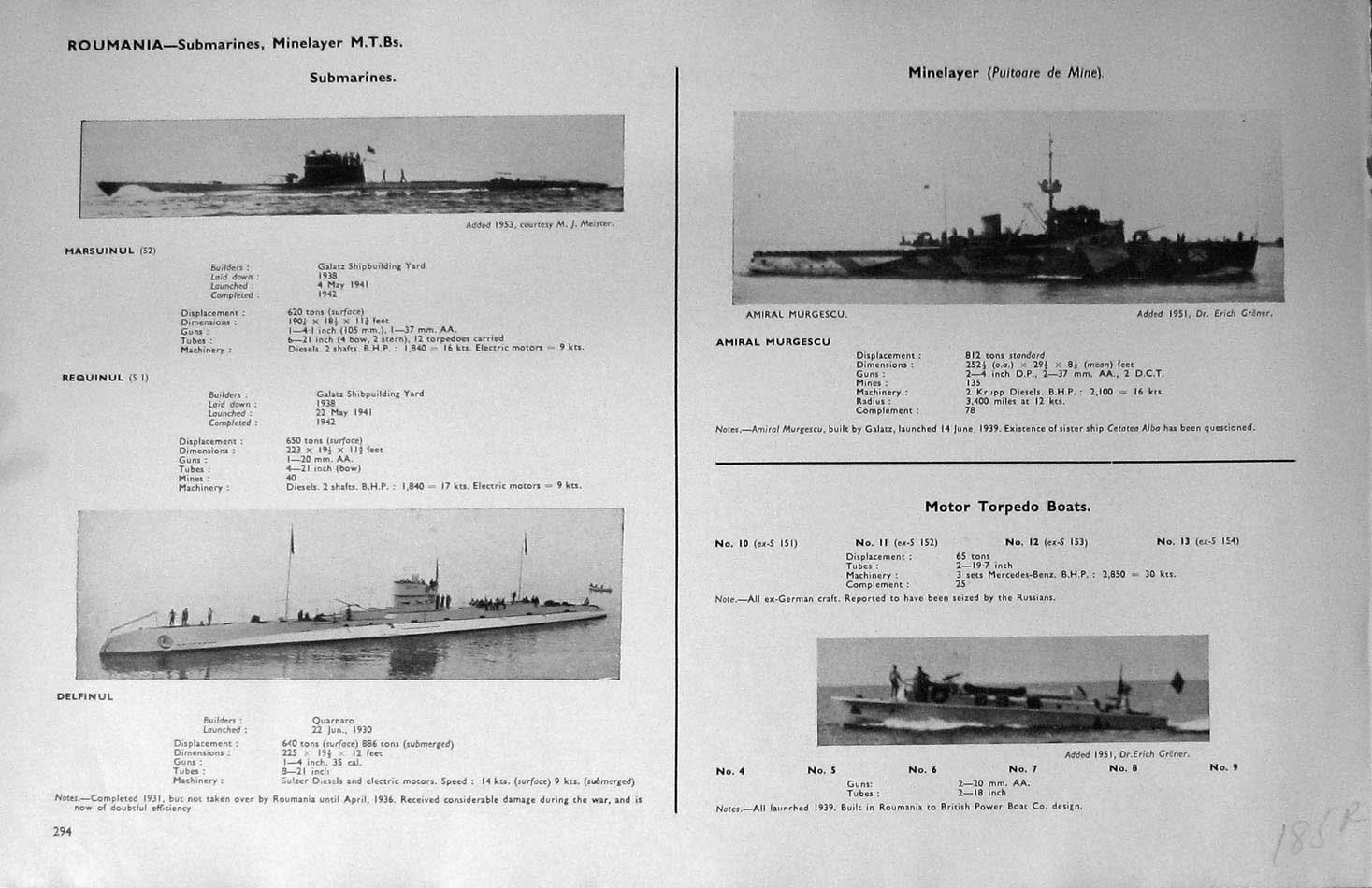
E-boat
View on GrokipediaDesign and Characteristics
Hull and Layout
The E-boats, known as Schnellboote in German service, featured a distinctive hard-chine hull design optimized for high-speed planing, with a rounded bottom forward transitioning to a flatter stern for improved hydrodynamic efficiency and stability in rough seas. Early classes, such as the S-1 through S-10, utilized plywood construction over wooden frames, including an oak keel, to achieve lightweight durability suitable for coastal operations. This material choice allowed for rapid construction and reduced weight, though it offered limited resistance to heavy gunfire. Dimensions for these initial boats varied, with lengths around 27 to 32 meters, beams of approximately 4.2 to 4.9 meters, drafts of 1.06 to 1.21 meters, and displacements ranging from 50 to 95 tons.[6][7] From the S-26 class onward, particularly the wartime mainstay S-38 and S-100 series, hull construction evolved to a composite form with wooden planking—often mahogany—over aluminum or steel frames and ribs, enhancing structural integrity against impacts and shellfire while maintaining planing performance. The S-100 class, for instance, measured 34.9 meters in length, 5.1 meters in beam, 1.5 meters in draft, and displaced about 100 tons standard, scaling up to around 120 tons fully loaded, which provided greater seaworthiness for extended North Sea patrols. This shift incorporated steel reinforcements in key areas, such as the armored "Kalotte" bridge introduced in the S-100 series, to better withstand combat damage. Internal watertight divisions, typically numbering eight to nine compartments, segmented the hull from bow to stern, including a forward collision bulkhead, to improve survivability.[1][3][8] The internal layout prioritized operational efficiency for high-speed raids, with an open or semi-enclosed bridge forward for command visibility, flanked by paired 533 mm torpedo tubes amidships that integrated seamlessly into the hull structure for streamlined firing. Crew quarters were positioned amidships and aft, accommodating 21 to 30 personnel in compact berths, including dedicated officer cabins and a small mess area designed for minimal disruption during maneuvers; for example, the S-38 class housed three officers, seven petty officers, and thirteen ratings in forward petty officers' quarters and aft enlisted spaces. Engine rooms occupied the central-aft sections, separated by bulkheads, while ammunition storage was distributed in secure lockers near the armament mounts. Fuel tanks, with a total capacity of approximately 8,000 liters (~6.6 tons), distributed in self-sealing rubber-lined units including two main tanks of 3,150 liters each and a smaller 1,490-liter tank, were integrated into multiple compartments for balanced weight distribution and fire safety, often alongside provisions for alternative loads like mines or depth charges in modular holds.[9][6][1]Propulsion and Performance
Early classes (S-1 to S-9) used three Daimler-Benz BFZ V-12 gasoline engines, while S-10 to S-13 transitioned to three Mercedes-Benz MB 502 V-12 diesel engines, each producing approximately 1,200 to 1,300 horsepower, arranged in a triple-screw configuration for basic power delivery.[10] These engines provided reliable but modest performance, enabling top speeds of around 32 to 35 knots, with a cruising range of 350 nautical miles at full speed or up to 2,000 nautical miles at economic speeds, supported by a fuel capacity of about 7,500 liters.[6] Fuel consumption at maximum output was estimated at 200 to 250 liters per hour per engine, limiting extended high-speed operations but allowing efficient coastal patrols.[10] From the S-14 class onward, E-boats adopted a triple-screw propulsion arrangement powered by three Daimler-Benz MB 501 V-20 diesel engines, each rated at 1,500 to 2,050 horsepower, totaling up to 6,150 horsepower and improving control and redundancy during maneuvers.[11] This setup boosted top speeds to 37.5 to 40 knots, while the cruising range extended to 500 to 700 nautical miles at 20 knots, facilitated by increased fuel tanks holding around 10 to 12 tons.[10] In 1943, later variants like the S-100 class incorporated controllable-pitch propellers to optimize thrust across varying speeds, reducing cavitation and enhancing acceleration from standstill to full power.[12] Fuel efficiency at cruising speeds improved slightly, with consumption rates of 250 to 300 liters per hour at full throttle across the three engines, enabling endurance calculations of 8 to 12 hours at operational paces based on standard tankage.[6] By the war's later stages, the S-100 and subsequent classes upgraded to three Daimler-Benz MB 511 C supercharged V-20 diesels, each delivering up to 2,500 horsepower for a combined output of 7,500 horsepower, achieving top speeds of 43.5 to 45 knots even in moderate seas.[12] These advancements prioritized range expansion, with enlarged tanks providing 700 to 800 nautical miles at 20 knots, crucial for extended raids in peripheral theaters.[10] Maneuverability was enhanced by the shallow draft of 1.67 meters, ideal for inshore operations and evasive actions near coastlines, combined with the deep-V hull design that ensured stability in rough conditions up to Beaufort scale 6.[6] Trial data indicated a tactical turning radius of approximately 100 to 150 meters at 30 knots, allowing rapid direction changes during engagements without excessive heel.[13]Armament and Equipment
The primary armament of E-boats consisted of torpedo tubes firing 533 mm (21-inch) torpedoes, typically the G7a steam-gas type or the G7e electric variant. Early classes, such as the S-1 to S-25, mounted two fixed tubes aft, while from the S-26 class onward, these were positioned forward on a decked-over forecastle for improved stability and firing arcs.[14] The G7a torpedo weighed 1,528 kg with a 280 kg warhead and had a maximum range of 5,000 meters at 44 knots, though later G7e models like the T3d extended effective range beyond 30 km at lower speeds.[14] Most boats carried two spare torpedoes in cradles adjacent to the tubes, allowing reloads during missions in calm conditions, though this required the crew to manually maneuver the heavy weapons.[6] Secondary armament focused on anti-aircraft and surface defense, evolving from single 20 mm C/30 autocannons in pre-war classes to multiple mounts in wartime designs. The 20 mm guns, firing at 300 rounds per minute with an effective range of 4,800 meters, were initially one per boat but increased to two or more by the S-38 class, often in retractable wells amidships to reduce drag.[14] From 1943, particularly in the S-100 series, a 40 mm Bofors gun was added forward for enhanced AA protection, supplemented by twin or quad 20 mm Flak 38 mounts aft.[6] Some late-war gunboat variants incorporated heavier 37 mm or 40 mm guns for shore bombardment roles, though these were limited due to weight constraints impacting speed.[6] Additional ordnance included provisions for anti-submarine and minelaying operations, adapting E-boats for versatile coastal roles. Depth charge racks held 6 to 20 charges, typically 139 kg WBF types launched from stern throwers or racks, enabling attacks on submerged threats at low speeds.[14] Mine-laying rails accommodated up to 12 TMA or EMC contact mines, dropped over the stern in later classes like the S-100, with some boats also carrying smoke canisters for evasion.[6] Sensors and navigation equipment advanced significantly from 1942, enhancing night operations and detection. The FuMO 21 radar, introduced that year on select S-38 boats, provided surface search capabilities up to 20-30 km, mounted on the mast for crew-monitored sweeps.[15] Hydrophones allowed passive submarine detection at short ranges during slow patrols, while electronic support measures like the FuMB 23 Naxos receiver intercepted Allied radar emissions.[14] Radio sets, including the Samos receiver for command coordination, enabled secure voice and Morse communications with flotilla leaders, often integrated with direction-finding antennas.[16] Equipment evolution reflected wartime lessons, with the S-500 series (post-1943) shifting to radar-guided fire control for guns and torpedoes, where operators used FuMO displays to adjust mounts via hydraulic systems amidships.[14] This integration, combined with added reload tubes in some S-701 designs, improved salvo effectiveness but increased overall weight, slightly compromising the boats' high-speed performance.[6]Development
Origins and Early Prototypes
The development of E-boats, known in German as Schnellboote or S-boote, originated in the interwar period as a response to the severe naval restrictions imposed by the Treaty of Versailles following World War I. The treaty limited the Reichsmarine to six obsolete battleships, a handful of light cruisers, and no submarines or aircraft carriers, effectively prohibiting significant surface combatant development. To circumvent these constraints, the Reichsmarine pursued clandestine research into small, fast attack craft that fell into legal ambiguities regarding coastal vessels and civilian motorboats. Secret development accelerated in 1929, initiated by figures such as Kapitän zur See Walter Lohmann through organizations like the Trayag company and the High-Sea Sports Association "Hansa," which facilitated prototype testing under the guise of sporting activities.[17][6] Early prototypes emerged in the late 1920s, with the Reichsmarine ordering three experimental boats in 1926 from leading shipyards: Lürssen Werft, Abeking & Rasmussen, and Caspar Werft. These included Lürssen's "LÜR" (LS 1), a 21-meter displacement hull powered by three 450 HP Maybach MB II gasoline engines achieving 32 knots; Abeking & Rasmussen's "K" (LS 2), a lighter 17.4-meter design with two 450-500 HP engines reaching 40 knots; and Caspar's "Narwal" (LS 3), a 21.3-meter boat with three 375 HP engines attaining 34.8 knots. Influenced by Italian Motoscafo Armato Silurante (MTM) boats observed in the Mediterranean, the designs emphasized seaworthiness over planing hulls, opting for displacement types suitable for North Sea operations and torpedo tactics. These prototypes built on prior civilian efforts, such as Lürssen's Oheka II yacht from 1928, which demonstrated high-speed stability with similar Maybach powerplants.[17][6] Trials commenced in 1931 on Lake Constance to evaluate performance in controlled conditions, focusing on speed, maneuverability, and stability in rough water. The tests confirmed the viability of the concepts, leading to the first official contract in 1930 for the S-1 class, with S-1 commissioned on July 7, 1930, and the remaining five boats (S-2 to S-6) delivered between 1931 and 1932. Initial armament consisted of two 500 mm torpedo tubes (upgraded to 533 mm by 1933), a single 20 mm anti-aircraft gun, and a machine gun, reflecting their intended role in coastal raids. Early Maybach gasoline engines proved unreliable due to vibration and maintenance issues in marine conditions, but these were addressed by 1934 through the adoption of more robust MAN and Daimler-Benz diesel engines, enhancing reliability and extending operational range.[17][6]Production and Evolution
The production of E-boats, or Schnellboote, commenced in the mid-1930s as part of Germany's naval rearmament, with the Lürssen shipyard in Bremen-Vegesack serving as the primary builder responsible for designing and constructing the majority of vessels. Additional yards, including Schlichting in Travemünde and Danziger Waggonfabrik, were allocated to scale up output during wartime, contributing to batches like the S-62 to S-138 and S-219 to S-228 classes. By 1942, Lürssen alone was producing up to 25 hulls per month, though engine shortages limited completed boats to around 12-15, with overall output peaking at 20-30 units monthly across yards in 1943 before Allied bombing disrupted facilities.[18][10] Initial pre-war orders from 1935 to 1939 totaled over 60 units, encompassing early classes such as S-1 through S-61, laid down primarily at Lürssen to equip initial flotillas. Wartime demands led to expanded contracts for more than 800 boats (numbered up to S-800), but resource constraints and unfinished hulls resulted in only about 249 completed by 1945, with many later orders canceled or partially built at secondary sites like Gusto N.V. in the Netherlands. Production relied on a mix of skilled labor and, increasingly, conscripted workers under wartime conditions, though engine supply from Daimler-Benz remained a persistent bottleneck affecting assembly rates.[10] Design refinements evolved iteratively to address operational feedback, with the S-100 series featuring a larger size and more rounded hull in 1941 to enhance seaworthiness in rough North Sea conditions while retaining the wooden construction. Torpedo capacity was increased to four tubes (two fixed aft) starting with the S-701 class in 1944, allowing greater offensive flexibility without major redesigns. Radar integration, including the FuMO 21 search radar, began appearing on boats from mid-1943, improving detection and targeting in low-visibility engagements.[6][19] Overall, approximately 249 E-boats were delivered to the Kriegsmarine, but high attrition from Allied air and naval actions led to 126 losses—a rate of about 51%—exacerbating shortages after 1943 as raw materials and skilled oversight dwindled. Standardization initiatives, coordinated through dedicated naval oversight groups, focused on resolving persistent issues like engine overheating from the MB 502 diesels and hull corrosion through improved coatings and modular assembly, ensuring consistent performance despite escalating production pressures.[20]Operational History
Service with the Kriegsmarine
The Schnellbootflottillen of the Kriegsmarine were organized into numbered units from the 1st to the 24th, with formation beginning in the pre-war period and expanding significantly from 1939 to 1945 to support coastal and offensive operations.[21] Key flotillas, such as the 1st, 2nd, and 3rd, were established in the late 1930s and initially based in German Baltic and North Sea ports like Kiel and Swinemünde for training and early patrols.[6] By 1940, following the invasion of Western Europe, several flotillas—including the 2nd, 4th, and 5th—relocated to forward bases in occupied France along the English Channel, such as Ostend, Cherbourg, and Boulogne, to interdict Allied shipping.[22] Additional units, like the 8th and 9th, were deployed to Norway from 1941 onward, operating from bases in Egersund and Horten to secure the Norwegian coast and conduct patrols in the North Sea.[21] Throughout the war, these flotillas rotated between German home waters, French Channel ports, and Norwegian facilities, with up to 9 active operational units at peak strength by 1944.[6] Crew training for Schnellboot personnel emphasized specialized skills in high-speed maneuvers, torpedo handling, and gunnery, primarily conducted at the Torpedo School in Friedrichsort near Kiel.[23] Established as a key facility for the Kriegsmarine's torpedo branch, Friedrichsort provided intensive instruction on evasion tactics during pursuit by larger warships, precise torpedo launches under night conditions, and rapid gunnery engagements to counter escort vessels. Trainees, often young officers and enlisted specialists, underwent rigorous simulations and live-fire exercises in the Baltic, focusing on the boats' wooden hulls' vulnerability to gunfire and the need for aggressive hit-and-run operations.[6] This preparation enabled crews to operate effectively in harsh North European waters, with an emphasis on teamwork in flotilla formations to maximize offensive potential.[21] Schnellboote employed coordinated group tactics optimized for nocturnal ambushes, typically forming a "line ahead" configuration to approach Allied convoys undetected before unleashing salvoes of torpedoes from multiple boats simultaneously.[6] These night attacks leveraged the vessels' speed exceeding 40 knots and early radar systems to close within 1,000-2,000 meters, firing G7a or G7e torpedoes armed with warheads up to 225 kg for maximum disruption.[3] Flotillas often integrated with U-boat wolfpacks for combined operations, where S-boats conducted shallow-water harassment to force convoys into deeper zones vulnerable to submerged submarine strikes, as seen in North Sea patrols from 1940 onward.[6] Minelaying runs complemented torpedo assaults, with boats deploying magnetic or acoustic mines along convoy routes to inflict attrition damage over time.[22] In primary European theaters, Schnellboote played a pivotal role in Channel operations from 1940 to 1944, targeting Allied convoys bound for Britain and interdicting supply lines during key campaigns like the Dunkirk evacuation and post-D-Day logistics. During the Channel Dash on 12 February 1942, E-boats from the 1st and 3rd Flotillas provided screening support for the battleships Scharnhorst and Gneisenau and heavy cruiser Prinz Eugen as they transited the English Channel to German ports, evading major Allied interception. These attacks sank over 214,000 gross register tons of merchant shipping, including 101 vessels, alongside warships such as 12 destroyers and 11 minesweepers, establishing the Channel as the most contested S-boot theater.[6] On 28 April 1944, E-boats from the 5th and 9th Flotillas attacked the Allied Exercise Tiger convoy off Slapton Beach, sinking two U.S. LSTs (LST-507 and LST-531) and damaging another (LST-289), resulting in approximately 749 casualties among American troops and sailors. In the Baltic, flotillas supported invasions and evacuations, such as the 1944-1945 operations aiding the Wehrmacht's retreat from Courland, while Norwegian-based units patrolled against Allied incursions.[21] During the St. Nazaire Raid in March 1942, Schnellboote from local flotillas contributed to the defense of the port, engaging British motor launches and commandos with gunfire and torpedoes to protect the Normandie dry dock.[24] Schnellboot losses mounted steadily due to intensified Allied air and surface superiority, with a total of 132 boats lost by war's end, including 18 to mines, 47 to air attacks, and 25 to gunfire.[20] Notable among these was the heavy toll during Normandy operations in 1944, where RAF bombing raids on Channel bases like Boulogne destroyed or damaged multiple flotilla elements in concentrated strikes.[25] Overall, of the 249 Schnellboote built, combat attrition left only a fraction operational by May 1945, underscoring the boats' effectiveness against superior numbers but vulnerability to coordinated Allied countermeasures.[6]Operations in Peripheral Theaters
In 1942, the Kriegsmarine deployed a flotilla of E-boats to the Black Sea to support Axis operations against Soviet naval forces, marking one of the most challenging redeployments of the war. The 1st S-Flotilla, initially comprising boats such as S-26, S-27, S-28, S-40, S-72, and S-102, arrived via an arduous overland and riverine route, with operations commencing from bases like Constanța, Romania, by late May.[26] These vessels conducted convoy escorts, anti-shipping strikes, and patrols, contributing to the disruption of Soviet merchant traffic and claiming several thousand tons of enemy shipping through torpedo attacks and minelaying.[6][26] By 1944, additional E-boats, including those from the S-30 and later classes in the 3rd and 7th Flotillas, were transferred to the Mediterranean theater via the Danube River, aiming to bolster German naval presence amid the Axis retreat. These boats, numbering around a dozen, engaged in skirmishes with Italian motor torpedo boats (MTBs) that had switched allegiance to the Allies after September 1943, though operations were hampered by acute fuel shortages and limited operational range. In the Adriatic and Aegean Seas, E-boats from the 22nd Flotilla and smaller Linsen-class variants performed anti-partisan patrols along coastal areas and laid defensive minefields to counter Allied amphibious landings, such as those supporting partisan activities in Yugoslavia and Greek islands.[6][15][27] Logistical constraints defined these peripheral operations, requiring innovative transport methods to reach remote fronts. E-boats destined for the Black Sea were disassembled—hulls loaded onto rail cars for a journey exceeding 2,000 kilometers from Baltic or North Sea bases, passing through points like Ingolstadt and Linz before reassembly at Galați on the Danube for river transit to the sea. Similar disassembly facilitated Danube navigation to the Mediterranean, where shallow drafts and bridge clearances demanded careful preparation, often straining resources amid Allied bombing campaigns. Standard coastal tactics were adapted for these enclosed waters, though propulsion systems faced additional wear from prolonged riverine travel.[28][6] Despite their tactical successes, E-boat deployments in these theaters suffered high attrition, primarily from Allied and Soviet air attacks that targeted vulnerable bases and transits. In the Black Sea alone, at least six boats—including S-42, S-52, and S-131—were lost to aerial bombing between 1942 and 1944, with a further three (S-42, S-52, and S-131) destroyed in a single Soviet raid on August 19, 1944; overall, approximately 15 E-boats were lost across peripheral areas due to such strikes, underscoring the Luftwaffe's inability to provide adequate cover. These losses, combined with supply issues, curtailed the flotillas' effectiveness by late 1944, forcing many surviving vessels into defensive roles until the Axis collapse.[6][26]Service with Allied and Neutral Navies
The Spanish Navy, maintaining neutrality during World War II, acquired six early-model Schnellboote from Germany in 1936, consisting of the S-1 through S-6 class vessels, which were redesignated as LT-12 to LT-17. These 17-meter wooden-hulled boats, powered by Daimler-Benz diesels achieving speeds up to 30 knots, were employed for coastal patrol duties in the Mediterranean and Atlantic approaches, conducting surveillance and anti-smuggling operations without direct combat involvement in the war. In 1943, Spain purchased an additional six S-38 class boats, enhancing their fast attack capabilities, though these saw limited wartime use primarily for escort and reconnaissance missions; all were decommissioned by 1958 after contributing to post-war coastal defense.[29] Prior to the Axis invasion in April 1941, the Royal Yugoslav Navy operated eight Lürssen-built Schnellboote of the Orjen class, constructed between 1936 and 1939 based directly on the German S-1 design specifications, including twin torpedo tubes and speeds exceeding 30 knots. These neutral vessels, named Orjen, Durmitor, Suvobor, Kajmakčalan, Velebit, Dinara, Rudnik, and Biokovo, patrolled the Adriatic Sea for defensive purposes until their capture by Italian forces during the invasion, after which six were commissioned into the Regia Marina as TA-1 to TA-6 for Axis operations. The remaining two were scuttled or destroyed to prevent capture, marking the end of their service under Yugoslav control.[6] Following the Italian armistice on 8 September 1943, the co-belligerent Regia Marina incorporated limited German Schnellboot assets amid the chaotic transition, though direct transfers remained rare and focused on immediate co-belligerent needs. Italian adaptations of Schnellboot designs, such as the CRDA 60-ton MS series, supplemented these efforts.[30] In August 1944, as Romania switched allegiance to the Allies following the coup against Ion Antonescu, the Kriegsmarine transferred four 65-ton Schnellboote of the S-100 class to the Romanian Navy for Black Sea operations against remaining Axis elements. These vessels, powered by three Mercedes-Benz diesels producing 2,850 horsepower for speeds around 43 knots, were armed with torpedoes, mines, and 40 mm guns, enabling effective patrols and engagements with Soviet forces until the war's end; they were retained in Romanian service postwar for coastal defense.[6] The Republic of China Navy, aligned with the Allies, operated three pre-war Schnellboote of the S-7 class acquired from Germany in the mid-1930s, designated as gunboats for Yangtze River patrols during the Second Sino-Japanese War. These 28-meter boats, reaching 34 knots with twin torpedo tubes and light armament, conducted riverine interdiction and escort missions against Japanese advances until one was destroyed by aircraft in 1938; the survivors continued service through 1949, supporting Nationalist operations amid the Chinese Civil War, after which their fate became uncertain.[6]Variants
Pre-War Classes
The pre-war classes of Schnellboote, known to the Allies as E-boats, marked the foundational evolution of German fast attack craft in the 1930s, emphasizing speed, maneuverability, and torpedo delivery within the constraints of early rearmament efforts. These vessels, primarily built by Lürssen Werft, transitioned from wooden hulls with petrol engines to diesel-powered designs, incorporating features like mine-laying capabilities and enhanced stability for coastal operations. Limited in number due to production priorities, they served as testbeds for propulsion and armament configurations that shaped wartime flotillas.[6][10] The S-1 class included one boat launched in 1931, featuring wooden hulls approximately 32 meters long, powered to achieve speeds of 34 knots, and equipped with two 533 mm torpedo tubes for offensive strikes. These early prototypes, with a crew of around 18, were all decommissioned and scrapped by 1935 to make way for improved models.[6][18] Building on the S-1 design, the S-2 class comprised four experimental vessels completed in 1932, notable for their innovative diesel-electric drive system that delivered 35 knots and informed the hydrodynamic and engine layouts of subsequent classes.[6][10] The S-6 class expanded production to four boats between 1933 and 1934, incorporating upgraded diesel engines for a top speed of 37 knots, alongside two torpedo tubes and the addition of mine-laying rails to broaden tactical roles. Several units were exported to Spain for use in the Spanish Civil War, demonstrating early international interest in the design.[6] The S-7 class introduced seven steel-hulled prototypes in 1934, achieving 40 knots through three-screw propulsion with powerful diesel engines, and serving as the structural and performance basis for later mass-produced Schnellboote.[6][10] Further refinement came with the S-14 class of four boats built from 1935 to 1936, measuring 35 meters in length, powered to 41 knots, and armed with two torpedo tubes with two reloads to increase salvo capacity; these vessels remained in service into the early stages of World War II.[6][18] The S-18 class produced eight units in 1936, with refined armament including two torpedo tubes and depth charge racks, plus the integration of radar masts for improved night operations; most were lost during the initial phases of the war.[6][10] By 1938, the S-26 class had four boats, 34.6 meters long, capable of 42 knots, and featuring enhanced anti-aircraft defenses such as additional machine guns, forming the core of early Kriegsmarine flotillas.[6] The S-30 class, with eight units also completed in 1938, closely resembled the S-26 but offered extended range through optimized fuel capacity and diesel efficiency; some were transferred to Romania to bolster Axis naval cooperation.[6][10]Wartime Classes
The wartime production of E-boats marked a significant evolution from earlier designs, emphasizing all-steel hulls for enhanced durability and seaworthiness in North Sea and Channel operations. These classes incorporated improved propulsion systems, such as the Daimler-Benz MB 501 and MB 511 diesel engines, allowing greater range and stability compared to wooden predecessors. By 1945, over 200 such boats had been built, with crews expanded to around 31 personnel to handle expanded roles including minelaying, which could accommodate up to 12 mines in some configurations.[6][10] In 1939, the Kriegsmarine placed orders for 16 boats of the S-38 class (S-38 to S-53), which measured approximately 35 meters in length and achieved speeds of up to 43 knots with three MB 501 diesels producing 6,000 horsepower total. These vessels featured two fixed 533 mm torpedo tubes with two reloads (effectively supporting four torpedoes), two 20 mm Flak guns for anti-aircraft defense, and early radar fittings like the FuMO system on select units for night operations; they were heavily employed in the English Channel for offensive patrols and convoy attacks. Steel construction provided better resistance to splinter damage, though initial stability was addressed through a raised forecastle design.[31][6][12] The 1940 orders expanded production to the S-100 class, which encompassed over 200 units built from 1941 (including early batches S-62 to S-100 and later S-101 onwards), with a displacement of about 100-117 tons and lengths of 34.9 meters, powered to 44 knots by upgraded MB 511 engines offering 7,500 horsepower. Armament remained centered on two 533 mm torpedo tubes with reloads, augmented by two 20 mm guns and provisions for minelaying up to 12 depth charges or mines; improved stability came from a deeper hull and armored "kalotte" bridge, making them suitable for rougher Atlantic approaches. These steel-hulled boats represented the backbone of flotillas, with crews of 25-30 managing enhanced radar integration for coordinated strikes.[32][6][12] By 1941, orders for the S-151 class totaled 24 planned units (S-151 to S-174, though only eight like S-151 to S-158 were completed before shifts in priorities), at 28.3 meters long and capable of 45 knots with refined diesel setups. These incorporated options for six torpedoes via additional reloads or tubes, standard FuMO radar for surface search, and armament including two 20 mm guns plus machine guns; steel hulls and a crew of about 31 supported versatile roles, including Mediterranean deployments after initial confiscation from Dutch yards. Stability enhancements allowed operations in varied theaters, with mine capacity reaching 12 in adapted minelayer variants.[33][6] The 1942 orders were part of the ongoing S-100 and S-200 series production, featuring bolstered anti-aircraft suites with 37 mm SK C/30 guns alongside 20 mm twins for defense against Allied air superiority, and extended range up to 700 nautical miles at 35 knots via fuel-efficient diesels. These adaptations prioritized Atlantic raiding potential, maintaining steel construction and capacities for 12 mines while crews handled intensified electronic warfare with standard radar. Production emphasized rapid assembly at yards like Lürssen, yielding durable boats integral to late-1942 offensive surges.[10][6][12]| Class | Production (1939-1942 Orders) | Length | Speed | Displacement | Key Armament | Crew | Mine Capacity |
|---|---|---|---|---|---|---|---|
| S-38 | 16 units | 35 m | 43 knots | ~100 tons | 2×533 mm tubes (4 torpedoes total), 2×20 mm guns, radar | 24 | Up to 8 |
| S-100 | ~200+ units overall | 34.9 m | 44 knots | 100-117 tons | 2×533 mm tubes (4 torpedoes total), 2×20 mm guns, radar | 25-30 | Up to 12 |
| S-151 | 24 planned (8 completed) | 28.3 m | 45 knots | ~60 tons | 2×533 mm tubes (6 torpedoes option), 2×20 mm + MGs, FuMO radar | ~31 | Up to 12 |
| 1942 Expansions (S-100/S-200) | Part of ongoing production | 34.9-35 m | 43-45 knots | ~110 tons | 2×533 mm tubes, 37 mm + 20 mm AA, radar | ~31 | Up to 12 |