Hubbry Logo
ElapidaeElapidaeMain
Open search
Elapidae
Community hub
Elapidae
logo
8 pages, 0 posts
0 subscribers
Be the first to start a discussion here.
Elapidae
Elapidae
from Wikipedia

Elapidae
From the top left clockwise: king cobra, oriental coral snake, inland taipan and black mamba
Scientific classification Edit this classification
Kingdom: Animalia
Phylum: Chordata
Class: Reptilia
Order: Squamata
Suborder: Serpentes
Superfamily: Elapoidea
Family: Elapidae
F. Boie, 1827
Subfamilies and genera[a]

Elapidae (/əˈlæpəd/, commonly known as elapids /ˈɛləpɪdz/, from Ancient Greek: ἔλαψ élaps, variant of ἔλλοψ éllops "sea-fish")[6] is a family of snakes characterized by their permanently erect fangs at the front of the mouth. Most elapids are venomous, with the exception of the genus Emydocephalus. Many members of this family exhibit a threat display of rearing upwards while spreading out a neck flap. Elapids are endemic to tropical and subtropical regions around the world, with terrestrial forms in Asia, Australia, Africa, and the Americas and marine forms in the Pacific and Indian Oceans. Members of the family have a wide range of sizes, from the 18 cm (7.1 in) white-lipped snake to the 5.85 m (19 ft 2 in) king cobra. Most species have neurotoxic venom that is channeled by their hollow fangs, and some may contain other toxic components in varying proportions. The family includes 55 genera with around 360 species and over 170 subspecies.

Description

[edit]

Terrestrial elapids look similar to the Colubridae; almost all have long, slender bodies with smooth scales, a head covered with large shields (and not always distinct from the neck), and eyes with rounded pupils. Also like colubrids, their behavior is usually quite active and fast, with most of the females being oviparous (egg-layers). Exceptions to these generalizations occur; for example, death adders (Acanthophis) have commonalities with the Viperidae family, such as shorter, stout bodies, rough/keeled scales, broad heads, cat-like pupils and ovoviviparous (internal hatchings with live births). Furthermore, they can also be sluggish, ambush predators with partially fragmented head shields, similar to rattlesnakes or Gaboon vipers.

Sea snakes (the Hydrophiinae), sometimes considered to be a separate family, have adapted to a marine way of life in different ways and to various degrees. All have evolved paddle-like tails for swimming and the ability to excrete salt. Most also have laterally compressed bodies, their ventral scales are much reduced in size, their nostrils are located dorsally (no internasal scales), and they give birth to live young (viviparity). The reduction in ventral scaling has greatly diminished their terrestrial mobility, but aids in swimming.

Members of this family have a wide range of sizes. Drysdalia species are small serpents typically 50 cm (20 in) and down to 18 cm (7.1 in) in length. Cobras, mambas, and taipans are mid- to large sized snakes which can reach 2 m (6 ft 7 in) or above. The king cobra is the world's longest venomous snake with a maximum length of 5.85 m (19.2 ft) and an average mass of 6 kg (13 lb).[7]

Dentition

[edit]
The lateral view of a king cobra's skull showing fangs

All elapids have a pair of proteroglyphous fangs to inject venom from glands located towards the rear of the upper jaw (except for the genus Emydocephalus, in which fangs are present as a vestigial feature but without venom production, as they have specialized toward a fish egg diet, making them the only non-venomous elapids). The fangs, which are enlarged and hollow, are the first two teeth on each maxillary bone. Usually only one fang is in place on each side at any time. The maxilla is intermediate in both length and mobility between typical colubrids (long, less mobile) and viperids (very short, highly mobile). When the mouth is closed, the fangs fit into grooved slots in the buccal floor and usually below the front edge of the eye and are angled backwards; some elapids (Acanthophis, taipan, mamba, and king cobra) have long fangs on quite mobile maxillae and can make fast strikes. A few species are capable of spraying their venom from forward-facing holes in their fangs for defense, as exemplified by spitting cobras.

Behavior

[edit]

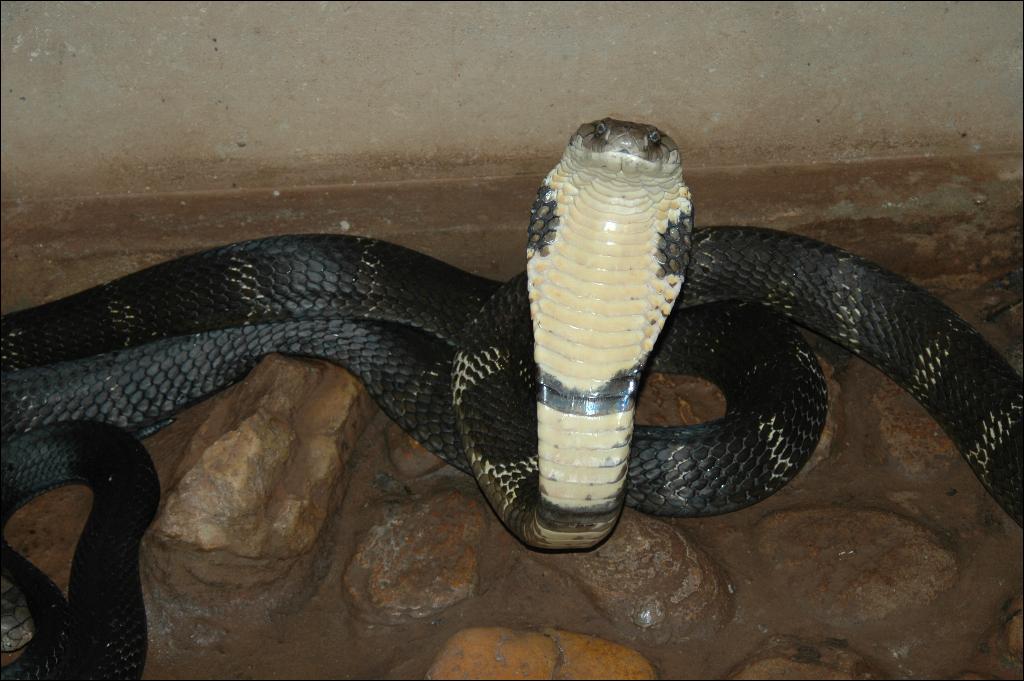
Most elapids are terrestrial, while some are strongly arboreal (African Pseudohaje and Dendroaspis, Australian Hoplocephalus). Many species are more or less specialized burrowers (e.g. Ogmodon, Parapistocalamus, Simoselaps, Toxicocalamus, and Vermicella) in either humid or arid environments. Some species have very generalised diets (euryphagy), but many taxa have narrow prey preferences (stenophagy) and correlated morphological specializations, for example feeding almost exclusively on other serpents (especially the king cobra and kraits). Elapids may display a series of warning signs if provoked, either obviously or subtly. Cobras and mambas lift their inferior body parts, expand hoods, and hiss if threatened; kraits often curl up before hiding their heads down their bodies.

In general, sea snakes are able to respire through their skin. Experiments with the yellow-bellied sea snake, Hydrophis platurus, have shown that this species can satisfy about 20% of its oxygen requirements in this manner, allowing for prolonged dives. The sea kraits (Laticauda spp.) are the sea snakes least adapted to aquatic life. Their bodies are less compressed laterally, and they have thicker bodies and ventral scaling. Because of this, they are capable of some land movement. They spend much of their time on land, where they lay their eggs and digest prey.

Distribution

[edit]

Terrestrial elapids are found worldwide in tropical and subtropical regions, mostly in the Southern Hemisphere. Most prefer humid tropical environments, though there are many that can still be found in arid environments. Sea snakes occur mainly in the Indian Ocean and the south-west Pacific. They occupy coastal waters and shallows, and are common in coral reefs. However, the range of Hydrophis platurus extends across the Pacific to the coasts of Central and South America.[8]

Venom

[edit]

Venoms of species in the Elapidae are mainly neurotoxic for immobilizing prey and defense. The main group of toxins are PLA2 and three-finger toxins (3FTx). Other toxic components in some species comprise cardiotoxins and cytotoxins, which cause heart dysfunctions and cellular damage, respectively. Cobra venom also contains hemotoxins that clot or solidify blood. Most members are venomous to varying extents, and some are considered among the world's most venomous snakes based upon their murine LD50 values, such as the taipans.[9] Large species, mambas and cobras included, are dangerous for their ability to inject large quantities of venom upon a single envenomation and/or striking at a high position proximal to the victim's brain, which is vulnerable to neurotoxicity. Antivenom is promptly required to be administered if bitten by any elapids. Specific antivenoms are the only cure to treat elapidae bites. There are commercial monovalent and polyvalent antivenoms for cobras, mambas, and some other important elapids. Recently, experimental antivenoms based on recombinant toxins have shown that it is feasible to create antivenoms with a wide spectrum of coverage.[10]

The venom of spitting cobras is more cytotoxic rather than neurotoxic. It damages local cells, especially those in eyes, which are deliberately targeted by the snakes. The venom may cause intense pain on contact with the eye and may lead to blindness. It is not lethal on skin if no wound provides any chance for the toxins to enter the bloodstream.[11]

Taxonomy

[edit]

The table below lists out all of the elapid genera and no subfamilies. In the past, many subfamilies were recognized, or have been suggested for the Elapidae, including the Elapinae, Hydrophiinae (sea snakes), Micrurinae (coral snakes), Acanthophiinae (Australian elapids), and the Laticaudinae (sea kraits). Currently, none are universally recognized. Molecular evidence via techniques like karyotyping, protein electrophoretic analyses, immunological distance and DNA sequencing, suggests reciprocal monophyly of two groups: African, Asian, and New World Elapinae versus Australasian and marine Hydrophiinae. The Australian terrestrial elapids are technically 'hydrophiines', although they are not sea snakes. It is believed that the Laticauda and the 'true sea snakes' evolved separately from Australasian land snakes. Asian cobras, coral snakes, and American coral snakes also appear to be monophyletic, while African cobras do not.[12][13]

The type genus for the Elapidae was originally Elaps, but the group was moved to another family. In contrast to what is typical of botany, the family Elapidae was not renamed. In the meantime, Elaps was renamed Homoroselaps and moved back to the Elapidae. However, Nagy et al. (2005) regard it as a sister taxon to Atractaspis, which should have been assigned to the Atractaspididae.

Genus[14] Taxon
author[14]
Species[14] Subspecies*[14] Common
name
Geographic
range[8]
Acanthophis Daudin, 1803 8 0 death adders Australia, New Guinea, Indonesia (Seram Island and Tanimbar)
Aipysurus Lacépède, 1804 7 1 olive sea snakes Timor Sea, South China Sea, Gulf of Thailand, and coasts of Australia (Northern Territory, Queensland, Western Australia), New Caledonia, Loyalty Islands, southern New Guinea, Indonesia, western Malaysia and Vietnam
Antaioserpens Wells & Wellington, 1985 2 0 burrowing snakes Australia
Aspidelaps Fitzinger, 1843 2 4 shieldnose cobras South Africa (Cape Province, Transvaal), Namibia, southern Angola, Botswana, Zimbabwe, Mozambique
Aspidomorphus Fitzinger, 1843 3 3 collared adders New Guinea
Austrelaps Worrell, 1963 3 0 Australian copperheads Australia (South Australia, New South Wales, Victoria, Tasmania)
Brachyurophis Günther, 1863 7 0 shovel-nosed snakes Australia
Bungarus Daudin, 1803 12 4 kraits India (incl. Andaman Islands), Myanmar, Nepal, Vietnam, Afghanistan, Pakistan, Sri Lanka, Bangladesh, Cambodia, Indonesia (Java, Sumatra, Bali, Sulawesi), Peninsular Malaysia, Singapore, Taiwan, Thailand
Cacophis Günther, 1863 4 0 rainforest crowned snakes Australia (New South Wales, Queensland)
Calliophis Gray, 1834 15 11 Oriental coral snakes India, Bangladesh, Sri Lanka, Nepal, Indonesia, Cambodia, Malaysia, Singapore, Thailand, Burma, Brunei, the Philippines, Vietnam, Laos, southern China, Japan (Ryukyu Islands), Taiwan
Cryptophis Worrell, 1961 5 0 Australia and Papua New Guinea
Demansia Gray, 1842 9 2 whipsnakes New Guinea, continental Australia
Dendroaspis Schlegel, 1848 4 1 mambas Sub-Saharan Africa
Denisonia Krefft, 1869 2 0 ornamental snakes Central Queensland and central northern New South Wales, Australia
Drysdalia Worrell, 1961 3 0 southeastern grass snakes Southern Australia (Western Australia, South Australia, Victoria, Tasmania, New South Wales)
Echiopsis Fitzinger, 1843 1 0 bardick Southern Australia (Western Australia, South Australia, Victoria, New South Wales)
Elapognathus Boulenger, 1896 2 0 southwestern grass snakes Western Australia
Elapsoidea Bocage, 1866 10 7 African or venomous garter snakes (not related to North American garter snakes, which are harmless to humans) Sub-Saharan Africa
Emydocephalus Krefft, 1869 3 0 turtlehead sea snakes The coasts of Timor (Indonesian Sea), New Caledonia, Australia (Northern Territory, Queensland, Western Australia), and in the Southeast Asian Sea along the coasts of China, Taiwan, Japan, and the Ryukyu Islands
Ephalophis M.A. Smith, 1931 1 0 Grey's mudsnake/ mangrove sea snake Northwestern Australia
Furina (snake) A.M.C. Duméril, 1853 5 0 pale-naped snakes Mainland Australia, southern New Guinea, Aru Islands
Hemachatus Fleming, 1822 1 0 rinkhals/ring-necked spitting cobra South Africa, Zimbabwe, Lesotho, Eswatini
Hemiaspis Fitzinger, 1861 2 0 swamp snakes Eastern Australia (New South Wales, Queensland)
Hemibungarus W. Peters, 1862 3 0 Barred coral snakes Philippines (Luzon, Panay, Negros, Cebu, Mindoro, Catanduanes, Polillo is.)
Hoplocephalus Wagler, 1830 3 0 broad-headed snakes Eastern Australia (New South Wales, Queensland)
Hydrelaps Boulenger, 1896 1 0 Port Darwin mudsnake Northern Australia, southern New Guinea
Hydrophis Latreille In Sonnini & Latreille, 1801 34 3 sea snakes Indoaustralian and Southeast Asian waters.[15]
Incongruelaps 1 0 Riversleigh, Australia[16]
Laticauda Laurenti, 1768 5 0 sea kraits Southeast Asian and Indo-Australian waters
Loveridgelaps McDowell, 1970 1 0 Solomons small-eyed snake Solomon Islands
Microcephalophis Lesson, 1832 1 0 narrow-headed sea snake, graceful small-headed slender seasnake, common small-headed sea snake on the coasts of the Indian Ocean and West Pacific, from around the Persian Gulf (Bahrain, Qatar, Saudi Arabia, Oman, United Arab Emirates (UAE), Iran, Iraq and Kuwait) to Pakistan, India, Sri Lanka, Bangladesh, Myanmar, Thailand, and Indonesia, and into the Malay Archipelago/West Pacific in Thailand, Malaysia, Singapore, Cambodia, Vietnam, the Philippines, southern China, Hong Kong, and Taiwan, as well as in Australia (Queensland) and Papua New Guinea
Micropechis Boulenger, 1896 1 0 New Guinea small-eyed snake New Guinea
Micruroides K.P. Schmidt, 1928 1 2 Western coral snakes United States (Arizona, southwestern New Mexico), Mexico (Sonora, Sinaloa)
Micrurus Wagler, 1824 83 51 coral snakes Southern North America, South America
Naja Laurenti, 1768 39 3 cobras Africa, Asia
Neelaps (A.M.C. Duméril, Bibron & A.H.A. Duméril, 1854) 2 0 Australia
Notechis Boulenger, 1896 1 0 tiger snake Southern Australia, including many offshore islands
Ogmodon W. Peters, 1864 1 0 bola Fiji
Ophiophagus Günther, 1864 4[17] 1 King cobra Bangladesh, Myanmar, Cambodia, China, India, Andaman Islands, Indonesia, Laos, Thailand, Vietnam, western Malaysia, the Philippines
Oxyuranus Kinghorn, 1923 3 2 taipans Australia, New Guinea
Parahydrophis Burger & Natsuno, 1974 1 0 Northern mangrove sea snake Northern Australia, southern New Guinea
Parapistocalamus Roux, 1934 1 0 Hediger's snake Bougainville Island, Solomons
Paroplocephalus Keogh, Scott & Scanlon, 2000 1 0 Lake Cronin snake Western Australia
Pseudechis Wagler, 1830 7 0 black snakes (and king brown) Australia
Pseudohaje Günther, 1858 2 0 tree cobras Angola, Burundi, Cameroon, Central African Republic, Democratic Republic of the Congo, Congo, Gabon, Ghana, Kenya, Nigeria, Rwanda, Uganda, Sierra Leone, Liberia, Ivory Coast, Togo, Nigeria
Pseudonaja Günther, 1858 8 2 venomous brown snakes (and dugites) Australia
Rhinoplocephalus F. Müller, 1885 1 0 Müller's snake Western Australia
Salomonelaps McDowell, 1970 1 0 Solomons coral snake Solomon Islands
Simoselaps Jan, 1859 13 3 Australian coral snakes Mainland Australia
Sinomicrurus Slowinski, Boundy & Lawson, 2001 8 6 Asian coral snakes Asia
Suta Worrell, 1961 11 0 hooded snakes (and curl snake) Australia
Thalassophis P. Schmidt, 1852 1 0 anomalous sea snake South Chinese Sea (Malaysia, Gulf of Thailand), Indian Ocean (Sumatra, Java, Borneo)
Toxicocalamus Boulenger, 1896 11 0 New Guinea forest snakes New Guinea (and nearby islands)
Tropidechis Günther, 1863 1 0 rough-scaled snake Eastern Australia
Vermicella Gray in Günther, 1858 6 0 bandy-bandies Australia
Walterinnesia Lataste, 1887 2[18] 0 black desert cobra Egypt, Israel, Lebanon, Syria, Jordan, Iraq, Iran, Kuwait, Saudi Arabia, Turkey[19]

* Not including the nominate subspecies

Conservation

[edit]

With the dangers the taxa presents given their venomous nature it is very difficult for activists and conservationists alike to get species on protection lists such as the IUCN red-list and CITES Apenndix lists. Some of the protected species are:

This however does not touch the number of elapidae that are under threat, for instance 9% of elapid sea snakes are threatened with another 6% near-threatened.[20] A rather large road block that stands in the way of more species being put under protection is lack of knowledge of the taxa; many known species have little research done on their behaviors or actual population as they live in very remote areas or live in habitats that are so vast its nearly impossible to conduct population studies, like the sea snakes.

See also

[edit]

Explanatory notes

[edit]

References

[edit]

Further reading

[edit]
[edit]
Revisions and contributorsEdit on WikipediaRead on Wikipedia
from Grokipedia
Elapidae is a of highly snakes within the superfamily , characterized by their possession of short, fixed front fangs in the upper jaw that deliver primarily neurotoxic , leading to rapid and in victims. Comprising approximately 360 across about 55 genera, this includes some of the world's most notorious snakes, such as cobras ( spp.), mambas (Dendroaspis spp.), kraits ( spp.), coral snakes ( spp.), taipans (Oxyuranus spp.), death adders ( spp.), and (subfamily ). Elapids exhibit a distribution, with the greatest diversity in the Old World tropics of , southern , and , while New World representatives, primarily coral snakes, occur from southern through Central and ; sea snakes are found in the warm coastal waters of the Indian and Pacific Oceans. Physically, most elapids have slender bodies, smooth scales, and relatively small heads indistinct from the neck, though some like cobras possess expandable hoods for defense, and are adapted for aquatic life with paddle-like tails. Their venom, produced by specialized glands, consists mainly of presynaptic and postsynaptic neurotoxins that target the , along with varying amounts of cardiotoxins, hemotoxins, and depending on the species; this composition makes elapid bites medically significant, often requiring specific antivenoms. The family is monophyletic, originating in the late around 25 million years ago, with diversification driven by and habitat specialization, including the evolution of fully marine forms in from terrestrial ancestors in ; recent phylogenomic studies indicate an Asian origin. Elapids play key ecological roles as predators of small vertebrates, amphibians, and , and their venoms have been instrumental in pharmacological research, yielding compounds like α-bungarotoxin used in studying nicotinic receptors. Despite their potency, many are reclusive and bites are rare, though human encroachment into habitats increases encounter risks in regions like and .

Physical Characteristics

Morphology

Elapids exhibit a characteristically slender, cylindrical body form covered in smooth, glossy scales that facilitate agile movement across diverse terrains. These snakes typically range in total length from about 30 cm in smaller species, such as certain Australian elapids, to over 2 m in many larger forms, with the king cobra (Ophiophagus hannah) representing the extreme, attaining a maximum recorded length of 5.71 m. The body is generally elongated with a relatively short tail, contributing to their streamlined profile, while the head is often narrow and only slightly wider than the neck, bearing round pupils in large eyes. Examples of highly venomous elapids with round pupils include coral snakes (e.g., Eastern coral snake, Micrurus fulvius, or Texas coral snake, Micrurus tener), king cobras (Ophiophagus hannah), black mambas (Dendroaspis polylepis), and other elapids like many cobras (Naja spp.) and taipans (Oxyuranus spp.). A defining morphological feature is the proteroglyphous , characterized by short, fixed front fangs on the anterior for delivery, though the fangs themselves are not deeply grooved or hollow as in viperids. External scale arrangements include 15–25 rows of dorsal scales at midbody, which are smooth and imbricate, a divided anal plate in most species, and paired subcaudal scales along the ventral tail surface. Certain genera display specialized structures, such as the expandable hood formed by elongated and loose skin in cobras ( spp.), used for display, or crests in some Asian species. Sexual dimorphism in body size varies among elapid species, with females larger in some (e.g., ) and males longer in others (e.g., certain Australian elapids like Demansia vestigiata), alongside male-specific traits like the paired hemipenes housed in the cloacal region. The elongated body morphology supports various locomotor adaptations, including rectilinear undulation for general progression and in arid-adapted species, such as certain Australian elapids, which lifts portions of the body off loose substrates to minimize drag and slipping on sand.

Dentition

Elapids possess proteroglyphous , featuring a pair of short, fixed fangs at the anterior end of the that are either grooved or hollow to conduct , followed by a series of smaller, solid teeth posteriorly that aid in grasping and holding prey. These fangs are permanently erect and immobile, distinguishing them from the longer, hinged solenoglyphous fangs of viperids, and they sit on a reduced adapted for precise injection. The enclosed groove in elapid fangs forms a suture along the anterior surface, enhancing the efficiency of delivery during . Fang length shows considerable interspecific variation, typically ranging from a few millimeters to over 10 mm, correlating with body size and prey type; for instance, fangs in the black mamba (Dendroaspis polylepis) measure approximately 6.5 mm, while those in the king cobra (Ophiophagus hannah) can reach 8–10 mm. This fixed positioning necessitates shorter fangs to avoid interference with closure, yet they remain highly effective for rapid strikes. The posterior maxillary teeth, numbering 10–20 depending on the species, are conical and recurved, providing mechanical retention without reliance on venom alone. The elapid venom apparatus involves modification of the submaxillary salivary glands into specialized glands, which are muscular and capable of contracting to expel through a dedicated duct connecting directly to the base. This duct, often surrounded by an accessory compressor gland, ensures pressurized delivery of into prey tissues upon penetration. Proteroglyphous in Elapidae evolved from aglyphous (non-fanged) colubroid ancestors, with the development of grooved representing a key innovation for utilization. evidence, including isolated vertebrae and dental fragments attributable to early elapids like cobras, dates the emergence of this condition to the Middle , approximately 15–10 million years ago, in regions such as and . Certain variations occur within the family, particularly in hydrophiine , where fangs are often reduced to 1–4 mm in length and adapted for injecting into soft-bodied aquatic prey like fish eggs or small eels, reflecting ecological specialization in marine environments.

Distribution and Habitat

Geographic Range

Elapidae, the family encompassing snakes such as cobras, mambas, and , is predominantly distributed across tropical and subtropical regions of the , with native ranges spanning , , and , as well as limited presence in the through the genus of coral snakes. Coral snakes of the genus are confined to the , occurring from southern through to . The family is notably absent from and most of , reflecting biogeographic barriers and historical dispersal patterns. The highest species diversity within Elapidae is observed in , where over 100 terrestrial species and approximately 30 marine species occur, representing a significant portion of the family's global total of approximately 420 species. also hosts substantial diversity, particularly for marine forms, with hotspots in regions like , , and the archipelago. This concentration underscores the family's in isolated continental and island systems. Introduced populations of elapids have established outside their native ranges in some areas, such as the genus (brown snakes), which has been introduced to . These non-native occurrences often result from human-mediated transport and can pose ecological risks in recipient ecosystems. Biogeographically, the subfamily , including true , exhibits a across tropical and subtropical waters of the Indian and Pacific Oceans, from the African coast to . In contrast, terrestrial elapids are largely restricted to tropical and subtropical zones on landmasses. Historical range expansions trace back to an Asian origin in the late Eocene, with subsequent dispersal to in the Oligocene-Miocene, contributing to the high observed there following the post-Gondwanan fragmentation of landmasses.

Ecological Niches

Elapids predominantly occupy terrestrial niches in a variety of ecosystems, including tropical forests, arid deserts, and open grasslands, where they exploit ground-level cover for predation. In contrast, the subfamily consists of fully marine species adapted to oceanic environments, featuring specialized sublingual salt glands that enable effective by excreting excess to maintain ionic balance in saltwater habitats. These adaptations allow species, such as those in the genus Hydrophis, to thrive in the Indo-Pacific's coastal and pelagic zones without reliance on freshwater sources for extended periods. Specialized microhabitats further diversify elapid niches; for example, arboreal species in the genus Hoplocephalus inhabit the canopies of subtropical rainforests in eastern , using prehensile tails and slender bodies to navigate branches while foraging for avian and reptilian prey. elapids, such as Simoselaps in western Australian sandy soils and Elapsoidea in African savannas and forests, into loose substrates or leaf litter, preferring mesic microhabitats under rocks or vegetation for and egg predation. Some terrestrial species like death adders () in inhabit moist grasslands and woodland edges, ambushing prey in humid . Elapids serve as apex predators in their ecosystems, exerting top-down control on populations of small mammals, birds, and amphibians through selective predation that influences and . In regions of , such as African savannas, elapids compete with viperids for similar prey resources, leading to niche partitioning via differences in modes or microhabitat selection to minimize overlap. Australian elapids, lacking viperid competitors, have diversified into analogous roles without such interfamily pressures. Most elapids favor warm, humid climates that support their ectothermic , but Australian species exhibit notable tolerance to through nocturnal habits that reduce evaporative loss and align activity with cooler, moister night conditions in and semi-arid zones. This behavioral adaptation, combined with physiological efficiencies in , enables occupancy of xeric habitats from coastal woodlands to inland spinifex grasslands. Within genera, niche partitioning often occurs along elevational gradients; for instance, in Asian cobras (), lowland species like dominate humid plains and coastal areas, while highland forms such as exploit cooler, montane forests up to 2,000 meters, differentiating by prey availability and thermal regimes. Such partitioning reduces and facilitates coexistence in heterogeneous landscapes.

Behavior and Reproduction

Daily and Social Behaviors

Elapids exhibit a range of daily activity patterns influenced by species-specific adaptations to their environments, with many being diurnal while others are nocturnal or crepuscular. For instance, the black mamba (Dendroaspis polylepis) is predominantly diurnal, actively foraging during the day and retreating to shelters at night, often basking in the morning and late afternoon to regulate body temperature. In contrast, death adders (Acanthophis spp.) are primarily nocturnal, emerging at dusk or night to ambush prey and remaining hidden in leaf litter or burrows during daylight hours. Similarly, the broad-headed snake (Hoplocephalus bungaroides), an Australian elapid, shows peak activity around dusk, spending most of the day in retreat sites with minimal exposure to daylight. Some Asian elapids, such as kraits (Bungarus spp.), are nocturnal, becoming active primarily at night. Locomotion in elapids typically involves lateral undulation, where the body forms S-shaped waves that propel the snake forward by pushing against surface irregularities, enabling efficient movement across varied terrains. This mode allows for rapid strikes and sustained travel, with species like the capable of reaching speeds up to 20 km/h over short distances during evasion or pursuit. Such undulating motion is particularly effective in open habitats, facilitating quick navigation through grasslands or scrublands without the need for limbs. Elapids are generally solitary, lacking the complex social structures seen in some viper species, though interactions between individuals are infrequent. Communication among elapids relies on visual and acoustic signals, such as and hissing in cobras to signal presence or deter intruders, often accompanied by body postures that exaggerate size. Pheromonal detection via tongue flicking allows for environmental cueing, though this is more pronounced in specific behavioral contexts. As ectotherms, elapids thermoregulate primarily through behavioral adjustments, with diurnal species like the red-bellied blacksnake (Pseudechis porphyriacus) basking in open areas by flattening and tilting their bodies to absorb solar radiation, achieving preferred body temperatures around 28–31°C. In hotter climates, they seek shade or burrow into soil to avoid overheating, shuttling between sun and cover as needed. Nocturnal elapids, such as H. bungaroides, rarely bask due to predation risks, instead exploiting thermal gradients in retreat sites to maintain body temperatures within viable ranges for about 60% of active periods. Sea kraits (Laticauda spp.), semi-aquatic elapids, bask on during inter-tidal periods to elevate body temperatures before returning to . These strategies highlight habitat-driven variations in daily routines, such as increased burrowing in arid zones to conserve moisture and moderate heat.

Reproductive Strategies

Elapids are predominantly oviparous, with females depositing clutches ranging from 5 to 50 eggs in concealed sites such as leaf litter, burrows, or communal nests, where the eggs incubate for 50 to 70 days before hatching into fully independent juveniles. This reproductive mode contrasts with the viviparity common in viperids, though exceptions exist within Elapidae, particularly among marine hydrophiine species that give birth to live young. Clutch size is positively correlated with maternal body size, allowing larger species to produce more offspring; for instance, smaller elapids like some coral snakes (Micrurus spp.) lay 2 to 12 eggs, while larger ones such as the king cobra (Ophiophagus hannah) produce 20 to 43 eggs per clutch. Mating rituals in elapids frequently feature male-male combat to secure mating rights, involving behaviors such as body entwining, twisting, rolling, and dorsal hyperextension to assert dominance without lethal injury, as documented in cobras (Naja spp.) and coral snakes (Micrurus ibiboboca complex). These displays often occur during the breeding season, which in tropical habitats aligns with monsoon periods from March to May, when increased humidity and prey availability support reproductive cycles. Females release pheromones to attract males, leading to courtship involving nudging and alignment before copulation. Parental care is uncommon among elapids, with most species abandoning eggs immediately after laying, but the king cobra exhibits a rare exception by constructing nests from and using body loops, then vigilantly guarding for 2 to 3 months—throughout the 66- to 105-day —to deter predators and regulate temperature. This behavior enhances survival rates, though the female departs just before , leaving hatchlings to disperse independently. Sexual maturity in elapids is generally attained at 2 to 4 years of age, depending on species and environmental conditions; for example, eastern brown snakes (Pseudonaja textilis) reach maturity around 31 months in captivity, while taipans (Oxyuranus spp.) may mature as early as 16 months in males. In captivity, elapids demonstrate longevity up to 20 years, as seen in king cobras, far exceeding wild estimates influenced by predation and pressures.

Venom and Predation

Venom Composition

Elapid venoms are predominantly composed of postsynaptic neurotoxins, particularly three-finger toxins (3FTxs), which are small proteins that bind to and block nicotinic acetylcholine receptors at the , leading to . These 3FTxs constitute 40-70% of the dry weight in many elapid venoms and represent the primary toxic components responsible for . In addition to neurotoxins, certain genera contain cardiotoxins, also classified as 3FTxs, that disrupt function, and hemotoxins such as procoagulants that interfere with clotting in some . Venom yields in elapids typically range from 20 to over 500 mg per bite, depending on species and size, with potency varying widely but often extremely high. For instance, the (Oxyuranus microlepidotus) produces 44-110 mg of venom per bite, with an LD50 value as low as 0.025 mg/kg in mice, making it the most toxic elapid venom by subcutaneous injection. This exceptional potency underscores the evolutionary refinement of elapid venoms for rapid prey immobilization. The presence of similar toxin profiles, such as , across distantly related elapid reflects evolutionary convergence driven by dietary pressures, particularly the need to efficiently subdue reptilian and prey that require fast-acting neuromuscular . Studies of proteomes indicate that ecological specialization on such diets has selected for these shared biochemical strategies, enhancing survival despite phylogenetic divergence. Species-specific variations in venom composition highlight regional adaptations within the . African elapids like mambas (Dendroaspis spp.) are enriched with dendrotoxins, blockers that facilitate release and amplify . In contrast, Australian elapids such as taipans (Oxyuranus spp.) feature prominent procoagulant toxins, including factor Xa-like serine proteases, which promote rapid blood coagulation to incapacitate mammalian prey. These compositional differences have significant medical implications, as antivenoms are produced by hyperimmunizing animals with venoms from key species to generate polyvalent sera effective against multiple elapids. For African elapids, polyvalent antivenoms target major threats like cobras (Naja spp.) and mambas, neutralizing a broad spectrum of neurotoxins and providing cross-protection across genera.

Predatory and Defensive Mechanisms

Elapids exhibit a range of predatory strategies, with many species employing tactics while others pursue active . For instance, death adders (genus ) are classic predators that remain motionless, often using —where the worm-like tail tip is wiggled to attract prey—before striking suddenly. In contrast, black mambas (Dendroaspis polylepis) are highly active diurnal hunters, relying on speed and keen eyesight to pursue small mammals and birds across open terrain. These strategies align with ecological niches, where foragers like death adders target ectothermic prey such as and frogs in vegetated habitats, while active hunters like mambas exploit more mobile endothermic prey. The strike mechanics of elapids involve a rapid forward lunge facilitated by proteroglyphous fangs positioned at the front of the mouth, allowing efficient injection. Unlike vipers, elapids typically deliver a slower, bite, repeatedly contracting muscles to squeeze from the glands into the wound before releasing the prey. Following , many track their immobilized quarry using chemosensory cues from the tongue and , capitalizing on the 's paralytic effects to facilitate consumption. Prey selection is often size-dependent, with smaller elapids specializing in ectotherms like amphibians and reptiles, whereas larger , such as mulga snakes (Pseudechis porphyriacus), incorporate endotherms including and birds for higher energy yields. Defensively, elapids deploy morphological and behavioral adaptations to deter threats, including hood expansion in cobras (Naja spp.), where ribs in the neck region flare to enlarge the silhouette and intimidate predators. Some species mimic rattlesnakes through tail vibration, producing a buzzing sound via rapid caudal movements to signal danger, as observed in certain Australian elapids. Additionally, spitting cobras, such as the black-necked cobra (Naja nigricollis), can eject venom as a pressurized spray from the fangs up to 2 meters, aiming for the eyes of assailants to cause intense pain and temporary blindness. Envenomation by elapids primarily induces through neurotoxins that block neuromuscular transmission, leading to weakness and, in severe cases, due to diaphragmatic . This outcome is particularly rapid in prey, causing immobilization within minutes, but in humans, it manifests as ptosis, , and eventual ventilatory collapse if untreated. Globally, elapid bites contribute significantly to morbidity, with an estimated 81,000 deaths annually from envenomations, predominantly in and where species like kraits and cobras prevail.

Taxonomy and Evolution

Taxonomic Classification

The family belongs to the suborder Serpentes within the order and represents a diverse group of venomous snakes characterized by proteroglyphous , with fixed front fangs. It currently encompasses approximately 416 across more than 60 genera, reflecting ongoing taxonomic refinements driven by molecular data. The primary subfamilies are Elapinae, comprising Old World terrestrial species such as cobras and mambas; Hydrophiinae, which includes true as well as terrestrial elapids from and ; and Micrurinae, encompassing New World coral snakes primarily in the . Notable genera within Elapinae include Naja (true cobras, over 30 species), Dendroaspis (mambas, 4 species), while Hydrophiinae features Oxyuranus (taipans, 3–5 species depending on taxonomic treatment) and Notechis (tiger snakes). Recent revisions to elapid taxonomy have been informed by , including mitochondrial and nuclear DNA analyses that confirm the of the subfamilies while highlighting intragroup divergences. For instance, within , molecular evidence supports the separation of true (tribe Hydrophiini) from file snakes (genera Aipysurus and Emydocephalus), originally proposed based on earlier phylogenies and reinforced by 2020s genomic studies. These updates, incorporating whole-genome sequencing, have also resolved relationships among Australasian taxa and identified new species boundaries. As of 2025, ongoing discoveries have increased the recognized species count to 416. The type genus for Elapidae is Elaps, with the type species Elaps corallinus (Linnaeus, 1758), now classified as , under the original description by Friedrich Boie in 1827.

Evolutionary History

The family Elapidae, comprising front-fanged venomous snakes, originated from colubroid ancestors in the Oriental region during the , approximately 37 million years ago (42.8–32.8 Ma), based on molecular phylogenetic analyses that refute earlier Gondwanan hypotheses for a origin. The earliest fossil evidence of probable elapids dates to the Late (~25 Ma) in , represented by vertebrae from the Nsungwe Formation, indicating an early African presence shortly after the family's emergence in . Subsequent fossils from the early in and the Middle in and the further document the family's post- expansion, with diversification accelerating after the -Paleogene (K/Pg) that reshaped global ecosystems. Phylogenetic studies consistently position Elapidae as sister to within the superfamily Elapoidea, with this relationship supported by both morphological and molecular data, including ultraconserved elements and multi-gene analyses. The subfamily , encompassing terrestrial elapids and , represents a monophyletic radiation that diverged from within the Australian elapid lineage approximately 10–25 million years ago, adapting to marine environments through and specialized aquatic traits. This Australian radiation occurred via land bridges during the late to , with rapid events in the late (~10 Ma) driving diversification into diverse ecological niches, while New World coralsnakes () colonized via around the same period, as evidenced by Middle fossils from . Recent genomic studies, including chromosome-scale assemblies from 2023, confirm the monophyly of clades and highlight rapid evolutionary bursts in this radiation. Key evolutionary events include the refinement of venom systems, which evolved in tandem with specialization on ectothermic prey such as amphibians and reptiles, enabling efficient subduing through neurotoxic and myotoxic components. of defensive traits, such as hooding displays, occurred independently in Asian-African cobras () and distantly related Australian elapids, enhancing predator deterrence without shared ancestry. These adaptations, coupled with biogeographic dispersals, underscore Elapidae's success as one of the most diverse snake families, with approximately 416 as of 2025.

Conservation

Major Threats

Habitat destruction poses a significant threat to many elapid species, particularly through and agricultural expansion in tropical regions of and , which fragments and reduces forest habitats essential for arboreal and terrestrial species. For example, the king cobra (Ophiophagus hannah), a forest-dependent elapid, has experienced substantial habitat loss due to ongoing and land conversion. Similarly, in , rapid has destroyed critical habitats for multiple cobra species, exacerbating population declines. Persecution by humans and exploitation through collection further endanger elapid populations, as these snakes are often killed on sight due to fear of their or harvested for skins, meat, and used in and the pet trade. In agricultural and rural areas, deliberate killing accounts for a substantial portion of mortality, with studies in southeastern showing that about one-third of encountered large elapids like brown snakes (Pseudonaja textilis) are intentionally killed by farmers and residents. The illegal wildlife trade intensifies this pressure, with numerous Elapidae species, including various Naja cobras and kraits (Bungarus spp.), identified as potentially threatened due to international demand for exotic pets and biomedical uses, leading to unsustainable harvesting in source countries like those in . Climate change compounds these anthropogenic threats by altering thermal regimes and habitats, particularly affecting arid-adapted elapids in and marine species globally. Australian elapids exhibit varying vulnerability, with many projected to face range contractions due to increased temperatures and altered rainfall patterns that disrupt breeding and prey availability. For (), rising sea temperatures and degradation—driven by ocean warming and acidification—threaten approximately 6% of assessed with (as of 2024), as these habitats provide essential and grounds, while thermal stress above 34°C can be lethal. Expanding road networks and intensive contribute to direct and indirect mortality, with vehicle collisions causing high death rates among mobile elapids crossing farmlands and roads. In agricultural landscapes, roadkill represents a primary source of mortality for like the , particularly during seasonal movements. further indirectly threatens populations by depleting prey bases such as and amphibians, reducing reptile diversity in croplands by up to 50% in some tropical areas. Overall, these pressures have led to concerning conservation statuses, with approximately 8% of the 358 assessed Elapidae species classified as threatened (Vulnerable, Endangered, or Critically Endangered) on the (as of 2025). Notable examples include the Vulnerable ( atra), whose populations have declined by 30-50% over the period 1994-2014 primarily due to , habitat loss, and exploitation for and , with an ongoing decreasing trend.

Protection Measures

Many elapid species receive international protection through the Convention on International Trade in Endangered Species of Wild Fauna and Flora () Appendix II, which regulates trade to prevent ; examples include various cobra species in the genus , the king cobra (Ophiophagus hannah), and mambas (Dendroaspis spp.). However, sea snakes in the subfamily are not listed under any appendix, leaving them vulnerable to unregulated fisheries and trade in regions like . Nationally, protections vary; in , the () Act of 1972 safeguards elapids such as s and kraits under Schedules I and IV, prohibiting their capture, killing, possession, and trade, which has curtailed historical practices like and venom extraction for non-medical purposes. Protected areas play a crucial role in elapid conservation by preserving habitats across their global ranges. In Australia, reserves such as encompass critical habitats for terrestrial elapids, including the (Oxyuranus scutellatus), supporting population stability through anti-poaching enforcement and habitat management. Similarly, in Africa, protects expansive savanna ecosystems where black mambas (Dendroaspis polylepis) and other elapids occur, with park rangers monitoring threats like . Overall, protected areas cover an estimated 15-20% of elapid ranges in key hotspots, though coverage remains inadequate in marine environments for species. Research initiatives focus on development and population management to mitigate human-elapid conflicts. The (WHO) supports global venom banking programs, facilitating the collection and standardization of elapid venoms for producing effective polyvalent against neurotoxic bites from species like cobras and mambas. efforts target rare genera, such as coral snakes, with programs in specialized facilities achieving hatching success rates of 26-93%, though challenges like neonatal health issues persist. Community-based strategies emphasize education and sustainable practices to foster coexistence. In , outreach programs by organizations like the educate rural communities on elapid ecology, reducing retaliatory killings of species like kraits (* spp.) through awareness of their ecological roles. initiatives in habitats like Borneo's rainforests generate funding for elapid-inclusive habitat restoration, with guided snake observation tours promoting non-lethal interactions and supporting local economies. Recent advancements include updated assessments, including revisions for marine elapids classifying approximately 6% as threatened (as of 2024) due to and loss, guiding prioritized interventions. Additionally, genomic tools, such as population genetic analyses via next-generation sequencing, enable non-invasive monitoring of elapid diversity and connectivity, informing targeted conservation for fragmented s in and .

References

Add your contribution
Related Hubs
User Avatar
No comments yet.