


Community hub
Recent from talks
Contribute something
Nothing was collected or created yet.
Gibbs free energy
View on Wikipedia| Thermodynamics |
|---|
 |






In thermodynamics, the Gibbs free energy (or Gibbs energy as the recommended name; symbol ) is a thermodynamic potential that can be used to calculate the maximum amount of work, other than pressure–volume work, that may be performed by a thermodynamically closed system at constant temperature and pressure. It also provides a necessary condition for processes such as chemical reactions that may occur under these conditions. The Gibbs free energy is expressed as where:


- is the internal energy of the system
- is the enthalpy of the system
- is the entropy of the system
- is the temperature of the system
- is the volume of the system
- is the pressure of the system (which must be equal to that of the surroundings for mechanical equilibrium).


The Gibbs free energy change (, measured in joules in SI) is the maximum amount of non-volume expansion work that can be extracted from a closed system (one that can exchange heat and work with its surroundings, but not matter) at fixed temperature and pressure. This maximum can be attained only in a completely reversible process. When a system transforms reversibly from an initial state to a final state under these conditions, the decrease in Gibbs free energy equals the work done by the system to its surroundings, minus the work of the pressure forces.[1]

The Gibbs energy is the thermodynamic potential that is minimized when a system reaches chemical equilibrium at constant pressure and temperature when not driven by an applied electrolytic voltage. Its derivative with respect to the reaction coordinate of the system then vanishes at the equilibrium point. As such, a reduction in is necessary for a reaction to be spontaneous under these conditions.
The concept of Gibbs free energy, originally called available energy, was developed in the 1870s by the American scientist Josiah Willard Gibbs. In 1873, Gibbs described this "available energy" as[2]: 400
the greatest amount of mechanical work which can be obtained from a given quantity of a certain substance in a given initial state, without increasing its total volume or allowing heat to pass to or from external bodies, except such as at the close of the processes are left in their initial condition.
The initial state of the body, according to Gibbs, is supposed to be such that "the body can be made to pass from it to states of dissipated energy by reversible processes". In his 1876 magnum opus On the Equilibrium of Heterogeneous Substances, a graphical analysis of multi-phase chemical systems, he engaged his thoughts on chemical-free energy in full.
If the reactants and products are all in their thermodynamic standard states, then the defining equation is written as , where is enthalpy, is absolute temperature, and is entropy.



Overview
[edit]
According to the second law of thermodynamics, for systems reacting at fixed temperature and pressure without input of non-Pressure Volume (pV) work, there is a general natural tendency to achieve a minimum of the Gibbs free energy.[citation needed]
A quantitative measure of the favorability of a given reaction under these conditions is the change ΔG (sometimes written "delta G" or "dG") in Gibbs free energy that is (or would be) caused by the reaction. As a necessary condition for the reaction to occur at constant temperature and pressure, ΔG must be smaller than the non-pressure-volume (non-pV, e.g. electrical) work, which is often equal to zero (then ΔG must be negative). ΔG equals the maximum amount of non-pV work that can be performed as a result of the chemical reaction for the case of a reversible process. If analysis indicates a positive ΔG for a reaction, then energy — in the form of electrical or other non-pV work — would have to be added to the reacting system for ΔG to be smaller than the non-pV work and make it possible for the reaction to occur.[3]: 298–299
One can think of ∆G as the amount of "free" or "useful" energy available to do non-pV work at constant temperature and pressure. The equation can be also seen from the perspective of the system taken together with its surroundings (the rest of the universe). First, one assumes that the given reaction at constant temperature and pressure is the only one that is occurring. Then the entropy released or absorbed by the system equals the entropy that the environment must absorb or release, respectively. The reaction will only be allowed if the total entropy change of the universe is zero or positive. This is reflected in a negative ΔG, and the reaction is called an exergonic process.[citation needed]
If two chemical reactions are coupled, then an otherwise endergonic reaction (one with positive ΔG) can be made to happen. The input of heat into an inherently endergonic reaction, such as the elimination of cyclohexanol to cyclohexene, can be seen as coupling an unfavorable reaction (elimination) to a favorable one (burning of coal or other provision of heat) such that the total entropy change of the universe is greater than or equal to zero, making the total Gibbs free energy change of the coupled reactions negative.[citation needed]
In traditional use, the term "free" was included in "Gibbs free energy" to mean "available in the form of useful work".[1] The characterization becomes more precise if we add the qualification that it is the energy available for non-pressure-volume work.[4] (An analogous, but slightly different, meaning of "free" applies in conjunction with the Helmholtz free energy, for systems at constant temperature). However, an increasing number of books and journal articles do not include the attachment "free", referring to G as simply "Gibbs energy". This is the result of a 1988 IUPAC meeting to set unified terminologies for the international scientific community, in which the removal of the adjective "free" was recommended.[5][6][7] This standard, however, has not yet been universally adopted.
The name "free enthalpy" was also used for G in the past.[6]
History
[edit]The quantity called "free energy" is a more advanced and accurate replacement for the outdated term affinity, which was used by chemists in the earlier years of physical chemistry to describe the force that caused chemical reactions.
In 1873, Josiah Willard Gibbs published A Method of Geometrical Representation of the Thermodynamic Properties of Substances by Means of Surfaces, in which he sketched the principles of his new equation that was able to predict or estimate the tendencies of various natural processes to ensue when bodies or systems are brought into contact. By studying the interactions of homogeneous substances in contact, i.e., bodies composed of part solid, part liquid, and part vapor, and by using a three-dimensional volume-entropy-internal energy graph, Gibbs was able to determine three states of equilibrium, i.e., "necessarily stable", "neutral", and "unstable", and whether or not changes would ensue. Further, Gibbs stated:[2]
If we wish to express in a single equation the necessary and sufficient condition of thermodynamic equilibrium for a substance when surrounded by a medium of constant pressure p and temperature T, this equation may be written:
δ(ε − Tη + pν) = 0when δ refers to the variation produced by any variations in the state of the parts of the body, and (when different parts of the body are in different states) in the proportion in which the body is divided between the different states. The condition of stable equilibrium is that the value of the expression in the parenthesis shall be a minimum.
In this description, as used by Gibbs, ε refers to the internal energy of the body, η refers to the entropy of the body, and ν is the volume of the body...
Thereafter, in 1882, the German scientist Hermann von Helmholtz characterized the affinity as the largest quantity of work which can be gained when the reaction is carried out in a reversible manner, e.g., electrical work in a reversible cell. The maximum work is thus regarded as the diminution of the free, or available, energy of the system (Gibbs free energy G at T = constant, P = constant or Helmholtz free energy F at T = constant, V = constant), whilst the heat given out is usually a measure of the diminution of the total energy of the system (internal energy). Thus, G or F is the amount of energy "free" for work under the given conditions.
Until this point, the general view had been such that: "all chemical reactions drive the system to a state of equilibrium in which the affinities of the reactions vanish". Over the next 60 years, the term affinity came to be replaced with the term free energy. According to chemistry historian Henry Leicester, the influential 1923 textbook Thermodynamics and the Free Energy of Chemical Substances by Gilbert N. Lewis and Merle Randall led to the replacement of the term "affinity" by the term "free energy" in much of the English-speaking world.[8]: 206
Definitions
[edit]
The Gibbs free energy is defined as which is the same as where:


- U is the internal energy (SI unit: joule),
- p is pressure (SI unit: pascal),
- V is volume (SI unit: m3),
- T is the temperature (SI unit: kelvin),
- S is the entropy (SI unit: joule per kelvin),
- H is the enthalpy (SI unit: joule).

The expression for the infinitesimal reversible change in the Gibbs free energy as a function of its "natural variables" p and T, for an open system, subjected to the operation of external forces (for instance, electrical or magnetic) Xi, which cause the external parameters of the system ai to change by an amount dai, can be derived as follows from the first law for reversible processes: where:
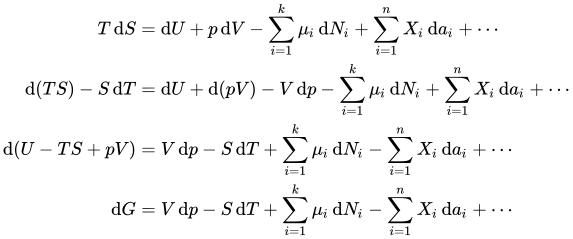
- μi is the chemical potential of the ith chemical component. (SI unit: joules per particle[9] or joules per mole[1])
- Ni is the number of particles (or number of moles) composing the ith chemical component.
This is one form of the Gibbs fundamental equation.[10] In the infinitesimal expression, the term involving the chemical potential accounts for changes in Gibbs free energy resulting from an influx or outflux of particles. In other words, it holds for an open system or for a closed, chemically reacting system where the Ni are changing. For a closed, non-reacting system, this term may be dropped.
Any number of extra terms may be added, depending on the particular system being considered. Aside from mechanical work, a system may, in addition, perform numerous other types of work. For example, in the infinitesimal expression, the contractile work energy associated with a thermodynamic system that is a contractile fiber that shortens by an amount −dl under a force f would result in a term f dl being added. If a quantity of charge −de is acquired by a system at an electrical potential Ψ, the electrical work associated with this is −Ψ de, which would be included in the infinitesimal expression. Other work terms are added on per system requirements.[11]
Each quantity in the equations above can be divided by the amount of substance, measured in moles, to form molar Gibbs free energy. The Gibbs free energy is one of the most important thermodynamic functions for the characterization of a system. It is a factor in determining outcomes such as the voltage of an electrochemical cell, and the equilibrium constant for a reversible reaction. In isothermal, isobaric systems, Gibbs free energy can be thought of as a "dynamic" quantity, in that it is a representative measure of the competing effects of the enthalpic[clarification needed] and entropic driving forces involved in a thermodynamic process.

The temperature dependence of the Gibbs energy for an ideal gas is given by the Gibbs–Helmholtz equation, and its pressure dependence is given by[12] or more conveniently as its chemical potential:
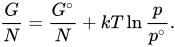
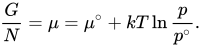
In non-ideal systems, fugacity comes into play.
Derivation
[edit]The Gibbs free energy total differential with respect to natural variables may be derived by Legendre transforms of the internal energy.

The definition of G from above is
- .

Taking the total differential, we have

Replacing dU with the result from the first law gives[13]

The natural variables of G are then p, T, and {Ni}.
Homogeneous systems
[edit]Because S, V, and Ni are extensive variables, an Euler relation allows easy integration of dU:[13]
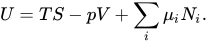
Because some of the natural variables of G are intensive, dG may not be integrated using Euler relations as is the case with internal energy. However, simply substituting the above integrated result for U into the definition of G gives a standard expression for G:[13]
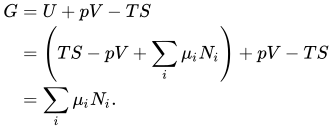
This result shows that the chemical potential of a substance is its (partial) mol(ecul)ar Gibbs free energy. It applies to homogeneous, macroscopic systems, but not to all thermodynamic systems.[14]

Gibbs free energy of reactions
[edit]The system under consideration is held at constant temperature and pressure, and is closed (no matter can come in or out). The Gibbs energy of any system is and an infinitesimal change in G, at constant temperature and pressure, yields

By the first law of thermodynamics, a change in the internal energy U is given by

where δQ is energy added as heat, and δW is energy added as work. The work done on the system may be written as δW = −pdV + δWx, where −pdV is the mechanical work of compression/expansion done on or by the system and δWx is all other forms of work, which may include electrical, magnetic, etc. Then

and the infinitesimal change in G is

The second law of thermodynamics states that for a closed system at constant temperature (in a heat bath), , and so it follows that


Assuming that only mechanical work is done, this simplifies to

This means that for such a system when not in equilibrium, the Gibbs energy will always be decreasing, and in equilibrium, the infinitesimal change dG will be zero. In particular, this will be true if the system is experiencing any number of internal chemical reactions on its path to equilibrium.
In electrochemical thermodynamics
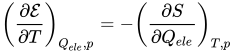
[edit]When electric charge dQele is passed between the electrodes of an electrochemical cell generating an emf , an electrical work term appears in the expression for the change in Gibbs energy: where S is the entropy, V is the system volume, p is its pressure and T is its absolute temperature.


The combination (, Qele) is an example of a conjugate pair of variables. At constant pressure the above equation produces a Maxwell relation that links the change in open cell voltage with temperature T (a measurable quantity) to the change in entropy S when charge is passed isothermally and isobarically. The latter is closely related to the reaction entropy of the electrochemical reaction that lends the battery its power. This Maxwell relation is:[15]
If a mole of ions goes into solution (for example, in a Daniell cell, as discussed below) the charge through the external circuit is

where n0 is the number of electrons/ion, and F0 is the Faraday constant and the minus sign indicates discharge of the cell. Assuming constant pressure and volume, the thermodynamic properties of the cell are related strictly to the behavior of its emf by
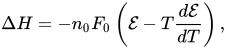
where ΔH is the enthalpy of reaction. The quantities on the right are all directly measurable.
Useful identities to derive the Nernst equation
[edit] | This section may be confusing or unclear to readers. In particular, the physical situation is not explained. Also, the circle notation is not well explained (even in the one case where it is attempted). It's just bare equations. (March 2015) |
During a reversible electrochemical reaction at constant temperature and pressure, the following equations involving the Gibbs free energy hold:
- (see chemical equilibrium),
- (for a system at chemical equilibrium),
- (for a reversible electrochemical process at constant temperature and pressure),
- (definition of ),





and rearranging gives which relates the cell potential resulting from the reaction to the equilibrium constant and reaction quotient for that reaction (Nernst equation), where
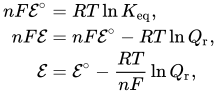
- ΔrG, Gibbs free energy change per mole of reaction,
- ΔrG°, Gibbs free energy change per mole of reaction for unmixed reactants and products at standard conditions (i.e. 298 K, 100 kPa, 1 M of each reactant and product),
- R, gas constant,
- T, absolute temperature,
- ln, natural logarithm,
- Qr, reaction quotient (unitless),
- Keq, equilibrium constant (unitless),
- welec,rev, electrical work in a reversible process (chemistry sign convention),
- n, number of moles of electrons transferred in the reaction,
- F = NAe ≈ 96485 C/mol, Faraday constant (charge per mole of electrons),
- , cell potential,
- , standard cell potential.
Moreover, we also have which relates the equilibrium constant with Gibbs free energy. This implies that at equilibrium and



Standard Gibbs energy change of formation
[edit]| Substance (state) |
ΔfG° | |
|---|---|---|
| (kJ/mol) | (kcal/mol) | |
| NO(g) | 87.6 | 20.9 |
| NO2(g) | 51.3 | 12.3 |
| N2O(g) | 103.7 | 24.78 |
| H2O(g) | −228.6 | −54.64 |
| H2O(l) | −237.1 | −56.67 |
| CO2(g) | −394.4 | −94.26 |
| CO(g) | −137.2 | −32.79 |
| CH4(g) | −50.5 | −12.1 |
| C2H6(g) | −32.0 | −7.65 |
| C3H8(g) | −23.4 | −5.59 |
| C6H6(g) | 129.7 | 29.76 |
| C6H6(l) | 124.5 | 31.00 |
The standard Gibbs free energy of formation of a compound is the change of Gibbs free energy that accompanies the formation of 1 mole of that substance from its component elements, in their standard states (the most stable form of the element at 25 °C and 100 kPa). Its symbol is ΔfG˚.
All elements in their standard states (diatomic oxygen gas, graphite, etc.) have standard Gibbs free energy change of formation equal to zero, as there is no change involved.
- ΔfG = ΔfG˚ + RT ln Qf,
where Qf is the reaction quotient.
At equilibrium, ΔfG = 0, and Qf = K, so the equation becomes
- ΔfG˚ = −RT ln K,
where K is the equilibrium constant of the formation reaction of the substance from the elements in their standard states.
Graphical interpretation by Gibbs
[edit]Gibbs free energy was originally defined graphically. In 1873, American scientist Willard Gibbs published his first thermodynamics paper, "Graphical Methods in the Thermodynamics of Fluids", in which Gibbs used the two coordinates of the entropy and volume to represent the state of the body. In his second follow-up paper, "A Method of Geometrical Representation of the Thermodynamic Properties of Substances by Means of Surfaces", published later that year, Gibbs added in the third coordinate of the energy of the body, defined on three figures. In 1874, Scottish physicist James Clerk Maxwell used Gibbs' figures to make a 3D energy-entropy-volume thermodynamic surface of a fictitious water-like substance.[17] Thus, in order to understand the concept of Gibbs free energy, it may help to understand its interpretation by Gibbs as section AB on his figure 3, and as Maxwell sculpted that section on his 3D surface figure.

See also
[edit]- Bioenergetics
- Calphad (CALculation of PHAse Diagrams)
- Critical point (thermodynamics)
- Electron equivalent
- Enthalpy–entropy compensation
- Free entropy
- Gibbs–Helmholtz equation
- Grand potential
- Non-random two-liquid model (NRTL model) – Gibbs energy of excess and mixing calculation and activity coefficients
- Spinodal – Spinodal Curves (Hessian matrix)
- Standard molar entropy
- Thermodynamic free energy
- UNIQUAC model – Gibbs energy of excess and mixing calculation and activity coefficients
Notes and references
[edit]- ^ a b c Perrot, Pierre (1998). A to Z of Thermodynamics. Oxford University Press. ISBN 0-19-856552-6.
- ^ a b Gibbs, Josiah Willard (December 1873). "A Method of Geometrical Representation of the Thermodynamic Properties of Substances by Means of Surfaces" (PDF). Transactions of the Connecticut Academy of Arts and Sciences. 2: 382–404.
- ^ Peter Atkins; Loretta Jones (1 August 2007). Chemical Principles: The Quest for Insight. W. H. Freeman. ISBN 978-1-4292-0965-6.
- ^ Reiss, Howard (1965). Methods of Thermodynamics. Dover Publications. ISBN 0-486-69445-3.
- ^ Calvert, J. G. (1 January 1990). "Glossary of atmospheric chemistry terms (Recommendations 1990)". Pure and Applied Chemistry. 62 (11): 2167–2219. doi:10.1351/pac199062112167.
- ^ a b "Gibbs energy (function), G". IUPAC Gold Book (Compendium of Chemical Technology). IUPAC (International Union of Pure and Applied Chemistry). 2008. doi:10.1351/goldbook.G02629. Retrieved 24 December 2020.
It was formerly called free energy or free enthalpy.
- ^ Lehmann, H. P.; Fuentes-Arderiu, X.; Bertello, L. F. (1 January 1996). "Glossary of terms in quantities and units in Clinical Chemistry (IUPAC-IFCC Recommendations 1996)". Pure and Applied Chemistry. 68 (4): 957–1000. doi:10.1351/pac199668040957. S2CID 95196393.
- ^ Henry Marshall Leicester (1971). The Historical Background of Chemistry. Courier Corporation. ISBN 978-0-486-61053-5.
- ^ Chemical Potential, IUPAC Gold Book.
- ^ Müller, Ingo (2007). A History of Thermodynamics – the Doctrine of Energy and Entropy. Springer. ISBN 978-3-540-46226-2.
- ^ Katchalsky, A.; Curran, Peter F. (1965). Nonequilibrium Thermodynamics in Biophysics. Harvard University Press. CCN 65-22045.
- ^ Atkins, Peter; de Paula, Julio (2006). Atkins' Physical Chemistry (8th ed.). W. H. Freeman. p. 109. ISBN 0-7167-8759-8.
- ^ a b c Salzman, William R. (2001-08-21). "Open Systems". Chemical Thermodynamics. University of Arizona. Archived from the original on 2007-07-07. Retrieved 2007-10-11.
- ^ Brachman, M. K. (1954). "Fermi Level, Chemical Potential, and Gibbs Free Energy". The Journal of Chemical Physics. 22 (6): 1152. Bibcode:1954JChPh..22.1152B. doi:10.1063/1.1740312.
- ^ H. S. Harned, B. B. Owen, The Physical Chemistry of Electrolytic Solutions, third edition, Reinhold Publishing Corporation, N.Y.,1958, p. 2-6
- ^ CRC Handbook of Chemistry and Physics, 2009, pp. 5-4–5-42, 90th ed., Lide.
- ^ James Clerk Maxwell, Elizabeth Garber, Stephen G. Brush, and C. W. Francis Everitt (1995), Maxwell on heat and statistical mechanics: on "avoiding all personal enquiries" of molecules, Lehigh University Press, ISBN 0-934223-34-3, p. 248.
External links
[edit]- IUPAC definition (Gibbs energy)
- Gibbs Free Energy – Georgia State University

| Theory |  | |
|---|---|---|
| Statistical thermodynamics | ||
| Models | ||
| Mathematical approaches | ||
| Critical phenomena | ||
| Entropy | ||
| Applications | ||
| International | |
|---|---|
| National | |
| Other | |

Gibbs free energy
View on GrokipediaBasic Concepts
Definition
The Gibbs free energy, denoted , is a thermodynamic state function defined as where is the enthalpy of the system, is the absolute temperature, and is the entropy.[1] This expression combines energetic and entropic contributions into a single potential useful for systems at constant temperature and pressure. An equivalent form expresses directly in terms of the internal energy: where is the internal energy, is the pressure, and is the volume.[5] Mathematically, is obtained as the Legendre transform of the internal energy with respect to both the extensive variables entropy and volume , yielding a potential that is naturally a function of the intensive variables temperature and pressure . In physical contexts, the units of are joules (J), while in chemical applications it is commonly reported in kilojoules per mole (kJ/mol) to reflect per-mole quantities.[5] As an extensive property, scales linearly with the size or amount of material in the system, similar to , , and .Physical Interpretation
The change in Gibbs free energy, denoted as ΔG, provides the criterion for determining the spontaneity of thermodynamic processes occurring at constant temperature and pressure. Specifically, a process is spontaneous if ΔG is negative, indicating that the system evolves toward a lower energy state without external intervention; it is at equilibrium if ΔG equals zero, signifying no net change; and it is non-spontaneous if ΔG is positive, requiring external work to proceed.[6] This criterion stems from the second law of thermodynamics and reflects the tendency of isolated systems to increase entropy, adapted for processes at constant temperature and pressure.[7] Under conditions of constant temperature and pressure, the Gibbs free energy G itself acts as the thermodynamic potential that is minimized at equilibrium, guiding the system to its most stable configuration. This minimum principle ensures that any deviation from equilibrium results in a positive ΔG, driving the process back toward stability.[8] In practical terms, G's role extends to predicting the directionality of diverse phenomena, including chemical reactions where negative ΔG favors product formation, phase transitions where the stable phase has the lower G, and mixing processes where entropy-driven decreases in G promote homogenization of compatible substances.[9][10] A representative example is the dissolution of salts in water, where ΔG dictates solubility: salts with sufficiently negative ΔG dissolve spontaneously, as the combined enthalpic and entropic contributions overcome lattice energy, leading to ion hydration and increased disorder.[11] Furthermore, the change in Gibbs free energy quantifies the useful work potential in such systems; specifically, the maximum non-expansion work extractable at constant T and P equals -ΔG, representing the reversible work available beyond mere pressure-volume changes, such as in electrochemical or mechanical processes.[12]Historical Development
Pre-Gibbs Contributions
The foundations of thermodynamic theory in the mid-19th century were laid through experimental and conceptual advances that emphasized the interplay between heat, work, and energy conservation, particularly in processes involving pressure-volume changes. James Prescott Joule conducted pioneering experiments in the 1840s demonstrating the mechanical equivalent of heat, including measurements of heat generated by the compression and expansion of gases, which highlighted the role of pressure-volume (PV) work in converting mechanical energy into thermal energy. These investigations established that work performed against pressure in gaseous systems directly corresponds to heat production, providing empirical support for the conservation of energy in thermodynamic contexts.[13] Joule's work, alongside contributions from contemporaries like Robert Mayer, shifted the understanding of heat from a fluid-like substance (caloric) to a form of energy, setting the stage for quantitative analysis of work in thermal processes.[14] Hermann von Helmholtz advanced these ideas in his 1847 paper "On the Conservation of Force," where he articulated a comprehensive principle of energy conservation applicable to mechanical, thermal, and physiological systems, including early considerations of energy availability in heat-related processes.[15] This work emphasized that forces (or energies) in nature are indestructible and interconvertible, with implications for the maximum work extractable from thermal systems, foreshadowing later thermodynamic potentials.[16] Helmholtz's formulation integrated Joule's experimental findings with broader physical laws, arguing that apparent losses in motive power from heat were not destructions but transformations into less available forms, thus introducing rudimentary notions of usable energy in thermodynamics.[17] Rudolf Clausius built upon these developments in his 1850 memoir "On the Moving Force of Heat," where he formalized the second law of thermodynamics by stating that heat cannot spontaneously flow from a colder to a hotter body without external work, and introduced the concept of available energy as the portion of total energy capable of performing work. Clausius quantified this through the idea of "uncompensated transformations," positing that in irreversible processes, a fraction of energy becomes unavailable for mechanical work due to dissipation, laying the groundwork for entropy as a measure of this unavailability.[18] In subsequent works, particularly his 1865 paper, Clausius explicitly defined entropy (S) and refined the available energy concept, showing it decreases in spontaneous processes at constant temperature, which provided a criterion for equilibrium and spontaneity independent of the first law.[19] These early thermodynamic potentials, such as the internal energy (U) focused on by Joule and Helmholtz or the emerging available energy from Clausius, were primarily suited for analyzing constant-volume processes where PV work is minimal, limiting their applicability to common chemical and atmospheric systems operating at constant pressure.[20] For instance, Helmholtz later formalized the Helmholtz free energy (A = U - TS) in 1882 as a potential for constant-temperature, constant-volume conditions, but pre-1870s frameworks struggled to directly incorporate the enthalpy-like adjustments needed for PV work at fixed pressure, often requiring ad hoc corrections for expansion or compression effects.[21] This inadequacy highlighted the need for a more versatile potential to handle isobaric conditions prevalent in real-world applications, such as chemical reactions in open vessels.Formulation by Josiah Willard Gibbs
Josiah Willard Gibbs first outlined key aspects of his thermodynamic framework in his 1873 paper, "A Method of Geometrical Representation of the Thermodynamic Properties of Substances by Means of Surfaces," published in the Transactions of the Connecticut Academy of Sciences. This work laid foundational ideas for representing thermodynamic states, though the explicit formulation of the potential function central to his later contributions emerged subsequently. Gibbs expanded these concepts significantly in his seminal two-part memoir, "On the Equilibrium of Heterogeneous Substances," appearing in 1876 and 1878 in the same journal, where he systematically developed the thermodynamic potentials necessary for analyzing complex systems. Gibbs' primary motivation was to identify a thermodynamic potential ideally suited for conditions of constant temperature and pressure, which are prevalent in chemical reactions and phase equilibria occurring in natural and laboratory settings. Building on earlier concepts such as Hermann von Helmholtz's free energy function for constant temperature and volume, Gibbs introduced what became known as the Gibbs free energy, denoted as G, as the appropriate criterion for spontaneity and equilibrium under isobaric-isothermal constraints. This potential, defined as G = H - TS where H is enthalpy, T is temperature, and S is entropy, provided a unified way to assess the direction of processes without needing to track internal energy or volume changes directly. In conjunction with G, Gibbs employed multivariable calculus to derive the phase rule, which quantifies the degrees of freedom in heterogeneous systems and relates directly to the minimization of G at equilibrium. Although Gibbs later formalized vector analysis in separate lectures during the 1880s, his thermodynamic treatments relied on differential forms that anticipated vectorial approaches to gradients and potentials in phase space. The phase rule, F = C - P + 2 (where F is degrees of freedom, C is components, and P is phases), emerged as a cornerstone, enabling predictions of stable configurations using G as the governing function.[22] Gibbs' innovations gained limited immediate attention in the United States due to the obscurity of the publishing venue and his reclusive academic profile at Yale, but they received pivotal recognition in Europe through chemists Wilhelm Ostwald and Jacobus Henricus van't Hoff.[22] Ostwald translated key portions of Gibbs' work into German in 1892, facilitating its integration into physical chemistry, while van't Hoff incorporated Gibbsian potentials into his studies of osmotic pressure and chemical affinity, accelerating widespread adoption. This transatlantic delay underscores how Gibbs' rigorous, mathematical approach initially overshadowed more empirical European traditions, yet ultimately transformed thermodynamics into a predictive science for heterogeneous systems.Thermodynamic Derivation
From Fundamental Laws
The first law of thermodynamics states that the change in internal energy of a closed system equals the heat added plus the work done on the system : .[9] For reversible processes, the second law introduces the entropy such that , where is the absolute temperature, and the work for a hydrostatic system is , with the pressure and the volume.[9] Combining these, the fundamental relation for the internal energy becomes .[9] To derive the enthalpy , defined as , differentiate to obtain .[9] Substituting the expression for yields .[9] This form shows enthalpy as a function of entropy and pressure , with natural variables suited to constant-pressure processes. The Gibbs free energy arises via a Legendre transform of the enthalpy, incorporating temperature as the conjugate variable to entropy: .[9] Differentiating gives [9] For systems with variable composition, the full differential includes chemical potentials and amounts of components: , revealing the natural variables of as temperature , pressure , and composition .[9] Under conditions of constant temperature and composition, the integrated form simplifies to .[9] This expression underscores 's role as a thermodynamic potential minimized at equilibrium in systems at fixed and .[9]Differential Forms and Relations
The total differential of the Gibbs free energy for a single-component, closed system at constant composition is given by where is the entropy and is the volume of the system.[23] For multicomponent systems, where composition can vary, the total differential of incorporates changes in the number of moles of each component , expressed as with denoting the chemical potential of component .[24] This form reflects the natural variables of as temperature , pressure , and composition , capturing how responds to variations in these parameters in open or reacting systems.[23] The chemical potential is defined as the partial derivative of with respect to the number of moles of component , holding , , and the moles of other components fixed: Physically, represents the change in per mole of added to the system under these conditions, serving as the partial molar Gibbs free energy.[23] In multicomponent systems, the terms in the differential of account for diffusive or reactive exchanges between components, enabling analysis of processes like mixing or phase separation.[25] Since is a function of , , and , other partial molar quantities can be derived from its second derivatives. For instance, the partial molar volume of component is , where the total volume , so . Similarly, the partial molar entropy is , obtained from the total entropy . These relations highlight how encodes intensive properties through its dependence on composition in multicomponent settings.[26] A key consequence of the differential form of is the Gibbs-Duhem relation, derived from the homogeneity of thermodynamic potentials. For a multicomponent system, it states This equation links changes in chemical potentials to variations in and , imposing a constraint on the behavior of intensive variables across the system. At constant and , it simplifies to , indicating that adjustments in one must be balanced by changes in others to maintain equilibrium.[27][28] In multiphase multicomponent systems, the condition for phase equilibrium requires that the chemical potential of each component be equal in all coexisting phases: for phases and . This equality ensures no net transfer of matter between phases, minimizing the total .[29] Such conditions are fundamental for predicting phase boundaries and compositions in systems like alloys or solutions.[23]Properties and Identities
Maxwell Relations Involving G
The Maxwell relations involving the Gibbs free energy arise from the exactness of its differential form, , where is entropy, is volume, is pressure, is temperature, is the chemical potential of component , and is the number of particles of component . These relations stem from the equality of mixed second partial derivatives of , providing connections between thermodynamic properties that would otherwise be difficult to measure directly./22%3A_Helmholtz_and_Gibbs_Energies/22.03%3A_The_Maxwell_Relations) For a single-component or closed system, the fundamental relation simplifies to . Here, and . Taking the appropriate mixed partial derivatives yields the Maxwell relation This relation, first systematically applied to thermodynamic potentials by J. Willard Gibbs, equates the isothermal pressure dependence of entropy to the negative of the isobaric temperature dependence of volume./22%3A_Helmholtz_and_Gibbs_Energies/22.03%3A_The_Maxwell_Relations) In multicomponent systems, additional Maxwell relations emerge from cross derivatives involving composition. For instance, since and , the equality of mixed derivatives gives A complementary relation from pressure and composition is These relations, integral to Gibbs' formulation of heterogeneous equilibria, link chemical potentials to extensive properties like partial molar entropy and volume.[30] The utility of these Maxwell relations lies in their ability to interconnect experimentally accessible quantities, such as thermal expansion coefficient and isothermal compressibility . Substituting into the primary relation yields , allowing entropy changes under isobaric conditions to be evaluated from volume measurements alone, which is invaluable for predicting phase behavior without direct calorimetry. In multicomponent contexts, the relations facilitate computation of activity coefficients and phase stability from partial molar properties./22%3A_Helmholtz_and_Gibbs_Energies/22.03%3A_The_Maxwell_Relations)[31] These relations also ensure consistency across thermodynamic potentials, such as the Helmholtz free energy or internal energy . For example, the Gibbs-derived aligns with the -based relation via thermodynamic identities like the cyclic rule, bridging constant-pressure and constant-volume descriptions. This cross-potential harmony, emphasized in Gibbs' work, underpins the derivation of equations of state; for an ideal gas, integrating confirms , validating the relation .[31]Homogeneous Systems
In homogeneous systems, the Gibbs free energy serves as the natural thermodynamic potential for describing the state of a single-phase mixture at constant temperature and pressure , where it is expressed as a function of , , and the composition given by the amounts of the components. The total Gibbs free energy is given by , where is the chemical potential of component .[32] This relation holds for any homogeneous mixture, reflecting the extensive nature of and the intensive character of .[32] For ideal solutions, where interactions between unlike molecules are negligible compared to like molecules, the chemical potential of each component takes the form , with as the standard chemical potential of pure and the mole fraction. Substituting this into the expression for yields .[33] This formulation captures the entropic contribution to mixing in ideal homogeneous systems, where the Gibbs energy of mixing is , always negative for and thus favoring spontaneous mixing at constant and .[33] In non-ideal homogeneous solutions, deviations from ideal behavior arise due to molecular interactions, quantified by the excess Gibbs energy , which represents the additional contribution beyond the ideal mixing term. For such systems, , where is the activity coefficient of component that accounts for non-idealities.[34] Models like the regular solution theory approximate for binary mixtures, with as an interaction parameter derived from experimental data.[34] The dependence of on temperature in homogeneous systems follows from thermodynamic relations, particularly the variant of the Gibbs-Helmholtz equation , which links to the enthalpy and enables evaluation of thermal effects on stability.[35] At constant pressure, this implies that changes in with temperature reflect entropic contributions, as , ensuring decreases with increasing disorder in the uniform phase.[35]Chemical Applications
Reaction Spontaneity and Equilibrium
In chemical reactions at constant temperature and pressure, the Gibbs free energy change, denoted as ΔG, determines the spontaneity and direction of the process. For a general reaction expressed as Σ ν_i A_i = 0, where A_i are the species and ν_i are the stoichiometric coefficients (positive for products and negative for reactants), ΔG is calculated as ΔG = Σ ν_i μ_i, with μ_i representing the chemical potential of each species.[36] This formulation arises from the differential of the Gibbs free energy, dG = -S dT + V dP + Σ μ_i dN_i, integrated over the reaction stoichiometry. The sign of ΔG dictates the reaction's behavior: if ΔG < 0, the forward reaction is spontaneous; if ΔG > 0, the reverse reaction is spontaneous; and if ΔG = 0, the system is at equilibrium with no net change.[37] The relationship between ΔG and the reaction quotient Q is given by the equation where ΔG° is the standard Gibbs free energy change (under standard conditions of 1 bar pressure and specified temperature), R is the gas constant, and T is the absolute temperature.[38] Here, Q is the reaction quotient, defined analogously to the equilibrium constant but using instantaneous activities or partial pressures/concentrations of the species. At equilibrium, ΔG = 0 and Q = K (the equilibrium constant), leading to ΔG° = -RT ln K.[39] This equation allows prediction of the reaction direction from current conditions: if Q < K, ΔG < 0 and the reaction proceeds forward; if Q > K, ΔG > 0 and it proceeds in reverse. The equilibrium constant K depends on temperature, as described by the van't Hoff equation: where ΔH° is the standard enthalpy change.[40] This differential form, derived from differentiating ΔG° = -RT ln K while assuming ΔH° is approximately constant, shows that for endothermic reactions (ΔH° > 0), K increases with temperature, shifting equilibrium toward products, whereas for exothermic reactions (ΔH° < 0), K decreases. A representative example is the reaction H₂(g) + I₂(g) ⇌ 2HI(g) at 298 K. The standard Gibbs free energy change is ΔG° = 2 ΔG_f°(HI,g) - ΔG_f°(I₂,g) - ΔG_f°(H₂,g) = 2(1.7 kJ/mol) - 19.3 kJ/mol - 0 kJ/mol = -15.9 kJ/mol, where ΔG_f° values are standard formation energies. Using ΔG° = -RT ln K yields K = exp(-ΔG° / RT) = exp(15900 J/mol / (8.314 J/mol·K × 298 K)) ≈ 610, indicating a strong tendency toward HI formation under standard conditions.[41] For non-standard conditions, such as initial partial pressures P_{H₂} = 0.5 bar, P_{I₂} = 0.5 bar, and P_{HI} = 1 bar, Q = (P_{HI}^2) / (P_{H₂} P_{I₂}) = (1)^2 / (0.5 × 0.5) = 4, so ΔG = -15.9 kJ/mol + (8.314 × 298 / 1000) ln 4 ≈ -15.9 + 2.48 × 1.386 ≈ -12.5 kJ/mol, confirming spontaneity in the forward direction.[38]Standard Gibbs Free Energy of Formation
The standard Gibbs free energy of formation, denoted , is defined as the change in Gibbs free energy for the formation of one mole of a compound in its standard state from its constituent elements in their standard states, under standard conditions of 298.15 K and 1 bar pressure.[2] This quantity provides a measure of the thermodynamic stability of the compound relative to its elements and is fundamental for predicting reaction feasibility. The standard states refer to the most stable form of each element at the specified conditions, such as as diatomic gas or as graphite. By international convention, for all elements in their standard states, ensuring that the formation energy reflects only the compound's stability and not arbitrary reference points.[1] This zero-point convention simplifies calculations across different substances. Tabulated values of are compiled in authoritative databases such as the NIST Chemistry WebBook and the CRC Handbook of Chemistry and Physics, derived from experimental measurements of enthalpies, entropies, and heat capacities.[42][43] For instance, the value for liquid water is kJ/mol at 298.15 K, indicating a highly stable compound.[44] These data enable the application of Hess's law to compute the standard Gibbs free energy change for any reaction: where are the stoichiometric coefficients.[45] This additive property holds because formation reactions form a basis set for all possible chemical processes. The tabulated values are strictly valid only at 298.15 K and 1 bar; deviations at other temperatures require corrections using Kirchhoff's law, which integrates the effects of heat capacity differences on both enthalpy and entropy contributions to Gibbs free energy.[46] For example, the van't Hoff isochore or integrated forms account for these variations, ensuring accuracy in non-standard thermal conditions.Electrochemical Contexts
Gibbs Energy in Electrochemistry
In electrochemistry, the Gibbs free energy change (ΔG) for a reaction in an electrochemical cell is directly related to the electrical work that can be performed, providing a thermodynamic basis for understanding cell operation. In galvanic (voltaic) cells, where spontaneous redox reactions generate electrical energy, the maximum non-expansion work extractable equals the negative of the Gibbs free energy change: ΔG = -nFE, where n is the number of moles of electrons transferred, F is the Faraday constant (approximately 96,485 C/mol), and E is the cell potential in volts.[37] This relation arises because the electrical work done by the cell is w_electrical = -nFE, and under reversible conditions, this matches the free energy available from the reaction.[47] A negative ΔG (spontaneous process) corresponds to a positive E, enabling the cell to drive an external circuit. Under standard conditions (25°C, 1 M concentrations, 1 atm pressure), the equation simplifies to ΔG° = -nFE°, where E° is the standard cell potential. This links thermodynamic data, such as standard electrode potentials, to the feasibility of electrochemical reactions; for instance, tabulated E° values for half-cells allow calculation of overall ΔG° for the cell reaction.[37] In electrolytic cells, where non-spontaneous reactions (ΔG > 0) are driven by an external power source, the minimum electrical work required to proceed equals ΔG, necessitating an applied potential at least as large as |E| to overcome the thermodynamic barrier.[48] The Gibbs free energy plays a central role in battery design, as it governs the open-circuit voltage and overall energy efficiency. Higher |ΔG| values enable greater cell voltages and thus higher energy densities, guiding the selection of electrode materials to maximize electrochemical potential differences while minimizing losses from irreversibilities.[49] For example, in the Daniell cell (Zn(s) | Zn²⁺(aq) || Cu²⁺(aq) | Cu(s)), the standard cell potential E° is 1.10 V (from E°(Cu²⁺/Cu) = 0.34 V and E°(Zn²⁺/Zn) = -0.76 V), with n = 2. Thus, ΔG° = -2 × 96,485 C/mol × 1.10 V = -212 kJ/mol, indicating a highly spontaneous reaction capable of delivering substantial electrical work.[37]Nernst Equation Derivation
The Nernst equation describes the cell potential of an electrochemical cell under non-standard conditions, extending the relationship between Gibbs free energy and electrode potential. For a general cell reaction, the change in Gibbs free energy is given by , where is the standard Gibbs free energy change, is the gas constant, is the temperature in Kelvin, and is the reaction quotient based on the activities of the reactants and products.[50][37] This expression connects to electrochemistry through the fundamental relation , where is the number of moles of electrons transferred in the balanced cell reaction, is the Faraday constant ( C/mol), and is the cell potential. Under standard conditions, , where is the standard cell potential.[50][51] Substituting the electrochemical relations into the Gibbs free energy equation yields . Dividing through by rearranges to the Nernst equation: This form shows how deviations from standard concentrations (reflected in ) affect the cell potential.[50][37] At 298 K, the term approximates 0.0257 V, and using the decadic logarithm (where ) simplifies the equation to (in volts), providing a practical form for calculations at room temperature.[50] The Nernst equation finds applications in devices sensitive to ion concentrations, such as pH electrodes, where the potential depends on the hydrogen ion activity via for the glass electrode half-cell. It also applies to concentration cells, where the potential arises solely from differences in solute concentrations between half-cells, as in for identical electrodes.[52][53] From the Nernst equation and thermodynamic relations, differentiating with respect to temperature at constant pressure gives the identity , linking the temperature coefficient of the cell potential to the standard entropy change of the reaction.[54]Advanced Interpretations
Graphical Representation
In his 1873 publication, J. Willard Gibbs introduced thermodynamic surfaces as a graphical method to represent the properties of substances, including the Gibbs free energy , plotted against temperature and volume (or pressure ).[55] These surfaces depict the geometric relationship between thermodynamic variables, with contours delineating stable, metastable, and unstable regions for different phases of a substance.[56] For a pure fluid, the -- surface often appears as a "swallowtail" shape, where the stable branch corresponds to the equilibrium phase, and intersections along coexistence curves indicate phase transitions.[56] James Clerk Maxwell later constructed physical models of these surfaces based on Gibbs' work, facilitating visualization of stability boundaries.[57] Common tangent constructions on these surfaces or their two-dimensional projections provide a geometric tool for identifying phase equilibria, where the tangent plane or line touches the surface at points representing coexisting phases, ensuring the overall system achieves the minimum Gibbs free energy.[58] This approach highlights how phase boundaries emerge from the convexity of the free energy surface, with the tangent defining the lever rule for phase fractions.[59] In binary systems at constant and , Gibbs free energy versus composition (-) diagrams reveal key features of phase behavior.[59] A smooth convex curve indicates complete miscibility, while a curve with a "hump" signifies a miscibility gap, where the system separates into two phases connected by a common tangent.[59] Azeotropes appear as inflection points where the tangent is horizontal, corresponding to compositions unchanged during phase separation. For ternary systems, isothermal sections of phase diagrams incorporate contours of Gibbs free energy to map three-phase regions and tie-lines.[60] Tie-lines connect the compositions of coexisting phases, with their direction determined by the common tangent plane on the -- surface, ensuring non-crossing lines that minimize the total free energy per the Gibbs phase rule.[60] This visualization aids in identifying solvus boundaries and three-phase triangles in complex alloys. Contemporary computational tools, exemplified by the CALPHAD (Calculation of Phase Diagrams) method, build upon Gibbs' graphical foundations by parameterizing phase-specific Gibbs energy functions and generating extrapolated diagrams for multicomponent systems.[61] CALPHAD optimizes these functions against experimental data to produce -based contour plots and tie-lines, enabling predictions of phase stability in materials design.[61]Extensions to Non-ideal Systems
In non-ideal systems, the Gibbs free energy concept extends to interfaces where surface effects introduce excess contributions. The surface tension, denoted as γ, represents the excess Gibbs free energy per unit area at an interface and is thermodynamically defined as the partial derivative of the total Gibbs free energy G with respect to the surface area A at constant temperature T and pressure P: This relation arises from the imbalance of intermolecular forces at the boundary between phases, such as liquid-vapor or solid-liquid interfaces, leading to a measurable increase in free energy required to expand the surface.[62] For instance, in colloidal systems or emulsions, this excess energy influences stability and adsorption behavior, as described by the Gibbs adsorption isotherm, which links changes in surface tension to solute accumulation at the interface.[63] For non-ideal mixtures, deviations from ideal behavior are accounted for using activity coefficients γ_i, which modify the chemical potential μ_i of component i according to where a_i = γ_i x_i is the activity, x_i is the mole fraction, μ_i^0 is the standard chemical potential, R is the gas constant, and T is temperature. In ideal solutions, γ_i = 1, but non-ideality—due to molecular interactions like hydrogen bonding or electrostatic forces—causes γ_i to deviate, affecting the excess Gibbs free energy of mixing ΔG^{ex} = RT ∑ x_i \ln γ_i. This framework, foundational in solution thermodynamics, enables accurate predictions of phase behavior in binary or multicomponent systems, such as alcohol-water mixtures where γ_i can exceed 10 for certain compositions. Guggenheim's regular solution theory provides a basis for estimating these coefficients through interaction parameters, emphasizing symmetric non-idealities in lattice models. The Gibbs phase rule extends free energy minimization to heterogeneous systems, quantifying the degrees of freedom F in equilibrium: F = C - P + 2, where C is the number of components and P is the number of phases. This rule derives from the condition that at constant T and P, the total Gibbs free energy G is minimized subject to mass balance constraints across phases, with intensive variables (like chemical potentials) equalized between phases. For a univariant system (F=1), such as the melting of a pure substance, temperature fixes the pressure at equilibrium, illustrating how G minimization governs phase coexistence in alloys or geological formations. J. Willard Gibbs originally formulated this in his analysis of heterogeneous equilibria, providing a cornerstone for predicting system behavior without explicit free energy calculations.[64] In biological contexts, Gibbs free energy drives processes like protein folding and metabolic reactions by favoring states of lower G. Protein folding minimizes the free energy landscape, where the native conformation represents a global minimum in G, balancing enthalpic stabilization from hydrophobic interactions and entropic costs from chain confinement; unfolding transitions, such as in denaturation, increase G by 20-60 kJ/mol depending on the protein. In metabolic pathways, ATP hydrolysis exemplifies a highly exergonic reaction with a standard ΔG° ≈ -30.5 kJ/mol under physiological conditions (pH 7, 1 mM Mg²⁺), coupling its negative ΔG to endergonic steps like biosynthesis or active transport, ensuring directionality in cellular energy transfer.[65][66] Computational extensions employ free energy perturbation (FEP) methods in molecular dynamics simulations to estimate ΔG differences between states, such as ligand binding affinities. Introduced by Zwanzig, FEP transforms a reference system to a perturbed one via a coupling parameter λ, yielding ΔG = -RT ln ⟨exp(-ΔU/RT)⟩_0, where ΔU is the potential energy difference and the average is over the reference ensemble; this enables quantitative predictions in drug design by sampling conformational changes over nanoseconds. High-impact applications, like absolute binding free energy calculations, achieve accuracies within 2-5 kJ/mol for protein-ligand complexes when combined with enhanced sampling techniques.[67]References
- https://en.wikisource.org/wiki/Scientific_Papers_of_Josiah_Willard_Gibbs%2C_Volume_1