Hubbry Logo
Stress fractureStress fractureMain
Open search
Stress fracture
Community hub
Stress fracture
logo
8 pages, 0 posts
0 subscribers
Be the first to start a discussion here.
Stress fracture
Stress fracture
from Wikipedia
Stress fracture
Other namesHairline fracture, fissure fracture, march fracture, spontaneous fracture, fatigue fracture
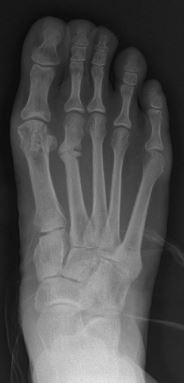
Stress fracture of the second metatarsal bone (below the knuckles of the second toe)
SpecialtyOrthopedics

A stress fracture is a fatigue-induced bone fracture caused by repeated stress over time. Instead of resulting from a single severe impact, stress fractures are the result of accumulated injury from repeated submaximal loading, such as running or jumping. Because of this mechanism, stress fractures are common overuse injuries in athletes.[1]

Stress fractures can be described as small cracks in the bone, or hairline fractures. Stress fractures of the foot are sometimes called "march fractures" because of the injury's prevalence among heavily marching soldiers.[2] Stress fractures most frequently occur in weight-bearing bones of the lower extremities, such as the tibia and fibula (bones of the lower leg), calcaneus (heel bone), metatarsal and navicular bones (bones of the foot). Less common are stress fractures to the femur, pelvis, sacrum, lumbar spine (lower back), hips, hands, and wrists. Stress fractures make up about 20% of overall sports injuries. [3] Treatment usually consists of rest followed by a gradual return to exercise over a period of months.[1]

Signs and symptoms

[edit]

Stress fractures are typically discovered after a rapid increase in exercise. Symptoms usually have a gradual onset, with complaints that include isolated pain along the shaft of the bone and during activity, decreased muscular strength and cramping. In cases of fibular stress fractures, pain occurs proximal to the lateral malleolus, that increases with activity and subsides with rest.[4] If pain is constantly present it may indicate a more serious bone injury.[5] There is usually an area of localized tenderness on or near the bone and generalized swelling in the area. Pressure applied to the bone may reproduce symptoms[1] and reveal crepitus in well-developed stress fractures.[4] Anterior tibial stress fractures elicit focal tenderness on the anterior tibial crest, while posterior medial stress fractures can be tender at the posterior tibial border.[5]

Causes

[edit]

Bones are constantly attempting to remodel and repair themselves, especially during a sport where extraordinary stress is applied to the bone. Over time, if enough stress is placed on the bone that it exhausts the capacity of the bone to remodel, a weakened site—a stress fracture—may appear on the bone. The fracture does not appear suddenly. It occurs from repeated traumas, none of which is sufficient to cause a sudden break, but which, when added together, overwhelm the osteoblasts that remodel the bone.[6]

Potential causes include overload caused by muscle contraction, amenorrhea, an altered stress distribution in the bone accompanying muscle fatigue, a change in ground reaction force (concrete to grass) or the performance of a rhythmically repetitive stress that leads up to a vibratory summation point.[7]

Stress fractures commonly occur in sedentary people who suddenly undertake a burst of exercise (whose bones are not used to the task). They may also occur in athletes completing high volume, high impact training, such as running or jumping sports. Stress fractures are also commonly reported in soldiers who march long distances.

Muscle fatigue can also play a role in the occurrence of stress fractures. In a runner, each stride normally exerts large forces at various points in the legs. Each shock—a rapid acceleration and energy transfer—must be absorbed. Muscles and bones serve as shock absorbers. However, the muscles, usually those in the lower leg, become fatigued after running a long distance and lose their ability to absorb shock. As the bones now experience larger stresses, this increases the risk of fracture.

Previous stress fractures have been identified as a risk factor.[8] Along with history of stress fractures, a narrow tibial shaft, high degree of hip external rotation, osteopenia, osteoporosis, and pes cavus are common predisposing factors for stress fractures.[4]

Common causes in sport that result in stress fractures include:[7]

  • Over training
  • Going back to competition too soon after an injury or illness
  • Going from one event to another without proper training for the second event
  • Starting initial training too quickly
  • Changing habits or the environment like training surface or shoes

Diagnosis

[edit]

X-rays usually do not show evidence of new stress fractures, but can be used approximately three weeks after onset of pain when the bone begins to remodel.[5] A CT scan, MRI, or 3-phase bone scan may be more effective for early diagnosis.[9]

MRI appears to be the most accurate diagnostic test.[10]

Tuning forks have been advocated as an inexpensive alternative for identifying the presence of stress fractures. The clinician places a vibrating tuning fork along the shaft of the suspected bone. If a stress fracture is present, the vibration would cause pain. This test has a low positive likelihood ratio and a high negative likelihood ratio meaning it should not be used as the only diagnostic method.[4]

Prevention

[edit]

Altering the biomechanics of training and training schedules may reduce the prevalence of stress fractures.[11] Orthotic insoles have been found to decrease the rate of stress fractures in military recruits, but it is unclear whether this can be extrapolated to the general population or athletes.[12] On the other hand, some athletes have argued that cushioning in shoes actually causes more stress by reducing the body's natural shock-absorbing action, thus increasing the frequency of running injuries.[13] During exercise that applies more stress to the bones, it may help to increase daily calcium (2,000 mg) and vitamin D (800 IU) intake, depending on the individual.[11]

Treatment

[edit]

For low-risk stress fractures, rest is the best management option. The amount of recovery time varies greatly depending upon the location and severity of the fracture, and the body's healing response. Complete rest and a stirrup leg brace or walking boot are usually used for a period of four to eight weeks, although periods of rest of twelve weeks or more are not uncommon for more-severe stress fractures.[11] After this period, activities may be gradually resumed as long as the activities do not cause pain. While the bone may feel healed and not hurt during daily activity, the process of bone remodeling may take place for many months after the injury feels healed. Instances of refracturing the bone are still a significant risk.[14] Activities such as running or sports that place additional stress on the bone should only gradually be resumed. Rehabilitation usually includes muscle strength training to help dissipate the forces transmitted to the bones.[11]

With severe stress fractures (see "prognosis"), surgery may be needed for proper healing. The procedure may involve pinning the fracture site, and rehabilitation can take up to six months.[citation needed]

Prognosis

[edit]

Anterior tibial stress fractures can have a particularly poor prognosis and can require surgery. On radiographic imaging, these stress fractures are referred to as the "dreaded black line."[7] When compared to other stress fractures, anterior tibial fractures are more likely to progress to complete fracture of the tibia and displacement.[5] Superior femoral neck stress fractures, if left untreated, can progress to become complete fractures with avascular necrosis, and should also be managed surgically.[15] Proximal metadiaphyseal fractures of the fifth metatarsal (middle of the outside edge of the foot) are also notorious for poor bone healing.[15] These stress fractures heal slowly with significant risk of refracture.[14]

Epidemiology

[edit]

In the United States, the annual incidence of stress fractures in athletes and military recruits ranges from 5% to 30%, depending on the sport and other risk factors.[16] Women and highly active individuals are also at a higher risk. The incidence probably also increases with age due to age-related reductions in bone mass density (BMD). Children may also be at risk because their bones have yet to reach full density and strength. The female athlete triad also can put women at risk as disordered eating and osteoporosis can cause the bones to be severely weakened.[17]

This type of injury is mostly seen in lower extremities, due to the constant weight-bearing (WB). The bones commonly affected by stress fractures are the tibia, tarsals, metatarsals (MT), fibula, femur, pelvis and spine. Upper extremity stress fractures occur less frequently and are usually created in the upper torso by muscle forces.[18]

The population that has the highest risk for stress fractures is athletes and military recruits who are participating in repetitive, high intensity training. Sports and activities that have excessive, repetitive ground reaction forces have the highest incidence of stress fractures.[19] The site at which the stress fracture occurs depends on the activity/sports that the individual participates in.[citation needed]

Women are more at risk for stress fractures than men due to factors such as lower aerobic capacity, reduced muscle mass, lower bone mineral density, among other anatomical and hormone-related elements. Women also have a two- to four-times increased risk of stress fractures when they have amenorrhea compared to women who are eumenorrheic.[20] Reduced bone health increases the risk of stress fractures and studies have shown an inverse relationship between bone mineral density and stress fracture occurrences. This condition is most notable and commonly seen on the femoral neck.[21]

Other animals

[edit]

Dinosaurs

[edit]
Allosaurus fragilis was found to have the most stress fractures of any dinosaur examined in a 2001 study.

In 2001, Bruce Rothschild and other paleontologists published a study examining evidence for stress fractures in theropod dinosaurs and analyzed the implications such injuries would have for reconstructing their behavior. Since stress fractures are due to repeated events they are probably caused by expressions of regular behavior rather than chance trauma. The researchers paid special attention to evidence of injuries to the hand since dinosaurs' hind feet would be more prone to injuries received while running or migrating. Hand injuries, meanwhile, were more likely to be caused by struggling prey. Stress fractures in dinosaur bones can be identified by looking for bulges on the shafts of bones that face toward the front of the animal. When X-rayed, these bulges often show lines of clear space where the X-rays have a harder time traveling through the bone. Rothschild and the other researchers noted that this "zone of attenuation" seen under the X-ray typically cannot be seen with the naked eye.[22]

The researchers described theropod phalanges as being "pathognomonic" for stress fractures; this means they are "characteristic and unequivocal diagnostically”. Rothschild and the other researchers examined and dismissed other kinds of injury and sickness as causes of the lesions they found on the dinosaurs' bones. Lesions left by stress fractures can be distinguished from osteomyelitis without difficulty because of a lack of bone destruction in stress fracture lesions. They can be distinguished from benign bone tumors like osteoid osteoma by the lack of a sclerotic perimeter. No disturbance of the internal bony architecture of the sort caused by malignant bone tumors was encountered among the stress fracture candidates. No evidence of metabolic disorders like hyperparathyroidism or hyperthyroidism was found in the specimens, either.[22]

After examining the bones of many kinds of dinosaur the researchers noted that Allosaurus had a significantly greater number of bulges on the shafts of its hand and foot bones than the tyrannosaur Albertosaurus, or the ostrich dinosaurs Ornithomimus and Archaeornithomimus. Most of the stress fractures observed along the lengths of Allosaurus toe bones were confined to the ends closest to the hind foot, but were spread across all three major digits in "statistically indistinguishable" numbers. Since the lower end of the third metatarsal would have contacted the ground first while a theropod was running it would have borne the most stress and should be most predisposed to develop stress fractures. The lack of such a bias in the examined fossils indicates an origin for the stress fractures from a source other than running. The authors conclude that these fractures occurred during interaction with prey. They suggest that such injuries could occur as a result of the theropod trying to hold struggling prey with its feet. The presence of stress fractures provide evidence for very active predation-based feeding rather than scavenging diets.[22]

References

[edit]
[edit]
Revisions and contributorsEdit on WikipediaRead on Wikipedia
from Grokipedia
A stress fracture is a small crack in a bone caused by repetitive stress and overuse, rather than a single traumatic injury, most commonly affecting weight-bearing bones in the lower extremities such as the tibia, metatarsals, and fibula. These injuries arise from an imbalance in bone remodeling, where repetitive mechanical loading exceeds the bone's ability to repair itself, leading to microdamage accumulation and eventual fracture; this process typically manifests after about three weeks of intensified activity. Osteoclasts resorb bone tissue faster than osteoblasts can form new bone, weakening the structure over time in response to abnormal forces on otherwise normal bone. Stress fractures account for approximately 20% of sports medicine injuries and up to 16% of injuries in runners, with higher incidence in military recruits (5.69 per 1,000 person-years) and a notable predominance in females due to factors like hormonal imbalances and lower bone density. Common risk factors include sudden increases in training intensity or volume, participation in high-impact sports such as running, basketball, or gymnastics, nutritional deficiencies in vitamin D or calcium, improper footwear, and intrinsic issues like flat feet, osteoporosis, or a history of prior stress fractures. Symptoms often begin as localized pain that worsens with weight-bearing activity and improves with rest, accompanied by tenderness, mild swelling, and sometimes pinpoint discomfort upon palpation. Diagnosis typically involves a thorough history and physical exam, with imaging such as MRI preferred for early detection due to its sensitivity in identifying bone edema and cracks, while initial X-rays may appear normal and only show changes weeks later. Treatment focuses on conservative management, including rest to offload the affected bone (often with crutches, boots, or braces), ice application, and gradual return to activity after 6-8 weeks of healing, though surgery may be required for high-risk sites like the navicular or in cases of delayed union. Pain relief with acetaminophen is recommended, but nonsteroidal anti-inflammatory drugs should be avoided as they may impair bone healing.

Overview and Pathophysiology

Definition and Types

A stress fracture is defined as a small crack or severe bruising within a , resulting from repetitive mechanical stress or overuse rather than a single traumatic event. These injuries typically develop in bones subjected to continuous loading, such as the in the lower leg, metatarsals in the foot, or in the , where the cumulative force exceeds the 's ability to repair microdamage in real time. The condition was first described in 1855 by Prussian surgeon Johann Georg Breithaupt, who observed foot pain and swelling in soldiers after prolonged marches, terming it a "march fracture" due to its prevalence among recruits undergoing intense physical . This early recognition highlighted the role of repetitive activity in non-traumatic injuries, laying the groundwork for modern understanding of overuse pathologies in athletes and active populations. Stress fractures are classified into low-risk and high-risk types based on their anatomical location, blood supply, and potential for without complications such as displacement or . Low-risk fractures, which have favorable and , commonly occur in the posterior or medial (shin bone, supporting body weight during locomotion), (lateral lower leg bone, sharing load with the ), and first to third metatarsals (long bones in the midfoot that bear weight during ). These sites typically respond well to rest and non-operative care, with low rates of progression to complete fracture. In contrast, high-risk fractures involve areas with poorer blood supply or higher mechanical demands, including the anterior (front of the shin, prone to tension forces), tarsal navicular (a midfoot bone bridging the arch), and (upper bone near the , critical for weight transmission). These require more aggressive monitoring and intervention due to risks of delayed or . Approximately 95% of stress fractures occur in the lower extremities, reflecting the high impact of activities on these structures. Beyond the (accounting for about 50% of cases, as the primary load-bearing bone from knee to ankle), other frequent sites include the metatarsals (up to 25%, the five long bones forming the forefoot's structure), (around 15%, aiding in shock absorption), and (5-10%, vulnerable during running or jumping). Less common locations, such as the or upper extremities, represent under 10% of occurrences and are often linked to specific sports like throwing or .

Pathophysiology

Stress fractures develop through a disruption in the normal process, where repetitive mechanical loading overwhelms the 's adaptive capacity. undergoes continuous remodeling via a cycle involving osteoclastic resorption of old followed by osteoblastic formation of new , typically completing in 3 to 4 months. This process maintains skeletal , but under excessive submaximal stress, osteoclastic activity accelerates, creating resorption cavities that outpace osteoblastic repair, leading to the accumulation of microdamage and temporary weakening. According to , adapts to mechanical stresses by remodeling along lines of force, increasing density and strength in response to habitual loading; however, when repetitive stress exceeds the repair threshold, this adaptation fails, resulting in structural fatigue. Biomechanically, this manifests as fatigue failure in the matrix, particularly within cortical bone's Haversian systems—cylindrical units where osteoclasts excavate canals aligned with stress directions (3 to 10 mm deep), which osteoblasts then refill with immature lamellar . Microstructural changes include the formation of resorption cavities and diffuse microcracks, often accompanied by periosteal ischemia, further compromising in the outer cortex. The progression occurs in stages: initial repetitive loading induces and linear microcracks; persistent activity triggers periosteal reaction and cortical thickening as a reparative response; if loading continues, these evolve into a visible line through coalescence of microdamage. Recent insights highlight hyperactivity in states of low , such as , where enhanced resorption exacerbates microdamage susceptibility under cyclic stress, amplifying risk even at moderate loads.

Risk Factors and Causes

Intrinsic Risk Factors

Intrinsic risk factors for stress fractures encompass inherent biological, physiological, and anatomical characteristics that increase susceptibility to bone stress injuries by compromising skeletal integrity or load distribution. These factors often relate to an imbalance in bone remodeling, where resorption outpaces formation, leading to reduced bone strength under repetitive loading. Bone health issues, particularly reduced bone mineral density (BMD), play a central role in predisposing individuals to stress fractures. Conditions such as and diminish bone mass and microarchitectural deterioration, making bones more vulnerable to microdamage from cyclic stress. exacerbates this risk by impairing calcium absorption and bone mineralization, with studies showing that athletes with low serum 25(OH)D levels have a significantly higher incidence of stress fractures. Genetic predispositions contribute to stress fracture vulnerability through variations affecting quality and repair mechanisms. Polymorphisms in the COL1A1 gene, which encodes , are associated with lower BMD and increased fracture risk, particularly in physically active individuals subjected to high mechanical loads. Other genetic factors, including variants in and genes, have been linked to altered and higher susceptibility in recruits and athletes. Hormonal influences, especially those disrupting endocrine balance, heighten risk by affecting bone formation and . The female athlete triad—characterized by low energy availability, menstrual dysfunction, and low BMD—substantially elevates stress fracture incidence, with athletes facing two or more components having 4.7 times greater odds compared to those without. Endocrine disorders like further contribute by reducing levels, which are essential for maintaining bone mass. Anatomical variations alter biomechanical loading patterns, concentrating stress on specific bones. Leg length discrepancies greater than 0.5 cm can unevenly distribute forces across the lower extremities, with 73% of recruits with such discrepancies sustaining stress fractures in the longer . Foot types such as , with its high arch and reduced shock absorption, predispose individuals to metatarsal stress fractures by amplifying ground reaction forces on the lateral foot. Reduced muscle mass also impairs force dissipation, further elevating susceptibility in those with lower limb or imbalance. Demographic factors like female sex and advancing age independently amplify risk through physiological mechanisms. Females exhibit approximately 2 to 3 times higher stress rates than males, attributable to lower peak BMD, narrower geometry, and estrogen's protective effects on . Age-related loss accelerates after peak bone mass (typically in the third decade), with older adults showing diminished remodeling capacity and higher incidence per nationwide analyses.

Extrinsic Risk Factors

Extrinsic risk factors for stress fractures encompass modifiable external influences, such as practices, choices, nutritional habits, occupational demands, and biomechanical elements, which can precipitate overload when combined with repetitive loading. These factors are particularly relevant in high-impact activities where gradual is not prioritized, leading to microdamage accumulation in bones like the and metatarsals. Addressing them through targeted modifications can significantly mitigate injury risk in susceptible populations. Training errors represent a primary extrinsic contributor, often involving abrupt escalations in exercise volume, intensity, or frequency without sufficient recovery. For instance, rapid increases exceeding 10% in weekly running mileage have been associated with heightened stress fracture incidence among athletes, as this outpaces capacity. Inadequate rest periods between sessions further exacerbate this by preventing natural repair processes, a pattern commonly observed in endurance sports like distance running. Equipment-related issues, including suboptimal and training surfaces, amplify impact forces transmitted to bones. Worn-out or poorly cushioned shoes, particularly those over six months old, reduce shock absorption and elevate risk, especially in subjected to prolonged marching. Similarly, hard surfaces like compared to softer tracks increase ground reaction forces, contributing to tibial and metatarsal stress fractures in runners. Nutritional deficits, such as insufficient calcium and intake, impair bone mineralization and heighten vulnerability to stress fractures, particularly in athletes with energy imbalances. Daily calcium consumption below 1,000 mg, often seen in those with (RED-S), correlates with reduced and increased injury rates. Low serum levels (<20 ng/mL) are similarly linked to higher fracture incidence, though supplementation with 800 IU and 2,000 mg calcium has demonstrated a 20% reduction in stress fractures among female military recruits. Occupational exposures in professions involving repetitive high-impact activities, such as military training or , substantially elevate stress fracture risk due to unavoidable loading demands. In military recruits, rigorous basic training programs result in an incidence of 5.69 stress fractures per 1,000 person-years, often in the lower extremities from marching and running. Dancers face comparable risks from pliés, jumps, and pointe work, which impose uneven forces on the feet and legs, with dancers reporting musculoskeletal disorders at rates up to 80% annually. Biomechanical overload from improper technique can lead to uneven distribution across bones, accelerating and development. Faulty running form, such as excessive striking or poor posture, increases tibial loading and , particularly in novices or those with inadequate coaching. This extrinsic factor often interacts with training volume to precipitate injuries in sports requiring precise , like track events or .

Clinical Presentation and Diagnosis

Signs and Symptoms

Stress fractures typically manifest with that develops insidiously over time, often beginning as a dull ache after and worsening with continued exercises. This is localized to the specific bone affected and tends to improve with rest, distinguishing it from more acute injuries. On , patients often exhibit point tenderness upon direct of the fracture site, accompanied by mild swelling or occasional bruising in the surrounding area; an , characterized by limping to avoid weight on the affected limb, is also common. The symptoms generally progress from an initial vague, activity-related discomfort to more intense pain that interferes with daily activities and walking; in advanced cases, the pain may persist at rest or even occur at night. Associated symptoms may include localized muscle soreness resulting from compensatory overuse due to altered , though stress fractures lack systemic manifestations such as fever or generalized . Site-specific presentations can vary; for instance, metatarsal stress fractures often cause forefoot pain that may mimic the heel discomfort of , while calcaneal fractures present with plantar heel pain exacerbated by heel-strike activities. Most stress fractures occur in bones of the lower and foot.

Diagnostic Methods

Diagnosis of stress fractures begins with a thorough and to identify patterns suggestive of overuse injury. Patients typically report a gradual onset of localized that worsens with activities and improves with rest, often linked to recent increases in training intensity or volume over the past 2 to 3 weeks. A detailed activity , including running distance, footwear changes, and biomechanical factors, helps differentiate stress fractures from other conditions. Physical examination focuses on focal bone tenderness at the site of , which is a key indicator. For lower extremity involvement, the one-leg hop test is commonly performed: the patient hops in place on the affected limb, and reproduction suggests a stress fracture with high clinical suspicion. Other maneuvers, such as the fulcrum test for femoral shaft fractures or the Stork test for stress injuries, may elicit and support the diagnosis. However, clinical tests like the hop test have variable diagnostic accuracy and are not definitive alone; a found that tests such as and application yield sensitivities of 35-92% and specificities of 19-83%, underscoring the need for imaging confirmation. Imaging modalities are essential for confirming the diagnosis, as initial clinical findings alone cannot reliably distinguish stress fractures from soft tissue injuries. Plain radiography () serves as the initial imaging test due to its availability and low cost, but it has low sensitivity (often <50%) in the early stages, as fracture lines or periosteal reactions may not appear until 2-3 weeks after symptom onset. If X-rays are negative but suspicion remains high, (MRI) is the gold standard, offering 80-100% sensitivity and near 100% specificity for detecting and subtle fracture lines on T1- and T2-weighted sequences as early as 24-72 hours post-injury. Other advanced imaging techniques provide complementary information in specific scenarios. (bone scan) demonstrates high sensitivity (up to 74-100%) for early stress reactions by highlighting increased osteoblastic activity but lacks specificity, often showing uptake in non-fracture pathologies, and involves , limiting its routine use. Computed tomography (CT) is reserved for high-risk sites or when MRI is inconclusive, providing detailed cortical visualization but with lower sensitivity for early compared to MRI and higher radiation dose. is an emerging, non-ionizing option for correlating findings with tenderness, particularly in superficial sites like the , though its role remains adjunctive due to limited evidence on diagnostic accuracy. Differential diagnosis involves ruling out mimics such as medial tibial stress syndrome, , or neoplastic processes through characteristic imaging patterns: MRI distinguishes stress fractures by linear edema patterns absent in , while cortical thickening on CT helps exclude tumors.

Prevention and Management

Prevention Strategies

Preventing stress fractures requires implementing structured training protocols that minimize repetitive loading on bones while allowing adequate recovery. A commonly recommended guideline is the 10% rule, which suggests increasing running volume or intensity by no more than 10% per week to avoid overloading skeletal structures, though recent as of 2025 indicates it has limited protective effect and that avoiding large spikes in distance during single training sessions is more critical for . Incorporating , such as alternating running with low-impact activities like or , helps distribute mechanical stress across different muscle groups and reduces the cumulative load on vulnerable sites like the or metatarsals. of training programs, including scheduled rest days—at least one per week—and longer recovery periods, such as one week every three months, further supports bone adaptation and mechanosensitivity restoration. Nutritional strategies play a critical role in maintaining health and mitigating risk, particularly through adequate intake of calcium and . Recommendations for athletes at risk include 1,500–2,000 mg of calcium per day combined with 800 IU of , as this regimen has been shown to significantly decrease stress fracture incidence in high-risk groups like female military recruits. Screening for deficiencies in these nutrients is essential, especially in populations with limited sun exposure or dietary restrictions, to enable targeted supplementation and prevent subclinical impairments in mineralization. Biomechanical interventions can optimize load distribution and enhance skeletal resilience. Custom , designed to correct alignment issues like excessive pronation, have been associated with improved comfort and reduced injury rates during running by altering ground reaction forces. Rotating footwear pairs regularly prevents wear-related changes in cushioning and support, thereby maintaining consistent biomechanical support and lowering the risk of lower extremity stress injuries. programs focused on lower limb muscles, such as the calves and hips, provide better shock absorption and muscular support to bones, contributing to overall prevention when integrated into routine conditioning. For at-risk populations, pre-season screening using bone mineral density (BMD) testing via is advised to identify individuals with low BMD, particularly female athletes susceptible to the female athlete triad. This early detection allows for tailored interventions to address underlying factors like energy deficits before training intensifies. Educational programs targeting coaches and athletes emphasize recognizing early warning signs, such as localized during activity or swelling, to facilitate prompt modifications in training load and prevent progression to fractures. These initiatives, often delivered through workshops or guidelines from organizations, empower participants to monitor symptoms and adhere to preventive protocols effectively.

Treatment Approaches

The primary treatment for most stress fractures involves conservative management, focusing on reducing mechanical stress to allow . This typically includes relative rest and offloading the affected area for 4 to 8 weeks, often achieved through non-weight-bearing status with crutches, pneumatic braces, or walking boots to minimize and promote recovery. application and acetaminophen are recommended for control during the acute phase; nonsteroidal drugs (NSAIDs) such as ibuprofen should be avoided as they may delay . Rehabilitation follows the initial rest period with a graduated return-to-activity protocol to prevent recurrence. emphasizes strengthening exercises for surrounding muscles, retraining to correct biomechanical imbalances, and low-impact activities like or to maintain fitness. Progression is gradual, with increases in activity volume limited to less than 10% per week for runners, monitored via serial to confirm before full return to , typically over 8 to 12 weeks total. Surgical intervention is indicated for high-risk stress fractures, such as those in the (particularly tension-sided or involving more than 50% of width), anterior , or tarsal navicular, where poor vascularity increases risk. Procedures often involve with cannulated screws or plates to stabilize the fracture and accelerate healing, especially in athletes or cases of displacement or progression despite conservative care. Emerging therapies aim to enhance rates. (PRP) injections, utilizing autologous growth factors, have shown potential to shorten healing time in bone fractures by promoting activity, with clinical studies reporting reduced recovery duration though without consistent improvement in union rates; evidence specific to stress fractures remains limited but promising in the 2020s for select cases. Bisphosphonates, which inhibit , are occasionally considered in refractory cases to stabilize microdamage, but their role is not routinely recommended due to insufficient high-quality evidence. Treatment varies by fracture site to address anatomical demands. For metatarsal stress fractures, a pneumatic or walking allows partial after 2 to 6 weeks of immobilization, facilitating earlier mobility while protecting the . In contrast, navicular stress fractures require strict non- in a for at least 6 weeks due to high risk, with surgical fixation preferred for displaced or sclerotic lesions to ensure union.

Prognosis and Complications

The prognosis for stress fractures is generally favorable with appropriate , though outcomes vary based on fracture , severity, and patient compliance. Low-risk stress fractures, such as those in the posteromedial or metatarsals, typically heal within 6 to 8 weeks with conservative treatment involving rest and activity modification, while high-risk fractures, including those in the anterior , , or tarsal navicular, may require 3 to 6 months for resolution due to poorer and higher mechanical stress. progress is monitored through serial imaging, such as MRI or bone scans, to assess resolution of bone edema and guide return to activity. Several factors influence , including the specific site of the fracture, adherence to protocols, and underlying density (BMD). Anterior tibial stress fractures carry a poor with up to a 50% risk of if not managed aggressively, often necessitating surgical intervention like intramedullary nailing to promote union. Low BMD, commonly seen in athletes with relative energy deficiency or postmenopausal individuals, exacerbates healing delays and increases complication rates by impairing . Potential complications include progression to a complete , chronic pain from , and , particularly in femoral neck cases. Untreated or high-risk femoral neck stress fractures can displace, leading to complete and subsequent in up to 20-30% of tension-side injuries due to disrupted supply. may persist in 10-15% of cases involving delayed union, often requiring prolonged rehabilitation or operative fixation. With proper management, 80-90% of athletes achieve full recovery and return to pre-injury activity levels, typically after a gradual progression from non-impact exercises to sport-specific training. However, recurrence risk remains at 10-20%, particularly in individuals with persistent risk factors like inadequate or rapid training escalation, emphasizing the need for long-term monitoring. Recent 2025 studies highlight the role of biologics, such as (PRP) and mesenchymal stem cells, in reducing complications like and potentially accelerating healing in high-risk stress fractures through enhanced osteogenic signaling and reduced inflammation. These therapies show promise in minimizing risk in femoral cases, though larger randomized trials are ongoing to confirm efficacy.

Epidemiology

Incidence in Humans

Stress fractures represent approximately 10% to 20% of all injuries encountered in practices and up to 20% of overuse injuries in runners. In the general active population, the annual incidence is estimated at around 1%, though this rises significantly in high-risk groups such as military recruits, where rates can reach 7% to 10% during basic training. Early observations during the indicated an uptick in stress fracture cases, attributed to a surge in recreational fitness activities like running amid gym closures and lifestyle changes. Individuals who substantially increased their running volume during this period faced a 1.5- to 6-fold elevated risk. However, a 2023 study of intercollegiate athletes found no consistent increase in the incidence of bony stress injuries post-pandemic hiatus, with notable decreases in high-risk sports such as female cross-country running. Stress fractures exhibit a notable disparity, occurring 2 to 4 times more frequently in females than in males across athletic and military populations. The age distribution peaks in young adults aged 15 to 35 years, coinciding with heightened levels in adolescents and early adulthood.

Prevalence in Specific Populations

Stress fractures exhibit varying prevalence across specific populations, particularly those subjected to repetitive high-impact loading. Among athletes, rates are notably high in endurance sports such as distance running, where stress fractures account for 10% to 20% of all clinic injuries, with track-and-field events showing the highest incidence at up to 21.1% among competitive participants. dancers face elevated risks due to intensive , with studies reporting stress fractures in up to 17% of professional dancers, often affecting the metatarsals, , and spine. Gymnasts also experience increased prevalence from repetitive impact, with bone stress injuries comprising a significant portion of overuse injuries in this group, particularly in the lower extremities. Military personnel, especially recruits undergoing basic training, demonstrate some of the highest rates, with incidences ranging from 20% to 50%, attributed to sudden increases in marching and load-bearing activities; tibial fractures are most common in this cohort. In the U.S. Army, female recruits show particularly elevated risks, up to 79.9 cases per 1,000 recruits, compared to 19.3 per 1,000 in males. Other vulnerable groups include postmenopausal women with , who face heightened susceptibility due to reduced , with stress fractures contributing to overall fragility fracture burdens in this population. A 2025 systematic review reported bone stress injury up to 40.9% among female off-road runners, including ultra-marathoners, reflecting the cumulative strain of extreme endurance events and highlighting risk factors such as disrupted and low energy availability. Ethnic variations influence risk, with higher observed in Caucasians compared to other groups, such as non-Hispanic Blacks, in large cohorts like U.S. . Protective factors appear in populations engaging in varied loading, such as team sports participants, who exhibit lower stress fracture rates than those in individual endurance activities; for instance, prior ball sports participation reduces by up to 13% per additional year in runners.

Stress Fractures in Other Animals

In Domestic and Wild Animals

Stress fractures are prevalent in domestic animals, particularly in those subjected to high-impact activities, with horses representing one of the most studied species. In racehorses, tibial stress fractures are among the most common, accounting for approximately 60% of diagnosed stress fractures in some cohorts, often occurring in young, unraced 2-year-olds due to repetitive loading during training. These fractures are frequently diagnosed using nuclear scintigraphy, which detects early changes before radiographic visibility, with about 76% eventually appearing on radiographs. Risk factors include training on hard track surfaces, which increase impact forces and contribute to fatigue failure in the . In dogs, stress fractures commonly affect the , especially in agility and racing breeds like Greyhounds, where repetitive jumping and high-speed turns lead to microdamage accumulation. Digit injuries, including metatarsal fractures, comprise 13-24% of agility-related injuries, with fractures making up 35.7% of those cases, predominantly in hind limbs. Cats experience stress fractures less frequently but notably in the , often bilaterally without trauma history, linked to subtle overuse in active individuals; such cases warrant evaluation for underlying metabolic issues. Treatment for both typically involves conservative management with strict rest—such as crate confinement for 4-8 weeks in dogs and cats—to allow , though surgical options like intramedullary pinning are used for displaced metatarsal fractures in dogs to stabilize and promote . The of stress fractures in animals mirrors that in humans, involving an imbalance between by osteoclasts and formation by osteoblasts under repetitive mechanical stress, leading to microdamage accumulation if recovery is inadequate; however, younger animals often exhibit faster due to robust remodeling capacity. Veterinary management emphasizes prevention and supportive care, including nutritional supplements like to support and health in at-risk horses, alongside farriery adjustments such as padded shoes or surface modifications to reduce ground reaction forces and mitigate tibial stress. In dogs and cats, similar rest protocols are standard, with monitoring via serial to assess . Evidence of stress fractures in wild animals is limited due to challenges in observation and , but cases suggest parallels to domestic scenarios from prolonged migration or repetitive locomotion; for instance, in zoo-held , enclosure pacing—a stereotypic from confinement stress—may involve repetitive , though specific fracture documentation remains sparse. Overall, these injuries highlight the need for environmental adaptations in managed wild populations to prevent overuse pathologies akin to those in domestic animals.

In Dinosaurs and Paleopathology

Fossil evidence of stress fractures in dinosaurs primarily comes from theropod specimens, where healed injuries in lower limb bones indicate recovery from repetitive loading during locomotion and predation. A prominent 1990s discovery is the subadult Allosaurus fragilis specimen "Big Al" (MOR 693) from the , which preserves multiple pathologies including stress fractures in pedal phalanges with bulbous calluses and cortical remodeling, signifying effective bone repair processes. Among theropods, stress injuries are commonly documented in the legs of predatory , reflecting the biomechanical stresses of bipedal and pursuit behaviors. Surveys of tyrannosaurid fossils reveal fibular fractures in approximately 10-15% of specimens from formations, while analyses indicate that about 25% of injuries in theropod specimens, including those from 31 Tyrannosaurus rex individuals, were to the forelimbs or feet, underscoring the prevalence in active carnivores. Paleopathological diagnosis relies on advanced imaging techniques, such as CT scans, which uncover subtle features like periosteal reactions and healing callus formation within fossilized . MicroCT scans of an ornithomimosaur metatarsal, for example, exposed extensive periosteal bone growth and internal linked to a chronic mid-diaphyseal , distinguishing stress-induced damage from traumatic breaks. Such injuries suggest significant paleoecological implications, including behavioral modifications like limping or reduced mobility during recovery, as inferred from and trackways showing gait irregularities in approximately 1% of preserved theropod prints. Recent investigations from 2022 to 2025 on Tyrannosaurus rex specimens have identified features potentially linked to repetitive stress, including a 2022 analysis of bone porosity in a suggesting osteoporosis-like conditions from bipedal loading demands, and a 2025 study on vascular structures in a fractured rib revealing responses.

References

Add your contribution
Related Hubs
User Avatar
No comments yet.