Hubbry Logo
search
logo
2310384

Haptophyte

logo
Community Hub0 Subscribers
Read side by side
from Wikipedia

Haptophytes
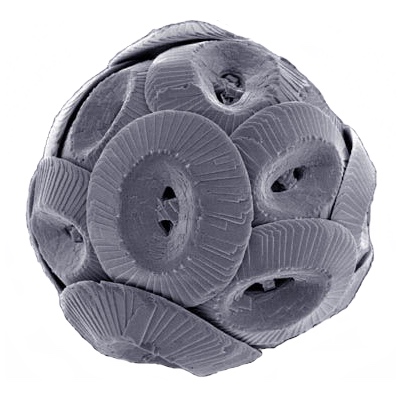
Coccolithophore (Coccolithus pelagicus)
Scientific classification Edit this classification
Domain: Eukaryota
Phylum: Haptista
Subphylum: Haptophytina
Hibberd, 1976 stat. nov. Cavalier-Smith, 2015[1]
Classes & orders
Synonyms
  • Prymnesiophyta Green & Jordan, 1994
  • Prymnesiophyceae s.l. Casper, 1972 ex Hibberd, 1976
  • Haptophyceae s.l. Christensen, 1962 ex Silva, 1980
  • Haptophyta Hibberd, 1976

The haptophytes, classified either as the Haptophytina, Haptophyta or Prymnesiophyta (named for Prymnesium), are a clade of algae that can produce minerals.

The names Haptophyceae or Prymnesiophyceae are sometimes used instead.[2][3][4] This ending implies classification at the class rank rather than as a division. Although the phylogenetics of this group has become much better understood in recent years, there remains some dispute over which rank is most appropriate.

Characteristics

[edit]
Representation of a haptophyte
  1. Haptonema, for movement
  2. Flagellar basal bodies
  3. Flagellum
  4. Surface scale
  5. Alveolae, surface cavities or pits
  6. Mitochondrion, creates ATP (energy) for the cell
  7. Golgi apparatus, modifies proteins and sends them out of the cell
  8. Nascent scales
  9. Endoplasmic reticulum, the transport network for molecules going to specific parts of the cell
  10. Plastidial endoplasmic reticulum
  11. Periplastidial membrane
  12. Outer and inner plastid membranes
  13. Thylakoid, site of the light-dependent reactions of photosynthesis
  14. Pyrenoid, center of carbon fixation
  15. Nucleus
  16. Lysosome, holds enzymes
  17. Phagocytic vacuole with prey

The chloroplasts are pigmented similarly to those of the heterokonts,[5] but the structure of the rest of the cell is different, so it may be that they are a separate line whose chloroplasts are derived from similar red algal endosymbionts. Haptophyte chloroplasts contain chlorophylls a, c1, and c2 but lack chlorophyll b. For carotenoids, they have beta-, alpha-, and gamma- carotenes. Like diatoms and brown algae, they have also fucoxanthin, an oxidized isoprenoid derivative that is likely the most important driver of their brownish-yellow color.[6]

The cells typically have two slightly unequal flagella, both of which are smooth, and a unique organelle called a haptonema, which is superficially similar to a flagellum but differs in the arrangement of microtubules and in its use. The name comes from the Greek hapsis, touch, and nema, round thread. The mitochondria have tubular cristae.

Most haptophytes reportedly produce chrysolaminarin rather than starch as their major storage polysaccharide, but some Pavlovaceae produce paramylon.[7][8] The chain length of the chrysolaminarin is reportedly short (polymers of 20–50 glycosides, unlike the 300+ of comparable amylose), and it is located in cytoplasmic membrane-bound vacuoles.[8]

Significance

[edit]

The best-known haptophytes are coccolithophores, which make up 673 of the 762 described haptophyte species,[9] and have an exoskeleton of calcareous plates called coccoliths. Coccolithophores are some of the most abundant marine phytoplankton, especially in the open ocean, and are extremely abundant as microfossils, forming chalk deposits. Other planktonic haptophytes of note include Chrysochromulina and Prymnesium, which periodically form toxic marine algal blooms, and Phaeocystis, blooms of which can produce unpleasant foam which often accumulates on beaches.[10]

Haptophytes are economically important, as species such as Pavlova lutheri and Isochrysis sp. are widely used in the aquaculture industry to feed oyster and shrimp larvae. They contain a large amount of polyunsaturated fatty acids such as docosahexaenoic acid (DHA), stearidonic acid and alpha-linolenic acid.[11] Tisochrysis lutea contains betain lipids and phospholipids.[12]

Classification

[edit]

The haptophytes were first placed in the class Chrysophyceae (golden algae), but ultrastructural data have provided evidence to classify them separately.[13] Both molecular and morphological evidence supports their division into five orders; coccolithophores make up the Isochrysidales and Coccolithales. Very small (2–3μm) uncultured pico-prymnesiophytes are ecologically important.[10]

Haptophytes was discussed to be closely related to cryptomonads.[14]

Haptophytes are closely related to the SAR clade.[15]

Subphylum Haptophytina Cavalier-Smith 2015 [Haptophyta Hibberd 1976 sensu Ruggerio et al. 2015][16]

References

[edit]
[edit]
Revisions and contributorsEdit on WikipediaRead on Wikipedia
from Grokipedia
Haptophytes, also known as Haptophyta, are a monophyletic clade of predominantly unicellular, marine microalgae distinguished by the presence of a haptonema—a flagellum-like appendage situated between two smooth flagella that aids in attachment, prey capture, and cell orientation.[1] These algae typically measure 2–20 μm in size and possess golden-brown chloroplasts containing chlorophylls a, c1, c2, and c3, along with the carotenoid fucoxanthin, enabling phototrophy as their primary mode of nutrition, though some exhibit mixotrophy or heterotrophy.[2] Classified into two main classes—Pavlovophyceae and Prymnesiophyceae (also called Coccolithophyceae)—haptophytes encompass approximately 500 described species, with molecular surveys suggesting far greater diversity, including uncultured lineages like the DPL clade and Rappemonads.[3][1] A defining subgroup, coccolithophores, produce intricate calcium carbonate scales called coccoliths, which form an exoskeleton and play a pivotal role in the global carbon cycle through calcification—a process that sequesters atmospheric CO₂ into sediments.[4] These scales, composed of calcite crystals, are formed intracellularly in the Golgi apparatus and vary from elaborate heterococcoliths to simpler holococcoliths, contributing to the fossil record dating back to the Triassic period (approximately 225 million years ago), with recent findings pushing the record to approximately 241 million years ago in the Early Triassic.[2][5] Haptophytes often bear organic scales made of sulfated polysaccharides and proteins, which provide protection and aid in flotation, and they reproduce primarily asexually via binary fission, with some evidence of sexual cycles involving haploid and diploid phases.[2] Notable species include Emiliania huxleyi, the most abundant coccolithophore and a prolific bloom-former responsible for vast oceanic "whitings," and Phaeocystis spp., which produce gelatinous colonies impacting marine food webs.[1] Ecologically, haptophytes rank as the second most abundant eukaryotic phytoplankton after diatoms, serving as foundational primary producers that contribute significantly to global oxygen production and the biological pump, exporting carbon to deep ocean layers.[6] They synthesize dimethylsulfoniopropionate (DMSP), an osmolyte that, upon degradation, releases dimethyl sulfide (DMS)—a gas influencing cloud formation and climate regulation—and also produce long-chain alkenones used in paleoclimate reconstructions.[1] While mostly benign, certain species like Prymnesium parvum form toxic blooms that harm fisheries and aquaculture, highlighting their dual role in marine health.[2] Genomically, haptophytes trace their origins to over 1 billion years ago, with chloroplasts derived from a secondary endosymbiosis of a red alga, underscoring their evolutionary complexity and adaptability across polar to subtropical waters.[1]

Morphology and Physiology

Cell Structure

Haptophytes exhibit a typical eukaryotic cell organization, featuring a membrane-bound nucleus that houses the genetic material, mitochondria with tubular cristae for energy production, and a Golgi apparatus involved in the synthesis and modification of cellular components.[7][7] These organelles support the fundamental cellular processes, with the Golgi playing a key role in the production of cell surface structures.[7] The chloroplasts in photosynthetic haptophytes are derived from secondary endosymbiosis, originating from the engulfment of a red alga by an ancestral eukaryote, resulting in organelles surrounded by four membranes.[7] These plastids contain chlorophylls a, c1, c2, and in some cases c3 as primary pigments, along with fucoxanthin as the dominant accessory pigment, which imparts a golden-brown coloration to the cells.[8] Haptophyte cells typically range in size from 2 to 20 μm in diameter, with the cosmopolitan coccolithophore Emiliania huxleyi serving as an example at 4–6 μm.[9][10] Haptophytes store energy reserves as polysaccharides, primarily chrysolaminarin, a soluble β-1,3-glucan, or in some cases paramylon-like compounds, accumulated in cytoplasmic vesicles.[7] The cell surface is often adorned with scales, including organic scales associated with the haptonema and, in coccolithophores, calcified scales known as coccoliths.[7] These organic scales are mainly composed of cellulose and are synthesized in the Golgi apparatus.[7] In coccolithophores, coccolith formation occurs intracellularly within specialized Golgi-derived coccolith vesicles, where calcium carbonate crystals are mineralized in a controlled morphogenesis process before secretion to the cell exterior.[7][11]

Motility and Sensory Structures

Haptophytes primarily achieve motility through two smooth flagella lacking mastigonemes, a feature that sets them apart from heterokont algae with their characteristic hairy appendages. These flagella are typically of similar length and inserted apically or subapically on the cell, with one oriented forward to sense the environment and the other trailing to generate thrust via a breaststroke-like beat pattern. This arrangement enables effective swimming in aquatic environments, allowing cells to navigate as planktonic organisms. In species such as Prymnesium parvum, the flagella coordinate to produce speeds sufficient for escaping predators or pursuing prey, with beat frequencies adjusted based on environmental conditions.[12][13] The defining feature for motility and interaction in haptophytes is the haptonema, a unique appendage non-homologous to flagella and composed of six or seven singlet microtubules surrounded by endoplasmic reticulum. Inserted between the flagella, it can extend up to 500 μm in length in certain species, such as Chrysochromulina polylepis, far exceeding cell body size (typically 3–10 μm). The haptonema exhibits rapid coiling and uncoiling motions driven by calcium-dependent microtubule conformational changes, enabling adhesion to surfaces or prey items without propelling the cell like a true flagellum. This structure is crucial for phagotrophic feeding, where it coils around bacteria or smaller protists to transport them to the cell's ingestion site, as observed in mixotrophic haptophytes.[14][15][16] In addition to locomotion, the haptonema serves sensory roles, detecting tactile stimuli to trigger directional changes in swimming, such as avoidance responses upon contact with obstacles. In species like Chrysochromulina, it contributes to phototaxis by aiding orientation toward light sources, potentially integrating with chloroplast-based light sensing for positive phototaxis, and to chemotaxis during prey detection by responding to chemical cues. Motility extends beyond flagellated swimming; non-flagellated stages in some haptophytes, including coccolithophores like Emiliania huxleyi, exhibit amoeboid movement via pseudopodia formation, often induced by environmental factors such as bacterial presence. Gliding occurs in attached cells, where haptonema-mediated adhesion combined with subtle flagellar beats propels the cell along substrates. These diverse patterns enhance survival in variable marine conditions.[17][18][19]

Photosynthetic and Metabolic Processes

Photosynthetic haptophytes perform oxygenic photosynthesis within chloroplasts that contain thylakoids typically stacked in pairs or threes, a structural feature that supports efficient light capture and electron transport. These thylakoids house photosystems I and II, where light energy drives the production of ATP and NADPH through non-cyclic photophosphorylation. The reducing power generated is then utilized in the Calvin-Benson cycle, occurring in the chloroplast stroma, to fix atmospheric CO₂ into organic compounds such as glyceraldehyde-3-phosphate. This process is analogous to that in other photosynthetic eukaryotes but adapted to the marine environment through specialized pigment-protein complexes.[20][21] The light-harvesting apparatus in haptophytes consists of fucoxanthin-chlorophyll a/c-binding proteins (FCPs), which form supercomplexes with photosystems I and II to optimize energy transfer. These FCPs bind chlorophyll a, chlorophyll c₁ and c₂, and the carotenoid fucoxanthin, enabling absorption across a broad spectrum, particularly in the blue-green wavelengths (450–550 nm) that penetrate deeper into oligotrophic ocean waters. Chlorophyll c₁ exhibits absorption maxima at approximately 447, 578, and 626 nm, while chlorophyll c₂ peaks at 447, 574, and 622 nm; fucoxanthin complements this with strong absorption between 480–540 nm, enhancing photosynthetic efficiency under low-light conditions prevalent in their habitats. This pigment composition not only broadens the usable light spectrum but also provides photoprotection against excess irradiance.[22][23][24] Many haptophytes exhibit mixotrophy, integrating autotrophy via photosynthesis with heterotrophic nutrition through osmotrophy (uptake of dissolved organic matter) or phagotrophy (engulfment of particles). This dual strategy allows them to thrive in nutrient-variable environments, supplementing carbon and nutrients when light or inorganic resources are limiting. For instance, the bloom-forming species Prymnesium parvum combines phototrophy with phagotrophy, actively engulfing bacteria to acquire organic nutrients, and can occasionally engage in parasitism on other protists. Such flexibility enhances survival and growth rates, particularly during transitions between light-limited and nutrient-depleted phases.[25][26] A key metabolic feature of haptophytes is the production of dimethylsulfoniopropionate (DMSP), synthesized primarily via the transamination pathway from methionine, serving as an osmolyte to regulate cell volume in fluctuating salinities and as an antioxidant to mitigate oxidative stress from photosynthesis. DMSP concentrations can reach millimolar levels intracellularly, with synthesis involving enzymes like methionine γ-lyase and subsequent methylation steps. Breakdown occurs through two main pathways: demethylation to methylmercaptopropionate, which recycles sulfur, or cleavage by DMSP lyases to produce dimethyl sulfide (DMS) and acrylate, the latter acting as an antimicrobial agent. DMS release contributes to sulfur cycling, though at the cellular level, it primarily results from stress-induced lyase activity.[27][28] Haptophytes display high nutritional demands for phosphorus, essential for ATP synthesis, nucleic acids, and phospholipids, often leading to luxury uptake and storage in polyphosphate granules under replete conditions. Trace metals such as zinc, cobalt, and iron are critical cofactors for enzymes in photosynthesis and carbon fixation; for example, zinc limitation in Emiliania huxleyi elevates particulate inorganic-to-organic carbon ratios by altering calcification. These requirements influence bloom dynamics, as phosphorus scarcity can trigger mixotrophic shifts or cell lysis, while trace metal availability modulates growth rates and community dominance in iron-limited oceanic gyres.[29][30][31]

Ecology and Distribution

Habitats and Environmental Adaptations

Haptophytes primarily inhabit marine planktonic environments, ranging from coastal and neritic zones to the open pelagic ocean, where they form a significant component of phytoplankton communities.[32] While overwhelmingly marine, rare species occur in freshwater or soil habitats, such as certain members of the Pavlovophyceae like Pavlova species.[33] These organisms thrive in the euphotic zone, contributing to primary production across diverse aquatic systems, though their abundance is modulated by environmental gradients.[34] Haptophytes exhibit adaptations to varying salinity through the production of dimethylsulfoniopropionate (DMSP), a compatible solute that functions as an osmolyte to maintain cellular turgor under fluctuating salinities, particularly in euryhaline species.[35] DMSP also serves as an antioxidant, scavenging reactive oxygen species induced by environmental stresses.[36] Temperature optima for most haptophytes fall between 10–25°C, with some groups like Phaeocystales adapted to colder conditions below 8°C, enabling persistence in polar and temperate waters.[33] For light, they produce UV-protective pigments such as fucoxanthin and 19'-hexanoyloxyfucoxanthin, alongside photoacclimation mechanisms that allow tolerance to high irradiance, as seen in Emiliania huxleyi.[32] In response to nutrient gradients, haptophytes prefer stratified oligotrophic waters, where their high affinity for inorganic nutrients supports growth as K-strategists.[33] Coccolithophores, a key subgroup, employ calcification as a mechanism to buffer intracellular pH, upregulating the pH of the coccolith vesicle to facilitate calcium carbonate precipitation amid acidification risks.[37] This process also stabilizes local seawater pH near cells, enhancing survival in dynamic carbonate conditions.[38] Mixotrophic nutrition, involving uptake of organic matter, further aids persistence in nutrient-limited settings.[32] Life cycle stages influence habitat occupancy, with cyst formation enabling benthic survival during adverse conditions; for instance, Emiliania huxleyi produces resting cysts that endure prolonged darkness or stress, facilitating recovery and dispersal.[39] Haptophytes demonstrate tolerance to environmental extremes, forming blooms in nutrient-enriched upwelling zones where rapid nutrient influx supports proliferation, as observed with Emiliania huxleyi and Phaeocystis species.[33] These adaptations collectively underpin their resilience in variable marine conditions.[32]

Global Distribution and Biodiversity

Haptophytes exhibit a predominantly marine distribution, with approximately 517 extant described species worldwide as of late 2024, though metagenomic surveys continue to uncover additional diversity.[40] These unicellular algae are rare in freshwater systems, where only a handful of species occur, and their presence in polar regions is limited compared to temperate zones.[1] Among the major groups, about 48% are coccolith-bearing forms known as coccolithophores, comprising roughly 250–300 species that produce calcium carbonate scales, while the remainder consists of non-calcifying haptophytes, such as prymnesiophytes, which dominate in terms of uncultured environmental diversity.[41][1] Biodiversity is highest in temperate and subtropical oceans, where environmental conditions favor a wide array of species, including both calcifying and non-calcifying forms; in contrast, polar oceans and freshwater habitats support far lower species richness due to temperature and salinity constraints.[42] Biogeographic patterns reveal a mix of cosmopolitan and regionally restricted species. For instance, Emiliania huxleyi is a globally distributed coccolithophore found across all major ocean basins from surface waters to depths of around 200 m, contributing to its widespread occurrence. In contrast, certain endemics or regionally abundant species, such as some Prymnesium taxa, show higher prevalence in semi-enclosed basins like the Mediterranean Sea, highlighting localized diversity gradients.[43] Recent genomic and metagenomic efforts have described numerous new haptophyte species or lineages, particularly non-calcifying forms, through environmental DNA sequencing that reveals hidden diversity beyond traditional culturing methods.[1][40] These discoveries, often from ocean metagenomes, underscore the phylum's underestimated richness and the role of molecular tools in expanding our understanding of haptophyte biogeography.[44]

Ecological and Economic Significance

Role in Marine Ecosystems

Haptophytes play a pivotal role in marine primary production, contributing significantly to global carbon fixation through photosynthesis. This contribution is particularly pronounced in oligotrophic waters, where non-calcifying haptophytes dominate the picoplankton fraction, supporting the base of oceanic food webs. Coccolithophores, a key subgroup of haptophytes, further enhance carbon export by forming calcium carbonate structures that constitute about half of the global flux of particulate inorganic carbon to the deep sea, facilitating the biological pump through sinking aggregates.[45] In marine food webs, haptophytes occupy a foundational position as primary producers grazed upon by zooplankton, including copepods such as Acartia and Eurytemora, which transfer energy to higher trophic levels.[46] While most haptophytes serve as prey, certain mixotrophic species, like those in the Prymnesiales order, also act as predators by grazing on bacteria and smaller protists, adding complexity to microbial loop dynamics.[47] Trophic interactions extend to competition with diatoms, where haptophytes, as K-strategists with high nutrient affinity, outcompete diatoms in nutrient-limited subtropical and temperate regions, influencing phytoplankton community structure and succession.[42] Additionally, some non-photosynthetic haptophytes engage in symbiotic associations, including rare instances supporting nutrient cycling in coral reef ecosystems via heterotrophic partnerships.[48] Haptophytes exert profound biogeochemical influences, notably through coccolith formation, which sequesters CO₂ by increasing particle density for enhanced sinking—a ballast effect that promotes long-term carbon burial in sediments.[49] They are also major producers of dimethylsulfoniopropionate (DMSP), an osmolyte whose breakdown yields dimethyl sulfide (DMS), the dominant natural sulfur source to the atmosphere that forms cloud condensation nuclei and modulates radiative forcing in the sulfur cycle.[50] Massive blooms, such as those of Emiliania huxleyi, routinely span over 1 million km² in the North Atlantic and Southern Ocean, scattering light to reduce penetration into deeper waters and locally altering pH through intensified photosynthesis and calcification.[51][52] These dynamics underscore haptophytes' integral role in regulating ocean optics, chemistry, and carbon cycling.

Interactions with Climate and Human Activities

Haptophytes, particularly calcifying species like coccolithophores, are highly sensitive to ocean acidification, which reduces the availability of carbonate ions essential for shell formation. Experimental and modeling studies of species such as Emiliania huxleyi indicate potential impairment in calcification under elevated CO₂ scenarios. This impairment could weaken the biological carbon pump, as reduced calcification limits the export of calcium carbonate particles to deeper waters. Concurrently, ocean warming is driving poleward expansions of haptophyte bloom ranges, with E. huxleyi observed shifting northward into polar regions, potentially altering high-latitude ecosystems.[53] Haptophytes also contribute to climate feedback mechanisms through dimethylsulfide (DMS) emissions, primarily from DMSP-rich species that produce aerosols enhancing cloud albedo and inducing a cooling effect. DMS oxidation forms sulfate particles that act as cloud condensation nuclei, reflecting solar radiation and mitigating warming. However, rising CO₂ levels and acidification are projected to decrease global sea-surface DMS concentrations by 15.1% by 2099 under high-emission scenarios, potentially reducing this negative feedback and aerosol radiative forcing by up to 0.03 W m⁻².[54] In the Southern Ocean, shifts in haptophyte dominance, such as from Phaeocystis antarctica to smaller diatoms due to acidification, represent potential tipping points that could diminish carbon export efficiency despite overall increases in net primary production.[55] Human activities exacerbate haptophyte-related issues through nutrient pollution, where agricultural runoff introduces excess nitrogen and phosphorus, fueling eutrophication and promoting harmful algal blooms (HABs). This nutrient enrichment has expanded HAB occurrences globally, including blooms of toxigenic haptophytes that disrupt aquatic food webs. For instance, Prymnesium parvum blooms, triggered by such pollution, caused extensive fish kills in Texas' Lake Granbury in early 2023, with over 80 reports of dead fish including shad and game species, amid drought conditions.[56] These events highlight how anthropogenic eutrophication intensifies HAB risks, leading to economic losses from fishery impacts.[57] Despite these challenges, haptophytes offer economic benefits in aquaculture, where species like Isochrysis galbana serve as nutrient-rich feed for shellfish larvae, supporting high survival and growth rates in bivalve hatcheries. Its lipid and fatty acid profile enhances larval development in oysters and clams, making it a staple in commercial production. Additionally, lipid-rich haptophytes such as Pavlova lutheri, with up to 28.88% total lipid content, hold biotechnological promise for biofuel production, where stress-induced lipid accumulation via transesterification yields sustainable biodiesel alternatives.[58][59] Conservation efforts leverage advanced monitoring to mitigate haptophyte bloom risks, including NASA's Ocean Color satellite data, which tracks haptophyte chlorophyll a concentrations across oceans like the Atlantic, revealing seasonal peaks and anomalies such as 2021 increases in the Southern Ocean. Recent 2025 genomic advancements, including high-quality assemblies of P. parvum genomes (e.g., 97.56 Mb for strain CCMP 3037), enable identification of toxin-related genes like polyketide synthases, facilitating predictive models for HAB outbreaks under nutrient stress.[60][61] These tools support proactive management amid climate and human pressures.

Classification and Evolution

Taxonomic Classification

Haptophytes belong to the domain Eukaryota, kingdom Chromista (or Haptista in some schemes), and phylum Haptophyta, a group of primarily unicellular, flagellated algae distinguished by the presence of a haptonema.[62][63] The phylum Haptophyta, established by Hibberd in 1976, encompasses organisms that exhibit diverse nutritional modes, including phototrophy and phagotrophy, and is characterized by unique scales and pigments such as fucoxanthin.[64] Nomenclature within the phylum adheres to the International Code of Nomenclature for algae, fungi, and plants (ICN), with the type genus Prymnesium (order Prymnesiales) and type species Prymnesium saltans Massart 1920 serving as the nomenclatural type.[65] For instance, Pavlova Butcher 1960 is recognized as the type genus for the order Pavlovales within the class Pavlovophyceae.[66] The phylum is divided into four classes: Prymnesiophyceae (non-calcifying species), Coccolithophyceae (calcifying forms known as coccolithophores), Pavlovophyceae (distinguished by flagellar and scale traits), and the smaller Rappephyceae (including the rappemonad lineage identified via phylogenomics).[67][68] These classes collectively contain several orders, such as Isochrysidales (encompassing non-calcifying prymnesiophytes like Isochrysis) and Phaeocystales (including bloom-forming Phaeocystis).[64][69] Recent taxonomic revisions from 2023 to 2025 have incorporated multilocus phylogenies and morphological data to refine classifications, including the splitting of orders like Prymnesiales into genera such as Haptolina and Pseudohaptolina based on ribosomal DNA and scale ultrastructure.[70] A key 2023 update revised the Pavlovophyceae, emending genera like Exanthemachrysis, Rebecca, and Pavlova, and describing two new species (Exanthemachrysis fresneliae and Rebecca billardiae) using cytomorphological traits such as pyrenoid structure and life stages.[71] These changes reflect ongoing integration of molecular and ultrastructural evidence, resulting in approximately 80 recognized genera across the phylum.[72] While the vast majority of haptophyte species are marine, a small number occur in non-marine environments, including freshwater and terrestrial habitats such as certain Prymnesium species in lakes and soil-inhabiting forms.[62][65]

Evolutionary History and Phylogeny

Haptophytes are believed to have originated through a secondary endosymbiosis event, in which a heterotrophic eukaryotic host engulfed a red alga, leading to the integration of a photosynthetic plastid similar to that found in other chromalveolates.[73] Molecular clock analyses estimate this divergence from other chromist lineages occurred approximately 824 million years ago, with a 95% highest posterior density interval spanning 1,031 to 637 million years ago, placing their emergence in the Neoproterozoic era. The fossil record provides the earliest direct evidence of haptophytes through coccoliths, minute calcium carbonate scales produced by certain lineages; ghost fossils of coccolithophores dating to about 241 million years ago in the Middle Triassic (Ladinian stage) represent the oldest known occurrences, predating previous records by roughly 26 million years and indicating a post-Permian recovery diversification among marine calcifiers. Recent 2025 analyses confirm these ghost fossils, identifying species such as Crucirhabdus primulus.[74] More unambiguous body fossils appear in the Late Triassic to Early Jurassic, with significant accumulations during the Cretaceous, such as the chalk deposits forming the White Cliffs of Dover, which resulted from massive blooms of coccolithophores around 100 million years ago. A defining evolutionary innovation in haptophytes is the acquisition of the haptonema, a unique appendage arising between the flagella that functions in prey capture and attachment, distinguishing the group from other algae and likely evolving early in their history as an adaptation for mixotrophic lifestyles. The group underwent a major radiation during the Mesozoic era, particularly from the Early Jurassic onward, coinciding with the evolution of coccolith biomineralization—a process enabling the formation of intricate calcite scales within specialized vesicles, which provided ecological advantages like protection and buoyancy in open oceans. This biomineralization likely originated from ancestral organic scales, with diversification accelerating in the Panthalassic Ocean as sea levels rose, allowing haptophytes to transition from coastal to pelagic niches and contribute substantially to global carbon cycling. Phylogenetically, haptophytes form the Haptista clade together with centrohelid heliozoans and are positioned as the sister group to the SAR clade (Stramenopiles, Alveolates, Rhizaria) within the larger Diaphoretickes supergroup, a relationship robustly supported by multi-gene phylogenomic analyses. Although historically debated, haptophytes and cryptomonads exhibit separate evolutionary origins, with cryptists aligning more closely to Archaeplastida rather than to haptophytes.[73] Recent genomic studies have identified haptophyte-specific genes involved in calcification, such as those encoding transport proteins and enzymes for calcium handling, which are upregulated during coccolith formation and underscore the group's unique biomineralization machinery. Metagenomic surveys further reveal extensive cryptic diversity among non-calcifying haptophytes, with lineages tracing back over 250 million years and evidence of ancient horizontal gene transfers from bacteria, including plastid-targeted genes like rpl36, enhancing their metabolic versatility.

References

User Avatar
No comments yet.