Hubbry Logo
CryptophyceaeCryptophyceaeMain
Open search
Cryptophyceae
Community hub
Cryptophyceae
logo
8 pages, 0 posts
0 subscribers
Be the first to start a discussion here.
Cryptophyceae
Cryptophyceae
from Wikipedia

Cryptophyceae
Rhodomonas salina
Scientific classification Edit this classification
Domain: Eukaryota
Phylum: Cryptista
Superclass: Cryptomonada
Class: Cryptophyceae
Orders
Synonyms
  • Cryptomonada Senn 1900
  • Cryptomonadinae Pascher 1913
  • Cryptomonadophyceae Pascher ex Schoenichem 1925

The Cryptophyceae are a class of algae,[1] most of which have plastids. About 230 species are known,[2] and they are common in freshwater, and also occur in marine and brackish habitats. Each cell is around 10–50 μm in size and flattened in shape, with an anterior groove or pocket. At the edge of the pocket there are typically two slightly unequal flagella.

Some exhibit mixotrophy.[3]

Characteristics

[edit]
Cell scheme: 1-contractile vacuole, 2-plastid, 3-thylakoid, 4-stigma, 5-nucleomorph, 6-starch granule, 7-70S ribosome, 8-nucleus, 9-80S ribosome, 10-flagella, 11-invagination, 12-lipid globules, 13-ejectosomes, 14-mitochondrion, 15-pyrenoid, 16-Golgi apparatus, 17-endoplasmic reticulum, 18-chloroplast-endoplasmic reticulum.

Cryptophytes are distinguished by the presence of characteristic extrusomes called ejectosomes or ejectisomes, which consist of two connected spiral ribbons held under tension.[4] If the cells are irritated either by mechanical, chemical or light stress, they discharge, propelling the cell in a zig-zag course away from the disturbance. Large ejectosomes, visible under the light microscope, are associated with the pocket; smaller ones occur underneath the periplast, the cryptophyte-specific cell surrounding.[5][6]

Except for Chilomonas, which has leucoplasts, cryptophytes have one or two chloroplasts. These contain chlorophylls a and c, together with phycobiliproteins and other pigments, and vary in color (brown, red to blueish-green). Each is surrounded by four membranes, and there is a reduced cell nucleus called a nucleomorph between the middle two. This indicates that the plastid was derived from a eukaryotic symbiont, shown by genetic studies to have been a red alga.[7] However, the plastids are very different from red algal plastids: phycobiliproteins are present but only in the thylakoid lumen and are present only as phycoerythrin or phycocyanin. In the case of "Rhodomonas" the crystal structure has been determined to 1.63Å;[8] and it has been shown that the alpha subunit bears no relation to any other known phycobiliprotein.

A few cryptophytes, such as Cryptomonas, can form palmelloid stages, but readily escape the surrounding mucus to become free-living flagellates again. Some Cryptomonas species may also form immotile microbial cysts–resting stages with rigid cell walls to survive unfavorable conditions. Cryptophyte flagella are inserted parallel to one another, and are covered by bipartite hairs called mastigonemes, formed within the endoplasmic reticulum and transported to the cell surface. Small scales may also be present on the flagella and cell body. The mitochondria have flat cristae, and mitosis is open; sexual reproduction has also been reported.

The group have evolved a whole range of light-absorbing pigments, called phycobilins, which are able to absorb wavelengths that are not accessible to other plants or algae, allowing them to live in a variety of different ecological niches.[9] An ability that originates from the evolution of a unique light‐harvesting antenna complex derived from two relict parts of the red algal phycobilisome, which was completely dismantled during the endosymbiotic process.[10]

While cryptophytes are usually seen as asexual, sexual reproductions do occur; both haploid and diploid forms have been found. The two species Teleaulax amphioxeia and Plagioselmis prolonga are now considered to be the same species, where T. amphioxeia is the diploid form and P. prolonga is the haploid form. The diploid form is most common when there are more nutrients in the water. Two haploid cells will often fuse to form a diploid cell, mixing their genes.[11]

Classification

[edit]
Cryptophytes under SEM
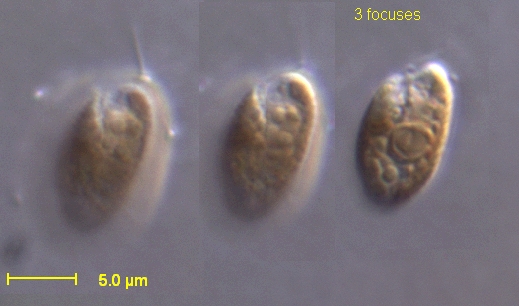
Cryptophytes under light microscope

The first mention of cryptophytes appears to have been made by Christian Gottfried Ehrenberg in 1831,[12] while studying Infusoria. Later, botanists treated them as a separate algae group, class Cryptophyceae or division Cryptophyta, while zoologists treated them as the flagellate protozoa order Cryptomonadina. In some classifications, the cryptomonads were considered close relatives of the dinoflagellates because of their (seemingly) similar pigmentation, being grouped as the Pyrrhophyta. There is considerable evidence that cryptophyte chloroplasts are closely related to those of the heterokonts and haptophytes, and the three groups are sometimes united as the Chromista. However, the case that the organisms themselves are closely related is not very strong, and they may have acquired plastids independently. Currently they are discussed to be members of the clade Diaphoretickes and to form together with the Haptophyta the group Hacrobia. Parfrey et al. and Burki et al. placed Cryptophyceae as a sister clade to the green algae.[13][14]

One suggested grouping is as follows: (1) Cryptomonas, (2) Chroomonas/Komma and Hemiselmis, (3) Rhodomonas/Rhinomonas/Storeatula, (4) Guillardia/Hanusia, (5) Geminigera/Plagioselmis/Teleaulax, (6) Proteomonas sulcata, (7) Falcomonas daucoides.[15]

References

[edit]
[edit]
Revisions and contributorsEdit on WikipediaRead on Wikipedia
from Grokipedia
Cryptophyceae, commonly referred to as , are a class of unicellular, biflagellate protists within the phylum , distinguished by their possession of a plastidial complex derived from secondary endosymbiosis with a red . These microscopic , typically 3–50 µm in length, feature asymmetric and flattened cells with two unequal flagella—one long with a single terminal hair and one short with two terminal hairs—enabling , and a prominent furrow or gullet for feeding. Most species are photosynthetic, containing one or two discoid chloroplasts surrounded by four membranes and often harboring a nucleomorph, a remnant nucleus of the endosymbiont; these chloroplasts house chlorophylls a and c2, along with phycobiliproteins such as Cr-phycoerythrin (545, 555, or 566) or Cr-phycocyanin (569, 630, or 645), which produce colors from to red. The cells are covered by a proteinaceous periplast composed of scales and lined with ejectile trichocysts, and while many are autotrophic, some are mixotrophic or heterotrophic, lacking chloroplasts. In taxonomy, Cryptophyceae form one of two classes in Cryptophyta, the other being the aplastidic Goniomonadea, with the primary distinction being the presence of plastids in Cryptophyceae. The class includes more than 20 genera and approximately 200–230 species, organized into orders such as Cryptomonadales (with families Cryptomonadaceae and Campylomonadaceae, featuring brown pigmentation from Cr-phycoerythrin 566) and Pyrenomonadales (with families like Pyrenomonadaceae and Geminigeraceae, showing red or blue-green hues from other Cr-phycoerythrins or Cr-phycocyanins). Prominent genera encompass Cryptomonas (freshwater, often with reddish cells), Chroomonas (blue-green, freshwater), Rhodomonas (marine, red), Hemiselmis (small, marine), and heterotrophic forms like Chilomonas. Classification relies on ultrastructural traits including periplast composition, furrow/gullet morphology, nucleomorph position, rhizostyle type, and molecular data; sexual reproduction has been confirmed in some species. Ecologically, Cryptophyceae are cosmopolitan in freshwater, marine, and brackish habitats, frequently comprising in microstratified layers of lakes and oceans, where they contribute to through and nutrient cycling. They serve as vital energy sources in aquatic webs, grazed by and supporting higher trophic levels, while their mixotrophic capabilities—combining autotrophy, phagotrophy, and osmotrophy—enhance adaptability in nutrient-variable environments; some species require vitamin B12 as auxotrophs. Their phycobiliproteins offer biotechnological promise as fluorescent probes in , natural dyes in and , and potential antioxidants in pharmaceuticals, underscoring their value beyond .

Morphology and Cell Structure

General Appearance

Cryptophyceae cells are typically unicellular, biflagellate measuring 10–50 μm in length and exhibiting a flattened, ovoid to elliptical shape, often with lateral compression that imparts an asymmetric profile. This dorsoventral flattening is evident in genera such as Guillardia, where cells appear more elongated and streamlined, while Cryptomonas species display a characteristic bean-shaped or ovate form suited to freshwater environments. In marine representatives like Rhodomonas, cells maintain a similar elliptical outline but with enhanced surface ornamentation. Motility is achieved through two unequal heterodynamic , inserted subapically into an anterior referred to as a furrow or gullet, which facilitates a distinctive gyrating or spinning swimming motion. The longer flagellum often bears mastigonemes for propulsion, while the shorter one aids in steering, enabling agile navigation in planktonic habitats. This flagellar arrangement allows for rapid changes in direction, contributing to the cells' free-swimming lifestyle. The cell surface is enveloped by a periplast, a rigid proteinaceous layer composed of microscopic plates or scales that provide and vary significantly among species. In Cryptomonas, the periplast is generally smooth or features small, unadorned plates, whereas Rhodomonas displays an pattern with prominent hexagonal or rectangular plates arranged in longitudinal rows. These surface features can include ridges or papillae, enhancing protection and possibly influencing hydrodynamic properties during locomotion. Under certain conditions, such as nutrient stress or encystment, Cryptophyceae may transition to a non-flagellated palmelloid stage, where cells become rounded, immotile, and embedded in a mucilaginous matrix, allowing temporary survival without active swimming. This stage is reversible, with cells readily resuming flagellated motility upon favorable conditions, as observed in genera like Cryptomonas.

Organelles and Ultrastructure

Cryptophyceae cells possess distinctive ejectisomes, also known as extrusomes or trichocysts, which serve as defensive organelles. These structures are ribbon-like, consisting of two tightly coiled tapes of unequal width enclosed in a , with large ejectisomes measuring 500–700 nm in length and small ones 250–350 nm. Upon discharge, triggered by mechanical or chemical stimuli, they extrude as threads up to 35 μm long and 100 nm wide, propelling the cell backward for escape. A hallmark in Cryptophyceae is the nucleomorph, a vestigial nucleus located in the periplastid compartment between the primary nucleus and the . This reduced nucleus is bounded by a double membrane with pores and contains three linear chromosomes, with sizes ranging from approximately 495 to 845 kb across . For example, the nucleomorph of Guillardia theta comprises 551 kb and encodes around 500 genes, primarily involved in functions. Plastids in Cryptophyceae are surrounded by four membranes, the outermost forming the continuous with the , and house thylakoids arranged in unstacked pairs with intrathylakoidal spaces of 20–30 nm. A , when present, is typically traversed by a single pair of thylakoids and serves as a site for carbon fixation. The periplastid compartment contains the nucleomorph and granules. Cells feature a single Golgi apparatus, which synthesizes ejectisomes, mitochondria with flattened finger-like cristae, and a large central contractile near the flagellar base for . Ultrastructural variations include the furrow, a ventral extending posteriorly from the anterior vestibulum, often deepening into a for phagotrophy. This furrow, lined with and surrounded by ejectisomes, varies in length among genera and aids in feeding. The flagellar apparatus inserts near the furrow opening.

Biochemistry and

Photosynthesis and Pigments

Cryptophyceae perform oxygenic photosynthesis using plastids derived from secondary endosymbiosis with a red alga, featuring chlorophyll a and c2 as the primary photosynthetic pigments. These chlorophylls are integrated into light-harvesting complexes associated with photosystems I and II, enabling efficient energy transfer for carbon fixation via the Calvin-Benson cycle. Unlike green algae and plants, Cryptophyceae lack chlorophyll b, which restricts their light absorption to wavelengths optimally captured by chlorophyll a (peaking around 430–450 nm and 660–680 nm) and chlorophyll c2 (peaking near 630 nm). Accessory pigments enhance the of Cryptophyceae, particularly in capturing light unavailable to chlorophylls alone. The β-carotene and alloxanthin serve as key accessories; β-carotene, present in both , provides photoprotection by quenching excess energy and preventing oxidative damage, while alloxanthin, a unique to this group, acts as a diagnostic marker and aids in harvesting blue-green light (around 450–550 nm). These complement the primary chlorophylls, broadening the absorption spectrum and supporting adaptation to varied aquatic light environments. A distinctive feature of Cryptophyceae photosynthesis is the presence of phycobiliproteins, including Cr-phycoerythrin, Cr-phycocyanin, and Cr-allophycocyanin, which function as soluble light-harvesting antennas. Unlike in and , where phycobiliproteins are organized into large complexes on the thylakoid surface, in Cryptophyceae they are uniquely localized within the thylakoid lumen as individual or small oligomeric units. This intrathylakoidal positioning allows direct energy transfer to without peripheral attachments, absorbing light in the green-to-red range (ca. 500–660 nm) and enabling effective under low-light, nutrient-poor conditions typical of their stratified habitats. The overall absorption spectrum, dominated by these phycobiliproteins and chlorophylls, peaks between ca. 500 and 660 nm, facilitating exploitation of green-to-red light that penetrates deeper water columns. Plastid ribosomes in photosynthetic Cryptophyceae are of the prokaryotic 70S type, consistent with their endosymbiotic origin, and are responsible for translating many plastid-encoded proteins involved in , such as those in the . Plastid DNA is organized into nucleoids, compact structures that maintain integrity and regulate for biosynthesis and photosystem assembly. In colorless species, such as certain Cryptomonas strains, functional plastids are absent due to the loss of photosynthetic capacity, yet nuclear and nucleomorph genomes retain genes for synthesis, suggesting evolutionary remnants that may support non-photosynthetic roles or mixotrophy.

Nutrition and Metabolism

Cryptophyceae exhibit a mixotrophic lifestyle, integrating autotrophy through with heterotrophic modes such as phagotrophy and osmotrophy to acquire . Phagotrophy involves the of and picoplankton via a specialized , a ventral furrow-like structure that facilitates particle capture and . This process allows mixotrophic to supplement carbon and nutrient intake when light or inorganic resources are limiting. Osmotrophy, the absorption of dissolved organic compounds across the , further enhances nutrient versatility, enabling the uptake of , sugars, and other organics directly from the environment. Carbon fixation in photosynthetic Cryptophyceae occurs via the Calvin-Benson-Bassham cycle within their secondary plastids, where ribulose-1,5-bisphosphate carboxylase/oxygenase () catalyzes the incorporation of CO₂ into organic molecules. Nitrogen assimilation pathways include the utilization of , ammonium, and organic forms such as , supported by genes encoding and enzymes, which allow efficient conversion of to for incorporation into . These mechanisms enable Cryptophyceae to thrive in nitrogen-variable environments by flexibly switching between inorganic and organic sources. Some species, such as Chilomonas , demonstrate anaerobic under low-oxygen conditions, fermenting carbohydrates to produce succinate as an end product, which helps maintain balance and production in hypoxic habitats. Growth rates under optimal conditions—typically 15–25°C and moderate intensities of 50–100 µmol photons m⁻² s⁻¹—range from 0.5 to 1.5 divisions per day, reflecting adaptations to temperate aquatic systems. Biochemical adaptations include high content, which not only aids harvesting but also serves as a storage reservoir, mobilized during limitation to support protein synthesis.

Habitat and Distribution

Environmental Preferences

Cryptophyceae are cosmopolitan but exhibit notable presence in freshwater environments such as lakes and rivers, where they often form blooms, as well as in marine and brackish waters. Optimal pH ranges from 6.5 to 8.5, supporting growth and physiological processes in these habitats. This pH tolerance aligns with broader patterns in freshwater planktonic , facilitating their persistence in slightly alkaline to neutral aquatic systems. Temperature tolerances span 5–30°C, with optimal growth typically occurring around 15–20°C for many species; eurythermal taxa like Cryptomonas spp. thrive across this range, peaking in spring and early summer in temperate lakes where temperatures rarely exceed 26°C. In settings, optima shift slightly higher to 19–24°C for genera such as Rhodomonas, enabling efficient biomass accumulation. These algae favor low to moderate light intensities of 20–50 μmol photons m⁻² s⁻¹, excelling in shaded or turbid waters where their pigments efficiently harvest green light penetrating deeper layers. This adaptation allows them to dominate in environments with reduced surface irradiance, such as eutrophic estuaries or humic-rich lakes. Salinity tolerance varies by lineage, with freshwater forms like Cryptomonas preferring oligohaline conditions but some marine species, such as Guillardia theta, occurring in coastal waters up to 35 ppt. While hypersaline environments exceeding 50 ppt are generally avoided by many , some like R. salina can tolerate up to 65 ppt. Cryptophyceae flourish in eutrophic conditions rich in and , where nonlimiting availability enhances competitiveness and supports mixotrophic adaptations. For example, blooms of Rhodomonas salina occur in nutrient-enriched estuarine systems, with optimal growth tied to , , or supplies.

Global Occurrence

Cryptophyceae exhibit a in aquatic environments, with widespread occurrence in temperate and polar regions where they often dominate freshwater communities. In the of , for instance, they contribute substantially to biomass, comprising up to 26% of phytoflagellates in and 7–19% overall in . In marine habitats, Cryptophyceae are present in coastal and open ocean waters, such as the Atlantic where species like Guillardia theta are recorded, though they are rarer in tropical regions compared to temperate zones. Seasonal blooms typically occur in spring within freshwater systems, driven by nutrient availability and temperature shifts, while in stable marine environments, populations persist year-round with occasional late-summer peaks. Approximately 220 species of Cryptophyceae are known, with around half being freshwater forms and the remainder including marine representatives; many freshwater species show regional . Highest diversity is documented in and , reflecting intensive sampling in these areas. Recent surveys indicate increasing detections of Cryptophyceae in meltwaters, linked to climate-driven sea-ice decline and extended open-water periods, with continued observations in marginal ice zones as of 2024.

Ecology and Interactions

Trophic Role

Cryptophyceae serve as key primary producers in freshwater ecosystems, often contributing 10–30% of the total phytoplankton biomass, particularly in temperate and boreal lakes where they dominate during certain seasons such as winter and spring. This substantial biomass supports significant carbon flux to higher trophic levels, facilitating energy transfer within aquatic food webs through their role in converting inorganic carbon into organic matter via photosynthesis. Their production is integral to the overall primary productivity of these systems, underscoring their efficiency in low-light conditions typical of deeper or stratified waters. As prey, Cryptophyceae are highly valued by such as Daphnia species, fish larvae, and protozoans due to their nutritional profile, which includes rich and essential that promote rapid growth and reproduction in consumers. This high digestibility and biochemical quality enhance their transfer efficiency in food webs, making them a preferred food source for filter-feeding herbivores and contributing to the sustenance of upper trophic levels. In nutrient cycling, Cryptophyceae play a vital role through their mixotrophic capabilities, which enable remineralization of and reduction of bacterial loads via bacterivory and phagotrophy on picoplankton. This process links the to broader ecosystem dynamics, recycling nutrients like and while controlling prokaryotic populations and promoting carbon flow to metazoans. Although Cryptophyceae can form blooms that occasionally cause discoloration, such as reddish or brownish hues in affected lakes, they exhibit low compared to blooms, posing minimal direct harm to aquatic life or human health. These events are typically short-lived and ecologically beneficial in moderate abundances, supporting without the severe oxygen depletion or production seen in more problematic algal proliferations.

Symbioses and Predation

Cryptophyceae exhibit mixotrophic nutrition, enabling them to prey upon bacteria and small algae through phagocytosis via a cytostome or, in some species, a transient peduncle that facilitates prey capture. Species such as Teleaulax amphioxeia ingest heterotrophic bacteria at rates of 0.3 to 8.3 cells predator⁻¹ h⁻¹ in natural populations, while laboratory experiments show maximum rates up to 0.7 cells predator⁻¹ h⁻¹, depending on prey density. Larger cryptophytes, including those in the CRY1 lineage, demonstrate bacterivory rates of 8 to 33 bacteria cell⁻¹ h⁻¹ in freshwater systems, underscoring their role as significant grazers in microbial food webs. They also consume small algae like Synechococcus sp. at rates up to 0.3 cells predator⁻¹ h⁻¹, highlighting selective predation on picoplanktonic prey. In symbiotic interactions, Cryptophyceae serve as hosts for in certain predators, notably the Mesodinium rubrum, which sequesters functional plastids from cryptophyte species such as Geminigera cryophila or Teleaulax amphioxeia to enable phototrophy. These stolen plastids remain active for up to 80 days, supporting the ciliate's growth without further prey ingestion by regulating photosynthetic processes through retained cryptophyte nuclei. This karyokleptic association exemplifies a specialized where Cryptophyceae organelles are co-opted for the predator's benefit. Parasitism affects Cryptophyceae through infections by chytrid fungi and . Chytrids like Rhizophydium fugax infect species, penetrating cells and utilizing host resources for production. , including the novel cryptophyte-infecting virus TampV, target Teleaulax amphioxeia, causing and contributing to bloom collapses in marine environments. have also been isolated from cryptophyte blooms, implicating them in population regulation. In 2024, a new named Budvirus was isolated from a Rhodomonas bloom in a Czech reservoir, demonstrating its role in controlling cryptophyte populations. Mutualistic associations between Cryptophyceae and are infrequent but include symbiotic exchanges for essential vitamins, particularly B₁₂ (cobalamin), which many cryptophytes cannot synthesize and acquire from co-occurring in exchange for photosynthates. This auxotrophy-driven interaction supports algal growth in nutrient-limited conditions. As a defense against predators, Cryptophyceae deploy ejectisomes—extrusive organelles that discharge coiled protein ribbons upon stimulation, propelling the cell away or deterring attackers through mechanical disruption. This rapid ejection mechanism enhances survival in predator-rich habitats.

Taxonomy and Systematics

Historical Classification

The Cryptophyceae were first described in the early as part of the protozoan group , with Christian Gottfried Ehrenberg establishing the genus Cryptomonas in 1831 for pigmented, biflagellate forms and noting related achlorophyllous organisms under what became known as Cryptomonadina. Earlier observations of colorless forms, such as Chilomonas paramaecium described by Ehrenberg in 1831 (originally as Cryptomonas paramaecia), highlighted their heterotrophic nature and flagellar locomotion, contributing to initial views of cryptomonads as animal-like . Throughout the , classifications fluctuated, placing cryptomonads alternately within the Flagellata (emphasizing motility and ejectisomes resembling animal trichocysts) or (due to the presence of chloroplasts in many species), reflecting broader uncertainties in protist taxonomy. In 1913, Adolf Pascher formalized the class Cryptophyceae, distinguishing it from other flagellates based on the unique periplast—a multilayered, proteinaceous surface structure—and life cycle stages involving palmelloid colonies. This separation addressed ongoing debates about their affinities, as the combination of plant-like pigmentation (e.g., phycobilins) and animal-like features (e.g., flagella and apparatus) defied simple categorization. By the mid-20th century, revisions incorporated ecological and morphological details, such as Robert W. Butcher's 1959 monograph on British marine cryptophytes, which described numerous coastal and emphasized habitat-specific variations in cell shape and pigmentation. These efforts culminated in broader systematic integrations, including Thomas Cavalier-Smith's 1981 proposal to unite Cryptophyceae within the kingdom , based on shared ultrastructural traits like tubular hairs on flagella and endoplasmic reticulum, resolving some animal-plant dichotomies by aligning them with other chromalveolate lineages. Later works, such as Fensome et al. (1993), explored potential correlations but confirmed the absence of unambiguous Cryptophyceae remains, attributing this to their delicate, non-calcifying structure.

Modern Classification

The modern taxonomic hierarchy positions Cryptophyceae within the domain Eukaryota, kingdom (alternatively classified under Protista in some schemes), phylum Cryptophyta, class Cryptophyceae, with orders Cryptomonadales and Pyrenomonadales. This classification reflects the group's status as biflagellate, primarily photosynthetic protists with distinctive periplast structures and nucleomorph-containing plastids derived from algal endosymbionts. The class encompasses families such as Cryptomonadaceae and Campylomonadaceae (order Cryptomonadales), which include mostly freshwater pigmented species characterized by a pronounced gullet and furrow for feeding, and Pyrenomonadaceae and Geminigeraceae (order Pyrenomonadales), featuring marine and brackish forms with varied pigmentation. Approximately 20 genera are recognized, with notable examples including Cryptomonas (over 50 species, dominant in freshwater environments with Cr-phycoerythrin pigmentation), Rhodomonas (around 10 species, often marine with reddish hues), Guillardia (about 5 marine species known for their role in symbioses), and Storeatula (colorless, heterotrophic forms). In total, around 230 species have been described in Cryptophyceae, though molecular and morphological revisions continue to refine this diversity. Recent updates include the 2020 merger of Teleaulax and Plagioselmis into a single dimorphic , recognizing T. amphioxeia as the diploid form and the former P. prolonga as its haploid stage, based on life cycle and genetic evidence. Recent phylogenomic studies, such as a 2023 analysis using ultraconserved elements, have further resolved relationships, confirming two main clades of photosynthetic cryptophytes and supporting ongoing taxonomic refinements. Infrageneric groupings within Cryptophyceae are increasingly defined by small subunit (SSU rRNA) phylogenies, revealing distinct s such as A (primarily pigmented, freshwater-adapted taxa like certain Cryptomonas ) and B (marine-oriented lineages including Guillardia and Hemiselmis). These molecular delineations support ecological partitioning while highlighting ongoing taxonomic flux in response to genomic data.

Evolutionary History

Plastid Evolution

The plastids of Cryptophyceae arose via secondary endosymbiosis, wherein an eukaryotic host cell engulfed a photosynthetic red alga between approximately 440 and 1650 million years ago, leading to the formation of complex plastids bounded by four membranes. This event integrated the red algal symbiont into the host cytoplasm, with the outermost two membranes derived from the host's endomembrane system and the inner two from the algal plasma and chloroplast envelopes. A defining feature of cryptophyte plastids is the presence of a nucleomorph, a highly reduced remnant nucleus of the engulfed red alga located between the second and third plastid membranes. Phylogenetic analyses of nucleomorph rRNA genes, particularly the small subunit (SSU) rDNA, unequivocally place this within the red algal lineage, supporting its rhodophyte origin and distinguishing it from other secondary plastid-bearing groups. The nucleomorph retains a compact of around 500-600 kilobases encoding approximately 500 protein-coding genes, primarily involved in plastid functions, though its structure—comprising three chromosomes and lacking spliceosomal introns—reflects extensive reduction. Following endosymbiosis, massive endosymbiotic gene transfer relocated most of the original genes from the to the host nucleus, contributing to the organelle's integration and the evolution of a chimeric nuclear with algal-derived components. This transfer involved the relocation of genes encoding plastid-targeted proteins, which acquired N-terminal signal peptides for import across the four membranes via the . Among the retained features are phycobiliproteins, accessory pigments uniquely compartmentalized in the lumen rather than forming phycobilisomes; these evolved from cyanobacterial ancestors through the intermediary red alga, forming a monophyletic within rhodophyte biliproteins. In some lineages, such as the colorless genus Chilomonas, photosynthetic capability was secondarily lost, resulting in reduced, non-pigmented leucoplasts that lack functional but persist for metabolic roles like . Despite this reduction, nuclear genes of red algal origin—transferred during earlier endosymbiosis—remain expressed and proteins targeted to these vestigial plastids, underscoring the incomplete elimination of the organelle's genetic heritage.

Phylogenetic Relationships

Cryptophyceae are classified within the phylum , a group that encompasses both photosynthetic and heterotrophic lineages, and is positioned in the subkingdom Hacrobia as to Haptophyta based on multigene phylogenetic analyses. This placement emphasizes shared ultrastructural features, such as the presence of a periplastid and specific flagellar apparatus traits, supporting the of Hacrobia within the broader kingdom . Alternative phylogenomic studies, however, suggest may instead branch basally to , forming a that unites primary plastid-bearing eukaryotes with certain heterotrophic protists. A 2024 analysis supports independent origins of red-derived plastids in cryptophytes and ochrophytes through separate secondary endosymbioses. A 2023 phylogenomic study utilizing ultraconserved elements from nuclear, nucleomorph, and genomes across 91 cryptophyte strains confirmed the of Cryptophyceae, resolving three major clades within the photosynthetic members. In this analysis, the heterotrophic order Goniomonadales, represented by the Goniomonas, emerges as the (outgroup) to the autotrophic Cryptophyceae, reinforcing the unity of while highlighting early divergence within the phylum. These findings align with prior molecular data but provide higher resolution due to the multi-genome approach, which mitigates long-branch attraction artifacts common in single-gene trees. Ongoing debates center on the deeper affinities of Cryptophyceae, with some nuclear protein phylogenies indicating potential links to through shared genes involved in cytoskeletal and metabolic functions, challenging traditional chromalveolate groupings. Conversely, other analyses propose closer ties to stramenopiles, based on concatenated protein datasets that recover Cryptista near the base of Chromalveolata. Absent a record, estimates place the divergence of Cryptista from other eukaryotic lineages around 800–1000 million years ago, coinciding with the era's environmental shifts that may have driven protist diversification. Support for the Cryptista clade derives from multiple molecular markers, including 18S rRNA sequences that resolve as a distinct lineage, alongside protein-coding genes such as and , which provide robust bootstrap support for grouping Cryptophyceae with goniomonads to the exclusion of haptophytes or other chromists. These markers outperform single-gene analyses by reducing and capturing slower-evolving sites. The phylogenetic position of Cryptophyceae thus holds key implications for tracing the dissemination of secondary endosymbiosis, as their red algal-derived plastids inform whether this event occurred once in a chromalveolate ancestor or multiple times across related lineages.

References

Add your contribution
Related Hubs
User Avatar
No comments yet.