


Community hub
Recent from talks
Contribute something
Nothing was collected or created yet.
Harju County
View on WikipediaHarju County (Estonian: Harju maakond or Harjumaa) is one of the fifteen counties of Estonia. It is located in northern Estonia, on the southern coast of the Gulf of Finland, and it borders Lääne-Viru County to the east, Järva County to the southeast, Rapla County to the south, and Lääne County to the southwest. The capital and largest city of Estonia, Tallinn, is located in Harju County.[3] Harju is the largest county in Estonia in terms of population, as almost half (45%) of Estonia's population lives in Harju County.
Key Information


History
[edit]

Ancient history
[edit]The territory of modern Harju County consists mostly of two ancient Estonian counties: Revala, around what is now Tallinn, and partly Harjumaa, which was located south of Revala and is presently mostly in Rapla County. Lindanise, then a small trading post at the Gulf of Finland, served as the capital of Revala. It eventually grew into the mostly German-populated Hanseatic town of Reval and later into the Estonian capital, Tallinn.
Conquest
[edit]
In 1219, the Danish King, Valdemar II, landed in Lindanise (Danish: Lyndanisse) and conquered both Revala and Harju counties, while the inhabitants were forced into Christianity. At the end of the Livonian Crusade (1208–1227 in Estonia), both counties were captured by the Order of the Sword Brothers until given back to Denmark with the Treaty of Stensby in 1238.
The Danes built the Toompea Castle (Castrum Danorum) on Toompea Hill in Tallinn, which quickly became the biggest settlement in Estonia. In 1248, it was the first settlement in Estonia to receive its town rights, and in 1285 it became the northernmost member of the Hanseatic League.
German dominance led to the St. George's Night Uprising, which broke out in 1343 with the burning of Padise Abbey in modern Padise Parish. The uprising led Denmark to sell its possessions in Northern Estonia to the Livonian Order. In 1561, after the outbreak of the Livonian War, the nobility of North Estonia and the Tallinn Town Council declared loyalty to Sweden. Tallinn and other Swedish-occupied territories gained during warfare were secured by the Treaty of Plyussa.
During the Great Northern War, Harju was one of the few regions in Estonia untouched by warfare for a long time.[citation needed] Nonetheless, Harju County was greatly affected by the 1710-1713 Plague that killed more than eighty percent of the county's population. Russian forces finally arrived in 1710 and laid siege to Tallinn for a month until the Swedish garrison surrendered, thus ending the Great Northern War in Estonia. Russian rule was secured with the Treaty of Nystad in 1721. The plague raged on for several years, eventually leaving several parts of the county completely empty of human habitation.
Russian rule
[edit].jpg)

Imperial Russian rule started with the construction of naval harbours in Tallinn and Paldiski (Swedish: Rogerwiek). Russian Tsar Peter I visited Tallinn at least nine times between 1711 and 1723. He personally opened the construction for Tallinn Naval Harbour in 1714 and Paldiski Naval Harbour in 1718.
In 1870, the Paldiski-Tallinn-St. Petersburg Railway was opened, after which several smaller settlements along the line - Paldiski, Keila, Saue, Nõmme, Aruküla, Raasiku, Kehra and Aegviidu (then in Viru County) - started to grow. Several elements of Peter the Great's Naval Fortress were built in Harju County and its headquarters were in Tallinn.
During World War I in 1914, the native population of Naissaar island was expelled from the island and it was turned into a military base. A narrow-gauge railway network was built on the island. Tallinn was the site for the very beginning of the October Revolution when the Estonian Bolshevik Jaan Anvelt took power in Tallinn on 5 November 1917, two days before the Revolution started in Petrograd. On 9 November 1917, the Bolsheviks took power from Governor Jaan Poska. After the coup, refusing to cooperate with the Estonian Soviet Executive Committee, the Estonian Provincial Assembly (Estonian: Maanõukogu) in Tallinn declared sovereignty from the Russian Empire on 28 November 1917. In December 1917, Russian sailors under the leadership of Stepan Maximovich Petrichenko declared the "Soviet Republic of Soldiers and Fortress-Builders of Naissaar". They were ousted by German forces on 26 February 1918.
Republic of Estonia
[edit]The Republic of Estonia was proclaimed in Tallinn on 24 February 1918 while German occupation followed on the next day. German rule ended with the November Revolution in Germany. During the Estonian War of Independence, Soviet troops were halted only 40 km east of Tallinn by the end of 1918. Tallinn was the site of a failed Communist coup d'état attempt of 1924.
Occupation era
[edit]Soviet rule
[edit]On 18 September 1939, after both Germany and the Soviet Union had invaded Poland, the Polish submarine ORP Orzeł escaped from internment in Tallinn Harbor during the Orzeł incident. The submarine eventually made her way to the United Kingdom, which led both the Soviet Union and Germany to question Estonia's neutrality. On 24 September 1939, Soviet Navy warships appeared in North Estonian waters and Soviet Air Force bombers patrolled above Tallinn and the nearby countryside.
The Soviet Union demanded that Estonia allow the Soviet military bases and stationed 25,000 troops on Estonian soil for the duration of the European war. On 28 September 1939, the government of Estonia accepted the ultimatum and signed the mutual assistance treaty. Paldiski was made a Soviet Naval Base and its population was expelled from the town. With its new military bases in Northern Estonia, the Soviet Union invaded Finland on 30 November 1939, starting the Winter War. During 1939–1940, most of the Baltic German population from Tallinn and the Harju County countryside fled to Germany (Umsiedlung).
On 14 June 1940, the Soviet Navy set up a naval blockade in the Gulf of Finland and the Baltic Sea and stationed a navy squadron west of Naissaar island near Tallinn. Soviet bombers shot down the passenger airplane "Kaleva" near Keri island, killing all nine on board, which had included foreign diplomats.
On 16 June 1940, the Red Army invaded Estonia and organised a Soviet coup d'état in Tallinn. On 21 June 1940, the Independent Signal Battalion in Tallinn showed resistance to the Red Army, until it surrendered and was disarmed on the same day. The Soviet powers organised rigged parliamentary elections and the new parliament declared the Estonian SSR on 21 July 1940, which was annexed by the Soviet Union on 6 August 1940. Most county and municipal leaders were replaced and local assemblies were replaced with Soviets. The native population of Naissaar island was expelled from the island (as in 1914) as the island was turned into a military base. During the 1940–41 Soviet Occupation, thousands were executed, imprisoned, mobilised into the Red Army labour battalions or deported to Siberia on 14 June 1941 (June deportation).
Summer War
[edit]
Germany invaded the Soviet Union on 22 June 1941 and Finland declared the Continuation War with the Soviet Union on 25 June 1941. As the Soviet Union retreated, its destruction battalions carried out the scorched-earth tactics. The Erna long-range reconnaissance group was sent from Finland to Northern Estonia on 10 July 1941 to perform reconnaissance of the retreating Red Army, but it eventually engaged the destruction battalions near Kautla forest (Battle of Kautla) on 31 July to 1 August 1941, allowing 2,000 civilians to flee.
German forces started its Tallinn Offensive on 19 August 1941, capturing Rapla on 21 August 1941. They reached Tallinn outskirts in Pirita on 24 August 1941 and Harku and Lasnamäe on 26 August 1941. Ordinary citizens were ordered to build defenses around Tallinn. Soviet forces started evacuating by sea on 24 August 1941. Of the 195 ships, that left Tallinn and Paldiski, 55 were sunk by mines near Juminda Peninsula, killing around 15,000 evacuees. Evacuating Soviet forces destroyed much of the infrastructure and industry around Tallinn. German forces captured Paldiski and Tallinn on 28 August 1941, shooting down the Soviet Flag on Tallinn Pikk Hermann Tower. Estonians replaced it with the Flag of Estonia, but it was replaced with the Flag of Germany the next day. German forces were greeted as liberators in Tallinn. It was also the first time since 1219 that Tallinn had been captured following a military engagement.
German occupation
[edit]Northern Estonia was the site of several concentration camps and massacres. In September 1942, up to three thousand foreign Jews and Gypsies were executed at Kalevi-Liiva in Jõelähtme Parish, while the rest were sent to the small Jägala concentration camp nearby, that never had more than 200 prisoners as their lifespan was short. Klooga concentration camp in Keila Parish was mostly evacuated before the Soviet takeover, however, 2,000 prisoners were executed before the German retreat. The Red Army liberated the few survivors on 22 September 1944.
Tallinn was bombed by the Soviet Air Force on 9 and 10 March 1944, killing 757 people and destroying 8,000 buildings (about one-third of the capital). Among others, Harju Street, St. Nicholas' Church, and Estonia Theatre were hit. 36-38 Soviet bombers were shot down during the bombardment.
After the Red Army broke through the Tannenberg Line in Eastern Estonia and crossed the Emajõgi river near Tartu, it launched the Tallinn Offensive on 17 September 1944 when Adolf Hitler had agreed to start abandoning Estonia on 16 September 1944. The National Committee of the Republic of Estonia was formed in Tallinn in March 1944 and the last Prime Minister of Estonia Jüri Uluots organized a new government under Otto Tief on 18 September 1944, captured government offices in Tallinn on 20 September 1944, and put the Estonian flag on top of the Pikk Hermann Tower.
German forces started Operation Aster to evacuate its 50,000 soldiers and 20,000 civilians through Tallinn and Paldiski. On the way, the hospital ship "Moero" was attacked and sunk by the Soviet Air Force, killing 637 of its passengers. The retreating German forces avoided conflict with the Red Army in Tallinn and the invading army saw only little resistance by Estonian units led by Rear Admiral Johan Pitka. The Red Army entered Tallinn on 22 September and Paldiski on 24 September 1944.
Before the Soviet reoccupation in 1944, thousands fled to Sweden across the Baltic Sea, including the entire Estonian Swedish population, who had been settling also on Pakri islands in Harju County.
Second Soviet rule
[edit]The Forest Brothers resistance movement was considered to be the weakest in Harju County, due to dense population, fewer forests and more Soviet military activity. New deportations followed in 1949. The Soviet era brought development of heavy industry, a massive influx of foreign workers from throughout the Soviet Union and construction of new districts (Maardu, Mustamäe, Väike-Õismäe and Lasnamäe) for Tallinn.
Hotel Viru in Tallinn was built in 1972 as the first modern highrise in Estonia. The 1980 Summer Olympics Sailing events were held in Tallinn. The event also brought major construction, such as the seaside road from Central Tallinn to Pirita, renovation projects in Tallinn Old Town and the iconic highrise Hotel Olümpia and Tallinn TV Tower.
In 1962, Paldiski became a Soviet Navy nuclear submarine training centre and had two land-based nuclear reactors with 16,000 employees. It was a closed town until the last Russian warship left in August 1994. Until then it was the last Russian military base in Estonia. Russia relinquished control of the nuclear reactor facilities in September 1995.
Administrative history
[edit]
Formation of the county
[edit]The ancient counties of Harjumaa and Revala were merged into Harju County in 1266. It remained within most of its borders until 1949 (with the exclusion of 1783–1796, when Paldiski County was separated).
During the Soviet occupation, in 1940, Tallinn became a city of republic significance. Loksa was transferred to Viru County in 1949. The rest of Harju County was replaced with four raions during the Soviet occupation in 1950. Harju Raion around Tallinn gradually absorbed the former areas of Harju County as Loksa Raion was abolished in 1957, Kose Raion in 1959 and Keila Raion in 1962 and most of their territories transferred to Harju Raion. Aegviidu, Aegviidu Village Council and Kohila Village Council were transferred to Harju Raion in 1962. Harju Raion and the remaining Rapla Raion became Harju County and Rapla County in 1990. Tallinn was reincorporated into Harju County in 1993.
Municipal history
[edit]
Urban municipalities
[edit]Tallinn was the first settlement in Harju County to receive town rights in 1248. Municipally, it consisted of the "upper town" of Toompea and the "lower town". The two municipalities were merged in 1877. The naval harbour town of Paldiski received its town rights in 1783. Nõmme was given a town status in 1926 and Keila in 1938.
Soviet powers merged Nõmme with Tallinn already in 1940. They also separated Tallinn from Harju County and it became a centrally administered town. The same was applied to Paldiski in 1941. The German occupation of 1941-1944 left only Tallinn separated from Harju County. The Soviet reoccupation brought Paldiski back to central administration. Tallinn was divided into four urban raions in 1945 and it gained several new territories from its surrounding parishes. Aegviidu (then in Järva County), Järvakandi and Kohila (both now in Rapla County) and Kehra were named boroughs. The central administration of Paldiski was abolished in 1950 when Paldiski was merged with Keila Raion. Tallinn absorbed Saue in 1960 and Maardu in 1962 and the latter became a town within the municipality of Tallinn in 1980.
Maardu and Saue were separated from Tallinn in 1991 and Kehra, Loksa and Saue were given town status in 1993. The central administration of Tallinn was abolished and the town was re-transferred into Harju County. Its urban raions were abolished in 1993 and replaced with eight modern districts.
Rural municipalities
[edit]Ancient Estonian counties were divided into parishes (Estonian language: kihelkond), that became centered on local churches from the 13th century. Modern municipal parishes (Estonian: vald) were created in the 19th century. They were created within the old parishes, that were still centered on the local church.
Soviet rule brought major changes in rural municipalities as local village councils were created throughout 1945. The parishes were abolished with the creation of raions in 1950. Naissaar Parish had been abolished and given to the Red Army already in 1940 and Pakri Parish had been abolished and merged with Paldiski in 1947.
Village councils were renamed "parishes" in 1990–1993. Kehra merged into Anija Parish in 2002, Loksa Parish merged into Kuusalu Parish in 2005 and Kõue Parish merged into Kose Parish in 2013.
Demography
[edit]Population
[edit]On 31 December 2021, there were 614,567 people living permanently in Harju county, which was 11.2% more than at the same time ten years ago. Ethnic Estonians made up 60.57% (372,245) of the population, Russians 28.99% (178,169), Ukrainians 3.07% (18,886), Belarusians 1.22% (7,473), Finns 0.69% (4,226), Latvians 0.29% (1,812) and others 5.17% (31,756). [1]
Religion
[edit]The following congregations of the Estonian Evangelical Lutheran Church (EELC) operate in Harju County: Tallinn Deanery: Tallinn Episcopal Cathedral Congregation, Tallinn Harkujärve, Tallinn Lasnamäe, Tallinn Mustamäe, Tallinn Nõmme, Tallinn Rahu, Tallinn Jaani, Tallinn Bethel, Tallinn Holy Spirit congregation, Tallinn German Redeemer congregation, Tallinn Swedish Michael congregation, Tallinn Finnish Saint Peter congregation and Tallinn Toompea Kaarli congregation, as well as Viimsi Congregation. The EELC's East-Harju Deanery includes the congregations of Harju-Jaani, Jõelähtme, Jüri, Kose, Kuusalu, Leesi, Loksa, Prangli, Randvere, Rannamõisa and Tuhala. The EELC's West-Harju Deanery includes the congregations of Harju-Madise, Keila, Niss, Paldiski Nikolai, Harju-Risti, Rannamõisa, Saku and Saue from the congregations located in Harju County.[4]
The following congregations operate under the administration of the Tallinn Diocese of the Estonian Apostolic Orthodox Church: Aruküla Holy Trinity congregation, Paldiski St. George's congregation, Tallinn St. George's congregation, Tallinn St. Simeon and the Prophetess Hannah congregation, Tallinn Transfiguration Main Church congregation.[5] The following Orthodox congregations operate under the jurisdiction of the Estonian Orthodox Church of the Moscow Patriarchate: Loksa Kronstad St. Righteous John the Baptist congregation, Maardu Archangel Michael congregation, Paldiski St. Great Martyr Panteleimon congregation, Paldiski St. Sergius of Radonezh congregation, Tallinn congregation of the Quick-Hearing Icon of the Mother of God, Tallinn Our Lady of Kazan congregation, Tallinn Nicholas congregation, Tallinn Nõmme congregation of John the Baptist, Tallinn Holy Bishop Nicholas congregation, Tallinn Alexander Nevski congregation.[6]
There is also one Old Believer congregation.
The congregations belonging to the Catholic Church in Estonia that operate in Harju County are: the Tallinn St. Apostles Peter and Paul congregation, Tallinn Ukrainian Catholic congregation, and Catholic masses are held in the chapel of the Birgittine Monastery, the chapel of the Sisters of Mother Teresa, and the St. Athanasius Chapel in the Dominican Monastery.[7]
Baptist congregations operating in Harju County: Tallinn St. Olaf's, Kehra, Keila, Loksa, Valkla, Laagri, Tallinn Allika, Tallinn Living Stone Free Congregation, Tallinn Kalju, Tallinn Christian Mosaic, Tallinn Mähe, Tallinn Mustamäe, Viimasi, Nõmme and Tallinn Bible Church.[8]
There are also congregations of Moravian Church (or Unitas Fratrum) in Harju County: Tallinn Endla, Harku, Kuusalu, Nabala, Nissi and Saku-Tõdva.[9]
Of the other Christian churches, there are 6 Methodist churches,[10] 7 Pentecostal churches,[11] 8 Jehovah's Witnesses congregations, 6 Adventist churches. Of the other religions, there is 1 Estonian Neopagan congregation[12] and one Muslim congregation, one synagogue and one Buddhist association.
| Religion | 2000 | 2011 | 2021 | |||
|---|---|---|---|---|---|---|
| Number | % | Number | % | Number | % | |
| Christianity | 134,164 | 30.5 | 143,555 | 31.2 | 149,990 | 29.5 |
| —Orthodox Christians | 71,674 | 16.3 | 91,829 | 20.0 | 101,410 | 20.0 |
| —Lutherans | 53,043 | 12.1 | 41,771 | 9.1 | 33,920 | 6.7 |
| —Catholics | 3,071 | 0.7 | 2,612 | 0.6 | 5,180 | 1.0 |
| —Baptists | 2,175 | 0.5 | 1,777 | 0.4 | 2,100 | 0.4 |
| —Jehovah's Witnesses | 1,766 | 0.4 | 1,778 | 0.3 | 1,730 | 0.3 |
| —Pentecostals | 989 | 0.2 | 757 | 0.1 | 1,030 | 0.2 |
| —Old Believers | 282 | 0.06 | 507 | 0.08 | 380 | 0.1 |
| —Methodists | 643 | 0.15 | 545 | 0.1 | 620 | 0.1 |
| —Adventists | 525 | 0.1 | - | - | 380 | 0.1 |
| —Other Christians | - | - | 1,980 | 0.4 | 3,240 | 0.6 |
| Islam | 929 | 0.2 | 1,034 | 0.2 | 4,620 | 0.9 |
| Buddhism | - | - | - | - | 1,170 | 0.2 |
| Other religions** | 3,544 | 0.8 | 1,572 | 0.3 | 6,640 | 1.3 |
| No religion | 172,813 | 39.4 | 226,975 | 49.4 | 275,480 | 54.2 |
| Not stated*** | 127,491 | 20.0 | 88,026 | 19.1 | 69,230 | 13.6 |
| Total population* | 438,945 | 459,589 | 508,150 | |||
| *The censuses of Estonia count the religious affiliations of the population older than 15 years of age.[13] | ||||||
Geography
[edit]


Harju County lies on the southern coast of the Gulf of Finland. Its shores are dominated by the North-Estonian coastal plain and the North-Estonian Klint separates the plain from Harju plateau in central and southern Harju County. The forested Kõrvemaa area is located in eastern Harju County and the West Estonian plain in western Harju County.
Shoreline
[edit]The shoreline is mostly low, but is at some places close to the high North-Estonian Klint. The coastal cliff is the highest in Rannamõisa (35 m (115 ft)) and Türisalu (30 m (98 ft)) in Harku Parish, and in three points in Paldiski: Pakri Peninsula (24 m (79 ft)), Leetse (20 m (66 ft)) and Väike-Pakri island (13 m (43 ft)). There are also several long sand beaches, for example Kakumäe, Stroomi in Pelguranna, Pikakari in Paljassaare and Pirita along the shoreline and Lake Harku in Pikaliiva, all within Tallinn, and Kloogaranna and Kaberneeme in the countryside. The shoreline is also characterized by many peninsulas, such as Pakri, Lohusalu, Suurupi, Kakumäe, Kopli, Paljassaare, Viimsi, Ihasalu, Kaberneeme, Juminda and Pärispea.
Islands
[edit]The shoreline is dotted with several islands, with the largest ones being Naissaar (18.6 km2 (7.2 sq mi)), Väike-Pakri (12.9 km2 (5.0 sq mi)), Suur-Pakri (11.6 km2 (4.5 sq mi)), Prangli (6.4 km2 (2.5 sq mi)), Aegna (2.9 km2 (1.1 sq mi)) and Rammu (1.0 km2 (0.39 sq mi)). All of the larger islands and several of the smaller islands have had a considerable historical population. Pakri Islands, Naissaar and Prangli even formed separate municipalities. Their population diminished during Soviet occupation, either gradually or by force. Today, Prangli (73 inhabitants) and Naissaar (three inhabitants) both consist of three villages within Viimsi Parish. Aegna (eight inhabitants) is a subdistrict in Kesklinn (central) district of Tallinn. Pakri islands (six inhabitants) are part of Paldiski. Koipsi and Rammu form uninhabited villages within Jõelähtme Parish.
Lakes and rivers
[edit]The largest lakes in Harju County are Lake Ülemiste (9.6 km2 (3.7 sq mi)) and Lake Harku (1.6 km2 (0.62 sq mi)) in Tallinn and Lake Kahala (3.5 km2 (1.4 sq mi)) in Kuusalu Parish. The largest artificial lake is Paunküla Reservoir (4.1 km2 (1.6 sq mi)) in Kose Parish. The longest rivers are the Keila River (107 km (66 mi) in total), Pirita River (105 km (65 mi)), Jägala River (97 km (60 mi)) and Valgejõgi River (85 km (53 mi)). The two largest permanently active waterfalls in Estonia, Jägala Waterfall (8 m (26 ft)) and Keila Falls (6 m (20 ft)), are on these rivers.
Geographical extremes
[edit]- Northernmost point: Keri island, Kelnase village, Viimsi Parish
- Mainland: Cape Purekkari, Pärispea village, Kuusalu Parish (Northernmost point of mainland Estonia)
- Easternmost point: Kolgu village, Kuusalu Parish
- Southernmost point: Aela village, Kose Parish
- Westernmost point: Keibu village, Lääne-Harju Parish
- Highest point: 102 m (335 ft) - Määrasmägi, Vetla village, Anija Parish
- Lowest point: 0 m (sea level) - Baltic Sea
Protected areas
[edit]
There are a number of protected areas in Harju County. Lahemaa National Park was the first national park in the Soviet Union, when it was created in 1971. The park was intended for the protection of the natural and cultural heritage of the coastal landscapes of Northern Estonia. There are 21 nature reserves and 25 landscape protection areas at least partly in Harju County. The largest is the Põhja-Kõrvemaa Nature Reserve in Kuusalu Parish and Anija Parish.
Transportation
[edit]Highways
[edit]
The Harju County highway system is determined by roads leading out from Tallinn.

 T1 / E20 runs from Tallinn to Lääne-Viru County towards Narva. Expressway for 80 km out of Tallinn.
 T2 / E263 runs from Tallinn to Järva County towards Tartu. Expressway for 26 km out of Tallinn.
 T4 / E67 runs from Tallinn to Rapla County towards Pärnu. Expressway for 14 km out of Tallinn.
 T8 / E265 runs from Tallinn to Paldiski via Keila.
 T9runs from Ääsmäe, Saue Parish to Lääne County towards Haapsalu.
 T11 / E265 runs from Lasnamäe to Keila and forms the Tallinn ring road.


Rail
[edit]
Paldiski-Tallinn-St Petersburg line was opened as the first line in Estonia in 1870. Today, Elron operates both commuter rail in Harju County and inter-city rail from Tallinn. Important lines include Tallinn-Narva/Tartu through Kehra and Aegviidu, Tallinn-Pärnu/Viljandi through Saku and Tallinn-Paldiski through Saue and Keila. Tallinn-Riisipere line used to be extended to Haapsalu. The Rail Baltic Tallinn-Riga-Warsaw line is estimated to become operational in 2024.

Air
[edit]Harju County and Estonia are serviced by Lennart Meri Tallinn Airport, which is open to both domestic and international flights. The Tallinn Linnahall Heliport offers international flights to Helsinki, Finland.
Ports and harbours
[edit]
Tallinn Passenger Port or the Old City Harbour served 8.84 million passengers in 2012 on lines to Helsinki, Stockholm and St. Petersburg. Transport to Kelnase Harbour on Prangli Island is provided from Leppneeme Harbour in Viimsi Parish and to Naissaar Island from Tallinn Lennusadam Harbour. Seasonal transport to Aegna Island is provided from Tallinn Kalasadam Harbour.
The biggest cargo port is Muuga Harbour in Maardu and Viimsi Parish. Other large ports include Paldiski North Harbour and Paldiski South Harbour, Miiduranna Harbour in Viimsi Parish and Bekkeri-Meeruse Port, Hundipea Harbour, Lennusadama Harbour, Paljassaare Harbour, Patarei Harbour, Peetri Harbour and Vene-Balti Port in Tallinn.
Media
[edit]The official newspaper of Harju County is Harju Elu.
County government
[edit]Until 2017 the County Government (Estonian: maavalitsus) was led by a governor (Estonian: maavanem), who was appointed by the Government of Estonia for a term of five years. Since 2009 the governor position was held by Ülle Rajasalu.[14]
Harju County received municipal functions on 30 March 1917. Members of the Harju County Council were elected by the delegates of county municipalities and the first meeting was held on 1 July 1917 in Tallinn's Toompea Castle. Johannes Reinthal won the election for the Chair of the Council. The language of the proceedings was decided to be Estonian.
Harju County Government became the Executive Committee of Harju County Soviet in January 1941. The County Government was restored during the German occupation from autumn 1941 until autumn 1944. In 1950, the Executive Committee of Harju County Soviet became the Executive Committee of Harju District Labour Soviet. The Harju County Government was re-formed in 1990. The Chairs of Harju County Councils, the Heads of County Governments and the County Governors:
- 1917–1920 Johannes Reinthal
- 1920–1922 Oskar Suursööt
- 1922–1927 Martin Kruusimaa (Krusemann)
- 1927–1936 Rudolf Kuris
- 1936–1940 Karl Robert Ruus
- 1940–1941 Gustav Abel
- 1940; 1941–1944 Paul Männik
- 1990–1991 Anti Oidsalu
- 1991–1994 Mati Zernand
- 1994–1999 Mait Kornet
- 1999–2004 Orm Valtson
- 2005–2006 Jaan Mark
- 2006–2009 Värner Lootsmann
- 2009–2017 Ülle Rajasalu
Settlements
[edit] | This section needs to be updated. The reason given is: outdated after 2017 administrative reform. (May 2025) |
Harju County has seven settlements with town status: Tallinn, Maardu, Keila, Saue, Paldiski, Kehra and Loksa. All but Kehra are municipal towns, the latter being part of the parish of Anija Parish since 2002. There are also two boroughs: Kiili and Aegviidu, of which Aegviidu (Aegviidu Parish) is one of the five municipal boroughs of Estonia. There are also 31 small boroughs in Harju County. There are plans to give a town status to Haabneeme in Viimsi Parish and Peetri in Rae Parish.[15]

| Rank | Settlement | Municipality | Population (2022)[16] |
|---|---|---|---|
| 1 | Tallinn | Tallinn | 437,817 |
| 2 | Maardu | Maardu | 16,170 |
| 3 | Keila | Keila | 10,499 |
| 4 | Haabneeme | Viimsi Parish | 7,265 |
| 5 | Peetri | Rae Parish | 6,352 |
| 6 | Laagri | Saue Parish | 6,117 |
| 7 | Saue | Saue | 5,826 |
| 8 | Saku | Saku Parish | 4,706 |
| 9 | Paldiski | Paldiski | 3,719 |
| 10 | Jüri | Rae Parish | 3,718 |
Municipalities
[edit]Harju County is subdivided into 16 municipalities, of which 4 are urban (Estonian: linnad — cities or towns) and 12 are rural (Estonian: vallad — parishes).

| Rank | Municipality | Type | Population (2018)[17] |
Area km2[17] |
Density[17] |
|---|---|---|---|---|---|
| 1 | Anija Parish | Rural | 6,280 | 533 | 11.8 |
| 2 | Harku Parish | Rural | 14,356 | 159 | 90.3 |
| 3 | Jõelähtme Parish | Rural | 6,424 | 211 | 30.4 |
| 4 | Keila City | Urban | 9,956 | 11 | 905.1 |
| 5 | Kiili Parish | Rural | 5,302 | 100 | 53.0 |
| 6 | Kose Parish | Rural | 7,196 | 533 | 13.5 |
| 7 | Kuusalu Parish | Rural | 6,547 | 708 | 9.2 |
| 8 | Loksa | Urban | 2,663 | 4 | 665.8 |
| 9 | Lääne-Harju Parish | Rural | 12,881 | 644 | 20.0 |
| 10 | Maardu | Urban | 15,722 | 23 | 683.6 |
| 11 | Raasiku Parish | Rural | 5,050 | 159 | 31.8 |
| 12 | Rae Parish | Rural | 17,968 | 207 | 86.8 |
| 13 | Saku Parish | Rural | 9,864 | 171 | 57.7 |
| 14 | Saue Parish | Rural | 21,711 | 615 | 35.3 |
| 15 | Tallinn | Urban | 448,758 | 158 | 2,840.2 |
| 16 | Viimsi Parish | Rural | 19,784 | 73 | 271.0 |
Gallery
[edit]-
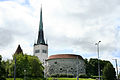 Tallinn St. Olaf's Church and Fat Margaret tower
 -

-
 Pirita Convent ruins in Tallinn
 -
 Tallinn Lasnamäe district
 -
 Maardu Manor
 -

-
 Paldiski railway station
 -
 Jõelähtme Church
 -
 Kose Church
 -
 Vasalemma Manor
 -
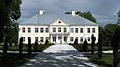 Ääsmäe Manor
 -
 Tuhala "Witch's Well"
 -

-
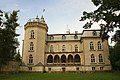 Laitse manor
 -
 Tarvasjõgi river
 -
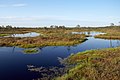 Kakerdaja bog


.jpg)


.jpg)


.jpg)


.jpg)


References
[edit]- ^ "RV0222U: RAHVASTIK SOO, RAHVUSE JA MAAKONNA JÄRGI, 1. JAANUAR. HALDUSJAOTUS SEISUGA 01.01.2018".
- ^ "GROSS DOMESTIC PRODUCT BY COUNTY". stat.ee.
- ^ "Harjumaa Turism". www.visitharju.ee. Retrieved Nov 25, 2020.
- ^ "The Estonian Evangelical Lutheran Church. Congregations". Retrieved 7 February 2025.
- ^ "Eesti Apostlik-Õigeusu Kirik. Orthodox Church of Estonia. Piiskopkonnad". Retrieved 7 February 2025.
- ^ "Moskva Patriarhaadi Eesti Õigeusu Kirik. Kontaktid". Retrieved 7 February 2025.
- ^ "Rooma-katoliku Kirik. Tallinna Piiskopkond. Missade ajad". 25 September 2020. Retrieved 7 February 2025.
- ^ "Union of Free Evangelical and Baptist Churches of Estonia. Kogudused". Retrieved 7 February 2025.
- ^ "Vennastekoguduse pavejad". Retrieved 16 February 2025.
- ^ "Eesti Metodisti Kirik. Kogudused". Retrieved 7 February 2025.
- ^ "Eesti Kristlik Nelipühi Kirik. Praostkonnad ja kogudused". Retrieved 7 February 2025.
- ^ "Maavalla Koda. Kohalikud Kojad". Retrieved 7 February 2025.
- ^ a b Official census data from Statistics Estonia:
- 2000 Census:
- 2011 Census:
- 2021 Census:
- ^ "Maavanem". Archived from the original on 4 March 2016. Retrieved 24 September 2015.
- ^ Postimees - Seadusemuudatus muudab kaks linna aleviks. 27 November 2013.
- ^ City Population: ESTONIA: Harju.
- ^ a b c "Elanike demograafiline jaotus maakonniti". Kohaliku omavalitsuse portaal. Archived from the original on 2 March 2019. Retrieved 2 April 2018.
External links
[edit] Media related to Harju County at Wikimedia Commons
 Harju County travel guide from Wikivoyage
 | ||
| International | |
|---|---|
| National | |
| Geographic | |
| Other | |

Harju County
View on GrokipediaHarju County (Estonian: Harju maakond) is the northernmost and most populous of Estonia's 15 counties, encompassing the capital city Tallinn and extending along the southern coast of the Gulf of Finland. It accounts for nearly half of Estonia's total population, with around 176,700 residents outside Tallinn as of recent estimates.[1] The county covers approximately 4,333 square kilometers of diverse terrain, including urban areas, coastal cliffs, bogs, and forests.[2] As Estonia's economic core, Harju County generates the highest GDP per capita and drives national growth through dominant sectors like services, manufacturing, energy, and electronics, with over 50% of new enterprises established annually in the region including Tallinn.[3][1] It hosts key infrastructure such as major ports and highways, facilitating trade and connectivity across Northern Europe, while natural reserves like Lahemaa National Park highlight its environmental significance alongside rapid urbanization.[1]
History
Prehistoric and Medieval Foundations
The territory of present-day Harju County, historically known as Harrien, preserves archaeological evidence of continuous human occupation from the late Stone Age onward, with Mesolithic hunter-gatherer sites indicating early exploitation of coastal and forested resources. Bronze Age settlements emerged around locations such as Kehtna in southern Harju, featuring agricultural and handicraft activities amid expanding population centers.[4][5] In the Early Iron Age, stone-cist barrows proliferated across northern Harju, as evidenced by clusters at Jõelähtme near the Jägala River and Hundikangrud, where these megalithic tombs—dating primarily to the 1st millennium BCE—contained grave goods reflecting stratified societies engaged in farming, herding, and trade.[6][7] The Late Iron Age further consolidated power through fortified hill forts and district-based hierarchies, exemplified by the expansive Varbola stronghold, which functioned as a defensive and commercial hub until external incursions disrupted indigenous autonomy.[8][9] Medieval foundations crystallized with the Northern Crusades' penetration into Harrien, culminating in the Danish invasion of 1219 led by King Valdemar II. On June 15, Estonian forces suffered defeat at the Battle of Lyndanisse, enabling Danish consolidation of northern Estonian territories and the construction of a stone fortress atop Toompea Hill—the core of what evolved into Tallinn.[10][11] This event imposed feudal structures, Christianization, and tribute systems on the region, supplanting prior pagan polities while integrating Harrien into broader Baltic crusader domains.[12][13]Periods of Foreign Rule
The period of foreign rule in Harju County commenced with the Danish conquest in 1219, when King Valdemar II's forces defeated Estonian tribes at the Battle of Lyndanisse on June 15, establishing control over the region historically known as Harria or Revala, centered around the site of modern Tallinn.[14] This victory, part of the Northern Crusades, led to the Christianization and incorporation of northern Estonia into the Duchy of Estonia under Danish suzerainty, with the area administered as a province where the king appointed a vice-regent in his absence.[15] Danish rule persisted until the mid-14th century, marked by feudal organization and the construction of fortifications, though punctuated by native resistance including the St. George's Night Uprising of 1343–1345, which weakened Danish hold and prompted the sale of northern Estonian territories, including Harju, to the Livonian Order in 1346 for 19,000 Danish marks.[16] Under the Livonian Order, a branch of the Teutonic Knights, Harju formed part of the Livonian Confederation from 1346 to 1561, governed by the Order's master alongside bishops and local German nobility, with Tallinn (Reval) serving as a key Hanseatic port under the Bishopric of Reval.[15] This era saw consolidation of Germanic feudal structures, suppression of pagan revolts, and economic orientation toward the Hanseatic League, but internal divisions and external pressures culminated in the Livonian War (1558–1583).[17] In 1561, amid the war's chaos following the Order's dissolution by the Treaty of Vilnius, the knighthoods of Harju and Viru, along with Tallinn's city council, voluntarily surrendered to Swedish King Eric XIV, securing protection against Russian incursions in exchange for allegiance.[16] Swedish dominion over Harju, part of the broader Province of Estonia, endured from 1561 to 1710, a phase often termed the "Swedish period" in historical accounts for administrative reforms including the introduction of the Swedish legal code in 1632, establishment of Tartu University in 1632 (affecting the region indirectly), and promotion of Lutheranism alongside reduced serfdom burdens compared to prior regimes.[18] Harju's coastal areas, including Tallinn, benefited from Swedish naval defenses against Polish and Russian threats, with the Treaty of Oliva in 1660 confirming Swedish control after earlier conflicts.[17] Rule ended during the Great Northern War, as Russian forces under Peter the Great captured Tallinn in 1710, leading to the capitulation of Swedish garrisons and the province's integration into the Russian Empire by the Treaty of Nystad in 1721.[14] Russian imperial control of Harju, incorporated into the Governorate of Estonia (Estland) formalized in 1719, lasted until 1917, characterized by the retention of Baltic German autonomy under the knighthoods while integrating the region into Russia's administrative and military framework, including the construction of naval bases like Paldiski in 1716.[19] The area experienced Russification efforts, particularly post-1881 under Alexander III, alongside economic development tied to St. Petersburg, but retained distinct provincial governance until the empire's collapse amid World War I and the 1917 revolutions.[20]Independence and Interwar Era
Estonia's Provisional Government, operating from Tallinn in Harju County, declared national independence from the Russian Soviet Federative Socialist Republic on February 24, 1918.[21] The declaration was made amid the collapse of Russian imperial control following World War I, but German forces occupied the region the next day, incorporating it into the United Baltic Duchy under a puppet administration until the Armistice of November 11, 1918.[22] With German withdrawal, Bolshevik forces launched an invasion on November 28, 1918, capturing Narva and advancing westward through northeastern Estonia toward Tallinn; Estonian volunteer units, including local militias from Harju County, formed the initial defense lines, halting the Red Army approximately 40 kilometers east of the capital by late December.[23] Harju County served as the political and military hub during the Estonian War of Independence (1918–1920), with Tallinn hosting the government and mobilizing resources for the northern front.[22] Estonian forces, bolstered by British naval support and Finnish volunteers, repelled Soviet offensives in early 1919, enabling counterattacks that reclaimed occupied territories; no major pitched battles occurred within Harju's borders, but the county's coastal position facilitated Allied landings and supply lines critical to sustaining the defense of the capital.[23] The conflict concluded with the Treaty of Tartu on February 2, 1920, recognizing Estonia's sovereignty, after which Harju County was formalized as one of eleven administrative units in the new republic, encompassing Tallinn and surrounding rural districts historically known as Harria.[23] In the interwar period (1920–1940), Harju County experienced modest economic recovery and urbanization centered on Tallinn, though industrial output initially declined due to lost Russian markets and demilitarization.[22] The city's population, which had fallen to around 145,000 by 1939 from pre-war levels of approximately 160,000 in 1917, reflected wartime disruptions but stabilized with influxes from rural areas; new institutions like the Tallinn Teachers' Seminary and Conservatory, established in 1919, supported cultural development.[22] Rural Harju benefited from nationwide land reforms redistributing estates to ethnic Estonian farmers, fostering agricultural stability, while Tallinn's port handled growing trade, though overall growth lagged behind pre-1914 levels until the late 1930s.[22]World War II Occupations
Harju County, encompassing Tallinn, experienced the initial Soviet occupation starting June 17, 1940, when Red Army units entered Estonia under pretexts of securing bases stipulated by the 1939 Molotov-Ribbentrop Pact, amassing over 100,000 troops by mid-1941.[24] In Tallinn, Soviet authorities swiftly arrested political elites, suppressed opposition, and orchestrated fraudulent elections in July 1940, culminating in the forced annexation as the Estonian Soviet Socialist Republic on August 6.[25] Mass deportations on June 14, 1941, targeted around 10,000 Estonians, including many from Harju County, with families of perceived enemies—politicians, military officers, and intellectuals—sent to Siberian labor camps, resulting in thousands of deaths from starvation and exposure.[26] The German occupation commenced in July 1941 amid Operation Barbarossa, with Wehrmacht forces reaching Harju County rapidly as Soviet troops retreated; Tallinn fell on August 28, 1941, following a chaotic Soviet naval evacuation from the harbor where over 7,000 perished due to German air attacks and submarine strikes.[27] Under Nazi administration within Reichskommissariat Ostland, Estonia saw partial autonomy initially, but Harju's coastal areas, including Tallinn, became sites of forced labor and fortification construction against anticipated Soviet return. The Holocaust decimated the local Jewish population, with approximately 2,000 Jews in Tallinn and surrounding areas executed or deported to camps by late 1941, executed primarily by Estonian auxiliary police under German oversight.[28] Soviet reoccupation intensified in 1944, marked by devastating air raids on Tallinn on March 9, destroying about 25% of the city's wooden structures and killing over 500 civilians.[29] As German forces evacuated Tallinn on September 20, Red Army units entered on September 22 with minimal resistance, reimposing control over Harju County and initiating renewed deportations, conscriptions, and collectivization that displaced tens of thousands.[30] The occupations inflicted profound demographic losses, with Harju's population declining due to warfare, executions, and flight—around 80,000 Estonians from the region fled westward during the German retreat.[31]Soviet Era and Resistance
The Soviet reoccupation of Estonia began in earnest during the Baltic Offensive of World War II, with Red Army forces capturing Tallinn, the capital within Harju County, on September 22, 1944, after intense urban fighting that left much of the city damaged.[32] Harju County, as the political and economic center, saw immediate imposition of Soviet control, including the arrest and execution of perceived nationalists and the establishment of NKVD units to suppress dissent.[33] Over the following years, the region experienced systematic repression, with an estimated 60,000 Estonians killed, deported, or imprisoned nationwide in the initial postwar decade, disproportionately affecting urban elites in Tallinn and rural holdouts in Harju's wooded areas.[32] Collectivization and deportations intensified control, culminating in Operation Priboi from March 25–28, 1949, when Soviet authorities targeted families of suspected resisters, kulaks, and nationalists across Estonia, deporting over 20,000 individuals to Siberia under Decree No. 390-138ss, which planned for 22,500 relocations.[34] Harju County residents, including those in Tallinn and surrounding rural parishes, were heavily impacted, with operations focusing on breaking agrarian resistance and urban intellectual networks; survivors endured forced labor in remote camps, where mortality rates exceeded 20% due to starvation and disease.[35] Parallel Russification policies promoted Russian language dominance in administration, education, and industry, particularly in Tallinn, where Soviet industrialization drew migrant Russian workers, altering the ethnic composition from over 90% Estonian pre-1940 to roughly 60% by the 1980s through state-orchestrated influxes and cultural suppression.[36] Armed resistance emerged prominently through the Forest Brothers (Metsavennad), partisan groups that operated in Harju County's dense forests starting in 1944, ambushing Soviet patrols, destroying supply lines, and sheltering draft evaders amid the Red Army's reoccupation.[37] These fighters, numbering in the thousands nationally but with active cells in northern Estonia including Harju, waged guerrilla warfare into the early 1950s, often cooperating initially with retreating German forces before turning solely against Soviet forces; key actions included raids on NKVD posts and evasion of "destruction battalions" formed to liquidate them.[38] By 1947, intensified Soviet sweeps reduced organized units, but isolated holdouts persisted until the mid-1950s, supported by local civilian networks providing food and intelligence despite brutal collective punishments.[39] Non-violent opposition, such as underground cultural preservation and riots against language policies in Tallinn, complemented these efforts, sustaining national identity against assimilation.[36]Post-Independence Restoration
Following Estonia's declaration of independence on August 20, 1991, Harju County underwent administrative reorganization to revive pre-Soviet structures disrupted by half a century of occupations. County governments, including Harju's, had begun reforming in 1990 during the transitional period of the Singing Revolution, establishing councils to coordinate local governance and prepare for sovereignty. By autumn 1993, Estonia's local government framework was consolidated, with 255 municipalities nationwide, many in Harju County reverting to historical parish and town divisions while integrating Soviet-era raions. Tallinn, the county's core urban center, saw its district administrations dissolved in 1993, realigning it more closely with surrounding Harju municipalities for coordinated planning, though it retained separate status as the national capital. Economic restoration in Harju County accelerated rapidly, driven by privatization and market liberalization, transforming it into Estonia's primary growth pole. Land reforms from 1991 returned or compensated for over 90% of pre-1940 private holdings by the mid-1990s, spurring investment in Tallinn's port and real estate; the county's share of national GDP rose from around 55% in 1997 to over 60% by the 2000s, fueled by tech startups, shipping, and EU accession in 2004. Urban expansion concentrated here, with land take for built-up areas increasing unevenly—Harju absorbed much of Estonia's post-1991 development, including suburban sprawl and infrastructure like upgraded highways connecting Tallinn to regional hubs. This boom contrasted with rural stagnation elsewhere, highlighting Harju's role as the economic engine amid national recovery from Soviet central planning.[40][41] Cultural and environmental restoration efforts complemented administrative changes, emphasizing heritage preservation amid modernization. Soviet-era industrial scars, such as polluted coastal sites near Tallinn, prompted cleanup initiatives funded by restitution claims and early foreign aid; protected areas like Lahemaa National Park within Harju boundaries expanded management post-1991 to restore biodiversity degraded by collectivized agriculture. Local resistance networks from the Soviet era transitioned into civic organizations, supporting Estonian-language education and monuments commemorating independence, which reinforced national identity in the county's diverse population. These measures laid foundations for Harju's integration into Western institutions, though challenges like uneven wealth distribution persisted.[42]Administrative Evolution
Establishment and Reforms
Harju County, as a formal administrative division, originated in the interwar Republic of Estonia following the country's declaration of independence on 24 February 1918, when the region—encompassing Tallinn and surrounding northern territories—was organized into one of the initial counties under the emerging national framework.[43] This structure drew on historical precedents from the medieval Harria (Harju) region but was codified in the modern state-building efforts of the early 1920s, with counties serving as primary territorial units for governance and local administration.[14] The county system was dismantled during the Soviet occupation starting in 1940, replaced by smaller raions (districts) under the Estonian Soviet Socialist Republic, which altered borders and subordinated local units to centralized communist control.[43] In a transitional reform amid the Singing Revolution and push for sovereignty, the Estonian SSR government on 1 January 1990 renamed and reconfigured these raions into counties, restoring historical names like Harju maakond and approximating pre-1940 boundaries; this effectively re-established Harju County as the most populous administrative unit, including Tallinn as its center.[44] [45] Subsequent reforms focused on decentralization and efficiency. In 1993, Tallinn's separate urban raions were dissolved, fully reintegrating the capital under Harju County's oversight.[46] The 2017 administrative-territorial reform, which primarily merged over 200 municipalities into 79 larger units to enhance fiscal viability and service delivery, also abolished county governments (maavalitsused) effective 2018, transferring their executive functions to state agencies, ministries, and local municipalities while retaining counties as statistical, electoral, and regional planning divisions without independent governing bodies.[47] [48] This shift reduced administrative layers, aligning with Estonia's post-independence emphasis on streamlined e-governance and minimal bureaucracy.[49]Municipal Reorganizations
Estonia's 2017 administrative-territorial reform, enacted to consolidate smaller municipalities into larger, more efficient units capable of managing public services, led to significant reorganizations in Harju County. The reform combined voluntary mergers from 2016 with government-mandated consolidations in 2017, reducing the national total from 213 municipalities to 79, with Harju experiencing mergers primarily among rural parishes surrounding Tallinn.[49] These changes aimed to address fiscal viability and service delivery challenges in sparsely populated areas, though some municipalities resisted, leading to Supreme Court challenges that upheld forced mergers elsewhere but spared several in Harju.[50] Key mergers in Harju County included the creation of Saue Municipality on October 24, 2017, through the amalgamation of Saue City (population approximately 5,000), Saue Parish, Nissi Parish, and Kernu Parish, forming a unit with over 20,000 residents and enhanced administrative capacity for infrastructure and education services.[51] Similarly, Lääne-Harju Parish emerged from the merger of Paldiski City, Keila Parish, Padise Parish, and Vasalemma Parish, consolidating coastal territories to improve regional coordination on ports, tourism, and environmental management, effective the same date.[52] Anija Parish expanded by incorporating Aegviidu Parish, bolstering its population to around 14,000 and facilitating better resource allocation for rural development.[52] Preceding the 2017 wave, Harju saw earlier voluntary consolidations, such as the 2013 merger of Kose and Kõue Parishes into Kose Parish (population about 7,300), driven by shared economic interests and state incentives like financial grants.[53] Municipalities like Keila City, Maardu City, and rural units such as Harku and Jõelähtme avoided mergers, retaining independence due to sufficient population thresholds (over 5,000 residents) and proximity to Tallinn's economic hub, which mitigated viability concerns.[54] Post-reform evaluations indicated mixed outcomes, with merged entities showing improved fiscal stability but occasional tensions over local identities and representation.[55] Harju's county borders remained unchanged, preserving its status as Estonia's most populous administrative division.[56]Current Governance Structure
Harju County's administrative framework underwent significant restructuring with the abolition of county governments (maavalitsused) effective January 1, 2018, as part of Estonia's 2017 administrative-territorial reform, which aimed to streamline operations by transferring executive duties to central state agencies and empowered local municipalities. Previously, the county featured an appointed governor (maavanem) overseeing regional state functions, but post-reform, counties function primarily as territorial units for electoral districts, spatial planning, and statistical purposes, without independent executive authority.[57] Regional coordination now relies on voluntary inter-municipal associations, with the Harjumaa Omavalitsuste Liit (HOL)—Union of Harju County Municipalities—serving as the key body for the county's non-capital municipalities. Established to foster collaboration among rural municipalities and smaller towns, HOL promotes joint projects in infrastructure, economic development, and advocacy toward national policymakers, operating from Tallinn with a management board elected by member councils.[58] It represents entities such as Rae Parish, Saue Municipality, and Harku Parish, facilitating county-level planning like the Harju County Plan (maakonnaplaneering), which guides land use and development across the 4,584 km² area excluding Tallinn's direct jurisdiction. Tallinn, as Harju County's administrative center and comprising about 60% of the county's population, operates autonomously under its city council (Tallinna Volikogu) and mayor, handling urban governance independently while participating in broader regional initiatives through ad hoc partnerships rather than HOL membership. State oversight persists via the Ministry of Regional Affairs and Agriculture, which coordinates supra-municipal services like rescue operations and environmental monitoring, and experimental regional councils piloted elsewhere in Estonia since 2023 have not yet extended to Harju, where dense urbanization limits the need for such formalized structures.[59] This decentralized model emphasizes municipal self-governance, with HOL's role emphasizing pragmatic cooperation over hierarchical control.[40]Geography and Natural Features
Topography and Coastline
Harju County exhibits a topography dominated by the North Estonian coastal plain and limestone plateau, with elevations generally below 100 meters and a maximum of 112 meters at Määramägi hill.[60] Glacial deposits contribute to undulating terrain featuring low hills, such as Toompea Hill in Tallinn, rising to about 48 meters.[60] Inland areas include forested moraines and extensive bogs, like Kõnnu Suursoo, reflecting post-glacial wetland formation prevalent in northern Estonia. The county's northern boundary forms the southern coast of the Gulf of Finland, with a total shoreline length of 530 kilometers, of which 165 kilometers encircle its offshore islands.[61] This coastline features indented bays, sandy stretches, and rocky outcrops shaped by the Baltic Klint escarpment, an erosional limestone cliff line extending across the region.[60] Notable coastal landforms include the Pakri Peninsula's steep cliffs, exemplifying klint formations up to 30 meters high, interspersed with pine-covered slopes and boulder fields.Islands and Water Bodies
Harju County borders the Gulf of Finland for over 300 kilometers, encompassing 74 islands and islets that contribute to its diverse coastal geography.[62] These offshore features range from larger inhabited islands to small rocky outcrops, many shaped by glacial activity and supporting unique ecosystems.[63] Prominent islands include Naissaar, situated 8.5 kilometers northwest of Tallinn in the Gulf of Tallinn, with dimensions of 9 kilometers in length and 4 kilometers in width, featuring a highest elevation of 27 meters at Mount Kunila.[64][65] Aegna lies closer to the capital, serving as a recreational site accessible by ferry.[66] The Prangli archipelago, comprising several islands, supports a small permanent population and fishing communities.[67] Keri Island, one of Estonia's northernmost, measures 400 meters long and 80 meters wide, characterized by its barren, rubble-formed terrain and hosting a lighthouse established in 1719.[68] The Pakri Islands—Suur-Pakri and Väike-Pakri—extend into the Gulf of Finland near Paldiski, with a combined coastline of 42 kilometers and elevations up to 17 meters.[63] Inland water bodies include 97 lakes and ponds alongside 34 rivers and streams. The largest lakes are Kahala at 345.9 hectares and Harku at 163.8 hectares. The Jussi-Järvi-Koitjärve vicinity hosts a high concentration of lakes, up to 30 per 100 square kilometers.[69] Major rivers such as the Jägala, Pirita, and Keila originate in the county and discharge into the Gulf of Finland, with the Jägala notable for its 8-meter waterfall, Estonia's tallest.[63] These rivers and lakes form part of the broader hydrological network influencing local biodiversity and supporting activities like fishing and recreation.Protected Areas and Biodiversity
Harju County features extensive protected areas that preserve diverse ecosystems, with Lahemaa National Park as the cornerstone, spanning 725 km² along the northern coastline and established in 1971 to maintain forests, bogs, coastal habitats, and associated biodiversity.[70][71] The park's varied landscapes, including wetlands and semi-natural communities, support large herbivores like moose (Alces alces) and wild boar (Sus scrofa), alongside predators such as Eurasian lynx (Lynx lynx) and grey wolves (Canis lupus).[72] Avian populations exceed 200 species, encompassing raptors including white-tailed eagles (Haliaeetus albicilla) and black storks (Ciconia nigra).[72] Põhja-Kõrvemaa Nature Reserve, covering 13,157.9 hectares east of Tallinn, protects forested ridges, bogs, and over 30 lakes shaped by glacial eskers, formerly a restricted Soviet military zone now dedicated to rare species conservation.[73] This reserve's bog-dominated terrain fosters specialized flora and fauna adapted to acidic wetlands, contributing to regional habitat connectivity.[74] Coastal and urban-adjacent sites further enhance protection efforts, such as the Paljassaare Special Conservation Area in Tallinn, which harbors migratory birds and wetland species amid industrial proximity.[75] Limestone outcrops in the county sustain alvar grasslands, hosting drought-resistant plants and invertebrates, while dunes in areas like Harju support wooded habitat types integral to boreal biodiversity.[75] These zones collectively mitigate habitat fragmentation, with bogs serving as carbon sinks and refugia for endangered bog specialists amid Estonia's broader mammalian species increase to 66 documented taxa since 1945.[76]Demographics
Population Dynamics
As of 1 January 2024, Harju County had a population of 647,174, accounting for approximately 47% of Estonia's total population. [77] This figure reflects steady growth, with the county's population increasing by 1,897 residents over the course of 2024, driven primarily by net positive migration amid a national population decline of 2,750 across municipalities.[77] Harju remains the most populous county in Estonia, contrasting with shrinkage in most other regions. Between the 2011 and 2021 censuses, Harju's population rose by 62,000 residents—the only significant increase among Estonian counties—reaching around 584,000 by 2021 before further gains from post-census migration.[78] This expansion stems largely from net migration rather than natural increase, as Estonia overall experiences negative birth-death balances (e.g., 10,949 births versus 16,002 deaths nationally in 2023).[79] Internal migration flows heavily toward Harju, with 36,400 people relocating from other counties to Harju between 2011 and 2021, compared to 23,800 outbound moves, yielding a net internal gain of about 12,600.[80] In 2024 alone, net internal migration added 1,229 residents to the county.[81] International immigration has amplified this trend, particularly since 2017, with citizens from third countries and the European Union settling predominantly in Harju due to economic opportunities in the Tallinn metropolitan area.[82] Ukrainian inflows, exceeding 7,000 in 2024 (38% of total immigrants to Estonia), have concentrated in urban Harju municipalities, offsetting emigration and contributing to positive net migration rates.[83] Urbanization dynamics show population concentration in Tallinn (33% of Estonia's employed population by 2021) and its suburbs, alongside suburbanization toward coastal areas and islands, with movement from city centers to peripheral zones accelerating post-2011.[84] [85] Projections indicate continued modest growth in Harju through 2025 and beyond, at rates around 1-1.7% annually, supported by migration inflows amid national declines of up to 11% over the next 60 years.[86] This pattern underscores Harju's role as Estonia's demographic growth engine, fueled by internal redistribution and external arrivals rather than fertility, which remains below replacement levels county-wide.[87]Ethnic Composition and Integration
Harju County's ethnic composition, as recorded in the 2021 census conducted by Statistics Estonia, features a majority of ethnic Estonians alongside a substantial Russian minority and smaller groups of other nationalities. The county's total population stood at 614,567, with ethnic Estonians comprising 60.6% (372,245 individuals), ethnic Russians 29.0% (178,169), Ukrainians 3.1% (18,886), Belarusians 1.2% (7,473), Finns 0.7% (4,226), and various other ethnicities accounting for the remaining 5.4% (approximately 33,568 combined, including smaller numbers of Germans, Tatars, Latvians, Poles, Lithuanians, and Jews).[88][86] This distribution reflects historical Soviet-era migration patterns, during which large numbers of Russian speakers were relocated to northern Estonia, including Harju County, contributing to the current demographic profile where ethnic Russians are disproportionately urban and concentrated in Tallinn (approximately 34% of the city's population).[89]| Ethnic Group | Population | Percentage |
|---|---|---|
| Estonians | 372,245 | 60.6% |
| Russians | 178,169 | 29.0% |
| Ukrainians | 18,886 | 3.1% |
| Belarusians | 7,473 | 1.2% |
| Finns | 4,226 | 0.7% |
| Others | 33,568 | 5.4% |
Language, Religion, and Social Indicators
In Harju County, the 2021 population census recorded Estonian as the mother tongue for 354,549 residents, Russian for 220,772, and other languages for 33,291, reflecting a distribution of approximately 58% Estonian, 36% Russian, and 6% other primary languages among those reporting first languages.[86] This linguistic profile aligns with the county's ethnic composition, where Russian speakers predominate in urban areas like Tallinn due to historical Soviet-era migration, though Estonian remains the sole official language nationwide, with policies emphasizing its use in public administration and education. Proficiency in foreign languages is high nationally, with 76% of Estonia's population able to speak at least one, a figure likely elevated in Harju given its role as an economic and international hub.[96] Religious affiliation in Harju County is low, consistent with Estonia's overall secularism. The 2021 census indicated 101,410 Orthodox Christians, 33,920 Lutherans, 28,110 adherents of other religions, and 275,480 with no religious affiliation among respondents, suggesting roughly 30% of the adult population identifies with a faith, predominantly Eastern Orthodox among the Russian-speaking minority and Lutheran among ethnic Estonians.[86] Nationally, religious affiliation has stabilized at 29% since 2000, with Orthodox Christianity the most common denomination at 12.8%, underscoring Harju's similar patterns amid widespread non-religiosity.[97] Social indicators in Harju County highlight relative strengths in health and education compared to national averages, though data varies by metric. Self-rated health as good or very good stood at 62.2% in 2010, exceeding the Estonian average of 55%, with life expectancy at birth matching the national 76 years; circulatory disease mortality was the lowest in Estonia at 378.4 per 100,000 (2008-2010).[98] Educational attainment benefits from Tallinn's universities, contributing to national trends where 21.4% of 25-64-year-olds hold a master's degree (2021 census), with Harju's urban concentration likely amplifying tertiary education rates.[99] The at-risk-of-poverty rate was 10.1% in 2009, below the national 15.8%, reflecting economic advantages, though property crime remains a concern in densely populated areas, mirroring Estonia's overall homicide rate of 2.8 per 100,000 in 2020.[98]Economy
Economic Structure and Key Sectors
Harju County forms the economic core of Estonia, contributing approximately 60% of the national gross domestic product (GDP) in 2022 and nearly two-thirds (€24 billion out of €38 billion) in 2023.[100][101] The county's economy is characterized by a strong predominance of the service sector, which accounted for 77% of gross value added in 2018—the highest share among Estonian counties—and continues to drive growth, as evidenced by its role in 2019 economic expansion.[102][3] Industry and construction sectors contribute modestly, comprising around 25% nationally but lower in Harju compared to resource-heavy regions like Ida-Viru County.[101] Key sectors within services include information and communications technology (ICT), finance and insurance, and wholesale and retail trade, bolstered by Tallinn's status as a hub for digital innovation and e-governance.[103] Manufacturing, particularly in electronics and engineering, represents a notable industrial component, alongside energy-related activities in the northwestern areas.[103] The Port of Tallinn facilitates significant maritime trade, supporting logistics and export-oriented activities. These sectors benefit from the county's skilled workforce, reflected in average monthly gross wages of €2,365 in the second quarter of 2025, second only to Tallinn.[104] Employment distribution aligns with sectoral emphasis, with over 70% of national service sector jobs concentrated in urban areas like Harju, fostering high productivity but also regional disparities.[105] The ICT sector's prominence stems from Estonia's broader digital economy strengths, including startups and tech firms headquartered in the county, contributing to export revenues in software and telecommunications services.Growth Patterns and Regional Disparities
Harju County has driven Estonia's economic expansion, accounting for 63% of national GDP in 2023 with €24 billion out of €38 billion total.[101] This dominance, fueled by service sectors in Tallinn, marked a slight decline from 66% in 2020, reflecting modest catch-up in other regions amid national GDP per capita growth to €27,868.[106][101] Annual GDP per capita in the county has outpaced the national average, reaching 144% of it in 2018, though gaps with Estonia's overall figure have narrowed as peripheral areas stabilize.[107][108] Within Harju County, growth concentrates heavily in Tallinn, which generated €15 billion of the county's €18 billion GDP in 2019, underscoring urban-led expansion in high-value industries like information technology and finance.[3] Rural municipalities, by contrast, exhibit slower development, with economic activity tied to agriculture, manufacturing, and commuting to urban hubs, resulting in lower incomes and elevated at-risk-of-poverty rates—up to sevenfold differences across county areas as of 2013 data.[109] This urban-rural divide mirrors broader Estonian trends, where Harju's peripheral zones face depopulation and limited investment, exacerbating disparities in employment and infrastructure access despite proximity to the capital.[110][111] Efforts to address these imbalances include regional development funding, yet concentration in North Estonia persists, with Harju capturing over 77% of creative industry investments in recent assessments.[112] Per capita GDP variations within the county highlight the need for place-based policies, as rural stagnation contrasts with Tallinn's sustained post-1990s rebound driven by EU integration and digital economy booms.[113][114]Labor Market and Innovation Hubs
Harju County's labor market is dominated by the service sector, which accounts for the majority of employment, while industry and construction represent about 20% of the workforce. The region features a highly skilled and educated labor force, particularly strong in engineering and technical fields, supporting its role as Estonia's economic core. In the fourth quarter of 2024, Harju County concentrated 75.7% of the nation's 9,071 registered job vacancies, reflecting robust demand amid national employment challenges.[3][1][115] Unemployment rates in Harju align closely with national figures, which stood at 7.8% in the second quarter of 2025, down from 8.6% in the first quarter, with an employment rate of 68.9%. Youth unemployment has risen sharply, with 1,398 young people in Harju County holding only basic education or lower being unemployed as of early 2025, a nearly fourfold increase from 2017 levels. The ICT sector drives much of the demand, with 82% of Estonia's ICT positions located in Tallinn and Harju County, contributing to an overall ecosystem where 8% of national GDP stems from ICT activities.[116][117][118][119][120] Innovation hubs in Harju County, centered in Tallinn, form a key pillar of the region's economy, with the startup ecosystem employing 14,396 people nationwide by late 2024, many in Harju-based firms. Tallinn startups contributed €222.4 million in labor taxes in the first nine months of 2024, up 3% year-over-year, underscoring growth in tech-driven employment. The Tallinn Science Park Tehnopol serves as a primary hub, incubating nearly 100 early-stage startups annually through mentorship, business development, and access to 55,000 m² of facilities, including labs and R&D centers hosting firms in cybersecurity, robotics, and software.[121][122][123][124] This ecosystem benefits from Estonia's digital infrastructure, positioning Tallinn as the world's top city for startups in 2025 due to e-residency programs and low operational costs, fostering companies like Wise and Pipedrive. Deep tech and fintech dominate, with high densities of front-end developers and security specialists, though 30% of tech talent has under five years of experience, indicating a youthful but maturing workforce. Tehnopol's integration with Tallinn University of Technology further bolsters R&D, supporting scale-ups in areas like AI and blockchain.[125][126][127][128]Government and Politics
County Administration
Harju County's administrative framework underwent significant reform in 2017, with the abolition of all Estonian county governments (maavalitsused), including Harju Maavalitsus, effective January 1, 2018.[129] This change eliminated independent county-level executive bodies, reclassifying counties as territorial units for state coordination rather than self-governing entities.[130] Prior to abolition, the county government, headquartered in Tallinn, handled regional development planning, supervision of local municipalities, crisis coordination, and implementation of national policies, operating under the oversight of the Ministry of Regional Affairs and Agriculture.[57] The county governor (maavanem), appointed by Estonia's cabinet for a five-year term, previously led the administration as the central government's regional representative, with duties including monitoring local government compliance, facilitating inter-municipal cooperation, and managing state-supervised services like education and social welfare at the county level.[131] Ülle Rajasalu served as Harju's final governor from 2005 until the position's termination on December 31, 2017. Post-reform, these functions devolved to national agencies—such as the Ministry of Regional Affairs for planning and the Police and Border Guard Board for security—alongside empowered local municipalities, reducing duplication and centralizing oversight.[132] In Harju County, which encompasses Tallinn as a separate urban municipality alongside 12 rural municipalities and one town as of 2023, local governments now exercise primary authority over services like waste management, spatial planning, and basic infrastructure.[133] Inter-municipal collaboration, including on cross-border projects and regional advocacy, occurs through the Harju County Municipalities Union (Harjumaa Omavalitsuste Liit, HOL), a voluntary association established in 1991 with 18 member municipalities.[134] HOL's five-member board, chaired by a representative elected from local leaders, coordinates lobbying with national authorities, joint procurement, and development initiatives, such as transport and environmental strategies, without formal administrative powers.[134] State supervision persists via regional offices of ministries and the county-level crisis management framework, where the former governor's emergency coordination role transferred to designated state officials, ensuring continuity in areas like disaster response.[135] This structure aligns with Estonia's unitary system, emphasizing municipal autonomy within national guidelines, though critics noted initial post-abolition gaps in regional service delivery, prompting ad hoc expansions in state regional offices by 2022.[132] Harju's proximity to the capital amplifies Tallinn's de facto influence, with the city managing over 80% of the county's population and budget, underscoring disparities in administrative capacity among smaller rural units.[98]Local Political Dynamics
Local political dynamics in Harju County operate predominantly at the municipal level following the abolition of county governments and the county governor (maavanem) position on December 31, 2017, which shifted coordination responsibilities to state agencies and inter-municipal cooperation. The region's 14 municipalities, including Tallinn as the dominant urban center with over 70% of the county's population, feature councils elected every four years, with executive mayors selected by those councils.[133] Political competition centers on national parties adapted to local issues like urban development, ethnic integration, and infrastructure funding, often amplified by Harju's demographic mix of ethnic Estonians and Russian-speakers. Tallinn City Council, comprising 63 seats, exemplifies these dynamics, where the Estonian Centre Party (Eesti Keskerakond) maintains strong support among Russian-speaking residents, securing 31 seats in the October 19, 2025, elections—its highest share—while the Estonian Reform Party (Eesti Reformierakond) obtained 17 seats, the Social Democratic Party (SDE) 10, Isamaa 9, and Estonia 200 6. [136] This outcome reflects persistent ethnic voting patterns, with the Centre Party polling highest in districts like Lasnamäe and Mustamäe, which have significant Russian-speaking majorities, contrasted by Reform Party strength in central and wealthier areas.[137] Coalition formation post-election proved contentious, as the Centre Party's plurality fell short of a majority, prompting discussions of partnerships with Isamaa or others amid mutual ideological reservations, including critiques of the Centre Party's historical ties to Russian interests.[137] [138] In surrounding municipalities like Maardu and Keila, similar divides persist, with the Centre Party often leading in Russian-majority areas and Reform or Isamaa prevailing elsewhere, influencing county-wide priorities such as transport links and environmental policy through voluntary associations.[136] The 2025 elections saw national trends like the Conservative People's Party (EKRE)'s decline to 8.2% in Tallinn—yielding no seats—highlighting urban voters' preferences for centrist or liberal options over nationalist appeals.[136] These patterns underscore causal factors including socioeconomic disparities and integration challenges, with Russian-speakers comprising about 40% of Tallinn's electorate, sustaining the Centre Party's base despite national-level erosion.[139]Policy Challenges and Reforms
Harju County's policy landscape has been shaped by the 2017–2018 administrative reforms, which dissolved county governments nationwide, including Harju's, effective January 1, 2018, transferring responsibilities such as regional planning, cultural affairs, and enterprise support to state agencies and municipalities.[57] This restructuring aimed to streamline governance and reduce administrative layers but introduced challenges in coordinating development across Harju's fragmented municipal structure, particularly in the Tallinn metropolitan area, where over 40 municipalities handle services amid rapid population growth to 45% of Estonia's total by 2023.[140] [112] Key challenges include managing urban sprawl and infrastructure strain from economic concentration—Harju generates over half of Estonia's GDP—while addressing intra-county disparities between the densely populated Tallinn region and sparser northern rural areas, including protected zones like Lahemaa National Park.[114] [141] Inter-municipal cooperation has proven insufficient for unified spatial planning and service delivery, leading to inefficiencies in housing affordability and transport connectivity, with low unemployment (3.4% in 2021) masking service overloads.[142] [40] Reforms have emphasized place-based approaches, with Estonia piloting regional councils since 2023 to foster tailored development, enabling Harju to experiment with governance models for its unique growth dynamics.[59] The 2022–2025 Regional Policy Programme promotes cross-municipal partnerships and EU-funded projects for balanced growth, including sustainable urban initiatives between Tallinn and Harju entities to integrate environmental protection with expansion.[143] Additionally, the appointment of regional coordinators in 2024 addresses coordination gaps, prioritizing Harju's role as the national engine while mitigating over-reliance risks through diversified local strategies.[144]Infrastructure and Transportation
Road Networks and Highways
Harju County's road network centers on Tallinn, serving as Estonia's primary hub for national and international traffic, with multiple national roads (põhimaanteed) originating from or traversing the county. These highways form part of the Trans-European Transport Network (TEN-T), facilitating high-volume freight and passenger movement, particularly along corridors to neighboring countries. The county's infrastructure handles the densest traffic in Estonia, with national roads experiencing the highest loads due to urban concentration and port access.[145] National Road 1 (T1), concurrent with European route E20, begins in Tallinn and extends eastward through Harju County toward Narva and the Russian border, supporting east-west connectivity vital for trade with Russia and the Baltic states. This route undergoes ongoing upgrades to meet class I highway standards, including trass location refinements for safety and capacity.[146] National Road 2 (T2) departs Tallinn southward via Rae and Kose parishes, linking to Tartu and southern Estonia, with sections upgraded to meet technical requirements by late 2022.[147] To the west, National Road 4 (T4, E67, Via Baltica) connects Tallinn through Saue municipality to Pärnu and the Latvian border, carrying significant international freight as part of the north-south axis. Its corridor through Harju aligns with county planning, emphasizing efficient routing amid suburban growth.[148] Supporting routes include National Road 11 (T11, E265), a semi-orbital bypass encircling northern Tallinn from Väo to Keila-Joa, alleviating city center congestion, and National Road 12 (T12), confined to Harju's inland areas like Anija and Kose parishes for regional access.[149] Local governments in Harju advocate for cost-effective expansions, favoring 2+1 lane configurations over full 2+2 divided highways to balance maintenance with rail investments like Rail Baltica, amid debates on funding priorities.[150] Recent projects face delays, with extensions granted for key segments in Harju as of March 2025, reflecting challenges in material sourcing and budgeting for resilient infrastructure.[151] The network's maintenance focuses on high-risk sites, with Harju recording the most interventions due to traffic intensity.[152]Rail and Public Transit
Elron provides commuter rail services across Harju County, linking Tallinn's Balti Jaam station to suburban and coastal destinations such as Keila, Paldiski, and Aegviidu along electrified lines totaling approximately 138 km within the broader Estonian network.[153] These services, operated with modern electric trains equipped with Wi-Fi and accessibility features, carry passengers primarily during peak hours and utilize 100% renewable energy as of 2021.[154][155] Elron assumed responsibility for domestic passenger rail in Estonia on January 1, 2014, replacing prior operators and focusing on regional connectivity in areas like Greater Tallinn.[153] Public transit in Harju County centers on Tallinn's integrated system, managed by Tallinna Linnatranspordi AS (TLT) for buses, trams, and trolleybuses, with Elron trains incorporated for zonal travel.[156] The network spans over 100 bus routes, 10 tram lines, and 20 trolleybus routes, serving urban and peri-urban areas with fares structured via uniform tickets valid across modes; operations run from 6:00 to 23:00 daily, supplemented by night buses on Fridays and Saturdays.[156][157] Since January 1, 2013, transit has been free for Tallinn's registered residents using personalized cards, encompassing TLT vehicles and Elron services within city boundaries, though non-residents purchase time-based or single-ride tickets via apps or onboard validators.[158] This policy, aimed at reducing congestion, has increased ridership but coincided with rising car traffic volumes.[159] Beyond Tallinn, public bus services extend to rural municipalities in Harju County, often coordinated with rail for intermodal access, though frequencies decline outside commuter corridors.[160] Ongoing Rail Baltica infrastructure development includes active construction in Harju County; in September 2024, a €59.87 million contract was signed for a 10.5 km double-track section from Saku to the Harju-Rapla border, part of a broader 350-meter-wide corridor designed for high-speed European integration by the early 2030s.[161] This project, funded by EU initiatives, will parallel existing lines and introduce grade-separated infrastructure to boost capacity and freight-passenger separation.[162]Airports, Ports, and Maritime Access
Lennart Meri Tallinn Airport (EETN), located in Ülemiste, serves as the primary international airport for Harju County and Estonia, handling the vast majority of air traffic in the region. In 2024, it recorded a record 3,491,799 passengers, an 18% increase from 2023, reflecting recovery to pre-pandemic levels and growth in connections to European hubs.[163] The airport features a single runway (08/26) measuring 3,050 meters and supports flights from carriers like Finnair, Ryanair, and airBaltic, with direct routes to over 50 destinations. Smaller facilities, such as Ämari Air Base (EEAM), primarily support military operations but occasionally accommodate civilian general aviation, while local airfields like Humala (EEHA) cater to private and recreational flying without scheduled commercial services.[164] The Port of Tallinn, Estonia's largest port authority, operates multiple terminals across Harju County, including passenger facilities in central Tallinn and cargo hubs at Muuga and Branište. In 2024, it handled over 13 million tonnes of cargo, a 4.4% rise year-on-year, driven by increases in containers, bulk goods, and Ro-Ro shipments, alongside more than 8 million passengers.[165] Key cargo operations at Muuga Container Terminal processed significant volumes of transshipment for the Baltic region, emphasizing export-oriented trade. Passenger terminals A and D accommodate cruise ships and ferries, with infrastructure supporting up to 88 weekly sailings.[166] Maritime access in Harju County relies on frequent ferry services from Tallinn and Paldiski, providing vital links to Nordic countries across the Gulf of Finland and Baltic Sea. From Tallinn, operators like Tallink Silja and Viking Line offer up to 15 daily departures to Helsinki (2-hour crossing) and routes to Stockholm (overnight, 17+ hours), facilitating passenger and vehicle transport.[167] Paldiski, further west in the county, connects via DFDS to Kapellskär, Sweden, with services emphasizing freight and shorter passenger options. These routes handled 1.9 million passengers in Q4 2024 alone, underscoring the port's role in regional connectivity despite geopolitical tensions affecting some volumes.[168]Culture and Media
Cultural Heritage and Institutions
Harju County's cultural heritage reflects its pivotal role in Estonia's history, particularly through Tallinn's medieval Old Town, designated a UNESCO World Heritage Site in 1997 for preserving the 13th-century urban structure, including building plots, streets, squares, and fortifications largely intact from the Hanseatic period.[169] This area features landmarks such as Toompea Hill, site of Alexander Nevsky Cathedral constructed between 1899 and 1905, and Tallinn Town Hall, a late Gothic structure from the early 15th century recognized as one of the best-preserved examples in Northern Europe.[170] [171] Beyond Tallinn, heritage sites include the ruins of Padise Monastery, a Cistercian abbey founded in 1310 that served as a fortified residence until its secularization in 1561, and remnants of Keila Castle, a medieval stronghold documented from the 13th century.[172] [173] The Harju County Museum, located in Keila at Linnuse 9, serves as the primary institution dedicated to preserving and interpreting the region's cultural legacy, housing archaeological artifacts from Keila Castle and Padise Monastery, alongside a collection of traditional Harju County folk costumes.[173] [172] Established to collaborate with local communities and other museums, it operates with varying hours—11:00 to 18:00 from May to September and 11:00 to 16:00 from October to April, excluding Mondays and Tuesdays—and charges 5 euros for adult admission as of recent records.[173] Additional sites like the Rebala Heritage Reserve Centre-Museum highlight prehistoric elements, including Jõelähtme Stone Barrows, Bronze Age burial sites integrated into Estonia's ancient landscape preservation efforts.[6] Prominent cultural institutions in Harju County, concentrated in Tallinn, encompass specialized museums that document diverse facets of heritage. The Kumu Art Museum, part of the Art Museum of Estonia, focuses on modern and contemporary Estonian art within a 2006 architectural complex blending Soviet-era neoclassicism with modern design.[174] The Estonian Maritime Museum, housed in Tallinn's Fat Margaret Tower built in 1533, exhibits seafaring history with over 300 ship models and artifacts from Estonia's coastal traditions dating to the 13th century.[174] Vabamu Museum of Occupations and Freedom, formerly the KGB Museum, addresses Estonia's 20th-century experiences under Soviet and Nazi occupations through interactive exhibits opened in its current form in 2018.[175] The Kiek in de Kök and Bastion Passages Museum explores Tallinn's defensive history via underground tunnels constructed from the 17th to 19th centuries.[174] These institutions collectively safeguard tangible and intangible heritage, drawing on empirical records of Estonia's multilayered past while prioritizing verifiable historical evidence over interpretive narratives.[176]Media Landscape
Harju County's media landscape is centered in Tallinn, serving as Estonia's primary hub for national and regional outlets, with a strong emphasis on digital platforms amid high internet penetration. As of 2024, 93.4% of households in the county access the internet, facilitating widespread use of online news portals as the dominant information source for 59% of Estonians, including Harju residents.[177] Major digital outlets headquartered in Tallinn include Delfi, Estonia's most visited news site, and Postimees.ee, both providing comprehensive coverage of local, national, and international news in Estonian and Russian languages.[177] Print media, while declining relative to digital, remains influential through Tallinn-based dailies such as Postimees, the leading newspaper with circulations exceeding 40,000 copies daily in 2023, and Eesti Päevaleht, known for in-depth journalism.[178] Regional coverage specific to Harju includes Harju Elu, a weekly newspaper focused on county-level government, events, and community issues, published since the 1990s.[179] Television holds significant reach, with public broadcaster ERR's channels ETV and ETV2, based in Tallinn, offering independent news programming; commercial networks Kanal 2 and TV3 follow, collectively accounting for over 60% of viewing among Estonians.[178][177] Radio broadcasting operates primarily through national stations like ERR's Vikerraadio and commercial outlets such as Star FM, all transmitting from Tallinn facilities and covering Harju's urban and rural areas.[178] Estonia's media environment, including Harju, benefits from high press freedom rankings, with Tallinn serving as the base for the Baltic News Service (BNS), the region's primary wire service distributing content to local outlets.[178][180] Ownership concentration exists, with groups like Ekspress Grupp controlling Delfi and Eesti Päevaleht, and Postimees Grupp managing print and digital arms, though editorial independence is generally maintained under regulatory oversight.[181]Notable Contributions and Figures
Harju County, encompassing Tallinn, drives Estonia's economy as the primary hub for services, technology, and trade, accounting for €24 billion of the nation's €38 billion GDP in 2023, or roughly 63%.[101] This dominance stems from concentrations of financial institutions, IT firms, and port activities, with Tallinn alone contributing €17 billion in 2022.[100] In politics, Lennart Meri, born in Tallinn on March 29, 1929, served as Estonia's president from 1992 to 2001, advancing NATO and EU integration post-Soviet occupation.[182] Siim Kallas, born in Tallinn on October 2, 1948, held the premiership from 2002 to 2003 and later managed transport policy as European Commissioner from 2010 to 2014.[183] The county has produced influential figures in the arts, including conductor Paavo Järvi, born in Tallinn on December 30, 1962, who directed the Cincinnati Symphony Orchestra from 2001 to 2011 and continues leading ensembles like the Estonian Festival Orchestra.[184] Technological innovations trace to Harju's ecosystem, where engineers developed Skype's core peer-to-peer protocol in Tallinn starting in 2003, propelling Estonia's digital economy; Jaan Tallinn, a founding engineer, later co-established AI safety initiatives like the Centre for the Study of Existential Risk.[185] Estonian researchers in the region, including those at Tallinn-based firms, advanced ultracapacitor and graphene technologies, earning European Inventor awards for curved graphene applications in energy storage.[186]Settlements and Municipalities
Urban Centers
Tallinn dominates as Harju County's principal urban center, serving as Estonia's capital and the region's core for governance, finance, industry, and culture. The city's metropolitan area population reached 456,000 in 2024, representing over 80% of the county's total inhabitants and driving national economic output through sectors like information technology, shipping via Tallinn Port, and tourism centered on its UNESCO-listed Old Town.[187][1] Beyond Tallinn, Maardu stands as the second-largest urban municipality, with a population of approximately 17,000 residents in 2024. This industrial hub benefits from adjacency to the Port of Muuga, Estonia's primary cargo facility handling over 20 million tons annually, supporting logistics, manufacturing, and trade activities that bolster the county's export economy.[188][189] Keila, located 25 kilometers southwest of Tallinn, functions as a commuter-oriented urban center with around 11,000 inhabitants as of 2024. Its development emphasizes family-friendly infrastructure, education, and connectivity via rail and road links to the capital, facilitating residential growth amid suburban expansion.[190][191] Smaller urban municipalities like Saue, Paldiski, and Loksa contribute to Harju's dispersed urban fabric, each with populations under 6,000, focusing on local services, light industry, and port-related functions in Paldiski's case. These centers collectively support the county's urbanization trend, with Harju excluding Tallinn hosting about 187,000 people amid ongoing population increases in peri-urban areas.[77]| Urban Center | Population (2024 est.) | Primary Role |
|---|---|---|
| Tallinn | 456,000 | National capital and economic engine[187] |
| Maardu | 17,000 | Industrial and logistics hub[188] |
| Keila | 11,000 | Suburban commuter town[190] |