Hubbry Logo
Homestead Air Reserve BaseHomestead Air Reserve BaseMain
Open search
Homestead Air Reserve Base
Community hub
Homestead Air Reserve Base
logo
8 pages, 0 posts
0 subscribers
Be the first to start a discussion here.
Homestead Air Reserve Base
from Wikipedia

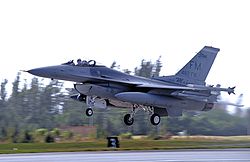
Homestead Air Reserve Base (IATA: HST, ICAO: KHST, FAA LID: HST) (Homestead ARB), previously known as Homestead Air Force Base (Homestead AFB) is located in Miami–Dade County, Florida, to the northeast of the city of Homestead. It is home to the 482nd Fighter Wing (482 FW) of the Air Force Reserve Command's Tenth Air Force (10 AF), as well as the headquarters of Special Operations Command South.[2]

Key Information

Much of Homestead Air Force Base was destroyed by Hurricane Andrew in 1992 and subsequently rebuilt.

History

[edit]

World War II

[edit]
Aerial photo of Homestead Army Airfield – 1943

The installation was named Homestead Army Air Field on 16 September 1942 as a base for the United States Army Air Forces during World War II, and construction began the next day. Homestead opened as an Air Transport Command (ATC) ferry airfield in November; ATC pilots were trained at the base from February 1943 in the C-46, C-54 and C-87 aircraft. The base was heavily damaged by a hurricane in September 1945, resulting in its inactivation on 14 December 1945.[3] When the U.S. Air Force was established as a separate service on 18 September 1947, the old Homestead AAF lay in ruins.[4]

Cold War and Vietnam War

[edit]

Reactivated for the Cold War as a Strategic Air Command (SAC) installation, an advance team arrived at the old base in the summer of 1954 and initiated clean-up and reconstruction efforts. The installation was renamed as Homestead Air Force Base on 1 February 1955 and the 379th Bombardment Wing (379 BMW) was activated at Homestead AFB on 1 November 1955. The 379 BMW replaced the 4276th Air Base Squadron, the latter unit having overseen the reconstruction of the base, and spent the next few months becoming organized and manned. The 379 BMW received B-47E Stratojet and KC-97G Stratofreighter aircraft in April 1956 and began training for strategic bombardment and air refueling operations. The U.S. Navy also established Naval Security Group Activity Homestead (NAVSECGRUACT Homestead) as a tenant command at Homestead AFB in June 1957.[5]

The 19th Bombardment Wing (19 BMW) moved to Homestead AFB from Pinecastle Air Force Base, Florida in April 1956 and also flew the B-47 and KC-97.

The 379 BMW moved to Wurtsmith Air Force Base, Michigan without equipment in January 1961 in preparation for transition to the B-52H Stratofortress and KC-135A Stratotanker.[6]

In 1960, three Air Force Reserve (AFRES) units previously located at Miami International Airport, the 301st Air Rescue Squadron with its SA-16 (later redesignated as HU-16) Albatross amphibious air-sea rescue aircraft and the 435th Troop Carrier Wing (435 TCW) and its 76th Troop Carrier Squadron (76 TCS) with C-119 Flying Boxcar aircraft relocated to Homestead AFB.[4]

On 1 July 1961, the 19 BMW was redesignated as the 19th Bombardment Wing (Heavy) and began converting to the B-52H and KC-135A.

In 1962, the 31st Tactical Fighter Wing, a unit of the Tactical Air Command (TAC), relocated to Homestead AFB from George Air Force Base, California with its F-100 Super Sabre jet fighters and established itself as a TAC tenant unit at Homestead, the base remaining under SAC control. Homestead AFB also figured prominently during the October 1962 Cuban Missile Crisis. All SAC aircraft of the 19 BMW were dispersed while the 31 TFW was augmented by additional F-100 aircraft from the 401st Tactical Fighter Wing (401 TFW) from England AFB, Louisiana and the 474th Tactical Fighter Wing (474 TFW) from Cannon AFB, New Mexico. This combined organization, designated the 1st Provisional Air Division, was composed of over 181 F-100 fighter-bombers and over 1600 pilots and forward deployed aircraft maintenance personnel.[4]

Over 10,000 U.S. Army personnel were also deployed to Homestead AFB and housed in a tent city in preparation for a possible land invasion of Cuba. Additional U.S. Army air defense artillery personnel manned several MIM-23 Hawk mobile surface-to-air missile (SAM) batteries and AN/MPQ-35 search radars that were place around the base for defense against Soviet and/or Cuban aircraft. The 512th Troop Carrier Wing (512 TCW), an AFRES unit operationally gained by TAC and based at NAS Willow Grove, Pennsylvania, was also called to active service and forward deployed to Homestead AFB with its C-119 aircraft, augmenting the 435 TCW for possible air drop of U.S. Army personnel into Cuba incipient to a ground invasion of the island. Following the peaceful resolution of the crisis, forward deployed TAC and AFRES units returned to their home stations and the 19 BMW aircraft returned to Homestead AFB.

U.S. Army personnel other than Hawk air defense crews also returned to home garrisons. Hawk air defense systems and personnel would later be replaced by an enhanced U.S. Army air defense artillery presence in South Florida from the Miami area to Key West in what would become the Miami-Homestead Air Defense Area of the U.S. Army Air Defense Command (ARADCOM). The ARADCOM functional activities came under the aegis of the 6th Battalion, 65th Artillery (later renamed the 6th Battalion, 65th Air Defense Artillery) operating a combination of MIM-13 Hawk and fixed-site MIM-3 Nike Ajax, later upgraded to MIM-14 Nike Hercules, surface-to-air missile (SAM) batteries and associated radar and command and control sites. These Army air defense facilities would remain in operation at Homestead AFB and across South Florida until 1979.[4] One of these sites, Nike Missile Site HM-69 located just west of Homestead ARB, remains preserved today and open to the public under the auspices of the National Park Service.

On 11 February 1963, the 915th Troop Carrier Group (915 TCG) was activated as a TAC-gained AFRES organization at Homestead AFB under the 435 TCW, with the 76 TCS as a subordinate unit.

1965 and 1966 also saw significant changes to AFRES and Air National Guard (ANG) operations at Homestead AFB. In early 1965, given increased concerns of the Air Defense Command (ADC) regarding Soviet Air Force activity in Cuba, Detachment 1 of the 125th Fighter Interceptor Group (125 FIG, Det 1) of the Florida Air National Guard was established at Homestead AFB with no less than two armed F-102A Delta Dagger aircraft and a combination of full-time Air Reserve Technician (ART) personnel and drilling Traditional Guardsmen (TG) / Drill Status Guardsmen (DSG) on 24/7/365 alert, rotated from the group's home station at Imeson Airport in Jacksonville, Florida. This detachment would also become known as FL ANG Operating Location ALPHA ALPHA (OL-AA).

On 1 December 1965, the 435 TCW inactivated and the 915 TCG was redesignated the 915th Air Transport Group (915 ATG). The next change was the January 1966 redesignation of the 301 ARS as the 301st Aerospace Rescue and Recovery Squadron (301 ARRS). This was followed on 1 April 1966 by the redesignation of the 915 ATG as the 915th Military Airlift Group (915 MAG), inactivation of the group's 76 TCS, and activation of the 79th Military Airlift Squadron (79 MAS) at Homestead AFB flying the C-124C Globemaster II, all on the same day.[4]

With the impending departure of the 19 BMW, control of Homestead AFB passed from SAC to TAC on 1 July 1968. However, with the 31 TFW deployed to Southeast Asia for combat operations over Vietnam, the 4531st Tactical Fighter Wing was established as a provisional unit for host wing duties at Homestead AFB pending the return of the 31 TFW in 1970.[4] While the 31 TFW was deployed, the 19 BMW moved without personnel or equipment on 25 July 1968 to Robins Air Force Base, Georgia, and absorbing the resources of the 465th Bombardment Wing (465 BMW) at Robins AFB and marking the end home-based B-52 and KC-135 operations at Homestead AFB.[6]

The year 1971 also saw extensive changes at Homestead AFB. Following its return from Southeast Asia, the 31 TFW transitioned from the F-100 to the F-4E Phantom II and performed concurrent missions of air defense of southern Florida in tandem with the Florida ANG's 125 FIG detachment, combat crew replacement training in the F-4E in two fighter squadrons, and a third F-4E fighter squadron combat-coded for overseas deployment. At the same time, among the AFRES units, the 301 ARS acquired former SH-34J Seabat helicopters from the US Navy, redesignating them as HH-34Js and providing a rotary-wing capability in addition to their amphibious fixed-wing capability. The 915 MAG also inactivated and the 79 MAS retired its C-124C aircraft, shifting to an airborne early warning mission with EC-121T Warning Star aircraft and being redesignated as the 79th Airborne Early Warning and Control Squadron (79 AEW&CS), operationally-gained by ADC.[4]

Cold War operations after the Vietnam War

[edit]

With the end of combat operations in Vietnam in 1973, Homestead AFB and its host and tenant units were re-centered on Cold War mission taskings. The 301 ARRS transitioned to an all rotary-wing unit, retiring its last HU-16 and acquiring HH-1H Iroqouis (“Huey”) helicopters in addition to its HH-34Js. During 1973 and 1974, the 125 FIG (to include 125 FIG, Det 1) exchanged its F-102 aircraft for F-106A and F-106B Delta Dart aircraft transferred from the Regular Air Force. This was followed between 1974 and 1975 with the 301 ARRS replacing its HH-34Js with HH-3E Jolly Green Giant helicopters transferred from the Regular Air Force. On 1 December 1976, the former 915 MAG was also reactivated as the 915th Airborne Early Warning and Control Group (915 AEW&CG), again with the 79 AEW&CS as a subordinate unit.[4]

With the impending phaseout of the EC-121 as the new E-3A Sentry aircraft, also known as the Airborne Warning and Control System (AWACS), entered the USAF inventory, the 915 AEW&CG was redesignated the 915th Tactical Fighter Group (915 TFG) on 1 October 1978 with the retirement of its EC-121T aircraft. The 79 AEW&CS was also inactivated and the 93rd Tactical Fighter Squadron (93 TFS) was activated at Homestead AFB with F-4C Phantom II aircraft. The following year, ADC was also inactivated and all its former assets and units were transferred to TAC, to include shifting the 125 FIG and its Det 1 to the operational claimancy of TAC.[4]

In 1979 and 1980, the 31 TFW transferred its F-4E aircraft to ANG units and the Egyptian Air Force and transitioned to the F-4D Phantom II, eventually assuming a Formal Training Unit (FTU) role for the F-4D. Also in 1979, the 301 ARRS retired its HH-1H aircraft and acquired HC-130P/N Hercules search and rescue aircraft, returning to a dual fixed-wing and rotary-wing fleet.

With its new emphasis as the F-4D FTU, the 31 TFW was redesignated as the 31st Tactical Training Wing (31 TTW) in March 1981 while retaining host wing responsibilities for Homestead AFB. In addition to the organizational changes in TAC modifying the 31 TTW mission, concurrent changes in AFRES in April 1981 resulted in the inactivation of the 915 TFG and its replacement replaced by the newly activated 482nd Tactical Fighter Wing (482 TFW), absorbing the personnel and assets of the 915th while maintaining the extant 93 TFS as its operational flying squadron.[4]

In 1985, the 31 TTW began retiring the F-4D, relinquishing the FTU mission and transitioning to the F-16A and F-16B Fighting Falcon aircraft as a fully combat coded unit, resulting in the wing again being redesignated as the 31st Tactical Fighter Wing (31 TFW). In 1987, the 125 FIG also commenced replacement of its F-106 aircraft with F-16A and F-16B aircraft at home station in its F-16 Air Defense Fighter (F-16A/B ADF) variant, which was also reflected in rotational alert aircraft at 125 FIG, Det 1. By 1989, the 482 TFW also began retiring its F-4C aircraft and transitioning to the F-16A and F-16B. Finally, in 1990, the 301 ARRS was again redesignated as the 301st Air Rescue Squadron (301 ARS).[4]

Following Operation Desert Storm in spring 1991, the 31 TFW began retiring its F-16A and F-16B aircraft and transitioning to the F-16C and F-16D Block 40 variant.

In 1992, the Air Force went through its most massive structural reorganization since its establishment as a separate service in September 1947. This included the inactivation of TAC and its succession by the Air Combat Command (ACC) on 1 June 1992. With this change, all flying units at Homestead AFB became part of ACC, either directly in the case of active duty units, or operationally-gained in the case of assigned AFRES and ANG units. As an ACC installation, Homestead AFB's 31 TFW also became the 31st Fighter Wing (31 FW), the 482 TFW became the 482nd Fighter Wing (482 FW), and the subordinate tactical fighter squadrons in both wings were redesignated as fighter squadrons (FS). At the same time, the 301 ARS, which had been in the process of retiring its HH-3E aircraft and replacing them with HH-60G Pave Hawk helicopters, was redesignated as the 301st Rescue Squadron (301 RQS), while the parent unit for 125 FIG, Det 1 was redesignated as the 125th Fighter Group (125 FG).[4]

Post–Cold War and Hurricane Andrew

[edit]
Homestead AFB after Hurricane Andrew severely damaged the base on 27 August 1992.
Homestead AFB after Hurricane Andrew severely damaged the base on 27 August 1992

As Hurricane Andrew approached South Florida in late August 1992, the base evacuated their F-16 fighter aircraft, with the 31 TFW aircraft going to Wright-Patterson Air Force Base near Dayton, Ohio; the 482 FW aircraft to MacDill Air Force Base in Tampa, Florida; the 125 FIG Det 1 aircraft to their home station of Jacksonville ANGB; and the 301 RQS rescue aircraft to Patrick Air Force Base at Cocoa Beach, Florida. All base personnel and their families were under evacuation orders prior to the arrival of the Category 5 storm.

The storm-related damage and destruction at Homestead AFB was extensive and precluded any immediate return of home station units, especially those conducting or in direct support of operational flying missions. The 31 FW and essential personnel stayed at Wright-Patterson AFB until April 1993, at which point they were transferred back to MacDill AFB. The 125 FIG Det 1 would take up temporary residence at Naval Air Station Key West, Florida, utilizing fighter alert facilities dating from the Cuban Missile Crisis while the 482 FW would remain at MacDill.[4] Given the extent of damage, the U.S. Navy elected to close NAVSECGRUACT Homestead at Homestead AFB in June 1993.[5][7]

The stay at MacDill AFB and NAS Key West for the fighter aircraft was short-lived as the 31 FW, 482 FW, and 125 FW Det 1 returned to Homestead in March 1994 while the 301 RQS aircraft and personnel permanently remained at Patrick AFB, eventually evolving into the present day 920th Rescue Wing. During this time, Homestead AFB was placed on the Base Realignment and Closure Commission's initial base closings list, potentially dooming the base to closure. However, the BRAC Commission recommended retaining Homestead AFB and rebuilding and realigning the installation as an AFRES installation.[4]

Transfer to Air Force Reserve

[edit]

The 31 FW inactivated on 1 April 1994, reactivating the same day without personnel or equipment at Aviano Air Base, Italy where it assumed the assets of the 401st Fighter Wing (401 FW), a US Air Forces in Europe (USAFE) organization. The same day, Homestead AFB transferred from ACC to AFRES control and was renamed Homestead Air Reserve Station with the 482 FW as the new host wing.[4]

As part of the BRAC process, the acreage "footprint" of the base was reduced and some portions of the base were declared surplus and relinquished from DoD control, with the real estate and/or extant structures transferred to the control of local municipal entities, i.e., City of Homestead, Miami-Dade County, etc. For a period, transfer of the runway and airfield proper to Miami-Dade County was also considered, with the base envisioned for conversion to a joint civilian-military airport.[8][4]

In February 1995, Homestead ARS again faced potential closure from the 1995 BRAC, which sought to close the ravaged station. The civilian community, including state and federal government leaders, rallied in support of the station, and launched a fight for the station's survival. The BRAC Commission subsequently withdrew Homestead ARS from the closure list in June 1995. In 1997, AFRES was redesignated from a Field Operating Agency to Air Force Reserve Command (AFRC), an Air Force Major Command (MAJCOM), and Homestead ARS became an AFRC installation. In December 2003, Homestead ARS was again redesignated to its current name of Homestead Air Reserve Base.[4]

However, for a third time, Homestead ARB again faced potential closure, this time from the 2005 BRAC Commission. The base received numerous visits throughout the year from government decision makers and the BRAC Commission eventually decided to keep Homestead ARB open, to include redistributing nine more F-16 aircraft from other Air Reserve Component F-16 bases that were changing to aircraft other than the F-16 or losing flying missions outright.[4]

Ultimately, most of the base, to include the runway and airfield proper, remained under DoD control and completed its conversion from an active duty base to its present-day reserve base configuration with the 482 FW as the host wing and continuing to fly its F-16C/D Block 30 fighter aircraft. The active duty 367th Fighter Squadron (367 FS) was added as an ACC Active Associate F-16 unit to the 482 FW in 2015, while the base concurrently maintains a 24/7/365 alert detachment of armed F-15C Eagle fighter aircraft from the Florida ANG's 125th Fighter Wing Detachment 1 (125 FW Det 1) conducting the Continental NORAD Region (CONR) air sovereignty/air defense mission of the southeastern United States.[9]

Based units

[edit]

Flying and notable non-flying units based at Homestead Air Reserve Base.[10][11][12]

Units marked GSU are Geographically Separate Units, which although based at Homestead ARB are subordinate to a parent unit based at another location.

[edit]

References

[edit]
[edit]
Revisions and contributorsEdit on WikipediaRead on Wikipedia
from Grokipedia

Homestead Air Reserve Base is a Reserve Command installation situated in , approximately 25 miles southwest of downtown Miami, serving as the primary base for the 482nd Fighter Wing, which maintains combat-ready F-16 Fighting Falcon squadrons for fighter operations, training, and support to active-duty forces in contingency and homeland defense missions.
Originally established in 1942 as Homestead Army Airfield to support training and operations, the facility evolved through various active-duty roles before suffering catastrophic damage from on August 24, 1992, which destroyed over 80% of its infrastructure and led to its temporary closure and subsequent redesignation as a reserve base in 1994 following reconstruction efforts.
The 482nd Fighter Wing, comprising over 2,500 reservists across flying, maintenance, and support groups, operates the base and executes missions including air sovereignty alerts, counter-drug interdiction in support of U.S. Customs and Border Protection, and assistance to the U.S. Coast Guard, while generating an economic impact exceeding $364 million annually for the region through personnel spending, contracts, and infrastructure.

History

Establishment and World War II Operations

The airfield at what would become Homestead Army Air Field was initially constructed in the 1930s by Pan American Air Ferries, Inc., a of Pan American Airways, to support ferry operations and training for international routes. In early , it operated briefly as South Dade County Airport before being acquired by the U.S. government amid escalating wartime needs. On September 16, 1942, the facility was officially activated as Homestead Army Air Field under the Caribbean Wing of the Army Air Transport Command (ATC), marking its transition to military use as a training installation for heavy transport operations. During , Homestead Army Air Field primarily functioned as a crew training center for multi-engine , focusing on types such as the C-46 Commando, C-54 Skymaster, and C-87 Liberator Express. Assigned as Station 8 of the ATC's Wing, it supported the ferrying of aircraft, supplies, and personnel across the Atlantic and to other theaters, with additional facilities along the adjacent Military Canal used for rescue boat training. The base hosted operational training units that prepared aircrews for long-range transport missions, contributing to the logistical backbone of Allied operations by qualifying pilots and crews on four-engine heavy bombers adapted for transport roles. By 1945, Homestead had grown to represent the largest four-engine transport training operation within the entire , reflecting its critical role in scaling up U.S. air logistics capabilities as the war concluded. Operations emphasized practical skills for over-water , cargo handling, and , with the base's subtropical location aiding in simulations of challenging environmental conditions encountered in combat zones. However, a major hurricane struck the area in September 1945, causing extensive damage that prompted the field's inactivation later that year, ending its service.

Cold War Buildup and Cuban Missile Crisis

Homestead Air Force Base was reactivated on February 8, 1955, following an advance party's arrival in mid-1954 to prepare the dormant World War II-era facilities amid escalating tensions with the . The base served dual roles under (SAC) for bomber operations, including B-47 Stratojets of the 379th Bombardment Wing until 1960, and (TAC) for fighter-interceptor missions to counter potential aerial threats from . By 1957, construction had advanced sufficiently to support expanded operations, including squadrons equipped with supersonic F-104 Starfighters for air sovereignty patrols over . In March 1962, the 31st Tactical Fighter Wing relocated from , , bringing F-100 Super Sabre-equipped squadrons such as the 308th and 309th Tactical Fighter Squadrons to enhance rapid-response capabilities proximate to . This buildup reflected strategic positioning for deterrence and potential offensive strikes, with the base hosting reconnaissance assets and supporting SAC's 97th Bombardment Wing's B-52 Stratofortress operations. During the Cuban Missile Crisis from October 16 to 28, 1962, Homestead AFB achieved maximum readiness, with over 140 aircraft—including F-100s from the 31st TFW—placed on continuous alert for intercepts or strikes against Soviet missile sites in . The base facilitated U-2 reconnaissance overflights and tactical missions, contributing to intelligence confirming Soviet medium- and intermediate-range ballistic missiles. On November 26, 1962, President visited to award the Presidential Unit Citation to the 4080th Strategic Wing and 363rd Tactical Reconnaissance Wing for their pivotal roles in the crisis resolution. The crisis's end, marked by Soviet missile withdrawal on , preserved Homestead's heightened alert infrastructure, including surface-to-air missile batteries deployed for anti-aircraft defense, underscoring the base's enduring frontline status against regional threats.

Vietnam War and Post-Vietnam Deployments

The involvement of Homestead Air Force Base in the began with rotational deployments of its tactical fighter squadrons from the 31st Tactical Fighter Wing (TFW). In June 1965, the 307th Tactical Fighter Squadron (TFS) deployed to , . This was followed in December 1965 by the 308th TFS, which relocated to Bien Hoa on a . In November 1966, the entire 31st TFW, including its remaining squadrons, deployed on a to Tuy Hoa Air Base, , arriving on Day 1966. At Homestead, the 4531st TFW was established as a provisional host unit to maintain base operations during the wing's absence. From Tuy Hoa, the wing conducted and missions in support of U.S. and Republic of Vietnam forces, accumulating over 100,000 combat sorties by September 1969. Key operations included defense during the , the siege of , and the extraction from Kham Duc in 1968. The 31st TFW returned to Homestead AFB on October 15, 1970, without personnel or equipment as part of U.S. force reductions in , assuming the role of host unit and transitioning to McDonnell Douglas F-4E Phantom II aircraft. The wing adopted a dual mission of air defense for southern and pilot replacement training, primarily through the 307th and 309th TFS. Post-return deployments to continued into 1972–1973. The 308th TFS deployed to Udorn Base from April to August 1972, followed by the 307th TFS in July 1972, which achieved the wing's sole aerial victory—a MiG-21 kill on October 15, 1972. The 308th TFS conducted a final deployment to Udorn from December 1972 to June 1973. After the cessation of U.S. combat operations in , Homestead-based units focused on training and air sovereignty missions through the 1970s and 1980s, with aircraft transitions from F-4Es to F-4Ds in 1979–1980 and to F-16 Fighting Falcons by 1985.

Hurricane Andrew Devastation and Initial Recovery

, a Category 5 storm with sustained winds exceeding 165 mph, made landfall near , on August 24, 1992, directly impacting Homestead Air Force Base (AFB). The base, designed to withstand winds up to 200 mph, suffered catastrophic damage from the storm's 175 mph gusts, rendering 97% of its facilities uninhabitable or destroyed, including hangars, the control tower, and barracks. Aircraft such as F-16 Fighting Falcons assigned to the 307th Fighter Squadron were severely damaged or destroyed, with debris scattered across the airfield. Approximately 50% of base housing lost roofs, and 90% of windows were shattered, exacerbating the chaos. In the immediate aftermath, the U.S. military initiated one of the largest peacetime cleanup and salvage operations in its history, with personnel establishing an emergency on base to treat injuries among the estimated 5,000 affected service members and dependents. Three fighter squadrons—comprising F-16s—were relocated to bases in and Georgia to maintain operational readiness, while the 301st Fighter Wing's assets were dispersed. The Department of Defense deployed over 20,000 troops to the area for relief, utilizing Homestead AFB as a staging ground despite its damage, with support from and Exchange Services providing essentials to troops and returning residents. Initial recovery efforts focused on securing the site, salvaging equipment, and restoring basic utilities, though full habitability was months away. Col. Richard R. Titus reported that the storm's eye passed directly over the facility, underscoring the direct hit's severity. By late , psychological operations units assisted in coordinating relief, highlighting inter-service collaboration amid the devastation that left the base functionally inoperable. These actions prioritized personnel safety and mission continuity, setting the stage for later realignment under the 1993 Base Realignment and Closure Commission.

Transition to Air Force Reserve and Rebuilding

In the aftermath of Hurricane Andrew's destruction in August 1992, which rendered much of Homestead Air Force Base uninhabitable and led to the relocation of its active-duty 301st Fighter Wing, U.S. Air Force leadership opted to realign the installation to reserve component control rather than fully reconstituting it as an active-duty fighter base. This decision aligned with post-Cold War force structure reductions and base realignment initiatives, prioritizing cost-effective reserve utilization over expensive active-duty reconstruction amid debates on the base's strategic necessity. On April 1, 1994, Homestead AFB was officially redesignated as Homestead Air Reserve Station and transferred from to Air Force Reserve Command oversight, with the 482nd Fighter Wing activated as the host unit responsible for base operations and restoration. The 482nd FW, originally established in 1952 and inactivated shortly thereafter before reactivation in 1981 at other locations, relocated select squadrons to Homestead to form the core of reserve fighter capabilities in the southeastern U.S. Rebuilding efforts commenced immediately under the 482nd FW, involving extensive federal funding for infrastructure repair and modernization to support multi-role F-16 Fighting Falcon operations. Key projects included reconstructing damaged hangars, barracks, and support facilities; resurfacing the primary runway; and installing new mission-essential systems such as and communications upgrades, transforming the storm-ravaged site into a functional reserve installation by the late . The wing progressively received 24 F-16C/D aircraft between 1995 and 1997, enabling the 93rd and 94th Fighter Squadrons to conduct air defense, training, and deployment missions. By 1997, Homestead Air Reserve Station had achieved operational readiness, with over 1,500 reservists integrated into a rebuilt supporting air sovereignty alerts and contingency responses, marking a successful pivot from active-duty tactical fighter operations to a reserve-focused model. The redesignation to Homestead Air Reserve Base in 2003 further formalized its enduring reserve role.

Post-2000 Operations and Modern Challenges

Following the September 11, 2001 attacks, the 482nd Fighter Wing at Homestead Air Reserve Base contributed personnel to Operations Noble Eagle, Enduring Freedom, and Iraqi Freedom, with members deploying to , , and other Middle Eastern locations on numerous occasions. In total, over 200 personnel from the wing were mobilized to in support of these post-9/11 missions. The wing's F-16 Fighting Falcons have maintained combat readiness for worldwide fighter commitments, including air sovereignty alert duties under . The 482nd Fighter Wing has participated in international training exercises, such as a deployment to Laage , , in 2001 for Exercise , which involved with German MiG-29s. During Atlantic hurricane seasons, the wing routinely supports forward deployments of the Air Force Reserve's , known as the "Hurricane Hunters," by providing airfield operations and logistical assistance. Homestead ARB faces ongoing challenges from its location in a hurricane-vulnerable region, necessitating regular aircraft evacuations and infrastructure hardening. In preparation for Hurricane Milton in October 2024, the 482nd Fighter Wing relocated seven F-16s to safer locations to protect assets. The base maintains high readiness through annual hurricane preparation processes, including shelter identification and equipment checks, informed by lessons from past storms like . Rapid urban development adjacent to the installation poses additional risks to operational and noise abatement, prompting regional resilience strategies involving coordination with local jurisdictions.

Mission and Strategic Role

Air Sovereignty and NORAD Contributions

Homestead Air Reserve Base supports North American air sovereignty as the host to the 482nd Fighter Wing, which contributes F-16C Fighting Falcon aircraft and personnel to , the North American Aerospace Defense Command () mission for ongoing aerospace warning, control, and defense of U.S. and Canadian airspace. Launched on September 11, 2001, in response to terrorist attacks, encompasses air sovereignty alert duties, including the detection, tracking, and of unidentified or potentially hostile aircraft within continental airspace and the surrounding . The 93rd Fighter Squadron, a subordinate unit of the 482nd Fighter Wing, specifically performs these air defense tasks using multirole F-16s capable of rapid scramble and engagement. In a notable 2024 deployment, approximately 300 Airmen from the 482nd Fighter Wing rotated to execute sorties, conducting surveillance and control operations across the continental to deter, detect, and defeat aerial threats, before returning to base on April 3. This effort bolstered 's 24/7 alert posture, with Homestead's strategic location in southern enabling effective coverage of southeastern U.S. vulnerable to incursions from the and Atlantic approaches. The base maintains one of the most active alert sites in the continental , supporting rapid-response intercepts of aircraft violating or posing security risks, such as temporary flight restrictions around high-profile sites. While the on-site alert detachment primarily utilizes F-15 Eagles from the Air National Guard's for immediate interceptor duties, the reserve component integrates through joint exercises, pilot augmentation, and deployable assets to enhance overall readiness and response capacity. These contributions ensure seamless defense against diverse threats, from deviations to potential adversarial probes, maintaining causal deterrence via persistent aerial presence and technological superiority in radar and weapons systems.

Support to U.S. Southern Command and Global Deployments

The 482d Fighter Wing at Homestead Air Reserve Base provides critical operational support to U.S. Southern Command (SOUTHCOM) through its proximity to the command's area of responsibility in Central and South America, the Caribbean, and partner nations, facilitating rapid response for contingency operations, humanitarian assistance, and security cooperation. The wing hosts Special Operations Command South (SOCSOUTH), a SOUTHCOM component that serves as the primary theater contingency response force, enabling joint special operations training and deployments from the base. This support includes F-16C Fighting Falcon operations for air defense integration with SOUTHCOM partners, as well as assistance in counter-narcotics interdiction missions alongside U.S. Customs and Border Protection and the U.S. Coast Guard. In humanitarian and disaster relief efforts under SOUTHCOM auspices, Homestead-based units have delivered substantial aid, such as transporting over 100,000 pounds of supplies to , following the 2021 earthquake via coordinated U.S. government operations. Earlier examples include the 482d Fighter Wing's Squadron leading of two schools in during a 2005-2006 humanitarian mission and supporting after the , alongside airlift of relief teams using C-130 and C-17 aircraft from the base. The base's infrastructure has also facilitated exercises like Tradewinds, which enhance interoperability with 26 nations for regional security and . Beyond regional commitments, the 482d Fighter Wing conducts global deployments to fulfill Air Force Reserve worldwide taskings, deploying over 300 Airmen in January 2014 to Southwest Asia and Europe for contingency operations, including aircraft maintenance, intelligence support, and close air support for NATO's International Security Assistance Force and task forces. Reservists have rotated to locations such as Kyrgyzstan in support of Operation Enduring Freedom, providing combat-ready F-16 pilots and support personnel for short-notice missions. The wing's more than 2,500 personnel, including traditional reservists and full-time staff, sustain these efforts across logistics, medical, communications, and security domains, ensuring readiness for diverse global theaters.

Training and Readiness Exercises

The 482nd Fighter Wing at Homestead Air Reserve Base maintains high operational tempo through year-round training exercises designed to ensure personnel and equipment remain deployable and combat-ready. These activities simulate real-world scenarios, including transitions from peacetime to wartime postures, mobility deployments, and survival operations in austere environments, evaluating the wing's ability to execute missions under stress. Operational Readiness Exercises (OREs) form a core component, incorporating elements like casualty transport, simulated alarms, gunfire, and explosions to test integrated defense and response capabilities. Local and regional exercises emphasize base-level proficiency and inter-unit coordination. In April 2019, the Ardent Forge exercise engaged over 300 wing members across locations, focusing on austere survival skills, chemical, biological, radiological, and nuclear (, and sustained operations without standard support. Annual mobility phases, such as the October 2023 event, assess rapid resource packaging and deployment processes. squadrons conduct tactical drills, including a 2005 exercise simulating deployed perimeter defense, and more recent Agile Combat Employment tactics in Mosaic Gecko II during March 2025, securing forward operating sites against threats. Deployed and multinational extends readiness to global theaters. The participated in Exercise INIOHOS 17 in in March-April 2017, deploying nearly 220 personnel with F-16 aircraft for joint air combat maneuvers alongside Hellenic and other allied forces, demonstrating rapid surge capabilities. In September 2013, detachments joined operations at , integrating with ground forces in scenarios mirroring ongoing conflicts. Large-scale events like CHUMEX in March 2015 pitted F-16s against visiting F-22s from Tyndall AFB, honing dissimilar air combat and teamwork across units. Recent exercises incorporate simulated deployments and joint partnerships to address evolving threats. A July 2025 simulated deployment at Homestead tested full-spectrum , including and defensive operations. In March 2025, Holloman AFB's collaborated with Homestead units and for a large force exercise emphasizing assignment preparation and multi-domain operations. February 2025 training integrated the two-week Defense Leadership Course with live-fire and base defense simulations, enhancing defender qualifications. These efforts collectively validate the wing's role in Air Force Reserve Command's total force integration, prioritizing empirical validation of tactics over doctrinal assumptions.

Based Units and Personnel

Air Force Reserve Components

The primary Air Force Reserve component at Homestead Air Reserve Base is the 482nd Fighter Wing, serving as the host unit under the Air Force Reserve Command and assigned to the . This wing delivers combat-ready F-16C fighter aircraft, pilots, and support personnel for global deployments, while sustaining operational readiness through rigorous training. The 482nd Fighter Wing encompasses more than 2,500 personnel, including over 1,700 traditional reservists who drill part-time, more than 240 full-time reservists, and exceeding 250 full-time civilians to ensure continuous mission support. Its structure includes key subordinate elements such as the 482nd Operations Group, which oversees flying operations, and specifically the 93rd Fighter Squadron ("Makos"), responsible for operating and maintaining the F-16C Fighting Falcons equipped with multirole capabilities for air-to-air and air-to-ground missions. Reserve personnel across the wing also provide expertise in ancillary areas, including for infrastructure resilience, communications for , medical services for personnel health, for sustainment, for fleet availability, mission support for base operations, aerial port functions for rapid mobility, and for perimeter defense. These components enable the wing to mobilize swiftly for contingencies, integrating with active-duty units like the 367th under Total Force partnerships to amplify .

Inter-Service Tenant Units

Special Operations Command South (SOCSOUTH), a sub-unified command under U.S. Command, maintains its headquarters at Homestead Air Reserve Base, providing special operations forces planning, coordination, and execution support across U.S. Southern Command's area of responsibility, which spans 31 countries in Central and and the . Established at the base following its relocation from Fort Bragg, , in 2005, SOCSOUTH integrates personnel from all military services, including , , , and Marine Corps special operations components, to conduct theater security cooperation, counter-narcotics operations, and contingency responses. The command's presence at Homestead ARB facilitates joint training and rapid deployment capabilities, with its aid station and facilities supporting approximately 200-300 personnel. The U.S. Coast Guard's (MSST 91114) operates as a tenant unit, focusing on , maritime interdiction, and protection of high-value assets in and the region. Composed of approximately 70-100 elite personnel trained in operations, the MSST leverages the base's airfield and logistics infrastructure for deployments, including responses to and illegal migration. Elements of the U.S. Army, including the Florida Army National Guard's 50th Regional Support Group, maintain a presence adjacent to or integrated with base operations, providing logistical and sustainment support for joint exercises and contingencies. The U.S. Army Corps of Engineers also tenants facilities for engineering and environmental management projects, such as infrastructure maintenance and disaster recovery efforts post-Hurricane Andrew in 1992. These Army components contribute to base-wide resilience and multi-service interoperability, though their footprints are smaller compared to Air Force host activities.

Federal Civilian Agency Presence

U.S. Customs and Protection (CBP), a civilian agency within the Department of , maintains the Air and Marine Branch at Homestead Air Reserve Base as a tenant unit. This branch supports air and marine operations, focusing on detecting, interdicting, and disrupting terrorists, weapons of mass destruction, and illicit trafficking along the U.S. southern and maritime approaches. The facility enables CBP agents to conduct surveillance, patrols, and rapid response missions using aircraft and vessels, leveraging the base's airfield and logistics infrastructure for enhanced operational reach in and the . CBP's presence at the base facilitates joint operations with Reserve units, including coordinated training and real-time intelligence sharing for border security. For instance, in June 2008, CBP Air and Marine agents from Homestead intercepted a vessel smuggling 35 migrants and one suspected operator approximately 20 miles south of , demonstrating the branch's role in maritime enforcement. The branch also supports disaster response efforts, such as airlifting supplies during recovery in in 2017, utilizing P-3 Orion aircraft staged from the base. No other major federal civilian agencies maintain permanent tenant operations at the base, though the installation serves as an occasional staging point for entities like the during regional emergencies. The CBP branch's integration underscores Homestead ARB's dual-use value for national security beyond purely military functions, with approximately 11 tenant organizations overall, predominantly military.

Facilities and Infrastructure

Airfield Capabilities and Aircraft Operations

Homestead Air Reserve Base operates a single , designated 06/24, with dimensions of 11,202 feet in length by 300 feet in width, surfaced in grooved concrete capable of supporting heavy military loads. The runway features high-intensity edge lighting and a pavement classification number of 66/R/B/W/T, enabling operations for fighter jets and larger , exceeding the minimum requirements for F-16 Fighting Falcon takeoffs and landings. Situated at an elevation of 6 feet above mean , the airfield supports year-round flying in southern Florida's subtropical environment, with approach and departure services provided by Approach Control. Aircraft operations center on the 482nd Fighter Wing's F-16C Fighting Falcons, flown and maintained by the , which conducts multirole missions including air superiority, , and precision strikes. The wing sustains a high operational tempo through routine training sorties, simulating counter-air, counter-land, and counter-sea scenarios to maintain for contingencies and deployments. Additional squadrons, such as the , also operate F-16s for advanced tactics and exercises, including large force employment drills. The airfield accommodates visiting units and tenant organizations for joint exercises, enhancing with active-duty , , and other services, while prioritizing safety and noise mitigation in compatible use zones. Operations emphasize rapid deployment capabilities, with and supporting sustained sortie generation rates during exercises like those aligned with U.S. Southern Command objectives.

Support and Maintenance Infrastructure

The 482nd Maintenance Group at Homestead Air Reserve Base oversees aircraft maintenance operations, comprising the 482nd Aircraft Maintenance Squadron, 482nd Maintenance Squadron, and 482nd Maintenance Operations Squadron, which collectively support the wing's fleet of 28 F-16C Fighting Falcon aircraft in a combat-ready configuration. This group employs over 500 personnel dedicated to ensuring mission capability through scheduled inspections, repairs, and upgrades. Key infrastructure includes multiple aircraft hangars designated for maintenance and storage, such as Hangar 200, which underwent renovation and expansion to enhance aircraft servicing capacity. Designated engine run-up pads support low- and high-powered tests essential for propulsion system validation. Ground support equipment maintenance facilities handle associated logistics, including fuel systems and vehicle operations, with base operating support services partially outsourced to contractors since September 2007 for efficiency in supply chain and repair workflows. Additional capabilities encompass a planned 12,000-square-foot depot-level repair facility for pilot training equipment and a Defense Reutilization and Marketing Office to manage recyclable materials from maintenance activities, promoting resource . These elements enable rapid turnaround for operational readiness, with external units like the 926th Squadron providing supplementary support during surges.

Housing and Quality-of-Life Facilities

Homestead Air Reserve Base lacks dedicated on-base military family units, with personnel typically securing residences in the surrounding community through local rental or purchase options. The area's , encompassing , groceries, utilities, transportation, and insurance, exceeds the national average by approximately 7%. Temporary lodging for transient personnel is provided via the Inn, offering ground-level rooms equipped with standard amenities including televisions, microwaves, refrigerators, and free on-site laundry facilities at a rate of around $60 per night. In February 2024, construction commenced on a new complex supporting U.S. Southern Command's Joint Interagency Task Force South at the base, comprising 139 units such as 60 apartments intended to house up to 120 unaccompanied personnel in modern, state-of-the-art accommodations. Quality-of-life amenities at the base emphasize fitness, support services, and limited retail, reflecting its primary role as a reserve installation rebuilt after Hurricane Andrew's devastation in 1992 with a focus on operational efficiency over extensive residential infrastructure. The Fitness Center, located in Building 359, provides comprehensive exercise equipment, group fitness classes, and programs; it achieved a 5-star rating from evaluators in 2007—the first for a reserve base facility—and supports extended access including 24/7 entry for authorized users upon registration during staffed hours of Monday through Friday, 6:00 a.m. to 6:00 p.m. Force support operations include an AAFES Express retail outlet and military clothing sales in Building 142, operating Monday through Friday from 7:00 a.m. to 4:00 p.m., alongside a coffee shop, barber shop, chapel services, DEERS enrollment, common access card issuance, outdoor recreation activities, and a family support center for relocation and personal assistance. Unlike larger active-duty installations, the base does not maintain a full commissary, base exchange, or on-site child development centers, directing reservists and full-time staff to nearby civilian providers or larger military facilities for these requirements. These provisions support the base's approximately 1,500 full-time personnel and weekend drill requirements while prioritizing mission readiness in a subtropical environment conducive to outdoor activities.

Environmental and Sustainability Efforts

Historical Contamination Issues

Homestead Air Force Base (now Homestead Air Reserve Base) accumulated environmental contamination primarily through on-site disposal of operational wastes from aircraft maintenance and facility activities prior to the implementation of federal hazardous waste regulations in the 1970s and 1980s. These wastes included paints, thinners, solvents, oils, gasoline, hydraulic fluids, and pesticides, which were released into the soil and groundwater across the 2,938-acre installation. Contamination sources were identified under the Department of Defense's Installation Restoration Program (IRP), encompassing multiple sites such as landfills, fuel storage areas, and wastewater outfalls. Groundwater beneath the base exhibited detections of volatile organic compounds (VOCs) such as , base/neutral and acid extractables (BNAs), pesticides, and metals including lead and , often exceeding public health comparison values, though typically in low concentrations. paralleled these findings, with polychlorinated biphenyls (PCBs) and other solvents also prevalent in affected areas. The slow rate of in the region's Biscayne Aquifer limited rapid off-site migration, confining most plumes to base boundaries as of assessments in the late 1990s. These issues prompted the U.S. Environmental Protection Agency to list the site on the Superfund National Priorities List on August 30, 1990, classifying it among sites requiring long-term under the Comprehensive Environmental Response, Compensation, and Liability Act (CERCLA). The contamination's extent necessitated division into 31 operable units for phased investigation, reflecting widespread but localized impacts from decades of operations dating back to the base's in 1942. evaluations concluded no imminent off-site threats to populations via ingestion or dermal contact pathways, though historical exposures to base personnel and nearby residents warranted monitoring.

Remediation and Compliance Measures

Homestead Air Reserve Base (ARB) operates under the Department of Defense's Environmental Restoration Program (ERP), which addresses contamination through the Comprehensive Environmental Response, Compensation, and Liability Act (CERCLA), with the U.S. Air Force leading investigations and remedial actions in coordination with the U.S. Agency (EPA) and Department of Environmental Protection (FDEP). The base was added to the EPA's () in 1990 due to historical releases of hazardous substances, including volatile organic compounds (VOCs) like (TCE), hydrocarbons, and metals such as , primarily from past fuel storage, aircraft maintenance, and waste disposal activities. Remedial efforts, initiated in the early 1990s via the Installation Restoration Program (IRP), have focused on operable units (OUs) across the base, employing remedies outlined in Records of Decision (RODs), such as soil excavation and off-site disposal, land capping, institutional controls to restrict access and land use, and long-term groundwater monitoring. Key remediation measures include the excavation of over significant volumes of contaminated soil—exceeding thousands of cubic yards in some OUs—to remove sources of , followed by backfilling with clean material and verification sampling to confirm cleanup levels. For groundwater impacted by light non-aqueous phase liquids (LNAPLs) and dissolved contaminants, passive recovery systems, pump-and-treat operations, and attenuation monitoring have been implemented, with access restrictions and fencing preventing human exposure at sites like OU 2 and OU 7. Arsenic-contaminated soils have been addressed to meet local standards of 15 parts per million (ppm) as required by the Dade County Department of Environmental Resource Management, involving targeted removal and disposal. These actions have achieved substantial progress, with the removing large quantities of contaminants, though localized residual soil and plumes necessitate ongoing monitoring and five-year reviews under the (BRAC) program for transferred properties. Compliance measures emphasize regulatory oversight, pollution prevention, and to ensure adherence to federal and state standards. The base maintains an active Restoration Advisory Board (RAB) to facilitate stakeholder input on cleanup decisions, with meetings and technical updates promoting transparency in the ERP process. Environmental compliance assessments, including self-audits and corrective actions for management, align with (RCRA) requirements, while a pollution prevention program minimizes new releases through waste reduction, , and energy-efficient practices. For emerging contaminants like per- and polyfluoroalkyl substances (PFAS), the base integrates Department of Defense-wide protocols, including leachate treatment systems before discharge, though site-specific PFAS remediation remains under evaluation per broader military mandates. Institutional controls, such as deed restrictions on former base lands, enforce long-term protectiveness, verified through periodic EPA-led reviews confirming no unacceptable exposures under current and planned uses.

Sustainable Operations Post-Hurricane Andrew

Following the devastation of on August 24, 1992, which destroyed much of Homestead Air Force Base, reconstruction efforts beginning in the early 1990s incorporated principles as a core component of the Reserve Command's strategy to rebuild the facility as a model of environmental planning. This approach emphasized , pollution prevention, and long-term to support readiness while minimizing ecological impacts in southern Florida's sensitive landscape. A key element was the initiation of the Pollution Prevention (P2) Program during the restoration phase, which positioned Homestead ARB as a recognized leader within the Air Force Reserve Command for integrating preventive measures across operations. Practices included refurbishing existing structures rather than demolishing them, such as in the reconstruction of the base fire station, which reused foundational infrastructure to reduce raw material demands, energy consumption, air emissions, and landfill waste. The Defense Reutilization and Marketing Office (DRMO) managed the salvage and reuse of materials from damaged facilities, further conserving resources. The base's management plan formalized by prioritizing natural, low-maintenance materials adapted to subtropical environment, fostering a culture of formalized in a vision statement aimed at enhancing the 482nd Fighter Wing's mission through reduced resource use. These efforts aligned with broader environmental policies, ensuring compliance with federal regulations while advancing systemic goals like waste minimization and habitat preservation adjacent to protected areas. By mid-2001, progress in project planning and implementation had advanced toward full sustainable operations, reflecting a commitment to balancing mission requirements with ecological responsibility.

Economic and Community Impacts

Contributions to Local Economy

Homestead Air Reserve Base (HARB) generates substantial economic activity in South Miami-Dade County primarily through military payroll, contracts, and associated spending by personnel. In 2023, the base contributed over $364 million to the local economy, encompassing direct expenditures and multiplier effects from operations of the 482nd Fighter Wing and tenant units. This figure reflects a consistent pattern, with an estimated $379 million infused in 2022 via similar mechanisms, including support for over 2,500 reservists and associated activities. Direct payroll stands as a core driver, exceeding $151 million in fiscal year 2023 for active-duty equivalents, full-time staff, and traditional reservists, which circulates funds into regional , retail, and services. Procurement for , , and further bolsters local vendors, historically for portions of the base's spending on exceeding $169 million annually in earlier assessments. These inputs create over 1,400 indirect jobs, valued at roughly $103 million in wages, amplifying demand in sectors like transportation, , and supply chains. The base's economic footprint has expanded over time, doubling since 2002 amid post-Hurricane Andrew reconstruction and mission realignments, sustaining growth in an area reliant on federal installations for stability. This influence extends beyond immediate payroll to induced effects from personnel relocations and training exercises, which draw external spending without the volatility of civilian alternatives.

Employment and Regional Development

Homestead Air Reserve Base (HARB) directly employs approximately 3,000 personnel, including about 1,300 traditional Reservists, alongside full-time members and civilians supporting operations of the host 482nd Fighter Wing and tenant units. The base's total exceeded $151 million in 2023, providing stable income that sustains local households in South Miami-Dade County, an area characterized by agricultural, industrial, and tourism-dependent economies. This direct employment generates multiplier effects, creating more than 1,400 indirect jobs in the region valued at approximately $103 million annually, through demands for services such as auto fleet , and operations, and contracted electrical, , and plumbing work. Overall, HARB injected over $364 million into the economy in 2023, bolstering by anchoring workforce stability and attracting ancillary businesses in and support sectors. The base's presence has historically fueled economic expansion in South Miami-Dade County since its establishment as a military installation, mitigating vulnerabilities in local employment tied to seasonal and hurricane-prone disruptions. Following severe damage from in 1992, HARB's reconstruction—supported by federal investments—exemplified causal links between military resilience and regional recovery, as base operations resumed and provided a reliable employer amid widespread local devastation, contributing to Homestead's population stabilization and industrial diversification over subsequent decades. These dynamics underscore the base's role in fostering long-term economic multipliers, where sustained federal payroll and procurement expenditures reduce reliance on volatile private-sector cycles in Florida's southern periphery.

Community Engagement and Disaster Response Roles

Homestead Air Reserve Base (ARB) fosters community engagement through partnerships with local government entities, such as collaborative planning efforts with the City of Homestead to address base mission compatibility and regional development. These initiatives include joint events like the annual Military Appreciation Day, organized in partnership with the base, the Military Affairs Committee, and local organizations to honor service members and promote military-civilian ties. Personnel from the 482nd Fighter Wing participate in outreach programs, including school tours and youth activities, to build public awareness of base operations and strengthen ties with surrounding Miami-Dade County communities. The base recognizes volunteerism via award ceremonies honoring service members for charitable contributions and , as demonstrated in a 2014 event that highlighted individual efforts in local support roles. Commercial sponsorship programs further enable partnerships with businesses to fund base events accessible to the public, enhancing economic and . In disaster response, Homestead ARB plays a critical role in hurricane operations, routinely supporting the forward deployment of the Air Force Reserve's , known as the "," during the Atlantic hurricane season to gather essential meteorological data for forecasting and mitigation. The 482nd Fighter Wing mobilizes for search-and-rescue missions, as seen in September 2017 when reservists launched F-16 Falcons from the base for operations following , aiding in damage assessments and relief coordination in affected regions. The installation maintains an Installation Emergency Management program to prepare for all-hazards responses, including planning and execution of base-level preparedness that extends to regional support. Post-disaster, the base serves as a hub for humanitarian and recovery efforts, leveraging its for asset staging, as evidenced by relocations and support during major storms like Hurricane Milton in October 2024.

References

Add your contribution
Related Hubs
User Avatar
No comments yet.