


Community hub
Recent from talks
Contribute something
Nothing was collected or created yet.
Insects as feed
View on Wikipedia
Insects as feed are insect species used as animal feed, either for livestock, including aquaculture, or as pet food.
As livestock feed production uses ~33% of the world's agricultural cropland use, insects might be able to supplement livestock feed. They can transform low-value organic wastes, are nutritious and have low environmental impacts.[1]
Utility
[edit]Due to their nutritional profile, especially the high protein content, various types of insects can be used as feed for industrial animal production and aquaculture. An insect-based diet for farm animals has been scientifically investigated for pigs, poultry and edible fish. Insects can provide as much protein and essential amino acids for swine and poultry that can potentially replace soybean meal in a diet.[2] Inclusion of black soldier fly larvae in a diet for fish farming gave positive effect with no difference in odor and texture.[3] At the same time, there are challenges and disadvantages compared to established feed in terms of performance and growth. For monogastric farm animals, such as swine and poultry, replacing their conventional formula entirely with insects can result to decrease in performance and growth e.g., because insect flour may contain high levels of ash.[4] However other research suggests that animals fed insect protein from black-soldier flies, achieved faster growth rates and better-quality meat than with soya or fishmeal.[5] Insects as feed are legally considered farm animals themselves, therefore they must not receive feed from ruminant proteins, kitchen and food waste, meat and bone meal and liquid manure.
With a view to protecting the environment and resources as well as feed and food security in the face of a growing world population, the UN Food and Agriculture Organization (FAO) has called for increased use of feed insects for feed production.[6]
Insect species with potential as feed
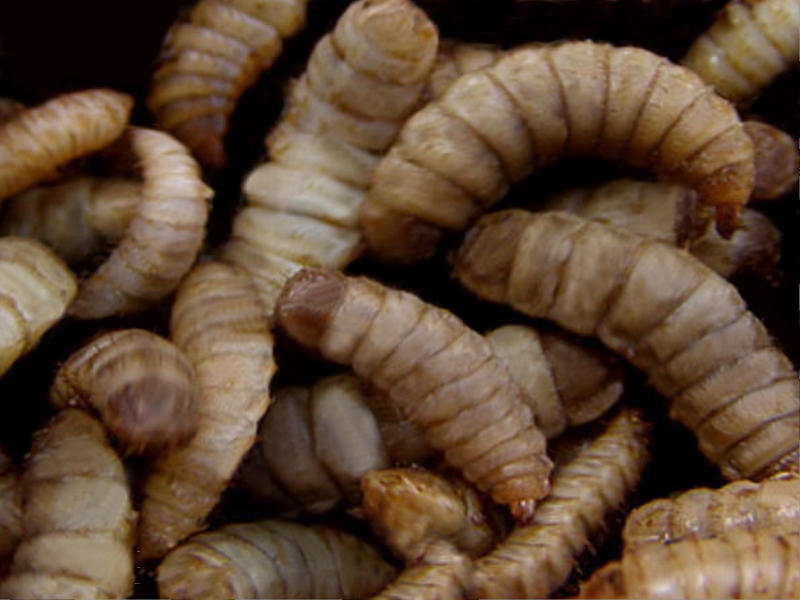
[edit]Black-soldier flies, common house fly larvae and mealworms are some of the most common insects in animal feed production. Black soldier flies and common house flies often reside in manure piles and in organic wastes. Farming these insects could promote better manure and organic waste management, while providing nutritious feed ingredient to pets and livestock.[7]
Aside from nutritional composition and digestibility, insects are also selected for ease of rearing by the producer. A study compared insect species regarding their suitability as feed material, investigating their development time, survival rate, efficiency of converting base feed into insect biomass (FCR), dry matter conversion rate (ECI), and nitrogen efficiency (N-ECI).[8] In the table, values indicate the mean ± one standard deviation, and superscripts indicate significant differences.
| Sample Size | n | Diet | Survival rate | Development time (days) | FCR | ECI | N-ECI |
|---|---|---|---|---|---|---|---|
| Argentinian Cockroach | 6 | HPHF | 80±17.9a | 200±28.8c | 1.7±0.24c | 21±3.0b | 58±8.3b |
| 6 | HPLF | 47±16.3b | 294±33.5a | 2.3±0.35ab | 16±2.7bc | 51±8.7b | |
| 6 | LPHF | 53±13.2ab | 266±29.3ab | 1.5±0.19c | 30±3.9a | 87±11.4a | |
| 6 | LPLF | 51±12.2ab | 237±14.9bc | 1.7±0.15bc | 18±1.9bc | 66±6.7b | |
| 6 | Control | 75±21.7ab | 211±18.7c | 2.7±0.47a | 14±2.1c | 52±8.1b | |
| Black Soldier Fly | 6 | HPHF | 86±18.0 | 21±1.4c | 1.4±0.12 | 24±1.5 | 51±3.2 |
| 6 | HPLF | 77±19.8 | 33±5.4ab | 1.9±0.20 | 20±1.3 | 51±32.5 | |
| 6 | LPHF | 72±12.9 | 37±10.6a | 2.3±0.56 | 18±4.8 | 55±14.6 | |
| 5 | LPLF | 74±23.5 | 37±5.8a | 2.6±0.85 | 17±5.0 | 43±12.8 | |
| 6 | Control | 75±31.0 | 21±1.1bc | 1.8±0.71 | 23±5.3 | 52±12.2 | |
| Yellow Meal Worm | 6 | HPHF | 79±7.0ab | 116±5.2def | 3.8±0.63c | 12±2.7cdef | 29±6.7cde |
| 6 | HPLF | 67±12.3bc | 144±13.0cd | 4.1±0.25c | 10±1.0def | 22±2.3e | |
| 6 | LPHF | 19±7.3e | 191±21.9ab | 5.3±0.81c | 8±0.8ef | 28±2.8de | |
| 6 | LPLF | 52±9.2cd | 227±26.9a | 6.1±0.62c | 7±1.0f | 23±3.1de | |
| 6 | Control 1 | 84±9.9ab | 145±9.3cd | 4.8±0.14c | 9±0.2def | 28±0.6cde | |
| 6 | Control 2 | 34±15.0de | 151±7.8bcd | 4.1±0.49c | 11±1.5cdef | 31±4.2cde | |
| 6 | HPHF-C | 88±5.4ab | 88±5.1f | 4.5±0.17c | 19±1.6ab | 45±4.5b | |
| 6 | HPLF-C | 82±6.4ab | 83±6.5f | 5.8±0.48c | 15±0.9bc | 35±2.2bcd | |
| 6 | LPHF-C | 15±7.4e | 135±17.3cde | 19.1±5.93a | 13±2.7cde | 45±9.2ab | |
| 6 | LPLF-C | 80±5.6ab | 164±32.9bc | 10.9±0.61b | 13±1.4cde | 41±4.6bc | |
| 6 | Control 1-C | 93±9.3a | 91±8.5f | 5.5±0.49c | 14±3.3bcd | 45±2.4b | |
| 6 | Control 2-C | 88±3.1ab | E95±8.0ef | 5.0±0.48c | 21±2.6a | 58±7.3a | |
| House cricket | 6 | HPHF | 27±19.0ab | 55±7.3c | 4.5±2.84 | 8±4.9 | 23±13.4b |
| 1 | HPLF | 6 | 117 | 10 | 3 | - | |
| 3 | LPHF | 7±3.1b | 167±4.4a | 6.1±1.75 | 5±1.3 | - | |
| 2 | LPLF | 11±1.4b | 121±2.8b | 3.2±0.69 | 9±2.2 | - | |
| 6 | Control | 55±11.2a | 48±2.3c | 2.3±0.57 | 12±3.2 | 41±10.8a |
HPHF = high protein, high fat; HPLF = high protein, low fat; LPHF = low protein, high fat; LPLF = low protein, low fat, C= carrot supplementation
Insects as feed in aquaculture
[edit]In the European Union, the use of seven insect species as feed in aquaculture has been permitted since July 1, 2017:[9]
- Black soldier fly (Hermetia illucens),
- Housefly (Musca domestica),
- Mealworm (Tenebrio molitor),
- Lesser mealworm (Alphitobius diaperinus),
- House cricket (Acheta domesticus),
- Tropical house cricket (Gryllodes sigillatus), as well as
- Field cricket (Gryllus assimilis).
The inclusion of black soldier flies in the feed of farmed fish had positive results and showed no differences in taste or texture of the fish.[4]
Environment and sustainability
[edit]As global populations rise, food demand is becoming an increasingly important issue. Raising conventional livestock requires resources such as land and water. As a result, the ability to meet the needs of the growing population may require alternative sources of quality protein.[10]
Insects also have the ability to feed on organic waste products such as vegetable, restaurant and animal waste, therefore reducing the amount of excess food produced by humans.[11] Insects are efficient at converting feed into protein.[7]
Challenges
[edit]According to two researchers, the "scaling up of production depends on whether cheap organic wastes can be safely used and easily biotransformed into high-quality insect products and whether legislative frameworks are conducive to this approach".[1]
Further challenges include "automation of production techniques, optimization of bioconversion by an efficient interaction between microbes in the insect gut and feed substrate, disease management, making use of the short life cycle of insects to select efficient strains of insects and microbes for certain diets, food safety issues, and processing" as well as "safety of using waste to avoid any pathogen transmission".[1]
Regulation
[edit]The use of insects in feed in the European Union was previously prohibited under an act called "TSE Regulation" (Article 7 and Annex IV of Regulation 999/2001) that bans the use of animal protein in animal feed. In July 2017 this regulation was revised and partially lifts the ban on animal proteins, allowing insects to be included in fish feed.
This was coupled with another change that reclassified insects in the European Union (EU) catalogue of feed materials. This change specifically references to insect fats and insects proteins instead of classifying them under a broad title of animal products. Due to this change, producers now must list the species and life stage of the insect on their product.[12]
In 2021, the EU authorized insect-derived processed animal proteins in poultry and pig feed.[1]
See also
[edit]References
[edit]- ^ a b c d van Huis, Arnold; Gasco, Laura (13 January 2023). "Insects as feed for livestock production". Science. 379 (6628): 138–139. Bibcode:2023Sci...379..138V. doi:10.1126/science.adc9165. ISSN 0036-8075. PMID 36634163. S2CID 255749691.
- News report on the study: Yirka, Bob. "Making the case for using insects as food for both humans and livestock". phys.org. Archived from the original on 28 January 2023. Retrieved 17 February 2023.
- ^ Makkar, H., Tran, G., Heuze, V., Ankers, P. (November 2014). "State-of-the-art on use of insects as animal feed". Animal Feed Science and Technology. 197: 1–33. doi:10.1016/j.anifeedsci.2014.07.008.
{{cite journal}}: CS1 maint: multiple names: authors list (link) - ^ Reuters/Karl Plume (13. April 2018): Insect farms gear up to feed soaring global protein demand.
- ^ a b Makkar, H., Tran, G., Heuze, V., Ankers, P. (2014): State-of-the-art on use of insects as animal feed. In: Animal Feed Science and Technology. Vol. 197, pp. 1–33.
- ^ Filou, Emilie (2022-02-24). "Catching the bug: are farmed insects about to take off in Africa?". The Guardian. Retrieved 2022-02-27.
- ^ FAO (2013): The contribution of insects to food security, livelihoods and the environment.
- ^ a b van, Huis, Arnold. Edible insects: future prospects for food and feed security. Rome. ISBN 978-92-5-107596-8. OCLC 868923724.
{{cite book}}: CS1 maint: multiple names: authors list (link) - ^ Oonincx, Dennis G. A. B; Van Broekhoven, Sarah; Van Huis, Arnold; Van Loon, Joop J. A (2015). "Feed Conversion, Survival and Development, and Composition of Four Insect Species on Diets Composed of Food By-Products". PLOS ONE. 10 (12) e0144601. Bibcode:2015PLoSO..1044601O. doi:10.1371/journal.pone.0144601. PMC 4689427. PMID 26699129.
- ^ Commission Regulation (EU) 2017/893 of 24 May 2017 amending Annexes I and IV to Regulation (EC) No 999/2001 of the European Parliament and of the Council and Annexes X, XIV and XV to Commission Regulation (EU) No 142/2011 as regards the provisions on processed animal protein
- ^ Premalatha, M (November 5, 2017). "Energy-efficient food production to reduce global warming and ecodegradation: The use of edible insects" (PDF). Renewable and Sustainable Energy Reviews. 15 (9): 4357–4360. doi:10.1016/j.rser.2011.07.115.
- ^ Rumpold, B.A., & Schlüter O.K. (2013) Potential and challenges of insects as an innovative source for food and feed production.Innov Food Sci Emerg Technol 17, 1–11.
- ^ "EU Legislation - IPIFF". www.ipiff.org. Retrieved 2017-11-22.
External links
[edit]- FAO: Insects for food and feed
- European Food Safety Authority: Risk profile related to production and consumption of insects as food and feed
Further reading
[edit]- van Huis/Tomberlin (2017). Insects As Food and Feed: From Production to Consumption. Wageningen Academic Publishers. ISBN 978-90-8686-296-2.
- van Huis, Arnold: Edible insects. Future prospects for food and feed security. Rom. ISBN 9789251075968.
- European Union (Ed.): Enabling the exploitation of Insects as a Sustainable Source of Protein for Animal Feed and Human Nutrition
Insects as feed
View on GrokipediaHistorical Development
Traditional and Early Modern Uses
In various regions of Africa, particularly West Africa, indigenous communities have long incorporated termites into poultry diets as a natural protein source, with smallholder farmers employing traditional trapping methods such as placing containers filled with water or bran near termite mounds to capture swarming alates during seasonal flights.[12] This practice, documented among farmers in countries like Burkina Faso and Ghana, predates 20th-century industrialization and served as an accessible feed option in areas lacking commercial protein alternatives.[13] [14] In Asia, silkworm pupae (Bombyx mori), a byproduct of sericulture, have historically been utilized as feed for poultry and fish, with records of their application in East and Southeast Asian animal husbandry extending back centuries before mechanized agriculture.[15] These pupae were often processed into meal substitutes for fishmeal in aquaculture and poultry rations, leveraging the abundance from silk production in regions like China and India.[16] Early 20th-century uses remained anecdotal and localized, such as opportunistic feeding of fly larvae to livestock during wartime feed shortages in Europe, though systematic documentation is sparse due to reliance on conventional grains and forages.[17] These practices were constrained by manual collection methods and the absence of industrialized rearing, limiting scalability and integration into broader agricultural systems until later scientific interventions.[18]Scientific Research and Initial Trials (1970s–2000s)
In the 1970s and 1980s, initial experiments focused on housefly (Musca domestica) larvae, or maggots, as a potential replacement for fishmeal in animal feeds, driven by the need for cost-effective protein sources amid rising conventional feed prices. Early trials, such as those evaluating maggot meal in broiler diets, demonstrated that partial substitutions (up to 100% of fishmeal at 9% dietary inclusion) supported growth without pathological effects, though long-term performance data remained limited.[19] These studies reported protein digestibility in the range of 60-70% for housefly larvae when replacing fishmeal, highlighting efficient nutrient utilization but noting variability due to substrate quality and processing methods.[20] Pioneering work also tested black soldier fly (Hermetia illucens) larvae in aquaculture feeds; a 1981 study found them viable for channel catfish production, establishing feasibility without quantifying feed conversion ratios (FCR).[21] By the 1990s, research shifted toward black soldier fly larvae for waste valorization, with university-led trials emphasizing their role in converting organic substrates like poultry manure into high-protein biomass. A 1994 experiment reared larvae on laying hen manure, yielding 42% crude protein and 35% fat content, with effective reduction of fly pests and waste volume, suggesting potential for integrated feed production systems.[22] These larvae exhibited FCRs around 2:1 when reared on manure-based diets, outperforming soy-based feeds (typically 3:1 FCR) in bioconversion efficiency, though direct animal performance trials showed inconsistent long-term gains in species like poultry and fish due to antinutritional factors such as chitin.[22] FAO-supported explorations in the late 1990s further documented insect larvae's promise for sustainable feed, but highlighted data gaps in scalability and consistent digestibility across livestock, limiting broader adoption.[23] Into the 2000s, controlled trials refined these findings, such as 2005 studies on swine and poultry manure substrates producing larvae with 42-43% protein, enabling full fishmeal substitution (25% dietary level) in catfish without impairing growth rates or nutrient utilization.[22] Protein digestibility reached 76.6% in some evaluations, comparable to conventional proteins, yet challenges persisted in uniform larval composition and extended animal health outcomes, underscoring the need for standardized rearing protocols before commercial viability.[24] Overall, these decades' empirical work established insects' nutritional equivalence to traditional feeds in short-term settings but revealed gaps in long-term efficacy data, influenced by variable rearing conditions and limited peer-reviewed replication.[22]Commercial Expansion (2010s–Present)
The commercialization of insects as animal feed gained momentum in the 2010s amid rising sustainability concerns and regulatory advancements in Europe. In July 2017, the European Union authorized processed animal proteins (PAPs) from insects for use in aquafeed, enabling broader industrial applications previously restricted under the total ban on animal-by-product feeds since 2001. This followed earlier authorizations for specific uses, such as in pet food, and spurred startups to scale production. Protix, founded in 2009 in the Netherlands, exemplifies this shift, expanding to a facility in Bergen op Zoom that, by 2019, produced over 100,000 tons of insect biomass annually, primarily black soldier fly larvae for aquaculture and poultry feeds.[25][26] Global market growth reflected these developments, driven by demand for alternatives to conventional proteins amid fishmeal supply constraints. The insect protein market, largely oriented toward feed applications, was valued at USD 483.1 million in 2023 and is projected to reach USD 1.51 billion by 2030, expanding at a compound annual growth rate (CAGR) of 16.9%. Fishmeal shortages, exacerbated by aquaculture's rapid expansion and overfishing of forage fish stocks, have accelerated adoption; projections indicate potential fishmeal deficits as early as 2028, prompting feed trials incorporating up to 20-30% insect meal in salmon and shrimp diets without compromising growth performance.[27][28][29] Despite this trajectory, challenges persist in achieving cost-competitiveness and full-scale viability. In 2025, InnovaFeed paused operations at its North American Insect Innovation Center in Decatur, Illinois—its first U.S. facility, established in partnership with ADM—citing funding difficulties and an 18-month operational halt after initial testing. This underscores economic hurdles, including high capital costs for biorefineries and volatile input prices, even as European plants like InnovaFeed's Nesle site ramped production fivefold since 2022. Empirical data from aquaculture trials indicate viable substitution rates, but widespread adoption hinges on sustained regulatory support and price parity with soy or fishmeal, projected to improve with technological refinements yielding 17-18% CAGR in select segments.[30][31][32]Nutritional Profile
Macronutrients, Micronutrients, and Bioactive Compounds
Insects used as feed typically exhibit a macronutrient profile dominated by protein and lipids on a dry matter basis, with crude protein content ranging from 40% to 70% depending on species, developmental stage, and rearing substrate.[33] [34] For instance, black soldier fly larvae (Hermetia illucens) average approximately 42% crude protein, while values can reach 55-76% in other farmed species like crickets and mealworms.[2] Lipid content generally falls between 10% and 30%, comprising saturated and unsaturated fatty acids, including polyunsaturated varieties that vary with the insect's diet.[33] [35] Chitin, a structural polysaccharide in insect exoskeletons, constitutes 2-10% of dry matter and contributes indigestible fiber.[36] Micronutrient levels in insects are notable for minerals such as iron, zinc, and phosphorus, often exceeding those in plant-based feeds, alongside B-group vitamins. Iron concentrations can reach up to 80-100 mg per 100 g dry matter in species like grasshoppers and termites, while zinc levels typically range from 20-50 mg per 100 g.[37] [38] Vitamin B12, uncommon in plant sources, is present in several edible insects at levels sufficient to qualify as a dietary source, with variability tied to microbial activity in the gut during rearing.[39] These profiles are influenced by factors including the insect's feed substrate, with organic waste diets potentially enhancing mineral accumulation but requiring analysis to ensure safety.[40] Bioactive compounds in insects include antimicrobial peptides (AMPs) such as defensins and cecropins, produced as part of innate immune responses, alongside chitin-derived chitosan with demonstrated antimicrobial properties in vitro.[41] [42] These peptides exhibit activity against bacteria and fungi, as evidenced by lab assays showing inhibition zones comparable to synthetic antibiotics.[43] Phenolic compounds and lauric acid further contribute to potential antioxidant and antimicrobial effects, though their concentrations fluctuate with species and processing methods like drying or defatting.[44] [45] Overall, the nutritional composition underscores insects' role as a nutrient-dense feed ingredient, subject to empirical verification through proximate analysis.[2]Comparative Nutritional Value Versus Conventional Feeds
Insect meals derived from species such as black soldier fly larvae (Hermetia illucens) and mealworms (Tenebrio molitor) typically contain 40-60% crude protein on a dry matter basis, comparable to soybean meal (44-48%) and slightly below fishmeal (55-65%), though lipid content in insects (15-40%) exceeds that of both conventional sources (soybean meal ~1-2%, fishmeal ~8-10%).[46][2] This protein is highly digestible, with apparent ileal digestibility coefficients for amino acids in poultry reaching 85-95% for black soldier fly larvae meal, akin to fishmeal's ~90% but superior to soybean meal's variable rates (often 80-85%) due to insects' lower levels of anti-nutritional factors like trypsin inhibitors and phytates prevalent in soy.[46] Essential amino acid profiles in insect meals often align closely with fishmeal, outperforming soybean meal in methionine and cysteine content; for instance, crickets exhibit methionine levels matching or exceeding fishmeal (2.5-3.0% of protein), while black soldier fly larvae surpass soy in isoleucine, leucine, and valine but show relative deficiencies in lysine and tryptophan compared to fishmeal, necessitating potential supplementation for optimal balance in formulations exceeding 20% replacement.[2][47] Protein quality assessments via chick growth assays confirm black soldier fly larvae meal's efficiency ratio approximates that of fishmeal and exceeds soybean meal, supporting equivalent weight gains when substituted at moderate levels.[46] Empirical trials demonstrate that partial substitution of fishmeal or soybean meal with insect meals yields comparable animal growth rates; meta-analyses of aquaculture studies indicate no significant differences in final biomass or feed efficiency when replacing up to 50% of fishmeal with insect meals like mealworm or black soldier fly, with poultry trials showing similar outcomes for 10-30% inclusion without yield losses, though full replacement may elevate chitin-related gut fill effects reducing net protein utilization.[48][49] These trade-offs highlight insects' viability as a protein-dense alternative with balanced micronutrient profiles (e.g., higher iron and zinc than soy), but requiring formulation adjustments to mitigate imbalances in specific amino acids absent in conventional feeds.[50]Variability and Processing Effects on Nutrition
The nutritional composition of insects intended for use as animal feed varies substantially based on the rearing substrate, reflecting the direct incorporation of substrate nutrients into larval biomass. Substrates high in protein, such as spent grains from brewing processes, can increase larval crude protein content by 15% or more compared to fruit-based diets, as demonstrated in controlled trials with black soldier fly larvae.[51] Organic waste substrates, including food by-products, often promote higher fat accumulation—up to 30% dry matter in some cases—due to elevated lipid availability, but this can lead to inconsistent fatty acid profiles across batches.[52] [53] In contrast, standardized grain- or vegetable-based substrates yield more predictable macronutrient levels, minimizing deviations in essential amino acids and supporting reliable feed formulation.[54] Post-harvest processing methods further influence nutritional quality by reducing moisture and anti-nutritional compounds like chitin-derived inhibitors, though they introduce risks of degradation. Oven or hot-air drying effectively inactivates enzymes and pathogens while preserving overall digestibility, but temperatures above 60°C can cause oxidative damage to polyunsaturated fats, including a reported 10-15% loss in linoleic acid content during prolonged exposure.[55] [56] Grinding into meal enhances bioavailability by breaking down exoskeletons, yet excessive mechanical stress combined with heat may denature 5-10% of heat-sensitive vitamins like thiamine.[57] Freeze-drying minimizes such losses, retaining higher levels of labile micronutrients compared to convective methods, but its higher energy demands limit scalability for feed production.[58] Standardization remains challenging due to inherent batch-to-batch variability, particularly in bioactive lipids like omega-3 fatty acids, which typically comprise less than 5% of total fats in substrate-fed insects unless diets are deliberately enriched with algal or fish oils.[59] Substrate-driven fluctuations in omega-3 content—ranging from near-zero in grain-fed cohorts to 2-4% with lipid-supplemented feeds—underscore the need for controlled rearing protocols to achieve consistent nutritional outputs suitable for precise animal diet integration.[60] Experimental data indicate that without such controls, variability in fatty acid ratios can exceed 20% between production runs, complicating comparisons to conventional feeds like fishmeal.[53]Viable Insect Species
Black Soldier Fly Larvae
Black soldier fly larvae (Hermetia illucens) represent a leading species in industrial-scale insect feed production, valued for their capacity to convert organic waste into high-protein biomass. These larvae efficiently bioconvert substrates such as food waste and agricultural byproducts, achieving waste reduction rates up to 84.8% and biomass yields of approximately 27.9% of input mass.[61] Feed conversion ratios (FCR) for black soldier fly larvae reared on organic waste typically range from 1.7 to 3.6, depending on substrate quality and rearing conditions, indicating efficient resource utilization compared to some conventional feeds.[62] On a dry matter basis, black soldier fly larvae contain about 40-42% crude protein and 29-30% fat, providing a nutrient-dense profile suitable for animal nutrition.[63] [64] Protein content can vary from 39.9% to 43.1% in prepupae across different waste substrates, with balanced essential amino acids supporting their role as a feed ingredient.[65] Their prevalence in commercial operations stems from scalability; facilities have reached outputs of 5,000 tons of protein meal annually from processing 90,000 tons of organic material.[66] A distinctive trait of black soldier fly larvae is their self-harvesting behavior: as they mature into prepupae, they instinctively migrate from rearing substrates, facilitating automated collection and minimizing labor inputs in production systems.[67] [68] This natural locomotion enables efficient separation without mechanical processing, enhancing economic viability at scale. European Union authorization for their use in aquaculture feed since 2017 has further supported commercial expansion.[69]Mealworms and Other Beetles
Mealworms, the larvae of Tenebrio molitor, provide a dry matter protein content ranging from 50% to 60%, complemented by lipid levels of 20% to 34%, positioning them as a nutrient-dense option for animal feed.[70] Their amino acid profile is comprehensive, supporting applications in monogastric diets where high-quality protein is essential.[71] In the European Union, dried forms of T. molitor larvae received authorization for inclusion in poultry and pig feeds in April 2021, following earlier approvals for aquaculture use.[72] [73] Although T. molitor exhibits slower larval growth rates compared to dipteran species—typically requiring 8–12 weeks to reach harvestable size—their reared biomass yields a stable nutritional output suitable for partial diet replacement.[74] Trials indicate benefits from antimicrobial fatty acids and peptides in mealworms, which may bolster immunity in fed animals, though levels vary by substrate.[75] Digestibility studies in growing pigs confirm high ileal amino acid availability, comparable to conventional animal proteins.[76] The lesser mealworm (Alphitobius diaperinus), a related tenebrionid, offers analogous nutrition with protein contents of 50–65% on a dry basis and essential amino acids, rendering it viable for pet foods and exploratory livestock trials.[77] [78] Inclusion experiments with T. molitor in swine diets demonstrate efficacy at levels up to 6% for weaning pigs, enhancing average daily gain without adverse effects on feed intake or palatability.[79] Higher incorporations, reaching 25% in some formulations, have shown no rejection due to texture or taste, supporting scalability in non-ruminant rations.[80]Crickets, Houseflies, and Emerging Species
House crickets (Acheta domesticus) offer a protein content of approximately 60-70% on a dry weight basis, making them a viable feed ingredient, though their production is hindered by susceptibility to pathogens such as Acheta domesticus densovirus (AdDV), which can cause mortality rates up to 100% in dense rearing conditions.[81][82][83] Feed conversion ratios (FCR) for crickets typically range from 1.7 to 2.3, indicating efficient biomass production relative to feed input, but higher initial setup costs and disease management requirements limit scalability compared to more robust species.[84][85] Efforts to develop disease-resistant genetic strains are underway to enhance resilience, though empirical data on long-term viability remains preliminary.[86] Housefly (Musca domestica) larvae provide an alternative through their ability to rapidly convert organic waste, such as manure, into high-protein biomass, achieving up to 63% crude protein content and supporting bioconversion of dairy or poultry manure with minimal supplemental feed.[87][88] Their short life cycle enables quick breeding cycles on low-value substrates like swine or cattle manure, reducing waste volume by grazing on microbial communities and producing larvae suitable for partial replacement in broiler or aquaculture diets.[89][90] This approach leverages houseflies' tolerance to variable substrates, though optimization of egg loading and microbial safety during processing is essential for consistent yields.[91] Among emerging species, silkworm (Bombyx mori) pupae show promise in Asian trials, yielding up to 60% crude protein and 25% fat on a dry basis, with established rearing on mulberry leaves enabling high biomass output for partial fish meal substitution in poultry and aquaculture feeds.[92][93] Desert locusts (Schistocerca gregaria) demonstrate experimental viability when reared on plant wastes like tomato leaves, supporting growth supplementation in livestock diets at levels up to 3% with benefits to body weight and immune response in trials on poultry.[94][95] These species offer potential for region-specific scaling, but challenges include regulatory hurdles for wild-harvested locusts and the need for controlled rearing to avoid pesticide residues, with ongoing research focusing on nutritional equivalence and cost-effectiveness.[96][97]Applications in Animal Production
Use in Aquaculture
Insect meals, particularly from black soldier fly larvae (Hermetia illucens), have been evaluated as fishmeal substitutes in aquaculture feeds for finfish and crustaceans, with empirical trials focusing on growth rates, feed efficiency, and health outcomes. Meta-analyses of studies conducted between 2015 and 2023 show that partial replacements of 25–50% fishmeal with insect meal sustain comparable growth performance in species like Atlantic salmon (Salmo salar) and rainbow trout (Oncorhynchus mykiss), without adverse effects on feed conversion ratios or overall biomass yield.[49] [98] Norwegian feeding trials on Atlantic salmon demonstrated that incorporating up to 10–20% black soldier fly larvae meal maintains fillet quality parameters, including color, texture, and gaping scores, with no detectable sensory differences from fish fed conventional diets.[99] [100] Higher inclusion levels in trout diets, such as full replacement in some formulations, preserved digestibility and immune responses, though optimal levels vary by insect processing method and larval substrate.[101] [102] For shrimp (Litopenaeus vannamei), black soldier fly larvae meal enhances survival rates by 10–15% through chitin-derived immunostimulatory effects, which bolster gut microbiota and pathogen resistance without altering growth trajectories.[103] [104] Feeding trials confirm that chitin supplementation from insect exoskeletons improves vibriosis tolerance, supporting higher stocking densities in intensive systems.[105] Adoption of insect-based feeds in European and Asian aquaculture operations accelerated from 2023 to 2025, driven by fishmeal shortages from overfishing, with EU facilities reporting up to 12% annual market growth in insect protein integration for salmonid production.[106] In Asia, shrimp farms have incorporated 5–15% insect meal in commercial diets, correlating with improved resilience amid supply chain pressures.[107]Integration in Poultry, Swine, and Ruminant Diets
In poultry production, partial substitution of conventional protein sources with insect meal, such as black soldier fly larvae (BSFL), at inclusion rates up to 10% maintains growth performance, feed conversion ratios, and overall broiler health without adverse effects, as evidenced by meta-analyses of feeding trials. [108] Higher inclusions, such as 15% BSFL meal, similarly show no negative impacts on broiler weight gain or feed efficiency in controlled studies. [109] Insect meals also enhance meat quality attributes, including reduced feed conversion and improved fatty acid profiles, while supporting intestinal health and potentially decreasing reliance on antibiotics. [5] [110] For swine, particularly weaned piglets, dietary inclusion of BSFL or extracts reduces diarrhea incidence through antimicrobial properties and improved gut barrier function, as demonstrated in challenge trials with pathogens like porcine epidemic diarrhea virus. [111] [112] Supplementation with full-fat BSFL meal at levels supporting 5-15% protein replacement sustains or improves average daily feed intake and body weight gain, while lowering diarrheal rates compared to soy-based controls. [113] These effects stem from bioactive compounds in insects, including lauric acid, which exhibit antimicrobial activity without compromising carcass quality or growth metrics in finishing pigs. [114] In ruminant diets, regulatory restrictions in the European Union currently limit insect meal use due to concerns over processed animal proteins and transmissible spongiform encephalopathies, confining approvals primarily to non-ruminant species like poultry and swine. [6] [115] Experimental trials, however, indicate potential benefits, with insect inclusion reducing enteric methane emissions by 16-18% in some species through alterations in rumen fermentation patterns. [116] Meta-analyses and feeding studies across livestock confirm no significant dips in growth performance at 5-15% inclusion levels when substituting soy or other proteins, supporting viability where regulations permit. [108] Further research is needed to address regulatory hurdles and scale ruminant applications, but causal links to improved feed efficiency persist in non-EU contexts. [117]Role in Pet Food and Alternative Livestock
Insect-derived proteins, notably from black soldier fly larvae (Hermetia illucens), are increasingly incorporated into pet foods as hypoallergenic alternatives to traditional meat sources, particularly for dogs exhibiting adverse food reactions. These larvae provide protein levels of 40-60% on a dry matter basis, surpassing many conventional feeds in digestibility and essential amino acid profiles, which supports muscle maintenance and immune function in pets.[118][119] Clinical trials have demonstrated their efficacy in managing allergies, with formulations replacing common allergens like beef or chicken while maintaining palatability.[120] The sector benefits from consumer demand for sustainable, novel proteins, often marketed with emphasis on environmental benefits, facing fewer regulatory barriers than livestock feeds due to pet food's non-production status.[121] The global insect-based pet food market, valued at USD 120.98 million in 2024, is projected to reach USD 303.92 million by 2033, reflecting a compound annual growth rate of 9.5% driven by premium and specialty product lines.[122] This expansion aligns with broader insect protein trends, where the overall market stood at USD 483.1 million in 2023 and anticipates 16.9% CAGR through 2030, with pet applications comprising a notable segment amid rising pet ownership and allergy concerns.[27] In alternative livestock such as rabbits and goats, especially in developing regions facing feed scarcity, insect meals serve as partial substitutes for soybean or fishmeal, offering empirical advantages in palatability and nutrient efficiency. Studies confirm that animals accept these feeds readily, enabling replacements of 25-100% of soymeal without compromising intake or growth performance.[123] For rabbits, insect inclusion supports high digestibility (76-98%) akin to animal proteins, while in goats and other small ruminants, it enhances protein utilization in low-resource settings.[124][125] These applications leverage insects' ability to valorize organic waste, reducing costs in resource-constrained areas, though scalability remains limited by production economics.[8]Environmental and Sustainability Analysis
Resource Use Efficiency (Water, Land, Feed Conversion)
Insect production demonstrates superior resource use efficiency compared to conventional livestock, particularly in water and land requirements per unit of protein output. For water, black soldier fly larvae (BSFL) and mealworms typically require 1-6 liters per kilogram of protein, deriving most hydration from moist feed substrates rather than external irrigation, in contrast to beef production's 15,000-20,000 liters per kilogram of protein due to high evapotranspiration in pasture and feed crop systems.[126][127] Crickets exhibit similar low demands, with lifecycle assessments indicating overall water footprints 80-95% below those of ruminant proteins when reared in controlled environments that recycle humidity.[128] Land use is minimized through vertical farming and compact rearing systems, enabling densities of thousands of larvae per square meter. Producing 1 kg of protein from crickets or mealworms occupies 3.5-15 m², versus 200-250 m² for beef, reflecting insects' rapid growth cycles (4-6 weeks) and minimal space for housing compared to grazing lands.[129][130] Recent 2023 lifecycle analyses confirm 80-90% reductions in land footprint for BSFL on organic substrates, as vertical stacking and waste-based feeds eliminate expansive crop fields needed for soy or maize in livestock diets.[128] Feed conversion ratios (FCR) for insects range from 1.5-2.5 kg feed per kg biomass gain, efficient for protein yield when adjusted for 40-60% dry matter protein content, comparable to soy meal's 1.2-2.0 but superior in circularity by utilizing food waste or manure substrates that offset virgin feed inputs.[131] BSFL achieve FCRs as low as 2.09 on brewery waste, converting low-value organics into high-protein biomass with bioconversion rates up to 25%, enhancing system-wide efficiency beyond linear soy production reliant on arable monocultures.[132] Mealworms and crickets show FCRs of 1.7-2.2 on grain diets, with waste amendments further lowering effective ratios by 20-30% through reduced net feed sourcing.[133]| Resource | Insects (e.g., BSFL, Mealworms, Crickets) | Beef |
|---|---|---|
| Water (L/kg protein) | 1-6 | 15,000-20,000 |
| Land (m²/kg protein) | 3.5-15 | 200-250 |
| FCR (kg feed/kg gain) | 1.5-2.5 | 6-10 |
Greenhouse Gas Emissions and Waste Valorization
Insect production for feed generates greenhouse gas (GHG) emissions ranging from 1 to 10 kg CO₂-equivalent per kg of dry biomass across life cycle assessments (LCAs), influenced primarily by substrate type, species, and energy inputs for rearing and processing.[134] For black soldier fly larvae (BSFL), emissions can reach 12.9 to 30.1 kg CO₂-eq per kg of protein when fed high-quality substrates, exceeding fishmeal's typical 2 to 5 kg CO₂-eq per kg due to metabolic heat and drying requirements that add 20 to 50% to the footprint in energy-intensive setups.[135][136] Waste-based substrates mitigate this by lowering upstream feed emissions, though direct insect respiration and waste decomposition during rearing contribute nitrous oxide and methane.[137] Waste valorization represents a key advantage, as insects like BSFL convert organic waste into protein-rich biomass, achieving reduction rates of 65.5% to 85% by mass and diverting material from landfills where anaerobic decay produces potent methane emissions equivalent to 25 to 80 times CO₂'s global warming potential over 20 years.[138][139] This bioconversion process captures 70% or more of organic carbon and nitrogen, minimizing GHG releases from untreated waste while producing frass—a stabilized byproduct with lower decomposition potential than raw manure or food scraps.[140] Pre-treatments such as ammonia addition further reduce on-site emissions during BSFL rearing on food waste, enhancing net environmental benefits.[137] European studies from 2020 to 2024 on integrated insect systems using food waste report net GHG positives, with avoided landfill methane credits offsetting production emissions by 20 to 50% in pilot farms, though scalability depends on local waste availability and infrastructure.[128] These findings hold despite variability in LCAs, where substrate sourcing credits are critical; without them, footprints align closer to or exceed conventional proteins, underscoring the causal link between waste integration and sustainability gains.[141][134]Empirical Critiques of Sustainability Claims
Lifecycle assessments of insect protein production reveal environmental impacts that often exceed those of conventional feeds like soybean meal. A 2025 UK government-commissioned study by Ricardo, using ISO 14040/14044 standards, found that black soldier fly larvae protein has a climate change impact of 12.9–30.1 kg CO₂ equivalent per kg of protein, ranging from 5.7 to 13.5 times higher than soybean meal depending on feedstock type.[142] This disparity arises primarily from energy-intensive drying and processing stages required to produce shelf-stable insect meal, which can account for substantial portions of the total footprint.[143] In 13 of 16 environmental categories assessed, including acidification and ecotoxicity, insect meal performed worse than both soybean and fish meal.[142] Sustainability claims frequently assume insect rearing on food waste substrates to minimize resource competition, but empirical evidence indicates this is rarely achieved at scale. Large-scale operations often rely on feed-grade grains or vegetables instead, due to regulatory restrictions on waste use (e.g., EU bans on certain contaminants), inconsistency in waste supply, and risks of pathogen transmission.[144] Approximately 75% of producers use such crop-based feeds, which negates purported land and water savings by diverting resources from direct human or livestock consumption.[9] Even when food waste is utilized, the overall impact remains higher than soy in most scenarios, as processing demands outweigh waste diversion benefits.[142] Controlled rearing environments impose additional energy burdens that undermine low-input narratives. Insect farms require climate-controlled facilities with heating, ventilation, and biosecurity measures, leading to elevated electricity use—particularly in temperate regions like the UK, where insulation and renewable integration are needed but insufficiently scaled.[145] Processing into dried meal further amplifies energy needs, offsetting greenhouse gas reductions claimed in early studies based on hypothetical or small-scale trials.[144] Global production volumes remain low at around 12,000 tonnes annually, highlighting scalability constraints tied to these infrastructural demands rather than inherent biological efficiency.[9] These factors contribute to no clear pathway for insect protein to decarbonize feed systems without major, unproven technological advances.[142]Economic Viability
Production and Processing Costs
The production of insect meal for animal feed involves rearing larvae on organic substrates, harvesting, and processing into dried protein-rich products, with costs currently dominated by labor, energy, and substrate preparation. Estimates place the cost at $2–$5 per kilogram of protein, significantly higher than fishmeal's approximately $1.5 per kilogram, reflecting inefficiencies in small-to-medium-scale operations and the nascent stage of industrialization.[146][147] These figures derive from analyses of black soldier fly (Hermetia illucens) and other species, where fresh biomass yields limit output per unit input compared to established protein sources like fishmeal, which benefits from mature supply chains.[73] Processing costs, particularly drying and sterilization to achieve shelf-stable meal with low microbial loads, account for 30–50% of total expenses due to the high moisture content (60–70%) in harvested larvae requiring energy-intensive dehydration.[73] Conventional oven or drum drying methods consume substantial electricity or heat, amplifying operational burdens in regions with elevated energy prices; for instance, analyses of European facilities highlight how these steps inflate unit costs by necessitating specialized equipment not yet optimized for scale.[148] Sterilization via heat or irradiation further adds to this, ensuring pathogen-free products but at a premium over less demanding alternatives like soy or fishmeal processing.[149] Economies of scale and substrate shifts offer potential mitigation. Large-scale facilities utilizing agricultural or food waste—rather than costly formulated feeds—could lower production costs to around $1 per kilogram of protein by 2030, as projected in economic modeling that assumes widespread adoption of low-value inputs and automated rearing systems.[148] However, such reductions hinge on technological advancements in bioconversion efficiency and energy recovery, with current pilots demonstrating variability tied to local waste availability and infrastructure.[73] In practice, facilities like those employing black soldier flies report ongoing challenges in achieving consistent yields from heterogeneous waste streams, underscoring the gap between theoretical projections and real-world inefficiencies.[150]Market Dynamics and Growth Projections (2023–2035)
The global insect feed market was valued at approximately USD 1.0 to 1.5 billion in 2023, according to multiple industry analyses, reflecting early-stage commercialization primarily in aquaculture and poultry sectors.[151][152] Projections estimate a compound annual growth rate (CAGR) of 15-18% through 2035, potentially expanding the market to USD 7-11 billion, with aquaculture demand as the primary driver—accounting for over 43% of current applications due to insects' high protein content serving as a fishmeal substitute in salmon and shrimp feeds.[153][154][155] This growth trajectory assumes continued regulatory approvals and cost reductions, though estimates vary widely across reports, with some forecasting lower CAGRs around 10-12% if scalability issues persist.[151][152] Key drivers include geopolitical supply chain disruptions, such as the 2022 Russia-Ukraine war, which reduced global soybean exports by an estimated 10-15% and spiked prices, prompting feed producers to explore localized insect alternatives less dependent on imported oilseeds.[156][157] The Asia-Pacific region, holding about 35% of the market share in recent assessments, benefits from massive aquaculture output in countries like China and Indonesia, where insect feeds address feed import vulnerabilities and support export-oriented fish farming.[155][158] However, these factors hinge on empirical demand signals rather than speculative sustainability premiums, as insect proteins currently command 2-3 times the price of soy meal on average.[8] Risks to these projections include economic non-viability without external support, as 2024 analyses critique insect production costs—often exceeding USD 2,000 per ton for black soldier fly meal—rendering it uncompetitive against subsidized soy or fishmeal in unsubsidized markets.[8][159] European subsidies and grants, totaling tens of millions in recent years for insect farming pilots, may inflate growth forecasts by masking true marginal costs, with some reports warning of greenwashing risks where environmental claims overlook higher energy inputs compared to conventional feeds.[160][144] Independent assessments suggest that absent breakthroughs in automation or waste substrate efficiency, market penetration could stall below 5% of total animal feed by 2035, prioritizing niche high-value uses over broad replacement.[8][146]Barriers to Scalability and Competitive Positioning
Scaling insect farming to displace even a marginal share of conventional protein sources in global animal feed requires substantial infrastructure expansion, as current production capacities remain negligible relative to demand. Estimates indicate that achieving just 1% replacement of global feed protein—dominated by soybean meal at approximately 280 million metric tons annually—would necessitate a tenfold or greater increase in dedicated insect rearing facilities, given present output levels in the range of tens of thousands of tons per year.[161][8] High capital expenditures for automated rearing systems, climate-controlled environments, and waste processing further constrain farm proliferation, with upfront costs limiting scalability beyond niche operations.[162] Competitive pressures exacerbate these challenges, as insect meal prices, ranging from $3,500 to $6,000 per metric ton in 2023, far exceed those of soybean meal at around $500 per metric ton, rendering imports of soy—often sourced from efficient large-scale producers in South America—far more economical for feed formulators.[147][163] This cost disparity, where insect protein commands five to twelve times the price of soy, undermines market entry without subsidies or technological cost reductions, particularly in price-sensitive sectors like poultry and aquaculture.[148][8] Market projections underscore limited penetration potential, with insect protein expected to capture less than 5% of the relevant feed segments by 2030 absent breakthroughs in automation or feedstock efficiency, as forecasted demand peaks at around 500,000 metric tons against a multi-billion-ton global protein market.[161][164] Sustained high production costs and supply chain immaturity position insects as a premium rather than disruptive alternative, with economic viability hinging on unproven scaling efficiencies.[8]Technical and Biological Challenges
Rearing and Scalability Constraints
Rearing insects for feed encounters biological limits tied to population density, where overcrowding impairs growth and survival. In black soldier fly (Hermetia illucens) larvae, densities exceeding 10 larvae per cm² reduce individual final weights by up to 13% and growth rates by as much as 38% compared to optimal levels of 5–7.5 larvae per cm², due to restricted movement and competition for feed.[165] Similar density effects occur in mealworms and crickets, with high stocking leading to stressed physiology and diminished biomass yields, necessitating precise spacing to maximize output per unit area.[166][167] Tropical species predominant in feed production, such as black soldier flies, demand controlled environments to replicate native conditions, with temperatures of 25–30°C and humidity of 60–75% essential for larval development and adult reproduction; temperatures below 19°C or above 30°C cause elevated mortality rates exceeding 20% in some trials.[168][169] Facilities outside equatorial zones require energy-intensive heating, ventilation, and humidity systems, complicating large-scale operations in temperate regions and adding operational bottlenecks.[170] Substrate constraints further hinder scalability, as larvae of key species like black soldier flies rely on organic wastes for nutrition, with availability limited to localized sources such as food processing byproducts or municipal organics, capping expansion beyond urban-adjacent scales without supplemental feed diversification.[171] Inconsistent waste quality and volume disrupt rearing cycles, as suboptimal substrates reduce conversion efficiency by 15–25% in controlled studies.[172] Global production reflects these limits, with insect-based feed output in 2023 estimated at under 100,000 metric tons—less than 0.01% of the 1.1 billion metric tons of total animal feed produced annually—highlighting empirical barriers to meeting even a fraction of demand despite promotional claims.[27][173]