


Community hub
Recent from talks
Contribute something
Nothing was collected or created yet.
John Bowring
View on Wikipedia
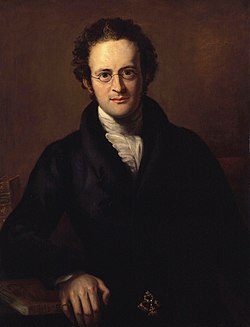
Sir John Bowring KCB FRS FRGS,[note 1] or Phrayā Siam Mānukūlakicca Siammitra Mahāyaśa[note 2] (17 October 1792 – 23 November 1872) was a British political economist, traveller, writer, literary translator, polyglot and the fourth Governor of Hong Kong. He was appointed by Queen Victoria as emissary to Siam, later he was appointed by King Mongkut of Siam as ambassador to London, also making a treaty of amity with Siam on 18 April 1855, now referred to as the "Bowring Treaty". His namesake treaty was fully effective for 70 years, until the reign of Vajiravudh. This treaty was gradually edited and became completely ineffective in 1938 under the government of Plaek Phibunsongkhram. Later, he was sent as a commissioner of Britain to the newly created Kingdom of Italy in 1861. He died in Claremont in Devon on 23 November 1872.
Key Information


Early life
[edit]Bowring was born in Exeter of Charles Bowring (1769–1856[1]: 381 ), a wool merchant whose main market was China,[1]: 596 from an old Unitarian family, and Sarah Jane Anne (d. 1828), the daughter of Thomas Lane, vicar of St Ives, Cornwall.[2] His last formal education was at a Unitarian school in Moretonhampstead and he started work in his father's business at age 13.[2] Bowring at one stage wished to become a Unitarian minister.[3] Espousal of Unitarian faith was illegal in Britain until Bowring had turned 21.[4]: 17
Bowring acquired first experiences in trade as a contract provider to the British army during the Peninsular War in the early 1810s, initially for four years from 1811 as a clerk at Milford & Co. where he began picking up a variety of languages.[1]: 597 His experiences in Spain fed a healthy skepticism towards the administrative capabilities of the British military.[4]: 15 He travelled extensively and was imprisoned in Boulogne-sur-Mer for six weeks in 1822[1]: 597 for suspected spying (though merely carrying papers for the Portuguese envoy to Paris).[4]: 29–30
He incorporated Bowring & Co. with a partner in 1818 to sell herrings to Spain (including Gibraltar by a subsidiary) and France and to buy wine from Spain. It was during this period that he came to know Jeremy Bentham,[4]: 23, 28 and later became his friend. He did not, however, share Bentham's contempt for belles lettres. He was a diligent student of literature and foreign languages, especially those of Eastern Europe. He somehow found time to write 88 hymns during this time, most published between 1823 and 1825.[4]: 43
Failure of his business in 1827, amidst his Greek revolution financing adventure, left him reliant on Bentham's charity and seeking a new, literary direction.[4]: 35–40 Bentham's personal secretary at the time, John Neal, labelled Bowring a "meddling, gossiping, sly, and treacherous man"[5]: 275 and charged him with deceiving investors in his Greek adventure and mismanaging Bentham's funds for Bowring's own prestige with the Westminster Review and an early public gymnasium.[5]: 273–288
Political economist career
[edit]Bowring had begun contributing to the newly founded Westminster Review and had been appointed its editor by Bentham in 1825.[6] By his contributions to the Review he attained considerable repute as a political economist and parliamentary reformer. He advocated in its pages the cause of free trade long before it was popularized by Richard Cobden and John Bright, co-founders of the Anti-Corn Law League in Manchester in 1838[4]: 46, 66 : "Jesus Christ is Free Trade, and Free Trade is Jesus Christ."[7]
He pleaded earnestly on behalf of parliamentary reform, Catholic emancipation, and popular education. Bentham failed in an attempt to have Bowring appointed professor of English or History at University College London in 1827 but, after Bowring visited the Netherlands in 1828, the University of Groningen conferred on him the degree of doctor of laws in February the next year for his Sketches of the Language and Literature of Holland.[1]: 598 In 1830, he was in Denmark, preparing for the publication of a collection of Scandinavian poetry.[8] As a member of the 1831 Royal Commission, he advocated strict parliamentary control on public expenditure, and considered the ensuing reform one of his main achievements.[4]: 102 Till 1832, he was Foreign Secretary of the British and Foreign Unitarian Association.
Bowring was appointed Jeremy Bentham's literary executor a week before the latter's 1832 death in his arms, and was charged with the task of preparing a collected edition of his works. The appointment was challenged by a nephew but Bowring prevailed in court.[4]: 41 The work appeared in eleven volumes in 1843,[8] notably omitting Bentham's most controversial works on female sexuality and homosexuality.[4]: 61
Free trade took on the dimensions of faith to Bowring who, in 1841, quipped, "Jesus Christ is free trade and free trade is Jesus Christ", adding, in response to consternation at the proposition, that it was "intimitely associated with religious truth and the exercise of religious principles".[4]: 19
Politician industrialist
[edit]Through Bentham connections and in spite of his radicalism, Bowring was appointed to carry out investigations of the national accounting systems of the Netherlands and France in 1832 by the government and House of Commons, respectively. The mark left by his work in France was not welcomed by all; as one commentator remarked,
Of all men, high or low, that I ever met in society, this Dr Bowring is the most presuming and the most conceited. He is a fit charlatan, for Whig employment; pushing and overbearing in his manner, and, like other parvenus, assuming an official importance which is highly ridiculous.[1]: 387–88
Yet his work was so highly regarded by the Whig government that he was then appointed secretary of the Royal Commission on the Public Accounts. He had made his name as something of an expert on government accounting.[4]: 53–55 He stood the same year for the newly created industrial constituency of Blackburn but was unsuccessful.[4]: 59
In 1835, Bowring entered parliament as member for Kilmarnock Burghs;[4]: 63 and in the following year he was appointed head of a government commission to be sent to France to inquire into the actual state of commerce between the two countries. After losing his seat in 1837, he was busied in further economic investigations in Egypt, for which he produced a very extensive report,[9] as well as Syria, Switzerland, Italy, and some of the states in Imperial Germany. The results of these missions appeared in a series of reports laid before the House of Commons and even a paper delivered to the British Association of Science with his observations on containment of the plague in the Levant.[4]: 73, 81 He also spoke out passionately for equal rights for women and the abolition of slavery.[4]: 97–98

On a still narrow, landed constituency, Bowring, campaigning on a radical and, to Marx and Engels, inconsistent platform of free trade and Chartism, secured a seat in parliament in 1841, as member for Bolton, perhaps England's constituency most affected by industrial upheaval and riven by deep social unrest bordering on revolution.[4]: 85 In the House, he campaigned for free trade, adoption of the Charter, repeal of the Corn Laws, improved administration of the Poor Law, open borders, abolition of the death penalty, and an end to flogging in the Army and payments to Church of England prelates.[4]: 88–91
During this busy period he found leisure for literature, and published in 1843 a translation of the Manuscript of the Queen's Court, a collection of Czech medieval poetry,[8] later considered false by Czech poet Václav Hanka. In 1846 he became President of the Mazzinian People's International League.
Without inherited wealth, or salary as MP for Bolton,[11] Bowring sought to sustain his political career by investing heavily in the south Wales iron industry from 1843. Following huge demand for iron rails brought about by parliament's approval of massive railway building from 1844 to 1846,[4]: 112 Bowring led a small group of wealthy London merchants and bankers as Chairman of the Llynvi Iron Company and established a large integrated ironworks at Maesteg in Glamorgan during 1845–46. He installed his brother, Charles, as Resident Director and lost no time in naming the district around his ironworks, Bowrington. He gained a reputation in the Maesteg district as an enlightened employer, one contemporary commenting that 'he gave the poor their rights and carried away their blessing'.[4]: 113
In 1845 he became Chairman of the London and Blackwall Railway, the world's first steam-powered urban passenger railway and the precursor of the whole London Rail system.[4]: 107
_ByEBStephens_Devon%26ExeterInstitution.PNG)
Bowring distinguished himself as an advocate of decimal currency. On 27 April 1847, he addressed the House of Commons on the merits of decimalisation.[12] He agreed to a compromise that directly led to the issue of the florin (one-tenth of a pound sterling), introduced as a first step in 1848, by way of pattern coins not issued for circulation, and in 1849 as a circulating coin known as the 'Godless' Florin due to it omitting the words 'DEI GRATIA' in the obverse legend. As the 1849 coins proved unpopular, the coins were redesigned accordingly and went into general production 3 years later in 1852 and became known as 'Gothic Head' Florins remaining in production until 1887.[13] He lost his seat in 1849 but went on to publish a work entitled The Decimal System in Numbers, Coins and Accounts in 1854.[8]
The trade depression of the late 1840s caused the failure of his venture in south Wales in 1848 and wiped out his capital,[4]: 126 forcing Bowring into paid employment. His business failure led directly to his acceptance of Palmerston's offer of the consulship at Canton.
Canton
[edit]By 1847, Bowring had assembled an impressive array of credentials: honorary diplomas from universities in Holland and Italy, fellowships of the Linnean Society of London and Paris, the Historical Institute of the Scandinavian and Icelandic Societies, the Royal Institute of the Netherlands, the Royal Society of Hungary, the Royal Society of Copenhagen, and of the Frisian and Athenian Societies. Numerous translations and works on foreign languages, politics and economy had been published. His zeal in Parliament and standing as a literary man were well known.[1]: 227
In 1849, he was appointed British consul at Canton (today's Guangzhou), and superintendent of trade in China. Arriving on HMS Medea on 12 April 1849, he took up the post in which he was to remain for four years the next day.[1]: 236 His son John Charles had preceded him to China, arriving in Hong Kong in 1842,[4]: 116 [14] had been appointed Justice of the Peace[1]: 322 and was at one point a partner in Jardines.[6]
Bowring was quickly appalled by endemic corruption and frustrated by finding himself powerless in the face of Chinese breaches of the Treaty of Nanking and refusal to receive him at the diplomatic level or permit him to travel to Peking, and by his being subordinate to the Governor of Hong Kong who knew nothing of his difficulties.[4]: 128–30
For almost a year from 1852 to 1853, he acted as Britain's Plenipotentiary and Superintendent of Trade and Governor of Hong Kong in the absence on leave of Sir George Bonham, who he was later to succeed.[6]
Bowring was instrumental in the 1855 formation of the Board of Inspectors established under the Qing Customs House, operated by the British to gather statistics on trade on behalf of the Qing government and, later, as the Chinese Imperial Maritime Customs Service, to collect all customs duties. This was a vital reform which brought an end to the corruption of government officials and led modernisation of China's international trade.[4]: 135–37 Concerned for the welfare of coolies being exported to Australia, California, Cuba and the West Indies, and disturbed by the coolie revolt in Amoy in May 1852, Bowring tightened enforcement of the Passenger Act so as to improve coolie transportation conditions and ensure their voluntariness.[4]: 138–39
Governor of Hong Kong
[edit]
The newly knighted Bowring received his appointment as Governor of Hong Kong and her Majesty's Plenipotentiary and Chief Superintendent of British Trade in China on 10 January 1854. He arrived in Hong Kong and was sworn in on 13 April 1854,[1]: 339–340 in the midst of the Taiping Rebellion occupying the attentions of his primary protagonists and the Crimean War distracting his masters.[4]: 143–46 He was appointed over strong objections from opponents in London. Fellow Unitarian Harriet Martineau[15] had warned that Bowring was "no fit representative of Government, and no safe guardian of British interests", that he was dangerous and would lead Britain into war with China, and that he should be recalled. Her pleas went unheeded.[16]
Bowring was an extremely industrious reformist governor. He allowed the Chinese citizens in Hong Kong to serve as jurors in trials and become lawyers. He is credited with establishing Hong Kong's first commercial public water supply system. He developed the eastern Wan Chai area at a river mouth near Happy Valley and Victoria Harbour by elongating the river as a canal, the area being named Bowring City (Bowrington). By instituting the Buildings and Nuisances Ordinance, No. 8 of 1856, in the face of stiff opposition,[1]: 398 Bowring ensured the safer design of all future construction projects in the colony. He sought to abolish monopolies.[6]
Bowring was impressed by the yawning gulf of misunderstanding between the expatriate and Chinese communities, writing, "We rule them in ignorance and they submit in blindness."[4]: 170 Notwithstanding, in 1856, Bowring went so far as to attempt democratic reform. He proposed that the constitution of the Legislative Council be changed to increase membership to 13 members, of whom five be elected by landowners enjoying rents exceeding 10 pounds, but this was rejected by Henry Labouchère of the Colonial Office on the basis that Chinese residents were "deficient in the essential elements of morality on which social order rests". The constituency would only have amounted to 141 qualified electors, in any event.[4]: 164
He was equally impressed by the dearth of expenditure on education, noting that 70 times more was provided for policing than for instruction of the populace, so he rapidly brought in an inspectorate of schools, training for teachers and opening of schools. Student number increased nearly ten-fold.[4]: 173
He became embroiled in numerous conflicts and disputes, not least of which was a struggle for dominance with Lieutenant Governor William Caine, which went all the way back to the Colonial Office for resolution. He won.[6] He was faulted for failing to prevent a scandalous action in slander, in 1856, by the assistant magistrate W. H. Mitchell against his attorney-general T. Chisholm Anstey over what was essentially a misapprehension of fact but which was thought "unique in all the scandals of modern government of the Colonies or of English Course of Justice".[1]: 405
A Qing-sponsored campaign of civil disruption, threatening the very survival of the British administration, culminated in the Esing Bakery incident of 15 January 1857 in which 10 pounds of arsenic was mixed in the flour of the colony's principal bakery, poisoning many hundreds, killing Bowring's wife and debilitating him for at least a year.[17] This was a turning point for Bowring who, cornered, all but abandoned his liberality in favour of sharply curtailed civil liberties. He bemoaned:
It is a perplexing position to know that a price is set on our heads, that our servants cannot be trusted, that a premium is offered to any incendiary who will set fire to our dwellings, to any murderer who will poison or destroy us. ... We have many grievances to redress, and I will try to redress them; many securities to obtain, and I mean to obtain them. ... many unfortunate wretches of all nations (as the hatred of the Chinese is indiscriminating) have been seized, decaptitated; and their heads have been exposed on the walls of Canton, their assailants having been largely rewarded; ... All this is sufficiently horrible ... we shall exact indemnities for the past, and obtain securities for the future. We shall not crouch before assassination and incendiarism ... I did all that depended upon me to promote conciliation and establish peace. ... but every effort I made was treated with scorn and repulsion. The forbearance with which the Chinese have been treated has been wholly misunderstood by them, and attributed to our apprehensions of their great power, and awe of the majesty of the 'Son of Heaven'. So they have disregarded the most solemn engagements of treaties, and looked upon us as 'barbarians,' ... I doubt not that Government, Parliament, and public opinion will go with us in this great struggle, ...[1]: 423–24
Diplomacy
[edit]In 1855, Bowring experienced a reception in Siam that could not have stood in starker contrast to Peking's constant intransigence. He was welcomed like foreign royalty, showered with pomp (including a 21-gun salute), and his determination to forge a trade accord was met with the open-minded and intelligent interest of King Mongkut.[4]: 192 [6]: 43 Negotiations were buoyed by the cordiality between Mongkut and Bowring and an agreement was reached on 17 April 1855,[4]: 194 now commonly referred to as the Bowring Treaty. Bowring held Mongkut in high regard and that the feeling was mutual and enduring was confirmed by his 1867 appointment as Siam's ambassador to the courts of Europe. Bowring's delight in this "remarkable" monarch has been seen by at least one commentator as a possible encouragement to his frustration with Peking and rash handling of the Arrow affair.[4]: 197
War and late career
[edit]In October 1856, a dispute broke out with the Canton vice-consul Ye Mingchen over the Chinese crew of a small British-flagged trading vessel, the Arrow. Bowring saw the argument as an opportunity to wring from the Chinese the free access to Canton which had been promised in the Treaty of Nanking but so far denied. The irritation caused by his "spirited" or high-handed policy led to the Second Opium War (1856–1860).[8] Martineau put the war down to the "incompetence and self-seeking rashness of one vain man".[16]: 173–74
It was under Bowring that the colony's first ever bilingual English-Chinese law, "An Ordinance for licensing and regulating the sale of prepared opium" (Ordinance No. 2 of 1858), appeared on its statute books.[1]: 467
In April the same year, Bowring was the subject of scandal when the case of criminal libel against the editor of the Daily Press, Yorick J. Murrow, came to trial. Murrow had written of Bowring's having taken numerous steps to favour the trade of his son's firm, Messrs Jardine, Matheson & Co., enriching it as a result. Murrow, having been found guilty by the jury, emerged from six months' imprisonment to take up precisely where he left off, vilifying Bowring from his press.[1]: 469–70 The scandal was rekindled in December when Murrow brought an ultimately unsuccessful suit in damages against Bowring in connection with his imprisonment.[1]: 568–69
A commission of inquiry into accusations of corruption, operating brothels and associating with leading underworld figures laid by Attorney-General Anstey against Registrar-General Daniel R Caldwell scandalised the administration. During the course of its proceedings Anstey had opportunity to viciously accuse William Thomas Bridges, one-time acting Attorney-General and constant favourite of Bowring, for receiving stolen goods under the guise of running a money-lending operation from the ground floor of his residence, collecting debts at extortionate rates. The charges found unproved, Caldwell was exonerated and Anstey suspended, and Bridges later to be appointed acting Colonial Secretary by Bowring, but suspicions remained and Bowring's administration had been ruined.[1]: 502–36
In mourning for the recent loss of his wife to the arsenic poisoning, Bowring made an official tour of the Philippines, sailing on the steam-powered paddle frigate Magicienne[18]: 5 on 29 November 1858, returning seven weeks later.[1]: 564
Stripped of his diplomatic and trade powers,[1]: 594–95 weakened by the effects of the arsenic, and seeing his administration torn apart by anti-corruption inquiries in a campaign launched by him, Bowring's work in Hong Kong ended in May 1859.[6]: 43–44 His parting sentiment was that "a year of great embarrassment ... unhappy misunderstandings among officials, fomented by passionate partisanship and by a reckless and slanderous press, made the conduct of public affairs one of extreme difficulty."[4]: 183 He plunged into writing a 434-page account of his Philippines sojourn which was published the same year.[18]
His last employment by the British government was as a commissioner to Italy in 1861, to report on British commercial relations with the new kingdom. Bowring subsequently accepted the appointment of minister plenipotentiary and envoy extraordinary from the Hawaiian government to the courts of Europe, and in this capacity negotiated treaties with Belgium, the Netherlands, Italy, Spain and Switzerland.[8]
Linguist and author
[edit]Bowring was an accomplished polyglot and claimed he knew 200 languages of which he could speak 100.[19] Many of his contemporaries and subsequent biographers thought otherwise.[4]: 50–52 [note 3] His chief literary work was the translation of the folk-songs of most European nations, although he also wrote original poems and hymns, and books or pamphlets on political and economic subjects.[19] The first fruits of his study of foreign literature appeared in Specimens of the Russian Poets (1821–1823). These were followed by Batavian Anthology (1824), Ancient Poetry and Romances of Spain (1824), Specimens of the Polish Poets, and Serbian Popular Poetry, both in 1827,[8] and Poetry of the Magyars (1830).
Bowring's 88 published hymns include "God is love: his mercy brightens", "In the Cross of Christ I glory", and "Watchman, tell us of the night".[20] "In the Cross" and "Watchman", both from his privately published collection Hymns (1825), are still used in many churches. The American composer Charles Ives used part of Watchman, Tell Us of the Night in the opening movement of his Fourth Symphony.
Selected publications:
- Specimens of the Russian Poets (1821–1823)
- Peter Schlemihl, translated from German (1824)
- Batavian Anthology; or, Specimens of the Dutch Poets (1824)
- Ancient Poetry and Romances of Spain (1824)
- Hymns (privately published, 1825)
- Matins and Vespers with Hymns and Occasional Devotional Pieces (1827)[4]: 44
- Specimens of the Polish Poets (1827)
- Serbian Popular Poetry (1827)
- Poetry of the Magyars (1830)
- Cheskian Anthology (1832)
- Bentham's Deontology, edited (1834) vol. 1, vol. 2
- Minor Morals for Young People (1834)
- Manuscript of the Queen's Court (1843)
- The Decimal System in Numbers, Coins and Accounts (1854)
- The Kingdom and People of Siam (1857), with foreword by King Mongkut [1]
- A Visit to the Philippine Islands (1859) [2]
- Translations from Alexander Petőfi (1866) [3]
Personal life
[edit]Bowring married twice. By his first wife, Maria (1793/94–1858), whom he married in 1818 after moving to London, he had five sons and four daughters (Maria, John, Frederick, Lewin, Edgar, Charles, Edith, Emily, and Gertrude). She died in September 1858, a victim of the arsenic poisoning of the bread supply in Hong Kong[1]: 471 during the Second Opium War sparked by her husband.[2][6]
- His son John Charles was a keen amateur entomologist, ultimately amassing a collection of some 230,000 specimens of coleoptera which he donated to the British Museum in 1866.[21]
- His fourth son, Edgar Alfred Bowring, was a Member of Parliament for Exeter from 1868 to 1874. E. A. Bowring is also known as an able translator in the literary circles of the time.
- Lewin Bentham Bowring was a member of the Bengal Civil Service. He served as private secretary in India to Lord Canning and Lord Elgin,[22] and later as commissioner of Mysore.
- His daughter, Emily, became a Roman Catholic nun and was known as Sister Emily Aloysia Bowring. She was the first headmistress of the Italian Convent School (now known as the Sacred Heart Canossian College) in Hong Kong, serving from 1860 until her death in 1870.[1]: 596
Bowring married his second wife, Deborah Castle (1816–1902), in 1860; they had no children. Deborah, Lady Bowring died in Exeter in July 1902.[23] She was a prominent Unitarian Christian and supporter of the women's suffrage movement.[24]
John Bowring died on 23 November 1872, aged 80.[4]: 216
Honours
[edit]- Knight Commander of the Order of the Bath (KCB), 1854
- Knight Grand Cross of the Royal Order of Kamehameha I of the Kingdom of Hawaii, 1857.[25]
- Fellow, Royal Society and Royal Geographical Society
- Phrayā Siam Mānukūlakicca Siammitra Mahāyaśa (Honorary Lord Royal Fellow of Siam: พระยาสยามานุกูลกิจ สยามิตรมหายศ)
- Elected a member of the American Antiquarian Society in 1834.[26]
Legacy
[edit]

Bowring is credited with popularising Samuel Taylor Coleridge's Kubla Khan or a Vision in a Dream which had been disparaged by the critics and discarded soon after first publication.[4]: 47–48
In the mid-19th century a district of the Llynfi Valley, Glamorgan, south Wales was known as Bowrington as it was built up when John Bowring was chairman of the local iron company. Bowring's ironworks community later became part of the Maesteg Urban District. The name was revived in the 1980s when a shopping development in Maesteg was called the Bowrington Arcade.
Bowring Road, Ramsey, Isle of Man, was named for him in appreciation of his support of universal suffrage for the House of Keys and his efforts to liberalise trade with the island.[4]: 92–93
As the 4th Governor, several places in Hong Kong came to be named after him:[4]: 173
- Bowring Praya West and Bowring Praya Central were two roads built on reclaimed land during his tenure, but were respectively renamed Des Voeux Road West and Des Voeux Road Central in 1890 after the Praya Reclamation Scheme.
- Bowrington, or Bowring City, is an area Bowring originally built around the estuary of the Wong Nai Chung river, and is the site of the Bowrington Market. He built an extension named the Bowrington Canal, over which the original Bowrington Road (now called Canal Road) and the Bowrington Bridge passed.[4]: 173 A road running parallel to and one block to the west of Canal Road retains the name Bowrington Road and houses the street market which serves the district.
- Bowring Street in the district of Jordan, Hong Kong
He was also responsible for the establishment of the Botanic Gardens in Hong Kong, the most indelible mark he made on the colony.[4]: 173
Two species of lizards, Hemidactylus bowringii and Subdoluseps bowringii, are named in honour of either John Bowring or his son John Charles Bowring.[27]
Bowring was the founder of Hastings Unitarian Church in Hastings, East Sussex, which was built between 1867 and 1868.[28]
Actress Susannah York was the great-great-granddaughter of Bowring.[29]
Journalist and historian Philip Bowring is a descendant of Bowring's great uncle Nathaniel.[30] He is the author of a partial biography of Bowring, Free Trade's First Missionary (2014).[4]
Notes
[edit]- ^ Chinese: 寶寧, 寶靈
- ^ Thai: พระยาสยามมานุกูลกิจ สยามมิตรมหายศ, RTGS: Phraya Sayam Manukunkit Sayammit Mahayot, pronounced [pʰráʔ jaː sà jaːm maː núʔ kuːn kìt sà jaːm mít má hǎː jót]
- ^ Philip Bowring's 2014 observation (p. 50) responds to a version of this biography: 'The claim to fluency in dozens of languages was exaggerated, yet it has survived in some accounts today: Wikipedia describes him as "ranked ... among the world's greatest hyperglots—his talent enabling him at last to say that he knew 200 languages, and could speak 100".[note] Many of his contemporaries took the claims with a pinch of salt. Bowring's linguistic abilities became the butt of jokes in some quarters, not only among his enemies.'
References
[edit]- ^ a b c d e f g h i j k l m n o p q r s t u Norton-Kyshe, James William (1898). History of the Laws and Courts of Hong Kong. London: T Fisher Unwin.
- ^ a b c Stone, Gerald (2009) [2004]. "Bowring, Sir John (1792–1872)". Oxford Dictionary of National Biography (online ed.). Oxford University Press. doi:10.1093/ref:odnb/3087. (Subscription, Wikipedia Library access or UK public library membership required.)
- ^ Ruston, Alan. "Sir John Bowring". Unitarian Universalist Historical Society. Archived from the original on 31 December 2002. Retrieved 9 October 2017.
{{cite web}}: CS1 maint: bot: original URL status unknown (link) - ^ a b c d e f g h i j k l m n o p q r s t u v w x y z aa ab ac ad ae af ag ah ai aj ak al am an ao ap aq Bowring, Philip (2014). Free Trade's First Missionary: Sir John Bowring in Europe and Asia. Hong Kong University Press. ISBN 9789888208722.
- ^ a b Neal, John (1869). Wandering Recollections of a Somewhat Busy Life. Boston, Massachusetts: Roberts Brothers. OCLC 1056818562.
- ^ a b c d e f g h Munn, Christopher (2012). May Holdsworth; Christopher Munn (eds.). Dictionary of Hong Kong Biography. Hong Kong University Press. ISBN 9789888083664.
- ^ As cited in:
 Marx, Karl (1902). Free Trade. Translated by Kelley, Florence. p. 29.
- ^ a b c d e f g One or more of the preceding sentences incorporates text from a publication now in the public domain: Chisholm, Hugh, ed. (1911). "Bowring, Sir John". Encyclopædia Britannica. Vol. 4 (11th ed.). Cambridge University Press. p. 349.
- ^ Bowring, J. (2021) [1840]. Report on Egypt 1823–1838. London: Projectis Publishing. ISBN 9781913984120.
- ^ Anti-Slavery Society Convention 1840, National Portrait Gallery, London
- ^ MPs in the UK Parliament received no salary until early in the following century.
- ^ "English News: Parliamentary Intelligence". The Australian. Sydney, NSW. 3 September 1847. p. 3. Retrieved 13 October 2013.
- ^ "The Florin". Royal Mint Museum. Royal Mint, Llantrisant, Wales. Archived from the original on 4 March 2016. Retrieved 13 October 2013.
- ^ White, Adam (1844). "Descriptions of some new species of coleoptera and Homoptera from China". Annals and Magazine of Natural History. Series 1. 14 (93): 422–26. doi:10.1080/037454809495213.
- ^ Haakonssen, Knud (2006). Enlightenment and Religion: Rational Dissent in Eighteenth-Century Britain. Cambridge University Press. p. 307. ISBN 9780521029872.
- ^ a b Logan, Deborah A (2016). Harriet Martineau, Victorian Imperialism, and the Civilizing Mission. Routledge. ISBN 9781317123644.: 173–74
- ^ Bonny Schoonakker (15 January 2007). "Racial tensions mixed with a dash of arsenic and yeast". South China Morning Post.
- ^ a b Bowring, Sir John (1859). A Visit to the Philippine Islands. London: Smith, Elder & Co.
- ^ a b One or more of the preceding sentences incorporates text from a publication now in the public domain: Cousin, John William (1910). "Bowring, Sir John". A Short Biographical Dictionary of English Literature. London: J. M. Dent & Sons – via Wikisource.
- ^ "John Bowring". Hymnary.org. Retrieved 12 June 2016.
- ^ Fan, Fa-ti (2004). British Naturalists in Qing China. Harvard University Press. p. 203. ISBN 9780674011434.
- ^ "Sir John Bowring". The Times. 25 November 1872. p. 12.
- ^ "Obituary". The Times. No. 36833. London. 30 July 1902. p. 10.
- ^ Reynolds, K. D. (2004). "Bowring [née Castle], Deborah, Lady Bowring (1816–1902)". Oxford Dictionary of National Biography (online ed.). Oxford University Press. doi:10.1093/ref:odnb/56282. (Subscription, Wikipedia Library access or UK public library membership required.)
- ^ "Grand Cross set thet belonged to John Bowring". eMedals. Retrieved 7 October 2020.
- ^ "Members". American Antiquarian Society. Retrieved 9 October 2017.
- ^ Beolens, Bo; Watkins, Michael; Grayson, Michael (2011). The Eponym Dictionary of Reptiles. Baltimore: Johns Hopkins University Press. xiii + 296 pp. ISBN 978-1-4214-0135-5. ("Bowring", p. 36).
- ^ Elleray, D. Robert (1981). The Victorian Churches of Sussex. Chichester: Phillimore & Co. Ltd. §. 136. ISBN 0-85033-378-4.
- ^ Simonson, R. "Susannah York, Actress of Stage and Film, Dies at 72". 2019 © Playbill Inc. All Rights Reserved. Retrieved 9 August 2019.
Her (York's) maternal grandfather was Walter Andrew Bowring, a British diplomat, and her great-great-grandfather was political economist Sir John Bowring ...
- ^ "Bowring, Benjamin (1710)". Webb-Site.

Further reading
[edit]- Bartle, G. F. (1963). "Jeremy Bentham and John Bowring: a study of the relationship between Bentham and the editor of his Collected Works". Bulletin of the Institute of Historical Research. 36 (93): 27–35. doi:10.1111/j.1468-2281.1963.tb00620.x.
- Bartle, George Frederick (1994). An old radical and his brood: a portrait of Sir John Bowring and his family based mainly on the correspondence of Bowring and his son, Frederick Bowring. London: Janus.
- Bates, William (1883). . . Illustrated by Daniel Maclise (1 ed.). London: Chatto and Windus. pp. 74–76 – via Wikisource.
- Bowring, Philip (2011). "Sir John Bowring: the imperial role of a lifelong radical". Asian Affairs. 42 (3): 419–29. doi:10.1080/03068374.2011.605604. S2CID 163009129.
- Bowring, Philip (2014). Free Trade's First Missionary: Sir John Bowring in Europe and Asia. Hong Kong University Press. ISBN 9789888208722.
- Endacott, G. B. (2005) [1962]. A Biographical Sketch-Book of Early Hong Kong. Hong Kong: Hong Kong University Press. pp. 36–44. ISBN 978-962-209-742-1.
- Hurd, Douglas (1967). "Sir John Bowring of Hong Kong, the Radical Governor". History Today. 17 (10): 651–659.
- Jumsai, M L Manich (1970). King Mongkut and Sir John Bowring. Great Britain: Chalermnit.
- Ringmar, Erik (2013). Liberal Barbarism: The European Destruction of the Palace of the Emperor of China. New York: Palgrave Macmillan. ISBN 9781137268907.
- Stone, Gerald (2009) [2004]. "Bowring, Sir John (1792–1872)". Oxford Dictionary of National Biography (online ed.). Oxford University Press. doi:10.1093/ref:odnb/3087. (Subscription, Wikipedia Library access or UK public library membership required.)
- Todd, David (2008). "John Bowring and the global dissemination of free trade". Historical Journal. 51 (2): 373–97. doi:10.1017/s0018246x08006754. S2CID 153892975.
- Youings, Joyce Alice, ed. (1993). Sir John Bowring, 1792–1872: aspects of his life and career. Plymouth: Devonshire Association.
External links
[edit]


- Works by John Bowring at Project Gutenberg
- Works by John Bowring at LibriVox (public domain audiobooks)

- Works by or about John Bowring at the Internet Archive
- Autobiographical Recollections of Sir John Bowring (1877) at Internet Archive
- Sir John Bowring Biography Archived 16 February 2015 at the Wayback Machine Dictionary of Unitarian & Universalist Biography
- 8 portraits of John Bowring National Portrait Gallery
- Hansard 1803–2005: contributions in Parliament by John Bowring
- John Bowring at Library of Congress, with 49 library catalogue records


.svg) | ||
| International | |
|---|---|
| National | |
| Academics | |
| Artists | |
| People | |
| Other | |

John Bowring
View on GrokipediaEarly Life
Family Background and Childhood
John Bowring was born on 17 October 1792 in Exeter, Devon, England, into a prosperous family of wool merchants long established in the region.[9] His father, Charles Bowring (1769–1856), operated a successful textile trade, primarily dealing in wool exports to markets including Portugal and Spain.[10] His mother was Sarah Jane Wescombe, and the couple raised Bowring as the eldest son in a household shaped by an ancient Unitarian heritage that emphasized rational inquiry and moral reform over orthodox Anglican doctrine.[11] [12] The Bowring family resided in Larkbeare House in Exeter, reflecting their commercial standing amid Devon's textile industry, which relied on local wool production and international commerce.[9] Charles Bowring's business acumen provided a stable environment, yet the Unitarian upbringing instilled in young Bowring an early exposure to dissenting religious thought, fostering interests in ethics, languages, and public service that diverged from purely mercantile pursuits.[12] [4] As the firstborn in a large family, Bowring was groomed for eventual involvement in the family trade, though his intellectual inclinations soon pointed toward broader scholarly and reformist paths. Limited records detail specific childhood events, but the family's nonconformist milieu—marked by Unitarian schools and associations—contrasted with prevailing establishment norms, encouraging self-directed learning and a critical worldview from an early age.[12] Bowring later reflected on this formative period as laying the groundwork for his polymathic talents, though he ultimately deferred ministerial aspirations in favor of commerce under his father's guidance.[11]Education and Early Intellectual Development
Bowring was born on 17 October 1792 in Exeter, Devon, to a Unitarian family of wool merchants, receiving initial schooling locally before being sent in 1803, at age 11, to a Unitarian boarding school in Moretonhampstead, where he studied for three years.[13][12] This formal education emphasized moral and intellectual formation aligned with Unitarian principles, instilling in him an early aspiration to enter the ministry, though he later abandoned this path for commerce and scholarship.[12] Upon returning to Exeter in 1806 or 1807, Bowring joined his father's woollen trade business at around age 14, marking the end of his structured schooling and the onset of self-directed intellectual pursuits amid commercial apprenticeship.[13] During the subsequent four years in the merchant house, he laid the groundwork for his renowned linguistic abilities through intensive private study, acquiring fluency in French, Spanish, German, and Dutch to facilitate trade correspondence and travel. This period of autodidacticism extended beyond languages to poetry and translation; by his late teens, Bowring had composed verses and begun rendering foreign works into English, reflecting a precocious engagement with European literature and philosophy influenced by his Unitarian heritage's emphasis on rational inquiry.[12] His polyglot talents, honed without university tutelage, positioned him as a self-made intellectual, capable of reading in dozens of tongues by early adulthood, though claims of proficiency in over 200 languages—often repeated in later accounts—likely encompassed rudimentary comprehension rather than full command.Career in Political Economy
Association with Jeremy Bentham
Bowring encountered Jeremy Bentham in the early 1820s, rapidly earning the philosopher's admiration for his polyglot abilities and commitment to radical reform. Bentham, then in his seventies, viewed the younger Bowring—born in 1792—as a promising protégé, providing intellectual guidance and patronage that propelled Bowring's early career in political economy. Their correspondence, documented in diaries maintained for Bentham from 1821 to 1825, reveals frequent interactions at Bentham's residence, Queen's Square Place, where Bowring assisted with various projects amid Bentham's expansive reformist endeavors.[14][2] A pivotal collaboration emerged with the founding of the Westminster Review in 1824, a quarterly journal Bentham established to advance utilitarian and philosophic radical principles against conservative outlets like the Edinburgh Review. Bowring contributed articles from the outset and assumed the editorship in 1825, shaping its content to emphasize free trade, parliamentary reform, and legal codification—core Benthamite themes—until 1830. Bentham's endorsement extended to recommending Bowring for the chair of English literature and history at the newly proposed University of London in 1827, though the appointment eluded him due to institutional opposition. This period solidified Bowring's alignment with Bentham's utility principle, influencing his own writings on economics and international commerce.[15][16] Following Bentham's death on 6 June 1832, Bowring served as his literary executor, compiling and editing the comprehensive The Works of Jeremy Bentham in 11 volumes, published between 1838 and 1843 by William Tait in Edinburgh. The edition integrated previously unpublished manuscripts with revised earlier texts, prefaced by Bowring's memoirs of Bentham's life and analytical index, preserving Bentham's legacy despite later scholarly critiques of editorial inconsistencies. Bowring's stewardship reflected his deep personal regard, as Bentham had named him executor in recognition of their bond, though it also drew accusations from contemporaries like John Stuart Mill of prioritizing speed over precision in assembling the corpus. This role cemented Bowring's reputation within utilitarian circles, informing his subsequent advocacy for evidence-based policy in trade and governance.[17][18][14]Publications on Economics and Free Trade
John Bowring advanced utilitarian political economy through his editorial work on Jeremy Bentham's writings, particularly by compiling and publishing the 11-volume Works of Jeremy Bentham between 1838 and 1843, which included key economic treatises such as Defence of Usury (1787) and Manual of Political Economy (circa 1790–1795).[19] These volumes emphasized laissez-faire principles, arguing against usury laws and restrictive commercial systems on grounds that they distorted markets and hindered utility maximization, aligning with Bowring's advocacy for unrestricted trade as a mechanism for mutual prosperity.[20] Bowring's annotations and selection process amplified Bentham's critique of protectionism, presenting free trade not merely as economic policy but as a rational extension of individual liberty and aggregate welfare, influencing British reformers amid debates over the Corn Laws.[19] In the mid-1830s, Bowring produced parliamentary reports on European commerce to demonstrate the advantages of liberal trade regimes, beginning with Report on the Commerce and Manufactures of Switzerland (1836), which detailed the cantons' decentralized manufacturing—such as cotton spinning and watchmaking—and attributed their efficiency to low internal duties averaging under 5% and absence of monopolies.[21] He quantified Switzerland's export growth, noting silk and lace industries yielding £2 million annually despite limited resources, and contrasted this with Britain's tariff burdens, implicitly urging tariff reductions to foster similar competitiveness.[22] Similar analyses followed, including reports on Syria's commercial statistics (1840) highlighting Ottoman trade barriers' stifling effects and on Egypt and Candia (1840), where he advocated reciprocity treaties to expand British exports like textiles in exchange for raw materials.[23][24] These documents, commissioned under Foreign Secretary Lord Palmerston, provided empirical data—such as duty rates and trade volumes—to support free trade, portraying protectionism as causally linked to stagnation while open markets drove innovation and growth. Bowring's contributions extended to periodical literature, where as editor of the Westminster Review from 1825 to 1836, he published articles critiquing mercantilism and promoting comparative advantage, often drawing on his continental observations.[25] His writings framed free trade as empirically superior, citing cases like Dutch and Hanseatic ports' prosperity from low barriers versus France's post-Napoleonic recovery delays under high tariffs. Though not authoring a comprehensive treatise, Bowring's reports and edits collectively argued that unilateral or reciprocal liberalization would expand global output, with Britain's manufacturing edge—evidenced by £50 million in annual exports—best preserved by dismantling import duties rather than retaliation.[26] This body of work underpinned his later diplomatic efforts, prioritizing evidence from trade statistics over ideological abstraction.British Political and Business Activities
Parliamentary Career and Reforms
Bowring entered Parliament as the Member for Kilmarnock Burghs in 1835, a constituency in Scotland where his advocacy for progressive causes secured his election despite limited local ties, and he held the seat until 1837.[27] Following the Great Reform Act of 1832, he contested Blackburn unsuccessfully before shifting focus to commercial activities; he returned to the House of Commons in 1841 as one of two Members for Bolton, an industrial hub sympathetic to radical economic views, serving alongside Peter Ainsworth until 1847 and then Stephen Blair until his retirement from Parliament in 1849.[4] Throughout his parliamentary tenure, Bowring emerged as a staunch proponent of free trade, arguing that protectionist barriers distorted markets and hindered prosperity; he specifically campaigned for the repeal of the Corn Laws, which imposed duties on imported grain to protect domestic agriculture at the expense of consumers and manufacturers. His efforts aligned with the Anti-Corn Law League's push for unrestricted imports to lower food costs and stimulate industry, reflecting his broader belief in laissez-faire economics derived from associations with utilitarians like Jeremy Bentham.[28] Bowring also advocated penal reforms, including reductions in capital punishment and improvements to prison systems, viewing harsh penalties as ineffective deterrents that failed to address root causes of crime such as poverty and ignorance.[28] He pressed for expanded public education to foster moral and economic self-reliance, and supported extensions of suffrage to enfranchise more working-class voters, consistent with his radical bent toward democratizing political influence.[12] These positions, often aired in debates and committees, underscored his commitment to empirical policy grounded in trade data and social outcomes rather than entrenched privileges.[11]Industrial Ventures and Financial Challenges
In the mid-1840s, amid Britain's railway mania and iron boom, Bowring channeled his capital into industrial enterprises, particularly as chairman of the Llynfi Iron Company in Maesteg, South Wales.[29] He spearheaded the formation of a large integrated ironworks by assembling investors from London merchants and bankers, installing his brother Charles as resident director to oversee operations.[29][13] The surrounding district was dubbed Bowrington, reflecting his prominent role, and included infrastructure such as canals to support production.[13] These investments aligned with Bowring's advocacy for free trade and economic expansion but exposed him to speculative risks in volatile sectors like railways and iron production.[12] By 1847, a sharp market downturn triggered by broader trade depression eroded profitability, leading to the effective collapse of his Welsh ventures despite the Llynfi company's nominal continuation under other management.[13][29] The financial fallout in 1848 wiped out Bowring's personal fortune, precipitating near-bankruptcy and forcing him to relinquish independent business pursuits.[12] This crisis, compounded by imprudent leveraging of assets, underscored the perils of overextension during economic cycles, ultimately steering him toward salaried diplomatic service as British consul at Canton in 1849 to stabilize his circumstances.[12][13]Consular Service in Canton
Appointment and Trade Negotiations
In early 1849, John Bowring was appointed by Foreign Secretary Lord Palmerston as British Consul at Canton (Guangzhou) and Superintendent of Trade in China, succeeding previous consuls amid ongoing commercial tensions following the Treaty of Nanking (1842).[4][12] This posting came after Bowring's financial setbacks from the late-1840s trade depression, leveraging his expertise in political economy and advocacy for free trade to advance British mercantile interests in the post-Opium War era.[11] His dual role entailed overseeing British commercial operations at the sole treaty port initially open to foreigners, enforcing treaty stipulations for equitable trade, and mediating disputes between merchants and Qing authorities, who maintained strict controls on foreign access despite Article II of the treaty granting residence rights within designated ports.[30] Bowring arrived in Canton during an acute crisis over British entry into the city itself, a right implied but not explicitly fulfilled under the treaty's provisions for residence and trade at the five ports, including Canton.[30] Prior attempts by British officials and merchants to enter the walled city in April 1849 had provoked riots and resistance from local populace and officials, underscoring Qing reluctance to allow foreigners beyond the factories (suburbs). Bowring prioritized this "Canton city question" in negotiations, communicating his arrival to Imperial Commissioner Hsü Kuang-chin and demanding formal reception protocols that affirmed equal diplomatic footing, but Hsü insisted on subordinate rituals, stalling progress.[31][30] Throughout 1849–1853, Bowring pursued diplomatic correspondence and protests to secure city access, arguing it essential for verifying trade compliance and expanding legitimate commerce in tea, silk, and other goods, while countering smuggling and official corruption that inflated costs for British traders.[31] He rejected compromise offers, such as limited consular visits, viewing them as insufficient to treaty intent, and recommended naval demonstrations when Yeh Ming-ch'en succeeded Hsü as commissioner in 1852, maintaining intransigence amid growing anti-foreign agitation. These efforts yielded no formal entry agreement, heightening frictions that British officials attributed to Qing xenophobia and protectionism, though trade volumes at the factories remained substantial, with British exports to China exceeding £10 million annually by the early 1850s.[30] Bowring's insistence on unrestricted access foreshadowed escalated confrontations, as peaceful negotiation channels proved ineffective against entrenched local opposition.[32]Conflicts with Qing Officials and Treaty Enforcement
Upon assuming the role of British consul and superintendent of trade in Canton in May 1849, John Bowring prioritized enforcing the Treaty of Nanking's provisions for equitable trade practices, including fixed tariffs on British imports and direct diplomatic correspondence with Qing high officials, bypassing the intermediary hong merchant system that facilitated corruption and evasion. Chinese authorities, however, systematically obstructed these efforts; local customs officials frequently underreported cargo volumes and duties, undermining the treaty's tariff schedules designed to prevent arbitrary exactions. Bowring responded by issuing formal protests and demanding audits, but Qing responses were evasive, relying on the cohong guild to filter communications and shield officials from accountability.[33] A notable escalation occurred in 1850 amid disputes over tariff enforcement, where Bowring accused Canton customs of deliberate undervaluation of British goods, prompting him to advocate for British oversight of measurements and collections—measures rejected by Qing functionaries as violations of sovereignty. By 1853, similar infractions persisted, compounded by the appointment of Yeh Mingchen as Imperial Commissioner, who intensified resistance to British demands for access beyond the Thirteen Factories suburb. Bowring's repeated calls for audiences with the governor-general went unanswered, with officials citing ritual protocols to avoid direct engagement, effectively nullifying Article X of the treaty, which mandated such interactions. These standoffs highlighted Canton's unique non-compliance among treaty ports, where elsewhere British merchants enjoyed greater adherence to Nanjing stipulations.[33][34] Bowring's broader push for treaty revision sought to codify unrestricted British residence within Canton city walls—a concession vaguely anticipated in the original agreement but perpetually deferred by Qing prevarication—and to dismantle trade barriers impeding free exchange. His aggressive despatches to London emphasized the causal link between official intransigence and commercial stagnation, arguing that peaceful enforcement required clearer protocols against bureaucratic obstruction. Unresolved by 1854, these frictions underscored the treaty's deficiencies in compelling Qing adherence without coercive leverage, setting the stage for intensified confrontations post his transfer to Hong Kong governorship.[33]Governorship of Hong Kong
Administrative Reforms and Infrastructure
As Governor of Hong Kong from 1854 to 1859, John Bowring implemented administrative measures to address governance challenges in the growing colony. In August 1855, he proposed reforming the Legislative Council by adding three official and three unofficial members to improve representation and align with community needs.[35] The Colonial Office rejected this in July 1856, with Secretary Henry Labouchere deeming representative institutions inappropriate for the Chinese majority due to prevailing views on their readiness.[35] Bowring enacted the Buildings and Nuisances Ordinance No. 8 of 1856 to regulate haphazard construction practices, mandating safer designs for buildings amid urban expansion; this faced resistance from local interests but established foundational controls.[36] On infrastructure, Bowring prioritized developments to support commerce and sanitation. He converted a stream in eastern Wan Chai into the Bowrington Canal during the 1850s, enabling boat access and aiding drainage in the newly developed Bowrington district.[37] Linked roads, including Bowrington Road (now Canal Road), and bridges enhanced connectivity.[38] To combat water shortages, Bowring encouraged private companies to develop commercial supply systems, initiating organized efforts that preceded government reservoirs like Pok Fu Lam in 1863, though privatization ultimately yielded to public management.[39]Promotion of Free Trade and Economic Growth
As a committed free trade advocate influenced by utilitarian principles, John Bowring emphasized Hong Kong's role as an open entrepôt during his governorship from 1854 to 1859, maintaining its status as a free port with no general import or export duties to minimize barriers to commerce.[40] This policy aligned with his view that unrestricted trade was essential for the colony's survival and prosperity, as he articulated in the phrase "Free trade is the vital air of Hong Kong," underscoring the causal link between open markets and economic vitality.[40] By preserving low taxation on transactions and avoiding protective tariffs, Bowring positioned Hong Kong to capitalize on the expanding China trade, particularly in opium, tea, and cotton, amid the post-Treaty of Nanking openings.[41] Bowring promoted economic growth through targeted infrastructure investments that supported commercial activity and population expansion. He advanced road networks, including the development of areas like Bowrington, which facilitated intra-colony transport and trade logistics.[11] In 1856, he assented to the colony's first Buildings Ordinance on April 16, comprising 20 sections to regulate construction standards, thereby fostering safe urban expansion and attracting merchants and settlers.[42] Additionally, Bowring initiated efforts toward public water supply systems, laying groundwork for commercial provision to address shortages hindering residential and business growth, though full implementation followed his tenure.[11] These measures encouraged a burgeoning Chinese entrepreneurial class by easing land access and reducing administrative hurdles, contributing to demographic and commercial surges; Hong Kong's population roughly tripled from around 35,000 in 1851 to over 100,000 by the early 1860s, reflecting influxes driven by trade opportunities.[41] Bowring's policies yielded tangible trade expansion, with the colony's entrepôt function strengthening amid regional tensions, though his aggressive enforcement of trade rights elsewhere precipitated conflicts that indirectly bolstered Hong Kong's strategic importance. Empirical outcomes validated the free trade approach, as low barriers correlated with rising transaction volumes, prioritizing market-driven efficiency over revenue extraction.[40]Diplomatic Engagements in Asia
Bowring Treaty with Siam
In early 1855, Sir John Bowring, serving as Governor of Hong Kong, was appointed by the British government to lead a diplomatic mission to the Kingdom of Siam to secure expanded commercial access amid growing regional trade pressures following the Opium Wars.[8] Bowring arrived in Bangkok on March 12, 1855, aboard HMS Rattler, accompanied by a delegation including commercial agents and interpreters, and initiated negotiations with King Mongkut (Rama IV), who sought to modernize Siam while preserving sovereignty against colonial encroachment by European powers.[43] The talks, conducted over several weeks, addressed Siamese trade monopolies—particularly in rice, timber, and sugar—that had restricted foreign merchants to Bangkok and imposed arbitrary fees, with Bowring advocating for reciprocal most-favored-nation status and uniform tariffs to align Siam with British free-trade principles.[8] The resulting Treaty of Friendship and Commerce, signed on April 18, 1855, abolished Siamese export monopolies and established a fixed 3 percent ad valorem duty on all imports and exports, replacing variable farm taxes and transit dues that had previously favored royal monopolists.[44] It granted British subjects the right to trade freely in all Siamese ports, reside anywhere in the kingdom (subject to royal approval), own land within 10 miles of Bangkok, and employ Siamese labor, while permitting free movement except in royal domains.[45] The treaty also introduced extraterritoriality, placing British nationals under consular jurisdiction for civil and criminal matters, and provided for the appointment of a British consul in Bangkok to oversee trade disputes and protect merchant interests.[46] Ratified by Britain on April 5, 1856, these terms effectively integrated Siam into global commerce without formal colonization, though they curtailed Siamese fiscal autonomy by limiting tariff adjustments without British consent.[47] Bowring's negotiation strategy emphasized persuasion over coercion, leveraging demonstrations of British naval power and technological superiority—such as fireworks displays and steamship maneuvers—while King Mongkut, fluent in English and aware of colonial fates in India and Burma, conceded to avert military confrontation.[43] The agreement spurred immediate British investment in Siamese rice exports, which rose from 200,000 tons annually pre-treaty to over 1 million tons by the 1870s, fueling Bangkok's entrepôt role but also exposing Siam to economic volatility and debt pressures from Western loans.[45] Critics, including some Siamese elites, later viewed the extraterritorial clauses as erosions of sovereignty, yet the treaty's framework enabled Siam to negotiate similar pacts with other powers, maintaining independence amid unequal diplomacy.[48]Interactions with Other Regional Powers
In 1854, the British Foreign Office authorized Sir John Bowring, serving as Governor of Hong Kong and plenipotentiary in China, to pursue commercial treaties with regional states including Cochinchina (southern Vietnam under the Nguyễn dynasty) to expand free trade opportunities in Southeast Asia, mirroring his mandate for Siam.[48][49] Bowring viewed such agreements as essential for countering monopolistic practices and fostering economic liberalization, though Vietnamese authorities remained wary of foreign encroachments following earlier European probes.[50] To initiate contact, Bowring dispatched Thomas F. Wade, a British interpreter and sinologist, on an exploratory mission to Saigon in early 1856, aiming to secure access for British merchants and establish reciprocal trade terms.[50][49] Wade's efforts encountered resistance from Cochinchinese officials, who cited sovereignty concerns and recent French naval demonstrations as reasons for rejecting formal negotiations; no treaty emerged, and the mission concluded without concessions.[49] This outcome reflected broader Nguyễn policy of isolationism toward Western powers, prioritizing internal consolidation over external commercial ties.[50] Bowring also received instructions to engage Japan if feasible, building on Commodore Matthew Perry's preliminary contacts in 1853–1854, but prioritized Siam and Cochinchina amid resource constraints; no direct mission to Edo proceeded under his tenure, with British treaty-making there deferred until 1858 under separate envoys.[48] These limited interactions underscored the uneven success of Bowring's free-trade diplomacy, succeeding only where local rulers like King Mongkut of Siam perceived mutual benefits, while stalling against more insular regimes.[49]The Arrow Incident and Second Opium War
Precipitating Events and Bowring's Role
Prior to the Arrow Incident, British authorities in Hong Kong, under Governor Sir John Bowring, faced persistent non-compliance with the Treaty of Nanking (1842), which had ceded Hong Kong and opened five treaty ports including Canton but failed to secure effective British consular access or residence in Canton itself.[51] Local Qing officials, led by Viceroy Ye Mingchen, obstructed British officials' movements, impeded treaty port operations, and tolerated piracy that threatened British shipping, while Bowring sought expanded trade access and suppression of piracy through diplomatic pressure and occasional naval demonstrations.[6] These frictions escalated in 1856 amid broader grievances, including restrictions on the coolie trade and inland navigation rights, prompting Bowring to view military coercion as necessary to enforce treaty obligations and protect British interests.[7] The immediate precipitating event occurred on October 8, 1856, when Chinese water police boarded the Hong Kong-registered lorcha Arrow—a small, hybrid Chinese-Western vessel owned by Chinese merchant Thomas Kennedy—at anchor off Canton, arresting 12 of its 14 Chinese crew members on suspicion of piracy and removing its British ensign.[52] The Arrow's British registry, issued by Hong Kong authorities, had expired three days earlier on October 5, and its captain was Chinese, though British Consul Harry Smith Parkes claimed the vessel retained protection under the treaty's flag-hoisting provisions for Hong Kong-registered ships.[53] Parkes demanded the crew's immediate release, restoration of the flag, and an apology from Ye for the insult to British sovereignty, but Ye returned only nine crew members over several days, refused a formal apology, and asserted jurisdiction over the Chinese suspects based on piracy evidence.[34] Bowring, acting as both governor and superintendent of trade, endorsed Parkes's protests and on October 22 instructed Rear-Admiral Sir Michael Seymour to demand full compliance, including the surrender of all detained crew and assurances against future flag violations, framing the incident as emblematic of systemic Qing contempt for British treaty rights.[7] When Ye's partial concessions proved insufficient, Bowring authorized Seymour's squadron to breach Canton's river barriers on October 29, 1856, initiating hostilities that destroyed forts and inflicted casualties, with Bowring justifying the escalation in dispatches to London as a defensive measure against accumulated aggressions rather than unprovoked aggression.[6] Critics in Parliament later argued Bowring exploited the Arrow—a vessel with dubious British status—as a pretext for broader objectives like deposing Ye and renegotiating trade terms, though Bowring maintained the action addressed verifiable treaty breaches and protected British subjects.[53]Military Escalation and British Objectives
Following the seizure of the Arrow on October 8, 1856, Bowring issued demands to Ye Mingchen, the Imperial Commissioner at Canton, for the release of the detained Chinese crew members, a formal apology, and a salute to the British ensign to affirm respect for British registry rights under the Treaty of Nanking.[6] Ye returned nine of the fourteen crew but refused the salute, citing the Arrow's expired registration papers and denying flag-related violations, prompting Bowring to authorize military retaliation in coordination with Admiral Sir Michael Seymour.[6] This marked the onset of escalation, as British forces viewed the incident as emblematic of systemic Qing non-compliance with treaty obligations, including restrictions on consular access and merchant harassment at Canton.[51] On October 29, 1856, the British sloop HMS Barracouta, accompanied by the French steamer Coromandel, shelled the northern barrier forts guarding Canton's approaches, destroying several batteries and signaling allied intent to enforce demands.[6] Ye's defiance persisted, leading to a larger operation on November 3, when Seymour's squadron of eleven British warships and 1,500 marines bombarded the remaining forts, capturing and razing them after intense resistance that killed around 20 British personnel and over 200 Chinese defenders.[6] These actions dismantled Canton's outer defenses, enabling British gunboats to anchor closer to the city and impose a partial blockade, while French forces conducted parallel strikes to address grievances over a murdered missionary.[51] British objectives centered on vindicating national honor, compelling Ye's compliance, and restoring treaty-enforced freedoms for British subjects, including unimpeded trade and residence rights denied since 1842 amid rising piracy and official obstruction in the Pearl River region.[6] Bowring emphasized suppressing piracy—prevalent in Guangdong waters, with the Arrow linked to smugglers—as a core rationale, arguing that Qing inaction threatened British shipping and opium commerce essential to balancing trade deficits.[51] Broader aims included leveraging the crisis to negotiate treaty revisions for interior market access and legalized opium imports, though immediate operations focused on isolating Canton to force concessions without advancing on Beijing initially.[54] By December 1856, British troops occupied the barrier fort sites and nearby heights, sustaining a siege-like posture that disrupted Canton's economy and pressured Ye, who remained unyielding until his eventual removal by Qing authorities in 1858.[6] This phase avoided full urban assault due to logistical constraints and domestic UK scrutiny—where Bowring's aggression faced parliamentary criticism for risking wider war—but aligned with imperial priorities of securing commercial dominance amid Qing internal weaknesses, including the Taiping Rebellion.[51] The escalation ultimately contributed to joint Anglo-French ultimatums in 1857, expanding the conflict into the full Second Opium War.[6]Controversies and Assessments of Bowring's Actions
Accusations of Imperial Aggression
John Bowring faced accusations of imperial aggression primarily for his role in escalating the Arrow Incident into the Second Opium War (1856–1860), with critics portraying his demands and military authorizations as pretextual efforts to forcibly expand British commercial access into mainland China beyond existing treaty limits. On October 8, 1856, Chinese authorities boarded the Hong Kong-registered lorcha Arrow in Canton waters, removing 12 of its 14 Chinese crew members suspected of piracy and hauling down the British ensign, whose registry had expired three days earlier; Bowring, as Governor of Hong Kong and plenipotentiary, interpreted this as an affront to British sovereignty and demanded the full return of the crew, a formal apology from Viceroy Ye Mingchen, punishment of the responsible officials, and unrestricted British access to Ye within Canton city—conditions partially unmet by Ye, who returned nine crew members but cited jurisdictional limits over Chinese subjects.[51][6] In retaliation, Bowring authorized British naval forces under Rear-Admiral Sir Michael Seymour to destroy four barrier forts protecting Canton on November 12 and 15, 1856, followed by further bombardments and the shelling of the city itself, actions that critics like Richard Cobden condemned as disproportionate aggression initiating war over a minor jurisdictional dispute involving a vessel with minimal British ties (primarily its captain and registration).[51][55] Cobden, in parliamentary speeches and public writings, argued that the expired flag's absence during the boarding invalidated claims of flag desecration, framing Bowring's escalation as an abandonment of peaceful diplomacy for coercive treaty revision to open Canton to British merchants, contrary to the 1842 Treaty of Nanking's provisions and driven by mercantile imperialism rather than defensive necessity.[56][57] These charges gained traction among British peace radicals and free-trade advocates, who viewed Bowring's "spirited" policy—pursued despite Foreign Office instructions favoring negotiation—as emblematic of high-handed gunboat diplomacy that risked broader conflict amid the ongoing Taiping Rebellion, ultimately damaging his reputation and prompting his recall from China in 1859.[57][28] Parliamentary motions in March 1857 censured the government's endorsement of Bowring's actions as unjustifiable violence, though they failed amid public support galvanized by reports of Chinese intransigence; later historical assessments echoed this, attributing the war's origins to Bowring's overzealous enforcement of extraterritorial rights as aggressive overreach.[58]Justifications via Chinese Treaty Violations and Piracy
British officials, including Governor John Bowring, contended that Chinese authorities systematically violated provisions of the Treaty of Nanking (1842) and its supplementary Treaty of the Bogue (1843), particularly those requiring protection for British subjects, vessels, and commerce in open ports. Article IX of the Nanking treaty stipulated safeguards for British property and families, yet Chinese officials routinely disregarded British registry protections for lorchas—hybrid Chinese-Western vessels registered in Hong Kong under the Bogue treaty's allowances for Chinese ownership with British flags. This led to arbitrary seizures and searches without consular notification, undermining the extraterritorial rights and flag sovereignty guaranteed by treaty.[59] Piracy in the South China Sea and Pearl River Delta exacerbated these breaches, with Chinese inaction or ineffectiveness allowing rampant attacks on British shipping despite treaty-implied obligations to maintain order for foreign trade. Between March 1847 and March 1850 alone, the Royal Navy destroyed or captured 139 pirate vessels, earning £90,910 in bounties, reflecting the scale of the threat to British mercantile interests; similar depredations persisted into the mid-1850s, with over 100 pirate junks reported active in 1855 near Hong Kong and Canton.[60] Bowring highlighted in despatches that Qing authorities failed to suppress these maritime raiders, often tolerating or even harboring them, which directly contravened the treaties' aim of secure commerce and exposed British subjects to unaddressed dangers.[61] In the Arrow incident of October 8, 1856, Chinese marines boarded the British-registered lorcha Arrow in Canton, hauled down its flag, and removed its crew on suspicions of piracy—a charge Bowring's defenders framed as emblematic of broader treaty non-compliance rather than isolated misconduct. The vessel's registry entitled it to British protection, and the flag's removal without permission constituted an affront to sovereignty, violating Article LI of the Bogue treaty's consular access clauses. Proponents argued this act, amid unchecked piracy that had already cost British traders lives and cargoes, justified escalation to compel enforcement, as prior diplomatic protests yielded no reforms.[6][53] These justifications emphasized causal links: Chinese regulatory failures fostered an environment where piracy thrived, eroding treaty benefits and necessitating military coercion to restore compliance, rather than mere expansionism. While critics dismissed such claims as pretexts, empirical records of pirate captures and repeated vessel interferences substantiated British grievances, with Bowring's actions viewed by supporters as defensive enforcement of legal rights amid Qing obfuscation.[62][63]Linguistic and Literary Work
Polyglot Claims and Linguistic Feats
Bowring claimed knowledge of 200 languages, asserting the ability to speak 100 fluently.[64][65][4] Such assertions, while celebrated in some accounts, faced skepticism from contemporaries who viewed them as exaggerated self-promotion; writer Harriet Martineau, for instance, labeled him a charlatan prone to dishonesty in 1862.[66] More restrained evaluations, including his own statements, indicate thorough proficiency in approximately 40 languages, with superficial familiarity in the remainder and conversational ability in about 100.[4][66] At his death on November 23, 1872, estimates placed his fluent speaking skills at eight languages, reading and writing command at seven, and comprehension at up to 25.[66] Demonstrated feats included acquiring French, Italian, Spanish, Portuguese, German, and Dutch through mercantile interactions in Exeter during his youth, enabling business correspondence and travel across Europe by the 1820s.[66][67] These capabilities extended to Slavic and other tongues, as evidenced by his analyses of poetry in Russian, Czech, Swedish, Hungarian (Magyar), Serbian, and Spanish, which showcased interpretive depth beyond rote memorization.[66] His linguistic aptitude, though contested in scope, facilitated direct negotiations in diplomatic postings, including Siam and Hong Kong, where familiarity with regional dialects proved advantageous despite primary reliance on interpreters for non-European idioms.[68]Translations, Poetry, and Travel Writings
Bowring produced numerous translations of European poetry, focusing on folk-songs, national literatures, and lesser-known tongues to introduce foreign works to English readers. His early efforts included Specimens of the Russian Poets (1821–1823), which featured metrical translations from poets like Pushkin and Lermontov, drawing on his travels and linguistic studies.[69] He followed with Ancient Poetry and Romances of Spain (1824), rendering medieval ballads and epics, and Specimens of the Polish Poets (1827), showcasing Romantic-era figures amid Poland's partitioned history.[69] Later volumes encompassed Poetry of the Magyars (1830), translating Hungarian works including those of Sándor Petőfi to highlight Transylvanian and national literature, and Servian Popular Poetry (1827, from Vuk Karadžić's collections), preserving oral epics from the Balkans. Additional anthologies covered Dutch (Batavian Anthology, 1824) and Czech sources, reflecting his self-taught proficiency in over 20 languages, though critics noted occasional liberties in versification for rhythmic fidelity over literal accuracy.[69] In original poetry, Bowring composed reflective verses often infused with Unitarian themes of morality, nature, and benevolence, aligning with his Benthamite influences. His hymns gained wider circulation, such as "Watchman, Tell Us of the Night" (1825), adapted to music by Lowell Mason and included in transatlantic hymnals for its eschatological imagery.[3] Other pieces like "In the Cross of Christ I Glory" (1825) emphasized sacrificial redemption, appearing in collections amid the 19th-century hymn revival. A posthumous Memorial Volume of Sacred Poetry (1873) compiled his devotional works, underscoring his role in popularizing nonconformist worship lyrics.[70] These outputs, totaling over 200 attributed poems, prioritized ethical instruction over ornate style, earning praise for accessibility but critique for prosaic form in literary circles.[3] Bowring's travel writings documented diplomatic missions and economic observations, blending narrative with advocacy for free trade. The Kingdom and People of Siam (1857, two volumes) detailed his 1855 treaty negotiations, describing Bangkok's court, Buddhist customs, and commerce potential based on direct embassy experiences.[71] Similarly, A Visit to the Philippine Islands (1859) chronicled his 1858 tour under Spanish rule, noting Manila's ports, indigenous crafts, and reform needs amid colonial inefficiencies.[72] These accounts, grounded in firsthand journals, promoted British engagement in Asia while critiquing absolutism, though later historians question their optimism on local stability.[69]Later Life and Legacy
Post-Hong Kong Career and Retirement
Following his resignation as Governor of Hong Kong in May 1859, Bowring returned to England and received a pension from the British government for his prior services.[11] He continued to engage in occasional commercial and diplomatic missions in Europe and Asia, reflecting his longstanding advocacy for free trade.[73] In 1861, Bowring's final official role for the British government involved serving as commissioner to the newly unified Kingdom of Italy, where he investigated and reported on bilateral commercial relations to promote expanded trade opportunities.[11] He also acted as envoy extraordinary for the Kingdom of Hawaii (then known as the Sandwich Islands), representing its interests amid efforts to maintain independence from imperial powers. During retirement, Bowring remained active in intellectual pursuits, contributing to learned societies as a Fellow of the Royal Society and delivering lectures on economics, linguistics, and travel.[74] He resided primarily in Devon, though he undertook further travels, including a visit to the Philippine Islands that informed his writings on regional commerce and cultures.[75] Bowring died on November 23, 1872, at his home in Claremont, near Exeter, Devon, following a brief illness at age 80.[13] He was buried in Exeter's Higher Cemetery, concluding a career marked by diverse public service despite the controversies of his Hong Kong tenure.[13]Enduring Impact on Free Trade and Imperial History
Bowring's lifelong commitment to free trade principles, rooted in utilitarian economics and influenced by Jeremy Bentham, positioned him as a pioneering advocate who linked economic liberalization to broader reforms in religion and governance.[5] In Europe, he promoted decimal currency and opposed protectionist measures like the Corn Laws, contributing to the intellectual groundwork for Britain's shift toward laissez-faire policies in the 1840s.[76] His efforts extended to Asia, where as plenipotentiary, he negotiated the Anglo-Siamese Treaty of Friendship and Commerce on April 18, 1855—known as the Bowring Treaty—which granted Britain most-favored-nation status, extraterritorial rights, and tariff reductions to 3% on imports, opening Siam's ports and markets without immediate territorial concessions.[77] This treaty served as a model for subsequent Western agreements in the region, fostering export-led growth in Siam through rice and teak trades while embedding free trade within unequal diplomatic frameworks.[46] As Governor of Hong Kong from 1854 to 1859, Bowring reinforced the colony's role as a free port by maintaining low or zero tariffs on most goods—except spirits and tobacco—prioritizing minimal government intervention to attract commerce.[78] This approach, aligned with his radical utilitarian views, laid foundational policies for Hong Kong's emergence as a global trading hub, influencing its long-term economic structure characterized by low taxation and regulatory restraint, which persisted into the 20th century.[32] Areas like Bowrington in Kowloon, developed under his administration and named in his honor, symbolized this commercial orientation, with infrastructure such as roads and canals supporting trade flows.[79] In imperial history, Bowring's initiation of the Arrow War in 1856 amplified Britain's coercive expansion in China, culminating in the Treaty of Tientsin (1858) that legalized opium imports, opened 11 new ports, and ceded Kowloon to Hong Kong, thereby securing long-term British commercial dominance and extraterritorial privileges.[78] Though contemporaries like John Bright condemned his actions as pretextual aggression, the war's outcomes entrenched gunboat diplomacy as a mechanism for enforcing trade access, shaping European imperial strategies in Asia until the early 20th century.[57] Bowring's trajectory from anti-imperial critic to colonial enforcer highlighted tensions in liberal imperialism, where free trade ideals justified territorial and legal encroachments, influencing historiographical debates on whether such policies represented progressive globalization or exploitative hegemony.[5] His Siam treaty, by contrast, demonstrated a non-military path to market opening, averting full colonization and allowing Siam relative autonomy amid Western pressures.[77]Personal Life
Family, Marriages, and Children
Bowring married Maria Lewin on 12 October 1816 at the Church of St. John-at-Hackney in London. Born on 24 March 1794, Maria Bowring died on 26 September 1858 in Taunton, Somerset.[80] The marriage produced nine children, comprising five sons and four daughters. Among the sons were John Charles Bowring (1821–1893), who pursued a career in business; Lewin Bentham Bowring (1824–1910), a civil servant in British India; and Edgar Alfred Bowring (1826–1911), known for his work in economics and diplomacy.[81] [82] Daughters included Emily Aloysia Bowring and Maria Bowring, though details on their lives remain less documented in primary records.[83] After Maria's death, Bowring wed Deborah Castle, a younger Unitarian activist from Bristol born on 30 July 1816, in 1860.[4] [84] This union yielded no children, but Deborah provided devoted care during Bowring's later years and outlived him until 1902, engaging in philanthropy and early suffrage efforts in Exeter.[11] [84]Religious Beliefs and Unitarian Influences
John Bowring was born on October 17, 1792, into a Unitarian family in Exeter, England, where his parents, Charles Bowring and Sarah Jane, instilled in him the rationalist and ethical principles of Unitarianism from an early age.[12][4] Unitarianism, emphasizing a unitary view of God, rejection of the Trinity, and a focus on moral conduct over doctrinal orthodoxy, shaped Bowring's worldview, aligning with his later advocacy for liberal reforms, free trade, and abolitionism as extensions of ethical religion.[85][86] Educated at a Unitarian school, Bowring maintained active involvement in Unitarian congregations, including the church at Hackney and the circle led by William Johnson Fox at South Place (later Finsbury), where he engaged with progressive theological and social ideas.[87] His faith manifested in hymn-writing, such as "In the Cross of Christ I Glory" (1825), which reflected Unitarian emphases on Christ's moral example rather than atonement or divinity, though critics from Trinitarian perspectives contested its theological depth.[3][88] Bowring promoted Unitarianism internationally, influencing figures like the Indian reformer Ram Mohan Roy and advocating "ethical religion" in diplomatic contexts.[89] Despite his commitment, Bowring's Unitarianism contributed to political setbacks, such as his 1837 parliamentary defeat, which he attributed to anti-Unitarian prejudice among voters.[85] None of his children adopted his faith, marking a generational divergence, though it underpinned his lifelong dedication to rational inquiry and humanitarian causes over supernatural dogma.[12]References
- https://en.wikisource.org/wiki/Dictionary_of_National_Biography%2C_1885-1900/Bowring%2C_John