Hubbry Logo
John GarfieldJohn GarfieldMain
Open search
John Garfield
Community hub
John Garfield
logo
8 pages, 0 posts
0 subscribers
Be the first to start a discussion here.
John Garfield
John Garfield
from Wikipedia

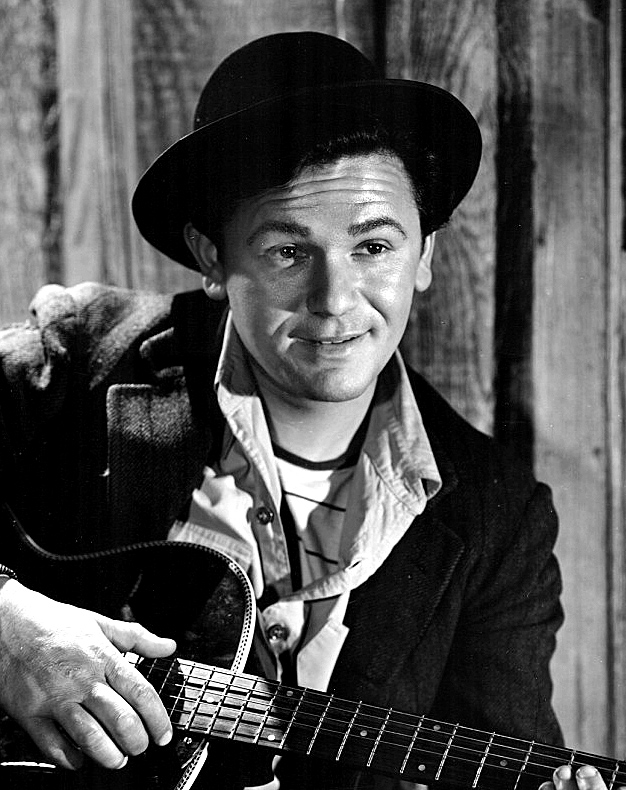
John Garfield (born Jacob Julius Garfinkle; March 4, 1913 – May 21, 1952) was an American actor who played brooding, rebellious, working-class characters.[1] He grew up in poverty in New York City. In the early 1930s, he became a member of the Group Theatre. In 1937, he moved to Hollywood, eventually becoming one of Warner Bros.' stars. He received Academy Award nominations for his performances in Four Daughters (1938) and Body and Soul (1947).

Key Information

Called to testify before the U.S. House Committee on Un-American Activities (HUAC), he denied communist affiliation and refused to "name names", effectively ending his film career. Some have alleged that the stress of this persecution led to his premature death at 39 from a heart attack.[2] Garfield is acknowledged as a predecessor of such Method actors as Marlon Brando, Montgomery Clift, and James Dean.[3]

Early life

[edit]
Garfield as a child

Jacob Garfinkle (Yiddish: יעקבֿ גאַרפֿינקל‎) was born in a small apartment on Rivington Street in Manhattan's Lower East Side, to David and Hannah Garfinkle, Russian Jewish immigrants, and grew up in the heart of the Yiddish Theater District.[4][5] In early infancy, a middle name—Julius—was added, and for the rest of his life those who knew him well called him Julie.[6] His father, a clothes presser and part-time cantor, struggled to make a living and to provide even marginal comfort for his small family. When Garfield was five, his brother Max was born. Their mother never fully recovered from what was described as a "difficult" pregnancy and birth. She died two years later, and the young boys were sent to live with various relatives, all poor, scattered across the boroughs of Brooklyn, Queens and The Bronx. Several of the relatives lived in tenements in a section of East Brooklyn called Brownsville, and there Garfield lived in one house and slept in another. At school, he was judged a poor reader and speller, deficits that were aggravated by irregular attendance. He would later say of his time on the streets, that he learned "all the meanness, all the toughness it's possible for kids to acquire."[7]

"If I hadn't become an actor, I might have become Public Enemy Number One."[7]

His father remarried and moved to the West Bronx, where Garfield joined a series of gangs. Much later, he would recall: "Every street had its own gang. That's the way it was in poor sections ... the old safety in numbers." He soon became a gang leader. At this time, people started to notice his ability to mimic well-known performers, both physically and facially. He also began to hang out and eventually spar at a boxing gym on Jerome Avenue. At some point, he contracted scarlet fever (it was diagnosed later in adulthood), causing permanent damage to his heart and causing him to miss a lot of school. After he was expelled three times and expressed a wish to quit school altogether, his father and stepmother sent him to P.S. 45, a school for difficult children. It was under the guidance of the school's principal—the educator Angelo Patri—that he was introduced to acting.[2] Noticing Garfield's tendency to stammer, Patri assigned him to a speech therapy class taught by a charismatic teacher named Margaret O'Ryan. She gave him acting exercises and made him memorize and deliver speeches in front of the class and, as he progressed, in front of school assemblies. O'Ryan thought he had a natural talent and cast him in school plays. She encouraged him to sign up for a citywide debating competition sponsored by The New York Times. To his own surprise, he took second prize.

With Patri and O'Ryan's encouragement, he took acting lessons at a drama school that was part of The Heckscher Foundation and began to appear in their productions. At one of the latter, he received back-stage congratulations and an offer of support from the Yiddish actor Jacob Ben-Ami, who recommended him to the American Laboratory Theatre.[6] Funded by the Theatre Guild, "the Lab" had contracted with Richard Boleslavski to stage its experimental productions and with Russian actress and expatriate Maria Ouspenskaya to supervise classes in acting. Former members of the Moscow Art Theatre, they were the first proponents of Konstantin Stanislavski's 'system' in the United States, which soon developed into what came to be known as "the Method".[3] Garfield took morning classes and began volunteering time at the Lab after hours, auditing rehearsals, building and painting scenery, and doing crew work. He would later view this time as beginning his apprenticeship in the theater. Among the people becoming disenchanted with the Guild and turning to the Lab for a more radical, challenging environment were Stella Adler, Lee Strasberg, Franchot Tone, Cheryl Crawford and Harold Clurman. In varying degrees, all would become influential in Garfield's later career.

After a stint with Eva Le Gallienne's Civic Repertory Theater and a short period of vagrancy, involving hitchhiking, freight hopping, picking fruit, and logging in the U.S. Northwest, (Preston Sturges conceived the film Sullivan's Travels after hearing Garfield tell of his hobo adventures),[7] Garfield made his Broadway debut in 1932 in a play called Lost Boy. It ran for only two weeks but gave Garfield something critically important for an actor struggling to break into the theater: a credit.

There is a claim that he was a patron of Polly Adler's bordello or brothel in New York.[8]

New York theater and the Group

[edit]

Garfield received feature billing in his next role, that of Henry the office boy in Elmer Rice's play Counsellor-at-Law, starring Paul Muni. The play ran for three months, made an Eastern tour and returned for an unprecedented second, repeat engagement, only closing when Muni was contractually compelled to go back to Hollywood to make a film for Warners. At this point, Warners expressed an interest in Garfield and sought a screen test. He turned them down.

Garfield's former colleagues Crawford, Clurman and Strasberg had launched a new theater collective, calling it simply "the Group", and Garfield lobbied his friends hard to get in. After months of rejection, he began frequenting the inside steps of the Broadhurst Theater where the Group had its offices. Cheryl Crawford noticed him one day and greeted him warmly. Feeling encouraged, he made his request for apprenticeship. Something intangible impressed her, and she recommended him to the other directors. They made no objection.

Clifford Odets had been a close friend of Garfield from the early days in the Bronx. After Odets' one-act play Waiting for Lefty became a surprise hit, the Group announced it would mount a production of his full-length drama Awake and Sing. At the playwright's insistence, Garfield was cast as Ralph, the sensitive young son who pleads for "a chance to get to first base". The play opened in February 1935, and Garfield was singled out by critic Brooks Atkinson for having a "splendid sense of character development". Garfield's apprenticeship was officially over; he was voted full membership by the company. Odets was the man of the moment, and he claimed to the press that Garfield was his "find" and that he would soon write a play just for him. That play would turn out to be Golden Boy, but when Luther Adler was cast in the lead role instead, a disillusioned Garfield began to take a second look at the overtures being made by Hollywood.[4]

Warner Bros.

[edit]
Warner Bros. publicity photo, c. 1938

Garfield had been approached by Hollywood studios before—both Paramount and Warners offering screen tests—but talks had always stalled over a clause he wanted inserted in his contract, one that would allow him time off for stage work. Now Warner Bros. acceded to his demand, and Garfield signed a standard feature-player agreement—seven years with options—in Warners' New York office.[9] Many in the Group were livid over what they considered his betrayal. Elia Kazan's reaction was different, suggesting that the Group did not so much fear that Garfield would fail, but that he would succeed.[7] Jack Warner's first order of business was a change of name to John Garfield.

After many false starts, he was finally cast in a supporting, yet crucial role as a tragic young composer in a Michael Curtiz film titled Four Daughters (1938). After the picture's release, he received very positive notices and a nomination for the Academy Award for Best Supporting Actor. The studio quickly revised Garfield's contract—designating him a star player rather than a featured one—for seven years without options. They also created a name-above-the-title vehicle for him titled They Made Me a Criminal (1939). Before the success of Daughters, Garfield had made a B movie feature called Blackwell's Island (also 1939). Not wanting their new star to appear in a low-budget film, Warners ordered an A movie upgrade by adding $100,000 to its budget and recalling director Michael Curtiz to shoot newly scripted scenes.

Garfield's debut had a cinematic impact difficult to conceive in retrospect. As biographer Lawrence Swindell put it:

Garfield's work was spontaneous, non-actory; it had abandon. He didn't recite dialogue, he attacked it until it lost the quality of talk and took on the nature of speech ... Like Cagney, he was an exceptionally mobile performer from the start of his screen career. These traits were orchestrated with his physical appearance to create a screen persona innately powerful in the sexual sense. What Warners saw immediately was that Garfield's impact was felt by both sexes. This was almost unique.[7]

His "honeymoon" with Warners over, Garfield entered a protracted period of conflict with the studio, with Warners attempting to cast him in crowd-pleasing melodramas such as Dust Be My Destiny (also 1939) and Garfield insisting on quality scripts that would offer challenges and highlight his versatility. The result was often a series of suspensions, with Garfield refusing an assigned role and Warners refusing to pay him. Garfield's problem was shared by any actor working in the studio system of the 1930s: by contract, the studio had the right to cast him in any project they wanted to. But, as Robert Nott explains:

To be fair, most of the studios had a team of producers, directors, and writers who could pinpoint a particular star's strengths and worked to capitalize on those strengths in terms of finding vehicles that would appeal to the public—and hence make the studio money. The forces that prevented him from getting high quality roles were really the result of the combined willpower of the Warner Bros., the studio system in general, and the general public, which also had its own perception of how Garfield (or Cagney or Bogart for that matter) should appear on screen.[10]

A notable exception to this trend was Daughters Courageous (also 1939), a not-quite-sequel (same cast, different story and characters) to his debut film. The film did well critically, but failed to find an audience, the public being dissatisfied that it was not a true sequel (hard to pull off, since the original character Mickey Borden died in the first picture). The director, Curtiz, called the film "my obscure masterpiece".[7]

At the onset of World War II, Garfield immediately attempted to enlist in the armed forces, but was turned down because of his heart condition.[4] Frustrated, he turned his energies to supporting the war effort. He and actress Bette Davis were the driving forces behind the opening of the Hollywood Canteen, a club offering food and entertainment for American servicemen. He traveled overseas to help entertain the troops, made several bond selling tours and starred in a string of patriotic box-office successes including Air Force, Destination Tokyo (both 1943) and Pride of the Marines (1945). He was particularly proud of the last film, based on the life of Al Schmid, a war hero blinded in combat. In preparing for the role, Garfield lived for several weeks with Schmid and his wife in Philadelphia and would blindfold himself for hours at a time.

Gentleman's Agreement (1947)

After the war, Garfield starred in a series of successful films such as The Postman Always Rings Twice (1946) with Lana Turner, Humoresque (also 1946) with Joan Crawford, and Gentleman's Agreement (1947), which was nominated for Best Picture by the Academy. In Gentleman's Agreement, Garfield took a featured, but supporting, part because he believed deeply in the film's exposé of antisemitism in America. He was nominated for the Academy Award for Best Actor for his starring role in Body and Soul (1947). That same year, Garfield returned to Broadway in the play Skipper Next to God. Strong-willed and often verbally combative, Garfield did not hesitate to venture out on his own when the opportunity arose. In 1946, when his contract with Warner Bros. expired, Garfield decided not to renew it and opted to start his own independent production company.

In 1949, he would again star in a Clifford Odets play, The Big Knife.

The Red Scare

[edit]

"I have nothing to hide and nothing to be ashamed of. My life is an open book. I am no Red. I am no 'pink.' I am no fellow traveler. I am a Democrat by politics, a liberal by inclination, and a loyal citizen of this country by every act of my life."

—from his statement read before the HUAC

Long involved in liberal politics, Garfield was caught up in the communist scare of the late 1940s and early 1950s. He supported the Committee for the First Amendment, which opposed governmental investigation of communist activity in Hollywood. When called to testify in 1951 before the House Committee on Un-American Activities, which was empowered to investigate communist infiltration in America, Garfield declined to name Communist Party members or followers, testifying that, indeed, he knew none in the film industry. Garfield rejected communism and, just prior to his death in hopes of redeeming himself in the eyes of the blacklisters, wrote that he had been duped by communist ideology in an unpublished article called "I Was a Sucker for a Left Hook", a reference to Garfield's movies about boxing.[11] However, his forced testimony before the committee had severely damaged his reputation. He was blacklisted in Red Channels and barred from future employment by Hollywood movie studio bosses for the remainder of his career.[2]

With film work scarce because of the blacklist, Garfield returned to Broadway and starred in a 1952 revival of Golden Boy, finally being cast in the lead role denied him years before.

Near the end of his life, in an effort to clear his name, Garfield began drafting an article for Look magazine, in which he would denounce communism without "naming names"; his lawyer advised him to concede he had been “duped" into contributing time and money to communist front groups.[12] He then arranged to meet with the FBI to press his case. At the meeting, however, the FBI representatives showed him a dossier on his wife Roberta (known as "Robbe"), which included her old Communist Party membership card and cancelled checks to events sponsored by the Party. The FBI said it would clear him if he signed a statement betraying Robbe as a Communist. Garfield instead responded with an angry expletive and walked out of the meeting.[12] Writer-director Abraham Polonsky, who worked with Garfield on two films, stated that by refusing to be a "stool pigeon", the actor "defended his street boy's honor and they killed him for it."[13][14]

Death

[edit]
John Garfield's grave in Westchester Hills Cemetery
John Garfield's footstone

On May 9, 1952, Garfield moved out of his New York apartment for the last time, indicating to friends that the separation from his wife Robbe was not temporary. He confided to columnist Earl Wilson that he would soon be divorced. Close friends speculated that it was his wife's opposition to his planned confession in Look magazine that triggered the separation. He heard that a HUAC investigator was reviewing his testimony for possible perjury charges. His agent reported that 20th Century-Fox wanted him for a film called Taxi but would not even begin talks unless the investigation concluded in his favor. Three actor friends, Canada Lee, Mady Christians and J. Edward Bromberg, had all recently died after being listed by the committee.[7]

On the morning of May 20, Garfield, against his doctor's strict orders, played several strenuous sets of tennis with a friend, mentioning the fact that he had not been to bed the night before. He met actress Iris Whitney for dinner and afterward became ill, complaining that he felt chilled. She took him to her apartment, where he refused to let her call a doctor and instead went to bed. The next morning, she found him dead. Long-term heart problems, allegedly aggravated by the stress of his blacklisting, had led to his death at the age of 39.[15]

The funeral was the largest in New York since Rudolph Valentino's, with over ten thousand people crowding the streets outside.[16] The media circus surrounding Garfield's death led to a running joke, "John Garfield Still Dead Syndrome", that parodied the phenomenon; it would later inspire "Generalissimo Francisco Franco is still dead" in the 1970s after Francisco Franco's protracted terminal illness.[17] Garfield's estate, valued at "more than $100,000", was left entirely to his wife. Shortly afterward, the HUAC closed its investigation of Garfield, leaving him in the clear.[citation needed] He was interred at Westchester Hills Cemetery in Hastings-on-Hudson, Westchester County, New York.

Personal life

[edit]

Garfield and Roberta Seidman married in February 1935. She had been a member of the Communist Party.[16] They had three children: Katherine (1938 – March 18, 1945), who died of an allergic reaction; David (1943–1994); and Julie (born 1946), the latter two becoming actors themselves.[4]

In 1954, his widow Roberta married motion picture and labor lawyer Sidney Cohn, who died in 1991; Roberta died in a Los Angeles nursing home in 2004. At the time of Roberta's death, Julie Garfield told the Los Angeles Times that her mother was embittered over Garfield's treatment by studio executives, who she believed, "had used Garfield as a scapegoat to take attention from others in Hollywood because he had 'formed his own production company and they felt threatened by him.'"[18]

Filmography

[edit]

Feature films

[edit]
Year Title Role Director Notes
1938 Four Daughters Mickey Borden Michael Curtiz Film debut
Nominated—Academy Award for Best Supporting Actor
Nominated—New York Film Critics Circle Award for Best Actor
1939 They Made Me a Criminal Johnnie Bradfield Busby Berkeley
Blackwell's Island Tim Haydon William C. McGann
Juarez Porfirio Díaz William Dieterle
Daughters Courageous Gabriel Lopez Michael Curtiz
Dust Be My Destiny Joe Bell Lewis Seiler
Four Wives Mickey Borden Michael Curtiz
1940 Castle on the Hudson Tommy Gordon Anatole Litvak Alternate title: Years Without Days
Saturday's Children Rims Rosson Vincent Sherman
Flowing Gold John Alexander / Johnny Blake Alfred E. Green
East of the River Joseph Enrico "Joe" Lorenzo Alfred E. Green
1941 The Sea Wolf George Leach Michael Curtiz
Out of the Fog Harold Goff Anatole Litvak
Dangerously They Live Dr. Michael "Mike" Lewis Robert Florey
1942 Tortilla Flat Daniel "Danny" Alvarez Victor Fleming
1943 Air Force Sgt. Joe Winocki, Aerial Gunner Howard Hawks
The Fallen Sparrow John "Kit" McKittrick Richard Wallace
Thank Your Lucky Stars Himself (cameo) David Butler
Destination Tokyo Wolf Delmer Daves
1944 Between Two Worlds Tom Prior Edward A. Blatt
Hollywood Canteen Himself (cameo) Delmer Daves
1945 Pride of the Marines Al Schmid Delmer Daves
1946 The Postman Always Rings Twice Frank Chambers Tay Garnett
Nobody Lives Forever Nick Blake Jean Negulesco
Humoresque Paul Boray Jean Negulesco
1947 Body and Soul Charley Davis Robert Rossen Nominated—Academy Award for Best Actor
Nominated—New York Film Critics Circle Award for Best Actor
Gentleman's Agreement Dave Goldman Elia Kazan
Daisy Kenyon Himself (cameo) Otto Preminger Uncredited
1948 Difficult Years Narrator (American version) Luigi Zampa Originally titled Anni difficili
Force of Evil Joe Morse Abraham Polonsky
1949 Jigsaw Loafer with Newspaper (cameo) Fletcher Markle Uncredited
We Were Strangers Tony Fenner John Huston
1950 Under My Skin Dan Butler Jean Negulesco
The Breaking Point Harry Morgan Michael Curtiz
1951 He Ran All the Way Nick Robey John Berry Final film role

Short subjects

[edit]

Documentary

[edit]
  • The John Garfield Story (2003) (available on Warner Home Video's 2004 DVD of The Postman Always Rings Twice)

Radio appearances

[edit]

Awards and nominations

[edit]
Year Award Category Nominated work Result Ref.
1938 Academy Awards Best Supporting Actor Four Daughters Nominated [23]
1947 Best Actor Body and Soul Nominated [24]
1938 National Board of Review Awards Best Acting Four Daughters Won [25]
1938 New York Film Critics Circle Awards Best Actor Nominated
1947 Body and Soul Nominated

Cultural references

[edit]

References

[edit]

Further reading

[edit]
[edit]
Revisions and contributorsEdit on WikipediaRead on Wikipedia
from Grokipedia
John Garfield (born Jacob Julius Garfinkel; March 4, 1913 – May 21, 1952) was an American stage and film actor of Jewish descent, born to Russian immigrant parents on New York City's Lower East Side, who rose from poverty and a childhood stutter to embody brooding, resilient everyman characters in gritty dramas. A product of the experimental Group Theatre, Garfield transitioned to Hollywood in the late 1930s, earning consecutive Academy Award nominations for his debut in Four Daughters (Best Supporting Actor, 1939) and his lead role as a boxer in Body and Soul (Best Actor, 1948), while starring in seminal film noirs and social dramas such as The Postman Always Rings Twice (1946), Force of Evil (1948), and Gentleman's Agreement (1947). His career abruptly halted in 1951 amid the Red Scare, when, despite testifying before the House Un-American Activities Committee and denying Communist Party membership, his reluctance to identify associates—amid prior affiliations with left-leaning causes—resulted in effective blacklisting by major studios, financial ruin, marital strain, and a fatal heart attack at age 39, exacerbated by preexisting cardiac issues and acute stress.

Early Life

Childhood in New York

John Garfield was born on , , in a small apartment on Street in Manhattan's , to Russian Jewish immigrant parents and Hannah (née Margolis) Garfinkle. 's occupation as a clothes-presser provided limited means, leaving the family in persistent poverty amid the dense tenements of the immigrant neighborhood. Hannah Garfinkle endured poor health following a difficult and childbirth, from which she never fully recovered; she died in 1920 when her son was seven years old. The loss exacerbated family instability, as struggled to care for his two young sons, and older brother Max, amid ongoing financial hardship. Following their mother's death, the brothers were separated and shuttled among relatives' homes in neighborhoods like Brownsville, fostering in young a sense of displacement and that shaped his resilient, outsider . He later recalled a strained relationship with his father, whom he resented for the emotional and material neglect during this period. These early experiences of loss and instability amid urban immigrant instilled a brooding intensity that would influence his later persona.

Overcoming Adversity and Initial Acting Interest

Born Jacob Julius Garfinkle on March 4, 1913, in New York City's Lower East Side to Russian Jewish immigrant parents David and Hannah Garfinkle, John Garfield faced early hardship when his mother died in 1920, leaving him orphaned at age seven. He was shuttled between relatives in and before returning to New York at age 14, where he attended public schools amid poverty and family instability. A stutter compounded his challenges, contributing to and frustration in a rough urban environment marked by ethnic tensions and economic strain. Garfield's adolescence involved brushes with delinquency, including street fights and petty thefts like stealing produce from vendors, which led to school suspensions and dropout at age 16 from . Rather than formal education, he took odd jobs such as carpet laying while discovering through dramatics programs at settlement houses, where participation helped him overcome his stutter and redirect rebellious energies constructively. This outlet proved redemptive, transforming personal turmoil into disciplined self-expression and marking as a path to self-improvement amid barriers faced by working-class youth of immigrant stock. In 1932, at age 19, Garfinkle committed to acting full-time by joining Eva Le Gallienne's Civic Repertory Theatre, adopting the stage name Jules Garfield to navigate ethnic prejudices limiting opportunities for performers with overtly Jewish-sounding names in the era's theater scene. This self-taught determination, bypassing traditional training, underscored his gritty ascent, honing raw talent through persistent auditions and ensemble work that emphasized authentic emotional depth over polished convention.

Theater Career

Involvement with the Group Theatre

John Garfield joined the Group Theatre as an apprentice in 1934, after persistent efforts to gain entry into the collective. The Group Theatre had been established in 1931 by directors , , and , with the aim of creating an ensemble dedicated to Stanislavski-influenced realism in portraying American social realities, particularly the struggles of ordinary workers. This approach rejected commercial theater's stylized conventions in favor of psychologically grounded performances that captured the emotional depth of everyday characters amid economic hardship. Garfield's training under Strasberg emphasized techniques, where actors drew on personal experiences to achieve internalized intensity, diverging from declamatory traditions toward raw authenticity. This Method-oriented regimen honed his ability to embody brooding, streetwise protagonists, marking a shift in his from earlier efforts to discipline. The collective's workshops fostered a communal , but also immersed Garfield in an environment rife with ideological fervor, as many members advocated for and drew inspiration from Marxist critiques of . His early roles included ensemble parts in productions like Gold Eagle Guy (1934) and Weep for the Virgins (1935), but he gained notice in Clifford Odets's Awake and Sing! (1935), portraying a young man grappling with family pressures and unfulfilled ambitions during the Great Depression. Garfield also appeared in Odets's Waiting for Lefty (1935), a one-act play depicting a taxi drivers' strike that blurred stage and audience to incite pro-union sentiment, reflecting the Group's alignment with proletarian causes and exposure to communist-influenced ideas prevalent among its playwrights and actors. These works prioritized collective action themes over individual heroism, mirroring the era's labor unrest. The Group's financial precarity—reliant on low-budget productions and sporadic funding—compounded ideological strains, as debates over politicization versus artistic purity led to departures, including Strasberg's in 1937. Garfield's involvement during this formative period shaped his career trajectory, embedding a commitment to socially resonant roles while navigating the ensemble's activist undercurrents, such as support for strikes and anti-fascist efforts. Despite these challenges, the experience solidified his reputation within New York's progressive theater scene by 1936.

Broadway Successes and Method Acting Innovations

Garfield achieved his breakthrough on Broadway with the role of Ralph Berger in ' Awake and Sing!, which premiered on February 19, 1935, at the and ran for 184 performances. In the play, he portrayed a young man trapped in a struggling Jewish immigrant family during the , voicing raw frustration and a desperate plea for personal autonomy amid economic despair—"a chance to get to first base." This performance established Garfield's signature of the brooding, resilient working-class figure harboring inner vulnerability, drawing from the Group's emphasis on authentic emotional depth. Though Odets initially crafted the lead role of Joe Bonaparte in Golden Boy (1937) with Garfield in mind—a violinist forsaking for the brutal allure of boxing, embodying ambition's corrosive moral toll—Garfield did not originate it, as director opted for . He finally assayed the part in the 1952 Broadway revival at the Rialto Theatre, opening March 12, which showcased his physical dynamism and psychological nuance in depicting Bonaparte's descent into corruption for success. The role, blending athletic intensity with ethical turmoil, reinforced his reputation and had earlier piqued Hollywood interest during his Group Theatre tenure. Garfield's contributions to acting technique stemmed from his immersion in the Group Theatre's adaptation of Konstantin Stanislavski's system, predating the formal "Method" codified by Lee Strasberg at the Actors Studio. He pioneered a naturalistic style marked by understated vocal delivery, spontaneous physicality, and immersion in character psychology—contrasting the era's bombastic, gesture-heavy conventions—allowing performers to channel personal adversities like urban poverty into credible portrayals of alienation. In a 1945 lecture to the Actors' Laboratory Theatre, comprising Group alumni, Garfield advocated this approach, influencing post-war actors by prioritizing sensory recall and behavioral realism over artifice. Critics lauded Garfield's work for capturing the existential discontent of Depression-era city dwellers, with his portrayals in Odets' proletarian dramas evoking the stifled aspirations and gritty resilience of New York's underclass; reviewers highlighted how his intensity, forged from real-life hardships including poverty and speech impediments, lent visceral authenticity to themes of thwarted individualism. This acclaim solidified his status as a transformative stage presence, bridging ensemble realism with star appeal.

Film Career

Transition to Hollywood and Warner Bros. Era

Following Broadway successes, Garfield signed a long-term contract with Warner Bros. in 1938 after initially resisting Hollywood offers and undergoing a screen test. His film debut came in Four Daughters (1938), directed by Michael Curtiz, where he portrayed the troubled, hot-tempered musician Mickey Borden in a supporting role that stole scenes from leads like the Lane sisters, earning him widespread praise and an Academy Award nomination for Best Supporting Actor. Garfield's early Warner Bros. films solidified his image as a brooding , drawing on his New York streetwise intensity to counter the studio's polished aesthetic. In Juarez (1939), he played General , a key supporter of Mexican leader amid imperial intrigue. That same year, Dust Be My Destiny (1939) featured him as Joe Bell, a vagrant ex-convict escaping chain gangs and societal constraints with Priscilla Lane's character, showcasing his raw emotional depth in tales of underdogs defying fate. These roles leveraged his Group Theatre-honed Method techniques, setting him apart from more conventional leading men. Under the studio system, Garfield chafed against typecasting in gritty, working-class parts and salary constraints tied to his contract, repeatedly refusing assigned scripts that he deemed unsuitable, resulting in over a dozen suspensions without pay between 1939 and 1946. This friction exemplified broader Golden Age Hollywood dynamics, where actors had limited leverage against powerful studios enforcing rigid personas for commercial viability. Garfield received a 4-F draft classification exempting him from World War II service due to a longstanding heart murmur from childhood rheumatic fever, allowing him to continue acting in support of the war effort. He starred in patriotic productions like Air Force (1943), portraying crewman Ward Corbett in Howard Hawks's tribute to the U.S. Army Air Forces' B-17 bombers and their combat missions.

Major Roles and Critical Acclaim

Garfield achieved stardom in the mid-1940s through roles that showcased his intense, psychologically complex portrayals, drawing on the naturalistic style honed from his Group Theatre experience. In The Postman Always Rings Twice (1946), directed by , he starred as Frank Chambers, a drifter entangled in a passionate affair and murder plot with Lana Turner's Cora Smith, embodying the doomed intensity of protagonists. The film received strong critical praise, with critic lauding the acting and direction for their taut execution of James M. Cain's novel. The following year, Garfield delivered a career-defining performance in Body and Soul (1947), directed by , as Charlie Davis, a Jewish boxer who rises through and moral compromise in the ring. His raw, visceral depiction of ambition and self-destruction earned him an Award nomination for , highlighting his ability to infuse roles with authentic emotional depth. Critics noted the film's departure from formulaic sports dramas, crediting Garfield's intensity for elevating the narrative's . In (1947), directed by , Garfield portrayed Dave Goldman, a Jewish war veteran confronting subtle anti-Semitism, in a supporting role that complemented Gregory Peck's lead investigation into prejudice. The film, which won Oscars for Best Picture and Best Director, praised Garfield's understated realism amid post-war examinations of social issues, though his performance did not receive a personal nomination. These roles contributed to box-office successes and acclaim for Garfield's naturalistic acting, which shifted Hollywood toward more immersive, character-driven cinema by prioritizing internal conflict over theatrical exaggeration.

Post-War Films and Independent Ventures

Following the conclusion of his long-term contract with in 1946, Garfield pursued freelance opportunities to expand beyond studio-controlled roles. In (1946), directed by , he played Paul Boray, a driven violinist from a working-class background whose talent attracts a wealthy patroness portrayed by . The film depicted Boray's navigation of social barriers and romantic entanglements, earning Garfield praise for his intense portrayal of ambition tempered by vulnerability. This production marked one of his initial post-contract efforts, grossing approximately $4 million domestically against a budget under $2 million. Garfield's turn toward independent cinema intensified with (1948), a low-budget noir directed by and distributed by . As Joe Morse, an ambitious lawyer facilitating a numbers racket to consolidate power under a corrupt boss, Garfield embodied a whose ethical compromises blurred lines between villainy and redemption. The film's $1.3 million budget reflected its modest independent origins, yet critics lauded its ambiguity and of systemic in urban vice economies. Polonsky's script, adapted from Ira Wolfert's novel Tucker's People, emphasized causal chains of greed eroding familial bonds, with Garfield's performance highlighting the 's internal rationalizations. In (1949), directed by for , Garfield portrayed Tony Fenner, an American engineer aiding Cuban revolutionaries in a plot to assassinate Gerardo Machado in 1933. Set against historical unrest, the film featured tense sequences of tunnel-digging and infiltration, underscoring themes of resistance to . Despite a cast including and , it underperformed commercially, recouping only a fraction of its costs amid mixed reviews criticizing its pacing. The project's emphasis on action aligned with Garfield's interest in narratives challenging power structures, though its box-office failure exemplified risks of edgier, non-formulaic storytelling. Garfield's selectivity grew as he declined numerous studio offers that perpetuated his tough-guy , prioritizing scripts allowing nuanced psychological depth over guaranteed commercial vehicles. This stance reflected broader tensions in Hollywood, where actors balanced artistic autonomy against pressures and studio demands for predictable profitability. His final major film, (1951), directed by John Berry for , captured this era's unease through Nick Robey, a robber whose botched heist leads to hiding in ' family home, fostering and moral erosion. Garfield's raw depiction of escalating desperation, amid a $200,000 production, underscored the causal fallout of crime in a tightening social net.

Political Associations and Controversies

Ties to Left-Wing Groups and Causes

Garfield's early involvement with the Group Theatre, beginning in 1932, immersed him in an ensemble known for its Marxist-influenced aesthetics and focus on proletarian themes amid the . Under leaders like , , and , the company staged works such as Clifford Odets's Awake and Sing! (1935), in which Garfield starred, portraying characters grappling with economic hardship and class antagonism in ways that echoed socialist critiques of . These productions aligned with the Group's ethos of collective , drawing from Stanislavski techniques adapted to American labor struggles, though Garfield's participation emphasized artistic innovation over explicit ideology. He extended support to international leftist causes, including aid for the Spanish Republican Loyalists during the Civil War (1936–1939), participating in Hollywood fundraisers that raised awareness and funds for anti-fascist efforts often backed by communist-affiliated networks. Such committees, prevalent among actors like those in the , funneled resources to the Loyalist government, which included Soviet-backed forces, though Garfield's contributions reflected broader sympathy for democratic rather than partisan allegiance. Similar engagements included endorsements of mobilization groups during , but these waned as U.S.-Soviet alliances fractured postwar. Personal ties linked Garfield to figures in Hollywood's left-leaning circles, such as playwright , a Group Theatre collaborator whose works infused class warfare narratives and who later cooperated with investigators by identifying associates. Attendance at progressive rallies and affiliations with organizations like the Hollywood Writers Mobilization positioned him amid networks the FBI monitored for communist sympathies, yet archival records, including declassified files, yield no evidence of formal membership. FBI investigations in the late documented cells within the industry exerting influence on scripts and unions to embed pro-Soviet messaging, heightening scrutiny of actors like Garfield whose associations—common in Depression-era entertainment—coincided with espionage risks amid shifting geopolitical threats.

HUAC Testimony and Refusal to Cooperate

On April 23, 1951, John Garfield testified before the House Un-American Activities Committee (HUAC) as part of its inquiry into alleged Communist influence in the American entertainment industry. He explicitly denied under oath ever having been a member of the Communist Party USA (CPUSA), stating, "I am not now and never have been a member of the Communist Party." Garfield further denied knowing any Communists personally, including in theater or film circles, and refused to identify associates when pressed, maintaining that he lacked such knowledge rather than invoking the Fifth Amendment privilege against self-incrimination—a tactic employed by many uncooperative witnesses. This approach distinguished his appearance from both "friendly" witnesses who named alleged Party members and those who outright defied the committee. During the session, Garfield affirmed his opposition to Communism, declaring, "I have nothing to say about the Communist Party except that I don't like it," while expressing support for free speech and the democratic process. He evaded direct answers on potential radicals in the Group Theatre, claiming ignorance of their political affiliations despite having been a prominent member of that collective in . Garfield positioned himself as a loyal American uninterested in subversion, emphasizing his service in bond drives and rejection of totalitarian ideologies. The , however, viewed his responses skeptically, as prior from defectors and informants had documented CPUSA cells directing propaganda efforts in Hollywood, including through front organizations and sympathetic artists—contexts in which Garfield's past affiliations placed him, even if he disavowed personal involvement. Garfield's testimony drew polarized interpretations. Supporters, often aligned with First Amendment advocates, praised it as a principled refusal to engage in what they deemed inquisitorial overreach, highlighting his in denials without betrayal. Critics, including committee members and anti-Communist witnesses like , contended that his professed ignorance shielded potential infiltrators, undermining efforts to expose documented Soviet-directed networks in the industry that aimed to shape via films and cultural output. This perspective gained empirical validation from declassified records, such as Venona decrypts, confirming extensive CPUSA and influence operations in the U.S. during the era, though mainstream narratives influenced by academic and media biases have often downplayed such threats in favor of portraying HUAC probes as primarily McCarthyite excess.

Blacklisting, Industry Response, and Broader Context of Communist Infiltration

Garfield encountered swift professional ostracism after his May 1951 (HUAC) appearance, as studios including Warner Bros. refused new contracts and abandoned projects such as a planned adaptation of The Thief to evade association with suspected sympathizers. This exclusion extended to radio and television, rendering him unemployable in mainstream entertainment despite his denials of (CPUSA) membership and assertions of loyalty to the U.S. The industry's Waldorf Statement of November 1947 had already formalized such responses, with studio heads pledging not to hire those refusing to affirm , a policy applied rigorously post-1951 hearings. The resulting unemployment precipitated financial collapse; by early 1952, Garfield faced mounting debts, including back taxes exceeding $100,000 owed to the from pre-blacklist earnings, forcing reliance on sporadic stage work and personal loans while public scrutiny intensified. Family accounts attributed his May 21, 1952, death at age 39 partly to blacklist-induced stress aggravating , yet medical records indicate congenital heart defects dating to , compounded by documented habits like heavy , as the decisive factors rather than alone. The blacklist addressed tangible Soviet penetration risks, substantiated by Venona Project decryptions of 1943–1948 cables revealing CPUSA apparatuses aiding recruitment across U.S. institutions, including cultural influencers who funneled propaganda and intelligence. Garfield's Fifth Amendment invocations shielded potentially subversive networks, prioritizing fraternal bonds over disclosure in a context where CPUSA directives mirrored Moscow's, as evidenced by synchronized shifts in party lines post-1939 Nazi-Soviet Pact. Hollywood's schism highlighted divergent strategies: cooperators like , Screen Actors Guild president in 1947, testified to communist tactics fomenting strikes and ideological infiltration, supporting purges to safeguard industry autonomy from foreign-directed agitation. In contrast, blacklist opponents often downplayed CP cells' wartime orchestration of films like Mission to Moscow (1943) and The North Star (1943), which propagated Soviet exceptionalism and trial exonerations to align U.S. opinion with Allied necessities, later recut amid revelations of Stalinist purges. This oversight ignored how such efforts, driven by party members in writers' guilds, compromised narrative integrity for geopolitical ends verifiable through declassified archives.

Personal Life

Marriage, Family, and Domestic Relations

John Garfield married his childhood sweetheart, Roberta Seidman, in 1935 shortly before his 22nd birthday. The couple, both from New York City's Jewish immigrant communities, established a that offered relative stability during Garfield's rise in theater and film. They had three children: daughter , born in 1938, who died at age six in March 1945 from an allergic reaction; son , born in 1943; and daughter Julie, born in 1946. The Garfields maintained ties to their Jewish cultural roots, with Roberta providing domestic grounding that contrasted with the excesses often associated with Hollywood lifestyles. Family life emphasized resilience, as evidenced by the couple's endurance through personal tragedies like Katherine's early death, which deeply affected Garfield. Despite occasional reports of marital strain in Garfield's later years, no occurred, and the union lasted until his death in 1952, outlasting many short-lived relationships in the entertainment industry of the era. Roberta Garfield's role as a devoted partner underscored the family's cohesion amid professional demands.

Extramarital Affairs and Health Issues

Garfield engaged in extramarital affairs during his marriage to Roberta Seidman, contributing to marital strains that culminated in separation by 1951. His daughter Julie later acknowledged his infidelity in interviews, noting relationships with co-stars including . A notable rumored affair occurred with while filming The Postman Always Rings Twice in 1945–1946, confirmed by Garfield's friend and director Vincent Sherman, who described Turner as Garfield's "great love" despite the brevity of the romance. These liaisons, common among Hollywood actors of the era, aligned with Garfield's on-screen persona of brooding rebels but reflected personal indiscretions rather than mere professional proximity. Garfield's death on May 21, 1952, at age 39 in the New York apartment of actress Iris Whitney, a friend with whom he had dined earlier that evening, intensified speculation about romantic involvement. Whitney discovered him deceased after he complained of chills and refused medical attention; the medical examiner's autopsy attributed the cause to from a longstanding cardiac condition, ruling out suspicious circumstances. No evidence substantiated an active with Whitney, though the circumstances amplified gossip amid his separation from Seidman. Garfield's health vulnerabilities stemmed from rheumatic fever contracted in his early thirties during travel, which permanently damaged his heart valves and exempted him from World War II service. He also suffered a childhood stutter, managed through speech therapy and acting exercises that built his career but hinted at deeper emotional strains from a turbulent youth in New York's Lower East Side. These issues were aggravated by heavy , a habit that worsened his coronary risks, alongside moderate alcohol use typical of his social circle; no records indicate harder or excessive beyond occasional partying. While professional stresses played a role, Garfield's premature decline underscored self-destructive elements—poor self-care, chain-smoking, and irregular habits—that compounded his congenital weaknesses, humanizing his tough-guy image without excusing external attributions alone. findings emphasized organic over acute external triggers, aligning with patterns seen in peers who ignored early warnings.

Decline and Death

Final Projects and Professional Isolation

Following his April 23, 1951, testimony before the , in which he refused to name associates despite denying personal communist affiliation, John Garfield encountered immediate and total exclusion from Hollywood studio productions. This blacklist enforcement left him without any major film roles from mid-1951 onward, a sharp departure from his prior output of over 30 features in the preceding decade, underscoring the mechanism's design to sideline non-cooperative witnesses. His final screen project, (1951), had been completed and released in June under independent auspices prior to the testimony, involving blacklisted collaborators like director John Berry. With film avenues closed, Garfield sought a stage comeback, starring as Joe Bonaparte in a Broadway revival of Clifford Odets's Golden Boy—the lead role originally denied him in 1937—which opened March 12, 1952, and closed after 25 performances on April 6, amid limited audience draw and persistent industry ostracism. Financial pressures mounted as savings dwindled, prompting Garfield to draft a confessional article for Look magazine in early 1952, wherein he aimed to detail his purported duping by communist fronts and affirm loyalty to the U.S., per advice from legal counsel to rehabilitate his standing. The piece went unpublished, reportedly due to spousal opposition and his sudden death, reflecting deeper domestic rifts exacerbated by the scandal. This era of professional isolation contrasted Garfield's earlier tenure in vibrant, collaborative ensembles and independent ventures, now reduced to aborted theatrical bids and testimonial efforts; pre-existing heart ailments, stemming from childhood , further curtailed prospects like overseas work by restricting travel. The absence of viable projects validated the blacklist's causal impact in enforcing compliance through economic deprivation.

Circumstances of Death

John Garfield died on May 21, 1952, at age 39, of a heart attack while in the apartment of actress Iris Whitney at 3 West, New York City. The previous evening, Garfield had dinner with Whitney at Luchow's Restaurant, after which he became ill and complained of feeling chilled. Whitney escorted him to her apartment, where he refused her offer to summon a doctor before retiring to bed; he was found dead sometime after midnight. The medical examiner attributed the death to a cardiac condition, ruling out any suspicion of foul play. Garfield's passing came during a period of career isolation due to industry blacklisting, leading some contemporaries and later accounts to link it directly to the resulting stress. However, medical records and biographical details indicate a longstanding heart condition that antedated the political controversies, compounded by factors including smoking and cumulative personal strains. His funeral drew thousands of mourners to Temple Beth-El on the Upper West Side, marking the largest such gathering for an actor in New York since Rudolph Valentino's in 1926, amid press narratives emphasizing his defiance against perceived persecution.

Legacy

Influence on Acting Techniques

John Garfield advanced screen acting by adapting Method techniques—rooted in Stanislavski's system and refined through his training with Lee Strasberg at the Group Theatre—to the cinematic medium, favoring internalized emotional processes over exaggerated mannerisms. This shift enabled portrayals of psychological complexity, where subtle facial tensions and restrained gestures conveyed inner turmoil, particularly effective in close-ups that demanded intimacy absent in stage work. His 1938 film debut in Four Daughters exemplified this, earning an Academy Award nomination for a performance that blended streetwise grit with vulnerable humanity, predating similar breakthroughs by later Method practitioners. Garfield's urban everyman characterizations humanized tough-guy archetypes, evolving from the overt bravado of actors like James Cagney toward layered depictions of moral ambiguity and emotional restraint, as seen in films like Body and Soul (1947) and Force of Evil (1948). This technique influenced successors including Marlon Brando and James Dean through the Strasberg lineage at the Actors Studio, with Garfield acknowledged as their stylistic predecessor for injecting realistic intensity into Hollywood's studio-bound narratives. The 2025 Karlovy Vary International Film Festival retrospective of his work highlighted this legacy, positioning him as a foundational figure bridging noir realism and Method evolution on screen. Critics have noted limitations in Garfield's approach, such as an over-reliance on brooding demeanor that sometimes yielded formulaic intensity across roles, constraining versatility despite its innovative psychological focus. Nonetheless, his contributions marked a causal pivot in paradigms, prioritizing authentic behavioral over performative artifice and enabling deeper audience with flawed protagonists.

Reassessments and Cultural Depictions

In historical reassessments, particularly those influenced by post-1960s left-leaning narratives in academia and media, John Garfield is frequently portrayed as an innocent victim of McCarthy-era overreach, with his attributed solely to his Jewish heritage and liberal associations rather than any substantive ties to communist activities. However, of his April 23, 1951, HUAC testimony reveals that Garfield's strategic refusal to name associates—despite denying personal membership and affirming anti-totalitarian views—directly triggered studio decisions to sever ties, as and others prioritized avoiding risks amid documented Soviet espionage efforts in Hollywood, including front organizations like the Hollywood Ten's affiliates. This perspective, often downplayed in mainstream accounts due to institutional biases favoring sympathy for perceived underdogs over scrutiny of infiltration, underscores Garfield's agency in a self-escalating professional isolation. Biographer Larry Swindell, in Body and Soul: The Story of John Garfield (1975), characterizes the actor as principled yet politically naive, crediting his raw talent for elevating working-class roles while lamenting how ideological entanglements eroded his judgment amid the era's polarized unions and cultural battles. Recent exhibits shift focus toward artistry: the International Film Festival's July 2025 retrospective highlights Garfield's naturalistic screen presence in pre-blacklist films, deliberately framing it as apolitical amid contemporary geopolitical tensions. Similarly, the New-York Historical Society's "Blacklisted: An " exhibit (June 13–November 2, 2025) contextualizes Garfield within broader dynamics, including FBI-flagged "subversive" messaging in his 1947 film , though empirical evidence ties his legacy more to verifiable on-screen intensity than posthumous symbolism. Culturally, Garfield endures as a blacklist archetype in media, listed among persecuted talents in the 1976 film The Front, which dramatizes fronting for blacklisted writers and evokes his fate as emblematic of creative suppression. He represents heroism to free-expression proponents who valorize non-cooperation as principled defiance, yet serves as a cautionary tale for anti-subversion viewpoints emphasizing the blacklist's roots in countering genuine ideological threats, such as CPUSA recruitment in Group Theatre circles where Garfield trained. His Jewish outsider persona—rooted in Bronx immigrant roots and stuttering youth—resonates in modern retellings, but substantive acclaim derives from 1938–1950 output, with over 30 features showcasing brooding authenticity before political fallout halted production.

Career Overview

Filmography

John Garfield debuted in feature films with Four Daughters (1938), directed by Michael Curtiz, playing the brooding musician Mickey Borden opposite the Lane sisters in a family drama that marked his breakthrough role. His subsequent early credits included They Made Me a Criminal (1939), directed by Busby Berkeley, as a boxer on the run with the Dead End Kids in a crime drama; Blackwell's Island (1939), directed by William McGann, portraying a reporter infiltrating a prison in this action-oriented prison film; and Juarez (1939), directed by William Dieterle, as Mexican leader Porfirio Díaz alongside Paul Muni and Bette Davis in a historical biopic. Further 1939 releases encompassed (directed by ), reprising a similar family dynamic role; Dust Be My Destiny (directed by Lewis Seiler), as a convict falling in love amid a road drama with Priscilla Lane; and Four Wives (directed by ), continuing his Mickey Borden character in a sequel romance. In 1940, Garfield starred in (directed by ), a prison escape drama remake; Saturday's Children (directed by Vincent Sherman), depicting economic struggles in a domestic drama; Flowing Gold (directed by ), as an oil driller in an ; and East of the River (directed by ), playing a reformed in a crime story.
YearTitleRole DescriptionDirectorNotable Co-StarsGenre
1941Brutish sailor George Leach rebelling against a tyrannical captain, Adventure drama
1941Out of the FogRuthless extortionist Goff terrorizing a waterfront community, Crime thriller
1942Free-spirited Portuguese fisherman Danny in a slice-of-life tale, Comedy-drama
1943Tough gunner Sgt. Joe Winocki in a B-17 crew during WWII, Harry CareyWar action
1943Seaman "Wolf" aboard a mission, Alan HaleWar drama
1944Between Two WorldsSuicide victim Tom Smith reincarnated in a Edward A. Blatt, Fantasy drama
1944Tortured refugee John McKittrick hunting NazisRichard Wallace, Spy thriller
1945Blind Marine recounting Pacific battles, Biographical war drama
1946The Postman Always Rings TwiceDrifter Frank Chambers entangled in murder and adultery, crime
1946Ambitious violinist Paul Boray in a stormy mentor relationship, Romantic drama
1947Body and SoulPrize-fighter Charley Davis rising through corruption, Sports drama
1947Jewish journalist Dave Goldman exposing undercover, Social drama
1948Ambitious lawyer Joe Morse drawn into criminal racketsBeatrice Pearson,
1949Revolutionary Tony infiltrating Cuba for an uprising, Adventure thriller
1950Under My SkinJockey Dan Butler fleeing gambling debts with his son, Sports drama
1950The Breaking PointCharter boat captain Harry Morgan smuggling and facing betrayal, Crime drama
1951Fugitive killer Nick Robey hiding out and taking a John Berry, thriller
Garfield had no credited short subject appearances beyond occasional wartime efforts, such as uncredited cameos in training films, which were not released commercially. His film output ceased after 1951 due to industry amid HUAC investigations.

Awards and Nominations

John Garfield received two Academy Award nominations for his film performances, both reflecting recognition from industry peers for his naturalistic acting style amid competitors who often embodied more conventional Hollywood archetypes. For his screen debut in Four Daughters (1938), he was nominated for Best Actor in a Supporting Role at the in 1939, though Walter Brennan won for . His portrayal of the brooding, street-smart Mickey Borden marked him as a breakout talent, earning acclaim for authenticity derived from his own working-class background rather than polished studio training. In 1948, at the 20th Academy Awards, Garfield received a Best Actor nomination for Body and Soul (1947), depicting a boxer's moral descent, but lost to Ronald Colman in A Double Life. This nod, alongside competitors like Gregory Peck for Gentleman's Agreement (in which Garfield also appeared as a supporting character), underscored peer esteem for his raw intensity over more mannered performances prevalent in the era. He additionally placed second in the New York Film Critics Circle Awards for Best Actor that year for the same role, further evidencing critical regard independent of Oscar outcomes. Garfield secured no competitive , a outcome attributable in part to the Academy's historical preference for established stars and less gritty fare during his peak years, yet his nominations signified validation from voting members who valued substantive character work. Posthumously, on February 8, 1960, he was honored with a star on the at 7065 for his motion picture contributions, cementing his enduring industry legacy despite a truncated career.

Radio and Other Media Appearances

Garfield frequently appeared on radio during the , leveraging his distinctive gravelly voice and method-acting style to portray brooding characters in dramatic anthologies and adaptations. These broadcasts, often on networks like and , highlighted his versatility beyond cinema, with roles emphasizing emotional depth and intensity. He contributed to wartime efforts through patriotic programs, such as the Cavalcade of America episode "The Stolen General" on March 5, 1940, which dramatized historical events to boost morale. Similarly, in the series, he starred in "The People with Light Coming Out of Them" on February 23, 1941, an original play advocating for democratic ideals amid global conflict. A staple of his radio work were adaptations on , where he reprised film roles to wide audiences. Notable examples include "Dust Be My Destiny" on April 14, 1941, opposite , recreating his breakout prison-break drama; "Pride of the Marines" in 1945 with , drawing from his portrayal of a blinded war hero; and "Body and Soul" on November 15, 1948, alongside , capturing the boxer's gritty rise and fall. Garfield also ventured into thriller formats on Suspense, delivering tense performances in original scripts. In "Reprieve," aired May 10, 1945, he played a gangster evading capture, showcasing rapid pacing and moral ambiguity; this was followed by "Death Sentence" on November 4, 1948, where his character faces a mobster's ultimatum, emphasizing psychological strain. His appearances extended to variety shows, including a guest spot on Bing Crosby's Kraft Music Hall on June 4, 1942, blending banter with dramatic sketches.
ProgramEpisodeDate
Cavalcade of AmericaThe Stolen GeneralMarch 5, 1940
The People with Light Coming Out of ThemFebruary 23, 1941
Dust Be My DestinyApril 14, 1941
Kraft Music HallGuest with June 4, 1942
ReprieveMay 10, 1945
1945
Theatre Guild on the AirThey Knew What They WantedMay 19, 1946
Death SentenceNovember 4, 1948
Body and SoulNovember 15, 1948
Postwar, his radio output diminished amid Hollywood blacklist pressures and film commitments, with fewer than a dozen documented broadcasts after compared to the wartime peak. Efforts in emerging television were negligible; no pilots or series materialized before his death in 1952, reflecting the medium's nascent stage and his focus on stage revivals like a brief 1947 Broadway attempt at Golden Boy, though these yielded limited radio tie-ins.

References

Add your contribution
Related Hubs
User Avatar
No comments yet.