Recent from talks
All channels
Be the first to start a discussion here.
Welcome to the community hub built to collect knowledge and have discussions related to July 1973.
Nothing was collected or created yet.
July 1973
View on Wikipediafrom Wikipedia
| << | July 1973 | >> | ||||
|---|---|---|---|---|---|---|
| Su | Mo | Tu | We | Th | Fr | Sa |
| 1 | 2 | 3 | 4 | 5 | 6 | 7 |
| 8 | 9 | 10 | 11 | 12 | 13 | 14 |
| 15 | 16 | 17 | 18 | 19 | 20 | 21 |
| 22 | 23 | 24 | 25 | 26 | 27 | 28 |
| 29 | 30 | 31 | ||||
The following events occurred in July 1973:
- The United States Drug Enforcement Administration (DEA) was created within the U.S. Department of Justice to enforce the Controlled Substances Act, merging the Bureau of Narcotics and Dangerous Drugs and the Office of Drug Abuse Law Enforcement.
- U.S. President Richard M. Nixon signed legislation including the Case–Church Amendment, prohibiting funding for the resumption of all U.S. military activity in South Vietnam, North Vietnam, Laos and Cambodia, without Congressional approval.[1] The only remaining operation in Indochina was the U.S. Air Force bombing of Cambodia, which was allowed to continue until August 15, 1973. The original amendment, attached to a funding bill, had been passed by the U.S. House of Representatives 325 to 86, on June 26, and by the U.S. Senate 73 to 16 on June 29.
- The British Library was established.[2]
- The deputy military attaché of Israel's Embassy in the U.S., Colonel Yosef Alon, was shot five times in the chest and killed as he and his wife were returning to their home in Chevy Chase, Maryland.[3]
- Loyola Marymount University formally came into existence in the Los Angeles suburb of Westchester, California, with the merger of all-male Loyola University and the all-female Marymount California University. The merger had been announced on February 9.[4]
- Match Game '73, the first and most successful revival of the NBC game show, made its debut on CBS. As with the NBC version, Gene Rayburn, was the host.[5] Rather than having two celebrity panelists, the show had six, starting with Richard Dawson, Vicki Lawrence, Anita Gillette, Jack Klugman, Michael Landon and Jo Ann Pflug, and had been scheduled to start on June 25, but had been preempted by the testimony of John Dean before the Senate Watergate Committee.[6] It would soon become the highest-rated daytime TV show on U.S. television.
- Died:
- Betty Grable, 56 American film actress and pin-up girl of World War II, died of lung cancer.[7][8]
- Swede Savage, 36, U.S. race car driver, died of injuries sustained in a crash during the Indianapolis 500 race in May.[9]
- The U.S. Army and U.S. Navy dismissed all charges that had been brought against seven former American prisoners of war in court-martial proceedings. The enlisted men — five Army and two Marines — had been charged with collaboration with the enemy. In addition to the lack of more than hearsay and circumstantial evidence, the servicemen had spent an average of five years confinement. This came seven days after the June 26 suicide of an eighth accused person.[10]
- David Bowie "retired" his Ziggy Stardust stage persona in front of a shocked audience at the Hammersmith Odeon at the end of his British tour.[11]
- Born:
- Saumya Joshi, Indian actor, playwright and director in Gujarati theater; in Ahmedabad, Gujarat state
- Patrick Wilson, American stage and TV (actor); in Norfolk, Virginia
- Died:
- Ellen Kaarma, 45, Estonian Soviet film and stage actress
- Karel Ančerl, 65, Czech orchestral conductor[12]
- The Treaty of Chaguaramas was signed by representatives of the nations of Barbados, Guyana, Jamaica, and Trinidad and Tobago to create CARICOM, the Caribbean Community, an economic union to replace the Caribbean Free Trade Association (CARIFTA).
- Camilla Shand, then 25 and destined to become the Queen consort of the United Kingdom in 2022, married for the first time, in a wedding to British Army Major Andrew Parker Bowles, in a ceremony attended by the Queen Mother and by Princess Anne.[13] After her divorce from Parker Bowles in 1995, she would marry Prince Charles, the future King Charles III of the United Kingdom, in 2005.
- Don Powell, the drummer of British pop group Slade, was critically injured in a car crash in Wolverhampton and his 20-year-old girlfriend was killed. Powell recovered after surgery, and was able to join the band ten weeks later in New York, to record "Merry Xmas Everybody".
- Born: GACKT (stage name for Gakuto Oshiro), Japanese musician, singer, songwriter, record producer and actor; in Okinawa.[14]
- Died: Helen Ogston, 91, British suffragette
- Grégoire Kayibanda, the first President of Rwanda, was overthrown 11 years after the central African nation had become independent, in a coup d'état led by his Minister of Defense, Juvénal Habyarimana.[15]
- The Isle of Man Post began to issue its own postage stamps.
- In the U.S., 11 firefighters were killed in a catastrophic explosion of boiling liquid expanding vapor in Kingman, Arizona, following a fire that broke out as propane was being transferred from a railroad car to a storage tank. This explosion has become a classic incident, studied in fire department training programs worldwide.[16][17]
- Guerrillas in Rhodesia kidnapped 292 students and staff from the remote St. Albert's Mission, a Catholic school established by German Jesuits, and were pursued by Rhodesian troops and local trackers and hunters, to the border with Portuguese Mozambique, 21 miles (34 km) away. In the confusion of the chase, 214 of the captives escaped, but 46 students and 32 adults were taken into Mozambique.[18]
- Born: Róisín Murphy, Irish singer and songwriter; in Arklow, County Wicklow

- The Flemish Cultural Community (Vlaamse Gemeenschap) of Belgium, located in Flanders, the northern one-third of the European kingdom, adopted an official flag and anthem, as well as setting July 6 as an annual holiday. The anthem, De Vlaamse Leeuw ("The Flemish Lion") had been written by Hippoliet Van Peene in 1847.
- The James Bond film Live and Let Die was released in British cinemas (after premiering in the United States on June 27, 1973), with the spy played by 45-year-old The Saint star Roger Moore.[19]
- Died:
- Joe E. Brown, 81, American comedian and character actor on film[20]
- Otto Klemperer, 88, German conductor and composer [21]
- U.S. President Nixon sent a letter to U.S. Senator Sam Ervin the chairman of the U.S. Senate Watergate Investigation Committee, writing "In this letter I shall state the reasons why I shall not testify before the committee or permit access to Presidential papers. I want to strongly emphasize that my decision, in both cases is based on my constitutional obligation to preserve intact the powers and prerogatives of the Presidency and not upon any desire to withhold information relevant to your inquiry", and went on to justify his position.[22] Nixon agreed five days later to meet with Senator Ervin at Ervin's request to avoid "a fundamental constitutional confrontation between the Congress and the Presidency."[23]
- The Afrikaner Weerstandsbeweging (AWB or Afrikaner Resistance Movement), a white nationalist terrorist organization in South Africa, was founded by former police officer Eugène Terre'Blanche and six other Afrikaners at a meeting in Heidelberg, Transvaal Province.
- Uganda's dictator Idi Amin ordered the detention of 112 Peace Corps volunteers from the U.S. after their chartered East Africa Airlines flight stopped at the Entebbe International Airport near Kampala for refueling. The U.S. airplane had been on its way from London to Bukavu in Zaire (now the Democratic Republic of the Congo). Amin, shouted "Bring them all back!" after he learned that Peace Corps members were on the Vickers VC10, told his cabinet the next day that he felt that the group "could be mercenaries trying to enter Rwanda", where the government had recently been overthrown. The airliner halted preparations for takeoff after being warned that it would be shot down by Ugandan Air Force fighters.[24] The hostages were released two days later.[25]
- The 1973 Ethiopian general election, the last to be held under imperial rule in Ethiopia, ended as voters chose from more than 1,500 independent candidates for the 250 seats of the Chamber of Deputies (Yaheg Mamria Meker-beth).[26] Aklilu Habte-Wold continued as prime minister.
- Billie Jean King defeated Chris Evert, also from the U.S., in straight sets, 6-0 and 7–5, to win the women's singles title at the All-England Tennis Championship at Wimbledon. In the men's finals, Jan Kodeš of Czechoslovakia defeated Alex Metreveli of the Soviet Union, 6–1, 9–8 and 6–3 to win the title the same day.[27]
- Born: Kailash Kher, Indian composer and singer; in Meerut, Uttar Pradesh
- Died:
- Veronica Lake (stage name for Constance Ockelmann), 50, American film actress, died of kidney failure brought on by hepatitis.[28]
- Seán Mac Eoin, 79, Irish Minister for Justice 1948–1951, Minister for Defence 1954–1957
- Takieddin el-Solh was appointed as the new prime minister of Lebanon by President Suleiman Frangieh.[29]
- Three racing motorcyclists, Renzo Colombini (aged 30), Renato Galtrucco (aged 36) and Carlo Chionio (aged 26), were killed in Italy the Campionato Italiano Juniores at the Autodromo Nazionale Monza.
- Born: Daniel Lipšic, Slovak politician who served as Deputy Prime Minister and Justice Minister from 2002 to 2006, and Interior Minister from 2010 to 2012; in Bratislava, Czechoslovakia.
- Died:
- Arthur Calwell, 76, Australian politician and Leader of the Opposition, 1960–1967, as Chairman of the Australian Labour Party[30]
- Gene L. Coon, 49, American TV producer known of Star Trek, died of lung cancer.[31][32]
- Wilfred Rhodes, 95, English cricketer[33]
- The Ještěd Tower, designed by architect Karel Hubáček as a hyperboloid-shaped hotel with a 94 metres (308 ft) tall TV transmission antenna, opened outside of the city of Liberec in Czechoslovakia.[34]
- The United States and Czechoslovakia agreed to establish direct diplomatic relations for the first time since the Communist Party had taken control of the Eastern European nation. U.S. Secretary of State William P. Rogers and Czechoslovakian Foreign Minister Bohuslav Chnoupek signed the agreement to open consulates in each other's nations during the visit by Rogers to Prague.[35]
- British serial killer Patrick Mackay committed the first of 13 murders to which he would later confess, stabbing a woman on a train as it passed near Catford in Greater London.
- Born: Maxine Linehan, Northern Irish-born stage actress and singer; in Newry, County Armagh

- The Bahamas was granted independence by the United Kingdom, becoming a nation with Sir Lynden Pindling its first Prime Minister, and colonial governor Sir John W. Paul as its first Governor-General. The Caribbean archipelago nation remained within the Commonwealth of Nations.[36][37]
- Treasure hunter Mel Fisher announced at a press conference that he and his team of explorers had located the remains of the Spanish galleon Nuestra Señora de Atocha, which had sunk in a hurricane in the Marquesa Keys on September 5, 1622, about 40 miles (64 km) west of Key West, Florida. The worth of the treasure at the time was estimated to be more than $600,000,000.[38]
- John Paul Getty III, the rebellious 16-year-old grandson of the wealthiest man in the world, was kidnapped from the Piazza Farnese in Rome, and held for $17 million ransom.[39] His grandfather, J. Paul Getty, refused to pay the ransom, arguing that giving money to terrorists would put his 13 other grandchildren at risk. A ransom of $3.2 million would be paid in December, but only after the teenager's ear had been cut off by his kidnappers and sent to a Rome newspaper. Young Getty would be freed on December 15.
- In the Czechoslovakian capital of Prague, Olga Hepnarová intentionally drove a rented truck into a crowd of people in Strossmayer Square, killing eight and injuring 12 others. Hepnarová would be convicted of murder and hanged in prison on March 12, 1975.
- In Iceland, efforts to protect the island of Heimaey from the eruption of the Eldfell volcano were completed after 148 days of pumping seawater to cool the lava into stone. An estimated 7.3 million cubic meters of water were pumped at a cost of US$1,447,742.[40]
- Born: Oleksandr Yanukovych, Ukrainian multi-millionaire, son of former President of Ukraine Viktor Yanukovych; in Donetsk, Ukrainian SSR, Soviet Union.
- Died: Wallace "Bud" Smith, 49, former world lightweight boxing champion 1955–1956 and 1948 Olympian, was shot to death after confronting a man who was beating up a woman.[41]
- The crash of Varig Flight 820 near Paris killed 123 of the 135 people on board, after a fire broke out in a lavatory aboard the Boeing 707.[42] As the Brazilian flight from São Paulo was almost to its destination, smoke filled the cabin, and the plane crashed while attempting to make an emergency landing in an onion field 2.5 miles (4.0 km) short of its scheduled destination of Orly Airport. Among the dead were the president of the Senate of Brazil, Filinto Müller (73), the Olympic sailor Jörg Bruder (35),[43] and Brazilian sports journalist Júlio Delamare (45).
- The most eagerly-anticipated tennis match of the year was set up as 1973 Wimbledon women's champion Billie Jean King accepted a challenge from 1939 Wimbledon men's champion Bobby Riggs to an unprecedented "winner-take-all" $100,000 prize.[44] The value of the winner's share was equivalent to more than $670,000 fifty years later.[45] Riggs, a self-described "male chauvinist" had said earlier it was fair that men in professional tennis were paid more in Grand Slam events than women and that he could defeat even the best woman player in the world.
- Died: Robert Ryan, 63, American film actor known for The Wild Bunch and Captain Nemo and the Underwater City[46]

- A major fire broke out that destroyed the entire sixth floor of the National Personnel Records Center in the St. Louis suburb of Overland, Missouri. The blaze destroyed almost all (80 percent) of Veterans Administration service records for U.S. Army personnel who served between 1912 and 1960 (including those in World War I, World War II or the Korean War), and 75% of the U.S. Air Force service records stored on the sixth floor. None of the destroyed records had been microfilmed or had duplicate copies, and no index had been made.[47]
- University of Maryland basketball coach Lefty Driesell and two other men saved the lives of 10 children from a fire in several beachfront townhouses in Bethany Beach, Delaware. Coach Driesell's involvement went unnoticed [48] until the Washington Star-News reported it on July 20. Paul Williamson, athletic director for the high schools in Durham, North Carolina, was one of the other heroes, and Driesell said he didn't know the name of the other man.[49]
- U.S. President Nixon was admitted to the Bethesda Naval Hospital after being diagnosed with viral pneumonia.[50] Nixon remained in the hospital for a full week before being released on July 20. He said upon his return that he would not resign or slow down for health reasons, commenting "The health of a man is not nearly as important as the health of a nation and the health of the world."[51]
- Born: Yuan Li, Chinese film actress; in Hangzhou, Zhejiang province
- Died: Lon Chaney Jr. (stage name for Creighton Chaney), 67, American film actor who was the son of Lon Chaney and followed a career of starring in horror films from 1941 to 1963, as well as other dramatic roles
- Héctor José Cámpora resigned as President of Argentina along with Vice President Vicente Solano Lima to allow Juan Perón to return to power.[52] Raúl Lastiri, the President of the Argentine Chamber of Deputies, stepped in as interim president until presidential elections could be held on September 23, and would be succeeded by election winner Juan Perón on October 11.
- Alexander Butterfield, head of the Federal Aviation Administration, and the chief assistant to White House Chief of Staff H. R. Haldeman, revealed that almost all of President Nixon's conversations in the Oval Office of the White House had been tape recorded, the first indication to investigators of the Watergate scandal of a previously unknown source of evidence. While John Dean had voiced an opinion that he suspected that conversations were taped, no witness had confirmed the belief until Butterfield was interviewed before his public testimony by Donald Sanders, one of the committee's attorneys. When Sanders asked whether there was any validity to Dean's suspicions, Butterfield told him "I was wondering if someone would ask that. There is tape in the Oval Office."[53] Butterfield's dramatic testimony came on the following Monday.
- The self-titled debut studio album by the British rock band Queen was released simultaneously by EMI Records in the UK and by Elektra Records in the U.S.
- Died: Willy Fritsch, 72, German film actor
- Peter Revson won the 1973 British Grand Prix. On the first lap, a pileup caused by the crash of Jody Scheckter's car forced him and 11 other drivers to retire. The race was stopped at the end of the second lap and restarted over the original distance.[54]
- Born: Andri Snær Magnason, Icelandic novelist and playwright, who finished in third place in the 2016 Icelandic presidential election; in Reykjavík
- The Soviet city of Alma-Ata in the Kazakh SSR (now Kazakhstan) was saved from destruction by a landslide when a massive torrent of mud was blocked by the Medeu Dam that had been constructed the year before.[55] Persons above the Medeo Dam were killed when the mudslide, from the Tuiuk-Su glacier, sent 225,000 cubic meters of water into the valley below, shattering three other dams and killing about 50 vacationers and seven employees who had come to a tourist resort at the Gorelnik mountain.[56][57]
- The nation of Bangladesh amended its constitution for the first time so that it could pursue prosecution of war crimes arising from its fight for independence. Article 47 was changed to reflect prosecution or punishment of war crimes could not be declared unconstitutional. The change cleared the way for the government to begin prosecution of war criminals, whose attorneys had argued that they were protected by the Fundamental Rights guaranteed in Article III.[58]
- Born: Hassani Shapi, Kenyan-born film actor known for portraying Jedi Master "Eeth Koth" in Star Wars: Episode I – The Phantom Menace; in Mombasa
- Died: Clarence White, 29, American bluegrass music guitarist for The Byrds and pioneer of country rock, was killed in Palmdale, California when he was struck by a drunk driver while loading equipment into his car after performing a concert.[59]
- FAA Administrator and former White House aide Alexander Butterfield revealed to the United States Senate Watergate Committee that President Richard Nixon had secretly recorded potentially incriminating conversations.[60][61] Republican counsel Fred Thompson, later a U.S. Senator for Tennessee, posed the question, "Mr. Butterfield, are you aware of the installation of any listening devices in the Oval Office of the President?" and the surprise witness replied, "I was aware of listening devices. Yes, sir."[62]
- Canadian TV personality Alex Trebek made his U.S. television debut for as host of a short-lived game show on the NBC television network, The Wizard of Odds. Trebek had previously hosted the CBC game show Strategy for six months in 1969. Trebek would host several more game shows for NBC before becoming most famous for hosting a syndicated revival of Jeopardy! starting on September 10, 1984.
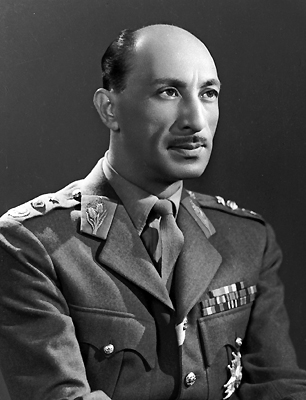
- King Mohammed Zahir Shah of Afghanistan was deposed by his cousin, General Mohammed Daoud Khan while in Italy undergoing eye surgery. Daoud Khan declared the establishment of a republic with himself as president, and an end to the Afghan monarchy.[63]
- Voting was held in Guyana for the 53-seat National Assembly. The People's National Congress party, led by Prime Minister Forbes Burnham, increased its majority with 37, or almost 70%, of the seats.[64]
- The Northern Ireland Constitution Act 1973 received royal assent and went into effect in the United Kingdom. The act abolished the suspended Parliament of Northern Ireland and the post of Governor of Northern Ireland and made provision for a devolved administration consisting of an Executive chosen by the new Northern Ireland Assembly devised under the Sunningdale Agreement.
- The White House tape recording system was turned off permanently, two days after its existence had been publicly revealed in the U.S. Senate Watergate hearings.[65]
- A bus crash killed 43 people in France when the vehicle missed a sharp turn on the steep Rampe de Laffrey road in the Isère département near Notre-Dame-de-Mésage, and fell 65 feet (20 m) into the Romanche river.[66] The victims were from the town of Braine-le-Comte in Belgium and were returning from a pilgrimage to the shrine of Our Lady of La Salette.
- Died: Jack Hawkins, 62, British actor, died of throat cancer. Hawkins made 18 films after losing his voice following cancer surgery, but was so popular with fans that filmmakers used another actor, Charles Gray, to dub his voice as he mimed the lines.[67]
- Two of the 12 crew of the Panamanian supply vessel Nordic Service died after the ship collided with the Finnish ship Finn Trader and sank off Great Yarmouth in the United Kingdom.[68][69]

- Japan Air Lines Flight 404 was hijacked by five terrorists as a member of the Japanese Red Army and four members of the Popular Front for the Liberation of Palestine combined to seize the Boeing 747 with 140 other people on board, shortly after it took off from Amsterdam in the Netherlands for a flight to Anchorage, Alaska in the U.S.[70] One of the PFLP members was killed when her hand grenade exploded during the hijacking. The surviving hijackers forced the plane to fly to multiple destinations before landing in Libya at Benghazi, released the passengers and crew 89 hours after the hijacking began; and then blew up the airliner.[71]
- Muammar Gaddafi announced his resignation as leader of Libya after his plans for uniting the north African nation with Egypt were rejected. He would reverse his decision three days later after his Cabinet announced that it would quit as well.[72]
- Born:
- Crown Prince Haakon of Norway; in Oslo[73]
- Michael Ezra, Ugandan billionaire and philanthropist, founder of SunSpace International; in Kampala
- Died:
- Bruce Lee (Lee Jun-fan), 32, U.S.-born Hong Kong martial artist and actor, less than a month before the August 19 U.S. release of his blockbuster film Enter the Dragon.[74] Although speculation abounded that he had been killed by a move called "the vibrating palm"[75], Lee's death was probably from an allergic reaction to the meprobamate, the active ingredient in the painkiller Equagesic.[76]
- Robert Smithson, 35, American sculptor and photographer, was killed along with a pilot in the crash of a small plane near Amarillo, Texas[77]
- Mikhail Isakovsky, 73, Soviet Russian poet and songwriter
- In a case of mistaken identity, Israeli Mossad agents assassinated a Moroccan waiter, Ahmed Bouchiki, in Lillehammer in Norway. The agents had confused Bouchiki with Ali Hassan Salameh, a leader of Black September's Munich Olympics massacre in 1972, who had been given shelter in Norway. Six Mossad agents were arrested by the Norwegian authorities and the incident, soon to be known as the "Lillehammer affair", forced Israel's Prime Minister Golda Meir to suspend the Mossad assassinations following the Munich massacre. While the Israeli government never accepted responsibility for the murder of Bouchiki, it would pay an unspecified amount of money to his family 23 years later, in 1996.[78]
- France resumed atmospheric nuclear bomb tests in Mururoa Atoll, over the protests of Australia and New Zealand, with the explosion of an atomic bomb at 9:00 in the morning local time (1900 UTC).:[79][80]
- The Mars 4 planetary orbiter was launched from the Soviet Union, with a goal of orbiting Mars in February 1974. On July 30, two of its onboard navigational computers failed while attempting to perform a course correction, and Mars 4 would only be able to perform a fly-by mission for six minutes.[81]
- Pan Am Flight 816 crashed into the Pacific Ocean after takeoff from Tahiti, killing 78 of the 79 people on board.[82][83]
- Born:
- Rufus Wainwright, American-Canadian singer-songwriter; in Rhinebeck, New York[84]
- Jaime Camil, Mexican comedian and actor; in Mexico City
- Ozark Air Lines Flight 809 crashed near Normandy, Missouri after encountering windshear in a thunderstorm while on approach to St. Louis International Airport in St. Louis, Missouri, killing 38 of the 44 people on board.[85][86]
- U.S. President Richard Nixon refused to turn over the presidential tape recordings to the Senate Watergate committee or the special prosecutor.[87] In a letter to the committee chairman, Senator Sam Ervin, Nixon wrote "I have considered your request that I permit your committee to have access to tapes of my private conversations with a number of my closest aides. I have concluded that the principles stated in my letter to you of July 6th preclude me from complying with that request, and I shall not do so."[88]
- Born:
- Nomar Garciaparra, American baseball player, 1997 American League (AL) Rookie of the Year and AL batting champion 1999 and 2000; in Whittier, California
- Fran Healey, Scottish singer and musician for the rock band Travis; in Stafford, Staffordshire
- Himesh Reshammiya, Indian actor, producer and singer; in Mumbai, Maharashtra state
- Died: Eddie Rickenbacker, 82, U.S. Army flying ace who later built Eastern Airlines into a major company.[89]
- The 1973 Major League Baseball All-Star Game was played at Kansas City, Missouri, and ended in a 7–1 victory for the all-stars of the National League.[90][91]
- Darrell Cain, a policeman in Dallas, Texas, shot and killed a 12-year-old boy, Santos Rodriguez, after the boy was handcuffed and sitting in a police car.[92] Cain, a white officer, was indicted for murder of Rodriguez, a Hispanic American child. Outrage in Dallas led days later to a peaceful demonstration that turned into a riot.[93] Cain would be convicted of murder and serve 30 months of a five-year sentence.[94]
- The Soviet Mars 5 space probe was launched from Baikonur Cosmodrome. It would reach the planet Mars on February 12, 1974.[95]
- Died:
- Louis St. Laurent, 91, the 12th Prime Minister of Canada, from 1948 to 1957 [96]
- Amy Jacques Garvey, 77, Jamaican-born African American journalist and publisher
- Karanbahadur Rana, 74, Nepalese soldier in the service of the British Empire during World War I, recipient of the Victoria Cross for gallantry who served as a Gurkha soldier in World War I.
- The paramilitary group Patria y Libertad, commissioned by the navy of Chile to carry out sabotage operations against President Salvador Allende, assassinated Allende's Navy adviser, Arturo Araya Peeters. Captain Araya had stepped onto the balcony of his home in the Santiago suburb of Providencia when he was shot by a sniper from building across the street.
- The United States used its veto power in the United Nations Security Council after the UNSC members voted, 13 to 2 for a resolution that would have censured Israel for its failure to withdraw from the West Bank, the Sinai peninsula and the Golan Heights, territory gained in the 1967 Six-Day War. The veto was only the fifth ever for the U.S., but the fourth in the less than a year.[97]
- Candidates of the United Kingdom's Liberal Party defeated challengers from the much larger Conservative and Labour parties to win both of the by-elections scheduled to fill vacancies in the House of Commons, winning the constituencies of Ripon and the Isle of Ely. The victories increased its presence in Commons from six seats to eight.
- In soccer, the Bangladesh national team played its first match ever, a 2–2 draw against Thailand at the Merdeka Cup tournament in Malaysia.[98]
- Born: Kate Beckinsale, English film actress and model in London, as Kathrin Romany Beckinsale[99]
- Died: Hans Albert Einstein, 69, Swiss-born American hydraulic engineering expert for whom the American Society of Civil Engineers (ASCE) established an annual award; he was also known for being the oldest son of Albert Einstein.[100]
- Operation End Sweep, the U.S. clearing of sea mines from the harbors of North Vietnam, came to an official end after having started on February 6. The minesweepers of U.S. Navy Task Force 78 departed North Vietnamese waters the next day to sail back to the Philippines.
- Died: Mimi Wong, 34, and her husband Sim Wor Kum, 40, Singaporean convicted murderers were both executed for the 1970 murder of Ayako Watanabe.[101][102]
- The Summer Jam at Watkins Glen, a massive rock festival featuring the Grateful Dead, The Allman Brothers Band and The Band, took place at the Watkins Glen Grand Prix Raceway in New York, United States, attracting over 600,000 music fans, a record audience for the time.[103][104]

- Skylab 3, with astronauts Alan Bean, Owen Garriott and Jack Lousma, was launched from the Kennedy Space Center in the United States, to conduct various medical and scientific experiments aboard Skylab.[105][106]
- Voters in the Philippines endorsed the continuation of martial law after two days of a national referendum.[107]
- A jet airplane landed on the continent of Antarctica for the first time, as the Patagonia, a Fokker F28, touched down at the Marambio Air Station on the Antarctic Peninsula, under the jurisdiction of Argentina.[108]
- Voters in Greece abolished the monarchy in a nationwide vote taking place four weeks after Giorgios Papadopoulos declared himself as president and overthrew King Constantine II.[109] The vote was more than 78% in favor of creating the Hellenic Republic.
- In the U.S., the Federal Reserve Bank of Minneapolis went through an elaborate early-morning procedure to transport its assets two and one-half blocks from its old location at 510 Marquette Avenue to its new headquarters at 250 Marquette Avenue in Minneapolis, Minnesota. The move of five billion dollars ($5,000,000,000) in currency, coins and securities took place between 2 a.m. and 6:30 a.m. after city police sealed off the 12-block area around both buildings and 76 policemen, U.S. Secret Service agents and U.S. Federal Reserve Bank security guards patrolled the area.[110]

- The 1973 Dutch Grand Prix was won by Jackie Stewart. British driver Roger Williamson was killed during the race, in an accident witnessed live on European television. His fellow driver David Purley was later awarded the George Medal for his unsuccessful attempts to save Williamson.[111]
- Died: Henri Charrière, 66, French escaped convict and writer, died of throat cancer.
- Compensation of 20 million pounds sterling was paid to victims of Thalidomide following an 11-year court case.[112]
- Eighteen coal miners were killed at the coal mine near Staveley, Derbyshire, UK, when the brake mechanism on their elevator cage failed as they were descending underground.
- The strangled body of 20-year-old Ronnie Wiebe was discarded beside an entrance ramp to the 405 Freeway, two days after the young man had disappeared. Welt marks on Wiebe's wrists and ankles suggest that he had been bound and suspended from a device before his murder.[113] Wiebe would later be identified as one of the victims of serial killer Randy Steven Kraft, the so-called "Freeway Killer".
- Born:
- Markus Näslund, Swedish professional ice hockey left wing for the Sweden national team, as well as in the Svenska Hockeyligan and North America's National Hockey League; in Örnsköldsvik
- Sonu Nigam, Indian singer and film artist; in Faridabad, Haryana state
- Delta Air Lines Flight 723, with 83 passengers and six crew, crashed while attempting to land at Boston's Logan Airport runway in poor visibility, striking a sea wall about 165 feet (50 m) to the right of the runway centerline and about 3,000 feet (910 m) short.[114] All 89 people on board died as a result of the crash; one passenger initially survived but died from his injuries on December 11.
- Militant Unionist protesters led by Ian Paisley disrupted the first sitting of the Northern Ireland Assembly.[115]
- London's famous Tower Bridge was shut down by police after a stockbroker's clerk flew an airplane twice between its towers, below a pedestrian walkway and 15 feet (4.6 m) above traffic, then turned toward the "buzzing" motor vehicles on the main roadway and by high rise buildings. Peter Martin, out on bail after being arrested for fraud for dealings on the London Stock Exchange, had told his wife that he intended to commit suicide. He took off from the Blackbushe airport in Camberley, Surrey, and threatened to fly the Beagle Pup plane into a building. After two hours, Martin flew the plane toward the Lake District National Park, and was killed when he dived his plane into a forest near Keswick, Cumbria.[116]
- Born: Scott Moe, Canadian politician, Premier of Saskatchewan since 2018; in Prince Albert, Saskatchewan[117]
References
[edit]- ^ Madden, Richard L. (June 15, 1973). "Sweeping cutoff of funds for war is voted in Senate". The New York Times.
- ^ British Library (1976). British Library News. British Library. p. 31. ISBN 978-0-902914-19-3.
- ^ "Israeli envoy shot to death in Maryland", Chicago Tribune, July 2, 1973, p. 1
- ^ "Loyola, Marymount to Merge Next Summer", Los Angeles Times, February 10, 1973, p.I-20
- ^ "Gene Rayburn 'debuts' Monday, Cincinnati Enquirer, "TV Magazine", June 24, 1973, p. 6
- ^ "Brezhnev gone and Watergate's back", Long Beach (CA) Press-Telegram, June 25, 1973, p. C-18
- ^ "Betty Grable dies of cancer", Chicago Tribune, July 3, 1973, p. 1
- ^ Onofrio, Jan (1 January 2001). Missouri Biographical Dictionary. Somerset Publishers, Inc. p. 274. ISBN 978-0-403-09598-8.
- ^ "Savage dies of injuries in Indy race", Chicago Tribune, July 2, 1973, p. 3-1
- ^ "Charges against 7 POWs dropped by Army, Navy", by Fred Farrar, Chicago Tribune, July 4, 1973, p. 1
- ^ Thomas, Kerry; Chan, Janet (29 November 2013). Handbook of Research on Creativity. Edward Elgar Publishing. p. 426. ISBN 978-0-85793-981-4 – via Google Books.
- ^ Warren, Richard S. (1 January 2002). Begins with the Oboe: A History of the Toronto Symphony Orchestra. Foreword by Sir Andrew Davis. University of Toronto Press. p. 107. ISBN 978-0-8020-3588-2. Retrieved 19 September 2022 – via Google Books.
- ^ "Weddings: Major A. H. Parker Bowles and Miss C. R. Shand", The Daily Telegraph (London), July 5, 1973, p. 16
- ^ "年齢不詳のGackt、遂に実年齢をカミングアウト「来年37歳!」" (in Japanese). Oricon. November 5, 2009. Archived from the original on July 26, 2011. Retrieved November 6, 2009.
- ^ "Military Coup in Rwanda Follows Tribal Dissension". The New York Times. 1973-07-06. ISSN 0362-4331. Retrieved 2023-10-01.
- ^ "The Disaster Story", KingmanHistoricDistrict.com
- ^ "Tank car fire sets off butane plant blast; 3 killed, 75 hurt", Chicago Tribune, July 6, 1973, p. 1A-1
- ^ "Guerrillas seized 292 in Rhodesia, battle troops", Chicago Tribune, July 7, 1973, p.1-2
- ^ "Mi6.co.uk". www.mi6.co.uk. Archived from the original on 16 November 2008.
- ^ "Joe E. Brown". Los Angeles Times Hollywood Star Walk.
- ^ "Otto Klemperer, 88, conductor, is dead", Chicago Tribune, July 8, 1973, p.3-18
- ^ "Nixon won't testify at Watergate probe", by Aldo Beckman, Chicago Tribune, July 9, 1973, p.1-1
- ^ "Nixon OKs talks with Ervin on Watergate probe", Chicago Tribune, July 13, 1973, p.1-1
- ^ "Uganda holds 112 Americans", Chicago Tribune, July 9, 1973, p.1-1
- ^ "111 Peace Corps volunteers freed by Uganda chief", Chicago Tribune, July 10, 1973, p.1A-9
- ^ Cowen, Michael, and Liisa Laakso. Multi-Party Elections in Africa. New York: Palgrave, 2001. pp. 62-63
- ^ "King, Kode win Wimbledon titles", Chicago Tribune, July 8, 1973, p. 3-2
- ^ "From the Archives: Veronica Lake, Peek-a-Boo Star of the '40s, Dies at 51". Los Angeles Times. 8 July 1973.
- ^ "Lebanon", in Heads of States and Governments Since 1945, by Harris M. Lentz (Taylor & Francis, 2014)
- ^ "3000 mourn Calwell", The Age (Melbourne), July 12, 1973, p.4
- ^ "Deaths, Funeral Announcements: Coon, Gene L.", Los Angeles Times, July 9, 1973, p.II-2
- ^ "Tashman on Television:, The Independent (Long Beach CA), July 12, 1973, p.12
- ^ David Kynaston (18 April 2011). WG's Birthday Party. A&C Black. p. 163. ISBN 978-1-4088-1749-0.
- ^ Rostislav Švácha and Lukáš Beran, SIAL (Arbor vitae, 2010) pp. 50–61
- ^ "U.S.-Czech pact means consul here", Chicago Tribune, July 10, 1973, p.1-7
- ^ "1973: Bahamas' sun sets on British Empire". BBC News. 9 July 1973. Archived from the original on 1 February 2008. Retrieved 11 February 2008.
- ^ "Bahamas independent", Chicago Tribune, July 10, 1973, p.1A-1
- ^ "2 treasure ships found, divers say", Chicago Tribune, July 11, 1973, p.1-1
- ^ "J. Paul Getty III kidnaped, mother tells Rome police", Chicago Tribune, July 13, 1973, p.1-1
- ^ "Lava Cooling on Heimaey--Methods and Procedures", U.S. Geological Survey
- ^ "Ex-Ring Champ is Shot to Death", Philadelphia Inquirer, July 11, 1973, p. 25
- ^ "Jet crashes near Paris; 122 killed", Chicago Tribune, July 12, 1973, p.1-2
- ^ "Jörg Bruder". Olympedia. OlyMADMen. Retrieved 13 August 2022.
- ^ "Riggs vs. King in $100,000 Tennis Match", The Miami News, July 10, 1973, p. 1E
- ^ The Inflation Calculator, U.S. Bureau of Labor Statistics
- ^ "Veteran actor Ryan, 63, dies", Chicago Tribune, July 12, 1973, p.3-14
- ^ "The National Personnel Records Center Fire: A Study in Disaster", by Walter W. Stender and Evans Walker, in The American Archivist (October 1974) pp. 521-549
- ^ "Flames Hit 4 Bethany Townhouses", Wilmington (DE) News Journal, July 13, 1973, p. 2
- ^ "Lefty Pulls Fast Break, Saves Kids", St. Petersburg (FL) Times, July 21, 1973, p.3-C
- ^ "Nixon ill, enters hospital— Ailment diagnosed as viral pneumonia", Chicago Tribune, July 13, 1973, p.1-1
- ^ "I won't resign, Nixon declares", Chicago Tribune, July 21, 1973, p.1-1
- ^ "Campora resigns to allow election of Peron as president", Chicago Tribune, July 14, 1973, p.1-1
- ^ "'There is Tape in the Oval Office'", by Aaron Latham, in New York Magazine (June 17, 1974) pp. 44–46, 60, 63
- ^ Magazine, Motor Sport (August 1973). "1973 British GP Race Report". Motor Sport. Retrieved 2 February 2021.
- ^ "The Formation and Behaviour of Natural and Artificial Rockslide Dams", by Stephen G. Evans, et al., in Natural and Artificial Rockslide Dams (Springer, 2011) p. 57
- ^ "Governing by Hazard: Controlling Mudslides and Promoting Tourism in the Mountains Above Alma-Ata (Kazakhstan) 1966–1977, by Marc Elie, in Governing Disasters: Beyond Risk Culture (Palgrave Macmillan, 2015)
- ^ Роковая дата 15 июля 1973 года: этот день Алма-Ата могла не пережить. Часть 1 ("The fateful date of July 15, 1973: Alma-Ata could not survive this day"), by Andrey Mikhailov, InformBuro July 15, 2017 (in Russian)
- ^ "The tribunals in Bangladesh: Falling short of international standards", by Abdur Razzaq, in Trials for International Crimes in Asia, ed. by Kirsten Sellars (Cambridge University Press, 2015) p. 344
- ^ "Car kills Topanga musician", Long Beach (CA) Press-Telegram, July 16, 1973, p. 13 (A Topanga musician loading instruments aboard his van was struck and killed Sunday...")
- ^ "NIXON TALKS RECORDED, SENATORS TOLD", by Thomas W. Ottenad and Robert Adams, St. Louis Post-Dispatch, July 16, 1973, p. 1
- ^ "Nixon bugged own offices— Witness tells of recordings", Chicago Tribune, July 17, 1973, p.1-1
- ^ "Alexander P. Butterfield Testifies During the Watergate Hearings", Freedom Forum, youtube.com
- ^ "Afghan King Overthrown; A Republic Is Proclaimed", The New York Times, July 18, 1973, p.1
- ^ "Burnham reelected in Guyana", Chicago Tribune, July 19, 1973, p.2-16
- ^ "The Nixon White House Tapes: The Decision to Record Presidential Conversations", by H.R. Haldeman, Prologue Magazine (Summer 1988)
- ^ "43 Killed, 6 Escape In French Bus Crash", Dayton (O.) Daily News, July 19, 1973, p. 1
- ^ "Veteran British star Jack Hawkins dies", Chicago Tribune, July 19, 1973, p.3-14
- ^ "Search goes on for seamen". The Times. No. 58838. London. 19 July 1973. col. G, p. 2.
- ^ "Nordic Service (+1973)". Wrecksite. Retrieved 3 June 2011.
- ^ "3 seize jet with 145 aboard, order it flown to Mideast", Chicago Tribune, July 21, 1973, p.1-2
- ^ "Release 137, blow up jet— Hijack tour ends in Libya", Chicago Tribune, July 24, 1973, p.1-1
- ^ "Khadafy withdraws resignation", Chicago Tribune, July 24, 1973, p.1A-5
- ^ "Crown Prince Haakon: Biography & Facts (Britannica)". www.britannica.com. Retrieved 2022-01-25.
- ^ "Bruce Lee, Star, Dies Suddenly", San Francisco Examiner, July 20, 1973, p.1
- ^ Bruce, Thomas (1994). Bruce Lee: Fighting Spirit: A Biography (first ed.). Frog Ltd. p. 224. ISBN 9781883319250.
- ^ Campbell, Sid; Lee, Greglon (2006). Remembering the master : Bruce Lee, James Yimm Lee, and the creation of Jeet Kune Do. Berkeley CA: Blue Snake Books/Frog, Ltd. p. 206. ISBN 978-1-58394-148-5. Campbell & Lee 2006, p. 206
- ^ "Robert Smithson, 35, A Sculptor, Is Dead". The New York Times. New York City. July 24, 1973.
- ^ Marc E. Vargo, The Mossad: Six Landmark Missions of the Israeli Intelligence Agency, 1960–1990 (McFarland, 2014) pp. 140-145
- ^ "France begins nuclear tests— Small device 'a trigger for H-bomb'", The Age (Melbourne), July 23, 1973, p. 1
- ^ "France explodes A-bomb", Chicago Tribune, July 22, 1973, p.1-1
- ^ Asif A. Siddiqi, Beyond Earth: A Chronicle of Deep Space Exploration 1958–2016 (NASA History Program Office, 2016)
- ^ "Jet with 79 crashes; 1 rescued", Chicago Tribune, July 24, 1973, p.1-2
- ^ "Rapport final de la commission d'enquete sur l'accident du Boeing 707 N 417 PA" (PDF) (in French). Journal officiel de la Republique française. May 12, 1977. Retrieved February 11, 2021.
{{cite journal}}: Cite journal requires|journal=(help) - ^ Katherine Williams; Justin A. Williams (25 February 2016). The Cambridge Companion to the Singer-Songwriter. Cambridge University Press. p. 232. ISBN 978-1-107-06364-8.
- ^ "Plane crash at St. Louis kills 36", Chicago Tribune, July 24, 1973, p.1-1
- ^ "Kathy Sweeney Investigates: The Crash of Ozark Airlines – KFVS12 News & Weather Cape Girardeau, Carbondale, Poplar Bluff". 18 November 2010. Retrieved 6 February 2017.
- ^ "Nixon won't give tapes to Senators or Cox; Both respond by going to court to get them", by Michael Putzel, Associated Press, in Boston Evening Globe, July 23, 1973, p. 1
- ^ "Text of Nixon letter to Ervin", United Press International report in Boston Evening Globe, July 23, 1973, p. 1
- ^ "Eddie Rickenbacker dead at 82", Chicago Tribune, July 24, 1973, p. 1-3
- ^ Total Baseball, 5th ed., 1997, Viking Press, Thorn, John et al. ed, p. 253
- ^ 1973 All-Star Game, baseball-almanac.com; accessed 27 September 2008
- ^ "Officer Suspended, Charged: 11-Year-Old Burglary Suspect Killed During Questioning", by Robert Finklea, Dallas Morning News, July 25, 1973, p. 1
- ^ "Protest boy's death; melee ensues", Chicago Tribune, July 29, 1973, p. 1-10
- ^ "Santos Rodriguez: The March of Justice — 1973", by Paula Bosse, FlashbackDallas.com
- ^ "Mars 5". US National Space Science Data Centre. Retrieved 12 April 2013.
- ^ "Parliament leads nation in mourning St. Laurent", Montreal Gazette, July 26, 1973, p. 1
- ^ "U.S. vetoes U.N. Israel censure", Chicago Tribune, July 27, 1973, p. 1-3
- ^ সেদিন লাল-সবুজ পতাকা উড়িয়েছিল ফুটবল | কালের কণ্ঠ. Kaler Kantho (in Bengali). July 25, 2020. Archived from the original on 30 August 2022. Retrieved 30 August 2022.
- ^ "Kate Beckinsale shares the name her father originally chose for her". Yahoo! Entertainment. 21 February 2022. Archived from the original on 22 February 2022. Retrieved 22 February 2022.
- ^ "Short life history: Hans Albert Einstein". www.einstein-website.de. Archived from the original on 2021-01-26. Retrieved 2019-07-07.
- ^ "1st woman dies on Singapore gallows", Chicago Tribune, July 28, 1973, p. 1-7
- ^ "Mimi Wong and husband hanged". New Nation. 27 July 1973. Retrieved 1 June 2021.
- ^ "600,000 pack rock festival grounds; parachutist killed", Chicago Tribune, July 29, 1973, p. 1-3
- ^ "600,000 People See Grateful Dead, Allmans & The Band At Summer Jam At Watkins Glen In 1973". JamBase. 2016-07-28. Retrieved 2016-12-09.
- ^ "Astronauts rendezvous with Skylab", Chicago Tribune, July 29, 1973, p. 1-1
- ^ Souza, Kenneth; Hogan, Robert; Ballard, Rodney. "Programs, Missions, and Payloads – Skylab 3". Life into Space: Space Life Sciences Experiment. NASA. Archived from the original on March 21, 2009. Retrieved February 9, 2009.
- ^ "Marcos wins big in referendum", Chicago Tribune, July 30, 1973, p. 1-10
- ^ "Marambio Station / Seymour Island", French Polar Team website, archived by archive.org
- ^ "Greek regime gets big vote", Chicago Tribune, July 30, 1973, p. 1-9
- ^ "A bit more than pocket change", Chicago Tribune, July 29, 1973, p. 1-4
- ^ grandprix.com David Purley Profile
- ^ "1973: Final deal for thalidomide victims". BBC News. 30 July 1973. Archived from the original on 7 March 2008. Retrieved 11 February 2008.
- ^ TruTV p. 4
- ^ "Boston jetliner crashes in heavy fog; 88 killed", Chicago Tribune, August 1, 1973, p.1-1
- ^ "1973: Chaotic meeting of Belfast Assembly". BBC News. 31 July 1973. Archived from the original on 7 March 2008. Retrieved 11 February 2008.
- ^ "Suicide flight misses bridge", by Dennis Barker, The Guardian (Manchester), August 1, 1973, p. 1
- ^ "QuickSketch: A look at Saskatchewan Party Leader Scott Moe".
July 1973
View on Grokipediafrom Grokipedia
July 1973 featured several consequential global events, including the bloodless coup d'état in Afghanistan on July 17 that deposed King Mohammed Zahir Shah and established a republic under Lt. Gen. Mohammed Daoud Khan,[1] the revelation during U.S. Senate Watergate Committee hearings on July 16 by former presidential aide Alexander Butterfield of President Richard Nixon's secret Oval Office taping system, which recorded conversations from 1971 onward,[2] the sudden death on July 20 of martial artist and actor Bruce Lee at age 32 from cerebral edema in Hong Kong,[3] and the granting of independence to the Bahamas from the United Kingdom on July 10, marking the end of over three centuries of British colonial rule.[4] These occurrences underscored a period of political instability and transition: the Afghan coup, executed while the king was abroad for medical treatment, reflected long-simmering republican sentiments and Daoud's prior advocacy for modernization, avoiding widespread violence but setting the stage for future ideological conflicts.[5] In the United States, Butterfield's testimony—prompted by a question on potential gaps in records—exposed evidence central to the Watergate scandal's investigation into the June 1972 break-in at Democratic headquarters, intensifying public and congressional scrutiny of executive actions.[2] Lee's untimely passing, amid production of his film Enter the Dragon, fueled speculation due to his earlier collapse in May but was officially attributed to hypersensitivity to an analgesic, closing a brief but transformative career that popularized martial arts in Western media.[3] Bahamian independence, achieved through negotiations led by Prime Minister Lynden Pindling, preserved Commonwealth ties while asserting sovereignty, with the new flag symbolizing the nation's aquatic heritage and aspirations.[4] Other incidents, such as a catastrophic fire on July 12 at the U.S. National Personnel Records Center destroying millions of military files, highlighted vulnerabilities in archival preservation amid bureaucratic oversight.[6]
Historical Overview
Geopolitical and Domestic Context
In the United States, July 1973 represented a pivotal shift in military policy with the implementation of the all-volunteer force on July 1, formally ending conscription following the withdrawal of combat troops from Vietnam earlier that year.[7] [8] The domestic economy faced mounting pressures from inflation, which averaged 6.22% for the year and accelerated amid the unwinding of wage-price controls, fostering early signs of stagflation alongside moderate unemployment around 4.8%.[9] [10] Politically, the administration contended with escalating scrutiny over the Watergate break-in, though broader public focus lingered on post-war recovery and economic stability. Geopolitically, the Nixon administration advanced détente with the Soviet Union, building on prior summits and the 1972 SALT I agreement to curb nuclear arms and ease tensions after decades of confrontation. This period of relaxation contrasted with regional instabilities, exemplified by The Bahamas' attainment of independence from Britain on July 10, transitioning to a parliamentary democracy within the Commonwealth of Nations.[11] [12] A notable upheaval occurred on July 17 in Afghanistan, where army commander Lieutenant General Mohammed Daud Khan, a former prime minister and relative of the monarch, led a swift, largely bloodless coup against King Mohammed Zahir Shah, who was abroad for medical treatment.[13] [1] Daud proclaimed a republic, abolished the monarchy, and positioned himself as president, initiating reforms aimed at modernization while navigating alignments amid Cold War rivalries.[14] This event underscored vulnerabilities in longstanding regimes and foreshadowed shifts toward greater Soviet influence in Kabul.Significance and Major Themes
The month of July 1973 exemplified a confluence of institutional crises and geopolitical transitions that underscored vulnerabilities in governance structures worldwide. In the United States, the Senate Select Committee on Presidential Campaign Activities' hearings revealed on July 16 the existence of a secret Oval Office taping system, as testified by former presidential aide Alexander Butterfield, which captured conversations potentially implicating President Richard Nixon in the Watergate cover-up.[15] This disclosure, coupled with Nixon's July 23 refusal to surrender the tapes to investigators, intensified demands for transparency and marked a critical escalation in the scandal, contributing to a profound erosion of public trust in executive authority and foreshadowing reforms in presidential accountability.[16] The events highlighted the causal role of covert surveillance and obstruction in undermining democratic legitimacy, with empirical fallout including Nixon's approval ratings plummeting from around 67% in January to below 40% by summer's end, as measured by Gallup polls.[17] Internationally, regime instability emerged as a dominant theme, particularly in Afghanistan, where on July 17 Sardar Mohammed Daoud Khan, the king's cousin and former prime minister, led a bloodless military coup while King Mohammed Zahir Shah was abroad for medical treatment, deposing the monarch and proclaiming a republic with Daoud as president and prime minister.[1] This abrupt end to Zahir Shah's 40-year reign, which had maintained relative stability through constitutional monarchy since 1964, shifted Afghanistan toward centralized authoritarian rule and initially deepened ties with the Soviet Union via economic and military aid, reflecting Daoud's pragmatic realpolitik despite his prior anti-communist policies.[14] The coup's long-term significance lay in destabilizing fragile power balances, as Daoud's suppression of opposition and reliance on tribal alliances sowed seeds for the 1978 communist Saur Revolution and subsequent Soviet intervention, illustrating how elite-driven overthrows without broad institutional buy-in often precipitate cycles of violence rather than enduring reform.[18] Decolonization represented another key theme, with the Bahamas attaining independence from the United Kingdom on July 10, 1973, under Prime Minister Lynden Pindling's Progressive Liberal Party, marking the peaceful dissolution of British colonial oversight after 325 years and affirming the nation's entry as a Commonwealth realm with Queen Elizabeth II as head of state.[12] This event, facilitated by the Bahamas Independence Order of June 20, 1973, aligned with the era's wave of self-determination in the Caribbean, driven by post-World War II economic pressures on Britain and local demands for sovereignty, though it also exposed underlying ethnic and economic tensions between majority Black Bahamians and white expatriate interests.[11] Collectively, July 1973's developments emphasized causal patterns in political rupture— from executive secrecy breeding institutional distrust, to monarchical overreliance on personal networks failing against military opportunism, to imperial retrenchment enabling orderly transitions—while empirical data from contemporaneous reports underscored the rarity of bloodless success in such shifts, with Afghanistan's outcome diverging sharply from the Bahamas' stability.Watergate Scandal Developments
Commencement and Early Hearings
The Senate Select Committee on Presidential Campaign Activities, commonly known as the Watergate Committee, was established by a unanimous Senate vote on February 7, 1973, under Senate Resolution 60, with authority to investigate the June 17, 1972, break-in at the Democratic National Committee headquarters and related campaign activities during the 1972 presidential election.[19] Chaired by Senator Sam Ervin (D-NC) and vice-chaired by Senator Howard Baker (R-TN), the bipartisan panel included four Democrats and three Republicans, empowered to subpoena witnesses, documents, and records.[19] The committee's formation followed public outcry over the burglary convictions in January 1973 and Judge John Sirica's concerns about possible perjury and coercion in plea deals, aiming to uncover any links to President Richard Nixon's re-election campaign.[19] Public hearings commenced on May 17, 1973, broadcast live on national television by the major networks, marking the first time such extensive congressional proceedings were televised gavel-to-gavel, drawing peak audiences exceeding 80 million viewers for key sessions.[20] The initial phase focused on the Watergate break-in itself, featuring testimonies from security personnel like Frank Wills, the discoverer of the intrusion, and convicted burglars including James McCord, who on March 23, 1973, had written a letter alleging political pressure to plead guilty and remain silent—claims corroborated in his May 1973 testimony detailing CIA involvement and cover-up efforts by the Committee to Re-elect the President (CRP).[19] Other early witnesses included E. Howard Hunt and G. Gordon Liddy, who invoked the Fifth Amendment on multiple occasions, and CRP deputy director Jeb Magruder, whose May 14 executive session testimony—leaked publicly—admitted authorizing the wiretap operation under CRP counsel John Mitchell's direction, implicating higher campaign officials in illegal activities.[21] Hearings paused after John Dean's June 25–29 testimony, where the former White House counsel alleged a "cancer on the presidency" and detailed Nixon's personal involvement in the cover-up, including meetings discussing hush money payments totaling at least $75,000 to the burglars.[22] Resuming on July 10, 1973, after a Fourth of July recess, early July sessions examined administrative responses, with witnesses such as Robert Odle Jr., former CRP office manager, testifying on document handling and staff awareness of the break-in plans, followed by Bruce Kehrli on White House scheduling irregularities potentially linked to cover-up coordination.[16] These testimonies, held July 10–12, revealed patterns of obstruction, including CRP efforts to contain the scandal through false statements to law enforcement, though witnesses often denied direct presidential knowledge, setting the stage for deeper probes into executive actions.[23] On July 7, prior to resumption, Nixon informed the committee he would not testify personally, citing separation of powers.[24]Revelation of the White House Taping System
On July 16, 1973, during live televised hearings of the U.S. Senate Select Committee on Presidential Campaign Activities investigating the Watergate scandal, Alexander P. Butterfield, President Richard Nixon's former deputy assistant, testified under oath.[25] Butterfield, who had managed Nixon's schedule and departed the White House staff in April 1973 to head the Federal Aviation Administration, was questioned about internal White House operations.[2][26] Minority counsel Fred D. Thompson posed the key question: "Mr. Butterfield, are you aware of the installation of any listening devices in the Oval Office of the president?" Butterfield responded affirmatively, disclosing that a voice-activated taping system had been operational since February 1971.[25][2] He detailed that the system, which he had overseen during installation at Nixon's direction without the knowledge of most staff, automatically recorded all Oval Office conversations, meetings in the Cabinet Room, and select presidential telephone calls using concealed microphones and telephone taps.[26][25] Butterfield explained the system's mechanics: recordings were captured on seven Sony reel-to-reel machines in a White House basement room, with tapes changed daily by Secret Service technicians who performed maintenance but did not monitor content.[25] The setup produced approximately 3,700 hours of material from February 16, 1971, to July 18, 1973, when Nixon ordered its deactivation following the revelation.[26][27] He emphasized that access was limited to Nixon, himself for scheduling purposes, and a few trusted aides, with no real-time listening.[25] The testimony stunned committee members and the public, as Butterfield's matter-of-fact confirmation—made without prior committee knowledge of the system's full scope—provided the first public acknowledgment of potentially incriminating verbatim records of Nixon's discussions amid the unfolding scandal.[2][25] This disclosure shifted the investigation toward demands for subpoenaing the tapes as primary evidence, fundamentally altering the probe's trajectory.[26]Immediate Responses and Controversies
Alexander P. Butterfield's testimony on July 16, 1973, before the Senate Select Committee on Presidential Campaign Activities stunned committee members and triggered an immediate shift in the Watergate investigation. As former White House deputy assistant, Butterfield confirmed under oath that President Richard Nixon had authorized a voice-activated taping system in early 1971, which recorded all Oval Office conversations, as well as those in the Cabinet Room and Nixon's Executive Office Building hideaway, without the knowledge of most participants.[2][28] The disclosure, aired live on television, elicited audible gasps from senators and rapid demands for the tapes to corroborate or refute White House counsel John Dean's June testimony alleging a presidential cover-up of the Watergate break-in. Committee Chairman Sam Ervin described the system as a potential "gold mine" of evidence, while ranking member Howard Baker expressed shock at its secrecy and scope, which encompassed over 3,700 hours of recordings from February 1971 to July 1973.[29][30] The Nixon administration responded with reticence, neither confirming nor denying the system's details initially, though Nixon later characterized the tapes as private historical records for his memoirs rather than official documents. On July 18, Secret Service agents deactivated all remaining White House recording devices in direct response to the testimony's exposure.[31][25] Controversies erupted over the tapes' legality and accessibility, with critics questioning the warrantless surveillance's constitutionality and its implications for privacy in executive deliberations. The committee promptly subpoenaed nine tapes covering key post-break-in dates, but Nixon rejected the request on July 26, citing executive privilege and national security concerns, a move decried by Democrats as obstruction and defended by Republicans as preserving presidential confidentiality. This impasse fueled accusations of a deepening cover-up and prompted special prosecutor Archibald Cox to pursue judicial enforcement, escalating constitutional tensions between branches of government.[19][32]Other United States Events
Domestic Policy and Institutional Changes
On July 1, 1973, Reorganization Plan No. 2 of 1973 took effect, establishing the Drug Enforcement Administration (DEA) as a new agency within the United States Department of Justice to centralize federal narcotics enforcement and drug control efforts.[33] The plan, submitted by President Richard Nixon on February 7, 1973, consolidated the operations of the Bureau of Narcotics and Dangerous Drugs (BNDD) from the Department of Justice, the Office of Drug Abuse Law Enforcement (ODALE) from the Executive Office of the President, and portions of the Customs Service and other agencies involved in drug interdiction and intelligence.[34] This restructuring aimed to eliminate overlapping jurisdictions and improve coordination in combating illegal drug trafficking, reflecting Nixon's broader "war on drugs" initiative launched in 1971, which emphasized enforcement over treatment amid rising domestic narcotics use. The DEA's creation transferred approximately 1,500 BNDD agents and a budget of over $65 million to the new entity, granting it authority over domestic and international drug policy implementation, including coordination with foreign governments for eradication programs. President Nixon designated John R. Bartels Jr., previously ODALE administrator, as the inaugural DEA head via Executive Order 11727, which also outlined interim staffing from predecessor agencies to ensure operational continuity.[33] Congress did not disapprove the plan within the 60-day review period under the Reorganization Act of 1949, allowing it to proceed without legislative veto, though some critics in hearings argued it insufficiently addressed underlying demand-side factors like addiction treatment.[35] This institutional shift marked a pivotal escalation in federal drug policy, shifting resources toward law enforcement hierarchies and away from fragmented bureau-specific approaches, with the DEA assuming responsibility for enforcing the Controlled Substances Act of 1970.[36] By unifying intelligence gathering, undercover operations, and border seizures, the reorganization enhanced operational efficiency but also centralized power in a single agency, influencing subsequent expansions in federal anti-drug budgeting and personnel, which grew to over 2,200 agents by fiscal year 1974.[34] The move aligned with contemporaneous executive actions, such as transfers of narcotics-related functions from the Attorney General to the Treasury Secretary under related provisions effective the same date, further streamlining enforcement chains.[36]Disasters and Accidents
On July 12, 1973, a fire erupted at the National Personnel Records Center (NPRC) in Overland, Missouri, destroying an estimated 16 to 18 million Official Military Personnel Files stored on the sixth floor.[37] The blaze, which raged for approximately 22 hours, primarily affected Army personnel records discharged between November 1, 1912, and January 1, 1960 (about 80% lost), and Air Force records discharged between September 25, 1947, and January 1, 1964 (75% lost), with no duplicates maintained at the time.[37] [38] No personnel were injured or killed in the incident, but the loss complicated verification processes for veterans' benefits and historical research for decades afterward.[39] The cause remains undetermined despite investigations pointing to possible electrical faults or arson, though no conclusive evidence emerged.[40] On July 26, 1973, during practice maneuvers at Naval Air Station Lakehurst, New Jersey, two F-4 Phantom jets from the U.S. Navy's Blue Angels demonstration team collided mid-air, resulting in the deaths of three crew members.[41] The accident occurred as the aircraft executed a tight formation maneuver, highlighting risks inherent in high-speed aerobatic displays despite rigorous training protocols.[42] The deadliest aviation incident of the month struck on July 31, 1973, when Delta Air Lines Flight 723, a McDonnell Douglas DC-9-33CF operating from Detroit to Boston, crashed into a concrete seawall short of the runway at Logan International Airport amid dense fog.[43] Of the 89 people aboard (83 passengers and 6 crew), 88 perished, with only one survivor who suffered critical injuries; the crash was attributed to a combination of pilot deviations from the instrument approach procedure and air traffic control miscommunications during the low-visibility landing attempt.[43] [44] The post-crash fire exacerbated the fatalities, prompting subsequent enhancements in aviation safety standards for fog-bound approaches.[45]International Events
Regime Changes and Coups
On July 17, 1973, Lieutenant General Mohammad Daoud Khan, a cousin and brother-in-law of King Mohammad Zahir Shah, led a bloodless military coup d'état in Kabul that overthrew the monarchy and established the Republic of Afghanistan.[1][14] The coup occurred while Zahir Shah was abroad in Italy, following a medical visit to Britain and a vacation stopover that began on July 8.[1] Daoud, who had previously served as prime minister from 1953 to 1963 before resigning amid policy disputes, commanded army units that swiftly secured key government sites, including the royal palace, with minimal resistance reported.[14] The new regime, under Daoud's leadership as president and prime minister, declared the coup a "national and progressive revolution" aimed at addressing widespread discontent over corruption, economic stagnation, and a severe famine that had claimed over 80,000 lives in preceding years.[1] Martial law was imposed within an hour of the takeover, telephone lines to the exterior were severed, and the airport was closed, isolating the country temporarily.[1] Premier Mohammad Musa Shafiq's government was ousted, ending Zahir Shah's 40-year reign that had transitioned Afghanistan from absolute to constitutional monarchy in 1964.[14] Daoud pledged continuity in Afghanistan's nonaligned foreign policy, rejecting military pacts with foreign powers.[1] Initial reports indicated a calm atmosphere in Kabul under military guard, though sporadic small-arms fire and jet overflights were noted, suggesting limited opposition.[1] The coup reflected underlying royal family divisions and Daoud's earlier advocacy for assertive policies, such as support for Pashtun irredentism, which had strained relations with Pakistan during his prior tenure.[14] By July 18, the republic's formation was formally proclaimed, marking the end of the 226-year Durrani dynasty's rule.[1][14]Independence Movements and Diplomacy
The Bahamas attained independence from the United Kingdom on July 10, 1973, marking the culmination of negotiations led by Prime Minister Lynden Pindling's Progressive Liberal Party, which had secured victory in the 1967 and 1972 elections on platforms advocating self-governance.[46] The Bahamas Independence Act 1973, passed by the UK Parliament, formalized the transition, ending approximately 325 years of British colonial administration that began with settlement in the early 17th century.[46] Upon independence, the nation adopted a new constitution establishing a parliamentary democracy, retained Queen Elizabeth II as head of state represented by a governor-general, and joined the Commonwealth of Nations, reflecting a negotiated path prioritizing economic ties and stability over complete republican status.[46] In parallel with decolonization efforts in the Caribbean, July 1973 saw the initiation of significant Cold War diplomacy through the opening of the Conference on Security and Co-operation in Europe (CSCE) in Helsinki, Finland, on July 3.[47] Attended by foreign ministers from 35 participating states, including the United States, Soviet Union, and major European powers, the conference's first phase focused on procedural matters and confidence-building measures amid détente.[47] The Soviet delegation advanced a proposal for a binding charter outlining principles such as respect for territorial integrity, non-interference in internal affairs, and cooperation in economic and humanitarian spheres, aiming to codify post-World War II borders while advancing Moscow's influence in Western Europe.[47] This gathering laid groundwork for extended negotiations in Geneva, ultimately contributing to the 1975 Helsinki Final Act, though initial sessions highlighted underlying tensions between ideological blocs.[47]Global Conflicts and Tests
France conducted an atmospheric nuclear test at Mururoa Atoll in French Polynesia on July 21, as part of its 1971–1974 testing series aimed at advancing thermonuclear capabilities.[6] This detonation, estimated at around 10–20 kilotons, heightened diplomatic tensions with Pacific nations, including Australia and New Zealand, which had filed cases against France at the International Court of Justice in May 1973 to halt such atmospheric tests due to environmental and health risks.[48] France dismissed the ICJ's interim orders and proceeded, prompting protests such as New Zealand's deployment of naval vessels to monitor and challenge the tests.[49] The British Parliament debated the test on July 5, reflecting broader Western concerns over fallout dispersion into international airspace and waters.[50] The Soviet Union followed with an underground nuclear explosion at the Semipalatinsk Test Site in Kazakhstan on July 22, detected by the U.S. Atomic Energy Commission through seismic monitoring.[51] This blast, the third Soviet test of 1973, underscored ongoing superpower competition in weapons development despite partial test ban treaties limiting atmospheric trials since 1963.[52] Yield details were classified, but such underground events at Semipalatinsk often exceeded 100 kilotons and contributed to regional contamination concerns later documented in scientific assessments.[53] These tests occurred against the backdrop of stalled global non-proliferation efforts, including U.S.-Soviet negotiations for a comprehensive ban, as atmospheric and underground detonations fueled debates over verification and enforcement.[52] In parallel, the Vietnam War persisted with inter-Vietnamese hostilities following the January Paris Accords; on July 1, the U.S. Congress prohibited funding for combat operations in Southeast Asia after August 15, signaling the effective end of American direct involvement while reducing aid projections from $2.2 billion to lower levels, which strained South Vietnamese defenses.[54] No major escalations or new fronts emerged in other theaters, such as the Middle East, where Arab-Israeli tensions simmered ahead of October hostilities.[55]Science, Technology, and Exploration
Space Missions and Probes
The Skylab 3 mission, the second crewed expedition to NASA's Skylab space station, launched on July 28, 1973, from Kennedy Space Center aboard a Saturn IB rocket.[56] The crew consisted of Commander Alan L. Bean, Science Pilot Owen K. Garriott, and Pilot Jack R. Lousma, who docked with the orbiting laboratory on July 29 after conducting rendezvous maneuvers.[56] Over 59 days, until September 25, 1973, the astronauts performed extensive experiments in Earth observations, solar physics, and biomedical research, exceeding mission objectives by 150% through adaptive scheduling that addressed crew fatigue concerns from the prior Skylab 2 flight.[57] Key achievements included high-resolution solar telescope observations capturing solar flares and prominences, contributing to understanding solar activity, and medical studies on human physiology in microgravity, such as fluid shifts and bone density changes.[56] In parallel, the Soviet Union advanced its planetary exploration with the launches of Mars 4 on July 21, 1973, and Mars 5 on July 25, 1973, both using Proton-K rockets from Baikonur Cosmodrome.[58] Mars 4, intended as an orbiter, failed to enter Mars orbit on February 2, 1974, due to a propulsion malfunction, passing within 1,930 kilometers of the planet and transmitting limited flyby data on the Martian atmosphere.[58] Mars 5 successfully achieved orbit on July 27, 1973, but ceased operations after nine days owing to power and pressurization issues, providing initial images and atmospheric data before failure.[58] These probes formed part of a four-spacecraft Soviet Mars program in 1973-1974, aimed at mapping and landing on the Red Planet, though technical challenges limited their scientific yield compared to contemporaneous American efforts.[58]Engineering and Speed Records
The Colomban MC-15 Cri-Cri, engineered by French designer Michel Colomban, completed its maiden flight on July 19, 1973, marking a milestone in compact manned aviation design. Measuring 3.3 meters in length with a wingspan of 4.9 meters and an empty weight of approximately 79 kilograms, the aircraft is powered by two Microturbo TRS 18 turbojet engines producing a combined thrust of 176 pounds-force, enabling flight for a single pilot in an exceptionally diminutive airframe. This achievement demonstrated innovative engineering in reducing structural mass through extensive use of aluminum alloys and simplified aerodynamics while adhering to airworthiness standards set by the French Fédération Aéronautique.[59] The Cri-Cri's development emphasized first-principles optimization of size constraints, resulting in the smallest twin-engined crewed aircraft ever certified for flight, with a maximum takeoff weight under 300 kilograms and cruise speeds around 200 kilometers per hour. Colomban's approach prioritized redundancy via dual engines in a minimal envelope, influencing subsequent micro-aircraft designs, though production remained limited to kits due to regulatory and manufacturing challenges. No formal speed records were homologated during the initial flight, but the prototype's performance validated the feasibility of sub-compact twin propulsion systems for recreational aviation.[59]Sports and Cultural Events
Major Sporting Achievements
In tennis, Billie Jean King defeated Chris Evert 6–0, 7–5 in the Wimbledon women's singles final on July 7, 1973, securing her fifth singles title at the All England Club and sixth overall major singles championship that year.[60] In the men's singles final the same day, Jan Kodeš of Czechoslovakia overcame Alex Metreveli of the Soviet Union 6–1, 9–8 (7–5), 6–3 to claim his first and only Wimbledon title, amid a partial player boycott protesting the suspension of Yugoslav player Nikola Pilić.[61] In golf, Tom Weiskopf won the Open Championship at Royal Troon Golf Club in Scotland from July 11 to 14, 1973, carding a tournament-record 276 (12 under par) to finish three strokes ahead of runners-up Johnny Miller and Neil Coles, marking his sole major victory in a career highlighted by consistent contention but few triumphs.[62] In motorsport, Peter Revson secured his maiden and only Formula One Grand Prix win at the British Grand Prix on July 14, 1973, at Silverstone Circuit, driving a McLaren-Ford to victory by 22.7 seconds over Ronnie Peterson's Lotus, despite a chaotic first-lap pile-up that eliminated nine cars.[63] In cycling, Luis Ocaña of Spain clinched the 1973 Tour de France general classification on July 22, 1973, in Paris after 20 stages totaling 4,090 km, finishing 15 minutes and 51 seconds ahead of Bernard Thévenet, capitalizing on the absence of five-time defending champion Eddy Merckx to claim his sole Tour victory.[64] In baseball, Nolan Ryan pitched his second no-hitter of the 1973 season for the California Angels on July 15, 1973, against the Detroit Tigers at Anaheim Stadium, striking out 17 batters in a 6–0 complete-game shutout while walking only four, en route to a major-league-record five no-hitters in his career.[65]Entertainment and Media Milestones
On July 2, 1973, the CBS daytime game show Match Game '73, hosted by Gene Rayburn with a panel of celebrities matching fill-in-the-blank answers to contestants' responses, premiered after a one-week delay due to network coverage of the Watergate hearings.[66] The program quickly rose to become the highest-rated daytime television series in the United States for 1973, 1974, and 1975, owing to its irreverent humor and audience engagement.[66] In music, David Bowie concluded his Ziggy Stardust tour on July 3, 1973, at London's Hammersmith Odeon, where he dramatically announced the retirement of his alter ego Ziggy Stardust and disbanded his backing band, the Spiders from Mars, shocking fans and marking a pivotal shift in his artistic persona.[67] Later in the month, on July 28, 1973, the Summer Jam at Watkins Glen International Raceway in New York drew an estimated 600,000 attendees—surpassing Woodstock's crowd—for performances by the Grateful Dead, the Band, and the Allman Brothers Band, establishing a Guinness World Record for the largest audience at a single rock festival at the time.[68] The entertainment world suffered a significant loss on July 20, 1973, when martial arts expert and actor Bruce Lee died at age 32 in Hong Kong from a cerebral edema, possibly linked to an adverse reaction to a painkiller; his passing occurred just weeks before the U.S. release of his seminal film Enter the Dragon, which would posthumously cement his global icon status.[3] Lee's innovative Jeet Kune Do philosophy and charismatic screen presence had already popularized martial arts cinema internationally through films like The Big Boss and Fist of Fury.[3]Notable Births and Deaths
Notable Births
- Omar Epps (July 20), American actor and producer known for portraying Dr. Eric Foreman in the medical drama series House (2004–2012) and roles in films such as Juice (1992) and Love & Basketball (2000).[69]
- Brian Austin Green (July 15), American actor recognized for his role as David Silver in the teen drama Beverly Hills, 90210 (1990–2000) and appearances in Terminator: The Sarah Connor Chronicles (2008–2009).
- Monica Lewinsky (July 23), American author, public speaker, and anti-bullying activist who served as a White House intern from 1995 to 1996 and whose involvement in a personal relationship with President Bill Clinton contributed to his 1998 impeachment by the House of Representatives.[70]
- Kate Beckinsale (July 26), English actress noted for action roles including Selene in the Underworld franchise (2003–2016) and appearances in films like Pearl Harbor (2001) and Van Helsing (2004).
- Kathryn Hahn (July 23), American actress acclaimed for comedic and dramatic performances in series such as Transparent (2014–2019) and films including Bad Moms (2016) and WandaVision (2021).
