


Community hub
Recent from talks
Contribute something
Nothing was collected or created yet.
Kongbap
View on Wikipedia | |
| Alternative names | Soybean rice |
|---|---|
| Type | Bap |
| Place of origin | Korea |
| Associated cuisine | Korean cuisine |
| Main ingredients | Rice, soybeans |
| Similar dishes | Patbap |
| Korean name | |
| Hangul | 콩밥 |
| RR | kongbap |
| MR | k'ongbap |
| IPA | [kʰoŋ.bap̚] |

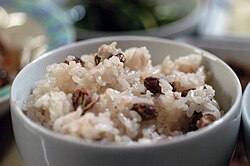
Kongbap (Korean: 콩밥) is a Korean dish of white or brown rice cooked together with one or more varieties of soybeans.[1] Kongbap may be made from scratch by combining and cooking together dried rice and soybeans—usually black soybeans. Outside Korea, the word "kongbap" is commercially used in premixed multi-grain packages in dried form. In Korea, multigrain rice consisting of grains other than soybeans is called japgok-bap (mixed cereal rice).
Etymology
[edit]The Korean word kong (bean) alone usually refers to soybeans and is contrasted with other words like pat meaning adzuki beans. As such, kongbap (bean rice) would not also be applied to patbap (red bean rice). Rice cooked with beans other than soybeans, such as French beans (gangnangkong in Korean) or peas (wandu in Korean), are usually named using the specific bean name, as in gangnang-kong-bap (French bean rice) or wandu-kong-bap (pea rice).
Kongbap in culture
[edit]Although it is generally acknowledged as a nutritious food, kongbap was not universally enjoyed as it was associated with imprisonment. Kongbap had long been a staple of Korean prison food.[2] The Korean phrase kongbap meokda (콩밥 먹다; literally "to eat kongbap") translates colloquially as "to be imprisoned."[3] This is similar to a phrase in England with the same meaning: "to do porridge."
With a recent health food trend in South Korea, the popularity of beans has risen and kongbap is more commonly eaten in Korean households than before.[4][5]
Similar dishes
[edit]- Japgok-bap (mixed-grain rice) is a bap including short-grain white and brown rice, green peas, adzuki beans, black soybeans, yulmu (Coix lacryma-jobi var. ma-yuen), black glutinous rice, barley and sorghum. The dried mixture is generally soaked in water for several hours or overnight before cooking, in order to ease the softening process of the beans while cooking.
- Patbap (red bean rice) is made from red adzuki beans.
Gallery
[edit]-
 Namul (vegetable side dishes) and kongbap (lower right)

See also
[edit]
- List of rice dishes
- Rice and beans
- Ritschert – a European barley, bean, vegetable and pork stew also sometimes associated with prisons
- Nutraloaf – a meal common in the American penal system
References
[edit]- ^ (in Korean) Kongbap Archived 2011-06-10 at the Wayback Machine at Encyclopedia of Korean Culture
- ^ (in Korean) The reason why kongbap was replaced with boribap Archived 2009-01-26 at the Wayback Machine from JoongAng Ilbo
- ^ (in Korean) Definition and common phrases of kongbap from Nate Korean dictionary
- ^ (in Korean) Mixed grain rice, Medical Today, 2009-09-15. Retrieved 2010-06-27.
- ^ (in Korean) Black beans Archived 2012-07-09 at archive.today, Joongang Ilbo, 2010-06-04. Retrieved 2010-06-27.
| Bap | |||||||||||||
|---|---|---|---|---|---|---|---|---|---|---|---|---|---|
| Banchan |
| ||||||||||||
| Soup |
| ||||||||||||
| Guksu / myeon | |||||||||||||
| Kimchi | |||||||||||||
| Sweets and snacks (Gansik) | |||||||||||||
| Beverages |
| ||||||||||||
| Royal court dishes | |||||||||||||
| Bread (Ppang) | |||||||||||||
| Ingredients | |||||||||||||
| Lists | |||||||||||||
| Related | |||||||||||||

Kongbap
View on GrokipediaOverview and Etymology
Definition and Description
Kongbap is a traditional Korean dish consisting of white or brown rice cooked together with one or more varieties of beans, such as soybeans, creating a simple yet flavorful staple in Korean cuisine. Typically, black soybeans are incorporated for their visual contrast against the rice and to add a subtle earthiness.[2] The finished dish presents as fluffy rice grains mingled with whole or slightly split beans, resulting in a satisfying chewy texture and nutty undertone that elevates the plain rice base. This combination not only improves the mouthfeel but also boosts nutritional density through the beans' protein and fiber content.[1] As a nutritious everyday meal, kongbap provides complete protein from the synergistic pairing of rice and beans, along with vitamins and minerals essential to balanced Korean diets. It is routinely served alongside banchan side dishes on a bapsang, the communal meal table, forming a foundational element of daily eating.[6]Etymology
The term kongbap (콩밥) is a compound word in Korean, derived from kong (콩), the native term for beans (often referring to soybeans but applicable to various types), and bap (밥), meaning cooked or steamed rice. This straightforward combination directly denotes rice prepared with beans, reflecting the dish's core composition of mixing beans into the rice during cooking.[7] In Korean culinary nomenclature, kongbap specifically distinguishes soybean rice from similar bean-rice preparations, such as patbap (팥밥), which uses adzuki beans (pat referring to red beans) instead, resulting in a dish with a subtle reddish hue and nuttier flavor. Variants like gangnang-kong-bap (강낭콩밥) incorporate specific bean types, such as French beans or kidney beans (gangnang-kong), highlighting how prefixes denote bean varieties while retaining the bap suffix for the rice base.[8][9] Hanja (Chinese characters) influences appear in classical Korean texts, where beans are represented by the character 豆 (pronounced du in Sino-Korean readings).[10]History
Origins in Korean Cuisine
Rice cultivation in Korea dates back to approximately 1500 BCE, during the Mumun pottery period, when wet-paddy agriculture was established on the Korean Peninsula, marking the foundation of staple grain production in the region.[11] Soybeans, another key staple, have been cultivated in Korea since at least 3500 BCE, with archaeological evidence of domesticated varieties appearing in East Asia, including the Korean Peninsula, as early as 5500 years ago.[12] Although textual records of soybeans emerge later, around the Three Kingdoms period (57 BCE–668 CE), where they are mentioned in Chinese sources like the Qimin Yaoshu in 544 CE as Korean yellow and black beans, their integration into local agriculture supported diverse food preparations.[13] In Korea's agrarian society, where rice and soybeans were abundant and central to pre-modern diets, the combination of these staples into mixed dishes naturally evolved to create nutrient-dense meals, enhancing protein and caloric intake amid variable harvests.[14] By the Goryeo Dynasty (918–1392), such combinations became more documented, as seen in the tradition of ogokbap—a precursor to kongbap featuring rice mixed with soybeans, millet, and other grains—originating in the earlier Silla Kingdom (part of the Three Kingdoms era) and continuing as a customary food for rituals and daily sustenance.[15] These mixes were integral to farming communities across pre-modern Korea, where soybeans' versatility complemented rice to address dietary needs in an era of intensive agriculture. While bean-rice combinations date to ancient times via dishes like ogokbap, the specific dish known as kongbap and its modern cultural associations developed later.Historical Uses
Kongbap has played significant roles in Korean history as an affordable, nutrient-dense dish suited to institutional and societal needs during times of constraint. In the Joseon dynasty (1392–1910) and later periods, kongbap was a standard prison food, valued for its simplicity and ability to provide sustenance using inexpensive rice and beans. This institutional use stemmed from the dish's filling properties and low preparation cost, making it ideal for feeding large numbers of inmates under limited resources. The association with incarceration gave rise to the idiom kongbap meokda (콩밥 먹다), literally "to eat kongbap," which idiomatically means "to be imprisoned" or "to serve time." This expression highlights the dish's symbolic link to punishment and deprivation, as bean rice was a monotonous staple in correctional facilities.[16] During the Japanese colonial era (1910–1945), severe food shortages from rice requisitions led to reliance on mixed-grain alternatives, incorporating legumes like soybeans for nutrition and shelf life, which helped sustain populations amid scarcity and wartime conditions in the 1930s and 1940s. The Korean War (1950–1953) further underscored the utility of mixed grain dishes like kongbap in crisis response, supporting survival amid agricultural destruction and grain shortages. Post-armistice recovery continued to favor such preparations until rice production stabilized in the late 1950s. As a humble household staple, kongbap supplemented limited rice supplies with locally grown soybeans to enhance nutritional value without added expense. This reflected broader agrarian practices dating back millennia, where beans addressed dietary gaps during harvest shortfalls.[17]Preparation and Ingredients
Key Ingredients
Kongbap centers on a core combination of short-grain rice and dried soybeans, cooked together to create a nutritious, textured staple in Korean cuisine. The rice is typically short-grain white or brown varieties, valued for their sticky consistency that binds well with the beans during cooking.[1] Traditional preparations favor black soybeans (seoritae), which impart a distinctive dark color and nutty flavor to the dish, while yellow soybeans offer a milder taste and lighter appearance.[2] By volume, the rice-to-bean ratio commonly ranges from 1:1 for a bean-heavy version to 3:1 for a more rice-dominant one, allowing flexibility based on preference for texture and nutrition.[1] Dried soybeans are essential to prevent a mushy result, as fresh or canned varieties would over-soften during cooking; they must be soaked in water for 8 to 12 hours or overnight beforehand to soften and rehydrate evenly.[1] For authenticity, Korean-grown soybeans are preferred, as they are cultivated for their firm texture and subtle earthiness suited to traditional methods.[2] While focused on soybeans, preparations with other beans like adzuki or chickpeas follow similar soaking and cooking, though soak times may vary (e.g., 6-8 hours for smaller beans). Optional additions such as glutinous rice to increase stickiness can be incorporated sparingly to maintain the soybean-centric profile; see variations for multigrain extensions.[1]Cooking Methods
Kongbap is traditionally cooked on the stovetop using a heavy pot to ensure even heat distribution and tenderness in the soybeans without overcooking the rice. Begin by soaking the soybeans overnight in ample water to rehydrate them fully, which typically takes 8–12 hours, while the rice is rinsed thoroughly and soaked separately for about 30 minutes to 1 hour. After draining both, combine 1 cup of rice with ½ cup of soybeans in the pot, add water in a 1:1 ratio relative to the drained mix (approximately 1.5 cups of water for this amount, or to the second knuckle when flattening palm on top), and bring to a boil over high heat. Reduce to a simmer for 40–50 minutes, or until the soybeans are tender yet intact and the rice has absorbed the liquid, stirring occasionally to prevent sticking.[1] Modern adaptations simplify the process using electric appliances for convenience and consistency. In an electric rice cooker, add the pre-soaked and drained rice-soybean mixture directly to the inner pot, using a 1:1 water ratio to the drained mix (or to the second knuckle), and select the mixed grain or brown rice setting, which typically cooks for 45–60 minutes including steaming time.[1] For an Instant Pot or pressure cooker, soak beans 6 hours or overnight, drain, combine with rice and water at 1:0.9 ratio to dry mix, seal the lid, and cook on high pressure for 18 minutes followed by manual release to avoid mushiness.[18] After cooking by any method, fluff the kongbap gently with a rice paddle to separate the grains and distribute the soybeans evenly, then serve hot as a side or base for meals. The standard ratio of 1 cup rice to ½ cup soybeans yields about 4 servings, providing a balanced texture of soft rice and slightly chewy beans.[1]Cultural Significance
Traditional Role
Rooted in Korean folk medicine traditions, where foods are used to prevent and treat ailments, kongbap incorporating soybeans has been valued for promoting digestion and providing nourishment, due to soybeans' high-quality proteins and saponins that help lower cholesterol and prevent obesity.[19]Modern Popularity
Since the early 2000s, kongbap has seen a notable resurgence as a health food in urban areas of South Korea, where it is increasingly incorporated into diets for its high plant-based protein content from soybeans, aligning with broader wellness trends among younger consumers. This shift reflects a growing emphasis on nutritious, fiber-rich alternatives to plain white rice, with multigrain varieties—including those featuring beans like kongbap—gaining traction due to their heart-healthy benefits and balanced nutritional profile.[20] Commercialization has further boosted its accessibility, with premixed packets of black soybean-rice blends and similar multi-grain mixes now readily available in major Korean supermarkets and convenience stores. Sales of multigrain rice products, encompassing bean-inclusive options, rose 22.1% year-over-year from 2023 to 2024, outpacing white rice growth and driven by demand from health-conscious demographics in their 30s and younger, who increased spending by 39%. This growth ties into rising vegan and low-carb dietary preferences, with searches for plant-based Korean foods climbing 25% in early 2024.[21][22][23] Despite this positive resurgence, kongbap retains a negative connotation in modern South Korea as a staple of prison meals due to its simple and inexpensive composition.[5] Beyond South Korea, kongbap's appeal has spread internationally through Korean diaspora communities and the global rise of Korean cuisine, appearing in restaurants and as an exported superfood alternative to refined white rice in markets like the United States. Exports of Korean rice-based processed foods to the US reached $62.1 million from January to May 2025, the highest for that period since 1999, reflecting broader interest in healthful grain dishes. Its nutritional profile, rich in antioxidants and minerals from beans, enhances its status as a versatile, everyday option in these settings.[24]Variations and Related Dishes
Types of Kongbap
Kongbap is primarily distinguished by the variety of soybeans used in its preparation, with each type influencing the dish's flavor and nutritional profile. The most common form employs black soybeans, known scientifically as Glycine max varieties with dark seed coats, which add dark speckles and a nutty flavor to the rice. These soybeans are valued for their high antioxidant capacity, stemming from elevated levels of anthocyanins and isoflavones that contribute to health benefits like reduced oxidative stress.[25] A milder iteration utilizes yellow soybeans, providing a subtler nutty taste and lighter appearance suitable for routine meals. This version maintains the core simplicity of kongbap while offering a less intense flavor compared to its black soybean counterpart.[1] Variations incorporating multiple beans expand kongbap's diversity, blending soybeans with others like adzuki or mung beans to enhance texture and nutrient variety, while keeping soybeans dominant. Such multi-bean preparations add subtle sweetness from adzuki or earthiness from mung, creating a balanced, hearty rice that overlaps with but remains distinct from fully mixed-grain dishes.[3]Similar Dishes
Patbap, a Korean rice dish prepared with adzuki beans, differs from kongbap in its sweeter profile and softer texture, often served during special occasions such as birthdays rather than as an everyday savory meal. The adzuki beans impart a reddish hue and subtle sweetness to the rice, which is cooked using the beans' boiling water for enhanced flavor, contrasting kongbap's nutty, umami-driven taste from soybeans. It is typically enjoyed as a savory staple alongside side dishes like kimchi and stews.[8] Japgokbap represents a more elaborate Korean multigrain preparation typically including several grains such as barley, black sweet rice, and millet, with recipes varying to incorporate beans including soybeans. This results in a nutritionally denser and visually varied rice compared to the simpler rice-soybean combination of kongbap.[26] Such complexity emphasizes health benefits over kongbap's focused bean integration.[26] Ogokbap is a traditional five-grain variant sometimes including beans like black soybeans or adzuki, holding cultural importance in rituals such as the Jeongwol Daeboreum festival, where it symbolizes prosperity and good health.[3] In broader East Asian contexts, kongbap shares traditions with Japanese sekihan, a celebratory sticky rice cooked with azuki beans that yields a chewy texture and mild saltiness, though sekihan's reddish tint and occasional sweetness highlight festive uses distinct from kongbap's everyday savory role.[27] These dishes reflect common East Asian practices of combining beans with rice for symbolic or nutritional purposes, yet kongbap stands out for its emphasis on soybeans rather than red beans.[27]Nutritional Aspects
Composition
A standard 1-cup serving of kongbap (approximately 200 g cooked, prepared with a typical 2:1 ratio of rice to soybeans by dry weight) provides approximately 330 calories, primarily from carbohydrates contributed by the rice component. The macronutrient profile includes about 70 g of carbohydrates (mostly complex starches from rice), 8–9 g of protein sourced from the soybeans, 5 g of dietary fiber (enhanced by the soy's insoluble fibers), and low fat content of 2 g, reflecting the minimal oil used in traditional boiling methods.[28][29][30] In terms of micronutrients, kongbap is notably high in iron (2–3 mg, largely from soybeans), folate (50–100 μg, concentrated in soy), and potassium (300–400 mg, supported by both ingredients), alongside isoflavones (such as genistein and daidzein) unique to soybeans that contribute to its distinctive nutritional profile. These values can vary slightly based on the soybean variety and cooking absorption, but they underscore kongbap's role as a nutrient-dense staple.[30][31][32] Variations in composition arise from ingredient substitutions; for instance, using brown rice instead of white increases B-vitamins like thiamine and niacin due to the retained bran layer. Incorporating black soybeans elevates anthocyanin levels, providing additional antioxidants responsible for the dish's darker hue and enhanced oxidative stability.[33]Health Benefits
Kongbap, combining soybeans with rice, provides a synergistic blend of plant-based protein and dietary fiber that supports digestive health, helps regulate blood sugar levels, and promotes feelings of satiety. The complete protein profile formed by rice and beans enhances nutrient absorption and sustained energy release, while the fiber aids in gut motility and microbiome balance. This aligns with traditional Korean medicinal food principles, such as bonyaeshik, which emphasize foods for promoting overall gut health and preventing digestive imbalances.[34][35][36][19] The soy isoflavones present in kongbap's soybeans offer potential cardiovascular advantages, including reductions in low-density lipoprotein (LDL) cholesterol and improvements in arterial compliance, as evidenced by studies on soy-rich Asian diets. These compounds may also alleviate menopausal symptoms, such as hot flashes and bone density loss, particularly in postmenopausal women from regions with high soy consumption like East Asia. Meta-analyses confirm these effects, linking isoflavone intake to lower blood pressure and reduced cardiovascular disease risk.[37][38][39][40] In the context of a balanced Korean diet, kongbap contributes to longevity patterns observed in Korea, where soy-inclusive meals correlate with lower chronic disease rates. Black soybeans, often used in kongbap, contain antioxidants like anthocyanins that exert anti-inflammatory effects, mitigating oxidative stress and supporting immune function. This makes kongbap a suitable option for vegetarians seeking high-quality, complete plant proteins without animal products.[41][42][43][44]References
- https://en.wiktionary.org/wiki/%EC%BD%A9