Hubbry Logo
MilmyeonMilmyeonMain
Open search
Milmyeon
Community hub
Milmyeon
logo
8 pages, 0 posts
0 subscribers
Be the first to start a discussion here.
Milmyeon
Milmyeon
from Wikipedia
Milmyeon
TypeKorean noodles
Place of originKorea
Region or stateBusan
Main ingredientsNoodles (wheat flour, sweet potato and potato starch), meat broth, vegetables
Variationsmul milmyeon, bibim milmyeon
  •   Media: Milmyeon

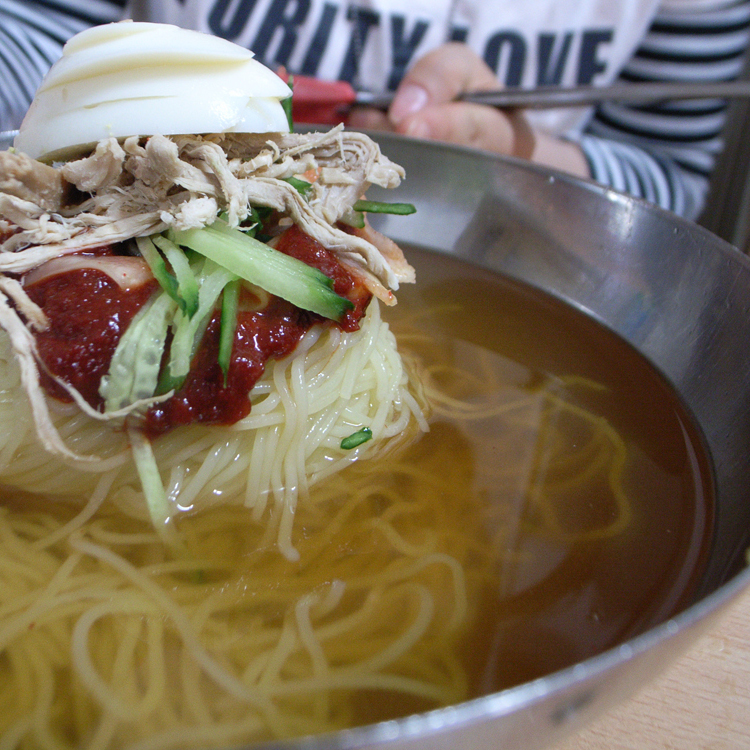
Milmyeon (Korean밀면; lit. wheat noodles) is a noodle dish that originated in Busan, South Korea. Milmyeon is a variant of the northern Korean noodle dish naengmyeon. It consists of wheat noodles in a cold meat broth (mul milmyeon) or a spicy sauce (bibim milmyeon), and topped with vegetables and garnish.

Naengmyeon is a northern Korean dish that is based on noodles containing buckwheat flour. During the Korean War, many northerners fled to the South. Buckwheat was scarce in Busan, so northern refugees made somyeon noodles with wheat flour provided by American food rations.[1] One restaurant, Naeho Naengmyeon, claims to have been the originator of the dish, although this claim has been disputed.[2][3] The new version of the dish was called milmyeon, meaning "wheat noodle".[1] Milmyeon has become a specialty of Busan.[4]

The basic recipe includes noodles made from wheat flour and potato (or sweet potato) starch, and meat broth enriched with vegetables and medicinal herbs.[5]

Milyeon comes in two basic varieties. In mul milmyeon (물밀면; lit. water milmyeon), the noodles are served in an icy-cold broth and topped with pickled garnishes.[1] Bibim milmyeon is made with a spicy, gochujang-based paste.[6]

References

[edit]
Revisions and contributorsEdit on WikipediaRead on Wikipedia
from Grokipedia
Milmyeon (밀면), also known as wheat cold noodles, is a traditional Korean dish originating from , , consisting of chewy noodles served in a chilled, light broth typically made from or , and garnished with sliced , half a , , shredded , and a spicy sauce made with gochugaru (Korean red pepper flakes). This dish emerged during the (1950–1953) when North Korean refugees fleeing to adapted the traditional —a buckwheat-based cold noodle soup from their homeland in the Hamgyong province—due to the scarcity of and . Instead, they substituted affordable , which was abundantly supplied through U.S. aid under the Agricultural Trade Development and Assistance Act, making it accessible for quick preparation in the provisional capital's refugee communities. The noodles in milmyeon are distinctively thick and elastic, often made with a blend of and starch for enhanced chewiness, setting it apart from buckwheat varieties like Pyongyang naengmyeon. The broth is kept icy cold, sometimes with added ice cubes, to provide refreshment, especially during Busan's humid summers, and is customized with , mustard, and sesame seeds for tanginess. Common accompaniments include additional as a side dish or steamed dumplings (mandu) for a heartier meal. Today, remains a specialty, with historic eateries like Naeho Naengmyeon—originally founded in 1919 in and relocated to in 1953—continuing to serve it, alongside newer establishments that preserve the refugee-influenced recipe. Its evolution from wartime to a reflects 's post-war resilience and culinary adaptation.

Etymology and description

Name

Milmyeon (Hangul: 밀면; Revised Romanization: milmyeon, sometimes rendered as mil-myeon) derives its name from the Korean words "mil" (밀), meaning , and "myeon" (면), meaning noodles, literally translating to "wheat noodles." This etymology highlights its composition of wheat-based noodles, distinguishing it from traditional , which uses flour. The dish's naming evolved from its origins as "mil-naengmyeon" (wheat cold noodles), a term reflecting its adaptation from cold noodle traditions, to the shortened "milmyeon" commonly used in and surrounding regions. This abbreviation emerged in the local and culinary context of , where the dish became a staple, simplifying the reference while emphasizing its wheat base over the "naeng" (cold) descriptor. Milmyeon serves as a wheat-based adaptation of naengmyeon, tailored to available ingredients in its new locale.

Characteristics

Milmyeon features wheat-based noodles that exhibit a chewy yet soft texture, achieved through the use of often combined with for added elasticity. These noodles are typically of average thickness, neither too fine nor overly robust, allowing them to absorb the broth while maintaining a satisfying bite that enhances the dish's refreshing quality. The in milmyeon is characterized by its icy cold temperature, often served near freezing with thin layers of floating to provide immediate cooling relief, and it derives a savory, umami-rich profile from a base such as or bones simmered with aromatics like , ginger, and herbs. This results in a mildly tangy and slightly sweet undertone, balanced by the natural flavors of the stock rather than heavy , distinguishing it from more acidic regional variants. Toppings are arranged in a layered or stacked presentation atop the noodles, typically including julienned strips of crisp cucumber or lightly salted radish for textural contrast, along with half a boiled egg and occasional slices of braised beef, creating visual appeal through vibrant colors and neat segmentation. The overall serving style emphasizes summer consumption as a hydrating, cooling meal, often accompanied by side condiments such as mustard oil or vinegar to allow diners to adjust the tanginess and mild spiciness from an optional gochugaru-based sauce. This combination yields unique sensory elements, including the harmony of savory broth with the crunch of fresh vegetables and a subtle heat that complements the dish's chilled essence without overpowering it.

History

Origins

Milmyeon's conceptual origins lie in the cold noodle traditions of in , particularly around Hamheung, where was a regional staple featuring chilled broths and chewy noodles since at least the early , with establishments like the precursor to Naeho Naengmyeon founded in 1919 in Naeho village near Hamheung. The (1950–1953) played a pivotal role in the dish's dissemination, as refugees from Hamgyong Province fled southward, carrying recipes and techniques for that were adapted to new environments due to persistent ingredient unavailability in the South. This displacement marked a key turning point, with many settling in and refining the concept there using available wheat flour. The division of Korea in 1945 and wartime disruptions had already created food shortages, but the specific substitution with wheat for cold noodles occurred among refugees in .

Establishment in Busan

During the (1950–1953), a significant number of refugees from , particularly from the Hamgyong provinces, fled south to , which served as the provisional capital of . These displaced individuals, seeking to recreate the cold buckwheat noodles known as from their homeland, faced challenges due to the scarcity of in the south. Instead, they utilized American aid distributed to alleviate wartime food shortages, mixing it with local starches and ingredients to improvise a similar dish. This adaptation laid the groundwork for milmyeon, a wheat-based variant that addressed both nostalgia and resource constraints. The invention of milmyeon occurred in the 1950s among these Hamgyong refugees in , who kneaded into chewy s to mimic the texture of traditional while incorporating accessible southern elements like diluted beef broth and vinegared water for a refreshing profile suited to 's humid climate. Early iterations were born out of necessity in makeshift settings, evolving from simple sustenance to a more defined recipe as ingredients stabilized post-armistice; while origins are somewhat unclear with multiple claims, Naeho Naengmyeon is one of the earliest establishments associated with it. A key milestone came with the reopening of Naeho Naengmyeon in 's Uam-dong neighborhood in 1953 by the You family, North Korean s who had originally operated a in the north since 1919; the claims to have pioneered the formula using U.S. aid flour, with the specific recipe blending and starch developed in 1959. By the mid-1960s, milmyeon had transitioned from improvised fare to a burgeoning local specialty, with the opening of Gaegum Milmyeon in marking a landmark in its commercialization and standardization in . This restaurant, inspired by early pioneers like Naeho, refined the dish's preparation and helped popularize it among locals through consistent quality and accessibility. The evolution reflected broader adaptations to southern resources and weather, transforming a symbol of displacement into an enduring staple that balanced northern heritage with regional innovation.

Preparation

Ingredients

The core of traditional milmyeon lies in its noodles, which are crafted from a mixture of and , typically in a 7:3 ratio, resulting in thin, chewy strands reminiscent of somyeon-style noodles that provide a neutral, toothsome base for the dish. Some variations incorporate 100% or blend with powder in a 2:1 or 3:1 ratio for added nuttiness, but the wheat-starch combination remains standard for the classic texture. The broth base is essential for milmyeon's refreshing chill, usually prepared as a clear, cold from beef bones and meat such as or shank, simmered with aromatics like , ginger, and to yield a savory foundation. or stocks are common alternatives. Infusions of medicinal herbs like or licorice may be added in certain recipes for subtle depth. Toppings contribute crunch and freshness, typically including thinly sliced beef brisket from the broth, julienned cucumber for crisp texture, danmuji (pickled ) for mild sweetness, a half hard-boiled egg, and chopped . slices or salted appear in some pork-based versions, enhancing the dish's layered contrasts. Condiments allow for personalization, with mustard paste providing sharpness, adding acidity, and red pepper powder offering adjustable heat; cubes are often incorporated directly into the serving for intensified coldness. A typical serving features 200-300 grams of dry noodles per , balanced with 1-2 cups of chilled to ensure the noodles remain submerged without overwhelming the toppings.

Cooking method

The traditional cooking method for milmyeon emphasizes a , refreshing presentation, with each component prepared separately to preserve textures and flavors. The process begins with the , followed by the noodles, toppings, and final assembly.

Broth Preparation

The is the foundation of milmyeon, providing a light, savory base with subtle tanginess. or bones are simmered in for 2-4 hours to extract rich flavors, often with added aromatics like , , and ginger for depth. The resulting stock is strained to remove solids, then chilled overnight in the ; any solidified fat layer is skimmed off to keep the clear and light. Finally, the mixture is seasoned minimally with salt and a touch of to balance , then cooled further or frozen slightly to achieve an icy consistency when served.

Noodle Making and Cooking

Milmyeon noodles are distinct for their chewy, springy texture, achieved through a specific dough composition. is kneaded with and a such as or (typically in a 7:3 flour-to-starch ratio) to create an elastic that won't become gummy when cooked. This is then extruded or rolled and cut into thin, flat strands, resembling somyeon but thicker and more resilient. To cook, the noodles are added to boiling and boiled briefly for 2-3 minutes until , ensuring they retain firmness. Immediately after, they are drained and rinsed thoroughly under ice-cold running to remove excess , halt cooking, and chill them completely—this step firms up the noodles and prevents sticking.

Topping Preparation

Toppings add crunch, protein, and visual appeal to milmyeon, prepared simply to complement the cold elements. (or occasionally ) is boiled in the same used for the until tender, then sliced thinly against the grain for easy eating. such as cucumbers are julienned into fine matchsticks for crispness, while may be lightly pickled in and or simply shredded if fresh. Eggs are hard-boiled for 8-10 minutes, peeled, and halved lengthwise to top . These components are kept chilled until assembly.

Assembly and Serving

Assembly is straightforward to maintain the dish's signature layered profile. A portion of the chilled noodles is placed in a large, deep bowl to form a base. The icy broth is poured generously over the noodles until they are just submerged, often with floating cubes or sheets for extra chill. Toppings are arranged in a tall, organized stack atop the noodles—typically starting with julienned at the base, followed by sliced , and finished with halved eggs for height and symmetry. Side condiments like mustard, , or may be provided for personalization. The dish is served immediately to preserve its cold temperature and prevent the noodles from softening; in some traditional recipes, small steamed dumplings (mandu) are added to the bowl or served alongside for heartier variations.

Variations and serving styles

Mul-milmyeon

Mul-milmyeon, the broth-based variant of milmyeon, derives its name from "mul," meaning or in Korean, and features wheat noodles fully submerged in a chilled, tangy rather than being mixed with a . This version emphasizes a clear, savory typically made by simmering or bones with aromatics like , ginger, and spring onions, then cooling it thoroughly to achieve an icy consistency. The flavor profile of mul-milmyeon highlights a balanced savoriness, resulting in a refreshing tang that is less spicy than the bibim-milmyeon counterpart. Diners often add a small amount of gochujang-based spicy paste on the side for customization, but the core remains mild and hydrating. Preparation nuances include adding ice cubes directly to the for extra chilling, ensuring the chewy noodles are completely immersed, and arranging toppings like sliced , salted , and half a so they float or sink, creating a layered eating experience as the is slurped. Traditionally served in a large with abundant to maximize its cooling effect, mul-milmyeon is particularly suited for hot weather, providing hydration alongside nourishment.

Bibim-milmyeon

Bibim-milmyeon is the mixed variation of the traditional Busan noodle dish milmyeon, where "bibim" refers to the Korean term for "mixed." Unlike the brothy mul-milmyeon, it features wheat-based noodles tossed in a thick, gochujang-based rather than immersed in cold . This style highlights the chewy texture of the noodles, made from combined with potato or for added elasticity. The flavor profile of bibim-milmyeon is characterized by bold spiciness and sweetness, primarily from (Korean red pepper paste), balanced with and , creating a tangy and robust taste. This results in a drier, more concentrated compared to the refreshing, soupy mul version, appealing to those seeking a heartier cold experience. Diners often adjust the heat and acidity with additional or mustard served on the side. Preparation for bibim-milmyeon diverges from the standard mul method by focusing on a post-cooking sauce assembly. The sauce is made by combining , , mustard, , and sesame seeds, sometimes diluted slightly with water for consistency. The boiled noodles are then drained, cooled, and thoroughly tossed with the sauce, incorporating toppings such as sliced , , and optional beef or directly into the mix for integrated flavors. No is used, emphasizing the sauce's adhesion to the noodles. Traditionally, bibim-milmyeon is served cold in eateries as a standalone dish or alternative to the brothy style, often alongside simple sides like or mandu (dumplings). The toppings are blended into the noodles rather than layered separately, providing a cohesive, spicy bite that suits year-round consumption, though it remains popular in summer for its cooling effect.

Cultural significance

In Busan

Milmyeon holds a prominent place as a signature dish of cuisine, widely available in numerous local restaurants and particularly popular on summer menus due to its cooling properties. The city boasts numerous specialized milmyeon eateries, reflecting its deep integration into everyday dining culture. Among the iconic establishments is Gaegum Milmyeon, established in 1966, which has become a longstanding favorite for its authentic preparation rooted in traditions. Family-run spots like Gaya Milmyeon, with multiple outlets including one in the bustling Haeundae area, continue to preserve recipes passed down from North Korean refugees who adapted familiar cold noodle dishes to local ingredients. The dish significantly bolsters Busan's tourism and street food economy, drawing visitors to markets and coastal areas where it is a staple offering. Consumption surges annually from July to August, aligning with the region's intense summer heat and enhancing its appeal as a refreshing local delicacy. Socially, milmyeon is often enjoyed communally at vibrant markets like or along beaches such as Gwangalli, fostering shared meals that echo Busan's history of resilience forged by wartime migration. Its refugee origins underscore this enduring spirit, making it a symbol of communal endurance in the city's identity. Milmyeon has been prominently featured in (BIFF) food events since the 2000s, with venues like Shin Gaya Milmyeon highlighted in festival newsletters and BIFF Square serving as a hub for tasting the dish amid cinematic celebrations.

Beyond Busan

While milmyeon originated in Busan as a wartime adaptation of northern Korean , it has gradually expanded nationwide, becoming available in cities like through dedicated restaurants such as Milmyeon and Busan Milmyeon, which cater to those seeking regional specialties. Its recognition in broader dates to the , when variations incorporating medicinal herbs or added sweetness emerged in some establishments, reflecting evolving tastes while preserving its cooling, tangy profile. Buoyed by 's tourism infrastructure, milmyeon has grown in appeal among domestic travelers and locals beyond the southeast, often featured as a summer staple in national food discussions. On the global stage, milmyeon has seen limited but increasing exposure since the late , with the surge in K-food trends, driven by the , bringing further attention, with international media highlighting its chewy wheat noodles and chilled broth as a refreshing alternative to buckwheat-based counterparts. A 2023 BBC Travel article underscored its unique refugee origins and Busan specificity, drawing overseas visitors and contributing to its niche popularity in culinary travel narratives. Despite these developments, milmyeon faces challenges in global recognition, remaining overshadowed by the more ubiquitous , which benefits from stronger northern Korean associations and wider availability in overseas menus. Its regional identity often limits it to specialty contexts, with fewer exports of pre-packaged noodles compared to other Korean staples. To counter this, tourism authorities actively promote milmyeon through initiatives like the annual Busan Wheat Festival, where it features alongside wheat-based dishes to showcase local and cuisine. International efforts include sampling events, such as a 2023 promotion in tied to Busan's World Expo bid, which introduced milmyeon to Southeast Asian audiences as a symbol of the city's resilient food heritage. These strategies aim to elevate its profile, leveraging festivals and digital campaigns to foster wider appreciation.

References

Add your contribution
Related Hubs
User Avatar
No comments yet.