Hubbry Logo
JjigaeJjigaeMain
Open search
Jjigae
Community hub
Jjigae
logo
8 pages, 0 posts
0 subscribers
Be the first to start a discussion here.
Jjigae
Jjigae
from Wikipedia

Jjigae
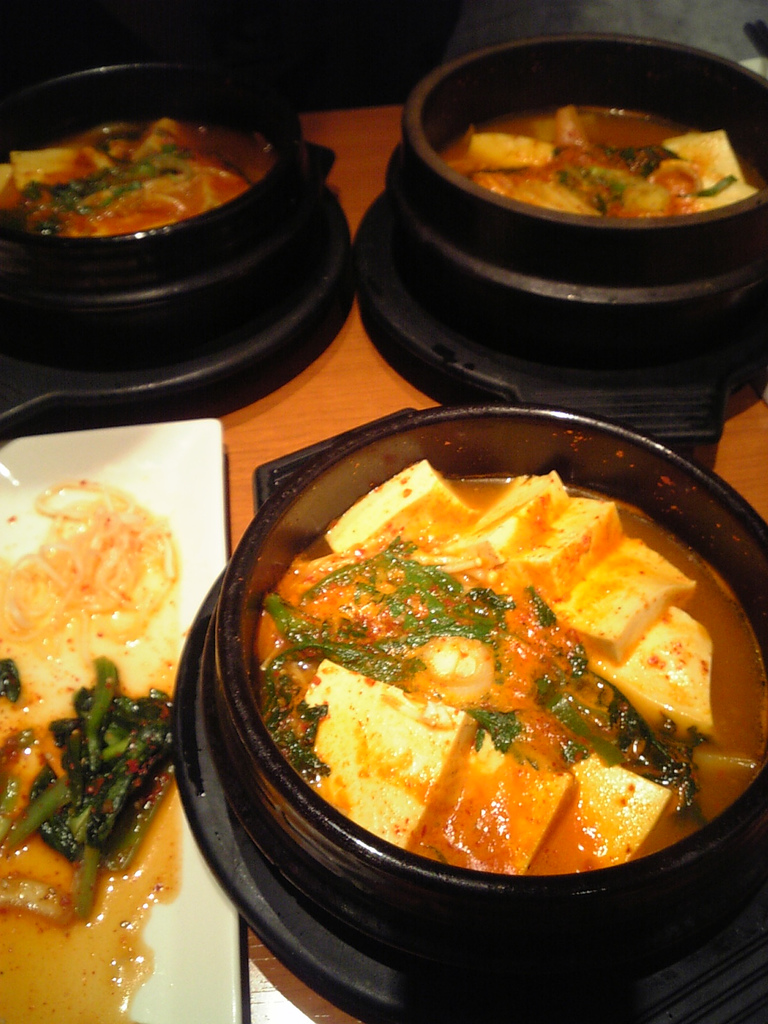
Dubu jjigae (Korean tofu stew)
TypeStew
Place of originKorea
Region or stateEast Asia
Serving temperatureHot
Main ingredientsMeat, seafood or vegetables; broth
Korean name
Hangul
찌개
RRjjigae
MRtchigae
  •   Media: Jjigae

Jjigae (Korean: 찌개; pronounced [tɕ͈iɡɛ]) are Korean stews. There are many varieties; they are typically made with meat, seafood or vegetables in a broth seasoned with gochujang (red chilli paste), doenjang (soy bean paste), ganjang (soy sauce) or saeu-jeot (salted and fermented shrimp).[1] Jjigae is often served as a communal dish.

Korean meals often include either a jjigae or a guk. During the Joseon dynasty, it was known as jochi, and two varieties would always be present on the King's surasang (royal cuisine).[2]

The types of jjigae are often named according to their principal ingredients, such as saengseon jjigae (생선찌개; lit. fish jjigae) made from fish or dubu jjigae (두부찌개; lit. tofu jjigae). They are also sometimes named according to their broth and seasonings, for example gochujang jjigae (고추장찌개) or doenjang-jjigae (된장찌개).

Compared to jeongol, which primarily consists of broth or stock, jjigae have less liquid (roughly half solid ingredients) and have stronger seasoning. Common types include soy sauce jjigae and salted fish jjigae, also known as jeotguk jjigae (also called clear stew).[3]

Varieties

[edit]

By ingredient

[edit]
  • Altang (알탕), made with pollock roe
  • Dubu jjigae (두부 찌개), made with firm tofu[4]
  • Ge jjigae (게 찌개), made with crab
  • Kimchi jjigae (김치 찌개), made with kimchi and other ingredients[4]
  • Kongbiji jjigae (콩비지 찌개), made with soybeans
  • Budae jjigae (부대 찌개), made with a spicy broth and assorted meats and other ingredients[5]
  • Saengseon jjigae (생선 찌개), made with fish. Dongtae jjigae (동태 찌개) is made from frozen pollock.
  • Sundubu jjigae (순두부 찌개), made with uncurdled soft tofu[6]

By condiment

[edit]

See also

[edit]

References

[edit]
Revisions and contributorsEdit on WikipediaRead on Wikipedia
from Grokipedia
Jjigae (Korean: 찌개) is a traditional Korean characterized by its hearty consistency, with a liquid-to-solid ratio of approximately 4:6, making it thicker and saltier than lighter soups known as . It typically features a flavorful simmered with solid components such as vegetables, , meat, seafood, or fish, and is distinguished from communal hot pots like by its pre-cooked preparation and more concentrated seasoning. As a cornerstone of Korean cuisine, jjigae embodies the communal and comforting aspects of family meals, often prepared and shared from a single pot at the table to accompany steamed rice and (side dishes). The broth is commonly flavored with fermented staples like (soybean paste) for depth or (red chili paste) for spiciness, reflecting Korea's emphasis on balanced, bold tastes derived from seasonal and preserved ingredients. Varieties abound, adapting to available proteins and produce; for instance, incorporates , potatoes, mushrooms, and clams in a savory soybean base, while highlights silky, uncurdled soft simmered with seafood for a refreshing yet robust profile. Among the most iconic types, utilizes aged, tangy boiled with pork or tuna to create a spicy, sour staple that's a frequent home-cooked dish across Korea. , or army stew, emerged post-Korean War in the 1950s as an innovative fusion, combining and with American-influenced elements like , and cheese to address food scarcity, and has since become a beloved favorite. These diverse forms underscore jjigae's versatility and enduring role in daily Korean life, from humble households to modern eateries, often enjoyed year-round but especially in colder months for its warming qualities.

Overview

Definition and characteristics

Jjigae ([tɕ͈i.ɡɛ]) is a category of Korean stews simmered in a single vessel, typically featuring a seasoned with , , , or as primary components. These dishes are often prepared using or stock as the base for the , providing an foundation that unifies the ingredients during cooking. A defining trait of jjigae is its balanced ratio of liquid to solid elements, approximately 4:6, resulting in a thicker consistency compared to the more liquid-heavy (clear soups) or the diluted (hot pots). This structure allows for a hearty, stew-like texture where solids such as , mushrooms, or proteins are prominent alongside the . Jjigae is traditionally served family-style, hot at the table directly from the cooking pot to encourage communal sharing. The sensory profile of jjigae emphasizes bold, robust flavors derived from fermented elements like (soybean paste) or spicy seasonings such as (chili paste), creating a savory depth that distinguishes it within . For instance, highlights varying spice intensities through its fermented cabbage base.

Etymology

The term jjigae (찌개) is a native Korean word, derived from the root jji- meaning "to " or "to boil," combined with the suffix -gae, which denotes a small object or result associated with an action, evoking the preparation of a compact, dish. It first appears in script in the 17th-century dynasty culinary manuscript Siuijeonseo (思議全書, ca. 1670), where it is recorded as the variant "jochi" (조치), an early designation for a seasoned, thickened cooked with ingredients like or vegetables, often using soybean paste. This historical form "jochi" highlights its distinction from related terms such as (찜), which refers to braised or steamed dishes without , and (국), denoting lighter, clear soups with a higher liquid-to-solid ratio. In Joseon-era records, "jochi" specifically described communal stews simmered in pots, evolving into the modern "jjigae" as orthography standardized during the early , solidifying its place in the Korean culinary lexicon alongside other indigenous terms for prepared foods.

History

Origins in Joseon dynasty

During the dynasty (1392–1910), jjigae emerged as a staple in court cuisine under the term jochi, referring to hearty stews distinguished from lighter soups by their higher proportion of solid ingredients and robust seasoning. These dishes were integral to the surasang, the royal meal table, where two varieties—one clear (jeotguk-jochi) and one seasoned (tojangjochi)—were standard accompaniments to and other courses, ensuring nutritional balance in the monarch's daily repasts. Clear types, such as guldubu-jeotguk-jochi, featured oyster and bean curd simmered with fermented shrimp or salt for subtle , while seasoned versions like soybean paste-based stews were simmered slowly in pots to deepen flavors. The foundations of jjigae drew from Buddhist vegetarian traditions prevalent in Joseon society, which emphasized plant-based ferments and seasonal produce to align with precepts against meat consumption. Temples served as key centers for producing essentials like meju (soybean bricks) and doenjang (soybean paste), adapting these into simple, nourishing stews that influenced broader culinary practices. Influences from Chinese cuisine, particularly the introduction of soy and fermentation techniques during earlier periods, were localized through indigenous ingredients like doenjang, creating distinctly Korean profiles suited to the peninsula's agricultural resources. This synthesis reflected Joseon's cultural exchanges while prioritizing harmony between flavors and health. Earliest documented recipes for jjigae appear in late 19th-century texts like Siuijeonseo, a comprehensive attributed to a noblewoman, which details soybean-based stews tailored for elite households with ingredients like vegetables, , and paste for elaborate presentations. In noble contexts, these stews incorporated premium elements such as or nuts for ceremonial meals, underscoring status through complexity. For commoners, jjigae manifested in simpler vegetable iterations using affordable, locally grown produce and basic broths, providing sustenance amid agrarian lifestyles, in contrast to the refined, multi-layered versions reserved for and court. Palace records note that dishes like were more routinely served to workers than royalty, who favored milder preparations. This class-based variation highlighted jjigae's versatility as both everyday fare and symbol of hierarchy. In , similar traditions persisted, with temple cuisines maintaining vegetarian jjigae variants amid ongoing Buddhist influences.

Evolution and modern developments

Following the (1950–1953), severe food shortages in prompted innovative adaptations to traditional jjigae, most notably the creation of , or "army base stew," which incorporated surplus American canned goods such as Spam, hot dogs, and smuggled from U.S. military bases near cities like . This fusion dish emerged in the mid-1950s as a resourceful response to scarcity, blending Korean staples like and with processed Western proteins to stretch limited resources. By the , such innovations had normalized the use of canned ingredients in jjigae, transforming it from a humble home-cooked into a symbol of postwar resilience, and the dish gained popularity among factory workers during the period of rapid economic growth. The rapid industrialization and urbanization of in the 1970s further reshaped jjigae, as and rural-to-urban migration increased demand for convenient, ready-to-eat foods amid busy lifestyles. Instant , introduced in 1963, became a common addition to jjigae pots—particularly in —for added bulk and flavor, reflecting broader shifts toward processed ingredients. This trend culminated in the development of canned and instant jjigae products by the early 2000s, such as Korea Ginseng Corporation's instant launched in 2003, allowing quick preparation without traditional . Local production of key components, like sausages by companies such as Lotte Ham in the 1980s, made these adaptations more accessible and widespread. From the 1980s onward, jjigae spread globally through communities in the United States and , where immigration waves established restaurants serving familiar stews as cultural touchstones. In the U.S., particularly in areas like ' , jjigae became a staple in family-run eateries, often adapted with locally available ingredients to evoke . Similar patterns emerged in , where Zainichi integrated jjigae into urban dining scenes, fostering fusions that preserved core flavors while appealing to diverse palates. As of 2025, amid the global surge in K-food popularity driven by the , jjigae has seen health-oriented evolutions, including low-sodium variants using reduced-salt and plant-based alternatives featuring or mushrooms instead of . These adaptations, such as vegan rich in plant proteins, align with rising demands for sustainable and wellness-focused cuisine, appearing in both Korean markets and international fusion menus.

Ingredients

Common base ingredients

Jjigae, a staple Korean , commonly features (dubu) as a primary protein source, valued for its soft or firm texture that absorbs flavors while providing substance. and are frequently used meats, adding richness and varying the dish's heartiness depending on the cut, such as belly or shoulder. options like (al) and crab contribute and coastal influences, particularly in traditional preparations. Historically, soybeans have served as a foundational ingredient, processed into or fermented forms that underpin many jjigae recipes dating back to the dynasty. Vegetables form an essential component for texture and bulk, with often sliced to release moisture during cooking. Mushrooms, such as , provide earthy depth, while add freshness and color as a garnish or integral element. Radish contributes mild sweetness and crunch, helping to balance the stew's consistency across various recipes. For added heartiness in select jjigae, staples like rice cakes () offer chewy texture, and glass noodles (dangmyeon) made from starch provide a slippery, filling element. These base ingredients typically constitute a balanced mix of solids to achieve the stew's signature semi-thick consistency, with proteins and vegetables comprising the bulk before seasonings are incorporated.

Seasonings and broth components

Jjigae's flavor profile is fundamentally shaped by fermented pastes that provide depth and , including , a chili-based paste fermented for 6–12 months with , red peppers, and grains, offering spicy and savory notes; , a paste aged over six months in brine, delivering earthy richness; ganjang, the liquid byproduct of doenjang production fermented for 6–12 months, contributing salty ; and saeu-jeot, salted fermented that imparts a briny, depth. These seasonings are typically dissolved into the during cooking to unify the stew's taste. The broth base of jjigae often relies on anchovy (myeolchi) and kelp (dashima) stock, simmered to extract a clean, mild umami that enhances the overall savoriness without overpowering other elements. In simpler preparations, plain water or vegetable broth serves as a neutral foundation, allowing the fermented seasonings to dominate. Spice levels in jjigae vary based on gochugaru, Korean chili flakes added for adjustable heat ranging from mild warmth to intense fire, while doenjang counters with its grounding earthy depth derived from fermented soybeans. These elements are often paired briefly with base ingredients like tofu to absorb and amplify the broth's flavors. Fermentation plays a pivotal role in jjigae's complexity, as the aging of pastes like for 6 months or longer in traditional methods—breaks down proteins into and peptides through microbial action, yielding layered , aromas from Maillard reactions, and a balanced savory profile that elevates the beyond basic saltiness.

Preparation

Basic cooking techniques

The core method for preparing jjigae involves aromatics, such as and onions, in a small amount of oil, typically or neutral, over medium heat for a few minutes to release their flavors. Vegetables like potatoes and radish may also be sautéed at this stage to enhance their integration. —often made from anchovies, , or —is then added along with solid ingredients like proteins, , and seasonings such as , , soy sauce, or chili flakes (gochugaru), before bringing the mixture to a . For instance, in vegetable-based variants, tofu is added after initial sautéing, and the mixture is simmered until the broth reduces. This foundational process ensures a balanced integration of common base ingredients and components. Heat management emphasizes an initial boil over medium-high heat to combine elements, followed by a gentle simmer on low heat for 20 to 40 minutes. This approach melds flavors gradually while preserving the texture of ingredients, preventing scorching of spices like gochugaru by starting with lower heat during sautéing. Traditionally, jjigae is cooked in a ttukbaegi, a small pot that distributes heat evenly and retains warmth, allowing the dish to be served bubbling at the table. In contemporary settings, pots are often used as durable alternatives that maintain similar heat control. Timing focuses on , with preparation—chopping and assembling—taking about 10 minutes, contrasted by the simmering phase that builds depth, especially when fermented elements like are involved, requiring the full 20 to 40 minutes for optimal flavor development. Jjigae is distinguished from , the traditional Korean , primarily by its thicker consistency and more robust seasoning. While features a clear, lighter with a higher liquid-to-solid ratio (approximately 7:3), allowing for a delicate flavor profile often achieved through prolonged , jjigae incorporates a denser mixture (around 4:6 liquid to solid) that results in a stew-like texture enriched with solid components such as , , or meat. This makes jjigae saltier and more substantial, serving as a heartier rather than a standalone . In contrast, emphasizes simplicity and clarity, typically accompanying without overpowering other elements of the meal. Compared to , another Korean hot pot-style dish, jjigae employs less liquid overall and is prepared entirely in the kitchen prior to serving, without the interactive table-top cooking characteristic of jeongol. Jeongol, often less salty than jjigae, involves arranging a diverse array of ingredients—such as meats, , and vegetables—in a shallow pot, then pouring a over them to simmer communally at the table, resulting in a more watery, shared experience. Jjigae, by focusing on one or two primary ingredients integrated into a cohesive , avoids this multiplicity and performative aspect, prioritizing individual portioning over group interaction. Jjigae also differs from tang in its emphasis on fermented elements and spicy seasonings, such as gochujang or doenjang paste, which contribute to its bold, complex flavors, whereas tang centers on meat-centric broths without such heavy pastes. Borrowed from Chinese terminology, tang denotes hearty, often milky soups like seolleongtang (beef bone broth), which are thicker than guk but lean toward simmering meats for depth rather than the spice-forward, paste-enriched profile of jjigae. This distinction highlights jjigae's role as a fermented, vegetable-inclusive stew, in opposition to tang's focus on pure, meat-derived essences. Regionally, jjigae shares superficial similarities with Japanese nabe (), particularly in varieties like kimchi nabe, which adapts the fermented heat of for communal cooking in an earthenware . However, jjigae remains distinctly rooted in Korean culinary traditions, relying on indigenous ferments like and soybean pastes for its tangy, spicy backbone, unlike the broader, often milder ingredient versatility of nabe.

Varieties

Meat and seafood-based jjigae

Meat and seafood-based jjigae emphasize animal proteins as the primary components, offering higher nutritional density through sources like , , or fish derivatives, which distinguish them from lighter, plant-focused variants. These stews frequently incorporate spicy elements such as for depth, with preparation times generally spanning 30 to 60 minutes to tenderize tougher cuts or infuse flavors into . Historically, meat-inclusive jjigae were less prevalent during the dynasty (1392–1897) due to the scarcity and luxury status of and among commoners, influenced by Confucian dietary norms and agricultural priorities that favored and grains; versions, however, drew from coastal abundance. Post-Korean War (1950–1953), increased access to imported meats via U.S. military bases spurred the popularization of richer, protein-heavy jjigae, transforming them into everyday comfort foods symbolizing resilience and adaptation. Sundubu jjigae, a soft , commonly integrates or like clams and for added savoriness, simmered in a spicy or until the silken absorbs the flavors, often finished with an optional raw cracked in at the table for richness. Originating from Korea's long tradition of tofu production dating back centuries, this variety balances the delicate texture of uncurdled with hearty proteins, making it a versatile option served bubbling hot in pots. Gamjatang features spine or backbones as its core, slow-cooked with potatoes, seeds, and in a robust, -infused that yields a milky texture after straining, providing a warming, bone-marrow-rich meal ideal for cold weather. Traced to the with roots in the period (57 BCE–668 CE), where laborers consumed similar hearty soups, gamjatang evolved into a staple through regional adaptations emphasizing affordable cuts. Dwaejigogi jjigae, or spicy pork stew, is made with pork belly or shoulder, onions, potatoes, tofu, and green onions simmered in a spicy broth seasoned with gochujang, gochugaru, garlic, and ginger. It typically provides 250-400 kcal per serving without rice, varying based on the amount of pork and the presence of potatoes or noodles (broader range 210-478 kcal). Budae jjigae, or army base stew, emerged in the 1950s near U.S. military camps in , combining canned sausages, Spam, and noodles with and vegetables in a gochujang-spiced broth, reflecting resourcefulness amid food shortages. This fusion dish, initially scavenged from military leftovers, gained widespread appeal by the 1960s as a symbol of economic recovery, now commonly prepared at home with layered proteins for a communal, one-pot experience. Among seafood-centric types, altang highlights pollock roe paired with and in a spicy, clear that accentuates the roe's briny bursts, cooked briefly to preserve its delicate texture. This variety draws from Korea's heritage, where roe was valued for its nutrient density, and remains a seasonal favorite in coastal regions for its light yet flavorful profile. Kkotgetang, or flower crab stew, features fresh flower crabs (or blue crabs) simmered with , , and vegetables in a spicy or seasoned with , , and green onions, highlighting the shellfish's natural sweetness and . Popular in autumn when crabs are at their peak quality, this stew simmers for about 30 to 40 minutes to meld flavors without overcooking the meat, serving as a hearty alternative to raw fermented crab dishes like .

Vegetable and fermented-based jjigae

Vegetable and fermented-based jjigae represent a lighter subset of Korean stews, emphasizing plant ingredients and fermented elements like or paste for depth, often prepared with minimal or no animal proteins to create vegetarian-friendly dishes. These varieties typically simmer for shorter durations, around 15 to 25 minutes, allowing to retain texture while infusing the broth with subtle, tangy flavors from ferments. A prominent example is , centered on well-fermented as the base, which provides a spicy, sour foundation from developed during . Key ingredients include bite-sized pieces, for creaminess, and vegetables such as or , with optional omitted in vegetable-focused versions using or vegetable broth. Preparation involves the in minimal oil for 5 to 7 minutes to release flavors, followed by adding broth and simmering covered for 15 to 20 minutes until the vegetables soften slightly. This results in a lighter profile compared to meat-heavy stews, highlighting the ferment's and vitamins A, B, and C for digestive benefits. Doenjang jjigae showcases fermented soybean paste () as the starring element, delivering earthy from its high protein and content, paired with abundant like potatoes, , onions, and . adds substance, while optional clams or can be excluded for a fully plant-based rendition using vegetable broth. The cooking process starts with the with and chili flakes for 3 to 4 minutes, then incorporating water or broth and boiling the and other for 10 to 15 minutes total, yielding a hearty yet mild . such as or can enhance variety, emphasizing the dish's adaptability for lighter, nutrient-rich meals. A simple home-style vegetable-based variant, often prepared in households, features thinly sliced potatoes, radish, onion, and tofu simmered in a modest amount of water with a seasoning paste made from soy sauce, gochugaru, garlic, and sugar, sautéed initially for flavor and reduced over medium heat for 10 to 15 minutes until the broth thickens, with green onions added midway for freshness and optional chilies for added spice. This approach highlights the use of accessible plant ingredients and allows for adjustments in heat level, making it a versatile, everyday option in modern Korean cooking. These dishes trace roots to Buddhist influences introduced in 372 AD, where monastic traditions promoted vegetarian cooking to adhere to precepts against killing, fostering innovations in ferments like and ganjang alongside mountain vegetables for balanced, medicinal nutrition. Temple cuisine emphasized lighter preparations avoiding pungent alliums, using for flavor and preservation, which shaped enduring vegetable-based jjigae as eco-friendly, soul-nourishing staples. In modern adaptations, vegan versions replace traditional anchovy stock with mushroom-based broths, such as dried shiitake and kombu simmered for umami, while using plant-based kimchi to maintain authenticity in kimchi jjigae. This approach, seen in recipes simmering mushrooms and tofu with ferments for 20 to 30 minutes, broadens accessibility for vegetarian diets without compromising the stew's warming, balanced profile.

Cultural significance

Role in Korean meals

In traditional Korean cuisine, known as hansik, jjigae occupies a key position as one of the core elements in the meal structure, typically forming the stew or soup component alongside steamed rice (bap) and an array of side dishes (). This arrangement ensures a harmonious balance of textures and flavors, with jjigae providing a hearty, flavorful broth that complements the plain rice and complements lighter clear soups () when both are present. Jjigae features prominently in everyday Korean home cooking, served frequently across meals and especially valued in winter for its warming, comforting qualities that help combat the cold. Varieties like exemplify this routine integration. Portable adaptations of jjigae also appear in , the traditional packed lunchboxes, allowing it to serve as a convenient option for school or work meals. From a nutritional standpoint, jjigae supports a well-rounded intake by combining proteins from sources like , , or with vegetables and fermented elements that deliver vitamins, , and beneficial for gut and . For example, a serving of meat-based varieties like pork jjigae typically ranges from 250 to 400 kcal, varying by the amount of pork and presence of potatoes or noodles. Studies on fermented components, such as those in , highlight improvements in glucose tolerance and anti-obesity effects in high-fat diets. Nonetheless, its reliance on salty seasonings and ferments results in elevated sodium levels, necessitating moderate portions to avoid risks like . Historically and socioeconomically, jjigae's use of accessible, seasonal ingredients has made it an economical through to modern times, fostering its enduring versatility in resource-limited settings. This adaptability underscores its role as a practical, nourishing option amid varying economic conditions.

Serving traditions and etiquette

Jjigae is traditionally presented bubbling hot in a ttukbaegi, an pot placed at the center of the table to facilitate communal sharing. This method allows the stew to continue gently over a portable burner, enhancing its flavors and aromas during the meal. Diners typically ladle portions into individual bowls using a large serving , ensuring by avoiding direct contact with shared utensils. In line with Korean dining customs, the eldest person at the table is served first as a sign of respect, with others waiting to begin eating until they have started. Spoons are used for the stew and rice, while handle side dishes; promoting patience and mindfulness during consumption. To balance the stew's richness, it is often paired with fresh or vegetable like seasoned greens, which provide contrasting acidity and crunch. Jjigae holds a central role in family gatherings, where its shared preparation and eating foster jeong, the deep emotional bond central to Korean social life. In restaurants, it is commonly enjoyed communally, with norms emphasizing group harmony, such as matching the eating pace of elders and refilling shared sides. In modern global contexts, particularly at Korean BBQ establishments abroad, jjigae appears in fusion forms, such as stew topped with , served alongside grilled meats with both and spoons for a hybrid dining experience.

References

Add your contribution
Related Hubs
User Avatar
No comments yet.