Hubbry Logo
Liver spreadLiver spreadMain
Open search
Liver spread
Community hub
Liver spread
logo
8 pages, 0 posts
0 subscribers
Be the first to start a discussion here.
Liver spread
Liver spread
from Wikipedia

Liver spread
Typespread
Place of originPhilippines
Main ingredientsBeef, pork and/or chicken liver, cereal, offal

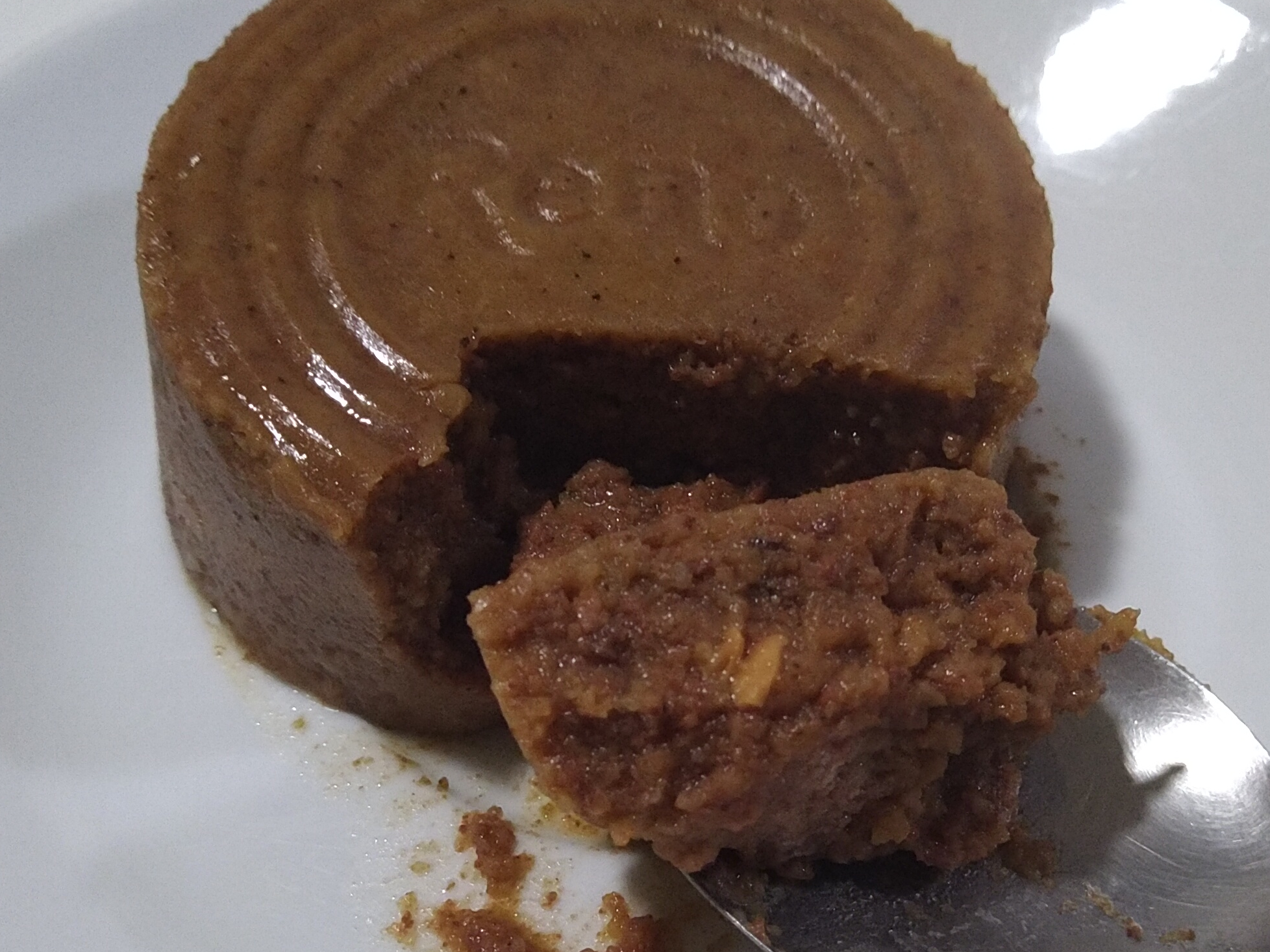
Liver spread is a Filipino canned spread product made from pureed pork, beef, or chicken liver mixed with cereal and/or offal, similar to the French pâté and German liverwurst. Liver spread is usually eaten as a filling for sandwich bread and an accompaniment to crackers, but it is also used as an ingredient in dishes like lechon sauce and the Tagalog version of paksiw na lechon. It is also used in some households as an ingredient in dishes like caldereta and Filipino spaghetti.[1]

See also

[edit]

References

[edit]
Revisions and contributorsEdit on WikipediaRead on Wikipedia
from Grokipedia
Liver spread is a canned product originating in the , similar to European pâtés or but typically coarser in texture. It consists of pureed liver—usually , , or —blended into a smooth, spreadable paste. It is commonly used as a spread on or as an in Filipino dishes, and is produced by brands such as Reno (since 1958) and San Miguel Purefoods.

History

Origins and influences

The concept of liver spread traces its origins to ancient preservation techniques for and meats, evolving into refined preparations in . , a finely ground mixture often featuring liver, emerged in medieval as a method to extend the of hunted meats through cooking and sealing in terrines or . This practice emphasized using nutrient-rich organs like liver, blended with fats, herbs, and spices for flavor and stability. Central European influences also contributed, particularly through Leberwurst, a traditional German liver combining pork liver with fillers like onions and , in regional traditions. These liver-based products served both practical and culinary purposes, transforming inexpensive byproducts into versatile spreads or sausages consumed across social classes in Northern and . Spanish colonization of the from 1565 to 1898 introduced European meat processing methods, including stews and preserved meats that incorporated liver, influencing local adaptations of utilization in Filipino cooking. This colonial exchange blended with indigenous practices of fermenting and seasoning meats, setting the stage for a distinctly affordable, canned version of liver preparations. The commercial liver spread as known today first appeared in the in 1958 with the launch of the Reno brand, which popularized it as a household essential.

Development in the Philippines

Liver spread emerged as a commercial product in the during the mid-20th century, adapting European traditions to local tastes and production methods using affordable ingredients like or liver combined with cereals and . The product's development was driven by the need for convenient, shelf-stable foods in post-World War II households, where canned goods became popular for their accessibility and . By the , early manufacturers began producing it as an economical protein source, marking the start of its integration into everyday Filipino diets. A pivotal moment in its development came with the launch of the Reno brand in by Reno Foods Inc., which made the spread widely available on store shelves across the country. Initially, distribution relied on efforts, such as sales by early entrepreneurs, which helped establish its presence in local markets and build consumer loyalty. This approach not only fueled the growth of family-run businesses but also positioned liver spread as a household essential, often paired with for breakfast or used to enhance stews. Reno's success laid the foundation for the category, with the company securing a to Operate as a repacker in 2017 amid evolving regulatory standards. The 1970s saw further expansion with the entry of major players like CDO Foodsphere, founded in 1975, which introduced its own liver spread variant and contributed to increased competition and variety in the market. This period solidified liver spread's role in Philippine cuisine, transforming it from a simple spread into a versatile ingredient in dishes like caldereta, where it thickens and enriches sauces. By the late 20th century, regulatory advancements, such as the FDA's 2009 requirement for product registration under Republic Act No. 9711, prompted manufacturers to formalize operations. In 2020, the Food and Drug Administration issued a public health warning against Reno liver spread for lacking a Certificate of Product Registration, leading to a temporary advisory; the product was registered in October 2020 (registration no. FR-4000007785164) and has since remained compliant, ensuring quality and safety while maintaining its cultural significance.

Ingredients and production

Key ingredients

Liver spread, a staple in , is primarily composed of pureed liver from , , or , which forms the base of its rich, savory flavor and texture. This liver is typically combined with other animal proteins such as , trimmings, hearts, lungs, or meat to enhance volume and consistency while maintaining a smooth, spreadable paste. Binders like , bread crumbs, or cereals are essential additives that help achieve the product's firm yet spreadable texture, often comprising a significant portion of the to extend and reduce costs. Fats from , , or sources provide creaminess and prevent drying during processing, while liquids such as or serve as a medium for blending and emulsification. Seasonings form a critical component for , including salt, for subtle sweetness, spices (such as pepper or onion powder), and (MSG) to amplify . Iodized salt is commonly used in commercial variants to meet nutritional standards. may also be incorporated in some formulations as an additional extender. Variations across brands reflect regional preferences and regulatory requirements; for instance, Reno emphasizes liver with cereals and , while Lady's Choice includes a mix of and elements with flour in its bread crumbs. These ingredients are sterilized and canned to ensure long-term preservation without refrigeration.

Commercial manufacturing process

The commercial manufacturing of liver spread, a canned liver-based paste, begins with the selection and preparation of raw materials, primarily consisting of liver (from , , or ) at least 30% by weight, trimmings, or , , and seasonings including salt, nitrite, spices, and . Livers are manually trimmed to remove , sinews, veins, and , then washed thoroughly to ensure cleanliness and quality. These steps are critical for and to prevent off-flavors, with the raw materials often sourced from inspected slaughterhouses to meet standards. The core processing involves mechanical breakdown and emulsification to achieve the smooth, spreadable texture characteristic of the product. Trimmed livers, meat trimmings, and onions are ground or chopped in a bowl cutter or similar equipment to a fine consistency, while is separately minced and pre-cooked in boiling water to render and incorporate it evenly. Salt, curing agents, spices, and emulsifiers are added during mixing to form a stable , often through homogenization to ensure uniform distribution and prevent separation; this stage may include partial cooking of the mixture at 80°C for 30 minutes to coagulate proteins. The process emphasizes controlled temperatures to maintain the product's nutritional integrity, such as preserving iron content from the liver. Once emulsified, the hot mixture is filled into sterilized cans (typically 150 g size) under aseptic conditions to minimize microbial contamination, followed by hermetic sealing. The sealed cans undergo sterilization in an at 114°C under 3.2 bar pressure for an effective time of 55 minutes (total cycle about 1.5 hours), achieving an F₀ value of 7.24–8.58 to ensure commercial sterility by destroying pathogens like and . Post-sterilization, cans are rapidly cooled under water sprays to below 40°C, inspected for leaks and defects, labeled, and stored in cool, dry conditions; quality controls throughout include monitoring (approximately 6.4), microbial testing (e.g., total aerobic count 5.75–6.36 log CFU/g), and sensory evaluation for texture and flavor. This yields a shelf-stable product.

Culinary applications

As a direct spread

Liver spread is a versatile staple in , most frequently enjoyed directly as a spread on bread, particularly , the iconic soft and crusty Filipino often consumed for or as a midday snack. This simple preparation highlights the spread's rich, umami-packed flavor derived from pureed liver, providing a savory contrast to the mildly sweet pandesal. In addition to pandesal, liver spread is commonly applied to crackers or slices of crusty bread, such as baguette or French bread, to create quick appetizers or party spreads. This direct consumption underscores its role as an accessible, nutrient-dense option in everyday Filipino meals, often paired with coffee or simple accompaniments like sliced tomatoes or cucumbers to balance its intensity.

As an ingredient in dishes

Liver spread plays a vital role in Filipino cuisine as a flavor enhancer and thickening agent in various stews, imparting a rich umami depth derived from its concentrated liver content. In , a hearty often prepared with , , or , liver spread is commonly used for creating the dish's signature thick, savory sauce. Typically added after the with onions and , about ½ cup of liver spread is stirred in alongside , , and such as potatoes, carrots, bell peppers, and olives. During the simmering process, which lasts 60 to 90 minutes, it melts into the mixture, contributing a creamy texture and subtle richness that balances the acidity of the tomatoes without dominating the overall flavor profile. This ingredient helps set apart from related stews like and , which rely more on or simpler bases. Liver spread also appears in other traditional tomato-sauced dishes, such as pork menudo and , where it serves a similar function to boost savoriness and consistency. In some variations of menudo—a featuring , hot dogs, and —liver spread can substitute for or complement fresh liver, ensuring even distribution of flavor during cooking. Likewise, in , a -based with potatoes, liver spread may be incorporated in some recipes to enrich the sauce without altering the lighter profile of the dish. It is also used in variations of to add depth and . These applications highlight liver spread's versatility in everyday Filipino home cooking, often elevating simple ingredients into comforting, festive meals served with .

Varieties and brands

Regional and flavor variations

Liver spread, particularly in its Filipino form, exhibits subtle flavor differences across commercial brands rather than distinct regional subtypes within the . The Reno brand, a popular choice, features a hot and spicy profile derived from added seasonings, distinguishing it from milder European pâtés and giving it a bold, gritty texture ideal for enhancing stews like caldereta. In contrast, San Miguel Purefoods Liver Spread offers a smoother, savory taste with balanced spices, emphasizing a creamy consistency suitable for direct spreading on or crackers without overpowering . These brand-specific variations reflect adaptations to local preferences for umami-rich, versatile condiments in , though no widespread regional flavor divergences exist within the country itself. Internationally, analogous liver-based spreads show greater regional diversity in preparation and seasoning, often tied to cultural traditions. In , leverpostej—a finely ground liver pâté—is a staple spread flavored with onions, , and sometimes anchovies for a mildly sweet and aromatic note, commonly enjoyed on as part of smørrebrød. German Leberwurst, or , varies by region; Bavarian versions incorporate smoked and for a robust, earthy flavor, while northern styles may include apples or for subtle sweetness, typically sliced rather than spread. In , Polish pasztet features coarsely ground liver blended with or and seasoned with and pepper, yielding a denser, more rustic texture compared to smoother Western variants. Across the Atlantic, Southern U.S. products like and liver represent distinct regional adaptations: , prevalent in the , combines hog head parts with liver and for a firm, sliceable form with mild , while liver from adds and sage for a softer, herbed profile. These global iterations highlight how liver spreads evolve with local ingredients and culinary norms, from spiced mousses in to smoked sausages in , all sharing a core of emulsified liver for rich, nutrient-dense appeal.

Major commercial brands

Several major commercial brands dominate the liver spread market in the , where the product is a staple in households for both direct consumption and cooking. These brands are produced by established companies and are widely available in , convenience stores, and online platforms across the country. Key players include Reno, , CDO, and Purefoods, each offering variations in texture, flavor profile, and packaging sizes typically ranging from 85g to 260g cans. Reno Liver Spread, manufactured by Reno Foods, Inc., is one of the most iconic and longstanding brands, recognized for its nostalgic appeal and consistent presence in Filipino pantries since the mid-20th century. Produced in , , it features a thick, porridge-like consistency with visible meat chunks, derived primarily from and livers blended with cereals for texture. The brand's spicy, meaty flavor with a subtle sweetness makes it a favorite for thickening stews like , though it has faced regulatory scrutiny over licensing in the past, leading to temporary market withdrawals before regaining FDA approval. Reno is available in 85g and larger 230g-255g formats and remains a top choice for export to Filipino communities abroad. Argentina Liver Spread, produced by Century Pacific Food, Inc. (CNPF), has been a leading name in the canned category since its introduction in 1995, positioning itself as the number one brand in the Philippine market for such products. It offers a creamier texture than Reno, with a dominant liver flavor accented by a tangy, vinegar-like note reminiscent of lechon sauce, and includes cereals as fillers. Available in 85g and 260g sizes, it is marketed for its convenience in family meals, such as spreads on or as an ingredient in dishes like . CNPF's emphasis on quality and affordability has solidified 's market share. CDO Liver Spread, from CDO Foodsphere, Inc., a prominent Philippine manufacturer established in 1975, is noted for its home-style, pâté-like creaminess and -centric taste enhanced with and onion notes. Unlike some competitors, it incorporates and alongside liver, providing a balanced, less intense liver flavor suitable for both spreading on and cooking applications. Offered in an 85g easy-open can, it is positioned as a versatile, nutritious option with real liver goodness, aligning with CDO's broader portfolio of ready-to-eat meats. Purefoods Liver Spread, under San Miguel Purefoods (a subsidiary of ), stands out for its meat-forward composition, using a blend of , , and with livers and cereals, resulting in a smooth product. Launched as part of the company's extensive processed meats line, it delivers a subtle liver taste with pronounced meatiness and higher saltiness, making it ideal for sandwiches or as a standalone . Available in 85g and 255g sizes, Purefoods emphasizes high-protein content from quality ingredients, catering to health-conscious consumers while maintaining traditional Filipino flavors.

Nutritional profile

Macronutrients and micronutrients

Liver spread derives its nutritional value primarily from liver and , augmented by s, binders like cereals or bread crumbs, and seasonings, resulting in a moderately calorie-dense . Per 100 grams, major brands such as Reno and Purefoods supply approximately 174 calories, comprising about 8.75 grams of protein, 8.75 grams of total (of which around 4.25 grams are saturated), and 13.75 grams of carbohydrates (including 4.75 grams of sugars), making it higher in carbohydrates than European liver pâtés due to added fillers. The product contains low (around 1 gram) and features moderate levels of (approximately 64-100 milligrams) and sodium (800-900 milligrams), which warrant consideration for heart health. In terms of micronutrients, liver spread is a good source of certain vitamins and minerals attributable to its liver content (typically 10-15% of ingredients), though levels vary by brand. It provides notable amounts of (around 800-1,000 mcg RAE, or about 90-110% of the daily value), important for vision and immune function, and (approximately 3-5 mcg, or 125-200% DV), essential for formation. Other like and are present in moderate amounts supporting . Key minerals include iron (about 2-3 mg, 11-17% DV) for oxygen transport, for antioxidant protection, and for health. of these nutrients is high due to the animal sources, but absorption of iron may be influenced by the product's matrix.
Nutrient CategoryKey Examples per 100gApproximate % Daily Value*
MacronutrientsProtein: 8.75g
Total Fat: 8.75g
Carbohydrates: 13.75g
Protein: 18%
Fat: 13%
Carbs: 5%
Vitamins: ~900 mcg RAE
: ~4 mcg
(B2): ~0.2-0.3 mg
: ~100%
: ~167%
: ~15-23%
MineralsIron: ~2.5 mg
: ~10-20 mcg
: ~0.1-0.2 mg
Iron: ~14%
: ~18-36%
: ~11-22%
*Based on a 2,000-calorie diet; approximate values averaged from major Filipino brands like Reno and Purefoods, as specific data varies and is not always reported.

Health benefits and concerns

Liver spread offers nutritional benefits from its liver component, providing bioavailable (around 100% DV per 100g serving), which supports vision, , and skin . It also supplies (about 125-200% DV), aiding formation and neurological , as well as iron (11-17% DV), which helps prevent —particularly useful as iron is well-absorbed. Additional nutrients like , , and protein (about 8-10g per 100g) contribute to and muscle maintenance. Smaller amounts of and choline support bone and liver . These make liver spread a convenient source of nutrients in moderation, especially in diets low in organ meats. However, it carries concerns due to . content is moderate (64-100mg per 100g), posing lower than previously assumed but still relevant for those with heart conditions. High sodium (800-900mg per serving) can contribute to if overconsumed. While levels are beneficial, excessive intake (e.g., multiple servings daily) could approach thresholds (3,000 mcg RAE/day), causing or headaches; pregnant individuals should limit due to risks. As a processed product with preservatives like , it may contain trace contaminants from liver, though regulated in the . Moderation (1-2 servings weekly) is advised to balance benefits and risks.

References

Add your contribution
Related Hubs
User Avatar
No comments yet.