Hubbry Logo
Mullet (fish)Mullet (fish)Main
Open search
Mullet (fish)
Community hub
Mullet (fish)
logo
8 pages, 0 posts
0 subscribers
Be the first to start a discussion here.
Mullet (fish)
Mullet (fish)
from Wikipedia

Mullet
Temporal range: Late Oligocene to present
Mugil cephalus
Scientific classification Edit this classification
Kingdom: Animalia
Phylum: Chordata
Class: Actinopterygii
Order: Mugiliformes
Family: Mugilidae
Jarocki, 1822
Type species
Mugil cephalus
Linnaeus, 1758
Genera

See text.

The mullets or grey mullets are a family (Mugilidae) of ray-finned fish found worldwide in coastal temperate and tropical waters, and some species in fresh water.[1] Mullets have served as an important source of food in Mediterranean Europe since Roman times. In ancient Egypt, people ate pickled and dried mullet called fesikh.[2][3] The family includes about 78 species in 26 genera.[4]

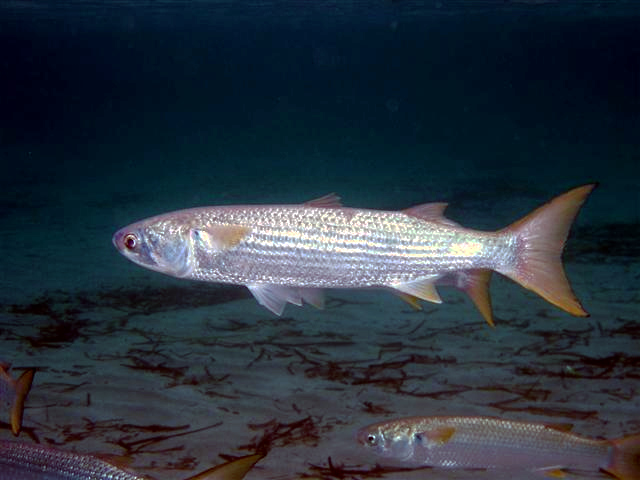
Mullets are distinguished by the presence of two separate dorsal fins, small triangular mouths, and the absence of a lateral line organ. They feed on detritus, and most species have unusually muscular stomachs and a complex pharynx to help in digestion.[1]

Classification and naming

[edit]
Mugil cephalus
Thick lips of a mullet
Mullets in the Mediterranean Sea

Taxonomically, the family is placed in the order Mugiliformes, which is named after it.[5] Until recently, it was considered the only member of Mugiliformes, but more recent taxonomic treatments suggest that they are closely related to the Asiatic glassfishes (Ambassidae), which are now also placed in the group.[6] The presence of fin spines clearly indicates membership in the superorder Acanthopterygii, and in the 1960s, they were classed as primitive perciforms,[7] while others have grouped them in Atheriniformes.[8]

In North America, "mullet" by itself usually refers to Mugilidae. In Europe, the word "mullet" is usually qualified, the "grey mullets" being Mugilidae and the "red mullets" or "surmullets" being Mullidae, notably members of the genus Mullus.[9] Outside Europe, the Mullidae are often called "goatfish".[10] Fish with common names including the word "mullet" may be a member of one family or the other, or even unrelated such as the freshwater Catostomus commersonii.[11]

However, recent taxonomic work has reorganised the family and the following genera make up the Mugilidae:[12][4]

The oldest known fossil mullet is †Mugil princeps from the latest Oligocene-aged Aix-en-Provence Formation of France.[13][14]

Behaviour

[edit]

A common noticeable behaviour in mullet is the tendency to leap out of the water. There are two distinguishable types of leaps: a straight, clean slice out of the water to escape predators and a slower, lower jump while turning to its side that results in a larger, more distinguishable, splash. The reasons for this lower jump are disputed, but have been hypothesised to be in order to gain oxygen rich air for gas exchange in a small organ above the pharynx.[15]

Development

[edit]

The ontogeny of mugilid larvae has been well studied, with the larval development of Mugil cephalus in particular being studied intensively due to its wide range of distribution and interest to aquaculture.[16] The previously understudied osteological development of Mugil cephalus was investigated in a 2021 study, with four embryonic and six larval developmental steps being described in aquaculture-reared and wild-caught specimens.[16] These descriptions provided clarification of questionable characters of adult mullets and revealed informative details with potential implications for phylogenetic hypotheses, as well as providing an overdue basis of comparison for aquaculture-reared mullets to enable recognition of malformations.[16]

History

[edit]

Mullet have historical significance globally, with record of consumption in ancient Rome[17] and Egypt.[18] Indigenous communities in Florida,[19] Hawaii[20], and North Carolina[21] also fished and consumed the fish from as far back as the 15th century. Early American commercial fishers in the 19th century dismissed mullet as a "trash fish" due to its low market value[22], and the fish fell out of fashion. In the 1960s, Florida state officials attempted to revive mullet through a marketing campaign to rename mullet as "lisa."[23]

References

[edit]

Further references

[edit]
[edit]
Revisions and contributorsEdit on WikipediaRead on Wikipedia
from Grokipedia
The mullets (family Mugilidae) are a diverse group of ray-finned fishes comprising 78 species across 26 genera, widely distributed in coastal waters of all tropical and temperate seas worldwide. These species primarily inhabit marine and brackish environments such as estuaries, lagoons, and mangroves, with some venturing into freshwater habitats. Characterized by their robust, elongate bodies and broad, flattened heads, mullets serve as key ecological links in coastal food webs and hold significant economic value in global fisheries and . Morphologically, mullets feature a cylindrical to slightly compressed body, a small terminal mouth lacking teeth on the jaws, and two distinct dorsal fins separated by a ; their scales are large and . Adults typically attain lengths of 30–100 cm, though some species like the (Mugil cephalus (species complex)) can exceed 80 cm. They are primarily bottom-dwellers and detritivores, feeding on organic detritus, , diatoms, and small by rasping the substrate with their lips and grinding food using specialized pharyngeal . Many mullet species exhibit catadromous life cycles, migrating offshore to spawn pelagic eggs in marine waters, after which larvae drift into nearshore and estuarine nurseries for development. This adaptability to varying salinities and temperatures (typically 8–30°C) contributes to their cosmopolitan range, with highest species richness in the region, including hotspots like Triangle and . Ecologically, they facilitate nutrient cycling in estuaries by consuming benthic sediments and serve as vital for predators such as birds, mammals, and larger fishes. Economically, mullets support substantial commercial harvests, with global catches often exceeding 300,000 tonnes annually as of 2020, primarily through gillnets and cast nets in coastal fisheries. They are marketed fresh, salted, or smoked, and several species are cultured in pond systems across Asia, the Mediterranean, and the Americas, valued for their fast growth and high flesh quality. Conservation concerns include overfishing and habitat loss, prompting management in regions like the Gulf of Mexico and Mediterranean Sea.

Taxonomy and Classification

Family and Genera

Mullets are classified within the family Mugilidae, which forms the sole family in the order Mugiliformes and belongs to the class , encompassing the ray-finned fishes. This taxonomic placement reflects the group's distinct evolutionary lineage among percomorph fishes, distinguished by molecular and morphological evidence from phylogenetic analyses. Historically, Mugilidae was included within the large Perciformes, but genetic studies in the 2010s, utilizing multilocus nuclear and sequences, supported the elevation of Mugiliformes as a separate order to better reflect monophyletic relationships. These revisions, initiated by comprehensive phylogenies published around 2012 and refined in 2015, resolved long-standing ambiguities in mullet systematics and confirmed Mugilidae's independent status from other perciform groups. The family Mugilidae encompasses 26 genera, encompassing a diverse array of coastal and estuarine species. Prominent genera include , which contains species such as the flathead mullet (Mugil cephalus); Liza, exemplified by the thinlip mullet (Liza ramada); and Chelon, represented by the diamond mullet (Chelon laticeps). Other genera, such as Planiliza and Valamugil, contribute to the family's breadth, with ongoing taxonomic adjustments based on genetic data refining genus boundaries. Diagnostic traits of the Mugilidae include a , elongate body adapted for schooling in nearshore waters, or weakly ctenoid scales covering the body, and a specialized muscular pharyngeal mill formed by robust for grinding ingested and . These features, particularly the pharyngeal apparatus, underscore the family's adaptation to a detritivorous and aid in distinguishing mullets from superficially similar taxa.

Species Diversity

The family Mugilidae includes approximately 78 valid species distributed across 26 genera, though the exact count varies slightly due to ongoing taxonomic revisions. This diversity reflects the family's adaptation to a wide array of coastal and estuarine environments worldwide. is highest in the region, particularly within the Coral Triangle and southern , where environmental heterogeneity supports a greater number of lineages compared to other areas. The Atlantic also harbors significant diversity, with tropical western Atlantic waters featuring multiple endemic forms, while temperate zones show lower but stable species counts. Notable cosmopolitan species include cephalus (striped mullet), which occurs in tropical and temperate coastal waters globally, entering estuaries and even freshwater systems. Regionally prominent examples are Mugil curema (white mullet), dominant in the tropical Atlantic from to the , and Liza ramada (thinlip mullet, now often classified as Chelon ramada), which is widespread in the Mediterranean and eastern Atlantic. Patterns of endemism are evident among mullet species, particularly those confined to specific estuarine or lagoon systems, where limited dispersal fosters local adaptations. For instance, certain species in inland brackish waters exhibit restricted ranges, increasing vulnerability to habitat alterations, while coastal lagoons like Umm-Hufayn in support multiple endemic forms. Molecular phylogenetic studies have driven recent taxonomic refinements, revealing cryptic diversity and challenging traditional morphology-based classifications. A landmark 2012 using nuclear and mitochondrial genes demonstrated deep lineages within genera, leading to the synonymization of Liza with Chelon and the proposal of new genera like Parachelon, based on genetic evidence rather than external traits. These revisions highlight ongoing discoveries, such as unrecognized complexes in the and Atlantic, informed by and multilocus approaches.

Physical Description

Morphology and Anatomy

Mullets in the family Mugilidae exhibit a , torpedo-shaped body that is robust, moderately elongate, and laterally compressed, with an oval cross-section and a strongly curved lower profile from the to the caudal peduncle, adaptations suited to their coastal and estuarine lifestyles. The head is broad and massive, broader than deep, featuring a short, blunt and a small terminal that is oblique and triangular when viewed from above, equipped with thin lips and minute, inconspicuous teeth arranged in several rows on the jaws. This structure facilitates bottom feeding on and . Two separate dorsal fins are characteristic: the first is spinous with four spines and originates over the pelvic fins, while the second is soft-rayed with a concave upper margin and originates behind the anal fin base. The body is covered in moderate-sized cycloid or feebly ctenoid scales, with fine scales extending onto the caudal fin and anterior rays of the second dorsal and anal fins, providing a smooth yet protective covering. The lateral line system is reduced and inconspicuous, often barely visible or absent, consisting of few pores rather than a continuous organ. The caudal fin is deeply forked with elongated central rays nearly as long as the head length, enabling powerful burst swimming for evasion and migration. Internally, mullets possess a gizzard-like pharyngeal mill formed by a thick-walled, muscular and pharyngeal pad, which aids in grinding ingested , , and grit through contractions and fine denticulate on a rounded pad surface. This structure, often hypertrophied with layers and mucosal folds, compensates for the small oral by mechanically processing tough, microscopic food particles. A well-developed provides buoyancy control in varying salinities, allowing efficient adjustment to coastal and estuarine depths.

Size, Coloration, and Variations

Mullets in the family Mugilidae generally reach adult lengths of 30 to 75 cm, though the (Mugil cephalus) can attain a maximum total length of 120 cm and weight of 8 kg. Juveniles typically enter estuarine habitats at 4 to 7 cm in length, growing rapidly thereafter. These fish exhibit fast growth rates, with adults increasing in length by 3.8 to 6.4 cm annually, mostly during spring and summer months, and attaining sexual maturity within 1 to 3 years depending on species and environmental conditions. Coloration in mullets features a dorsum of grayish olive to brown, transitioning to silvery white on the flanks and ventrum, often accented by dark spots on upper scales that form faint longitudinal stripes, as seen in the striped mullet (M. cephalus). Juveniles under 15 cm lack these stripes, presenting a more uniform or less patterned appearance that aids in camouflage among estuarine substrates. Morphological variations among mullets are limited, with minimal overall; however, females in species like M. cephalus tend to grow larger and faster than males. Regional differences occur, such as genetic and morphometric distinctions between Indo-Pacific and Atlantic populations of M. cephalus, reflecting adaptive variations to local environments.

Distribution and Habitat

Global Range

The family Mugilidae exhibits a , inhabiting coastal waters of all major oceans except the polar regions, with the greatest abundance in tropical and subtropical zones. This wide-ranging presence spans latitudes from approximately 65°N to 50°S across , , , , , and the (40°N to 40°S), reflecting adaptations to diverse coastal environments. The family comprises around 78 species in 26 genera, underscoring its global . The Indo-West Pacific region hosts the highest species diversity, with estimates of 31 species across 11 genera, including hotspots like the Coral Triangle (16–18 species), southern Asia (16–18 species), and extending influences into southern Africa (16–18 species). In the Eastern Atlantic and Mediterranean, species such as Liza aurata are prominent, ranging from to , including the Mediterranean and Black Seas. Along the Americas, curema is widespread, particularly in the and extending from to on the Atlantic coast and Chile to the on the Pacific. Certain species demonstrate extensive migration patterns that contribute to their broad ranges; for instance, Mugil cephalus undertakes long-distance spawning migrations offshore, often aggregating in large numbers up to 80 km from the coast during autumn and winter to facilitate dispersal across ocean basins. Historical range expansions trace back to an origin, with dispersal routes influenced by ancient coastal connectivity, , and sea-level changes, potentially augmented in some areas by human-mediated introductions for purposes.

Environmental Preferences

Mullets of the family Mugilidae are renowned for their nature, enabling them to thrive across a broad spectrum of from near-freshwater conditions at 0 ppt to hypersaline environments up to 75 ppt in coastal lagoons and estuaries. This adaptability allows them to inhabit brackish estuaries and coastal shallows preferentially, where salinity gradients support their physiological mechanisms. For instance, species like the (Mugil cephalus) can tolerate extremes up to 75 ppt as adults, though juveniles exhibit narrower ranges initially before acclimating. In terms of temperature, mullets prefer waters between 8°C and 30°C, with optimal growth and activity occurring in the 20–25°C range typical of subtropical and temperate coastal zones. They are often found in surface-oriented shallows at depths of 0–10 m, rarely venturing deeper than 20 m, which aligns with their habits near the column's upper layers. Preferred substrates include sandy or muddy bottoms in protected microhabitats such as forests, beds, and river mouths, where these soft sediments facilitate detritivory and provide refuge from predators. Mullets demonstrate resilience to environmental stressors like low dissolved oxygen levels and in nutrient-enriched estuaries, owing to their ability to switch to anaerobic metabolism under hypoxic conditions.

Behavior and Feeding

Locomotion and

Mullets are primarily known for their schooling behavior, which involves forming large groups ranging from hundreds to thousands of individuals, particularly during migrations and for predator avoidance. These schools often consist of similarly sized and tighten into compact formations when threats are detected, enhancing collective vigilance and reducing individual risk through the confusion effect. In some species, such as the white mullet (Mugil curema), schools can number 15 to 80 individuals in deeper waters near structures like rocks or tree trunks, but larger aggregations are common in open coastal areas. This gregarious nature facilitates coordinated movement over long distances, with schools exhibiting stationary, slow, or fast patterns tied to environmental conditions. Locomotion in mullets relies on undulatory , where lateral body waves propagate from head to tail, culminating in powerful thrusts from the caudal fin for propulsion. Sustained cruising speeds typically range from 1 to 2 body lengths per second, allowing efficient travel during migrations, while escape bursts can reach up to 10 times this rate, or approximately 10-20 body lengths per second in smaller individuals. For instance, migrating striped mullet (Mugil cephalus) have been observed at average speeds of 4.9 to 9.3 body lengths per second, reflecting an evolutionary adaptation to predation pressure. A notable aspect of their movement is frequent aerial leaps, often up to 1-3 feet (0.3-1 m) high, which are more prevalent in shallow or low-oxygen waters. These jumps serve multiple purposes, including predator evasion—where entire schools leap synchronously—and potential dislodgement of parasites or acquisition of air for supplemental respiration via the pharyngobranchial organ, enabling brief activity in hypoxic conditions. Social structure among mullets is characterized by minimal and the absence of clear dominance hierarchies, particularly in juveniles. Observations under rearing conditions show no instances of chases, bites, or fin erections toward conspecifics, with instead forming loose shoals and exhibiting interactions, such as shared access to resources. While some dominance may emerge in feeding aggregations of certain , overall interactions remain non-hostile, promoting group cohesion without territorial conflicts. This egalitarian dynamic supports their schooling lifestyle, where social bonds facilitate synchronized behaviors like migration and response.

Diet and Foraging

Mullets (family Mugilidae) are primarily detritivores, consuming a diet dominated by benthic , diatoms, and organic , with animal matter such as small and making up less than 5% of their intake. In extensive systems, the diet of like Mugil cephalus consists mainly of diatoms (Bacillariophyceae; typically 30–40%), (Chlorophyceae; 10–20%), and blue-green algae (Myxophyceae; 5–15%), supplemented by (10–20%) and incidental sand or mud particles (20–35%). contributions remain minimal, typically under 3%, underscoring their herbivorous and detritivorous habits. Foraging occurs mainly through bottom-filtering, where mullets ingest sediment-laden material and use their gill rakers to separate edible particles from inorganic substrates. Some species, such as Chelon labrosus, also exhibit surface skimming behavior, protruding their mouths above the water to consume floating organic films or oils. These methods allow efficient exploitation of estuarine interfaces, with mullets often observed in schools during active feeding periods. Daily food intake for typically ranges from 2–6% of body weight in the wild, though this varies with environmental factors like and , which influence metabolic rates and availability of . Their low of 2.0–2.5 positions them as key primary consumers in estuarine food webs, facilitating cycling through the processing of .

Reproduction and Development

Spawning and Mating

Mature mullet species, such as the striped mullet (Mugil cephalus), undertake seasonal migrations from estuarine and coastal habitats to open coastal or oceanic waters for group spawning. In temperate regions like the , adults form large schools and migrate offshore—often 65-80 km or more—during late fall and winter, with peak spawning from October to February. In tropical and subtropical areas, spawning seasons are more extended, sometimes occurring year-round or peaking in warmer months depending on local conditions. These migrations facilitate broadcast spawning, where females release eggs into the water column and males simultaneously release for . Mating in mullets is promiscuous, with no evidence of pair bonding or territorial behaviors; instead, adults aggregate in dense schools where multiple males fertilize the eggs of multiple females. In these spawning aggregations, males may compete through rapid chases or positioning near females to increase fertilization success, though specific displays vary by and are not well-documented across the family. This group-oriented reproductive strategy enhances but exposes aggregations to high predation and fishing vulnerability. Female in mullets is high, typically ranging from 0.5 to 2 million pelagic eggs per individual, though larger females can produce up to 7 million; eggs are released in batches over one or more spawning events within the season. While exemplified by M. cephalus, reproductive traits vary across Mugilidae , with maturity lengths of 10–30 cm and from ~70,000 to over 2 million eggs. Sex ratios in mullet populations are generally close to 1:1 at younger ages, reflecting equal production of males and females, but can become skewed toward males in exploited stocks due to selective fishing pressure on larger, mature females. This distortion arises because females often grow larger and dominate catches in fisheries targeting spawning adults.

Life Cycle Stages

The life cycle of mullets (family Mugilidae), exemplified by the striped mullet Mugil cephalus, begins with pelagic eggs that are spherical, transparent, and approximately 0.8–1.0 mm in diameter, featuring an oil globule for positive . These non-adhesive eggs are released offshore and hatch within about 48 hours post-fertilization, yielding larvae measuring around 2.4 mm in length that initially lack a functional mouth or paired fins. During the larval stage, which lasts several weeks, the developing acquire jaws and fin buds by day 5, reaching lengths of about 2.8 mm, and transition to feeding on microcrustaceans such as copepods and larvae. These neustonic larvae remain in surface offshore waters, drifting with currents across the continental shelf for 2-3 months until they reach 16-20 mm, at which point they metamorphose and migrate inshore to estuaries. In the juvenile stage, lasting 1-6 months in brackish estuarine and habitats, mullets exhibit rapid growth from 16-50 mm to 10-20 cm, developing key features like an adipose eyelid covering much of the eye and scales during . Juveniles tolerate salinities from 0 to 35 ppt and temperatures of 30-32.4°C, osmoregulating effectively by 40 mm, while foraging on , , and small in shallow coastal areas. Maturity is typically reached at 1-3 years of age and lengths of 20-30 cm (males around 28 cm, females slightly larger at 32 cm), with 50% of individuals mature by age 1 in some populations. Adults grow 3.8-6.4 cm annually, faster in warmer conditions above 25°C and in females, attaining maximum sizes of up to 120 cm and weights of 8 kg, with a wild lifespan of 4-16 years. This ontogenetic progression—from oceanic eggs and larvae drifting to estuaries, to brackish juvenile nurseries, and coastal adult habitats—facilitates adaptation to varying salinities and supports the species' wide distribution.

Ecological Role and Interactions

Predation and Symbiosis

Mullets serve as important prey in coastal and estuarine ecosystems, occupying an intermediate trophic position that connects primary producers to higher-level carnivores. With a trophic level estimated at approximately 2.5, they facilitate energy transfer from detritus and microalgae to piscivorous predators. This positioning underscores their role in food webs, where they are consumed by a diverse array of species across multiple taxa. Primary predators of mullets include piscivorous fishes such as spotted seatrout (), snappers, and barracudas, which target schools in shallow waters. Seabirds like pelicans (Pelecanus spp.) and prey on surface-oriented individuals, while marine mammals including dolphins (Tursiops spp.) and ambush larger schools during migrations. Predation pressure is particularly intense on juveniles, which experience the highest mortality rates due to their vulnerability in nursery habitats and exposure to benthic predators during settlement. Mullets exhibit symbiotic relationships that influence their health and survival. They commonly host parasites, including trematodes that infest the gills and other tissues, potentially impairing respiration and increasing susceptibility to secondary infections. In a mutualistic interaction, mullets benefit from cleaner fish, such as silver batfish (Monodactylus argenteus), which remove ectoparasites from their bodies; this service is often facilitated during the mullets' characteristic leaps out of the water, which may also dislodge parasites independently. Defensive adaptations help mitigate predation risks for mullets. Schooling behavior confuses predators and dilutes the chance of any individual being targeted, substantially reducing risk—studies on schooling fishes indicate reductions of up to 50% or more in attack success rates for larger groups. Jumping, a frequent aerial maneuver, further aids evasion by disrupting predator pursuits and aiding parasite removal, enhancing overall survival in predator-rich environments.

Environmental Influence

Mullets play a pivotal role in nutrient cycling within estuarine and coastal ecosystems, primarily through their detritivorous feeding habits that resuspend sediments and release bound nutrients into the water column. By bioturbating bottom sediments during foraging, species such as the flathead mullet (Mugil cephalus) disturb organic matter, facilitating the remineralization of nitrogen and phosphorus, which enhances primary production and overall estuarine productivity. Additionally, their excretion of mineralized nutrients directly contributes to biogeochemical cycles, transporting marine-derived nitrogen from coastal waters into subtropical freshwater food webs and supporting algal and microbial growth. In aquaculture settings, grey mullets (Mugil cephalus) have been observed to remove significant amounts of organic carbon (up to 4.2 g kg⁻¹ m⁻² day⁻¹) and nitrogen (0.70 g kg⁻¹ m⁻² day⁻¹) from enriched sediments, underscoring their capacity to mitigate nutrient overloads and promote sediment quality. As engineers, mullets influence structure by on epiphytic and in beds, thereby controlling algal overgrowth that could otherwise smother vegetation and reduce habitat complexity. This herbivorous-detritivorous behavior, particularly by juveniles of species like Mugil cephalus and Mugil liza, limits epiphyte accumulation on leaves, preserving light penetration and maintaining the health of beds dominated by species such as . Such activities foster by sustaining diverse and assemblages that rely on seagrass meadows for refuge and foraging, preventing shifts toward algal-dominated states that degrade ecosystem services like . In South African estuaries, for instance, mullet populations correlate with balanced algal-seagrass dynamics, highlighting their regulatory impact on stability. Mullets serve as effective indicator species for in coastal and estuarine due to their sensitivity to pollutants and habitat alterations. Mugil cephalus, with its filter- and deposit-feeding habits, bioaccumulates (e.g., at 0.013–0.025 μg/g in muscle tissue) and persistent organic pollutants from and sediments, reflecting contamination levels from industrial and agricultural runoff. Population declines in these species often signal broader degradation, such as reduced or loss of nursery grounds, as observed in Mediterranean and subtropical systems where metal concentrations exceed regulatory limits. Their widespread distribution and residency in transitional waters make them reliable sentinels for monitoring anthropogenic impacts. Climate change is driving shifts in mullet distributions, with warming waters prompting poleward range expansions that alter local food webs. In South African coastal systems, grey mullet (Mugilidae) abundances have increased in warm-temperate and subtropical estuaries, correlating with rising sea surface temperatures and indicating a southward migration of tropical . Projections for commercial species like Mugil cephalus suggest gradual poleward habitat preferences under future scenarios, potentially disrupting estuarine trophic structures by introducing new competitors or prey dynamics in higher latitudes. These shifts, observed across the Northeast Atlantic and , underscore mullets' vulnerability to thermal changes, with implications for in poleward ecosystems.

Human Uses and Conservation

Fisheries and Aquaculture

Mullets, particularly the ( cephalus), support substantial commercial fisheries worldwide, with global capture production for this averaging around 130,000 tonnes annually from 2017 to 2023. Key producing regions include , , and Mediterranean countries, where coastal and estuarine habitats facilitate harvesting during seasonal migrations. complements wild capture, with production focused on pond systems in and the ; for instance, , the leading producer, reported total mullet output of 285,000 tonnes in 2019, including 235,000 tonnes from farming, and continues to dominate global mullet aquaculture as part of its over 2 million tonnes annual fish production as of 2025. Overall, mullet fisheries contribute meaningfully to local economies in these areas, though exact global totals vary due to underreporting in small-scale operations. Commercial harvesting primarily employs gillnets and trawl nets in shallow coastal waters and estuaries, targeting schools during spawning runs to minimize and disruption. In aquaculture, mullets are reared in brackish or freshwater ponds, often in with or other species to optimize resource use and ; this integrated approach yields 20–30 tonnes per per crop, with mullets comprising 2–3 tonnes of the harvest. Such practices are prevalent in and Taiwan Province of China, where nearly 40% of M. cephalus commercial supply derives from pond culture. The economic importance of mullet fisheries stems from high demand for their flesh and in Asian and European markets, supporting livelihoods for thousands of fishers and farmers. assessments generally indicate sustainable exploitation levels in major fisheries, with spawning potential ratios exceeding conservation thresholds (e.g., over 40% in waters as of 2025). Historical overfishing pressures in some estuaries have been addressed through , resulting in sustainable stocks in regions like the based on recent assessments.

Culinary Applications and Conservation Status

Mullet fish is valued in culinary traditions for its firm texture and mild, slightly sweet flavor, making it suitable for a variety of preparations including , , and serving raw. The flesh, which is lean and white when cooked, absorbs smoky flavors well during and low-temperature processes, often resulting in a tender yet substantial bite. enhances its natural taste with a subtle char, particularly when seasoned simply with salt, pepper, and herbs. The roe of mullet holds particular significance in coastal cuisines, processed into delicacies like in the Mediterranean region, where it is salted, air-dried, and grated over or salads for an intense burst. In , it is known as in , a cured product enjoyed thinly sliced with , prized for its rich, briny profile. These preparations underscore mullet's cultural role in traditional diets along coastlines, from Mediterranean festivals to Gulf Coast celebrations in the United States, where it symbolizes local heritage and community gatherings. Beyond direct consumption, mullet serves as effective for targeting larger like and snook due to its lively swimming action and scent. Regarding conservation, most mullet species, including the widespread flathead grey mullet (Mugil cephalus), are classified as Least Concern by the IUCN (assessed 2022), reflecting their adaptability and broad distribution across coastal and estuarine habitats. However, certain species face Vulnerable status due to localized pressures such as habitat loss from coastal development and , which degrade essential nursery areas in estuaries. Dams and barriers that obstruct migratory routes further exacerbate declines by preventing access to spawning grounds, while chemical pollutants accumulate in tissues, posing long-term risks to populations. To address these threats, management efforts include establishing protected areas in key estuarine zones to safeguard habitats and juvenile stages. Fisheries in the and have implemented quotas and size limits since the early to prevent , promoting sustainable yields through regional stock assessments and seasonal restrictions.

References

Add your contribution
Related Hubs
User Avatar
No comments yet.