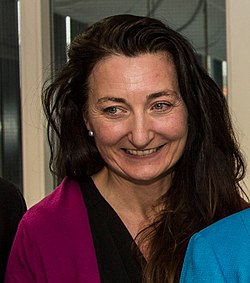
A neuroscientist (or neurobiologist) is a scientist specializing in neuroscience that deals with the anatomy and function of neurons, neural circuits, and glia, and their behavioral, biological, and psychological roles in health and disease.[1]
Neuroscientists generally work as researchers within a college, university, government agency, or private industry setting.[2] In research-oriented careers, neuroscientists design and conduct scientific experiments on the nervous system and its functions. They can engage in basic or applied research. Basic research seeks to expand current understanding of the nervous system, whereas applied research seeks to address a specific problem, such as developing a treatment for a neurological disorder.
Neuroscientists have numerous career opportunities outside of academic research, including careers in industry, science writing, government program management, science advocacy, and education.[3] A neuroscientist commonly holds a doctorate in a medical science.
Neuroscientists focus primarily on the study and research of the nervous system. The nervous system is composed of the brain, spinal cord and nerve cells. Studies of the nervous system may focus on the cellular level, as in studies of the ion channels, or instead may focus on a systemic level as in behavioural or cognitive studies. A significant portion of nervous system studies is devoted to understanding the diseases that affect the nervous system, like multiple sclerosis, Alzheimer's, Parkinson's, and Lou Gehrig's. Research commonly occurs in private, government and public research institutions and universities.[4]
The overall median salary for neuroscientists in the United States was $79,940 in May 2014[where?]. Neuroscientists are usually full-time employees. Median salaries at common work places in the United States are shown below.[5]
Neuroscientists research and study both the biological and psychological aspects of the nervous system.[5] Once neuroscientists finish their post doctoral programs, 39% go on to perform more doctoral work, while 36% take on faculty jobs.[6] Neuroscientists use a wide range of mathematical methods, computer programs, biochemical approaches and imaging techniques such as magnetic resonance imaging, computed tomography angiography, and diffusion tensor imaging.[7] Imaging techniques allow scientists to observe physical changes in the brain and spinal cord, as signals occur. Neuroscientists can also be part of several different neuroscience organizations where they can publish and read different research topics.
Neuroscience is expecting job growth of about 8% from 2014 to 2024, a considerably greater than average job growth rate when compared to other professions. Factors leading to this growth include an aging population, new discoveries leading to new areas of research, and increasing utilization of medications. Government funding for research will also continue to influence the demand for this specialty.[5]
Neuroscientists typically enroll in a four-year undergraduate program and then move on to a PhD program for graduate studies. Once finished with their graduate studies, neuroscientists may continue doing postdoctoral work to gain more lab experience and explore new laboratory methods. In their undergraduate years, neuroscientists typically take physical and life science courses to gain a foundation in the field of research. Typical undergraduate majors include biology, behavioral neuroscience, and cognitive neuroscience.[8]
Many colleges and universities now have PhD training programs in the neurosciences, often with divisions between cognitive, cellular and molecular, computational and systems neuroscience.
Neuroscience has a unique perspective in that it can be applied in a broad range of disciplines, and thus the fields neuroscientists work in vary. Neuroscientists may study topics from the large hemispheres of the brain to neurotransmitters and synapses occurring in neurons at a micro-level. Some fields that combine psychology and neurobiology include cognitive neuroscience, and behavioural neuroscience. Cognitive neuroscientists study human consciousness, specifically the brain, and how it can be seen through a lens of biochemical and biophysical processes.[9] Behavioral neuroscience encompasses the whole nervous system, environment and the brain how these areas show us aspects of motivation, learning, and motor skills along with many others.[10] Computational neuroscience uses mathematical models to understand how the brain processes information.[11]
Hieroglyphic stating the word, "brain", dated to 1700 BC. This work is considered a copy of an original writing as old as 3000 BC.
Some of the first writings about the brain come from the Egyptians. In about 3000 BC the first known written description of the brain also indicated that the location of brain injuries may be related to specific symptoms. This document contrasted common theory at the time. Most of the Egyptians' other writings are very spiritual, describing thought and feelings as responsibilities of the heart. This idea was widely accepted and can be found into 17th century Europe.[12]
Plato believed that the brain was the locus of mental processes. However, Aristotle believed instead the heart to be the source of mental processes and that the brain acted as a cooling system for the cardiovascular system.[13]
Galen described the seven cranial nerves' functions along with giving a foundational understanding of the spinal cord. He believed that sensory sensation was caused in the middle of the brain, while the motor sensations were produced in the anterior portion of the brain. Galen imparted some ideas on mental health disorders and what caused these disorders to arise. He believed that the cause was backed-up black bile, and that epilepsy was caused by phlegm. Galen's observations on neuroscience were not challenged for many years.[14]
Medieval beliefs generally held true the proposals of Galen, including the attribution of mental processes to specific ventricles in the brain. Functions of regions of the brain were defined based on their texture and composition: memory function was attributed to the posterior ventricle, a harder region of the brain and thus a good place for memory storage.[12]
Andreas Vesalius redirected the study of neuroscience away from the anatomical focus; he considered the attribution of functions based on location to be crude. Pushing away from the superficial proposals made by Galen and medieval beliefs, Vesalius did not believe that studying anatomy would lead to any significant advances in the understanding of thinking and the brain.[12]
Research in neuroscience is expanding and becoming increasingly interdisciplinary. Many current research projects involve the integration of computer programs in mapping the human nervous system. The National Institutes of Health (NIH) sponsored Human Connectome Project, launched in 2009, hopes to establish a highly detailed map of the human nervous system and its millions of connections. Detailed neural mapping could lead the way for advances in the diagnosis and treatment of neurological disorders.
Neuroscientists are also at work studying epigenetics, the study of how certain factors that we face in our everyday lives not only affect us and our genes but also how they will affect our children and change their genes to adapt to the environments we faced.
Neuroscientists have been working to show how the brain is far more elastic and able to change than we once thought. They have been using work that psychologists previously reported to show how the observations work, and give a model for it.
L-phenylalanine
One recent behavioral study is that of phenylketonuria (PKU), a disorder that heavily damages the brain due to toxic levels of the amino acidphenylalanine. Before neuroscientists had studied this disorder, psychologists did not have a mechanistic understanding as to how this disorder caused high levels of the amino acid and thus treatment was not well understood, and oftentimes, was inadequate. The neuroscientists that studied this disorder used the previous observations of psychologists to propose a mechanistic model that gave a better understanding of the disorder at the molecular level. This in turn led to better understanding of the disorder as a whole and greatly changed treatment that led to better lives for patients with the disorder.[15]
Another recent study was that of mirror neurons, neurons that fire when mimicking or observing another animal or person that is making some sort of expression, movement, or gesture. This study was again one where neuroscientists used the observations of psychologists to create a model for how the observation worked. The initial observation was that newborn infants mimicked facial expressions that were expressed to them. Scientists were not certain that newborn infants were developed enough to have complex neurons that allowed them to mimic different people and there was something else that allowed them to mimic expressions. Neuroscientists then provided a model for what was occurring and concluded that infants did in fact have these neurons that fired when watching and mimicking facial expressions.[15]
Neuroscientists have also studied the effects of "nurture" on the developing brain. Saul Schanberg and other neuroscientists did a study on how important nurturing touch is to the developing brains in rats. They found that the rats who were deprived of nurture from the mother for just one hour had reduced functions in processes like DNA synthesis and hormone secretion.[15]
Michael Meaney and his colleagues found that the offspring of mother rats who provided significant nurture and attention tended to show less fear, responded more positively to stress, and functioned at higher levels and for longer times when fully mature. They also found that the rats who were given much attention as adolescents also gave their offspring the same amount of attention and thus showed that rats raised their offspring similar to how they were raised. These studies were also seen on a microscopic level where different genes were expressed for the rats that were given high amounts of nurture and those same genes were not expressed in the rats who received less attention.[15]
The effects of nurture and touch were not only studied in rats, but also in newborn humans. Many neuroscientists have performed studies where the importance of touch is shown in newborn humans. The same results that were shown in rats, also held true for humans. Babies that received less touch and nurture developed slower than babies that received a lot of attention and nurture. Stress levels were also lower in babies that were nurtured regularly and cognitive development was also higher due to increased touch.[15] Human offspring, much like rat offspring, thrive off of nurture, as shown by the various studies of neuroscientists.
Charles Sherrington and Edgar Adrian (1932) for their discoveries of the general function of neurons, including excitatory and inhibitory signals, and the all-or-nothing response of nerve fibers.[18]
Erwin Neher and Bert Sakmann (1991) for the development of the patch-clamp recording technique, allowing, for the first time, the observation of current flow through individual ion channels. Neher and Sakmann additionally characterized the specificity of ion channels.[27]
A neuroscientist is a scientist who studies the nervous system, encompassing its development, structure, function, and disorders, with a primary focus on the brain and its influence on behavior, cognition, and physiological processes.[1][2] This interdisciplinary field integrates principles from biology, psychology, chemistry, physiology, and computational sciences to explore the nervous system at multiple levels, including molecular mechanisms, cellular interactions, neural networks, and whole-brain organization.[3][2] Neuroscientists investigate how the nervous system enables functions such as emotion, thought, movement, and sensory processing, while also addressing neurological and psychiatric conditions like Alzheimer's disease, epilepsy, and schizophrenia.[3][1]Neuroscientists typically hold advanced degrees such as a PhD or MD, following undergraduate preparation in related fields, and work in academia, research institutions, industry, or clinical settings to advance understanding and treatments of nervous system disorders. The field offers promising career prospects, with employment for medical scientists projected to grow 9 percent from 2024 to 2034 and a median annual salary of $100,590 as of May 2024 in the United States.[4][5]
Definition and Scope
Definition
A neuroscientist is a scientist who specializes in neuroscience, a discipline that encompasses the study of the structure, function, development, genetics, biochemistry, physiology, pharmacology, and pathology of the nervous system.[6] This field seeks to understand how the nervous system operates at multiple levels, from molecular mechanisms to complex behaviors, often employing interdisciplinary approaches to investigate neural processes in health and disease.[7]The profession is distinct from related fields such as neurology and neurobiology. Unlike neurologists, who are medical doctors focused on the clinical diagnosis, treatment, and management of nervous system disorders in patients, neuroscientists primarily engage in research to advance fundamental knowledge of neural systems, often using animal models or computational methods rather than direct patient care.[8] Similarly, while neurobiologists emphasize the biological underpinnings of the nervous system within a broader biological context, neuroscientists adopt a more integrative perspective that incorporates insights from psychology, physics, and engineering to explore functional and systemic interactions.[2]The term "neuroscience" emerged in the mid-20th century, first coined around 1962 by biophysicist Francis O. Schmitt at the Massachusetts Institute of Technology to unify disparate studies of the brain and nervous system under a single interdisciplinary framework.60224-0/fulltext) This nomenclature facilitated the convergence of anatomical, physiological, and behavioral investigations, marking a shift from fragmented approaches to a cohesive scientific endeavor.[9]Neuroscientists examine key components of the nervous system, including the brain, spinal cord, peripheral nerves, and their interconnections, to elucidate how these elements process information, control bodily functions, and underpin cognition.[10] The central nervous system—comprising the brain and spinal cord—serves as the primary site of integration, while the peripheral nervous system relays signals to and from the rest of the body, enabling coordinated responses to internal and external stimuli.[11]
Interdisciplinary Nature
Neuroscience is inherently interdisciplinary, drawing on methodologies and insights from multiple scientific domains to investigate the nervous system comprehensively. This collaborative framework enables neuroscientists to address complex questions about brain function that cannot be fully explored within a single discipline, fostering innovations in understanding neural mechanisms and their implications for health and behavior.[12][13]A primary intersection exists with psychology, particularly in elucidating cognitive processes such as perception, memory, and decision-making. Cognitive neuroscience integrates psychological theories of mental operations with neurobiological data to map how brain activity underlies behavior, revealing, for instance, how neural circuits support learning and emotional regulation.[14][15] In computer science, neuroscience informs the development of neural networks and artificial intelligence models that mimic biological computation, while AI tools in turn analyze vast neural datasets to simulate brain dynamics. This synergy has advanced computational models of synaptic plasticity and network behavior, enhancing both AI algorithms and theories of neural information processing.[16][17]Genetics contributes through neurogenomics, which examines how genetic variations influence neural development and function, identifying genes linked to disorders like epilepsy and neurodegeneration. Physics plays a crucial role in techniques such as optogenetics, where light-based control of genetically modified neurons—rooted in biophysical principles of ion channels and photonics—enables precise manipulation of neural circuits, and advanced imaging methods like functional magnetic resonance imaging (fMRI) rely on physical laws of electromagnetism for non-invasive brain visualization.[18][19] In medicine, neuropharmacology explores how drugs modulate neural signaling pathways to treat conditions such as depression and Parkinson's disease, bridging pharmacological interventions with neural circuit analysis to optimize therapeutic outcomes.[20]Hybrid roles exemplify this integration, including neuroinformatics, which applies computational tools to organize and analyze brain mapping data from diverse experiments, facilitating large-scale databases for cross-disciplinary research. Similarly, neuropsychology combines psychological assessment with neuroimaging to study brain-behavior relationships, aiding in the diagnosis of cognitive impairments following injury or disease.[21][22]The benefits of interdisciplinarity are evident in accelerated discoveries, such as brain-machine interfaces (BMIs), where engineering collaborations enable direct neural-device communication, restoring motor function in paralyzed individuals through integrated neurobiological and technological advancements. However, challenges persist, including the need for cross-training to overcome methodological gaps, as differing terminologies and experimental paradigms between fields can hinder effective collaboration and knowledge translation.[23][24][13]
Education and Training
Undergraduate Requirements
Aspiring neuroscientists typically major in fields such as biology, neuroscience, psychology, or biochemistry to build a strong foundation in the biological and behavioral sciences relevant to brain function and nervous system processes.[25][26] These majors serve as entry points by integrating coursework that bridges cellular mechanisms with cognitive and behavioral principles, preparing students for advanced study in neuroscience.[27]Core undergraduate coursework emphasizes foundational sciences, including human anatomy, physiology, cell biology, introductory neuroscience, statistics, and general and organic chemistry, which equip students with the essential knowledge to understand neural structures and functions.[28][29] For instance, programs at institutions like Johns Hopkins University require specific courses in cellular and systems neuroscience, cognitive neuroscience, and neurophysiology to develop a comprehensive grasp of brain organization from molecular to behavioral levels.[28] Statistics and research methods courses are particularly vital, as they teach students to analyze experimental data and design studies, skills central to neuroscience inquiry.[30]Undergraduate programs foster key skills through hands-on laboratory experiences, such as microscopy for visualizing neural tissues, basic electrophysiology for recording neuronal activity, and data analysis techniques using computational tools.[31][32] These activities, often integrated into core labs, emphasize critical thinking, hypothesis testing, and ethical research practices, enabling students to apply theoretical knowledge to real-world experiments.[33][34]Participation in extracurricular research is highly recommended to gain practical experience and strengthen applications for graduate programs; opportunities include summer internships at the National Institutes of Health (NIH), such as the Summer Internship Program (SIP), where students contribute to ongoing neuroscience projects under mentor supervision.[35][36] Such experiences enhance scientific communication, teamwork, and problem-solving while clarifying career interests in neuroscience.[37]To prepare for graduate school in neuroscience, undergraduates typically need a minimum GPA of 3.0 to 3.5, though admitted students often average 3.5 to 3.7; strong letters of recommendation from research supervisors are essential, and while the GRE is increasingly optional, some programs still require it.[38][39][40] Prior research involvement and relevant coursework further bolster competitiveness for PhD or master's programs.[41]
Graduate and Advanced Training
Graduate training in neuroscience typically follows a bachelor's degree in a related field such as biology, psychology, or chemistry, building on foundational knowledge to develop expertise in brain function and neural mechanisms.[42]The primary pathway for aspiring neuroscientists is the PhD in neuroscience, a research-intensive program lasting 4-6 years that emphasizes original investigation into neural processes.[43] Students in these programs complete laboratory rotations in the first year to identify a thesis advisor, followed by advanced coursework and dissertation research culminating in a defense of novel findings.[44]For those pursuing clinician-scientist careers, MD/PhD programs integrate medical training with neuroscience research, typically spanning 7-8 years and allowing dual expertise in clinical practice and basic science.[45] These programs often include rotations in both clinical and laboratory settings, preparing graduates for roles bridging patient care and translational research.[46]A master's degree in neuroscience, usually 1-2 years, serves as an alternative for entry into industry positions, focusing on applied skills without the full research commitment of a PhD.[47] Graduates with this degree often secure roles in pharmaceutical research, neuroimaging analysis, or biotechnology, where practical training in neural data interpretation is valued.[48]PhD and MD/PhD curricula cover advanced topics including neuroanatomy, synaptic transmission, cellular and molecular mechanisms, systems neuroscience, and neuroimaging techniques such as fMRI and electrophysiology.[44] Core courses typically include behavioral and cognitive neuroscience, with electives in areas like neural development and neurodegeneration; all programs require a thesis based on original empirical research.[49]Postdoctoral fellowships, lasting 2-5 years, provide further specialization in subfields such as neurodegeneration, synaptic plasticity, or computational modeling, often in dedicated laboratories to refine independent research skills.[50] These positions emphasize grant writing, publication, and mentorship, serving as a critical bridge to faculty or senior research roles.[51]Certifications are optional but recommended for clinical neuroscientists; in the United States, board certification through the American Board of Clinical Neuropsychology or the American Board of Psychiatry and Neurology validates expertise in neurological assessment and treatment.[52] Internationally, standards vary, with the European Academy of Neurology outlining training requirements for neurology specialists, including competencies in neurophysiology and rare neurological disorders.[53]Funding for graduate and postdoctoral training in neuroscience is primarily secured through competitive grants, including the National Institutes of Health's Ruth L. Kirschstein National Research Service Awards for institutional training programs, National Science Foundation Graduate Research Fellowships, and Howard Hughes Medical Institute fellowships supporting innovative research.[54] These sources provide stipends, tuition coverage, and research allowances, ensuring accessibility for diverse trainees.[55]
Professional Practice
Roles and Responsibilities
Neuroscientists undertake a range of primary roles focused on advancing knowledge of the nervous system through rigorous scientific inquiry. These include designing experiments to test hypotheses on neural processes, such as synaptic transmission or cognitive functions, often involving hypothesis formulation, protocol development, and execution in controlled settings.[56] Following experimentation, they perform data analysis using statistical tools to interpret results, identify patterns, and draw conclusions about brain function or dysfunction.[57] To disseminate their findings, neuroscientists prepare and submit manuscripts for publication in peer-reviewed journals, ensuring transparency and peer scrutiny of their work.[58] Additionally, they engage in grant writing to secure funding from agencies like the NIH, crafting proposals that outline research aims, methods, and expected impacts.[58] In academic environments, many neuroscientists also teach undergraduate and graduate courses on neuroscience topics and supervise student projects.Ethical responsibilities are integral to neuroscientific practice, guiding the conduct of research to protect participants and maintain scientific integrity. Neuroscientists must adhere to Institutional Review Board (IRB) protocols for studies involving human subjects, ensuring informed consent, minimal risk, and equitable participant selection as outlined in federal regulations.[59] For research with animal subjects, they follow Institutional Animal Care and Use Committee (IACUC) guidelines to minimize suffering and justify the use of animals in line with the 3Rs principles (replacement, reduction, refinement).[60] To promote reproducibility, neuroscientists are required to document methods thoroughly, share raw data where possible, and address potential sources of variability, aligning with NIH policies on rigor and reproducibility. In emerging areas involving AI-neural models, such as brain-computer interfaces, they bear responsibility for identifying and mitigating biases in training data that could skew interpretations of neural activity or perpetuate inequities.[61]Collaborative duties form a core part of neuroscientific work, particularly in complex projects spanning disciplines like biology, psychology, and engineering. Neuroscientists often lead multidisciplinary teams, coordinating efforts to integrate expertise and resources for large-scale studies.[62] They also mentor students and junior researchers, providing guidance on experimental design, ethical considerations, and career development to foster the next generation of scientists.[63]Roles vary across sectors while sharing foundational research duties. In academia, neuroscientists emphasize peer-reviewed publications and original investigations to contribute to fundamental knowledge. In industry, particularly pharmaceuticals, they focus on drug development, testing compounds for efficacy and safety through preclinical and clinical stages.[62] In government settings, such as agencies like the NIH or OSTP, they advise on policy by drafting briefs, reviewing legislation for scientific accuracy, and promoting funding for neuroscience initiatives.[64] This advanced training in neuroscience equips professionals to navigate these diverse responsibilities effectively.[65]Neuroscientists employ a variety of tools and methods to probe the nervous system. Electroencephalography (EEG) records electrical activity from the scalp to assess brain waves during tasks like sleep or cognition.[66] Functional magnetic resonance imaging (fMRI) maps brain activity by detecting changes in blood oxygenation, revealing regions involved in decision-making or emotion.[66] Animal models, such as rodents or non-human primates, allow ethical simulation of human neural disorders to study disease mechanisms and test interventions.[3]
Work Settings
Neuroscientists frequently work in academic settings, such as universities and dedicated research institutes, where they conduct experiments in specialized laboratories equipped with advanced infrastructure. For instance, at the Massachusetts Institute of Technology (MIT), the McGovern Institute for Brain Research provides neuroscientists with access to core facilities including imaging centers for functional MRI and two-photon microscopy, as well as electronics and machine shops for custom tool development.[67] Similarly, the Max Planck Florida Institute for Neuroscience offers core facilities like the Imaging Center and Animal Resource Center, enabling studies on neural circuits and behavior in controlled animal models.[68] These environments often involve multidisciplinary teams comprising principal investigators, postdoctoral researchers, and technicians collaborating in shared spaces to advance basic and translational neuroscience.[69]In industry environments, neuroscientists contribute to drug development and neurotechnology innovation within pharmaceutical companies and biotech startups. Major pharmaceutical firms employ neuroscientists in research and development divisions to test compounds for neurological disorders, utilizing high-throughput screening labs and preclinical testing facilities.[70] Biotech startups, particularly those focused on neural implants, such as Precision Neuroscience and Neuralink, provide dynamic settings where neuroscientists design and iterate brain-computer interfaces in prototyping labs equipped for electrode fabrication and biocompatibility testing.[71] These teams often include engineers and clinicians, fostering rapid innovation through agile project structures.[72]Clinical and government settings offer neuroscientists opportunities in translational research and public health applications. In hospitals, such as University Hospitals Cleveland Medical Center, neuroscientists collaborate on patient-oriented studies in neuroimaging suites and clinical trial units to bridge lab findings with therapeutic interventions.[73] Government agencies like the National Institutes of Health (NIH) host over 180 neuroscience laboratories across 14 institutes, supporting intramural research in secure facilities with biosafety level-appropriate animal housing.[69] The World Health Organization (WHO) engages neuroscientists in public health neuroscience, addressing global neurological burdens through epidemiological analysis and policy development in international collaborative networks.[74]Post-2020, remote and hybrid work trends have emerged in neuroscience, particularly for computational modeling, driven by the COVID-19 pandemic's acceleration of flexible arrangements in scientific fields. Neuroscientists now leverage cloud-based tools for data analysis and simulations, enabling remote collaboration on large-scale neural network models without physical lab access.[75] This shift has allowed hybrid teams to integrate in-person experiments with virtual meetings, though it requires robust cybersecurity for sensitive datasets.[76]Challenges in these settings include adherence to stringent safety protocols for handling neurotoxins and radiation. In neuroscience labs, researchers must follow standard operating procedures (SOPs) for biological toxins, such as wearing double gloves, using fume hoods, and conducting risk assessments to prevent exposure during experiments with substances like MPTP.[77] For radioactive materials used in tracers or imaging, protocols mandate protective equipment like lab coats and dosimeters, confinement of work to designated areas, and regular contamination surveys to minimize health risks.[78] These measures ensure safe team dynamics while maintaining research integrity.[79]
Compensation and Career Progression
Compensation for neuroscientists varies significantly by career stage, sector, and location, with entry-level positions offering modest salaries that increase substantially with experience and advancement. In 2025, postdoctoral researchers with a PhD typically earn between $59,000 and $62,000 annually in the United States, reflecting the starting point for many early-career professionals focused on specialized training.[80][81] As individuals progress to tenured faculty roles in academia, compensation rises to $150,000 or more per year, with full professors averaging around $161,000 depending on institution type and prestige.[82] In industry settings, particularly pharmaceuticals and biotechnology, salaries can reach $190,000 to $200,000 or higher for senior research scientists, driven by demand for expertise in drug development and neurotechnology.[83]Several key factors influence these earnings levels. Geographic location plays a major role, with higher pay in U.S. tech and research hubs such as Boston, San Francisco, and New York, where cost-of-living adjustments and competitive markets boost salaries by 20-30% compared to national averages.[84] In contrast, salaries in other countries, such as India, are generally lower, with limited specific data available for neuroscientist positions. On Glassdoor, a Computational Neuroscientist role at Neuphony is listed at ₹9.97 Lakhs - ₹10 Lakhs per year, and other neuroscience-related roles, such as Associate Scientific Editor in Clinical Neuroscience, range from ₹5 Lakhs - ₹6 Lakhs per year. No direct neuroscientist salary listings were found on Ambitionbox or Naukri.com.[85][86]Experience is another determinant, as early-career neuroscientists (1-4 years post-PhD) average about $89,000, while mid-career professionals with 5-9 years exceed $100,000.[87] The sector also significantly affects compensation, with industry roles generally offering 20-50% higher pay than equivalent positions in academia due to profit-oriented structures and access to private funding.[88]Benefits packages complement base salaries and provide additional financial security across sectors. In academic settings, neuroscientists, including postdocs, commonly receive comprehensive health insurance (medical, dental, and vision), retirement plans such as 403(b contributions, and allowances for research funding or conference travel.[89][90] Industry positions often mirror these offerings but enhance them with performance bonuses, 401(k matching, and, in biotech startups, equity stakes that can yield substantial long-term value through stock options or shares.[88]Career progression for neuroscientists follows distinct paths tailored to individual goals, often beginning with postdoctoral training and branching into academia or industry. A common academic trajectory advances from postdoc to assistant professor on a tenure-track position, where success in grant acquisition and publications leads to associate and full professorship within 6-10 years.[91] In industry, progression typically moves from research associate to principal scientist in pharmaceutical firms, emphasizing applied projects in drug discovery or clinical applications, with mid-career opportunities for shifts into consulting roles at firms advising on neurotech investments.[92] These paths benefit from the foundational training at graduate levels, which equips professionals with specialized skills influencing initial compensation and mobility.The outlook for neuroscientist careers remains positive, with employment projected to grow by 9% from 2024 to 2034, faster than the average for all occupations due to aging populations increasing demand for neurological research and the rise of neurotechnology innovations.[4] This expansion is expected to create opportunities in both traditional and emerging areas, supporting sustained career advancement.
Historical Development
Ancient and Classical Foundations
The earliest documented contributions to understanding the nervous system emerged in ancient Egypt with the Edwin Smith Papyrus, dating to approximately 1600 BCE, which provides the first known descriptions of brainanatomy, injuries, and their physiological effects, including disruptions to the pulse linked to cranial trauma.[93] This surgical treatise details 48 cases of trauma, noting the brain's structure, its protective coverings (meninges), and cerebrospinal fluid, while treating conditions through observation and basic interventions without invoking supernatural explanations.[94] These observations marked an initial shift toward empirical assessment of neurological function, recognizing the brain's role in vital processes like heartbeat regulation.[95]In ancient Greece during the 5th century BCE, Alcmaeon of Croton advanced the concept of the brain as the primary seat of cognition and understanding, distinguishing it from mere perception and proposing that sensory experiences originate there.[96] Building on this, Hippocrates of Kos, around 460–370 BCE, rejected supernatural attributions for neurological disorders such as epilepsy, asserting in his treatise On the Sacred Disease that such conditions arose from natural imbalances in the brain's humors, treatable through rational medical means.[97] These ideas emphasized the brain's centrality in mental and sensory processes, laying groundwork for a naturalistic approach to neuroscience.[98]Aristotle (384–322 BCE), while prioritizing the heart as the organ housing the soul and governing sensation, acknowledged the brain's role in cooling arterial blood through empirical dissections of animal cadavers, which informed his comparative anatomy.[99] His observations, detailed in works like On the Parts of Animals, described brain structures and vascular connections but subordinated them to cardiac functions, influencing subsequent cardiocentric views.[100]Hellenistic scholars in Alexandria during the 3rd century BCE, notably Herophilus and Erasistratus, conducted pioneering human dissections under Ptolemaic patronage, identifying key neural elements such as cranial and spinal nerves, distinguishing sensory from motor pathways, and mapping brain ventricles as potential sites of cognition.[101] Herophilus named the meninges and torcular Herophili (a venous confluence), while Erasistratus proposed that nerves transmitted pneuma (vital spirit) and described reflexive responses, advancing early notions of neural signaling.[102] These findings, preserved through later accounts like those of Galen, represented a high point in anatomical precision.[103]Despite these advances, ancient inquiries into the nervous system were constrained by a heavy reliance on philosophical speculation over controlled experimentation, limited access to human subjects, and an absence of tools for physiological testing, which hindered verification of functional hypotheses.[104] This philosophical orientation persisted until later periods revived systematic dissection and observation.
Medieval to Enlightenment Advances
During the Medieval Islamic Golden Age, scholars preserved and expanded upon ancient Greek knowledge of the nervous system, integrating texts from Hippocrates and Galen into comprehensive medical treatises. Avicenna (Ibn Sina), in his influential Canon of Medicine completed in 1025, synthesized these sources to describe the brain as divided into frontal, middle, and posterior parts with distinct functions, such as the frontal lobes processing strong sensations, while noting the separation of hemispheres by a longitudinal fissure and distinguishing gray (cortical) from white (medullary) matter.[105] He portrayed the spinal cord as a continuous "broad stream" extending from the brainstem, protected by vertebrae, with motor nerves emerging anteriorly and sensory nerves entering posteriorly, separated by a membrane, thus outlining basic neural pathways.[105]Avicenna further detailed sensory pathways, including the optic nerves crossing at the chiasm to enable unified vision and olfactory structures as bulbous extensions from the frontal brain for smell detection.[105]In medieval Europe, Galen's second-century works, rediscovered through Arabic translations, dominated medical thought, reinforcing humoral theory wherein the brain was linked to phlegm, the cold and moist humor believed to originate there and govern calm temperament when balanced, but excess leading to apathy, fear, or illnesses like rheumatism and asthma.[106] This framework posited that imbalances in phlegm affected cerebral function and overall vitality, with the brain serving as the primary site for phlegm production alongside the lungs and bones, influencing diagnoses and treatments across monastic and university settings until the Renaissance.[106] Galen's emphasis on the brain's role in sensation and motion, transmitted via humors, shaped European physiology despite limited dissections due to religious prohibitions.[107]The Renaissance marked a revival through direct human anatomical study, exemplified by Andreas Vesalius' De Humani Corporis Fabrica (1543), which featured unprecedented accurate illustrations of the brain based on personal dissections, correcting Galenic errors such as the rete mirabile's absence in humans and depicting the dura mater, brain hemispheres, and cranial nerves in layered views.[108] These woodcut images, blending artistry and precision, portrayed the brain's external and internal structures, including ventricular system details, challenging ancient animal-based models and promoting empirical observation in neuroanatomy.[109]In the 17th and 18th centuries, advances shifted toward mechanistic explanations of neural function. Thomas Willis' Cerebri Anatome (1664) provided the first comprehensive human brain atlas, naming structures like the hippocampus (likened to a seahorse) and corpus callosum, while describing the Circle of Willis as an arterial anastomosis supplying the brain.[110]Willis theorized nerve transmission via "animal spirits"—subtle fluids flowing through hollow nerve tubules from brain to muscles—integrating chemical and anatomical insights from vivisections and collaborations with artists like Christopher Wren.[110] This work laid groundwork for understanding neural circuitry and localization of functions.[111]The Enlightenment era introduced philosophical mechanisms for mind-body interaction, with René Descartes' dualism in works like Meditations on First Philosophy (1641) and Passions of the Soul (1649) positing the pineal gland as the interface where the immaterial soul meets the material body, receiving sensory inputs and directing motor outputs via animal spirits.[112] Descartes viewed the brain as a hydraulic machine processing signals, with the pineal's unpaired position making it ideal for unifying perceptions, influencing subsequent neurophilosophy despite anatomical inaccuracies.[112] This framework bridged anatomy and metaphysics, paving the way for materialist views in neuroscience.[113]
19th and 20th Century Milestones
The 19th century marked a pivotal shift in neuroscience toward experimental methods, particularly through advancements in microscopy that revealed the cellular architecture of the nervous system. In 1873, Italian pathologist Camillo Golgi introduced the "black reaction," a silver chromate staining technique that selectively impregnated neurons, allowing for the first clear visualization of individual nerve cells in their entirety, including dendrites and axons.[114] This method proved instrumental in demonstrating the discrete cellular nature of the nervous system, challenging earlier reticular theories of a continuous neural network.[115] Building on Golgi's innovation in the 1880s and 1890s, Spanish neuroanatomist Santiago Ramón y Cajal refined the staining technique and amassed extensive histological evidence supporting the neuron doctrine, which posited that the nervous system comprises independent cells communicating via contact rather than fusion.[116] Cajal's detailed drawings of neural circuits, first presented in works like his 1894 article on nerve cell morphology, established neurons as the fundamental units of the brain, laying the groundwork for modern cellular neuroscience.[117]Parallel to these microscopic revelations, electrical investigations illuminated the functional dynamics of neural signaling. Luigi Galvani's experiments in the late 18th century, culminating in his 1791 memoir, demonstrated that electrical stimulation could elicit muscle contractions in frog preparations, suggesting an intrinsic "animal electricity" within nerves and muscles.[118] In 1850, Hermann von Helmholtz measured the conduction velocity of nerve impulses at approximately 27 meters per second in frog sciatic nerves, establishing that neural transmission occurs at a finite speed rather than instantaneously.[119] This discovery spurred mid-19th-century expansions by researchers like Emil du Bois-Reymond, who in 1848-1849 recorded electrical currents propagating along nerves, providing the first empirical basis for the concept of the action potential as a brief electrical impulse traveling along axons.[120] These findings shifted perceptions from static anatomy to dynamic electrophysiology, influencing later understandings of nerve conduction.Entering the early 20th century, conceptual frameworks integrated structure with function. In 1906, British physiologist Charles Sherrington coined the term "synapse" in his seminal book The Integrative Action of the Nervous System, describing it as a functional junction where neurons interact to coordinate reflexes and enable complex behaviors, rather than a mere anatomical continuity.[121] In 1921, Otto Loewi demonstrated chemical neurotransmission through experiments on frog hearts, identifying acetylcholine as the first known neurotransmitter, "Vagusstoff," which mediates nerve signals to organs.[122] In 1924, German psychiatrist Hans Berger recorded the first human electroencephalogram (EEG), capturing brain waves such as alpha rhythms, providing a tool for studying neural activity non-invasively.[123] Concurrently, Russian physiologist Ivan Pavlov's experiments in the 1900s, detailed in publications from 1903 onward, linked environmental stimuli to neural responses through classical conditioning, as observed in dogs salivating to a bell paired with food, thereby connecting behavioral adaptation to underlying neural circuits.[124]Post-World War II, neuroscience coalesced as a distinct interdisciplinary field, driven by technological advances and institutional efforts to unify fragmented research. The war's end facilitated recovery and innovation, with key developments like electron microscopy and electrophysiological recording techniques accelerating progress in neural mapping and function.[125] This era saw the founding of the International Brain Research Organization (IBRO) in 1961, which promoted global collaboration and standardized training, formalizing neuroscience's emergence beyond traditional anatomy and physiology.[126] Similarly, the Society for Neuroscience (SfN) was founded in 1969 in the United States, promoting interdisciplinary research and education, and now boasting over 30,000 members worldwide.[127]Amid these advances, debates on brain plasticity—pitting innate structure (nature) against experiential modification (nurture)—gained resolution through empirical studies. In the 1960s, David Hubel and Torsten Wiesel's recordings from the visual cortex of kittens demonstrated critical periods of plasticity, where monocular deprivation led to permanent shifts in ocular dominance columns, showing how early visual experience shapes neural wiring and underscoring the interplay between genetic predispositions and environmental inputs.[128] Their work, including foundational papers from 1962 onward, highlighted the brain's adaptive capacity, influencing ongoing discussions on developmental neurobiology.[129]
Key Research Areas
Cellular and Molecular Neuroscience
Neurons, the fundamental units of the nervous system, consist of three primary structural components: the soma (cell body), dendrites, and axon. The soma houses the nucleus and organelles, serving as the metabolic center where protein synthesis occurs. Dendrites are branched extensions that receive synaptic inputs from other neurons, increasing the surface area for signal integration. The axon is a long, slender projection that conducts electrical impulses away from the soma toward synaptic terminals, often covered by a myelin sheath for faster propagation in myelinated neurons.[130]Neurons exhibit diverse morphologies adapted to their functions, with pyramidal neurons and interneurons representing key types. Pyramidal neurons, predominant in the cerebral cortex, comprise 70–85% of cortical neurons and feature a triangular soma, apical dendrite extending toward the pial surface, and basal dendrites for excitatory signaling. Interneurons, typically inhibitory and GABAergic, have shorter axons and dendrites confined to local circuits, modulating pyramidal cell activity through perisomatic or dendritic innervation.[131][132]Synaptic transmission relies on the release of neurotransmitters such as glutamate (excitatory) and dopamine (modulatory) from presynaptic terminals, which bind to receptors on the postsynaptic membrane and open ion channels to alter membrane potential. Glutamate primarily activates ionotropic receptors like AMPA and NMDA, permitting sodium and calcium influx, while dopamine engages G-protein-coupled receptors to influence second-messenger systems. These processes are underpinned by action potentials, rapid depolarizations propagating along axons via voltage-gated ion channels. The seminal Hodgkin-Huxley model (1952) mathematically describes this mechanism in the squid giant axon, incorporating sodium (Na⁺), potassium (K⁺), and leak conductances:
where V is membrane potential, I is applied current, g terms are conductances, m,h,n are gating variables, E are reversal potentials, and Cm is membrane capacitance. This framework revolutionized understanding of ion channel dynamics in neuronal excitability.At the molecular level, neural development and plasticity involve gene expression regulated by pathways like those mediated by brain-derived neurotrophic factor (BDNF). BDNF, secreted in response to activity, binds TrkB receptors to promote dendritic growth, synaptogenesis, and long-term potentiation via activation of downstream cascades including PI3K/Akt and MAPK/ERK. The MAPK signaling pathway integrates extracellular signals to phosphorylate transcription factors, enhancing gene expression for structural proteins and thereby supporting synaptic plasticity during learning and development.[133]Key techniques in cellular and molecular neuroscience enable precise interrogation of these processes. Patch-clamp electrophysiology, developed in the 1970s, allows measurement of ionic currents through single channels or whole cells by forming a high-resistance seal with a glass micropipette, revealing channel kinetics and pharmacology in living neurons. More recently, CRISPR-Cas9 gene editing has transformed neural circuit studies by enabling targeted disruptions or modifications of genes in specific cell types, such as knocking out ion channel subunits to assess circuit function in vivo.[134]Dysfunctions in these molecular mechanisms contribute to neurodegenerative diseases, exemplified by Alzheimer's disease, where amyloid-β (Aβ) plaques form extracellular aggregates from cleaved amyloid precursor protein, disrupting synaptic transmission and triggering tau hyperphosphorylation. Aβ oligomers impair glutamate signaling and BDNF pathways, leading to synaptic loss and neuronal death as a core pathological feature.[135]
Systems and Cognitive Neuroscience
Systems and cognitive neuroscience examines the organization and function of neural circuits that integrate sensory inputs, process information, and generate adaptive behaviors and higher-order cognitive processes. This field bridges cellular mechanisms with emergent properties of brain systems, focusing on how interconnected networks produce phenomena such as movement, memory, and decision-making. Key investigations reveal how disruptions in these circuits contribute to disorders like Parkinson's disease and addiction, emphasizing the dynamic interplay between neural activity and behavior.Neural circuits in the basal ganglia play a central role in motor control, coordinating action selection and execution through parallel loops involving the striatum, globus pallidus, subthalamic nucleus, and substantia nigra. These circuits modulate movement initiation and suppression via direct and indirect pathways, where dopamine release in the striatum facilitates or inhibits thalamic output to the cortex. For instance, in Parkinson's disease, degeneration of dopaminergic neurons disrupts this balance, leading to bradykinesia and rigidity.[136] In the hippocampus, neural circuits support memory formation through long-term potentiation (LTP), a persistent strengthening of synapses induced by high-frequency stimulation. LTP was first demonstrated in the dentate gyrus, where repeated activation of the perforant path leads to enhanced synaptic efficacy lasting hours or longer, serving as a cellular model for learning. This process involves NMDA receptors, which detect coincident presynaptic and postsynaptic activity to trigger calcium influx and synaptic consolidation.[137]Cognitive processes like attention rely on distributed networks that regulate vigilance, spatial orientation, and executive control. The alerting network, involving the locus coeruleus and right frontal cortex, maintains arousal; the orienting network, centered in the superior parietal lobule and temporal-parietal junction, directs focus to sensory events; and the executive network, including the anterior cingulate and prefrontal cortex, resolves conflicts and inhibits distractions. These networks interact to filter irrelevant information, with individual differences in efficiency linked to genetic and environmental factors. Decision-making models, such as the drift-diffusion model, describe how choices accumulate evidence over time until a threshold is reached. In this framework, noisy sensory inputs drive a diffusion process toward upper or lower decision boundaries, accounting for reaction times and error rates in perceptual tasks; for example, higher evidence quality increases drift rate, speeding accurate responses.Developmental aspects of these systems highlight critical periods when neural circuits are highly plastic and shaped by experience. In visual cortex, ocular dominance columns—alternating bands of neurons responsive to left or right eye input—form during early postnatal life, but monocular deprivation during this window shifts dominance toward the open eye, as demonstrated in kittens. This period of susceptibility, peaking around 4-6 weeks postnatally, underscores the role of balanced sensory input in establishing stable mappings.Methods in systems neuroscience include functional connectivity analysis via fMRI, which measures correlated blood-oxygen-level-dependent signals between brain regions to infer circuit interactions during rest or tasks. This approach reveals large-scale networks like the default mode and salience systems, providing non-invasive insights into circuit dynamics without direct cellular recording. Optogenetics enables precise manipulation of neural circuits by expressing light-sensitive ion channels, such as channelrhodopsin-2, in targeted neurons, allowing millisecond-scale activation or inhibition to test causal roles in behavior. For example, stimulating specific projections in freely moving rodents can evoke or suppress learned responses, isolating circuit contributions.[138][139]Behavioral studies highlight the role of circuits in social cognition and reward processing. Mirror neurons, discovered in the premotor cortex of macaques, fire both during action execution and observation of similar actions by others, facilitating imitation and empathy through shared representations. These cells, responsive to goal-directed movements like grasping, suggest a neural basis for understanding intentions in social contexts. Addiction involves reward pathways in the mesolimbic system, where dopamine neurons in the ventral tegmental area project to the nucleus accumbens, encoding incentive salience and reinforcement. Drugs of abuse hijack this circuit, enhancing dopamine release to drive compulsive seeking despite negative consequences.[140]
Neurotechnology and Clinical Applications
Neurotechnology encompasses a range of advanced tools that enable the visualization, modulation, and interfacing with brain activity, facilitating both diagnostic insights and therapeutic interventions in clinical neuroscience. Positron emission tomography (PET) is a key imaging modality that provides non-invasive quantification of cerebral blood flow, glucose metabolism, and neurotransmitter activity, aiding in the diagnosis and monitoring of neurological disorders such as Alzheimer's disease and epilepsy.[141]Magnetoencephalography (MEG) complements PET by offering real-time measurement of magnetic fields generated by neuronal currents, allowing millisecond-resolution mapping of brain activity for applications in presurgical planning for epilepsy and studying cognitive processes.[142]Diffusion tensor imaging (DTI), an MRI-based technique, maps the directional diffusion of water molecules to reconstruct white matter tracts, revealing structural connectivity disruptions in conditions like multiple sclerosis and traumatic brain injury.[143]Brain-computer interfaces (BCIs) represent a transformative neurotechnology, particularly for restoring function in individuals with paralysis. Implantable devices, such as those developed by Neuralink, decode motor intentions from neural spike patterns using high-density electrode arrays, enabling users with quadriplegia due to spinal cord injury or amyotrophic lateral sclerosis (ALS) to control computers or robotic limbs through thought alone.[144][145] These systems rely on spike sorting algorithms to interpret extracellular action potentials, achieving reliable single-trial decoding that supports activities like cursor navigation and communication.[144]Pharmacological and neuromodulatory advances, such as deep brain stimulation (DBS), target dysfunctional neural circuits in movement disorders. In Parkinson's disease, DBS electrodes implanted in the subthalamic nucleus deliver electrical pulses to alleviate motor symptoms like tremors and rigidity, with origins tracing to early therapeutic explorations but now refined through closed-loop systems that adapt stimulation based on real-time local field potentials.[146] These adaptive, or closed-loop, DBS devices, approved by the FDA in 2025, use biomarkers of pathological oscillations to dynamically adjust parameters, reducing side effects and improving efficacy over traditional continuous stimulation.[147]Ongoing clinical trials highlight the potential of regenerative neurotechnologies. Stem cell therapies, including mesenchymal stem cells derived from adipose tissue, are being evaluated for traumatic spinal cord injury, with phase 1 trials demonstrating safety and modest improvements in sensory and motor function when administered intrathecally.[148] For genetic disorders, gene therapies like TSHA-102 target Rett syndrome by delivering functional MECP2 genes via intrathecal AAV9 vectors, with phase 1/2 trials in adults showing preliminary tolerability and signs of neurodevelopmental symptom amelioration.[149]The integration of neurotechnology raises significant ethical concerns, particularly around neuroenhancement and the privacy of neural data. Debates on neuroenhancement focus on the equitable access and potential societal pressures to use BCIs or DBS for cognitive or performance boosts beyond medical necessity, potentially exacerbating inequalities.[150]Privacy risks arise from the sensitive nature of neural data, which could reveal thoughts or intentions, prompting calls for robust regulations to prevent unauthorized access, hacking, or misuse in surveillance contexts.[151][150]
Notable Figures
Pioneering Contributors
Galen, a prominent physician in the Roman Empire during the 2nd century CE, laid foundational principles in neuroanatomy through his extensive dissections of animal brains and nervous systems. He accurately distinguished between motor and sensory nerves and described the basic organization of neuronal pathways from the brain to the periphery, which influenced anatomical studies for over a millennium.[152] These observations established early concepts of neural connectivity, enabling later advancements in understanding brain function and sensory-motor integration.René Descartes, the 17th-century French philosopher, introduced mind-body dualism, positing that the mind and body operated as distinct substances interacting via the pineal gland in the brain. This framework profoundly shaped philosophical debates in neuroscience, prompting inquiries into how mental processes relate to physical neural mechanisms and influencing subsequent theories of consciousness.[153]In the late 19th and early 20th centuries, Charles Sherrington advanced the understanding of neural integration through his studies on reflexes and the concept of the synapse. He coined the term "synapse" to describe the junction between neurons, demonstrating how reflexes coordinate muscle actions via inhibitory and excitatory processes in the spinal cord, which formed the basis for modern neurophysiology.[154] Sherrington's integrative action theory highlighted the nervous system's role in unifying sensory inputs and motor outputs, paving the way for contemporary models of neural circuits.Camillo Golgi revolutionized neuronal visualization in 1873 by developing the silver chromate staining technique, known as the black reaction, which selectively impregnated nerve cells to reveal their complete morphology, including dendrites and axons. This method allowed for the first detailed mapping of neural structures, fundamentally enabling the neuron doctrine and histological studies of brain architecture.[115]Otto Loewi provided experimental evidence for chemical neurotransmission in 1921 through his landmark frog heart preparation, where stimulating the vagus nerve of one heart slowed the beat of a second heart via perfusate transfer, identifying a humoral agent (later acetylcholine) as the mediator. This demonstration shifted paradigms from purely electrical to chemical signaling, underpinning modern synaptic transmission research.[155]Among women pioneers, Mary Putnam Jacobi in the late 19th century challenged prevailing views on female brain physiology through empirical studies demonstrating that intellectual exertion did not impair women's neural function or evolutionarily disadvantage their brains, as evidenced by her physiological measurements of circulation and vitality. Her advocacy integrated clinical observations with evolutionary biology, promoting gender equity in neuroscience and influencing debates on brain plasticity.[156]Rita Levi-Montalcini's pre-1950s investigations into neural development, conducted amid wartime constraints using chick embryo models, revealed tumor-induced nerve hyperplasia and laid groundwork for identifying growth-promoting factors in the nervous system. These early experiments established techniques for observing neural regeneration and differentiation, fostering paradigms in developmental neurobiology.[157]Collectively, these pioneers' innovations—from anatomical mappings and philosophical dualisms to staining methods, reflex analyses, and chemical signaling proofs—established core paradigms in neuroscience, facilitating the transition from descriptive anatomy to mechanistic understandings of neural function without reliance on later accolades.
Nobel Prize Winners
Several neuroscientists have been awarded the Nobel Prize in Physiology or Medicine for groundbreaking discoveries that advanced the understanding of the nervous system, from its cellular structure to complex cognitive functions. These awards, often shared among multiple laureates, highlight pivotal contributions that have shaped modern neuroscience. Beginning in the early 20th century with foundational work on neural architecture, the prizes have increasingly recognized molecular, synaptic, and systems-level mechanisms, reflecting the field's evolution toward integrative and computational approaches.[158]The following table summarizes key Nobel laureates whose work directly pertains to neuroscience, including the year, laureates, and the specific neural discovery recognized:
Discoveries of receptors for temperature and touch, elucidating somatosensory neural pathways.[159]
Among these, the 1963 award to Alan Hodgkin, Andrew Huxley, and John Eccles stands out for elucidating the biophysical basis of action potentials. Hodgkin and Huxley's mathematical modeling of sodium and potassium ion fluxes across neuronal membranes provided the first quantitative description of how nerve impulses propagate, revolutionizing electrophysiology and enabling subsequent studies of neural signaling. Their work, based on experiments on squid giant axons, demonstrated that voltage-gated ion channels underpin excitation, a mechanism conserved across species.The 1981 Nobel to David Hubel, Torsten Wiesel, and Roger Sperry advanced systems neuroscience by revealing hierarchical processing in the visual cortex. Hubel and Wiesel's microelectrode recordings in cats and monkeys identified orientation-selective neurons in the primary visual cortex (V1) and feature detectors in higher areas, demonstrating how the brain organizes sensory input into coherent perceptions. This built on Sperry's earlier split-brain studies showing hemispheric specialization, underscoring neural plasticity and connectivity in cognition. Their findings influenced treatments for visual disorders like amblyopia.Eric Kandel's 2000 shared prize emphasized molecular mechanisms of memory. Using the sea slug Aplysia californica as a model, Kandel dissected short-term and long-term memory formation through changes in synaptic strength, identifying key proteins like CREB that regulate gene expression for persistent neural modifications. This work bridged cellular biology and behavior, establishing synaptic plasticity as a core principle of learning and inspiring research into memory disorders such as Alzheimer's.Over time, Nobel recognitions in neuroscience have shifted from anatomical and physiological foundations in the early 20th century to molecular and computational insights in recent decades, with awards increasingly addressing synaptic dynamics, sensory processing, and neural circuits. This trend mirrors the field's maturation, integrating genetics, imaging, and electrophysiology to probe brain function at multiple scales.
Representation in Culture
Neuroscientists and their work have been depicted in film and television often through dramatic lenses, highlighting ethical dilemmas in brain science. In the 1962 science fiction horror filmThe Brain That Wouldn't Die, a surgeon experiments with tissue transplantation to keep a severed head alive, exploring early concerns about neural preservation and moral boundaries in medical research.[160] Similarly, in the television series The Big Bang Theory (2007–2019), the character Dr. Amy Farrah Fowler, a neurobiologist, embodies a quirky yet brilliant scientist, drawing from real neuroscience concepts like brain mapping while blending humor with professional life.[161]In literature, neurologist Oliver Sacks humanized neurological conditions through narrative case studies, profoundly shaping public understanding of brain disorders. His 1985 book The Man Who Mistook His Wife for a Hat and Other Clinical Tales presents real patient stories, such as a man with visual agnosia who confuses his wife's head for a hat, emphasizing the personal impact of neural impairments over clinical detachment.[162] These works, blending science and storytelling, have influenced broader cultural views by portraying affected individuals as complex rather than mere subjects.Neuroscience permeates popular culture, sometimes leading to oversimplifications or misuse. Memes featuring colorful brain scans often promote pseudoscientific claims, such as linking specific neural patterns to personality traits without evidence, contributing to public skepticism about neuroimaging's interpretive limits.[163] TED Talks by neuroscientists like V.S. Ramachandran have countered this by making complex ideas accessible; his 2007 presentation "3 Clues to Understanding Your Brain" demystifies conditions like phantom limbs through engaging anecdotes.[164]Media frequently misrepresents neuroscientists via the "mad scientist" trope, depicting them as isolated geniuses pursuing unethical experiments, which contrasts with the collaborative, regulated nature of actual research. This archetype, seen in films like Frankenstein (1931) and echoed in modern thrillers involving brain manipulation, fosters unease about scientific overreach while ignoring ethical oversight in neuroscience.[165] Such portrayals can distort public perception, amplifying fears over innovations like neural interfaces.In recent years, podcasts have democratized neuroscience, with shows like the Huberman Lab (launched 2021) hosted by neuroscientist Andrew Huberman explaining brain health tools—such as protocols for focus and sleep—based on peer-reviewed studies, reaching millions and bridging academic insights with everyday application.[166] This trend reflects a shift toward inclusive science communication, inspired briefly by figures like Ramachandran whose real-world discoveries inform cultural narratives.[167]


_portrait_(restored).jpg/1471px-Santiago_Ramón_y_Cajal_(1852-1934)_portrait_(restored).jpg)

_portrait_(restored).jpg)