Hubbry Logo
Neuroimmune systemNeuroimmune systemMain
Open search
Neuroimmune system
Community hub
Neuroimmune system
logo
8 pages, 0 posts
0 subscribers
Be the first to start a discussion here.
Neuroimmune system
Neuroimmune system
from Wikipedia
Neuroimmune system
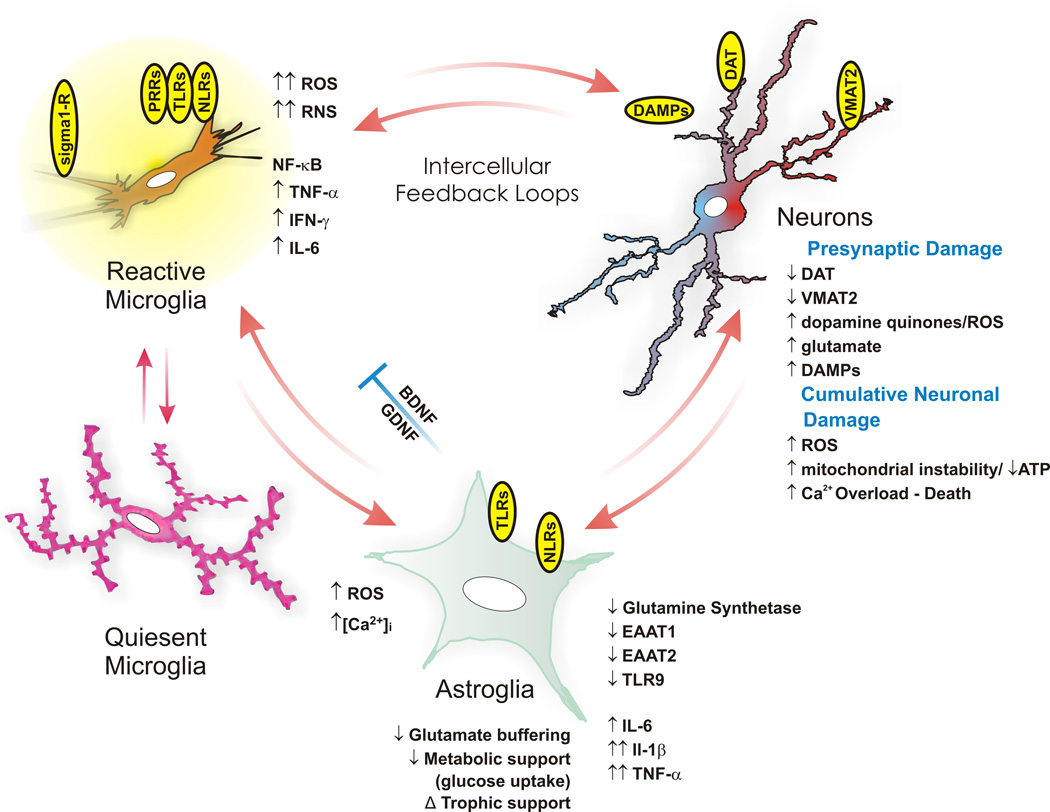
This diagram depicts the neuroimmune mechanisms that mediate methamphetamine-induced neurodegeneration in the human brain.[1] The NF-κB-mediated neuroimmune response to methamphetamine use which results in the increased permeability of the blood–brain barrier arises through its binding at and activation of sigma-1 receptors, the increased production of reactive oxygen species (ROS), reactive nitrogen species (RNS), and damage-associated molecular pattern molecules (DAMPs), the dysregulation of glutamate transporters (specifically, EAAT1 and EAAT2) and glucose metabolism, and excessive calcium influx in glial cells and dopamine neurons.[1][2][3]
Details
SystemNeuroimmune
Identifiers
MeSHD015213
Anatomical terminology

The neuroimmune system is a system of structures and processes involving the biochemical and electrophysiological interactions between the nervous system and immune system which protect neurons from pathogens. It serves to protect neurons against disease by maintaining selectively permeable barriers (e.g., the blood–brain barrier and blood–cerebrospinal fluid barrier), mediating neuroinflammation and wound healing in damaged neurons, and mobilizing host defenses against pathogens.[2][4][5]

The neuroimmune system and peripheral immune system are structurally distinct. Unlike the peripheral system, the neuroimmune system is composed primarily of glial cells;[1][5] among all the hematopoietic cells of the immune system, only mast cells are normally present in the neuroimmune system.[6] However, during a neuroimmune response, certain peripheral immune cells are able to cross various blood or fluid–brain barriers in order to respond to pathogens that have entered the brain.[2] For example, there is evidence that following injury macrophages and T cells of the immune system migrate into the spinal cord.[7] Production of immune cells of the complement system have also been documented as being created directly in the central nervous system.[8]

Structure

[edit]

The key cellular components of the neuroimmune system are glial cells, including astrocytes, microglia, and oligodendrocytes.[1][2][5] Unlike other hematopoietic cells of the peripheral immune system, mast cells naturally occur in the brain where they mediate interactions between gut microbes, the immune system, and the central nervous system as part of the microbiota–gut–brain axis.[6]

G protein-coupled receptors that are present in both CNS and immune cell types and which are responsible for a neuroimmune signaling process include:[4]

Neuroimmunity is additionally mediated by the enteric nervous system, namely the interactions of enteric neurons and glial cells. These engage with enteroendocrine cells and local macrophages, sensing signals from the gut lumen, including those from the microbiota. These signals prompt local immune responses and transmit to the CNS through humoral and neural pathways. Interleukins and signals from immune cells can access the hypothalamus via the neurovascular unit or circumventricular organs.[9]

Cellular physiology

[edit]

The neuro-immune system, and study of, comprises an understanding of the immune and neurological systems and the cross-regulatory impacts of their functions.[10] Cytokines regulate immune responses, possibly through activation of the hypothalamic-pituitary-adrenal (HPA) axis.[medical citation needed] Cytokines have also been implicated in the coordination between the nervous and immune systems.[11] Instances of cytokine binding to neural receptors have been documented between the cytokine releasing immune cell IL-1 β and the neural receptor IL-1R.[11] This binding results in an electrical impulse that creates the sensation of pain.[11] Growing evidence suggests that auto-immune T-cells are involved in neurogenesis. Studies have shown that during times of adaptive immune system response, hippocampal neurogenesis is increased, and conversely that auto-immune T-cells and microglia are important for neurogenesis (and so memory and learning) in healthy adults.[12]

The neuroimmune system uses complementary processes of both sensory neurons and immune cells to detect and respond to noxious or harmful stimuli.[11] For example, invading bacteria may simultaneously activate inflammasomes, which process interleukins (IL-1 β), and depolarize sensory neurons through the secretion of hemolysins.[11][13] Hemolysins create pores causing a depolarizing release of potassium ions from inside the eukaryotic cell and an influx of calcium ions.[11] Together this results in an action potential in sensory neurons and the activation of inflammasomes.[11]

Injury and necrosis also cause a neuroimmune response. The release of adenosine triphosphate (ATP) from damaged cells binds to and activates both P2X7 receptors on macrophages of the immune system, and P2X3 receptors of nociceptors of the nervous system.[11] This causes the combined response of both a resulting action potential due to the depolarization created by the influx of calcium and potassium ions, and the activation of inflammasomes.[11] The produced action potential is also responsible for the sensation of pain, and the immune system produces IL-1 β as a result of the ATP P2X7 receptor binding.[11]

Although inflammation is typically thought of as an immune response, there is an orchestration of neural processes involved with the inflammatory process of the immune system. Following injury or infection, there is a cascade of inflammatory responses such as the secretion of cytokines and chemokines that couple with the secretion of neuropeptides (such as substance P) and neurotransmitters (such as serotonin).[7][11][13] Together, this coupled neuroimmune response has an amplifying effect on inflammation.[11]

Neuroimmune responses

[edit]

Neuron-glial cell interaction

[edit]
Different types of glial cells including microglia, astroglia and oligodendrocytes.

Neurons and glial cells work in conjunction to combat intruding pathogens and injury. Chemokines play a prominent role as a mediator between neuron-glial cell communication since both cell types express chemokine receptors.[7] For example, the chemokine fractalkine has been implicated in communication between microglia and dorsal root ganglion (DRG) neurons in the spinal cord.[14] Fractalkine has been associated with hypersensitivity to pain when injected in vivo, and has been found to upregulate inflammatory mediating molecules.[14] Glial cells can effectively recognize pathogens in both the central nervous system and in peripheral tissues.[15] When glial cells recognize foreign pathogens through the use of cytokine and chemokine signaling, they are able to relay this information to the CNS.[15] The result is an increase in depressive symptoms.[15] Chronic activation of glial cells however leads to neurodegeneration and neuroinflammation.[15]

Microglial cells are of the most prominent types of glial cells in the brain. One of their main functions is phagocytozing cellular debris following neuronal apoptosis.[15] Following apoptosis, dead neurons secrete chemical signals that bind to microglial cells and cause them to devour harmful debris from the surrounding nervous tissue.[15] Microglia and the complement system are also associated with synaptic pruning as their secretions of cytokines, growth factors and other complements all aid in the removal of obsolete synapses.[15]

Astrocytes are another type of glial cell that among other functions, modulate the entry of immune cells into the CNS via the blood–brain barrier (BBB).[15] Astrocytes also release various cytokines and neurotrophins that allow for immune cell entry into the CNS; these recruited immune cells target both pathogens and damaged nervous tissue.[15]

Reflexes

[edit]

Withdrawal reflex

[edit]
Withdrawal reflex

The withdrawal reflex is a reflex that protects an organism from harmful stimuli.[13] This reflex occurs when noxious stimuli activate nociceptors that send an action potential to nerves in the spine, which then innervate effector muscles and cause a sudden jerk to move the organism away from the dangerous stimuli.[11] The withdrawal reflex involves both the nervous and immune systems.[11] When the action potential travels back down the spinal nerve network, another impulse travels to peripheral sensory neurons that secrete amino acids and neuropeptides like calcitonin gene-related peptide (CGRP) and Substance P.[11][13] These chemicals act by increasing the redness, swelling of damaged tissues, and attachment of immune cells to endothelial tissue, thereby increasing the permeability of immune cells across capillaries.[11][13]

Reflex response to pathogens and toxins

[edit]

Neuroimmune interactions also occur when pathogens, allergens, or toxins invade an organism.[11] The vagus nerve connects to the gut and airways and elicits nerve impulses to the brainstem in response to the detection of toxins and pathogens.[11] This electrical impulse that travels down from the brain stem travels to mucosal cells and stimulates the secretion of mucus; this impulse can also cause ejection of the toxin by muscle contractions that cause vomiting or diarrhea.[11]

Neuroimmune connections and the vagus nerve have also been highlighted more recently as essential to maintaining homeostasis in the context of novel viruses such as SARS-CoV-2 [16] This is especially relevant when considering the role of the vagus nerve in regulating systemic inflammation via the Cholinergic Anti-inflammatory Pathway. [17]

Reflex response to parasites

[edit]

The neuroimmune system is involved in reflexes associated with parasitic invasions of hosts. Nociceptors are also associated with the body's reflexes to pathogens as they are in strategic locations, such as airways and intestinal tissues, to induce muscle contractions that cause scratching, vomiting, and coughing.[11] These reflexes are all designed to eject pathogens from the body. For example, scratching is induced by pruritogens that stimulate nociceptors on epidermal tissues.[11] These pruritogens, like histamine, also cause other immune cells to secrete further pruritogens in an effort to cause more itching to physically remove parasitic invaders.[11] In terms of intestinal and bronchial parasites, vomiting, coughing, sneezing, and diarrhea can also be caused by nociceptor stimulation in infected tissues, and nerve impulses originating from the brain stem that innervate respective smooth muscles.[11]

Eosinophils in response to capsaicin, can trigger further sensory sensitization to the molecule.[18] Patients with chronic cough also have an enhanced cough reflex to pathogens even if the pathogen has been expelled.[18] In both cases, the release of eosinophils and other immune molecules cause a hypersensitization of sensory neurons in bronchial airways that produce enhanced symptoms.[11][18] It has also been reported that increased immune cell secretions of neurotrophins in response to pollutants and irritants can restructure the peripheral network of nerves in the airways to allow for a more primed state for sensory neurons.[11]

Clinical significance

[edit]

It has been demonstrated that prolonged psychological stress could be linked with increased risk of infection via viral respiratory infection. Studies, in animals, indicate that psychological stress raises glucocorticoid levels and eventually, an increase in susceptibility to streptococcal skin infections.[19]

The neuroimmune system plays a role in Alzheimer's disease. In particular, microglia may be protective by promoting phagocytosis and removal of amyloid-β (Aβ) deposits, but also become dysfunctional as disease progresses, producing neurotoxins, ceasing to clear Aβ deposits, and producing cytokines that further promote Aβ deposition.[20] It has been shown that in Alzheimer's disease, amyloid-β directly activates microglia and other monocytes to produce neurotoxins.[21]

Astrocytes have also been implicated in multiple sclerosis (MS). Astrocytes are responsible for demyelination and the destruction of oligodendrocytes that is associated with the disease.[15] This demyelinating effect is a result of the secretion of cytokines and matrix metalloproteinases (MMP) from activated astrocyte cells onto neighboring neurons.[15] Astrocytes that remain in an activated state form glial scars that also prevent the re-myelination of neurons, as they are a physical impediment to oligodendrocyte progenitor cells (OPCs).[22]

The neuroimmune system is essential for increasing plasticity following a CNS injury via an increase in excitability and a decrease in inhibition, which leads to synaptogenesis and a restructuring of neurons. The neuroimmune system may play a role in recovery outcomes after a CNS injury.[23]

The neuroimmune system is also involved in asthma and chronic cough, as both are a result of the hypersensitized state of sensory neurons due to the release of immune molecules and positive feedback mechanisms.[18]

Preclinical and clinical studies have shown that cellular (microglia/macrophages, leukocytes, astrocytes, and mast cells, etc.) and molecular neuroimmune responses contribute to secondary brain injury after intracerebral hemorrhage.[24][25]

See also

[edit]

References

[edit]

Further reading

[edit]
[edit]
Revisions and contributorsEdit on WikipediaRead on Wikipedia
from Grokipedia
The neuroimmune system encompasses the bidirectional interactions between the nervous and immune systems, enabling coordinated responses to maintain , regulate , and protect the (CNS). This intricate network involves neural pathways, humoral signals, and cellular components that allow the brain to modulate immune activity and vice versa, influencing processes from defense to behavioral adaptations. Key components include glial cells such as and , which act as resident immune sentinels in the CNS, producing cytokines and to orchestrate local responses. The , particularly the sympathetic and vagus nerves, provides neural innervation to immune organs like lymphoid tissues, releasing neurotransmitters such as norepinephrine to fine-tune immune cell function. Additionally, meningeal lymphatics facilitate the drainage of immune cells and molecules from the , supporting waste clearance and immune surveillance. These interactions occur through long-range mechanisms, such as circulating hormones (e.g., glucocorticoids from the hypothalamic-pituitary-adrenal axis) and cytokines (e.g., IL-1β) that signal systemically via the bloodstream or neural afferents, and short-range mechanisms involving direct cellular within tissues, including synaptic modulation by . Emerging research also underscores the role of peripheral sensory and gut- neuroimmune axes in these processes. For instance, immune activation can trigger "" by conveying signals to the , altering mood and , while neural inputs suppress excessive to prevent tissue damage. The neuroimmune system's dysregulation underlies numerous disorders, including , , and depression, where chronic disrupts neural function. Research, including studies as of 2025, highlights its role in CNS plasticity and recovery from injury, with emerging therapeutic potential in targeting these pathways—such as through neuroelectric stimulation—for neuroinflammatory conditions and beyond, including cancer.

Fundamentals

Definition and Scope

The neuroimmune system is defined as the integrated network of neural and immune elements that collectively detect, respond to, and regulate physiological threats such as pathogens, injury, or stress, ensuring organismal homeostasis. This system functions through bidirectional communication, wherein the nervous system modulates immune activity— for instance, via autonomic neural pathways that influence inflammation—while the immune system impacts neural function, such as through circulating factors that alter mood or pain perception. The scope of the neuroimmune system spans both central and peripheral components, including the and as well as peripheral nerves and lymphoid organs, with critical involvement in maintaining protective barriers like the blood-brain barrier. At its core, the neuroimmune axis operates as a sensory-motor framework, in which immune cells serve as peripheral sensors detecting environmental challenges and neurons act as central effectors coordinating adaptive responses. Primary interactors in this network include glial cells within the and immune cells in peripheral tissues.

Historical Development

The concept of neural regulation of inflammation emerged in the mid-19th century through the pioneering experiments of French physiologist , who demonstrated in the 1850s that stimulation of the central end of the divided in rabbits led to and reduced in the affected limb, highlighting the nervous system's role in modulating inflammatory responses. These observations laid foundational groundwork for understanding neurovascular interactions in tissue injury and repair, shifting focus from purely humoral mechanisms to integrated neural control. In the mid-20th century, advances in revealed direct neural innervation of immune organs, with microscopic studies in the 1960s identifying unmyelinated fibers accompanying vascular structures in the and other lymphoid tissues, extending beyond vasoregulation to potential interactions with immune cells. This discovery, building on earlier histological work, suggested a structural basis for neural influence on immunity, prompting further exploration of sympathetic innervation in organs like the . The 1980s and 1990s marked a pivotal shift toward molecular overlaps, exemplified by the 1984 cloning of interleukin-1 (IL-1), a initially recognized for its immune-activating properties but soon identified as a key neural modulator influencing fever, , and neuronal excitability via shared receptors in the . This period also saw the formal establishment of as a distinct field in 1982 with the founding of the International Society of Neuroimmunology (ISNI) during its inaugural congress, fostering interdisciplinary research on bidirectional signaling. Entering the 2000s, research evolved to emphasize bidirectional neuroimmune models, with 2010s innovations in enabling precise mapping of neuron-immune reflexes, such as light-activated of splenic nerves to suppress in preclinical models. The 2020s further integrated these insights with the gut-brain-neuroimmune axis, where post-COVID-19 studies revealed and heightened contributing to persistent neurological symptoms like "brain fog" via altered vagal signaling. A key milestone was the 2025 NIAID virtual workshop on neuroimmune interactions in health and disease, which convened experts to address therapeutic implications of in conditions like and neurodegeneration.

Anatomy and Structure

Central Components

The central components of the neuroimmune system are primarily located within the and , forming specialized interfaces that facilitate controlled interactions between neural tissue and immune elements. In the , the , , and circumventricular organs serve as critical border regions for immune-neural exchange. The , consisting of the , , and , envelop the (CNS) and harbor immune cells such as macrophages and lymphocytes that monitor for pathogens and contribute to local immune responses. Recent discoveries have identified specialized structures within the enhancing neuroimmune function, including dural-associated lymphoid tissues (DALTs), a network of lymphoid aggregates interwoven with fenestrated vasculature that host B cells, T cells, and plasma cells for harvesting and CNS immunosurveillance (discovered around ); subdural lymphatic structures (SLS), dural lymphatic vessels aiding CSF drainage (identified in ); and the subarachnoidal lymphatic-like membrane (SLYM), a fourth meningeal layer separating subarachnoid compartments and influencing immune cell trafficking (identified in 2023). The , located within the ventricles, produces (CSF) and features fenestrated capillaries lined by epithelial cells that allow selective passage of immune molecules while restricting cellular infiltration, thus acting as a dynamic interface for neuroimmune signaling. Circumventricular organs, such as the and , lack a complete blood- barrier and possess dense networks of fenestrated capillaries and sensory neurons, enabling rapid detection of circulating inflammatory mediators like cytokines to initiate neural-immune . In the , the dorsal root ganglia (DRG) house cell bodies that interface with immune signals, particularly in response to peripheral . These ganglia contain primary afferent neurons surrounded by satellite glial cells and infiltrating macrophages, which respond to damage signals by releasing pro-inflammatory cytokines and modulating neuronal excitability, thereby linking peripheral immune events to central processing. This positioning allows DRG to integrate neuroimmune information from the periphery into circuits without direct breach of CNS barriers. The blood-brain barrier (BBB) represents a foundational central component, composed of endothelial cells, , and endfeet that form a selective filter regulating immune cell entry into the CNS. Endothelial cells in brain capillaries are connected by tight junctions, preventing passive diffusion of immune cells and large molecules while permitting transport of signaling factors like . , embedded within the , stabilize vessels and respond to inflammatory cues by secreting cytokines, influencing BBB permeability during neuroimmune challenges. contribute through their endfeet, which envelop capillaries and express transporters that maintain ionic balance and restrict leukocyte transmigration, thereby preserving CNS while allowing adaptive responses to threats. Collectively, these elements play a neuroimmune role by restricting uncontrolled immune infiltration, which could otherwise lead to , while facilitating essential surveillance. Cerebrospinal fluid (CSF) pathways further enable central neuroimmune functions through the and meningeal lymphatics. The , discovered in 2012, facilitates the exchange of CSF with interstitial fluid along perivascular spaces, driven by aquaporin-4 channels on , to clear and transport antigens for immune processing. Meningeal lymphatics, draining from the subarachnoid space into , support immune surveillance by conveying CSF-borne immune cells and soluble factors, allowing peripheral immune adaptation to CNS conditions without compromising barrier integrity. Microglia, the resident macrophages of the CNS, are uniquely positioned throughout the and to orchestrate local neuroimmune responses. Originating from progenitors, these cells maintain by surveying synapses and phagocytosing debris, while activating in response to injury to release cytokines and interact with neurons. Their ramified morphology and expression of immune receptors enable rapid detection of threats, distinguishing them from peripheral macrophages and underscoring their central role in CNS immunity.

Peripheral Components

The peripheral neuroimmune system encompasses the autonomic and sensory components of the nervous system that interact with immune structures outside the , facilitating bidirectional communication between neural and immune elements. The provides dense innervation to primary and secondary lymphoid organs, including the , , lymph nodes, and , primarily through sympathetic postganglionic neurons originating from paravertebral and prevertebral ganglia. Parasympathetic innervation, though less prevalent, contributes to specific sites such as the via vagal branches, modulating immune cell activity through release. Sympathetic nerves in the release norepinephrine, which binds to α- and β-adrenoceptors on hematopoietic stem cells and progenitors, regulating their proliferation, differentiation, and during stress or . Sensory nerves, originating from dorsal root ganglia and trigeminal ganglia, detect immune-derived signals in peripheral tissues, such as cytokines and released during , leading to nociceptive responses like sensitization. These neurons express receptors including and Nav1.8, which become hyperexcitable in response to proinflammatory mediators from macrophages and satellite glial cells in the ganglia, amplifying transmission and contributing to chronic inflammatory states. Trigeminal sensory afferents similarly monitor mucosal , relaying signals that integrate with autonomic outputs to coordinate protective reflexes. Neural networks densely innervate immune organs, forming structured interfaces for neuroimmune . In the spleen, sympathetic fibers form a "neural nexus" at the white-red pulp border, enclosing antigen-presenting cells and releasing norepinephrine to modulate production and immune cell trafficking. Lymph nodes exhibit neurite networks in subsinusoidal regions and T-cell zones, where sensory and sympathetic fibers contact dendritic cells to influence and activation. Gut-associated lymphoid tissue (GALT), including Peyer's patches, receives vagal parasympathetic innervation that links enteric neural circuits to mucosal immunity, regulating IgA secretion and barrier integrity against pathogens. In the skin and mucosa, sensory afferents from peripheral neurons integrate with local immune cells to form a defensive network. Cutaneous nociceptors release neuropeptides like CGRP and upon detecting microbial signals, modulating recruitment and maturation to balance clearance and . Mucosal sensory neurons in the gut and airways similarly interact with macrophages and ILC2s, releasing neuromedin U to promote type 2 immune responses against parasites while suppressing excessive . A pivotal example is the anti-inflammatory pathway, identified in 2000, wherein efferent activity releases to activate α7 nicotinic receptors on macrophages, suppressing TNF production and mitigating systemic storms during infection. This pathway exemplifies how peripheral nerves directly interface with immune responses to maintain .

Cellular and Molecular Physiology

Key Cellular Players

The neuroimmune system involves a diverse array of neural and immune cells that interact to maintain and respond to threats. Central to this are neural cells, including neurons and glial cells. Neurons, such as sensory and autonomic types, integrate signals and colocalize with immune cells in various tissues, originating from progenitors during development. Glial cells encompass and ; arise from progenitors that migrate to the (CNS) early in embryogenesis, before blood-brain barrier formation, establishing them as long-lived resident cells with minimal turnover from circulating monocytes in adulthood. , derived from radial and progenitor cells in the CNS, support blood-brain barrier integrity by regulating endothelial permeability and nutrient transport, while also maintaining neuronal through uptake. Immune cells in the neuroimmune system are categorized as resident or infiltrating. Resident immune cells include in the and meningeal macrophages along the , which perform surveillance and to clear debris without breaching the CNS. Infiltrating immune cells, such as monocytes and T cells, enter the CNS during inflammation via breached barriers, differentiating into macrophages or effector subsets to amplify responses; peripherally, mast cells in the skin serve as sentinels, degranulating to release mediators that interface with local . Microglia exhibit hybrid roles as CNS innate immune effectors, combining neural support with immune functions like , of pathogens, and to adaptive immune cells. Astrocytes contribute by releasing gliotransmitters such as ATP, which can propagate signals to recruit and activate nearby immune cells during stress. Specific T cell subsets, including regulatory T cells (Tregs), modulate neural inflammation by suppressing excessive effector responses and promoting tolerance in the CNS microenvironment. Advances in single-cell sequencing during the 2020s have revealed over 10 distinct microglial states across development, aging, and , reflecting transcriptional diversity in activation profiles and regional adaptations within the .

Signaling Molecules and Pathways

The neuroimmune system relies on a diverse array of signaling molecules that facilitate bidirectional communication between neural and immune components, enabling coordinated responses to physiological challenges. These molecules include neurotransmitters, cytokines, , neuropeptides, and complement proteins, which operate through specific receptors and intracellular pathways to modulate inflammation, immune cell function, and neural activity. Neurotransmitters such as and norepinephrine play pivotal roles in neuroimmune signaling. exerts anti-inflammatory effects primarily through activation of alpha7 nicotinic receptors (α7nAChR) on immune cells like monocytes and macrophages, inhibiting (NF-κB) translocation and reducing production of pro-inflammatory cytokines including TNF-α, IL-1β, and IL-6; this mechanism forms the basis of the cholinergic anti-inflammatory pathway mediated by the . Norepinephrine, released from sympathetic nerves, modulates immune via β2-adrenergic receptors on lymphocytes and macrophages, influencing mobilization and in immune responses. Cytokines and chemokines serve as shared signaling molecules between the nervous and immune systems, with IL-1β, TNF-α, and IL-6 acting as key pro-inflammatory mediators that bridge neural and immune activation. These s transduce signals in neurons through pathways such as JAK-STAT, where ligand binding to receptors initiates (JAK) activation, leading to signal transducer and activator of transcription (STAT) and subsequent changes that regulate neural responses to . The simplified molecular cascade for cytokine signaling can be represented as: \text{Ligand + Receptor} \rightarrow \text{JAK activation} \rightarrow \text{STAT phosphorylation} \rightarrow \text{[Gene expression](/page/Gene_expression)} This pathway underscores the integration of immune signals into neuronal function, including modulation of and stress responses. Other mediators, including and complement proteins, further link innate immunity to neural processes. , a released from sensory neurons, promotes by enhancing T cell and TH1/TH17 secretion via neurokinin-1 receptors (NK1R) on immune cells. Complement fragments C3a and C5a, generated during innate immune activation, bind to receptors on neurons and , amplifying and nociceptive signaling while facilitating leukocyte recruitment to neural tissues. Key pathways in neuroimmune signaling are inherently bidirectional, allowing immune-derived signals to influence neural activity and vice versa. receptors such as IL-1R on neurons detect peripheral IL-1β, triggering central responses like fever through activation of hypothalamic pathways that elevate body temperature. Conversely, neurons release (BDNF), which influences immune cell differentiation and survival, promoting anti-inflammatory phenotypes in and macrophages during neuroimmune crosstalk.

Neuroimmune Responses

Local Interactions

Local interactions within the neuroimmune system involve direct, short-range communications between neural and immune components at specific tissue sites, enabling rapid responses to local perturbations without invoking broader systemic pathways. These interactions are crucial for maintaining tissue homeostasis, modulating , and facilitating repair through bidirectional signaling between neurons, , and immune cells. A key aspect of neuron-glial occurs through the fractalkine ()-CX3CR1 signaling axis, where neurons express on their membranes, and bear the CX3CR1 receptor. This pathway modulates during brain development and in response to , as use CX3CR1 to detect and phagocytose weak or excess synapses, thereby refining neural circuits. Disruption of CX3CR1 impairs synaptic remodeling and plasticity, highlighting its role in local neuroimmune balance. Direct contacts between immune cells and neurons are exemplified by interactions involving mast cells and sensory C-fibers. Activation of C-fibers, often by local stimuli such as tissue damage, triggers mast cell degranulation, releasing and other mediators that sensitize nociceptors, thereby amplifying signaling at the site. This process enhances local sensory detection without requiring distant neural reflexes. Glial-immune interactions further amplify local responses, particularly through astrocyte-microglia communication via gap junctions and cytokines like tumor necrosis factor-α (TNF-α). Microglia release TNF-α in response to local threats, which inhibits astrocyte gap junctional communication, altering calcium wave propagation and promoting reactive gliosis. Conversely, astrocytes can signal back to microglia via connexin-based gap junctions, sustaining localized inflammation to contain threats. This bidirectional exchange ensures coordinated glial responses tailored to the injury site. In peripheral tissues like , sensory neurons release (CGRP) upon activation during , recruiting and polarizing toward pro-repair phenotypes. Studies from the 2010s onward have shown that CGRP from NaV1.8-expressing nociceptors promotes and infiltration, accelerating tissue regeneration while limiting excessive . Tissue-specific neuroimmune surveillance is evident in the central nervous system, where breaches in the blood-brain barrier (BBB) permit T cell entry for localized monitoring. Under normal conditions, the BBB restricts access, but focal disruptions—such as those from or trauma—allow patrolling T cells to infiltrate perivascular spaces, interacting with and neurons to detect antigens without widespread activation. This mechanism supports site-specific immune oversight while preserving neural integrity.

Systemic and Reflex Responses

The neuroimmune system orchestrates systemic and reflex responses through integrated neural circuits that coordinate body-wide reactions to threats, preventing excessive and promoting survival. These responses involve rapid signaling between sensory afferents, central processors, and efferent outputs to immune effectors across organs. Unlike localized interactions at tissue sites, these mechanisms span multiple systems, such as spinal, vagal, and hypothalamic pathways, to modulate immune activity in real time. Reflex arcs exemplify this coordination, particularly in the withdrawal reflex, where spinal circuits integrate nociceptive signals from peripheral sensory neurons with immune-derived cues like interleukin-1 (IL-1). Nociceptors detect tissue damage and transmit action potentials via primary afferents to the dorsal horn of the spinal cord, triggering polysynaptic motor outputs for limb retraction. Immune cells at the injury site release IL-1β, which binds to IL-1 receptors on nociceptors, sensitizing them and amplifying the reflex amplitude to enhance protective evasion. This integration ensures that inflammatory signals from macrophages or other responders directly influence spinal nociceptive processing, as demonstrated in models where IL-1 blockade reduces reflex hypersensitivity. In responses, the mediates a key to suppress via the anti-inflammatory pathway, particularly in models. Sensory afferents in the vagus detect cytokines such as (TNF) from infected tissues, relaying signals to the nucleus tractus solitarius in the . This activates efferent vagal fibers that release onto α7 nicotinic receptors on splenic macrophages, inhibiting TNF and IL-1β production to prevent . Studies in endotoxemic rodents show that exacerbates inflammation, while electrical stimulation of the reduces mortality by 40-50% through this pathway, highlighting its role in balancing immune activation during bacterial dissemination. For toxin and parasite threats, eosinophil-neural interactions can contribute to reflexes like in airway . Eosinophils release mediators like major basic protein, which sensitize vagal sensory neurons and enhance responses to irritants, as seen in models of eosinophilic airway . However, in helminth infections such as Nippostrongylus brasiliensis, while infiltrate tissues during larval migration, their direct role in evoking for expulsion remains unclear. In the gut phase, earlier studies suggested eosinophil interactions with enteric neurons might enhance motility, but recent research as of 2024 indicates that infection-induced gastrointestinal hypermotility and worm clearance are independent of , primarily mediated by alterations rather than neural changes. This is supported by equivalent hypermotility in eosinophil-deficient models. These reflexes integrate type 2 immune signals with neural outputs to coordinate expulsion across respiratory and gastrointestinal barriers. A pivotal example is the splenic nerve reflex, discovered in 2016, where sympathetic signals from the splenic nerve modulate T cell responses to regulate immunity. In response to inflammatory cues, central sympathetic outflow activates noradrenergic fibers in the splenic nerve, which interact with CD4+ T cells in the spleen's white pulp—functionally akin to compartments—to promote differentiation and suppress pro-inflammatory Th1/Th17 responses. This reflex is particularly active in models of and , where splenic increases T cell-mediated , demonstrating neural control over adaptive immunity at secondary lymphoid sites. Systemic integration occurs via the hypothalamic-pituitary-adrenal (HPA) axis, which links neural stress signals to glucocorticoid-mediated immune suppression. Hypothalamic neurons detect immune or psychological stressors, releasing corticotropin-releasing hormone to stimulate pituitary adrenocorticotropic hormone secretion, culminating in adrenal cortisol release. Glucocorticoids bind to receptors on immune cells, inhibiting pro-inflammatory cytokine production and T cell proliferation to dampen systemic responses. This axis provides a feedback loop, as cytokines like IL-6 can further activate the hypothalamus, ensuring coordinated neuroimmune homeostasis during prolonged threats. Recent advances as of 2025 highlight the role of peripheral sensory neuroimmune circuits in further refining these responses.

Physiological Functions

Homeostasis and Surveillance

The neuroimmune system plays a crucial role in maintaining within the central nervous system (CNS) by ensuring constant and balanced physiological functions under normal conditions. Microglia, as resident immune cells, actively patrol the brain parenchyma, continuously scanning synapses to monitor for subtle changes in neuronal activity and integrity. This patrolling behavior supports synaptic by facilitating the selective of weak or excessive synapses, thereby preserving stability without triggering . Complementing this, meningeal immune cells, including T cells and macrophages, conduct of the (CSF), detecting potential pathogens or debris that might enter via the subarachnoid space. This meningeal immunity ensures early identification of threats while upholding the CNS's immune-privileged status. Barrier maintenance is another key homeostatic function, where astrocytes contribute to blood-brain barrier (BBB) integrity. Astrocytic endfeet, which envelop cerebral blood vessels, induce and maintain tight junctions in endothelial cells via secreted factors such as laminins, supporting nutrient exchange while blocking toxins. Perivascular macrophages further contribute by phagocytosing debris around vessels and secreting factors that reinforce endothelial stability, ensuring a selective filtration system aligned with neural demands. Homeostatic reflexes involve inputs that fine-tune immune cell trafficking for steady-state balance. For instance, daily noradrenergic signals from sympathetic nerves innervating the promote the rhythmic release of leukocytes, such as hematopoietic stem cells and mature immune cells, into circulation to replenish peripheral pools without excessive mobilization. This circadian regulation helps sustain immune readiness across tissues. The gut-brain axis extends this oversight, with vagal afferents sensing microbiota-derived signals, such as , to modulate systemic immunity by influencing production and T-cell differentiation in distant lymphoid organs. A vital aspect of neuroimmune is the glymphatic system's clearance of products, which is tightly linked to neural activity and cycles. During , aquaporin-4 channels in astrocytic endfeet facilitate the convective flow of CSF through perivascular spaces, efficiently removing misfolded proteins like amyloid-β from the fluid. This process, enhanced by reduced noradrenergic tone during , underscores the neuroimmune collaboration in removal, with recent studies highlighting its dependence on synchronized neuronal oscillations for optimal efficiency.

Inflammation and Tissue Repair

The neuroimmune response to CNS tissue injury orchestrates and repair through a phased progression: an initial inflammatory phase occurring within hours to days, characterized by rapid immune activation; a proliferative phase lasting days to weeks, focused on tissue rebuilding; and a remodeling phase extending over weeks to months, involving matrix reorganization and functional restoration, with neural signals providing regulatory input throughout to balance damage containment and recovery. In the acute inflammatory phase, sensory neurons release , a that directly activates immune cells such as mast cells and macrophages, triggering via neurokinin-1 receptor signaling and promoting the recruitment of leukocytes to amplify local immune responses. This neural-immune crosstalk ensures swift containment of pathogens or debris but must be tightly controlled to prevent excessive tissue damage. Transitioning to the resolution phase, neural pathways, particularly the , counteract persistent by stimulating the of interleukin-10 (IL-10) from immune cells and driving polarization toward , which suppresses pro-inflammatory cytokines like TNF-α and IL-1β. enhances this process by upregulating α7 nicotinic receptors on and , fostering a shift from pro-inflammatory M1 states to reparative M2 states essential for dampening the inflammatory cascade. During the proliferative and remodeling phases, neural contributions to repair become prominent; for instance, neurons secrete (BDNF), which interacts with immune cells to promote by enhancing endothelial cell survival and expression, thereby supporting nutrient delivery and tissue regeneration. Concurrently, reactive form a post-injury, delineating the site through elongated processes and deposition, which isolates necrotic tissue and guides axonal regrowth while potentially limiting excessive immune infiltration. Neural inputs, including neuromodulators, fine-tune these mechanisms to optimize maturation and prevent fibrotic overgrowth. A illustrative example of neuroimmune dynamics in this process is seen in ischemic stroke, where high-mobility group box 1 () protein released from necrotic neurons serves as an alarmin to activate and peripheral immune cells, initiating repair through signaling and , though unchecked activity can drive maladaptive and impair long-term recovery. This biphasic role underscores the need for neural regulation to harness beneficial repair while mitigating pathological outcomes.

Clinical Significance

Dysregulation in Diseases

Dysregulation of the neuroimmune system contributes to a range of pathologies by promoting chronic inflammation, disrupting immune surveillance, and exacerbating neuronal damage. In neurodegenerative diseases, persistent activation of and aberrant signaling amplify and synaptic loss, while in autoimmune conditions, breakdown of neurovascular barriers facilitates misguided immune attacks on self-tissues. Chronic infections and pain syndromes involve sensitized neural-immune reflexes that sustain hypersensitivity, and mental health disorders feature intertwined endocrine-immune axes that impair brain plasticity. These imbalances highlight the neuroimmune system's dual role in protection and when feedback mechanisms fail. In , chronic l activation is triggered by amyloid-β plaques, leading to sustained release of proinflammatory s such as IL-1β, which forms self-perpetuating inflammatory loops that impair plaque clearance and promote neuronal . This activation shifts from a protective to a neurotoxic state, contributing to synaptic dysfunction and cognitive decline. Recent studies in the 2020s have further linked hyperphosphorylated pathology to neuroimmune interactions, where aggregates stimulate l proliferation and production, exacerbating tangle formation and propagation across brain regions. Similarly, emerging 2025 research implicates gut in progression, where microbial imbalances compromise the intestinal barrier, allowing inflammatory signals to travel via vagal neuroimmune pathways to trigger α-synuclein aggregation and neuron loss in the . Autoimmune disorders exemplify neuroimmune dysregulation through compromised barriers and dysregulated neural modulation of immunity. In , breakdown of the blood-brain barrier enables autoreactive T cells, including Th17 and + subsets, to infiltrate the and target sheaths, resulting in demyelination and axonal degeneration. This breach is facilitated by proinflammatory s that further erode endothelial integrity, perpetuating immune cell diapedesis and formation. In , dysregulation alters neuroimmune crosstalk, with reduced parasympathetic tone and heightened sympathetic activity promoting synovial and joint destruction via excessive release from immune cells. Infectious and chronic conditions often involve prolonged neuroimmune activation following pathogen exposure. Long COVID is characterized by persistent systemic cytokines, such as IL-6 and TNF-α, that drive , disrupt the blood-brain barrier, and contribute to symptoms like and through sustained microglial priming. In pain disorders like , neuroimmune sensitization manifests as heightened activity due to autoantibodies and mast cell-derived mediators (e.g., IL-1β and ), amplifying central pain processing and widespread without peripheral tissue damage. Mental health conditions, particularly depression, arise from neuroimmune imbalances intersecting with the hypothalamic-pituitary-adrenal (HPA) axis, where elevated proinflammatory cytokines like TNF-α activate release, suppress hippocampal , and induce and mood dysregulation. This cytokine-HPA interplay sustains a pro-inflammatory milieu that impairs serotonin signaling and neuronal repair, underscoring the role of neuroimmune exhaustion in affective disorders.

Therapeutic Targets and Interventions

Pharmacological interventions targeting the neuroimmune system primarily focus on modulating cytokine signaling to dampen excessive inflammation. Anti-cytokine therapies, such as (TNF) inhibitors like and , have been explored in neuroinflammatory conditions, though early trials in (MS) from the 1990s indicated limited efficacy and potential exacerbation of symptoms, leading to their established use in peripheral autoimmune diseases with neuroimmune overlap, such as (RA). Interferon-beta (IFN-β), approved by the FDA in 1993 for relapsing-remitting MS, acts as an immunomodulator by reducing pro-inflammatory production and enhancing anti-inflammatory pathways, demonstrating reduced relapse rates in clinical trials. More recently, interleukin-1 (IL-1) blockers like have shown promise in preclinical models of by inhibiting IL-1β-driven microglial activation. Neuromodulation techniques leverage neural circuits to regulate immune responses, offering non-pharmacological options. Vagus nerve stimulation (VNS) devices, such as the SetPoint System, received FDA approval on July 31, 2025, for adults with moderate to severe who inadequately respond to anti-rheumatic drugs; this implantable device delivers electrical pulses to the , activating the anti-inflammatory pathway to suppress TNF-α and other cytokines systemically. In preclinical sepsis models, optogenetic targeting of cholinergic neurons in the dorsal motor nucleus of the vagus (DMV) has been shown to increase splenic nerve activity, reducing circulating TNF-α levels and mitigating inflammatory responses during endotoxemia. Cell-based therapies aim to restore neuroimmune balance by replenishing or enhancing regulatory immune populations. Microglial repopulation, achieved through pharmacological depletion (e.g., using CSF1R inhibitors like PLX5622) followed by natural repopulation from bone marrow progenitors, has demonstrated therapeutic potential in neurodegeneration models; repopulated microglia exhibit reduced pro-inflammatory gene expression, alleviating neuroinflammation and promoting neuronal survival in Alzheimer's disease-like conditions. Regulatory T cell (Treg) infusions, particularly expanded autologous CD4+Foxp3+ Tregs, have been tested in amyotrophic lateral sclerosis (ALS) trials, where intravenous administration increased circulating Treg numbers and suppressive function, correlating with slowed disease progression in phase I studies. Emerging strategies increasingly incorporate modulation and novel receptor agonists to influence neuroimmune signaling. interventions, such as multi-species formulations (e.g., and strains), enhance vagal nerve activity by altering composition, leading to reduced and improved mood in depression models via increased anti-inflammatory production like IL-10. In 2025, advances in agonists, such as intrathecal CGS21680, have shown enduring reversal of in rodent models by reordering neuroimmune signaling, suppressing microglial activation and release without side effects. Ongoing clinical efforts include trials evaluating IL-1 blockers like for depression with neuroinflammatory features, where baseline IL-1 levels predict response to anti- therapy.

References

Add your contribution
Related Hubs
User Avatar
No comments yet.