


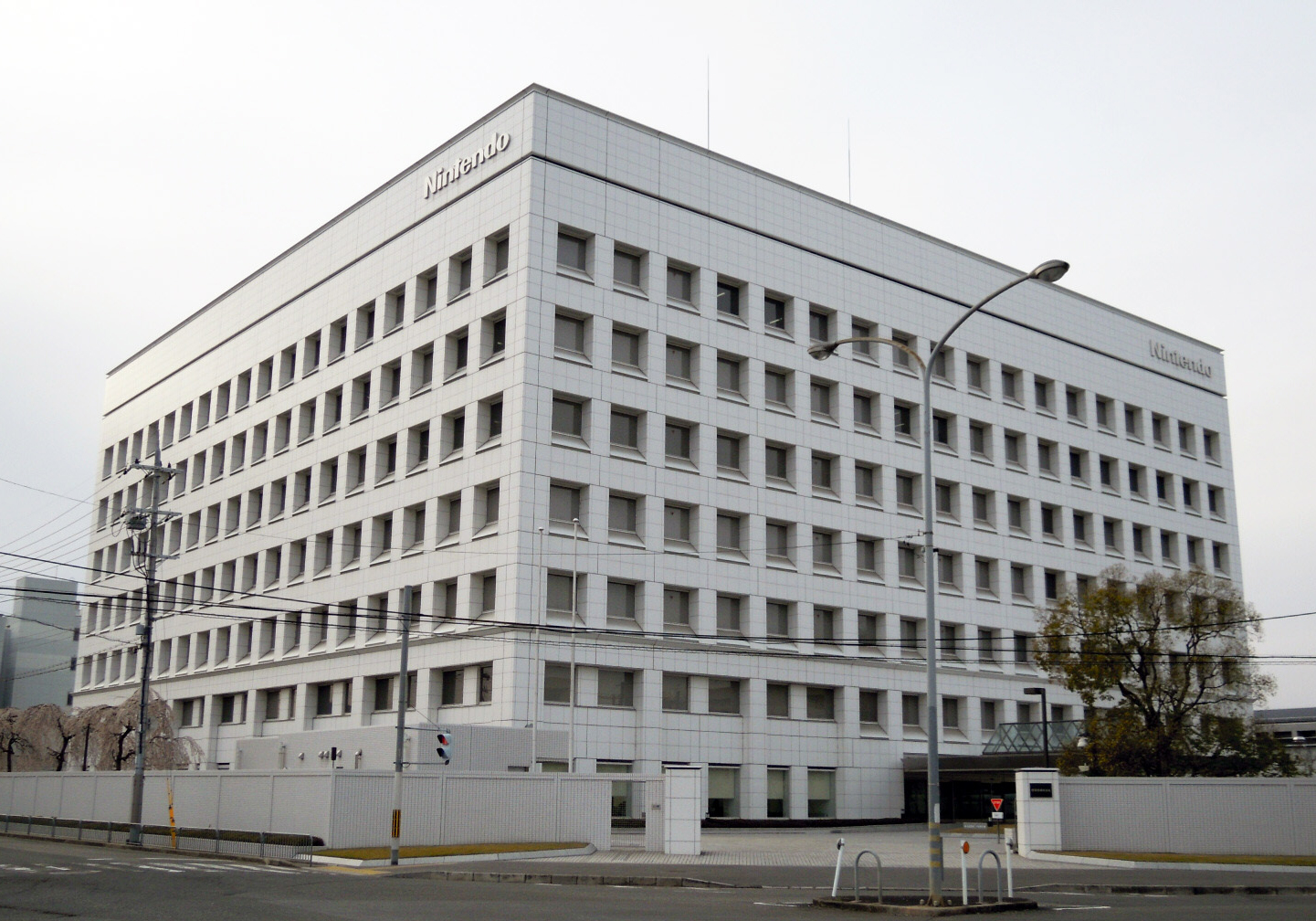

Nintendo Software Planning & Development
View on WikipediaNintendo Software Planning & Development Division,[a] commonly abbreviated as Nintendo SPD, was a Japanese research, planning and development division owned by Nintendo and housed inside the Nintendo Development Center in Kyoto, Japan. The division had two departments: Software Planning & Development Department, which primarily co-produced games with external developers; and Software Development & Design Department, which primarily developed experimental and system software. The division was created during a corporate restructuring in 2004, with the merger of the Nintendo R&D1 and Nintendo R&D2 departments.
Key Information


The group had the task of independently developing innovative games, assisting other development teams on projects, and managing overseas production of first-party franchises.[1] Both SPD and SDD departments were divided into four separate groups, which worked concurrently on different projects.[2]
In September 2015, Nintendo SPD merged with Nintendo's other software development division, Entertainment Analysis & Development (EAD), becoming Nintendo Entertainment Planning & Development.[3][4]
History
[edit]In 2004, then-Nintendo president Satoru Iwata created the Software Planning & Development division, appointing himself as its general manager. The goal of the newly created division would be to focus on co-producing and supervising external second-party video game development, with the goal of relieving the Entertainment Analysis & Development (EAD) division, and its general manager Shigeru Miyamoto, to focus on internal development. Although that was the division's primary focus, it also went on to develop some video games titles internally.[5][6]
On June 27, 2013, deputy general manager Shinya Takahashi replaced Satoru Iwata as general manager of the division, gaining a seat in Nintendo's board of directors in the process.[7] A year later, on June 18, 2014, all of Nintendo's internal research and development divisions, including the SPD division, were moved from the Nintendo's headquarters in Kyoto to the newly built Nintendo Development Center, just 300 meters from the old building. By centralizing all of its developers in the new building, Nintendo hoped they would deeply interact with each other, regardless of which division and field they were working on, creating a synergy between hardware and software development.[8][9]
On September 16, 2015, the division was merged with Nintendo's internal software development division, Entertainment Analysis & Development, becoming Nintendo Entertainment Planning & Development (EPD). As Shigeru Miyamoto retired as general manager of the EAD division and went on to become a Creative Fellow, former SPD general manager Shinya Takahashi took his place as general manager of the newly created EPD division, thus supervising all video games developed at Nintendo. The new division accumulated all of its predecessors roles as both developing video games internally and co-producing them with external developers.[3][4]
Structure
[edit]The General Manager of the Nintendo Software Planning & Development Division was Shinya Takahashi, assisted by both Keizo Kato, the Assistant Manager and Kensuke Tanabe, the Executive Officer. The division was split into two different departments: the Software Planning & Development Department, which was split into four separate groups and supervised by Deputy Manager Yoshio Sakamoto; and the Software Development & Design Department, which was split into three separate groups and supervised by Deputy Manager Masaru Nishita. All of the groups worked concurrently on different projects.[2]
Software Planning & Development Department
[edit]Production Group No. 1
[edit]The Production Group No. 1's primary focus was the development and production of video game software and software applications for Nintendo home and handheld consoles, as well as software for peripherals developed for said consoles, both internally and in cooperation with second-party developers. The group manager and main producer was Nintendo-veteran Yoshio Sakamoto. The group is responsible for developing and producing games in the WarioWare, Rhythm Heaven, Card Hero, Tomodachi and the mainline Metroid series.[10]
Notes
[edit]Production Group No. 2
[edit]The Production Group No. 2 was led by manager and video game producer Hitoshi Yamagami. The group was primarily responsible for co-producing and supervising video games published by Nintendo and developed by third-party developers from Japan.[35] They're responsible for producing and supervising games in the Pokémon, F-Zero, Legendary Starfy, Fire Emblem, Dr. Mario, Endless Ocean, Fossil Fighters, Style Savvy and Xenoblade Chronicles series.
In addition to co-producing games, the group also supervised the development of Drill Dozer, developed by Game Freak.
Notes
[edit]- ^ a b c d Co-produced with Tose.
- ^ a b c d e f g h i Co-produced with Game Freak.
- ^ a b c Co-produced with Creatures, Inc.
- ^ a b c d e f g h i j k l m Co-produced with Intelligent Systems.
- ^ a b c Co-produced with Suzak Inc.
- ^ a b c Co-produced with Ambrella.
- ^ a b c Co-produced with MediaKite.
- ^ Co-produced with Konami.
- ^ a b c d e f Co-produced with Genius Sonority.
- ^ a b c Co-produced with Ganbarion.
- ^ a b Co-produced with Chunsoft.
- ^ Co-produced with Aki Corporation.
- ^ a b c d Co-produced with Red Entertainment.
- ^ Co-produced with Sandlot.
- ^ Co-produced with Jupiter.
- ^ a b c d e Co-produced with Syn Sophia.
- ^ a b c d e f g h i j k l Co-produced with Arika.
- ^ a b Co-produced with Mistwalker.
- ^ Co-produced with Racjin.
- ^ a b c Co-produced with Lancarse.
- ^ a b c Co-produced with Monolith Soft.
- ^ Co-produced with Treasure.
- ^ Co-produced with AQ Interactive.
- ^ a b c Co-produced with PlatinumGames.
- ^ Co-produced with Valhalla Game Studios.
Production Group No. 3
[edit]The Production Group No. 3 was led by producer Kensuke Tanabe and responsible for overseeing the development of titles from the Metroid Prime, Battalion Wars, Super Mario Strikers, Mario vs. Donkey Kong, Excite, Paper Mario, Fluidity, and Donkey Kong Country series.[93]
Notes
[edit]- ^ a b Co-produced with HAL Laboratory.
- ^ Co-produced with Retro Studios.
- ^ Co-produced with n-Space.
- ^ Co-produced with Kuju Entertainment.
- ^ Co-produced with Next Level Games.
Production Group No. 4
[edit]The Production Group No. 4 was led by Hiroshi Sato and Toshiharu Izuno and responsible for overseeing the development of titles from the Mario Party, Mario Sports, Mario & Luigi, Yoshi, Donkey Kong, and Wii Party series.[95]
Notes
[edit]- 1 Co-production with Eighting.
- 2 Co-production with NDcube.
- 3 Co-production with Cing.
- 4 Co-production with Hudson.
- 5 Co-production with INiS.
- 6 Co-production with Camelot.
- 7 Co-production with Paon.
- 8 Co-production with AlphaDream.
- 9 Co-production with Project Sora and Sora Ltd.
- 10 Co-production with Bandai Namco Studios and Sora Ltd.
- 11 Co-production with Good-Feel.
- 12 Co-production with Arzest.
- 13 Co-production with Artoon.
- 14 Co-production with Namco Bandai Games.
Software Development & Design Department
[edit]Deputy Manager: Masaru Nishita
Nintendo Software Development & Design was an experimental software development team assembled by Nintendo Co., Ltd. president Satoru Iwata.[96] The team was originally assembled as a System Service Task Force that would develop all the unique internal system software for the Nintendo DS and Nintendo Wii.[97] The team was responsible for all the additional Wii Channels,[98] the Nintendo DSi system software and more recently, the Nintendo 3DS system software. Nintendo SDD also went on to develop several innovative retail games. The philosophy behind development was to think out of the box and create unique software in a timely manner with smaller development resources. The development staff was composed of Koichi Kawamoto, who was the original programmer of WarioWare, and Shinya Takahashi, who was a longtime designer at Nintendo EAD. The department was also responsible for developing several subsequent WiiWare and DSiWare software.
Software Development Group
[edit]Manager/producer: Kiyoshi Mizuki
Software Development Group was responsible for developing software from the Jam with the Band and Brain Age series, among additional Touch! Generations titles with partner developers.
- 1 Co-production with Namco Bandai Games.
Notes
[edit]- ^ Japanese: 任天堂企画開発本部, Hepburn: Nintendō Kikaku Kaihatsu Honbu
- ^ Responsible for the western localized version. The original title was developed by the Software Development & Design Department.
References
[edit]- ^ N-Sider. Nintendo Revolution FAQ
- ^ a b Cassidy, Kevin. NCL Team Structure work in progress. June 7, 2006. Retrieved October 26, 2007.
- ^ a b Kohler, Chris. "Nintendo Consolidates Its Game Development Teams". Wired. Retrieved 15 September 2015.
- ^ a b Totilo, Stephen (September 14, 2015). "Some Inside Baseball For Nintendo Fans As EAD Transforms". Kotaku. Retrieved January 11, 2019.
- ^ Iwata, Satoru (February 17, 2015). "Third Quarter Financial Results Briefing for Fiscal Year Ending March 2015 - Q & A". Nintendo.
Iwata: [...] In 2004, we established the Software Planning & Development Division to relieve Mr. Miyamoto from handling the games co-developed with second parties to enable him to concentrate on internal development. After that, I was in charge of the Software Planning & Development Division
- ^ "Iwata Asks: Pandora's Tower for Wii". Nintendo of Europe GmbH. Retrieved 2019-01-20.
Iwata: In 2004, the Software Planning and Development department had only just been created.
- ^ "Notice Regarding Changes of Representative Directors and Members of Board of Directors" (PDF). Nintendo. April 24, 2013. Retrieved January 10, 2019.
- ^ "Nintendo's new development building now open for business". Nintendo Everything. June 21, 2014. Retrieved January 11, 2019.
- ^ "任天堂の新開発棟が始動 ゲーム機、ソフト生む拠点". Kyoto NP. June 18, 2014. Archived from the original on June 18, 2014. Retrieved January 11, 2019.
- ^ Iwata, Satoru. "Iwata Asks: Metroid: Other M: Making a Game with Nintendo". Nintendo.
Yoshio Sakamoto is Metroid: Other M's producer. Apart from the Metroid series, he has been involved in the development of games such as Famicom Tantei Club, Card Hero and Tomodachi Collection. He is the manager of Production Group No.1 in Nintendo's Software Planning & Development Department.
- ^ Intelligent Systems, Nintendo Software Planning & Development, Nintendo Research & Engineering Department (2004-10-14). WarioWare: Twisted! (Game Boy Advance). Nintendo. Scene: Staff Credits.
Producer: Yoshio Sakamoto, Ryoichi Kitanishi
{{cite book}}: CS1 maint: multiple names: authors list (link) - ^ a b c d e f g h i j k l m n o p q r s t u v "Works - Games - Intelligent Systems Co., Ltd". www.intsys.co.jp (in Japanese). Retrieved 2019-01-22.
- ^ Intelligent Systems, Nintendo Software Planning & Development (2004-12-02). WarioWare: Touched! (Nintendo DS). Nintendo. Scene: Staff Credits.
Producer: Yoshio Sakamoto, Ryoichi Kitanishi
- ^ a b Nintendo Software Planning & Development (2005-09-13). Play-Yan (Game Boy Advance). Nintendo. Scene: Staff Credits.
Producer: Kazuhiko Taniguchi, Yoshio Sakamoto
- ^ Nintendo Software Planning & Development, J.P. Room (2006-08-03). Rhythm Tengoku (Game Boy Advance). Nintendo. Scene: Staff Credits.
Producer: Mitsuo Terada (J.P. Room Recordings), Yoshio Sakamoto
- ^ Intelligent Systems, Nintendo Software Planning & Development (2006-12-02). WarioWare: Smooth Moves (Wii). Nintendo. Scene: Staff Credits.
Producer: Yoshio Sakamoto, Ryoichi Kitanishi
- ^ a b Intelligent Systems, Nintendo Software Planning & Development (2007-08-02). Face Training (Nintendo DS). Nintendo. Scene: Staff Credits.
Producer: Katsuya Yamano, Toshio Sengoku
- ^ Nintendo Software Planning & Development (2007-11-20). Nintendo DS Digital TV Tuner (Nintendo DS). Nintendo. Scene: Staff credits.
Producer: Yoshio Sakamoto, Katsuya Yamano
- ^ Intelligent Systems, Nintendo Software Planning & Development (December 20, 2007). Kousoku Card Battle: Card Hero (Nintendo DS). Nintendo. Scene: Staff Credits.
Producer: Yoshio Sakamoto
- ^ Nintendo Software Planning & Development, TNX (2008-08-31). Rhythm Heaven (Nintendo DS). Nintendo. Scene: Staff Credits.
Producer: Tsunku
- ^ a b Nintendo Software Planning & Development (2008-12-24). Birds & Beans (Nintendo DSi). Nintendo. Scene: Staff Credits.
Producer: Katsuya Yamano
- ^ Intelligent Systems, Nintendo Software Planning & Development (2008-12-24). WarioWare: Snapped! (Nintendo DSi). Nintendo. Scene: Staff credits.
Producers: Katsuya Yamano, Toshio Sengoku
- ^ Intelligent Systems, Nintendo Software Planning & Development (April 22, 2009). Atsumeru Egaocho (Nintendo DSi). Nintendo. Scene: Staff Credits.
Producer: Katsuya Yamano, Takeshi Ando
- ^ Intelligent Systems, Nintendo Software Planning & Development (2009-04-29). WarioWare D.I.Y. (Nintendo DS). Nintendo. Scene: Staff Credits.
Producer: Yoshio Sakamoto, Toshio Sengoku
- ^ Intelligent Systems, Nintendo Software Planning & Development (2009-04-29). WarioWare D.I.Y. (Nintendo DS). Nintendo. Scene: Staff credits.
Producers: Yoshio Sakamoto, Toshio Sengoku
- ^ Nintendo Software Planning & Development (June 18, 2009). Tomodachi Collection (Nintendo DS). Nintendo. Scene: Staff Credits.
Producer: Yoshio Sakamoto
- ^ Intelligent Systems, Nintendo Software Planning & Development (July 29, 2009). Kousoku Card Battle: Card Hero (Nintendo DSi). Nintendo. Scene: Staff Credits.
Producer: Yoshio Sakamoto
- ^ "Nintendo bringing Face Training to DSiWare in Japan". GoNintendo. 4 September 2009. Retrieved January 5, 2019.
- ^ Team Ninja, Nintendo Software Planning & Development (August 31, 2010). Metroid: Other M (Wii). Nintendo. Scene: Staff Credits.
Producer: Yoshio Sakamoto, Yosuke Hayashi
- ^ Nintendo Software Planning & Development, TNX (2011-08-21). Rhythm Heaven Fever (Wii). Nintendo. Scene: Staff Credits.
Producer: Tsunku
- ^ Nintendo Software Planning & Development (2012-01-19). Kiki Trick (Wii). Nintendo. Scene: Staff Credits.
Producer: Shinya Takahashi
- ^ Nintendo Software Planning & Development (2013-04-18). Tomodachi Life (Nintendo 3DS). Nintendo. Scene: Staff credits.
Producer: Yoshio Sakamoto
- ^ Intelligent Systems, Nintendo Software Planning & Development (2013-03-28). Game & Wario (Wii U). Nintendo. Scene: Staff credits.
Producer: Yoshio Sakamoto, Toshio Sengoku, Naoki Nakano
- ^ Nintendo Software Planning & Development, TNX (June 11, 2015). Rhythm Heaven Fever (Nintendo 3DS). Nintendo. Scene: Staff Credits.
Producer: Tsunku
- ^ Iwata, Satoru. "Iwata Asks: Style Savvy: The Theme Is Fashion". Nintendo.
I'm Hattori, also from SPD. I'm in Yamagami-san's group.
- ^ Tose; Nintendo Software Planning & Development (2004-08-05). Densetsu no Starfy 3 (Game Boy Advance). Nintendo. Scene: Staff Credits.
Producer: Yasuhiro Minamimoto, Hitoshi Yamagami
- ^ Game Freak; Creatures Inc.; Nintendo Software Planning & Development (2004-09-16). Pokémon Emerald (Game Boy Advance). The Pokémon Company, Nintendo. Scene: Staff Credits.
Producer: Hiroyuki Jinnai, Hitoshi Yamagami, Gakuji Nomoto, Hiroaki Tsuru
- ^ a b c d e f g "GAME FREAK 株式会社ゲームフリーク オフィシャルサイト". www.gamefreak.co.jp. Retrieved 2019-01-21.
- ^ Intelligent Systems; Nintendo Software Planning & Development (2004-10-07). Fire Emblem: The Sacred Stones (Game Boy Advance). Nintendo. Scene: Staff Credits.
Producer: Tohru Narihiro, Hitoshi Yamagami
- ^ Suzak; Nintendo Software Planning & Development (2004-10-21). F-Zero: Climax (Game Boy Advance). Nintendo. Scene: Staff Credits.
Producer: Hitoshi Yamagami / General Producer: Masahiro Yonezawa
- ^ Ambrella; Nintendo Software Planning & Development (2004-12-02). Pokémon Dash (Nintendo DS). Nintendo. Scene: Staff Credits.
Producer: Kunimi Kawamura, Hitoshi Yamagami
- ^ a b MediaKite; Nintendo Software Planning & Development (2005-03-31). Yakuman DS (Nintendo DS). Nintendo. Scene: Staff Credits.
Producers: Hitoshi Yamagami, Noriyasu Kainuma, Makoto Yoshida
- ^ Intelligent Systems; Nintendo Software Planning & Development (2005-04-20). Fire Emblem: Path of Radiance (GameCube). Nintendo. Scene: Staff Credits.
Producer: Tohru Narihiro, Hitoshi Yamagami
- ^ Intelligent Systems; Nintendo Software Planning & Development (2005-06-23). Advance Wars: Dual Strike (Nintendo DS). Nintendo. Scene: Staff Credits.
Producer: Tohru Narihiro, Hitoshi Yamagami
- ^ Konami; Nintendo Software Planning & Development (2005-07-14). Dance Dance Revolution: Mario Mix (GameCube). Nintendo. Scene: Staff Credits.
Producers: Hitoshi Yamagami, Hirotaka Ishikawa
- ^ Genius Sonority; Nintendo Software Planning & Development (2005-08-04). Pokémon XD: Gale of Darkness (GameCube). Nintendo. Scene: Staff Credits.
Producers: Gakuji Nomoto, Hiroyuki Jinnai, Hiroaki Tsuru
- ^ Ganbarion; Nintendo Software Planning & Development (2005-08-08). Jump Superstars (Nintendo DS). Nintendo. Scene: Staff Credits.
Producer: Chikako Yamakura, Hitoshi Yamagami
- ^ Intelligent Systems; Tose; Nintendo Software Planning & Development (2005-09-13). Dr. Mario & Puzzle League (Game Boy Advance). Nintendo. Scene: Staff Credits.
Producers: Hitoshi Yamagami, Ryoichi Kitanishi
- ^ Genius Sonority; Nintendo Software Planning & Development (2005-10-20). Pokémon Trozei! (Nintendo DS). Nintendo. Scene: Staff Credits.
Producers: Kunimi Kawamura, Hitoshi Yamagami
- ^ Tose; Nintendo Software Planning & Development (2005-10-20). Super Princess Peach (Nintendo DS). Nintendo. Scene: Staff Credits.
Producers: Yasuhiro Minamimoto, Hitoshi Yamagami
- ^ Chunsoft; Nintendo Software Planning & Development (2005-11-17). Pokémon Mystery Dungeon: Blue Rescue Team and Red Rescue Team (Nintendo DS). Nintendo. Scene: Staff Credits.
Producers: Hiroaki Tsuru, Atsushi Sugimoto, Kunimi Kawamura, Hitoshi Yamagami
- ^ Nintendo Software Planning & Development (2006-03-20). Tetris DS (Nintendo DS). Nintendo. Scene: Staff Credits.
Producer: Hitoshi Yamagami
- ^ Tose; Nintendo Software Planning & Development (2006-04-13). Densetsu no Starfy 4 (Nintendo DS). Nintendo. Scene: Staff Credits.
Producers: Yasuhiro Minamimoto, Hitoshi Yamagami
- ^ Sandlot (company); Nintendo Software Planning & Development (2006-09-02). Chōsōjū Mecha MG (Nintendo DS). Nintendo. Scene: Staff Credits.
Producer: Hitoshi Yamagami, Shiro Kuroda
- ^ Game Freak; Nintendo Software Planning & Development (2006-09-28). Pokémon Diamond and Pearl (Nintendo DS). The Pokémon Company, Nintendo. Scene: Staff Credits.
Producers: Hiroyuki Jinnai, Hitoshi Yamagami, Gakuji Nomoto, Hiroaki Tsuru
- ^ Ganbarion; Nintendo Software Planning & Development (2006-11-23). Jump Ultimate Stars (Nintendo DS). Nintendo. Scene: Staff Credits.
Producer: Chikako Yamakura, Hitoshi Yamagami
- ^ Genius Sonority; Nintendo Software Planning & Development (2006-12-14). Pokémon Battle Revolution (Wii). Nintendo. Scene: Staff Credits.
Producers: Hiroyuki Jinnai, Hiroaki Tsuru
- ^ Suzak; Nintendo Software Planning & Development (2007-01-18). Wario: Master of Disguise (Nintendo DS). Nintendo. Scene: Staff Credits.
Producer: Masahiro Yonezawa, Hitoshi Yamagami
- ^ Jupiter; Nintendo Software Planning & Development (2007-01-25). Picross DS (Nintendo DS). Nintendo. Scene: Staff Credits.
Producer: Makoto Nakayama, Hitoshi Yamagami
- ^ Intelligent Systems; Nintendo Software Planning & Development (2007-02-22). Fire Emblem: Radiant Dawn (Wii). Nintendo. Scene: Staff Credits.
Producer: Thoru Narihiro, Hitoshi Yamagami
- ^ Intelligent Systems; Nintendo Software Planning & Development (2007-04-26). Planet Puzzle League (Nintendo DS). Nintendo. Scene: Staff Credits.
Producer: Toshio Sengoku, Hitoshi Yamagami
- ^ MediaKite; Nintendo Software Planning & Development (2007-05-24). Kurikin Nano Island Story (Nintendo DS). Nintendo. Scene: Staff Credits.
Producers: Hitoshi Yamagami, Azusa Tajima, Noriyasu Kainuma
- ^ Nintendo Software Planning & Development (2007-06-29). Brain Age 2: More Training in Minutes a Day (Nintendo DS). Nintendo. Scene: Staff Credits.
Producer: Hitoshi Yamagami
- ^ Arika; Nintendo Software Planning & Development (2007-08-02). Endless Ocean (Wii). Nintendo. Scene: Staff Credits.
Producer: Ichirou Mihara, Hitoshi Yamagami
- ^ Chunsoft; Nintendo Software Planning & Development (2007-09-13). Pokémon Mystery Dungeon: Explorers of Time and Explorers of Darkness (Nintendo DS). Nintendo. Scene: Staff Credits.
Producer: Koichi Nakamura [...] Producers: Hiroaki Tsuru, Hiroyuki Jinnai, Kunimi Kawamura, Hitoshi Yamagami
- ^ Nintendo Software Planning & Development (2008-01-18). Wii Chess (Wii). Nintendo. Scene: Staff Credits.
Producer: Hitoshi Yamagami
- ^ Intelligent Systems; Nintendo Software Planning & Development (2008-01-21). Advance Wars: Days of Ruin (Nintendo DS). Nintendo. Scene: Staff Credits.
Producers: Tohru Narihiro, Hitoshi Yamagami
- ^ Arika; Nintendo Software Planning & Development (2008-03-25). Dr. Mario Online Rx (Wii). Nintendo. Scene: Staff Credits.
Producer: Hitoshi Yamagami
- ^ Red Entertainment; Nintendo Software Planning & Development (2008-04-17). Fossil Fighters (Nintendo DS). Nintendo. Scene: Staff Credits.
Producer: Ai Ito [...] Producer: Hitoshi Yamagami
- ^ a b c "LANCARSE Ltd. | Our Works". www.lancarse.co.jp. Retrieved 2019-01-21.
- ^ Tose; Nintendo Software Planning & Development (2008-07-10). The Legendary Starfy (Nintendo DS). Nintendo. Scene: Staff Credits.
Producers: Yasuhiro Minamimoto, Hitoshi Yamagami
- ^ Intelligent Systems; Nintendo Software Planning & Development (2008-08-07). Fire Emblem: Shadow Dragon (Nintendo DS). Nintendo. Scene: Staff Credits.
Producer: Thoru Narihiro, Hitoshi Yamagami
- ^ Game Freak; Nintendo Software Planning & Development (2008-09-13). Pokémon Platinum (Nintendo DS). The Pokémon Company, Nintendo. Scene: Staff Credits.
Producers: Junichi Masuda, Shusaku Egami, Hitoshi Yamagami, Hiroaki Tsuru
- ^ Monolith Soft; Nintendo Software Planning & Development (2008-09-25). Disaster: Day of Crisis (Wii). Nintendo. Scene: Staff Credits.
Producers: Tadashi Nomura, Hitoshi Yamagami
- ^ Tanaka, John (2009-02-20). "Nintendo Unveils Third Round of DSiWare Titles for Japan". IGN. Retrieved 2019-01-19.
- ^ Nintendo Software Planning & Development (2009-02-25). Yosuke Ide's Health Mahjong DSi (Nintendo DSi). Nintendo. Scene: Staff Credits.
Producer: Hitoshi Yamagami)
- ^ "Metal Torrent". Nintendo Life. 13 May 2010. Retrieved 2019-01-19.
- ^ Mistwalker; AQ Interactive; Nintendo Software Planning & Development (2011-01-27). The Last Story (Wii). Nintendo. Scene: Staff Credits.
Producer: Yutaka Takehisa [...] Coproducers: Hitoshi Yamagami, Takao Nakano
- ^ Arika; Nintendo Software Planning & Development (2011-06-06). 3D Classics: Excitebike (Nintendo 3DS). Nintendo. Scene: Staff Credits.
Producers: Hitoshi Yamagami, Ichirou Mihara
- ^ Arika; Nintendo Software Planning & Development (2011-06-07). 3D Classics: Xevious (Nintendo 3DS). Nintendo. Scene: Staff Credits.
Producers: Hitoshi Yamagami, Ichirou Mihara
- ^ Arika; Nintendo Software Planning & Development (2011-07-13). 3D Classics: Urban Champion (Nintendo 3DS). Nintendo. Scene: Staff Credits.
Producers: Hitoshi Yamagami, Ichirou Mihara
- ^ Arika; Nintendo Software Planning & Development (2011-09-10). 3D Classics: Twinbee (Nintendo 3DS). Nintendo. Scene: Staff Credits.
Producers: Hitoshi Yamagami, Ichirou Mihara
- ^ Arika; Nintendo Software Planning & Development (2011-11-17). 3D Classics: Kirby's Adventure (Nintendo 3DS). Nintendo. Scene: Staff Credits.
Producers: Hitoshi Yamagami, Ichirou Mihara
- ^ Arika; Nintendo Software Planning & Development (2011-12-19). 3D Classics: Kid Icarus (Nintendo 3DS). Nintendo. Scene: Staff Credits.
Producers: Hitoshi Yamagami, Ichirou Mihara
- ^ Game Freak; Nintendo Software Planning & Development (2014-11-21). Pokémon Omega Ruby and Alpha Sapphire (Nintendo 3DS). The Pokémon Company, Nintendo. Scene: Staff Credits.
Produced by: Junichi Masuda, Shusaku Egami, Takato Utsunomiya, Hitoshi Yamagami
- ^ Genius Sonority; Nintendo Software Planning & Development (2015-02-18). Pokémon Shuffle (Nintendo 3DS). The Pokémon Company, Nintendo. Scene: Staff Credits.
General Producer: Manabu Yamana [...] Producer: Hitoshi Yamagami [...] Producer: Naoto Ueoka
- ^ Intelligent Systems; Nintendo Software Planning & Development (2015-03-13). Code Name: S.T.E.A.M. (Nintendo 3DS). Nintendo. Scene: Staff Credits.
Producer: Tohru Narihiro, Hitoshi Yamagami
- ^ Ambrella; Nintendo Software Planning & Development (2015-04-08). Pokémon Rumble World (Nintendo 3DS). Nintendo. Scene: Staff Credits.
Producer: Shusaku Egami, Eisuke Kasejima, Hitoshi Yamagami
- ^ Syn Sophia; Nintendo Software Planning & Development (2015-04-16). Style Savvy: Fashion Forward (Nintendo 3DS). Nintendo. Scene: Staff Credits.
Producer: Hitoshi Yamagami, Syuuji Yoshida, Masaaki Kawamura
- ^ Monolith Soft; Nintendo Software Planning & Development (2015-04-29). Xenoblade Chronicles X (Wii U). Nintendo. Scene: Staff Credits.
Producer: Shingo Kawabata, Hitoshi Yamagami
- ^ Intelligent Systems; Nintendo Software Planning & Development (2015-06-25). Fire Emblem Fates (Nintendo 3DS). Nintendo. Scene: Staff Credits.
Producer: Masahiro Higuchi, Hitoshi Yamagami
- ^ Valhalla Game Studios; Nintendo Software Planning & Development (2015-08-04). Devil's Third (Wii U). Nintendo. Scene: Staff Credits.
Producer: Yoshifuru Okamoto [...] Producer: Hitoshi Yamagami
- ^ "社長が訊く『メトロイドプライム3 コラプション』". www.nintendo.co.jp. Retrieved 2019-01-20.
- ^ HAL Laboratory; Nintendo Software Planning & Development (2005-03-24). Kirby: Canvas Curse (Nintendo DS). Nintendo. Scene: Staff Credits.
Producers: Hiroaki Suga, Masayoshi Tanimura, Kensuke Tanabe
- ^ "Iwata Asks - Wii Party". Nintendo of Europe GmbH. Retrieved 2019-01-20.
- ^ Nintendo. Iwata Asks: Nintendo 3DS
- ^ Nintendo Magic. Inoue, Osamu.
- ^ Nintendo. Iwata Asks: Wii Channels
