Hubbry Logo
search
logo
2180513

Oceanic climate

logo
Community Hub0 Subscribers
Read side by side
from Wikipedia

Regions where oceanic or subtropical highland climates (Cfb, Cfc, Cwb, Cwc) are found.

An oceanic climate, also known as a marine climate or maritime climate, is the temperate climate sub-type in Köppen classification represented as Cfb, typical of west coasts in higher middle latitudes of continents, generally featuring warm summers and cool to mild winters (for their latitude), with a relatively narrow annual temperature range and few extremes of temperature. Oceanic climates can be found in both hemispheres generally between 40 and 60 degrees latitude, with subpolar versions extending to 70 degrees latitude in some coastal areas. Other varieties of climates usually classified together with these include subtropical highland climates, represented as Cwb or Cfb, and subpolar oceanic or cold subtropical highland climates, represented as Cfc or Cwc. Subtropical highland climates occur in some mountainous parts of the subtropics or tropics, some of which have monsoon influence, while their cold variants and subpolar oceanic climates occur near polar or tundra regions.

Precipitation

[edit]

Locations with oceanic climates tend to feature frequent cloudy conditions with precipitation, low-hanging clouds, and frequent fronts and storms. Thunderstorms are normally few, since strong daytime heating and hot and cold air masses meet infrequently in the regions, but are more common in subtropical highland climates where these air masses meet more frequently due to the influence of hotter weather in the subtropics or tropics, especially in monsoon-influenced climates. In most areas with an oceanic climate, precipitation comes in the form of rain for the majority of the year. Most oceanic climate zones, however, experience at least one snowfall per year. Snowfall is more frequent and commonplace in the subpolar oceanic climates due to the colder weather in those locations.

Temperature

[edit]

Overall temperature characteristics of the oceanic climates feature cool temperatures and infrequent extremes of temperature. In the Köppen climate classification, oceanic climates have a mean temperature of 0 °C (32 °F) or higher (or −3 °C (27 °F) or higher) in the coldest month, compared to continental climates where the coldest month has a mean temperature of below 0 °C (32 °F) (or −3 °C (27 °F)). Summers are warm but not hot, with the warmest month having a mean temperature below 22 °C (72 °F).

Poleward of the latter is a subtype of it, the subpolar oceanic climate (Köppen Cfc),[1] with long but relatively mild (for their latitude) winters, and cool and short summers with average temperatures of at least 10 °C (50 °F) for one to three months. Examples in the Northern Hemisphere include parts of coastal Iceland, the coast of Norway north of Bodø, the mountains of Scotland, parts of Shetland, and the British Columbian coast in Canada. In the Southern Hemisphere, examples include extreme southern Chile and Argentina (such as Punta Arenas and Ushuaia), the Falkland Islands, parts of southeastern Australia, and much of New Zealand.

Cause

[edit]

Oceanic climates are not necessarily found in coastal locations on the aforementioned parallels; however, in most cases oceanic climates parallel higher middle latitude oceans.[clarification needed] The polar jet stream, which moves in a west to east direction across the middle latitudes, advances low pressure systems, storms, and fronts. In coastal areas of the higher middle latitudes (45–60° latitude), the prevailing onshore flow creates the basic structure of most oceanic climates. Oceanic climates are a product and reflection of the cool ocean adjacent to them. In the autumn, winter, and early spring, when the polar jet stream is most active, the frequent passing of marine weather systems creates the frequent fog, cloudy skies, and light drizzle often associated with oceanic climates. They are typically found poleward of Mediterranean climates, except in Australia where they are poleward of both such climates and humid subtropical climates due to the shape of the continent.[citation needed] Only in Europe do they penetrate far inland, where they eventually transition into warm-summer humid continental climates; in other continents, they are blocked by a large mountain range or limited by nearby oceans.[2]

The North Atlantic Gulf Stream, a tropical oceanic current that passes north of the Caribbean and up the East Coast of the United States to North Carolina, then heads east-northeast to the Grand Banks of Newfoundland, is thought to greatly modify the climate of northwest Europe.[3] As a result of the North Atlantic Current, west coast areas located in high latitudes like Ireland, the UK, and Norway have much milder winters (for their latitude) than would otherwise be the case. The lowland attributes of western Europe also help drive marine air masses into continental areas, enabling cities such as Dresden, Prague, and Vienna to have maritime climates in spite of being located well inland from the ocean.

Locations

[edit]

Europe

[edit]
Amsterdam, Netherlands
Climate chart (explanation)
J
F
M
A
M
J
J
A
S
O
N
D
 
 
67
 
 
6
1
 
 
55
 
 
7
1
 
 
52
 
 
10
3
 
 
40
 
 
14
5
 
 
54
 
 
18
9
 
 
65
 
 
20
11
 
 
82
 
 
23
14
 
 
99
 
 
22
13
 
 
84
 
 
19
11
 
 
87
 
 
15
8
 
 
85
 
 
10
5
 
 
82
 
 
7
2
Average max. and min. temperatures in °C
Precipitation totals in mm
Source: Royal Netherlands Meteorological Institute[4]
Imperial conversion
JFMAMJJASOND
 
 
2.6
 
 
43
34
 
 
2.2
 
 
44
34
 
 
2
 
 
50
37
 
 
1.6
 
 
58
41
 
 
2.1
 
 
64
47
 
 
2.6
 
 
69
52
 
 
3.2
 
 
73
56
 
 
3.9
 
 
72
56
 
 
3.3
 
 
67
52
 
 
3.4
 
 
58
46
 
 
3.4
 
 
50
40
 
 
3.2
 
 
44
35
Average max. and min. temperatures in °F
Precipitation totals in inches

Oceanic climates in Europe occupy a large stretch of land, from Norway's Atlantic coast, the British Isles and southeast to some parts of northern Turkey.

Western Europe is almost exclusively oceanic between 45°N to 54.913°N; including most of France (away from the Mediterranean), nearly all of Belgium, the Netherlands, Austria, most of Luxembourg, most of Denmark, western Germany, northwestern Switzerland, south coast and western areas of Norway north to Skrova and extreme southern Sweden.

While most of Southern Europe is climatically Mediterranean, some parts of Southern Europe also have oceanic climates. However, these instances of the climate are highly variable, and often somewhat anomalous. The north coast of Spain, the western Azores off the coast of Portugal are too wet in summer to be Mediterranean, and too mild in summer to be humid subtropical, though they often have winter means above 9 °C (48 °F), unusual for European oceanic climates.

Another anomalous case can be found in northwestern Turkey, including northern Istanbul. These places are, in a strict air-mass sense, not oceanic: they are affected by southerlies directly from the Mediterranean, and polar intrusions from Siberia.[5] Yet their position near the Black Sea makes them too wet in summer to be Mediterranean, too mild during winter to be humid continental, and not hot enough in summer to be humid subtropical; therefore Köppen classifies them as oceanic. Despite their anomalous position, however, their temperatures, around 4–5 °C (39–41 °F) in winter and 20–22 °C (68–72 °F) in summer, are not wholly atypical for European oceanic climates.

Some Eastern European regions such as the north of Croatia and Serbia and some parts of the Czech Republic, also have oceanic climates; these are generally near the boundary for being humid continental.

The line between oceanic and continental climates in Europe runs in a generally northwest to southeast direction. For example, western Germany is more impacted by milder Atlantic air masses than eastern Germany. Thus, winters across Europe become colder to the east, and (in some locations) summers become hotter. The line between oceanic Europe and Mediterranean Europe normally runs west to east and is related to changes in precipitation patterns and differences to seasonal temperatures; although intrusions of polar air, remnants of marine air-masses, and higher summer precipitation can create oceanic climates in Eastern Europe and transcontinental regions as far south as 40°N.[citation needed]

The Americas

[edit]
Vancouver, Canada
Climate chart (explanation)
J
F
M
A
M
J
J
A
S
O
N
D
 
 
179
 
 
7
3
 
 
184
 
 
8
3
 
 
156
 
 
11
5
 
 
118
 
 
14
7
 
 
87
 
 
17
10
 
 
70
 
 
20
12
 
 
53
 
 
22
14
 
 
51
 
 
22
14
 
 
73
 
 
19
12
 
 
148
 
 
14
8
 
 
239
 
 
9
5
 
 
231
 
 
7
3
Average max. and min. temperatures in °C
Precipitation totals in mm
Source: Environment Canada
Imperial conversion
JFMAMJJASOND
 
 
7
 
 
44
37
 
 
7.2
 
 
47
38
 
 
6.1
 
 
51
40
 
 
4.6
 
 
56
44
 
 
3.4
 
 
62
49
 
 
2.8
 
 
67
54
 
 
2.1
 
 
72
57
 
 
2
 
 
72
58
 
 
2.9
 
 
66
53
 
 
5.8
 
 
57
47
 
 
9.4
 
 
49
41
 
 
9.1
 
 
44
37
Average max. and min. temperatures in °F
Precipitation totals in inches

The oceanic climate exists in an arc spreading across the northwestern coast of North America from the Alaskan panhandle to northern Washington. In addition, some east coast areas such as Block Island, Cape Cod, Martha's Vineyard, and Nantucket have a similar climate.[6] And in the highlands of Central and South America with the variant Cfb. An extensive area of oceanic climates distinguishes the coastal regions of southern Chile and extends into bordering Argentina.

Africa

[edit]

The only noteworthy area of maritime climate at or near sea-level within Africa is in South Africa from Mossel Bay on the Western Cape coast to Plettenberg Bay (the Garden Route), with additional pockets of this climate inland of the Eastern Cape and KwaZulu-Natal coast. It is usually warm most of the year with no pronounced rainy season, but slightly more rain in autumn and spring. The Tristan da Cunha archipelago in the South Atlantic also has an oceanic climate.

Asia and Oceania

[edit]
Christchurch, New Zealand
Climate chart (explanation)
J
F
M
A
M
J
J
A
S
O
N
D
 
 
37
 
 
23
12
 
 
41
 
 
22
12
 
 
41
 
 
20
10
 
 
55
 
 
18
7
 
 
56
 
 
15
5
 
 
61
 
 
12
2
 
 
57
 
 
11
1
 
 
51
 
 
13
3
 
 
36
 
 
15
4
 
 
49
 
 
17
6
 
 
41
 
 
19
8
 
 
52
 
 
21
11
Average max. and min. temperatures in °C
Precipitation totals in mm
Source: CliFlo[7]
Imperial conversion
JFMAMJJASOND
 
 
1.5
 
 
73
53
 
 
1.6
 
 
72
53
 
 
1.6
 
 
69
49
 
 
2.2
 
 
64
44
 
 
2.2
 
 
58
40
 
 
2.4
 
 
53
35
 
 
2.2
 
 
53
34
 
 
2
 
 
55
37
 
 
1.4
 
 
59
39
 
 
1.9
 
 
62
42
 
 
1.6
 
 
67
46
 
 
2
 
 
70
51
Average max. and min. temperatures in °F
Precipitation totals in inches

Although oceanic climate is rare in Asia, subtropical highland climates and cold subtropical highland climates can be found in parts of Southwestern China, and the Himalayan regions of the northern Indian subcontinent.

The oceanic climate is prevalent in the more southerly parts of Oceania. A mild maritime climate is in existence in New Zealand. In Australia, the climate is found in Tasmania, southern half of Victoria and southeastern New South Wales (southwards from Wollongong).

The hinterland of the northern coast of Turkey, features this climate. Additionally, parts of the northeastern coast of Honshu, such as Mutsu, Aomori in Japan, feature this climate, which is rare in Asia due to the lack of a west coast in the middle latitudes.[8]

Indian Ocean

[edit]

Île Amsterdam and Île Saint-Paul, both part of the French Southern and Antarctic Lands, are located in the subtropics and have an oceanic climate (akin to Tristan da Cunha; see above).

Varieties

[edit]

Marine west coast (Cfb)

[edit]
Cfb zone map 1991-2020
Plymouth, United Kingdom
Climate chart (explanation)
J
F
M
A
M
J
J
A
S
O
N
D
 
 
108
 
 
9
4
 
 
84
 
 
9
4
 
 
78
 
 
11
5
 
 
67
 
 
13
6
 
 
64
 
 
16
9
 
 
57
 
 
18
11
 
 
62
 
 
20
13
 
 
67
 
 
20
13
 
 
74
 
 
18
12
 
 
113
 
 
15
9
 
 
113
 
 
12
6
 
 
119
 
 
10
5
Average max. and min. temperatures in °C
Precipitation totals in mm
Source: Hong Kong Observatory
Imperial conversion
JFMAMJJASOND
 
 
4.3
 
 
48
39
 
 
3.3
 
 
48
38
 
 
3.1
 
 
51
41
 
 
2.6
 
 
55
43
 
 
2.5
 
 
60
48
 
 
2.2
 
 
64
52
 
 
2.4
 
 
68
56
 
 
2.6
 
 
68
56
 
 
2.9
 
 
65
53
 
 
4.4
 
 
59
49
 
 
4.4
 
 
53
44
 
 
4.7
 
 
49
40
Average max. and min. temperatures in °F
Precipitation totals in inches

Temperate oceanic climates, also known as "marine mild winter" climates[9] or simply oceanic climates, are found either at middle latitudes. They are often found on or near the west coast of continents; hence another name for Cfb, "marine west coast climates". In addition to moderate temperatures year-round, one of the characteristics is the absence of a dry season. Except for Europe, this type of climate is confined to narrow bands of territory, largely in mid or high latitudes, although it can appear in elevated areas of continental terrain in low latitudes, e.g. plateaus in the subtropics.[10] It exists in both hemispheres between 35° and 60°: at low altitudes between Mediterranean, humid continental, and subarctic climates.[11]

Western sea breezes ease temperatures and moderates the winter, especially if warm sea currents are present, and cause cloudy weather to predominate. Precipitation is constant, especially in colder months, when temperatures are warmer than elsewhere at comparable latitudes. This climate can occur farther inland if no mountain ranges are present or nearby.[12] As this climate causes sufficient moisture year-round without permitting deep snow cover, vegetation typically prospers in this climate. Deciduous trees are predominant in this climate region. However, conifers such as spruce, pine, and cedar are also common in few areas, and fruits such as apples, pears, and grapes can often be cultivated here.

In the hottest month, the average temperature is below 22 °C (72 °F), and at least four months feature average temperatures higher than 10 °C (50 °F). The average temperature of the coldest month must not be colder than −3–0 °C (27–32 °F), or the climate will be classified as continental.[10][13] The average temperature variations in the year are between 10–15 °C (50–59 °F), with average annual temperatures between 6–13 °C (43–55 °F). Rain values can vary from 50–500 cm (20–197 in), depending on whether mountains cause orographic precipitation. Frontal cyclones can be common in marine west coast regions, with some areas experiencing more than 150 rainy days annually, but strong storms are rare.[11]

Zennor, United Kingdom

Cfb climates are predominant in most of Europe except the northeast, as global temperatures became warmer towards late 20th and early 21st century. They are the main climate type in New Zealand and the Australian states of Tasmania, Victoria, and southeastern New South Wales (starting from the Illawarra region). In North America, they are found mainly in Vancouver Island and neighbouring parts of British Columbia, as well as many coastal areas of southeast Alaska. There are pockets of this iteration of Cfb climates in South American countries, mostly in regions of southern Chile and Argentina, parts of the provinces of Chubut, Santa Cruz, and southeast Buenos Aires province in Argentina. In Western Asia, the climate can be found on the Black Sea coast of northern Turkey and Georgia, often transitional to humid subtropical. While Cfb zones are rare in Africa, one dominates the coastline of the Eastern Cape in South Africa.

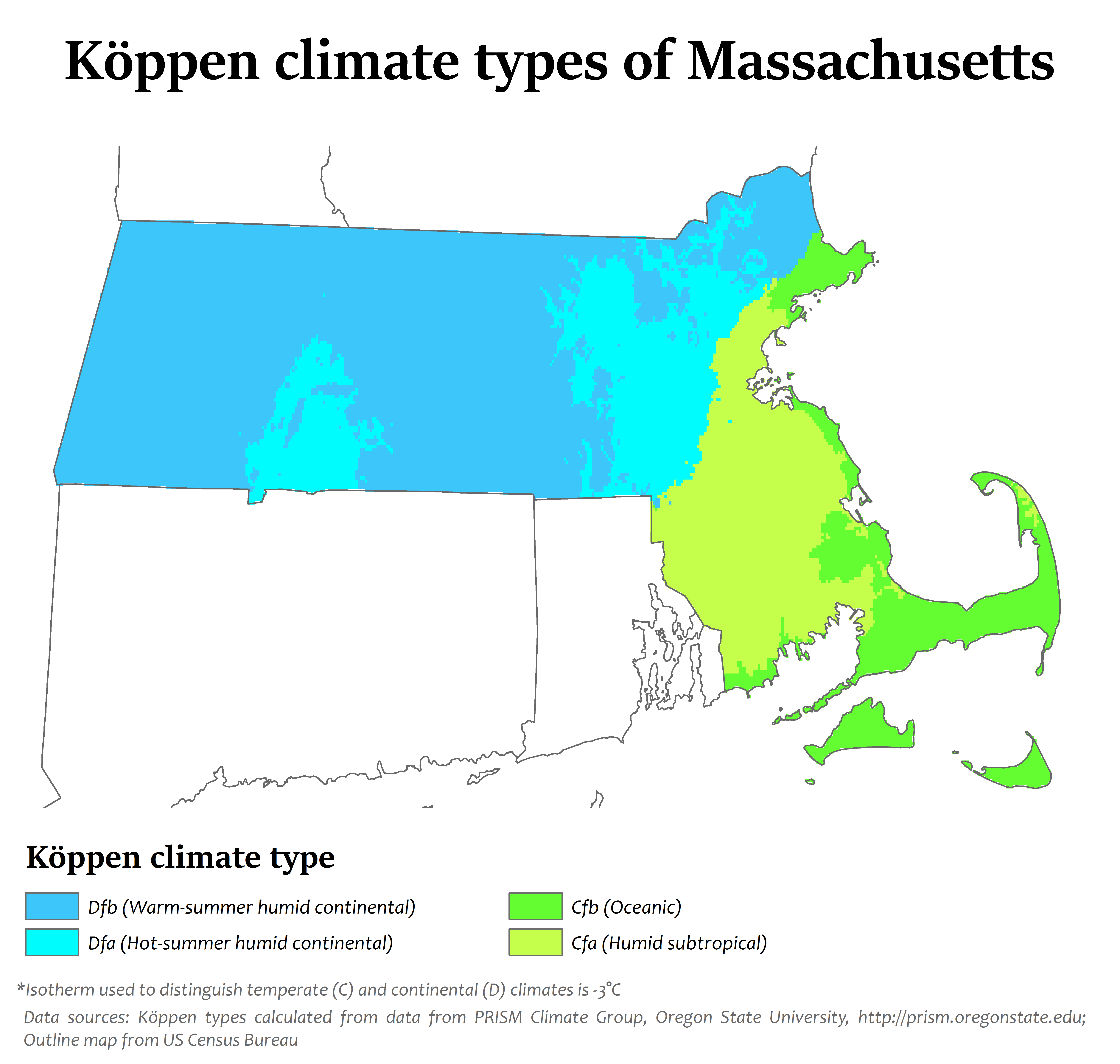

The climate subtype can also be found in Nantucket, Massachusetts (in the immediate west and northwest in transition for humid continental, the remainder of Cape Cod[14])[15] and northeastern Georgia both in the eastern United States.[16] It is also found in the highest portions of the Brazilian state of Bahia and Roraima (in transition or strongly influenced for Cwb), Brønnøy Municipality in Nordland at 65.28 °N (Norway north-central coast), the provinces of Sabah (northeastern Malaysia), and Baluchistan, Pakistan. Although there are more or less rare places associated with relatively isolated mountainous regions (e.g., North Oceania islands and China).[17]

Subtropical highland variety (Cfb, Cwb)

[edit]
Bogotá, Colombia
Climate chart (explanation)
J
F
M
A
M
J
J
A
S
O
N
D
 
 
88
 
 
18
6
 
 
100
 
 
19
7
 
 
100
 
 
20
9
 
 
101
 
 
23
11
 
 
100
 
 
23
12
 
 
135
 
 
23
12
 
 
175
 
 
22
12
 
 
169
 
 
21
12
 
 
145
 
 
18
12
 
 
102
 
 
18
10
 
 
90
 
 
18
8
 
 
90
 
 
18
7
Average max. and min. temperatures in °C
Precipitation totals in mm
Source: WMO
Imperial conversion
JFMAMJJASOND
 
 
3.5
 
 
65
42
 
 
3.9
 
 
66
45
 
 
3.9
 
 
69
49
 
 
4
 
 
73
51
 
 
3.9
 
 
73
53
 
 
5.3
 
 
73
54
 
 
6.9
 
 
72
53
 
 
6.7
 
 
70
53
 
 
5.7
 
 
65
53
 
 
4
 
 
65
50
 
 
3.5
 
 
64
46
 
 
3.5
 
 
64
44
Average max. and min. temperatures in °F
Precipitation totals in inches
Nuwara Eliya, Sri Lanka

The subtropical highland climate is a climate variety, often grouped together with oceanic climates, which exists in some mountainous or elevated portions of the world in either the subtropics or tropics. Despite the latitude, the higher elevations of these regions mean that the climate shares characteristics with oceanic climates.[18][19]

Subtropical highland climates with uniform rainfall (Cfb)[20] usually have rainfall spread relatively evenly throughout the year, similar to other oceanic climates, but unlike these climates, they have a high diurnal temperature variation and low humidity, owing to their inland location and relatively high elevation. Subtropical highland climates with monsoon influence (Cwb) have distinctive wet summers and dry winters.[21]

In locations outside the tropics, other than the drying trend in the winter, subtropical highland climates tend to be essentially identical to an oceanic climate, with mild summers and noticeably cooler winters, plus, in some instances, some snowfall. In the tropics, a subtropical highland climate typically features mild weather year-round. Temperatures there remain relatively constant throughout the year and snowfall is seldom seen due to warmer winters than most oceanic climates.

Areas with this climate feature monthly averages below 22 °C (72 °F) but above either 0 °C (32 °F) or −3 °C (27 °F) depending on isotherm used. At least one month's average temperature is below 18 °C (64 °F). Without their elevation, many of these regions would likely feature either humid subtropical or tropical climates.

This type of climate exists in parts of east, south and southeastern Africa, interior southern Africa and elevated portions of eastern Africa as far north as Ethiopia and of western Africa (west region of Cameroon) up to the southwestern Angola highlands also share this climate type. It also exists in the exposed areas of the High Atlas, some mountainous areas across southern Europe, mountainous sections of North America, including parts of the southern Appalachians and the Central America Volcanic Arc. In South America, it can be found mainly in temperate mountainous areas in the Tropical Andes, Venezuelan Coastal Range, the highest elevations of Serra do Mar in Southeastern Brazil, and tepuis of the Guiana Shield, The highest elevations of the Brazilian Highlands, and due to variations in rainfall and temperature patterns in some places of the Tropical Andes in Bolivia, Perú, Ecuador, Colombia and Venezuela. Most of Yunnan and mountainous areas across Southeast Asia, parts of the Himalayas, parts of the Western Ghats, parts of Sri Lanka, and parts of the Hawaiian Islands of Maui and Hawaii. In the Caribbean, only the peaks in the highest mountain ranges have this climate (including the Blue Mountains in Jamaica and Cerro Maravilla in Puerto Rico), with only Hispaniola's Cordillera Central and Chaîne de la Selle having significant urban settlements under this climate zone, such as cities like Kenscoff in Haiti and Constanza in the Dominican Republic.

Subpolar oceanic and cold subtropical highland varieties (Cfc, Cwc)

[edit]
Punta Arenas, Chile
Climate chart (explanation)
J
F
M
A
M
J
J
A
S
O
N
D
 
 
42
 
 
14
7
 
 
31
 
 
14
7
 
 
38
 
 
12
5
 
 
40
 
 
10
3
 
 
41
 
 
7
1
 
 
27
 
 
4
−1
 
 
29
 
 
4
−1
 
 
30
 
 
5
0
 
 
27
 
 
8
1
 
 
27
 
 
10
3
 
 
30
 
 
12
5
 
 
33
 
 
14
6
Average max. and min. temperatures in °C
Precipitation totals in mm
Source: Dirección Meteorológica de Chile[22]
Imperial conversion
JFMAMJJASOND
 
 
1.6
 
 
58
44
 
 
1.2
 
 
57
44
 
 
1.5
 
 
54
41
 
 
1.6
 
 
49
38
 
 
1.6
 
 
44
34
 
 
1.1
 
 
39
30
 
 
1.1
 
 
39
30
 
 
1.2
 
 
41
32
 
 
1
 
 
46
34
 
 
1.1
 
 
50
37
 
 
1.2
 
 
54
40
 
 
1.3
 
 
56
43
Average max. and min. temperatures in °F
Precipitation totals in inches
Ushuaia, Argentina

Areas with subpolar oceanic climates feature an oceanic climate but are usually located closer to polar regions, with long but relatively mild winters and short, cool summers. As a result of their location, these regions tend to be on the cool end of oceanic climates, approaching polar regions. Snowfall tends to be more common here than in other oceanic climates. Subpolar oceanic climates are less prone to temperature extremes than humid continental climates or subarctic climates, featuring milder winters than these climates. Subpolar oceanic climates feature only one to three months of average monthly temperatures of at least 10 °C (50 °F). As with oceanic climates, none of its average monthly temperatures fall below -3.0 °C (26.6 °F) or 0 °C depending on the isotherm used. Typically, these areas in the warmest month experience daytime maximum temperatures below 17 °C (63 °F), while the coldest month features highs slightly above freezing and lows near or just below freezing while keeping the average warm enough. It typically carries a Cfc designation, though very small areas in Argentina and Chile have summers sufficiently short to be Cwc with fewer than four months over 10 °C (50 °F).[23]

This variant of an oceanic climate is found in parts of coastal Iceland, the Faroe Islands, upland/mountainous parts of Scotland and Northern England, northwestern coastal areas of Norway (most of Lofoten, Vesterålen, warmest part of Tromsø reaching to 71°N on some islands),[24] uplands/highlands in western Norway, the Aleutian Islands of Alaska and northern parts of the Alaskan Panhandle, the southwest of Argentina and Chile, and a few highland areas of Tasmania, and the Australian and Southern Alps.[25] This type of climate is even found in very remote parts of the New Guinea Highlands. The classification used for this regime is Cfc.[1] Temperatures above 30 °C (86 °F) and below −20 °C (−4 °F) are rare. In the most marine areas under this regime, temperatures above 20 °C (68 °F) are extreme weather events, even during summer.

Small areas in Yunnan, Sichuan; parts of Bolivia and Peru; and parts of Mount Kilimanjaro in Tanzania have summers sufficiently short to be Cwc with fewer than four months over 10 °C (50 °F).[23] This is the cold variant of the monsoon-influenced subtropical highland climate. El Alto, Bolivia is one of the few confirmed cities that features this variation of a cold subtropical highland climate.

See also

[edit]

References

[edit]
[edit]
Revisions and contributorsEdit on WikipediaRead on Wikipedia
from Grokipedia
The oceanic climate, also known as a marine or maritime climate and classified as Cfb or Cfc in the Köppen-Geiger system, is defined by mild temperatures with cool summers and mild winters, a narrow annual temperature range typically less than 20°C, and precipitation that is evenly distributed throughout the year without a pronounced dry season.[1][2] This climate type arises primarily from the moderating influence of nearby oceans, which supply consistent moisture and dampen temperature extremes through maritime air masses.[2] Specific temperature criteria include an average temperature for the warmest month below 22°C (72°F), the coldest month above -3°C (27°F) but below 18°C (64°F), and for the Cfb subtype, at least four months averaging above 10°C (50°F); the Cfc subtype features fewer than four such months, resulting in cooler summers.[1] Precipitation totals often exceed 800 mm annually, with no month receiving less than one-third of the wettest month's amount, fostering persistent cloud cover, high humidity, and fog in coastal areas.[3][2] Oceanic climates predominantly occur between 35° and 60° latitude on the western sides of continents, where prevailing westerly winds carry moist air from the ocean inland, though isolated occurrences appear in other maritime-influenced regions.[2] Prominent examples include the British Isles, coastal Norway, and much of Western Europe; the Pacific Northwest of the United States and Canada (e.g., Oregon, Washington, and British Columbia); southern Chile; southeastern Australia and Tasmania; and New Zealand.[2][4] These areas support temperate rainforests, deciduous and coniferous forests, and grasslands, with vegetation adapted to consistent moisture and moderate growing seasons.[2] Notable aspects of oceanic climates include their role in global weather patterns, as the steady oceanic influence contributes to stable atmospheric conditions and influences adjacent regions through cyclonic storms and frontal systems.[5] Human settlements in these zones benefit from reliable water availability and reduced frost risk, supporting agriculture like dairy farming and viticulture, though challenges arise from frequent overcast skies and wind exposure.[2] Climate change projections indicate potential shifts, with warming trends possibly expanding subtropical influences and altering precipitation patterns in these regions.[5]

Definition and Characteristics

Overview

The oceanic climate, also known as a marine or maritime climate, is a subtype of temperate climate within the Köppen-Geiger classification system, primarily designated as Cfb (warm-summer oceanic) and Cfc (cold-summer oceanic or subpolar oceanic). It is characterized by mild temperatures with a small annual range, typically resulting from the moderating influence of nearby oceans or large water bodies, and consistent year-round precipitation without pronounced dry seasons. This climate type fosters relatively stable weather patterns, supporting lush vegetation such as temperate rainforests in suitable terrains.[1] The defining criteria for oceanic climates include a mean temperature in the coolest month above −3 °C (27 °F), with the warmest month below 22 °C (72 °F), and at least one month exceeding 10 °C (50 °F), distinguishing it from polar climates. Note that some implementations of the Köppen system use a 0 °C threshold for the coldest month, while others use −3 °C to better align with vegetation zones. For the Cfb variant, at least four months average above 10 °C (50 °F), while Cfc has one to three such months. Precipitation criteria emphasize uniformity without a dry summer, where the driest summer month receives at least 40 mm (1.6 in) or at least one-third the precipitation of the wettest winter month, distinguishing it from Mediterranean (Cs) or other dry subtypes. These thresholds, based on monthly averages, highlight the climate's maritime moderation over continental extremes.[1][6] The Köppen classification system, which includes the oceanic type, was originally developed by German climatologist Wladimir Köppen in 1884 as a framework linking climate to vegetation zones, with initial focus on thermal belts. It underwent significant refinements in the 1950s and 1960s by Rudolf Geiger, who adjusted precipitation thresholds and incorporated more precise seasonality metrics to better reflect global data.[7] In distinction from continental climates (D group), oceanic climates lack severe winters below −3 °C on average due to oceanic heat retention, resulting in narrower temperature swings. Unlike Mediterranean climates (Cs), which feature summer drought, oceanic types maintain even moisture distribution, driven by persistent maritime air flows rather than seasonal aridity.[1]

Temperature Patterns

Oceanic climates are characterized by mild and stable temperature regimes, moderated by the proximity to large bodies of water, resulting in a typically small annual temperature range of 10–15°C (18–27°F) between the warmest and coolest months. Summers are cool, with average monthly temperatures rarely exceeding 20–25°C (68–77°F), while winters remain mild, with the coldest month averaging above −3 °C (27 °F) and seldom dropping below freezing on average. This moderation stems from the maritime influence, which dampens extremes through consistent oceanic air masses.[8][9] The diurnal temperature range in oceanic climates is also notably small, often between 5–10°C (9–18°F), due to the thermal inertia of nearby oceans that prevents sharp day-night fluctuations. This contrasts with continental climates, where larger landmasses allow for greater daily swings. Observations from coastal European stations, such as those in the Netherlands, confirm average diurnal ranges around 5–8°C, highlighting the stabilizing effect of marine air.[10][8] Representative annual average temperatures in oceanic climate regions vary by location but underscore the overall mildness. In Western Europe, such as coastal areas of the United Kingdom and France, annual averages typically range from 10–15°C (50–59°F), with more southerly locales like coastal Brittany reaching up to 12–14°C (54–57°F). In New Zealand, which exemplifies Southern Hemisphere oceanic conditions, mean annual temperatures span 10–16°C (50–61°F), cooler in the south and milder in the north.[11] Latitude plays a key role in temperature variations within oceanic climates, with equatorward subtypes (Cfb) featuring milder conditions and at least four months averaging above 10°C (50°F), while polesward subtypes (Cfc) are cooler overall, with only one to three such months and lower annual averages. This gradation reflects the decreasing solar insolation toward higher latitudes, amplifying the oceanic moderation in subpolar zones like coastal Scandinavia or southern Chile. Precipitation contributes to this thermal stability by enhancing humidity and cloud cover, though its detailed effects are addressed elsewhere.[12][9]

Precipitation Patterns

Oceanic climates are characterized by annual precipitation totals typically ranging from 500 to 2,500 mm (20 to 98 in), with most regions receiving between 800 and 1,500 mm, distributed relatively evenly throughout the year.[4][13] This consistent moisture input stems from the persistent influence of maritime air masses, ensuring a lack of pronounced dry seasons that distinguishes oceanic climates from more variable temperate types.[4] Seasonality in precipitation is mild, often featuring a slight maximum during winter months in mid-latitude regions due to the poleward shift of mid-latitude storm tracks embedded in the prevailing westerlies.[4][13] Orographic enhancement further amplifies rainfall on windward coastal slopes, where moist air is forced upward by topographic barriers, leading to higher totals compared to leeward areas.[4] Prolonged droughts are rare, as the steady influx of cyclonic systems maintains hydrological stability year-round.[13] Precipitation primarily occurs in the form of frequent, light rain, drizzle, and fog, driven by frontal passages and low-pressure systems, with overcast conditions persisting for much of the year.[4][14] These events contribute to the wettest months often recording 100–200 mm (4–8 in) of accumulation, fostering persistently high relative humidity levels of 70–90% that enhance the damp, misty atmosphere typical of these regions.[15][16]

Causes and Formation

Oceanic Influences

The oceanic climate is fundamentally shaped by the proximity to large bodies of water, which exert a moderating influence through their physical properties. Oceans possess a high specific heat capacity of approximately 4.18 J/g°C, enabling them to absorb substantial heat during summer months without significant temperature rise and release it gradually during winter, thereby dampening seasonal temperature extremes in adjacent coastal regions.[17] This thermal inertia contrasts sharply with land's lower heat capacity, resulting in milder summers and winters characteristic of oceanic climates, where annual temperature ranges often span less than 10–15°C.[18] In addition to thermal regulation, oceans serve as a primary source of atmospheric moisture, fueling consistent precipitation patterns in oceanic climate zones. Evaporation from warm ocean surfaces supplies about 86% of global atmospheric water vapor, which condenses into clouds and generates reliable rainfall, often exceeding 1,000 mm annually in these areas without pronounced dry seasons.[19] This moisture transport sustains the cool, damp conditions typical of the climate, as marine-derived air masses advect inland, promoting overcast skies and frequent drizzle.[20] Specific oceanographic features further modulate local climates within oceanic zones. Upwelling zones, such as those driven by the California Current along the Pacific Northwest of North America, bring cold, nutrient-rich deep water to the surface, cooling coastal air temperatures by several degrees and influencing local conditions in these maritime environments.[21] Conversely, warm ocean gyres like the North Atlantic Drift extend tropical heat poleward, elevating winter temperatures in higher latitudes— for instance, enabling temperate conditions in northwestern Europe despite its northerly position—by transporting heat northward at rates influencing regional sea surface temperatures by up to 5–10°C.[22] The dominance of marine air masses in the planetary boundary layer amplifies these oceanic effects, fostering persistent low-level clouds and fog. In oceanic climates, the shallow marine boundary layer—typically 500–1,000 m thick—traps moisture and heat, leading to frequent advection fog when warm, humid air flows over cooler waters, and widespread stratus clouds that reflect sunlight and further stabilize temperatures.[23] These phenomena reduce diurnal temperature swings and maintain high relative humidity levels, often above 80%, reinforcing the climate's equable nature.[24]

Atmospheric and Topographic Factors

The prevailing westerlies, dominant winds in the mid-latitudes between approximately 30° and 60° N and S, play a crucial role in shaping oceanic climates by transporting moist maritime air from ocean basins toward continental interiors, particularly along western coastlines.[25] These winds, driven by the thermal gradient between polar and subtropical air masses, moderate temperature extremes and deliver consistent moisture, fostering the mild, humid conditions characteristic of these regions. In the Northern Hemisphere, for instance, the westerlies channel Pacific moisture to the coasts of North America and Atlantic moisture to the coasts of Europe, enhancing precipitation without the aridity seen in continental interiors.[26] Associated with these winds are storm tracks, pathways of extratropical cyclones that form along the polar front where cold polar air meets warmer subtropical air, leading to frequent low-pressure systems that bring abundant rainfall to oceanic climate zones. These cyclones, embedded within the westerlies, typically track eastward across the North Atlantic and North Pacific, delivering year-round precipitation, with peaks in winter when the polar front shifts equatorward.[27] Subtropical high-pressure systems, however, act as a barrier, restricting the southward penetration of these moist influences and confining oceanic climates to higher latitudes.[25] Topographic features further modulate oceanic climates through the rain shadow effect, where mountain ranges force moist westerly winds to rise, cool, and release precipitation on windward slopes, while leeward sides experience drier conditions due to descending, warmed air.[28] For example, the Cascade Mountains in the northwestern United States intercept Pacific moisture, resulting in over 2,000 mm of annual precipitation on windward slopes but significantly less on the eastern leeward flanks, limiting the inland extent of oceanic influences.[26] This orographic enhancement concentrates rainfall in coastal and windward areas, reinforcing the maritime character near oceans. Elevation introduces additional variability within oceanic climates, as higher altitudes experience cooler temperatures due to the atmospheric lapse rate, typically around 6.5°C per 1,000 meters, which cools air as it rises and expands.[29] In coastal lowlands, temperatures remain mild year-round, but highland variants at elevations above 1,000 meters exhibit greater seasonality and lower means, blending oceanic moderation with montane cooling effects.[30] This elevational gradient can transform lowland oceanic regimes into cooler, wetter highland forms, as seen in elevated coastal plateaus where adiabatic cooling amplifies the maritime chill.[26]

Global Distribution

Europe

The oceanic climate dominates Western Europe, encompassing the United Kingdom, Ireland, much of France, and the Benelux countries (Belgium, Netherlands, and Luxembourg), where it features mild temperatures with annual averages ranging from 8°C to 15°C and consistent year-round precipitation typically between 800 mm and 1,500 mm.[15] These conditions arise from the proximity to the Atlantic Ocean and the prevailing westerly winds, fostering evenly distributed rainfall without pronounced dry seasons.[31] For instance, in the UK, long-term averages indicate an annual mean temperature of about 9.8°C and precipitation around 1,100 mm, while western France experiences similar patterns with slightly higher rainfall near the coast, often exceeding 1,000 mm annually.[32][33] This climate type extends eastward and northward into parts of Scandinavia, particularly along the coastal regions of Norway, where it maintains mild winters despite higher latitudes, as well as into the northern Iberian Peninsula (northern Portugal and Spain) and across Iceland, where subpolar variants (Cfc) blend with the temperate oceanic regime.[34] In these extensions, precipitation remains abundant, often surpassing 1,200 mm yearly, supporting lush vegetation along exposed coastlines.[9] The distribution covers a significant continuous band along Europe's Atlantic-facing shores, with its moderating effects.[34] Local variations modify the oceanic climate across the region; for example, the British Isles benefit from exceptionally mild winters, with January averages rarely dropping below 4°C, largely due to the warming influence of the North Atlantic Drift, an extension of the Gulf Stream that transports heat northward.[35] In contrast, areas in the foothills of the Alps, such as parts of eastern France and western Germany, exhibit cooler iterations of the climate, with annual temperatures closer to 8°C and increased snowfall in winter due to orographic enhancement of precipitation.[36] These modifications highlight how topographic features and ocean currents interact with the broader westerly circulation to shape regional nuances.[31]

The Americas

In North America, oceanic climate zones are primarily confined to the Pacific Northwest, where the moderating influence of the Pacific Ocean prevails along the coastal regions from southern Alaska through British Columbia and into Washington and Oregon states. This area experiences mild temperatures with annual averages ranging from 8°C to 14°C, coolest in winter (around 5–10°C) and warming to 15–20°C in summer, due to the ocean's thermal regulation that dampens seasonal extremes. Precipitation is abundant and evenly distributed throughout the year, typically totaling 1,000–2,500 mm annually, with higher amounts in upland areas influenced by orographic lift from prevailing westerly winds; for instance, Seattle receives about 950 mm yearly, while wetter locales like the Olympic Peninsula exceed 2,500 mm.[37][38] The Rocky Mountains create a pronounced rain shadow to the east, sharply limiting the climate's eastward extension and confining it to a narrow coastal strip. Summers in this region are often fog-prone, with marine stratus clouds reducing temperatures and visibility, a feature driven by cool upwelling currents along the coast.[39] In South America, the oceanic climate manifests along the southern Pacific coast of Chile, particularly from Valdivia southward to Puerto Montt and beyond into Patagonia, where the Humboldt Current and Southern Hemisphere westerlies foster consistently mild conditions. Annual temperatures average 10–16°C, with winter lows around 4–7°C and summer highs reaching 20–22°C, reflecting the ocean's stabilizing effect on a landscape marked by fjords and islands. Precipitation is exceptionally heavy due to orographic enhancement as moist air ascends the Andes, yielding 2,000–4,000 mm annually, concentrated in the cooler months from May to August but occurring year-round; Valdivia, for example, records over 2,400 mm with frequent rain days.[40][41] This zone benefits from the absence of significant rain shadows in the immediate coastal band, allowing fuller exposure to maritime air masses compared to inland areas. Extensions of the oceanic climate appear sporadically elsewhere in the Americas, such as on the Atlantic-facing coasts of Newfoundland, where Gulf Stream influences moderate temperatures to 5–15°C annually amid 1,000–1,500 mm of precipitation, and in isolated pockets of New England like coastal Maine, though these blend into humid continental patterns. Such occurrences are rare in tropical latitudes, limited by warmer sea surface temperatures and equatorial dynamics that prevent the necessary cool, stable conditions. Oceanic climates are predominantly found in these coastal enclaves shaped by oceanic currents and topographic barriers.[42][13]

Africa and Asia

In Africa, oceanic climate pockets are confined to select coastal and highland areas, primarily along the southwestern margins and elevated interior plateaus. The Southwest Cape region of South Africa features a maritime-influenced Mediterranean regime (Csb) with predominant winter rainfall totaling 500–1,000 mm annually and mild mean temperatures ranging from 12–18°C throughout the year.[43][44] This pattern arises from westerly winds carrying moisture from the South Atlantic during cooler months, supporting fynbos vegetation adapted to seasonal dryness. Further inland, the Ethiopian Highlands host a Cwb variant, a monsoon-influenced subtropical highland form of oceanic climate, where elevated terrain moderates temperatures and concentrates precipitation in summer, fostering diverse afroalpine ecosystems.[45][46] In Asia, oceanic climates appear sporadically along eastern continental fringes and in mountainous zones, often blending with regional monsoon dynamics. The eastern Black Sea coast, spanning Georgia and northern Turkey, sustains a Cfb classification with consistent year-round rainfall and mild temperatures, driven by Black Sea moisture and orographic lift from the Pontic Mountains.[47][48] In Japan, northern Honshu exhibits oceanic traits under the Köppen Cfb type, particularly in coastal and upland areas, where annual precipitation reaches 1,500–2,500 mm, fueled by Pacific storms and Siberian air masses that deliver heavy winter snowfall.[49][50] Taiwan's central mountains similarly harbor oceanic conditions, with the East Asian monsoon enhancing humidity and orographic effects producing reliable fog and drizzle in higher elevations.[51][52] These African and Asian occurrences are notably limited in spatial extent, comprising sparse pockets that transition into adjacent Mediterranean or humid subtropical zones, and they exhibit heightened seasonality in subtropical latitudes due to variable moisture sources. In Asia especially, overlaps with monsoon regimes introduce drier winters and intensified summer rains, diluting the even precipitation typical of purer oceanic climates elsewhere.[53][54]

Oceania and Indian Ocean Islands

The oceanic climate in Oceania manifests distinctly in New Zealand, where the temperate maritime conditions result in mean annual temperatures ranging from 10°C in the southern regions to 16°C in the north, moderated by surrounding ocean currents. Annual precipitation across much of the country falls between 600 mm and 1,500 mm, contributing to lush vegetation and reliable water availability, though western and southern areas receive higher amounts due to prevailing westerly winds. Tasmania, off Australia's southeastern coast, exemplifies oceanic influences through its temperate maritime climate, with coastal areas experiencing mild winters averaging 8–12°C and cool summers of 17–21°C, alongside annual rainfall typically exceeding 1,000 mm from frequent frontal systems originating in the Southern Ocean.[55][56] The island's proximity to cool ocean waters ensures minimal temperature extremes, fostering consistent cloud cover and humidity.[56] Along southern Australia's coasts, particularly in Victoria and southeastern New South Wales, oceanic climates prevail with moderate temperatures—winter lows around 6–10°C and summer highs of 20–25°C—and even precipitation distribution of 600–1,200 mm annually, driven by the Bass Strait's moderating effects. These coastal zones transition from subtropical influences northward but maintain maritime traits through sea breezes and low seasonal variability. In the Indian Ocean islands, the highlands of Madagascar exhibit temperate highland conditions with elevated interiors averaging 15–20°C annually and receiving 1,000–2,000 mm of rainfall, cooler than the tropical lowlands due to orographic lift and distance from warming seas.[57][58] Réunion Island features similar highland moderation in subtropical varieties, where altitudes above 1,000 m yield cooler temperatures of 10–18°C and persistent mist, contrasting the lowland tropical heat.[59] Mauritius hosts milder conditions in its central plateau, with 18–24°C ranges and 1,500–2,500 mm of orographic precipitation, buffered by trade winds.[60][61] These insular locales share high relative humidity levels, often exceeding 80% year-round, which amplifies perceived warmth and supports dense cloud formation.[62] They also contend with tropical cyclone risks, as the southwest Indian Ocean basin sees 8–12 systems annually, impacting islands like Réunion and Mauritius with heavy rains and winds, while Pacific Oceania faces intensified storms under changing conditions.[63] Altitudinal cooling in these rugged terrains generates subpolar oceanic (Cfc) zones at peaks, where summer means drop below 10°C, enhancing biodiversity gradients.[59] Overall, oceanic climates cover a modest yet vital portion of Oceania and Indian Ocean landmasses, underscoring their role in isolated ecosystems.[56]

Climate Varieties

Marine West Coast (Cfb)

The Marine West Coast climate, designated as Cfb in the Köppen classification system, represents the prototypical oceanic climate found primarily along western coastal regions of mid-latitude continents. It is defined by temperature criteria where the warmest month averages less than 22°C (72°F), at least four months average above 10°C (50°F), and the coldest month above −3 °C (27 °F). Precipitation is distributed year-round without a distinct dry season, typically featuring a wettest-to-driest month ratio of less than 3:1 and the driest month exceeding 60 mm in many cases to ensure consistent moisture availability.[13][64] This climate variety is characterized by mild winters with average temperatures ranging from 4°C to 10°C (39°F to 50°F), cool summers averaging 15°C to 20°C (59°F to 68°F), and a low annual temperature range of about 10–15°C due to maritime moderation. Frequent overcast skies and persistent cloud cover are hallmarks, often resulting from the influence of prevailing westerlies and frequent passage of mid-latitude cyclones, leading to drizzle, fog, and reliable rainfall throughout the year. Annual precipitation typically ranges from 650 mm to 2500 mm (26 to 98 in), supporting consistent humidity levels above 80% in coastal areas.[13] Prototypical examples include the Pacific Northwest of North America, encompassing coastal Oregon, Washington, and British Columbia, as well as much of Western Europe from Portugal to Norway. These regions foster temperate broadleaf and mixed forests, with dominant vegetation such as deciduous oaks, beeches, and conifers adapted to the mild, moist conditions, promoting high biodiversity in woodland ecosystems.[13] The Cfb type is the most common variety of oceanic climate, covering approximately 1.9% of Earth's land surface and occurring predominantly between 40° and 60° latitude on windward western coasts.[65]

Subtropical Highland (Cfb, Cwb)

The subtropical highland climate, classified under the Köppen system as Cfb (humid) or Cwb (dry winter), occurs in elevated regions where altitude moderates tropical or subtropical temperatures to produce mild conditions year-round, distinguishing it from lowland variants through cooler averages and seasonal precipitation contrasts. For Cfb, all months receive sufficient precipitation with no distinct dry season, while Cwb features a dry winter where precipitation in the coldest months totals less than one-third of the annual amount, often defined as the wettest summer month receiving at least ten times the precipitation of the driest winter month. These climates require the warmest month to average below 22°C, the coldest month above 0°C (or -3°C in some classifications), and at least one month below 18°C, with highland elevation typically between 1,500 and 4,000 meters providing the cooling effect.[66][67] Characteristic temperatures in these regions range from 18–24°C during summers and 5–15°C in winters, with small daily and annual variations due to the stabilizing influence of elevation and surrounding moist air masses. Precipitation patterns emphasize afternoon showers during the wet season, particularly in Cwb areas influenced by monsoon dynamics, leading to lush growth in summer followed by drier conditions in winter that prevent waterlogging but maintain soil moisture for vegetation. Unlike purely coastal oceanic climates, the subtropical highland variant's seasonality arises from topographic barriers that enhance orographic lift for summer rains while allowing subsidence in winter, resulting in annual totals often exceeding 1,000 mm concentrated in the warmer months.[67][66] Prominent locations include the Andean highlands of South America, such as the plateaus around Bogotá in Colombia (Cfb) and higher elevations in Peru and Bolivia (Cwb), where the Andes create isolated mild zones; the East African plateaus, exemplified by Nairobi in Kenya and Addis Ababa in Ethiopia (Cfb/Cwb), supported by the Great Rift Valley's uplift; and the hilly terrains of southern China, like the Yunnan Province (Cwb), where subtropical monsoons interact with mountainous relief. These areas benefit from the climate's mild frost risk, enabling specialized agriculture such as tea plantations in the Himalayan foothills and Yunnan's terraces, and coffee cultivation in the Andean and East African highlands, where consistent mild temperatures and seasonal rains optimize growth without extreme cold or drought stress.[67][68]

Subpolar and Cold Highland (Cfc, Cwc)

The subpolar oceanic climate (Cfc) and cold subtropical highland climate (Cwc) represent cooler variants of oceanic climates, characterized by marginal warmth that distinguishes them from more temperate types. In both, the warmest month has an average temperature between 10°C and 22°C, with fewer than four months exceeding 10°C, ensuring a short period of potential growth. The coldest month averages above −3 °C (27 °F), preventing permafrost but allowing for persistent chill. These criteria place them at higher latitudes or elevations where oceanic moderation tempers extremes, as seen in coastal influences that keep winters above freezing.[69] Key features include cool winters with average temperatures ranging from 0°C to 5°C, often accompanied by frequent snowfall that accumulates modestly due to mild conditions. Precipitation is relatively even throughout the year in Cfc, supporting consistent moisture without pronounced dry periods, while Cwc features dry winters contrasted by wetter summers, where the wettest summer month receives at least ten times the precipitation of the driest winter month. The growing season lasts fewer than four months, constrained by late spring frosts and early autumn chills, limiting biological activity to brief windows. Snow is common from late autumn through early spring, enhancing the cool, damp character of these regions.[69][70][71] Representative examples illustrate these patterns. Coastal Alaska, such as Sitka, exemplifies Cfc with winter averages around 2°C to 4°C, annual snowfall of about 23 cm (9 inches), and a growing season of roughly 150-180 days free from frost. In Patagonia, areas like Ushuaia display similar traits, with winter highs near 4°C to 6°C, frequent snow from April to November, and precipitation evenly distributed at around 500 mm annually. For Cwc, the fringes of the Tibetan Plateau, including higher elevations in parts of Yunnan and Sichuan, show dry winters with minimal rain below 50 mm per month and cooler averages of 0°C to 5°C, transitioning to wetter summers influenced by monsoon patterns.[71][72][73] These climates impose significant limitations on vegetation and human activities. Coniferous forests dominate where possible, with species like spruce and fir adapted to the cool, moist conditions and short growing seasons, while tundra-like meadows prevail at higher or more exposed sites due to frost risks. Agriculture faces severe constraints from the brief frost-free period and frequent cold snaps, restricting cultivation to hardy crops such as potatoes, barley, and root vegetables in small-scale, subsistence farming; broader commercial viability is low without protective measures like greenhouses.[74][75]

Ecological and Human Impacts

Vegetation and Wildlife

The vegetation in oceanic climates is characterized by lush, evergreen temperate rainforests, where mild temperatures and high humidity support dense canopies of coniferous and broadleaf trees, such as those dominated by species like Nothofagus and Araucaria in regions like southern Chile. These forests often feature mixed deciduous and coniferous stands, with trees like bigleaf maple (Acer macrophyllum) draped in epiphytes including ferns, mosses, and lichens that thrive due to the persistent moisture. Epiphytes and mosses are particularly abundant, contributing to the structural complexity of the forest understory and canopy, as the equable, wet conditions prevent desiccation and promote bryophyte proliferation.[76][77][78] Fauna adapted to oceanic climates includes a variety of amphibians that exploit the damp environments, such as frogs and salamanders in forested wetlands, alongside mammals like deer (e.g., pudú in Chilean rainforests) that browse on understory vegetation. Birdlife is diverse, with seabirds nesting along coasts and forest species like tapaculos in Valdivian areas, while high humidity fosters rich invertebrate communities in soils and leaf litter, including earthworms and arthropods essential for nutrient cycling. These animals benefit from the stable, mild conditions that minimize extreme seasonal disruptions.[79][80] Biodiversity in oceanic climates is moderate overall but features high levels of endemism, particularly on islands, where isolation has led to unique species like the kiwi (Apteryx spp.) in New Zealand, representing part of the approximately 70% endemic native bird fauna.[81] These ecosystems support extensive mycorrhizal fungi networks that enhance tree growth and resilience in nutrient-poor soils, linking plant roots symbiotically across the forest floor. Vegetation zonation progresses from coastal scrub and fog-influenced thickets, where marine mists sustain drought-resistant shrubs, to inland woodlands with taller, multi-layered forests, reflecting gradients in moisture and exposure. The consistent precipitation plays a key role in enabling this lush biotic growth.[82]

Settlement and Agriculture

Human settlements in regions with oceanic climates are often concentrated in coastal areas, where mild temperatures and consistent moisture facilitate dense urban development and year-round economic activity. For instance, in the Pacific Northwest of the United States, approximately 60% of the region's 12 million residents live west of the Cascade Range, particularly in the Puget Sound lowlands around Seattle, drawn by the temperate conditions that support reliable water resources and reduced seasonal disruptions.[83] Similarly, in western Europe, cities like London thrive in oceanic zones due to the absence of extreme continental weather, enabling high population densities with lower risks from heatwaves or prolonged freezes.[84] These patterns reflect the low disaster risk inherent to oceanic climates, where modest changes in extreme precipitation—such as a 37% increase in 50-year storm events in Seattle—have not historically led to widespread flooding or fatalities, unlike more variable climates.[83] Agriculture in oceanic climates benefits from the stable mild temperatures and even moisture distribution, which suit temperate crops and livestock without the stresses of drought or frost. Dairy farming predominates in these zones, as seen in regions like the Pacific Northwest and New Zealand, where consistent rainfall supports pasture-based systems, though excess humidity can elevate heat stress on cattle and reduce milk yields by 0.2 kg per unit increase in the temperature-humidity index above 72.[85] Root crops like potatoes and oats thrive similarly, with high yields enabled by the reliable precipitation that promotes root growth in well-drained soils, as observed in the Willamette Valley's diverse cropping systems.[83] In milder subzones, viticulture flourishes, with oceanic regions such as Bordeaux and Marlborough producing premium wines under cooler growing season temperatures (mean 16.8°C) and moderate precipitation (496 mm), fostering balanced grape ripening.[86] The economic landscape of oceanic climate areas is bolstered by resource-dependent sectors that leverage the maritime environment. Fisheries provide essential livelihoods, employing 62 million people globally in primary production and supplying animal protein to 3.2 billion individuals, with sustainable practices in coastal zones potentially boosting landed value by 40%.[87] Forestry sustains timber industries in forested landscapes covering up to 52% of areas like western Washington, while tourism draws visitors to scenic coastlines, contributing nearly half of the $476 billion U.S. ocean economy in 2022 through recreation and wildlife viewing.[83][88] Despite these advantages, oceanic climates present challenges for agriculture, including nutrient loss from heavy rainfall and exposure to persistent winds. In high-rainfall humid areas, soil leaching of nitrates and bases accelerates acidification, diminishing fertility and requiring amendments to maintain crop productivity, as excess water exceeds evapotranspiration and washes soluble nutrients downward.[89] Coastal wind exposure further complicates farming by increasing evapotranspiration stress on crops and livestock, potentially damaging exposed structures and reducing yields in unsheltered fields.[90] Climate change projections exacerbate these issues, with western Europe and North America's oceanic zones anticipating wetter winters—such as a 10% rise in river flood hazards at 2°C global warming—intensifying leaching and flood risks for agricultural lands; recent observations as of 2025 indicate increasing marine heatwaves affecting coastal fisheries and ecosystems.[84][91]

References

User Avatar
No comments yet.