Hubbry Logo
PeperomiaPeperomiaMain
Open search
Peperomia
Community hub
Peperomia
logo
8 pages, 0 posts
0 subscribers
Be the first to start a discussion here.
Peperomia
Peperomia
from Wikipedia

Peperomia
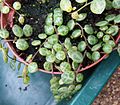
Peperomia trifolia
Scientific classification Edit this classification
Kingdom: Plantae
Clade: Tracheophytes
Clade: Angiosperms
Clade: Magnoliids
Order: Piperales
Family: Piperaceae
Subfamily: Piperoideae
Genus: Peperomia
Ruiz & Pav.[1][2]
Species

Over 1,000 – see List of Peperomia species

Synonyms[1]
9 synonyms
  • Acrocarpidium Miq.
  • Erasmia Miq.
  • Micropiper Miq.
  • Phyllobryon Miq.
  • Piperanthera C.DC.
  • Rhynchophorum (Miq.) Small
  • Tildenia Miq.
  • Trigonanthera André
  • Troxirum Raf.

Peperomia is one of the two large genera of the family Piperaceae. It is estimated that there are over 1,000 species, occurring in all tropical and subtropical regions of the world. They are concentrated in South and Central America, but may also be found in southern North America, the Caribbean islands, Africa, Oceania, and southern and eastern parts of Asia. The exact number of species is difficult to determine, as some plants have been recorded several times with different names, and new species continue to be discovered. Peperomias have adapted to many different environments and their appearances vary greatly. Some are epiphytes (growing on other plants) or lithophytes (growing on rock or in rock crevices), and many are xerophytes (drought-tolerant, with thick succulent structures to save water) or possess underground tubers (geophytes). Most species are compact perennial shrubs or vines.[3][4]

Some Peperomias have thick, waxy, succulent leaves and stems; still, others are rather delicate, with paper-thin leaves. Many species will easily sunburn, preferring filtered or indirect, bright sunlight. Most of the Peperomias have minimal to virtually non-existent root systems (species-depending), with the entire mass often being nothing more than a collection of tiny, hair-like appendages used to anchor the plant. These roots, while delicate, also enable the plants to survive in less-than-ideal conditions; however, their fragility also places them at a greater risk for root rot if water does not drain sufficiently quickly.

The genus name Peperomia was coined by Spanish botanists Ruiz López and Pavón Jiménez in 1794 after their travels in Peru and Chile.[5] Peperomia plants do not have a widely- accepted common name, and some argue that it is better to use the genus name, as is the case with genera such as Petunia and Begonia.[6] They are sometimes called radiator plants, a name possibly coined by L.H. Bailey because many of them enjoy bright and dry environments similar to a windowsill above a radiator.[5] Furthermore, many individuals simply refer to the many Peperomias by their individual nicknames, such as Peperomia polybotrya being called the “Raindrop Peperomia” (due to its large, drop-shaped leaves), or P. argyreia being the “Watermelon Peperomia”, due to its leaf veining and shape resembling the look of a watermelon.

Description

[edit]

Peperomias vary considerably in appearance (see gallery below) and there is no universally accepted method of categorising them, although three main groups can be distinguished.[3] Most species are compact and usually do not exceed 30 cm (12 in) in height.

First are plants with decorative foliage, which often grow in rain or cloud forests as epiphytes. They are adapted to living in small shady crevices on, for example, trees, with small root systems. As they do not have access to ground water they are typically succulent to a certain degree, which in many species shows as thick, fleshy leaves which have a waxy surface and are sometimes rippled. The leaves may be oval with the leafstalk at or near the center of the leaf blade, or they may be heart-shaped or lance-shaped; their size varies from 2.5–10 cm (1–4 in) long. They may be green or striped, marbled or bordered with pale green, red or gray, and the petioles of some kinds are red. They also enjoy high air humidity, warm temperatures, and grow all year round. Examples include P. argyreia, P. caperata, P. nitida, P. obtusifolia, P. polybotrya, and P. scandens.[3][4]

The second group consists of more arid-climate, succulent peperomias, which are often found in higher altitudes. They are adapted to withstanding a long warm season followed by a colder winter and very little rainfall. They store water both in their stout stems and in their succulent leaves, which typically form a sort of “tube” or “burrito”, appearing U- or V-shaped in cross-section, often with epidermal windows on the top-side. P. columella, P. ferreyrae, P. graveolens and P. nivalis fall into this category.[3][7]

The third group contains geophytic peperomias. These plants have leaves that fall off in the colder dry season, survive due to their underground tubers, and grow the leaves back as more rain falls. Examples include P. macrorhiza, P. peruviana, and P. umbilicata.[3][8] Currently just under 50 species of geophytic peperomias are known, but new ones continue to be discovered.[9]

Peperomia flowers are typically unnoticeable, growing in cordlike spikes, although there are some exceptions such as P. fraseri. Most peperomia flowers seem odorless to humans but some carry a musty or even unpleasant odor, such as P. graveolens. The fruit is a berry that eventually dries out and shows the tiny pepper-like seed.[4]

Species

[edit]

There are over a thousand Peperomia species, although the exact number is unclear as some plants have been recorded several times with different names (c. 3,000 names have been used in publications) and new species continue to be discovered.[3][4] At the moment Catalogue of Life lists around 1,400 recognized species.[10]

Distribution

[edit]

Peperomias are found in tropical and sub-tropical regions around the world. Northern South America and Central America host the largest number of species, but peperomias can also be found in Africa, southern Asia, and Oceania. The exact number of peperomia species continues to change as new plants are discovered and some distinct plant names, perhaps catalogued in separate geographical regions, are realised to describe the same species.[11] Therefore, the table below gives only a rough overall impression of the worldwide distribution.

Distribution of peperomia species[11]
Area Taxa Examples of endemic species (based on POWO)
Peru 405 P. andina, P. dolabella, P. dolabriformis, P. macrorhiza, P. metallica, P. minuta, P. nivalis, P. rubescens, P. verschaffeltii
Colombia 259 P. abbreviatipes, P. cordata, P. dimota, P. perciliata, P. turboensis
Ecuador 237 P. graveolens, P. albovittata, P. cuspidilimba, P. fagerlindii, P. rugosa
Costa Rica 155 P. barbulata, P. dyscrita, P. hammelii, P. incognita, P. vinasiana
Mexico 139 P. camptotricha, P. hobbitoides, P. oxycarpa, P. tuberosa, P. xalana
Brazil[12] 117 P. caperata, P. flexicaulis, P. griseoargentea, P. marmorata, P. nudifolia, P. ramboi
Caribbean Islands[13] 72 P. clusiifolia, P. cubensis, P. verticillata
Pacific Islands (other than mentioned)[14] 45 P. attenuata, P. mariannensis, P. tutuilana
Madagascar 42 P. ankaranensis, P. humbertii, P. mocquerysii
Hawaii[15] 22 P. cookiana, P. kipahuluensis, P. obovatilimba
Africa (continental) 21 P. fernandopoiana, P. kamerunana, P. vulcanica
Philippines 18 P. copelandii, P. elmeri, P. recurvata
Papuasia[16] 18 P. bismarckiana, P. peckelii, P. schlechteri
India[17] 11 P. ekakesara, P. emarginatifolia, P. thomsonii
Southeast Asia (Indo-China)[18] 7 P. masuthoniana, P. sirindhorniana, P. thorelii
Australia 5 P. bellendenkerensis, P. enervis, P. hunteriana

Note that many peperomias are found in wide overlapping regions, for example everywhere in tropical America or Asia, and so may have not been included in the species count for individual areas.

Peperomias and humans

[edit]

Horticulture

[edit]

Peperomias are often grown for their ornamental foliage and many species are considered easy to grow in homes and greenhouses. Several species have been given the Award of Garden Merit by the Royal Horticultural Society.[19] Peperomias are considered non-toxic and are recommended for households with children or animals.[20][21]

Out of the 1,000+ Peperomia species, currently only about 40 of them are commonly used as houseplants. These peperomias fare well in average home conditions and can relatively easily be found in stores and garden centers. Species in this basic group include P. alata, P. albovittata, P. argyreia, P. blanda, P. boivinii, P. caperata, P. clusiifolia, P. columella, P. dolabriformis, P. ferreyrae, P. fraseri, P. glabella, P. graveolens, P. griseoargentea, P. hoffmannii, P. incana, P. japonica, P. kimnachii, P. maculosa, P. metallica, P. nitida (often sold as P. scandens), P. nivalis, P. obtusifolia, P. pellucida, P. perciliata, P. pereskiifolia, P. polybotrya, P. prostrata, P. quadrangularis (syn. P. angulata), P. rotundifolia, P. rugosa, P. tetragona (syn. P. puteolata), P. tetraphylla, P. turboensis, P. urocarpa, P. verschaffeltii, P. verticillata (syn. P. rubella), and P. wheeleri.

There can be, however, several cultivars available from each species. Identifying species can be challenging as plants are often sold under marketing names, older synonyms, or under names that have not been officially accepted. This is the case, for example, with Peperomia orba (often sold as Peperomia 'Pixie'), Peperomia viridis, and Peperomia axillaris. In addition to natural species and their cultivars, some artificial hybrid varieties can also be found on the market, such as Peperomia 'Hope' (a cross between P. deppeana and P. quadrifolia).[22]

Most species need airy, well-draining substrate and want to dry out to some extent or even completely between waterings. A typical reason for losing a peperomia is through root rot caused by over-watering.[3] The tropical, decorative foliage plants, typically enjoy shadier conditions with more humidity. Some might even require a terrarium or a bottle garden to maintain high humidity. The arid climate succulent types should be treated similarly to cacti and other succulents: they can tolerate more light and will survive a dry cold period, during which they are watered only seldomly. The geophytic peperomias are used to experiencing a cold resting period once a year.[3]

Food and medicine

[edit]

Many peperomias are herbs in the sense that their leaves carry a spicy flavour and, when crushed, emit a strong odour. Therefore, some species, such as Peperomia pellucida are used in salads and cooking, or to flavour drinks.[23][6] But it is advised that people should not try to eat the peperomias sold as houseplants.[24]

Some species, including Peperomia inaequalifolia[citation needed], Peperomia congona[25] and Peperomia pellucida[26], are also used in herbal medicine for various health conditions. While such folk medicine usage is common in Peru and elsewhere, the possible medicinal qualities of peperomias remain poorly investigated, although there has been a growing interest for the subject recently.[27]

Propagation

[edit]

These plants can be propagated by seeds, by cuttings, or by dividing. Peperomia cuttings of many species root easily.[28][29]

Cuttings should be taken in spring or summer, with the lower leaves removed and a cut made just below a node. The cuttings are left to dry for about an hour to allow a protective callus tissue to form, preventing rot. Once dried, they can be planted in a well-draining substrate such as perlite or peat moss. Semi-succulent species benefit from bottom heat around 21–24°C (70–75°F), but it is important not to seal the top completely, as excessive humidity can be detrimental. Once roots have formed, the cuttings can be transplanted into 75 mm (3 in) pots or hanging baskets.[30]

Peperomia plants can also be propagated by division, especially clumping species. Division involves separating the plant into smaller sections, each with roots attached, and is best done during repotting in the growing season. Seed propagation is less common due to slower germination but can be achieved by sowing seeds in a well-draining, sterile medium while maintaining warm, humid conditions.[31]

Maintaining warm temperatures (18–24°C) and moderate humidity is essential for successful propagation. Overwatering should be avoided, as Peperomias are prone to root rot in poorly draining soils.[32]

[edit]

Examples of tropical, decorative foliage types

[edit]

Examples of arid climate succulent types

[edit]

Examples of geophytic peperomias

[edit]

See also

[edit]

References

[edit]
[edit]
Revisions and contributorsEdit on WikipediaRead on Wikipedia
from Grokipedia
Peperomia is a large of flowering in the family , comprising over 1,400 of small herbs, mostly perennial, primarily native to tropical and subtropical regions worldwide. These are closely related to (Piper nigrum) and are distinguished by their compact growth, often succulent foliage, and diminutive flowers arranged in spikes. Many species exhibit diverse morphologies, including heart-shaped, lanceolate, or rounded forms in shades of green, silver, or variegated patterns, with textures ranging from glossy and fleshy to fuzzy. Species of Peperomia are distributed across Central and , , , and parts of , with the highest diversity in the Neotropics. They typically inhabit shaded understories of rainforests, where they grow as terrestrial herbs, epiphytes on tree bark, or lithophytes on rocks, adapting to low-light conditions and humid environments. Epiphytism has evolved multiple times within the genus, contributing to its ecological versatility among early-diverging angiosperms. As popular houseplants, often called radiator plants due to their tolerance for moderate temperatures, Peperomia species are valued for their ornamental qualities and ease of propagation via leaf or stem cuttings. While most are non-toxic and low-maintenance, some species have been studied for potential medicinal properties in traditional uses, though scientific validation remains limited.

Taxonomy

Etymology

The genus name Peperomia derives from the Greek words peperi, meaning "pepper," and homoios, meaning "resembling" or "similar to," reflecting the superficial resemblance of its members to plants in the pepper genus Piper. This nomenclature highlights the genus's close botanical affiliation with pepper-like species, though Peperomia species exhibit distinct characteristics such as succulent leaves and smaller stature. The name was coined in 1794 by Spanish botanists Hipólito Ruiz López and José Antonio Pavón y Jiménez during their botanical expedition documented in Florae Peruvianae et Chilensis Prodromus, where they first described the genus based on specimens collected from Peru and Chile. This publication marked the formal establishment of Peperomia as a distinct genus within the Piperaceae family, separating it from earlier classifications under Piper.

History and Classification

The genus Peperomia was established in 1794 by Spanish botanists Hipólito Ruiz López and José Antonio Pavón y Jiménez in their Florae Peruvianae, et Chilensis Prodromus, based on collections from and . This initial description recognized the genus within the family, distinguishing it from Piper by features such as succulent leaves and compact inflorescences. In the , Swiss botanist Casimir de Candolle significantly expanded the taxonomic framework for Peperomia in volume 16 of Augustin Pyramus de Candolle's Prodromus Systematis Naturalis Regni Vegetabilis (1866), where he described over 200 species and provided detailed morphological keys. This treatment solidified Peperomia as one of the two largest genera in , rivaling Piper in and distribution. A landmark infrageneric revision occurred in 2015 by Frenzke and colleagues, who used molecular phylogenetic analysis of 190 accessions to reorganize the into monophyletic , assigning 1340 of the then-1606 accepted to groups such as Peperomia, Elluvium, and Micropiper. This phylogeny-based reduced prior subgeneric categories from nine to five main ones, emphasizing vegetative and reproductive traits for delimitation. Recent taxonomic efforts have refined placements and added , including a 2008 study on pseudo-epiphyllous inflorescences that clarified 12 with leaf-base-originating spikes, and 2024 reports describing four new from Colombian fieldwork alongside phylogenomic analyses of terrestrial . As of 2025, approximately 1,500 are accepted, with ongoing molecular data driving adjustments to infrageneric boundaries and synonymy resolutions.

Description

Morphology

Peperomia species are small, , succulent herbs, typically measuring 5 to 30 cm in height, with fleshy stems and leaves adapted for retention. They display a range of growth forms, including terrestrial, epiphytic, and lithophytic habits, allowing them to thrive in diverse microenvironments. Stems vary from erect and tufted to creeping, procumbent, or pendent, often featuring distinct nodes and internodes that support attachment and rooting. These stems are terete or angular, green to reddish in color, and may be glabrous, pubescent, or slightly succulent, with lengths between internodes commonly 1 to 7 cm. In epiphytic forms, stems frequently produce adventitious at the nodes or base for anchorage. Leaves exhibit significant variation in arrangement, occurring alternately, oppositely, or in whorls, and are petiolate with entire to emarginate margins. Shapes range from ovate and cordate to lanceolate, obovate, elliptic, or orbicular, while textures include glossy, waxy, fleshy, or fuzzy surfaces that enhance . Coloration spans green, blue-green, silver, brownish, or variegated patterns, sometimes with reddish tinges, contributing to the genus's ornamental appeal. Root systems are primarily fibrous and adventitious, arising from the stem base or nodes, with aerial roots prominent in epiphytic species to absorb moisture from the air. These roots support the plant's compact, bushy, or trailing growth, maintaining stability across substrates. The genus demonstrates notable diversity in leaf forms, underscoring its morphological plasticity.

Reproduction

Peperomia bear inflorescences in the form of slender , or spadices, that typically range from 1 to 10 cm in length and emerge from leaf axils. These are densely packed with numerous minute flowers, each subtended by a peltate and lacking a , resulting in a highly reduced floral structure consisting primarily of 2 to 6 stamens and a single pistil with a superior and brushlike stigma. Flowers are usually bisexual but can be unisexual in certain , reflecting adaptations for efficient in shaded, humid habitats. Pollination in Peperomia is predominantly autogamous, with many species capable of leading to high fruit set rates without external agents; however, in self-incompatible taxa, it occurs via or small such as syrphid flies (hoverflies), particularly in the humid where floral morphology facilitates such vectors. Following , the develops into small, fleshy drupes measuring up to 3.5 mm, each enclosing a single protected by a thin mesocarp and hard, stony endocarp. These fruits employ diverse dispersal strategies, including epizoochory through sticky secretions or appendages that adhere to passing animals, ornithochory by birds attracted to the colorful or fleshy fruits, and in select epiphytic species like Peperomia macrostachya, where volatile seed odors specifically attract ants such as Camponotus femoratus for transport to nest sites. In addition to , some Peperomia exhibit asexual through natural vegetative means, such as the formation of plantlets at stem nodes or fragmentation of stems and leaves that readily in moist conditions, enhancing clonal spread in stable forest environments. Flowering varies across the : many tropical flower continuously throughout the year, while others are seasonal, with blooms triggered by elevated and photoperiod changes during wet periods in forests.

Diversity

Species Count and Types

The genus Peperomia encompasses an estimated 1,600–1,700 accepted , with more than 2,500 names historically described, underscoring its taxonomic complexity and ongoing revisions. Estimates vary; as of September 2025, one specialized database reports 1,687 accepted taxa (1,526 and 161 infraspecific names), reflecting upward adjustments from new discoveries, particularly in tropical regions where is pronounced, while POWO lists 1,427 . The highest diversity occurs in the , with hosting approximately 423 accepted taxa. Species diversity manifests in distinct morphological and ecological types, including tropical foliage forms with thin leaves adapted as ornamental epiphytes, arid succulents featuring thick leaves for , and geophytic variants with bulbous or tuberous underground organs for dormancy and survival. A substantial portion of (approximately 40-50%) are epiphytic or hemiepiphytic, with the remainder including terrestrial, succulent, and geophytic forms, enabling occupation of varied microhabitats within tropical ecosystems. This richness stems from evolutionary mechanisms such as , hybridization, and rapid in isolated habitats, which facilitate and morphological innovation across the genus.

Notable Species

, commonly known as pepper elder, is an erect annual herb reaching 5–30 cm in height, characterized by its translucent, ovate to subcircular leaves measuring 6–35 mm long. Native to tropical America, it has become a widespread in regions, thriving in wet tropical biomes such as forests, savannas, shrublands, grasslands, and wetlands at elevations from 0–3500 m. Ecologically, it acts as a in disturbed areas, contributing to but occasionally invasive in agricultural settings. Medicinally, it is valued in traditional practices for treating ailments like , , and infections due to its bioactive compounds. Peperomia obtusifolia, or baby rubber plant, is a succulent with thick, waxy, elliptic dark green leaves up to 15 cm long and short, brittle stems rarely exceeding 30 cm tall. Native to and the , it grows in tropical and subtropical environments, often as a terrestrial or epiphytic species. Its variegated cultivars, featuring cream, gray, or gold mottling, are particularly popular in for their compact form and ornamental appeal in indoor settings. Economically, these cultivars support the trade, highlighting the genus's diversity in cultivation. Peperomia caperata, known as emerald ripple peperomia, forms rosettes of long-stemmed, wrinkled, deeply corrugated, heart-shaped dark green leaves up to 4 cm long. This tropical originates from , where it adheres to tree bark or rocks in humid forest understories. Its distinctive leaf texture, derived from the Latin caperata meaning wrinkled, aids in capturing light in shaded habitats. Ecologically, it exemplifies epiphytic adaptations within the genus, contributing to in neotropical rainforests. Peperomia puteolata (synonym P. tetragona), or parallel peperomia, is a geophytic species with tuberous roots and succulent foliage, enabling survival in seasonal dry conditions. Native to , , and , it occurs as an or in wet tropical biomes but with adaptations for arid stress through underground storage organs. Its parallel-veined, oblong leaves grow upright before trailing, supporting its role in cover. Recent discoveries underscore the ongoing exploration of Peperomia diversity; for instance, Peperomia cacaophila, previously known only from , was reported new to in 2023 from the Saña River Valley, where it grows as a trailing . Similarly, Peperomia dolabriformis, a succulent with thick, fleshy, light-green leaves folded upward like prayer hands, was documented in the same Peruvian valley, highlighting its adaptation to rocky, subtropical habitats. These findings emphasize the genus's ecological range and potential for new species records in Andean regions.

Distribution and Ecology

Geographic Range

The genus Peperomia exhibits a distribution, with the vast majority of its approximately 1,400 species occurring in the Neotropics, where over 1,200 species are documented, representing the primary center of global diversity. This region spans from southward through to , encompassing high species richness in countries like , which hosts around 400 species. In the Paleotropics, diversity is considerably lower but notable in specific areas, including with about 20 species, with roughly 100 species, and , where 42 endemic species contribute to a striking relative to the island's size. Centers of diversity within the Neotropics include the Andean regions and the , where elevated and habitat heterogeneity support prolific . Several Peperomia species have been introduced and naturalized outside their native ranges in subtropical regions, such as P. pellucida in , , and at least one species in . Recent surveys have documented range extensions, including P. cacaophila, previously known only from central , now confirmed in northern Peru's Saña River Valley as of 2023. Patterns of disjunction in Peperomia distributions are evident in the Paleotropics, particularly in , where approximately 100 species occur across Pacific islands, resulting from at least four independent long-distance dispersal events from Neotropical ancestors, with parallel radiations documented in the Hawaiian archipelago (home to 25 ).

Habitats and Adaptations

Peperomia primarily inhabit humid tropical and subtropical forests, where they occupy diverse ecological niches as epiphytes, lithophytes, and terrestrial in shaded understories. Epiphytic forms, comprising about 40% of species in regions like , , grow on tree bark, branches, and twigs in tropical humid, , and montane forests at elevations from 20 to 2,900 meters, often in secondary or disturbed habitats such as plantations. Lithophytic species, around 16% in similar areas, colonize rocky outcrops, cracks, and shady canyons in humid montane and pine-oak forests up to 2,850 meters, thriving in moist microhabitats near waterfalls. Terrestrial forms, making up about 11%, are found in shaded forest understories, riparian zones, and road banks in tropical humid and forests from 60 to 2,500 meters. Succulent species adapt to drier arid scrub environments as xerophytes, with some exhibiting geophytic habits featuring underground tubers for water storage. Physiological adaptations enable Peperomia to persist in these water-limited and shaded niches. Succulent species, such as Peperomia scandens and P. camptotricha, employ (CAM) or CAM-cycling, opening stomata at night to fix CO₂ with minimal loss, achieving higher nighttime and 24-hour -use compared to C₃ counterparts like P. obtusifolia. Epiphytic forms develop thin adventitious roots with spongy tissues for anchorage to host trees and absorption of atmospheric moisture and nutrients, reducing reliance on . Their compact, small stature—often as low-growing herbs or shrubs—limits surface area, conserving in exposed canopy positions. Geophytic species enhance through tubers that store and nutrients, allowing survival in seasonal dry periods. Shade adaptations include low light compensation points, as seen in P. obtusifolia, where photosynthetic lowers the needed for net carbon gain, enabling growth in forest understories with reduced . Biotic interactions further support Peperomia's ecological fit. Many species exhibit , with sticky fruits or elaiosome-like appendages attracting for ; for instance, subgenus Micropiper species form ant-gardens in Amazonian forests, where cultivate and protect the . defenses involve essential oils rich in compounds like dillapiole, elemicin, and , which provide insecticidal and properties, deterring pests in humid, insect-rich environments. Ecologically, Peperomia acts as a pioneer in forest succession, colonizing disturbed secondary habitats and facilitating , while epiphytic and lithophytic forms create microhabitats—such as crevices and leaf litter accumulations—that shelter small , contributing to in tropical canopies.

Evolutionary History

Origins and Phylogeny

Peperomia is a within the family, part of the basal angiosperm order , which diverged early in angiosperm . The ancestor likely originated in the tropics during the period, with molecular dating estimates placing the crown radiation of the family around 90 million years ago. This timing aligns with the breakup of , facilitating initial diversification in tropical regions across , , and . Within Piperaceae, Peperomia occupies a sister position to the genus Piper, as established by multiple molecular phylogenies using and nuclear markers. A seminal study by Frenzke and colleagues (2015) analyzed 190 accessions representing over 1,300 accepted , employing the trnK/matK region to resolve infrageneric relationships and propose a revised into 14 monophyletic subgenera and sections. This framework highlighted the of earlier groupings and emphasized morphological convergence in traits like leaf venation and structure. Major diversification bursts in Peperomia occurred during the in the Neotropics, driven by the uplift of the , which created heterogeneous montane habitats and promoted . For instance, the Tildenia—comprising about 60 —radiated from a Peruvian cradle, with northward colonizations reaching the through repeated dispersals. Complementing this, multiple long-distance dispersal events enabled Peperomia's pantropical distribution, including independent colonizations of the and Pacific islands via epizoochorous seeds during the (approximately 5.3-2.6 million years ago). In regions like , Peperomia exhibits a localized radiation of approximately 42 endemic species as of 2020, stemming from multiple African colonizers that arrived via long-distance dispersal, with phylogenetic evidence pointing to post-Eocene introductions and subsequent diversification in humid forest habitats. Recent phylogenomic analyses have further resolved deeper relationships in the . These studies underscore Peperomia's dynamic evolutionary history, marked by recurrent dispersals rather than vicariance alone. A 2024 phylogenomic study on two poorly known terrestrial subgenera identified four new species in , refining infrageneric classifications and highlighting ongoing diversification.

Key Evolutionary Traits

Peperomia represents a remarkable case among early diverging angiosperms as the sole genus in where epiphytism has evolved, originating once in the genus's history and preceding a major diversification shift. This life form transition facilitated enhanced vertical dispersal in canopies, with subsequent multiple shifts between epiphytic and terrestrial habits, particularly in Micropiper where high transition rates (up to 4 origins and 2 reversals to terrestrial) underscore flexibility driving success. These dynamics correlate unevenly with fruit traits across the phylogeny, as epiphytism alone boosted background diversification rates, while combined with specialized fruits, it accelerated foreground rates in certain subclades. Fruit evolution in Peperomia marks a key innovation for animal-mediated dispersal, shifting toward sticky drupes with secretions or hook-like appendages that promote epizoochory, contrasting ancestral dry fruits in terrestrial ancestors. Cryo-scanning electron microscopy (cryo-SEM) analyses reveal diverse surface microstructures, such as viscous exudates in subgenera Pseudocupula and Micropiper, which evolved independently twice and irreversibly, enhancing attachment to animal fur or birds for horizontal spread. These traits postdate epiphytism but synergize with it, contributing to elevated net diversification rates (e.g., doubling from 7.76 to 18.57 species per million years in Micropiper). Succulence and geophytism emerged independently in arid-adapted lineages, providing drought resistance through in leaves or underground tubers, respectively. In Tildenia, geophytism arose as a monophyletic to seasonal Andean montane habitats, with ~30 species featuring tuberous rhizomes that allow aboveground growth only during wet periods, likely postdating uplift events that fragmented environments. Succulence, observed in multiple clades like those with thickened leaves, similarly evolved convergently for osmotic balance in dry microhabitats, though not uniformly tied to epiphytism. High speciation rates in Peperomia overall stem from such , with epiphytic-terrestrial transitions occurring at elevated frequencies in fragmented tropical landscapes.

Human Uses

Horticulture

Peperomia species have gained popularity as houseplants due to their low-maintenance requirements, compact growth habits, and diverse foliage textures and colors. These plants typically reach heights of 15-25 cm, making them ideal for tabletops, shelves, and small spaces. Over 100 cultivars exist, with popular examples including Peperomia obtusifolia 'Hope', known for its variegated leaves, and Peperomia caperata 'Rosso', featuring deeply quilted, reddish foliage. In 2022, the National Garden Bureau named Peperomia the Houseplant of the Year to highlight its ease of cultivation and appeal in indoor settings. Commercial production has expanded through techniques, enabling mass since the 2010s by using explants like segments on media to produce uniform, disease-free plants. Peperomias require bright indirect light, with placement near east- or west-facing windows ideal to avoid scorch from direct sun. For example, Peperomia argyreia (Watermelon Peperomia) prefers bright indirect light to maintain its vivid watermelon-like patterns on the leaves; in low light, the leaves may pale, the variegation can fade, and the stems may become leggy. A well-draining potting mix, such as one combining peat moss and in equal parts, prevents waterlogging while retaining slight moisture. Optimal temperatures range from 18-24°C, with levels of 40-60% supporting healthy growth; they tolerate average household conditions but benefit from occasional misting. Water moderately, allowing the top 2-5 cm of to dry between sessions to mimic their native epiphytic or terrestrial habits. Overwatering is the primary cause of root rot in Peperomias, leading to mushy stems and yellowing leaves as fungal pathogens like Phytophthora thrive in soggy soil. Pests such as mealybugs and spider mites can also infest plants, appearing as white cottony spots or webbing; early detection and treatment with insecticidal soap resolve most cases. These issues underscore the plants' sensitivity to excess moisture, though their ease of propagation from cuttings enhances resilience in cultivation. Succulent types, like Peperomia obtusifolia, handle drier conditions better than tropical varieties such as Peperomia caperata. Peperomias excel in indoor environments, fitting well in terrariums for humidity-loving types or hanging baskets for trailing varieties like Peperomia prostrata. In non-tropical climates, they adapt indoors year-round or outdoors in shaded, frost-free spots during warm months, provided temperatures stay above 10°C.

Food and Medicine

is utilized as a leafy in regions such as the , where it is known as pansit-pansitan or suruhan, and in the , often consumed raw in salads, cooked as greens, or brewed into teas for its mild flavor and nutritional profile. The plant provides a good source of protein (10.63 g/100 g dry weight), carbohydrates (46.58 g/100 g dry weight), and minerals including (6,977 mg/100 g dry weight), calcium (483 mg/100 g dry weight), and iron (119.3 mg/100 g dry weight), supporting its role as a nutrient-dense in tropical diets. It also contains vitamins such as ascorbic acid (8.74 mg/100 g) and , contributing to its value as an occasional . Medicinal applications of Peperomia species, particularly P. pellucida, include anti-inflammatory effects that alleviate conditions like arthritis and rheumatism, attributed to bioactive compounds such as flavonoids and phenolics. Extracts demonstrate antibacterial activity against pathogens including Staphylococcus aureus, with inhibition zones comparable to standard antibiotics in in vitro assays. Antidiabetic properties arise from flavonoids that inhibit α-glucosidase, reducing postprandial glucose levels in preclinical models. Recent studies on wound healing highlight the efficacy of P. pellucida nanoemulsions in promoting burn recovery in rats, enhancing granulation tissue formation and reducing inflammation through antioxidant mechanisms. Key species like P. pellucida are traditionally employed for treating by lowering levels, headaches via decoctions, and renal disorders as a to address kidney stones and . In contrast, P. obtusifolia yields such as peperomic and peperoside, which exhibit strong activity by scavenging free radicals in assays. Recent pharmacological reviews from 2025 emphasize P. pellucida's potential in antihypertensive applications through and inhibition, alongside anticancer effects via induction in tumor cell lines. Safety assessments confirm low , with no acute effects in mice at 5,000 mg/kg and extended lifespan in Drosophila under , indicating suitability for herbal use. In traditional across and , Peperomia species address through antispasmodic infusions and abscesses via topical poultices for their properties. Key phytochemicals include patuloside A, contributing to antibacterial action, and in essential oils, which supports responses.

Propagation

Methods

Peperomia plants are commonly propagated through vegetative methods such as stem cuttings, leaf cuttings, and division, which allow for the production of genetically identical offspring. These techniques leverage the plant's adaptability as a member of the family, often thriving in humid, tropical conditions. Seed propagation and are less common but viable for specific applications. Stem cuttings involve selecting a healthy, non-flowering tip approximately 5-10 cm long with at least two nodes and a few leaves. Remove the lower leaves to expose the stem, optionally dip the cut end in rooting hormone to promote adventitious root formation, and insert the cutting 2-5 cm deep into a well-draining medium such as a mix of peat moss, perlite, and vermiculite. The medium should be kept consistently moist, and the cutting placed under high humidity conditions, such as covering with a clear plastic dome or bag, at temperatures of 24-27°C with bright, indirect light. Roots typically develop in 2-4 weeks, after which the new plant can be transplanted. Leaf cuttings are particularly effective for Peperomia species with attractive foliage, including variegated varieties, and utilize the plant's ability to form plantlets from leaf tissue. Select a mature, healthy with its petiole (leaf stalk) intact, trimming the petiole to about 1-2 cm if needed. Insert the petiole base into a sterile, moist medium like or a perlite-peat blend, ensuring the leaf blade lies flat on the surface or is slightly pressed in for vein contact. Maintain 70-80% by enclosing the setup in a or propagation tray, at 24-27°C and indirect to prevent scorching. Small plantlets with roots emerge from the petiole base or vein cuts in 4-8 weeks, at which point they can be separated and potted individually. Division is a straightforward method for clumping or rhizomatous Peperomia , performed during repotting when the is actively growing. Gently remove the from its pot, tease apart the root ball to separate offsets or sections, each with at least one healthy shoot and some . each division immediately into a sterile, well-draining potting medium, watering lightly to settle the . This technique yields established plants ready for growth without a rooting phase. Seed sowing is rarely used due to slow and variable viability, involving surface-sowing fresh seeds on a moist, sterile medium under high and warmth (24-27°C), with seedlings appearing in 4-6 weeks; it is more suitable for species in controlled settings. , or , is employed for hybrid or rare cultivars, entailing the sterilization of explants (e.g., or stem segments) and culturing on with hormones like auxins and cytokinins to induce formation and shoot multiplication, often achieving high multiplication rates . Overall success in Peperomia propagation relies on maintaining 70-80% relative to mimic tropical origins, temperatures of 24-27°C for optimal rooting, and bright indirect light while avoiding direct sunlight to prevent or burn; sterile tools and media reduce rot risk, with succulent potentially favoring soil-based methods over to minimize fungal issues.

Best Practices

Propagation of Peperomia is most successful when performed during spring or summer, aligning with the plant's active growth phase, while winter should be avoided to prevent slow or failed rooting. Optimal rooting media include soilless mixes such as combined with or a loose, fast-draining to ensure proper and prevent waterlogging. Rooting hormones are optional but can be applied as a to the base of stem cuttings to accelerate development, though many propagators achieve results without them. Common troubleshooting involves addressing fungal issues arising from excess , which can be mitigated by using fungicides and ensuring regular ventilation in humid environments; additionally, slow rooting due to low light conditions can be resolved by supplementing with grow lights to provide bright, indirect illumination. Success rates for cuttings typically reach 80-90% under these conditions, though propagators should monitor clones of variegated varieties for potential loss of coloration during rooting. In conservation efforts, propagation serves as a key tool for ex-situ preservation of like Peperomia subpetiolata, a Hawaiian endemic, where wild-collected material supports programs; recent 2025 viability reports from the Olokui Restoration Project highlight the outplanting of 63 hybrid individuals, underscoring the role of controlled in augmentation. Ethical sourcing is essential, particularly for Hawaiian endemics, where overharvesting from fragile habitats must be avoided in favor of artificial to sustain wild s.

Visual Examples

Tropical Decorative Types

Tropical decorative types of Peperomia feature ornamental foliage adapted to humid, shaded tropical understories, with thin, glossy leaves that provide vibrant colors and textures for indoor settings. These often exhibit epiphytic growth, allowing them to thrive on tree trunks or in moist, low-light environments, which translates well to cultivation where high humidity mimics their natural habitats. Peperomia caperata, commonly called emerald ripple peperomia, exemplifies this group with its heart-shaped leaves measuring up to 1.5 inches long, featuring deeply corrugated, glossy surfaces in dark green to purplish tones along the veins and folds. The plant forms dense, erect mounds 6-8 inches tall and wide, with red-tinged petioles enhancing its visual appeal in shaded spots. Native to the tropical jungles of southeastern , it grows as an epiphytic ground cover. Peperomia griseoargentea, or ivy leaf peperomia, showcases metallic silvery-green leaves with deep green veins and a rippled, glossy texture on heart-shaped blades up to 2 inches long, forming clumping mounds 6-8 inches tall in wet tropical areas. This perennial's sturdy stems and subtle sheen make it a striking choice for decorative displays under indirect light. It originates from southwestern . Peperomia orba, particularly the variegated form, offers compact growth with teardrop-shaped, glossy leaves in bright lime-green accented by golden-yellow edges, reaching 6-8 inches in height with a bushy, semi-succulent habit that retains thin foliage vibrancy. This cultivar's colorful margins add ornamental flair to tabletops or enclosed displays. A species of uncertain wild origin, known primarily from cultivation and likely derived from Central or South American lineages. These types are favored for terrariums due to their tolerance of high and shade, requiring minimal care while providing lush, textural interest without overwhelming small spaces. Many of these, including variegated forms, are popular in cultivation and may represent cultivars adapted for ornamental use. Visual representations often focus on close-ups to capture glossy sheen and color depth, alongside whole-plant views in simulated shaded to illustrate epiphytic-like habits.

Arid Succulent Types

Arid succulent types of Peperomia are characterized by thickened, fleshy leaves that minimize surface area and enhance , enabling survival in dry environments. These adaptations include a multiple layer that proliferates to create highly succulent foliage, serving as a barrier against water loss primarily through the . Species in this group often exhibit succulence observed in several Peperomia taxa from various habitats, allowing them to tolerate periods of lower moisture while maintaining adaptability. Peperomia obtusifolia, commonly known as the baby rubber plant, features rounded, waxy, elliptic leaves up to 6 inches long that are thick and dark green, providing substantial water retention. In natural settings from southern to northern , it grows as an or in moist, humid tropical environments such as swamps and hammocks, with potted specimens showing glossy surfaces that highlight their succulent texture. Visual cross-sections of its leaves reveal dense tissues filled with stored water, while under stress, the foliage may develop subtle yellowing or reddish tinges along edges to signal . Peperomia ferreyrae, the happy bean plant, forms miniature rosettes of elongated, bean-like green leaves with deep central grooves, reaching about 12 inches in height and native to the montane rainforests of . These succulent structures reduce in varying conditions, often displayed in clustered, upright growth in natural soils or terracotta pots mimicking forested landscapes. Cross-sections illustrate water-filled cells in the thickened mesophyll, and stressed plants show intensified green hues or slight curling for further conservation. Peperomia dolabriformis, or prayer pepper, displays sculpted, purse-shaped leaves that fold upward like praying hands, with thick, fleshy light-green tissue and dark margins for enhanced durability in Peruvian valleys. Its compact shrubby form, growing 6-12 inches tall, thrives in well-draining substrates, where the glossy leaves appear almost translucent under bright . Internal views via cross-section expose specialized water-storage compartments, and in , color shifts to pale with marginal browning. These arid succulent Peperomia types are prized as resilient houseplants due to their and low-maintenance needs, making them ideal for indoor dry environments.

Geophytic Types

Geophytic Peperomia species exhibit underground storage organs such as tubers, bulbs, and rhizomes, enabling them to endure seasonal dry periods in variable tropical and subtropical environments. These adaptations allow the plants to enter , with above-ground parts dying back during , only to produce emergent shoots when moisture returns. In subgenus Tildenia, approximately 30 species display this geophytic habit, primarily in the , where tubers store starch reserves for regrowth in rocky, seasonal habitats. Key visual characteristics include the emergence of petioles and inflorescences directly from the apex, often in clustered formations, and the stark contrast between dormant, barren soil and the sudden appearance of foliage post-rain. Dissected reveal dense starch-filled interiors, typically whitish to reddish-brown exteriors, measuring 0.6–1.5 cm in diameter for many . These features underscore their role in surviving fluctuating climates, such as montane regions with pronounced wet-dry cycles, by conserving energy below ground. Representative images highlight these traits in select species adapted to Andean conditions.

References

Add your contribution
Related Hubs
User Avatar
No comments yet.