Hubbry Logo
Stone pineStone pineMain
Open search
Stone pine
Community hub
Stone pine
logo
8 pages, 0 posts
0 subscribers
Be the first to start a discussion here.
Stone pine
Stone pine
from Wikipedia

Stone pine
Scientific classification Edit this classification
Kingdom: Plantae
Clade: Tracheophytes
Clade: Gymnospermae
Division: Pinophyta
Class: Pinopsida
Order: Pinales
Family: Pinaceae
Genus: Pinus
Subgenus: P. subg. Pinus
Section: P. sect. Pinus
Subsection: Pinus subsect. Pinaster
Species:
P. pinea
Binomial name
Pinus pinea
Distribution map

The Italian stone pine, botanical name Pinus pinea, also known as the Mediterranean stone pine is a tree from the pine family, Pinaceae. The tree is native to the Mediterranean region, occurring in Southern Europe and the Levant. The species was introduced into North Africa millennia ago, and is also naturalized in the Canary Islands, South Africa and New South Wales.

Stone pines have been used and cultivated for their edible pine nuts since prehistoric times. They are widespread in horticultural cultivation as ornamental trees, planted in gardens and parks around the world. This plant has gained the Royal Horticultural Society's Award of Garden Merit.

Description

[edit]
Stone pine in Brissago, on Lake Maggiore, Switzerland

The stone pine is a coniferous evergreen tree that can exceed 25 metres (80 feet) in height, but 12–20 m (40–65 ft) is more typical. In youth, it is a bushy globe, in mid-age an umbrella canopy on a thick trunk, and, in maturity, a broad and flat crown over 8 m (26 ft) in width.[2] The bark is thick, red-brown and deeply fissured into broad vertical plates.

Bark of a stone pine, Pisa
Foliage

The flexible mid-green leaves are needle-like, in bundles of two, and are 10–20 cm (4–8 in) long (exceptionally up to 30 cm or 12 in). Young trees up to 5–10 years old bear juvenile leaves, which are very different, single (not paired), 2–4 cm (341+12 in) long, glaucous blue-green; the adult leaves appear mixed with juvenile leaves from the fourth or fifth year on, replacing it fully by around the tenth year. Juvenile leaves are also produced in regrowth following injury, such as a broken shoot, on older trees.

Cone

The cones are broad, ovoid, 8–15 cm (3–6 in) long, and take 36 months to mature, longer than any other pine. The seeds (pine nuts, piñones, pinhões, pinoli, or pignons) are large, 2 cm (34 in) long, and pale brown with a powdery black coating that rubs off easily, and have a rudimentary 4–8 mm (532516 in) wing that falls off very easily. The wing is ineffective for wind dispersal, and the seeds are animal-dispersed, originally mainly by the Iberian magpie, but in recent history largely by humans.

Distribution and habitat

[edit]

The Pinus pinea is a characteristic, yet controversial, species throughout the Mediterranean basin. Its definitive native range is highly debated. Strong evidence suggests its origin is in the Western Mediterranean, particularly the Iberian Peninsula (Portugal and Spain), where the most extensive natural stands are found, and where it reaches its highest altitudes. The presence of Paleolithic and Pleistocene sites containing the remains of Pinus pinea on the South Iberian Peninsula provides strong evidence that the species was once part of the natural forest ecosystem in that region. Furthermore, the presence of pollen dating between 18-22 thousand years ago (end of Pleistocene) in Southern France supports the hypothesis of its native status there.[3]

Conversely, other opinions suggest a native presence extending to the Central and Eastern Mediterranean, specifically regions of Italy (Tuscany, Sardinia, Sicily), the Peloponnese (Greece), the coasts of Asia Minor (Turkey), and Lebanon.[4]

The species has been intensively cultivated for its valuable edible nuts and wood since at least the 4th century B.C. and earlier. This long history of human intervention means that while it is found today across coastal areas from Portugal to Lebanon and the Black Sea, it is often impossible to distinguish between truly native stands and those that are now naturalized from ancient artificial plantings.[4]

The prehistoric range of Pinus pinea included North Africa in the Sahara Desert and Maghreb regions during a more humid climate period, in present-day Morocco, Algeria, Tunisia, and Libya.[citation needed]

Ecoregions

[edit]

Its contemporary range is within the Mediterranean forests, woodlands, and scrub biome, which includes the following areas:

Southern Europe
Pinus pinea, Doñana National Park (Andalusia, Spain)

The Iberian conifer forests ecoregion of the Iberian Peninsula in Spain and Portugal; the Italian sclerophyllous and semi-deciduous forests ecoregion in France and Italy; the Tyrrhenian-Adriatic sclerophyllous and mixed forests ecoregion of southern Italy, Sicily, and Sardinia; the Illyrian deciduous forests of the eastern coast of the Ionian and Adriatic Seas in Albania and Croatia; the Crimean Submediterranean forest complex ecoregion on Krasnodar Krai (Russia) and the Crimea Peninsula; and the Aegean and Western Turkey sclerophyllous and mixed forests ecoregion of the southern Balkan Peninsula in Greece. In many parts of northern Italy, large parks with pine trees were laid out by the sea. Examples are the Pineta of Jesolo and Barcola, the Urban Beach of Trieste.

In Greece, although the species is not widely distributed,[5] an extensive stone pine forest exists in western Peloponnese at Strofylia[6] on the peninsula separating the Kalogria Lagoon from the Mediterranean Sea. This coastal forest is at least 13 kilometres (8 miles) long, with dense and tall stands of Pinus pinea mixed with Pinus halepensis.[7] Currently, P. halepensis is outcompeting stone pines in many locations of the forest.[8] Another location in Greece is at Koukounaries on the northern Aegean island of Skiathos at the southwest corner of the island. This is a half-mile-long dense stand of stone and Aleppo pines that lies between a lagoon and the Aegean Sea.[9]

Western Asia
Stone pine forests in Brummana, Lebanon

In Western Asia, the Eastern Mediterranean conifer-sclerophyllous-broadleaf forests ecoregion in Turkey; and the Southern Anatolian montane conifer and deciduous forests ecoregion in Turkey, Syria, Lebanon, Israel and in the Palestinian Territories.

Northern Africa

The Mediterranean woodlands and forests ecoregion of North Africa, in Tunisia, Morocco and Algeria.

South Africa

In the Western Cape Province, the pines were according to legend planted by the French Huguenot refugees who settled at the Cape of Good Hope during the late 17th century and who brought the seeds with them from France. The tree is known in the Afrikaans language as kroonden.

Ecology

[edit]

Pinus pinea is a diagnostic species of the vegetation class Pinetea halepensis.[10]

Pests

[edit]

The introduced Western conifer seed bug (Leptoglossus occidentalis) was accidentally imported with timber to northern Italy in the late 1990s from the western US, and has spread across Europe as an invasive pest species since then. It feeds on the sap of developing conifer cones throughout its life, and its sap-sucking causes the developing seeds to wither and misdevelop. It has destroyed most of the pine nut seeds in Italy, threatening P. pinea in its native habitats there.[11]

Pestalotiopsis pini (a genus of ascomycete fungi), was found as an emerging pathogen on Pinus pinea in Portugal. Evidence of shoot blight and stem necrosis were found in stone pine orchards and urban areas in 2020. The edible pine nut production has been decreasing in the affected area due to several factors, including pests and diseases. The fungus was found on needles, shoots and trunks of P. pinea and also on P. pinaster. Pestalotiopsis fungal species could represent a threat to the health of pine forests in the Mediterranean basin.[12]

Uses

[edit]

Food

[edit]

Pinus pinea has been cultivated extensively for at least 6,000 years for its edible pine nuts, which have been trade items since early historic times. The tree has been cultivated throughout the Mediterranean region for so long that it has naturalized, and is often considered native beyond its natural range.

Ornamental

[edit]
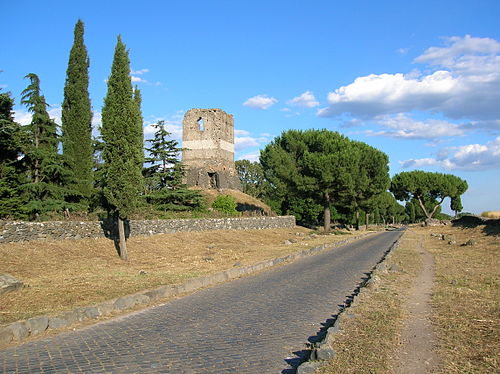
Pines on Via Appia Antica

The tree is among the current symbols of Rome.[13] It was first planted in Rome during the Roman Republic, where many historic Roman roads, such as the Via Appia, were (and still are) embellished with lines of stone pines. Stone pines were planted on the hills of the Bosphorus strait in Istanbul for ornamental purposes during the Ottoman period. In Italy, the stone pine has been an aesthetic landscape element since the Italian Renaissance garden period. In the 1700s, P. pinea began being introduced as an ornamental tree to other Mediterranean climate regions of the world, and is now often found in gardens and parks in South Africa, California, and Australia. It has naturalized beyond cities in South Africa to the extent that it is listed as an invasive species there. It is also planted in western Europe up to southern Scotland, and on the East Coast of the United States up to New Jersey.

In the United Kingdom it has won the Royal Horticultural Society's Award of Garden Merit.[14][15]

Small specimens are used for bonsai, and also grown in large pots and planters. The year-old seedlings are seasonally available as table-top Christmas trees 20–30 cm (8–12 in) tall.

Other

[edit]

Other products of economic value include resin, bark for tannin extraction, and empty pine cone shells for fuel. Pinus pinea is also currently widely cultivated around the Mediterranean for environmental protection such as consolidation of coastal dunes, soil conservation and protection of coastal agricultural crops.[16]

[edit]

References

[edit]
[edit]
Revisions and contributorsEdit on WikipediaRead on Wikipedia
from Grokipedia
The stone pine (Pinus pinea), also known as the Italian stone pine or umbrella pine, is a long-lived renowned for its broad, domed crown that resembles an umbrella and its edible seeds called pine nuts. Native to the Mediterranean Basin, it typically reaches heights of 12–25 meters (up to 35 meters in exceptional cases) with a trunk diameter of 0.5–1.5 meters, featuring thick, fissured red-brown to orange bark and paired needles measuring 10–18 cm long. Its ovoid to spherical cones, 8–15 cm long, mature over three years to a chestnut-brown color and contain large, wingless seeds encased in a hard shell, which require significant force to crack—hence the "stone" moniker. This species has been cultivated for over 6,000 years, primarily for its nutritious seeds, resin, and ornamental value. Pinus pinea thrives in coastal, sandy, and well-drained soils across dry, sunny Mediterranean climates, tolerating , down to -12°C, and poor soils but sensitive to heavy disturbance and waterlogging. Its natural distribution spans (including , , , , , , , , , and ), western Asia (Israel, Lebanon, , and ), and (), with introduced populations in places like , , and . Ecologically, it plays a key role in preventing , stabilizing dunes, and providing for such as birds, mammals, and , including the Imperial Moth. The tree's lifespan can reach up to 200–300 years, making it a prominent feature in historical landscapes like ancient Roman gardens and in iconic Roman landscapes, such as Palatine Hill, where stone pines grow among the ancient ruins of the imperial palaces, enhancing the scenic and historical landscape of the site, one of Rome's Seven Hills. Economically, the stone pine is highly valued for its nuts, which are rich in oils, proteins, vitamins (such as E), and minerals (like ), and are harvested commercially for use in , including , baked goods, and snacks—global production exceeds 20,000 tons annually, mostly from the Mediterranean. The yields and for varnishes, adhesives, inks, and antiseptics, while the bark provides for tanning and , and the wood is used for furniture, , and fuel due to its durability. Medicinally, extracts from the and needles have traditional applications for respiratory issues, , kidney problems, and skin conditions, though modern uses are limited. As an ornamental, it is widely planted in parks, gardens, and urban areas worldwide for its aesthetic appeal and shade, and it serves in for windbreaks and erosion control. Despite its adaptability, Pinus pinea faces challenges from pests like pine needle scale, borers, and fungal diseases such as Diplodia pinea, as well as loss and climate change impacts on regeneration. It is classified as Least Concern by the IUCN, with stable populations in core ranges, but is essential for seed production and forest health. Cultivated since antiquity, the stone pine remains a in Mediterranean heritage, symbolizing resilience and abundance.

Taxonomy

Classification

The stone pine, scientifically known as Pinus pinea L., was first described by Carl Linnaeus in his Species Plantarum in 1753. It is classified within the kingdom Plantae, phylum Tracheophyta, class Pinopsida, order Pinales, family Pinaceae, genus Pinus, and subgenus Pinus, which serves as the type subgenus for the genus. Within subgenus Pinus (also known as the diploxylon or hard pines), P. pinea belongs to section Pinus and subsection Pinaster, a grouping that encompasses predominantly Eurasian and Mediterranean species characterized by their adaptation to coastal and dry environments. Phylogenetically, P. pinea is part of the Mediterranean clade within subgenus Pinus, which diverged from the other major subgenus (Strobus, or soft pines) during the mid-Cretaceous period, approximately 130 million years ago, as pines began diversifying across Laurasia. Its closest relatives include Pinus halepensis (Aleppo pine), Pinus brutia (Turkish pine), Pinus canariensis (Canary Island pine), Pinus heldreichii (Bosnian pine), and Pinus roxburghii (Chir pine), all sharing membership in subsection Pinaster and exhibiting similar morphological traits such as two-needled fascicles and serotinous cones. No major synonyms exist for P. pinea, though historical names such as Pinus sativa Garsault (1764) have been noted in early botanical literature, reflecting its long-standing recognition for edible seeds.

Etymology

The scientific binomial name of the stone pine, Pinus pinea, originates from . The genus name Pinus derives directly from the Latin term for trees, a designation employed since antiquity to describe various coniferous with resinous wood and needle-like leaves. The specific pinea stems from the Latin adjective pinea, meaning "pine-like" or specifically referring to a pine cone (pinea nux for ), which highlights the tree's prominent, rounded cones that yield its edible seeds. The common English name "stone pine" alludes to the exceptionally hard, stony shells encasing the tree's seeds, or , which require significant effort to extract. Alternative common names include "," derived from the mature tree's characteristic broad, flattened crown that resembles an open , and "Italian stone pine," reflecting its longstanding cultural and landscape significance in , where it has been cultivated for millennia. The species appears in ancient Roman literature, notably described by in his Naturalis Historia (c. 77 CE) for its nuts and timber. In French, the word pignon for traces back to pineonem, diminutive of pinea (pine cone), evolving through pinhon.

Description

Growth form

The stone pine (Pinus pinea) is a large that reaches a mature height of 12–25 m, with exceptional individuals up to 35 m tall and trunk diameters up to 1.5 m. Its overall form features a relatively short, often sinuous trunk supporting a broad crown, contributing to its picturesque silhouette in Mediterranean landscapes. In youth, the crown is ovoid and dense, but it transitions to a distinctive flat, umbrella-shaped structure after 50–100 years of maturity, with long branches arranged in horizontal layers rising at 30°–60° from the horizontal and tips often upswept. This architectural adaptation maximizes light capture while providing shade, a trait enhanced in open, coastal Mediterranean habitats. The bark is notably thick, reaching 0.9–4.4 cm, and exhibits a red-brown to orange coloration with deep fissures forming protective plates that confer resistance to low- to moderate-intensity fires. This insulating layer helps shield the from heat damage, supporting survival in fire-prone environments. The features an initial that aborts, developing numerous secondary and extensive lateral roots for anchorage, stability, and nutrient uptake. is further enabled by physiological adaptations, including precise stomatal control that minimizes loss while maintaining carbon assimilation under stress. Under optimal conditions, stone pines exhibit remarkable longevity, with lifespans extending up to 200–250 years, as evidenced by studies.

Foliage and reproductive structures

The foliage of the stone pine (Pinus pinea) consists of needles borne in fascicles of two, measuring 10–20 cm in . These needles are rigid and stiff, with a blue-green coloration accented by white stomatal lines on both faces, and they persist for 2–4 years before abscising. The tree is monoecious, with separate male and female on the same individual. Male , or pollen strobili, are small (1–2 cm long), clustered at the base of new shoots, and yellow in color; they produce abundant during spring. Female are initially erect and ovoid, approximately 2 cm long when young, developing into larger mature 8–15 cm long and 5–12 cm broad, with a green hue maturing to glossy brown. The scales feature a thick apophysis and short umbo, and maturation requires a unique 36 months among species, with fertilization occurring up to two years after . Each mature cone contains up to 100 seeds, known as pine nuts, which are and wingless or with vestigial wings (3–8 mm long) that detach easily; the seeds measure 1.5–2 cm in length and possess a hard, thick shell. These pine nuts have a high oil content of 45–50%, primarily unsaturated fats including linoleic and oleic acids, contributing to their .

Distribution and habitat

Native range

The stone pine (Pinus pinea) is native to the Mediterranean Basin, including (Albania, , , , including , , , , , , ), the region (, , ), and northwest Africa (, , ). In its indigenous habitats, the stone pine occupies sandy, well-drained soils along coastal dunes and inland plains, generally at elevations ranging from to 800 meters. It is adapted to the , featuring mild and wet winters alongside hot, dry summers, and demonstrates tolerance for poor, soils and moderate levels. The species commonly forms pure stands or mixed woodlands with cork oak (Quercus suber) and Aleppo pine (Pinus halepensis), contributing significantly to maquis shrublands and garigue vegetation in these ecosystems. Pollen records from Pleistocene deposits reveal a broader historical range for the stone pine during the , with evidence of more extensive distributions across under relatively humid conditions compared to today.

Introduced ranges

The stone pine (Pinus pinea) has been introduced to various regions outside its native Mediterranean range, primarily for timber, nut production, and environmental stabilization. Key introductions include non-native regions of North Africa, such as Libya and Egypt, for afforestation and dune fixation. In the Canary Islands, it has become naturalized alongside ornamental and forestry uses. Further afield, it has been established in South Africa's Cape region for similar purposes, as well as in Australia, particularly New South Wales, where it supports nut cultivation and landscape planting. In the Americas, introductions occurred in California (USA) for ornamental and windbreak roles, Chile for commercial forestry trials, and Argentina for reforestation efforts. In some introduced areas, P. pinea has formed self-sustaining populations. It has naturalized in parts of , where it persists and expands in coastal and Mediterranean-climate zones, often in disturbed sites like old military areas. Similarly, naturalization has occurred in , , with scattered populations beyond initial plantings. These establishments are linked to its use in projects aimed at , particularly on sandy soils and coastal dunes, where its deep root system helps stabilize landscapes and protect agricultural areas. Globally, P. pinea cultivation spans over 600,000 hectares, predominantly in the Mediterranean but extending to introduced regions for nut and timber production. Spain hosts the largest planted area at approximately 470,000 hectares, followed by (80,000 ha), (50,000 ha), and (40,000 ha), with additional extents in and countries supporting commercial harvests. In these non-native settings, the species faces challenges including susceptibility to local pests, such as the invasive seed bug Leptoglossus occidentalis in and , which damages cone production, and the pine processionary moth (Thaumetopoea pityocampa) in afforested areas. Its invasive potential remains low, constrained by requirements for well-drained, sandy soils and mild climates, limiting widespread natural spread.

Ecology

Life cycle

The life cycle of the stone pine (Pinus pinea) encompasses distinct stages from seed to , characterized by adaptations to Mediterranean environments that emphasize slow, steady development and wind-mediated reproduction. occurs without a strict cold stratification requirement, though seeds benefit from moist conditions at temperatures around 20°C for optimal rates of 60–80%, typically taking 10– on mineral-rich soils in spring to mimic natural dispersal post-winter. Establishment relies heavily on ectomycorrhizal associations with fungi such as and species, which enhance nutrient uptake, particularly , in nutrient-poor sandy substrates essential for survival. Juvenile growth is slow, with height increments of approximately 0.3 m per year in the first 20 years, forming a compact, rounded form before accelerating to 0.5–1 m annually as the tree matures, eventually reaching 20–30 m in height over decades. Sexual maturity is attained between 15 and 40 years, with isolated individuals producing cones as early as 5–10 years, marking the transition to reproductive phases that prioritize cone and seed output over rapid vertical expansion. Reproduction is wind-pollinated, with male releasing from to May in yellow catkins at the base of new shoots, coinciding with the receptivity of female that develop into ovules during the same period. Fertilization occurs about two years after , followed by a prolonged three-year maturation cycle, the longest among pines, resulting in woody, ovoid (8–14 cm) that open in to release seeds. Seed dispersal occurs via gravity from mature cones and is primarily mediated by animal caching, such as by , enabling spread in open, light-demanding habitats. Trees exhibit up to 500–1,000 years in ideal conditions, with manifesting as gradual decline in growth and cone production after approximately 200 years, though P. pinea demonstrates resilience to disturbance, including limited ability that allows basal resprouting under favorable conditions.

Wildlife interactions

The stone pine (Pinus pinea) plays a significant role in Mediterranean ecosystems through its interactions with , particularly as a source of and that influences and community structure. Its large, wingless s, known as pine nuts, are primarily dispersed by animals rather than wind, with corvids and acting as both predators and dispersers. Corvids such as the (Garrulus glandarius), (Corvus corone), (Cyanopica cooki), and (Pica pica) collect and cache these nutrient-rich seeds, often transporting them substantial distances from parent trees. This caching behavior aids dispersal, as uneaten seeds may germinate, though retrieval rates vary with seed crop size and environmental conditions. , including wood mice (Apodemus sylvaticus) and various squirrels (family Sciuridae), similarly hoard seeds in shallow caches, contributing to secondary dispersal but also exerting high predation pressure, especially near parent trees and shelters where activity is concentrated. Climatic factors like summer reduce populations, enhancing seed survival during mast years when abundant production overwhelms predators. Beyond dispersal, the stone pine provides diverse habitat elements that support local fauna. Its dense, evergreen canopy offers shelter, nesting, and roosting sites for birds and small mammals, while fallen needles and leaf litter create microhabitats on the forest floor. Deer species, such as roe deer (Capreolus capreolus), browse on foliage and young shoots, particularly in sapling stages, though established trees with thick bark and high crowns are more resistant to such herbivory. Dead wood from senescing trees or natural mortality serves as a critical resource for saproxylic insects, including beetles and borers, which in turn attract cavity-nesting birds like woodpeckers. Pollen from male cones, produced in abundance during spring, is occasionally collected by bees (Apis mellifera) as a protein source for brood, despite its lower nutritional quality compared to floral pollen; however, the tree relies primarily on anemophily (wind pollination) for reproduction, with minimal insect assistance. Symbiotic relationships further integrate the stone pine into its ecosystem. It forms ectomycorrhizal associations with a variety of fungi, including genera such as Amanita, Hebeloma, Laccaria, Lactarius, Pisolithus, Rhizopogon, Scleroderma, and Suillus, which colonize root tips and enhance nutrient uptake, particularly phosphorus and nitrogen, in nutrient-poor sandy soils typical of coastal habitats. These fungi exchange carbohydrates from the tree's photosynthesis for minerals and water, improving seedling survival and growth in natural and nursery settings. In Mediterranean woodlands, the stone pine functions as a foundational species, sustaining biodiversity through pine nut-dependent food webs that link primary producers to higher trophic levels, including seed-eaters and their predators, thereby stabilizing ecosystem dynamics amid periodic disturbances like fire.

Pests and diseases

The stone pine (Pinus pinea) is susceptible to several insect pests that primarily target its cones, needles, and stems, leading to significant economic impacts in nut-producing regions. The invasive (Leptoglossus occidentalis), native to and established in since the early 2000s, feeds on developing cones using piercing-sucking mouthparts, causing conelet abortion and seed damage. This pest can result in up to 50% seed loss per cone in heavily infested areas, particularly when populations peak during cone maturation. Another emerging threat is the pine tortoise scale (Toumeyella parvicornis), an invasive soft scale insect first detected in in 2014 and spreading across the Mediterranean. By 2024, it has reached , the third European country affected. This pest infests branches and trunks, sucking sap and excreting honeydew that promotes , leading to branch dieback and tree weakening. Infestations have caused progressive defoliation and mortality in urban and forested stands, exacerbated by stress that reduces tree vigor. Other notable insect pests include cone borers such as Dioryctria spp. (e.g., Dioryctria mendacella), which tunnel into developing cones, potentially damaging up to 30% of the crop in outbreak years, and occasional defoliators like pine sawflies (Neodiprion spp.), though these are less common on stone pine. The pine needle scale (Chionaspis pinifoliae) can also infest needles, causing yellowing and premature drop, particularly in stressed trees. Fungal pathogens pose additional risks, with Pestalotiopsis pini emerging as a significant issue since the 2010s, causing needle , shoot dieback, and stem in Mediterranean plantations. Root rot from Heterobasidion annosum affects mature trees, leading to basal stem decay and increased susceptibility through weakened root systems. In introduced ranges, such as parts of and , there is potential for pine wilt disease caused by the Bursaphelenchus xylophilus, vectored by cerambycid beetles, though stone pine exhibits relative resistance compared to other s. Management strategies emphasize integrated approaches, including biological controls such as egg parasitoids (Gryon spp.) and entomopathogenic fungi for L. occidentalis, and natural predators like lacewings, mirids, and birds for T. parvicornis. Cultural practices like pruning infested branches and maintaining tree health through irrigation during droughts are recommended, but no major resistant varieties of P. pinea have been developed to date. Chemical options, such as endotherapy with , show promise for scale control but are used judiciously to preserve beneficial .

Conservation

Status

The stone pine (Pinus pinea) is classified as Least Concern (LC) on the , a status assigned in the 2019 European assessment, reflecting its stable global population bolstered by extensive cultivation across its native and introduced ranges. Stands of P. pinea cover approximately 1 million hectares in the Mediterranean Basin, with no evidence of significant overall decline, though fragmentation occurs in certain peripheral areas due to habitat conversion. This widespread distribution, primarily in coastal and sandy soils, supports population stability, with the species benefiting from both natural regeneration and human-managed plantations that exceed native extents in some regions. The species is protected within numerous sites, which safeguard key habitats along Mediterranean coasts, and features prominently in national parks such as Spain's Doñana National Park and Italy's Circeo National Park, where it contributes to dune stabilization and conservation. Genetic diversity in P. pinea is generally low across its range, characterized by limited polymorphism in molecular markers, yet shows subtle variations with potentially higher variability in core Mediterranean populations compared to marginal ones; ongoing assessments aim to support targeted conservation of adaptive traits. This uniformity is offset by high , enabling adaptation to diverse environmental conditions without substantial genetic differentiation.

Threats

The stone pine (Pinus pinea) faces significant threats from , particularly in its Mediterranean range, where models predict substantial habitat contraction and range shifts by 2100. Under various emission scenarios, suitable habitats may decrease by up to 35% in Mediterranean forest stands, with P. pinea particularly vulnerable to increased leading to potential in southern populations. Projections indicate a northward and altitudinal migration of the species, as warmer temperatures and reduced precipitation render current low-elevation sites unsuitable, while coastal areas may see temporary gains before further salinization impacts. Increased stress exacerbates these risks, constraining radial growth and disrupting the ' three-year maturation cycle, which is highly sensitive to water availability during critical spring periods. Simulations show that prolonged can reduce production by up to 95% and timber yield by 73% in vulnerable stands under scenarios of +4°C warming and 30% decline, highlighting the ' low in dry sites. Human-induced habitat loss further compounds these pressures, driven by and agricultural expansion in the Mediterranean Basin, which fragment coastal woodlands and convert pine stands to cropland or . In regions like Turkey's Kozak Basin, land-use changes have already reduced P. pinea coverage, limiting natural regeneration. Altered fire regimes pose an additional threat: while the species' thick bark enables adult survival in low-intensity fires, intensified wildfires due to kill juveniles and promote crown fires in dense stands. Invasive species, notably the seed bug Leptoglossus occidentalis, threaten seed viability and exacerbate declines in wild populations, with damage rates reaching significant levels in invaded European ranges. of pine nuts through intensive harvesting in natural stands further depletes reproductive output, reducing regeneration potential. These biotic pressures interact with to amplify seed loss, though detailed synergies are outlined in pest assessments. Other environmental stressors include coastal pollution and salinization, where rising sea levels and degrade in P. pinea woodlands, causing dieback in Italian and Spanish sites. Modeling identifies populations, such as those in , as most at risk, with projected habitat reductions due to compounded and land pressures.

Cultivation

Historical use

Evidence of human exploitation of the stone pine (Pinus pinea) dates back to the era, with consumption documented as early as 300,000 years ago through residues found in dental calculus from and sites in Iberia. Charred shells and cones have been recovered from hearths in Gibraltar's Vanguard and Gorham's Caves, indicating regular dietary use by prehistoric populations in southern . Archaeological evidence from and further supports widespread gathering of these nutrient-rich seeds during the , highlighting the tree's role as a reliable food source in Mediterranean societies. In ancient civilizations, the stone pine was actively harvested and cultivated, particularly by the Romans, who planted it in gardens and estates for its edible nuts and aesthetic appeal. Stone pines (Pinus pinea), also known as umbrella pines due to their distinctive umbrella-shaped canopies, are iconic trees in Rome and are prominently present on Palatine Hill, where they grow among the ancient ruins of the imperial palaces, enhancing the scenic and historical landscape of the site, one of Rome's Seven Hills. The Roman poet referenced the tree in his as the "uberrima pinus," praising its fertility and beauty in the context of agricultural landscapes. Trade in pine nuts across the Mediterranean began during the around 2000 BCE, with remnants found in shipwrecks carrying goods like olives and figs, and later expanded by Etruscans and Romans who exported them as far as Britain, where shells appear in military encampments. The nuts were valued not only for but also for perceived aphrodisiac properties, as noted in ancient texts by and Roman sources. During the medieval and periods, monastic communities in promoted the cultivation of stone pine for its practical and symbolic benefits. Charlemagne's Capitulare de Villis (early ) included Pinus pinea among recommended trees for imperial estates and monasteries, emphasizing its role in provisioning orchards with edible seeds. Cultivation in , where the species is native, was influenced by ancient Mediterranean networks including Phoenician and Roman practices. Continued cultivation occurred under Islamic rule in regions like on the , where it featured in bustān gardens and cuisine. In the early , the stone pine gained prominence as an ornamental in European villas, particularly in and the Iberian Peninsula, where its distinctive umbrella-shaped canopy enhanced landscapes. By the , it played an economic role in Iberia through nut production and timber for local industries, integrated into practices that supported rural economies amid expanding trade.

Modern practices

Propagation of stone pine (Pinus pinea) primarily relies on seed sowing in controlled nursery environments, where rates typically range from 80% to 90% under optimal conditions, such as temperatures around 20°C and adequate moisture. Seeds are sown in spring using a mix of , , and , with occurring within 10 days, followed by of seedlings to fields in autumn or the subsequent spring. For selected high-yielding nut varieties, scions from productive mother trees onto rootstocks such as P. pinea or P. halepensis is a common vegetative method, performed via top wedge grafting on two-year-old rootstocks and allowing one additional nursery year before outplanting; this approach shortens the juvenile phase and can yield first cones by age five. Containerized seedlings are widely used for outplanting to enhance root development and survival rates during establishment. Site selection for stone pine cultivation prioritizes well-drained, sandy or gravelly soils in Mediterranean climates with altitudes up to 700 m, ensuring tolerance to and mild winters. In nut orchards, trees are spaced 5–7 m apart (e.g., 6×6 m or 6×3 m) to accommodate expansive crowns and optimize interception for production, while denser 4×4 m spacing supports timber objectives by promoting straight bole growth. is essential during the first 2–3 years to support establishment, particularly in arid sites, but mature trees are generally rain-fed, leveraging their inherent resistance; supplemental water can increase and growth by up to 84% under deficit conditions. Pruning focuses on removing dead or unproductive branches to enhance structural integrity, improve airflow, and facilitate cone access, typically timed for late winter . is a key practice to promote cone production, with moderate to heavy interventions (e.g., reducing by 30–40%) increasing yields by alleviating , expanding crowns, and boosting availability; in one study, thinned stands produced up to three times more cones than unthinned controls. Coppice management, though less common than in broadleaf species, is applied in some degraded stands to regenerate growth for , converting coppiced areas into productive plantations. Yield optimization emphasizes harvesting mature cones (after 3 years' development) every 5–7 years during mast seeding peaks, beginning around age 15 for seed-originated trees, though grafted plantations enable earlier and more consistent outputs. Integrated pest management incorporates biological controls, such as natural enemies for pests like the pine processionary moth (Thaumetopoea pityocampa), alongside selective insecticides (e.g., deltamethrin sprays) to minimize damage from seed bugs while preserving pollinators; spraying is avoided where beekeeping conflicts arise. Using climate-adapted provenances, selected through trials for local survival and growth traits, further enhances resilience to varying Mediterranean conditions, with genetic variability supporting better performance in drought-prone or saline sites. In non-native regions like Chile, cultivation has expanded to over 5,000 hectares since 2014, with emerging use of unmanned aerial vehicles (UAVs) for assessing cone yields to optimize management.

Uses

Culinary

The pine nuts of the stone pine (Pinus pinea), also known as pignoli or pinoli, are the primary edible product derived from its cones and have been valued for their mild, buttery flavor since ancient times. These nuts are the shelled kernels extracted from the seeds within the cones, which typically contain 50 to 100 seeds per cone. Harvesting involves collecting closed cones in fall or winter, often by knocking them from trees using long poles or gathering those that have naturally fallen, followed by processing through boiling or air-drying to induce dehiscence in spring, allowing manual extraction of the seeds. Yield from cones is approximately 15-20% seeds by weight, with the edible kernels comprising 3-4% of the fresh cone weight, equivalent to about 1 kg of kernels per 25-30 kg of cones, though this varies by region and environmental factors. Nutritionally, P. pinea pine nuts are nutrient-dense, providing 673 kcal per 100 g and featuring high levels of at 68.4%, including unsaturated fatty acids such as oleic (18.8%) and linoleic (33.2%) acids, with low levels of pinolenic acid (typically <5%). They also contain 13.7% protein, along with like , , magnesium, , iron, and , and vitamins including (0.11 mg/100 g) and (0.19 mg/100 g); (9.33 mg/100 g) and K are present in appreciable amounts, contributing to properties. The high content supports their use in energy-dense diets, while the protein and mineral profile aids in metabolic and immune functions. In culinary applications, P. pinea pine nuts are versatile and commonly consumed raw, roasted, or pressed into oil, adding a rich, nutty texture to both savory and sweet dishes. They are a key ingredient in , where they are blended with , , , and for ; they also enhance salads, stuffings, and sides when toasted for intensified flavor. In desserts, they appear in , cakes, and honey-based confections, particularly in Mediterranean cuisines. As of 2022, annual global pine nut production averaged around 42,000 metric tons (kernel basis), with P. pinea contributing significantly, especially from Mediterranean countries like (approximately 6,000-7,000 tons annually as average), , and , representing a major share of the premium European variety. As of 2025, production faces deficits due to climate variability, with in-shell estimates at 126,000 mt but potential shortfalls of 27% in key areas; kernels command premium prices of €60-70/kg. Processing P. pinea pine nuts presents challenges due to the hard, thick testa (shell) surrounding the kernel, which requires specialized machinery like rotary shellers or manual cracking to avoid damaging the delicate interior, making the operation labor-intensive and contributing to their high market price. Post-shelling, the nuts undergo sorting, , and checks to remove impurities and damaged kernels. Due to their 68% content, proper storage is essential to prevent oxidative rancidity; they are typically kept in cool, dry conditions or vacuum-sealed, with a of 6-12 months when refrigerated.

Ornamental

The stone pine (Pinus pinea) is prized in ornamental for its distinctive umbrella-shaped , which develops with age and provides a striking, sculptural atypical of most pines. This rounded to flat-topped form, formed by horizontally spreading branches, makes it an ideal focal point in Mediterranean-style gardens, where it evokes classical landscapes and offers dappled shade for seating areas or pathways. It is also employed as windbreaks or avenue trees due to its dense foliage and tolerance for exposed sites, enhancing urban and park settings with year-round evergreen structure. In cultivation, the stone pine has been planted in prominent parks since Roman times, such as the Villa Borghese in , where mature specimens contribute to historic vistas and provide aesthetic continuity. Notably, stone pines are iconic in the Roman landscape, known as umbrella pines for their distinctive canopies, and are prominently present on Palatine Hill, where they grow among the ancient ruins of the imperial palaces, enhancing the scenic and historical landscape of this site, one of Rome's Seven Hills. Small specimens are popular for , valued for their stiff needles and ability to adapt to container training, while larger trees serve as specimen plants in coastal gardens. The received the Royal Horticultural Society's in 1993, recognizing its reliability in temperate climates with minimal maintenance once established. Additionally, it is utilized in coastal landscaping for , particularly in stabilizing sand dunes through its deep and salt tolerance. Certain varieties and selections of P. pinea are favored for compact growth, making them suitable for smaller gardens or containers, while the species generally tolerates well, allowing for shaping into forms without significant harm to vigor. Dwarf cultivars, such as those developed for shrub-like habits, expand its ornamental versatility in rock gardens or foundation plantings.

Industrial

The wood of the stone pine (Pinus pinea) serves as a resource primarily utilized in , furniture , and the production of utility poles, owing to its relatively straight grain and ease of processing. With an average of around 450–500 kg/m³ at 12% moisture content, it offers a balance of lightness and structural integrity suitable for these applications. The heartwood demonstrates notable resistance to fungal decay, classified under durability class 2 according to European standards, which supports its use in exposed environments without extensive treatment. Stone pine trees are tapped for , a viscous that is distilled to yield and ; finds applications in solvents and paints, while is incorporated into varnishes, adhesives, and inks. Historically, these products formed key components of naval stores, used for caulking and wooden ships in Mediterranean fleets. Although less dominant than in species like , from P. pinea contributes to regional chemical industries, with methods involving bark incisions to collect the over several seasons. Additional industrial products derived from stone pine include tannins extracted from the bark, which are employed in leather tanning processes to bind proteins and enhance durability. The wood and residues also provide fuelwood and charcoal, valued for their high calorific content in energy production and metallurgy. Essential oils distilled from the needles are utilized in aromatherapy products for their purported relaxing and anti-inflammatory properties, often blended into diffusers and massage oils. In and , where stone pine occupies over 500,000 s, integrated management systems combining timber harvesting with cone production generate annual revenues averaging €30–200 per , depending on site productivity and market prices for and non-wood products; higher yields occur in optimized stands emphasizing both outputs. Timber is typically sourced from mature rotations of 80–120 years, with thinnings providing poles and fuel to sustain coppice-like regeneration in managed understories.

References

Add your contribution
Related Hubs
User Avatar
No comments yet.