Hubbry Logo
Prafulla ChakiPrafulla ChakiMain
Open search
Prafulla Chaki
Community hub
Prafulla Chaki
logo
8 pages, 0 posts
0 subscribers
Be the first to start a discussion here.
Prafulla Chaki
Prafulla Chaki
from Wikipedia

Key Information

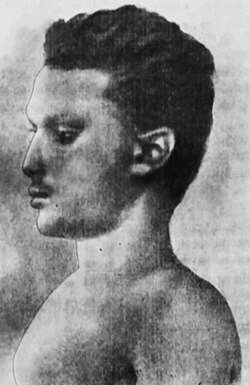
Prafulla Chandra Chaki // (Bengali: প্রফুল্ল চাকী, Prafulla Chaki alias Dinesh Chandra Roy) (10 December 1888 – 2 May 1908) was an Indian revolutionary associated with the Jugantar group of revolutionaries who carried out an assassination attempt against a British colonial official in an attempt to secure Indian independence.

Prafulla and Khudiram Bose tried to assassinate the notorious district judge of Muzaffarpur, Douglas Kingsford, by throwing bombs at a carriage they believed Kingsford was traveling in, but he was not in the carriage, and two British women were killed instead. Prafulla committed suicide when he was about to be arrested by the police. Khudiram was arrested and tried for the murder of the two women and sentenced to death.[1][2] Mahatma Gandhi denounced the violence and regretted the deaths of the two women. He stated that "the Indian people will not win their freedom through these methods".[3][4][5][6] However, Bal Gangadhar Tilak, in his newspaper Kesari, defended the two young men and called for immediate swaraj. This was followed by the immediate arrest of Tilak by the British colonial government on charges of sedition.[7]

Early life

[edit]

Prafulla Chandra Chaki was born into a well-to-do Jotedar family on 10 December 1888 in Bihar, a village in Bogra District of current day Bangladesh, then a part of the Bengal Presidency.[8] His father's name was Rajnarayan Chaki, and his mother's name was Swarnomoyee Devi. Rajnarayan's ancestor Prankrishna Chaki (his grandfather) was a resident of Chanchakia. He was the fifth child in his family. Rajnarayan was an employee in the Nagar estate. He started his education at Namuja Janada Prasad English School, an English-medium school in Bogra. After completing his primary education, he came to Rangpur with his elder brother, Pratap Chandra Chaki, whose father-in-law was a reputed person in Rangpur. He was expelled from Rangpur Zilla School in Class 9 for taking part in a students' demonstration that violated East Bengal law. He then joined Rangpur National School, where he came in contact with revolutionaries and became a believer and practitioner of revolutionary philosophies.[9]

Revolutionary activities

[edit]

Barin Ghosh brought Prafulla to Calcutta, and he was enlisted in the Jugantar party. His first assignment was to kill Sir Joseph Bampfylde Fuller (1854-1935), the first Lieutenant Governor of the new province of Eastern Bengal and Assam. However, the plan did not materialize.

Next, Prafulla, along with Khudiram Bose, was chosen for the assassination of Kingsford, the magistrate of Muzaffarpur, Bihar. Kingsford, during his previous tenure as the Chief Presidency Magistrate of Calcutta, was unpopular for passing harsh and cruel sentences on young political workers of Bengal. He was also noted for inflicting corporal punishments on such workers. This led to the planning of his murder, and Chaki and Bose were selected and sent to Muzaffarpur to execute this task.[10] Prafulla took the fake name Dinesh Chandra Ray in this operation.[11]

Muzaffarpur killing

[edit]

Khudiram and Prafulla watched the usual movements of Kingsford and prepared a plan to kill him. On the evening of 30 April 1908, the duo was waiting in front of the gate of the European Club for Kingsford's carriage to arrive. When a vehicle came out of the gate, a bomb was thrown into the carriage. There was a mistake towards identification by them, as the vehicle was carrying the daughter and the wife of a local congressman. Both were killed by the bomb, and the revolutionaries fled.[10]

Manhunt and suicide

[edit]

Prafulla and Khudiram took separate routes to escape.[10] Nandalal Banerjee, a police officer travelling in the same compartment, grew suspicious of Prafulla and attempted to arrest him on the Mokama railway station platform. But Prafulla committed suicide by shooting himself using his own revolver.[12] His head was severed from his body and sent to Kolkata to be identified by Khudiram, who unfortunately got captured.[10]

Martyr Prafulla Chaki, Samadhi ceremony (front)
Martyr Prafulla Chaki, Samadhi ceremony (leftside)

Khudiram was later arrested and hanged to death. Following this incident, inspector Nandalal was assassinated by two young revolutionaries, Srishh Pal and Ranen Ganguly.[13] Their relatives live in Uttar Dinajpur and Dakshin Dinajpur in West Bengal. Pratap Chanda Chaki's great grandson, Subrata Chaki, lives in Kolkata.

References

[edit]
[edit]
Revisions and contributorsEdit on WikipediaRead on Wikipedia
from Grokipedia
Prafulla Chandra Chaki (10 December 1888 – 1 May 1908) was a Bengali Hindu revolutionary who actively opposed British colonial rule in through armed resistance as a member of the . Born into a middle-class family in of the (present-day ), Chaki abandoned his studies early to join the secret revolutionary society in Calcutta around 1906, where he trained in physical culture, bomb-making, and swadeshi advocacy. Chaki's most notable action came in 1908 when, paired with fellow revolutionary Khudiram Bose, he was dispatched by Anushilan leaders to assassinate Magistrate Douglas Kingsford in , , for his role in sentencing revolutionaries and promoting repressive measures like the partition of Bengal. On 30 April 1908, the duo hurled bombs at what they believed was Kingsford's carriage, but the targets were two British women, resulting in their deaths and sparking widespread pursuit by British police. Separating from Bose to evade capture, Chaki reached Mokama Ghat railway station, where, cornered by authorities on 1 May, he shot himself in the head rather than submit to . His act of suicide at age 19 cemented his status as one of the youngest martyrs in the early 20th-century , inspiring further anti-colonial agitation despite the failure of the specific plot.

Early Life

Family Background and Childhood

Prafulla Chandra Chaki was born on 10 December 1888 in the village of , located in the of the (present-day ), to Rajnarayan Chaki and Swarnamoyee Devi. He belonged to a middle-class Hindu family, with his father engaged in local agrarian or administrative pursuits typical of the caste's socioeconomic status in rural . As the youngest of five children, Chaki was raised primarily by his mother following the early death or absence of his father, which shaped his upbringing in a household emphasizing traditional values amid the colonial rural setting. Chaki's early childhood unfolded in the agrarian environment of , where family life revolved around and community ties, though specific personal anecdotes from this period remain undocumented in primary accounts. He began his at the local village , focusing on basic literacy and arithmetic suited to the era's curriculum under British rule. Subsequently, he attended Namuja Janada Prasad English School for further primary studies, marking an initial exposure to English-medium instruction that was uncommon but increasingly available to middle-class families in by the late . In approximately 1901 or 1902, Chaki relocated to Rangpur with his elder brother Pratap Chandra Chaki to continue his education, reflecting familial support for advancement beyond village limits despite economic constraints. This move preceded his admission to Rangpur Zilla School in 1904, where he encountered a more structured environment fostering discipline and exposure to nationalist undercurrents nascent in Bengali youth circles. His childhood, thus, transitioned from rural insularity to urban-influenced schooling, laying groundwork for later ideological shifts without evident precocious activism at this stage.

Education and Early Influences

Prafulla Chandra Chaki, born on December 10, 1888, in Bajitpur village of (now in ), lost his father early and was raised by his mother. He began his at Namuja Janada Prasad English School, an English-medium institution in . Following family relocation to Rangpur with his elder brother Pratap Chandra Chaki, whose father-in-law held local prominence, Chaki enrolled in Rangpur Zilla School in 1904. The 1905 Partition of Bengal ignited widespread protests, including student agitations in Rangpur that led to expulsions from government schools. Chaki, participating in these nationalist boycotts and demonstrations, faced expulsion from Rangpur Zilla School and transferred to the newly founded Rangpur National School, established amid the anti-colonial fervor. This alternative institution, boycotting British curricula, fostered radical sentiments aligned with self-reliance and resistance. At Rangpur National School, Chaki formed associations with emerging revolutionaries, including Jitendranarayan Roy, Abinash Chakravarti, and Ishan Chandra Chakravarti, who introduced him to secret nationalist networks and anti-colonial ideologies. These interactions, combined with the Swadeshi emphasis on boycotting foreign goods and promoting indigenous industries, profoundly shaped his early worldview, transitioning him from to committed thought by 1906.

Revolutionary Involvement

Joining Anushilan Samiti and Jugantar

Prafulla Chaki became involved with revolutionary nationalism during the , which intensified after the British partition of Bengal on October 16, 1905. As a expelled from Rangpur Zilla School for participating in anti-colonial protests, he joined the at a young age, around 1906. The organization, established in Calcutta in March 1902 by Pramathanath Mitra and Satish Chandra Basu, initially promoted physical fitness, lathi training, and moral education but evolved into a clandestine network advocating armed struggle for independence. Chaki's entry into Anushilan aligned with the group's shift toward militancy amid repression of peaceful protests, including the use of secret oaths, akharas for combat training, and study of revolutionary texts. By 1907, Anushilan branches across Bengal were coordinating assassinations and bombings, drawing recruits like Chaki who demonstrated prowess in lathi fighting and commitment to swadeshi principles. Under the guidance of , Aurobindo Ghosh's brother and a pivotal figure in escalating revolutionary tactics, Chaki was enlisted in the group, the more radical inner circle linked to Anushilan. Emerging circa 1906 with operations at Maniktala Gardens, Jugantar prioritized bomb manufacture and targeted killings of British officials to incite mass uprising, marking Chaki's transition to active operational roles.

Initial Revolutionary Activities and Training

Prafulla Chaki's initial engagement with the revolutionary movement centered on his participation in the Anushilan Samiti's foundational programs, which prioritized physical conditioning and ethical instruction to cultivate resilient nationalists. Established in 1902 as a fitness association, the group conducted sessions involving , lathi (stick) fighting, and wrestling to build endurance and martial prowess among young members, including Chaki, who joined during his late teens amid rising swadeshi agitation post-1905 Bengal partition. These exercises drew from traditional Indian akharas, aiming to counter perceived physical enfeeblement under British rule through disciplined self-improvement. Complementing physical drills, moral training emphasized study of Hindu scriptures like the and , alongside nationalist texts, to instill self-sacrifice and anti-colonial fervor. Chaki, influenced by such ideology, absorbed lessons promoting armed resistance over passive reform, reflecting the Samiti's shift from cultural revival to covert militancy by 1906-1907. Instructors like Barindra Ghosh introduced rudimentary arms handling, including pistols and daggers, though early efforts remained non-violent in execution, focusing on ideological hardening rather than immediate action. As revolutionary fervor intensified, Chaki's training progressed to practical skills like swadeshi bomb assembly and clandestine operations, preparing recruits for targeted strikes against colonial officials. This phase marked the transition from preparatory discipline to operational readiness, with the Samiti establishing secret cells for weapons and drills. Chaki's proficiency in these areas positioned him for higher-profile assignments, underscoring the efficacy of the Samiti's methodical approach in forging committed operatives despite limited resources.

Key Operations and Assassination Attempts

Abortive Plot Against Joseph Fuller

In 1906, shortly after joining the faction of the , Prafulla Chaki received his initial assignment to assassinate Sir Joseph Bampfylde Fuller, the first Lieutenant-Governor of the newly created province of following the 1905 Partition of Bengal. Fuller, who served from October 1905 until his resignation in October 1906 amid nationalist backlash, was viewed by revolutionaries as a symbol of British divide-and-rule policies, having enforced repressive measures against protests, including the disaffiliation of schools participating in boycotts. The group, seeking to disrupt colonial administration through targeted violence, selected Chaki for the operation due to his emerging commitment to armed resistance, trained in basic firearms handling and reconnaissance. The plot entailed Chaki traveling to to shoot Fuller during a scheduled public tour, reflecting the group's early emphasis on pistol assassinations over explosives for high-profile targets. However, the attempt proved abortive when Fuller's itinerary was unexpectedly cancelled, possibly due to heightened following leaks or internal administrative changes, preventing Chaki from executing the strike. This failure, occurring around mid-1907 as part of broader Yugantar efforts against British officials, marked an early setback for the revolutionaries, who had instigated the action partly in response to Fuller's unpopularity among moderate nationalists like . Chaki evaded capture and returned to Calcutta, where leaders reassigned him to subsequent operations, including and , underscoring the group's adaptive tactics amid repeated British countermeasures. The abortive nature of the plot highlighted logistical vulnerabilities in early revolutionary planning, reliant on precise timing and limited resources against fortified colonial routines.

Planning for Muzaffarpur

The , a secretive revolutionary group promoting armed insurrection against British colonial rule, selected Douglas Kingsford as a target in early 1908 owing to his reputation for draconian judgments against Indian nationalists during his tenure as Chief Presidency Magistrate in Calcutta. Kingsford had imposed harsh penalties, including such as 15 lashes on a 15-year-old boy protesting police actions, which fueled widespread indignation among revolutionaries seeking to dismantle repressive colonial institutions. After Kingsford's transfer to as , Samiti leaders determined that his assassination there would serve as a deterrent to other officials enforcing laws and partitioning Bengal. Prafulla Chaki, aged 20 and already active in the group's training and minor operations, was chosen alongside 18-year-old Khudiram Bose, a fervent recruit known for his anti-British pamphlets and enthusiasm for swadeshi agitation. This pairing exemplified the organization's preference for youthful, ideologically committed operatives capable of blending into local populations while executing directives from Calcutta-based coordinators linked to the group. The mission's blueprint, devised amid broader plots including bomb production at the Maniktala Gardens facility under , involved equipping the pair with handmade explosives designed for targeted carriage attacks. Operational instructions focused on of Kingsford's daily routines, particularly his evening travel from the , with the aim of isolating and eliminating him to symbolize resistance against judicial tyranny. The operatives received rudimentary guidelines and evasion tactics to traverse approximately 500 miles from to , underscoring the plot's reliance on secrecy and the Samiti's decentralized command structure amid heightened colonial surveillance. Historical accounts from trial records indicate the planning phase spanned weeks, integrating bomb testing and logistical scouting to maximize lethality while minimizing detection risks.

The Muzaffarpur Bombing

Travel and Preparation

In early April 1908, Prafulla Chaki and Khudiram Bose were selected by leaders of the group within the , including Barindra Ghosh, to assassinate Douglas Kingsford, the British magistrate known for severe sentences against Indian nationalists, who had been transferred to in . The pair, having undergone prior training in , revolutionary ideology, and rudimentary bomb assembly through the Samiti's network influenced by figures like Ghosh, were equipped with at least one bomb and possibly revolvers for the mission. They departed from Calcutta by train, adopting disguises to evade detection: Chaki posed as Dinesh Chandra Roy, while Bose assumed the identity of Haren Sarkar. Arriving in on April 18, 1908, they lodged at Kishorimohan Bandopadhyay's dharmashala under their aliases, securing initial funds through contacts with a local zemindar's employee. Over the following weeks, Chaki and Bose conducted , surveilling Kingsford's residence and routine, particularly his evening returns from the European Club, to identify an optimal point. This preparation culminated in their positioning under a outside the club on the evening of April 30, awaiting the target .

The Bomb Attack and Its Immediate Consequences

On the evening of 30 April 1908, around 8:30 p.m., Prafulla Chaki and Khudiram Bose lay in wait near the bungalow of Muzaffarpur district magistrate Douglas Kingsford, intending to assassinate him for his role in sentencing Indian nationalists to harsh punishments. Disguised in local attire, they targeted a horse-drawn approaching in the dim , mistaking it for Kingsford's due to its similar appearance; accounts differ on which of the two hurled the single bomb, with some trial evidence attributing the throw to Chaki while others implicate Bose. The device detonated inside the vehicle, shattering it and killing the occupants outright: Mrs. Pringle Kennedy, wife of a local , and her 17-year-old daughter, who had taken the earlier carriage to return home from a social event. Kingsford, traveling immediately behind in his own unmarked carriage, arrived at the scene unharmed but alerted to the peril, prompting him to relocate under heavy guard. The blast's failure to hit the target stemmed from inadequate reconnaissance, as the revolutionaries had not confirmed the carriage's occupants amid the evening darkness and routine traffic. In the chaos following the explosion, Bose—exhausted and unable to match Chaki's pace during their flight—was captured by villagers and handed over to police early the next morning, 1 May 1908, near the site; he initially denied involvement but later confessed under interrogation. Chaki, separating from Bose to draw pursuers away, successfully evaded immediate detection and fled southward, covering initial distance on foot. The incident ignited outrage in British administrative circles, with reports of the slain women's identities fueling demands for reprisals; local authorities swiftly imposed curfews, heightened patrols, and initiated house-to-house searches in , marking the onset of broader investigations into revolutionary networks.

Manhunt and Suicide

Flight from Authorities

Following the Muzaffarpur bombing on April 30, 1908, Prafulla Chaki separated from Khudiram Bose to evade British authorities, who had launched an immediate manhunt with descriptions of the two young revolutionaries circulated across and . Chaki, aged 19, fled on foot southward through rural areas, covering roughly 25 miles while exhausted and unkempt, before seeking aid at villages and railway points en route toward Calcutta. He briefly received shelter and fresh clothing from a railway guard in , allowing him to continue by train, but police vigilance intensified as telegrams and sketches alerted stations along potential escape paths. By May 1, 1908, Chaki arrived at Mokama Ghat railway station in , disguising himself as a traveler but drawing suspicion due to his appearance and the ongoing alerts. Nandlal , who had viewed photographs of the suspects, identified him amid the station's commotion, prompting a rapid police response that cornered Chaki before he could flee further. This pursuit underscored the colonial administration's coordinated efforts to dismantle revolutionary networks, with rewards offered for captures and informants mobilized across transport hubs.

Final Confrontation and Death

On May 1, 1908, Prafulla Chaki, disguised as Dinesh Chandra Roy, arrived at Mokama Ghat railway station in while evading capture following the Muzaffarpur bombing. He was spotted by Inspector Nandalal Bandopadhyay and two accompanying policemen, who moved to arrest him upon recognizing his description from circulated sketches. Chaki resisted arrest by firing at a constable, but as he became surrounded with no avenue of escape, he turned the revolver on himself, inflicting two fatal shots—one to the forehead and another to the mouth. This act of suicide prevented his capture and subsequent trial, marking him as one of the earliest revolutionaries to die by self-inflicted means in the Jugantar movement. Post-mortem, British authorities severed Chaki's head for identification purposes, amid concerns over verifying the body's identity against potential impostors or aliases; the remains were later produced in court proceedings related to the Muzaffarpur Conspiracy Case to confirm his demise. The location of the head remains disputed in historical records, with claims of it being preserved or lost, though no conclusive evidence has resolved the matter.

Legacy and Assessment

Commemoration and Nationalist Iconography

Prafulla Chaki is commemorated in as a of the early 20th-century against British colonial rule, particularly through his association with the . His sacrifice at age 19, by suicide to evade capture following the 1908 Muzaffarpur bombing attempt, positioned him as a symbol of youthful defiance and commitment to armed nationalism. Annual remembrances occur on his birth date, December 10, 1888, and death date, May 2, 1908, highlighting his role in inspiring subsequent generations of activists. A statue of Chaki stands near the Victoria Memorial in , erected to honor his contributions to the struggle and serving as a focal point for nationalist . He is also featured in dedicated spaces such as the in , a complex preserving artifacts and biographies of fighters, underscoring his enduring place in of heroism. ceremonies, ritual memorials akin to those for other martyrs, are conducted in his name, reflecting ongoing rituals of national remembrance..jpg) In broader nationalist narratives, Chaki embodies the Anushilan Samiti's ethos of physical and ideological preparation for through , often contrasted with non-violent approaches. While less prominently mythologized than contemporaries like Khudiram Bose, his legacy persists in educational and cultural depictions of Bengal's militant phase of anti-colonial resistance.

Historical Debates on Revolutionary Methods

The revolutionary methods embraced by Prafulla Chaki and the Anushilan Samiti, centered on secret society operations, bomb-making, and assassinations targeting British officials, sparked enduring debates among Indian nationalists about the viability of terrorism as a path to independence. Advocates, drawing from early 20th-century secret societies like Jugantar, posited that such targeted violence exposed the fragility of British administrative control and awakened a dormant revolutionary spirit among the youth, as evidenced by the surge in recruits to groups following incidents like the 1908 Muzaffarpur bombing. This perspective held that non-violent petitions and constitutional agitation, as pursued by moderates in the Indian National Congress, had proven impotent against entrenched colonial power, necessitating direct action to force concessions, such as the partial annulment of Bengal's 1905 partition amid escalating unrest. Opponents, including later mass movement leaders like Gandhi, critiqued these tactics as ethically indefensible and tactically flawed, arguing that they perpetuated a cycle of reprisal without scalable impact. Gandhi explicitly condemned revolutionary terrorism for its reliance on individual heroism over collective discipline, asserting in 1920 that "the method of violence... ultimately makes more violence necessary," as it hardened British resolve and justified ordinances like the 1908 Explosive Substances Act, which expanded surveillance and executions. The incident exemplified this: the unintended deaths of two British women not only failed to eliminate the target but alienated moderate Indian elites and British liberals, whose support proved crucial for reforms like the 1909 Morley-Minto councils. Historiographical analyses further question causal efficacy, noting that while acts like Chaki's fueled —evident in the proliferation of martyrdom narratives—they did not precipitate , as British forces adapted with intelligence networks that dismantled Anushilan cells by 1910. Empirical comparisons with non-violent campaigns post-1919, such as the Non-Cooperation Movement, highlight how mass mobilized millions without provoking the same level of alienating backlash, ultimately eroding colonial legitimacy amid strains. Critics of violence emphasize long-term data showing that terrorist strategies often entrenched authoritarian responses, contrasting with non-violent paths that fostered broader coalitions. Yet, some scholars acknowledge a synergistic role, where revolutionary daring complemented non-violence by sustaining pressure during lulls, though without decisive attribution to independence in 1947. These debates underscore a tension between inspirational symbolism and pragmatic outcomes, with Chaki's suicide to evade capture symbolizing the method's inherent risks over sustained resistance.

Criticisms and Counterproductive Impacts

The bombing on April 30, 1908, failed to assassinate its intended target, Douglas Kingsford, and instead killed two innocent British civilians—Mrs. Pramila Kennedy and her daughter Dorothy—in a case of , as the revolutionaries targeted the wrong carriage. This error highlighted the imprecise and risky nature of such operations, drawing condemnation for endangering non-combatants and eroding the ethical basis for selective violence against colonial officials. Even within nationalist circles, the incident alienated moderates who prioritized constitutional agitation over , as it underscored the potential for without strategic gains. The attack prompted an immediate and severe British crackdown, leading to the Alipore Conspiracy Case, in which over 30 members of the and related networks, including Aurobindo Ghosh, were arrested between May 1908 and the trials concluding in 1909–1910. This repression dismantled key revolutionary cells in , resulting in executions, long-term imprisonments, and the disruption of bomb-making and activities, thereby temporarily crippling the nascent terrorist infrastructure. Colonial authorities leveraged the bombing to enact the Explosive Substances Act on June 6, 1908, which imposed penalties of up to 10 years' rigorous imprisonment for possessing or manufacturing explosives with intent to harm, and the Newspapers (Incitement to Offences) Act, curtailing seditious publications—measures that stifled revolutionary coordination and funding. Strategically, the incident exacerbated divisions within the between extremists advocating boycott and swadeshi and moderates favoring petitioning, while inviting broader surveillance that hampered the Swadeshi Movement's momentum post-1908. , emerging as a proponent of , critiqued revolutionary terrorism as self-defeating, arguing in engagements with Bengali radicals that such violence perpetuated cycles of reprisal without building mass moral authority or achieving , as evidenced by its failure to weaken British rule and instead fortifying colonial defenses. Historians assess that while acts like Chaki's provided inspirational martyrs, they provoked disproportionate repression without eroding imperial control, ultimately deferring to non-violent for tangible progress toward .

References

Add your contribution
Related Hubs
User Avatar
No comments yet.